THE POWER OF THE TONGUE

Neal Pollard

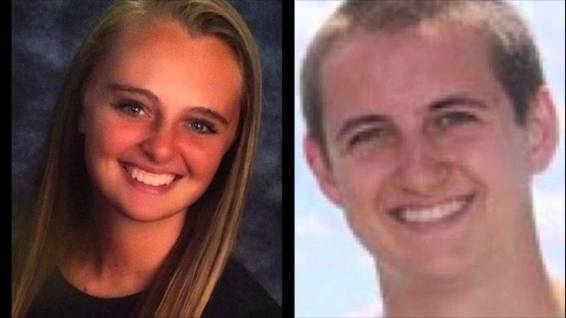
One of the leading stories in today’s news concerns a young woman, Michelle Carter, facing manslaughter charges for allegedly coercing her boyfriend, Conrad Roy, to commit suicide. He was 18 and she was 17. While at earlier points in their relationship she tried to dissuade his talk of suicide (he had attempted suicide before meeting her), by the end she was insistent and even steered him onto the subject of taking his own life. The night he succeeded in killing himself by carbon monoxide poisoning, she even urged him at one point to get back into the truck. The hundreds of text messages she wrote are disturbingly callous and malicious, and she faces 20 years in jail if convicted. Her words are at the heart of this case, and prosecutors say she is complicit in his death because of all that she said (The Washington Post online, 6/7/17, Kristine Phillips and Swati Sharma).

It is incredible to consider that this young woman used her words to so discourage and deflate another human being, to even actively push him to die. Yet, Scripture tells each of us that, spiritually, we all are exercising the power to either promote life or death through our words. Proverbs 18:21 tells us, “Death and life are in the power of the tongue.…”  This is why Paul urges us to give thought about the character and nature of our speech, saying, “Let your speech always be with grace, as though seasoned with salt, so that you will know how you should respond to each person” (Col. 4:6). Our speech can kill in many ways:

  • Vulgar, coarse speech that can encourage others to think of the unwholesome and sinful
  • Hypercritical speech that can deflate and discourage people’s good works
  • Gossipy speech that can cause people to be divided and distanced from undeserving victims
  • Dishonest speech that can lead people astray from the truth
  • Railing, sinfully angry speech that can be self-destructive to the speaker
  • Hypocritical speech that can cause people to be turned off by Christianity

We may be prone to excuse our words as harmless when in fact they can be a matter of spiritual life and death for ourselves or someone else. Our prayer should mirror that of the psalmist, who pleads, “Set a guard, O Lord, over my mouth; Keep watch over the door of my lips” (Psa. 141:3). We possess such power! Let us harness it and use it for life, not death (cf. Jas. 3:2-12).

maxresdefault

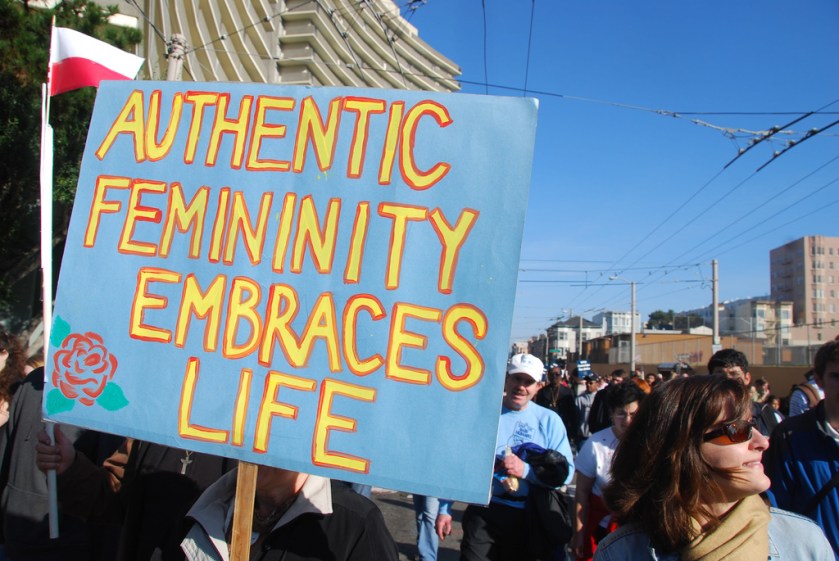
Jane Roe/Norma McCorvey

Neal Pollard

She was used by pro-abortion and pro-life groups, but in fairness nobody outdid Norma McCorvey at trying to use others for personal advantage. Her effort to abort her third child, in Texas in 1970, was the case used to go to the Supreme Court. By the time the appeals process wound up in legalizing abortion at the federal level, her baby was almost three years old and in the home of adoptive parents. She was the product of neglect and horrible abuse, was promiscuous, bisexual—though mostly lesbian, and was known to try to make her way by hook or crook for most of her life. She tried to leverage her infamy into financial advantage or at least a living wage.

It’s wonderful to see that this tormented woman publicly changed her position regarding the right and sanctity of the unborn, but her home life and adult life symbolize the growing immorality stemming from a breakdown in the home. A father fairly well abandoned his role in the home. Alcohol and drugs complicated and clouded the decisions and thinking within the home. Sexual immorality created multiple problems. Sin was perpetuated from poor examples there (The Washington Post, Emily Langer, 2/18/17).

Pew Research found that 46% of “U.S. kids younger than 18 years of age are living in a home with two married heterosexual parents in their first marriage. This is a marked change from 1960, when 73% of children fit this description, and 1980, when 61% did” (Gretchen Livingston, 12/22/14). This is only part of the story. I know of several scripturally divorced and remarried couples, with blended families, who have raised righteous, believing children. But, the general breakdown of the home is at the heart of so many of society’s woes.

The foregoing is far from revelatory. Sermons, articles, and Bible classes have trumpeted it for years. What I see in our broken society is endless opportunity. It will require patience, time, and lots of love, but homes like the one McCorvey grew up in and the one she attempted herself are craving what only Christ can supply—fulfillment, joy, peace, and direction. That is where you and I come in. Let us remember what we’ve been told by God: “But you are a chosen race, a royal priesthood, a holy nation, a people for God’s own possession, so that you may proclaim the excellencies of Him who has called you out of darkness into His marvelous light” (1 Pet. 2:9). Let’s be shining!

2211858253_9a8fa45364_b

Expectation Versus Euthanasia

Neal Pollard

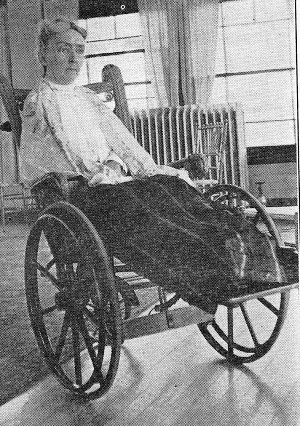
She was born the year after the Civil War. Her mother died when she was three. Her father dropped her and her newborn sister off at the home of the widow of an army friend. Unable to care for the girls, the widow ultimately transferred care to a sweet, religious couple in the community. The girls spent happy years through their school days, but the older sister came to suffer from rheumatoid arthritis as a teenager. It steadily grew worse until she could not walk. Their adopted parents died within months of each other, and the young women were poor and had little prospect of earning money for themselves. Before her affliction, she had developed aspirations as a concert pianist and shown great promise as a poet and writer. Arthritis robbed her on the musical dreams, but she flourished as a poet and hymn writer. Rather than seek relief from her pain through suicide, she channeled her suffering into beautiful writing that continues to comfort others as it did in her lifetime. Ravi Zacharias summarized her suffering, saying, “Her body was embarrassed by incontinence, weakened by cancer, and twisted and deformed by rheumatoid arthritis. She was incapacitated for so long that according to one eyewitness she needed seven or eight pillows around her body just to cushion the raw sores she suffered from being bedridden” (“The Cry For A Reason In Suffering,” np; other information from The Story of Annie Johnson Flint, Rowland Bingham). Her poetry and songs are not riddled with bitterness or even soul-wrenching questions of why. You’ll find titles like “The Grace Of God,” “Not Down, But Through,” “Rest, Tired Heart,” “Grace Sufficient,” “He Giveth More Grace,” “He’s Helping Me Now,” and on the hopeful, positive compositions flow.

We have only one of her hymns in our song book, and it is entitled, “The World’s Bible.” These familiar words include the lines, “Christ has no hands but our hands to do His work today, He has no feet but our feet to lead men in the way….” I appreciate the living testimony Ms. Flint was of the way one who believes in Christ ought to respond to the tragedies and difficulties that can strike in this fallen world. I pray that I will never be wracked by such suffering, but if I do I would want the world to see the spirit in me that so many saw in her. Her life was one of trust in God’s sufficiency and strength through the darkest moments of life.

Our state (Colorado) was one of a few that has passed physician-assisted, right to die legislation in the recent election cycle. Besides the ethical slippery slope of people, even doctors and patients, selecting when to end life, there is in such an effort a failure to see the intrinsic value of life as well as God’s sovereign right over His creation. Ms. Flint’s situation makes us cringe in discomfort at first blush, but we see the refined beauty of a trusting heart to impart profound comfort despite life’s harshest turns. To persecuted Christians, Peter offers this hope for all strugglers when he writes, “After you have suffered for a little while, the God of all grace, who called you to His eternal glory in Christ, will Himself perfect, confirm, strengthen and establish you” (1 Pet. 5:10; cf. 1 Pet. 1:6-7). Whatever the trial, we can choose life instead of death, trust in God rather than trust in our own thoughts. Let us live in triumphant expectation, no matter what we may have to endure for the moment (Rom. 8:38-39; Psa. 30:5).

flint_aj

A Footprint, A Fingerprint, And An Imprint

Neal Pollard

“What do you want to be when you grow up?” “What will they put on your headstone?” It’s the kind of fundamental questions that accompany us all along the road of life. We want to have significance, to serve purpose, and to matter.  Whether motivated by legacy or something larger than self, the thoughtful periodic evaluate the difference they are making to those whose lives they touch. Of all people, Christians should take that matter seriously.  Consider this.

You Are Leaving A Footprint. Your decisions are observed by friends, family, and even those who only know you incidentally or even not at all. You are a leader.  So many people will eventually wind up somewhere because of what you do with and in your life. Paul could say, “Be imitators of me, just as I also am of Christ” (1 Cor. 11:1). In the most dramatic facet of this fact, people will be led toward an eternal destination through your influence. You are leading people toward or away from heaven. It’s in your heart, attitude, words, priorities, conduct, and passions.  To a line of folks longer than you could imagine, you are yelling, “Follow me!” Ask yourself, “Where am I going?”

You Are Leaving A Fingerprint. You are touching people’s lives. Your hands are in a variety of endeavors—your occupational life, your social life, your personal life, and your spiritual life. You are a servant of something and someone. Paul says it’s inevitable (Rom. 6:16). Everyone works at something, even if it’s laziness. It’s a legacy of labor. Where will people remember that your hands were most often seen? Will your chief legacy be whatever your occupation was? Your civic service? Your material accumulation and notoriety? Your pursuit of pleasure? Or will it be your involvement in people’s lives and with people’s souls? Consider this challenge, to “strengthen the hands that are weak and the knees that are feeble” (Heb. 12:12). Your hands will find something to do (cf. Ecc. 9:9). Make it count for God.

You Are Leaving An Imprint. Isn’t it sobering to think that all of us are associated with some quality. When our name is brought up, something—either directly or indirectly—is attached to it. For some, it will be: “grouchy,” “gossipy,” “complaining,” “foul-mouthed,” “critical,” “selfish,” “dishonest,” “arrogant,” “icy,” and the like. Fair or not, such broad labels are typically made interaction by interaction. For others, it will be: “humble,” “sincere,” “encouraging,” “dependable,” “loving,” “joyful,” “godly,” “positive,” etc.  You may feel yourself plain and insignificant, but you will leave an indelible impression on others throughout your life.  Even the one talent man, who tried to bury his talent, had to give an account for it (Matt. 25:14-30).

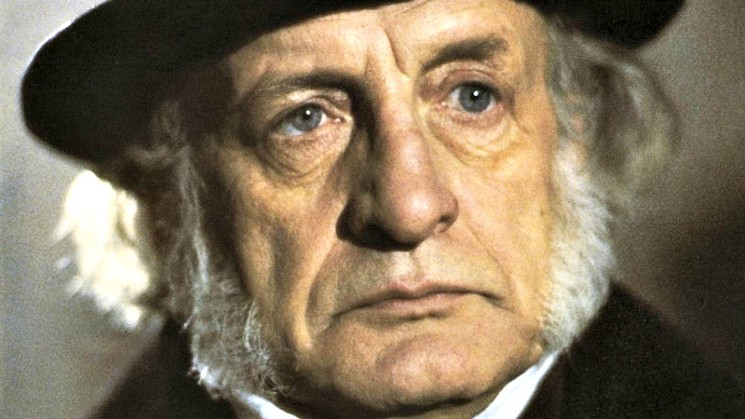
Leadership, labor, and legacy. These are gifts given by God to us all. What a powerful opportunity, one that lies before us daily! The great news is that if we don’t like the footprints, fingerprints, and imprints we have left and are leaving behind, we can change course. My favorite version of A Christmas Carol (and the best version!) is the one starring George C. Scott. He captures the remarkable transformation of Ebenezer Scrooge, a malevolent miser who becomes a merry mirth-maker. Charles Dickens shows us that anyone is redeemable if they’ll genuinely and fervently change. Of course, the Bible beat him to that message (Rom. 12:2; Acts 3:19; etc.).  Our time here is so short. May we all have the wisdom to know what is most important and pursue it relentlessly.

george_c_scott_fixed

A Story With Many Points

Neal Pollard

Several years ago, when preaching in Virginia, I spoke with a sweet, 69-year-old woman who had watched our TV program and wanted to speak to me. During the course of our visit, she told me a story I will never forget. Tearfully, she told me of her 14-year-old grandson, Matthew, who locked himself in his room, took a pistol, put it in his mouth, and pulled the trigger. He was rushed to MCV Hospital in Richmond. He survived, but the bullet was permanently lodged in his sinus cavity and he was in constant, relentless pain. The greatest pain, however, was not physical. It was emotional and spiritual. Matthew’s mother and father routinely flew to Las Vegas to gamble, dumping him off with anyone who would take him. They might win a few thousand dollars on some trips, but they invariably lost their winnings and then some. The father had told the son, not long before his suicide attempt, “I wish I’d never set eyes on you!” The boy had told his grandmother, “Nobody loves me.” He had also told her, “I want somebody to take me to church.” When she offered, he said, “I want my daddy to come and sit beside me.” This dear elderly woman lamented that he grandson’s parents never showed Matthew love and affection. In the wake of that, a young man with most of life before him, could not bear the thought of continuing one more day in such a topsy, turvy, loveless circumstance.

I felt a flood of emotions: Pity, for the boy; Anger, for the parents; Sympathy, for the grandmother. Upon reflection, there are several lessons to be learned from Matthew’s plight.

  • Bad decisions often carry awful consequences. Matthew learned this by the single squeeze of a trigger. If the parents weren’t past feeling, they might see the connection between their selfishness and his anguish. Galatians 6:7-8.
  • Sin destroys a proper sense of priorities. The parents were, in the grandmother’s estimation, greedy and selfish. They put themselves above their responsibility to their son. They made it clear they loved money (cf. 1 Tim. 6:10), and they made it clear they did not love their own boy (cf. Eph. 6:4).
  • Homes without love crumble. “The wicked are overthrown and are no more, but the house of the righteous will stand” (Prov. 12:7; cf. 14:11). How our homes need to be filled with love! Without it, how many children will feel like Matthew did?
  • Parents have a vital role to play in the spiritual development of their children. What did Matthew want? His daddy seated next to him “in church.” Was that too much to ask? He was hungry for spiritual guidance from his parents. What a challenge! How are we preparing our children in spiritual matters?

There are too many young Matthews, empty inside, unsupported, unloved, and unaided. What condition is our home in? Is sin in the way? We should be careful how we walk in front of our children (cf. Eph. 5:15). We want them to do more than value their physical life. We want them to pursue and gain eternal life! May God bless us in that needed pursuit.

dad-and-son-pray-slide_405696_5101570_free

What Are You Living For?

Neal Pollard

A man had the good fortune and insight to take a chance with a credit card company in the Baltimore area several decades ago. He retired a wealthy, high ranking executive. In the course of his career, he put together a streak so impressive–35 years in which he never missed a day of work–that “Iron Man” Cal Ripken, Jr., wrote him a letter commending him for it. When he retired, the company gave him a classic car as well as many other lavish gifts. He had a great many benefits and perks, the admiration of peers and competitors, resort townhouses, and considerable wealth. But, one day very soon after he retired his life was dramatically changed after a visit to the doctor. He had an aggressive form of cancer. A few months later he was dead.

This is not a commentary on the morality or priorities of the man. I know nothing about either. His story points out that his well-laid plans and successful career could not forestall the inevitable end result common to every man.

It should also provoke a question. What are we living for? Is our identity tied to our career? Do we want to be known as the life of the party? Is it all about travel and adventure? Does life revolve around going to the river, campground, fishing hole, beach, or mountains? Is it sports, shopping, spending, or spirituality? Of necessity, all of us have a central focus. It is the thing that forms the bull’s eye we repeatedly find ourselves aiming at. Too many times, some thing becomes the thing in “first place” over Christianity. Colossians 1:18 reminds us Christ must come to have first place. When it comes to our jobs, Jesus must take first place. When it comes to our recreation, same thing. When it comes to relationships, He deserves primary position. Whatever we say or do, Jesus must be at the forefront.

He warns that we may invest in the wrong kind of treasure rather than the true riches (Mat. 6:19-21). He admonishes us to seek the kingdom first over “things” (Mat. 6:33). He warns against choosing family members over Himself (Mat. 10:37).

When life draws to a close, one will be confronted by the reality of what he or she made first place. Certainly, when we cross the sea of time to eternity, there will be no denying, rationalizing, debating, or arguing what our “bull’s eye” was. But, in our heart of hearts, don’t we all know what’s most important to us right now? It’s what occupies the greatest amount of our interest, time, energy, emotion, and effort. It is what we live for. When we die, will what we live for help us live eternally or be the cause of eternal death (cf. Rev. 21:8)? Let’s hear Paul’s encouragement to “set your affection on things above and not on things of the earth” (Col. 3:2).

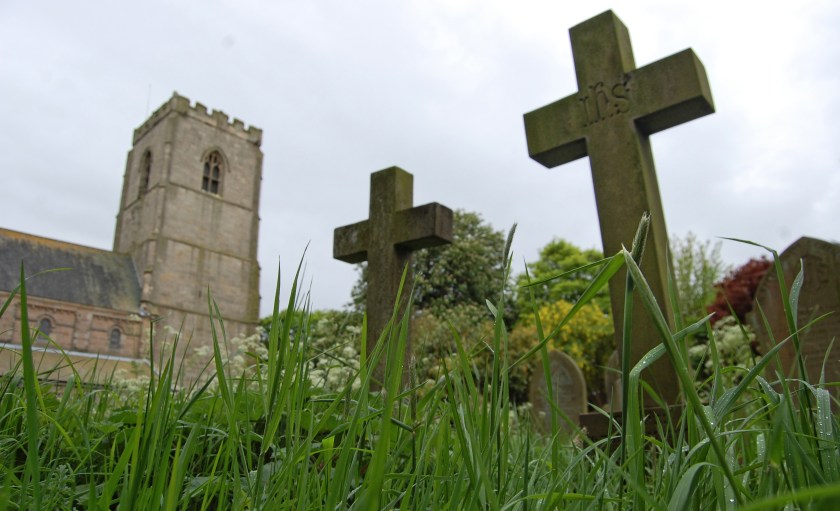
Spofforth Church Grounds

Confident And Unafraid

Neal Pollard

Some are afraid of death because they’re uncertain of where they are going, but others are afraid of death because they are certain of where they are going! Paul was confident even in the face of death (2 Tim. 4:6-8). He could see his end coming but he embraced it. While it is possible to have a false hope and confidence about eternity (cf. Mat. 7:21-23), the faithful New Testament Christian should be confident and unafraid of death. By looking at the last words we have from Paul, we can learn from him how to face death. How could he be so confident even in the face of death?

He was going to face Jesus as judge (1). Our relationship with Christ makes the difference. If I don’t know Jesus and haven’t made Him Lord, I don’t want to face Him in the judgment. But if I’m in Christ, there are several reasons why I long to face Him there.

  • He understands us (Heb. 2:17-18; 4:15). Even before Christ came to earth, God was “mindful that we are but dust” (Psa. 103:14). When I stand before Christ, He will know what it was like to be me. He will have experienced temptation and be sympathetic and merciful.
  • He will be fair (2 Tim. 4:8—He’s the righteous judge). This means in accordance with what God requires. That means He won’t be more lenient than He’s promised, so I can’t expect to disobey His will in this life and hear Him say, “Claim your eternal inheritance in My Father’s house.” If I never obey the gospel, when I face Christ at the judgment He’ll be fair. If I obey the gospel but become unfaithful, when I face Him at the judgment He’ll be fair. But if I’ve tried to walk in His light, though I sometimes fell short, He’s going to be fair (1 Jn. 1:7-9). He knows I’ll be struggling with sin up until the day I die, but if He sees me struggling, He’s going to be fair. More than that, He’ll be merciful and faithful to atone for my sins!
  • He’s told us by what we’ll be judged (2 Tim. 4:2). It’s why we must faithfully present it in spirit and in truth “with great patience and instruction.” Jesus said His word will judge us in the last day (John 12:48).

I can face death confidently because it won’t be just any man judging me. Like you, I’ve had some people judge my actions and motives pretty harshly and unfairly. They may have thought they knew my heart or every fact, and they were ready and seemingly eager to pronounce me guilty. That’s not going to happen with Jesus! He’ll be consummately fair!

He spent his life doing good (5). This verse is the measuring stick of every gospel preacher, who asks, “Was my mind, endurance, work, and ministry as God wanted it to be?” No preacher wants to go through life and have these answers to be no. But in a broader sense, that’s a question every Christian needs to ask. Paul could look at his life with spiritual confidence (7). Three times, Paul, in essence, says, “I have” lived a faithful Christian life. You’ll remember that the first part of Paul’s life was spent not doing good, but from his conversion to his death he did good. Think about his missionary journeys in Acts. Think about all he went through for Christ that we read about in 2 Corinthians 11. What about the trials he mentions in Philippians 1? You may have a past you are ashamed of. Even as a Christian, you may have some regrets and things you wish you could change. But, if you’ve tried to walk in the light of Christ, you can face death and the judgment with blessed assurance.

He knew that he had a crown waiting (8). When we stop to think about death, it contains many variables that tend to make us anxious if not fearful. But Paul could look to death with the idea of its reward. The crown Paul speaks of is described in many ways in the New Testament:

  • It’s perfect (2 Tim. 4:8).
  • It’s permanent (1 Cor. 9:25).
  • It’s payment (Jas. 1:12).
  • It’s preeminent (1 Pet. 5:4).
  • It’s personal (Rev. 3:11).

But there’s not just one crown or a few crowns available. There’s one for “all who have loved his appearing.” If you sincerely desire it, you can receive it.

He knew that God would be with him (16-18). At the time he wrote, Paul knew betrayal and abandonment. Good friends had left him (10). At times, he had no one to stand with him. But he knew that One was always there (17). He was even confident of the future. Being delivered didn’t mean escaping physical death, but it meant rescue in the eternal sense.

You and I can live with the same blessed assurance of Paul. We’ll never go through anything alone (cf. Mat. 28:20). We may be pilgrims and strangers on earth (1 Pet. 2:11), but we aren’t one this journey by ourselves. The Lord will preserve and deliver us, as He did Paul.

I want to remain on this earth to enjoy family, friends, and brethren. I want to be as useful as I can be for as long as I can. But, like Paul, I can look forward to dying (cf. Phil. 1:21-24). We can be confident, even in the face of death!


leap_of_faith3

THE MORE I KNOW, THE LESS I KNOW

Neal Pollard

It is a true paradox. Today,  I’ve been married longer than I have ever been.  I’ve been a father longer than I have ever been.  The same is true for me as a Christian, a preacher, and every other relationship I am in.  My experience in all of these has never been greater than it is right now.  Yet, as I examine things, I realize just how much I do not know.  I am not saying that truth is unknowable, for such a statement would be false and contradictory to what God affirms in Scripture (John 8:32; Eph. 1:18; 1 Tim. 3:15; etc.).  It is just that I realize how little I understand compared to what needs to be understood, that I find the challenge of putting truth into practice in every situation requiring wisdom and understanding as daunting as I ever have.  Yet, despite such a realization, my optimism has never been greater.  Why?  Because I have never believed more strongly in the power and wisdom of God, nor have I ever depended more on Him for strength and provision where I am lacking than I do today.  I feel smaller, but He seems bigger.  While the walk on the narrow way seems a steeper, more strenuous, incline each day and the challenges to faith more daunting, more than proportionate to this is my realization that God “is able to do exceedingly abundantly above all that we ask or think, according to the power that works in us” (Eph. 3:20). My conviction about what the Bible says has never been stronger. My belief in God’s existence, involvement, concern, and righteousness has never been more than this moment.  Yet, my awareness of my finiteness and limitations, the transiency of this life, and the ferocity of the adversary is acute.  Incredibly, this doesn’t cause me to despair. It causes me to hope. It takes the focus off me and puts it where it belongs—on Him! He is able to establish me through His Word (Rom. 16:25). He is “able to make all grace abound to” me, that I, “having all sufficiency in all things, may have an abundance for every good work” (2 Cor. 9:8).  The most important thing for me to know, every day in every challenge and responsibility, is that God is able (Rom. 14:4; Phil. 3:21; 2 Tim. 1:12; Heb. 2:18).

Don’t misunderstand me. I am not despairing. I am not even frustrated. I am hopeful and excited.  One of the greatest promises of Scripture is, “But He gives more grace” (Jas. 4:6). He will walk with me through the darkest valleys (Psa. 23:4). As He holds my hand and guides me through His word and His providence, He also points me toward His house.  He tells me He will help me get home and when the narrow way becomes too steep or arduous for me to walk alone, He will carry me in His everlasting arms (cf. Deu. 32:7). I will keep studying His inspired guidebook and striving to apply it to my life.  And as I do, I will increase my dependence and reliance upon Him, confident that “He who has begun a good work in [me] will complete it until the day of Jesus Christ” (Phil. 1:6).  That’s really all I need to know!

Be Sure Of The Foundation

Neal Pollard

In 2008, I traveled to Bangladesh and spent an unscheduled night in the Capitol city of Dhaka. It’s likely that I passed the eight-story tall Rana Plaza building on that trip, given its proximity to my hotel.  I certainly saw many like it.  But on April 28, 2013, during morning rush hour in one of the most densely populated countries of the world, Rana Plaza collapsed and killed well over 1000 people. It was the deadliest garment factory accident in history.  Why it happened is an outrage. It was built on swampy ground. Extra stories were constructed without proper authorization.  Costs were cut everywhere they could be. Because of this, a huge number of people paid the ultimate price.

Did you know there were warnings? Cracks appeared in the walls the day before and the building was evacuated. But five garment factory owners who had space in the building ordered their employees to go back inside Rana Plaza on that fateful day.  This fact caused global outrage, spawned boycotts and led to calls for international sanctions. It was rightly considered unacceptable and inhumane for such conditions to continue to exist.

There is an infinitely greater problem invisible to the naked eye.  Billions of people are building their lives upon a foundation guaranteed to fail.  They have either never come to Jesus, or even more tragically they have heard Him and ignored His appeals and warnings for safety.

In Luke six, the point of Jesus asking, “Why call Me Lord, then do not do what I say?” is to teach that we must build our lives on the foundation of Him.  In Jesus’ illustration there, the first builder is well protected. He has dug deep and laid his house on the bedrock foundation.  The second builder has no protection.  Incredibly, he builds on the ground with no foundation at all.  In 1 Corinthians 3:11, Paul says there is no other foundation to build your life on than Christ. In that context, Paul warns against building on other foundations—the foundations of men.  Our lives must be built on the bedrock foundation of Christ.  The very foundation of the church (cf. Mat. 16:18) is the one we must each choose for our lives.  “Storms” are coming, including the ultimate storm at the end.  On that day, it will matter how you built.

23bangladesh-superjumbo