The Quiet Sin That Still Shouts on Black Friday

Brent Pollard

For years, Black Friday earned its reputation not from ledgers but from battlegrounds—retail floors where human dignity took a backseat to door-buster deals. News cameras captured the spectacle: grown men and women trampling one another, wrestling over discounted electronics, shouting with voices hoarse from camping overnight in cold parking lots. The scenes were shocking precisely because they revealed something uncomfortable about ourselves.

Those chaotic stampedes have largely faded, replaced by the quieter click of online carts and the convenience of sales that stretch across entire weeks. Yet we would be naive to assume the spirit behind those frenzies has disappeared. Covetousness has not been conquered; it has merely changed costumes. It still prowls, perhaps more dangerously now because it moves in the shadows of normalcy.

Understanding Covetousness in a Consumer Culture

The Scriptures speak with clarity and force about covetousness. God inscribed it among the Ten Commandments—”You shall not covet” (Exodus 20.17)—placing it alongside murder and adultery as a fundamental breach of divine order. The apostle Paul equates it with idolatry (Colossians 3.5), and Jesus Himself warned that a person’s life does not consist in the abundance of possessions (Luke 12.15). These are not casual observations. They are urgent warnings about a sin that destroys souls.

Yet covetousness may well be the most overlooked sin among professing Christians today. We have learned to identify sins that announce themselves—drunkenness carries an odor, anger has volume, and sexual immorality brings scandal. But covetousness? It wears the mask of prudence. It masquerades as ambition, self-care, or simply “keeping up.” In a world built on consumption, covetousness looks like Tuesday afternoon.

This is precisely what makes it lethal. When sin begins to look like normal living, we cease to call it sin at all. If the enemy of our souls seeks to neutralize the church without triggering alarms, covetousness serves as his preferred weapon—quiet, respectable, and devastatingly effective.

The Warning of Jesus: “Take Heed and Beware”

In Luke 12.15, our Lord issues a double warning with deliberate urgency: “Take heed, and beware of covetousness.” Two imperatives, one breath. Why such emphasis? Because Jesus understood what we often forget—that the human heart is perpetually vulnerable to the lie that more will satisfy.

Notice that Christ does not merely say “avoid” covetousness. He says take heed, which means to pay careful, sustained attention, and beware, which calls for active vigilance. This is not passive resistance but intentional, disciplined watchfulness. The implication is sobering: covetousness will not announce itself. It will arrive disguised as legitimate need, reasonable desire, or innocent comparison.

Let us be clear: Black Friday itself is not inherently sinful. Wisdom in stewardship often means seeking good value, and thoughtful purchasing can serve both family and generosity. The issue is not the calendar date or the transaction but the condition of the heart engaging in it. When we participate in the marketplace, do we do so with contentment and purpose, or with the restless craving that can never be filled?

The frenzy that once defined Black Friday—and the subtler compulsions that still drive much of our economic behavior—expose three spiritual dangers we dare not ignore.

Three Spiritual Dangers of Covetousness

Covetousness Normalizes Discontent

God calls His children to contentment (1 Timothy 6.6-8; Hebrews 13.5). Yet covetousness whispers constantly that what we have is insufficient. It trains us to focus not on what we possess but on what we lack. This is not mere pragmatic planning for the future; it is a spiritual disease that robs us of peace and gratitude in the present.

As has been observed, the man who has God and everything else has no more than the man who has God alone. Covetousness blinds us to this truth. It convinces us that one more purchase, one more upgrade, one more experience will finally deliver the satisfaction we seek. But the nature of covetousness is that it never delivers. It only promises.

Consider how advertising works: it manufactures dissatisfaction. Before the ad, you were content. After the ad, you feel incomplete without the product. This is spiritual warfare dressed in marketing language, and it works because our hearts are already fertile ground for discontent.

Covetousness Trains Us to Measure Worth by Possessions

Jesus teaches that life does not consist in the abundance of things (Luke 12.15). Yet covetousness reverses this wisdom, teaching us to evaluate ourselves and others based on what can be seen, touched, and posted online.

Someone seeking material possessions only creates for themselves a gilded prison. When our identity becomes intertwined with our acquisitions, we trap ourselves in an exhausting cycle of comparison and competition. We measure our worth not by God’s declaration of value through Christ but by fluctuating market standards.

This is practical idolatry. The accumulation of things becomes not merely a means to life but the meaning of life itself. And when this happens, we have exchanged the Creator for created things—precisely what Paul condemns in Romans 1.25.

Covetousness Weakens Our Gratitude

Perhaps nothing reveals the corrosive effect of covetousness more clearly than its assault on thanksgiving. The covetous heart cannot truly give thanks because it is perpetually focused on what it does not yet have. Gratitude looks backward and upward, recognizing God’s provision. Covetousness looks forward and laterally, cataloging deficiencies and envying neighbors.

This is why the day after Thanksgiving can be so spiritually jarring. One day we gather to express thanks for God’s blessings; the next, we rush to acquire more as if what we have is inadequate. The irony should not escape us. Covetousness turns thanksgiving into hypocrisy.

Fighting Covetousness With Eternal Treasure

How then do we fight? Not by suppressing desire—God created us with the capacity to want, to long, to pursue. The battle against covetousness is not won by desiring less but by desiring better things.

Jesus provides the antidote in Matthew 6.19-21: “Do not lay up for yourselves treasures on earth, where moth and rust destroy and where thieves break in and steal; but lay up for yourselves treasures in heaven, where neither moth nor rust destroys and where thieves do not break in and steal. For where your treasure is, there your heart will be also.”

This is not poetry; it is economics. Jesus is telling us to invest wisely. Earth’s treasures decay, disappoint, and ultimately disintegrate. Heaven’s treasures endure. The question is not whether we will treasure something—we cannot avoid doing so—but what we will treasure and where.

God is most glorified in us when we are most satisfied in Him. Covetousness is defeated not when we grit our teeth and endure deprivation but when we discover a satisfaction so profound that lesser things lose their grip. When Christ becomes our treasure, sales and upgrades and status symbols fade into their proper insignificance.

If we covet trivialities, it is because we have not yet tasted the goodness of God. We chase shadows because we have not yet stood in the light.

Practical Steps to Guard Against Covetousness

All truth must become actionable or it remains mere information. What then shall we do?

First, practice intentional gratitude. Before making any significant purchase, pause to list what God has already provided. This simple discipline reorients the heart from scarcity to abundance.

Second, examine your motives. Ask: Am I buying this because I need it, or because I want what someone else has? Am I seeking to fill a legitimate need, or am I trying to fill a spiritual void with material things?

Third, give generously. Nothing breaks the power of covetousness faster than open-handed generosity. When we give, we declare that God—not possessions—is our source and security.

Fourth, fast from consumption. Consider seasons of deliberate simplicity. Skip sales. Avoid browsing. Create space to discover that you already have enough.

Fifth, redirect your desires. Cultivate hunger for spiritual realities—Scripture, prayer, fellowship, service. Feed your soul the bread of life so that the world’s junk food loses its appeal.

The Greatest Bargain Ever Offered

Black Friday will come and go with its sales, advertisements, and temptations. The receipts will fade, the products will break, and the cycle will repeat. But the danger of covetousness remains, not just on one day but every day we draw breath in this consumer culture.

Yet hear the good news: The greatest bargain ever offered is still available, and it requires no credit card. A life emptied of covetousness and filled with Christ is a life money cannot buy. This treasure is free to all who will receive it, paid for not by our purchasing power but by the precious blood of Jesus Christ.

God offers us satisfaction that lasts, joy that endures, and treasure that neither moth nor rust can destroy. The transaction is complete. The price is paid. The only question is whether we will stop chasing shadows long enough to embrace the substance.

May we be a people who treasure Christ above all things, who find in Him a satisfaction so complete that the world’s bargains become irrelevant. For in Him we have already received everything—and what we have cannot be improved by any sale, upgraded by any purchase, or diminished by any economy.

Where your treasure is, there your heart will be also. Choose wisely.

Let Your Life Ring True

Neal Pollard

In the Christian Science Monitor, Nancy M. Kendall, drawing on other etymology (i.e., word origin) resources such as Hendrickson, Morris, and Barnhart, writes, “Due to poor equipment and the scarcity of precious metals, metal workers of the Middle Ages were not able to produce coins that were uniform in appearance and weight. This situation gave criminals an opportunity they couldn’t resist. Thus, when in doubt over a coin’s validity, a tradesman would drop it on a stone slab to “sound it.” If phony, it’d make a shrill or dull, flat tone in contrast to the clear ring of a true coin. By extension, a story tested and found acceptable is said to ring true, and its opposite, to ring false or hollow.” 

How interesting!  From that origination, the phrase has been applied to people’s statements, characters, and beliefs.  We ask, “Does he/she/this ring true?”  By saying this, we are looking for authenticity, for genuineness.  What an awesome opportunity we have to put our Christian lives on display!  Others look at it and us and by doing so can determine, to a degree, if Christianity rings true.  Certainly, they can compare our lives to what a Christian life should be and see if our individual lives ring true to authentic Christian behavior.  

Live before your coworkers, school mates, neighbors, fellow-Christians, and people you encounter daily in such a way that you show the validity of living for Jesus.  In this way, you are allowing the truth of Jesus to be put to test as it is observed in at least one sample.  There are poor imitations and substitutions out there.  You have the opportunity to show them the genuine article!  Let your life ring true!

Responding To His Message

No matter what we say, how we respond to what Jesus teaches determines our faithfulness to Him. Why is this so hard sometimes?

Carl Pollard

Throughout scripture, Christians are called not only to hear the word of God but to obey it. James 1:22-25 emphasizes this imperative: “But be doers of the word and not hearers only, deceiving yourselves. Because if anyone is a hearer of the word and not a doer, he is like a man looking at his own face in the mirror; for he looks at himself, goes away, and right away forgets what kind of man he was. But the one who looks intently into the perfect law of freedom and perseveres in it and is not a forgetful hearer but a doer who acts – this person will be blessed in what he does.”

In Matthew 7:24-27, Jesus reinforces this message, stating that not everyone who calls Him “Lord” will enter the kingdom of heaven, but only those who do the will of the Father. This highlights a critical truth: many Christians possess extensive knowledge yet fail to practice it. 

Experiential knowledge, the kind that transforms and deepens our relationship with God, comes from faithful obedience. It is during trials—losing a loved one, facing financial difficulties, or battling inner turmoil—that we truly come to know the Father. By holding fast to God in these moments, we can experience His presence and faithfulness.

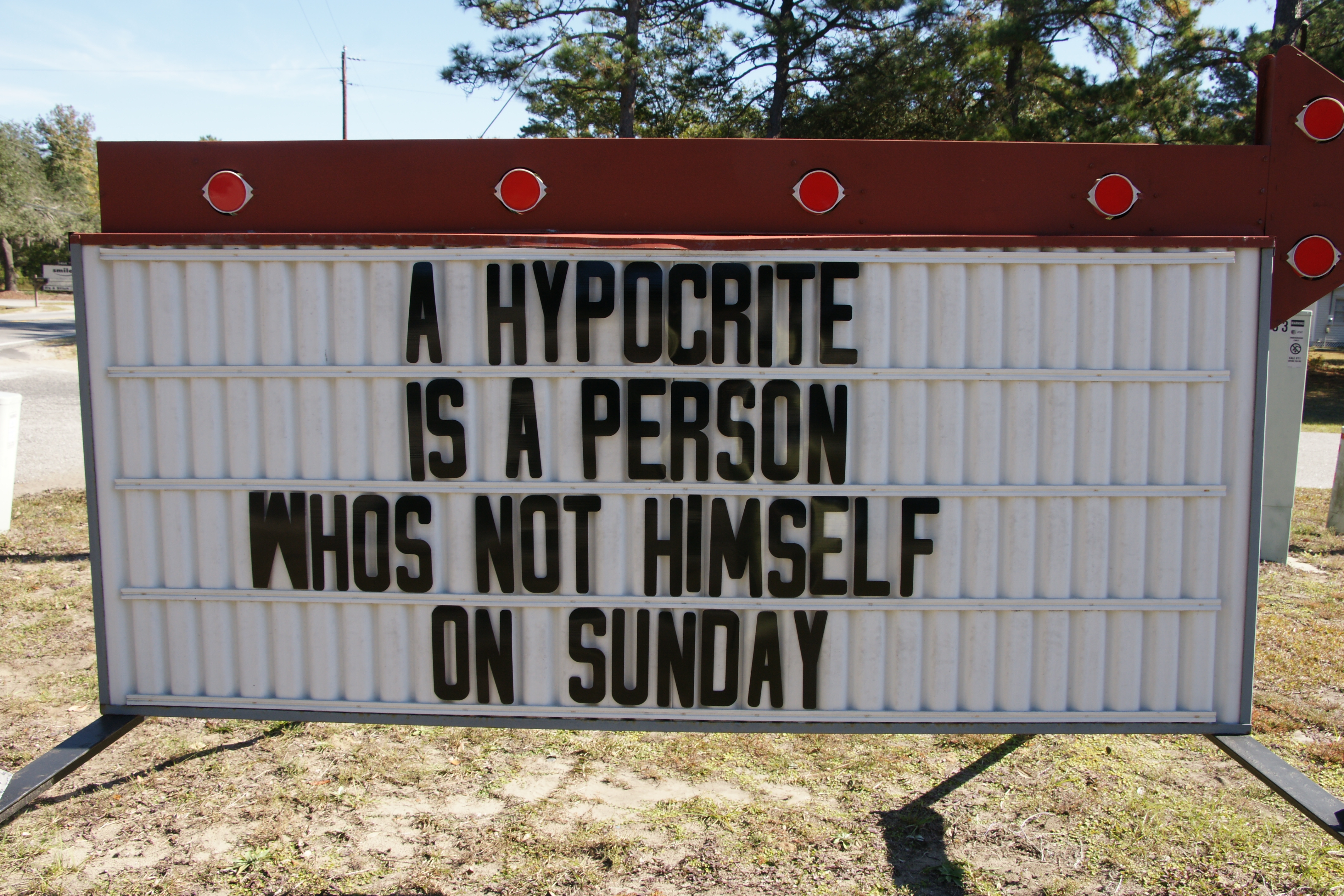
The problem of hypocrisy in the church is often misdiagnosed as a lack of knowledge. However, we have access to the Bible and factual teaching. The real struggle lies in acting upon what we know. We understand that we are called to love one another as God loves us, to pray, to act as a family, to practice self-control, and to forgive others. Yet, the question remains: why do we fall short?

The answer is clear: it isn’t a matter of knowledge but of action. Jesus presents two responses to His message: to hear and obey or to hear and disobey—there is no middle ground. 

What may be difficult to hear is that Jesus isn’t concerned with our Christian labels on social media, or even our daily Bible reading plan. While these are well and good, many people claim these without authentic faith. What Jesus desires is fruit—tangible evidence of His teachings reflected in our lives.

In Matthew 7:24-27, Jesus likens those who hear and obey to a wise man who builds his house on rock. When storms come, this house stands firm. Conversely, those who hear but do not obey will find their lives dismantled by life’s adversities. The foundation of our lives must be built on the truth found in God’s word, and the building blocks of that foundation are obedience.

The authenticity of our discipleship is revealed in our responses to Jesus’ teachings. If we do not love our neighbors as ourselves, forgive as we have been forgiven, or harbor anger and resentment, we must face a sobering reality: despite our claims, we are not true disciples of Christ. His disciples practice what He preached.

Jesus invites us to examine our lives: Are we listening to His words and responding with faithful obedience? The call to action is clear, and it is through our obedience that we demonstrate our genuine commitment to Him.

Exploring The Eye As The Lamp:

A Deep Dive Into Jesus’ Teachings In Matthew And Luke

Brent Pollard

I am unsure if the statements made by Jesus in Matthew and Luke regarding the eye as a lamp qualify as one of the “hard sayings” of our Lord, but I am willing to confess that they have caused me difficulty. These words require more contemplation, like all of Jesus’ metaphors and parables. I’m not sure we’re always willing to give Jesus’ words the consideration they deserve. Therefore, let us examine these texts, think about them, and explore their meaning more thoroughly. 

“The eye is the lamp of the body; so then if your eye is clear, your whole body will be full of light. But if your eye is bad, your whole body will be full of darkness. If then the light that is in you is darkness, how great is the darkness!” (Matthew 6.22-23 NASB1995).

“The eye is the lamp of your body; when your eye is clear, your whole body also is full of light; but when it is bad, your body also is full of darkness. Then watch out that the light in you is not darkness.” (Luke 11.34–35 NASB1995).

We must begin by looking at the setting where Jesus said these words. Even though they sound alike, Jesus spoke these words at separate events. Matthew includes these words in the context of the Sermon on the Mount. But these words appear in Luke at a time when the Pharisees have blasphemously said that Jesus could drive out demons through Beelzebul rather than the Holy Spirit and when people are pressing Jesus to perform signs for them. As a result, the meaning of Jesus’ words will take on the nuance intended for their context. 

During the Sermon on the Mount, Jesus stresses the importance of inner purity and sincerity. He uses the metaphor of the eye as the body’s lamp to illustrate the significance of having a clear and uncorrupted perspective. This metaphor highlights that a sincere heart and faith lead to a life of righteousness and truth. This mindset contrasts with a life of hypocrisy or merely following religious laws without proper understanding or commitment.

The book of Luke emphasizes distinguishing truth from falsehood, especially in situations involving religious leaders like the Pharisees, who were outwardly religious but inwardly corrupt or misguided. In this context, the teaching that the eye is the lamp of the body serves as a warning against spiritual blindness and the danger of misjudging what is true of God. It is a reminder to examine oneself and ensure that hypocrisy, legalism, or false beliefs are not hindering one’s spiritual perception.

The metaphor of the eye is a powerful tool used in both Matthew and Luke to emphasize the importance of spiritual perception and integrity. In Matthew, Jesus uses the metaphor to teach about sincere and authentic religious practice, while in Luke, it addresses the issue of correctly discerning spiritual truth. This latter point is critical in the face of misleading religious authorities, such as the Pharisees. Although the passages may appear similar in wording, they have distinct emphases based on their contexts.

Upon examining these passages, we can identify four recurring themes:

  • The metaphor of the eye
  • Light versus darkness
  • One’s inner spiritual state
  • A call to self-reflection

The metaphor of the eye represents one’s perspective on life. When the eye is clear, it suggests a spiritually enlightened or morally sound outlook. This clarity of vision allows the light of understanding, wisdom, or divine guidance to fill and guide the entire body or being.

In the Bible, the contrast between light and darkness is a frequently used theme, representing good and evil, knowledge and ignorance, or God’s presence versus the absence of it. Light is often associated with goodness, purity, truth, and guidance from God, while darkness usually symbolizes evil, sin, or ignorance.

The texts suggest that a person’s inner spiritual state impacts their entire life. If a person’s internal state is “clear” or “healthy,” it denotes an alignment with spiritual truth and moral clarity, leading to a life filled with light, including understanding, moral integrity, and closeness to God. On the other hand, if a person’s inner state is “bad” or “unhealthy,” it represents a corrupted, selfish, or misguided outlook, leading to a life full of darkness, including ignorance, sin, and separation from God.

Luke 11:35, in particular, warns us to be vigilant and examine ourselves, ensuring that the light within us is not darkness. It calls for believers to constantly evaluate their spiritual health and motivations, verifying that what they perceive as light or good is not misguidance or darkness.

These passages urge people to develop a spiritually and morally sound outlook on life, as this inner state profoundly impacts their well-being. They encourage individuals to seek spiritual wisdom and moral integrity, ensuring their lives are guided by what is truly good and enlightened rather than misguided or harmful perceptions.

Jesus uses the metaphor of the eye as a lamp to stress the immense impact of our spiritual state on our lives. A clear, sincere, enlightened perspective fills us with moral wisdom and brings us closer to God. But, a corrupt outlook marked by hypocrisy, selfishness, or falsehood leads to ignorance and separates us from the truth. Jesus urges us to examine ourselves through honest self-reflection and ensure that we walk in the light of authentic faith instead of darkness masked as light. As we ponder upon these teachings, may we assess our inner state, align our vision towards godliness, and allow the light of Christ to fill our entire beings.

“You Thought That I Was One Like Yourself”

Neal Pollard

Asaph was a spiritual Renaissance man, a musician (1 Chron. 15:17-19), a worship leader (1 Chron. 16:4-15), a prophet (2 Chron. 29:30), and a poet, whose inspired work is found in twelve of the psalms in the book of Psalms. In numerical order, Psalm 50 comes first. In that psalm, he addresses the whole earth (1-6), His people (7-15), and the wicked (16-23). He establishes His right and power to judge “His people” (4)…”for God Himself is judge” (6). He tells His people that He wants their true worship (7-13), and by giving it they would find a responsive, protecting God (14-15).

How He ends the chapter is jarring! He addresses “the wicked” presumably from among His people. They tell of His statutes and His covenant is in their mouths (16), but they are worldly to the core. They hate His teaching and His Words (17). They love to hang out with dishonest, dishonorable people (18). Their tongue is an unruly evil (19-20). This is a comprehensive and graphic picture of the hypocrite. What emboldened them to live in such an audacious way? God’s silence (21). They thought they were getting away with it because God did not respond to this as He did with Nadab and Abihu (Lev. 10:1-3), Korah and his clan (Num. 16), and Uzzah (2 Sam. 6:7). He says, “These things have you done and I kept silence….” (21a). God explains how one can perceive the lack of immediate punishment as an endorsement of a lifestyle or a mindset, saying, “Because the sentence against an evil deed is not executed quickly, therefore the hearts of the sons of men among them are given fully to do evil” (Ecc. 8:11).

This can cause us to bring God down to our level, to think that He thinks like we think and that He feels like we feel. “You thought I was just like you” (21b). If one is tolerant of sin and permissive of a sinful situation, he or she may naturally think God will overlook it. If one is willing to accept in fellowship a person who is living in rebellion against God’s will, he or she may conclude that God does too. This leads to rationalizing and embracing things God, in His Word, has already declared His thoughts and feelings about. That is why He says, “Let the wicked forsake his way and the unrighteous man his thoughts; and let him return to the Lord, and He will have compassion on him, and to our God, for He will abundantly pardon” (Isa. 55:7). Like in Psalm 50:21, Isaiah reminds us God’s thoughts and ways are not ours (Isa. 55:8-9).

God longs for a relationship with His people (22-23), but it will be on His terms. If we forget God, the result is frightening (22), but if we honor Him with righteous living He shall “show the salvation of God” (23). For this to occur, we cannot bring God down to our level and think that because we want to endorse willful sin He does, too. There is an enormous difference between wrestling with sin and wallowing in it. The one He sees with compassion, the other He sees with condemnation.

The Local Preacher (Part 6)

Thursday’s Column: Captain’s Blog

In Acts 20:24, Paul says, “…But I do not consider my life of any account as dear to myself…in order that I may finish my course.” 

What an incredible attitude. In verse 24 Paul stated the reason he was willing to face the dangers in Jerusalem. He was ready to surrender his life for the gospel. In his epistles Paul often stated his readiness to suffer, even to die for Christ. Paul had completely given his life to Christ. He was willing to die for what he believed. Are we? As ministers we should believe in the word of God so much that we are willing to give our lives for it. What are our lives to us? How much do they mean to us? Do we care so much about our lives that we are willing to preserve them over preserving the word? Those are a lot of questions, but there’s one simple fact that we must remember. A preacher that is not willing to give his life for the cause of Christ is not worthy to preach. 

God’s church, the Bride of Christ, deserves a man willing to lay down his life for the gospel. When Jesus came to Paul on the road to Damascus, He gave Paul his life’s mission. By the grace of God, Paul completed a lifelong service to Him. As ministers, there is not a better life to model ours after, besides Jesus, than the life of Paul. He was selfless to the very end. His body was a mere tool just for the cause of Christ. What does that take? A lifetime of studying and growing our relationship with the Lord. A man with a poor or lacking relationship with God does not belong in the pulpit. 

From the book of Acts we can pull many examples from Paul’s life and apply them to that of the modern day minister. The Bible is 1900 years old, but it is still a practical guide to today’s preachers. We have different challenges that may seem like new issues, but Paul proves over and over again that following Christ wholeheartedly is all we truly need to make it as successful ministers in the church today. Who does the church see in the pulpit? Who does the church need in the pulpit? These are often two very different things. The preacher can act one way in front of everyone, but who he is when he’s alone is what counts. Does he study and pray constantly? A minister should follow closely the example of Paul, and in doing so he will not fail. If every church had a preacher like Paul the church would be a strong and thriving group. 

Carl Pollard

The Lessons Of Peter And Paul At Antioch

Friday’s Column: Brent’s Bent

Brent Pollard

As a free moral agent, Simon Peter had the same capacity for sin as the rest of us. And Peter sinned despite being an apostle. We recall Peter’s most famous blunder on the night of Jesus’ mock trial (Luke 22.60-62). Or perhaps we remember Peter sticking his foot in his mouth on the Mount of Transfiguration (Matthew 17.4-6). But there was another occasion on which Peter’s fallibility demonstrated itself. According to Galatians 2.11-14, Peter allowed his fear of the Judaisers rule his heart and stopped associating with Gentile Christians: 

“But when Cephas came to Antioch, I opposed him to his face, because he stood condemned. For prior to the coming of some men from James, he used to eat with the Gentiles; but when they came, he began to withdraw and separate himself, fearing those from the circumcision. The rest of the Jews joined him in hypocrisy, with the result that even Barnabas was carried away by their hypocrisy. But when I saw that they were not straightforward about the truth of the gospel, I said to Cephas in the presence of all, ‘If you, being a Jew, live like the Gentiles and not like the Jews, how is it that you compel the Gentiles to live like Jews?’ (NASB)” 

Paul labels Peter a hypocrite. Remember how Paul reminded Peter that he lived as a Gentile rather than a Jew, referring to his life in Christ, in whom we make no such distinctions (Galatians 3.28). Indeed, a hypocrite is someone whose true character contrasts with the image he presents to the world. And unfortunately, Peter was guilty of doing such at the moment. Peter didn’t want the Judaisers, a zealous sect of Christians who believed Gentiles should first convert to Judaism before becoming candidates for Christian conversion, to know he had no problem freely associating with Gentile Christians. He preferred instead to maintain the charade of one whose first allegiance was to Moses’ Law.  

When we allow fear to rule our hearts, we make poor decisions. Peter should have considered the role of fear in his past failures. Fear caused Peter to sink instead of walk on water as he had done for a few steps (Matthew 14.28-30). Peter took his eyes off Jesus and looked at the boisterous waves, exacerbating his fear rather than alleviating it. Fear drove Peter to deny the Lord three times before the rooster crow because he feared the consequences of admitting he was the Lord’s disciple rather than accepting the repercussions of that admission (Mark 14.31). But God does not want us to be concerned about what might happen. Instead, he desires that we put our trust in Him, cast our cares on Him, and make decisions that glorify Him. And once we develop perfect love, it casts out such fear (1 John 4.18).  

But did Paul have to rebuke Peter publicly? Yes. Peter had sinned publicly. There was no point in following the guidelines provided by our Lord to take such an erring brother aside privately (Matthew 18.15-16). Plus, Paul knew his judgment sound by having also received the revelation of Jesus Christ. Peter’s sin was spreading itself as cancer among the brethren of Antioch (cf. 1 Corinthians 5.6-7). Had Peter’s choice affected him alone, that would have been one thing. But Peter had a position of influence. He was an apostle. Therefore, he influenced other Jewish Christians to act hypocritically, including Paul’s future missionary journey companion, Barnabas.  

Did Peter resent Paul for so doing? I don’t imagine anyone enjoys having another rebuke him. Though referring to persecution, the Hebrews’ writer nonetheless says discipline can be painful. Despite this, a Christian understands that discipline trains him to become more fruitful (Hebrews 12.11). However, Peter must have known the words of Solomon that the one later favors a rebuker rather than the flatterer (Proverbs 28.23). Peter could, on reflection, appreciate what Paul had done for him. And that Peter bore no ill will for Paul is seen in the fact that Peter refers to Paul as a “beloved brother” in 2 Peter 3.15. 

Thus, Peter teaches us by example both positive lessons worthy of emulation and types of behavior we need to avoid, such as in Galatians 2. We should not allow our fear of what others think or our esteem for others to cause us to deviate from the Gospel message of Jesus Christ. And Paul teaches us that when someone sins publicly, and we know this because of God’s Word, we should nip that error in the bud since sin will act as leaven, permeating the body of Christ.     

Worship That Wearies God

Monday’s Column: Neal At The Cross

Neal Pollard

If we are honest, some days it is easier to worship with focus and enthusiasm than others. We’re human and we struggle. With mental preparation and prayer, we can minimize the frequency of such times, but they happen to the best of us.

Have you ever thought about God getting tired of the worship brought by His people? I don’t mean worship done incorrectly and according to the will of men which violates what He commands. Apparently, He rejects such worship (Mat. 15:9). I don’t mean the idea that He gets bored and had rather skip a Sunday here and there. No such picture is ever painted of God.

But through the prophets, He repeatedly talks about being weary of the worship brought by His people. 

“I have had enough…I take no pleasure in…your worthless offerings…an abomination to me…I cannot endure…They have become a burden to Me; I am weary of bearing them” (Isaiah 1:11-14).

“I hate, I reject your festivals, nor do I delight in your solemn assemblies…Take away from Me the noise of your songs; I will not even listen to the sound of your harps” (Amos 5:21,23).

“Oh that there were one among you who would shut the gates, that you might not uselessly kindle fire on my altar! I am not pleased with you,” says the Lord of hosts, “nor will I accept an offering from you” (Malachi 1:10). 

Each prophet is dealing with specific circumstances prompting such a response from God, but it should cause us to take notice that just coming into the “meeting house” and going through the motions does not equal acceptable worship. Neither does simply following the New Testament pattern for the acts of worship. You will find in each of the passages above that the people were at the right place offering the right sacrifices on the right day led by the right people. The problem was either one of attitude, hypocrisy, or outright worldly living. Jeremiah documents how the people lived just like the world for the rest of the week, then filed into the temple to sing, “Redeemed, how I love to proclaim it!” (7:4-10). 

Worship is a special privilege, to come into the presence of our Maker and Savior. At our best, we worship Him with sin and weakness in our lives. He knows that and the cross proves that He knows it. He is not expected sinless perfection, but He is looking for characteristics in our worship just beyond doctrinal accuracy.  He wants:

  • Feeling (Psalm 95:6; John 4:24).
  • Engagement (Matthew 15:8).
  • Effort (Hebrews 13:15).
  • Gratitude (Ephesians 5:20; Colossians 3:16-17).
  • Thoughtfulness and Intentionality (Ephesians 5:19; Colossians 3:16).
  • Devotion (Acts 2:42).
  • Consideration of one another (Hebrews 10:24). 

It is such a blessing that God communicates with us not only about the “what,” “when,” and “who” of worship, but also the “how” and “why” of it. When we are assembled for worship, He tells us what worship should look like. Between the assemblies, He tells us what a life looks like that partners with that worship.

God speaks of the various sacrifices of His children being a “fragrant aroma” to Him (Philippians 4:20; ). He likens the prayers of His faithful people to incense (Revelation 5:8; 8:1ff).  Jesus assures us that true worshippers offering true worship are highly sought after by God (John 4:23). That’s the aim, isn’t it? The idea of presenting God with both a worshipper and worship which enthuses Him is the pinnacle of excitement! 

Next Sunday, before we come together in worship, we can read Psalm 95, Psalm 96, Isaiah 6, or a similar chapter which reminds us of Who we get to worship. Today and every day, let us strive to build on the most recent worship we have offered by a life of faithful service and sincere devotion. That will set the table for worship God can’t wait to receive! 

Why Jesus Offended The Pharisees

Neal Pollard

Jesus wasn’t going around just trying to make enemies of anyone, but He was fearlessly living and telling the truth no matter the circumstances. What we read in Luke 11:37-54 is how the scribes, Pharisees, and experts on the Law were living by the gospel according to self. They looked really righteous and knowledgeable on the surface, but of course Jesus can see below the surface at what’s actually going on in the heart and mind. It seems that there are several reasons why Jesus offended these religious leaders on this occasion.

He Exposed “Surface Spirituality” (37-41). They were so obsessed with appearances, doing things to look good to others. Yet, Jesus said they were full of corruption and wickedness in their hearts. They knew how to look spiritual without being godly, a deadly condition! 

He Exposed “Majoring In The Minors” And “Minoring In The Majors” (42). He doesn’t rebuke the attention to details, but says they neglected what really mattered when making gestures that appeared to show how scrupulous and careful their religion was. True religion is supposed to stand on huge pillars like divine justice and love. Operate from those qualities and you are well on your way to true righteousness. 

He Exposed “Appearance-Driven Actions” (43-45). Jesus called them on their love of the chief seats and respectful greetings. Surely most people appreciate being appreciated, but such can never be what drives or motivates us to do praiseworthy things. 

He Exposed “Hypocritical Holiness” (46). They were good at making rules others needed to follow while not bothering to live by those same rules. Beware holding others to a standard you do not submit to yourself. Here, these appear to be their own convictions which they bind on others rather than God’s laws. 

He Exposed “Artificial Admiration” (47-51). They seemed to conclude that revering long-dead prophets was the spiritually acceptable thing to do, but they rejected and hated the greatest man in history–God in the flesh. While decorating the tombs of men their ancestors had slaughtered throughout the Old Testament, from Abel (Gen. 4) to Zechariah (2 Chron. 24:20-21)–like saying A to Z, they were actively fighting One even greater and ready to do the same to His disciples. 

He Exposed “Wicked Watchdogs” (52). Jesus’ last accusation is as piercing as they come. He says they took away the key to knowledge. They refused to enter the kingdom, but they actively hindered others who were trying to enter. They made themselves the gatekeepers to God, a presumptuous but also misguided effort. 

And did they humbly repent and change their ways when the Son of God called them out? No. Their pride overrode any other impulse, and they grew more hostile, plotting how they might trap Him in something He might say. They became more critical and vicious. They had hardened their hearts that much. The takeaway for me is abundantly clear. What do I do with Jesus’ will? Do I take to heart His admonitions and challenges, or do I allow sinful pride to eclipse my view of it? Do I dig my trenches deeper or do I allow His will to shape and influence me? I pray that I will choose the latter!

The Real Thing

Wednesday’s Column: Third’s Words

Gary Pollard

“Let love be genuine.” This phrase from Romans 12.9 is familiar and deceptively simple. It sounds good and feels good! But what does it mean? 

It means we can’t pretend to love people. Ανυποκριτος means “not pretending” or “acting” something. In other words, don’t pretend to love people with the goal of getting something out of it. Don’t pretend to love people when we don’t. 

We don’t usually show our real selves to other people. Aside from our close friends and family, we show other people who we want them to see. There’s nothing wrong with this; all cultures adopt levels of social scripting and behaviors based on how close we are with another person. The church is a family, and it’s hard to remember that sometimes. We’d rather keep people at arm’s length (I’m guilty of this) than get into the messiness of close relationships. 

Once we get past the formal, arm’s length level of closeness, things get complicated and messy. But they’re also rewarding and uplifting! Whatever we see in our Christian family, God expects us to love like we mean it. There’s no room for fake in this family! Since our lifestyle can be challenging, we need to know that we can rely on each other.

God showed us genuine love by proving it. He proves it every day by keeping us “good to go” if we’re walking in light (I Jn 1). Showing real love has personal benefits, sure, but it mainly benefits others. We may never know how much showing genuine love impacts another person, but it could be the pivotal point of their relationship with God! How cool is it that, just by being genuine, we potentially change people’s eternity?! 

Hypocrisy Illustrated

Thursday’s Column: Captain’s Blog

181314946_10225338741073662_8563579952343234574_n

Carl Pollard

In Mark 11:12-14, we read a short and slightly strange account of Christ and his disciples, “On the following day, when they came from Bethany, he was hungry. And seeing in the distance a fig tree in leaf, he went to see if he could find anything on it. When he came to it, he found nothing but leaves, for it was not the season for figs. And he said to it, “May no one ever eat fruit from you again.” And his disciples heard it.” Why did he curse the tree?
 
It seems to me that it would make more sense if he cursed the tree because it was in season and failed to bear fruit, but it wasn’t in season. So why curse the tree? It wasn’t supposed to have fruit. Many people say that what Jesus did was a little extreme. It appears that the only reason Jesus cursed the tree was because He was hungry and was upset that it had no fruit. At first glance His actions seem harsh and unwarranted, but Christ is illustrating a very important lesson.
 
This tree illustrated hypocrisy. Jesus cursed the fig tree because it had the appearance of being fruitful, but it was a lie. It lacked fruit. It was this lie that caused Jesus to curse the tree. It clearly states that this tree was not in season, but it still had leaves. So from far off it seemed to have the appearance of fruit, but it offered nothing but leaves. Jesus doesn’t want us to have the appearance of holiness; He wants us to bear fruit.
It’s not about looking like a Christian, but living like one.
 
Emily told me a story from when she was younger and literally had a run in with a peach tree. She was driving a golf cart at a friend’s house and ran over a young peach tree. The golf cart stripped off the bark and flattened the small tree. The owners had to spray fake bark onto the tree just to keep it alive and healthy, and to this day it’s an ugly tree. But, despite being deformed and mangled, this tree, according to Emily and all her friends, makes the best peaches out of all the peach trees on the property.
 
What’s the point? It’s not about how you look. It’s about what you produce. Jesus doesn’t care about our appearance and if we look like a Christian. The ONLY thing that matters is if we are bearing fruit.
 
This tree was an illustration of the hypocrisy that was found in the Pharisees in Matthew 23:27-28. Like the whitewashed tombs which Jesus references in these verses, the fig tree looked beautiful on the outside. It looked like it was ripe with fruit! But upon closer examination, it was a lie.
It had nothing. It made itself out to be something it wasn’t. Christ had no tolerance for hypocrisy. If we claim to be Christians and that we have a relationship with God, and yet fail to dwell on His word and spend time in prayer, we are living a life of hypocrisy. Jesus uses this tree to show us how he feels about those who claim to be one thing, when in reality it is all a lie.
 
After Jesus curses the fig tree, they immediately enter the temple and what do they see but a living example of the fig tree?  In verse 15 Jesus sees people using the temple as a place to rip off others. They had turned the temple into a den of thieves. The fig tree had the appearance of having fruit to offer, but it gave none. The temple, Jerusalem, and the Pharisees had the appearance of having holiness and offering salvation,  but had none.
 
We must use this account as motivation to practice what we preach and be who say we are to those around us.

“Virtue” Is Not A Dirty Word

Monday’s Column: Neal At The Cross

sunset and sweetie

Neal Pollard

Did you know that the term “virtue signaling” is now in the dictionary. An expression that has been used a lot in the wake of the pandemic and social unrest of last year and into this year, it means to “publicly express opinions or sentiments intended to demonstrate one’s good character or the moral correctness of one’s position on a particular issue” (Apple Dictionary, 2.3.0, 2005-2020). “Virtue signaling” is typically used in a derogatory manner. It is felt to be synonymous with jumping on the bandwagon of a popular cause or moral grandstanding, and is considered by those diagnosing a “virtue signaler” as one trying to win praise or acknowledgment from the likeminded for showing support for a social or political cause or to reprimand and rebuke those who feel or behave differently (dictionary.com). The disdain for this practice often arises from the apparent motives of the signaler, wanting to seem more caring, more righteous, or better than others on a given issue. Cancel culture and “wokeism” are often the more virulent strains of this social malady.

Jesus had a low threshold of tolerance for the ancient equivalent of the virtue signaler. Especially in Matthew 23, Jesus calls it out. “They say things and do not do them…” (3-4). How often have we seen people being hypocritical or inconsistent in matters they call out others on?  “They do all their deeds to be noticed by men” (5). Only God knows a person’s heart, but is that ever at play in this matter? “They love the places of honor…” (6). Especially may this be evidenced through social media where one may revel in the admiration or recognition of others for occupying the high ground by their signaling. The silent majority may be intimidated by virtue signals, but they are not inherently improved by them.

Depending on your point of view, you may well think that “virtue signaling” is a dirty phrase, that is bespeaks hypocrisy, political correctness, or the like. But, may we never tar the word “virtue” with the same brush. In a list of characteristics better known as the “Christian Virtues” (2 Pet. 1:5-7), Peter urges adding “moral excellence” or “virtue” to our faith. The word refers to “consummate ‘excellence’ or ‘merit’ within a social context” (BDAG, 130). While the Stoics and writers like Homer reserved it for “military valor or exploits, but also of distinction for other personal qualities and associated performance that enhance the common interest” (ibid.), inspired writers coopted the term to mean “uncommon character worthy of praise” (ibid.). While the word is only found a handful of times and more often refers to God (2 Pet. 1:3 and 1 Pet. 2:9), it should describe us, too. If we are praised for demonstrating virtuous qualities, we are to double down on filling our hearts with true righteousness and virtue (Phil. 4:8). 

Virtue, as God defines it and guides us to genuinely show it, will encourage others to look at God, glorify Him, and seek to follow Him. Humble, genuine godliness, seeking no attention and wanting no praise, is a powerful persuader. In fact, it’s central to how God wins the hearts of others (cf. Mat. 5:14-16). Let’s stay out of the virtue signaling business, but let us strive for truly virtuous living! God is counting on us to reflect His moral excellence to those foundering and floundering in unrighteousness. 

Paper straws: Environmental friendliness or an attempt to drive us crazy?

CHRIST AND CANCEL CULTURE

Monday’s Column: Neal At The Cross

pollard

Neal Pollard

IF CHRIST CHAMPIONED CANCEL CULTURE…

  • The Samaritan woman stayed washed up.
  • The Prodigal Son is stuck in the pig pen.
  • Zaccheus is still up a tree.
  • Peter is still casting nets, not using His keys and feeding His sheep.
  • James and John, the sons of thunder, are all wet.
  • Saul of Tarsus kept holding coats and chasing down Christians.
  • Thomas drowned in his doubt.
  • The thief on the cross is hung out to dry.
  • John Mark might as well have stayed AWOL.
  • Hebrews 11, what with Noah (the drunk), Abraham (the liar), Moses (the murderer), Rahab (the harlot), etc., is never written.
  • At least five of the seven churches of Asia are in the dark.
  • All humanity is hopeless (Rom. 3:23).
  • He is neither faithful nor just (1 John 1:9). 
  • He never would have died on the cross (1 Tim. 2:6).

That is not to say that God “winks” at ignorance (Acts 17:30), indulges willful sin (Rom. 6:1-2; Heb. 10:26ff), or encourages walking in darkness (1 John 1:6ff). But, God is the God of the second (third, fourth, etc.) chance. He is perfectly patient (2 Pet. 3:9) and fully forgiving (Heb. 7:25). Perhaps our world is open to the Christ of the Bible now more than ever! 

“Toying With God All My Life”

Monday’s Column: Neal At The Cross

IMG_1922

Neal Pollard

It was such a beautiful moment yesterday morning. A brother in Christ from our area who has been attending with us for a few months responded to the invitation. As Kevin and I took his confession, he spoke of sins in his past that fill him with regret. Though he was raised in the church, he has been away from the Lord for a long time. Among the things he expressed from his tender heart, he confessed, “Ive been toying with God all my life.” His point was simple. He felt doubt about God’s existence and concern for him, and it led him to make regrettable choices. But, recently, his study of God’s word and fellowship with God’s people led him to see how real God is and how much he needs Him in his life. 

I wonder how many of us could confess that, at times and in ways, we’ve toyed with God in some way. Perhaps we appealed to Him only when we were in trouble that we couldn’t solve ourselves. Maybe we promised Him we’d be faithful if only He’d give us something we specifically prayed for or thought we needed, and when we got it we broke our promise. It might have been a time or season when we “played church” and acted the role of Christian in the building but acted like the world when around them. 

This is not a tendency that started in our current generation. It is a human tendency. Bible writers exposed such thinking. God tells Ezekiel, “But as for you, son of man, your fellow citizens who talk about you by the walls and in the doorways of the houses, speak to one another, each to his brother, saying, ‘Come now and hear what the message is which comes forth from the Lord.’ They come to you as people come, and sit before you as My people and hear your words, but they do not do them, for they do the lustful desires expressed by their mouth, and their heart goes after their gain. Behold, you are to them like a sensual song by one who has a beautiful voice and plays well on an instrument; for they hear your words but they do not practice them” (Ezek. 33:30-32). This is similar to what Isaiah wrote (29:13) and Matthew (15:8-9) and Mark (7:6,7) quote. It’s playing with God to speak as though we desire His Word and even listen to it but be driven by desires and a heart that practice something different (cf. Jas. 1:21-25). 

I need to have the good heart our dear brother expressed on Sunday morning. One who wants others to see and know how much He believes in God, loves Him, and intends to serve Him. May we all keep our hearts tender to God’s Word and let its power do its surgical work in removing what doesn’t belong and moving us to act on what does belong. 

A 4-H Club No Christian Should Join

Tuesday’s Column: Neal At The Cross

16174665_10154303308455922_2453812807432667966_n

Neal Pollard

Were you ever in the 4-H Club in school? It is an organization teaching skills you might not learn at home, urging you to get involved in your community, and helping you with a wide variety of life skills from public speaking to caring for animals. The acronym stands for “head, heart, hands, and health.” Their slogan was that you learn by doing.

In Matthew 23, Jesus gives His harshest barrage of condemnation in the Bible. He didn’t aim it at godless, irreligious heathens, but to religious leaders. They were faithful churchgoers who professed faith in God, but Jesus calls them on some glaring problems that made God reject them . 

THEY WERE HYPOCRITES (3-4)

They told others to observe things but they didn’t do them (3). They laid heavy burdens on others but were unwilling to life a finger to move them themselves (4). While hypocrisy can be defined as being a spiritual chameleon, acting one way with the righteous and another way with the world, is also hypocrisy. Seven times in this chapter, Jesus says, “Woe unto you, Scribes and Pharisees, hypocrites.” The world sees double standards and a person who says one thing and does another as a hypocrite. It doesn’t necessarily make them bitter or angry. It makes them not care. They are conditioned to expect that all Xians are hypocrites. Being hypocritical only reinforces and heightens the stereotype. But the Bible calls for us to have a sincere faith (1 Tim. 1:5). We are to possess pure and undefiled religion, which is objectively measured (Jas. 1:27). We have an opportunity to blow the stereotype by being the genuine article who reflects the attitude and speech of Christ each day with the world.

THEY WERE HOLLOW (5)

If there’s anything worse than beauty that’s only skin deep, it’s religion.  Jesus condemns those who did all their deeds to be seen of men. The world is repelled by professed Christians who don’t take time to see them as people. Often, they feel as if their only importance is as a potential convert or as a sinner to be judged. If we’re not careful, we fail to see every person as precious to God. That includes the immoral, the edgy, the rough, and the square peg. They see us doing or saying good things, but it’s hollow. We may do it be be noticed as a good, godly person, but we miss the opportunities to actually do good and be godly with those we interact with. Paul says, “Conduct yourselves with wisdom toward outsiders, making the most of the opportunity. Let your speech always be with grace, as though seasoned with salt, so that you will know how you should respond to each person” (Col. 4:5-6).

 THEY WERE HAUGHTY (6-12)

They wanted honor, respect, and recognition. Jesus diagnoses their problem as one of self-exaltation (12). 2. It was the Pharisee in Jesus’ parable on prayer who thanked God for his perceived superiority over other people (Lk 18:10). The world sees smug, self-righteousness as a total turn off.  Jesus later says that these folks were like whitewashed tombs, beautiful outside but full of dead men’s bones (27).  This is not the religion and life Jesus calls His followers to live. He describes greatness as service (11) and self-denial (16:24). The world will never be won to Christ by proud Pharisees. It takes humble hearts and helping hands to point people to Christ. 

THEY WERE HARSH (13-15)

Christ says, “But woe to you, scribes & Pharisees, hypocrites, because you shut off the kingdom of heaven from people; for you do not enter in yourselves, nor do you allow those who are entering to go in” (13).  This is how the world sees all Christians, as Judge, jury and executioner. They don’t see the love of God and the grace of Christ.  They see exclusive, isolated people who have written off everyone else. Jesus suggests that those they reach are those likeminded (15). Some people are drawn to harsh and hateful rhetoric, but they don’t make good converts of Jesus—if they stay that way. Jesus told His disciples that their identifying mark should be love (John 13:34-35). This world is an unloving place and so sincere love will reach people. At first, they may not believe we could be the real thing, but persistent compassion and grace will ultimate reach the honest heart.

The world doesn’t need Christians who compromise the truth. But they do need to see transformed disciples (Rom 12:1-2). We can be righteous without being self-righteous; We can be courageous without being callus. Matthew 23 shows that this is a must, if we will practice true righteousness. 

via “freebibleimages.com”

Why Is A Generation Leaving Religion?

Neal Pollard

Pew Research Center recently revealed that “Four in ten millennials (those, according to this source, currently between 23 and 38) now say they are religiously unaffiliated”(fivethirtyeight.com). The data seems to indicate that “today’s younger generations may be leaving religion for good” (ibid.). A contemporary study put out by the American Enterprise Institute reveals at least three reasons why: (1) They didn’t have strong religious ties growing up, (2) Their spouses are more likely to be nonreligious, and (3) They feel religious institutions are not relevant for shaping the morality and religion (or nonreligion) of their children. Parental example, dating choices, and biblical literacy and faith, then, are major drivers in this discussion. 

Those polled revealed their thinking. A majority felt that religious people are less tolerant of others, less informed or even intelligent than their secular counterparts, and less necessary for shaping their family’s moral viewpoints. At least, reading this one study and the authors’ interpretation, it seems that leaving church is a deliberate lifestyle choice of people who at least sometimes are encouraged out the door by poor examples of faith. 

Notice the startling closing paragraph of the article, which states,

Of course, millennials’ religious trajectory isn’t set in stone — they may yet become more religious as they age. But it’s easier to return to something familiar later in life than to try something completely new. And if millennials don’t return to religion and instead begin raising a new generation with no religious background, the gulf between religious and secular America may grow even deeper (“Millennials Are Leaving Religion And Not Coming Back,” 12/12/19, Cox, Daniel, and Amelia Thompson-DeVeaux). 

I found it important to share those findings for these reasons:

  • It is a matter of crisis. People abandoning God’s Word and will is foreboding (Judges 2:10ff; 2 Timothy 3:1ff; 4:3-4; 2 Peter 3:3ff). It is happening, and it must matter to us. It does to God. 
  • It is a matter of correction. The home can change course if it is on the broad way. Individual Christians can improve their ethics and morality in public (Ephesians 4:25ff). Soul-conscious Christians can make the most of our opportunities to share Jesus in Christlike fashion (2 Timothy 2:24-26). We must change what we can change. 
  • It is a matter of consequence. A culture does not get where ours currently is as the result of sincere devotion to Christ and His Word. Hosea 4:6 is incredibly relevant. The law of sowing and reaping is immutable, for good and bad (Galatians 6:7-8). Whatever we exalt as guide is leading us somewhere.
  • It is a matter of courage. The only way I can see for this to change is for you and me to not just believe something or hold a conviction. The early Christians didn’t confine their faith to the holy huddles of the assemblies. They stood up for Jesus every day and every way. 

Two of my three sons are millennials and the third is only a couple of years too young to qualify. This is, largely, their generation. They and their faithful Christian peers are faced with reaching them, and they need our help. Talk to them and have honest conversation about how to raise your effectiveness together in stopping and reversing this exodus. This is not about preserving a comfortable lifestyle, which is threatened by sin (Proverbs 14:34). This is about preserving souls, which will face Jesus some day (Matthew 25:31ff). 

Walking Away

AN IRRECONCILABLE IRONY

Neal Pollard

Some years ago an AP wire report yielded this incredible, true story.  Apparently a dirty joke was sent by a company employee to 6,000 people!  What was so unusual?  The perpetrator, intending to send a daily report to reporters and government officials, was a federal communications commission employee!  The headline read, “Joke Is On The FCC” (via Philadelphia Inquirer, 5/9/99). The FCC, charged with setting decency limits on various media outlets, was guilty of that which they are employed to prevent. Ironic!

The jokes abound.  Plumbers have the worst pipers.  Electricians have the faultiest wiring.  Doctors are the sickest people.  Preachers’ kids get in the most trouble.  They learn it from the elders’ kids.  While these are more axiomatic than true, there are guilty plumbers, electricians, doctors, preachers, elders, lawyers, politicians, and the like out there.  They get such attention because they fail at that which is supposed to epitomize and characterize them!

Christians become Christians through grace and obedient faith (Eph. 2:8-10).  But Christianity is more than a state of being.  It requires certain characteristics to be in one’s life.  A Christian is part of a spiritually “chosen race, royal priesthood, and holy nation” and is a person “for God’s own possession” (1 Pet. 2:9).  Moreover, a Christian is one redeemed from all iniquity, purified unto himself, and zealous of good works (Ti. 2:14).  A Christian is one who has put fleshly deeds to death (Col. 3:5).  A Christian takes on “the fruit of the Spirit” (Gal. 5:22-23), which means assuming a code of conduct and disposition of heart that is clear before the world’s eyes (Matt. 5:14-16).

There is an irreconcilable irony when a Christian is indistinct, indifferent, immoral, and inconsistent!  Like salt without taste, a Christian who dresses, talks, and behaves like a worldly person cannot be properly used by God (cf. Matt. 5:13).  A Christian without ethics, morality, honesty, and integrity is a walking oxymoron.  A Christain who talks one talk and walks another makes no sense and draws no following, at least none leading to Christ (cf. John 12:32; 1 Cor. 11:1).

Will the “Great Report” reveal that we, as Christians, spoke and showed the saving message or the wrong message?  What message are we sending to others?  Let it not be the irony of wearing a name we are not honoring.

Doctor in lab coat smoking a cigarette   Original Filename: 88300580.jpg


NOT JUST A PROBLEM FOR THOSE WHO FAVOR INSTRUMENTAL MUSIC

Neal Pollard

People who have rejected the teaching that singing in worship must be without the addition of mechanical instrumental music have appealed to culture, to the permission of silence, to aesthetics, to emotion, to tradition, to preference, and the like. As we examine Colossians 3 and Ephesians 5, seeing the imperatives in each place (“let the word of Christ richly dwell within you”—Col. 3:16; “be filled with the Spirit”—Eph. 5:18) and the participles that reveal how to obey the imperatives (Eph.: “speaking…singing…making melody…giving thanks”; Col.: “teaching…admonishing…singing”), we rightly say that God specifies what He wants and through such excludes what does not fall within these categories. No one will successfully build a case for Divine authorization or approval, and church history will have turned centuries of pages before it is even found introduced in Christian worship.

Having said that, we have at times failed to step back and look at some of our own attitudes toward the music portion of our worship that may reveal some deficiency in our musical offering to God. As a musical instrument may drown out, overshadow, or become the central feature of worship music, so may our own minds and attitudes. How?

  • Being distracted by the age of the song (it’s too old or too new)
  • Being distracted by the pitch of the song (it’s too high or too low)
  • Being distracted by the pace of the song (it’s too fast or too slow)
  • Being distracted by the notes of the song (the song leader is leading it wrong)
  • Being distracted by who the song leader is or his appearance
  • Being distracted by how many verses are sung (too many or too few)
  • Being distracted by the aesthetics of the song (thinking about how it sounds more than what it says)
  • Being distracted by our own ability (proud of how good we sound or so embarrassed at how we think we sound that we keep quiet or fail to speak, teach, etc.)
  • Being distracted by the person/people next to us (concerned about what they think of us rather than what the message of the song is)
  • Being distracted by our familiarity with a song (frustrated that we don’t know it or knowing it so well that we sing from memory without engaging the heart)
  • Being distracted by matters outside the song (people-watching, thinking of other things, etc.)

Though I’ve never heard it said, have we constructed a theology that believes the only sin in our worship in song is adding an instrument to it? If we refuse to sing, sing with improper attitude, sing without heart and mind engaged, and the like, do we believe we are OK since we did not add to what God authorized.

In Matthew 15:9, Jesus condemned the Pharisees and scribes for worshipping God in vain due to their “teaching as doctrines the commandments of men.” Context reveals the specifics of their wrongdoing. But that word vain means “pertaining to being without any result; to no avail” (Louw-Nida; “to no end,” BDAG). Review the examples of distraction above. Can those render worship in song with no result, avail, or end? Absolutely! Perhaps we need to emphasize within our own assemblies how equally necessary it is to be worshipping God “in spirit” as it is “in truth” (cf. John 4:24). The bottom line of this whole matter of church music is striving to please God in our worship. That is not limited to a single issue or somebody else’s issue. It is as individual and personal as each of our own relationship with God.

762px-gerald_hughes_cleveland_school_teacher_leads_the_lee_heights_community_church_cleveland_ohio_congregation_in_song_1960_16458543170

The REAL Terry Symansky Can’t Stand Up

Neal Pollard

There is a famous line from the longstanding game show, To Tell The Truth, that is so apropos here. On the show three people would all claim to be someone and make their pitch to “prove” it, then at the end the host would ask, “Will the real __________ please stand up?” Recently, a real-life version of this game surfaced in Pasco County, Florida, regarding a seemingly harmless man with a normal life in Zephyr Hills. He was a husband, father, landlord, pilot, and upstanding citizen, and he carried off the ruse for over 20 years! But the real Terry Symansky drowned in 1991.

Richard Hoagland, who had once boarded with Terry’s dad in Palm Beach, Florida, learned of Terry’s death, stole the death certificate to get his birth certificate from Ohio, which he used to obtain an Alabama’s driver’s license in order to obtain a Florida’s driver’s license! He also married Mary Hossler Hickman in 1995, with whom he has a teenage son. Meanwhile, back in Indiana, Hoagland has a wife and four children whom he abandoned with a story that the FBI was after him for embezzling millions of dollars (The Washington Post, “He Left A Family And Started A New One Using A Dead Man’s Identity, Police Say,” Peter Holley, 7/24/16). Think of the carnage for at least three families: the real Symanskys, the fake, Florida Symanskys, and the Indiana Hoaglands. Untangling this mess will not be easy, all because a man decided to try and be someone he obviously wasn’t. A professor who studies identity theft summed it up rightly, saying, “It will all catch up with you” (Holley).

Sure, this is outrageous and despicable. But, have we stopped to consider that something far worse than this happens, spiritually, more times than can be counted? Whenever a Christian behaves one way among the saints but another way away from that fellowship and environment, a similar phenomenon unfolds. Some would be blown away to learn that their co-worker, fellow team parent, neighbor, classmate, and the like, is actually a Christian. Were they to see them participating in worship, they would be baffled, using God’s name in a reverent, respectful way. To know that they, perhaps, were a church leader would be beyond the pale. In this way, it can be quite easy to assume an identity. All it requires is keeping “Group A” (the church) separated, as much as possible, from “Group B” (worldly associations). But, persisting in such a life will, sooner or later, catch up with the perpetrator (cf. 1 Tim. 5:24).

God sent Jeremiah to stand at the “front door” of the “church building” (so to speak) and tell the people entering for worship, “‘Hear the word of the Lord, all you of Judah, who enter by these gates to worship the Lord!’” Thus says the Lord of hosts, the God of Israel, “Amend your ways and your deeds, and I will let you dwell in this place” (7:2-3). He specifies, “Will you steal, murder, and commit adultery and swear falsely, and offer sacrifices to Baal and walk after other gods that you have not known, then come and stand before Me in this house, which is called by My name, and say, ‘We are delivered!’—that you may do all these abominations? Has this house, which is called by My name, become a den of robbers in your sight? Behold, I, even I, have seen it,’ declares the Lord” (7:9-11).  They thought a day of worship substituted for six days of ungodly living, but the last word is most chilling. God says, “I, even I, have seen it.” Whoever else we may fool with a double-life, we cannot fool God.

Integrity requires honesty and strong, moral character. There must be genuineness, wherever we are and whoever we are with. May God help us to be the genuine article, all the time.

richard-hoagland-terry-symansky
Hoagland (L) and Symansky (R)

I Don’t Want To Know!

Neal Pollard

Too often, it’s a great disappointment to learn about the personal lives of politicians, athletes, musicians, actors and actresses, and other professional entertainers. Their public persona and abilities may attract, inspire, and move us, but the aforementioned details are all too sordid. What might look wholesome on closer examination has a very seedy side.  Perhaps this says as much about any of us who place them on a pedestal, but that doesn’t lessen the chagrin.

Hypocrisy is something that can occur among “normal” people like Christians, too. Sadly, we can appear to be one thing around those of “like, precious faith” but have a different side that we show away from them. This is a spiritual malady that can afflict anyone, preachers, elders, deacons, and their families included. It can have such a devastating effect. To think that our poor example could cause a new, a weak, or any other Christian to stumble and fall should fill us with dread.  The precious influence we build by our talents and positions must never be squandered by defects of character or even bowing to pressures in specific circumstances.

Peter preached the first and second recorded gospel sermons. He was an apostle and one of Jesus’ closest friends on earth. Yet, Paul recalls an occasion where Peter succumbed to his flesh and sinned in a way that hurt his influence. In Galatians 2:11-14, Paul says,

But when Cephas came to Antioch, I opposed him to his face,
because he stood condemned. For prior to the coming of certain
men from James, he used to eat with the Gentiles; but when they
came, he began to withdraw and hold himself aloof, fearing the
party of the circumcision.  The rest of the Jews joined him in hypocrisy,
with the result that even Barnabas was carried away by their hypocrisy.
But when I saw that they were not straightforward about the truth of the
gospel, I said to Cephas in the presence of all, “If you, being a Jew, live
like the Gentiles and not like the Jews, how is it that you compel
the Gentiles to live like Jews?

Peter was driven by fear and favoritism. His action was devastating, dragging even “the son of encouragement” to follow his discouraging behavior. Thankfully, Paul loved Peter (and the Lord) enough to challenge the hypocrisy.

Friends, none of us will ever be perfect. We’re continually susceptible to sinful words and deeds. But let us guard against secret, double, or insincere lives knowing that such can totally destroy the faith of those who look to us to show them what Christlikeness looks like. In other words, let us be what we tell others that we are and that they should be. Consistency and integrity are some of the Lord’s most potent tools in our lives to bring others to Him.  Take care of His tools!

SONY DSC