LET IT NOT BE SAID OF ME 

Dale Pollard

Saul is dead. 

David has just been appointed king. 

Who but the leader of Sauls army, Abner, wages war with David at Gibeon. 

It was a fierce battle and many died on both sides. David defeats Abner and the Israelites and at the end of the battle an interesting event unfolds. 

There’s an oddly brief mention of a man named Asahel among the many men in David’s army. 

Not much is really known about the man— expect that he was as quick as a gazelle! He attempts to chase down Abner but Abner spears him through and kills him (2 Sam. 2:18). We don’t know much, but we know he was fast. 

What will we be remembered for above all else? 

The judge, Abimelech (Judges 9), captures the city of Thebez. Inside the city is a strong tower and all the women and children hid inside. Abimelech tried to burn it down but just moments before the fire is lit, a woman drops a millstone on his head. Abimelech calls out to his armor bearer “run me through so that it can’t be said of me that a woman has slain me!” 

To this day It is said of Abimelech— that a woman slew him. 

When we pass from this life, we’ll be remembered for something. Let’s make it something good. Let’s make it something godly!

On the Mountain or on the Plain? A Clear Understanding of Jesus’ Sermons in Matthew 5-7 and Luke 6.20-49.

Brent Pollard

Throughout human history, there are moments when eternity meets time—when the divine voice breaks through earthly noise with clarity that future generations will recognize. One such moment was when Jesus of Nazareth, the Word made flesh, ascended the hills of Galilee to deliver a profoundly transformative sermon.

Picture the scene in first-century Palestine, where a diverse crowd gathers—not only to observe but to seek truth, find solace from the burdens of religious facades, and heal from the pain of Roman oppression and spiritual emptiness. They long for what their scribes and Pharisees cannot provide: genuine hope, fundamental transformation, and a direct message from God.

The Setting: Mountain and Plain as One Theater

Skeptics may view this as a contradiction, while thoughtful believers see it as the intricate beauty of divine revelation through human witnesses. Matthew mentions a mountain, and Luke describes a plain. This illustrates that divine wisdom offers us not a single rigid narrative, but a range of perspectives that together provide a fuller understanding.

Imagine the hill country of Galilee, where the mountains are gentle slopes topped with flat plateaus—ideal natural amphitheaters for a teacher. Jesus, a master communicator, seeks out this setting. He stands with His disciples on level ground, allowing His voice to reach the gathered crowd.

Deeper factors are at play here. It is fitting that the One who connects heaven and earth, making the lofty accessible to the humble, would share His kingdom manifesto from a place that symbolizes both mountain and plain. This setting is not just a coincidence; it is a deliberate symbol. Christ’s message is both elevated—rooted in divine insight—and open to all who wish to listen.

The Message: One Truth, Multiple Tellings

Let’s pause to reflect on an essential aspect of divine revelation. Are we discussing a single sermon or two distinct ones? This question shows our tendency to view God’s revelations as a unified whole. For example, when musicians perform a grand symphony in different concert halls, are they presenting one symphony or separate performances? The answer is both.

Jesus, the most remarkable Teacher in history, recognized that to share a meaningful truth, He must repeat, adapt, and present it anew for each audience. As He spoke to congregations across Galilee, He consistently revisited His core messages, tailoring them to resonate with different hearts and diverse needs in the unique moments of His ministry.

This is a remarkable gift! Matthew addresses Jewish believers by echoing Moses’ proclamation of the law from Mount Sinai, presenting Jesus as the new and greater lawgiver who fulfills sacred promises rather than abolishing them. In contrast, Luke, with his compassionate focus on the marginalized and Gentile readers, highlights God’s unique care for the forgotten and forsaken.

The Heart of Both Accounts: Revolutionary Love

Whether we examine Matthew’s detailed account or Luke’s brief narrative, a common transformative message shines through, resembling the dawn illuminating the hills of Galilee. This is not just a moral lesson or a philosophical debate; it is the proclamation of a kingdom that operates on principles distinctly different from the kingdoms of this world.

“Blessed are the poor in spirit,” Jesus proclaims, shaking the foundations of the established order. In a society that values power, achievement, and independence, Christ highlights the significance of a humble spirit. This humility isn’t about material poverty; instead, it’s the fortunate acknowledgment of our deep need for God, which He sees as essential for His kingdom.

“Love your enemies,” He commands, highlighting a tension between divine principles and human justice. This profound truth reveals that loving those who hurt us embodies God’s essence, as He bestows blessings on both the righteous and the unrighteous.

Reflect on the profound reasoning behind this idea. If we only love those who love us back, what value does that hold? Even tax collectors, the most despised individuals in Jesus’ time, practice this fundamental reciprocity. Kingdom love, however, mirrors our heavenly Father; it offers grace to the ungracious, mercy to the unmerciful, and blessings to those who curse us.

The Foundation That Cannot Be Shaken

Jesus masterfully concludes His profound sermon with a timeless image that has both haunted and comforted believers for two millennia: the story of two builders. One builds on solid ground, while the other builds on unstable terrain. When storms inevitably arrive, only one house withstands the test.

Now is the time to show genuine compassion. Many of us have built our lives on seemingly solid foundations—career achievements, personal relationships, financial security, and religious beliefs—only to see them collapse when faced with life’s inevitable challenges. A divorce can shatter our faith in lasting commitment, job loss can expose our reliance on worldly resources, and a health diagnosis reminds us of the fragility of our carefully constructed lives.

The hope presented in this timeless parable is remarkable. There is an unshakable foundation, a rock that withstands any storm—Jesus Christ. His words hold the creative power that formed the universe, and His promises resonate with the weight of eternity.

Living the Great Reversal

Jesus’ teachings from the hillside—whether delivered on one occasion or many, on a mountain or on flat land—reveal the profound transformation of His kingdom. The last will become first, the humble will be lifted, the grieving will find comfort, the hungry will be satisfied, and those who show mercy will receive mercy in return.

This is not merely sound advice; it reflects the reality seen by God, illustrating how things truly are in His kingdom, both now and in the future. Embracing principles like loving our enemies, blessing those who curse us, giving generously, and forgiving freely does not make us unrealistic idealists. Instead, it keeps us practical, aligning our lives with the true nature of existence in God’s universe.

The Call That Echoes Still

The crowds that once gathered on the hillside in Galilee may have faded into dust, but the words of Jesus endure. Each generation faces the same choice: Will we build our lives on the shaky foundations of worldly wisdom, or will we ground ourselves firmly in the solid rock of Christ’s teachings?

The skeptic wrestles with the differences between Matthew’s mountain and Luke’s plain, questioning whether Christ spoke once or multiple times. In contrast, the disciple sees something more profound: the steadfastness of grace, the reliability of truth, and the enduring nature of the One whose words remain timeless.

It’s uncertain whether Jesus conveyed these truths on a single occasion or throughout His ministry. However, this ambiguity enriches our understanding, regardless of whether His teachings are found in one account or multiple instances, their transformative power remains constant.

The exact location of Jesus, whether on a hillside or flat ground, matters less than our openness to listen to His voice and follow His guidance. His kingdom continues to transform the world for all who are willing to believe.

Come now, weary builder. Bring your broken foundations and lost aspirations. The Rock continues to provide a reliable foundation. The Teacher continues to call. The kingdom continues to embrace the downtrodden, offers solace to the grieving, and fulfills the desires of those yearning for justice.

His words endure. His promise remains. His love never gives up.

Build on the Rock.

The Power Of Kindness

You don’t have to look any further than Jesus’ life. Kindness is seen in His compassionate interactions with the poor and needy. He showed kindness by healing the leper (Mark 1:40-42) and forgiving the adulterous woman (John 8:1-11).

Carl Pollard

Kindness, a fruit of the Spirit (Galatians 5:22), is a profound expression of God’s character and a cornerstone of Christian living. The Greek word chrēstotēs is best described as goodness, generosity, and a disposition to act with compassion. When we study the idea of kindness in scripture, it is filled with theological depth and practical implications, calling us to embody Christ’s love in a broken world.

Scripture consistently portrays kindness as a reflection of God’s nature. In Titus 3:4, Paul writes of “the kindness and love of God our Savior” appearing through Christ’s redemptive work, emphasizing that divine kindness is the basis for salvation. This is also seen in Ephesians 2:7, where God’s grace is expressed “in his kindness toward us in Christ Jesus.” So kindness isn’t just a human virtue but a divine attribute christians are called to imitate! You don’t have to look any further than Jesus’ life. Kindness is seen in His compassionate interactions with the poor and needy. He showed kindness by healing the leper (Mark 1:40-42) and forgiving the adulterous woman (John 8:1-11).

The call to kindness is active and intentional. Colossians 3:12 instructs Christians, as God’s chosen ones, to “put on… kindness,” suggesting a deliberate choice to clothe ourselves in compassionate actions. This is seen with the parable of the Good Samaritan (Luke 10:25-37), where kindness transcends cultural and social barriers, demonstrating love through sacrificial care. Kindness is not passive; it requires courage to act justly and love mercy (Micah 6:8), even when inconvenient or costly.

In a world marked by division, kindness becomes a powerful tool for the spreading of the gospel. Romans 2:4 says that God’s kindness leads to repentance, suggesting that our acts of kindness can draw others to Christ. A kind word, a generous deed, or a forgiving spirit can soften hearts and reflect God’s love. 

Kindness is a daily calling to mirror Christ’s compassion. It challenges us to extend grace to the undeserving, forgive the offender, and serve the overlooked. As we practice kindness, we participate in God’s redemptive work, softening hearts to His love. 

Let’s live kindly, reflecting the Savior’s heart in every interaction.

People Skills From God

Dispersed throughout the Bible we find several sections of scripture that teach us how to communicate, empathize, and get along with others effectively. God’s interpersonal skills cannot be matched. As the Creator, He understands exactly how humans think and behave.

Dale Pollard

Some people just seem to be born with great people skills. Perhaps their personality type just naturally draws others to them. While natural ability may give some a leg up, the great news is that anyone can learn to work well with others and you can develop better interpersonal skills. In fact, it’s really a biblical command! The church is made up of all kinds of people and that being the case, we must all be in the people business. Thankfully, our Lord doesn’t leave us high and dry to try and figure these things out on our own. 

Dispersed throughout the Bible we find several sections of scripture that teach us how to communicate, empathize, and get along with others effectively. God’s interpersonal skills cannot be matched. As the Creator, He understands exactly how humans think and behave. Here are twelve insights on interpersonal skills sent to us from above.


  1. Speak evil of no one (I Thess. 5:14) 
  2. A soft answer turns away wrath, but harsh words stir up anger (Proverbs 15:1) 
  3. The wise of heart is called perceptive, and pleasant speech increases persuasiveness (Proverbs 16:21)
  4. Be gentle and show courtesy to all people (Titus 3:2) 
  5. Do good to everyone (Gal. 6:10) 
  6. Bear one another’s burdens (Gal. 6:2)  
  7. As you wish that others would do to you, do so to them (Luke 6:31) 
  8. Discern your own thoughts, identify your intentions (Heb. 4:12) 
  9. Treat others like you would treat Jesus. How would you interact with Him? (Matthew 25:40) 
  10. Season your speech with grace. It’s the saviors All-Spice for every relationship building goal (Col. 4:5-6) 
  11. Praise God and be joyful, it attracts people (Psalm 100:1-5)
  12. Be ready for every good work, speak evil of no one, avoid quarreling, be gentle, show courtesy to all people (Titus 3:1-15) 

Notice how many passages in the Bible command us to speak differently than everyone else? All of these insights can be simply summed up in just one sentence. Talk, walk, and live more like Jesus. He was perfect in every way and that includes how he interacted with others. Modeling ourselves after the Savior will not only improve our relationship skills with others, but also with Him. Jesus also teaches us that no matter how gentle and loving we are, we’ll still make some people upset. That’s alright! As long as we’re acting like the Lord in all things. 

Walk As A Disciple

Carl Pollard

The story is told of a father and son stepping off a rickety stagecoach in a dusty western town, looking for an uncle they’ve never met. Across the town square, a man strides away, and the father says, “That’s him!” The son, puzzled, asks, “How do you know? You’ve never seen him!” With a grin, the father replies, “Son, he walks just like my dad.” That’s the thing about a walk—it gives you away. As Christians, our lives should shout that we’ve been with Jesus, even to those who’ve never seen Him. Like Peter, spotted as a disciple by a servant girl despite his fear (Luke 22:56-57), our walk should tell the world who we follow.

We’ve all felt that tug to live for something bigger, haven’t we? To wonder if our faith is making a difference or if we’re really following Jesus the way He meant. I’ve wrestled with that myself, wanting my life to count in a world that’s starving for hope. Jesus’ Great Commission in Matthew 28:18-20 isn’t just a pep talk—it’s a command: “Go and make disciples of all nations, baptizing them… teaching them to obey everything I’ve commanded.” Paul backs this up in Colossians 1:28-29, pushing us to proclaim Christ and work hard to help others grow in Him. This isn’t about just showing up to church or believing quietly—it’s about being all-in, living as disciples who reflect Jesus through our words, love, and actions.

What’s a Disciple? 

The Greek word for “disciple,” mathetes, means someone who learns by imitating their teacher. Jesus put it plainly in Luke 6:40: a disciple, when fully trained, becomes like their teacher. God’s plan is to shape us into Christ’s image (Romans 8:29). A woman once asked a preacher, “What’s discipleship in one word?” He held up a blank piece of paper and said, “It’s signing your name at the bottom and letting God fill in the rest.” That’s it—handing over your life, like Peter or Mary Magdalene did, leaving everything to follow Jesus. Are you ready to give God the signed blank paper? 

How do I know I’m walking the walk? 

Jesus gave us three clear signs of a true disciple. First, stick to His Word. John 8:31 says, “If you hold to my teaching, you are really my disciples.” This means diving into Scripture and living it out, like the Bereans who studied daily (Acts 17:11). It’s not just reading—it’s letting God’s truth change how you live. Second, love each other. Jesus said in John 13:35, “By this everyone will know you are my disciples, if you love one another.” The early church shared everything, and their love drew thousands to faith (Acts 2:44-45). Are you forgiving, serving, or lifting up your brothers and sisters? Third, bear fruit that lasts. John 15:8 says God is glorified when we produce “much fruit.” This isn’t a one-off good deed but a life of impact that points to Jesus. Is your life showing His work?

Following Jesus isn’t cheap. He said in Luke 14:26 that He comes before family, friends, even your own desires. It might mean sacrifice or persecution (Luke 14:27). Polycarp, facing death in 156 AD, said, “Eighty-six years I’ve served Him, and He’s never done me wrong.” What do you need to let go of—pride, plans, fears? But here’s the good news: you don’t do it alone. Colossians 1:29 talks about God’s power working mightily in us. That same power turned the Roman Empire upside down through ordinary disciples. It can help you share your faith, mentor someone, or stand firm today.

At the end of the day, discipleship isn’t about what you get but what you give—how you love, serve, and sacrifice. The rewards? Eternal life free from pain (Revelation 21:1-8), plus peace, joy, and a spiritual family right now (John 14:27; Mark 10:28-30). It starts with baptism, uniting you with Christ’s death and resurrection (Romans 6:3-4), and continues with a life of learning and obeying His commands (Matthew 28:20).

Jesus calls us to live as His disciples—loving deeply, bearing fruit, and surrendering fully. Let your walk show the world you’ve been with Him. Sign that blank page, let God fill it, and pass your faith on. He promises, “I am with you always” (Matthew 28:20). So, share your faith with a neighbor, encourage a new believer, or let go of what’s holding you back. The world needs disciples who shine with Christ’s light. Are you ready to walk the walk?

Encouragement

Travis Harrison

It’s not hard in today’s world to find things that discourage us. There are plenty of things that can bring us down. At times it really does feel like wherever we go, whatever we do, or say, there is something ready to discourage us. Unfortunately, people can be those roadblocks as well. That’s far from what we as Christians are called to do.

It was important in the days of the early church to encourage one another. So important that God commands it. It was important to God then – its important now.  Thankfully we have blessings such as the church and our church family to help us through those discouraging times. How do we go about finding ways to encourage each other? Is it the way we speak or how we live, or is it in our faith? Is it all the above? The fellowship we have with our friends, our family, along with worshipping and singing praises, and studying God’s Word are just a few. These are blessings that we receive when we meet together no doubt, but let’s not contain our encouragements just to the assembly. Our everyday lives are just as important and those around us everywhere need to feel encouraged regularly.  I just want to share briefly a few examples of what the Bible says about encouraging others and ways we can do just that.

Encouraging others is important, it’s necessary, it’s a command. Paul was one, if not the, most influential apostles of the first century church. He was a great teacher, preacher, mentor, and guess what? He was great at encouraging people. At the beginning of most of his letters he would begin with words of praise and thanks. (1 Thess. 1:2-3,) (Phil. 1:3-8,) (1 Cor. 1:4-5) are a few examples. In (Romans 1:12) Paul writes that he longs to be with them so that they can encourage one another in the faith. These types of encouragements were part of his everyday life.

We can’t discuss encouragement without mentioning Barnabas, the “son of encouragement.” He is mentioned several times in the New Testament, but he wasn’t a main character like Paul – he played a smaller, but still very important role.  Paul spent his early life persecuting Christians. The people of the first churches, as well as the disciples feared this man, and rightfully so. After he became a Christian, the disciples didn’t believe he was one of them, so what did Barnabas do? He encouraged Paul by standing up for him in Jerusalem (Acts 9:26-31). He was a fellow missionary with Paul, Mark, Titus, and others. He encouraged those in Antioch to remain faithful in the Lord with steadfast purpose, (Acts 11:23.) Paul and Barnabas visited these churches, they taught, and they lived out their teachings. They encouraged them in their works and through their faith. They instilled hope, strengthening the church’s faith. (1Thessalonians 5:11) – Therefore encourage one another and build one another up, just as you are doing. We can all benefit from their examples. 

Let’s face it, life is hard at times. Certain situations bring us discouragement and can distort and change our thinking. Who wouldn’t want to be encouraged and uplifted in these hard times?  It might not seem like a big deal to some, but kind words of encouragement and praise could make all the difference in the world. (Proverbs 16:24) – Gracious words are like a honeycomb, sweetness to the soul and health to the body. (Proverbs 12:25) -Anxiety in a man’s heart weighs him down, but a good word makes him glad. We shouldn’t be surprised that little things like sending a card or giving a compliment, sending a text message, phone call or email, could make a big difference. How underrated but so appreciated those things can be!  It’s hard not to smile and be filled with some kind of encouragement if someone messages you to say they’ve missed you, and been thinking about you, been praying for you.  Check in on those you haven’t seen recently – Invite someone new to dinner – someone not typically in your crowd or someone new to the church. Practice hospitality as it says in (Romans 12:13.) Love one another with brotherly affection. Outdo one another in showing honor, (Romans 12:10.) 

When we encourage people we show our love, compassion, understanding, and we give them hope. It helps reset our minds, builds our confidence in each other, and allows us to see God more clearly. More than anything we are showing others how we live our faith just as Paul and Barnabas did. We show we want to be like Christ and people can see God through our actions towards them. Encouragement is powerful! Just remember that sometimes the smallest things can have the biggest impacts. 

Why You Must Repent

Carl Pollard

There’s a story told of a man who came forward every Sunday to ask for prayers. 

He continued responding every week for several months. Every time he would confess this same sin he would say, “Lord, take the cobwebs out of my life.” 

Finally, one Sunday, the man responded again with the same sin, and asked for the cobwebs to be taken out of his life. To which the preacher responded, “just kill the spider already.” Often, we come to God asking for forgiveness from the same sin time and time again, and yet we continue to leave the source of temptation in our lives. 

Sin always requires forgiveness. Forgiveness requires repentance. Repentance requires change! Repentance is a topic we are all familiar with. The word repent/repentance is used over 170 times in the Bible It is stressed as a part of the process by which we are forgiven of our sin. Verses like Acts 2:38 come to mind when we hear this word. To repent means to change your mind which leads to a change in direction. It means to feel remorse for sin, and it includes a change in lifestyle. 

When faced with temptation, true repentance is choosing not to sin. When caught in sin, repentance is a godly remorse. It is sincerity in your desire to “go and sin no more.” We understand this. It’s important for the born again Christian, but also for those who are wanting to be immersed and added to the body of Christ. 

We know what it is, but we also need to realize what it isn’t. Repentance isn’t just feeling sad. Paul tells us that worldly remorse is just feeling sorry that you were caught. 2 Corinthians 7:10 says, “For godly grief produces a repentance that leads to salvation without regret, whereas worldly grief produces death.” Godly grief that leads to repentance is remorse that you have sinned against the God of our salvation. 

Worldly repentance is hollow and empty. 

It isn’t feeling remorse just because you were caught doing what you shouldn’t. True repentance is so much more. True repentance does not regret parting with sin, false repentance does. True repentance hates sin, false repentance hates the consequences of sin. True repentance accepts godly counsel and accountability, false repentance avoids accountability. 

Our goal must be to practice true repentance, and we can’t fool ourselves. We are ALL in need of forgiveness, but we must be willing to confess our sins, to hate the sin, and change our lives to mirror Christ. 

Why Is repentance needed? Whether it is in relationships, in the church or in the world, God will not forgive us if we are unwilling to change sinful behavior.

Repentance isn’t just guilt, although guilt can sometimes motivate us to repent. 

In Luke 13:3,5, Jesus tells those who come to him to repent or they will perish. In this section several people come to Jesus to talk not about their own sins, but the sins of others. It’s a whole lot easier to see the faults in others rather than the blatantly obvious faults we have in our own lives. 

Here the people have done exactly what we continue to do today, talk about the sins of others rather than their own. But Jesus tells them they are horribly mistaken. There is power in repentance, and twice in this one conversation Jesus tells them to repent.

If I am honest, there have been far too many times I have failed to just “kill the spider.” I am ashamed of the sin I continued to feed all the while pointing out sin in everyone else’s lives. God will look at each and every one of us. He sees our sins and there is no one to blame but ourselves. Repent. Before your conscience is seared or the end comes. Repent.

The Solo Cup Christian

Thursday’s Column: Captain’s Blog

Solo cups are fantastic. They’re cheap, disposable (so no dishes), and they’re great for holding drinks. But recently I discovered something that theyre not so great at…holding hot liquid. I was faced with a decision the other day: use a plastic solo cup that holds more coffee or use a styrofoam cup that holds less coffee but is intended for hot beverages. I obviously went for the solo cup, and immediately regretted it. The cup was impossible to hold because it was plastic and felt like the surface of the sun. Plus the coffee had a slight plastic taste. The purpose of a solo cup is not to hold scalding hot drinks. Because I didn’t use it for its intended purpose I faced the consequences. 

As Christians we have a purpose given to us. “For we are his workmanship, created in Christ Jesus for good works, which God prepared beforehand, that we should walk in them” ‭‭(Ephesians‬ ‭2:10).‬

Paul tells us that we are God’s creation, created for GOOD works. So what are we doing when we don’t do good works? We are going against our intended purpose! If we continue to live a life of sin after baptism, we are failing to fulfill our duty as sons and daughters of the King. We are His workmanship! He saved us for a purpose! We are called to live a life of good works, not a life of sin. 

Are we living in Christ and doing good works? If not, we are failing to be what God expects of us. Don’t be a solo cup Christian. Be what God wants you to be.

Carl Pollard

The Three “Ps” Of Godliness

Monday’s Column: Neal At The Cross

On Sunday mornings in the multipurpose room, Derek Johnson and I are co-teaching a book by Donald S. Whitney entitled Spiritual Disciplines for the Christian Life. It is a very challenging book based on Paul’s words to Timothy in 1 Timothy 4:7-8. The NAS renders it, “But have nothing to do with worldly fables fit only for old women. On the other hand, discipline yourself for the purpose of godliness; for bodily discipline is only of little profit, but godliness is profitable for all things, since it holds promise for the present life and also for the life to come.”

First, notice Paul’s emphasis on discipline. It is from the Greek word that gives us our word “gymnasium.” It suggests training and exercise or, as Louw-Nida defines it, “to experience vigorous training and control, with the implication of increased physical and/or moral strength” (466). We are to vigorously exercise ourselves in pursuit of godliness. Godliness is a key word and concept in this letter, found eight times in these six chapters. Godliness is the aim of life (2:2), the result of right doctrine (6:3), the fruit of contentment (6:6), and the evidence of being a man or woman of God (6:11). It is something that must be pursued. 

Notice the benefits that come when we discipline ourselves unto godliness. 

We find our purpose (7). The phrase “purpose of godliness” is actually the translators way of rendering the form of godliness in this verse. Literally, the idea is “train yourself for godliness” (ESV). Godliness is our purpose. We are here in this life to live like God. It’s the idea of showing God the awe and respect He deserves. We are not following the myths of this world. We are bowing down to the Great I Am with our lives. It’s why we’re on this earth!

We enjoy a profit (8). I try to exercise every day, to stave off the effects of old age and to stay in some semblance of shape. But my running times get slower and the amount of weight I can lift decreases. I may be delaying the inevitable, but they call it inevitable for a reason. Paul contrasts bodily exercise (and any other earthly discipline) with godliness. The difference with godliness and everything else is that only godliness is profitable “for all things.” That speaks to totality and entirety. No phase or aspect of your life can fail to be blessed and improved by the exercise of godliness, every relationship, activity, thought, word, and deed. 

We realize God’s promises (8).  Godliness is the gateway to a better life here and eternal life hereafter. The word for promise is a legal word, denoting a contract, agreement, or summons. It is a promissory note written on the integrity and character of God. Pursue godliness and have your best life now and then!

What’s the opposite of godliness? Paul uses it once in this letter (1:9). It refers to violating God’s rules and our relationship with Him. It’s “living without regard for religious belief or practice” (Swanson, np). That approach to life misses our purpose, our own profit, and God’s promises. It’s the way the world counsels us to live, but so many have discovered that it’s empty and unfulfilling. 

What then? Let’s strive to live godly lives! We were made for such a life! 

Neal Pollard

“Do As I Say, Not As I Do” 

Thursday’s Column: Captain’s Blog

Carl Pollard

At the 1993 annual meeting of The American Heart Association, 300,000 doctors, nurses, and researchers met in Atlanta to discuss, among other things, the importance a low fat diet plays in keeping our hearts healthy. Yet during meal times, they consumed fat-filled fast foods such as bacon cheeseburgers and fries at about the same rate as people from other conventions. When one cardiologist was asked whether or not his partaking in high fat meals set a bad example, he replied, “Not me, because I took my name tag off.”

Seeing hypocrisy in the church has caused many people to fall away. Sadly there are some who claim to be Christians, and it’s in name only. These people often give the church a bad reputation. Many in the world look at the church and say that it runs rampant with hypocritical people. 

Being a Christian means following Christ all the time. No natter the circumstances. We can’t just “take our name tag off” so to speak. People are always watching. They’re looking to us on how to act. 1 Thessalonians 2:9 reads, “For you recall, brethren, our labor and hardship, how working night and day so as not to be a burden to any of you, we proclaimed to you the gospel of God.” 

Paul and the other apostles showed the Christians at Thessalonica, by example, how to act. Notice what Paul says: “For you recall, brethren, our labor and hardship.” The Thessalonians could look back and remember the example that the Apostles gave for them to follow. Are we like this? Or are we all talk? People will follow the examples that our actions portray. 

The example that our actions set are powerful. 

So the question is, “what kind of example are we setting?” We can have only two types of example–good or bad. Our example, whether good or bad, can decide the eternal fate of those that see our actions. Paul and the apostles set a great example for the church at Thessalonica. 

Paul writes in Philippians 4:9, “What you have learned and received and heard and seen in me—practice these things, and the God of peace will be with you.” We see from this how Paul’s example was so good that he tells the Philippians to practice it and God would be with them. Are we confident enough to say this to another Christian? We must be careful that we show by the way we live that we truly believe what we preach to others. 

Light Of The World (Season 2: Episode 17)–Neal Pollard

“Jesus First In My Relationships”

Dear Christian Teen,

Thursday’s Column: Captain’s Blog

Carl Pollard

Dear Christian Teen, 

Most of you have heard 1 Timothy 4:12, “let no one look down on your youthfulness,” at some point in your lives. But what about the second half of the verse? In I Timothy Paul has been instructing Timothy on how to deal with men like Alexander and Hymenaeus. These men had been blaspheming and teaching false doctrine. Paul clearly states that the goal of their instruction should be love from a pure heart, a good conscience and a sincere faith (1:5).

Skipping down to chapter four, Paul tells Timothy that no one should look down on him because of his age. Timothy is charged to teach the gospel and handle the men that have been teaching false doctrine. To do so, he can’t let others’ view of him cause him to stop doing his job. When Paul says “youthfulness,” the original text uses a word that could be ascribed to someone as old as 30. Paul’s main point is that in “speech, conduct, love, faith and purity, show yourself an example of those who believe.” This is what Timothy should have been doing. Forget the age, forget what other men are saying, and LIVE as an example. Paul wanted Timothy to be a “tupos” or “type” that men can follow. Timothy could do nothing about his age, so his effectiveness was to be rooted in his example.

So, young Christians today, what can we do to be an example? There are five things we can do. First involves our speech. This is external. People can hear the way you talk in your everyday life. Make sure it is blameless and pure. Don’t give someone a reason to reject you because of how you speak in your private life. Second involves our conduct. Once again this is external. Having proper conduct is vital if people are to see you as something more than just a youth. Be a man/woman of God whether you’re being watched or not. Third involves love. This is more internal than external. This love is an agape love. Sacrifice for others at the expense of your own good. This also goes back to 1:5 “love from a pure heart.” Fourth involves faith. This is also internal. Work on your own faith. Build your own relationship with God. Last involves purity. Be pure in your relationships and in your life when no one else is around. Do these things as “an example (type) to those who believe.”

Paul continues on in verses 4:13ff to discuss other ways he can be an example: giving attention to the public reading of scripture, exhorting and teaching, and using his spiritual gift he had been given by the Holy Spirit. 

Paul wanted Timothy to be a living example. When these men were looking down on him for his age, Paul didn’t tell him to focus on his experience, but on the source. Focus on your own spiritual life, your own personal reading of God’s Word, your own prayer life. Don’t blame them or use them as an excuse. Be an example they can respect and follow. Show them what a true Christian looks like.

Timothy had a hard job on his hands, since he was facing false teachers and blasphemers that were tearing apart the church. He had to work and be the proper influence for the Christians there at Ephesus. As teens today, you also have a hard task ahead of you. Many in the church think that you don’t need to be working yet. God says otherwise. You can and should be an example for others to see. Each one of you has your own group of friends that only you can influence. So be the example. In your speech, in your conduct, in your love, your faith and your purity. Show them the truth, and never neglect your own Christianity.

Following The Will Of God

Thursday’s Column: Captain’s Blog

Carl Pollard

Romans 12:1-2, “I appeal to you therefore, brothers, by the mercies of God, to present your bodies as a living sacrifice, holy and acceptable to God, which is your spiritual worship. Do not be conformed to this world, but be transformed by the renewal of your mind, that by testing you may discern what is the will of God, what is good and acceptable and perfect.”

As we enter chapter 12 the point is, “what are the practical implications of 1-11?” It is the start of a five chapter section on how we can put what Paul has said into action. In the first section of the book we learn that we all have sinned, but through faith we have received justification. This gift of justification should motivate us to faithful service. 

Paul begins 12:1 by saying “I urge,” which is the powerful petition verb (parakaleo). It is always used by Paul to indicate a significant point. 

Here it represents a transition from the doctrinal discussion to the practical. It also represents a key thought, that we must present ourselves to God as a “living sacrifice.” This is in contrast to the dead sacrifices of the Old Testament (slaying of innocent animals that wasn’t enough). 

We must give to God while we are young, alive, and capable of service.

We must present ourselves to God as a living sacrifice that is Holy and acceptable. Holy means we are free from moral filth. Holy means that we are devoted to serving God. Holy means that we are an instrument of righteousness. 

Then we come to verse 2 where Paul says, “Do not be conformed.” As Christians that are wanting to build our character we cannot let the world be our standard when it comes to: 

  • Our morals (the way we act) 
  • Philosophy (the way we think)
  • In context the way we dress and the way we worship. 

Rather than being conformed to the world, we must “renew our minds.” 

  • In intellect (change the way we reason, and think about things) 
  • In emotion (Renew our state of mind, the way we respond to different circumstances)
  • In will power (have the strength to restrain our human impulses) 

Have we found ourselves living without righteous thinking? We must renew our minds. When our gym membership runs out, we renew it. When our car insurance policy period is over, we renew it. When our thinking isn’t in line with God’s, we renew our minds. 

Why do we sacrifice, and renew our minds? To prove/discern: 

  • What the good will of God is
  • What the acceptable will of God is 
  • What the perfect will of God is

And by discerning these things, we can be known as Christians who think righteously.

via Bible Study Tools

Getting Along

Thursday’s Column: Captain’s Blog

How do you get along with people you don’t have anything in common with? 

I read an article on this very topic. It was a parenting article that was geared towards helping parents build a relationship with their kids. Honestly it was useless. Bottom line was “just love and accept them and show them you are willing and open to change.” This article teaches what most of the world is pushing for– “love and acceptance.” 

If you don’t morally agree with someone, do you just accept what they do? If you have nothing in common with them, do you just pick up some of their hobbies? These questions are important for the Christian to answer because our lives should be based on building relationships: Relationships in the world (so that we can hopefully save souls) and relationships in the church (so that we can have unity and growth). 

It’s no secret that the world is different from those in the church. They act differently, they think differently, and they speak differently. The world at its core is driven by sin and selfishness. The Christian is driven by a fear and love for God and His word. Our motivation is different, and our view of sin is different. No one in the church or even in the world, if they are honest, will argue that we are the same. With that in mind, we need to ask a very important question. How should a Christian Interact with the world? There are two extremes that we should avoid: Acting like everything is fine and treating everyone as a friend. And acting as if we are holier than the world and wanting nothing to do with them. 

The Christian life is balanced. We need to find the perfect balance between loving the world, but also having a clear set of morals that keeps us from joining them in sin. At its core, all of mankind has a sin problem, and God loves every person and wants us to be saved. So how should we interact with the world? God in His wisdom knew that we would struggle with this problem, so through His inspired Word, He tells us how we are to act. In Romans 12, Paul begins a section dedicated to the Christian and their relationships. In Romans 12:17-13:14, Paul talks about our relationship with the world.  

When it comes to our relationships and interactions in the world, Paul gives us five tips to help us in this task:

Don’t Treat Them the Way They Treat You (v. 17) 

“Repay no one evil for evil,”

Be Respectful (v. 17) 

“but give thought to do what is honorable in the sight of all.”

Seek Peace When Possible (v. 18) 

“If possible, so far as it depends on you, live peaceably with all”

Don’t Take Revenge (v. 19) 

“Beloved, never avenge yourselves, but leave it to the wrath of God, for it is written, ‘Vengeance is mine, I will repay, says the Lord.’”

Overcome Evil With Good (20-21)

“To the contrary, if your enemy is hungry, feed him; if he is thirsty, give him something to drink; for by so doing you will heap burning coals on his head. Do not be overcome by evil, but overcome evil with good.”

The danger we face as Christians is that we can let the world rub off on us. In trying to get along with the world, we may become like the world. But keep in mind, God doesn’t accept the world as they are; there must be repentance and change. In our interactions we need to remember Who we are trying to please. And be cautious so as to not become like those we are trying to save. 

Difficult People? 11 Practical Verses

Tuesday’s Column: Dale Mail

Dale Pollard

The Bible is filled with so many helpful verses on daily living. Many of us can find it difficult at times to work with people, especially if we’re having a stressful day. Here are eleven practical passages that will help us in our interactions with others this week. 

  1. A soft answer turns away wrath, but harsh words stir up anger 
    (Proverbs 15:1) 
  2. The wise of heart is called perceptive, and pleasant speech increases 
    persuasiveness (Proverbs 16:21) 
  3. Be gentle and show courtesy to all people (Titus 3:2) 
  4. Do good to everyone (Gal. 6:10) 
  5. Bear one another’s burdens (Gal. 6:2) 
  6. As you wish that others would do to you, do so to them (Luke 6:31) 
  7. Discern your own thoughts, identify your intentions (Heb. 4:12) 
  8. Treat others like you would treat Jesus. How would you interact with 
    Him? (Matthew 25:40) 
  9. Season your speech with grace. It’s the Savior’s All-Spice for every relationship-building goal (Col. 4:5-6)
  10. Praise God and be joyful, it attracts people (Psalm 100:1-5)
  11. Be ready for every good work, speak evil of no one, avoid quarreling, be gentle, show courtesy to all people (Titus 3:1-15) 

One thing you might notice about these scriptures is how many of them deal with our speech. According to the book of James, the tongue is incredibly difficult to tame. Reading these verses, it becomes clear that there are several advantages of placing the bridle over our lips. 

Soul Food

Wednesday’s Column: Third’s Words

man with classes and beard smiling and wearing a ball cap.
Gary Pollard

When I get discouraged, I read a few specific verses. They will hopefully encourage you, too! 

Philippians 3.20f: But we are citizens of heaven, where the lord Jesus Christ lives. And we are eagerly waiting for him to return as our savior. He will take our weak mortal bodies and change them into glorious bodies like his own, using the same power with which he will bring everything under his control. 

Romans 8.1-4: So now there is no condemnation for those who belong to Christ Jesus. Because you belong to him, the power of the life-giving spirit has freed you from the power of sin that leads to death…God did what the law could not do. He sent his own Son in a body like the bodies we sinners have. In that body God declared an end to sin’s control over us by giving his Son as a sacrifice for our sins. He did this so that the just requirement of the law would be fully satisfied for us, who no longer follow our sinful nature but instead follow the Spirit. 

I Corinthians 15.51-53: But let me reveal to you a wonderful secret. We will not all die, but we will all be transformed! It will happen in a moment, in the blink of an eye, when the last trumpet is blown. For when the trumpet sounds, those who have died will be raised to live forever. And we who are living will also be transformed. For our dying bodies must be transformed into bodies that will never die; our mortal bodies must be transformed into immortal bodies. 

II Corinthians 4.16ff: That is why we never give up. Though our bodies are dying, our spirits are being renewed every day. For our present troubles are small and won’t last very long. Yet they produce for us a glory that vastly outweighs them and will last forever! So we don’t look at the troubles we can see now; rather, we fix our gaze on things that cannot be seen. For the things we see now will soon be gone, but the things we cannot see will last forever. 

II Corinthians 5.1-4: For we know that when this earthly tent we live in is taken down (that is, when we die and leave this earthly body), we will have a house in heaven, an eternal body made for us by God himself and not by human hands. We grow weary in our present bodies, and we long to put on our heavenly bodies like new clothing. For we will put on heavenly bodies; we will not be spirits without bodies. While we live in these earthly bodies, we groan and sigh, but it’s not that we want to die and get rid of these bodies that clothe us. Rather, we want to put on our new bodies so that these dying bodies will be swallowed up by life.

Plate full of food with turkey, dressing, vegetables, mashed potatoes

OUR PROBLEM WITH AUTHORITY

Monday’s Column: Neal At The Cross

Neal Pollard

A researcher at the Royal Society of Medicine in the UK published a paper called “The Spoilt Generation.” He ties the alarming rates of child depression, teenage pregnancy, obesity, violent crimes by adolescents, and more to a basic lack of respect for authority (Daily Mail).  The Cato Institute published a study simply entitled, “Respect For Authority.” One of its most basic findings is that the public believes social instability follows  disrespect for authority (Cato). 

What do you think?  Have you noticed a decline of respect in society for parents, teachers, the police, employers, and  others in a position of authority? Most of us would agree it’s happening, and that it is not good.  Peter warns about it in the most sobering of terms, speaking of the unrighteous who face eternal punishment as those who, in part, “despise authority (2 Pt 2:10). Jude offers a very similar warning, describing those who turn God’s  grace into permission to do whatever they please (4), and this includes their “rejecting authority” (8).  So why do we often have a problem with authority?

We have a problem with rebelliousness. Saul, the earthly king, had a problem with rebellion (1 Sam. 15:23). Paul writes Timothy, discussing why the Law of Moses existed. It was for unrighteous people, and at the top of that list were the lawless and rebellious (1 Tim. 1:9). Rebellion is insubordination. It characterized the period of the Judges, when everyone did what they thought was right to them (17:6; 21:25). As we look at crime in our current society, we see the fruit of rebellion. CNN reports a 33% increase in homicides in major U.S. cities from 2019 to 2020, and now it is up another 24% since the beginning of 2021 (CNN). Yet, cities like Baltimore no longer prosecute drug possession, prostitution, and other low-level offenses. In California, shoplifting has in some places ceased to have any legal ramifications. How many looters in major U.S. cities have never served a day in jail or paid a penny in fines? Romans 13 clearly condemns this. Paul says “whoever resists authority has opposed the ordinance of God; and they who have opposed will receive condemnation upon themselves” (2). Most of us would condemn this nationally, but do we struggle with rebellion against authority closer to home? Do we struggle with it against employers, elders, and parents? Rebelliousness can be milder than murder and more limited than against government. Do we only submit if we accept what they lead us to do? Do we maintain meekness and gentleness only if we agree with them? Rebellion is not the mark of a disciple of Christ; such have a different master. 

We have a problem with respect. Paul says, “We ask you, brothers, to respect those who labor among you and are over you in the Lord and admonish you, and to esteem them very highly in love because of their work. Be at peace among yourselves” (1 Th. 5:12-13). Esteem, as a verb, is found 28 times and means to think, consider, or regard. Paul is telling the church how to regard their leaders (“very highly in love”) and why (“because of their work”). Interestingly, the noun form of this verbs is often tied to various types of leadership–“Ruler” (Mt. 2:6), “leader” (Lk. 22:26), “governor” (Acts 7:10), “chief” (Acts 14:12) and “leading men” (Acts 15:22). But in 1 Thessalonians 5:13, it is a verb and means to engage in the intellectual process of thinking of them with the highest respect. The word “esteem” deals with our character generally and not just how we treat elders and any other leaders. Philippians 2:3 says, “With humility of mind regard one another as more important than yourselves.” But Peter speaks of some who “count it a pleasure to revel in doing wrong” (2 Pet. 2:13). Respect is a matter of how you set your mind. If we don’t have it in our hearts to respect those in authority, it can’t help but show in the way we speak to them or about them. Our children learn how to treat authority figures by watching and listening to us. What are we teaching them?

We have a problem with our religion. “Religion” is only found  four times in the New Testament. It means appropriate beliefs and the devout practice of our obligations (Louw-Nida, 530). How do we properly express our religion? It is not just about worshipping the way God commands. That’s a vital part, but only one way. Paul tells us what his pre-Christian religion looked like (Acts 26:5). He tells us about the false religion of some, ruled by their fleshly minds (Col. 2:18). James uses the word “religion” twice, in James 1:26-27. He teaches that pure, untainted religion is proven or disproven by your thoughts, words, and deeds. When I show disdain toward those in authority in or out of the church context, I’m telling everyone who witnesses it about my religion. I am making an impression on them that will either lead them closer to God or farther away from Him. Whatever I tell them about the one(s) in authority, I am telling them far more about me. If they follow my lead, will they stumble (cf. Lk. 17:1-2)? 


Our problem with authority is ultimately a problem with God. When Paul tells Rome that those who resist authority oppose God’s will, he was talking about a government ruled by wicked Caesars who murdered Christians. When I disapprove of or disagree with those in positions of authority, in the nation, church, workplace or home, I must respond how God says respond. I must leave the rest to Him. 

Not So Common Courtesy 

Friday’s Column: Brent’s Biblical Bytes

81121814_2462862270639428_5746232403106463744_n

Brent Pollard

The folks at Merriam-Webster define “common courtesy” as “politeness that people can usually be expected to show.” 1 One notes that courtesy doesn’t seem as ordinary as it once was, at least in the West. In the more collectivist societies of the East, people prize social harmony more than individualism. When you have millions of people packed into a metropolis, I suppose such a mindset is essential for survival. However, it translates into an attitude that suggests that I take great care not to upset or inconvenience the people around me. 

I got to thinking about common courtesy as I was driving along a stretch of U.S. 129/U.S. 19 in the northeast Georgia mountains. Since slower traffic is expected, especially during tourist season, planners provided periodic passing lanes to allow for those conducting everyday business to pass the leaf-gawkers. For the spaces in between, these planners likewise added pull-offs for slower vehicles to pull off and let the faster traffic get by. Most of the time, this traffic arrangement works out nicely. However, you do encounter the occasional driver who lacks the aforementioned common courtesy, as I did when recently getting stuck behind a truck pulling a horse trailer hauling several horses.   

As Christians, we are to extend courtesy as a matter of faith. Paul tells us that we are to esteem others before self and be as mindful of them as ourselves (Philippians 2.3-4). As lovely as that is when taking an earthly journey, we see how the mindset also benefits the heavenly journey. No, I am not saying that the act of utilizing a pull-off will win a lost soul to Christ. What I am suggesting, though, is that people take notice of how we conduct ourselves. As Edgar Guest famously stated, people desire sermons they can see. Since a courteous person is already mindful of others, it is but an extra step for him or her to adopt a servant’s heart. Note that following his admonition to esteem others first, Paul transitions to telling us about needing the servant-mind of Christ (Philippians 2.5-8). 

With whom are you more likely to strike up a conversation? A rude person or a courteous one? Through the extension of common courtesy, you make yourself more amiable to others. And since common courtesy is no longer so common, you stand a better chance of making yourself stand out in a crowd. So, go the extra mile (cf. Matthew 5.38-42). Develop habits contributing to becoming more courteous and foster the heart of a servant within you.  

WORKS CITED 

1 “Common courtesy.” Merriam-Webster.com Dictionary, Merriam-Webster, https://www.merriam-webster.com/dictionary/common%20courtesy. Accessed 1 Oct. 2020. 

I Am Not A Preacher

Tuesday’s Column: Dale Mail

image

Dale Pollard

We don’t know that much about the life of Christ between the ages of twelve and thirty, but many of us have this image of Jesus in our minds doing the work of a carpenter with His father, Joseph. 

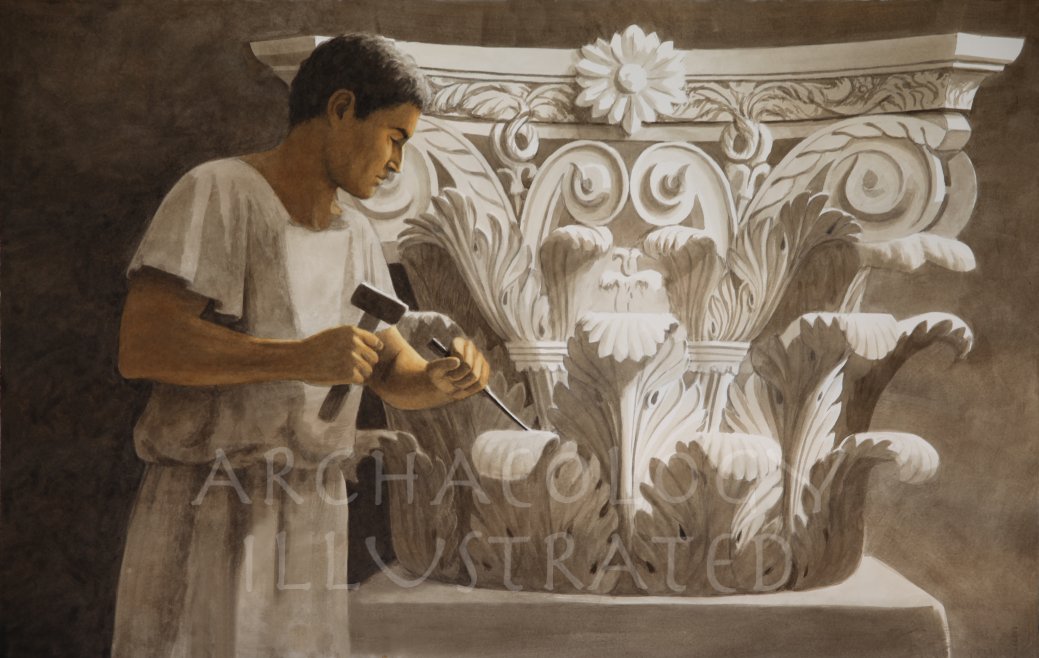
One Hebrew scholar, by the name of James Fleming, makes the argument the word “carpenter” in Mark 6:4 and Matthew 13:56, could actually be a bad translation of the Greek word “Tekton.” Fleming points out that the homes in Nazareth were largely made of Stone, not wood. We also know that the Herod at the time, Antipas, spent a great deal of energy making the city of Sepphoris (Zippori) his “Jewel of Galilee” by giving it a total makeover. This developing city was located only three miles away from the hometown of our Lord. 

There was a rock quarry half way between Nazareth and Sepphoris where Jospeh, and perhaps Jesus, could have spent their time cutting stones for the Herod’s great project. An undertaking of this size would have likely employed all the surrounding builders, including those in Nazareth. Of course, Jospeh and Jesus working as stonemasons is pure speculation.

 Scripture doesn’t give us a detailed account of Jesus’ childhood, but Luke 2:52 tells us that He, “…grew in favor with God and men.” This passage indicates that Jesus was well liked by those who knew Him growing up, but when you compare this verse with Matthew 13:57, that “favor with man” isn’t there anymore. Matthew records, “And they took offense at Him.”

 In both Matthew and Marks account of Jesus’ returning to His hometown, the locals ask the question, “Is this not the son of a carpenter?” After Christ is questioned, He doesn’t perform any great miracle for all to see, but He heals a few of their sick. He doesn’t try to argue with them, but He goes through the town teaching. The gospels don’t tell us exactly what He was teaching, but there’s a simple lesson here for all of us. 

Don’t be a carpenter. 

Jesus lost favor with many when He broke out of their social mold and when He did things they weren’t accepting of. People no longer liked Him when He also began teaching things they weren’t used to hearing. The identity of Jesus was not wrapped up in the job He was trained to do, He was and is much more than that. If you’re a follower of Christ, your identity is not your profession. 

Jesus is not the son of a carpenter, He’s the Son of God. He’s given us a new identity, and we should never cheapen who we are by seeing ourselves as doctors, engineers, truck drivers, preachers, teachers, butchers, bakers, and candlestick makers. We’re Christians. 

Even when He lost some positive popularity, Jesus looked for those who were willing to be healed and willing to hear. This is exactly what should be filling our time as well. Who do you know that needs to be spiritually healed by Jesus? Who do you know that needs to hear the wonderful soul-saving truth about the real Identity of Jesus? 

I’m a Christian— not a preacher. 

stone-mason-at-work-3572

Can Others See the Christ In You?

Brent Pollard

Once I preferred laptops, but since the advent of Android and Apple tablets, I migrated back to the desktop PC. When attempting to accomplish work, there is something to be said for sitting at a dedicated workspace to help productivity. Even so, I usually choose desktop wallpaper to reflect my interests from the religious to whimsical. My capricious nature typically ensures that wallpaper is changed frequently.  

One day after having selected an artist’s rendering of the Christ wearing a crown of thorns for my wallpaper, I noted how I had allowed the desktop of my PC to become cluttered with icons and files. Though they made finding things more manageable, they obscured the image I had chosen for my inspiration. I had to do some cleaning so that I could once again see Christ! 

Spiritually, I feel as if we sometimes equally “mask” the presence of the Christ in our lives. It is not our intention to do so, of course. We are just going about our regular business. Yet, there comes the point in out lives in which we begin doing what we feel is most convenient, despite what this “convenience” does to the presence of the Christ in our lies. Soon, others are unable to readily see the Christ in our lives since He has become obscured by our ephemera. If this persists, others will be unable to see Him at all.  

When this happens, it is time to clean up or bring order to the chaos. One needs to put things in their proper place so that the image of Christ becomes accentuated rather than obscured (cf. Matthew 6.33). It may take a bit of work, but the effort is worth more than anything else in this world because of its eternal implications. 

Dear reader, are others able to see the Christ in your life? If not, perhaps it is time for spiritual cleansing. The only thing equal to the task, great or small, is the blood of Jesus Christ. For the one having never clothed him or herself in Christ (Galatians 3.27), baptism brings about the forgiveness of sins (Acts 2.38). For the immersed believer, the blood of Christ continuously cleanses us as we walk in fellowship with Him and fellow Christians (1 John 1.7).  

Check your image in the spiritual mirror (James 1.22-25). If you cannot see the Christ, rest assured others cannot see Him either. Let us always strive so others can see the Christ in us.