Examining Our Positions

Neal Pollard

Hans Kaltenborn was an ardent admirer and defender of Adolf Hitler and the “new Germany” ushered in with the Nazi regime. Despite diplomatic warnings of assaults upon Americans, Kaltenborn, an influential American commentator for CBS and NBC and of German descent, dismissed it as flawed and skewed information gathering by biased personnel. About to return home to the states to speak against such reports and warnings, his family went to downtown Berlin to do some last minute shopping. While out, the family found themselves in the middle of one of the endless S.A. parades. When his family refused to offer the Nazi salute, his son was physically assaulted and injured. Finally, someone intervened and the incident ended with no further harm. However, the transformed Kaltenborn was apoplectic. He made a report with the American Consulate in Berlin, but no charges were filed. As Eric Larsen writes, “the senior Kaltenborn ‘could remember neither the name nor the number of the Party identification card of the culprit, and as no other clues which might be useful in the investigation could be found’” (In The Garden of Beasts, 164). Despite this, Kaltenborn was now of a different mind!

There are many ways in which life can do the same thing to us.  We may be dead certain about marriage when we are single, about childrearing “pre-kids,” about our career when still in the classroom, about home ownership when in our parents’ home, dorm room, or apartment, and so on. But, life so often has a way of rudely awakening us from some well-meaning beliefs.

Sometimes, this can happen to us in the all-important area of religion. As we stay in our Bibles and gain wisdom and experience life, we may reaffirm but also clarify and even change certain positions we have long held. This can certainly be a dangerous affair, and some have allowed life to change their positions from what is true to what is false (what Jesus says about marriage, divorce, and remarriage because of a family situation, unscriptural changes in worship because of children attending church who have adopted such, etc.). But few of us will go all the way through life without reconsidering especially some conscience or judgment matters.

There are also a great many of our friends who have been taught religious error on God’s plan of salvation, the singular, undenominational nature of the church, what God wants in worship, women’s role in church and worship leadership, and the list goes on. This can be such a difficult challenge for anyone, to revisit long-held and deeply-believed positions in light of what the Bible says.

For all of us, there must be an abiding humility that approaches scripture without the blinders of prejudices, preconceived notions, and influences like family, friends, church, and so on. That is uncomfortable, but essential—for all of us!  We may come to find that something we’ve clung to so tenaciously must be rejected or that something we rejected must be embraced. If we ever get to that place, may we have the kind of heart that puts the will of God above our own will. Without such, we cannot hope to make heaven our home.

7256698_134185460141
Hans Kaltenborn

THE VALUE OF REMEMBERING

Neal Pollard

I am not sure what the connection is, but some people tie a string around their finger to remember an important date or appointment.  Some people just write on their hand.  Others preserve it electronically.

What do we do to keep from forgetting what is important to us spiritually?  Peter writes in 2 Peter 1:12-13 that he was stirring them up by reminding them.  Studying God’s Word awakens our memory to things we may have forgotten, things we have not looked deeply into in the past, or brings something to our attention in a way it has not previously.  It is noteworthy that he was reminding them of something they already knew.  False teachers were trying to distract and deceive them from what they knew.

Bible study is good for us to keep from falling into the traps of false teaching. Many of us come to the Lord from religious groups that teach something different from the Bible about salvation, worship, the end of time, leadership, or the like.  Keep your Bible and your heart open to what you study, and you will keep reminding yourself of the joy and blessings of New Testament Christianity.

Later in the letter, Peter writes, “Beloved, I now write to you this second epistle (in both of which I stir up your pure minds by way of reminder), that you may be mindful of the words which were spoken before by the holy prophets, and of the commandments of us, the apostles of the Lord and Savior” (3:1-2).  That covers everything–the Old Testament and the New Testament.  It is also a reminder that if you live another 50 or 75 years, you will always need to study and remind yourself of what the Bible says on every subject.

If you have ever lost or forgotten something important that cost you in some way, you learned the value of remembering.  If you have ever been to a memorial or monument, you have benefited from that reflection.  If you want to grow in your faith and knowledge, be stirred up by being reminded of the important, spiritual things revealed in Scripture.

5065345783_b2c2cab1d3_b

FOURTEEN SUGGESTIONS FOR BUILDING YOUR DEVOTIONAL LIFE

Neal Pollard

Maybe you have resolved repeatedly to become a better, more faithful Bible student, person of prayer, or simply one who truly desires to build a closer relationship with God. While a lot of that will be personal and peculiar to you as an individual, you may lack direction about how to get started or give yourself the best chance to succeed in that goal. Perhaps these few suggestions can prove helpful to strengthening your daily connection with your Creator.

  • Adjust your wake up time. 15 to 30 minutes head start will prove the most vital moments of your day.
  • Find a quiet, solitary place. Distraction can equal detraction.
  • Study and pray with pen and paper or computer nearby. This will aid specificity and memory.
  • Do not rush. Better a paragraph or chapter pored over than ten chapters glossed over.
  • Take advantage of the commute. Pray through it or play the Bible on audio, if you can.
  • Pick a book or topic of interest and drill down.  Pick it for its relevance to your weakness, need, ignorance, or curiosity. Drink it in deliberately and carefully.
  • Be specific and transparent in your prayers. In the solitude of prayer, drop all pretense, denial, and pride. He knows it all anyway.
  • Always seek application in the Bible text you are reading. This is not a history lesson or academic exercise. This is spiritual food, armor, and survival.
  • Create a list of ways you can enact the principles you read from Scripture. See yourself in the text of Scripture, and challenge yourself to think, say, do, and be what God desires of you.
  • Ask questions of the text. Don’t pass over what you don’t understand. Don’t skim the surface. Mine for meaning.
  • Build a prayer list. Challenge yourself and add people that many others may overlook in your local circle—widows, little children, new Christians, struggling folks, those facing an anniversary of loss, leadership, missionaries, non-Christians where you work and play, the poor, etc. This ever-expanding prayer list will bless lives in ways you won’t know here on earth.
  • Mean what you say. When you tell someone you’ll pray for them, have integrity. Make an honest effort (write it down, put it in your phone) and honor your word. Ask the people you encounter how you might pray for them, then do it.
  • Review. Revisit prayer lists or notes from Bible study periodically. Make it live on through reflection.
  • Pray for what to study and study prayer. You will find that these two spiritual strength-building exercises are interconnected. This is about relationship with God. Spare no exertion.

Consider these “jump starters.” You will come up with more and far better ways to help yourself to a closer walk with God. These days, we’re being pulled in every direction and most lead away from Him. You will have to be deliberate to swim against the tide. May God bless you as you let Him bless you through a vibrant devotional life!

bible-896220_960_720

What It Takes To Grow The Church In Our Culture

Neal Pollard

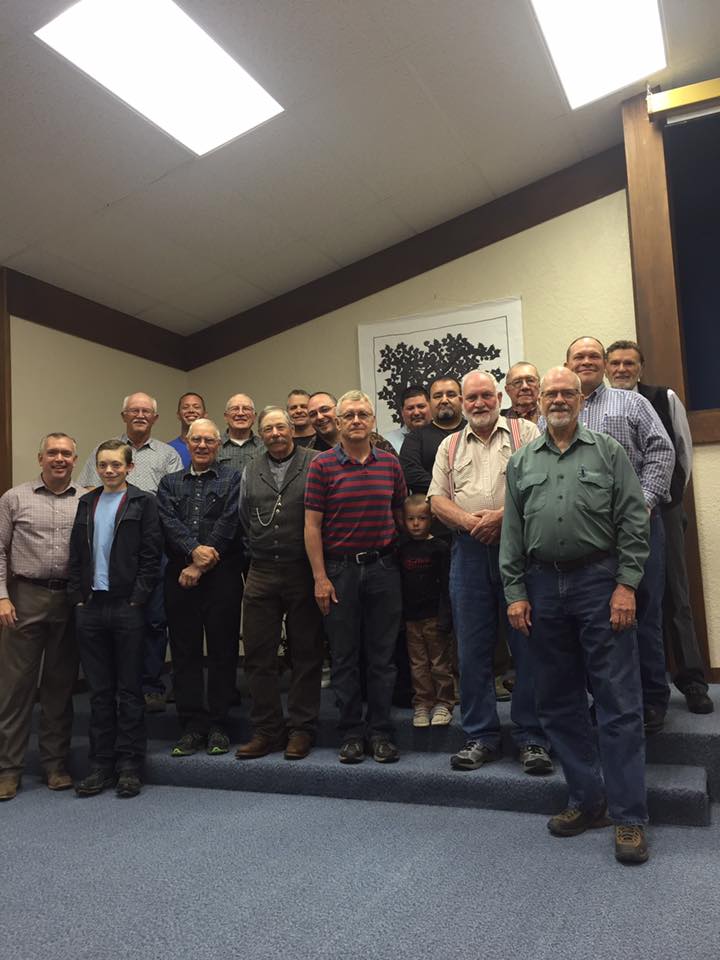
It was such a treat to be among the hearty, faithful Christian men of central Wyoming and the Bighorn Basin. By Bible-belt comparison, they come from small congregations. But their passion and desire to grow the church is humongous. Near the end of their men’s retreat, they divided into groups to discuss the obstacles to growth and suggestions for growth. What they came up with was incredibly insightful, helpful to especially anyone living in the current, western culture.

Among the obstacles they listed were:

  • Lack of commitment
  • Fear
  • Political correctness
  • Biblical ignorance
  • Sin
  • Apathy/indifference
  • Misplaced priorities
  • Lack of adequate leadership

For those in Alabama, Oklahoma, and California who would say, “Those are our obstacles!”, isn’t it interesting how common our struggle is.  The same factors are holding back our growth all over the nation.

Yet, I love the suggestions they came up with. I think they are key to tapping into our growth potential throughout the country and, to a great extent, throughout the world. They suggested the following:

  • Increase fellowship—The key to growth is being in each others’ lives more
  • Emphasize and empower Bible study—There can be no spiritual or numerical growth without growing our knowledge and understanding of God’s Word
  • Think outside the box—Staying faithful to truth, get out of method ruts and overcome fear of rejecting a different, scriptural method just because it is new
  • Challenge greater application of biblical truth—Every class and sermon must have a viable “so what”
  • Be intentional in our relationships—Realize that our jobs, community involvements, friendships, etc., are means to an end rather than an end of themselves. They all exist as opportunities to evangelize.

Our brethren in the deep south, the north, the Atlantic region, the upper midwest, the southwest, the far west, the northwest, and, in short, any recognizable region of the country share a desire to be relevant and meaningful in our communities. We want to honor Christ and grow His body. But it will take measurable steps. It won’t happen incidentally! We must act on our hopes and desires. We must personally engage ourselves in enacting these suggestions daily! In so doing, we’ll not only avoid being part of the problem but we’ll be part of the solution.

13118907_10153650222335922_7374883366678402046_n

I LOVE TO LEARN HIS WORD (Poem)

Neal Pollard

Each exploration is an expedition
Into new, uncharted depths
As deeper I go, with each new mission
I steady my faltering steps.

So much to learn and understand
I will never reach the summit
But the journey is sweet, His precepts grand
That guard me from a spiritual plummet.

Desire to know enlarges each time
I dig for unsearchable treasure
Better than gold and far more sublime
Than earth can weigh, feel, or measure.

Lord, help me to grow as deeper I go
Into Your will and mind
And help me to practice the truth that I know
So the fairer land some day I’ll find.

3668060306_88cc3d93fc_b

19 WAYS TO TANGIBLY IMPROVE YOUR RELATIONSHIP WITH GOD TODAY

Neal Pollard

  • Try to spend 5 minutes of prayer in which you do nothing but praise Him.
  • Do something for Him that requires you to step out of your comfort zone—initiate a conversation with a stranger, give a tract to a co-worker you’ve been talking with, etc.
  • Have a devotional with your family.
  • Call a shut-in or stop by and visit a widow(er).
  • Write a missionary, expressing appreciation and giving encouragement.
  • Anonymously give a sacrificial amount of money for a family in need or someone dependent upon support (school of preaching student or teacher, missionary, etc.).
  • Contact an elder, asking him something you could do to help them in their work.
  • Make a list of at least 20 blessings God has given specifically to you.
  • Speak to someone at church services you have never spoken to before.
  • Invite a family from church you don’t know well over for dinner.
  • Put a packet with bottled water and granola bar, along with a tract, into a Ziplock bag to give to the person at the intersection asking for assistance.
  • Pick out a Bible book you are unfamiliar with and start breaking it down, looking for key words, purpose statement, and other clues to better understanding it. Take copious notes.
  • Pray for someone you are having problems with, an enemy, critic, or one who has offended you.
  • Alone or with your spouse and/or children, sing several songs of praise and admonition.
  • Carry a meal to a young mother who has had a difficult day.
  • Give a big smile and warm greeting to a fellow shopper or employee at a store or restaurant.
  • Ask the secretary for a list of last Sunday’s visitors and send them each a warm, brief note.
  • Think of an area for spiritual improvement in your life and ask God to help you focus on it, being transparent and sincere as you petition Him.
  • Ask the person closest to you (parent, spouse, sibling, etc.) something they need for you to pray for on their behalf.

Can you think of additional ways?

Why Christ Became Flesh

Neal Pollard

The writer of Hebrews exhorts that Christ should be faithfully served, not abandoned, because He is a superior messenger to all other heavenly messengers (chapter one). Then, he gives another reason for holding fast to Him in chapter two. His readers were apparently struggling in their faith and gradually slipping back into the religion they had left. They lacked incentive, but the epistle gives reason after reason for why it should be restored.

In chapter two, he refers to Jesus’ humanity. Through it, He perfectly fills the role of High Priest in a way no Levitical priest could do under the old law. He enumerates the reasons why Jesus became flesh, and each reason was for each of us as individuals.

  • He became flesh to taste death for every man (9). He exercised God’s grace on our behalf. He was willing to make God’s understanding of our frailties empirical (experienced by human senses) by tasting death in a human body.
  • He became flesh to render the devil powerless (14). Before the cross, where Jesus gave up His physical body in death, the devil had the power over man. All mankind sinned and there were various sin offerings provided by God in the different ages. Yet, they could not “take away” sin (10:4,11). But, when Jesus died and was raised from the dead, He rendered the devil powerless over those who faithfully obey Christ and remain faithful unto death.
  • He became flesh to deliver the enslaved (15). Knowing no hope of deliverance from the horrible state of sinfulness makes for a miserable experience (Rom. 7:25). Christ came to deliver us from the awful slave master of sin (John 8:34).
  • He became flesh to become a merciful and faithful High Priest (17).  12 times in Hebrews, Jesus is called the Christian’s High Priest–the High Priest of our confession (3:1), in Heaven (4:14), sympathetic and sinless (4:15), appointed by the Father (5:5), without predecessor or successor (5:10), who went before us (6:20), holy, innocent, undefiled, separated from sinners, and exalted above the heavens (7:26), seated at the Father’s right hand (8:1), an offering priest (8:3), and offering His own blood (9:11). His service in administering His blood on our behalf is merciful (kind, forgiving, protecting) and faithful (trustworthy and sure).
  • He became flesh to come to the aid of the tempted (18). He well remembers what it is like to suffer in a human body. Not just that greatest moment of suffering, up on the tree, but the daily discomforts (Mat. 8:20), abandonment (John 6:66), and betrayal (John 18:27; Mark 14:45). Therefore, He can help me right now with my problem. Nothing is too big, too mysterious, or too difficult for Him.

Five reasons from Hebrews two are given for why Jesus became flesh, but all of them are for me (and for you)! What a thrilling though. Let’s serve this wonderful Savior!

METH-FLAVORED MILKSHAKE

Neal Pollard

It allegedly happened in 2014, but now Fred Maldonado is taking In-N-Out Burger to court for what he said he found at the bottom of his cup.  While their is some “fishiness” to his story and the restaurant “will vigorously defend [against] these baseless claims,” Maldonado “found a napkin and two capsules in the bottom of his milkshake cup” and “later testing revealed that the capsules contained methamphetamine” (from “Businesstech” article).

Search the internet a little and you will find more stories than you can probably stomach about what people have found in their prepared or packaged food and drinks.  As a consumer, the thought of such is enough to make you grow everything you eat and never eat out again.  In the supposed “meth” incident, add danger to disgust!  There is a certain amount of faith and trust one has that those responsible for getting his or her food (or drink) will give them what and only what they paid for.

Tragically, every Sunday in churches across the globe, people sit down to receive what they sincerely believe to be the “bread of life” (cf. John 6:35) and the “water of life” (John 4:10). They trust that the one who is delivering it to them, maybe one they consider a friend and a spiritual brother, is giving them exactly what is claimed—the Word of God. Yet, Scripture warns that there are those who taint the message with something far more appalling and dangerous than anything else could be.  Instead of truth, they get myths (2 Tim. 4:4). Instead of the sure word of Scripture, they get destructive heresies (2 Pet. 1:19-2:1). Instead of light, they get darkness (John 12:46). Instead of Christ, they get philosophy, empty deception, tradition of men, and elementary principles of the world (Col. 2:8).

Paul wrote that divine judgment awaits any who “did not believe the truth, but took pleasure in wickedness” (2 Thess. 2:12).  The hearer has a responsibility to check what the teacher says, to make sure it is right and true (Acts 17:11).  God will hold everyone responsible for what they did with His Word. Even though teachers face a stricter judgment (cf. Jas. 3:1), He holds you and me responsible for avoiding dangerous, disgusting doctrine.  It takes practice to have our “senses trained to discern good and evil” (Heb. 5:14).  Take charge of your own spiritual nourishment, from what you hear on Sunday to what you read every day!

If The Bible Is God’s Word…

Neal Pollard

  • It answers the biggest mysteries of this life that so baffle humanity.
  • It reveals the plan of the Creator of everything.
  • We are accountable to it.
  • It tells us where we are going.
  • It will give us a guide we can have confidence in as we head to the future.
  • We cannot refuse to follow it.
  • We should share it with as many people as we possibly can.
  • It is not on a par with other books; it is superior to all of them.
  • He disapproves of religious division.
  • There is a right way to worship Him.
  • We can know the truth.
  • We discover some great, precious and exciting truths and promises.
  • The New Testament church is eternally important.
  • We should read and study it faithfully.

Investigate the Bible and explore its origin and the book as it is today.  God’s Word is not afraid of investigation.  It has been more scrutinized than any other book ever written, and it still stands.  It is a foundation we can confidently build our lives upon.  It is a guide that can safely lead us now and forever.  Have you been in the book of books today?

Bible Classes, Special Services, And P.M. Worship Services

Neal Pollard

  • I attend because I want to honor God in the special way that occurs when the church assembles to worship Him
  • I attend because I want to encourage others and be with them every opportunity I can
  • I attend because I find the acts of worship so meaningful
  • I attend because there’s so much of the Bible I have yet to master, and I want to hear what the teacher and the other students may have to say about it
  • I attend because what I do know and have learned I feel compelled to share when given the opportunity occasioned by the assemblies
  • I attend because I often meet those searching for truth, those new to the area, and those brothers and sisters visiting from out of town during those times
  • I attend because I think it sets a good example for my family, friends, and neighbors
  • I attend because the very exercise of what’s done in assembling, if my heart is engaged, helps me grow in my Christian walk and strengthens me for the week ahead.
  • I attend because I want to rise above the bare minimum expectations

Certainly there are many more and probably better answers regarding the motivation for attending every time the local saints are assembled.  But these are enough to move me, when I am able, to join my spiritual family in both study and worship.  I try to prioritize the assemblies above the unnecessary things and the things that will not endure beyond this life.  The same reasons will draw me to come when we have seminars, gospel meetings, Vacation Bible School, lectureships, and the like.  When I can attend, I want to attend and will attend!  I’m thankful that so many others must feel the same way.  There’s always room for more!

BRAVE MEN IN BELLEAU WOOD

Neal Pollard

In March, 2006, I spent nearly an hour walking in Belleau Wood, a 200 acre tract behind the Aisne-Marne American Cemetery about 50 miles east of Paris, France, accompanied by Kathy as well as the preacher for the Eglise du Christ in Paris, Roland Mohsen. Seeing the World War I cemetery, chapel, and memorial was exciting for me, given not just my love for history but my special interest in “The Great War.”  It was in those woods that the U.S. Marines made their first big impression on the whole world.  At a 1923 ceremony for an American battle monument there at Belleau Wood, the Army General who led the Marines in the decisive battle against the Germans, James G. Harbord, said this:  “”Now and then, a veteran … will come here to live again the brave days of that distant June. Here will be raised the altars of patriotism; here will be renewed the vows of sacrifice and consecration to country. Hither will come our countrymen in hours of depression, and even of failure, and take new courage from this shrine of great deeds” (Kozaryn, Linda. “Marines’ First Crucible: Belleau Wood.” 6/18/98. Armed Forces Press Service).

The Marines won a hard-fought victory, at great price requiring such persistence. The memorial erected on that ground has been an inspiration for countless soldiers as well as those from many nations who have stood at that spot.  Now, almost 100 years after the battle, memories have faded and fewer go to that spot for inspiration despite the predictions of General Harbond.

For the last several days, I’ve been mentally devouring the sermonic masterpieces of men like V.P. Black, Franklin Camp, Roy Lanier, Bobby Duncan, Wendell Winkler, and others at a great audio site called preachersvault.com. Most of the men on that site have transitioned from time to eternity.  My heroes have always been preachers, and I appreciate the depth of understanding and motivational value found in listening.  I recall the incredible blessing of attending the 1988 Faulkner University Lectureship, where brother Winkler invited men who at that time were 65 years old and older.  Only 18 years old, I sat with my dad, who was also in attendance, to hear Camp, Black, Hugo McCord, Winfred Clark, Rex Turner, Sr., Bob Hare, Leroy Brownlow, George DeHoff, Basil Overton, and many others.  Over a quarter-century later, I still revel in the memories of those lessons.

Military memorials may begin to fade with time, but the value of good Bible teaching only grows with the passage of time.  There is great reward in taking the time to sit at the feet of seasoned students of Scripture, drawing from their deep wells of knowledge.  These opportunities are not just relegated to days gone by and various media selections.  Try prepared, studied Bible class teachers, guest speakers, and local preachers. Those of us in those positions need to be challenged to go deeper and make truth live more powerfully.  Those of us who hear need to value this treasure in earthen vessels (2 Cor. 4:7).  Won’t you reserve a few spots in your heart for heroes whose weapon is the sword of the Spirit?

(L-R): Kathy Pollard, Gary Pollard III, Wendell Winkler, Betty Winkler, Shellie Holder, Clay Holder, and Jacob Holder (1994, Livingston, Alabama)

THE MOANING OF A DOVE, THE GROWLING OF A LION

Neal Pollard

One of the more interesting Hebrew words in the Old Testament is the word translated “meditate” in passages such as Psalm 1:2.   הָגָה (“Haga”), most often found among the poets and prophets, has a wide range of meaning depending on derivation of the root word.  Elihu uses the word to speak of the “rumbling” of God’s voice (Job 37:2). Moses uses the word to speak of a “sigh” (Ps. 90:9). Isaiah uses the word to speak of the “moaning” of a dove (38:14) and “growling” of a lion (31:4). The occult mediums “whispered” and “muttered” their incantations (8:19) (Harris, et al, TWOT, 1999, n/p).  Yet, the word is often used to speak of a low voice within, pondering and rehearsing what God’s Word has to say and what it means.  This is how David and Joshua use the term in speaking of meditating day and night on God’s Word (cf. Jos. 1:8).  It is possible that in carefully considering God’s Word, the student would rehearse or mouth the words of God as they contemplated and looked into it.  One lexicography renders it “to read in an undertone” (Koehler, et al, HAL, 1999, n/p).

How one studies the Bible is very personal, but for it to have value and assist us in living the way God wants us to, there has to be a process in place that takes us beyond mere reading to comprehension and then on to application.  Meditation upon the Bible seems a vital part of this.  When is the last time in your personal Bible reading that you memorized, rehearsed, and meditated upon what you read that day?  Do you revisit in your mind what you read earlier, pondering meaning and relevance in your attempt to live as God wants you to live?  Have you found yourself returning to its truths again and again, convicting yourself of needed changes and improvements in your Christian walk?

Meditating upon God’s Word will build your reverence of it, your conviction that it as modern and relevant as today’s sunrise, and your view of it as the inspired, authoritative Word of God.  It will bind your mind and heart to the mind and heart of God.  It will help you elevate your thoughts and consider the bigger picture of eternity and not just the mundanity of earth.  It will have you singing with David, “Oh, how I love Your law! It is my meditation all the day” (Ps. 119:97).

The “Religious Condition Of The People”

Neal Pollard

After describing the “religion of the heart, not of the head,” scripture-less sermons of his contemporaries, a certain writer then focused on the consequent religious condition of the people.  He wrote,

The religious condition of the people very greatly corresponded to the teaching
of these preachers. The native common sense of some told them, that if God
gave a revelation to man, it certainly was one that man can understand.  That
it was unreasonable God should give a revelation of his will, and then need an
interpreter of it to the very men, for and to whom he gave it, so they studied it
for themselves, and learned many of its truths…

But the masses of the people did not study the Bible, made no effort to learn
what God had revealed in this Book to men, looked at it as a sealed Book to
them, made no effort to a religious life further than to live a respectable moral
life, obey the laws of the land, and maintain a reputable character among their
fellowmen…The religious life was one of impulse and feelings, days of sunshine
and cloud, moments of joy and hope, succeeded by long periods of doubt and
despair. They had no though of regular, faithful, self-denying obedience to God
bearing the fruit of joy and peace in the Holy Ghost.
(Lipscomb, David. Life and Sermons of Jesse L. Sewell.
Nashville: Gospel Advocate, 1891. p. 35-36).

Lipscomb wrote concerning those in mid-19th Century Tennessee, but it was probably true of mainstream America at the time.  They experienced different religious influences, particularly the ideas of hardline Calvinism.  Yet, how similar it sounds to even our own day.  Some are willing to hold themselves personally accountable for knowing the Bible, God’s written revelation.  They know they need to study and follow it, and they are open to do that.  Yet, the masses still try to live a self-guided, vaguely “moral” life of doing good things without learning for themselves what God’s instruction book says.  As the result, they meander through life in a sort of rudderless fashion.  That is, they have no concrete guide and show no serious interest in what God wants them to do.  At least, their interest is not great enough to drive them to read, study, and try to understand the Bible.

We have an obligation to seek searchers and point them to “the Book.” We also have a responsibility to ourselves, to faithfully delve into the Sacred pages, discern God’s will and then be changed by it.  The masses will likely always be as they were in Lipscomb’s and our day.  Our task is to go deeper and help others do the same.

“What Have You Done For Me Lately?”


Neal Pollard

This is not just something Janet Jackson once wondered.  The late summer and early fall of each year, college football programs have alumni, boosters, and fans asking head coaches the same thing.  Companies ask the same of employees, and stockholders ask it of companies.  While it can be an unfair question, it cannot be unfair if God asks it.

God has a perfect view of our lives, knowing not only what we’ve done for Him in our past but what we are doing now.  As He looks into our lives, could He be wondering, “What have you done for Me lately?”

  • “Have you won a soul to Me lately?”
  • “Have you been in My Word lately?”
  • “Have you been to My throne room in prayer lately?”
  • “Have you and I been close lately?”
  • “Have you been involved in My Son’s work lately?”
  • “Have you been the spiritual leader of your family lately?”
  • “Have you watched your example and attitude lately?”
  • “Have you been the source of unity in My Son’s body lately?”
  • “Have you encouraged a hurting, lonely soul lately?”

These and other questions are ones He has already asked in principle, when He addresses our hearts (Mat. 15:8-9), teaches us our responsibilities (Mat. 7:21), talks about our relationship with Him (Mat. 22:37), and examines our lifestyles (Mat. 5:13-16).  We may have studied with several people in the past, taught a Bible class at some point for a long period of time, and been very close to and in love with God in days gone by.  But how is it now?  Is that really a thing of the past or does it describe the current state of things?  The wonderful news is that you can start right now, building a better relationship with Him and serving Him more effectively.  Today is as “lately” as it gets.  If your zeal is zapped and your fruit has shriveled, get busy right now restoring that.  Obviously, God will see it and He will bless you for it!

IS TRUTH “OBJECTIVE” OR “SUBJECTIVE”?


Neal Pollard

“You folks believe baptism is essential, but we believe we are saved when we accept Jesus in our hearts by faith.” “Why does the church of Christ think it is wrong to use a piano?”  “You must not like women.  You sure don’t let them use all their ‘gifts’ in your worship and leadership.”  These are just three random examples of statements of perception made by our friends and family concerning “our beliefs.”

How would you answer these?  Even within the Lord’s church, more than one answer is often offered.  Sadly, too often the heat of emotion eclipses the light of scripture in these matters.  How is truth determined?  Is it man’s right to decide what truth is “for him”?  Can I have my truth and you have your own, different truths, and we both are right?  Please understand that I am not speaking of matters of judgment, opinion, matters that must be determined by principles of scripture, scruples, and conscience.  Take the three examples mentioned-baptism, church music, and the role of women.  Are these matters that must be decided by mere human judgment, opinions, and conscience?  Or can we “know the truth” on these things (cf. John 8:32)?

All of this ultimately boils down to our attitude and approach to God’s Word.  Do we accept it at face value and glean from it what it has already said, or do we infuse (insert) into it our predetermined values and desires?  Consider the three examples.

Baptism is connected to salvation in the gospels (Mk. 16:16), the history book of the New Testament (Acts 2:38; 22:16; etc.), and the epistles (Rom. 6:1-6; Gal. 3:27; Col. 2:12; 1 Pet. 3:21; etc.).  Why would we deny it?  Do we really hope to make scripture fit our view by trying to make Bible verses conflict with each other (cf. John 3:16; Acts 16:31)?  If the Bible repeatedly says baptism is necessary for salvation, isn’t that a truth objective and universal?  If not, why not?

Singing is specifically commanded in major worship passages like Colossians 3:16 and Ephesians 5:19.  We have no doubt that God wants us to sing.  Now, some say that it is a matter of preference whether you sing with or without instrumental accompaniment.  I find it interesting that a New Testament writer teaching a New Testament principle makes his point with an example from the first covenant.  In Hebrews 7:14, the penman writes, “For it is evident that our Lord arose from Judah, of which tribe Moses spoke nothing concerning priesthood.”  Moses did not forbid a man of Judah from serving as a priest.  God simply specified that the tribe of Levi was to be the priestly tribe.  Was priesthood selection a matter of personal preference?  Absolutely not (see 1 Kings 12)!  

Women’s role in the church is discussed in the midst of an epistle the thesis of which is that the church may know how to conduct herself (1 Tim. 3:15).  Part of that conduct regards women’s role in the church (1 Tim. 2:9-15).  The Christian woman is not to teach or have authority over the man (2:11-12).  The reason is not tied to Greek culture, but way back to original design at the beginning of the world (2:13-14).  When some push for an “expanded” role for women, are they letting cultural pressure of heavenly desire drive them?

Certainly, we cannot be callous or altogether dispassionate in studying or discussing these matters.  But, without recognizing a sovereign, divine standard of truth, what are we doing with Scripture?  Whether meaning to or not, we are subjugating God’s stated will to our subjective, ever-shifting will.  John 12:48 reminds us that the latter will ultimately be irrelevant.