Why Do You Come?

Brent Pollard

I hope I am not injuring Matthew’s text by sharing this. Still, I have recently been reflecting on Jesus’ testimony about John the Immerser as recorded in Matthew 11.7ff. Jesus asked the assembled crowd about their rationale for venturing into the wilderness to hear John. Were they going to see: “A reed shaken in the wind?” “A man dressed in fine clothes?” “A prophet?” What were they hoping to find?

Had they anticipated someone whose opinions and beliefs could be easily changed? John did not easily change his mind or bow to the masses’ will. Did they think they would meet someone living a life of luxury? John’s simple lifestyle, which included camel-hair clothing and the consumption of locusts and wild honey, was meant to highlight his prophetic calling and set him apart from the rest of society. John was a prophet, Jesus says, and not just any regular prophet. He prophesied in the Old Testament to come before the Messiah and pave the way for him (see Malachi 3.1).

Jesus spoke highly of John and emphasized the significance of His upcoming kingdom, stating that even the least in it would be greater than John. We must recognize that we can be a part of this kingdom by obeying the gospel. With this understanding in mind, let’s consider a new perspective. Why should we attend church assemblies now that Jesus has established His kingdom and added to it those He saves (Acts 2:47)?

To paraphrase Jesus, “Did you come here for a show?” Like Jesus’s question about the reed, this challenges the idea of fickleness and superficiality in worship. If attendees primarily seek entertainment, they may miss the depth and reverence of a genuine relationship with God. Desires to develop spiritually, interact with other Christians, and actively participate in the body of Christ should be the driving forces behind attending church services. It is an opportunity to learn from biblical teachings, receive guidance and support, and collectively worship and glorify God. Engaging in these gatherings strengthens our faith, builds meaningful relationships, and contributes to advancing God’s kingdom on earth.

Would Jesus ask, “Did you come here for personal gain?” Analogous to the question about “a man dressed in fine clothes,” this question challenges those who attend church for social status, networking opportunities, or personal recognition. Jesus would prioritize the sincerity of one’s intentions and the desire to grow spiritually rather than seeking personal gain. He emphasized humility, selflessness, and a genuine love for God and others. Therefore, attending church should be driven by a genuine hunger for spiritual growth and a desire to serve and love others rather than personal gain or recognition.

Or would He ask, “Did you come here to meet God?” As Jesus confirmed John’s prophetic role, this question reinforces the primary purpose of the church: to engage in communal worship and seek a deeper relationship with God. Attending church is more than fulfilling a religious obligation; it is about connecting with a higher power and finding meaning in our lives. Through this connection, we can experience personal transformation and contribute to the well-being of our community.It’s important to regularly evaluate our reasons for attending church services and ensure that we understand what true worship means. Worship is not about us but showing our love, respect, and admiration for God. It’s not about receiving anything but about giving. We should avoid letting the latest gimmicks or methodology take away from the message or purpose of coming together, which is to honor God. Each of us can contribute by demonstrating humility and service and emphasizing that the focus is on God, not on any one person.


“Something Must Be Wrong”

Monday’s Column: Neal At The Cross

Not long ago, I was in another state for a few days. On those rare occasions when I travel without Kathy, our routine is pretty fixed. I will call her at the end of the day to say good night. The next morning, I will wait for her to text me to say good morning (she doesn’t set an alarm clock when I’m away, so I don’t want to wake her up).

During the recent aforementioned separation, we talked during the middle of the evening. She assumed that was our good night call. She came home after going to a Bible study and the grocery store, and I got a Ring notification showing her enter our house. About 90 minutes later, I called to say good night. The call went to voice mail. I texted. Nothing. I tried communicating through Alexa. Nothing. I checked Life360. Her phone had died. So, I went to sleep.

The next morning, I tried reaching her again. Ring showed no motion, not even letting our dog Ollie out. Her phone was still dead. My concern grew! This was unprecedented! Something was wrong! Had she hit her head? Had there been a home invasion?

I texted a good friend who lives nearby, asking him if they could check on her. At 6:15, he stopped by with his daughters on his way to taking them to school. He rang the doorbell several times and even knocked hard on both the side and front doors. Finally, Kathy emerged–she thought it was our youngest son’s truck since our friend’s truck looks very similar. She was unharmed, though embarrassed and unprepared for early morning company!

We found out that morning that there was a minor gas leak in our fireplace which might have coaxed her into a deeper state of sleep. The rest was just coincidence. She thought we’d already said good night. She read for a while, then went to sleep. The next thing she remembered was Jeremy banging on our door. There was plenty of embarrassment to go around.

I thought about this situation and how it illustrates several things.

  • It can take some persistent knocking before some will answer (Rev. 3:20)!
  • It is notable when one who usually can be counted on to respond a certain way does not; it is often a sign that something is wrong. If you missed a church service, would people wonder where you are since it was so unusual–or would they expect it (Heb. 10:24-25)? If you lost your temper or sinned with your tongue, would people think that it was uncharacteristic or par for the course?
  • When we truly love and care about someone, we will persistently try and reach them if we think they’re in trouble (Jas. 5:19-20)!
  • Checking on someone we think is in trouble is to risk embarrassment and an uncertain response.
  • Sometimes, it takes another person to do what we tried but could not do (1 Cor. 3:6-9)!

Fortunately, this is something that Kathy and I can laugh about now. We’ve fixed the leak in our fireplace. Hopefully, this will never happen again. But it is an indelible memory for both of us. It also illustrates that there are circumstances that call for urgency and action! As it concerns the soul, the stakes are eternally higher than the physical. May we take Paul’s words to heart as it concerns our spiritual work: “For this reason it says, ‘Awake, sleeper, and arise from the dead, and Christ will shine on you.’ Therefore be careful how you walk, not as unwise men but as wise, making the most of your time, because the days are evil” (Eph. 5:14-16).

Neal Pollard

An Inspired Appeal To Assemble

Neal Pollard

I’m writing this during one of the best gospel meetings I’ve ever attended. Robert Hatfield is doing an incredible job! He has a way of telling even challenging truths with kindness while reaching the heart and the mind. He has been prepared and has presented each sermon masterfully. I’m also grateful our elders had the wisdom to invite him to come.

Have you thought about why special events like gospel meetings, like our “regular services,” are so beneficial? Why should they draw our interest and be important to us? The writer of Hebrews gives us at least three reasons in an exhortation in Hebrews 10:24. He writes, “Let us consider how to stimulate one another to love and good deeds…” The context of this passage is assembling together. He contrasts “neglecting to meet together” with “encouraging one another” in verse 25, but the why is in verse 24.

COOPERATION–“Let Us…One Another”

You will find the exhortation “let us” three consecutive times in Hebrews 10, in verses 22-24. The first is about our relationship with God (22), the second is about our relationship with the world (23), and the third is about our relationship with each other (24). The writer identifies it as “one another.” It requires each of us to do our part, to decide to act. The more who embrace this encouragement, the more effective we will be at obeying this command. “Us” can be a small number of people or a large number of people, but truly “the more, the merrier.” 

CONSIDERATION–“Consider”

This literally means “think carefully about.” It pictures sitting down and being intentional. Perhaps visualize specific faces of brothers and sisters, those who are friends, new Christians, visitors, newcomers, family members, and the like. Visualize that great High Priest who is also there (19-21). We will hop in our cars after a long day (or week) of work and school and rally together when we have taken the time to reflect on who we are going to meet with. 

CAUSATION–“Stimulate…To Love And Good Deeds”

It never fails! When you think about how the reason for assembling is to praise and glorify our Lord and Savior, there is already ample motivation. But then there is what our mutual presence and participation does for one another. It causes us to think and feel and to do right. We constantly need that prompting and urging. The world is all too ready to be unloving and to either do wrong or neglect right actions. Every opportunity to assemble holds stimulating possibilities.

There have been non-Christian visitors at each service of our gospel meeting. That’s exciting! But just as exciting, you and I get to be together in a time of worship and study. We’ll come with buckets emptied by the day and week, then leave with them filled to overflowing. God knew that’s how life is! It’s why he urges us, “Let us consider how to stimulate one another to love and good deeds.” He gives us assembling together as a powerful outlet. “Let us” take advantage!  

 GOD’S WAY TO GET UP AND GO 

Tuesday’s Column: Dale Mail

Dale Pollard

It’s hard to find a better Scripture to serve as a goal or vision statement than Hebrews 10.24. 

Let’s consider how to provoke one another towards love and good deeds.” 

First, notice the verse begins with the key to the beginning of biblical love and good deeds. In a group setting, love and good deeds should be considered together. One person’s dreams and schemes will lack the crucial insight of others. 

Second, consideration implies that putting to practice the love and work of God takes some thoughtful planning. In order for our families and church families to experience God’s love, we’ve got to personalize it for them. In order for us to move on from declaring that love to proving it, the action must stem from observational consideration. The proof of love is in a sacrificial point of good deeds. 

Third, in order to motivate (provoke or spur) people towards these goals, we must experiment. What gets people excited and moving? What gets your people excited and moving? Since all groups and family units have different needs, the motivation methods should be focused on them. It’s all too easy to formulate a strategy and perfect plan, but we’ll never know of any flaws in that plan until others have had the opportunity to communicate their own thoughts. They have knowledge and insight that one person alone lacks. If after careful consideration and prayerful provoking there still isn’t movement, reexamination might be necessary. 

The goal of creating an environment of godly love and work is not a walk in the park, which is why the Hebrew writing records these three steps to success. How much of an impact could we make if we changed, “let’s consider how to spur one another” to “we know what it takes to spur others on.” 

What I Saw On Sunday

Monday’s Column: Neal At The Cross


Neal Pollard

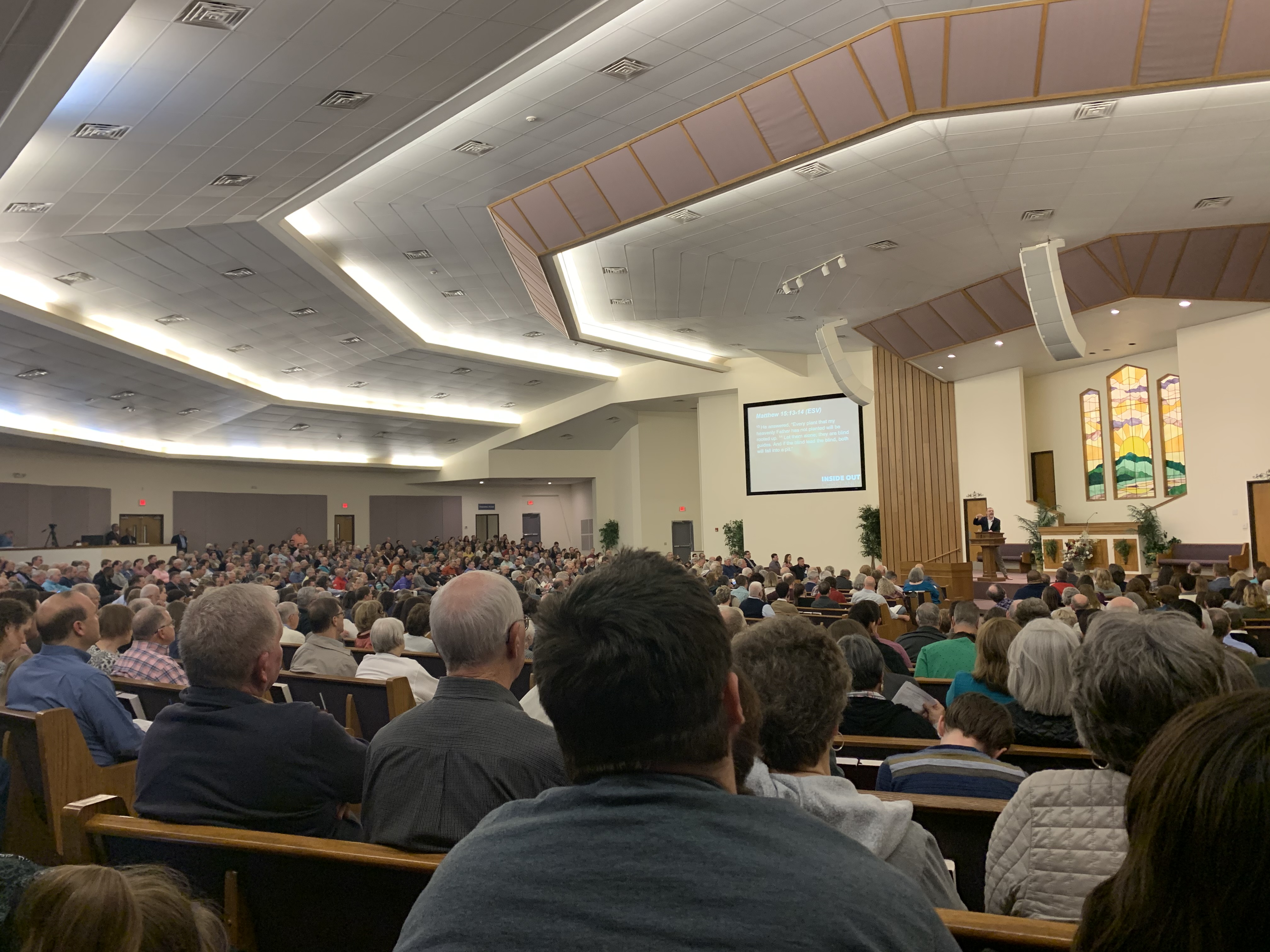
It was our largest crowd since before the Pandemic. It was a targeted effort to fill the building. The building was full! I asked several how many non-members were present and the most conservative answer was dozens, perhaps fifty. While we know that filling the pews is only one factor in encouraging people to follow Jesus (discipleship), it is a pretty fundamental and important one. Let me share a few exciting things I saw.

I saw the power of an invitation. The elders laid out a challenge to us to invite every non-member we could think of, coworkers, family members, friends, classmates, acquaintances, etc. That’s not revolutionary. Perhaps it was the sheer volume of invitations so many members issued. Such seeds were spread far and wide, and Sunday was an indication that some will come if asked. I am confident that many who were invited will come in the future, if we continue to ask. Philip invited Nathanael to “come and see” (John 1:46), and it changed Nathanael’s life! Andrew told his brother, Peter, “We have found the Christ” (John 1:41)! It changed not just Peter’s life, but the thousands of lives Peter eventually touched. Who knows the eternal impact made by all the invitations issued this weekend, but it shows that there’s still power in a simple invitation!

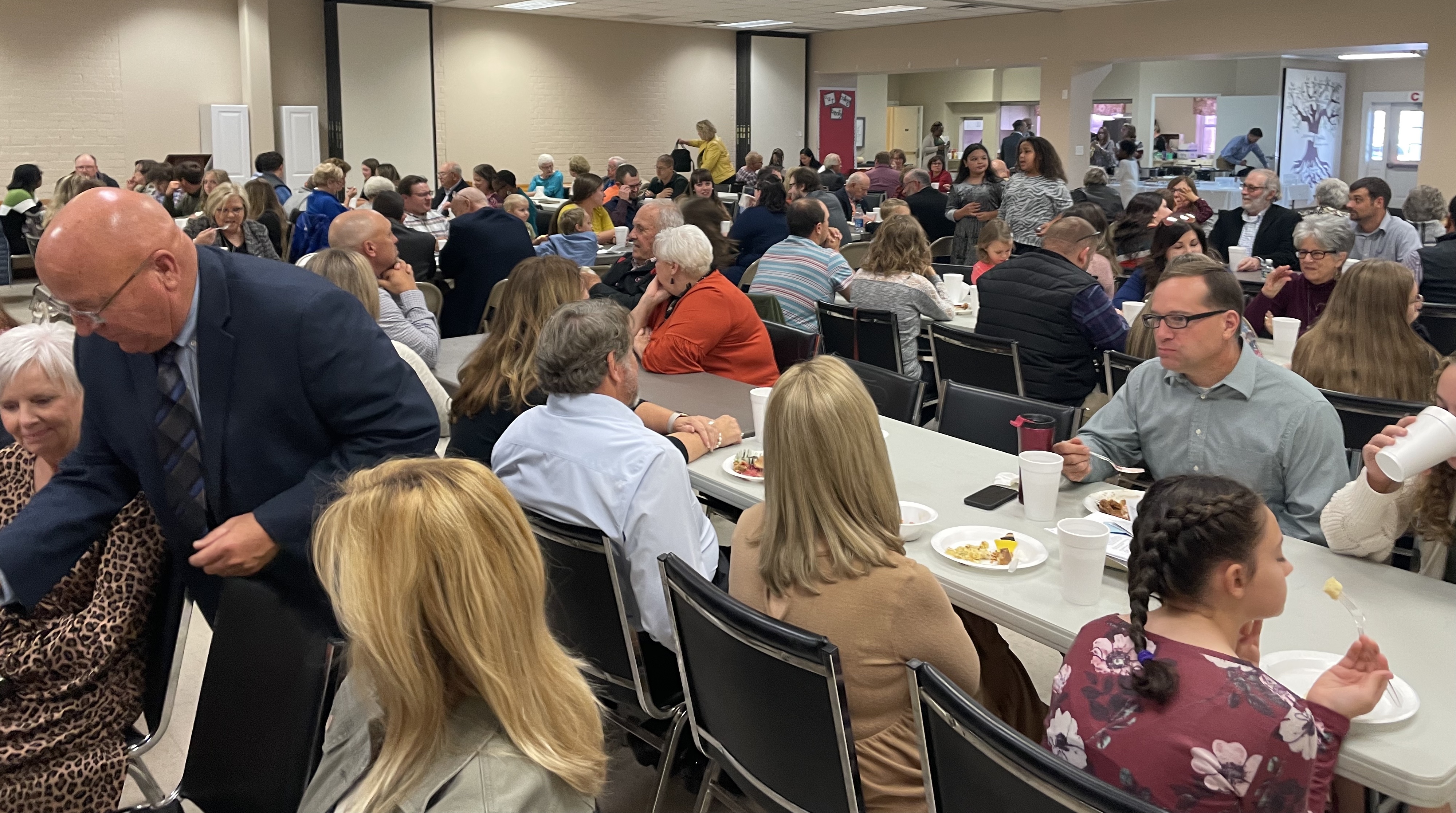
I saw the strength of teamwork. That was on display in so many ways. There was a huge team of people greeting those who entered our doors. Anticipating a lot of visitors, this was organized beyond the ordinary measure. It was exciting to see so many doing this, and it seemed to be infectious. Others joined in. It was evident in the efforts of multiple deacons and vision groups coordinating various works. It extended to members in the auditorium warmly welcoming unfamiliar faces and making our visitors feel at home. It continued on to the potluck after Bible class with the scores of people bringing an abundance of food, serving, assisting, and cleaning up. We were a finely-tuned machine of coordination. I could not help but think of Paul’s words, to Philippi (“make my joy complete by being of the same mind, maintaining the same love, united in spirit, intent on one purpose,” 2:2) and Colosse (“beyond all these things put on love, which is the perfect bond of unity,” 3:14). Sure, he had more in mind that one event on one day, but this is a key way such overall unity is built. 

I saw the example of leadership. This began with the eldership. They not only challenged us to invite, they led the way. It’s not an exaggeration to suggest that the four of them invited hundreds of people by text, phone, and face-to-face. They invited friends, family, acquaintances, and strangers! True leadership shows the way! This included those who led in worship. There was forethought, effort, and coordination from the greeting to the announcements and every act of worship in between them. This involved the membership who enthusiastically engaged in the worship. It also takes in every one that helped people find bathrooms and classrooms. Leadership always breeds more leadership. The writer of Hebrews says, “Remember those who led you, who spoke the word of God to you; and considering the result of their conduct, imitate their faith” (13:7). 

I saw the hope of tomorrow. The effects of the last 18-plus months have been deflating and demoralizing. We have lost members to Covid, physically and spiritually. It has derailed plans. It has distracted us. But Sunday showed that by faith in God and by following His plan, the best is yet to be! As we were reminded at the end of the day yesterday afternoon, we have worship every Sunday so let’s keep inviting. How many Bible studies will result from inviting others to church? How many future preachers, elders, deacons, soul-winners, and Bible class teachers are represented in those who walked through our doors yesterday, some for the first time ever? To some degree, we’ve got to be like Paul and say, “forgetting what lies behind and reaching forward to what lies ahead, I press on toward the goal for the prize of the upward call of God in Christ Jesus” (Phil. 3:13b-14). 

There’s more to do! There’s more inviting to do. There’s more follow up to do. But I see more than a special event in what occurred on Sunday! I see a culture change and a purposed people. Think what God can do with that!

Finding Refreshment

Friday’s Column: Supplemental Strength

brent-portrait

Brent Pollard

Lying in a bed for three and a half months will make you feel icky. You can only bathe with washcloths. Some nurses loaded those cloths with water and got me wetter than an Anglican baptism. Those “baths” made me feel better. However, before being discharged, I finally took a shower. That was the best. I felt refreshed. The only downside was seeing my hair come out in clumps as I washed my hair. It seems I am fated to look like the Stooge, Larry Fine.   

Where do you find your refreshment? Is it in a cool drink on a sultry day? Is it standing by a fireplace in winter? Such actions reinvigorate us. This result is what refreshment accomplishes. The sinner can find refreshment in obedience. In his second recorded sermon, Peter says: 

“Therefore repent and return, so that your sins may be wiped away, in order that times of refreshing may come from the presence of the Lord” (Acts 3.19 NASB1995).

This refreshing comes from being immersed in Christ (cf. Acts 22.16). I would encourage any who have not yet clothed themselves in Christ to allow their faith to lead to this total submission, in which one joins the Lord in His death, burial, and resurrection (Romans 6.3-5). No, it is not a work, nor is the power in the water. It is where we symbolically contact the blood of Christ and express a clear conscience before God (1 Peter 3.21). It is a necessity for salvation. 

Yet, there remains refreshment for the Christian as well. Paul speaks of his desire to meet with the brethren of Rome in Romans 15. He tells them to join him in prayer so his arrival will refresh him (Romans 15.32). That is an interesting word choice. In fact, this is the only time this word, συναναπαύομαι, appears in Scripture. The word means to rest along with, but here implies a spiritual refreshing.  

I like that idea of “resting with”, though, especially as it applies to Christian fellowship. We spend our weeks in the world and get beaten up by the forces of the adversary. How refreshing is it when we pause and rest with our brethren in worship and Bible study? I know I have gone to services feeling poorly, physically, only to find myself reinvigorated on my way back home. It has the same effect mentally and, most importantly, spiritually. Unfortunately, my recovery prevents me from joining the brethren currently. Still, you better believe that I eagerly await the day I can rejoin them even more than when I wished for a shower.  

It is sad when brethren find excuses to avoid refreshment since it is one of the blessings we receive in the heavenly places (Ephesians 1.3). Earthly diversions cannot reinvigorate the spirit as can God. Oh, it might bring temporary happiness, but the participant of earthly delights is left feeling empty, needing entertainment and diversion yet again. Services are not a chore when one comes seeking to worship God and rest beside their brethren.  

“And let us consider how to stimulate one another to love and good deeds, not forsaking our own assembling together, as is the habit of some, but encouraging one another; and all the more as you see the day drawing near.” (Hebrews 10.24-25 NASB1995) 

Don’t you want to find your refreshment? 

AREN’T WE ASKING THE WRONG QUESTION?

Monday’s Column: Neal At The Cross

ATF2020 crop

Neal Pollard

  • I’ve never heard the avid fisherman say, “Do I have to go back to the lake?”
  • I’ve never heard the shopaholic say, “How often do I have to go to the store?”
  • I’ve never heard the committed sports fan say, “How many games do I have to watch?”
  • I’ve never heard the foodie say, “How often do I have to try a new restaurant or dish?”
  • I’ve never heard the head-over-heels-in-love say, “How many times do I have to see him/her each week?”
  • I’ve never heard the devoted mom say, “How often must I hold my baby?”

We’ve lost the battle when our sermons, articles, and classes center around answering the question, “How often must I assemble? How many times a week do I have to come to church? Are Sunday night and Wednesday night mandatory?”

How unnatural for a disciple, a committed follower of Jesus who is in love with Him and who has such a relationship with Him that He is priority number one, to approach the assemblies in such a way! Must? Have to? You see, the question is wrong. The mentality and approach is where the work needs to occur.

When Jesus and His church are my passion, the thought-process becomes “I get to,” “I want to,” and “I will!” Neither parents, grandparents, spouses, elders, preachers, siblings, nor anyone else have to get behind anyone and push the one who has put Jesus at the heart and center of their lives.

Not a legalistic or checklist mindset. Instead, an outgrowth of what’s happening in my life between my God and me. Church “attendance” is but one evidence of this, but it certainly is an evidence of this. Church and religion are not just a slice of the pie of a committed Christian’s life. Christ is the hub in the wheel of their life, and each spoke of the wheel is attached to that hub. The difference could not be more dramatic!

Concord-Road-Congregation-Worship-Church-of-Christ-Brentwood-Nashville

BEWARE OF SPIRITUAL ATTRITION

Monday’s Column: Neal At The Cross

25586779_10155207977480922_6214117991468108390_o

Neal Pollard

Life has dramatically changed for us on a daily basis. Whether it be liberties that have been restricted or routines that have been disrupted, we have experienced significant upheaval. Some of it has been dramatically better, as for many we have been given a slower pace that has produced much more time with family and projects done together that we will always treasure. There is vast potential for much better marriage and family habits to come from this experience, as well as a reshuffling of priorities on the other side of this quarantine.

Of course, for many this will be remembered as a season of trial. We are hearing of members of the church who have contracted and even died with this deadly virus. Church families around the nation have members who are part of the at least ten percent of those who have lost their jobs or been laid off. How many parents, grandparents, and other loved ones are in nursing homes, assisted living facilities, hospitals, and residences where we cannot have physical contact with them for their safety’s sake? As devastating as anything, though, is the dreadful disruption to “church life” because we cannot assemble together for church services, fellowship activities, devotionals, seminars and workshops, and the like. There will be permanent, far-reaching impacts physically, economically, and socially, but what about spiritually?

Guard Against Social Disconnection

For the time being, we are more or less forced into social distancing. Hopefully, this can be modified soon and ultimately return to pre-virus levels. It will be important to return to the physical dimension of contact with each other provided uniquely through our assemblies. My prayer is that we will treasure fellowship like never before. We will zealously obey the command to consider how to stimulate one another to love and good deeds through our assemblies (Heb. 10:24-25), being “devoted to one another in brotherly love” and to “give preference to one another in honor” (Rom. 12:10) between our scheduled services (Acts 2:46). Don’t let the devil use this to form a permanent social wedge between you and the church.

Guard Against Stress And Anxiety

There are no psychological studies to measure the effects of mass isolation and sheltering in place on a scale like this has caused. No doubt, the more functional and stable the home environment and the more emotional support available to a person, the better he or she will fare. How many cut off from their normal routines are also constantly feeding themselves a steady diet of the news, which none can rightly classify as edifying? Conspiracy theories aside, there are the stressors like the ones mentioned above. Fears can eclipse faith and worry can lead to weakness. This trial is an excellent opportunity to build trust (Psa. 37:3-6), endurance (Jas. 1:3), righteousness (Heb. 12:11), hope (Job 13:15), and more. 

Guard Against Spiritual Doldrums And Self-Absorption

This has tested our time management skills. Having more time on our hands does not automatically translate into “making the most of the opportunity” (Col. 4:5). Will we have done more binge-watching or Bible reading through this? Will we have tended more to self-care or finding ways to serve (phone calls, texts, emails, cards, etc., to spiritual family and others we might influence and encourage)? Will we have focused more on how this has impacted us or how we can impact others?

The good news is that, for all of us, this is a story whose last chapters have not been written. Each day is an opportunity for spiritual growth and improvement. None of us would have wished something like this to happen, but each of us chooses what we will make of it. Let’s remain vigilant. Certainly, Satan would like to take advantage of us (2 Cor. 2:11), and he could use our current circumstances to dislodge us from faithfulness. Yet, Scripture promises something that we can count on: “Submit therefore to God. Resist the devil and he will flee from you. Draw near to God and He will draw near to you” (Jas. 4:7-8a). May that be the end result for us all! 

social-distancing-4981230_960_720

Hebrews 10:25 And COVID-19

Wednesday’s Column: Third’s Words

Gary III

Gary Pollard

An alarming number of people today are obsessed with the COVID-19 outbreak. Nearly every post on social media is focused on it, stores are selling out of essentials, and it comes up in nearly every conversation. This article is not about Coronavirus-19. I’m tired of reading about it and I’m assuming you are, too.

Because the virus is particularly dangerous for older people or those with underlying conditions (a healthy demographic in the church), many congregations have cancelled or reduced services until something can be worked out. As a result, some have attempted to use scripture to claim that these measures are unscriptural.

Some have pointed to the early church: despite the threat of death from man, they continued worshipping. This is true, but that threat was persistent for years. Even then, many early churches met at extreme hours and in extreme secrecy during the worst of persecution. This is not the case today.

Some have pointed to Hebrews 10.25 to say that cancelling services is the same as “forsaking the assembly.” We will look at this passage closely, but we need to keep something very important in mind: most of writings set after the establishment of the church are focused on Christian living. Our standard of conduct, our speech, our attitude toward the world, our understanding of God, how to employ wisdom, etc. are the focus of the vast majority of the New Testament.

For perhaps more than a few, the sum total of their Christianity is the worship assembly on Sunday and Wednesday. Worship is extremely important to godly living and it would be egregiously false to state otherwise (as some state, “I am dedicated to God, not the church”). However, there is but one fragment of a sentence in all of scripture dedicated to the importance of consistent attendance. It is binding and important, but some place a disproportionate emphasis on this passage to the neglect of the rest of scripture. To use the words of Jesus, “They strain at a gnat and swallow a camel” (Matthew 23.23ff).

Hebrews 10.25 states, “not forsaking our own assembling together, as is the habit of some, but encouraging one another; and all the more as you see the day drawing near.” The next verse says, “For if we go on sinning willfully after receiving the knowledge of the truth, there no longer remains a sacrifice for sins…” Verse 29 makes it very clear that 10.25 is talking about “trampling under foot the son of God…”

It is important to note that “forsaking” in 10.25 is ἐγκαταλείποντες (eingkataleipontes), which means to leave, abandon, or desert. The word is also a present active participle in this text, which describes a continuous, willful abandonment of the worship assembly. The same word is to describe a man leaving his father and mother and clinging to his wife. It is a more or less permanent abandonment, not a temporary one.

What does this mean for Christians in 2020? It means that cancelling a few services to avoid spreading a very contagious virus is not a sin. This does not equal, “trampling the son of God under your foot.” It means that trying to bind Hebrews 10.25 in this case is worse than merely bad scholarship – it is binding where God has not bound. It means that, while worship is vital and important, we must focus just as much on godly living and the whole of scripture as we do this one verse.

Screen Shot 2020-03-18 at 6.49.56 AM

Why I Attend Wednesday Night Church Services

Neal Pollard

  • I need the fellowship of Christian family in the middle of a week spent exposed to the world.
  • I draw strength from the teaching of God’s Word and the comments others make on the subject being studied.
  • Others need my encouragement and influence, and my presence can be so faith-building to them.
  • Bible class teachers have taken precious time to prepare and deliver their material.
  • I believe God is pleased with my making such a commitment and a sacrifice, though it’s so little compared to all that He has done for me.
  • It builds my interest in spiritual things.
  • I believe it helps contribute to the overall strength and influence of the local church.
  • It is an affirmation of the eldership’s wisdom to have such classes in the first place, where they seek to help give me spiritual food.
  • I live by the philosophy that I make time for what is most important and valuable.
  • My family is guided by my leadership and priorities.
  • I live in a nation that allows me to freely assemble to build and express my faith, and I do not want to take that for granted.
  • I have so many great memories of Wednesdays, and I continue to make them.
  • Though I have often arrived tired and frazzled, I have almost always left rejuvenated and rejoicing.
  • I want to.

What would you add?

IMG_6008

No Time For Worship!

Neal Pollard

According to Stephen Eckstein, Davy Crockett was among those who began a journey from north Alabama bound for the “promised land” of Texas in 1835. This group, who wanted to settle in that locale despite the drum beats of revolution and ongoing fighting with Mexico, was comprised mostly of members of the church of Christ. Crockett traveled with them as far as Memphis, Tennessee, but grew impatient of the delays. The group stopped to rest and worship each Sunday, and they became known as the “church on horseback and wheels.” So, on the other side of the Mississippi River, Crockett and 60 other volunteers rushed ahead of the group shouting “hurrah for Texas!” (History of the churches of Christ in Texas, 9). That group, sans Crockett and his cohorts, established the first Texas congregation of the Lord’s church on January, 17, 1836, at Ft. Clark, Texas, known today as Clarksville (ibid.).

48 days after the group’s arrival at Ft. Clark, Crockett was among 188 who died defending the Alamo in San Antonio, 412 miles south of Ft. Clark. While this is probably something lost to history, I wonder if Crockett’s personal history would have been different if he had stayed with the “church on horseback and wheels.” There is no indication that he was a part of the services or influenced by them or the members. Already a man of renown in politics and frontier settlement, he was also renowned for being full of himself. He and the rest of the Tennesseans who left the church members volunteered for six months of duty with the provisional government of Texas on January 14, 1836. He arrived at the Alamo on February 8th (Hardin, Stephen L., Texian Iliad, 117).

Crockett’s interests seemed mostly political and economic, which made him no different from most of his contemporaries. Yet, life might have been different for Crockett had he stayed with the group of Christians. He would not likely be the legend his death at the Alamo made him, but might His name have been in the Lamb’s book of life?

We find ourselves rushing headlong toward our life’s goals. In that rush, what time and place are we giving to our Lord and to His people? The world bestows no honor and glory on faithful service to Christ, but the Christ will bestow honor and glory beyond what the world can give or comprehend to all who take the time to honor Him. May our greatest desire be to win His recognition through lives of faithful obedience.

1916541_174815860921_4621141_n
Mansil Matthews, doctor, teacher and and preacher, who established the first church of Christ in Texas in 1836 at Ft. Clark, TX (with the group known as the “church on horseback and wheels.”

It’s Not Business; It’s Personal

Neal Pollard

Some years ago, when our sons were all teenagers and they were given a cell phone, there were times when they failed to use those to communicate if they got to their destination or answer when we needed to reach them. While I never did it, I was tempted on more than one occasion to contact the cellular provider and suspend their service. Why? Was it because I thought it was wasted cost? No. It was because it reflected a lack of thoughtfulness and responsibility. It wasn’t business. It was personal.

Hebrews 10:25 is a sobering, New Testament passage. It addresses the Christian’s attitude toward the sacred assemblies of the church. What makes it sober is its contextual attachment to the eternal ramifications of abandoning those assemblies. God speaks of “no more sacrifice for sins,” “severer punishment,” “vengeance,” and “terrifying” (26-31) in connection with sinning willfully, of which forsaking the assemblies is a contextual example. But, why is God so exacting about this matter of our meeting together? In a nutshell, it is because these times, to God, are personal. The Bible is full of references to God’s desire to be worshipped and receive our worship. He is worthy. As Creator, He has the right. But, in this passage, it is personal in the sense that what He commands is so helpful to you and me.

Written on the foundation of the fact that our High Priest, Jesus, has given us access to God (19), the writer urges us to do three things: (1) Draw near (22), (2) Hold fast, and (3) Consider. It’s the third one I want to briefly notice:  “and let us consider how to stimulate one another to love and good deeds, not forsaking our own assembling together, as is the habit of some, but encouraging one another; and all the more as you see the day drawing near” (24-25).

There should be a personal connection. Notice how the writer reveals this. He says “us” and “our.” He says “one another” twice as well as “together.” Christianity is not a solitary condition. We must see ourselves in connection with the rest of the body. Assembling is about seeing ourselves as a vital piece of a more important whole. Forsaking the assemblies is, for whatever reason, selfish and self-centered. It is done blind to the needs of others.

There should be a personal submission. The command is “consider” followed by two participles that tell us how to obey the command: “not forsaking” and “encouraging” (more on that in a second). So, in a discussion about the whole group, there is a command each must strive to obey. As it is a command, ultimately this is as personal as God and the individual. I fail to consider my role, I fail in my relationship with God.

There should be a personal obligation. Each of us is obligated to stimulate and encourage everyone else. It’s not just those who publicly lead worship or teach class. The reclusive saint who dashes out before services are over has missed this. The clammed up Christian who never reaches out to fellow saints but is closed to others misses this. The discouraging and unloving brother and sister rebels against their duty. I should never be focused on how well others are stimulating and encouraging me. Instead, I should be so lost in my efforts to be a blessing to others that I have no or energy to evaluate how others are doing.

There should be a personal anticipation. This is more than social and emotional. It’s spiritual and eternal. Those other aspects are means to that end, but don’t miss the end. Be a blessing to others at “church services” “as you see the day drawing near” (25). Not Sunday. Keep reading. The Judgment Day. I need to remember that “here we do not have a lasting city, but we are seeking the city which is to come” (13:14). One of the best places to stay reminded of that is through our assemblies, as our activities in class and worship and our teaching and preaching keep us anchored to that ultimate reality. This world is not my home!

Christianity is not about the business of going through the motions, even doing right things. No, no! It is personal. May that truth permeate our attitudes toward not just God, but His children.

1024px-business_plate_green-svg

Victories Of Our Friends And Family Day

[Disclaimer: I mention specific names, knowing that I cannot possibly know every story and detail. These are included to encourage. God saw it all and will reward accordingly!]

Neal Pollard

  • There was an air of excitement. We did not meet our numerical goal, but there was a noticeable buzz yesterday. So many new faces milling around and so much focus on that, from Bible class to worship to the sermon, just charged the atmosphere.
  • We were very deliberate and thoughtful about how we approached worship.  Thom Vaught and Michael Hite put together the “explanation slides” for the acts of worship (which would be great to use every Sunday, I think). Doug McNary did a masterful job planning the worship and each man shined in leading us. There appeared to be such enthusiastic participation. Thom’s elder remarks at the end were worth the price of admission!
  • Many of our members got out of their comfort zone to meet and greet visitors. This is a significant area where we need to grow, but where we have grown. While there will always be some who do not step outside the known, so many did!  Some were “pulled in.” Others did the pulling in (Mike Ripperton was almost like a traffic cop in the foyer!). A warm, loving church is merely reflecting the face of Jesus.
  • We got future commitments from invitees.  Many of us invited several people to come, but they did not come or even backed out. Madie Murphy had two friends back out yesterday morning, but one is coming next week and bringing her mother! The Parkers and Maria Thompson invited a wonderful young couple who are searching for a church home. Look for that to bear fruit! I believe we will see people show up in the weeks and months to come because of our Friend And Family Day.
  • We asked people to come to church. Dean Murphy called this the biggest victory of the day, 100 people asking people to come to church. That is who we all need to become if we are not already that. God saw your attempts and was pleased. And if you, like me, had to fight nerves and fears to invite friends, keep practicing! It gets easier with the effort.
  • We planted so much seed. I am convinced that efforts like these will pay off in many ways we do not anticipate. I have never seen an endeavor like yesterday fail to yield return visits, Bible studies, community impressions, and unseen impacts that yield souls won to Christ. What we did in inviting friends and family was right and pleasing to God! He will not let that work produce nothing.
  • There were great, individual victories. Many of us did have non-Christian visitors in the assembly. The Walkers had a neighbor there. Danielle Thompson had her husband there. Guy and Kathryn Lindsay had a guest. The Fleury guys were back. No doubt there were other individuals. Derek Rose tracks our visitors and says that our response was off the chart. But the day would have been worth it if the only success was Janice Edwards. She’s not been a member of the Lord’s church very long, but she had NINE family members come with her yesterday—four children, two in-laws, and three grandchildren!
  • We focused on our “3 P’s.” Our mantra is “devoted to getting it right, inside and out” from Acts 2:42-47. That involves praise (worship), participation (family/community), and proclamation (evangelism). The more we can remind ourselves of our purpose as a church, the more productive and successful we will be at accomplishing the Lord’s work to His glory.

I loved the Bear Valley church of Christ before yesterday, but I love her even more this morning! Thank you for loving the Lord and souls enough to do what you did. Now, let’s keep doing it.

17352047_1358574034165630_9157918034812969913_n


Allergic To Church?

Neal Pollard

A Christian lady asked her neighbor to attend a gospel meeting with her. The neighbor said neither “yes” nor “no.” He said that he and his wife could not attend church because of her allergies! Apparently, the perfumes of those attending so bothered her that she could not go to a house of worship. He conceded the awfulness of her situation, but he was confident God would overlook their lack of attendance.

This same sister, who knows and loves that couple, had bumped into her sneezy neighbor countless times in the grocery and department stores. The couple celebrated their 50th anniversary with a party they hosted in their home. Many guests attended, most of whom presumably “attended church” somewhere. The sister attended, too, and sorrowfully reported that almost every guest wore perfume. Fortunately, the neighbor survived the party.

Few excuses will outdo getting sick from church. Yet, some of the excuses we give are equally flimsy, if more trite. Truly, God will judge each individual for only He knows the heart and the circumstances (cf. Rom. 8:33-34; Heb. 4:12). As that is so, how often is He snubbed and insulted by Christians who willfully intend to miss the assemblies? What does He think of the chronic excuser, who attempts to justify “skipping church” with horribly poor rationale?

True Christians truly seek the Kingdom of God first (Mat. 6:33). Spiritually living Christians hunger for each opportunity to worship God and fellowship with other Christians (cf. Psa. 95:6; Mat. 5:6; Acts 12:12; etc.). Cross-centered saints do not look for “reasons” to miss worship and Bible study with other saints! It is incongruous to think of a spiritual-minded person (cf. 1 Pet. 2:5) battling with the decision (?) of whether or not to attend. May each of us develop the yearning of David and say, “I was glad when they said unto me, let us go into the house of the Lord” (Psa. 122:1).

article-2422779-1458af3c000005dc-752_306x423

Ignoring The Symptoms

Neal Pollard

“What is that smell in the kitchen sink?” “Ah, honey, I’ll look at it, uh, soon.” “When?” “Uh…soon.” “It’s been like this for six month now, honey…honey, are you listening to me? Agh! Look, the drain is bubbling…”

“Mr. Smith, when did you first notice the mole discoloring and becoming asymmetrical?” “Well, um, I think it was last fall.” “Why did you wait a year to get this checked out? I’m pretty sure it’s cancer. To be straight with you, Mr. Smith, I don’t know how this will turn out for you.”

“Brother Jones, have you noticed that sister Blue is acting withdrawn?” “Yea, she lost her job last month and her children are grown and gone.” “Brother Jones, I’ve noticed that she’s recently stopped coming on Sunday nights.” “Yea, Brother Jackson, we need to go visit her this week.” “I know. We’ve been saying that…every week.” “Well, we’ll get there.”

May I suggest that none of these three scenarios is likely to turn out pleasantly? Yet, damage and expense to our material things, or even the loss of physical life to a dreaded disease, are not as devastating or frightening as the loss of a soul. The tragedy is that there are normally symptoms that accompany apostasy (i.e., turning away from the Lord). It is not enough to see the symptoms. We must respond in a timely manner.

One symptom is a decrease in faithful attendance. When individuals who would not miss a service choose to do something else, an alarm has been sounded. Something is replacing their dedication and commitment to Christ. When it is odd or noteworthy that someone is missing services, we need to respond with a card, call, or visit. Somehow, let them know they are missed. Do not lay this solely at the doorstep of preachers and elders. These folks need to be inundated with our concern. Run the risk of offending them. Why should they get offended at genuine brotherly love?

Another symptom is a decrease in reliability in doing church work. The tasks they once did and were counted on to do they no longer do with consistency. Maybe they felt unappreciated or overly burdened. Maybe they needed relief or at least a break. Or, maybe spiritual struggles and worldly concerns have overwhelmed them. Whatever explains the cause, respond to the effect. Tell them how important and special they are. Praise their work. Help them. Encourage them.

Yet another symptom is a change in behavior and withdrawal. This is perhaps the most common precursor and symptom in a spiritual struggle. Distancing themselves from the rest of the church family, a loss of enthusiasm for the church, worship, and/or its programs, and a change in personality within the congregation are all telling signs something isn’t right. We are taught that individuals in a marriage are constantly changing. Those same individuals fill our pews and participate in the church’s work. Let us never take each other for granted or ignore this symptom.

Ultimately, it is not the church’s responsibility to stand for an individual in the judgment (2 Cor. 5:10). Yet, we have a mutual responsibility to each other (1 Pet. 3:8). To borrow from the medical analogy above, when one member of the body hurts, we should all respond to help him or her (1 Cor. 12:26). Please do not be blind to the symptoms of those around you. Ask them how you can help. Do not let them spiritually die because of our neglect.

maxresdefault

What Does The “Sunday Morning Only” Christian Miss?


Neal Pollard

It is an eclectic club.  Some of its members have only ever come one service per week, whose perceivable spiritual progress has been hard to measure.  Others, perhaps more tragically, have waned from greater faithfulness in the past to the more tepid attitude toward the assemblies at which God is always present.  The Bible makes it clear that those who fail to put Christ first have put something in that place.  This is an unenviable position to be in.  Yet, these who neglect faithful attendance deprive themselves of so much.

  • They miss information.  Bible classes, sermons, table talks, and mid-week devotional talks all help increase our knowledge and strengthen our conviction in what we already know.  This information is like a flashlight for the journey in a dark, dark world (Ps. 119:105).  If we take heed to that word, we do well (2 Pet. 1:19).  To identify the enemy, you must know all about him.
  • They miss association.  The people dearest to God are there.  Christ, our Savior, friend, older brother, King, Shepherd, Door, and Mediator, is there.  The earliest Christians were stedfast in fellowship with each other, a fellowship contextually shown to be spiritual in nature (Acts 2:42).  Paul reminds us we should prefer one another, something we fail to show when we give preference to some other place and event (Rom. 12:10).
  • They miss inspiration.  We need our spirits lifted.  Others need us to lift their spirits, too (Heb. 10:24; cf. Phil. 2:3-4).  In worship we can get our spiritual batteries charged.  Coming together helps us each face the world.  We are to be renewed in the spirit of our minds (Eph. 4:23-24).  The assemblies aid us in this.
  • They miss provocation.  Often, we do things we know we should not do.  As such, we need to be provoked or stimulated to do what we already know is right (Heb. 10:24).  At the assemblies, we lift each other up and hold each other’s hands in our common life (cf. 1 Thess. 5:14).
  • They miss edification.  We have a responsibility to be here and build up other Christians.  Remember, love edifies (1 Cor. 8:1).  You cannot do that as well from a remote location.  We are to use our abilities to help perfect the saints, to work in ministry, and to build up the body of Christ (Eph. 4:12).  That’s a “done together” activity in which those withholding their presence cannot engage.
  • They miss immunization.  The world is infected with sin and it is often hard to live for Christ (cf. 1 John 5:19).  We can and do “inject” ourselves with strength at every service, an injection that will help us fight off the cancer of sin (cf. Jer. 7:18).  Attending all the services strengthens our spiritual health (Ps. 42:11).  Who thinks he or she is better equipped to fight alone than with the collective help of the church as well as the special strength available as by God’s design when we assemble together?
  • They miss jubilation.  There is nothing as seemingly miserable as the Christian who feels that it is his “duty” to come to the services (look at David–Ps. 122:1).  It is a shame that “S-M-O” Christians miss the excitement of baptisms and others who come forward for prayers, the encouragement of seeing new Christians participate in worship or young people demonstrating their faith, and the example of others whose words, actions, and attitudes make us glad we are Christians.  Few whose hearts and minds have been fully engaged in an assembly will walk away regretting it or being more depressed than when they arrived.
  • They miss obligation.  We are mutually accountable (Rom. 1:14; Heb. 3:13; Col. 3:13; etc.).  We are indebted to God (Rom. 8:12).  We are commanded by Him to come together (Heb. 10:25).  None of these obligations comes with an expiration date.  We consider those who shirk their obligations to be irresponsible.  What obligation outweighs the one laid upon us by the Lord?

The many, many principles of scripture lead to an unavoidable conclusion.  We should want to be together with Christ and His people at every opportunity.  If we do not want this enough to make it happen, maybe something is terribly wrong with our “affections” (cf. Col. 3:1-2).

00HomepageSlide2_0

In An Average Assembly, You’ll Find…

Neal Pollard

  • Brand new Christians
  • Young parents
  • The unemployed
  • Spiritual leaders
  • Those struggling with worldliness
  • Someone diagnosed with a serious condition
  • Strugglers with addiction
  • Couples with marital troubles
  • Those with loved ones no longer faithful to Christ
  • Widows/widowers
  • Someone who has been deeply hurt or betrayed
  • Those in serious financial debt
  • Those who are the only Christians in their family
  • Someone facing an enormous life change
  • Some who are experiencing great successes and good news
  • Empty nesters
  • Retirees
  • Community and business leaders
  • Those who grew up in the church
  • Expectant parents
  • Racial minorities
  • The highly educated
  • Extroverts
  • Introverts
  • The emotionally fragile
  • Singles
  • Divorcees
  • Those bearing burdening secrets
  • People brimming with optimism
  • Nurturers
  • Takers
  • Critics
  • Encouragers
  • The easily distracted
  • Those forced to attend
  • Hard working servants
  • The dutiful
  • The physically and mentally challenged
  • Daily Bible students
  • Non-Christians
  • Those who need to make serious spiritual changes
  • The lonely
  • Those without formal education
  • Smilers
  • Scowlers
  • The impatient
  • Notetakers
  • Probably 10,000 other “subcategories”

But, do you know what’s so amazing?  God knew that His single volume, the Bible, could reach into the hearts and lives of everyone of them through a single medium.  He calls it preaching (1 Cor. 1:18-25).  It worked 2000 years ago.  It works today.  What an awesome God to meet us right where we live through a message and means that fills our every longing.

Bible Classes, Special Services, And P.M. Worship Services

Neal Pollard

  • I attend because I want to honor God in the special way that occurs when the church assembles to worship Him
  • I attend because I want to encourage others and be with them every opportunity I can
  • I attend because I find the acts of worship so meaningful
  • I attend because there’s so much of the Bible I have yet to master, and I want to hear what the teacher and the other students may have to say about it
  • I attend because what I do know and have learned I feel compelled to share when given the opportunity occasioned by the assemblies
  • I attend because I often meet those searching for truth, those new to the area, and those brothers and sisters visiting from out of town during those times
  • I attend because I think it sets a good example for my family, friends, and neighbors
  • I attend because the very exercise of what’s done in assembling, if my heart is engaged, helps me grow in my Christian walk and strengthens me for the week ahead.
  • I attend because I want to rise above the bare minimum expectations

Certainly there are many more and probably better answers regarding the motivation for attending every time the local saints are assembled.  But these are enough to move me, when I am able, to join my spiritual family in both study and worship.  I try to prioritize the assemblies above the unnecessary things and the things that will not endure beyond this life.  The same reasons will draw me to come when we have seminars, gospel meetings, Vacation Bible School, lectureships, and the like.  When I can attend, I want to attend and will attend!  I’m thankful that so many others must feel the same way.  There’s always room for more!

THE DOG AT CHURCH

Neal Pollard

The interesting visitor at our devotional last night, a chocolate lab named Bear that someone dropped off with Aaron and Kylee Melton as she dealt with a personal crisis, reminded me of another “dog at church” story from my youth.  Back in the mid-’70s, when my dad was the preacher at the Rockmart, Georgia, church of Christ, there was a Collie dog that apparently knew our schedule of services.  Faithfully, rain or shine, summer or winter, she would be out on the front steps greeting all the members and visitors.  She wasn’t allowed inside the building, but she’d dutifully lay on those steps until we were finished with services. Then, she would cheerfully bid us all goodbye.  When the building was locked up and everyone had left, this convicted canine would make her way back home.  I don’t know how many years this went on for, but the notoriety of the “church of Christ” dog was seemingly known throughout the community.

One Sunday, my dad preached a sermon about this dog.  His application was brilliant and uncanny.  She was always “at church,” no matter what.  Surely she was mistreated or had a cross word hurled at her at some point, since, incredibly, not everyone is a dog person. Her faithful presence was a great example to the community.  She greeted everyone freely, not just a select few. She didn’t seem to distinguish by age, gender, race, or income status. If she was not there, as it apparently was on an occasion or two, everyone noticed and was concerned. He probably said more, but that I remember this much nearly 40 years later indicates how impressive the object lesson was.

Paul told the Colossian Christians that their faith and love was renowned and well-reported (Col. 1:4). The Jerusalem church very quickly had favor among all the people (Acts 2:47). The Thessalonians were a notable example throughout their region of the world (1 Th. 1:7).  As we line up our goals and resolutions for this new year, why not determine, as the whole body and as individual members of it, to make that clear and deep an impression on the people in our lives and those who chance to encounter us.  Dogs are renowned for their faithfulness.  So should Christians be (cf. 2 Tim. 2:2).

“I Don’t Consider Myself Unfaithful”

Neal Pollard

An intelligent, independent young American man in his mid-20s showed up at the Siem Reap church building for mid-week services.  He not only grew up in the church, but he even attended a “Christian” high school and one of our brotherhood universities.  He is doing field research for an advanced degree in cultural anthropology, which brought him to Cambodia.  He is a decent, inquisitive person seemingly intent on bringing positive change to this world, but upon leaving his home state after graduating college he ceased association with the church.  When asked about his religious life, he said, “I don’t consider myself unfaithful, but I’m not attending the church right now.  I guess you could say I’m taking a break.”

Rather than being a “what’s wrong with young people is…” or “what’s wrong with the church is…” article, I want to think in terms of what faithfulness or unfaithfulness is.  Is it something we can gauge, and, if so, how?  Can we claim faithfulness but fail to demonstrate it?

The Bible speaks of the faithfulness of God, for example.  How do we know He is faithful?  Moses suggests we conclude such based on His work, ways, and attributes (Deut. 32:4). The psalmist points to His word and work (Psa. 33:4).  Faithfulness involved His working wonders and deliberately planning (Isa. 25:1).

In the same way, the Bible identifies faithfulness as something tangible and measurable, as visible as justice and mercy (Mat. 23:23), as demonstrable as love, joy, peace, patience, kindness, goodness, gentleness, and self-control (Gal. 5:22-23).  The very word refers to loyalty and trustworthiness (Utley, np).  In Galatians 5:22, it “describes the believer’s new relationship with people, especially believers” (ibid.).  In this list, it is more than trust or belief.  The other eight words indicate ethical qualities, so this should be interpreted as such, too.  In other words, being faithful is seen by how we live and what we do.  Can we be faithful to Christ and His church when we do not attach ourselves to a local congregation, provoking others to love and good works as a manner of habit (Heb. 10:24-25).  If we are not seeking to build up one another (1 Th. 5:11) or cause the growth of the body (Eph. 4:16), how is that not unfaithful?  Twice in the gospels, Jesus tells parables concerning faithfully accomplish our Christian responsibilities (Mat. 25:14-30; Luke 19:11-27). There could be no judgment and accountability without there being concrete ways to measure and determine faithfulness.

We do not get to define it for ourselves.  The Lord has already revealed what He considers faithfulness and unfaithfulness.  Ceasing to work for and worship Him, failing to encourage the spiritual family, and abstaining from such service as soul-winning and moral distinctiveness are tangible indicators that we have ceased from faithfulness.  Let us so live that in the end we can hear our Lord exclaim, “Well done, good and faithful servant” (Mat. 25:21,23).

Carl preaching at the mid-week service at Siem Reap church of Christ.