Meteorology In The Bible

It’s rainy in Bowling Green Kentucky and you know what that means! Well, maybe you don’t. Either way, we’re diving into the water cycle— found in the Bible. 

Dale Pollard

 It’s rainy in Bowling Green Kentucky and you know what that means! Well, maybe you don’t. Either way, we’re diving into the water cycle— found in the Bible. 

 Long before meteorology became a science, the Bible described the natural water cycle with remarkable (but unsurprising) accuracy. Those ancient writers—without access to modern instruments—somehow came up with a process that closely mirrors our modern understanding of evaporation, condensation, and precipitation. Of course, if you believe the Bible is God’s word, you know exactly how they came to this knowledge. 

 Check out these Biblical Descriptions of the Water Cycle: 

 1. Ecclesiastes 1:7 (ESV) “All streams run to the sea, but the sea is not full; to the place where the streams flow, there they flow again.” This verse depicts the hydrological cycle—rivers flow to the sea, water evaporates, and returns again as rain. Amazing. Or what about…

 2. Job 36:27–28 “For he draws up the drops of water; they distill his mist in rain, which the skies pour down and drop on mankind abundantly.” This description sounds a lot like the process of condensation. The vapor forms into raindrops, which then fall back to earth. Nice.

 3. Amos 9:6 

“Who builds his upper chambers in the heavens and founds his vault upon the earth; who calls for the waters of the sea and pours them out upon the surface of the earth—the Lord is his name.” 

 Just one more text describing evaporation and rainfall, linked to one great cycle all under divine control. The Bible has a little bit of everything in it and always proves itself to be of heavenly origin.

Selective Skepticism

Could it be that mankind is disturbed by the thought of accountability and submission? Would we rather have our fancy tickled by clairvoyance, black magic, and Martians than have it all explained by special revelation brought about by an Uncaused Cause who not only set things in motion but takes an active role and shows active concern in our individual lives even today?

Neal Pollard

“You don’t think the Bible is historically accurate, do you?”  “Moses didn’t cross the Red Sea.  It was the Reed Sea, only a couple of inches deep.”  “Jesus was a good man, but the Son of God, born of a virgin, resurrected from the dead?  Come on!”  “I just can’t buy that Moses wrote the first five books of the Old Testament.”  “Creation took place in six, literal, 24 hours day? Who believes that?!”  These are some typical questions people ask, and increasingly they are being asked by professed Christians as well as agnostics and atheists.  The concept of a truly limitless God doing the incredible in the unfolding of history and His plan of salvation troubles many.

But, there seems to be an inconsistency if not a contradiction with many of these doubters.  They will claim that they, their family or their friends have had many encounters with the paranormal.  They have seen ghosts or UFOs.  They have “communicated” with “the dead” with Ouija boards or séances.  They go to Palm Readers, read Tarot Cards and tea leaves, or religiously scour their horoscopes to get a bearing on how to plan their future.  They put complete trust in psychics and spiritualism.   They are willing to swallow every “fact” spouted by humanistic, evolutionary scientists.  In fact, a good number of things are simply assumed to be true because of the sources themselves.

Why do these glaring inconsistencies exist?  Because some of this deals with the heart and motives, one must be careful in assessing the “whys.”  However, it is manifest that such a reality prevails.   The Bible talks about the mindset that leads one to put faith in the fanciful all while rejecting the reasonable explanation of God and His ways found in scripture.  Certainly, we can treat the claims of scripture as fairly as we can a crystal ball or a Himalayan guru.

The pagan mind of the average Roman citizen was susceptible to the mystical and the cultic.  Paul writes, “For the wrath of God is revealed from heaven against all ungodliness and unrighteousness of men who suppress the truth in unrighteousness, because that which is known about God is evident within them; for God made it evident to them. For since the creation of the world His invisible attributes, His eternal power and divine nature, have been clearly seen, being understood through what has been made, so that they are without excuse.  For even though they knew God, they did not honor Him as God or give thanks, but they became futile in their speculations, and their foolish heart was darkened.  Professing to be wise, they became fools, and exchanged the glory of the incorruptible God for an image in the form of corruptible man and of birds and four-footed animals and crawling creatures” (Romans 1:18-23).  Ironically, with that worldview as a foundation, immorality of the grossest varieties followed (Romans 1:24-28) as well as unrestrained, chaotic behavior that was violent and destructive (Romans 1:29-31).  Tucked into the middle of this latter list was the fact that such were “haters of God” (30).  Could this be a viable factor?  People might not articulate their personal philosophy in such pungent terms, but what is the consequence of their belief system?  They reject out of hand the idea of the incarnation (literally, “God in the flesh”), a vicarious death (an innocent one dying for the guilty), an objective, normative, and authoritative divine revelation (i.e., that the Bible came from God’s work in guiding men to write down His will to guide all people of all time), and such Bible themes as sin, repentance, redemption, a universal judgment, heaven, and hell.  

Could it be that mankind is disturbed by the thought of accountability and submission?  Would we rather have our fancy tickled by clairvoyance, black magic, and Martians than have it all explained by special revelation brought about by an Uncaused Cause who not only set things in motion but takes an active role and shows active concern in our individual lives even today?  I cannot speak for what drives a person to choose the ethereal over the eternal, but I can counter the fanciful with some basic facts of faith.  Our morality, our spirituality, our drive to have standards of right and wrong, and our yearning to adore and worship cannot be satisfactorily explained by evolution, synapses of the brain, or even inexplicable chance.   In our desire to titillate ourselves with apparitions and interpreting space noise, we have aimed infinitely low.  If we will look up and put our trust in the all-powerful, perfect God and live our lives from that perspective, we unlock for ourselves the portal to peace and the pathway to purpose.  In our heart of hearts, we know that belief in God is the better explanation.  To that end, may we follow our hearts!

The Circle Of The Earth

Dale Pollard

Note: For a short summary, scroll to the bottom! 

Some interpret verses like Isaiah 40:22 (“God stretches out the heavens like a curtain”) as suggesting the expansion of the universe. It’s possible that this could simply be taken as poetic license but if the expanding universe theory is correct, then perhaps the poetic description carries some literal significance as well. 

Jeremiah states that “the host of heaven cannot be numbered, neither the sand of the sea measured” (33:22), even though the number of visible stars was limited at the time. 

But Isaiah 40:22 states that God “sits above the circle of the earth” and this passage has been the subject of intense scrutiny and interesting debate. 

Circle Means Spherical, Right? 

The Hebrew word for “circle” doesn’t necessarily mean spherical, in fact the word was pretty flexible. It could depict the shape of a compass (Josh. 6.11), or something vaulted, as well as something arched. The question is, could it have been used to refer to something that was/is spherical in shape? 

Smart People Seemed To Think So!

We know Isaiah described the sky as being circular— but then there’s Solomon. He possessed an intellect so impressive that I Kings 4.29ff states that, “God gave Solomon wisdom and understanding beyond measure, and breadth of mind like the sand on the seashore…”. He also authored one of the oldest proverbs in the book of Proverbs and It’s here that the word “circle” is used for the third time in the Bible. What’s even more interesting is that Solomon was likely quoting Job (written aprox. 2100 BC). 

Solomon wrote this, 

“…He established the heavens, I was there; when he drew a circle on the face of the deep” (Proverbs 8.27). 

Job wrote this, 

“He has inscribed a circle on the face of the waters

at the boundary between light and darkness” (Job 26.10). 

To appreciate this mysterious verse even more let’s explore the surrounding verses that dive into the very origin of wisdom. 

THE HISTORY OF WISDOM 

The Hebrew noun for wisdom is feminine which is likely why wisdom is often referred to as “she” in Proverbs. 

Chapter 8.22-31 elucidates her role in creation: 

It describes Lady Wisdom as being with God at the beginning of creation, and she’s the one who brought order from chaos. We’re told that she existed (in the mind of God) before the oceans, mountains, and even, “the first dust of the world.”

She’s God’s wisdom, so divine, but this is the part of God that He used to create. It’s like the relationship between a seed and an apple. The skin, flesh, core, and seeds all make up an apple but the seed is the only part that can produce more apples. Wisdom is both distinct from God and a part of Him at same time. 

What does this have to do with circles? It was the part of God which was utilized in the creation of a circular earth. Since we know that the earth is not flat, then circle must mean spherical because this isn’t man’s wisdom being discussed here.

The Spheroid Springs 

Proverbs 8.28-29 

“…when he made firm the skies above,

when he established the fountains of the deep 

when he assigned to the sea its limit,

so that the waters might not transgress his command,

when he marked out the foundations of the earth.”

The word used for fountains (or springs, ESV) is also the Hebrew word for “eye.” While it may be a curious coincidence, the human eye, like the Earth, isn’t a perfect sphere, but rather a funny-looking shape called  a spheroid. That imagery complements the creation account when one compares the language used to describe how God gathered (bound/collected) the elements, earth and water, into one place (Genesis 1.9-10). 

SUMMARY 

  1. Earth must be a kind of circle that serves as a fixed boarder between the outer darkness of space (Proverbs 8.27, Job 26.22). 
  2. A circle containing the sky above and the deep below (Proverbs 8.28)— must be spherical. 
  3. The Hebrew word for “circle” is ambiguous enough that it can describe anything which “goes around” or “covers” something. 

Hydrarchos Or Leviathan

Dale Pollard

The Sahara desert is one of the driest places on the planet, but the fossils of large aquatic creatures were found buried beneath the sand. In the late 19th century, the paleontologist Othniel Charles Marsh made some interesting remarks regarding the remains of the Hydrarchos; a large serpentine monster found near Cairo, Egypt, by Albert Gaudry, in a place dubbed The Valley of Whales.

This region also happens to be one of a few places speculated to be near Job’s homeland— Uz.

During one of his many colorful descriptions to the public, Marsh allegedly speculated that the remains of Hydrarchos could be linked to the creature mentioned in the book of Job— the  Leviathan. It should be noted that he may have also made the same claim about other fossil remains and that this was commonly done during a period referred to as “The Bone Wars.” It should also be noted that other specimens of the Hydrarchos were found around the same period in North America as well. 

It wasn’t long before the identification of the fossil remains were put under scrutiny and the reptile classification that was originally assigned to Hydrarchos was changed and it was moved into the whale family. 

This change didn’t come about because the specimen had been studied closer and a blowhole was found; the change in its classification was far more trivial. They figured its teeth were more like those of a whale and less reptilian in nature. Yet, when you look at the teeth and compare them to a whales you run into a few challenges. 

First, a whale can have a variety of different teeth depending on the kind. Some  whales use their “teeth” as a filter for krill while others, like the orca, use their teeth in a more shark-like fashion. Secondly, the teeth of the Hydrarchos not only appear reptilian but even modern paleontologist suggest that it used its teeth like a Mosasaur— an extinct aquatic reptile. 

In short, whales don’t all have the same teeth and  some don’t really have teeth at all. However, crocodiles and monitor lizards and other examples of dinosaurs have teeth just like or very similar to that of the Hydrarchos. It seems to be a weak reason to change classification, at the very least. 

One might assume that Othniel C. Marsh was a religious paleontologist since he drew biblical parallels, but that’s perhaps the most interesting part. Marsh was an early proponent of Darwin’s hypothesis of evolution— yet he still made the comparison.

The exact identity of the Leviathan isn’t known and this article isn’t an attempt to convince the reader of that either. It’s simply to showcase an example of a creature that closely resembles the one detailed by God in Job 41. 

“Who can strip off his outer garment?
Who would come near him with a bridle?
Who can open the doors of his face?
Around his teeth is terror.”

V.13-14 

Of course, many don’t need a fossil to believe that a creature that God said existed is true. Leviathan was real. The question is— did we find it? 

Is There Free Will?

Andy Wright

Free will has been in the news recently with a neuroscientist, Robert Sapolsky, having recently published a book arguing that there is no free will. Let me set aside the scientific question for a moment and turn first to the Bible because there is a religious argument about free will. I once had a Calvinist professor sum up the debate as follows: “People who believe in free will say the Calvinist god is a tyrant, and the Calvinists say the God of free will is impotent.” While I understand that Calvinists want to protect God’s sovereignty against the implications of human free will (i.e. we can do things God doesn’t want us to do), that summary is lacking. Let’s look at some verses in the Bible that don’t usually come up in the debate on free will, and see what bearing they have:

Commands. God gives many commands throughout the Old and New Testaments—far too many to list exhaustively—but what does a command imply? If I were to command a person to bench press 10,000 pounds, do I seem reasonable? So, the Calvinist god that commands a person not to murder, if that person has no option over whether or not they murder, would be just as unreasonable. The God of the Bible is not unreasonable: “Come now, and let us reason together,” (Isaiah 1:18).

Choose. Most of the time, when the Bible speaks of choices, it speaks of God’s choices. That makes sense because of God’s sovereignty—His choices are certainly stronger than any of ours. However, there are several places where people are called upon to choose one thing over another. In one such place (2 Samuel 24:12), in response to David’s sin regarding a census, God specifically gives David 3 options for punishment and tells him to choose one. If David truly has no free will, then he has no options and no choice, which would make the Calvinist god a liar for telling him he did.

Who did Christ die for? We’re told (Romans 6:10, Hebrews 7:27) that Christ died “once for all.” If there’s no free will, why would Christ have to die for all? Couldn’t He just die for the sins that were going to be forgiven? But that just brings up the closely related question: Who does God want to save? We’re told twice in the Bible (1 Timothy 2:3-4 and 2 Peter 3:9) that God wants everyone to be saved. But we also know that not everyone will be saved (Matthew 7:13-14). The God of free will did make a sacrifice potent enough to cleanse every person that ever was, is, or will be of every sin that they ever committed, but He leaves to us the option of accepting it or rejecting it. The Calvinist god is either a liar again, telling people he wants to save them when he doesn’t, or perhaps he’s just not powerful enough to save everyone, making him the impotent one.

The God of the Bible, who gives us free will, is far more powerful and far more loving. He will allow you to stand against Him, but He’s too strong to be thwarted by any number of us. And even though He allows you to stand against Him, He made the sacrifice to save you so that you can choose to stand with Him. If there’s anyone here who’s been exercising their free will to reject God, consider instead to use your free will in your own best interest and accept God.

“I’ll Trust The Science”

Friday’s Column: Brent’s Bent

Today, the term “science” is overused, or should I say abused? People conflate consensus with knowledge. To get rid of today’s biases, let’s go back in time to see how Noah Webster defined the word nearly 200 years ago. Webster told us that “science” refers to “knowledge, or certain knowledge; the comprehension or understanding of truth or facts by the mind” (Webster). The focus then shifts to determining the facts upon which we can rely. Perhaps you’ve heard that something can only be established as fact if it is observable or repeatable in the case of an experiment. That determination is valid.

Thus, regardless of whether you accept the existence of a Creator or believe our existence is the result of random chance, you must recognize your conclusion as a matter of faith. This admission is not to say that there isn’t any evidence. There is proof. The Creator supplies testimony of Himself that the creationist accepts. But, it becomes a matter of faith because we were not present to witness firsthand events, and we cannot recreate our universe’s emergence from chaos or nothingness. As a creationist, I have more reason to believe in my facts than the person who has to think that everything came from nothing, an event that all of written history fails to report.

I apologize for the lengthy preface, but a brother once chastised me for not approaching these topics more “scientifically.” There appears to be an irrational belief that you cannot open your mouth to speak on a subject unless you have a doctorate. People seem to have forgotten that the world had learned men before American colonials established Harvard or Yale. Indeed, men like Abraham Lincoln, who kept the American Union together, were self-taught. No one questions Lincoln’s wisdom as they read the speeches that have outlived him.

However, in this information age, we have become skeptical of any information that contradicts our paradigm. I’m not necessarily condemning this skepticism because it’s often justified. As Christians, we recall the Holy Spirit’s compliment to the noble Bereans for cross-referencing Paul’s sermons with God’s Word (Acts 17.11). But we must remember that education is only a tool, a means to an end. Education teaches us how to comprehend the truth. Any idiot can wield a chisel, but only the diligent can carve a statue out of a marble slab. I say this to remind us that a man with an advanced degree can have an overpriced piece of paper and stumble over a topic, whereas an avid reader can speak eloquently about the issues about which he reads.

I cannot speak eloquently on the science found in Genesis 1.1-2. I can only offer what I’ve learned from researching the topic. I will say that I have made an effort to comprehend opposing viewpoints. They can be entertaining, even if I know they are not valid explanations for our existence. I add that God did not intend the Bible to be a science textbook. As a result, any science gained from the Bible results from the fact that the Bible is true (John 17.17).

Friends who do not believe in a Creator are left to believe in one of several competing theories. Most of us are familiar with the Big Bang. In August 2022, some said that the James Webb Space Telescope disproved the Big Bang theory. On the other hand, scientists claim that such a declaration results from a false scientific approach (Cooper). Fair enough. There would be several other intriguing alternative explanations, even if one dismissed the Big Bang. The concept of quantum entanglement is one of these theories. Don’t worry. I won’t even attempt to explain it since I have no advanced degrees in physics.

However, time, energy, space, and matter are all mentioned in Genesis 1.1. Interestingly, NASA informs us that the universe “includes all of space, and all the matter and energy that space contains. It even includes time itself” (Brennan). So, Genesis 1.1 looks at our existence from a scientific point of view.

“In the beginning” refers to time.

“God created” refers to energy.

“The heavens” refers to space.

“The earth” refers to matter.

But this is where things get tricky. God used the idea of time to help us understand. He did this by dividing the creation into 24-hour blocks of creative work, starting in verse 3. Real-time, however, began when the light from day one merged into the sun on day four, the sun around which our planet transits. A year is a unit of time defined by one complete revolution around this star. God elaborated further with the creation of the sun, moon, and stars, saying that they “serve as signs and for seasons, and for days and years” (Genesis 1.14 NASB).

We would not know that there were three consecutive 24-hour periods if God did not elaborate that what He did on days one through three was completed in an evening and morning, a day (i.e., the Hebrew “yom,” which implies the length of a typical day). As a result, God completed the initial work of creation when time did not exist. I don’t say this as a concession to allow for a fourteen billion-year-old universe.

The unspoken implication is that God first created the material from which He would later shape our universe, as demonstrated in Genesis 1.2. There was something nebulous there, over which God’s Spirit hovered before He said, “Let there be light.” What happens when you try to age something that existed before time? Consider the dating techniques we employ and the potential flaws they contain. These methods necessitate consistency. When estimating the decay of a radioactive isotope in a rock, for example, I must assume that this radioactive element has always decayed at the same rate. Have any of us been alive during the time required to observe the stated decay rate? In short, the answer is no. How did these radioactive isotopes get into that rock in the first place?

There’s also the question of what we see when God creates flora, fauna, and humanity. He made all of these things fully mature and capable of reproducing. Thus, despite being only seconds old, Adam would have appeared to be an adult man. Why should our planet and universe be any different? There is no reason for me to make an exception. As a result, a mature world may appear billions of years old despite being only ten thousand years old.

Despite being frequently used against Christians, I believe Occam’s razor is on the side of creationists. The most basic explanation for our origin is that a Being with the ability to create a universe did so. Otherwise, our observations of this complex universe force us to resort to explanations including absurdities, such as the possibility that a Higgs boson or something similar exploded and produced all of the universe’s material, which gradually shaped itself into what we now observe. The latter shaping process managed to do so without the assistance of Intelligence and created conditions on one specific planet orbiting a star in just the right place to allow primordial seas to slosh together the right set of molecules capable of transforming an inanimate substance into an animated one. The topper is that we have not even explained from whence the Higgs boson has come. 

When all is said, it comes down to faith. Which set of facts will be accepted? I’ll borrow a smug expression from today: “I’ll trust the science.” Yes, I believe in the science of Genesis 1.1-2.

Sources Cited

Webster, Noah. “Websters Dictionary 1828 – Webster’s Dictionary 1828 – Science.” Websters Dictionary 1828webstersdictionary1828.com/Dictionary/science. Accessed 26 Jan. 2023.

Cooper, Keith. “The James Webb Space Telescope Never Disproved the Big Bang. Here’s How That Falsehood Spread.” Space.com, 7 Sept. 2022, www.space.com/james-webb-space-telescope-science-denial.

Brennan, Pat. “What Is the Universe? | What Is an Exoplanet? – Exoplanet Exploration: Planets Beyond Our Solar System.” Exoplanet Exploration: Planets Beyond Our Solar Systemexoplanets.nasa.gov/what-is-an-exoplanet/what-is-the-universe. Accessed 26 Jan. 2023.

Brent Pollard

Life In The Blood

Thursday’s Column: Captain’s Blog

Carl Pollard

A common practice for thousands of years was to drain “bad blood” out of the body. In fact, there are still some cultures today that practice this. The greatest doctors who were thought to be extremely smart would commonly drain the “bad blood” out of their patients if they were sick. For the longest time it was believed that if you were sick you needed to let this poisonous blood out of your body in order to be healed. 

Leviticus 17:11 says, “For the life of the flesh is in the blood, and I have given it for you on the altar to make atonement for your souls, for it is the blood that makes atonement by the life.”

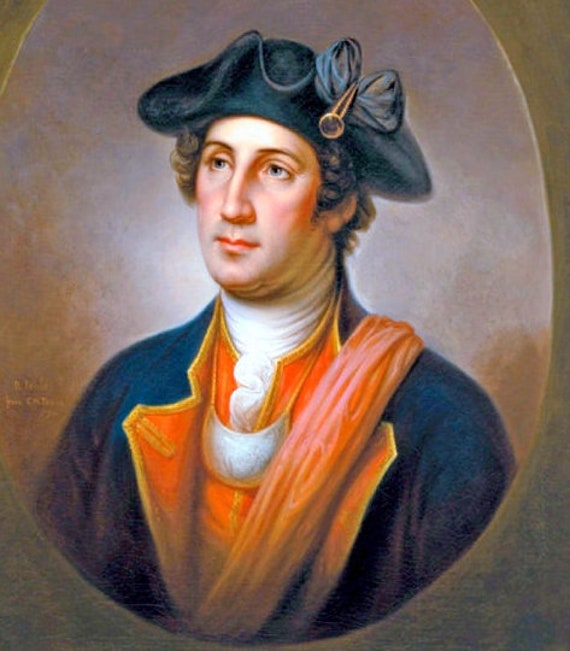
December 13th 1799 a man was riding a horse through his plantation. It was a day like any other, and everything was perfectly normal. Little did this man know that in less than two days he would be dead. The decision he made that day in December proved to be fatal. While he was out riding he got caught in the rain, and when he returned home he decided to hold off on changing out of his wet clothes because he didn’t want to be late for his dinner party. The next morning, he worked outside in the bitter cold as he had the day before. The whole day he worked through the pain that had developed in his throat. Nevertheless he pushed on and tried to ignore it. 

That evening his symptoms worsened, but he decided to see if they would improve by the morning. This man woke up and things had only gotten worse. He called in three well-known physicians and he received good news that it was just a cold and a slight fever. The physicians assured the man that he would be just fine. All they had to do was drain the sickness out of his body and he would be healed. 

This fatal decision resulted in the death George Washington. 

Bloodletting is now seen as an incompetent practice. Yet it was practiced worldwide until the late 1800s. Millions of people died thanks to this lack of understanding, but guess who knew NOT to do this right from the start? The life is in the blood and God is the one who revealed this fact to us. 

Sometimes we are a little slow in catching on to the wisdom that God has revealed in His Word. If God was right about the blood, what else could He be right about? 

“I Can’t Come To Church Because Of Covid”

(Tuesday Supplement. Note: I am well aware that there are those who are immunocompromised and cannot attend. This is not in any way meant to discourage or dishearten those in this condition. God knows and understands.)

Neal Pollard

Covid has touched nearly every family I know, including my own. It would be foolish to say that it is harmless. It has claimed nearly 5 million lives as of today. So, I have heard from many good, thoughtful people, this statement: “I can’t come to church because of Covid.” Please accept that with deep, genuine love, there are a few questions that need to be asked alongside of this.

Are we being consistent? Are we still going to the grocery store, the restaurants, the beauty shop, the office, the classroom, the gym, and the doctor? Chances are at least as great that we will contract Covid in one of those places as at church. People are not more clean or careful in those places. 

Are we properly prioritizing?  Perhaps we see the stores, the job, the school, and the medical as essential and necessary. Jesus puts our spiritual health and that of His body above all else (Mat. 6:33; 16:26). How could we conclude that any of these others are more important than His kingdom?

Are we considering others? Perhaps we console ourselves by saying that we’re getting what we need by watching Facebook, Vimeo, YouTube, or wherever services are live-streamed. But, worship and Bible class is not simply about our being fed. We must consider one another to stimulate unto love and good deeds (Heb. 10:24). That is said in connection with assembling together (Heb. 10:25), and how is this done by one who stays away from the assembly?

Are we weakening our spiritual strength? Is it getting easier to stay away or opt to just catch it on the phone, computer, or TV when we don’t feel like coming? Are we losing our desire to be with God’s people? Isolation has many effects, some more subtle than others.

Are we assessing our fears? Those who are waiting for Covid to go away will be waiting years or longer. This is a virus. Scientists doubt that it can be eradicated. It spreads too quickly. Perhaps it will be like Polio or smallpox, but how long will that be? Will we stay home for years? Meanwhile, where will be, spiritually, years from now if we have disconnected from our spiritual family? 

After 18 months, perhaps it is time to do some serious reevaluating? Instead of only allowing news outlets to be our guide, we need to balance that with careful study of God’s Word. Instead of considering just this life on earth, we should balance that by considering this life is for preparing for eternity. We need to be back together–all of us, now more than ever. 

The Ankgor Wat Dinosaur

Neal Pollard

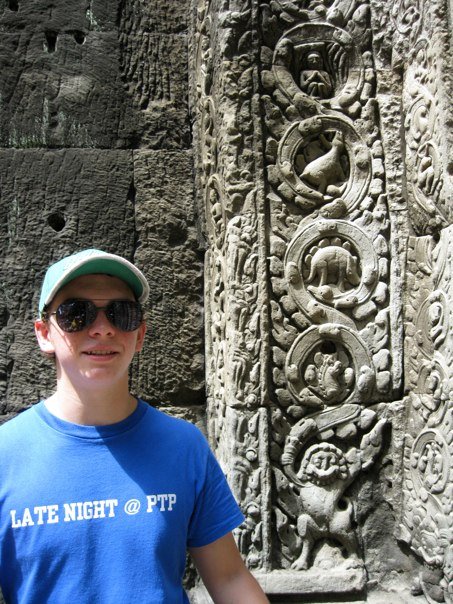
I have been to the Ankgor Wat temple complex, near Siem Reap, four times. It’s a fascinating tourist attraction, but there is one carving, among literally thousands, that stands out above the rest. It is found at Ta Prohm Temple. The temple was built between the late-1100s to early-1200s by King Jayavarman VII and dedicated to his mother. Today, it is “shrouded in dense jungle” and “fig, banyan, and kapok trees spread their gigantic roots over stones, probing walls and terraces” (tourismcambodia.com). “It took 79,365 people to maintain the temple including 18 great priests, 2,740 officials, 2,202 assistants, and 615 dancers” (ibid.). But it’s that stone carving that it most unforgettable.  One particular trip, which I made in 2009 with two elders, three deacons, and my oldest son, Gary, stands out in my mind.

I asked our guide, hired out by the Kazna Hotel in Siem Reap and of the Buddhist faith, what he thought this particular creature was. He said he had no idea what it was and added, “They must have had a really good imagination.”  The question such a response raises is, “How did they know to imagine that?!”

Well, a group from Canada was following close behind our group of seven from Denver, Colorado.  A son asked his father for an explanation of the carvings on the pillar, and dad replied with some authority, “Son, that was their version of a geological timetable.”  Of course, it begs the follow up, “How did 12th-Century Khmer people, well before Darwin and others planted their geological seeds, know of such a timetable?”  Furthermore, this “timetable” looks nothing like anything you will ever see in a textbook–a man above it and a monkey below it.  Based upon what fossil evidence did they create their carving?  There must have been hundreds of fellow “explorers” viewing these temple ruins with us in the few hours we were there.  Some of the fascinated people spoke in languages I cannot understand, but body language was pretty telling.  Others, Americans, British, Australians, and Canadians, all seemed to see that carving for what it most apparently was.  No one said, “That’s a rhino or pig.”  They called it a Stegosaurus.

How many other similar discoveries await reclamation from jungle vegetation, archaeological excavation, and geographic exploration?  In the different disciplines of science and history, man uncovers gems like Angkor Wat’s Ta Prohm from time to time.  Such clear, incontrovertible evidence from a time before our modern “war” between evolutionists and creationists begs to be examined with unprejudiced eyes.  While some may never change their mind regardless of how many items are offered into evidence, I believe that there are a great number of people out there who are honestly, objectively looking for truth.  The Stegosaurus at Ta Prohm near Siem Reap, Cambodia, might be the item that convinces many!

1937409_160820505921_3751983_n
Gary standing next to the column. Notice what/who else is in the carving with the Stegosaurus.

“THE UNIVERSE IS ETERNAL”

Neal Pollard

Articles across the scientific community of late have been postulating a similar idea. Astrophysicist Brian Koberlein suggests that there was no single point in space and time when matter was infinitely dense, saying, “The catch is that by eliminating the singularity, the model predicts that the universe had no beginning. It existed forever as a kind of quantum potential before ‘collapsing’ into the hot dense state we call the Big Bang. Unfortunately many articles confuse ‘no singularity’ with ‘no big bang’” (briankoberlein.com). One of the most recent darlings of this explanations are Ahmed Farag Alia and Saurya Das, whose paper “Cosmology from quantum potential” is being cited by quantum physicists and astrophysicists.  As this gets traction, there should be a trickle down effect until the broader scientific community embraces this idea.

Let’s hope so!

It could be a pivotal moment in the creation versus evolution debate.  Why?  When you wade through the technical, obtuse jargon, this theory concludes that the universe is eternal.  We all know that something has always had to exist.  Our options are “intelligent, moral, animate mind” or “mindless, amoral, inanimate matter.”  The faith factor has just multiplied by a centillion for those wanting a God-less explanation.  The same argument they have tried to level against those believing in intelligent design and creation applies to them.  How did that eternal matter get here?

Here’s the difference between the two arguments.  Matter not only had to “create” itself, it also had to develop (evolve?) intelligence, morality, purpose, etc.  The Bible reveals an intelligent designer (Creator) with inherent morality, purpose, and sufficient power and energy to make it all.  “It’s too simplistic,” they say.  “How quaint!”  But to a person who is truly trying to approach these two explanations with open-minded fairness, which of these two ideas will seem more plausible?  It won’t even be a fair contest!

Let’s hope this latest attempt to explain our origin finds favor among those who “say there is no God” (Ps. 14:1) and who “suppress the truth” (Rom. 1:18ff).  Maybe it will help more honest searchers “find” God (Acts 17:27). I think it will!