The Quiet Sin That Still Shouts on Black Friday

Brent Pollard

For years, Black Friday earned its reputation not from ledgers but from battlegrounds—retail floors where human dignity took a backseat to door-buster deals. News cameras captured the spectacle: grown men and women trampling one another, wrestling over discounted electronics, shouting with voices hoarse from camping overnight in cold parking lots. The scenes were shocking precisely because they revealed something uncomfortable about ourselves.

Those chaotic stampedes have largely faded, replaced by the quieter click of online carts and the convenience of sales that stretch across entire weeks. Yet we would be naive to assume the spirit behind those frenzies has disappeared. Covetousness has not been conquered; it has merely changed costumes. It still prowls, perhaps more dangerously now because it moves in the shadows of normalcy.

Understanding Covetousness in a Consumer Culture

The Scriptures speak with clarity and force about covetousness. God inscribed it among the Ten Commandments—”You shall not covet” (Exodus 20.17)—placing it alongside murder and adultery as a fundamental breach of divine order. The apostle Paul equates it with idolatry (Colossians 3.5), and Jesus Himself warned that a person’s life does not consist in the abundance of possessions (Luke 12.15). These are not casual observations. They are urgent warnings about a sin that destroys souls.

Yet covetousness may well be the most overlooked sin among professing Christians today. We have learned to identify sins that announce themselves—drunkenness carries an odor, anger has volume, and sexual immorality brings scandal. But covetousness? It wears the mask of prudence. It masquerades as ambition, self-care, or simply “keeping up.” In a world built on consumption, covetousness looks like Tuesday afternoon.

This is precisely what makes it lethal. When sin begins to look like normal living, we cease to call it sin at all. If the enemy of our souls seeks to neutralize the church without triggering alarms, covetousness serves as his preferred weapon—quiet, respectable, and devastatingly effective.

The Warning of Jesus: “Take Heed and Beware”

In Luke 12.15, our Lord issues a double warning with deliberate urgency: “Take heed, and beware of covetousness.” Two imperatives, one breath. Why such emphasis? Because Jesus understood what we often forget—that the human heart is perpetually vulnerable to the lie that more will satisfy.

Notice that Christ does not merely say “avoid” covetousness. He says take heed, which means to pay careful, sustained attention, and beware, which calls for active vigilance. This is not passive resistance but intentional, disciplined watchfulness. The implication is sobering: covetousness will not announce itself. It will arrive disguised as legitimate need, reasonable desire, or innocent comparison.

Let us be clear: Black Friday itself is not inherently sinful. Wisdom in stewardship often means seeking good value, and thoughtful purchasing can serve both family and generosity. The issue is not the calendar date or the transaction but the condition of the heart engaging in it. When we participate in the marketplace, do we do so with contentment and purpose, or with the restless craving that can never be filled?

The frenzy that once defined Black Friday—and the subtler compulsions that still drive much of our economic behavior—expose three spiritual dangers we dare not ignore.

Three Spiritual Dangers of Covetousness

Covetousness Normalizes Discontent

God calls His children to contentment (1 Timothy 6.6-8; Hebrews 13.5). Yet covetousness whispers constantly that what we have is insufficient. It trains us to focus not on what we possess but on what we lack. This is not mere pragmatic planning for the future; it is a spiritual disease that robs us of peace and gratitude in the present.

As has been observed, the man who has God and everything else has no more than the man who has God alone. Covetousness blinds us to this truth. It convinces us that one more purchase, one more upgrade, one more experience will finally deliver the satisfaction we seek. But the nature of covetousness is that it never delivers. It only promises.

Consider how advertising works: it manufactures dissatisfaction. Before the ad, you were content. After the ad, you feel incomplete without the product. This is spiritual warfare dressed in marketing language, and it works because our hearts are already fertile ground for discontent.

Covetousness Trains Us to Measure Worth by Possessions

Jesus teaches that life does not consist in the abundance of things (Luke 12.15). Yet covetousness reverses this wisdom, teaching us to evaluate ourselves and others based on what can be seen, touched, and posted online.

Someone seeking material possessions only creates for themselves a gilded prison. When our identity becomes intertwined with our acquisitions, we trap ourselves in an exhausting cycle of comparison and competition. We measure our worth not by God’s declaration of value through Christ but by fluctuating market standards.

This is practical idolatry. The accumulation of things becomes not merely a means to life but the meaning of life itself. And when this happens, we have exchanged the Creator for created things—precisely what Paul condemns in Romans 1.25.

Covetousness Weakens Our Gratitude

Perhaps nothing reveals the corrosive effect of covetousness more clearly than its assault on thanksgiving. The covetous heart cannot truly give thanks because it is perpetually focused on what it does not yet have. Gratitude looks backward and upward, recognizing God’s provision. Covetousness looks forward and laterally, cataloging deficiencies and envying neighbors.

This is why the day after Thanksgiving can be so spiritually jarring. One day we gather to express thanks for God’s blessings; the next, we rush to acquire more as if what we have is inadequate. The irony should not escape us. Covetousness turns thanksgiving into hypocrisy.

Fighting Covetousness With Eternal Treasure

How then do we fight? Not by suppressing desire—God created us with the capacity to want, to long, to pursue. The battle against covetousness is not won by desiring less but by desiring better things.

Jesus provides the antidote in Matthew 6.19-21: “Do not lay up for yourselves treasures on earth, where moth and rust destroy and where thieves break in and steal; but lay up for yourselves treasures in heaven, where neither moth nor rust destroys and where thieves do not break in and steal. For where your treasure is, there your heart will be also.”

This is not poetry; it is economics. Jesus is telling us to invest wisely. Earth’s treasures decay, disappoint, and ultimately disintegrate. Heaven’s treasures endure. The question is not whether we will treasure something—we cannot avoid doing so—but what we will treasure and where.

God is most glorified in us when we are most satisfied in Him. Covetousness is defeated not when we grit our teeth and endure deprivation but when we discover a satisfaction so profound that lesser things lose their grip. When Christ becomes our treasure, sales and upgrades and status symbols fade into their proper insignificance.

If we covet trivialities, it is because we have not yet tasted the goodness of God. We chase shadows because we have not yet stood in the light.

Practical Steps to Guard Against Covetousness

All truth must become actionable or it remains mere information. What then shall we do?

First, practice intentional gratitude. Before making any significant purchase, pause to list what God has already provided. This simple discipline reorients the heart from scarcity to abundance.

Second, examine your motives. Ask: Am I buying this because I need it, or because I want what someone else has? Am I seeking to fill a legitimate need, or am I trying to fill a spiritual void with material things?

Third, give generously. Nothing breaks the power of covetousness faster than open-handed generosity. When we give, we declare that God—not possessions—is our source and security.

Fourth, fast from consumption. Consider seasons of deliberate simplicity. Skip sales. Avoid browsing. Create space to discover that you already have enough.

Fifth, redirect your desires. Cultivate hunger for spiritual realities—Scripture, prayer, fellowship, service. Feed your soul the bread of life so that the world’s junk food loses its appeal.

The Greatest Bargain Ever Offered

Black Friday will come and go with its sales, advertisements, and temptations. The receipts will fade, the products will break, and the cycle will repeat. But the danger of covetousness remains, not just on one day but every day we draw breath in this consumer culture.

Yet hear the good news: The greatest bargain ever offered is still available, and it requires no credit card. A life emptied of covetousness and filled with Christ is a life money cannot buy. This treasure is free to all who will receive it, paid for not by our purchasing power but by the precious blood of Jesus Christ.

God offers us satisfaction that lasts, joy that endures, and treasure that neither moth nor rust can destroy. The transaction is complete. The price is paid. The only question is whether we will stop chasing shadows long enough to embrace the substance.

May we be a people who treasure Christ above all things, who find in Him a satisfaction so complete that the world’s bargains become irrelevant. For in Him we have already received everything—and what we have cannot be improved by any sale, upgraded by any purchase, or diminished by any economy.

Where your treasure is, there your heart will be also. Choose wisely.

Serving Two Masters:

The ancient Samaritans believed they could negotiate with God, showing just enough reverence to escape calamity while holding tightly to their beloved idols. They did not understand that the God of Israel stands alone, not as one among many, but as the true God who rightfully demands and deserves our entire devotion.

Brent Pollard

Idolatry and the Call for Undivided Faith

The passage from 2 Kings 17.33 presents a profound reality: “They feared the Lord, yet served their own gods…” (NKJV). This ancient narrative of the people resettled in Samaria following the Assyrian captivity serves as a profound and disquieting reminder of the dangers posed by a divided heart and the subtle syncretism that can infiltrate our worship.

Following the fall of the Northern Kingdom of Israel to the Assyrian Empire in 722 BC, the Assyrians deported most Israelites. They filled Samaria with people from distant lands, including Babylon, Cuthah, and Hamath. These new inhabitants ushered in a diverse tapestry of deities and sacred traditions. When adversity, particularly lion attacks, beset them in their new territory, they ascribed it to their lack of understanding of “the god of the land.” The Assyrians dispatched a priest from Israel to instruct them in the ways of the Lord. Yet, what unfolded was not a genuine transformation of the heart but a calculated amalgamation of beliefs—a superficial acknowledgment of Yahweh that coexisted with their enduring devotion to idols. Their reverence for the Lord stemmed from a dread of punishment rather than from a place of love or genuine repentance. They desired a taste of God’s presence to feel secure, avoiding the profound commitment of total surrender.

The intertwining of genuine worship with pagan customs led to a weakened faith, a spiritual compromise where each nation erected shrines and idols alongside the reverence of Israel’s God. They paid lip service to Yahweh, yet their hearts and deeds clung to their former paths and idols. This blending of beliefs, this endeavor to serve two masters, endured through the ages, forging a spiritual legacy that, even in the time of Jesus, identified the Samaritans as possessing a distorted form of worship.

The peril emphasized in 2 Kings 17.33 transcends the boundaries of ancient history. We, too, encounter the subtle and dangerous allure of a divided heart. Though few in our time may kneel before stone figures, countless individuals unwittingly offer their allegiance to contemporary “deities” that compete for their hearts in a manner that rivals the worship of the Creator. These may reveal themselves as: 

  • The god of material prosperity: pursuing riches and material goods as the highest aspirations rather than viewing them as instruments for serving others.
  • The god of self-determination: elevating personal desires and ambitions above the clear guidance of God’s revealed will.
  • The god of cultural accommodation: compromising the unchanging truth of Scripture to align with society’s ever-changing standards.
  • The god of religious formalism: engaging in external expressions of faith while lacking genuine heart change and obedience to God’s Word.

It is all too easy to offer mere words of devotion to God while allowing other priorities to steer our daily lives and choices, much like the settlers in Samaria did. We may gather for worship and declare our faith, yet still hold tightly to the values of this world in our relationships, ethics, and allocation of time and resources. This “pious worldliness” reflects a contemporary manifestation of revering the Lord while simultaneously bowing to our idols.

With clarity and conviction, the Word of God calls us to pursue an undivided heart and offer our exclusive devotion to Him alone. From the Ten Commandments, “You shall have no other gods before Me” (Exodus 20.3 NASB95), to Jesus’ bold proclamation, “No one can serve two masters… You cannot serve God and mammon” (Matthew 6.24 NKJV), the message resonates profoundly. The Lord calls us to surrender our hearts, souls, and strength (Deuteronomy 6.5; Luke 10.27).

Our Lord Jesus directly addressed this matter, declaring to the Samaritan woman that genuine worshipers will worship the Father “in spirit and truth” (John 4.23-24). This truth transcends mere external rituals or compliance driven by fear; it is a deep reverence that transforms our hearts and guides us toward righteous living. The call made by Joshua echoes throughout history: “Choose for yourselves today whom you will serve…but as for me and my house, we will serve the Lord” (Joshua 24.15 NASB95).

To steer clear of the missteps of the Samaritans, we must diligently nurture a faith that is genuine, obedient, and wholly devoted:

  1. Honest Self-Examination: We must continually ask ourselves, “What other ‘gods’ vie for our devotion?” Are there unseen idols—whether our careers, comforts, relationships or even our own opinions—that overshadow God’s supremacy?
  2. Immerse yourself in Scripture: Engaging deeply and consistently with the Word of God illuminates His expectations and safeguards against the encroachment of worldly influences into our faith.
  3. Consistent Obedience: Genuine worship is revealed not merely in our Sunday gatherings but in our daily expressions of faithfulness and submission to the will of our Heavenly Father. James instructs us to be “doers of the word, and not hearers only” (James 1.22 NKJV).
  4. Reject Man-Made Substitutes: We must anchor our faith in the truth of God’s revealed Word rather than relying on human traditions or our perceptions of what is right.

The ancient Samaritans believed they could negotiate with God, showing just enough reverence to escape calamity while holding tightly to their beloved idols. They did not understand that the God of Israel stands alone, not as one among many, but as the true God who rightfully demands and deserves our entire devotion. Let us embrace this significant truth, reflecting on our lives and committing each day to serve the Lord with sincerity and authenticity. He alone deserves our complete and unwavering devotion.

Those Who Support The Savior

Women were widely regarded as second-class citizens in the Jewish and Roman world of the first century. How does Jesus elevate the role and work of women in His kingdom? In more ways than you might think. Luke 8 gives us some valuable insight…

Neal Pollard

In Luke 8:1-3, Luke provides an interesting interlude between the visit to Simon’s house and his record of Jesus’ teaching of the parable of the sower. It is a practical note, helping us understand how Jesus and the twelve had the financial wherewithal to go from one city and village to another, proclaiming and preaching the kingdom of God (1). They owed this opportunity, monetarily, to the generosity of “some women.” Among them, according to Luke, was Mary Magdalene (who had seven demons cast out of her), Joanna the wife of Chuza, Susanna, and many others (2-3). They weren’t preachers or public proclaimers, but they were vital partners in the success of Jesus’ ministry! They also provide such a powerful example to us today, reminding us that we all can have a role in causing His work to succeed. 

They Did Not Let Social Position Keep Them From Supporting Jesus (2). In the first-century Jewish world, being a woman did not put you at the top of the social heap.  As Stein says, “That certain women followed Jesus indicates that his attitude toward women was quite different from the attitude of most first-century rabbis” (NAS commentary on Luke, 340). They could have used disadvantage as an excuse, but instead they accompanied and supported them. 

They Did Not Let Setbacks Or Sicknesses Keep Them From Supporting Jesus (2). How much time had they lost, individually and collectively, to these problems? We don’t know, but they responded in gratitude to the One who released them from them. These things were not crutches to lean on, but springboards of opportunity. 

They Did Not Let Secular Ties Keep Them From Supporting Jesus (3). One of the women had a husband who worked for Herod Antipas. “It may be that the special knowledge of Herod and his court reflected in Lk. came through him; he and his wife are no doubt named as well-known personalities in the church and are evidence for the existence of Christian disciples among the aristocracy” (Marshall, NIGTC, 317). Many believe Luke’s intimate knowledge of Herod’s household came through her. Herod was a politician, and that life, then as now, brings a spotlight. No doubt, whatever Joanna did reflected on her husband, Chuza, which, in turn, reflected on Herod. Whatever pressure she might have felt did not keep her from identifying with and furthering the work of Jesus. What an example! 

They Did Not Let Sacrificial Choices Keep Them From Supporting Jesus (3). Did you notice that Luke says this ongoing contribution was coming out of their private means? Women did not ordinarily have financial independence, but these women were willing to use their own funds (stipend or allowance?) for Jesus’ divine mission. The old saying is, “Success comes in ‘cans,’ not ‘can’ts’.” They counted the cost (14:28)! 

Their financial support was not meant to be a substitute for doing the duties of discipleship. Mary, the first person Jesus will appear to after His resurrection (Mark 16), is given the job of being the first to tell others He had risen (Mat. 28:7ff). Today, as then, support comes in so many forms. We support Jesus by helping fulfill His Great Commission, by being His hands and feet in helping others, by financially contributing to His work, by edifying the church, etc. We might offer any number of excuses for why we cannot, but we do well to follow these women who did not let anything stop them from supporting the Savior! 

The Relationships Of Generosity

Neal Pollard

     I never cease to be amazed at the generosity of some people. Their capacity and faith for giving seems endless, yet their cheerfulness under such circumstances defies the understanding of man. While I have known so many generous people, I am humbled by my parents. Living on a very limited income for most of their adult lives, starting the life in preaching back in the mid-1960s, they have constantly poured out from that limited reserve abundantly upon others. I cannot count the number of poor families for whom they have bought a week’s worth of groceries. They often spent whatever Christmas bonus they received plus so much more, buying gifts for members. They have lent assistance to needy family and church members. They refused raises, asking instead that the increase go to support a missionary. That continues in their modest retirement years.

     This is on top of their regular contribution. I could write pages of material, giving specific examples of extraordinary good they have done with relatively little. The question that dominates my thinking is, “How have they developed such a giving spirit?” The answer that recently hit me is “relationship.”

     They have a proper relationship with people. It takes a servant’s heart, a heart which acts in love and concern for one’s fellowman, to so generously give. When we see our task as helping people however we can, we will give. We will give each Sunday, and we will find ways to give in our private opportunities.

     They have a proper relationship with money. What grace it requires to see money as a tool and a servant, a commodity used to live but also to give. Hoarders hurt, but sharers shine. Frivolity is sinful. Generosity is a grace. They, like Paul, have known abundance, though more often they have suffered want (Phil. 4:10ff). Whichever lot was theirs at the time, they seemed just as joyful and full of peace. They are savers, but they are also givers. They live well within their means, but they give well beyond their ability (2 Cor. 8:1ff).

     They have a proper relationship with God. Their sentiment is like one I once heard expressed by a gospel preacher. He said, “God will always give us the exact amount of money we need.” If we trust that the God who made us and remade us through Christ is control of it all, we know He will supply all our needs (Phil. 4:19). If we see ourselves as His stewards (managers, 1 Cor. 4:2), we will happily serve as a conduit of generosity.

     God has not caused their generosity to impoverish them. To the contrary, they live as close to debt-free as people can in our society. God has blessed them with things that man would find impossible to believe they could own in the wake of such bountiful benevolence and generous giving. What a lesson they serve to all of us to understand the relationships of generosity. 

Thanks, Dad and Mom.

Gary and Brenda Pollard will celebrate their 60th Anniversary this Friday (6/21/24)

Temporary Versus Permanent

Eli Watson

Good evening, Today before church I was working on cleaning a house out; the lady that had lived here passed two years ago, and in the meantime the objects in the house sat and gathered dust. And after taking countless trash bags out to the dumpster, it got me thinking about how none of the earthly possessions we collect in this life matter. They’re not coming with us nor will we need/miss them when we’re gone. Let us turn our attention to Matthew 6:19-21, which says, “Do not lay up for yourselves treasures on earth, where moth and rust destroy and where thieves break in and steal but lay up for yourselves treasures in heaven where neither moth nor rust destroys and where thieves do not break in and steal. For where your treasure is, there your heart will be also.”

These words offer a powerful reminder that our earthly existence is not meant to be permanent. God, in His infinite wisdom, has instilled within each of us a deep yearning for something beyond the boundaries of this temporary life. Our souls are eternal, but we are on a temporary trip. We have a longing and sense to be with him for eternity because that’s what He had intended from the beginning when He was walking in the Garden with Adam and Eve. Making the right decisions in life by focusing on what’s truly important is the only way to get back to him though. 

Now, before we jump to the wrong conclusion, Jesus didn’t say that … 

You can’t own a phone

You can’t buy a computer.

You can’t purchase a home.

You can’t drive a car.

You can’t buy gifts for someone.

You can’t save or invest money for retirement.

You can’t buy more than one shirt or a pair of jeans.

What Jesus did say was, “Do not lay up for yourselves treasures on earth …” 

Said another way, stop focusing on accumulating money and things and set your heart pursuing “treasures in heaven,” which leads us to the next question. What does this mean?

Consider the seasons of life mentioned in Ecclesiastes 3:1-8. A time to be born, a time to die, a time to weep, and a time to laugh – all encompassing the spectrum of human experiences. Each phase serves as a stitch in the tapestry of our existence. However, it’s crucial to recognize that this earthly journey is not our final destination. There’s a longing for eternity within us. In acknowledging our impermanence, we can take a look at the apostle Paul, who in 2 Corinthians 4:18 encourages us to fix our eyes not on what is seen, but on what is unseen, since what is seen is temporary, but what is unseen is eternal. This shift in focus beckons us to consider the eternal significance of our actions, relationships, and faith. Everything that we do in this short life counts, but the possessions we have won’t affect our judgement day determinations, there’s no Forbes list in heaven. 

Our temporary journey on Earth prompts us to seek a deeper connection with God. It’s an opportunity to align our lives with His divine purpose, and spread his word along the way. That’s one of the most important parts of our walk in this life, and as we navigate the complexities of life, let us remember that our existence here is just a sneak peak to the everlasting reality promised through faith in Jesus Christ.

The transient nature of life doesn’t diminish its value; instead, it underlines the importance of living purposefully. In Psalm 90:12, we’re encouraged to “Teach us to number our days, that we may gain a heart of wisdom.” This wisdom involves recognizing the brevity of life and using our time wisely, investing in eternal treasures. These eternal treasures don’t care about your credit score or any debt to income ratios but rather of the spiritual score, are you living the way you know you should. Having the spiritual wisdom and maturity to get through this life will be what matters in the end. 

Our journey on Earth also invites us to share the love and hope found in Christ with those around us. Matthew 28:19-20 compels us to go and make disciples, baptizing them in the name of the Father, the Son, and the Holy Spirit. In doing so, we participate in God’s redemptive plan, extending the invitation to eternal life to others. While on this earth we were instructed to be fishers of men, and we are meant to use draw people in by showing them the love of God that is pouring out of us. We have been given an opportunity to show the everlasting mercy and grace of God that has been shown to us. 

In conclusion, as we contemplate the temporary nature of our earthly existence, let us be inspired to live intentionally. May we find purpose in aligning our actions with God’s will, nurturing deep connections with Him, and sharing His love with a world longing for eternal hope. For in the tapestry of life, our temporary moments find eternal significance in the hands of our Creator.

Godliness With Contentment Is Great Gain

Brent Pollard

Barry Schwartz, a professor of psychology at Swarthmore College, authored a book called “The Paradox of Choice: Why More Is Less.” In an article adapted from his book, published in Parade magazine about twenty years ago, Schwartz surprisingly states that “our unprecedented material abundance” causes unhappiness. How does this happen? Think about your last visit to a large retailer. You likely encountered over 360 types of shampoo, conditioner, and mousse in the hair care aisle. With such an overwhelming number of choices, deciding which one to buy can be difficult. Most people want the best product at an affordable price, but with so many options, it can be challenging to determine which of the 360 products is the best choice.

According to Schwartz (2004), many believe we should never settle for anything less than the best. He calls these individuals “maximizers.” Essentially, maximizers are always dissatisfied with what they have. For example, while driving and listening to the radio, a maximizer will often switch between stations, even if they already enjoy what they are listening to. Have you ever found yourself behaving this way?

As Schwartz concludes, “Unattainable expectations, plus a tendency to blame ourselves for our failure, make a lethal combination” (2004, p. 5). We need to constantly remind ourselves of the principle Paul first shared with his “son in the faith,” Timothy:

But godliness actually is a means of great gain when accompanied by contentment. For we have brought nothing into the world, so we cannot take anything out of it either. If we have food and covering, with these we shall be content. (1 Timothy 6.6-8 NASB)

Yes, we must learn to be content with what God promised to provide if we “seek first the kingdom of God and His righteousness” (Matthew 6.33).

Schwartz provides advice to help us find contentment. Here are the tips.

“Choose when to choose” (Schwartz, 2004, p. 5) suggests intentionally limiting our choices when something is unimportant. For instance, when purchasing a specific item, it’s better to stick to one store and choose from only one or two restaurants. This way, we can avoid unnecessary decision-making and save time and energy.

According to Schwartz (2004), learning to accept things that are “good enough” is important. Striving for perfection can often lead to unnecessary anxiety and stress. Instead, settling for something to get the job done and move on is better. The pursuit of perfection is often a futile task and can prevent us from achieving our goals.

The third thing to remember is not to worry about missed opportunities or options. Instead of dwelling on the “what ifs,” learn to be happy with your choices. There is no point in agonizing over the paths you did not take. As Barry Schwartz put it in his book, “The Paradox of Choice,” “Learn to be content with the choices you’ve made.” (p.5)

According to Schwartz (2004), it’s essential to control your expectations and not expect too much. Your expectations often shape your perception of what is right or wrong. If you want to be more satisfied with life, it’s advisable to avoid expecting too much, as it is a common saying: “Don’t expect too much, and you won’t be disappointed.”

These are not behaviors that we can develop overnight. We must follow the example of the apostle Paul and learn to be content (see Philippians 4.11). Let us carefully look at our lives, recognize our many blessings, avoid causing ourselves disappointment, and thank God for all He has done for us.

Work Cited:

Schwartz, B. (2004, January 4). When It’s All Too Much. Parade, pp. 4-5.

A Recipe For Successful Living

Neal Pollard
  • Concerning Money: Don’t judge a book by its cover (7). The wealthy face threats and dangers that the poor do not (8). Get rich quick schemes usually fail (11). People who are “too smart” to learn earn poverty and disgrace (18). A good name is better than wealth (22; cf. 22:1). The resources of the poor are often robbed by injustice (23).
  • Concerning Desire: You can tell a lot about a person by what he wants (2). Hope deferred makes the heart sick, but a desire fulfilled is a tree of life (12). A desire fulfilled is sweet to the soul, but to turn away from evil is an abomination to fools (19). Godliness with contentment is great gain (25; cf. 1 Tim. 6:7). 
  • Concerning Laziness: The lazy person wants but never gets, but the hard worker gets by diligence (4). 
  • Concerning Teachability: A scoffer ignores rebuke (1). The wise take advice, but strife follows the rebellious (10). Those who hate the word destroy themselves (13). Good teaching is a fountain of life helping us avoid deadly traps (14). Every prudent man acts with knowledge, but a fool flaunts his folly (16). 
  • Concerning Speech: The difference between life and ruin is determined by how well you control your tongue (3; Jas. 3:2ff). A faithful messenger brings healing (17). 
  • Concerning Character: The righteous hate falsehood (5). Righteousness paves a protected path (6). The light of the righteous rejoices (9). The righteous are rewarded with good, not disaster (21). The righteous have enough, but the wicked never do (25). 
  • Concerning Common Sense: Good sense wins favor (15). Every prudent man acts with knowledge (16). 
  • Concerning Friends: To be wise, walk with the wise (20). 
  • Concerning Child Training: Spare the rod, spoil the child (24). 

Proverbs are general truths, tried and found to be the rule rather than the exception. All of God’s Word serves as a guidepost for success in every way it can be measured. These proverbs are short, insightful, and inspired tidbits of helpful guidance, intended to help us know the way to strengthen our relationships and steward our resources. Many are the sad, foolish persons who ignored these instructions to their own hurt. Many who thought they came up with brilliant insights do not know that they are merely echoing the sounds of God’s wisdom. 

How To Avoid Defrauding Deity

Neal Pollard

At the end of the Old Testament, the prophet Malachi simply asked, “Will a man rob God?” (3:8). Now that’s not a thought that naturally occurs to most. It would seem impossible to take by force what belongs to an all-powerful, all-knowing Being. Knowing about His supernatural nature, who would dare to try? Especially when you read that those who do so are  “cursed by a curse” by the One we just described (3:9). But Malachi said they robbed God in “tithes and offerings.” When it came to their financial giving, they stole from the Sovereign!

Is it possible to do that today? Wouldn’t we want to steer so far away from such a practice? Consider:

  • We rob God when we put our giving to Him anywhere but the top of our priorities. Malachi’s peers gave God the blind, the lame and the sick, which they would not dare offer their governor, for sacrifice (1:8). God calls this “evil.” What about when we put bills, entertainment, and other spending and saving first, then give God what, if any, is left over. Under the first covenant, God commanded His people give Him “the first fruits” (Ex. 23:16,19). But that covenant is inferior to what we have in Christ (Heb. 8:6). This should motivate us to make giving a “first fruit” and not an after thought.
  • We rob God when giving is a duty rather than a delight. For Malachi’s brethren, offering to God was described as despised, tiresome, and disdainful (1:13). When it came time to give, apparently they had a grimace rather than a grin on their faces. The God who gave them everything was met by a people who begrudged giving back to Him anything. Later, God will teach us that giving begins in the heart, with ourselves. Paul praises the impoverished Macedonians who exceeded expectations (2 Cor. 8:3) in their giving because they first gave themselves to the Lord, then gave their money to His work (2 Cor. 8:5). Paul could characterize them as cheerful givers (2 Cor. 9:7). This was not because they were prosperous and gave a big contribution from the overflow. Their wealth was their generosity (2 Cor. 8:2). They gave beyond their ability and it made them happy to do so. 
  • We rob God when do not test Him with our giving. This is an unexpected admonition. God wanted a chance to show them what He does for the one who gives sacrificially and by faith. The principle does not work and is inconsistent with God’s will if we do not test Him by giving sacrificially and generously. God says, “test me now in this” (3:10). Give generously and see “if I will not open for you the windows of heaven and pour out for you a blessing until it overflows” (3:10). In light of how we can see God work like this in our lives, why would we take that opportunity from Him to show His incredible power. He always proves that He cannot be out-given.

We may ask, “How much should I give?” Truly, there is no set percentage stipulated under Christ’s covenant. They gave a tenth of everything they owned under the Old Law (Deut. 14, 26). What we have is better! We do not have to bring sacrifices for our sins year after year. Christ sacrificed Himself once for all (Rom. 6:10; Heb. 10:10; 1 Pet. 3:18)! It’s hard to imagine a Jew, accustomed to giving a tenth, coming up out of the mikvah (baptistery) on Pentecost, forgiven of their sins, and rejoicing, “Now that I’m a Christian, I don’t have to give ten percent any more!” 

No, God doesn’t give us estimates or projections. He gives us exhortations and principles. He wants us to give to Him out of our trust in His care and out of our love and appreciation for His gifts to us. When we take inventory of that (and start with Calvary!), we will learn to give the way He wants us to give. 

The Love Of Money…

Neal Pollard

In the New Testament, Paul says the love of money is the root of all kinds of evil (1 Tim. 6:10). He mentions temptation and being trapped by many and foolish and harmful desires (1 Tim. 6:9). In the Old Testament, In Ecclesiastes 5, Solomon shares with us some of those evils and desires.

Money…

  • Fails to satisfy (10). Who ever thinks they have enough money? The one who loves money finds no satisfaction with abundance or income, yet he keeps pursuing it any way. Money doesn’t just burn a hole in the pocket. It cannot fill the hole of the heart. Solomon, who would know, says, “This too is vanity.”
  • Increases threats (11). I have been to huts in Tanzania and Cambodia, and they do not have ADT or Ring doorbells (they often don’t have doors)! But, in first-world countries like our own, we have locks, guns, and other security measures. We have cyber security and other means of trying to prevent fraud and theft. Solomon says, “When good things increase, those who consume them increase.” The more we have, the more can can have taken.
  • Is not a sleep aid (12). Solomon asserts that a poor working man pillows his head in sleep more readily than his wealthy counterpart. Money does not bring peace and comfort of itself.
  • Can easily be lost (13-14). We can think of notable incidents that cost the rich, at times almost overnight–The Great Depression, The Dot Com Bust, 2008. Solomon mentions bad investments, but the point is that money is not a foundation we can trust to build a life upon. Paul calls them the “uncertainty of riches” (1 Tim. 6:17).
  • Cannot be taken with us (15-16). When Job lost everything, this righteous rich man humbly took this in stride, saying, “Naked I came from my mother’s womb, And naked I shall return there. The Lord gave and the Lord has taken away. Blessed be the name of the Lord” (Job 1:21). Here, Solomon says that’s a fact where we humbly resign ourselves to it or resist it. Paul adds, “for we brought nothing into the world, so we cannot take anything out of it either” (1 Tim. 6:7). To be consumed with stockpiling what stays behind is folly. Jesus says, “Send it on up to heaven” (Mat. 6:19-21).
  • Is not a mood lifter (17). It might buy a face lift, but it can’t lift the face. The old adage, “money can’t buy happiness,” has repeatedly been proven true. While it can buy property, it can’t buy personality. Solomon’s rich man, toiling after the wind, “eats in darkness with great vexation, sickness and anger.”

Jesus wants us to get the basics of true meaning and purpose in this life. To that end, He warns, “No one can serve two masters; for either he will hate the one and love the other, or he will be devoted to one and despise the other. You cannot serve God and wealth” (Mat. 6:24). No, it is not a wholesale indictment of money or the rich. It is a warning that there is only one solid foundation to build life upon (Mat. 7:24-27). Money is not it.

Stewardship

Saturday’s Post: Learning From Lehman

Dave Eubank

We live in the most prosperous and wealthy nation that has ever been. I would say this is one of the most relevant spiritual topics both on a macro and micro level to the Church.  It also doesn’t hurt that this topic is right up my alley given my profession.  In my profession I have seen all kinds of examples of stewardship where money is treated as the master and how people are consumed with making and acquiring the next dollar as well as the avenues and lengths they have gone to get it.

Do you realize that money/stewardship is one of the most frequent topics in all of scripture?  Did you also realize that in the 89 Chapters of the gospel accounts (Matt, Mark,Luke, and John) that money/stewardship is discussed approximately 123 times.  Further more one half of all of Jesus’ parables discuss money/stewardship in some aspect? And lastly some of the most harsh warnings in scripture are in regards to money/stewardship.

So what is stewardship? I define stewardship in very simple terms…. Stewardship is the management of an asset that is from or belongs to another.  With that definition in mind it brings me to what must be the first principle in Christian stewardship. EVERYTHING BELONGS TO GOD!!! See Deuteronomy 10:14 and Psalm 89:11.  With that definition of Stewardship and the first principle in mind we need to ensure that we give equal significance, effort, and focus in acquiring assets and proper handling of these assets.  It has to be a balance or we run the risk of stepping into the many harsh warnings that we see in scripture.

A few of these warnings are found in 1 Timothy 6:9-10, Matthew 19:24, and Matthew 6:24. As you can see, it is very clear the warnings that scripture lays out for us in our pursuit of possessions and money and how easy it is to be overtaken by those desires.  However, if we go back to the first principle that EVERYTHING BELONGS TO GOD, we are merely stewards of his assets that he created and gave to us, and we realize that we only have possession for a short period of time 

Next let’s take a look at what the wisdom writer of Ecclesiastes has to say in regards to this topic.  The writer brings out the meaningless cycle and toil, the burden of trying to keep up with others, and the effects of never being satisfied.  However, he also points out that we can have satisfaction as we see in chapter 2:24-25.

So as we are going about living in a world that views Stewardship in basically an opposite way that we strive to as Christians, let’s remember the words of Jesus in Acts 20:35:  IT IS MORE BLESSED TO GIVE THAN TO RECEIVE!

Give Like Jesus

Neal Pollard

When we think about Jesus and material possessions, perhaps we think of passages like Luke 8:3 that tell us He lived from the financial support of Mary Magdalene, Joanna, Susanna, and many others. Or His own words: “The foxes have holes and the birds of the air have nests, but the Son of Man has nowhere to lay His head” (Luke 9:58). Jesus lived humbly. Despite this, how often do we reflect on Jesus’ giving?

  • He gave Himself. Scripture says this explicitly in several places. He gave Himself “for our sins” (Gal. 1:4;). He gave Himself “for me” (Gal. 2:20). He gave Himself “for us” (Eph. 5:2; Ti. 2:14). He gave Himself for the church (Eph. 5:25). He gave Himself “for all” (1 Tim. 2:6). No matter how you look at the cross, it must be described in terms of His giving. This gift was the most significant act of all history. The writer of Hebrews says “we have been sanctified through the offering of the body of Jesus Christ once for all” (10:10). Isn’t it interesting that Paul praises the unexpected generosity of the Macedonian givers, in part, by saying “they first gave themselves to the Lord and to us by the will of God” (2 Cor. 8:5). Gracious, generous giving is impossible without our first giving ourselves to God. Submitting ourselves to Him in utter dependency, yielding our will and desires, is a prerequisite for Christlike giving.
  • He found it more blessed to give than receive (Acts 20:35). This was His mentality and outlook. His default position was doing for others, not having others do for Him (Mat. 20:28). Paul, speaking with the Ephesian elders, reflects back on this character trait of Jesus, saying, “In everything I showed you that by working hard in this manner you must help the weak and remember the words of the Lord Jesus, that He Himself said, ‘It is more blessed to give than to receive.’ ” What is Paul talking about? In the context, he is talking about material things like gold, silver, and clothing (33), material needs (34), and helping the weak by working hard (35). He’s not referring to the Sunday collection (cf. 1 Cor. 16:1-2), but an attitude of heart instead. Again, the Macedonians embodied this attitude. Paul is still speaking of them when he writes, “Each one must do as he has purposed in his heart, not grudgingly or under compulsion, for God loves a cheerful giver” (2 Cor. 9:7). We should grow to the point where it brings us joy to give to God. Isn’t that how Jesus gave Himself for us? Study Hebrews 12:1-3 closely!
  • He gave with grace (2 Cor. 8:9). Most lexical definitions of “grace” include the word “gift,” “favor,” and “benefit.” These are undoubtedly giving terms and, when Paul uses it in 2 Corinthians 8:9, a financial term. Paul says, “For you know the grace of our Lord Jesus Christ, that though He was rich, yet for your sakes He became poor, so that you through His poverty might become rich.” He ties Christ’s gracious giving to his admonition that Corinth be gracious givers, too. He urges them to complete this gracious work (6), to abound in this gracious work (7), and co-participate in this gracious work (19-20). For Jesus, grace meant giving up something to meet the needs of others. For us, gracious giving means giving up something to supply the needs of others. Like with Jesus, we prove the sincerity of our love by gracious giving (8).

Should we give out of duty and obligation? Not entirely and certainly not primarily. Should we give out of gratitude? That’s certainly better than guilt. How about giving out of an effort to imitate our Savior? When we are giving, it is not merely “to the church.” It is giving to the head of the church, the one who gave everything to purchase it (Acts 20:28). Remarkably, sacrificial giving is a tangible, explicit way for us to give like Jesus. Could there be a stronger motivation?

Do Not Fix Your Hope On The Uncertainty Of Riches

Monday’s Column: Neal At The Cross

All Scripture should mean more to us than anything else, but sometimes passages of Scripture hit home more when our circumstances are more relevant. With the cascading effects of economic crisis moving from supply chains and interest rates to market volatility and failing banks, Paul’s words of warning to Timothy are much more stark and meaningful!

  • We came into the world empty-handed and we’ll leave that way (1 Tim. 6:7).
  • We should be content with basic necessities like food and covering (1 Tim. 6:8).
  • We invite disaster when we want to get rich and we love money (1 Tim. 6:9-10).
  • We need to run away from materialism (1 Tim. 6:11).
  • We had better not get arrogant about how much we have (1 Tim. 6:17).
  • We should not attach our hope to uncertain riches (1 Tim. 6:17).
  • We should trust God rather than ourselves to take care of our needs (1 Tim. 6:17).
  • We should use our wealth to serve God and how He wants us to use it (1 Tim. 6:17-19).

That is quite a challenging list of demands God makes on our spiritual lives. It runs contrary to human nature, self-reliance, and the pride we take in creating and preserving wealth. Some who trust in material things never have to endure an economic crisis in this life, but awaken in eternity to see how costly their approach is (Luke 12:16-21; 16:19-25). Many are blessed to lose the money they “banked” on in time to repent and amend their unhealthy or unholy attitude toward things.

Jesus warned, “Do not store up for yourselves treasures on earth, where moth and rust destroy, and where thieves break in and steal. But store up for yourselves treasures in heaven, where neither moth nor rust destroys, and where thieves do not break in or steal; for where your treasure is, there your heart will be also” (Matt. 6:19-21).

Neither Jesus nor Paul warn about the having of wealth, but rather the wanting, loving, and trusting of it. Whether or not the current economic issues are a canary in a coal mine of an impending breakdown, it is an opportunity for us to be reminded that we should invest our hope and trust in God rather than wealth (Matt. 6:24). It is an object lesson about not trusting what is here today and gone tomorrow and will, in the end, be burned up (2 Pet. 3:10-11)!

Neal Pollard

The Best Parenting Tips From A King

Friday’s Column: Brent’s Bent

Brent Pollard

Because life is brief and families expand rapidly, we cannot afford to learn how to parent by trial and error. Instead, we need to consult with experts for this crucial endeavor. But when it comes to “experts” who claim to know everything but frequently pivot on their recommendations, what do you say? I’m addressing you, Dr. Spock. No, parents can do no better than to look to the foundational truths of the Bible, and the Book of Proverbs is helpful in this regard. 

The typical metric used for gauging parental success is carnal. How well have you provided for the material needs of your children? But teaching your children to have a lasting reverence for God is more important than providing them with life’s amenities. A healthy respect for God is perhaps the best provision a person can give their loved ones. Wisdom warns us not to put too much value on material possessions. 

A righteous person puts God’s kingdom and His righteousness first in everything they do, including parenting (cf. Matthew 6.33). Therefore, parents will devote themselves to gaining knowledge and wisdom from God’s Word. As a result, these parents discover the importance of cultivating a disciplined environment rather than amassing material wealth (cf. Ephesians 6.4; Proverbs 24.3-4). And because of the promises of God, those following God’s wisdom won’t have to forego necessities like food and shelter. 

Discipline is required to achieve this goal. Although physical punishment has been utilized successfully throughout history, Parents should never use it to release anger. The word “child abuse” refers to the inappropriate use of physical punishment on a child. But spanking is different from abuse. To those tempted to “spare the rod,” we remind them that problematic kids aren’t more likely to be born into impoverished households due to a lack of material means but rather a lack of chastening love. 

The advice in Proverbs 22:6 is helpful for any parent. The phrase “train up a child according to his way” is another valid interpretation of this verse. To paraphrase, parents shouldn’t try to instill their own secular goals and aspirations in their kids. For example, parents shouldn’t stifle their children’s interests by insisting that the youngster who excels in mechanics become a doctor or lawyer. Children allowed to pursue their interests and dreams within reason are less likely to grow up as adults who walk away from God. But, if you consistently deny them their hopes and dreams, they will resent you and rebel against everything you stand for, including your faith. That is what you must keep an eye on. 

For your children’s future success, it is your duty as a parent to equip them with the necessary resources. For this reason, conventional interpretations of Proverbs 22.6 invoke the image of an archer pointing his bow. This person aims and releases the arrow. If you aim correctly, your projectile will almost always hit its target. While parents need to consider their child’s natural abilities, they need also be aware of the secular humanistic currents that may blow their child’s eternal trajectory in a different direction. 

So, what are these tips? First, begin your parenting career by emphasizing the fear of the Lord. Solomon says, “Better is a little with the fear of the Lord than great treasure, and turmoil with the treasure” (Proverbs 15.16 NASB). One of the essential tools you will give your child is not a trust fund but knowledge. Solomon reminds us that this knowledge begins with the fear of the Lord (Proverbs 1.7). Another benefit of the fear of the Lord is a child’s long life (Proverbs 10.27), providing the key to sin avoidance (Proverbs 16.6) and the provision of true wealth (Proverbs 22.4). 

Solomon also advocates that parents create and maintain a loving home that fosters peace. Solomon states, “Better is a portion of vegetables where there is love, than a fattened ox served with hatred” (Proverbs 15.17 NASB). He adds, “Better is a dry morsel and quietness with it than a house full of feasting with strife” (Proverbs 17.1 NASB). Materialism is detrimental to both love and peace.  

When parents have a lot of material goods, arguments can arise among the kids. Solomon’s statement may seem hypocritical at first glance, given his vast wealth, but it’s easy to see the difference between his family and his father’s. None of Solomon’s sons attempted to usurp his throne. (Or did he somehow manage only to beget Rehoboam?) And while Solomon’s household does not wholly conform to what a godly family would be (consisting of 700 wives and 300 concubines), he still seems to have been the patriarch of a loving and peaceful one. 

Lastly, there is a need for discipline. Solomon reminds us, “He who withholds his rod hates his son, but he who loves him disciplines him diligently” (Proverbs 13.24 NASB). Sometimes, a child’s heart harbors “foolishness” that only the rod of correction can remove (Proverbs 22.15). A parent who refrains from disciplining their child only shames themselves (Proverbs 29.15). Think of the last bratty child you saw in public whose mother or father stood silent as the child pitched a fit. The child’s cries may have been annoying, but to whom did you direct your irritated glance?  

Contrary to conventional thinking, children crave discipline. They like to know where the boundaries are. Unfortunately, many a parent has mistakenly treated their child as a buddy rather than a child over whom they exercise authority. You may not realize it, but your role in providing those boundaries in your child’s early life will return to bless or haunt you in your old age. Discipline now equals your comfort later (Proverbs 29.17). Why? Your child knows that when you discipline them that you care. When you give your child “freedom” (i.e., no boundaries), they will likewise look the other way when you are infirm and in need of care.  

The last word about discipline is that parents only have a limited window in which it is effective (Proverbs 19.18). It breaks my heart to see parents get serious about the Lord and life after their kids have already grown up. Unfortunately, parents are unable to sway their children at this age. Instead, parents are left to lament the products their earlier neglect created and the years they lost.  

Yes, Solomon offers guidance on how to best provide for a family, how best to raise children, and other aspects of family life. We can all learn from his insight. The quality of our home life significantly impacts our overall sense of fulfillment and the eternal destinies of our offspring, so it’s essential to heed the advice found in Proverbs.  

“Save Your Soul, Don’t Sell It, for That Mean Green” 

Friday’s Column: Brent’s Bent

Brent Pollard

The Bible contains numerous references to money, including earning and spending, saving and giving. The Book of Proverbs, in particular, deals with financial issues like wealth and poverty. And even though money can help, it can’t solve every problem. What you need is wisdom. So let’s begin our study by examining some of the benefits of wealth described by King Solomon. 

I will begin with the one most attractive to all of us. Riches do provide one with a measure of security. Today, as inflation is so high, most of us have to do some real belt-tightening. But inflation doesn’t impact the rich nearly as much. Consider what Solomon says about the security provided by wealth: “The rich man’s wealth is his fortress, The ruin of the poor is their poverty.” (Proverbs 10.15 NASB1995).  

Another advantage of wealth is that it is easy to make “friends.” Though it creates a situation in which the wealthy have a more difficult time determining who they can trust, they have no shortage of people eager to orbit their sphere of influence. Solomon says: “Many will seek the favor of a generous man, And every man is a friend to him who gives gifts. All the brothers of a poor man hate him; How much more do his friends abandon him! He pursues them with words, but they are gone.” (Proverbs 19.6-7 NASB). 

We’ll note the last advantage of wealth is that the wealthy also wield power. “The rich rules over the poor, And the borrower becomes the lender’s slave.” (Proverbs 22.7 NASB1995) 

But money isn’t everything. Money doesn’t spare one from death, the great equalizer of all. Aside from that, the stock market may crash, or a catastrophic event may deplete a bank account, and then what? 

Wealth, as Paul clarifies in the New Testament, is not sinful. On the contrary, it is the love of money (1 Timothy 6.10). As a result, there is nothing wrong with attaining wealth. However, wisdom necessitates adherence to these guidelines: 

  • One must earn wealth honestly through labor (Proverbs 13.11). 
  • Avoid being a “trust-fund baby” [It didn’t help the Prodigal—Luke 15.11ff] (Proverbs 20.21). 
  • One should acquire wealth gradually rather than quickly. [My apologies to the lucky lottery winners.] (Proverbs 28.20,22). 
  • Do not amass wealth through deception or predatory lending (Proverbs 20.17; 21.5-6; 28.8). 
  • Remember that wealth is a tool you use, not something using you (Proverbs 23.4-5). 

On the flip side, Solomon offers advice on how to deal with financial hardship. Poverty isn’t always self-inflicted, but it can be! Self-inflicted poverty is something we should avoid at all costs. So, consider what lessons we can learn from Proverbs about spending our money. 

  • Some are economically disadvantaged due to their sloth. We can deny it because it sounds mean, but that doesn’t change the fact that it’s true (Proverbs 20.30-34). 
  • Men also waste money in the pursuit of pleasure (Proverbs 21.17). [This pursuit can include gluttony and drunkenness—Proverbs 23.21.] 
  • One can waste resources on things of no value (Proverbs 12.11). 

The Book of Proverbs contains valuable advice on managing money and avoiding financial struggles. May the Lord grant us the wisdom and grace to use our resources wisely. 

It Is What You Do With What You Have

Friday’s Column: Brent’s Bent

Brent Pollard

“Ah! vous dirai-je, maman” is a French children’s song born from an anonymous pastoral tune in 1740. However, this melody is so well known to us that we use it to sing three English songs: 1) “Twinkle, Twinkle Little Star,” 2) “Baa Baa Black Sheep,” and 3) “The Alphabet Song.” From a musical perspective, one might think that being a “children’s song” would make the tune simple enough for a child to plunk out on the piano with a single finger. And, indeed, in the hands of a beginner, that is true. However, one might be surprised to hear what a few renowned composers did with “Ah! Vous dirai-je, maman.” 

Wolfgang Amadeus Mozart wrote twelve variations on this piece. Mozart’s composition has Köchel listing number 265 and is called “Twelve Variations in C on ‘Ah! vous dirai-je Maman.’” The melody has a length of about fourteen minutes! And no one listening to it would consider it “child’s play.” Not to be outdone, harpsichordist and composer Johann Christoph Friedrich Bach created eighteen variations on the tune for the keyboard. It takes about ten minutes to play “Bückeburg Bach’s” piece, “Variations on “Ah! vous dirai-je maman” in G major.” Even romantic pianist Franz Liszt had a crack at “Ah! vous dirai-je, maman.” Liszt’s version was short and sweet, taking only twenty-two seconds to play. But Liszt still managed to embellish the song with his flourishment despite its brevity. 

So, though it is the same song, its complexity and appeal derive from the musicians’ abilities. This truth reminds me of a parable of Jesus. A master departing for a journey entrusts his valuables to three of his servants (Matthew 25.14-30). One servant received five units of currency, another received two, while the last servant, later called “lazy” and “fearful,” was given but one. When the master returned, the servant given five talents gave to his master five more which he had earned. The two-talent servant likewise doubled his share. But that lazy and fearful servant hid the money given to him in the ground. This servant claimed fear of loss caused him to hoard what the master entrusted to him. 

We cannot ignore the original context of this parable which is money. A talent began its life as a measurement of weight. By the New Testament, the talent equaled the buying power of that weight in gold or silver. Most scholars believe that the talent to which Jesus referred was equal to 6,000 denarii. If you recall, from Matthew 20.2, employers paid workers a denarius for a day’s wage. So, one talent equaled the salary earned from 6,000 days of work! Thus, the master entrusted the “one-talent servant” with about 16 years’ wages. So then, how much more impressive that the five-talent servant increased his master’s investment by an amount that would have required the ordinary worker roughly 82 years of labor? (If my math is correct, that is.)  

Today, we tend to remove our Lord’s parable from its fiscal context to refer to our stewardship over the abilities and skills we can muster in God’s service. Or we might use talent to refer to all the resources at our disposal as we worship and serve. That it is about money is seen in the master’s scolding of the lazy servant that the least he could have done was put his talent in the bank to allow it to draw interest (Matthew 25.27). The master’s rebuke implies that the lazy and fearful servant could have still been productive despite his character flaws. All he had to do was make a safe investment of his master’s funds with the bank. See how Jesus knew about compounding interest! Compounding interest is so incredible that even Albert Einstein’s genius esteemed it as man’s greatest invention. (Granted, interest rates must be more than they are now to grow wealth. I know one fellow who only earns about fifteen cents a quarter with the current rate.) 

Elsewhere, the apostle Paul reminds us that a bountiful return follows when we sow bountifully (2 Corinthians 9.6). This Scripture is also about money. So, wealth reflects what we do with what we have. Returning to Jesus’ parable, one notes that the Lord specifies that the master knew the abilities of his servants and used that knowledge to determine how much he would entrust to each man. For this reason, Jesus could also say that God expects more of the one to whom He has given more (Luke 12.48). Please understand I am not promoting the prosperity gospel of such charlatans who play preachers on the TeeVee. If you aren’t a wealthy person, it is unlikely that God will shower you with money from Heaven simply because you prayed the prayer of Jabez or sent in “seed money” to someone’s ministry. 

No, the Lord has already given you something. Using what God gives you may be like the previously mentioned child striking single keys with his fingers. But that is okay since it is what you can do with the tune. However, your brother or sister may be capable of making twelve or eighteen variations on that tune, making your jaw drop. Worry not; their talents are not an indictment of your own. You are still capable of playing a lovely song. Therefore, it is a matter of ensuring you play it your best. Don’t do like the lazy and fearful servant and hoard your talent. Such people rob God (cf. Malachi 3.8). In these difficult economic times and times of future prosperity, God will judge us for what we do with those talents with which He has entrusted us.      


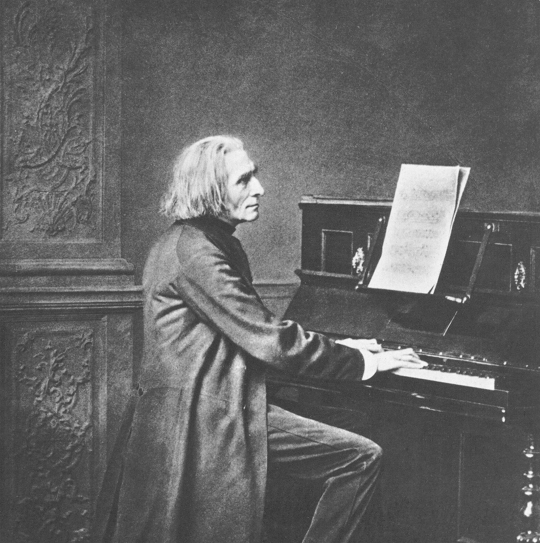
Franz Liszt at the piano (public domain)

If You’re Reading This You’re Probably A Camel.

Thursday’s Column: Captain’s Blog

tempImagehquiDk

Carl Pollard

One of the many reasons you’ll never find me sewing is because I can never seem to thread the needle. It takes a good 45 minutes of fumbling around, licking the thread, and missing the hole before I finally get it. This is because the eye of your average sewing needle is approximately 0.6 mm wide. Or a better way to describe it is about the width of two periods placed side by side. Now try to imagine your average camel that stands at over seven feet tall and weighs 1300 pounds fitting through this space that is so small a toothpick can’t even fit through it.
 
Jesus uses this exact illustration in one of his interactions with a ruler during His earthly ministry. This account is found in three of four gospels, Luke, Mark and Matthew.
 
Jesus met many different people in His ministry on earth, from those of weak faith to great faith, from those in opposition to those in support. The account in Matthew 19 stands out for a few reasons. It applies to us more than we realize. We normally don’t think of ourselves as being rich. Rich is Bill Gates or Jeff Bezos. Many of us are richer than we think. For example if you earn $25,000 or more annually, you are in the top 10 percent of the world’s income-earners. The average income in America is $56,180. In America, if you make $32,000 you are considered to be apart of the poor to near poor income bracket, and yet even then you’re still making three times more than the average person worldwide. All of this to say, we are rich. Which makes what Jesus says to the rich young ruler hit a little closer to home.
 
Matthew 19:16 says, “And behold, a man came up to him, saying, “Teacher, what good deed must I do to have eternal life?” From the outside looking in, this person had it all. He was young so he had lots of life left to live. He was rich so he had no worries financially. He was a ruler so he had power and authority. While he had all of these qualities, he felt a need to go to Jesus for help.
 
The rich young ruler made many right decisions. He came at the right time (while he was young). He came to the right person (he ran and knelt at the feet of Jesus Mark 10:17). He asked the right question (“how can I inherit eternal life?”).
He received the right answer (Jesus tells him the truth). BUT…he made the wrong choice (he left the Lord broken-hearted).
 
The rich young ruler came to Jesus and asks, “what good deed must I do…?”
This question is singular. He was looking for a single action that would save his soul and give him eternal life. Sadly the action Jesus tells him to do was too much for him to handle. His riches kept him from salvation. If you live in America chances are Jesus would say to you, “How difficult it is for you to enter the kingdom of God.” May we never let what God blesses us with keep us from spending an eternity with Him.

The Window To The Soul

Thursday’s Column: Carlnormous Comments

carl-pic

Carl Pollard

The eyes are the window to the soul…sounds like something straight out of a Shakespeare sonnet. While this is a phrase that was around even before the time of Christ, many believe that it is from Matthew 6:22-23.

This saying is often a misapplication of what Jesus said while preaching the Sermon on the Mount. To understand it better we need to understand the purpose of Matthew chapters 5-7. Jesus is speaking about righteousness. I’m fact, this section in chapter 6 is one of the five areas of righteousness that Jesus talks about by way of practical application. In verses 19-24, Jesus is talking about money. Using exegetical principles we can better understand Matthew 6:22-23.

Verses 19-21 say, “”Do not lay up for yourselves treasures on earth, where moth and rust destroy and where thieves break in and steal, but lay up for yourselves treasures in heaven, where neither moth nor rust destroys and where thieves do not break in and steal. For where your treasure is, there your heart will be also.”” Now notice verse 24, “”No one can serve two masters, for either he will hate the one and love the other, or he will be devoted to the one and despise the other. You cannot serve God and money.” If verses 19-21 is talking about money, and vs. 24 is talking about money, what is he talking about in verses 22-23?

Money! He says, “The eye is the lamp of the body. So, if your eye is healthy, your whole body will be full of light, but if your eye is bad, your whole body will be full of darkness.” Jesus is talking about our view of money. The eye is the lamp of the body. Basically the way we view money effects our way of living. If we have a healthy view of money, our priorities will be in line with Gods. If we have an unhealthy eye, and view money as more important, our whole body will be full of darkness because we have chosen money over God.

The problem with the saying “the eye is the window to the soul” is that it has often offered people permission to judge the state of a person’s soul. It gives permission to judge others solely because of what they perceived a person was looking at or thinking. Biblically, we can’t know the state of a person’s soul simply by looking at their eyes. Only God has the ability to see the intentions of the heart. As humans we don’t have the power to condemn someone, only God has this power.

That being said, it is our job to be attentive to people. Our duty to one another in the church is to look out for the souls of everyone. Our view of money can either corrupt our priorities, or help us grow the kingdom.

I Want To Be Happy

Thursday’s Column: Carlnormous Comments

carl-pic

Carl Pollard

I was 16 years old and I remember thinking, I’ll be happy when I get a new phone. I was 17 years old and I told myself, I’ll be happy when I get my own vehicle. I was 18 and I remember thinking, I’ll be happy when I get a newer phone. I was 19 and I thought, I’ll be happy when I get a newer truck.

At 16 I got a new phone and I was happy, until I dropped it in a hotel toilet a month later. I was 17 and I got my own truck and I was happy, until the transmission went out on the way to school. I was 18 and I got a newer phone, and I was happy until I left it on the roof of my dads car as we drove home from church. I was 19 and I got a truck that was nicer than anything I could ever want. I was happy, until it broke down on an Indian reservation in Arizona.

I thought I knew what would make me happy. I chased after the physical possessions that I thought would bring me joy. The problem that I failed to see was that phones break and trucks aren’t always reliable. My happiness would run out when my stuff would break.

People are constantly searching for happiness. Why? Because they don’t know what will make them truly happy. It’s a daily experiment that never gives them the result they are looking for. There are millions of books, movies, articles, and lessons geared toward helping us find true happiness.

“How to be happy” is one of the most searched phrases on Google, second only to “how to lose weight.” We ask this question because we can’t find the answer. Solomon asked this question in Ecclesiastes. “Vanity of vanities. All is vanity says the preacher.” The wisest man in the world wanted happiness and looked at every possible solution. He looked to money, drinking, and women. Every time Solomon placed his happiness in these things, he was left feeling empty. He finally found the secret to life: “The end of the matter; all has been heard. Fear God and keep his commandments, for this is the whole duty of man” (Ecc. 12:13).

Every earthly option was tried, and none of them seemed to work. The bottom line is to fear God and keep His commandments. Why? Because God knows His creation. Do you struggle with finding happiness? Do you want nothing more than to be content? The answer isn’t found in the world. You won’t find true, lasting happiness in anything on this earth.

Happiness is found in our purpose as God’s chosen (1 Peter 2:9), in loving God (Deut. 6:5, Matt. 22:37-39), and in showing gratitude (Psa. 118:1; 136:1; 147:7).

Distracted And Delayed By Baggage

Neal Pollard

On May 7, Bill McGee wrote in a USA Today article about the crashed Aeroflot plane that killed 41 of the passengers onboard: “Reports from people on the plane indicate the evacuation may have been slowed by passengers grabbing their bags. Videos show passengers taking their carry-on bags with them as they exited the plane,” the AFA said in a statement. “We will never know if more lives could have been saved if the bags were left behind” (online edition, “Were lives lost at the cost of carry-ons in Aeroflot plane crash that killed 41?”).  It’s outrageous and unbelievable that people would care more for their luggage than human lives, but that appears to be the case.

In Luke 12:15, Jesus taught, “Take heed and beware of covetousness, for one’s life does not consist in the abundance of the things he possesses.” The NASB translates the first part of the verse, saying, “Beware, and be on your guard against every form of greed….” Watching video footage of those passengers making an emergency exit with carry-ons in hand is a rather graphic, unmistakeable illustration of Jesus’ point. Unfortunately, we can have a harder time seeing ourselves doing the same thing in the prioritization of our lives. We may be aghast at the thought that their seemingly greedy decision came at the expense of some people behind them being able to escape the flames, but Scripture teaches the devastating effect greed can have on our own lives and the lives of those we influence.

Paul teaches that such can be a “snare,” “harmful desires,” plunging men into “ruin and destruction” that pierces them “with many griefs” (1 Tim. 6:9-10). It’s interesting that Paul’s inspired counsel is to “flee from these things” (11). We should consider that an inordinate desire and pursuit of material things may hurt not only ourselves, but the people that come along behind us. That includes our children, grandchildren, and the other people who are guided by our influence and example. They are watching what we value most and what has our greatest attention and affection. We may not be caught on camera, but God sees it with perfect, all-seeing eyes. 

Let’s be careful not to allow this world to cloud our judgment, making the things of this world more important than souls or the will of the Lord. The stakes are higher than whether we exit an airplane alive. It’s about how we leave this world and enter the next one.

Screen Shot 2019-05-09 at 7.24.14 AM

DEALING WITH STRESS

Neal Pollard

A few years ago, the American Psychological Association named Denver the city with the most stressed out people in America. 75% of Denver residents are too stressed out about job and money, with half of Denverites saying their stress had significantly increased over the past year. Doctors and researchers have long connected a variety of health problems to stress, including high blood pressure and high cholesterol. The Harris Interactive polling group conducted this survey on behalf of the APA. Maybe the high stress levels are why so many Denver-area folks have such high octane workout routines, to counteract all of this.

In response, the Colorado Psychological Association provided some tips for coping with stress: (1) Set limits, (2) Tap into your support system, (3) Make one health-related commitment (cut back on caffeine, exercise, get more sleep, etc), (4) Strive for a positive outlook, and (5) Seek additional help. These tips are wise and useful, and especially is this true when we consider a “spiritual twist” on them. While I have found living in this area to be peaceful and enjoyable, I also know that life in America in general is stressful. There are so many uncertainties and that alone is a stressor.

Christians are best-equipped to deal with stress. Matthew 6:33 helps us properly prioritize so that we have a spiritual basis to determine what needs to be eliminated and what is more valuable. Further, we have the greatest support system possible through the church (cf. Rom. 12:15; 1 Thess. 5:11; Eph. 4:13-16; Heb. 13:1; etc.). Living the Christian life properly is a prime way to a healthier lifestyle, so long as we remember such principles as are found in 1 Timothy 4:8, Proverbs 23:2, and 1 Corinthians 6:19-20 (I’d recommend your reading those). Who has a more positive outlook than one who can say, “For me to live is Christ and to die is gain” (Phil. 1:21-24). That is essentially saying, “I’ve got it great, and it will only get better.” Finally, there is no better help than that which we have available in Christ. Having the help of heaven to cope with life’s uncertainties is the greatest stress-buster there is.

Whether you live in Denver or even Small Town U.S.A., you are not immune from potential stress. Yet, wherever you live, if you are a Christian you have the best coping tools imaginable. Being in Christ eliminates many of the worries so many face. May we not take this for granted. Even more, let us not neglect to take advantage of the peace found only in Jesus (cf. John 14:27).

help-teen-stress