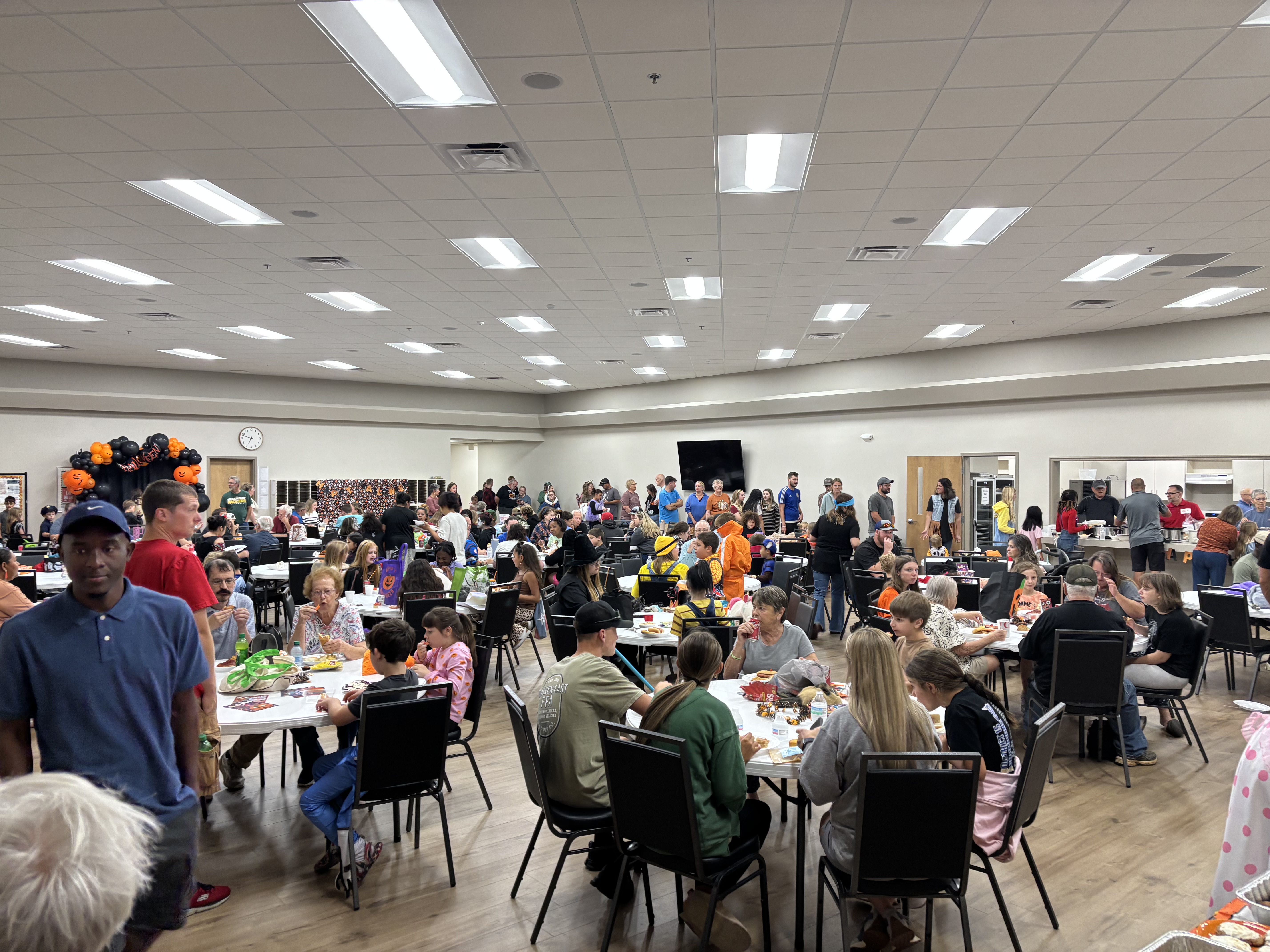
God’s People Care

Neal Pollard

  • For Their Community. Patriotic, civic-minded, generous, helpful, involved, and connected, God’s people strive to be good citizens and neighbors. Acts 2:47a; 5:13b).
  • For Visitors. Smiling, greeting, welcoming, inviting, and connecting, God’s people know that many visitors to church events and assemblies are future brothers and sisters and they want to do what they can to help facilitate that objective. Colossians 4:6; Philippians 2:15; Matthew 5:13-16.
  • For The Lost. Co-workers, family, friends, fellow-students, acquaintances, neighbors, and strangers, God’s people see the people in their lives as fellow-strugglers whose souls will spend eternity somewhere and they want it to be in heaven with them. Daniel 12:3; James 5:19-20; Proverbs 11:30
  • For Each Other. Empathetic, tuned-in, concerned, familiar, intuitive, and loving, God’s people rise to occasions of crisis and love in ordinary moments because they are intimately connected to each other by precious blood and like precious faith. 1 Thessalonians 5:11; Romans 12:9-10.
  • For Children. Wise, visionary, foresightful, nurturing, and of tender affection, God’s people hear their Savior’s admonition to imitate, encourage, and develop these impressionable, dear ones. Matthew 18:3ff; 19:14
  • For The Elderly. Concerned, attentive, prayerful, and connected, God’s people know it’s wise and important not to neglect and forget the part of our population that grows more lonely, isolated, frail, and needy with each passing day and they let them know they see and care. James 1:27; Proverbs 16:31; Proverbs 23:22
  • For Their Families. Responsible, judicious, properly-prioritizing, and consistent, God’s people realize that no advancement or success in the world is worth sacrificing the souls they most cherish and can most influence. Matthew 6:33; Ephesians 6:1-4; Proverbs 22:6; Deuteronomy 6:6-7
  • For Their Souls. Vigilant, conscientious, self-aware, and introspective, God’s people know all too well their humanity, weakness, and inconsistencies but grow more in love with God and heaven and less in love with this world every day. 1 John 2:15-17; Matthew 22:37-40.
  • For God’s Will. Whether gospel meetings, retreats, ladies days, daily Bible reading, workshops, lectureships, special or regular Bible classes, or worship assemblies, God’s people so often show up hungry for the bread of life and the spiritual meat, thirsty for the milk of the word, and considering all of it sweeter than honey. Hebrews 10:24-25; John 6:35; Hebrews 5:14; 1 Peter 2:2; Psalm 19:10

Aren’t there so many reasons to love God’s people?

A couple of pictures (credit Russell Simpson) from Saturday night’s Trunk or Treat. God’s people at Cumberland Trace really shined!

What New Christians Need From Us

Neal Pollard
  • Excitement. From the moment they are part of the body of Christ, new Christians need to experience our joy over them. This needs to be sustained over their first weeks and months as a Christian. While developing relationships cannot stay at this initial phase forever, neither should they feel forgotten in a few days (cf. Acts 15:3; Phil. 1:25).
  • Embracing. While hugs and affection can be an effective means of helping everyone, including spiritual babes, I mean here making new Christians feel a part of the “group.” They have likely exchanged circles of influence and will have to give up some unwholesome relationships. They will do so, often still “rough around the edges” or still working through some worldly ways. They need our friendship and acceptance, our mature assistance as they are grafted in to the body (Rom. 15:7).
  • Example. New Christians by their nature do not know a lot about how to be a Christian. They rely on role models. Therefore, we will watch our attitude, our general speech, our words about others, our choices (recreation, clothing, entertainment, etc.), and our actions. Much is at stake (Mat. 18:6-7).
  • Enlistment. New Christians don’t have exhaustive experience with what the Christian life is to be like. They don’t know what next steps are, though they are usually “on fire” for the Lord and raring to go! Our task is to help them see that Christians are to do more than “be,” they are to “do.” We need to call them alongside and help them serve. If we can do this from the beginning, they will not have instilled in them the habits of inactivity or reduce the Christian life to a few hours assembling. Take them visiting, get them to help teach, have them sit in on Bible studies, and generally find what they are good at and help them find outlets to exercise their gifts (Rom. 12:6-8; Eph. 4:16).
  • Edification. That requires time spent together. Whether this occurs through table fellowship, social interests, church work, and just quality time, they need to be built up in the faith. If we will deepen the relationship generally, they will be more receptive to the most important way to be uplifted–through the assemblies (Heb. 10:24-25). This instruction remains vital, to “encourage one another and build up one another” (1 Th. 5:11).

What would you add?

Selfless Prayer

Carl Pollard

Our prayers can have a tendency to be self centered. Whether we mean to or not, our prayers can end up being all about our problems and needs. God wants to help us, but prayer is so powerful we should be thrilled at the ability we have to pray to God for others. 

Do you believe in the power of prayer? Do you love others? Mention them by name to God. There’s nothing greater you could do than to thank God for His children by name. Take the church directory, scroll through and pray for each family by name. If we all did this, there would be blessings on end. 

Jesus was not selfish with His prayers. In John 17 Jesus prays for His disciples. There is so much love in the words He spoke. He prayed for their faith, their strength, their work. He prayed for us who would believe in the teachings of the apostles. He prayed that they would persevere, that they would have unity, He prayed for growth. He spent time in prayer over the ones He loved. And that includes us! 

He continues to pray for us today. Hebrews 7:25 gives us the most encouraging news about our Savior. Jesus has made it His constant purpose to pray for you and me. 

“He.” Jesus stands in the gap making petitions to God on my behalf. He is our representative. He is our mediator in salvation and our mediator in heaven.

“Always.” Permanence and authority are in the role that Jesus plays. Jesus never stops praying for us. He is always at our disposal before the throne of heaven pleading our case and sharing our cause with the Father.

“Lives.” Jesus is alive to fulfill his role. His resurrection proves that Jesus is alive, but what is he doing with all that time at his disposal? He is praying for you and me. Christ’s life in heaven is his prayer for us.

“To intercede.” The word means “to meet, to approach, to appeal, to make petition. Intercession involves our Lord’s representation of his people at the throne of God. Through Christ, believers are able to draw near to God in prayer. Sometimes I do not know what to pray or even how to pray, but Jesus does. He goes before the Father with my concerns. Jesus always knows how to pray as He should.

The prayer life of Jesus…that’s a humbling study. He goes above and beyond what I have ever done. Throughout the gospels we find a prayerful Savior. Prayed over food (Matt. 14:19-21). Prayed in stress (John 17). Prayed alone (Mark 1:35). Prayed often (Luke 5:16). Prayed for others (John 17:9).

He Prayed with His Heart. Jesus gave His all. And He continues to give today! 

The Last Public Prayer of Jesus

Carl Pollard

Spending time focused on the family is a necessity. God has given parents a responsibility that should never be taken lightly. There are many opportunities in the church that we can take advantage of to create unified families– youth rallies, potlucks, family retreats, and so much more! Spending time together as a unified body, made up of many individual families, is a unique blessing only found in the church. When we choose to bring our families together and worship, eat food, and enjoy fellowship in Christ we imitate the early church.

In Acts 2, the church has just been established, and they eat together, sing together, learn together, pray together, and loved to spend time with each other. A close family In Christ spends time together. Worshipping together is a unifying process, but time spent together outside of the worship setting contributes to growth in our relationships with each other. 

Shared history makes for a closer bond. Creating memories with our spiritual family builds unity. 

That should be our goal today, tomorrow, and for our entire time on this earth. What does the Bible say about the fellowship we have together as a family? 

We are given all kinds of descriptive names in the Bible. 

The early church was called: 

  • Those of the Way
  • The Called out
  • Christians

All of these names paint for us a special picture. Those in Christ are FAMILY. We are unified with each other by a bond stronger than any force on earth. June 4th, 1940 Winston Churchill gave a powerful speech that changed the tone of the Second World War. In his speech he said, “we shall fight on the beaches,
 we shall fight on the landing grounds, we shall fight in the fields and in the streets, we shall fight in the hills.” 

Sadly, in today’s society this sounds like a description of most people’s family vacation…uh ha haaa. 

When there is a lack of unity in our physical families, there will be a lack of unity in the spiritual family. For us to understand the importance of the fellowship we have in Christ, we need to define some terms. The Greek word translated “fellowship” in Acts 2:42 is koinonia. This is defined as “Close association involving mutual interests.” Basically, it is a group of people who have a tight bond because they all have the same interests.

Christian fellowship, then, is the mutually beneficial relationship between Christians, who can’t have the identical relationship with those outside the faith. We are, or should be, closer to each other than anyone in the world. This is a FAMILY. God expects us to have mutual interests, (His Will) and to spend time together building a mutually beneficial relationship. 

So, what is Christian Fellowship? The context for the “high priestly prayer” in John 17 actually begins back in chapter 13. This is the last supper. Jesus washes the disciples feet, He tells the apostles one of them will betray Him, Satan enters into Judas, Jesus tells His followers to love each other, Simon is told he will deny Christ, Jesus tells us He is the Way, the truth and the life, Jesus promises the Spirit to the apostles, He tells them that He is the true vine, that they will be hated by the world, BUT, He has overcome the world. 

After He says all of this, “Jesus lifts His eyes up to heaven and begins to pray” (John 17:1). This prayer is powerful, it’s humbling, it’s personal. Jesus truly cared for His disciples, and He cares for us today. This was the last prayer the apostles would hear before His death. Immediately after He finished they went to the garden and Jesus was arrested. So the question is, what does Jesus pray for just moments before His crucifixion? UNITY! Jesus was concerned about His apostles, He wanted them to be one, and He prayed for every Christian to be one! The bond we have through Christ is so precious, we should never neglect the family Christ died to create. 

In John 17:20-26, Jesus prays specifically for those who will believe the apostles’ teachings, that is, US. 

Why should we be so concerned about our unity? Because Christ died to create what we have today. And we can show the world the Father by creating lasting relationships with each other. 

“Increase Our Faith”

Carl Pollard

Jesus in Luke 17 gives us some challenging commands. In the previous chapter, He tells His followers that you can’t serve two masters, that God’s Law can’t be changed, and divorce for the wrong reason is adultery. He tells a very sobering story about the Rich man and Lazarus. 

He begins chapter 17 with a warning to the ones who cause others to sin. He then moves on to teaching us about forgiveness toward others. Everything that Jesus has been teaching up to this point was very challenging for His listeners, and for us as readers! 

He told them to go beyond what they thought was righteous. His teachings were difficult to hear, and yet essential to practice. 

The apostles say this in Luke 17:5, “Lord, Increase our faith!” They recognized that their faith was in need of improvement if they were going to obey Christs commands. 

It is the same for us today. Often times we lack faith to follow through with the commands Jesus gives to each one of us. It’s hard to rejoice in trials, it’s tough to say no to temptation, it’s difficult to walk the narrow path that leads to salvation. What’s stopping us from asking God the same thing the apostles asked? 

Lord, increase my faith. The stronger our trust in God, the easier it becomes to make those difficult changes. Jesus responds to the apostles by telling them the power that is found in faith (Luke 17:6). 

Lord, increase our faith. So that through our unwavering trust we can be found forgiven on that last day. 

How strong is your faith? We can all take a step in the right direction today if we would ask God to strengthen our faith. Trust in Him! With even the smallest amount of faith Jesus tells us we can move mountains. 

If we will trust God completely, our lives will be shaped by His desires and not our own. The commands from Christ our for our own benefit, but it takes faith to see that. Lord, strengthen our faith! 

“I’m Better Than That”

Tuesday’s Column: Dale Mail

image

Dale Pollard

When you’re reading the Bible or sitting in a Bible class do you ever secretly think you’re better in some ways than the characters you’re studying? Before that sounds terrible let me explain. 

Moses is walking along minding his own business and tending to his father in-law’s flock in Exodus three. As the chapter progresses we see that he has a supernatural encounter with God when God appears to him from a burning bush. The voice of The Angel of the Lord is speaking from a bush that isn’t consumed by this supernatural fire— incredible.  Would that be enough to convince you to go and confront the most powerful and powerfully stubborn world leader of the day? 

What about the disciples when Jesus calms the storm in Mark four then walks on the water in Mark six? After these encounters the disciples still respond, “Who is this Man?” 

Maybe on occasion we find ourselves thinking that we would react and act more favorably in similar situations. 

As Christians there are certainly times when we fall embarrassingly short, but the same God that spoke from a burning bush to Moses and calmed the seas is the very God that reaches out to pick us back up when we fall. It’s tragic that some, even in the church, have this image of God in their minds as a stern tyrant waiting for us to become hopelessly tangled in this messy world. Your Creator is just too perfect to act like that. If you find yourself struggling spiritually then may this be a friendly reminder to look up and grab the hand of our Savior. He understands how human we are and how desperately we needed the One He sent in the first place. 

Knowing What D.C. Stands For

Neal Pollard

Inasmuch as we don’t want laws or policies enacted that violate God’s Word and we want precious freedoms, especially religious ones, preserved and protected, we can really get into what is going on in Washington, from Capitol Hill to Pennsylvania Avenue. Many know that “D.C.” is an abbreviation for “District of Columbia,” an area of land created at about the time of our nation’s founding under the direct jurisdiction of the U.S. Congress that is not a state.

However, as politics has vied for sports and entertainment as an idol in our culture, it has become the source of unnecessary and even immoral strife between Christians. Blind support and allegiance for one major political party or the other can do more than make us inconsistent. It can make us a stumbling block. It seems to me that D.C. can stand for some dangerously different things.

Distracted Christians. Search high and low in your New Testaments, written during the time of the wicked, often unfair-to-Christians, Roman Empire.  The disciples were about the business of evangelism (Acts 8:4) and growing the church (Acts 6:7). Can the rumblings and drama from the nation’s capitol get us so transfixed that we cannot see past it or through it to our individual and collective mission as God’s people? He has us here to get people into the Kingdom of His dear Son (Col. 1:13). Everything else is secondary. 

Divided Churches. For as long as I’ve been preaching, I’ve seen politics come between brethren in the local church. Thankfully, it does not usually become significant enough to trouble the entire congregation but I have seen it do so. What’s more, I’ve seen brothers and sisters become so confrontational and flagrant about politics–especially through the relatively recent medium of social media–that it has been a stumbling block to new and weak Christians. Perhaps the political world in our country has never been so intensely divisive as it currently is, and what typically troubles the world troubles the church. But, when souls are negatively impacted, God will hold the offenders accountable. 

Devil’s Cauldron. Please don’t misunderstand. Politics, like money, is a neutral matter. But, like money, it can become the root of all sorts of evil (cf. 1 Tim. 6:10)–enmities, strife, outbursts of anger, disputes, dissensions, and factions (Gal. 5:20). Just prior to this list of activities that are the carrying out of the desires of the flesh (Gal. 5:16), Paul warns, “For the whole Law is fulfilled in one word, in the statement, ‘You shall love your neighbor as yourself.’ But if you bite and devour one another, take care that you are not consumed by one another” (Gal. 5:14-15). Who benefits when things like politics distract and divide Christians? It is not the lost, the church, or the Lord!

I can think of a least three godly, wonderful Christians who are public servants in political office and making a profound impact for good–Bill Reiboldt, Sheila Butt, and John DeBerry. They demonstrate that God’s people can devote themselves to politics without sacrificing their faith and example. For those of us “on the outside looking in,” in our love of country and freedom, may we never allow our attitude, words, or actions to betray our highest calling. The more effectively we reach lost souls, reflect the mind of Christ, and reveal the hope of the gospel, the better our nation (and world) will become. What will that make us? Disciples of Christ!

11168488_10153052239815922_846243704468580330_n
From my last trip to Washington, a few summers ago. 

Where Is Your Faith?

Neal Pollard.

How many household conversations begin, “Where is my?” Women leave purses in restaurants, men leave their wallets in the other pants pocket, and kids are apt to leave just about anything anywhere. How many vacations begin with the family wondering where some vital item is, fearing that it is sitting at home and not packed in the suitcases?

The disciples had just heard Jesus deliver some powerful lessons (Luke 8:10- 21) and now they were heading across the lake from Galilee to the country of the Gerasenes. En route, while Jesus slept, a fierce windstorm descends and rocks their little boat. In a panic, they awaken Jesus, pleading, “Master, Master, we are perishing!” (Luke 8:24). Jesus calms the storm and subsequently their fears, but He admonishes them, “Where is your faith?” (Luke 8:26).

That is a fair question. They had just heard the Master teacher doing His usual, masterful job (Luke 7:22-28, 31-36; etc.) and seen Him do some incredible miracles (Luke 7:1-10; 11-15; etc.). Between disembarking and the present distress, where did their faith go? The question Jesus asked His disciples is a fair question for each of us today. “Where is your faith?”

IS IT LOST (Luke 18:1ff)? Jesus positively teaches a parable about this in His story about the widow and the unjust judge. The woman was persistent and the judge, who feared neither God nor man, granted her petition due to her tenacious pursuit. Jesus makes application by asking, “When the Son of Man comes, will He really find faith on the earth?” (Luke 18:8). It is possible for any one of us to lose our faith. The parable of the sower and the soils shows that people can lose their faith as a consequence of both good times and bad times (cf. Luke 8:11ff). It is equally tragic to see people lose their faith just a few steps into their spiritual journey, several miles down the road, or especially near the end of the road!

 IS IT HIDDEN (Luke 8:16)? Jesus demonstrates how ludicrous a view hidden faith is from heaven’s vantage point by illustrating it this way: “No one, when he has lit a lamp, covers it with a vessel or puts it under a bed” (Luke 8:16a). His point is that light is not doing its job when it is covered, and our faith is not doing its job when it is covered. There will be many settings throughout life when being a Christian and standing up for the Lord will not be popular, admired, or congratulated. What will we do with our faith in such circumstances?

IS IT MISPLACED (Luke 18:9ff)? Everybody puts their trust in someone or some thing. The Bible says that people trust in their own power and might (Psalm 44:6), their wealth and riches (Psalm 49:6), their national leaders (Psalm 146:3), their own hearts (Proverbs 28:26), their idols (Isaiah 42:17), mankind (Jeremiah 17:5), their own achievements (Jeremiah 48:7), or their physical beauty (Ezekiel 16:15). Many of these attributes can serve us in properly placing our faith in God, but far too many are resting all they are or hope to be on those rather than God. In Luke 18:9, Jesus speaks a parable in warning against those who “trust in themselves.” Despite a culture that preaches the preeminent idea of “believing in yourself,” God makes that subservient to trusting in Him.

IS IT VISIBLE (Luke 7:9)? A centurion whose servant was dying was humble, devoted and perceptive in his approach to Jesus, pleading with Him to heal that dear one for him. Jesus marveled aloud, “I have not found such great faith, even in Israel!” The Centurion did not have to wear a badge or button that said, “I believe in the Lord.” People are watching us every day, our speech, decisions, attitudes, actions, and reactions. While it is nice when someone asks, “Are you a Christian?,” how much better for them not to have to ask?

So, “Where is your faith?”

60602590_10157475706779824_6496018119713095680_o
The 2019 Bear Valley Bible Institute graduating class

Carrie Fisher Wisdom: Do AND Deny

Neal Pollard

Social media is abuzz about both the caustic criticism of fans commenting on how poorly they think Carrie Fisher has aged and her withering response to their mean, thoughtless remarks. Barely in her twenties when she appeared as Princess Leia in the original Star Wars in 1977, she reprised her role 38 years later almost in her sixties. You will inevitably add some wrinkles and lose some tone in four decades. Fisher gave an interesting interview to Good Housekeeping that appeared just before the debut of the historic blockbuster earlier this month. Apparently, she felt she had to lose a significant amount of weight for the movie. How did she lose the 35 pounds? She says, “I did it the same way everybody has to—don’t eat and exercise more! There is no other way to do it. I have a harder time eating properly than I do exercising. It’s easier for me to add an activity than to deny myself something” (Good Housekeeping UK, staff, 12/7/15).

Most of us can relate to her insight. Being active and doing something takes some resolve and endurance, but withholding or removing what does not belong often challenges our appetites, desires, and cravings much more. This battle rages on an infinitely more serious front than weight-loss, though. Jesus makes self-denial a salient ingredient of discipleship (Luke 9:23).  BDAG indicates this word for deny means, “To refuse to pay attention to, disregard, renounce (oneself in this passage)” (Arndt, William, Frederick W. Danker, and Walter Bauer. A Greek-English lexicon of the New Testament and other early Christian literature 2000 : n. pag. Print.).  Restraining myself from saying a sarcastic, bitter, angry word is harder than lifting my voice in song or prayer. Fighting the urge to give in to a temptation requires more effort than doing something kind or necessary for someone in need. Our relationships are not just damaged through neglect or omission, but also by failing to conquer unhealthy and unwholesome attitudes, words, and actions.

Doing and denying are dual elements essential to overcoming this world. God wants obedience, but He also wants self-control. It was a staple expectation of Paul’s gospel preaching (Acts 24:25). It is listed among the fruit of the Spirit (Gal. 5:23). It is among the Christian graces (2 Pet. 1:6). But as we regularly master it, we will shine Christ to those around us in a memorable way! As we do God’s will, let’s also deny ourselves.

file_carrie_fisher_at_wondercon_2009_4