Three Qualities For Success

Neal Pollard

I am blessed with a wise woman for a wife. My three sons would tell you that every time they consult her for wisdom, she never disappoints. I think that is because she draws, as the source of her wisdom, on God’s Word. She has filled her heart with it, and that’s what comes out when she interacts. Especially does she want to get that right when offering guidance to her sons. 

King Lemuel seems to have had a mother like that. She teaches her son an “oracle” (sayings or inspired utterances) that first deals with how he uses his professional possession (Proverbs 31:1-9). The bulk of the chapter (31:10-31) will deal with who he looks for as a wife. His mother pleads with him emphatically. I’m not sure where I see a more intense plea anywhere in Scripture: “What are you doing, my son? What are you doing, son of my womb? What are you doing, son of my vows?” I don’t know if this is written in reaction or in proaction, but her concern is palpable. Each bit of counsel is followed up with the next, divine wisdom meant to prepare him or repair him. What are they? 

DON’T ABUSE AUTHORITY (3). This is written to a man in a position of considerable authority. She warns him not to surrender his influence to physical desires or social vanity. The “women” in verse three are contrasted with the woman of noble character described in the beautiful poem at the end of the chapter (31:10-31). These women would take his strength; the virtuous woman would add to it. “Those who destroy kings” are individuals who don’t have his interests at heart. He is not to allow those people into his circle of influence. Have you ever seen people who ingratiate themselves by positioning themselves close to someone they see as powerful and influential? They flatter them with praise. These deplete rather than distribute strength. Neither of these groups care about Lemuel. They care about themselves. 

DON’T ABUSE ALCOHOL (4-7). This admonition is written to warn him against impairment that comes from a different source. Wine and strong drink are the enemies and the contrast to wise decision-making. Why? It causes one to forget the law (5) and the afflicted (5). It is only a temporary escape from their troubles (6) and it actually adds to their troubles (7). Frequently, Proverbs warns against the negative influence of alcohol. “Wine produces mockers; alcohol leads to brawls. Those led astray by drink cannot be wise” (20:1, NLT). “Who has woe? Who has sorrow? Who has contentions? Who has complaining? Who has wounds without cause? Who has redness of eyes? Those who linger long over wine, Those who go to taste mixed wine” (23:29-30). In three decades of ministry, I’ve encountered a lot of people struggling with addiction to alcohol. Sometimes it was learned from the home they grew up in. Sometimes it was discovered through friendships or on the job. I cannot tell you how many marriages, homes, careers, and lives have been adversely affected (often tragically) through the abuse of alcohol. Perhaps we are wise to heed the rest of Proverbs 23: “Do not look upon it…” (31). If we keep our eyes off of it, our lips won’t touch it. 

DON’T ABUSE THE ABUSED (8-9). This passage suggests that one of the cruelest forms of abuse is silence. Lemuel’s mother advised him to “open” his mouth. Some are too powerless to advocate for themselves. They need someone with the power and influence to speak for them. She says to represent the voiceless and penniless (8). She says actively help the poor and needy with righteous judgment and thoughtful defense (9). We all know disenfranchised, marginalized people, people nobody notices, cares about, or helps. That cannot be us. Compassion and sensitivity to the plights of the downtrodden should fill our hearts. 

The king’s mother shares three qualities with her son to give him success: discernment of character, self-control, and compassion. But these things can help peons and peasants like you and me. In this way, Lemuel’s lessons are lessons we can learn, too! 

Questions From The Bible: Where Are You?

Brent Pollard

As we reflect on the Bible’s questions, we can begin with the first question mentioned in its pages: “Where are you?” (Genesis 3.9). To provide context, Adam and Eve had consumed the forbidden fruit. God came to them in the cool of the day. When the guilty couple heard God, they hid because they felt the weight of their sin. Even though God knew where Adam and Eve were, He still posed our question. So, what is its purpose?

From a literary perspective, this question is a masterstroke, injecting tension and driving the narrative forward. God’s question sparks a dialogue that redefines the dynamics between humans and their Creator and among humans. The Bible is not just a compilation of stories but a source of divine inspiration that can profoundly impact and transform lives.

We can see that God is asking a rhetorical question to benefit Adam and Eve rather than himself. God is not seeking information but rather prompting Adam to consider his actions and their consequences. God intends for the question to prompt introspection, guiding Adam (and Eve) to contemplate their present circumstances, encompassing both their physical concealment and spiritual transgression. The question is rhetorical because it aims to highlight the rupture in Adam and Eve’s relationship with God resulting from their sin. The rhetorical question extends beyond its immediate context for contemporary readers, encouraging them to examine their lives and relationships with God. It serves as a timeless prompt for introspection and spiritual reflection.

God’s question is also a powerful pedagogical tool because it encourages self-examination, promotes accountability, facilitates dialogue, illustrates consequences, invites reflection, and employs inquiry-based learning. These elements make it an effective means of teaching important spiritual and moral lessons.

However, this inquiry was also an invitation for Adam to confess his sin, seek reconciliation, and demonstrate humility. If Adam had confessed right away, he would have shown a willingness to be honest and accept responsibility for his actions. This act of repentance could have demonstrated his humility and willingness to admit his mistake as soon as he realized it. While the fundamental consequences of sin, such as the curse and expulsion from Eden, may still apply, Adam’s prompt confession could have led to a more compassionate handling of those consequences, with mercy outweighing justice.

This question holds significant relevance for modern-day readers. Throughout history, God has consistently asked, “Where are you?” in a spiritual context, encouraging individuals to reflect on their spiritual condition. This inquiry urges us to reflect on our connection with God and our moral compass. Therefore, it serves as a metaphor for self-awareness in both spiritual and ethical aspects. Note the theological implications:

Self-awareness and Spiritual Condition: Theologically, “knowing where you are” frequently refers to understanding your current spiritual state. This includes recognizing your relationship with God, your moral standing, and areas where you may fall short of divine expectations.

Repentance and growth: We recognize that the first step toward spiritual growth and repentance is acknowledging one’s spiritual state. One must identify their separation from God before embarking on the journey back.

Accountability: Being aware of one’s spiritual state promotes personal responsibility. When one knows where one stands spiritually, ignoring or justifying behaviors contradicting one’s faith is more difficult.

Humility: Recognizing where you truly stand concerning God and His standards can help you cultivate humility, which God regards as a critical virtue.

Divine-human relationship: Recognizing your spiritual position can deepen your connection with the divine, leading to heartfelt prayer, genuine worship, and a clearer realization of your dependence on God.

Discernment: Knowing your spiritual state can help you understand God’s will and make faith-based decisions.

Eschatological preparation: Understanding your spiritual standing is crucial for preparing for death, judgment, and humanity’s ultimate destiny.

Authenticity in faith: Self-awareness promotes a more genuine faith experience, rather than just going through religious motions without real engagement.

Appreciation of grace: Understanding one’s true spiritual condition can lead to a greater appreciation for divine grace by recognizing the gap between where one is and where God calls one to be.

The theological concept of “knowing where you are” is often linked to practices such as self-examination, confession, and spiritual direction, illustrating its practical applications. We see it as an ongoing process, not a one-time realization, promoting continuous spiritual growth and faith.

In conclusion, God’s profound inquiry, “Where are you?” echoes throughout history, surpassing its Genesis roots and retaining relevance for spiritual self-examination. This inquiry is a poignant prompt for spiritual self-examination, accountability, and personal growth. It prompts us to contemplate our relationship with God, assess our moral integrity, and consider our place in the broader faith narrative. In our spiritual path, God perpetually calls us to respond to this inquiry verbally and through our deeds. Consistent self-reflection leads to deeper understanding, authentic faith, and transformative grace, nurturing spiritual growth. Ultimately, God’s question encourages us to engage in a conversation that can lead to reconciliation, spiritual development, and a deeper connection with the divine. Amid modern life’s intricacies, let’s take a moment to reflect: where are we positioned on our spiritual path, and how will we respond to this enduring call?

Examine Yourself

Carl Pollard

We usually lie to ourselves more than we do to others. However, repentance in and of itself is being open and honest with God. It’s recognizing sin, and turning from it. 

The prodigal son took his inheritance, left home and blew all his money. He waisted his money fulfilling his every desire. But after a while, the money ran out and he was forced to get a job working with pigs. He was so hungry the pig slop looked appetizing. 

Jesus tells us this parable in Luke 15:17-24, 

“But when he came to his senses, he said, ‘How many of my father’s hired men have more than enough bread, but I am dying here with hunger! ‘I will get up and go to my father, and will say to him, “Father, I have sinned against heaven, and in your sight; I am no longer worthy to be called your son; make me as one of your hired men.” ’” So he got up and came to his father. But while he was still a long way off, his father saw him and felt compassion for him, and ran and embraced him and kissed him. “And the son said to him, ‘Father, I have sinned against heaven and in your sight; I am no longer worthy to be called your son.’ “But the father said to his slaves, ‘Quickly bring out the best robe and put it on him, and put a ring on his hand and sandals on his feet; and bring the fattened calf, kill it, and let us eat and celebrate; for this son of mine was dead and has come to life again; he was lost and has been found.’ And they began to celebrate.”

Notice that the son said to himself, “I have sinned against heaven, and in your sight.” Do we really want to know ourselves? Be honest. Not a single human on earth is without sin. When the son was honest, the Father was forgiving. 

If you’re a Christian and there’s sin in your life, the worst thing you can do is ignore it. 

1 John 1:9 says, “If we confess our sins, He is faithful and righteous to forgive us our sins and to cleanse us from all unrighteousness.” God is READY and FAITHFUL to forgive…but we MUST confess! God doesn’t want you to bury them deep down; confess and get it over with! He’s waiting. He already knows what you’ve done, but we act like we can hide it from Him. 

You owe it to yourself to be honest, not just to others but in the conversations you have in your head. Be honest in the decisions you make, the sins in your life and you’ll be closer to knowing who you REALLY are. 

We are sinful, we are human, but God gives grace to those who come to Him. Let’s be honest, and a truthful examination will show us that we need God in our lives. 

The Spirit Of Deception

Carl Pollard

In 1 John 4, we read from John some warnings concerning spirits. He says in 1 John 4:1, “Beloved, do not believe every spirit, but test the spirits to see whether they are from God, because many false prophets have gone out into the world.” John tells us that not every spirit is from God. He goes on to say in verse 6, “We are from God; he who knows God listens to us; he who is not from God does not listen to us. By this we know the spirit of truth and the spirit of error.” 

These verses clearly teach us that there is the Spirit from God, and then there are spirits in the form of false prophets. These false prophets are from the world. The teachings of the apostles were and continue to be the standard for the church. John 13:20 says, “‘Truly, truly, I say to you, he who receives whomever I send receives Me; and he who receives Me receives Him who sent Me.’ The one whom Jesus sends is His apostle. God sends Christ and Christ sends the apostles. Therefore, If you accept the apostles you accept Christ, and if you accept Christ then you accept God. We wouldn’t even know of Christ if it were not for the apostles. They were to distinguish these spirits by seeing if those speaking were speaking things that were of the apostles and God, or of the world (1 John 4:5). 1 John 2:25 says that these people were teaching things that were contrary to John’s teachings.

So what does all of this mean? Who is the Spirit of Deception? We can piece together through 1 John, that the Spirit of Deception is that which teaches against John. By doing so, the spirit of deception has gone against the Spirit of Truth. 

The Spirit of Deception can be described as someone/something that does not teach that which is in accordance to the apostles or God, it is that which does not obey the commands of Christ, and it is that which tries to mislead Christians. The Spirit of Truth is contradicted by the Spirit of Deception. We see in the early church that one of the gifts of the Spirit was discerning spirits (1 Corinthians 12:10). 

The Holy Spirit (Helper) was given to the apostles to help them remember what Jesus had taught them, to preach about Christ, to tell the world of its sin, to preach righteousness and judgment, and to bring glory to Christ (John 14:26; 15:26; 16:7- 8,13-14). Demonic spirits spoke through false prophets to confuse and convert God’s people (1 Timothy 4:1ff). This spirit of deception was the reason for John’s writing. He says he is wrote, “concerning those who are deceiving you,” (2:26). He also said, “Children, let no one deceive you,” (3:7). The Christians John wrote to needed to learn how to distinguish these Spirits.

Sadly, we are still in the same circumstances today. People are still advocates of the devil. We find false teaching everywhere and it is up to us to test and discern between  what is from God and what is from the world. May we always be vigilant and wary of the teachings that comes from the mouth of Satan! 

Judge Not That You Be Not Judged

Tuesday’s Column: Dale Mail

image

Dale Pollard

Matthew 7:1-5 contains that well known verse, “Judge not that you be not judged.”

This has been a misquoted and misunderstood section of scripture because some have taken this to mean that Jesus is implying that not judging someone involves a complete acceptance of a sinful lifestyle. This obviously isn’t the case since later in this same chapter He tells us that we can judge others based on their fruits. How will we know if a “sheep” is really a “wolf” in disguise? 

We can sort the wool from the wolves by judging the actions of both. 

Some level of judgment then must be passed on our part, but this is not to be an action of belittlement. Jesus will masterfully use the illustration of the plank-eyed man attempting to remove a speck out of another’s eye. Notice how our Lord doesn’t reprimand the attempt to remove the speck, but that we can see the speck better when that metaphorical plank is removed from our own eye. 

Jesus is not teaching an acceptance of sin, nor is it a lack of love. Unconditional love is a requirement, but Jesus shows that it is possible to love the sinner, and hate the sin. A speck can keep us from the narrow gate just as easily as a plank can– and both should be removed. 

Here are three thoughts to consider on these verses

  1. Our own planks aren’t as obvious to us as they are to others. Before becoming agitated and aggravated with a brother or sister we should keep in mind that they may not know what is so obvious to others. 
  2. Our eyes must be clear if we are ever going to help others.
  3. Jesus is not saying we shouldn’t help, but that we are required to. 

“You Can Find Somebody To Tell You What You Want To Hear”

Neal Pollard

Someone wants to be involved in an illicit relationship, defend an unscriptural marriage (or enter into one), engage in some vice or sinful behavior “in moderation” (or otherwise), and they talk to someone who shows them from scripture why it should not be done. Perhaps they ask several people and get the same discouragement. Sometimes, the inquirer is wise enough to let that guide them away from wrongdoing. Other times, they persist in looking for someone to tell them what they want to hear. Without exception, such a searcher will eventually—and probably sooner than later—find someone to validate and endorse their desire.

Solomon wrote, “The thoughts of the righteous are just, But the counsels of the wicked are deceitful” (Prov. 12:5). His father kicked off the songbook of Israel by saying, “How blessed is the man who does not walk in the counsel of the wicked…” (Psa. 1:1a). Job speaks of how he shunned “the counsel of the wicked” (Job 21:16; 22:18). Wicked Ahaziah was rejected by God, in part, “for his mother was his counselor to do wickedly” (2 Chr. 22:3).  This characteristic of human nature, whether giving or taking wicked counsel, is timeless. But, seeking counsel from the proper sources is encouraged by Scripture (Prov. 11:14; 15:22; 24:6). How can we make sure that we are hearing what we need to hear, not just what we want to hear?

  • We must realize our personal accountability (2 Cor. 5:10). No matter what anyone else tells us, we’ll stand individually in the Judgment. Christ’s word, as Judge, is the only one that ultimately matters. What has He said?
  • We must pray for wisdom and discernment (Col. 1:9). Are we ignoring a pricked conscience, clear teaching, or red flags? Is self in control, or is the Savior’s will?
  • We must grow in knowledge (2 Pet. 3:18).  Have we studied this out yet? Are we convinced beyond a doubt? What does the Lord say?
  • We must be honest with ourselves (Psa. 15:2). We cannot deal fairly in any situation if we’re deceiving ourselves. Lying to ourselves does not change God’s truth. It simply hurts us.
  • We must train our hearts to desire what is good (cf. 2 Pet. 2:14). This can be excruciatingly hard! Proverbs 21:10 says, “The soul of the wicked desires evil.” But listen to a cleansed heart: “Behold, You desire truth in the innermost being, and in the hidden part You will make me know wisdom” (Psa. 51:6).
  • We must put emphasis on the eternal rather than the temporary (2 Cor. 4:16ff). Is what we wish to pursue destructive to heavenly objectives? Are we risking an eternity in heaven for a few years of fleeting pleasure on earth? Nothing is worth sacrificing salvation!
  • We must weigh the advice of our counselors on the scales of truth (Prov. 18:17). The Berean Christians fact-checked an inspired apostle (Acts 17:6). We owe it to ourselves to compare what our advisers tell us—however much we love and respect them—with what God’s Word says. Many times they will align. If they do not, we must choose God’s Word every time!

Beware! At times, what we want to hear is right and good. Many times, it is not. As we lean on others, let us lean most heavily on “the rock” (Mat. 7:24)!

dreamstime_l_20586429

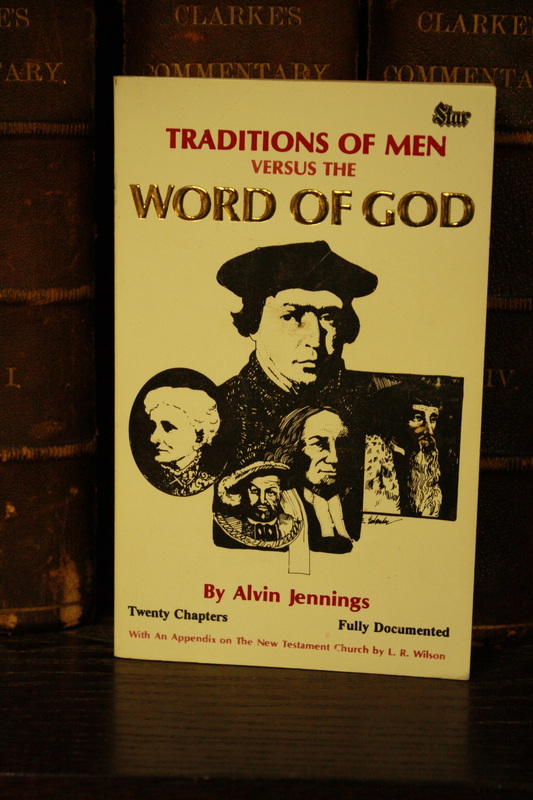
Traditions Of Men Versus The Word Of God

Neal Pollard

For as long as I have been preaching, I have had at least one copy of the Alvin Jennings’ book bearing the title above. The book was originally printed in 1972, but it has been reprinted several times. Jennings clarifies the way he uses the word “traditions” in his title. Rather than the sense of being a writing handed down from God (2 Th. 2:15; 3:6; 1 Co. 11:2), he used the word to refer to “religious laws and traditions originating from the minds of men and handed down orally and/or in printing from generation to generation” (iv.). He rightly points out that such traditions were condemned by Christ (Mat. 15:2-3,6; Mark 7:3,13; Col. 2:8; 1 Pet. 1:18; Gal. 1:14). Some of the problems with these traditions were that they got in the way of obedience to what God commanded, caused negligence regarding and the setting aside of God’s commands, enslaved one to something or someone other than Christ, and created a zeal that could lead to unhealthy consequences. The traditions Jennings examines substituted  false, human ideas for clearly revealed, divine truth. Anything that binds where God has not bound or gives permission where God doesn’t permit must be rejected. It’s a tradeoff with the gravest consequences (cf. Rev. 22:18-19).

However, I hope that as we strive to follow the pattern for New Testament Christianity we will be careful about elevating any tradition to be on a par with Scripture. There are some traditions we may choose to observe (or not):

  • Offering an invitation after every sermon
  • Having worship leaders, including the preacher, wear suits and/or ties
  • Women wearing dresses to church services
  • Songs or songbooks reflecting a particular time period (whether old or new)
  • Mandating a specific Bible version be utilized in the public assemblies
  • Choosing to have an evening assembly
  • Replicating the format of the morning assembly (in lieu of using the time for class, for example)
  • A particular order of worship (including whether the Lord’s Supper precedes or follows the sermon)
  • Offering the Lord’s Supper on Sunday evening
  • Any practice or tradition that arises from expedience or the realm of judgment, but that is not specifically mandated in Scripture

The church finds itself at a crucial crossroads. Undoubtedly, there is nothing new under the sun, but we do find ourselves at a unique place in cultural history. Since we live in an argumentative, rancorous atmosphere fueled by everything from cable news to social media, we should be careful to maintain a spirit of love and kindness whenever we sort through matters like these. We should never cherish non-binding traditions more than we do people. Those of us who are older and presumably more mature should consider carefully where and when we might compromise regarding matters not tied down in Scripture. More than that, we should foster rather than fear an environment that allows for such discussions to occur—without animosity or distrust. This will mean spending much more time developing our relationships with one another on the local church level (across generations). The better we know each other and the more we grow our love for each other, the better equipped we should be to sort through such things. Coupled with serious Bible study, this will hopefully sharpen our ability to distinguish between traditions and truth. May we have the grace to listen to each other without prejudice or minds already made up. Instead or ridiculing or caricaturizing the church in demeaning ways, let all of us “put on a heart of compassion, kindness, humility, gentleness and patience; bearing with one another, and forgiving each other, whoever has a complaint against anyone…” (Col. 3:12-13a). 

s702601590478870340_p115_i1_w533

The Dilemma Of Discipleship: Doctrine Or Duty

Neal Pollard

Obviously, that’s not the dilemma. It is not either/or. It is both/and. But, as the church, we can find ourselves weighted one direction or the other. Some years ago, a close relative of mine was explaining why he had left a congregation that heavily emphasized doctrinal truth but were totally invisible to their community to go to a congregation heavily involved in the community but was not concerned with a distinctive message beyond the Deity and sacrifice of Jesus. Matters like women’s role, church music, the role of baptism in salvation, or even restoring New Testament Christianity were not even on their radar. When I asked him about it, he replied, “Which is worse? A church that teaches right but doesn’t practice, or a church that practices right but teaches wrong?” After a lengthy discussion, my question was, “Why can’t we strive our best to do both?”

Have we convinced ourselves that this is impossible, that one of the two have to be sacrificed upon the altar of faith? It cannot be! The early church impacted their community. They shared. They helped. They were known (Acts 2:47; 6:7; 17:6; Col. 1:23). But, their message was distinct beyond just a few vital facts about who Jesus is and what He did. There was an emphasis on teaching (Acts 2:42; 1 Tim. 4:16; 2 John 9-11; Jude 3). The inspired writers didn’t say, “If you have to choose one, choose Jesus.” No, choosing Jesus meant choosing to follow all that He commanded (Mat. 28:20; Col. 3:17).

We need to challenge ourselves by asking, “What are we doing to reach this community? Do the people near the building know about Jesus through us? Do our neighbors, co-workers, and other friends?” Yet, in increasing our efforts to be known to our community, will we have the courage to stand upon the rock of revealed truth (cf. John 8:32)? It is possible to do both, but we will always have to check and challenge ourselves. We can remain reverent and relevant. But we will always be fighting a tension between isolation and indistinctiveness. Let us have the faith and boldness to make that effort. The church is in a prime position to grow, given the cultural climate. We must be there, seen and heard for Him. If they did it in the first-century, we can do it today! Let’s keep trying.

76019

Zadok The Priest

Neal Pollard

Zadok the priest was neither an Anglican Church member or even British. Many associate his name with Handel’s 18th century coronation hymn, written first for King George II. But, he was a significant, if minor, Old Testament character. We learn at least four great lessons from his character, as revealed in Scripture.

  • He was a versatile servant of God. He is introduced as “a young man mighty of valor” (1 Chron. 12:28), but also as a priest of God (1 Chron. 15:11). Thus, he was handy in a fight while also helpful in reconciling men to God. What an example of a five or two talent man, able to serve God in more than one way. God has blessed most of us with the ability to do many things well. We should be motivated to use those skills for Him.
  • He was a respecter of God’s Word. His predecessor, Uzzah, disregarded God’s instructions for transporting the ark and paid for that with his life. Zadok was at the head of the list of priests tapped to do it the right way, according to God’s word (1 Chron. 15:11ff). Nothing we see after this does anything except strengthen the view that Zadok submitted to the divine will. What a legacy to leave, known as one who simply takes God at His word and strives to be obedient to it.
  • He was a loyal friend. When Absalom rebelled against King David, many in Israel aligned themselves with this usurping son. However, Zadok remained true to David (2 Sam. 15). David relied on him, with Abiathar, to keep tabs on the insurrection while ministering in Jerusalem. David knew he could count on Zadok. In the same way, Scripture praises such loyalty. David’s son penned that “A friend loves at all times, And a brother is born for adversity” (Prov. 17:17). We should be a friend others can count on at all times.
  • He was a good judge of character. Whether choosing to serve David over Absalom or Solomon over Adonijah, Zadok was an excellent discerner of the right choice. In both cases, these were the righteous and God-approved choices. Even Abiathar, who stood with David over Absalom, got it wrong when Adonijah tried to supplant God’s will concerning David’s rightful successor. For this reason, Zadok took his place alongside Samuel as the only priests to anoint a king during the United Kingdom period of Israel’s history (1 Kings 1:39). It was this event Handel coopted to write his coronation hymn. God had bright hopes for those who feared Him, that they would be able to “distinguish between the righteous and the wicked, between one who serves God and one who does not serve Him” (Mal. 3:18). That was Zadok, and it should be us–regarding preachers, elders, teachers, as well as every child of God we have dealings with. We must grow in our ability to be capable fruit inspectors (cf. Mat. 7:15-20; John 7:24).

Thank God for Bible characters who show us, with their lives, the way to please Him with ours. The times may, in some ways, be drastically different from when Zadok walked the earth. But, with the time God gives us, we would do well to imitate these traits of this priest of God remembering that God desires us to be faithful priests for Him today (cf. 1 Pet. 2:1-9).

flickr_-_government_press_office_gpo_-_samaritan_priest_zadok_ben-avisha_hacohen

SKELETONS IN LAWN CHAIRS

Neal Pollard

A man who was snorkeling in the Colorado River may have been expecting to find plants, aquatic life, and even ruins, but he did not expect to find two skeletons sitting in lawn chairs 40 feet below the surface.  The man was frightened, undoubtedly convinced he’d stumbled across a relatively recent tragedy. There was a sign with the date August 16, 2014, alongside the “bodies.”  Dutifully, the man reported the find to the La Paz County sheriff’s office, which investigated the scene.  The whole thing turns out to have been a hoax, a set up which law enforcement believes to have been nothing more than an attempt to be funny (AP report, 5/7/15, via foxnews.com).

Perhaps you have heard the adage, “Only believe half of what you see and none of what you hear.”  We do not want to go through life as cynical skeptics, but there is truth to the idea that looks can be deceiving.

Sometimes we can mistake someone’s bad day or scowled face as anger or a vendetta against us.  We can be guilty of judging a book by its cover.  We may overhear part of a conversation, drawing an unwarranted conclusion without the benefit of “the rest of the story.”  We may think we know the circumstances or character of someone’s life based on partial “evidence.”  So many times, it is just hard to know.  In the end, what we thought we saw, heard, and knew turns out to be different from the reality.

Jesus warned, “Do not judge according to appearance, but judge with righteous judgment” (John 7:24).  The Old Law had a similar admonition: “Judge your neighbor fairly” (Lev. 19:15). Proverbs 18:13 warns, “He who gives an answer before he hears, it is folly and shame to him.”  When it comes to our dealings with anyone, but especially our brethren, we should be sure we have the whole picture.  That preacher may not be the false teacher he is painted out to be.  That brother or sister may not be mad at you, but hurting for unrelated reasons.  That rumor or piece of gossip may be totally unfounded.  “Hastiness” can be hurtfulness (cf. Prov. 21:5; 29:20; Ecc. 5:2).  In a rush to get the scoop, let’s always be sure we’ve got the whole truth!

Balancing Doctrine With Discernment


Neal Pollard

The doctrine of Christ is indispensable!  Timothy was told, “Pay close attention to yourself and to your teaching; persevere in these things, for as you do this you will ensure salvation both for yourself and for those who hear you” (1 Tim. 4:16).  On the “soul-saving” front, too many have attempted to water down the message.  Sadly, some members have sought to defuse a gospel sermon or Bible class, taught kindly but firmly, by apologizing to their non-Christian visitors for the distinctive message of the New Testament. If one is baptized who must be won through conniving, coddling, or coercion, that one will be converted to the wrong person or thing.

Let it also be observed that doctrine must be balanced with an intelligent, sensitive approach to soul-winning.  By sensitive is meant, not the paranoid fear of offending which has given us “political correctness,” but a clear awareness of those whom we are trying to win to Christ.  By intelligent is meant particularly common sense in reaching out to people.

We need to use discernment to “get them in the door.”  This requires being approachable, friendly, and exemplary.  If you try to mow them over with doctrine before you lay a foundation of trust and genuine concern, they will “turn you off” on the subject.  You must also “use hospitality” (1 Pet. 4:9). Put an “open door” upon the hinges of your home–a warm and welcoming place to attract them to the idea of Christian entertainment, Christian family, and Christian living. “Clean fun,” genuine concern, and agape love demonstrated before them will get them in the door.

We need discernment while they are “inside.”  Have a desire to make visitors feel at home. This may not initially be comfortable for you. But, let no one blame God for not making contact with visitors.  Too many say, for instance, “It is not in my personality to ‘go up’ to others.” If that is so, modify your personality. Shy, quite people who love souls have moved out of their “comfort zones.” Preachers and teachers should speak the truth in love (Eph. 4:15).  It is never necessary to be insulting or belligerent in plainly, firmly presenting the gospel. Watch how you interact with others!  An obnoxious comment or rudeness, to whomever it is directed, may forever shut the door.  Use more self-control in your dealings with everyone (2 Tim. 3:3).

We need discernment after they become part of the family.  Remember, babies cannot eat meet.  There needs to be classes for spiritual babes (cf. 1 Pet. 2:2).  Exercise patience liberally (1 Th. 5:14).  There should be much more intolerance for moral and doctrinal sins by those who have been in the church for a long period of time than for those young in the faith.

The lost are just that–lacking direction as they walk in darkness (1 Pet. 2:9).  After Paul asked for prayers for wisdom in speaking to the lost, he charged us to conduct ourselves with wisdom toward outsiders (cf. Col. 4:4-6).  Let not one iota of doctrine suffer in that, but use common sense in imparting it!