“And Yet I Will Rejoice”

Many Christians serve a “God of good times,” praising Him when life is easy. But the God of the Bible is bigger. When the fig tree fails, the vines are bare, and the fields are empty, will you get angry, give up, or rejoice?

Carl Pollard

Corrie ten Boom was born on April 15, 1892, in the Netherlands to a devout Christian family. Her father, Casper, ran a thriving watchmaking business. Their deep faith shaped their response to the Nazi occupation of the Netherlands during World War II. The ten Booms joined the underground resistance, transforming their home into a safe haven for Jews and others persecuted by the Nazis. Using a hidden room in their house, they saved countless lives. Tragically, in 1944, a betrayal led to their arrest. Corrie and her sister Betsie were sent to a concentration camp, enduring brutal conditions. Betsie died there, and their father passed away in prison. Corrie survived and later wrote, “There is no pit so deep that God’s love is not deeper still.” 

How could she say this after such devastating loss? Life often feels like a pit—barren, hopeless, empty. The prophet Habakkuk faced a similar pit in Judah, a nation crumbling under the threat of invasion. Yet, he wrote one of the Bible’s boldest declarations of faith in Habakkuk 3:17-19: though everything fails, “I will rejoice in the Lord.” Unlike most prophets who spoke for God to the people, Habakkuk spoke to God for the people, asking two questions we often wrestle with: “Why?” and “How long?” His story offers three vital truths for navigating life’s darkest moments.

The Reality of Fear (v. 16)

Habakkuk trembled when God revealed His plan: the Babylonians would bring judgment on Judah. “I hear, and my body trembles; my lips quiver at the sound; rottenness enters my bones; my legs tremble beneath me.” He knew destruction was certain—starvation, cannibalism, the ruin of Solomon’s temple, the end of his nation. The dread was so deep it made him physically weak. We’ve all felt fear like this—news of a tragedy, a diagnosis, or loss that shakes us to the core. Yet, Habakkuk chose to “quietly wait for the day of trouble” to come upon the invaders. God promised to judge the Babylonians and deliver His people, though not in Habakkuk’s lifetime. The Hebrew word for “wait” means to rest or settle down, like David’s soul finding rest in God (Psalm 62:1). Instead of letting fear consume him, Habakkuk anchored his heart in God’s promises. Can we trust God’s timing, even when we’re afraid?

The Choice of Joy (vv. 17-18)

“Though the fig tree should not blossom, nor fruit be on the vines, the produce of the olive fail and the fields yield no food, the flock be cut off from the fold and there be no herd in the stalls, yet I will rejoice in the Lord; I will take joy in the God of my salvation.” Habakkuk describes total ruin in an agricultural society—permanent crops like figs and olives gone, annual crops like wheat vanished, livestock dead. This wasn’t just financial loss; it was famine, hopelessness, death. Yet, he declared, “I will rejoice in the Lord.” Like Job, who praised God after losing everything, Habakkuk’s faith didn’t rely on blessings. Satan once questioned if Job trusted God only because of His gifts. Job proved his faith was real, and Habakkuk does the same. True joy, rooted in Christ, can’t be taken away. When life strips everything else, can we choose to find joy in God alone?

The Strength to Rise (v. 19)

“God, the Lord, is my strength; He makes my feet like the deer’s; He makes me tread on my high places.” Habakkuk found strength not in himself but in God. Spiritual maturity means refusing to rely on our own resources. God gave him “feet like a deer’s” to walk confidently in difficult, high places—places he’d rather avoid. I’m terrified of heights; anything over 6’5” makes me weak. But God equips us to go where we wouldn’t choose, strengthening us for the journey. Sometimes, God strips away what we depend on to make Him our only joy. Faith says, “The just shall live by faith.” Habakkuk knew God would either rescue him or allow his death, but even death is under God’s control. Are we willing to let God lead us to higher places, trusting His strength?

Habakkuk had questions, and so do we. But faith rests in these truths: God is too wise to make mistakes, too kind to be cruel, and always in control. 

A man once saw a butterfly struggling to escape its cocoon. Frustrated, he cut it open, only to watch it die, unable to fly. The struggle strengthens its wings, just as trials strengthen our faith. Many Christians serve a “God of good times,” praising Him when life is easy. But the God of the Bible is bigger. When the fig tree fails, the vines are bare, and the fields are empty, will you get angry, give up, or rejoice? “And yet, I will rejoice.” If you’re struggling to praise God, battling sin, or need to obey the gospel, trust His promises—they never fail. Let God lead you today.


“Jesus Certain”

After nearly five months in the hospital, Brent makes his return to HIS slot, the Friday article! We’re so pleased and excited to have him back and he’s speaking of blessed assurance…

Brent Pollard

A London-based direct marketer of promotional merchandise has a memorable slogan that reflects the trustworthiness of its brand. Just as a trusted marketer’s slogan inspires confidence in its customers, our faith in Jesus Christ gives us even more assurance. We can say we are “Jesus certain” about our salvation.

Believing in someone’s or something’s ability to keep promises brings valuable peace of mind. Spiritually, we have such faith in the salvation promised through obedience to Jesus Christ that we can say we are “Jesus certain.” Here are a few passages that give us this assurance.

Building on this foundation of trust, Peter reminds us that God has given us everything we require for life and godliness (2 Peter 1.3). The essence of this truth lies in God’s word, which contains the precious and magnificent promises that He has graciously bestowed upon us (2 Peter 1.4). We can be “Jesus certain.”

John expands on this idea, reminding us that our confidence is based on the truth of God’s word, as expressed in 1 John 5:13. John wrote his epistle to assure his readers of the precious gift of eternal life that awaits them. The divine message explains the path to salvation with clarity and purpose. As a result, we can be confident in our salvation. We can truly know. We can be “Jesus certain.”

However, this motivates us to study the Scriptures and follow the path of salvation. Peter emphasizes confirming our calling and election (2 Peter 1.10). Paul instructs us to work out our salvation with fear and trembling (Philippians 2:12). We can be “Jesus certain.”

Throughout the scriptures, we find numerous assurances of our salvation: Peter promises us equipped godliness, John emphasizes the certainty of eternal life, and Paul encourages us to work out our salvation. Together, these passages remind us of our unwavering faith in Jesus Christ, of how we are “Jesus certain.”

May we cling steadfastly to our assurance of salvation through Jesus Christ. Let us persevere in our search for wisdom in the Scriptures, embracing our divine calling and assurance with steadfast hearts. As we journey in faith and obedience, let us strive to work out our salvation with reverence and awe, knowing that we can be “Jesus certain” of the eternal life that awaits us. Let this assurance inspire us to live purposefully daily and commit to our salvation journey.

Don’t Be So Insecure!

Do you ever wrestle with insecurity? What can be done about it? Does the Bible offer practical help to overcome it?

Neal Pollard

Did it cause the Pharisees to “do all their deeds to be noticed by men” (Mat. 23:5)? It may have tempted Jeremiah to be afraid of the faces of those who he had to confront (Jer. 1:8, KJV). It certainly led Peter, Barnabas, and the rest of the Jews in Antioch to stop eating with the Gentiles, “afraid of criticism” (Gal. 2:12-13, NLT). The word “insecure” is not in the Bible, but the idea is there. 

Today, we are not immune to feelings of insecurity. While the cause may be physical appearance, financial status, social status, or the like, the effect very often is a temptation to compromise regarding what is right, conform to worldly behaviors, and cross biblical lines to have the acceptance of people. Do you remember how “many even of the rulers believed in [Jesus], but because of the Pharisees they were not confessing Him, for fear that they would be put out of the synagogue; for they loved the approval of men rather than the approval of God” (John 12:42-43)? Jesus warned against a mindset that sought to “receive glory from one another” instead of the glory that comes from God (John 5:44). 

No one likes to be on the outside looking in. We do not want others to look down on us. The feelings of vulnerability are those which everyone knows at least from time to time. How do we fight insecurity? Consider a few biblical tips:

  • Never forget that you are an image bearer of God (Gen. 1:27).
  • Remember how highly God thinks of you (Job 7:17; Psa. 8:4).
  • Put your focus on serving others and thinking of them (Phil. 2:3; Mark 10:45).
  • Make sure that you are not exclusive or snubbing with others (Rom. 15:7). 
  • Get your satisfaction and sense of identity most from your relationship with God (2 Cor. 6:18; Rev. 5:10). 
  • Do not let the world define or be the measuring stick of success (1 John 2:15-17). 
  • Understand how fleeting and fickle the praise and acceptance of man is (Heb. 11:25-26). 
  • Remember that often the approval of man comes at the expense of God’s approval (Rom. 1:32; 2 Tim. 4:10). 

For our part, we should do what we can to make others feel appreciated, valued, and loved. Such an outward focus goes a long way to a sense of fulfillment and security. But, much of our insecurity will wane and fade the more we will concentrate on self-forgetfulness and sincere service! 

The Power Of Reassurance

Why do we succumb to fear? Intellectually, we know that God is with us. Yet, we still struggle. What can help? Carl discusses that, looking at a young man who struggled with it.

Carl Pollard

Fear has been a constant struggle since the dawn of humanity. A tragic example of this is the Bengal Rice Famine in October 1942, where four million people died—not due to a lack of food, but because a government acted out of fear of a potential Japanese invasion. In trying to protect their resources, officials moved food supplies to Calcutta, leaving millions hungry. Ironically, Japan never invaded, and countless innocent lives were lost because of fear-driven decisions.

Fear is a major enemy of faith. It has led many Christians away from serving God as He desires. Throughout the Bible, we see fear manifest in various ways: the Israelites grumbled during their escape from Egypt, the army of Israel froze before Goliath, and Peter denied Jesus out of fear. Personally, fear has been a significant hurdle in my work as a minister and child of God, often causing doubt and disrupting my faith.

I want to be what Jesus wants me to be, but fear frequently holds me back. It undermines my trust and shakes my foundation. Maybe you can relate. It’s comforting to know that many great men and women of faith throughout history also struggled with fear.

For a moment, we’ll explore one of those faithful servants who allowed fear to hinder his faith. What does Jesus want from us? He desires faithful servants, but fear often keeps us from being those servants. Our text reveals how we can rise above fear and serve God wholeheartedly.

In 2 Timothy, Paul shares insights about Timothy, his spiritual son. Paul had invested his life in Timothy, preparing him for ministry in Ephesus. As Paul wrote this letter from prison, he was aware it would be his last communication. Despite facing death, his focus remained on the defense and spread of the gospel. He wanted Timothy to share that same passion, but Timothy struggled with fear and timidity.

Have you ever felt inadequate in your Christian role? Maybe you believe others are more qualified to share the message of Christ. Or perhaps your zeal for serving God has dimmed. If you’ve faced these struggles, pay attention to Paul’s message.

Reassure One Another

Paul’s approach to Timothy is deeply personal. He loved Timothy like a son and spoke frankly to help him grow. Before urging Timothy to rekindle his passion and let go of fear, Paul begins with encouragement. Everyone needs reassurance; we all need someone to support us. For Timothy, that person was Paul.

Paul expresses gratitude: “I am thankful for you” (2 Timothy 1:3). He appreciated Timothy’s ministry and friendship. Fear can be countered through gratitude. When was the last time you thanked God for your fellow believers? A simple acknowledgment can strengthen our connections.

Next, Paul says, “I am praying for you” (2 Timothy 1:3). Knowing that others are praying for us can ease our doubts and fears. Paul also emphasizes connection: “I want to spend time with you” (2 Timothy 1:4). Regardless of personality type, we all need fellowship to nurture our faith and counteract fear.

Paul acknowledges Timothy’s struggles: “I know what you are going through” (2 Timothy 1:4). Sharing in each other’s struggles builds a resilient community of faith. Lastly, Paul affirms Timothy’s worth: “You are a blessing to me” (2 Timothy 1:4). Recognizing ourselves as blessings in each other’s lives helps us fight against fear.

By reassuring one another, we can combat fear and strengthen our faith. Let’s strive to encourage our brothers and sisters, reminding them of their value and contributions. Together, we can serve God with renewed courage.

A Better Brain

Dale Pollard

The largest brain on record belongs to the sperm whale. A sperm whale’s brain can weigh around 17-20 pounds which is significantly larger than a human brain, which weighs about 3 pounds on average. The sperm whale’s brain is not only the largest in weight but also in size, which fits their equally impressive body size as one of the largest mammals in the ocean. 

But what makes the human brain special isn’t its size. The ability to communicate with and even adopt similar characteristics as the God who made it is what sets it apart. 

Persecution makes life fearful for the faithful but Timothy’s obstacles are both external and internal. On the outside he faces pagan people, jealous Jews, and the sword swinging soldiers of Rome. On the inside, the Christians who make up this young congregation are being led and taught by a young man— Timothy. He battles self doubt and a lack of confidence in his own abilities. To top it off, his mentor is in prison. 

Paul pens the inspired words that would lift young Timothy’s spirit by reminding him that the human spirit was designed to handle and persevere under such daunting circumstances. Paul writes (from a cell), 

“God did not give us a spirit of fear but of power, love, and a sound mind.” 1.7

The spirit (πνεῦμα) referred to here is not the Holy Spirit, but it’s the “disposition or influence which fills and governs the soul of any one.”  God did not give us the spirit of skittishness so that we’d cower under confrontation or burn out under prospects of suffering. Holiness amidst hostility is an ability that comes standard on the base model human spirit. It’s not a possibility, it’s a guarantee. 

Power

We’re equipped with power (δύναμις) that is, “inherent power, power residing in a thing by virtue of its nature.”

Love 

That aggressive strength is powerfully combined with love (ἀγάπη). In this case the word refers to an affection or good will towards others. The God given spirit is not heartless. We have the power to show affection yet some choose to pretend as if their personalities are simply not capable of showing this attribute. 

Self-control 

A sound mind (σωφρονισμός) is simply the ability to control yourself. We share a commonality with Paul’s protégé. Some have tried to cheapen and downgrade the human race, God’s focal point of creation, to an animalistic status. It’s taught by educated but ignorant scholars who try to deny an undeniable God. We’ve been fashioned in the image of an eternal Being and our spirits drive an immortal soul. We aren’t designed to live in a constant state of timidity we’re creations of courage. Courage is not the absence of a fearful feeling but it’s the ability to face that fear— and move forward.  

A Shot In The Arm

Carl Pollard

The promises of God can get us through the toughest of times. His love is the shot in the arm we need to remain faithful. Paul says in Romans 8:35, “Who shall separate us from the love of Christ? Shall tribulation, or distress, or persecution, or famine, or nakedness, or danger, or sword?” So far in this section, Paul has asked four questions: 

  1. Who Can Be Against Us? 
  2. Who Can Accuse Us? 
  3. Who Can Condemn Us? 
  4. Who Can Separate Us? 

The Love of Christ is unbreakable, nothing can affect it. “Shall tribulation, or distress, or persecution, or famine, or nakedness, or danger, or sword?” We can let these push us away from Christ and His love, but His love toward us is unbreakable. 

Several years ago, on a hot summer day in South Florida, a little boy decided to go for a swim in the pond behind his house. He flew into the water, not realizing that as he swam toward the middle of the lake, an alligator was swimming toward the shore. His mother, in the house and looking out the window, saw the two as they got closer and closer together. In utter fear, she ran toward the water, yelling to her son as loudly as she could. Hearing her voice, the little boy became alarmed and made a U-turn to swim to his mother. It was too late. Just as he reached her, the alligator reached him. From the dock, the mother grabbed her little boy by the arms just as the alligator snatched his legs. That began an incredible tug of war between the two. The alligator was much stronger than the mother, but the mother was too passionate to let go. A farmer happened to drive by, heard her screams, raced from his truck, took aim and shot the alligator. After weeks and weeks in the hospital the little boy survived. His legs were extremely scarred by the vicious attack of the animal. On his arms, were deep scratches from where his mother’s fingernails dug into his flesh in her effort to hang on to the son she loved. The newspaper reporter who interviewed the boy after the trauma asked if he would show him his scars. The boy lifted his pants legs. And then, with obvious pride, he said to the reporter, “But, look at my arms. I have great scars on my arms too. I have them because my Mom wouldn’t let go.” 

Just like a mother who loves her child, so God loves us. The scars on the hands and feet of Jesus remind us that God, in His great love for us, could not let us go. But His love doesn’t mean that we won’t face famine or peril or sword. We will still have to endure suffering, Just know that no matter what scars may be on your legs from the world, Christ has scars on His hands and feet. If The Son of God suffered, what makes us think we won’t as well? 

36 As it is written, “For your sake we are being killed all the day long; we are regarded as sheep to be slaughtered.” Paul isn’t saying that none of these things will happen to followers of Jesus. He isn’t saying Christians won’t experience hardship or distress; or that they won’t be persecuted, or face famine, nakedness, danger, or sword. Paul knows this firsthand. If our earthly bodies survive the tribulation, distress, persecution, famine, nakedness, danger, or sword, then all of those things will draw us into a closer relationship with God. If our bodies don’t survive, then we will find ourselves in the presence of God. Either way, we win. 

This is what Paul was talking about when he said in Philippians one that to live is Christ, and to die is gain. The love of God makes us immune to the worst of the world’s fears. And that love can be a shot in the arm in the worst of times!

Who Is To Condemn?


Carl Pollard

In Romans 8:34 Paul says, “Who is to condemn? Christ Jesus is the one who died—more than that, who was raised—who is at the right hand of God, who indeed is interceding for us.”

Rather than receiving condemnation, God sent His only Son to justify us. 

Christ Died

That question, “Who is to condemn?” Is clearly answered as Christ. He is the one that should, but instead Paul goes on to say, “Christ Jesus Is the one who Died.” As proof of God’s love for us, rather than condemn us, He offers the Gift of His Son. 

This isn’t the first time Paul has brought up Christ’s Death. This act of sacrificial love is the foundation of our faith. Romans 5:8 says, “But God shows his love for us in that while we were still sinners, Christ died for us.” His death was not a mere historical event; it was the ultimate act of love and redemption. While we were sinners, worthy of condemnation, Christ DIED for us. 

Do you see how wonderful this is? Do you like forgiving someone while they are actively hurting you? This is almost impossible for us. On a much larger scale, while we were actively living in sin, Christ died for us. While we were cursing God, Jesus was dying for us. When we consider the weight of our sins, we might feel overwhelmed by guilt and shame. However, we must remember that Christ took our sins upon Himself, allowing us to stand before God blameless. His death paid the penalty we owed, and through Him, we find forgiveness and grace. As believers, we can face our past without fear because Christ has already dealt with it on the cross.

Paul further explains that rather than condemning us…

Christ Was Raised

“Who is to condemn? Christ Jesus is the one who died—more than that, who was raised…” 

There is more to our salvation than the death of Christ. What good would a dead savior do for our sin? Christ came back! 

“MORE than that, who was RAISED.” The resurrection is the cornerstone of our faith and a declaration of victory over death and sin. Romans 6:9 says, “We know that Christ, being raised from the dead, will never die again; death no longer has dominion over him.” His resurrection assures us that death does not have the final say. And with it, the fear of death is removed. 

Because Christ conquered the grave, we too are given the hope of eternal life. Our resurrected Savior enables us to live in victory today. We no longer have to walk in the shadows of condemnation; instead, we can live boldly, knowing that we have been granted new life through Him. The resurrection not only affirms our salvation but also transforms our lives, enabling us to rise above our struggles and experience freedom from fear and sin. 

What is there to fear in death? Death for the faithful christian will be a wonderful reunion. 

Rather than condemning us, Christ died, was raised, and now…

Christ Intercedes

Romans 8:34, “Who is to condemn? Christ Jesus is the one who died—more than that, who was raised—who is at the right hand of God, who indeed is interceding for us.”

Paul asks, “Who is to condemn?” He answers this question by affirming that Christ Jesus is the one who died, was raised, and now is at the right hand of God, interceding for us. Picture this: Jesus, our advocate, standing before the Father, speaking on our behalf. What a comforting thought! When we face accusations—whether from the enemy, our own doubts, or the world around us—Christ stands as our defense. He is our advocate in the courtroom of God, ensuring that we are not condemned. Instead of condemnation, we receive grace, mercy, and love. This truth should fill our hearts with hope and assurance.

Want to see a powerful example of Christ’s intercession? Luke 23:34, “Father forgive them, they know not what they do.” 

Do you know who this prayer was said for? 

Jesus prayed to God, asking for their forgiveness, because He would rather see His murderers forgiven then condemned. 

So what do you think He is doing for you now? 

The same Savior that died for you, is your advocate to the Father.

It Ain’t Me

Gary Pollard

One of the most difficult things (at least for me) to accept about grace is this: There’s nothing we can do to deserve it, or be “worthy” of it. When I sin, it just makes me feel even more unworthy. This can quickly devolve into apathy — why even try? Every sin seems to compound, every prayer for strength seems ignored. If prayers for strength are ignored, surely prayers for forgiveness are, too! 

This mentality is not a healthy one. But how does one go from an intellectual understanding of grace’s power to accepting the reality of human imperfection? How do we prevent defeat in the aftermath of mistakes? If there’s a fix-all answer to this, I haven’t found it. 

Perhaps the answer is a lack of faith. At its core, faith is really confidence — that God exists, that he rewards people who try hard to have a relationship with him, that his grace is enough for us because his power is most effectively displayed through weakness. 

Maybe it’s disbelief. Does Jesus really forgive us when we sin? Yeah, Paul says “I don’t understand why I act the way I do. I don’t do the good I want to do, and I do the evil I hate. … But I am not really the one doing the evil. It is sin living in me that does it” (Rom 7.15, 17, 20). But later he says, “You are not ruled by your sinful selves. You are ruled by spirit, if God’s spirit really lives in you” (8.9). What does he mean by “ruled”? If I can’t seem to avoid sin, am I not ruled by it? What about Rom 6.2? “So do you think we should continue sinning so that God will give us more and more grace? Of course not! Our old sinful life ended. It’s dead. So how can we continue living in sin?” Which is it? Are we ok because we sin even when we don’t want to? Or are we in trouble because we’re not immune to sin? Maybe this would be better classed under confidence, but it’s so hard to believe that God still wants a relationship with people who claim to love him while vulnerable to sin’s influence. 

Scripture seems to clear this up, if we can only accept its significance: “We know that the law is spiritual, but I am not. I am so human. Sin rules me as if I were its slave. I don’t understand why I act the way I do. I don’t do the good I want to do, I do the evil I hate. And if I don’t want to do what I do, that means I agree that the law is good” (Rom 7.14-16). 

The question each person seems to have to answer is, “Do I really hate sin’s influence in my life?” God knows the true answer to that question. Romans 6.12 says, “Don’t let sin control your life here. You must not be ruled by the things your sinful self makes you want to do.” A few verses later, “In the past you were slaves to sin and you did not even think about doing right.” Verse 23, in the context of these chapters, says that all people are going to die physically because every human has sinned. But all who despise sin (while still vulnerable to its influence) and follow God will be “no longer under death’s power” because Jesus defeated sin’s ultimate punishment. 

We can’t avoid death, just like we can’t avoid sin. Where our heart really is makes the difference. “So I have learned this rule: When I want to do good, evil is there with me. In my mind I am happy with God’s law. But I see another law working in my body. That law makes war against the law that my mind accepts. That other law working in my body is the law of sin, and that law makes me its prisoner.” 

God knows we’re human. God knows we’re weak and constantly fighting sin’s influence. We’re not God, we’re not impervious to its control. Even Paul said, “What a miserable person I am! Who will save me from this body that brings me death?” The answer is Jesus, the one who will rescue us from our current bodies if our “minds serve God’s law, even as our bodies serve the law of sin” (7.25). 

Finally, “Now there is no more condemnation for those who are in Christ Jesus. This is because the law of the spirit of life that comes from Christ Jesus has freed us from the law of sin and death. … God used a human life to destroy sin.” What does this mean? This means if we live to do what God wants us to do, he will give our bodies life on the last day (8.11). We’re never going to be free of sin’s influence in our lives, but we choose our masters. Will we pursue sin with our hearts and actions, or will we serve God with our hearts while the weakness of sin only makes us anticipate freedom (8.18ff) even more? We aren’t doing this alone — we have Jesus defending us (I Jn 2.1-2) and we have God searching our intent (Rom 8.26-27). 

“We know that everything God made has been waiting in pain like a woman ready to give birth to a child. Not just the created world, either — we’ve also been waiting with pain inside us. We have the spirit as the first part of God’s promise. So we are waiting for God to finish making us his children. I mean we are waiting for our bodies to be made free.” 

Off Your Face & On Your Feet (Part 2)

Dale Pollard

Six hundred years before Christ would make His providential appearance, a righteous man finds himself in captivity. While exiled, Ezekiel was able to witness the spirit of God in a very intimate way. Even so, he was still living under the thumb of the Babylonians just like every other Israelite with him. Even while living in these unideal circumstances he is privileged to see awe inspiring visions from God. 

After years spent with no success or response from his people, Ezekiel has become frustrated with the fact that Israel won’t listen to him or Him. He’s lost hope in their ability to change— they’re just too far gone. Chapter nineteen is one long lament as Ezekiel cries over his hard-hearted Israelite brothers. Why won’t they listen to him? Even after Ezekiel performs some radical visual illustrations like eating his bread over dung and laying on his side for an entire year, they won’t respond to the “invitation.” God never abandons His faithful servant but His confused prophet is still left to wonder what God is going to do about the mess which makes up his reality. A familiar feeling for Christians to this day.  

At this low point Ezekiel is then taken even lower. God takes him to the bottom of a valley where piled on its floor is— death. Heaps of dry human bones; not belonging to strangers but of fellow Israelites. He may have wondered why God decided to bring him to such a terrible place. Maybe his view of God was an embittered one and so he wasn’t that surprised. After all, God allowed him to endure misery from the beginning of his prophetic ministry. He faced more hardship than even the godless captives that he was called to preach to. Perhaps it wouldn’t have been too out of character, in Ezekiel’s mind, for God to now bring him into a valley of bones. 

God asks His servant a question, “Can these dry bones live again?” Ezekiel’s response isn’t one of confidence and certainty but rather a safe, “O Lord, only you know.”  

The God of Resurrection doesn’t bring the vast pile of Israelite bones to life in the blink of an eye— though we know He could have. Instead, He allows Ezekiel to hear the bones, flesh, and sinews as they rattled (literally, rumbled) together (37.7).  He wanted the “Son of man” to see and hear His hand at work in a way that was and is— unforgettable. God’s desire was to leave a lasting impression on Ezekiel and to demonstrate the might of the Almighty. Ezekiel didn’t know how God brought the bones to life, but he knew God did it. You may not understand why God has allowed you to enter your valley, but you can be certain that He has the power to see you through it. 

Guilty Christians

Carl Pollard

Guilt is a struggle that many Christians deal with frequently in their walk with God. Those moments of weakness where we give in to sin often leads to guilt. In fact, we should have a godly guilt that leads to repentance (2 Cor. 7:10). But if we aren’t careful, guilt can hinder us from pursuing a relationship with God.

I John 1:7 is a reminder of our complete and total forgiveness in Christ, but it is conditioned on our willingness to walk in the Light. Walking in the light means scripture is our guide. It shapes our worldview, our behavior, our teaching, our relationships, and our faith. True Christian living takes letting Christ impact our daily lives. 

If, in this continual effort we fall short, Jesus’ blood continually removes sin and keeps our conscience clean before God. This does not mean that once we are saved, we’re always saved and can do nothing to fall from grace. Paul clearly states in Romans 6:1-2, “What, should we continue to sin that grace might grow? May it never be.” 

Others have gone to the other extreme and teach that one sin is enough to cause someone to fall from grace and walk in darkness. This is not what scripture teaches! As Christians we can have confidence in our salvation (Romans 8:1; Hebrews 4:16; Romans 8:38-39; John 3:16). The problem is teens and adults sing songs about crucifying Christ “every time they fail.” How do we expect to live guilt free if we are constantly worried that our relationship with God is in jeopardy? 

Several years ago when my faith was not mature and in need of growth, I had the mindset that I had to just hope for the best. That if I died it would be in a moment where I was in good standing with God. Sadly, you ask most Christians if they are going to be with God for eternity and the majority will answer with “I hope so.” There should be no doubt in our minds concerning our spiritual standing with God!

Guilt can be an effective tool that Satan uses on Christians, but we must also not be so willing to take advantage of God’s grace. 

As Gary Pollard so wisely once said, “Truth exists, as it usually does, in the middle of two extremes.” If our life is not characterized by sin but by genuinely seeking after God and following His word, the blood of Jesus continually cleanses us. Don’t let ungodly guilt keep you from learning and growing in Christ. 

Vindicated Faith

Gary Pollard

I Peter 1.5 — God’s power protects us because of our faith. If we’re doing our best to follow God, he’ll make sure we’re ready for the end. The Bible is vague on how he does this, but this verse might give the best glimpse into that process: his power keeps us ready. We’re told that none of this will happen in our current life. The exciting new life we’ll have won’t be available until the end. 

1.6 — Sounds like a bummer, especially since we might have to go through really hard times because of the unstoppable hope we have. 

1.7 — If we make it through these difficulties with our character and confidence intact, God considers that to be more valuable than refined gold. This is the best return-on-investment scenario in God’s eyes. 

1.7 — It benefits us, too, though — “when our faith is proven to be pure, the result will be praise and glory and honor when Jesus comes back.” Jesus will showcase his Christian family to the entire world. Millenia of mistreatment and hostility will melt away in an instant. All people throughout earth’s entire history will see how incredible Jesus and his family are. It’s the same terminology as the “glory” a country gets after they win a war. The U.S. stood on the global stage for decades as the most powerful country in world history. When Jesus returns — before we even get to our new home — Christians will experience that on a whole different level. For the first century church and for us today, that means absolute vindication. The world thinks we’re crazy or irrational for believing in an all-powerful God and living a Christian life on a promise we won’t even realize until after we’re dead. Jesus will personally prove them wrong when he comes back!

Fact: You Can Face Your Fear

Dale Pollard

Timothy is working with an infant congregation in the 1st century. Persecution makes life fearful for the faithful but Timothy’s obstacles are both external and internal. On the outside he faces pagan people, jealous Jews, and the sword swinging soldiers of Rome. 

On the inside, the Christians who make up this young congregation are being led and taught by a young man— Timothy. He battles self-doubt and a lack of confidence in his own abilities. To top it off, his mentor is in prison. 

Paul perfectly pens the inspired words that would lift young Timothy’s spirit by reminding him that the human spirit was designed to handle and persevere under such daunting circumstances. Paul writes (from a cell), 

God did not give us a spirit of fear but of power, love, and a sound mind.” 

2 Timothy 1.7

The spirit (πνεμα) referred to here is not the Holy Spirit, but it’s the “disposition or influence which fills and governs the soul of any one” (Strongs, G4154). 

God did not give us the spirit of skittishness so that we’d cower under confrontation or burn out under prospects of suffering.

Holiness amidst hostility is an ability that comes standard on the base model human spirit. It’s not a possibility, it’s a guarantee. 

Power

We’re equipped with powerύναμις) that is, “inherent power, power residing in a thing by virtue of its nature” (Strongs, G1410). 

Love 

That aggressive strength is powerfully combined with love (γάπη). In this case the word refers to an affection or good will towards others (Strongs, G26). The God given spirit is not heartless. We have the power to show affection yet some chose to pretend as if their personalities are simply not capable of showing this attribute. 

Self-control 

A sound mind (σωφρονισμός) is simply the ability to control yourself (Strongs, G4995). 

We share a commonality with Paul’s protégé. Some have tried to cheapen and downgrade the human race, God’s focal point of creation, to an animalistic status. It’s taught by educated but ignorant scholars who try to deny an undeniable God. 

We’ve been fashioned in the image of an eternal Being and our spirits drive an immortal soul. We aren’t designed to live in a constant state of timidity we’re creations of courage. 

Courage is not the absence of a fearful feeling but it’s the ability to face that fear— and move forward.  

People To Lean On In Times Of Loss

Cooper Dillingham
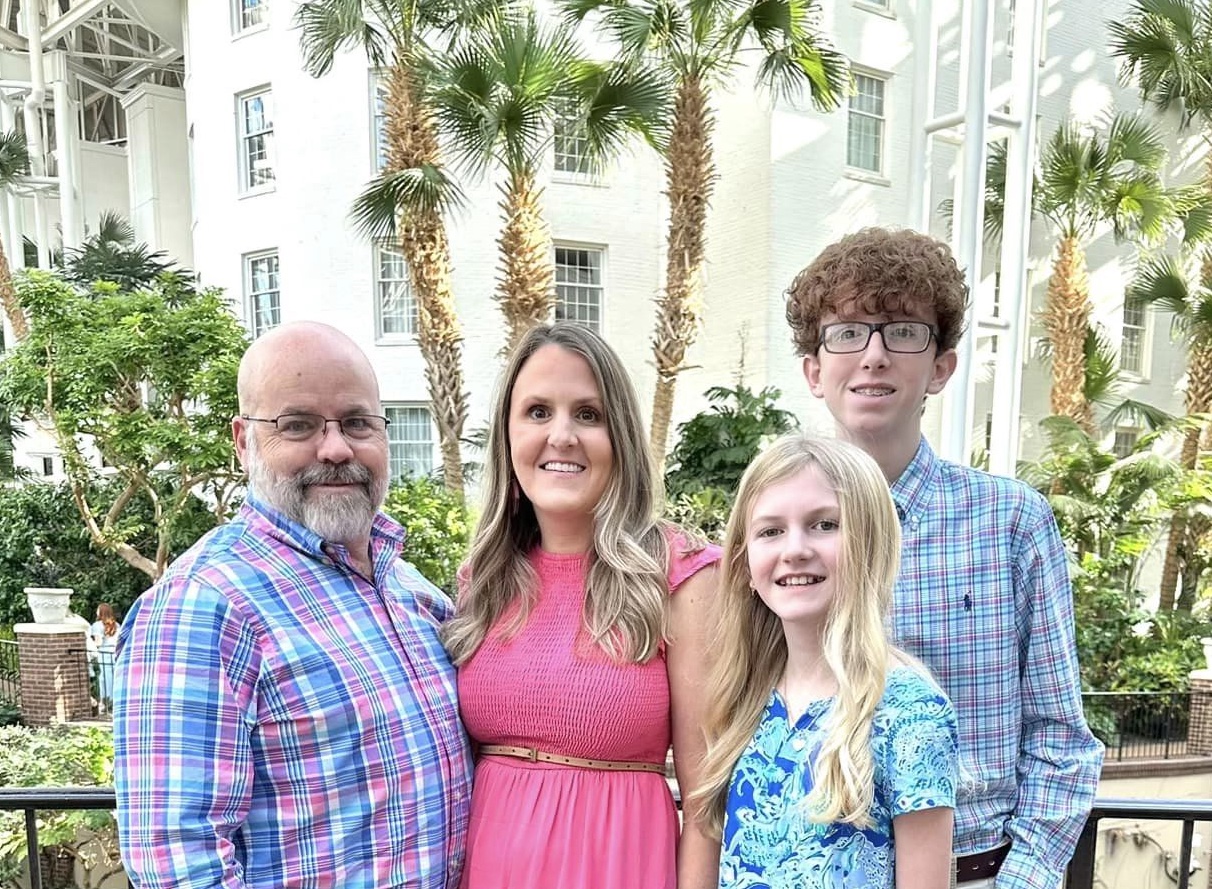
(with his family at Lads ’23)

 As many of you know, last month my grandfather passed away. The days following this, many people reached out to my family, to comfort us. I am so thankful that my family and I have so many people to lean on in times of loss.

 In that time of ruin, I thought of our 2023 L2L theme, which was in Nehemiah 2:17-18. This verse reads, “Then I said to them, “You see the trouble we are in, how Jerusalem lies in ruins with its gates burned. Come, let us build the wall of Jerusalem, so that we may no longer suffer derision.” And I told them of the hand of my God that had been upon me for good, and also of the words that the king had spoken to me. And they said, “Let us rise up and build.” So they strengthened their hands for the good work.” This passage speaks about the importance of rebuilding the walls of Jerusalem, and when you look deeper into this verse it also shows how we can strengthen each other. 

First, we see that Nehemiah acknowledged the problem. He saw that the walls of Jerusalem were in ruins and spoke up about it. Sometimes it’s easy to turn a blind eye to problems that don’t personally affect us. Sometimes we unintentionally cause a problem and don’t want to acknowledge how it may affect others.  Nehemiah shows us how important it is to acknowledge an issue and make it our responsibility to fix it. Romans chapter 8:28 says, “And we know that for those who love God, all things work together for good, for those who are called according to his purpose.”  We, too, must be willing to recognize issues, acknowledge problems and take steps to address them, because God will ultimately use those resolutions for His glory. In the days that followed my grandfather’s passing, I saw my family rise in the midst of our brokenness. When we build one another up with helping hands, as God commands us to do, we are showing others the heart of our savior, Jesus Christ. In this way, even in the face of intense hardship, we can give glory and praise to God through our actions. 

Secondly, Nehemiah communicated a vision. He shared his message with the Israelites and told them what he believed needed to be done. He also spoke about the gracious hand of God, and the support he had received from the king. We must communicate our vision for the church, and know what is needed to accomplish God’s will. For some people, communication may be difficult. But Nehemiah shows us the importance of having a plan of action and encouraging others to join us in executing it. In the same way, we need to have the plan to expand the borders of the kingdom, the wisdom and guidance to rally others, and the love for our brothers and sisters in Christ to encourage them to keep building. We must work together, utilizing our unique skills and talents to achieve our goals.

Lastly, God gave Nehemiah strength through joy. Nehemiah 8:10 says, “And do not be grieved, for the Joy of the Lord is your strength”. This isn’t the only occurrence in the bible that tells us of God’s ability and willingness to strengthen those who show their unwavering love and faith for Him. Isaiah chapter 40 verse 31 says, “but they who wait for the Lord shall renew their strength; they shall mount up with wings like eagles. They shall run and not be weary, they shall walk and not faint.” God’s people found joy and strength in building a wall day in and day out. I know for a fact that if I had to build a wall day after day I wouldn’t have that same joy. This strength was not from their bodies but from the power of God. Now if He can give that kind of strength, then I promise you, we can all build each other up, no matter how hard we have to work for it and no matter the circumstances. 

Whether it’s supporting a grieving family, having a Bible study, or any other service  we need to be prepared to build someone up and let God work in our daily lives. We have many opportunities to spread the Good News through our actions and our words. 

I know that’s an area I can personally work harder in. I know there are going to be people in your life that you try to share the gospel with, but despite your efforts, they will completely reject all that God has to offer through Christ. It’s really hard to have the confidence to build someone up who doesn’t know God like we do and doesn’t want to know him. But like Nehemiah, we need to be confident, not in ourselves, but in our Savior.

Where Do I Fit In?

Friday’s Column: Brent’s Bent

Brent Pollard

It is likely that after learning of the importance that both Jew and Gentile bring to the church, members of the cosmopolitan church in Rome began to wonder what role they should play individually within the church. As a result, Paul addresses this issue in Romans 12. It may be helpful for those of us living in the twenty-first century to think of it as deciding on a career path. First, we can consult a few available vocations within the church to predict our aptitude for it. Then, we can use these guidelines to figure out where we fit in the Body of Christ. 

“Prophecy” is the first vocation Paul lists (Romans 12.6). The Greek word for “prophecy” means speaking God’s mind and counsel. Initially, this referred to the Holy Spirit’s inspiration to reveal God’s truth. Today, the closest thing to prophecy is preaching—expounding on God’s Word without direct inspiration. Of course, the Holy Spirit is still very much involved in this process, but today’s prophet finds His inspiration in the pages of Scripture. 

The second option for church vocation, called “ministry” by the KJV, means “to serve” (Romans 12.7). This term refers to people who have been qualified and appointed to serve as deacons. However, the Holy Spirit also uses the word to describe the actions of non-office holders within the congregation. These devote themselves to serving their brethren. Paul uses this word in this context to highlight the devotion of Timothy and Phoebe (2 Timothy 4.5; Romans 16.1-2). 

The third church vocation is “teacher” (Romans 12.7). The word “teach” means “to make another learn” when taken at face value. A more comprehensive range of applications is possible with this interpretation. For example, one can be Priscilla and do this privately, as she and her husband Aquila did for the ignorant Apollos (Acts 18.26). It can be an older woman mentoring a younger woman (Titus 2.4) or an appointed male leader of a Bible study (James 3.1). 

A fourth possible church vocation is the “exhorter” (Romans 12.8). According to Joseph Henry Thayer, the Greek word for exhorting combines the ideas of exhorting, comforting, and encouraging. Barnabas is an excellent example of someone who publicly exhorted. In Acts 4.36, Luke says the apostles called him “Son of Encouragement.” The word “exhort” derives from the same root as one of the titles given to the Holy Spirit: the Paraclete or Comforter (John 14.16). Although this position is not a formal church office, it carries a certain air of importance in its association. What congregation does not need a bevy of Barnabases? 

A fifth possible church vocation is limited to a select few, the role of “giver” (Romans 12.8). Giving in Greek refers to someone sharing their possessions with another. Only those who are financially well-off could take on this role. We cannot afford to be like the wealthy young ruler if God has blessed us with the ability to give. The rich young ruler was willing to do anything to be obedient, short of selling his possessions and donating the proceeds to the poor (Luke 18.22-23). His heart sank when he realized he would have to give up his possessions. When we give up control to God, we give up everything, including our money. 

The sixth church vocation Paul lists is an official office within the local church: “leadership” (Romans 12.8). The term “leadership” refers to someone who protects, guards, and assists others. It has specific qualifications that Paul provides to the young preachers, Timothy and Titus, elsewhere (1 Timothy 3.1-7; Titus 1.5-9). However, younger men should be mindful of this as a role into which they can grow as they mature in the Lord. Not everyone, regardless of their willingness, can serve in church leadership. Once granted that grace, however, such men must be diligent in their service. 

The seventh and final church vocation Paul gives in this short list is one that shows mercy (Romans 12.8). I could understand one feeling confused by this being a role one can fulfill, given that we must all be merciful (Matthew 5.7). To have mercy on or pity for another person is the meaning of the underlying Greek term from which we derive our English word “mercy.” However, when you dig to the root word, you discover the intimate connection between mercy and compassion. Joseph Henry Thayer translates the “mercy” in Romans 12.8 as “to succor the afflicted, to provide help to the wretched.” When Jesus looked out at the crowds, compassion often overtook Him (cf. Matthew 9.36). So, just as with the exhorter, the one showing mercy likewise assumes a role closely resembling one of the characteristics of God. 

In Romans 12.3-8, Paul enumerates the various ways in which Christians can serve the church, illustrating the diversity of the body of Christ. How do we know which role (or roles) fit us well? Make the most of the numerous educational opportunities available in teaching, preaching, evangelism, etc. You can also “shadow” more seasoned brothers and sisters as they go about their daily routines. Even if you try something and realize you’re not good at it, you’ll gain insight into the work of others and their struggles. 

Don’t be too nervous to try something new or give up after a couple of tries if it doesn’t work out. It’s possible that lack of experience, rather than talent, is to blame for setbacks. Instead, give your all in every way you can. We won’t know what we’re capable of until we put in the work. It’s possible that others would better grasp our relative strengths and limitations than we would. When we prioritize our own sense of worth and confidence over listening to and learning from those around us, we risk letting our pride get in the way. Also, younger Christians can gain a lot from listening to and following the counsel of their more seasoned counterparts. 

In closing, let us be mindful of Peter’s words in 1 Peter 4.11: “…whoever serves is to do so as one who is serving by the strength which God supplies; so that in all things God may be glorified through Jesus Christ, to whom belongs the glory and dominion forever and ever” (NASB). There is much work to be done. The sooner we discern our role in the body of Christ, the better off the church will be.  

Conclusion (1 John, Part 15)

Wednessday’s Column: Third’s Words

Gary Pollard

We’re writing this to you so you’ll know you have life forever. This is for those of you who believe the name of God’s son. We can be confident when we talk to God — if we make a request that aligns with his will, he listens to us. We know he listens whenever we ask, and that he’ll give us what we ask for. 

If one of you sees a Christian family member sin (not the kind that causes death), ask God to give them life, and he will. This only applies to the kind of sin that doesn’t cause death. There is a kind of sin that leads to death, and I’m not saying you should pray for someone who commits that kind of sin. Every morally wrong act is sin, but there are sins that don’t lead all the way to death. 

We know that no one in God’s family continues to sin. God’s son personally protects us, and evil can’t affect him at all. We know that we belong to God, but evil controls the whole world. We know that when God’s son came to earth, he gave us the ability to understand the true one. We live in truth through his son, Jesus Christ. He is the truth, and he is life forever. Children, keep each other away from idols. 

Our Weakness

Thursday’s Column: Captain’s Blog

Carl Pollard

Our Weakness

Romans 8:26 says, “Likewise the Spirit helps us in our weakness. For we do not know what to pray for as we ought, but the Spirit himself intercedes for us with groanings too deep for words.”

We don’t like to be weak. Admitting weakness means admitting we are powerless. It means that we have to accept that we can’t fix our problems on our own. As humans we sometimes don’t like to admit that we need help. It’s in our nature to try and take care of our own problems.

The problem is that if we want to have a relationship with God, we have to admit that we are weak. We must come to terms with the fact that we are helpless without God. Sin has separated us from God. We are weak, but the Spirit helps us with this weakness. Paul uses the word astheneai, meaning a “lack of confidence or feeling of inadequacy.” The Spirit restores our confidence through prayer. The Spirit takes the inadequate, and makes it adequate.

Our weakness is taken away by the Spirit, and the only hurdle left is our own humanity. We need to understand that we can have confidence in prayer. We should also accept the fact that we need God’s help. How wonderful that our God can hear us even with our weakness!

The Only Thing We Have To Fear Is…The Lord

Friday’s Column: Brent’s Bent

Brent Pollard

Following the arc featuring the “story” of Lady Wisdom and Ms. Folly, we notice a stylistic change in the book of wisdom, ostensibly collected by King Solomon. Beginning in chapter ten, King Solomon wields a shotgun and pelts us with wisdom’s birdshot. Manufacturers make birdshot by packing numerous steel or tungsten balls into a cartridge. The steel balls scatter when fired. This design increases the likelihood of striking a flying bird and keeps game fowl from being completely obliterated by the shot.  

So, beginning with Proverbs 10, the reader is confronted with numerous truths that do not form a cohesive narrative like Lady Wisdom and Miss Folly but are practical words of wisdom that enrich life. As a result, it is often best to approach the rest of Proverbs as a topical study. “The fear of the Lord” is an excellent place to start our topical overview of Proverbs. Solomon defined fear of the Lord as the beginning of knowledge and wisdom (Proverbs 1.7; 9.10). 

As with the word “fool,” the Biblical definition of “fear” is not what one typically associates with the term. I oft tout Webster’s original 1828 dictionary since it often frames words within a Biblical context. Here is Webster’s subentry for the word “fear.” 

“In scripture, fear is used to express a filial or a slavish passion. In good men, the fear of God is a holy awe or reverence of God and his laws, which springs from a just view and real love of the divine character, leading the subjects of it to hate and shun every thing that can offend such a holy being, and inclining them to aim at perfect obedience. This is filial fear 

I will put my fear in their hearts. Jeremiah 32.39. 

Slavish fear is the effect or consequence of guilt; it is the painful apprehension of merited punishment. Romans 8.15. 

The love of God casteth out fear 1 John 4.1.”  

(https://webstersdictionary1828.com/Dictionary/Fear)  

Regarding the beginning of knowledge and wisdom, we understand that this is because we respect and revere God. We acknowledge His authority and thus trust His knowledge and judgment. Beyond its role in enlightening us, the fear of the Lord will accomplish other positive things as well. 

We will hate evil. (Proverbs 8.13). 

One cannot truly despise evil without also cherishing good, and just as an aversion to wrongdoing motivates people to turn away from it, so does a desire to do what is right in God’s eyes. In this context, “fear of the Lord” refers to the essence of religious practice. 

We will prolong life. (Proverbs 10.27) 

Mature individuals can recall numerous cases of the wicked whose lives were cut short and ended due to their evil actions—fatalities caused by drunk drivers, robbers who police have shot, adulterers killed by cuckolded husbands, etc.            

We have strong confidence and a fountain of life. (Proverbs 14.26-27) 

The traps of death include not only the pitfalls and dangers of our current lives on Earth but also the unfathomable terrors of the “second death.” James Moffat translated the Scriptures in 1929 and rendered the passage: “Reverence for the Eternal is a fount of life; it shows how to avoid the nets of Death.” He capitalized the “d” in “death” to show that it was eternal condemnation. 

The fear of the Lord will prompt us to depart from evil. (Proverbs 16.6) 

No matter how well done, mercy and truth cannot save people from sin unless genuine repentance and a change of heart toward God’s will accompany them. People refrain from doing bad things because they are afraid of the Lord, and this fear affects them. Those with holy fear and reverence for God in their hearts will not sin against him. 

We will have a satisfying life, spared from much evil. (Proverbs 19.23) 

According to this verse, the only way to be “satisfied” is to fear and serve God. On the tomb of William Rockefeller in New York’s Tarrytown Cemetery, there is a quote from Augustine that reads, “Our souls, O God, were made for Thee, and never shall they rest until they rest in Thee.” Men will never find happiness elsewhere, no matter how hard they try. Only in Jesus Christ can we find the fullness of life that God provides. 

We will enjoy riches, honor, and life! (Proverbs 22.4) 

This verse, which discusses humility and reverence for God, sums up several of the principal lessons of Proverbs. In addition, it provides a concise overview of the fundamental requirements for human survival on this planet. 

True religion, as demonstrated by “the fear of the Lord.” is synonymous with humility. The signs of humility are being dependent on God, having a low opinion of oneself, surrendering one’s will, and convincing ourselves of sin. They are all summed up in the phrase “the fear of God,” which is the source of all virtues and blessings: riches, honor, and life. 

We deprive ourselves of God’s wisdom and knowledge treasures when we do not fear the Lord. We will tempt fate and let ourselves get corrupted by mingling with evil. Our refusal to listen to God’s word will likely shorten our lives (e.g., suffering sexually transmitted diseases if we do not heed His Word on sexual relationships). We will not come to know God’s love, which provides assurance and confidence in salvation. We are not motivated to repent or turn to God when we sin! We will not be inspired to “work out our salvation.” This outcome from lacking the fear of the Lord sounds dreadful.  

To be truly wise, we must first learn to fear the Lord. Let us understand this fear, appreciate it, and incorporate it into our lives as God’s children! 

Will He Marvel At Me?

Thursday’s Column: Captain’s Blog

Carl Pollard

What is faith? According to the world, faith is seen as a blind trust. It is belief in something regardless of a lack of proof. Many believe that as Christians we are called to have a blind faith. But this is simply not the case. 

The word for faith in scripture is “pistis” and it is defined as “that which evokes trust.” This is trust that is formed from an objective basis. It is a confidence in the proof that has been revealed in scripture. The biblical definition is far from this idea of a blind faith. 

We know what faith is, but what does it look like practically? Faith is holding on to God through tragedy and loss. Faith is knowing that no matter what sickness or trial we go through, God is still in control. Faith is persevering through life with a confidence and hope in our eternal home. 

Faith impacts every aspect of life and that’s why we should always strive to grow our faith. 

There is a need for greater faith. We can grow our faith by looking to those who Jesus commended for their great faith. 

Throughout Jesus’ ministry he encountered several people that showed great faith. There are only two occurrences in scripture where Jesus “marveled.” One is Mark 6:7, where Jesus marveled at their unbelief (lack of faith).  The other is Luke 7:9, where Jesus marvels at the Centurion’s great faith. With our faith we have the ability to cause Jesus to Marvel. The question is, will Jesus marvel at our belief or our unbelief?

creative common via PxHere

The Vale Of Bandits

Tuesday’s Column: Dale Mail

Dale Pollard

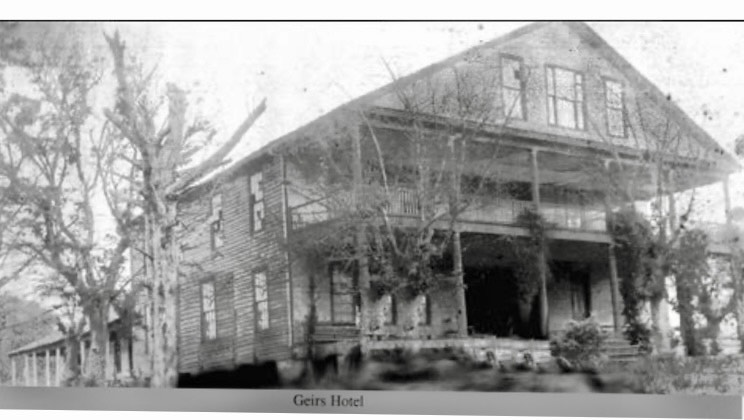
The Valhermoso Springs Resort was a gathering place for those seeking treatment from the famous Sulphur and mineral springs. The three springs were even used by the Indians for the same reason— adding yet another vale of mystery to the area. Despite being a place that attracted visitors from all around the world, including European and French royalty, there are only three low quality images of the place. Walking through the dense brush and stepping over toppled stones can give one the impression that this spot is determined to keep its secrets

In the upper room there was a dancing hall with slat boards covered in tile. During the civil war, confederate soldiers were hidden by Mrs. Geirs who was a hot-blooded rebel sympathizer. 

One of many legends surrounding this resort is that of the visit of famous outlaw Jesse James. It’s rumored that a man matching the description of Jesse rode in one night from Huntsville after robbing a bank. He wore two leather bags slung over his shoulder as he dismounted his horse. At some point, it’s unclear how he was discovered, but the law came knocking on the resort’s front door. Jesse’s stealth and cunning kept him alive during the bloody guerrilla skirmishes of the civil war, and they would help him escape the clutches of justice time and again. Legend says he left the hotel in a hurry— without his two leather bags. Did Jesse James stash his stolen goods in a cave or bury it? There’s not even hard evidence that the outlaw made a stop at the tavern, or even robbed a bank in Huntsville. 

In Numbers 13 there are twelve spies who go into the land of Canaan for forty days. Their goal was to make observations that would help them conquer it as well as bring back reports about the kind of land it was. Upon their return only Joshua and Caleb are willing to take on the giant challenges that they’ll need to overcome in order to claim Canaan. Sadly, the message that the people chose to believe was that the giants were even bigger than God. What evidence did they have? Not a shred. God had proven His might and power throughout their time in the wilderness. He’s the one who directed the children toward Canaan in the first place! The fear in the crowd and the report of ten cowardly spies was contagious. 

If we’re not careful, we might end up believing what’s not based in fact, too. We might be tempted to believe that Christians are a weak minority who can’t do a thing to change the culture. We might be tempted to believe that nobody is interested in spiritual things anymore. We might begin to believe that the world is bigger and stronger than the God who spoke the world into existence. Of course, this is simply not true. 

Relics found by Dale and Carl on the site of Valhermoso Springs Resort

“Rumors Of War”

Wednesday’s Column: Third’s Words

Gary Pollard

The war in Ukraine is tragic, with loss of life in the several thousands already. Families have been displaced. Untrained civilians fiercely resist invasion. NATO can’t make up its mind, leveling sanctions as though at war, but not declaring war formally. This – among other factors – is escalating an already volatile situation. A great many feel as though we’re at the brink of WWIII. 

Maybe we are. Humans tend to show their very worst or their very best in times of crisis. When the pandemic started, millions forgot their humanity. Fights broke out in grocery stores, people forgot what patience, selflessness, and compassion were, and hoarding was the name of the game. Besides all that – as if we needed another polarizing issue – families, friends, and neighbors bitterly fought about masks and vaccines and social distancing. 

But for many (most?) other people, it brought out their best. People checked on each other regularly. Personal feelings were put aside to accommodate the apprehension some felt. Resilience and benevolence was/is strong. The church was heavily invested in each others’ lives. 

War is a tragic part of the human experience. Some may be fought for good reasons, but war itself is never good. We all hope the conflict in Europe will be resolved soon and with minimal loss of life. It might not, though. So what will we do? 

  • Train the Brain – Determine to respond with levelheadedness and compassion, period. If it comes to war, we won’t forget our humanity. We will look out for others and act rationally. Our conditioned response will be, “How can I help other people?” 
  • Be Like Jesus – He didn’t exploit weakness to gain an advantage. He didn’t stockpile supplies to the detriment of others. He wasn’t concerned about maintaining his standard of living. He fed people, healed people, gave them counseling, and gave them hope. That will be our response, whatever the future holds. 
  • Be Cool – We might get scared, but it’ll never override our desire to look out for each other. We’ll demonstrate genuine faith in the creator by not acting like people who are controlled by fear. 

Those are easier said than done. But we can do them, and I’m confident that we will. If the threat never exceeds high fuel prices or inflation, we’ll have made the best of a bad situation. If the threat becomes war, we’ll make the best of a bad situation. Dark days make it that much easier to shine God’s light. So that’s what we’ll do! 

Слава Україні!