Ignorance And Inoculation

Neal Pollard

Stephen Coss, author of The Fever of 1721: The Epidemic That Revolutionized Medicine and American Politics, relates the fascinating story of the first widespread inoculation effort in the fight against the deadly plague of smallpox. At a time when medical practice was steeped in vast misunderstanding and wrongheaded medical treatments (more than half a century later, George Washington’s doctors would facilitate his death by treating his cold and fever through bloodletting!), two unlikely men were able to withstand the withering criticism of the local medical community and superstitious Boston residents who adamantly vilified them both. One was a physician, Zabdiel Boylston, ostracized, threatened, and condemned by his peers and the town’s council. The other was Cotton Mather, forever infamous for his superstitious influence in the Salem witch hunt and trials that led to the execution of over 20 innocent people a quarter-century earlier. Both believed that by infecting a person with a small amount of smallpox, they could prevent death and even a serious, scarring case of the frightening disease. No less than young Benjamin Franklin piled on with criticism and satire against the two men’s campaign, but both were ultimately vindicated as the inoculations proved far superior in saving lives in Boston’s deadliest smallpox outbreak. It took a lot of courage and conviction for these men to persist in the face of resistance from the highest places of their society.

What if there was a disease that threatened one hundred percent of the global population, one that proved one hundred percent fatal if untreated? What if there was a remedy available that was proven to save every patient from otherwise certain death? What if you knew it worked? Would you have the courage and conviction to offer it to the infected, even in the face of intimidation and threat?

Over 600 years before Christ, a prophet wrote, “Is there no balm in Gilead? Is there no physician there? Why then has the health of the daughter of my people not been restored?” (Jer. 8:22). The balm of Gilead, who was also the Great Physician, came to be the remedy and administer it to the willing (Mat. 9:12; Mk. 2:17; Lk. 4:23; 5:31). He left us in charge of offering this remedy and trying to prevent spiritual death (Jn. 8:21,24) in as many people as possible. Most will reject or at least ignore the offer, unaware of the gravity of their condition. That cannot deter us! Jesus is counting on us to apply His blood to rescue the perishing and care for the dying. A day is coming when there will be no more remedy (cf. 2 Chron. 36:16), but we must be out sharing it until that moment! There are people out there searching for a cure (Mat. 7:7-8). Whatever it costs us, let’s not stop until we’ve helped as many people as we can!
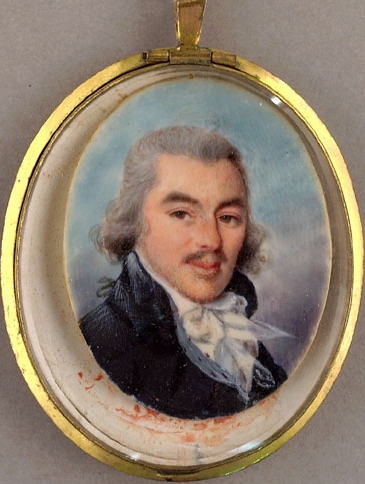

Painting of Zabdiel Boylston

Loving The Lost

Thursday’s Column: Captain’s Blog

Carl Pollard

What if someone were to offer you a thousand dollars for every soul you would earnestly try to lead to Christ? Would you try harder to lead more souls to Him than you are endeavoring to do now? Is it possible that we would attempt to do for money what we sometimes hesitate or shrink from doing now in obedience to God’s command? Is money a stronger motivator than our love for God? 
What hinders us from thinking about other people? Many times we will make excuses and say, “that person won’t listen,” or “they’re too far gone.” We are called to plant the seed of the gospel, not examine the soil and determine if it’ll take the seed. We share the gospel message no matter what soil it lands on. It may be rocky, it may fall among thorns, it may land on the road and never take root, or it may land on good soil. 
We love the lost because it is a command (Phil. 2:3; Rom. 13:8-10), it imitates Christ’s example (1 Jn. 4:16,19), and it is our calling as Christians (Jn. 13:34-35, Eph. 4:32). 
So how can we show our love to the lost? What does it mean for us to love others? It means suffering with those who suffer. Hurting with those who are hurting. Helping those who need a hand. Picking up someone when they are down. Being a friend to the lonely. Writing a card to the grieving. Making a meal for those who are mourning. Bringing the good news of salvation to the lost. 
As God’s children, let’s show Who we belong to by loving the souls that are around us. 

Bring ‘Em Back Alive

Tuesday’s Column: Dale Mail

image

Dale Pollard

Frank Buck was a true adventurer. He lived in 1900’s and would travel all over the world bringing back all kinds of exotic animals. What set him apart from others in his profession was that he didn’t shoot the animals and bring back their stuffed skins. In Frank’s mind, anyone  could gun them down, but who would dare bring back a lion or a rhino— alive?

Frank Buck  probably didn’t know it, but he was very scriptural in his approach. Jesus sent us out to seek and to save the lost, not to destroy them. It seems as though some may have forgotten that key element. That infamous Wild West poster we see in movies reading, “WANTED! DEAD OR ALIVE” doesn’t fit the biblical model for evangelism.

 Soul-winning is about leading others to Christ. It’s not about winning the argument or flexing our vast amounts of knowledge. It’s not about proving someone how ignorant and wrong they are. It’s not about showing others how impossible we are to defeat in the match of verbal fisticuffs. It’s about saving their souls. Jesus is looking for those gutsy followers. The ones who are willing to take action and get out there! The Greek word “ZOGREO” only appears twice in the New Testament, as far as I know. The word literally means, “to take alive.” 
 
In Luke 5:10 the word is used to express one being taken alive for God. In 2 Timothy 2:26 Paul would us the word when talking about those who have been taken captive by the devil. These two verses remind us that all will be taken somehow. Some from life to death, others from death to life. Matthew 28 is the Great Commission, our permission to baptize people for the remission of their sins. You can be that gutsy follower since Jesus said He’s going to go out with us, “even to the end of the world.” Let’s get out there and bring ‘em back alive. 

Soldiers Of Christ

Wednesday’s Column: Third’s Words

IMG_3575

Gary Pollard

Christianity is important to us. Making sure we live the right way is important to us. Because our loyalty to God is important to us, and because our lifestyle is characterized by avoiding evil, many believe that our mission in life is to defeat evil. Some Christians believe that this involves social activism or influencing public opinion. Nothing about this is intrinsically wrong, but it cannot be our primary focus. 

Evil exists, period. Humanity introduced evil when we disobeyed God. As we noted last week, evil is on borrowed time thanks to Jesus, but it will exist until the end of time. So, what’s our job if fighting evil isn’t top of the list? 

Christians are people who decide to follow God. That means living based on his moral code, not on humanity’s. That means we avoid practicing morally evil things. We recognize the influence that evil has on the world. We understand the consequences of choosing evil over God. 

Christians are recruiters! We’re a tight knit group of people with shared goals, views, and struggles. Part of our job is to keep each other strong (Gal. 6.10; I Pet. 1.22; Heb. 3.12,13). The rest of our job is to recruit people to populate heaven (Matt. 28.19; Acts 20.24; Jn.15). God also expects us to be good citizens and live quiet, peaceful lives (Rom. 13; I Pet. 2.13; I Tim. 2.2; I Thess. 4.11). 

Jesus defeated evil (I Jn. 3.8, 4.4; Col. 2.15), and he will personally destroy it forever at the end (Rev. 20; II Pet. 3.7). For now, though, evil is inevitable (I Jn. 5.19). Our job is to share God’s hope with those who don’t have it. By avoiding evil ourselves and helping others escape its influence, we help diminish its influence on the world! 

We Can All Use Some Help

Friday’s Column: Learning From Lehman

candela

Steve Candela

Fun fact about myself…  I would be a whole lot more comfortable running into a burning building than I am standing up here speaking.  But just like any situation on a fire ground, the job will get done. 

James 5:19 says,  “My Brethren, if any among you strays from the truth and one turns him back, let him know that he who turns a sinner from the error of his way will save his soul from death and will cover a multitude of sins.”

There have been countless times in my life where help was not only desired or needed, but necessary.  As a Fireman I’d like to tell you that I’m made of iron, nothing can hurt me and I don’t need help from anyone, “I got this”. Problem is, this would be the furthest thing from the truth. In order to get the job done it takes a team. We have guys that fight fire, guys that search for victims, guys that drive the trucks, pump the water, we have guys in charge of the operational strategy, and so on.  We even have guys that their only job on a fireground is to go in and save a fellow firefighter in trouble if they get stuck, disoriented or hurt. This is called a RIT team.  We as Christians work in a similar fashion. Ok, so we don’t have the ranking system, but we all have duties. We all have jobs and responsibilities, right? 

Robert Muszynski was a fire chief in Chicago Ridge, Illinois. He had worked at multiple fire departments throughout his career but this is where he finally decided to retire in 2014 at the age of 58. I do not know specifically if he was a follower of Christ. I do, however, know of his dedication to his work and his firefighters. He was recognized several times in magazines and various fire department-related web articles for his encouraging quotes and respectable works in the fire service. I’d like to share with you a couple of his quotes and how I’ve related it not only to my job but my spiritual life as well. 

 Bob said, “Always stay hungry for the job, and you will never get full.” Complacency causes you to become bored, disengaged, and think that you know it all.  Keeping interest and staying engaged is very important.  You could say for us as Christians to always stay hungry for the word of God, read as often as you can and you’ll never get full. There is always more to learn from scripture. Create discussion among your friends or host a Bible study. Always Stay Hungry for the word. 

He also said, “Good firefighters will know their job. Great Firefighters will also know the job of the person above them as well as teach their job to the people below them.”  As an Engineer I am in between the ranks of firefighter and captain. I have a great relationship with my captain. He’s been a fantastic guide, teacher, mentor, and leader of our crew. I know his job and what it entails, and I strive to be in that position someday. As with the firefighters below me I try to be that role model that teaches them everything it takes to become an engineer and give them ample opportunities to come to me for guidance. A good Christian will know what it takes to be a good Christian, but is that where it stops? No. To be great Christians we need to be aware of what our elders and deacons have in the works. They do so much for us already; maybe there’s something you can help with? Take a task off their plate so they can work on the next important project. What about the people who need saving? You might not see yourself as a great teacher, but there is something inside every one of us that we have to offer to someone else. By creating conversation with our visitors you might reveal their needs. You could be the one to lead them to where they need to be and teach them something along the way. 

As hard as it is to admit, sometimes a Fireman can use a little help.  Christians can too.  Leading up to the scripture reading above, James has been talking to fellow believers in Christ, encouraging them to never give up faith. It’s so easy today for us to stumble and fall. We have people and priorities tugging and pulling us in every direction away from God. James knew this. He makes it clear that we are to help our fellow Christians who may wander from the truth and become worldly. It’s our job to help them get reconnected with God. Like addressing and correcting poor behavior in the firehouse this can be a difficult assignment. We need to be careful in how we complete this task so we don’t fall into the same sin or come across as too “high and mighty” (Galatians 6:1 says, “Brethren, even if anyone is caught in any trespass, you who are spiritual, restore such a one in a spirit of gentleness; each one looking to yourself, so that you too will not be tempted.”) This means be tactful not attacking. Genuine love and care must be the tactic. 

Steve interviewed last year by NBC about the walk to honor firefighters who died on 9/11.

We Are Not Doing Right” (2 Kings 7)

Monday Column: Neal At The Cross

pollard

Neal Pollard 

There was a famine in Samaria and everyone was desperate. The need for food was more pressing than the danger they faced in looking for it. Elisha predicted the end of the famine but Jehoram’s right hand man refused to believe it could happen so quickly. The prophet tells him he’d see it happen but that he would not eat of it (2).

Four lepers decided to throw themselves on the mercy of the Arameans, but God caused the besieging army to hear the sound of enemy armies. They imagine the worst and leave their camp in pursuit. So, when the lepers arrived at the camp, it was abandoned. They found food and riches beyond their wildest imagination. They start to hoard and gorge themselves, then had second thoughts. They say to each other, “We are not doing right. This day is a day of good news, but we are keeping silent; if we wait until morning light, punishment will overtake us. Now therefore come, let us go and tell the king’s household” (9). Several things stand out here.

THESE MEN HAD GOOD NEWS.

IT WAS WRONG FOR THEM TO KEEP SILENT ABOUT IT.

THEY EXPECTED PUNISHMENT IF THEY DIDN’T URGENTLY SHARE IT.

THEY ADMONISHED EACH OTHER TO TELL IT.

They did and they helped save the nation. God caused it to happen but He worked through these four lepers. The famine ended (and the royal officer was trampled at the gate—he saw the famine end but died before it could benefit him).

I am reminded of my task as a Christian, one spiritually sick with sin but in a similar situation. I have found good news. It is wrong for me to keep silent. I must not just share it but do so urgently! I also need to admonish you to realize you are in the same predicament as me. You cannot afford to keep silent! A feast awaits! 

The Prime Objective

Such powerful words describe it.  The words “convert,” “save,” “restore,” “recover,” and the like depict the job God left Christians to do (cf. Gal. 6:1; 2 Tim. 2:26; Js. 5:19-20; etc.).  The awesome business of God’s people is to be builders in the kingdom upon a foundation originating in eternity (1 Cor. 3:9-15).  Each child of God is a private engaged in spiritual warfare against a tactician only God has the power to defeat (Eph. 6:10ff).

There is ample reason to be filled with excitement and dread at the task before us!  God has entrusted the business of snatching souls out of eternal fire and transferring people out of darkness into His marvelous light to us earthen vessels (2 Cor. 4:7).  The moment we come out of the waters of baptism, we rise to walk in newness of life (Rom. 6:3-4).  That life entails culling out negative things, bad habits, poor attitudes, old ways of living.  Yet, it also calls for actions and ambitions that a non-Christian could not begin to comprehend.  The sign of genuine faith taken root is the desire to share the good news we ourselves have learned.

Soul-winning is the frontline focus of the family of God.  All else that we do should be an extension or support of this primary work.  Benevolence, though done simply for its own sake, can be a springboard of evangelistic opportunity.  Fellowship is designed to not only build up the saints, but be an atmosphere — be it worship or fellowship outside the corporate assemblies— that honors God and creates hunger and thirst for righteousness.  Non-Christians who come to our assemblies can then believe (cf. 1 Cor. 14:23-24).  They share our company, see the light of Christ in us, and want the joy and peace that the world cannot provide (John 14:27; Mat. 5:16).  

Everywhere we go, mingling in groups and having various associations, there are opportunities.  There is that person who seems to stand out from others who are more frivolously engaged in life.  There is the one who, when others have long shut their ears to truth, is open-minded enough and respectful enough of truth to believe and accept the Bible.  A song that is used in many soul-winning campaigns is Lead Me To Some Soul Today.  God is not going to “lay” anything miraculously on our heart, leading us through some direct operation to some particular person or to say some particular thing.  Yet, providentially, He can open doors that leads us to find the one in search of God’s way.  Our active desire should be to cultivate our hunger and optimism for this great, primary work of the church.

With all else to distract us or compete with our attention and affection, may we never forget the prime objective! We are saved to save (2 Tim. 2:2). Find the searcher and lead the lost! It’s why we’re here. 

The Lifeboat Baby

Monday’s Column: Neal At The Cross

pollard

Neal Pollard

While many today have no idea who Jesse Roper Mohorovic is, he was a celebrity from the moment of his birth on March 30, 1942, off Cape Hatteras, North Carolina. The United States had entered World War II only a few months before, and German U-Boats “prowled the Atlantic sea lanes, and the waters off the Virginia-Carolina coast were ‘the most dangerous on earth'” (C. Brian Kelly, Military History, 9/05, 74). In fact, the Germans killed twice as many seamen in their U-boat campaign off the east coast than died at Pearl Harbor. 

Jesse’s mother, Desanka, was 8 1/2 months pregnant, traveling on a passenger freighter that was torpedoed. She faced peril after peril, from getting out of her cabin to the harrowing escape in a lifeboat to an overnight storm. In the middle of all of it, the freighter sunk and her doctor injured in their dramatic escape, she gave birth in Lifeboat #4 to a baby boy at 2:30 A.M. Two days later, they were rescued by the Navy destroyer Jesse Roper. 

The media covered many of the early milestones of his life, and even documented his interests and favorite baseball team. He later appeared on the TV shows To Tell The Truth and I’ve Got A Secret. He earned a law degree, served in the Navy, and had a career in marketing. He died of lung cancer about two years after his 2003 retirement (via JOC.com). 

It is no wonder that “The Lifeboat Baby” would become such a sensation, especially given the real drama behind his birth. Perhaps he would have been part of anonymous tragedy if he and his mother had been among the 5000 who perished, but his birth and life became a symbol of hope and victory. Indeed, “Newspapers heralded Jesse as living proof the Allies could not be defeated” (Kelly). 

We live in increasingly grim times. Our current battle is spiritual in nature, as sin and immorality seem to have the upper hand. Souls are perishing in infinitely greater numbers (cf. Mat. 7:13-14). While we cannot save them all, we need to be in search of those we can reach with the gospel. We must muster greater courage to share the good news and help those searching reach safety. They need to know there is hope and victory possible, and that Christ will ultimately win (1 John 5:4-5; 1 Cor. 15:24-25).  These babes in Christ are unlikely to capture the attention of the media, but each of them have the rapt attention of heaven. God is counting on you and me helping to deliver them, regardless of how stormy things may be. Each individual matters to God. How wonderful that we might partner with God and His Word, and help a soul be one whose name is written in the Lamb’s Book of Life (Rev. 21:27)!


Photo via Naval History and Heritage Command

Mysterious Seeds

Monday’s Column: Neal At The Cross

pollard

Neal Pollard

In recent weeks, packets of seeds have been mailed to apparently random homes across the country. Dozens of folks received the seeds, which have Chinese labels but have not been confirmed as originating from China. A few days ago, the USDA confirmed that the seeds were harmless but still cautioned recipients not to plant them. The seed packets included mint, sage, cabbage, roses, and other plants. One working theory is that this was part of a “brushing scam,” where people receive unsolicited items from sellers who then post fake reviews (Joseph Wilkerson, msn.com, “Mysterious China seeds received by Americans identified by USDA”). But, given the current political climate, skepticism–and concern, suspicion, and even fear– abound!

One of the major projects Kathy has begun in our backyard is a “cottage garden.” You can research the origin and history of these gardens, which started in England perhaps as far back as the Medieval period. These gardens have a mix of flowers, herbs, and bushes, and the more elaborate of these gardens have trees, bees, and even livestock. Ours is simpler, with climbing roses on a trellis, boxwoods in the middle, herbs planted throughout, but included among the many packets of seeds planted was a mix called bee feed.  It has been fun to see a variety of mysterious seeds appear, like California poppies, Chinese forget me not, Coreopsis, and Sweet Alyssum. We’re not sure where the tall fringed bluebells came from, but it’s incredible to see such an eclectic mix growing and thriving and demonstrating Genesis 1:11 before our eyes. 

In the New Testament, Jesus teaches several parables involving seeds. In one, a man sows wheat seed in his field, then his enemy sows darnel, a weed resembling wheat. Only after they started growing could the two be differentiated. The landowner instructs his slaves to let them both grow up and separate them at harvest time (Mat. 13:24-30). This parable illustrates the lives of the righteous and unrighteous, whose destiny will be sorted out at the judgment (Jesus explains the parable in Mat. 13:36-43). It certainly can apply to true and false teachers (lawless stumbling blocks), who can seem similar but are also distinguishable to the discerning.

Jesus also teaches the parable of the mustard seed (Mat. 13:31-33), which shows God’s power to do great things through seemingly humble deeds attempted in true faith. Matthew, Mark, and Luke record the parable of the sower, the soils, and the seed. Luke 8:11 identifies the seed as the Word of God. The soils represent the different conditions of heart, three of which are futile and one of which is fertile. The sower is the one who spreads the word to people. 

Then, there is the parable of the seed (Mark 4:26-29). A man casts seed on the soil, and then gets to behold the marvel of how it transforms from seed to sprout, the soil producing it from blade to head to mature grain in the head. Then, he harvests it. The power is not in the sower, who is not around (or, in the parable, awake) when the seed produces. The growth of the seed is a marvel even to the sower. Where is the power? In the seed!

There are certainly some malicious ideas and teaching out there in the world. Sometimes, even truth can be shared from improper motivation. But, God’s Word is a seed which can produce incredible things in a heart and life that is good and fruitful. Have you ever seen someone who seemed like a poor candidate to become a Christian, much less become a force for good in God’s Kingdom? How does that happen? We can talk about planters and waterers, but God causes the growth (1 Cor. 3:6). You may not be an eloquent, sophisticated Bible teacher or soul-winner. You may feel you are unskilled.  But, when you share God’s Word with others, you will see the wonders of this mysterious process. It has been said that persuasion happens in the absence of the persuader, as the Word gets to work on a heart. The power is in the seed! Let’s be about planting it however, wherever, and to whomever we can, then witness the marvel of the seed producing in the recipients’ lives. It’s God’s plan! It works in mysterious ways! 

seeds

An Evangelist For An Unworthy Gospel?

Friday’s Column: Supplemental Strength

brent 2020

Brent Pollard

I convinced my parents to watch a show I enjoyed with me. I doubt I converted them to watching the same kind of programs as I like but I was happy they enjoyed what we watched together. I was acting as an evangelist, wasn’t I? I told them about something that I felt fervently about, convinced them to look into it themselves, and then encouraged them to commit to following through with it. As I enjoyed the afterglow of the moment, I was hit by a realization. Why is it easy for us to tell others about a book or movie but not about the Gospel of Jesus Christ?

I suppose one answer is fear. If a friend thinks my movie suggestion is stupid, then he will just think I have bad taste in movies. At worst, he won’t ask me my opinion about movies again. The Gospel is different, though. We’re putting ourselves out there. What we present doesn’t just require the forfeiture of an hour and a half, but a lifelong commitment. What we fear is the loss of that companion since we feel as if we are requiring something great from them. The truth, however, is that it is not we who put forth the requirement. God does. We merely relay the information. Thus, regardless of a negative reaction, if we’ve spoken the truth in love (Ephesians 4.15) we’ve done what we are supposed to do in letting them hear what God requires of them (Ezekiel 3.17-19).

I suppose another answer is shame. I don’t fear what my friend thinks about my secular choices. However, I am reminded of the adage that one never publicly discuss religion and politics. Certainly, we have seen with the latter how divisive of a subject it can be. People unfriended me following the last Presidential election simply because they knew I supported the candidate for whom they didn’t vote! Imagine how that person will take the news that the cherished religion of his grandmother was not one that was true to the teaching of the New Testament? The Thessalonians felt their world had been turned upside down (Acts 17.5-8), and I am sure that my friend would feel the same way too.

Yet, that is not the truth, either. I have no power to condemn any grandmother to hell or grant her access to Heaven. God’s Word is truth (John 17.17). If the truth turns one’s world upside down, the fault lies within the worldview that was turned the wrong way, to begin with. As brother Keeble used to say to such a one bothered by the fate of grandmother, “If she had been taught what you’ve been taught, how do you suppose she would have reacted?” Just the fact that discussing religion in polite company is frowned upon is insufficient to dissuade the one genuinely loving his neighbor.

The next time you find yourself excitedly chattering on about something you’re zealous about to a friend, remember that it is possible to talk with them about Jesus that way as well. The only reason that we don’t is that we feel that we cannot. Love casts out fear (1 John 4.18). And if we deny Him before men, He will deny us before the Father (Matthew 10.32-33). Hobbies are great, but may we not find ourselves more energized by them than by the Living God.

pexels-photo-935944

The Infamy Of The Edsel

Monday’s Column: Neal At The Cross

16174665_10154303308455922_2453812807432667966_n

Neal Pollard

The Ford automobile named for Henry’s own son made its debut in 1957 after unprecedented hype. They had started planning and developing the Edsel back in 1955 based on consumer research, polls, and interviews. Ford thought it had tapped into the heart of the buying public with a car that would win its heart. It turned out to be a disaster in every way one can measure such–it was too big, too unreliable and poorly-made, too unattractive, too expensive, and, well, too weird. Even the name is strange. When Ford’s marketing department polled people about how they liked the name, many asked, “Did you say ‘pretzel’?” (info from “The Flop Heard Round The World,” Peter Carlson, Washington Post, 9/4/07).  While today the Edsel has become a collector’s item, selling for as much as $100,000 or more, it will forever live among the automotive lemons’ Hall-of-Fame lineup that includes such stellar machines as the AMC Gremlin, Ford Pinto, Chevy Chevette, Yugo GV, and De Lorean DMC-12. 

Marketing can be a mean business. Especially is it risky when you take a proven, respected name and attach it to something that dishonors and degrades it–like “Ford” and “Edsel.” So many researchers have sought to identify why the Edsel was such a colossal failure, but the answer often goes back to the problem that “with too many hands working on the Edsel, the project had no direction” (“The Edsel Proved Why You Should Never Design A Car By Committee,” Chris Perkins, Road & Track, 1/23/17). 

What does all of this have to do with God and the Bible or Christ and the church? Well, several things.

  • Jesus is the Perfect Man who offers something unique that cannot be outdone–salvation which is located in His body, the church (Eph. 1). This is what we have to offer this world, and this is what the world needs. 
  • Sometimes, we spend too much time in gimmickry, marketing hype, and mining for felt needs, and at the end of the day we wind up offering a cheap, poor, and disappointing product that dishonors and degrades His perfect name. May we ever respect the warning of Galatians 1:6-9. 
  • It is easy for us to lose sight of our mission and sense of direction, if Jesus is not the heart of our mission, purpose, plans, and activities. As disciples, He leads and we follow (Luke 9:23-26). 
  • We never want, as a church or as an individual, to sully His precious name by our association with it–whether by ungodliness, worldliness, legalism, mean-spirited, hateful behavior, doctrinal compromise, etc. I suppose that David’s name, as king of Israel, defamed God for a long time after his sin with Bathsheba (2 Sam. 12:14). We should disdain the very prospect of such.
  • It’s not too late to correct even infamous blunders. Ford is not defined by the Edsel. It went on to produce some automobiles that more than restored its good name. That can be true for churches and individuals. Jesus would not have gone to the trouble to admonish Ephesus, Sardis, and Laodicea if they were a lost cause. The same is true of Euodia, Syntyche, the man in 1 Corinthians 5, and others.  There cannot “un-be” an Edsel, but there can be a brighter future.

The Ford Edsel became the focus of a great many studies by the likes of John Brooks and Bill Gates. Its failures helped many industries, not just the auto industry, learn from its basic mistakes. I think there’s insight in it for the greatest “business” of all–i.e., soul-winning. May we get the greatest name (Jesus) to the greatest audience (the world) through the greatest message (the gospel)! That’s a guaranteed recipe for the greatest success (salvation)!

ford-3886280_640

Some Practical Tips For Personal Evangelism

79461688_525421068058661_8720707992451809280_o

Dale Pollard

  •  If you have time, avoid self checkouts. You have a golden opportunity to talk to employees while they’re scanning your items. Make them smile, be happy, be natural, and if they open up look for that chance to invite them to church or study. Just breaking out of your shell and chatting with everyone you come in contact with will eventually open doors. If people can tell you care they’ll be more inclined to, at the very least, hear you out.
  • Try not to be an “office rat” and be intentional about creating friendships. Your neighbors, members neighbors, and coworkers of members can be a good foot in the door. If they end up visiting they’ll be more comfortable seeing a familiar face sitting in the pews and a friendly face of someone who cared enough to reach out to them in the pulpit. That also makes the message you preach to them more powerful.
  • If they’re interested in studying, start with what you have in common with each other or how God can help them with a specific problem that’s unique to him/her.
  • If they struggle with addiction, relationship with spouse, anger, depression, or heartache, start there. That’s what’s on their mind and they need to know how God can heal and improve our lives. If they clearly see their need for Jesus they’ll want to know more about Him.
  • Be intentional about talking with as many people as possible. Look for the lonely or hurting people. The guy eating alone at a restaurant, anxious/worried person in the hospital waiting room, single parents with small children, homeless people, elderly people sitting on their front porch, or people coming out of Cash In A Flash. These are the people who most likely need to hear some Good News.
  • Volunteer at funeral homes to preach for free for grieving families that can’t afford to spend much.
  • Ask the staff at hospitals/retirement homes about any occupants that may not get many visitors.

Minister to people all week and not just on Sunday.

Evangelism Effectively Executed (POEM)

Neal Pollard

We need to know the Bible, to study and apply,
And teach and share with others, their faith to solidify.
But often, before they’ll listen to a consonant or vowel,
They need to see us on our knees, with our basin and our towel.

For fine speech can lose its luster, and argument its shine
When its power in our own lives, is unseen and unapplied.
“I’d rather see a sermon than hear one any day,”
Is the common man’s mantra, as he’s searching for the way.

And a teacher whose compassion and listening ear is offered,
Will open up a heart before one single verse is proffered.
For the adage, often spouted, is a proverb we need to share,
People do not care how much you know til they know how much you care

The way to reach an eternal soul involves more than the mind,
And every servant of Jesus knows it takes service pure and kind.
Loving care that costs us in terms of money, effort, and time,
Will soften hearts made hard by worldly greed and grist and grime.

Dear Christian as you pray to God, “Lead me to some soul today,”
Keep your eyes peeled for a struggling, straggling soul astray,
Then be a neighbor, show him mercy, you just might be surprised,
When he listens to the truth of God you have actively exercised. 

towel-and-basin

I Met A Soul Today (POEM)

Neal Pollard

A lonely soul was crying out
For someone to direct
Their mind to know the will of God
But I chose to deflect.

An edgy soul was acting out
Intimidating and coarse
Yet they were searching for the truth
I recoiled with too little remorse.

A hopeful soul was reaching out
And attended our worship service
But I was busy, too much to do
To connect, plus I was nervous.

A hurting soul, in time of loss
Crossed my path today
I felt so bad that he was grieved
But still I hurried on my way.

A lost soul was needing Christ
She is destined for eternity
I was busy, nervous, no zeal for her
Guess I was too caught up in me

The next soul that I come upon
Lord, may I try with zeal
To share your grace and teach your Word
And your matchless love reveal.

a20cold20day2015

Avoiding Presumption In Evangelism

Neal Pollard

There are several sound, simple methods of teaching the gospel to the lost. As the teacher grows in ability to utilize these methods, his results will improve to God’s glory. The teacher also has as his or her textbook one fo the simplest to comprehend, though only the rare and exceptional student will fail to attain unto “the meat” of God’s Word after consistent, in-depth Bible study (Heb. 5:12-14).

The effort put forth by the student to understand may be great for some. The soul-winner must be aware of this and address it accordingly. Observe a few suggestions that might prove helpful.

  • Watch the student, trying to detect words or concepts that they might not comprehend.
  • Try to establish, from the beginning of the study, a free, comfortable line of communication.
  • When asked to explain words or concepts, avoid patronizing (thereby insulting) the student.
  • Reassure the student that all of us, to one degree or another, need help understanding words and concepts.
  • Be patient and empathetic and never cold and exasperated.

Making sure the prospective Christian understands and is in the flow of the study couldn’t be more important. Each student has a never dying soul that will be somewhere for eternity. As gently and compassionately as possible (2 Tim. 2:24026), be ready to explain and discuss words or questions from the Bible or study which may be giving them problems. Realize that each person comes from a different background and aptitude, not only religiously but also educationally. No doubt, the hearer has a great responsibility and accountability. Often, Jesus admonished, “Be careful how your hear” or “Be careful that you are not deceived” (Luke 8:18; 21:8; etc.). He was warning them to be keen listeners and discerners of biblical truth. Hearing itself is vital (Rom. 10:17), as without it faith can’t be produced. Yet, let us who would teach the lost work to present the simplicity of God’s saving plan and eliminate as many barriers to understanding as we can.

learning-styles_m

The Courage To Try

Neal Pollard

About nine months ago, a man walked into our building a day after being immersed into Christ. He had been searching diligently for the truth, a man whose hunger for the Bible caused him to study his Bible for hours every day (including on audio at his job as a metal fabricator). He continues those habits today.

A man whose life is as interesting as his name–Roberto Yrey–has been a blessing to us at Bear Valley.  One of the reasons I’ve grown to love him so much was on full display last night. Each Wednesday, a different man delivers a 90-second devotional talk. Last night, Roberto spoke. Don’t misunderstand. He writes devotions, short sermons, and articles all the time in order to articulate his understanding of a Bible chapter or topic he has been studying. He changed his mind multiple times before settling on the one he delivered last night. If you were there, you know that Roberto was nervous. He has told several of us how difficult public speaking is for him. His only previous public speaking opportunity was a Scripture reading during a devotional back during the holidays.

What he chose to speak about last night so aptly reveals a mindset that makes him so endearing. His message was that you don’t have to know everything to study with someone. Don’t be afraid to tell someone, “I don’t know.” It’s OK if you don’t know or understand everything. He encouraged us, “Say, I don’t know but let me ask someone who might know. Or let’s fellowship and find the answer.”  But his message was to not let the fear of not knowing keep you from talking to someone about the Bible.

I admire the fact that Roberto had the courage, as a babe in Christ, to speak to a room full of people some of whom have been preachers and teachers for decades, teachers in our Bible school for many years, and are mature, seasoned Christians. But I admire him even more for practicing what he was preaching. In our midst last night were two visitors–Estevan (there for the first time) and Sean (who’s become a regular attender with Roberto for several months). He had the courage to invite them. Today, we baptized Sean into Christ for the forgiveness of his sins. A young Christian has already brought a friend to Jesus. All it took was the courage to try, to do what anyone can do who is moved by simple, trusting faith to just do what God has told us to do. I don’t know about you, but Roberto’s example helps me have the courage to try harder!


6EDBBE5E-E7F1-45A2-A97C-7BDFAFAE2790
(L) Sean being baptized today by Allen Javellana, who studied with him. (R) Roberto preaching at Bear Valley last night.

Grocery Bag In A Bush

Scott Phillips

My girls recently modified the game of Slug Bug in order to make it more exciting and faster-paced. A couple of months ago, with the whole family in the car, we were introduced to it when we heard the words “gocery bag in a bush” shouted three times in rapid succession followed by “wow! three in a row” from one of the other girls.

The modification was simple. Instead of calling out VW Beetles, we all began to call out grocery bags that were snagged up in a bush alongside the road. We would also accept “tree.”  A grocery bag caught in a tree was also acceptable. Turns out, “Grocery Bag In A Bush” is much more exciting and fun than Slug Bug. Tons more action! I’ve never seen so many grocery bags in my life! And you should hear the squeals and laughter when one was spotted so far up in a tree that we all knew that it wasn’t coming down until the tree did.

Good times.

I’ve thought about Grocery Bag In A Bush many times since that day, and have made many observations about it. I’d like to share three of them.

Observation #1
The grocery bags have always been, and will always be, there. I just never “saw” them before. I don’t recall seeing a single slug bug while playing Grocery Bag In A Bush, even though they were probably there.

Conclusion #1
I will see that which I look for. Matthew 7:7-8 says,  “Ask, and it will be given to you; seek, and you will find; knock and it will be opened to you. For everyone who asks receives, and he who seeks finds, and to him who knocks it will be opened.”

Observation #2
Grocery Bags don’t belong in a bush or a tree. It’s not what they were created for, but somehow they have found themselves hopelessly ensnared. They will most likely remain ensnared until someone cares enough to pick them up, or a violent storm rips them away from the unreachable limb where they are trapped. And if no one stops and picks them up, they will most likely drift away until they find themselves ensnared in another bush.

Conclusion #2
While we may excel at “stopping to say hello” when a brother is in the way, we should not let the business of “rolling our gospel chariots along” keep us from our responsibility to the lost to “stop and pick them up”.

Observation #3
We all financially support a vast army of sanitation workers through taxes and fees. We even personally pay for these services out of pocket so that they will come by our house each week to take our trash, and grocery bags, to where they belong. And yet, the grocery bags are everywhere.

Conclusion #3
Christianity cannot be outsoursed. It’s not enough to pay for, or support others, to do the work for us. This world is not our home, but it becomes a more beautiful place when each of us can see those around us who are ensnared in sin, and gently help them get to where they belong.

Feel free to make your own observations from this parable. It’s not perfect, and I’m certainly not equating those trapped in sin with trash. But before we start asking God to provide us with more opportunities, we might first ask ourselves if we are really in the  game. Because once you know what to look for, the opportunities are everywhere.

nhbubq-b88289923z-120141228203836000g7873kqe-10

[Scott Phillips serves as a deacon at the Bear Valley church of Christ. He and Tammi have a son and 7 daughters!]

A Saved Life Saved Hundreds More

Neal Pollard

Ray Wallace, a great preacher friend of mine in Bayfield, Colorado, sent me an article about an incredible, heartwarming rescue. It happened late at night in Fresno, California, in 1971. Rick Freund was driving home when he saw a house going up in flames. Outside the house were three little girls and their mother, who was desperately crying for her baby trapped inside his bedroom. Firefighters had not arrived, so the slender, 24-year-old Freund was hoisted into the window, where he found the infant smiling in his crib. He rescued the baby, then simply walked away. Just minutes after the rescue, fire collapsed the ceiling and destroyed the bedroom. Little did he know that the family he helped would track him down 46 years later. The baby boy he saved, Bobby Magee, grew up hearing about this daring rescue and because of that has devoted his life to saving others. Now 47 and the father of three, Bobby has saved hundreds of lives by organizing a large blood drive over the last 18 years. Freund and Magee kindled a friendship built upon an incredible bond. Incidentally, Freund has also rescued a choking stranger by performing the Heimlich maneuver. On yet another occasion, he administered CPR on an elderly woman who had a heart attack at a funeral (Carmen George, The Fresno Bee, 2/5/18).

In the early 1990s, one of my elders in Mechanicsville, Virginia, Russell Young, studied with and baptized a man named Tom. Tom would influence his ex-wife, ex-daughter-in-law, future wife, and daughter, Debbie, to obey the gospel. Debbie would help convert several of her co-workers, including Shannon. Shannon and her husband, Michael, obeyed the gospel the same night. Shannon and Michael have gone on to go on several mission trips. Only eternity will tell how many souls have been saved through those. Who knows how many of those converted in these mission fields have reached others and how many have been reached? That is just one case I personally know about. Many people can share similar stories of dramatic rescue! It is a modern demonstration of 2 Timothy 2:2.

As we go about our daily business, God has us here on a rescue mission. We can never know, when we care enough to share Christ with a lost soul, where it will end. The person may seem humble and ordinary, but they may influence many more to be saved. And those saved ones may save many more. It’s truly exciting to think about this wonderful chain of rescued souls standing on the Lord’s right side at the Judgment! Let’s be heroes of the highest kind! A saved life may save hundreds more!

JRW BABY RESCUE 1
Rick Freund (L) and Bobby Magee

Avoid Being Ironic

Neal Pollard

Friday night, Carl and I flew to Bismarck, North Dakota. Why? Well, of course, we wanted to attend the “Melita Banana Days” in Melita (pronounced Meh LIT Uh), Manitoba. That, and stay in a Bed and Breakfast in Carnduff, Saskatchewan, that doubles as an ice cream shop. Saturday night, we were back in our own beds sleeping. While we were registering at the festival  on Saturday morning and talking with some of the organizers, we told them we had flown up from Colorado to check them out. From what we could tell, we were the only attendees from America. They were mildly intrigued by that fact, but basically brushed us off. Which was fine. We also wanted to check out Oak Lake beach about 60 miles north of there. But it was ironic to read on their website that this event is about promoting tourism. Perhaps our tepid reception was an exception to how they welcomed outsiders checking them out.

On a family vacation not too long ago, our family visited a small congregation on a Wednesday night. We drew a few stares from the local members as we took our seat right as Bible class began. Afterward, we were briefly greeted by one member who explained that their little group was going to have a meeting to discuss strategies for being more evangelistic. We were a family of strangers to them, and we might have been newcomers or non-Christians. They would not know. None of them tried to connect with us. We were essentially shown the door. We found this ironic.

It is ironic to sing, pray, preach, teach, and otherwise emphasize about the church’s mission and then to practically ignore it. Our assemblies are foremost about worshipping God and building up the body, but even first-century gatherings were attended by those other than the local Christians (cf. 1 Cor. 14:22-25).  In our zeal to deepen and build our relationships with one another, we must not ignore or be cold toward those who “enter” our assemblies. Instead, we should seek opportunities to start conversations and create opportunities to open doors which lead them to Christ. Certainly, they should leave our assemblies aware of our intense interest in them. To do otherwise is to undermine our very purpose and mission. That would be the ultimate irony!

20729287_10154898594805922_5226860467365340615_n

THE HUMAN CHAIN AND SALVATION

Neal Pollard

Incredibly, nine people in one family were in serious danger of drowning as they were swept into a riptide in Panama City Beach, Florida. It started with some little boys, but soon included would-be rescuers that included their mother and some other relatives. All of them were floundering in about 15 feet of water. The USA Today story seems to indicate that Jessica Simmons and her family thought of the idea of creating a human chain out to the imperiled family and towing them back to shore. About 80 people “started a football field-sized human chain to help bring them back to shore” (Mary Bowerman, 7/11/17, online ed.). The mother, Roberta Ursrey, summed it up well when she said, “I owe my life and my family’s life to them. Without them, we wouldn’t be here” (ibid.).

What a great story! It reveals the possibility of unity for profound purpose. It shows the power of working together. It says something about the best part of the human heart. It also illustrates the power of rescue and salvation.

The Bible makes it clear that God is the one who saves (Titus 2:11). His Word is His power to save (Romans 1:16). His divine plan is the means of salvation (Acts 16:30-31; Romans 10:9-10,13; Ephesians 2:8; 1 Peter 3:21). But, the Bible makes it just as clear that He does His saving through the preaching, teaching, influence, and efforts of His people, sharing the good news with those who are languishing in the waters of iniquity. That’s suggested in “The Great Commission” (Matthew 28:18-20; Mark 16:15-16; Luke 24:46-47). It’s demonstrated in the constant efforts of New Testament Christians, taking the message of Christ with them throughout the world to those lost in sin (cf. Acts).

Think of the church as the God-given human chain, reaching out to the struggling, needy soul. They are drowning in sin and in desperate need of help. Unreached, they will drown (see the imagery of 1 Timothy 6:9). God wants you and me, as those who ourselves have been saved, to join hands and help others who need to be helped onto the shores of safety! We cannot delay! We must act while there’s time. Lives—souls!—depend on it.

mjxbw1M3