Halloween is around the corner! A time for dressing up and filling the pockets of Big Dentist. It’s definitely one of those holidays that’s more fun when you’ve got young kids that, as the parent, you get to decide what will make your child look the funniest.
Dale Pollard
Halloween is around the corner! A time for dressing up and filling the pockets of Big Dentist. It’s definitely one of those holidays that’s more fun when you’ve got young kids that, as the parent, you get to decide what will make your child look the funniest.
Jesus spends a good deal of time explaining to his followers about the dangers of wearing masks when it comes to righteousness, though. He preaches against practicing religious acts to gain human approval rather than God’s. He defines hypocrisy not by what one does, but by the motivation behind it (6.1-18).
Here’s a walkthrough of the first half of the chapter.
Giving to the needy (6:1–4): Jesus condemns giving with a flourish of “trumpets,” a metaphor for publicizing one’s good deeds for praise. Instead, he instructs believers to give in secret, so that only God, “who sees what is done in secret, will reward you”. The reward hypocrites receive—the praise of people—is temporary and fleeting, unlike God’s eternal reward.
Praying to God (6:5–15): Just like giving is about God, prayer is meant for God’s ears, not human ones. Jesus criticizes those who pray publicly on street corners to be seen as pious. He teaches believers to pray privately in a room with the door shut to avoid hypocrisy.
The Lord’s Prayer: Jesus provides a model (a template) for prayer that focuses on…
1. Honoring God
2. Submitting to his will (before personal needs)
3. Humility through a reliance on God for daily bread
4. The necessity of forgiving others to be forgiven.
Fasting with purpose (6:16–18): Fasting was a common spiritual discipline in Jesus’ day, but some hypocrites would put on a gloomy face to make sure others noticed their “holiness.” Jesus teaches to fast without outward display, anointing their head and washing their face as they normally would. This practice, when done for God, will be rewarded by Him.
Our relationship with God must be one that survives the privacy of our homes. It can’t be like a three piece suit that’s put on when the occasion calls for it.
In his excellent lesson on the Sermon on the Mount, Mike Vestal pointed out that the word “righteousness” appears five times in a sermon he nicknamed “Righteousness 101.” Jesus preaches this sermon in an environment where the religious leaders preached and practiced a very shallow righteousness. Jesus teaches a true, deeper righteousness. The word Jesus uses refers to character and conduct, being just as one should be, upright and virtuous (Zhodiates, WSNTDICT). Jesus challenges us to do what is right in God’s eyes.
These five occurrences of “righteousness” can help us know whether or not we are on that course.
Do I have an appetite for what is right (Mat. 5:6)? Just as there are foods and drinks that each of us put in our list of favorites, our hearts and minds yearn for some things over others. Am I developing an increasing taste for God’s will? Do I not only do what is right, but long to do so?
Am I willing to sacrifice for what is right (Mat. 5:10)? How valuable and meaningful is my faith? What if it is tested and opposed? Will I stand by it? Or will I surrender and sacrifice it for acceptance and temporary calm? Will I choose man’s approval for a little while only to face God’s ultimate disapproval, or will I accept man’s disapproval for a little while to have God’s ultimate approval?
Do I do from the heart what is right (Mat. 5:20)? Righteousness requires more than an outward refraining from wrongdoing. It governs what’s going on in our hearts. Down inside, I have got to stamp out feelings, desires, passions, and attitudes that prevent and oppose good character and true virtue. Not only that, but failing to win that battle in my heart more often than not will show up in my conduct.
What is my motive for doing what is right (Mat. 6:1)? Jesus challenges me not just to do the things I should do, but do them for the right reasons and in the right way. One of the fundamental, flawed reasons to do right is to be seen by others and to have their praise and admiration. I can steal my own blessing by a showy spirituality.
Is there anything I put before doing what is right (Mat. 6:33)? Is uprightness my number one priority? In context, the challenge is making the Messiah rather than money the master. But, in principle, Jesus’ Lordship is being challenged by many rivals. Am I seeking what He wants and what He wants for me above all else?
Repeatedly, God encourages us to do what is right. He says if we do what is right, we will avoid so much of what plagues the lost world (Ex. 15:26). In so doing, it will be well with us (Dt. 6:18). In so doing, He will be with us (1 Ki. 11:38). In so doing, we find God’s favor (1 Pet. 2:20). Jesus says do right and it will bless you (Mat. 5:6). Do right and you will receive the reward of the kingdom of heaven (Mat. 5:10). Do right and you shall enter the kingdom of heaven (Mat. 5:20). Do right and you will be rewarded by your Father in heaven (Mat. 6:1). Do right and God will supply all your needs (Mat. 6:33).
The concept of righteousness is quite similar to holiness; both terms refer to a state of being morally upright and emotionally attuned to God’s will. It comprises all that we term justice, honesty, morality, and affections of the heart; in a nutshell, it is true religion. And while there is this type of righteousness to emulate, there are other types of righteousness to avoid.
The first type of righteousness we need to avoid is that which originates in a person’s mind, which is distinct from the righteousness that originates in God. We identify this type of righteousness as “self-righteousness.” Self-righteousness, often born out of pride, is when a person relies on his or her sense of morality to judge right and wrong.
Another example of false righteousness is John Calvin’s teaching on imputed righteousness. By imputed, Calvin meant that God credited the elect sinner with Christ’s righteousness. As a result, God shifted His attention away from the sinner and toward Jesus, whom He acknowledges to be sinless. Consequently, Calvin believed that a person God has chosen for salvation does not need to worry about living a good life. When God looks at him, he can only see Christ. (As a side note, it is expected that the one chosen by God will seek a life of righteousness. But the truth is that according to the doctrine, it’s possible to be a willful sinner and still have the righteousness of Christ imputed to them.)
There are seven occurrences of the word “impute” in the KJV. None of these verses suggests that a person can appropriate Christ’s righteousness as their own. The atoning sacrifice of Jesus Christ allows for the transformation of sinners into saints through forgiveness. Entrance to the heavenly kingdom is granted only to those who do God’s will (Matthew 7.21–23). Thus, while imputation suggests that God finds one without guilt and blame, it does not mean that a person can take on the righteousness of Jesus Christ and expect to gain entrance into heaven.
A sinful man becomes righteous through faith in God, not through any meritorious works he can perform. But faith does not exclude human participation. Man must do something. James 2 and Hebrews 11 remind us that faith works the works of God (Ephesians 2.10). A sinner becomes righteous, sanctified, and justified by God’s grace. God gave him his righteousness, and God counts it as his righteousness, not on account of the goodness of Christ or anyone else, living or dead.
Abraham is a great role model for how to achieve righteousness. First, Paul says that Abraham believed in God, which God credited him as righteousness (Romans 4.3–9, 17–22). Second, it is also important to note that Abraham’s righteous status was independent of his being circumcised (Romans 4.10–12). Third, Abraham’s faith was active, working by grace (Galatians 3.6–9; James 2.21–23).
So, it was Abraham’s faith in God rather than Jesus’ own sinless life and obedience that God credited as righteousness. Even though Abraham’s efforts would have been futile without Jesus’ perfect life and obedience, he could not leave everything to be accomplished by God. This truth meant that God gave Abraham the tools he needed, but Abraham was the one who had to use them.
We must do as Abraham did. And just as God will not credit us with Christ’s righteousness, neither will He credit us with the righteousness of anyone else (e.g., a parent or spouse). Our evaluation before God is personal (2 Corinthians 5.10). We must avoid doing as Paul did before his conversion, seeking righteousness contingent on anything other than Christ (Philippians 3.9).
The Redwood National Park in California is home to the world’s tallest tree. Standing at over 380 feet tall this tree is incredible to look at. The California Redwood is estimated to be able to reach a staggering 425 feet in its lifetime. It continues to grow all its life and there’s a reason it gets so tall, as the lifespan of this tree is up to 2,200 years. Think about that! There are redwood trees that are still growing today that were planted 200 years before Christ was born.
The California Redwood is massive. It is over 29 feet in diameter and has a root system that spreads over three miles underground. These trees are truly incredible. But like most trees, the key to their growth is water. California redwoods consume over 56,000 gallons of water each year or 150 gallons of water each day!
In Psalm 1:1, we are given this description: “Blessed is the man who walks not in the counsel of the wicked, nor stands in the way of sinners, nor sits in the seat of scoffers.” This person is blessed when they avoid the progression of sin. Notice how the psalmist describes the progression:
Walk not in the counsel of the wicked.
Nor Stands in the way of sinners.
Nor Sit in the seat of the scoffers.
These steps illustrate what people do when they are tempted by sin. They walk among it, noticing the wicked and their deeds. Once they walk among it, their curiosity gets the best of them and they begin to pause and spend time in the presence of sinners. Finally they are fully drawn into sin and they sit down and practice the evil that they have observed.
Rather than walking, standing and sitting with sinners, the righteous man delights in the law of the Lord. Verse two says, “But his delight is in the law of the Lord, and on his law he meditates day and night.” The choice is obvious for the righteous man. He avoids the sin and chooses the Word of God over anything else.
Verse three reads, “He is like a tree that is planted by the waters that yields its fruit in its season, and its leaf does not wither, in all he does he prospers.” The source of life for this tree is water. Just like the California Redwood needs water in order to grow, the saved man spends his time next to the source of life. What is this water? John 4:14 reveals, “But whoever drinks of the water that I will give him will never be thirsty again. The water that I will give him will become in him a spring of water welling up to eternal life.” For the Christian, our source of life comes from Christ. We are able to grow and thrive on the words of God.
Let’s make the decision daily to be firmly planted in the words of life. That way, we too can be counted as righteous!
Did you know that the term “virtue signaling” is now in the dictionary. An expression that has been used a lot in the wake of the pandemic and social unrest of last year and into this year, it means to “publicly express opinions or sentiments intended to demonstrate one’s good character or the moral correctness of one’s position on a particular issue” (Apple Dictionary, 2.3.0, 2005-2020). “Virtue signaling” is typically used in a derogatory manner. It is felt to be synonymous with jumping on the bandwagon of a popular cause or moral grandstanding, and is considered by those diagnosing a “virtue signaler” as one trying to win praise or acknowledgment from the likeminded for showing support for a social or political cause or to reprimand and rebuke those who feel or behave differently (dictionary.com). The disdain for this practice often arises from the apparent motives of the signaler, wanting to seem more caring, more righteous, or better than others on a given issue. Cancel culture and “wokeism” are often the more virulent strains of this social malady.
Jesus had a low threshold of tolerance for the ancient equivalent of the virtue signaler. Especially in Matthew 23, Jesus calls it out. “They say things and do not do them…” (3-4). How often have we seen people being hypocritical or inconsistent in matters they call out others on?“They do all their deeds to be noticed by men” (5). Only God knows a person’s heart, but is that ever at play in this matter? “They love the places of honor…” (6). Especially may this be evidenced through social media where one may revel in the admiration or recognition of others for occupying the high ground by their signaling. The silent majority may be intimidated by virtue signals, but they are not inherently improved by them.
Depending on your point of view, you may well think that “virtue signaling” is a dirty phrase, that is bespeaks hypocrisy, political correctness, or the like. But, may we never tar the word “virtue” with the same brush. In a list of characteristics better known as the “Christian Virtues” (2 Pet. 1:5-7), Peter urges adding “moral excellence” or “virtue” to our faith. The word refers to “consummate ‘excellence’ or ‘merit’ within a social context” (BDAG, 130). While the Stoics and writers like Homer reserved it for “military valor or exploits, but also of distinction for other personal qualities and associated performance that enhance the common interest” (ibid.), inspired writers coopted the term to mean “uncommon character worthy of praise” (ibid.). While the word is only found a handful of times and more often refers to God (2 Pet. 1:3 and 1 Pet. 2:9), it should describe us, too. If we are praised for demonstrating virtuous qualities, we are to double down on filling our hearts with true righteousness and virtue (Phil. 4:8).
Virtue, as God defines it and guides us to genuinely show it, will encourage others to look at God, glorify Him, and seek to follow Him. Humble, genuine godliness, seeking no attention and wanting no praise, is a powerful persuader. In fact, it’s central to how God wins the hearts of others (cf. Mat. 5:14-16). Let’s stay out of the virtue signaling business, but let us strive for truly virtuous living! God is counting on us to reflect His moral excellence to those foundering and floundering in unrighteousness.
Paper straws: Environmental friendliness or an attempt to drive us crazy?
Were you ever in the 4-H Club in school? It is an organization teaching skills you might not learn at home, urging you to get involved in your community, and helping you with a wide variety of life skills from public speaking to caring for animals. The acronym stands for “head, heart, hands, and health.” Their slogan was that you learn by doing.
In Matthew 23, Jesus gives His harshest barrage of condemnation in the Bible. He didn’t aim it at godless, irreligious heathens, but to religious leaders. They were faithful churchgoers who professed faith in God, but Jesuscalls them on some glaring problems that made God reject them .
THEY WERE HYPOCRITES (3-4)
They told others to observe things but they didn’t do them (3). They laid heavy burdens on others but were unwilling to life a finger to move them themselves (4). While hypocrisy can be defined as being a spiritual chameleon, acting one way with the righteous and another way with the world, is also hypocrisy. Seven times in this chapter, Jesus says, “Woe unto you, Scribes and Pharisees, hypocrites.” The world sees double standards and a person who says one thing and does another as a hypocrite. It doesn’t necessarily make them bitter or angry. It makes them not care. They are conditioned to expect that all Xians are hypocrites. Being hypocritical only reinforces and heightens the stereotype. But the Bible calls for us to have a sincere faith (1 Tim. 1:5). We are to possess pure and undefiled religion, which is objectively measured (Jas. 1:27). We have an opportunity to blow the stereotype by being the genuine article who reflects the attitude and speech of Christ each day with the world.
THEY WERE HOLLOW (5)
If there’s anything worse than beauty that’s only skin deep, it’s religion. Jesus condemns those who did all their deeds to be seen of men. The world is repelled by professed Christians who don’t take time to see them as people. Often, they feel as if their only importance is as a potential convert or as a sinner to be judged. If we’re not careful, we fail to see every person as precious to God. That includes the immoral, the edgy, the rough, and the square peg. They see us doing or saying good things, but it’s hollow. We may do it be be noticed as a good, godly person, but we miss the opportunities to actually do good and be godly with those we interact with. Paul says, “Conduct yourselves with wisdom toward outsiders, making the most of the opportunity. Let your speech always be with grace, as though seasoned with salt, so that you will know how you should respond to each person” (Col. 4:5-6).
THEY WERE HAUGHTY (6-12)
They wanted honor, respect, and recognition. Jesus diagnoses their problem as one of self-exaltation (12). 2. It was the Pharisee in Jesus’ parable on prayer who thanked God for his perceived superiority over other people (Lk 18:10). The world sees smug, self-righteousness as a total turn off. Jesus later says that these folks were like whitewashed tombs, beautiful outside but full of dead men’s bones (27). This is not the religion and life Jesus calls His followers to live. He describes greatness as service (11) and self-denial (16:24). The world will never be won to Christ by proud Pharisees. It takes humble hearts and helping hands to point people to Christ.
THEY WERE HARSH (13-15)
Christ says, “But woe to you, scribes & Pharisees, hypocrites, because you shut off the kingdom of heaven from people; for you do not enter in yourselves, nor do you allow those who are entering to go in” (13). This is how the world sees all Christians, as Judge, jury and executioner. They don’t see the love of God and the grace of Christ. They see exclusive, isolated people who have written off everyone else. Jesus suggests that those they reach are those likeminded (15). Some people are drawn to harsh and hateful rhetoric, but they don’t make good converts of Jesus—if they stay that way. Jesus told His disciples that their identifying mark should be love (John 13:34-35). This world is an unloving place and so sincere love will reach people. At first, they may not believe we could be the real thing, but persistent compassion and grace will ultimate reach the honest heart.
The world doesn’t need Christians who compromise the truth. But they do need to see transformed disciples (Rom 12:1-2). We can be righteous without being self-righteous; We can be courageous without being callus. Matthew 23 shows that this is a must, if we will practice true righteousness.
Once I preferred laptops, but since the advent of Android and Apple tablets, I migrated back to the desktop PC. When attempting to accomplish work, there is something to be said for sitting at a dedicated workspace to help productivity. Even so, I usually choose desktop wallpaper to reflect my interests from the religious to whimsical. My capricious nature typically ensures that wallpaper is changed frequently.
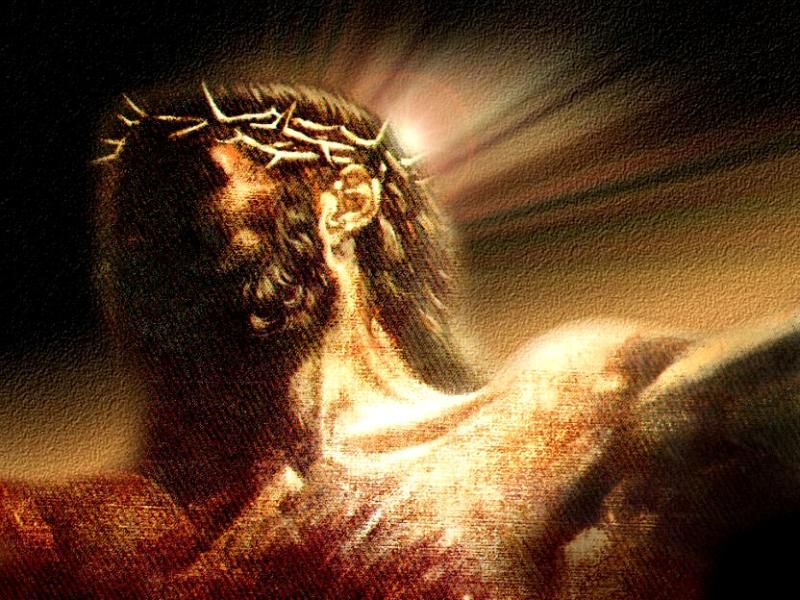
One day after having selected an artist’s rendering of the Christ wearing a crown of thorns for my wallpaper, I noted how I had allowed the desktop of my PC to become cluttered with icons and files. Though they made finding things more manageable, they obscured the image I had chosen for my inspiration. I had to do some cleaning so that I could once again see Christ!
Spiritually, I feel as if we sometimes equally “mask” the presence of the Christ in our lives. It is not our intention to do so, of course. We are just going about our regular business. Yet, there comes the point in out lives in which we begin doing what we feel is most convenient, despite what this “convenience” does to the presence of the Christ in our lies. Soon, others are unable to readily see the Christ in our lives since He has become obscured by our ephemera. If this persists, others will be unable to see Him at all.
When this happens, it is time to clean up or bring order to the chaos. One needs to put things in their proper place so that the image of Christ becomes accentuated rather than obscured (cf. Matthew 6.33). It may take a bit of work, but the effort is worth more than anything else in this world because of its eternal implications.
Dear reader, are others able to see the Christ in your life? If not, perhaps it is time for spiritual cleansing. The only thing equal to the task, great or small, is the blood of Jesus Christ. For the one having never clothed him or herself in Christ (Galatians 3.27), baptism brings about the forgiveness of sins (Acts 2.38). For the immersed believer, the blood of Christ continuously cleanses us as we walk in fellowship with Him and fellow Christians (1 John 1.7).
Check your image in the spiritual mirror (James 1.22-25). If you cannot see the Christ, rest assured others cannot see Him either. Let us always strive so others can see the Christ in us.
Raymond Burke, an American Catholic Cardinal serving in the Vatican, voiced his opinion about the novel coronavirus. He stated that one “cannot consider the present calamity in which we find ourselves without considering how distant our popular culture is from God.” He continued, “It is not only indifferent to His presence in our midst but openly rebellious toward Him and the good order with which He has created us and sustains us in being.” 1
Burke’s comments follow his observation that in times past when plagued by disease, people normally turned to God. Under our current circumstances of trying to mitigate COVID-19, however, we are forbidden from meeting in assemblies of more than 10 persons. Burke went on to say that our homes are “a little Church into which we bring Christ from our encounter with Him in the bigger Church.” Hence, he encouraged Catholics to pray.
From a purely doctrinal standpoint, I am unable to agree with Raymond Burke. Even so, I was struck by the quotation by him which I shared. Right now, we are isolating ourselves from one another to prevent the spread of a virus. Yet, people have been keeping themselves distant from God for years. And not only do they seek to stay distant from God, but they also promote an environment that seeks to distance others from Him as well. Burke sighted those sins like abortion and the perversion of God’s design for sexuality as proof of this distancing from God. I’d be hard-pressed to disagree with that thought.
Yet, it is not just those sins that cause people to become distanced from God. For example, in Isaiah 59, Isaiah reminded those people in a covenant relationship with God under Moses’ Law that God was separated from them by their hands defiled with blood, fingers defiled by iniquity, lips speaking falsehoods, and tongues muttering wickedness (3). He further stated they conceived mischief and brought forth iniquity (4). He said their feet ran to evil (7). Consequently, they made crooked paths for themselves, which deprived others of peace when they traveled upon them (8). Frankly, modern America sounds no different.
And what was the consequence of being distant from God? Isaiah began by saying that God had become separated from them which prevented Him from hearing their prayers or helping them (1-2). Justice was far from them and despite their hope for light, they were ensconced in darkness (9). Indeed, the Israelites were blind men groping along the wall and stumbling during the day as though it were night (10). They were compared to dead men (10). Truly, without God people are in a terrible position.
During this pandemic, I have noted more references to God on television. As I’ve heard the discussion of our mental health during this crisis, even news commentators have lauded the role of faith in preventing people from despairing. After all, hope is an anchor. Vice President Mike Pence, in commenting about the deaths from the coronavirus, quoted from 1 Thessalonians 4.13 that we do not grieve like those who have no hope. 2 As refreshing as all of this is, I am afraid that it smacks of waiting until the house has burned down to call the fire department.
If we truly want for God to bless us individually, as the church, or to bless our secular nation, we cannot afford to practice social distancing from God. We must allow for the only name given under heaven among men that saves (Acts 4.12) be always on our lips as we preach and teach to our neighbors (Matthew 28.19-20).
I’m gonna be honest. I am not a fan of winter. It’s cold, snow is terrible, It’s freezing, and I hate snow. The worst thing about winter is that It gets dark at like 3 pm. In the summer you have these nice long, warm days but In the winter you got about 6 hours of daylight before it gets dark again.
Darkness is referred to quite a bit in scripture and many times it is used to describe sin. For example, “Walking in darkness” = walking in sin. “Living in darkness” = living in sin.
As Christians we are described as being taken out of darkness (sin) to walk in light (righteousness) (Ephesians 5).
But how did we get to this point? We read in John 8:12, “Again Jesus spoke to them, saying, “I am the light of the world. Whoever follows me will not walk in darkness, but will have the light of life.”
Because of Christ and His sacrifice and love for us we can now have the light of life. Without Christ we are forever in darkness, but with Christ he is our light that leads to salvation.
The choice to follow Christ means that our standard is The Light. Notice, He says, “will not walk in darkness…” This word is skotia which is described as, “the state of being devoid of light, darkness, gloom.” When we choose to live like the world, there is no light in us. When we remove Christ as our guide and live in sin, we are plunged into darkness.
But if He is our standard of living, in hard times we will have light, when we lose a loved one we will have light, and when we face difficult decisions we will have light.
The question we need to ask ourselves is this, “Do we prefer darkness over light? Do we prefer sin over righteousness?” The choice is ours, and each one of us makes this decision every day.
You may be asking what all of this has to do with the pandemic going on right now…well a bat started this whole thing, and bats live in caves, caves are dark and living in darkness is living in sin. Don’t be a bat.
It’s hard to believe that it was 25 years ago today that Orenthal James (O.J.) Simpson led Los Angeles police on a low-speed chase. The infamous white Bronco took off on the day he was supposed to turn himself into police, a suspect in the deaths of his wife Nicole and her friend Ron Goldman. The chase went on for 75 miles and two hours. The drama on this day in history led to the more infamous trial that ultimately led to Simpson’s acquittal. Despite what seemed a mountain of evidence against him, Simpson went free until, ironically, he was charged in an armed robbery case in 2008 that him imprisoned until two years ago (some facts via cbsnews.com).
The Bible records several notable chases:
Laban and Jacob (Gen. 31:26)
Esau and Jacob (Gen. 32)
The Egyptians and the Israelites (Josh. 24:6).
Barak and Sisera (Jud. 4:22).
Asahel and Abner (2 Sam. 2:19).
Saul and David (1 Sam. 23:25).
Absalom and David (2 Sam. 16-17).
Joab’s men and Sheba (2 Sam. 20).
Benaiah and the lion (1 Chr. 11:22).
These pursuits were the result of military conflict, personal vendettas, and familial disputes, but they all were matters of life and death. Many other chases outside of the biblical record are famous, from the great locomotive chase of 1862 to the exploits of Lawrence of Arabia in the Middle East during World War I.But, there is a chase with infinitely more at stake than any of the ones I’ve mentioned already. What is it?
Paul says, “But flee from these things, you man of God, and pursue righteousness, godliness, faith, love, perseverance and gentleness” (1 Tim. 6:11). Paul tells Timothy that so many people pursue material things, and their love for such is the cause of their own hurt and destruction. So, Paul encourages Timothy to run from those things and run after those qualities that lead to eternal life (6:12-13), preparation for the appearing of the Lord Jesus Christ (6:14), and storing up the treasure of a good foundation for the future and life indeed (6:19). All of us are either chasing the things of this world, which pierce us through with many sorrows, or the things of the world to come, where eternal life awaits those who pursue it.
Zadok the priest was neither an Anglican Church member or even British. Many associate his name with Handel’s 18th century coronation hymn, written first for King George II. But, he was a significant, if minor, Old Testament character. We learn at least four great lessons from his character, as revealed in Scripture.
He was a versatile servant of God. He is introduced as “a young man mighty of valor” (1 Chron. 12:28), but also as a priest of God (1 Chron. 15:11). Thus, he was handy in a fight while also helpful in reconciling men to God. What an example of a five or two talent man, able to serve God in more than one way. God has blessed most of us with the ability to do many things well. We should be motivated to use those skills for Him.
He was a respecter of God’s Word. His predecessor, Uzzah, disregarded God’s instructions for transporting the ark and paid for that with his life. Zadok was at the head of the list of priests tapped to do it the right way, according to God’s word (1 Chron. 15:11ff). Nothing we see after this does anything except strengthen the view that Zadok submitted to the divine will. What a legacy to leave, known as one who simply takes God at His word and strives to be obedient to it.
He was a loyal friend. When Absalom rebelled against King David, many in Israel aligned themselves with this usurping son. However, Zadok remained true to David (2 Sam. 15). David relied on him, with Abiathar, to keep tabs on the insurrection while ministering in Jerusalem. David knew he could count on Zadok. In the same way, Scripture praises such loyalty. David’s son penned that “A friend loves at all times, And a brother is born for adversity” (Prov. 17:17). We should be a friend others can count on at all times.
He was a good judge of character. Whether choosing to serve David over Absalom or Solomon over Adonijah, Zadok was an excellent discerner of the right choice. In both cases, these were the righteous and God-approved choices. Even Abiathar, who stood with David over Absalom, got it wrong when Adonijah tried to supplant God’s will concerning David’s rightful successor. For this reason, Zadok took his place alongside Samuel as the only priests to anoint a king during the United Kingdom period of Israel’s history (1 Kings 1:39). It was this event Handel coopted to write his coronation hymn. God had bright hopes for those who feared Him, that they would be able to “distinguish between the righteous and the wicked, between one who serves God and one who does not serve Him” (Mal. 3:18). That was Zadok, and it should be us–regarding preachers, elders, teachers, as well as every child of God we have dealings with. We must grow in our ability to be capable fruit inspectors (cf. Mat. 7:15-20; John 7:24).
Thank God for Bible characters who show us, with their lives, the way to please Him with ours. The times may, in some ways, be drastically different from when Zadok walked the earth. But, with the time God gives us, we would do well to imitate these traits of this priest of God remembering that God desires us to be faithful priests for Him today (cf. 1 Pet. 2:1-9).
A customer who ate at Randy’s Southside Diner in Grand Junction unluckily left $3,000 in a bank envelope at his booth. Fortunately, his busboy was Johnny Duckworth. Johnny gave it to his boss, who through the ATM bank slip in the envelope was able to track down the rightful owner. That unnamed person gave Johnny a $300 tip, but strangers started a “gofundme” page for the struggling Duckworth and have raised nearly $4000 for the young man. In an interview, he said he did not for a moment consider keeping the money, adding, “I work for a living” (denverpost.com).
You’ve not likely had honesty pay so well for you. At least not financially. But, as the proverbial adage goes, “honesty does pay.” How?
In reputation. Honestly builds businesses, friendships, leadership, and the like, when people have implicit confidence in your word (cf. Proverbs 14:25).
In relationships. People trust you and are closer to you when you are honest with them. The opposite is true, too, that people keep their emotional distance from you if you are dishonest (Ephesians 4:25).
In righteousness. Your character is built through dedication to unconditional truthfulness (Proverbs 12:17).
In reliability. Who will people come to, lean on, and go to? The honest. They know where they stand with such a one (Proverbs 12:19).
In respect. While you may fear hurting feelings and alienating others through courageous honesty, you gain the admiration of most through transparency and scrupulous speech and behavior (1 Kings 22:13-14).
Sadly, doing the right thing was once routine but now it merits newsworthiness. May the tribe of Johnny Duckworths increase. When we as Christians are renowned for our kind honesty, we will draw a world in search of goodness and trustworthiness to the One who “cannot lie” (Titus 1:2).
A man who was snorkeling in the Colorado River may have been expecting to find plants, aquatic life, and even ruins, but he did not expect to find two skeletons sitting in lawn chairs 40 feet below the surface. The man was frightened, undoubtedly convinced he’d stumbled across a relatively recent tragedy. There was a sign with the date August 16, 2014, alongside the “bodies.” Dutifully, the man reported the find to the La Paz County sheriff’s office, which investigated the scene. The whole thing turns out to have been a hoax, a set up which law enforcement believes to have been nothing more than an attempt to be funny (AP report, 5/7/15, via foxnews.com).
Perhaps you have heard the adage, “Only believe half of what you see and none of what you hear.” We do not want to go through life as cynical skeptics, but there is truth to the idea that looks can be deceiving.
Sometimes we can mistake someone’s bad day or scowled face as anger or a vendetta against us. We can be guilty of judging a book by its cover. We may overhear part of a conversation, drawing an unwarranted conclusion without the benefit of “the rest of the story.” We may think we know the circumstances or character of someone’s life based on partial “evidence.” So many times, it is just hard to know. In the end, what we thought we saw, heard, and knew turns out to be different from the reality.
Jesus warned, “Do not judge according to appearance, but judge with righteous judgment” (John 7:24). The Old Law had a similar admonition: “Judge your neighbor fairly” (Lev. 19:15). Proverbs 18:13 warns, “He who gives an answer before he hears, it is folly and shame to him.” When it comes to our dealings with anyone, but especially our brethren, we should be sure we have the whole picture. That preacher may not be the false teacher he is painted out to be. That brother or sister may not be mad at you, but hurting for unrelated reasons. That rumor or piece of gossip may be totally unfounded. “Hastiness” can be hurtfulness (cf. Prov. 21:5; 29:20; Ecc. 5:2). In a rush to get the scoop, let’s always be sure we’ve got the whole truth!
















 The Preacher Pollard Blog