When The Clouds Speak

Reflections on God’s Power and Presence in the Book of Job

Brent Pollard

In the book of Job, clouds represent more than just weather patterns; they embody profound metaphors for God’s inscrutable mystery, immense majesty, and sovereign authority. Such imagery offers spiritual insights for individuals seeking to understand the fullness of God’s presence in their lives. These verses combine lyrical elegance with eternal truths for those committed to honoring the authority of Scripture.

Consider what the clouds reveal about our Creator.

1. Clouds Reflect God’s Majesty and Grandeur

“He wraps up the waters in His clouds, and the cloud does not burst under them.” —Job 26.8

Here, we witness the magnificent tapestry of God’s sovereign design. Clouds transport vast quantities of water without releasing it—a stunning equilibrium that surpasses human understanding and highlights God’s supreme authority over His creation. Although science can clarify the complexities of atmospheric physics, we must not forget that behind every natural law stands the sovereign hand of the divine Lawgiver.

In this passage, Job contemplates God’s authority over the depths, the heavens, and the essence of life (Job 26.5–13). The clouds testify to His greatness, who upholds all things by His Word (Hebrews 1.3).

2. Clouds Reveal God’s Mystery and Hiddenness

“‘Clouds are a hiding place for Him, so that He cannot see; and He walks on the vault of heaven.’” —Job 22.14

Although Eliphaz’s views on Job’s culpability are mistaken, he reflects a profound biblical truth: God’s ways often remain enigmatic to humanity. Just as the cloud on Sinai obscured Moses (Exodus 19.9) and the tabernacle radiated with God’s glory (Exodus 40.34–38), the cloud in Job stands as a significant symbol of God’s concealed magnificence.

During periods of uncertainty, it’s crucial to remember that God isn’t far away; instead, He is deeply engaged, even when we can’t perceive His presence. As Paul states, “For we walk by faith, not by sight” (2 Corinthians 5.7). Genuine righteousness is demonstrated through trust in God, even when His intentions are not completely clear.

3. Clouds Symbolize God’s Sovereignty Over Nature

“Do you know about the layers of the thick clouds, the wonders of one perfect in knowledge…” —Job 37.16

Elihu urges Job to contemplate the marvels of the sky. The One who is “perfect in knowledge” has meticulously arranged the clouds. In a realm characterized by change and unpredictability, those with unwavering faith find comfort in knowing God sovereignly governs all creation.

This profound truth is echoed in Jesus’s words when He rebuked the wind and the sea, showing that the Creator commands authority over the storm (Mark 4.39–41). Job’s description of the cloud powerfully foreshadows Christ’s sovereign control over the wind and the waves.

4. Clouds Are a Backdrop for Divine Encounter

Although Job existed before the Mosaic law, clouds as vessels of divine encounters are evident throughout Scripture:

• In Exodus 13.21, the Lord guided Israel with a pillar of cloud.

• In Exodus 19.9, He came down to Sinai in a thick cloud to converse with Moses.

• In Matthew 17.5, a brilliant cloud enveloped the mount of transfiguration, and God’s voice proclaimed, “This is My beloved Son, with whom I am well-pleased; listen to Him!”

The pattern is clear: God often reveals His presence through the cloud. What seems obscure to human eyes is, in fact, the gateway to divine revelation. Much like Moses and Elijah, the faithful are urged to climb the mountain—even when surrounded by fog—to receive the Word from the Lord.

5. Clouds Teach Us to Wait on God’s Timing

“Can anyone understand the spreading of the clouds, the thundering of His pavilion?” —Job 36.29

Elihu draws our focus to the profound mystery of God’s workings. We lack control over the clouds and do not understand their complex paths entirely. They emerge, transform, and bring rain at the right moment. Similarly, God’s answers remain beyond our understanding.

The clouds teach us patience, reminding us that the Lord is active even when those clouds obscure our clarity. As the psalmist eloquently says, “Clouds and thick darkness surround Him; righteousness and justice are the foundation of His throne.” (Psalm 97.2).

Conclusion: The Cloud Is Not the End of the Story

Job might not understand the full extent of his suffering, but he experiences a profound revelation of God’s greatness, which is enough. Although the clouds may obscure, they also reveal the glory above. They announce God’s power, veil His splendor, and sustain creation. One day, those clouds will serve a different purpose.

“Behold, He is coming with the clouds, and every eye will see Him, even those who pierced Him; and all the tribes of the earth will mourn over Him. So it is to be. Amen.” —Revelation 1.7

The clouds that once hid God’s glory will eventually reveal the majestic Christ in His fullness. As we walk beneath the expansive sky—occasionally in darkness, often in reverence—we remain assured that above every cloud, the Sovereign Lord reigns.

Unless otherwise indicated, Scripture quotations are taken from the NASB® (New American Standard Bible®, 1995 Updated Edition). Copyright © 1995 by The Lockman Foundation. Used by permission. All rights reserved

Almighty God

Thursday’s Column: Captain’s Blog

Carl Pollard

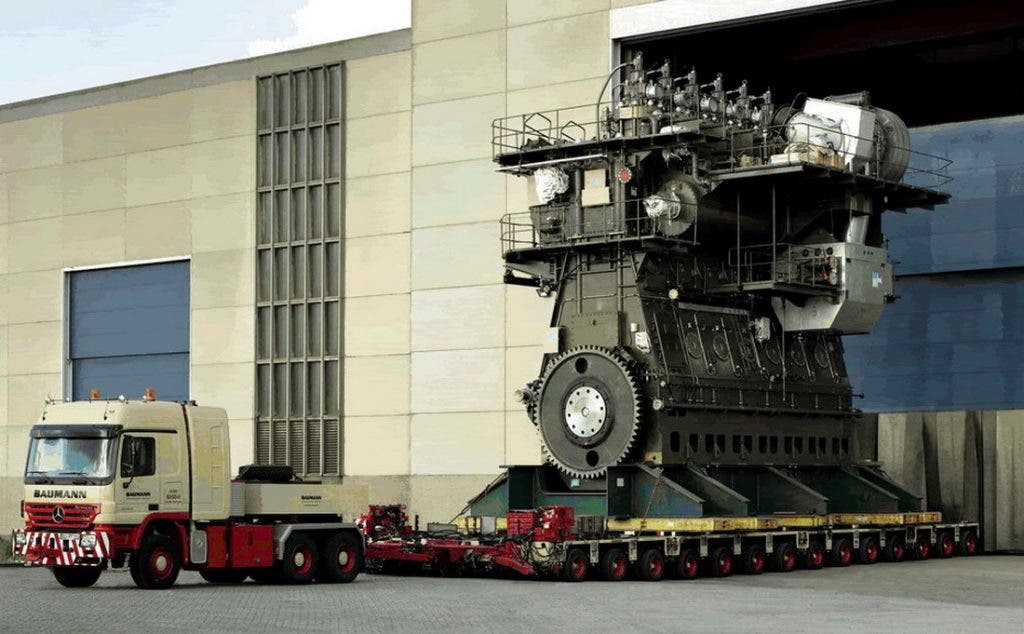
The world’s most powerful engine is mind blowing. It stands 44 feet tall, is 90 feet long and weighs 2,300 tons. It’s capable of producing 109,000 horse power, and over 5,000,000 foot pounds of torque. To say this is a powerful engine is an understatement. 

You can take the most powerful engine in the world and it pales in comparison to the power of God. This engine could never speak a world into existence, this engine could never raise someone from the dead, and this engine could never forgive sins and give us the hope of eternal life. 

Paul would tell us in Ephesians 1:19-20, “…and what is the immeasurable greatness of his power toward us who believe, according to the working of his great might that he worked in Christ when he raised him from the dead and seated him at his right hand in the heavenly places.”

Notice Paul’s description of this power: 

  • It is “exceedingly great”
  • It is shown toward those who believe
  • It is the same power that raised Jesus from the dead and seated Him at the right hand of God. 

Paul shows us how this power is given to those who believe in chapter 2:1-6. This power made us alive when we were dead. Colossians 2:12-13 tells us that those who were spiritually dead are now spiritually alive because of God’s power. 

As Christians we must understand the power and might of God. 

Do we understand what God could do to the world? Do we understand that God’s power is the only reason we are here today? Paul prays that we might know the power of God, and that that knowledge should shape our every thought and action here on earth. 

Wärtsilä RT-flex96C engine

Weak Is Strong

Wednesday’s Column: Third’s Words

Gary Pollard

The United States of America has one of the most powerful militaries on earth. Its funding, equipment, and training are second to none. Most countries understand that head-on attacks against the US armed forces are impossible – even our greatest enemies have a healthy fear. That said, asymmetric warfare has thwarted even our great military. Hostile groups with long-obsolete, repurposed equipment have made decisive victory nearly impossible.

Their tactics often involve war crimes/crimes against humanity, so these groups serve as an illustration of a point and nothing more. They will answer to God for their crimes. The point is this: God often displays great power through insignificant, weak people.

God worked through Paul’s weakness to grow the church (II Cor 12.9).
God saved the world as an impoverished person (Matt 8.20).
God designated the poor to great faith and eternal life (Js 2.5).
God included uneducated, blue-collar men in his group of closest followers (Acts 4.13).
God considers service-oriented people to be the most important (Matt 20.26).
God used Job as an example of endurance, proving his power when Job was at his lowest (1.9, 22).

All of us will face issues that are way beyond our power to handle. In those moments, remember that God does incredible things through insignificant people.

Can These Dry Bones Live Again?

Tuesday’s Column: Dale Mail 

blond man with goatee smiling at camera with blazer on
Dale Pollard

Six hundred years before Christ would make His providential appearance, a righteous man finds himself in captivity. While exiled, Ezekiel was able to witness the spirit of God in a very intimate way (Ezekiel 1). Even so, he was still living under the thumb of the Babylonians like every other Israelite with him. While under these unideal circumstances though, he is privileged to see awe inspiring visions from God. Have you ever paid attention to the eerie sensations described throughout this book? In Ezekiel 1:4, the prophet feels a great and stormy wind on the bank of the river Chebar. The wind brings with it a massive cloud with fire flashing around it and a substance like glowing metal in the center of it. The wings of the creatures he saw (verse 24) made sounds like that of roaring waters. The voice of the Almighty was like the sound of a great army camp. What sights he was able to see! This great connection to God didn’t take away his pain or sorrow, though.

Chapter 19 is one long lament as Ezekiel cries over his hard-hearted Israelite brothers. Why won’t they listen to him? Even after Ezekiel performs some radical visual illustrations like eating his bread over dung and laying on his side for an entire year, they won’t respond to the “invitation.” How frustrating is that, preachers? God never abandons His faithful servant but His confused prophet is still left to wonder what God is going to do about the mess which makes up his reality. A familiar feeling for many faithful Christians today.  

Never underestimate the hand of the Almighty. This truthful statement can be pulled from Ezekiel 37, when the prophet is taken up and then placed in the middle of a dark valley. Ezekiel is surrounded on all sides by heaps of dry human bones and he’s probably wondering why in the world God has taken him to such a place. The text answers the question by asking a question. God speaks to Ezekiel and says, “Can these dry bones live again?” What an odd thing to ask. However, Ezekiel responds, “Only you know, oh Lord.”

It’s always when we’re deep in the valleys of life that we’re forced to answer the difficult questions about God’s abilities. When we’re surrounded by darkness, the question we have to ask is, “Does God have the power to see me through this?” If you remember, Ezekiel has become frustrated with the fact that Israel just won’t listen to him or Him. He’s lost hope in their ability to change— they’re just too far gone. However, God demonstrates to His prophet in a dramatic way that NOTHING is impossible for Him. 

He doesn’t bring the bones to life in the blink of an eye, but we know He could have. Instead, He allows Ezekiel to hear those bones rattle and to hear the sounds of fibers and flesh sticking together. He wanted to leave an impression on Ezekiel to demonstrate the might of the Almighty. Ezekiel had no idea how those bones came to life, but he knew one thing for certain. God did it. You may not understand why God has allowed you to enter your valley, but you can be certain that He has the power to see you through. You are standing on your two feet because God has given you the strength to do so. God has promised His faithful servants a heavenly light at the end of our tunnels and whatever God says— He will always accomplish (Ezekiel 37:14). 

God’s Solutions For Our Problems

Tuesday’s Column: Dale Mail

blond man with goatee smiling at camera with blazer on
Dale Pollard

It’s been said that the there are more stars in the known universe than all of the sand on earth combined. That being said, in just one grain of sand there are more atoms than all of the stars. That’s pretty amazing. Our planet is but a speck in the grandeur of space. Countless stars, planets, galaxies, lightyears and somehow God is well aware of the happenings of people. Have you stood on the mountain tops? Have you observed the power of the oceans as the waves crash on the shore? Has your heart almost stopped after the vibrating sensation of a thunder clap resonates in your chest? The might of the Creator is everywhere in the world around us and at times it just demands to be noticed. 
A section of scripture that is mysterious and fascinating is found in 1 Kings 19:11-13. The Lord of hosts is about to show Himself to a depressed and exhausted Elijah, but in a way that he would never forget. “The Lord said, ‘go out on the mountain in the presence of the Lord, for the Lord is about to pass by.’ Then a great and powerful wind tore the mountains apart and shattered the rocks before the Lord, but the Lord was not in the wind. After the wind there was an earthquake, but the Lord was not in the earthquake. After the earthquake came a fire, but the Lord was not in the fire. And after the fire came a gentle whisper. When Elijah heard it, he pulled his cloak over his face and went out to stand at the mouth of the cave. Then the voice said, ‘what are you doing here Elijah?’” In the solitude of Horeb, Elijah seeks to avoid the troubles of his world. 
The acoustics of the mountainous area along with the time spent in silence must have made the shattering rocks, raging fire, splitting hills, and rumbling earth all but deafening and definitely a terrifying display of divine power. Then in sharp contrast, a still whisper comes. This gentleness, no doubt, is the reason Elijah decides to cautiously emerge from his hiding place. God is teaching His worn-out servant a lesson that holds true for us today. The fact is, there is no more God, His wisdom, power, and presence in an earthquake than there is in the sweet breath of a blooming flower. The quiet ticking of a wrist watch reveals just as much intelligence and purpose as does the striking of a clock tower’s bell. 
One may walk out into an open field at night and stare up into the vast sky, lit up with numerous twinkling stars and declare, “I’ve found God!” But God is no more in the sky than He is in the blades of grass flattened beneath your feet. The question came to Elijah from that still voice, “What are you doing here?” To the prophet, his problems were too great and too large and his solution was to run and hide. God, in a magnificent way, is trying to remind Elijah of his place.
 Our place in life is not to take matters into our own hands or solve life’s many difficulties on our own. The answer is not to run away, but to walk humbly with our awesome God. He is strong enough to lift our burdens, wise enough to counsel us, patient enough to allow us to learn, and loving enough to constantly forgive. 

Tearing Lions And Toeing Lines

Tuesday’s Column: Dale Mail

image

Dale Pollard

He wore a name we know well but accomplished the will of a Name we know better. Samson the judge was the man who dropped a thousand Philistines with a jawbone while dropping the jaws of those who would read these accounts years later.
In Judges 13 through 16 we find the awesome, yet tragic life of the strongest man who ever walked the earth. From the moment of his miraculous conception to those dramatic moments between the pillars, he captivates our imagination. Some tend to idolize his prowess as a warrior and rebel, but the real lessons we can learn from Samson can be appreciated by everyone. What if a mortal human could act in place of God? While impossible, let’s just humor this thought. In a way we get a glimpse of how miserable life would be if we didn’t serve a righteous Lord. When Samson lost his temper, became annoyed, bored, or defiant he would always choose to act in his own self interest. He was empowered by a God he didn’t serve and that is seen time and again in these three chapters. His final act of killing over three thousand Philistines who mocked him in their pagan temple were slain out of revenge (Judges 16:28) and hatred. His eyes had been gauged out and he is led by a servant through a crowd of people who were not even supposed to be living in the same land as the Israelites (Numbers 31:17). In other words, the Philistines were a hole dug by God’s children in the first place. Samson was a tool in God’s hand to relieve His people from the oppression of these ruthless “fish people.”

I’m sure you know many of the accounts from the life of Samson so here are a few things that God intended for us to learn from him.

1. God is infinitely more powerful than His creation (including Samson) and is infinitely more loving and patient than His creation. If Samson had the power of God, his own humanity would provoke him to destroy anyone who irritated or upset him. How many times has God forgiven us and then placed those sins out of His sight? Too many times to count, I’d imagine.
2. God can use the self-seeking people in the world to accomplish His own will. He never lost control of Samson and God hasn’t lost control in the world today.
3. Nothing could make us serve God, even if He paid us a supernatural visit (see Jesus). Samson’s abilities were given to him by the Lord, and yet that wasn’t enough to convince him to dedicate his life to Him. Consider Solomon that was given wisdom in a miraculous way— yet still fell. In the end it comes down to the individual heart, the desire, and the determination to commit ourselves to His service.
4. God’s desire to protect His people is great and His methods are creative. The Israelites could have never dreamed that their savior would be a man like Samson. They were plagued by a race of wicked warriors, but God used one man to turn the tables. When we look at our country today we may think there’s no way that things could be different but let’s not forget how powerful and how creative God is. It doesn’t matter whether or not WE can see a path forward when God has proven that He is more than capable and willing to see us through.

You could ponder over the life of Samson and come up with more great lessons to build your faith. Why not read through Judges 13-16 to remind yourself of God’s control in this world? As a bonus, you’d be treating yourself to one of the most fascinating sections in the Old Testament.


Sailing Stones 

Friday’s Column: Supplemental Strength

81121814_2462862270639428_5746232403106463744_n

Brent Pollard

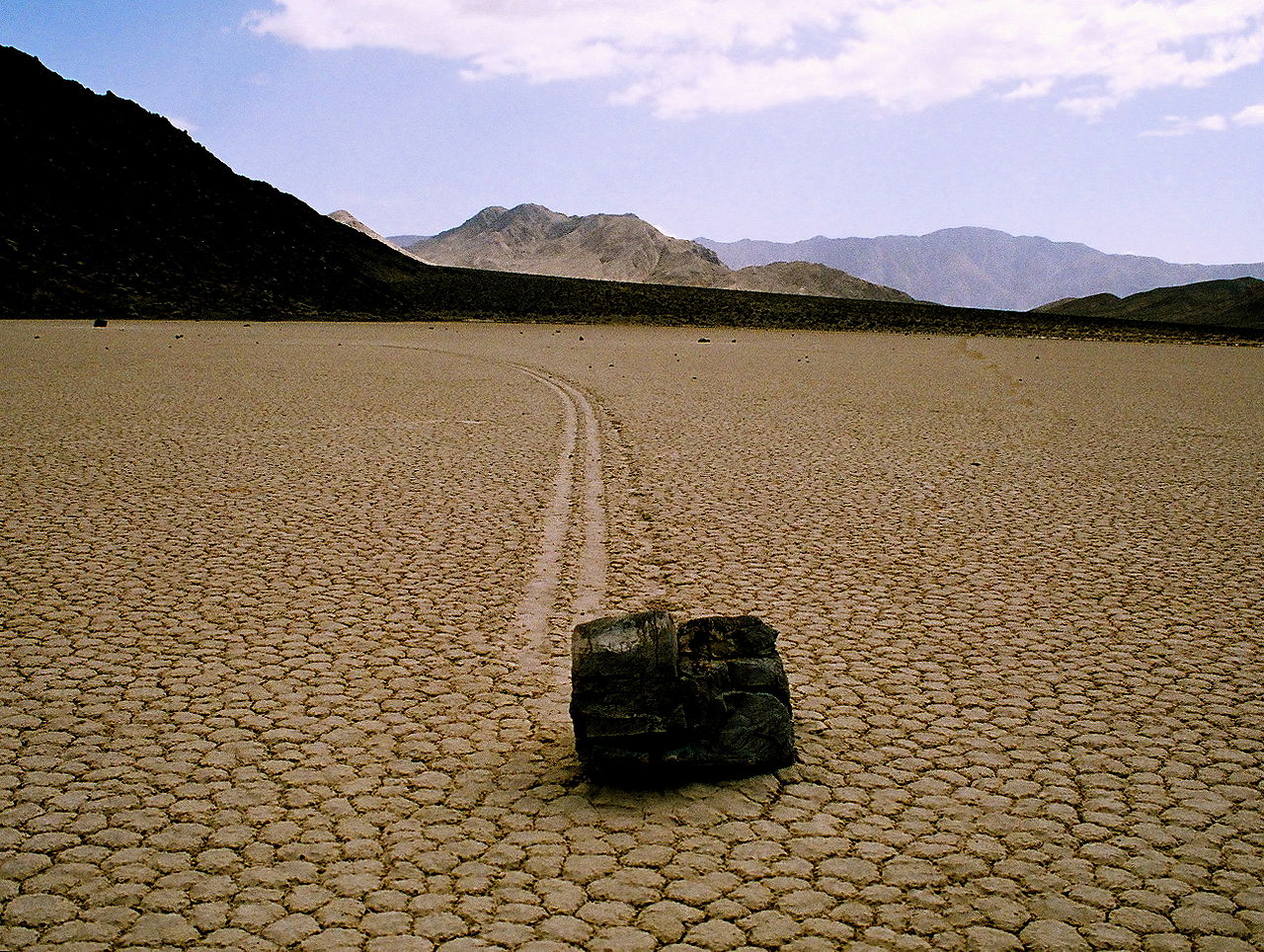
Death Valley. The very name is foreboding. Yet, Death Valley is the home to an extraordinary phenomenon known as “sailing rocks.” On the border of California and Nevada, there is a section of the Death Valley National Park called the Racetrack Playa. It is a dry riverbed. Why is it referred to as a “racetrack?” Dotting the Racetrack Playa are those sailing stones that seemingly move of their own accord. No human eye has observed one of the rocks move, and yet, it is evident that they do. Stones weighing even hundreds of pounds move across the dry riverbed, leaving evidence of their journey in a trail through the sand behind them.  One of the longest observed tracks was 1,500 feet long. And so, these rocks race across Death Valley.

First recorded in the early 1900s, scientists have endeavored to discover the truth behind the sailing stones. In 2014, scientists were finally able to capture the movement of the rocks using timelapse photography. As the National Parks website suggests, “The results strongly suggest that the sailing stones are the result of a perfect balance of ice, water, and wind.” 1 The National Park Service further detail the findings of cousins, Richard and James Norris:

Their observations show that moving the rocks requires a rare combination of events. First, the playa fills with water, which must be deep enough to allow formation of floating ice during cold winter nights but shallow enough to expose the rocks. As nighttime temperatures plummet, the pond freezes to form sheets of “windowpane” ice, which must be thin enough to move freely but thick enough to maintain strength. On sunny days, the ice begins to melt and break up into large floating panels, which light winds drive across the playa pool. The ice sheets shove rocks in front of them and the moving stones leave trails in the soft mud bed below the pool surface. 2

It is undoubtedly a remarkable sight. The wonder this phenomenon instills likewise reminds us of the majesty and power of the Invisible Intelligence (cf. Romans 1.20), creating the very physics making moving rocks possible.

As I read about the sailing stones, I could not help but recall the words of Jesus when asked by the Pharisees to rebuke His followers. The occasion was Jesus’ triumphant entry into Jerusalem. The people were crying out their “hosannas” to the Lord. Jesus told the Pharisees, quoting from the prophet Habakkuk, that “if these become silent, the stones will cry out!” (Luke 19.40 NASB; Habakkuk 2.11) Indeed!

If you ever question your worth to God, recall the sailing stones. Without the benefit of intelligence or purpose, they still point to their Creator. They appear to be immovable, and yet are pliable by the laws God put in place. As I take stock of what I can do, I note that even I can do more than the sailing stones, possessing locomotion and free will. How shameful, then, when I choose to sit silent as a boulder. May God use me like a rock so others can see my deeds and give God the glory (Matthew 5.13-16).

REFERENCES:

1 The Sailing Stones of Death Valley. (n.d.). Retrieved August 27, 2020, from https://www.nationalparks.org/connect/blog/sailing-stones-death-valley

2 The Racetrack. (n.d.). Retrieved August 27, 2020, from https://www.nps.gov/deva/planyourvisit/the-racetrack.htm

1280px-runningrock2

 Is Our Savior Sleeping? 

Tuesday’s Column: Dale Mail

Daleheadshot

Dale Pollard

Have you ever been afraid of your imagination? At times that fear can be so convincing that you truly believe that the worst case scenario is somehow inevitable. Try and make that opening question relevant to your life. Think about a specific event or experience where you were afraid of something that never came to fruition. The grip of anxiety can be debilitating as you wait for your medical test results to come in. You agonize over the poor quality of life you might have if there is ever an unexpected economic collapse. Your hairline might rapidly recede as you stress over the outcome of the war our nation is still involved in, and do I even need to mention the new global pandemic? You’re robbed of sleep as you imagine the potential horrible outcomes that may never happen. These things may never happen because the Lord could come. They may never happen because whatever you’re afraid of— it’s simply worse in your own mind. It may never happen because God has proven Himself to be one who calms the storm instead of letting you perish.

I believe we would all benefit from recalling those occasions in our past where fear proved unnecessary and we worked ourselves up for nothing! If the fear in your life has a big appetite and it’s devouring all your time and peace, maybe it’s time to feed something else. Sitting Bull once said, “Inside of me there are two dogs. One is mean and evil and the other is good. They fight each other all the time. When asked which one wins I answer, ‘the one I feed the most.’” How vividly this illustrates a daily struggle for so many. Fear and faith will scrap with one another until we decide which one will win. Do you think our faith would emerge victorious every day if we could physically witness God’s power, but in a miraculous way? If my own eyes could witness Jesus bring the dead back from the grave, cast out a demon, or walk on stormy waters, then I would never worry again. Or would I? Seeing Jesus perform miracles never made anyone perfect. His disciples were far from perfect and they stood feet from the Savior while He did things only God could do.

On one occasion, which was hinted at earlier, Jesus calms the storm after being abruptly awakened by His terrified followers (Mark 4). There are some details about this account that will help us feed our faith when fear threatens to win the day.

First, our cries to God, even in the desperate times, are heard. The disciples exclaim, “Don’t you care that we’re about to die?” Following this fearful plea, Jesus will demonstrate a fraction of His awesome power. After all, what is calming a stormy sea to the One who spoke every drop of water into existence?

Second, excessive fear of anything in this world is a foolish mistake. God is bigger and greater than our worries.

Third, God is not asleep. It may seem like He is when we don’t feel optimistic about the future, but it’s when we recognize that He’s the only answer to our peace that He will calm our storm. 

IMG_4740

FEAR NOT

Monday’s Column: Neal at the Cross

Neal at ATF 2020
Photo credit: Wayne Roberts

Neal Pollard

Fear not…

Military Threats.  Whether Al Qaida, the Taliban, Iranian nuclear weapon building, alliances between China, North Korea, and Russia, or armed forces spread too thin.

Natural Catastrophe.  Whether global warming, meteors crashing through the atmosphere, glacial melting, California sliding off into the ocean, or events like tornadoes, tsunamis, and hurricanes.

Economic Collapse.  Whether the breaking of Social Security, a major stock market crash, the mounting U.S. debt, recession, the real estate bubble bursting, bankruptcy, out of control inflation, or job losses to illegal immigrants.

Potential Persecution.  Whether the steadily rising antagonism against Christianity, overthrow by foreign oppressors, the mounting tide of immorality promoting sin, or the epidemic ignorance of the Bible in our land.

Health Problems.  Whether Coronavirus, cancer, heart disease, Alzheimer’s, ALS, AIDS, kidney failure, dementia, arthritis, blood clots, or liver disease.

Academic Decline.  Whether comparative test scores with children in other nations, a socially-charged curriculum agenda, the “dumbing down of America,” the de-emphasis of classroom competition, or outcome-based education programs.

Rather, “Fear God” (Ecc. 5:7; 1 Pet. 2:17).       “Do not fear those who kill the body but are unable to kill the soul; but rather fear Him who is able to destroy both soul and body in hell” (Matt. 10:28).  “You shall follow the Lord your God and fear Him” (Deut. 13:4). “The secret of the Lord is for those who fear Him” (Psalm 25:14).  “He will fulfill the desire of those who fear Him;  He will also hear their cry and will save them.  The Lord keeps all who love Him,  but all the wicked He will destroy” (Psalm 145:19-20).  “And His mercy is upon generation after generation toward those who fear Him” (Luke 1:50).  “I most certainly understand now that God is not one to show partiality, but in every nation the man who fears Him and does what is right is welcome to Him” (Acts 10:34-35).

19905041_10212998990907620_1880357809954935760_n

Serving the Living God 

Thursday’s Column: Captain’s Blog

IMG_0806

Carl Pollard

I know I’m not old enough to say this, but when I was younger I used to lay in bed at night and try to imagine what God looked like. I would try to put a face to Him, I’d wonder what He was doing, and I would ask myself if God knew that I was thinking about Him. I still ask those same questions to this day. I’m sure that most if not all of you who are reading this believe that there is a God, and that He does see and hear all that we say. So the question I’d like to ask is, “since there is a God that has all power, why do we sometimes have difficulty following the commands that we find in the Bible?” I’d like to look at a verse that may help us realize the importance of following what God has told us to do as Christians.

Jeremiah 10:12 says, “It is He who made the earth by His power, who established the world by His wisdom; and by His understanding He has stretched out the heavens.”

God has ALL power. There isn’t an area that He is lacking power in. He controls the weather, He created us, and, as Jeremiah 10:12 said, He made this earth that we live on. I believe that we sometimes forget just how powerful God truly is. Since God has all power, shouldn’t we be following what the Creator of everything has told us to do? In seven days He thought of everything we see around us. Think of it this way. We’ve never had an original thought. For example, I could say that I’m the only person to have ever thought about a pink Aardvark. But before I thought of pink Aardvarks, there was such thing as the color pink, and there were Aardvarks before I thought of them. So what I’m actually doing is taking two things that God created and putting them together. God has given us specific commands to do as Christians. Since God has given us rules on how to live, we shouldn’t have a problem following them. They may be difficult, but God knows how to take care of His creation. The thought of the God of the universe watching out and guiding me through life is a great comfort to me!

But what if we aren’t following what God has told us to do? There’s a saying that we all have heard that says, “Actions speak louder than words.” Our actions are a direct window to how we truly feel. If I don’t do what God has commanded, then that’s like us saying to God, “I don’t truly believe that there are consequences to my actions.” But that is a deadly place for us to be, because God IS real and there ARE consequences to our actions. God is real and the consequences of our actions are very real! In the end, it comes down to this: Not obeying what God has said is a reflection of how real we make God out to be. If we truly believe He is real, then we shouldn’t have a problem doing what He tells us to do. As Christians, we serve the one true God, and He is very real. I pray that this fact will push us to obey the commands He has given us because our God is alive and we all have an eternity with Him if we do what He tells us to do.

Looking back at when I was younger, I’ve realized that I asked the right question, but the most important part of those questions is how I answer them. Will I show through my actions that I truly believe He is alive? Or do I doubt the reality of God by not taking His commands seriously? Let’s try to always prove God is alive by following what He has told us to do!

maxresdefault

Seeing God In Nature: Volcanos

Neal Pollard

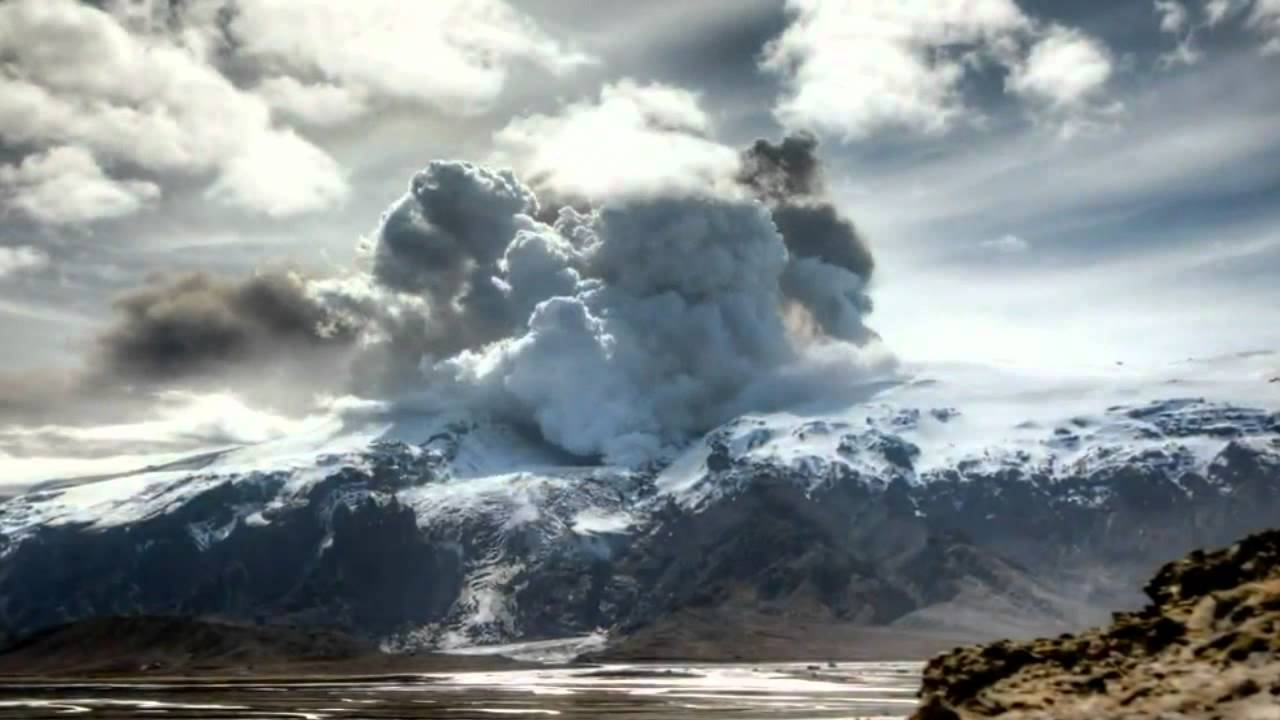
As we received word of the volcanic eruption near Guatemala City, Guatemala, yesterday, where Bear Valley Bible Institute has had an extension school for several years, we were reminded of the omnipotence of God. The power God displays through nature and His creation reveal how such a powerful effect reveals an even more powerful cause. Volcanic activity for which there is no recorded history, like at Yellowstone, Deccan Plateau, and Santorini, stand alongside several we do know about. Perhaps Pompeii or Mt. Saint Helens is most infamous, but the Mount Tambora volcano in Indonesia has been called the most explosive and deadly for which there is historical recounting. Mount Tambora’s eruption began on April 5, 1815, and the mountain blew apart on the evening of April 10th. “The blast, pyroclastic flows, and tsunamis that followed killed at least 10,000 islanders and destroyed the homes of 35,000 more” (britannica.com). It went from being a mountain 14,000 feet high to being a caldera (a crater) 3.7 miles across. Its effects were intense and global. It shot megatons of material into the atmosphere, preventing so much sunlight from reaching the earth’s surface that 80,000 more Indonesians died from famine and disease. The earth’s average temperature was reduced over five degrees. Western Europe and eastern North America experienced heavy snow and killing frost in June, July, and August, causing “crop failures and starvation in those regions, and the year 1816 was called the ‘year without a summer’” (ibid.).

Volcanos are so awesome and powerful that they evoke a strong response from us. They illustrate several things of a spiritual nature. As noted above, they are demonstrations of an all-powerful God. So often, they erupt without specific warning. There may have been tremors and signs for years, but nothing out of the ordinary. Then, too rapidly for many to escape, the cataclysmic occurs. It is a testimony of good that comes from tragedy, too. The Department of Geosciences at Oregon State University reminds us that volcanic soil is very rich and conducive to a dramatic agricultural comeback following these geological events (volcano.oregonstate,edu). These events should help remind us of a truth Bible writers like Peter teach us, that “…the day of the Lord will come like a thief, in which the heavens will pass away with a roar and the elements will be destroyed with intense heat, and the earth and its works will be burned up. Since all these things are to be destroyed in this way, what sort of people ought you to be in holy conduct and godliness, looking for and hastening the coming of the day of God, because of which the heavens will be destroyed by burning, and the elements will melt with intense heat!” (2 Pet. 3:10-12). 

Please pray for our brethren in Guatemala and for the hearts of all men outside of Christ, that they might come to a saving knowledge of the truth before it is eternally too late. May the evidence gleaned from places like nature, including volcanic events, persuade mankind of the reality and power of God. So persuaded, perhaps their hearts will be open to learning more about Who this God is as we share the revelation of Him as found in His Word!

caldera_mt_tambora_sumbawa_indonesia
Mount Tambora caldera

THE MORE I KNOW, THE LESS I KNOW

Neal Pollard

It is a true paradox. Today,  I’ve been married longer than I have ever been.  I’ve been a father longer than I have ever been.  The same is true for me as a Christian, a preacher, and every other relationship I am in.  My experience in all of these has never been greater than it is right now.  Yet, as I examine things, I realize just how much I do not know.  I am not saying that truth is unknowable, for such a statement would be false and contradictory to what God affirms in Scripture (John 8:32; Eph. 1:18; 1 Tim. 3:15; etc.).  It is just that I realize how little I understand compared to what needs to be understood, that I find the challenge of putting truth into practice in every situation requiring wisdom and understanding as daunting as I ever have.  Yet, despite such a realization, my optimism has never been greater.  Why?  Because I have never believed more strongly in the power and wisdom of God, nor have I ever depended more on Him for strength and provision where I am lacking than I do today.  I feel smaller, but He seems bigger.  While the walk on the narrow way seems a steeper, more strenuous, incline each day and the challenges to faith more daunting, more than proportionate to this is my realization that God “is able to do exceedingly abundantly above all that we ask or think, according to the power that works in us” (Eph. 3:20). My conviction about what the Bible says has never been stronger. My belief in God’s existence, involvement, concern, and righteousness has never been more than this moment.  Yet, my awareness of my finiteness and limitations, the transiency of this life, and the ferocity of the adversary is acute.  Incredibly, this doesn’t cause me to despair. It causes me to hope. It takes the focus off me and puts it where it belongs—on Him! He is able to establish me through His Word (Rom. 16:25). He is “able to make all grace abound to” me, that I, “having all sufficiency in all things, may have an abundance for every good work” (2 Cor. 9:8).  The most important thing for me to know, every day in every challenge and responsibility, is that God is able (Rom. 14:4; Phil. 3:21; 2 Tim. 1:12; Heb. 2:18).

Don’t misunderstand me. I am not despairing. I am not even frustrated. I am hopeful and excited.  One of the greatest promises of Scripture is, “But He gives more grace” (Jas. 4:6). He will walk with me through the darkest valleys (Psa. 23:4). As He holds my hand and guides me through His word and His providence, He also points me toward His house.  He tells me He will help me get home and when the narrow way becomes too steep or arduous for me to walk alone, He will carry me in His everlasting arms (cf. Deu. 32:7). I will keep studying His inspired guidebook and striving to apply it to my life.  And as I do, I will increase my dependence and reliance upon Him, confident that “He who has begun a good work in [me] will complete it until the day of Jesus Christ” (Phil. 1:6).  That’s really all I need to know!