The parable of the two brothers in Matthew 21 was an early favorite of mine in childhood, though it had nothing to do with the fact that I have a brother. Of course, the focus is on each of their relationships with the Father more than their relationship to each other. Jesus is illustrating, as He often does, the fact that the sinners would accept Him before the corrupt religious leaders would. Yet, the fundamental problem of the Pharisees, as Jesus points out in this parable, is their profession without proper performance.
By application, how tragic are intentions without attending actions. The second son who said he would not but did is commended for his change of heart. Do we ever see any who follow the example of that second son?
* “I will not do it.” Jesus’ point was not to refer to that large class of people who say they will not, then follow through. Obviously, though, an unwillingness to serve Christ and those He died to save is not commendable. Keeping our word not to be involved or committed just won’t do!
* “I ought to do it.” Here’s the remark of someone with enough conscience to know what is right, but not enough desire or discipline to make the “ought” the “is.” That just won’t do!
* “I may do it.” This is the word of someone who has decided not to decide. Tomorrow is always their best work day. They are ever deciding, but never deciding. Of course, neither will this do!
God’s ideal servant is the one who says he will, then does it. As Jesus shows in this parable, He is even pleased with the stubborn whose heart is softened. Yet, the above groups’ attitudes just won’t do, literally and figuratively!
15 Then the Pharisees went and plotted how to entangle him in his words. 16 And they sent their disciples to him, along with the Herodians, saying, “Teacher, we know that you are true and teach the way of God truthfully, and you do not care about anyone’s opinion, for you are not swayed by appearances. 17 Tell us, then, what you think. Is it lawful to pay taxes to Caesar, or not?” 18 But Jesus, aware of their malice, said, “Why put me to the test, you hypocrites? 19 Show me the coin for the tax.” And they brought him a denarius. 20 And Jesus said to them, “Whose likeness and inscription is this?” 21 They said, “Caesar’s.” Then he said to them, “Therefore render to Caesar the things that are Caesar’s, and to God the things that are God’s.” 22 When they heard it, they marveled. And they left him and went away.
We often speak of this passage as an example of how the Pharisees tried and failed to trap Jesus in a religious question. We also know we have a responsibility to pay taxes that we owe.
But let’s focus on the last part of Jesus’ response, “…and to God the things that are God’s.” What is God’s? If we use the same test that is used in this passage of whose image is on something, what is God’s image on? What do we owe God?
We don’t put an image of God on anything. “So God created man in his own image,
in the image of God he created him;male and female he created them” (Gen. 1:27). God’s image is on us. We are made in His likeness. We are what is due Him. So how do we give ourself to God?
What if we ask ourselves what’s the most important thing to do? Let’s look at another time someone quizzed Jesus. “And one of the scribes came up and heard them disputing with one another, and seeing that he answered them well, asked him, “Which commandment is the most important of all?” 29 Jesus answered, “The most important is, Hear, O Israel: The Lord our God, the Lord is one. 30 And you shall love the Lord your God with all your heart and with all your soul and with all your mind and with all your strength.’ 31 The second is this: You shall love your neighbor as yourself.’ There is no other commandment greater than these” (Mark 12:28-31).
Jesus gave two commands: loving God and loving your neighbor. This might sound like a test in school, “its just two questions” but then each has ten subparts and each answer is dependent on the previous. These were two loaded commands. This was an overview of the 10 commandments from Exodus 20. The first four were about loving God and the last six were about loving your neighbor. In John 14:15, Jesus says, “If you love me, you will keep my commandments.” I don’t mean for this to be a lesson about the Ten Commandments, but a reminder to love God completely.
If you are not loving God as Jesus described…
If you are not loving the Lord your God with all your heart and with all your soul and with all your mind and with all your strength…
A “guilty pleasure” is something that one enjoys despite believing other people don’t generally value it or think it’s strange or unusual. It often implies enjoyment of something that societal standards may view as low-brow or embarrassing, but the individual finds personal enjoyment in it regardless. This pleasure could be a specific type of music, a television show, food, or any other enjoyable activity that might not be considered “sophisticated” or “appropriate” by some.
Embarrassment or the acknowledgment that one’s enjoyment may not be socially acceptable causes the feeling of guilt. At the same time, “pleasure” indicates the personal joy or gratification one gets from it. Therefore, “guilty pleasure” does not always mean something unethical or immoral. It’s more about finding value in something that society frowns upon or labels as “low culture,” “kitsch,” “campy,” etc.
Rather than being due to actual wrongdoing, guilt often results from a contrast with one’s usual standards or tastes or from a perception of the judgment of others. The concept of guilty pleasure is widely recognized and accepted as a regular part of human behavior. Hence, whether you realize it or not, you likely have a few guilty pleasures too.
Dystopian and disaster scenarios are some of my guilty pleasures. I’ll use the 2004 apocalyptic thriller The Day After Tomorrow as an illustration. It nicely sums up Al Gore’s and Greta Thunberg’s exaggerated climate alarmism. But even Roland Emmerich, who brought us Independence Day, couldn’t find mainstream success with his ludicrous environmental doomsday epic. A 50% audience score and a 45% Tomatometer score on Rotten Tomatoes explain why it’s one of my “guilty pleasures.”
Recently, I came across “Doomsday: 10 Ways the World Will End” on the History Channel. As I had a little time on my hands, I gave it a watch. I was not disappointed. Having Michio Kaku as a guest on the show was a highlight for me. I can’t put my finger on why I find him so intriguing. Therefore, I pause the remote and pay attention whenever I see his face. This series had everything in its ten hypotheticals, from a mega eruption at Yellowstone to the Earth being pulled out of orbit and hurtled into the sun.
I smiled wryly as I listened to an anthropologist with huge gauges in his earlobes describe how the latter scenario would result in a gradual temperature rise that would eventually engulf the planet in “hell.” I couldn’t help but notice that the only time producers used Bible-related terminology was about a place of eternal punishment “where their worm does not die, and the fire is not extinguished” (Mark 9.48 NASB).
I wonder why I find it entertaining to watch things that I know to be implausible and ridiculous. I should swallow my pride rather than end up sounding like that Pharisee in the Temple. “God, I thank You that I am not like these academics who do not believe in You.” More than likely, I use my guilty pleasure to reassure myself that everything will be fine.
I’m not a natural salesperson. The sales commission I make would not be enough to support me. However, I have studied materials on success in a cold sale. A sale that has no prior leads is considered “cold.” You are going up to a total stranger and trying to make a sale. You may see why an evangelist would read such a book out of curiosity.
Imagining the worst-case scenario is one strategy for buffering the emotional impact of rejection. You might, for instance, imagine a situation in which, after you’ve formally introduced yourself to the homeowner, he goes off and punches you in the face for no apparent reason. If the person says “no” to your sales pitch, you can console yourself by thinking, “Well, at least he didn’t punch me in the face.” This method is great for calming your nerves.
When I watch a doomsday scenario movie or documentary, I immediately notice that the show’s producer has overlooked one crucial factor: the existence of God. God’s existence ensures that nature always follows its laws. Hence, Earth will not experience any disturbance in its orbit. Instead of suggesting that past eruptions in Yellowstone indicate a repeat occurrence, this evidence is more consistent with the mechanisms God used to destroy the world in a global deluge. Although mankind can make life on Earth quite unpleasant, only God has the power to wipe out all human life forever. In the meantime, He has promised that the cycle of planting and harvesting, cold and warmth, summer and winter, day and night, will never end (see Genesis 8.22).
Perhaps you don’t enjoy watching disaster films or documentaries. I understand. But maybe this will help you see why I refer to this as one of my “guilty pleasures.” I know you will agree that God’s promises are worth holding on to. When fear overwhelms you, even if it seems irrational, remember to take solace in the words we attribute to the sons of Korah in Psalm 46.
“God is our refuge and strength, A very ready help in trouble. Therefore we will not fear, though the Earth shakes And the mountains slip into the heart of the sea; Though its waters roar and foam, Though the mountains quake at its swelling pride.” (Psalm 46.1-4 NASB)
We used to sing a song in church growing up called, “There’s An Eye Watching You.” The chorus goes like this, “watching you, watching you, every day mind the course you pursue; watching you, watching you, there’s an all-seeing eye watching you.” As a kid and even into adulthood, I would sing this song and envision a giant eyeball in the sky. While this isn’t case, maybe it would do us good to think of God’s eye watching us each day.
Psalm 33:13-14 says, “The Lord looks down from heaven; he sees all the children of man; from where he sits enthroned he looks out on all the inhabitants of the earth.”
If God sees “all the inhabitants of the earth,” He is automatically breaking the laws of time and space. Tanzania, Africa is 8 hours ahead of where I am in Kentucky. Cambodia is 12 hours ahead. Half the world is asleep because half the world is in darkness at any given point in time. God is naturally present in every aspect of the natural order of things, in every manner, time and place. He sees EVERYONE!
God saw Hagar when she was on the run from Sarah (Gen. 16), and Hagar gives God a new name…”the God who sees” because God saw she was in need and helped her.
God saw righteous Noah in a world of wickedness. God saw Cain when he slaughtered his brother. God saw Israel in Egyptian captivity. God saw Joseph thrown into a pit and sold off by his brothers. God saw David as he hid from Saul and his men while they were trying to kill him. God saw Abraham obey His words and try to sacrifice his son Isaac. God saw His own Son, abused, rejected, spit on, and killed. God saw the early church as they were persecuted for following Christ. God sees you as you’re reading this article right now. God sees every deed and it is written down for the judgement day.
God sees everyone. Proverbs 15:3, “the eyes of the Lord are in every place, watching the evil and the good.” We live in a physical world with its four known space-time dimensions of length, width, height (or depth) and time. However, God dwells in a different realm—the spirit realm—beyond the perception of our physical senses. It’s not that God isn’t real; it’s a matter of His not being limited by the physical laws and dimensions that govern our world.
“For thus says the One who is high and lifted up, who inhabits eternity, whose name is Holy: ‘I dwell in the high and holy place, and also with him who is of a contrite and lowly spirit, to revive the spirit of the lowly, and to revive the heart of the contrite’” (Isaiah 57:15, ESV). God is spirit in the realm of timelessness rather than flesh in the sphere of time.
As Christians, we have a deep sense of comfort knowing that God, though timeless and eternal, is in time with us right now; He is not unreachably transcendent, but right here in this moment with us. And because He’s in this moment, He can respond to our needs and prayers.
We serve an incredible God. There’s no denying His amazing power and holiness.
A God who created everything with His Words. A God who sees all the inhabitants of the earth. A God who has the power and might to be everywhere on this earth at one time. A God who looked at me, who looked at you, and saw that we needed a savior.
So why then do we understand God’s power and yet still neglect our prayer life to Him? Or forget to study His Holy word? He sees what we do with our time, so make the most of it!
True understanding of Who God is will always result in righteous living.
I Pt 3.19 is a difficult verse on its face, but it’s easily explainable. It’s tied to 3.18, “His physical body was killed, but he was brought back to life in spirit.” 3.18 simply says that he also used God’s power to help Noah tell everyone that a global flood was imminent. All but 8 people were killed in the flood because they refused to listen. Those “spirits now in prison” are identified clearly as those who lived in the antediluvian world.
Interestingly, many megalithic structures around the world (Ollantaytambo, Barabar, Ajanta, Ellura caves, Puma Punku, the city of Petra, Derinkuyu, Saqsaywaman, the Great Pyramid of Giza, etc.) show strong evidence of having been built before the flood. Several of these seem to have been designed specifically to protect against a doomsday scenario. We know all people were warned about the flood, but it seems most preferred to put their trust in stone rather than a wooden boat.
3.21 is the crux of the matter. Just as Noah and his family were saved from evil because of the flood, we get a clean conscience through baptism. We only have hope because Jesus came back to life, proving that death is on borrowed time. If we want a life with Jesus in a perfect world after we die, we have to make a formal appeal to God for a clean conscience. According to this verse, the only way to make that appeal is through baptism.
Joshua 23 marks the beginning of Joshua’s farewell address. He is “old, advanced in years” (1). He summons all Israel, their elders, heads, judges, and officers, to challenge and admonish them (2ff). He reviews all God had done to allow Israel to conquer Canaan (3-5). He wanted them to appreciate what God had given them. After reviewing their blessings, Joshua warns them to persevere going forward. There was another battle to fight, and that was a future apostasy. So, Joshua directs their attention to what they needed to do to fight that part of themselves that fall away from the Lord.
They would have to conquer complacency. He tells them to be firm (6), to keep and do all the Law (6), cling to the Lord (8), and take diligent heed (11). There could be no half-hearted following! They had to stay “all in.”
They would have to conquer compromise. They could not turn to the right or the left or associate with the nations surrounding them (6-7). They could not make these people’s gods their gods (7) or their women their spouses or friends (12). Failure to conquer compromise would carry grave consequences (16)!
They would have to conquer callousness. In the face of God’s promises and threats (14-15), they needed to keep their hearts soft to His Word. Instead, he wanted them to examine their hearts and souls and remain convicted (14)! Hardness of heart is spiritually fatal.
Perhaps the most formidable foe to my own faithfulness is me. Satan’s influence is certainly strong (1 John 5:19), but I must internalize James’ warning, too. ” Let no one say when he is tempted, “I am being tempted by God”; for God cannot be tempted by evil, and He Himself does not tempt anyone. But each one is tempted when he is carried away and enticed by his own lust. Then when lust has conceived, it gives birth to sin; and when sin is accomplished, it brings forth death” (Js. 1:13-15).
If I don’t conquer the desire for sin, I set in motion something ultimately lethal for myself. Tragically, Israel would not conquer themselves. They would become complacent, callous compromisers. And what God warned would happen did happen.
The comfort for us is that their outcome doesn’t have to be ours. We can look back on these events and learn from them. “Now these things happened to them as an example, and they were written for our instruction, upon whom the ends of the ages have come.Therefore let him who thinks he stands take heed that he does not fall. No temptation has overtaken you but such as is common to man; and God is faithful, who will not allow you to be tempted beyond what you are able, but with the temptation will provide the way of escape also, so that you will be able to endure it” (1 Cor. 10:11-13)!
Free will has been in the news recently with a neuroscientist, Robert Sapolsky, having recently published a book arguing that there is no free will. Let me set aside the scientific question for a moment and turn first to the Bible because there is a religious argument about free will. I once had a Calvinist professor sum up the debate as follows: “People who believe in free will say the Calvinist god is a tyrant, and the Calvinists say the God of free will is impotent.” While I understand that Calvinists want to protect God’s sovereignty against the implications of human free will (i.e. we can do things God doesn’t want us to do), that summary is lacking. Let’s look at some verses in the Bible that don’t usually come up in the debate on free will, and see what bearing they have:
Commands. God gives many commands throughout the Old and New Testaments—far too many to list exhaustively—but what does a command imply? If I were to command a person to bench press 10,000 pounds, do I seem reasonable? So, the Calvinist god that commands a person not to murder, if that person has no option over whether or not they murder, would be just as unreasonable. The God of the Bible is not unreasonable: “Come now, and let us reason together,” (Isaiah 1:18).
Choose. Most of the time, when the Bible speaks of choices, it speaks of God’s choices. That makes sense because of God’s sovereignty—His choices are certainly stronger than any of ours. However, there are several places where people are called upon to choose one thing over another. In one such place (2 Samuel 24:12), in response to David’s sin regarding a census, God specifically gives David 3 options for punishment and tells him to choose one. If David truly has no free will, then he has no options and no choice, which would make the Calvinist god a liar for telling him he did.
Who did Christ die for? We’re told (Romans 6:10, Hebrews 7:27) that Christ died “once for all.” If there’s no free will, why would Christ have to die for all? Couldn’t He just die for the sins that were going to be forgiven? But that just brings up the closely related question: Who does God want to save? We’re told twice in the Bible (1 Timothy 2:3-4 and 2 Peter 3:9) that God wants everyone to be saved. But we also know that not everyone will be saved (Matthew 7:13-14). The God of free will did make a sacrifice potent enough to cleanse every person that ever was, is, or will be of every sin that they ever committed, but He leaves to us the option of accepting it or rejecting it. The Calvinist god is either a liar again, telling people he wants to save them when he doesn’t, or perhaps he’s just not powerful enough to save everyone, making him the impotent one.
The God of the Bible, who gives us free will, is far more powerful and far more loving. He will allow you to stand against Him, but He’s too strong to be thwarted by any number of us. And even though He allows you to stand against Him, He made the sacrifice to save you so that you can choose to stand with Him. If there’s anyone here who’s been exercising their free will to reject God, consider instead to use your free will in your own best interest and accept God.
The Book of Hebrews is a crucial piece of writing that serves as a bridge between the Old and New Testaments. It demonstrates how the arrival of Jesus Christ fulfilled old promises. The narrative in the text shows how the old covenant, which relied on law and sacrifice, transformed into the new covenant, which operates through grace and redemption. This transformation is evident in chapters 8-10. Though God made the old covenant, it was only a temporary solution until the perfect one arrived – Christ’s selfless love. The text explains how something was amiss with the old covenant, but Christ’s sacrifice provided the ultimate solution to this problem.
Even though people performed the holy rituals and sacrifices of the old covenant with devotion, those actions were only a representation of what Christ could accomplish. In Hebrews 10.1, the author states that Jesus fulfilled what was happening in heaven, and the Tabernacle and its sacrifices only served as mere shadows. As our everlasting High Priest, Christ’s work goes beyond the earthly Tabernacle. He entered the heavenly sanctuary to offer His blood instead of animal blood, which secured our eternal salvation (Hebrews 9.11–12).
Jesus brings a better covenant based on better promises as we move from darkness to light (Hebrews 8.6). His sacrifice was a one-time offering that cleanses our consciences and allows us to have a relationship with God without hindrance (Hebrews 9.14). The key to this new covenant is Jesus’ sacrifice. Unlike the old covenant written in stone, God writes the new covenant in people’s hearts. It transforms people from within and empowers them to serve God with faithfulness (Hebrews 8.10).
The transition from the Old Covenant to the New Covenant brought a significant change not only in the way people worshipped God but also in how God related to them. With Jesus’ death, a new way opened up for us to confidently enter the Most Holy Place (Hebrews 10.19–20). Jesus acted as the mediator and witness of this new covenant. Under the old covenant, people observed the Day of Atonement once a year, which reminded them of their sins. However, Christ’s sacrifice is complete, sufficient, and everlasting (Hebrews 10.12–14).
The teaching in Hebrews serves as an encouragement for Jewish Christians to keep their faith strong by choosing the fullness of Christ’s sacrifice over the old covenant’s useless rules. This message is just as relevant today for all believers. We should celebrate the new covenant that Christ’s death made possible, which is not just a covenant of temporary rituals but an everlasting inheritance. The New Testament calls us to lead a holy life, have faith that we will be saved, and develop a personal and life-changing relationship with God. In short, the new covenant is superior in every sense as it completes God’s story of redemption and sets us on a path of eternal fellowship with Him.
Understanding the difference between the old and new covenants is as important today as in the early church. It not only helps us to understand the history of the Bible, but it also shapes how we practice our faith, dropping old rituals in favor of worship and service per a new, living faith. This change requires reassessing traditional practices. One such practice needing reevaluation by many professing the name of Christ in light of the new covenant is using mechanical instruments in worship. This topic is debated among believers, as some argue it aligns with the spirit of worship under the new covenant. However, it reflects an attachment to old practices that the new covenant has rendered obsolete since those like David, the writer of songs accompanied by musical instruments, lived under the old covenant.
The Hebrews writer states that, in contrast, we under the new covenant offer up the fruit of our lips (Hebrews 13.15). It’s the Spirit’s guidance that leads us to worship in truth and spirit (see John 4.23-24), pointing to a faith that is vibrant and active, rooted in the internal transformation Christ’s sacrifice brings. To fully realize the benefits of the new covenant, embracing this spirit-led rule of faith—secured by Jesus’ blood—is essential. Our worship and devotion to God should thus reflect the inner change wrought by Christ instead of a reliance on outdated rituals. As we navigate these changes, it is the heart transformed by Jesus that directs our service, a theme as central to the message of Hebrews as it is to our contemporary journey of faith.
Spending time focused on the family is a necessity. God has given parents a responsibility that should never be taken lightly. There are many opportunities in the church that we can take advantage of to create unified families– youth rallies, potlucks, family retreats, and so much more! Spending time together as a unified body, made up of many individual families, is a unique blessing only found in the church. When we choose to bring our families together and worship, eat food, and enjoy fellowship in Christ we imitate the early church.
In Acts 2, the church has just been established, and they eat together, sing together, learn together, pray together, and loved to spend time with each other. A close family In Christ spends time together. Worshipping together is a unifying process, but time spent together outside of the worship setting contributes to growth in our relationships with each other.
Shared history makes for a closer bond. Creating memories with our spiritual family builds unity.
That should be our goal today, tomorrow, and for our entire time on this earth. What does the Bible say about the fellowship we have together as a family?
We are given all kinds of descriptive names in the Bible.
The early church was called:
Those of the Way
The Called out
Christians
All of these names paint for us a special picture. Those in Christ are FAMILY. We are unified with each other by a bond stronger than any force on earth. June 4th, 1940 Winston Churchill gave a powerful speech that changed the tone of the Second World War. In his speech he said, “we shall fight on the beaches, we shall fight on the landing grounds, we shall fight in the fields and in the streets, we shall fight in the hills.”
Sadly, in today’s society this sounds like a description of most people’s family vacation…uh ha haaa.
When there is a lack of unity in our physical families, there will be a lack of unity in the spiritual family. For us to understand the importance of the fellowship we have in Christ, we need to define some terms. The Greek word translated “fellowship” in Acts 2:42 is koinonia. This is defined as “Close association involving mutual interests.” Basically, it is a group of people who have a tight bond because they all have the same interests.
Christian fellowship, then, is the mutually beneficial relationship between Christians, who can’t have the identical relationship with those outside the faith. We are, or should be, closer to each other than anyone in the world. This is a FAMILY. God expects us to have mutual interests, (His Will) and to spend time together building a mutually beneficial relationship.
So, what is Christian Fellowship? The context for the “high priestly prayer” in John 17 actually begins back in chapter 13. This is the last supper. Jesus washes the disciples feet, He tells the apostles one of them will betray Him, Satan enters into Judas, Jesus tells His followers to love each other, Simon is told he will deny Christ, Jesus tells us He is the Way, the truth and the life, Jesus promises the Spirit to the apostles, He tells them that He is the true vine, that they will be hated by the world, BUT, He has overcome the world.
After He says all of this, “Jesus lifts His eyes up to heaven and begins to pray” (John 17:1). This prayer is powerful, it’s humbling, it’s personal. Jesus truly cared for His disciples, and He cares for us today. This was the last prayer the apostles would hear before His death. Immediately after He finished they went to the garden and Jesus was arrested. So the question is, what does Jesus pray for just moments before His crucifixion? UNITY! Jesus was concerned about His apostles, He wanted them to be one, and He prayed for every Christian to be one! The bond we have through Christ is so precious, we should never neglect the family Christ died to create.
In John 17:20-26, Jesus prays specifically for those who will believe the apostles’ teachings, that is, US.
Why should we be so concerned about our unity? Because Christ died to create what we have today. And we can show the world the Father by creating lasting relationships with each other.
The rest of I Peter 3 is about two key points: be good to each other as a church, and don’t lash out at the world when they hurt you. We’ll look at a couple of applications from this section.
Verse 14 says, “Don’t be afraid of people who make you suffer. Don’t worry about it, either. Make sure Christ is the ultimate authority in your life.” This is the context for a verse often misused: “Always be ready to answer everyone who asks you to explain about the hope you have.”
The entire section is about suffering. Peter tells us that our fear of God should be greater than our fear of people who make us suffer. We usually try to explain away φοβος (phobos) as meaning “respect” or “reverence”, but that’s not what this word means. It means terror. I Pt 3.15 tells us, “We need to be more terrified of the consequences of abandoning God than we are of people who want to hurt us.” We can only do that by making Jesus the most important thing about our lives.
As if that’s not hard enough, God also expects us to handle these potentially life-threatening confrontations with gentleness and respect, and offer a rational explanation for our hope of new life. This leaves no room for a hostile response (including self-defense) when we’re being attacked because of our faith. Remember Jesus’s reaction to mistreatment according to I Pt 2.23 — “People insulted him, but he did not insult them back. He suffered, but he did not threaten anyone. No, he let God take care of him. God is the one who judges rightly.” And, “It is better to suffer for doing good than for doing wrong. Yes, it is better if that is what God wants. Christ himself suffered when he died for you, and with that one death he paid for your sins. He was not guilty, but he died for people who are guilty. He did this to bring all of you to God” (3.17-18).
The rest of this section is a doozy, so we’ll save that for next week.
Not all kids will be killed or harmed in an alcohol related incident, but many are. Not all marriages will be destroyed by alcohol-fueled abuse, but many have been. Not every crime that’s committed will somehow involve alcohol, but many do. As a preacher, I don’t need the Bible to help me formulate my opinion on alcohol. Nobody does. While the Bible has a lot to say about a lot of things, one doesn’t need to crack open The Good Book to find out whether or not alcohol will improve lives— or make lives worse. Consider the following statistics pulled from non-religious and globally respected sources.
This is the reality.
Youth And Alcohol Don’t Mix
People ages 12 to 20 drink 3.4% of all alcohol consumed in the United States. Although youth drink less often than adults, when they do drink, they drink more. More than 90% of all alcohol drinks consumed by youth are consumed through binge drinking
In 2021, 5.9 million youth ages 12 to 20 reported drinking alcohol beyond “just a few sips” in the past month.
In 2021, approximately 613,000 youth ages 12 to 20 reported binge drinking on 5 or more days over the past month.
What could possibly go wrong?
The possibilities are endless, and none of them are good. Problems related to underage drinking include trouble in school, unsafe sexual behavior, drinking and driving, aggressive or violent behavior, and trouble with the law.
It Could Kill Them: Alcohol is a major factor in the deaths of people younger than 21 in the US each year. This includes deaths from car crashes, homicides, alcohol overdoses, falls, burns, drowning, and suicides.
It Could Harm Them: In 2011 alone, about 188,000 underage drinkers found themselves in the emergency room for alcohol-related injuries.
It Could Permanently Damage Them: Underage drinking leads to a higher risk of alcohol use disorder (AUD) later in life. Adults 26 and older who started drinking before age 15 are 3.5 times more likely to report having AUD in just the past year.
Source: National Institute on Alcohol Abuse and Alcoholism
Alcohol And Marriage Don’t Mix
Two-thirds of victims of spousal abuse report that the perpetrator had been drinking at the time of the incident(s). This doesn’t just apply to the United States. Global studies show higher odds of domestic abuse if one or both partners are dependent on alcohol.
Around 50% of marriages end in divorce. When alcohol abuse is present in a household, the chances of divorce nearly triple.
Source: Alcohol Rehab Guide (Apr. 20, 2023)
Alcohol And Crime Don’t Mix
Excessive drinking has the ability to lower inhibitions, impair a person’s judgement and increase the risk of aggressive behaviors. Because of this, alcohol-related violence and crime rates are on the rise throughout the country.
Alcohol is a leading cause of traffic fatalities. Drinking and driving kills 28 people a day in the U.S. — about one person every 52 minutes — according to the National Highway Traffic Safety Administration (NHTSA). That’s more than 10,000 lives lost each year to drunk driving.
Add. Source: National Institutes of Health (Mar 16,2023)
These statistics speak for themselves. We should be careful as Christians what we say about alcohol consumption because it’s taken a lot from countless people. It’s taken health, wealth, children, spouses, and ruined otherwise bright futures. Alcohol simply costs far too much to fool with– and that’s not up for debate.
Concerning Money: Don’t judge a book by its cover (7). The wealthy face threats and dangers that the poor do not (8). Get rich quick schemes usually fail (11). People who are “too smart” to learn earn poverty and disgrace (18). A good name is better than wealth (22; cf. 22:1). The resources of the poor are often robbed by injustice (23).
Concerning Desire: You can tell a lot about a person by what he wants (2). Hope deferred makes the heart sick, but a desire fulfilled is a tree of life (12). A desire fulfilled is sweet to the soul, but to turn away from evil is an abomination to fools (19). Godliness with contentment is great gain (25; cf. 1 Tim. 6:7).
Concerning Laziness: The lazy person wants but never gets, but the hard worker gets by diligence (4).
Concerning Teachability: A scoffer ignores rebuke (1). The wise take advice, but strife follows the rebellious (10). Those who hate the word destroy themselves (13). Good teaching is a fountain of life helping us avoid deadly traps (14). Every prudent man acts with knowledge, but a fool flaunts his folly (16).
Concerning Speech: The difference between life and ruin is determined by how well you control your tongue (3; Jas. 3:2ff). A faithful messenger brings healing (17).
Concerning Character: The righteous hate falsehood (5). Righteousness paves a protected path (6). The light of the righteous rejoices (9). The righteous are rewarded with good, not disaster (21). The righteous have enough, but the wicked never do (25).
Concerning Common Sense: Good sense wins favor (15). Every prudent man acts with knowledge (16).
Concerning Friends: To be wise, walk with the wise (20).
Concerning Child Training: Spare the rod, spoil the child (24).
Proverbs are general truths, tried and found to be the rule rather than the exception. All of God’s Word serves as a guidepost for success in every way it can be measured. These proverbs are short, insightful, and inspired tidbits of helpful guidance, intended to help us know the way to strengthen our relationships and steward our resources. Many are the sad, foolish persons who ignored these instructions to their own hurt. Many who thought they came up with brilliant insights do not know that they are merely echoing the sounds of God’s wisdom.
Recently, I received fantastic news that the Department of Education has wiped out my massive student debt. Like millions of other people, I was still making payments on my student loans. So, my debt wasn’t unique. However, my inability to work due to my disability has made it difficult to make progress toward paying off that debt. I have been participating in the gig economy since 2013, and I must ensure that my assets stay within a specific limit to maintain my health insurance coverage.
When you are on a fixed income, you cannot afford to pay the DOE several hundred dollars monthly. Your loan quickly becomes delinquent. Thus, you can imagine my elation when I recently received an email stating, “The Biden-Harris Administration has forgiven your federal student loan.” My mom joked that the DOE included this information so I would know who to thank in 2024. Whatever the case, her words reminded me of Jesus’ Parable of the Two Debtors.
And Jesus responded and said to him, “Simon, I have something to say to you.” And he replied, “Say it, Teacher.” “A moneylender had two debtors: the one owed five hundred denarii, and the other, fifty. When they were unable to repay, he canceled the debts of both. So which of them will love him more?” Simon answered and said, “I assume the one for whom he canceled the greater debt.” And He said to him, “You have judged correctly.” (Luke 7.40-43 NASB)
The Humanity of Judgment
Let’s analyze this parable in its original setting of Luke 7.36-50 and draw some conclusions. The action takes place in the house of a Pharisee. During the meal, a woman notorious for her sins comes up to Jesus and offers Him a profoundly loving and humbling gesture. Simon, a Pharisee, interrupts this moving scene because he cannot overlook the woman’s sins. This reaction serves as a sobering reminder that it’s easy to become like Simon—quick to judge and blind to the splendor of the present because we’re stuck in our preconceived notions.
The Parable of Two Debtors
Knowing that people were passing judgment on the woman, Jesus tells a simple parable. Two debtors, unable to make payments, have their balances wiped clean by their moneylender. Jesus’ question, “Which of them will love him more?” is profound. Gratitude is the topic of this inquiry. It’s about acknowledging our complete dependence on God and the immensity of His grace toward us. If someone fully comprehends the magnitude of their debt, receiving forgiveness can often overwhelm them with emotion.
The Depth of Love
The unidentified woman showed Jesus not only love but also profound comprehension and gratitude. Grace was something she realized she needed. Her tears reveal her sorrow, and her deeds reveal her love. Unlike Simon, who failed to extend basic courtesies, this woman lavished love on Jesus. She did this not because she felt like she should but because she deeply understood who Jesus is and what He offers.
Forgiveness, the Heart of the Gospel
The words Jesus spoke to the woman, “Your sins have been forgiven,” capture the essence of the Gospel and its power. The love of God brings restoration and redemption. Our faith in Jesus enables us to experience transformative forgiveness as a reminder. The guests’ question, “Who is this man who even forgives sins?” exemplifies the revolutionary nature of Jesus’ message and mission.
A Call to Love and Recognize
The story concludes with a decisive mandate: “Your faith has saved you; go in peace.” It’s a call to reckon with our debts, comprehend the immensity of God’s mercy, and respond with profound, genuine, and transformative love.
In Conclusion
Do we love with the same depth and enthusiasm demonstrated by the woman in the Gospel? Or do we hastily pass judgment like Simon? Simon could not recognize the vastness of his debt but was acutely aware of the woman’s transgressions. His narrow perspective caused him to overlook the basic courtesies expected of a host. On the other hand, the woman was mindful of her need for grace, which led her to make a costly sacrifice by anointing Jesus.
Let us pray that Christ’s boundless love and forgiveness reshape us. May we recognize our need for grace and be ever receptive to His love, becoming instruments of His grace for all around us.
Jesus in Luke 17 gives us some challenging commands. In the previous chapter, He tells His followers that you can’t serve two masters, that God’s Law can’t be changed, and divorce for the wrong reason is adultery. He tells a very sobering story about the Rich man and Lazarus.
He begins chapter 17 with a warning to the ones who cause others to sin. He then moves on to teaching us about forgiveness toward others. Everything that Jesus has been teaching up to this point was very challenging for His listeners, and for us as readers!
He told them to go beyond what they thought was righteous. His teachings were difficult to hear, and yet essential to practice.
The apostles say this in Luke 17:5, “Lord, Increase our faith!” They recognized that their faith was in need of improvement if they were going to obey Christs commands.
It is the same for us today. Often times we lack faith to follow through with the commands Jesus gives to each one of us. It’s hard to rejoice in trials, it’s tough to say no to temptation, it’s difficult to walk the narrow path that leads to salvation. What’s stopping us from asking God the same thing the apostles asked?
Lord, increase my faith. The stronger our trust in God, the easier it becomes to make those difficult changes. Jesus responds to the apostles by telling them the power that is found in faith (Luke 17:6).
Lord, increase our faith. So that through our unwavering trust we can be found forgiven on that last day.
How strong is your faith? We can all take a step in the right direction today if we would ask God to strengthen our faith. Trust in Him! With even the smallest amount of faith Jesus tells us we can move mountains.
If we will trust God completely, our lives will be shaped by His desires and not our own. The commands from Christ our for our own benefit, but it takes faith to see that. Lord, strengthen our faith!
I asked for this photograph to be taken during a break in yesterday morning’s teaching. The rest of our group probably has no idea why. Many in this picture also may not know why. But there is a specific, important reason, one very dear to me.
We’ll start with Brian Ketchum, whose sweet wife, Shannon, took the picture. He’s standing just to my left. He was a toddler whose parents were members of the Cold Harbor Road church of Christ in Mechanicsville, Virginia, when Kathy and I moved to work with that church in 1994. We got to watch him reach his teen years and have enjoyed seeing the godly Christian man he has become. Currently, he is a student at the Bear Valley Bible Institute and a big help to the great work John and Carla Moore do with Bible Passages. It was a “world’s collide” moment when we heard the Ketchums moved to Denver.
We made the difficult decision to leave Virginia for Denver back in 2006. Over time, we became good friends with many families, including the Murphys and Randalls. Dean (pictured at far left next to the Kemps) was one of my elders for several years, but also a friend I went hunting with, played ball with, and did a lot of church work with. His wife, Kathy, is still a dear friend of my wife (she was not in the room for the photograph). The Randalls (Pam is fourth from right, two over from Brian and Rick is the man in the back right of the photo near John) are very evangelistic people. I had several studies with their contacts, but they have also studied with many more over the years. They were converted through Bear Valley’s bus program in the ’70s. They have been actively trying to work on non-Christians throughout this cruise! I’m not surprised! We have also enjoyed many great moments in their home and at their ranch. John and Carla Moore, some of our best friends, came to work with Bear Valley Bible Institute in 2016. We were already friends with them when they arrived, but we have been literally across the world with them several times and served together in various ways. Carla and Kathy co-host “Looking Up!,” a podcast for Christian women.
(Latest episode here)
For the rest of the sweet, wonderful people in this picture, we have come to know each of them since making the difficult but extremely rewarding decision to leave Colorado for Kentucky. To the right of Dean Murphy are our dear coworkers, Hiram and Brittani Kemp, who actually moved to Bowling Green two years after we did. They are such a blessing, not only to the church but to our lives. Next to them is Andrew Gott (wife Haley is bending between Kathy and Carla). They are an active, fun young family with two of the spunkiest, red-headed boys you will ever meet! Andrew is a deacon at Lehman Avenue.
In front of Andrew is Darlene Clark, a cousin to Doris Phelps and member of a nearby congregation. Next to her is Doris, one of our wonderful ladies at Lehman and a great student of the Bible. She sends the greatest cards, could be a stand-up comic, and is incredibly creative and hospitable.
Next to Darlene and Doris are David and Sarah Pahman. We actually went to Faulkner University with them in the late ’80s and early ’90s. The Pahman moved to Kentucky a couple of years ago, as David became president of our local Christian school. He is also one of Lehman’s elders. They are a dear family, loving and devoted to Christian education.
Behind Pam Randall, to her left, is Linda Matthews. She is Lehman’s church secretary, a faithful Christian and avid horse rider and adventurer. She has been a vital part of the congregation for several decades, one of the best at keeping up with our elderly and shut-in members. On the other side of Pam is Clint Raymer, one of our young adults who grew up at Lehman. He’s now a physical therapist and spends much time in travel nursing since Covid, but he is multitalented and loves the Lord (and singing)! In the back, between Clint and Brian, is Rhonda Garland. She is also such a faithful, caring Christian whose daughter, son-in-law, and grandsons also attend Lehman. She is one of the most active listeners, whether in Bible class, worship, or conversation.
It was beautiful and wonderful to be able to experience this cruise with members of three of the four congregations I have preached for. The common thread here, besides our Lord, is the woman in the very middle. Only she (besides me) has been a member of all three of these congregations and worked under the oversight of their elderships. She has been by my side through the ups and downs of life, encouraging, loving, admonishing, and helping me to be the servant of Christ I should be. She loves the church and the people who make it up, as I do. She has been fellow-worker, fellow-member, and fellow-heir, help meet, and my best friend through all of this and mother of our sons and grandmother to our grandchildren along the way. We share the rich heritage symbolized in this picture above.
It breaks my heart to hear voices habitually critical of the church, its members, or the broad-sweeping “that’s the problem with churches of Christ” or decrying issues with the institution or organization of the local church or our dear brotherhood (1 Pet. 2:17). Christ’s bride is full of imperfect, yet redeemed, people who at times will disappoint, fall short, and go astray in various ways. These must be addressed, but for those struggling with bitterness or extreme disillusionment toward God’s own possession, each of us have our own spiritual mosaic! Think of the congregations you have been a part of and how your brothers and sisters have not only assisted you, but have become a part of you!
I have loved so much about this trip (and it’s still not quite over), but I have loved nothing more than being with the 55 other people on this adventure. I have a special connection with the folks in that picture, but I have built or built upon connections with the rest of this group. It includes dear friends from over the years as well as many new friends I will continue to benefit from going forward. Who knew that some of the greatest treasures would not be identified by historical markers and professional guides, but rather sealed by the blood of the Lamb?
The submission topic continues into I Peter 3. This time, it’s a message to husbands and wives. 3.1-6 addresses the wives, but husbands are far from off-the-hook, and their message comes with a bit of a threat (7). God expects Christian wives to yield leadership to their husbands. This is a difficult one for us to swallow, too. It’s certainly countercultural, but it’s what God wants.
This passage highlights the ideal qualities of a Christian wife — her submission and focus on morally pure living could very well win over a husband who doesn’t believe in God or has fallen away (3.1-2). The ideal Christian wife doesn’t express her beauty with physical or worldly ideals. She finds her beauty and value in a gentle, peaceful, morally pure spirit, because that’s extremely valuable to God (4). Verses 5-6 give historical role models to emulate.
But husbands have a huge responsibility as well (7). God expects a husband to live with his wife in a common-sense way. The phrase often translated “with understanding” is κατα γνωσιν — “according to knowledge”. Husbands know (or should know) what their wives like and dislike, and should try to act accordingly. Husbands also have to remember the differences between men and women. He isn’t going to treat his wife the same way he treats his bros. That usually doesn’t go over well and God doesn’t allow it.
Husbands have to remember that wives are every bit as equal in value in God’s eyes (7). They’re just as entitled to God’s grace. If a husband fails to live up to these expectations, God will actively block his prayers (7). This is a serious verse for us to consider. If husbands don’t live up to God’s standards, he will turn the volume all the way down on their prayers.
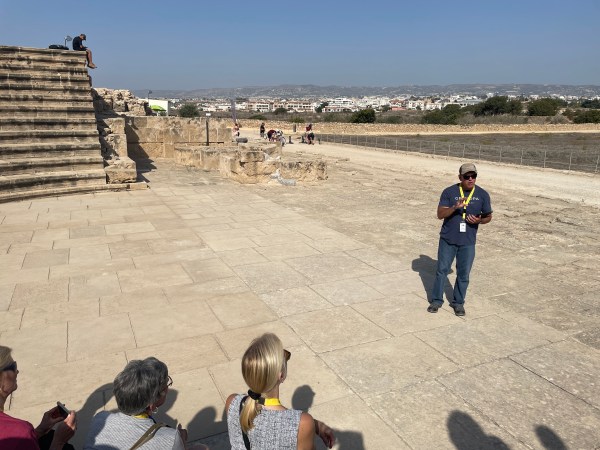
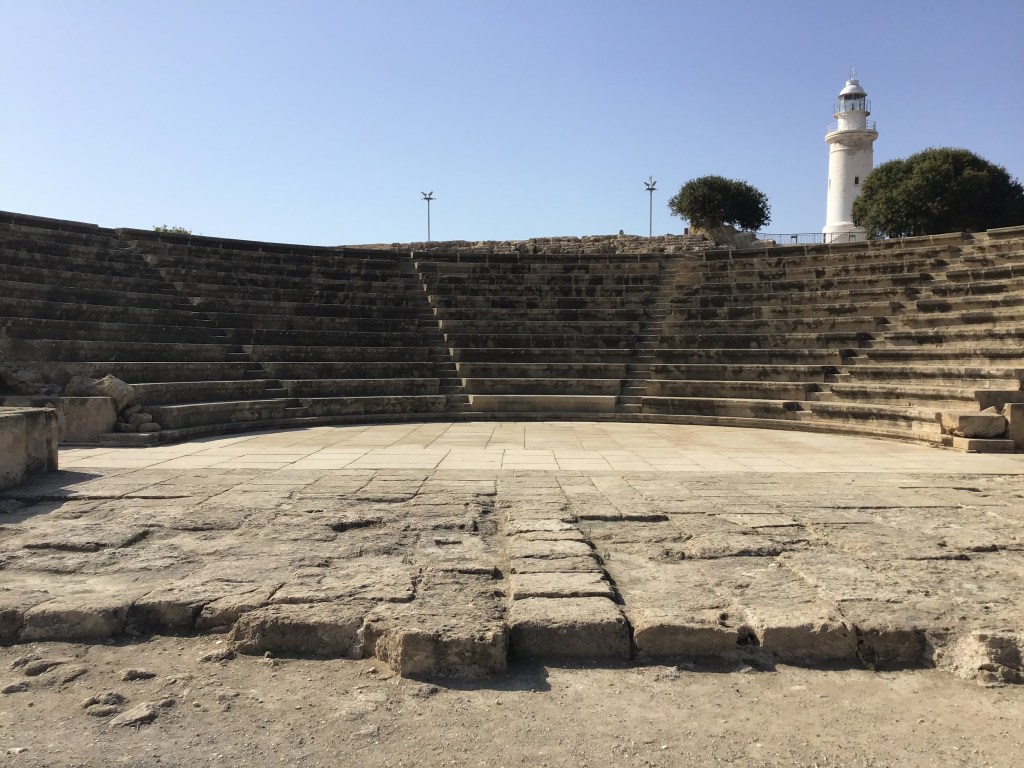
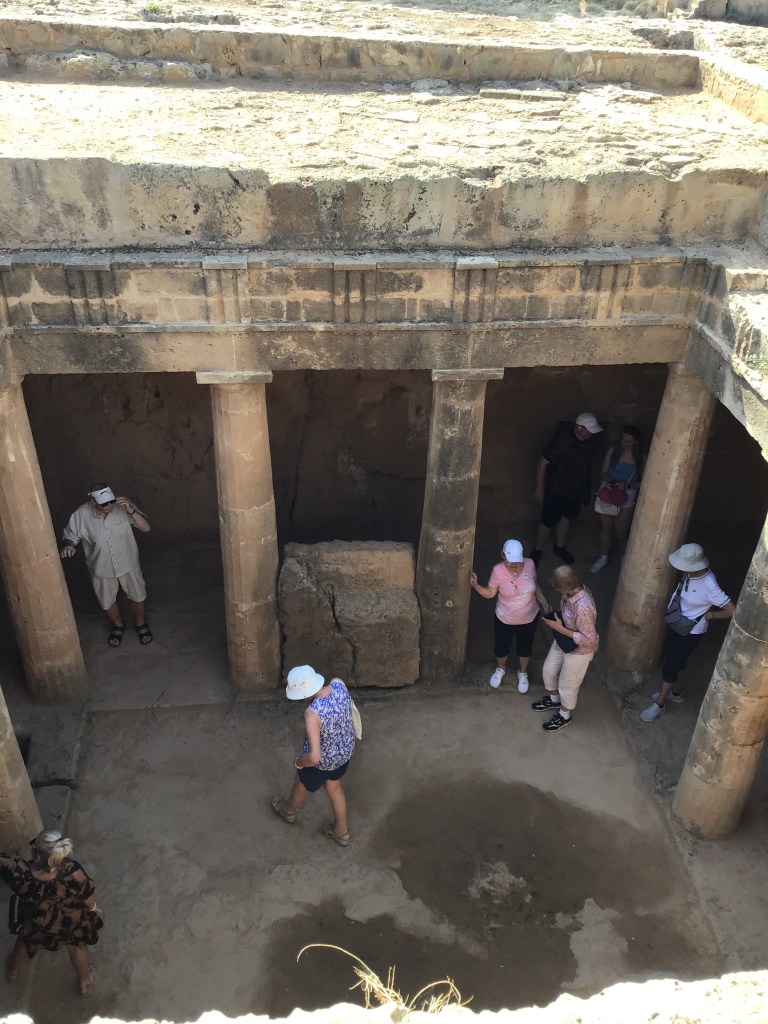
Especially since we lost the ability to visit Israel, I have been looking forward to visiting the country of Cyprus. Though it was a hurried trip, it did not disappoint me. Cyprus is mentioned so frequently in Scripture, Kittim (Chittim) and Elishah in the Old Testament (as well as Cyprus in the Major Prophets), then featuring prominently in the book of Acts–the first stop on the first Missionary Journey, the home of a disciple named Mnason, and an early stop on Paul’s ill-fated ship in Acts 27:4. It is also the native country of Barnabas, one of the unsung heroes of the New Testament. Our group was able to go to Paphos, where Paul and Barnabas converted Sergius Paulus.
There was so much more to see in the country, even more than we possibly had time to see in the course of just a few hours. What we dearly wanted to do did not work out, going to Fumagusta to meet the only known New Testament Christian in this country–Kith Nambale. He is a student in Eastern Mediterranean College who searched for the truth and was baptized by Rod Seaman earlier this year. Soon, Wayne Parker, a long time missionary is moving to Cyprus to work as a missionary. To me, it is always exciting where the gospel returns to places where it was in the early days of Christianity.
I have appreciated the daily habit we have developed of meeting on deck after dinner to sing and pray. It has drawn the attention of quite a few passengers. We also have sung on the bus each day as we have gone on our excursions. It is such a blessing when God’s people love to sing and take time to do so. It will be one of the treasured memories of this trip, a souvenir like no other! I have also appreciated how evangelistic John Moore is, taking every opportunity to teach and share the gospel with each guide, bus driver, and other non-Christian we have as a “captive audience.” He and Carla do such an incredible job in this ministry.
While I am sad that this was the last Bible land excursion, I am beyond thankful for each opportunity. It has enriched our faith and built our appreciation for especially the sacrificial service of the great apostle Paul! Like him, we are on a ship headed for Rome. We pray that our experience will mirror the ship he stepped onto in Acts 28 rather than the one in Acts 27!
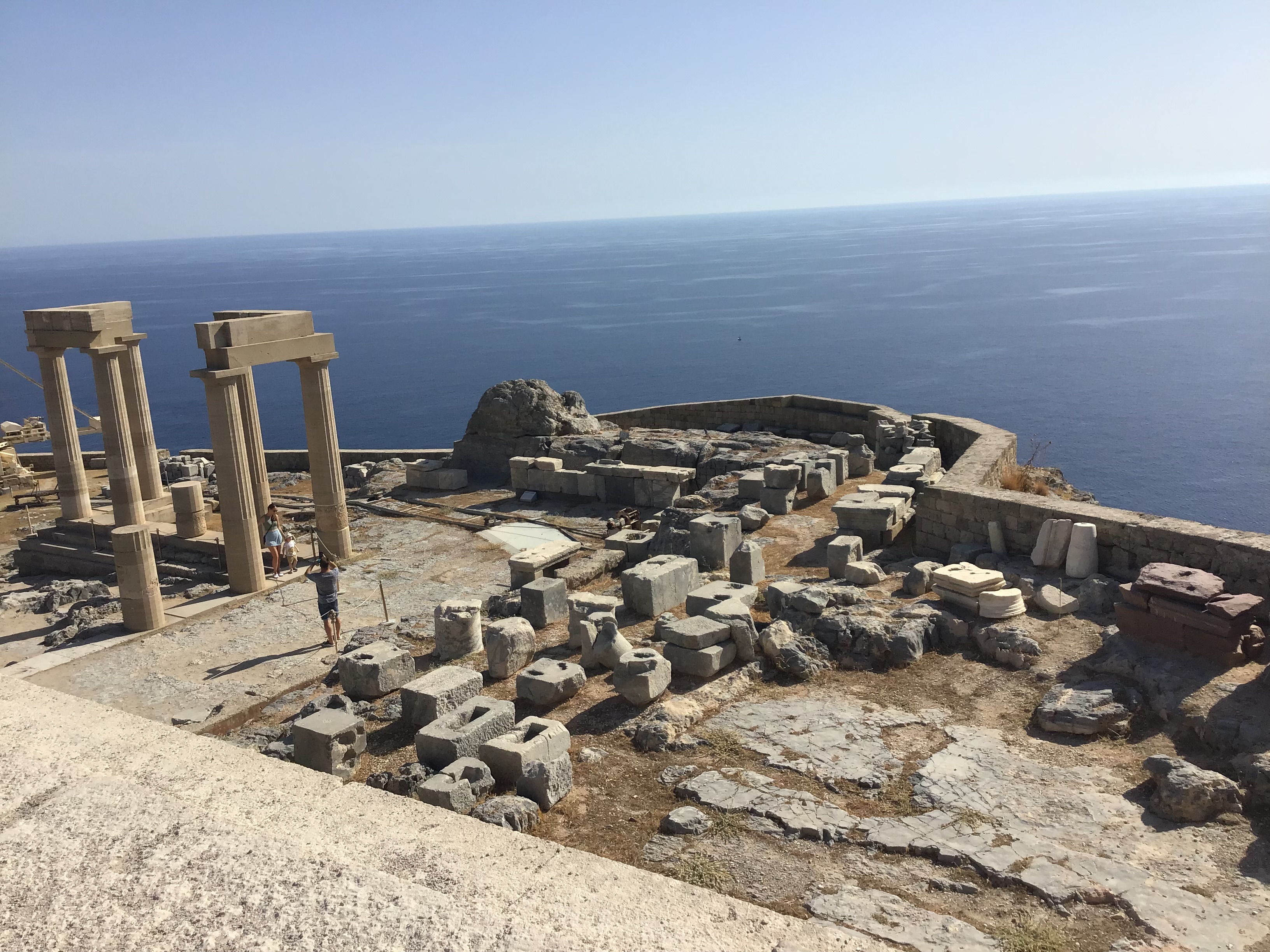
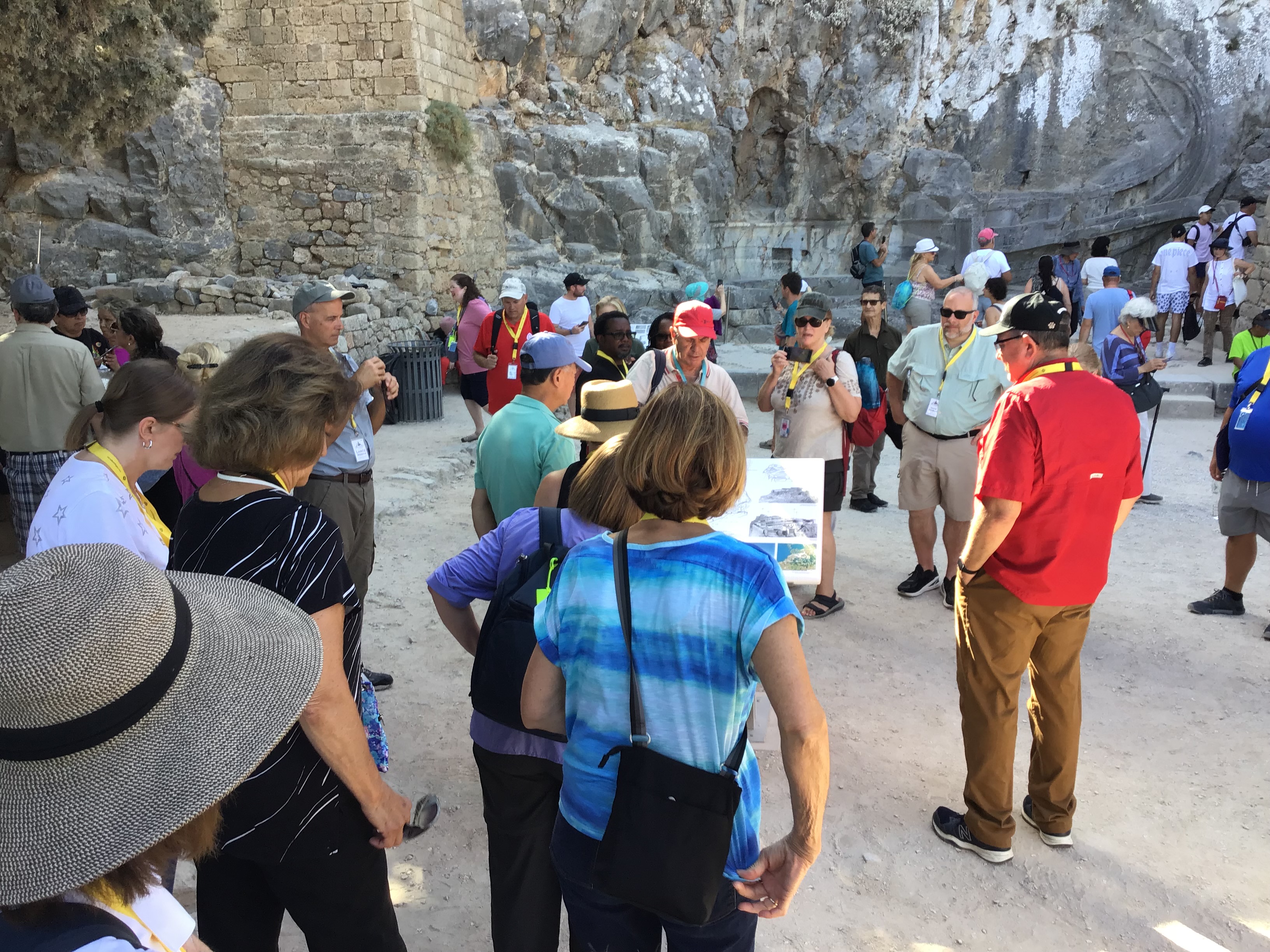
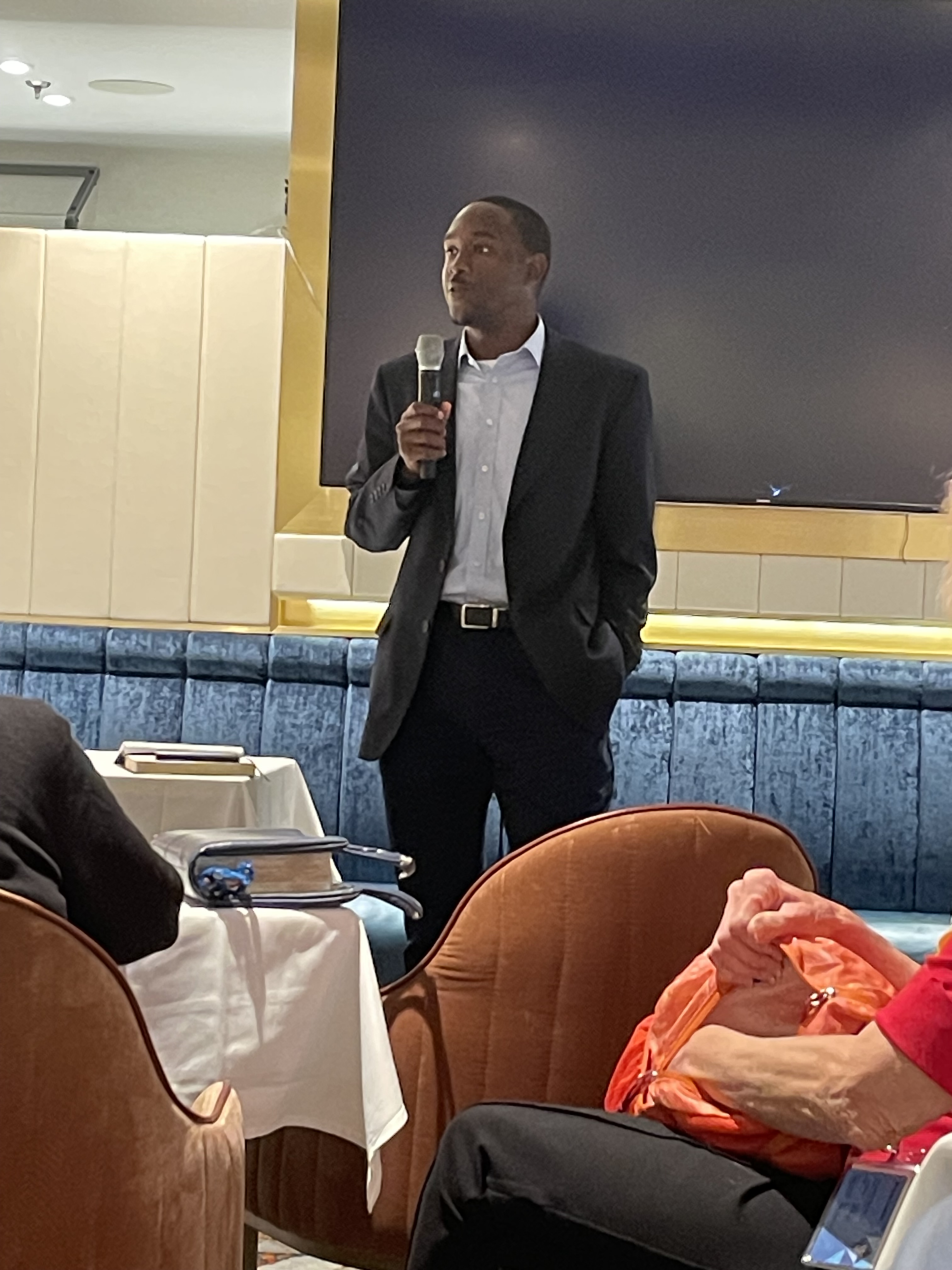
This morning, John Moore gave us great perspective on what we were to see on the island of Rhodes today. He showed how the various attempts at unification in the Roman Empire led to the rise of the west and the east and how that eventually gave rise to the western (Catholic) and eastern (Orthodox) church several hundred years after the New Testament. Those churches adopted the structural organization of the empire and filled the power vacuum that arose after the disintegration of the western half of the empire (Rome). The east, whose capital was Byzantia, gave rise to the time known as the Byzantine period (the city was renamed Constantinople after the Roman empire who moved his base of operation there). Following the beginning and rise of Islam, there were efforts made to stop the spread of that religion and retake Jerusalem and Palestine.
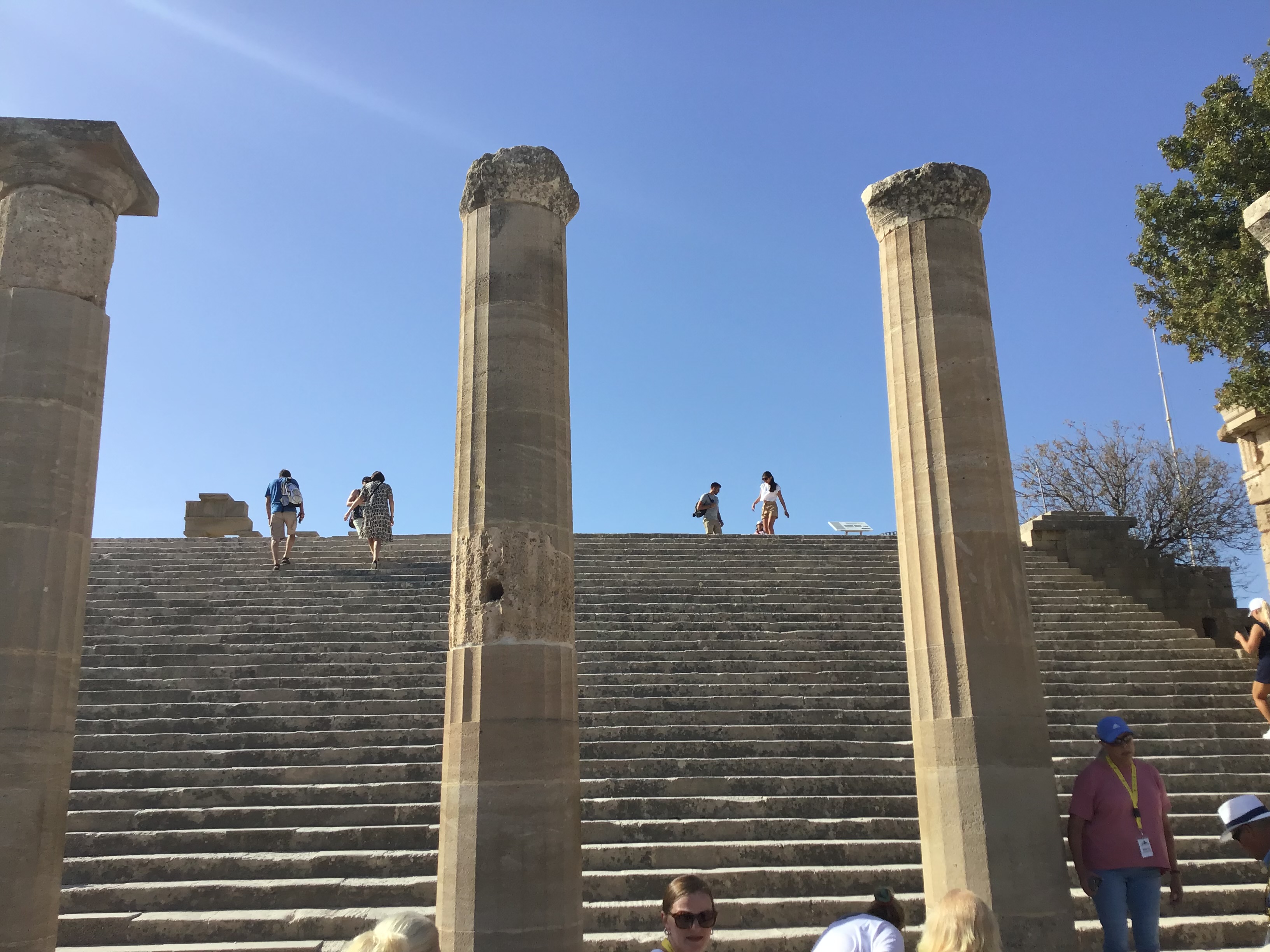
Our trip into Rhodes helped give us an appreciation for efforts in these periods of time. Also, up at Lindos at the very north end of the island, tradition has arisen that this was the port where Paul landed en route to Rome. The port in this village is known as St. Paul’s Bay. John believes the port city where our ship is docked in the more credible site given its position to the route Paul would have taken from Rhodes to Antioch. We know from Luke that Paul spent time on Rhodes, but how long is uncertain (Acts 21:1).
It is fascinating to think about the amount of ground Paul covered spreading the gospel. He embraced his role as the apostle to the Gentiles and took the good news far and wide. That includes the island of Rhodes.
Today was a special day, not just because it was our last day in Turkey or an exciting holiday for the Turkish people that included being buzzed by fighter jets. It was special because of both God’s people and the privilege of worshipping God in such a meaningful way. We met for worship this morning in a large conference room. We had about 10-12 guests from the ship in addition to our Bible Passages group of 56. Among the several who led us in worship were Lehman’s Clint Raymer, Andrew Gott, and Hiram Kemp. Hiram’s sermon was an excellent look at 1 Peter 3:10-12, written to churches all around the very area that is the country of Turkey today (cf. 1 Pet. 1:1).
Afterward, many of our Lehman members spent several hours walking around Bodrum, seeing an archaeological museum devoted to underwater wreckage recovery. The finds went back to the 14th Century B.C. and included a ship from almost 1500 years ago that was retrieved and placed on display. It was yet another opportunity to experience the history of the areas we’re traveling in. We also were able to spend some time looking in the markets.
It was wonderful to fellowship with God’s people from all around the country and wonderful to fellowship with the brothers and sisters we spend so much time with. To do so in what was Asia Minor is a visual illustration of how we must continue to build God’s family for the generations to come. Tomorrow is another day in which we will be where the Bible records Paul’s steps. It will be exciting to continue that odyssey!
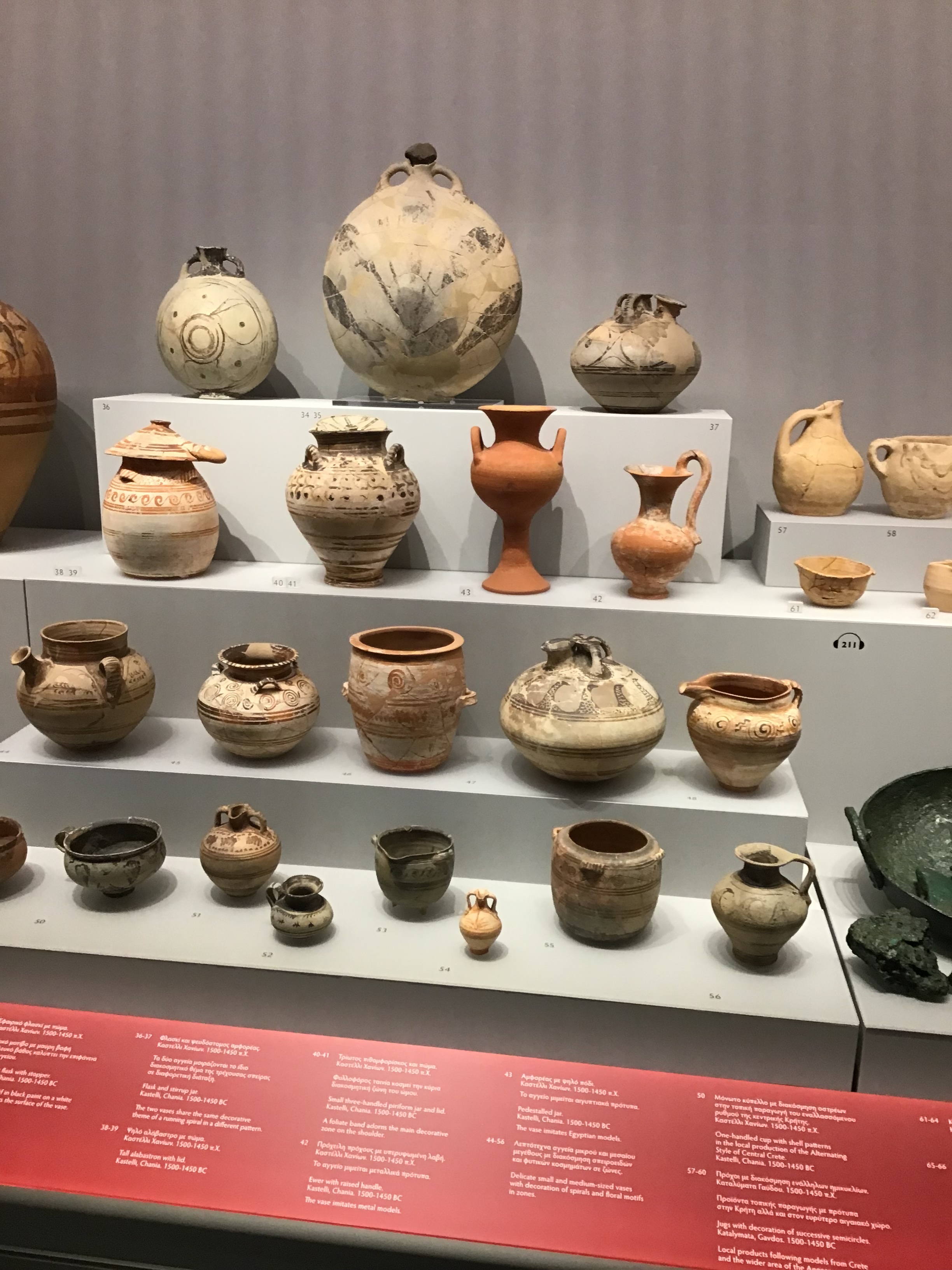
Today was an unexpected and pleasant surprise. We docked at the Souda Port in Crete and set out to see the Archaeological Museum of Chania.
It had an impressive array of artifacts going back to early Minoan civilization, millennia before Christ.
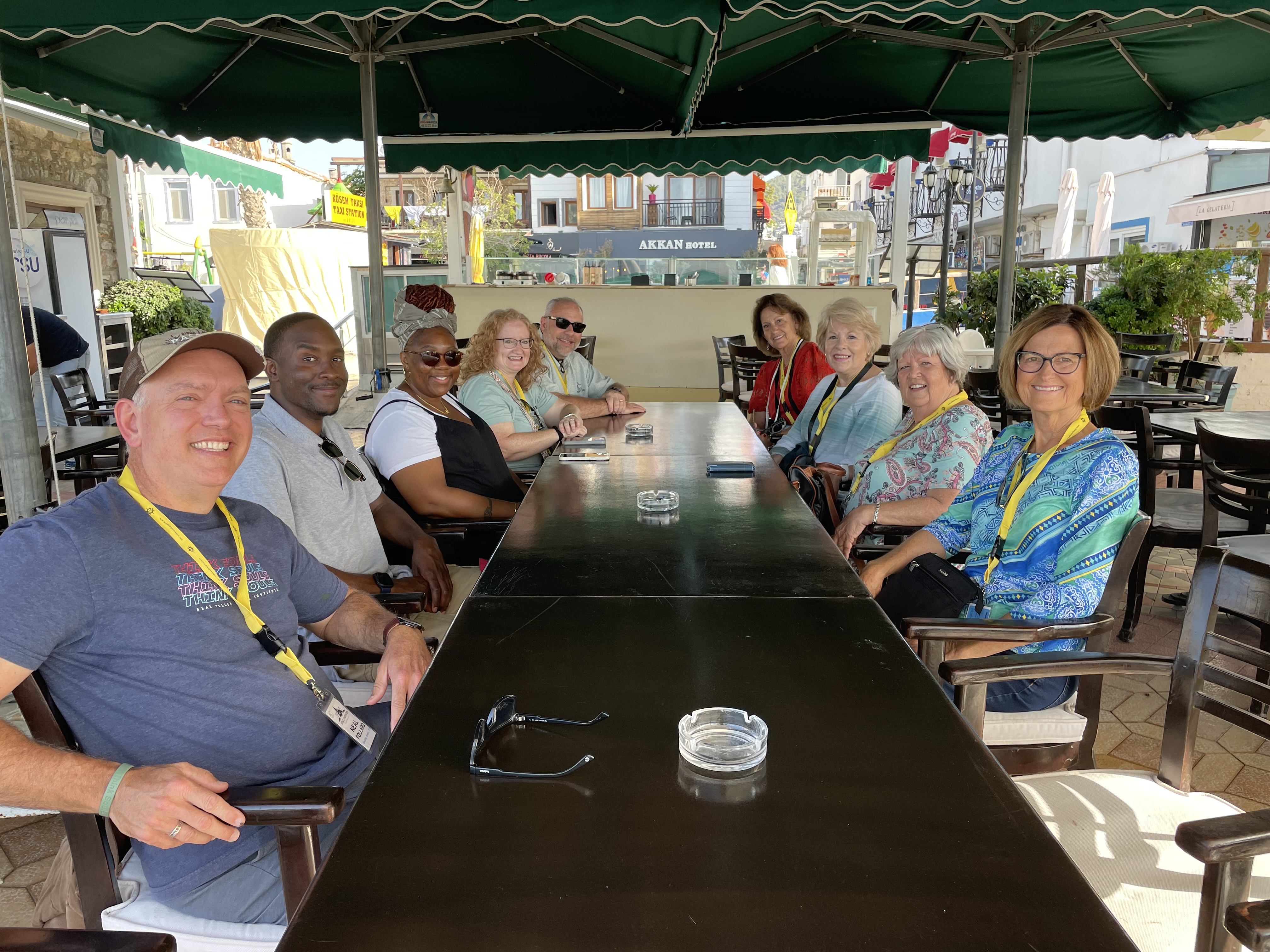
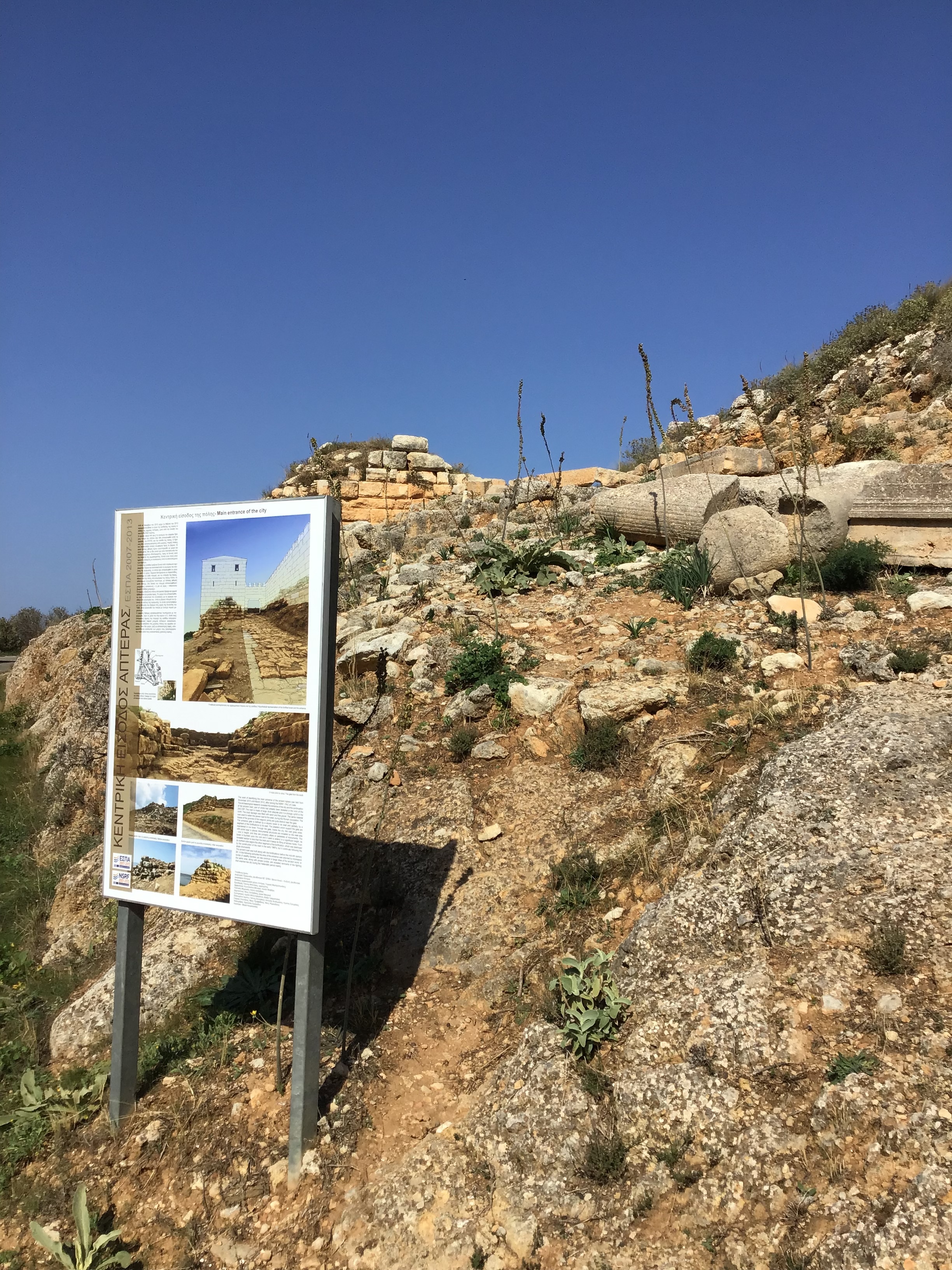
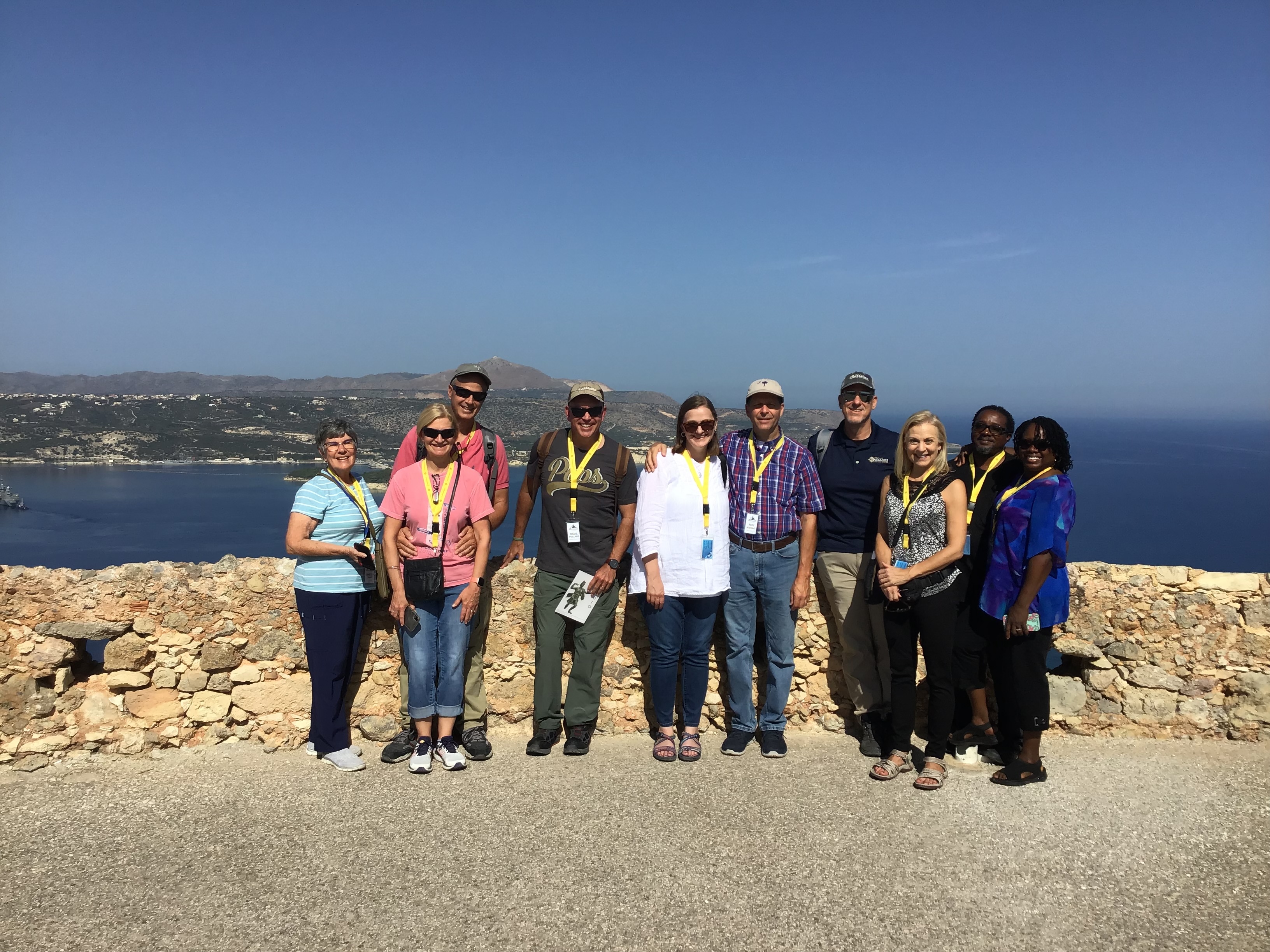
While there, we learned of Roman ruins not far from the museum, so we hired a minibus for our group of ten and headed to ancient Aptera. As one site describes it, “Aptera was inhabited since Minoan times (the first reference of the city Aptera as A-pa-ta-wa is traced in Linear B tablets coming from Knossos in the 14th- 13th century BC) but it only became a significant city around the 8th century BC. Its location above the bay of Souda was also strategically important: close to its two seaports Minoa (today’s Marathi) and Kasteli (near Kalyves) Aptera could control the circulation of ships and it became a very important trading post in Crete and one of the greatest cities on the island” (https://www.west-crete.com/aptera.htm).
Ultimately, it was taken over by the Romans and made over into a Roman city and fortress. During the time in which Paul and Titus lived, it would have been thriving and operating at its height. It would be destroyed by an earthquake in the fourth century. These ruins have been partially restored.
Crete appears in the New Testament starting in Acts 2:11. Paul and the other passengers on the ship bound for Rome stop there (Acts 27:8). Later, Paul urges Titus to appoint elders in every city in Crete, as well as urge the members to focus on “good deeds” among the ill-reputed Cretans (Titus 1:12). Crete may have been Caphtor of the Old Testament (Jer. 47:4; Amos 9:7). But the gospel reached these shores, perhaps as early as the 30s AD. It was exciting to walk where Paul and his trainee, Titus, once worked. It’s sad to know the church is not currently there, but the same gospel that reached them the first time is still as powerful today!





























 The Preacher Pollard Blog