BLACK FRIDAY

Neal Pollard

It was September 24, 1869. The Civll War was barely an excruciating national memory and the nation was rebuilding. That specific day was a Friday, the day a cruel scheme by two Wall Street investors was discovered and led to an implosion of the Stock Market. It was referred to as “Black Friday.” The tie of this term to the Christmas shopping season is also surprising. In the 1950s, the Philadelphia police department used the phrase to describe the mayhem brought by the combination of suburban shoppers, tourists, attendees of the Army-Navy football game, and increased shoplifting in stores. They would have to work extra-long shifts this day after Thanksgiving. It was a derogatory term until relatively recently, when retailers in the late 1980s co-opted the expression to depict the day as the day retailers were trying to take their businesses from the “red” to the “black.” This meant bargains for shoppers, the best day to get out and shop and spend. While the advent of online shopping and retail promotions have created new and additional days of holiday shopping deals, “Black Friday” still symbolizes the happy time of “the most wonderful time of the year” (information from Sarah Pruitt, History Channel). 

For the Christian, black Friday was the day darkness fell over the whole land of Palestine around 30 A.D. (Mat. 27:45). It had to take place to save humanity who were sitting in the darkness of sin (Mat. 4:16) facing the grim prospect of eternal, outer darkness (Mat. 8:12; 22:13; 25:30). It was a horrible day. It was a day of seeming loss, with Jesus’ followers sensing total defeat. Jesus was undergoing six hours of horrific torture before succumbing to death. Satan seemed victorious. But God, according to His eternal, humbling, and essential plan, took that day of darkness and defeat and used it to bring the only profit that ultimately matters. It was actually a day of triumph (Col. 2:15). It became a day of victory for us (1 John 5:4). What turned that day from sorrow to joy was the Sunday that followed that Friday. That Friday death was God’s gift to the whole world, and it profits anyone who responds to it by obedient faith (Rom. 6). 

This Sunday (and every Sunday), we get to celebrate this gift and what it means to us when we take the Lord’s Supper. We think back on those dark events, thank God for what they mean to us now, and look ahead with hope and assurance to what it means for our eternal destiny. It was a day of defeat, but God transformed it into the day of victory! 

cozumel100

Adopting Orphans

Neal Pollard

It was nearly twenty years ago that I walked with Keith Kasarjian through an orphanage in eastern Ukraine. I cannot remember how many children were there, but there were many. My first impression was their appearance–unwashed and tattered clothes, dirty bodies, and many had mussed or shaved heads. But my overwhelming impression was regarding their behavior. They clung to us, wanting our attention. They couldn’t speak much, if any, English, and our Russian was sparse. There was a hunger in their eyes, not for food but for attention and affection. While we were not there for very long, the memory of that evening is as fresh today as it has ever been. They had no family, few possessions, and terribly uncertain futures. Legally, culturally, and financially, adopting dozens of foreign children was virtually impossible. Not a few tears were shed when we said goodbye and as we looked back at that evening.

An orphan “is someone whose parents have died, are unknown, or have permanently abandoned them” (Merriam Webster online; Concise Oxford Dict.). While Scripture mentions physical orphans 36 times, including twice in the New Testament, the concept of spiritual adoption is an important way the New Testament describes what God does through Christ to make us part of His family. Particularly, Romans 8-9, Galatians 4-5, and Ephesians 1 describe this process.

Consider how we appear to God. Even our righteous deeds are like filthy garments (Isa. 64:6). He even figuratively described His Old Testament people as like castoff children abandoned and helpless whom He bathed, clothed, and took care of (Ezek. 16:1ff). But, that figure could certainly be applied to us today. Scripture depicts sin as making us stained (2 Pet. 2:13), spotted (Eph. 5:27; 1 Pet. 1:19), and unclean (Rev. 21:27). Yet, God saw us and loved us (Rom. 5:6-8). He wanted us to be part of His family (Eph. 2:19).

The difference between God and us is that He is able to take all of us. He wants to, and He has the resources and power to make it a reality. He feels perfect pity for us who are orphaned by sin, and He acts on that compassion by inviting us into His family. If we accept His offer, He makes it happen. That being the case, why would we ever reject what only He can give? We can go from being the lowliest reject to being a child of God!  Truly, it doesn’t seem like much of a dilemma. If we see ourselves, spiritually, as we are, we will anxiously accept what only He can give us.

Ukraine 2003

A Saved Life Saved Hundreds More

Neal Pollard

Ray Wallace, a great preacher friend of mine in Bayfield, Colorado, sent me an article about an incredible, heartwarming rescue. It happened late at night in Fresno, California, in 1971. Rick Freund was driving home when he saw a house going up in flames. Outside the house were three little girls and their mother, who was desperately crying for her baby trapped inside his bedroom. Firefighters had not arrived, so the slender, 24-year-old Freund was hoisted into the window, where he found the infant smiling in his crib. He rescued the baby, then simply walked away. Just minutes after the rescue, fire collapsed the ceiling and destroyed the bedroom. Little did he know that the family he helped would track him down 46 years later. The baby boy he saved, Bobby Magee, grew up hearing about this daring rescue and because of that has devoted his life to saving others. Now 47 and the father of three, Bobby has saved hundreds of lives by organizing a large blood drive over the last 18 years. Freund and Magee kindled a friendship built upon an incredible bond. Incidentally, Freund has also rescued a choking stranger by performing the Heimlich maneuver. On yet another occasion, he administered CPR on an elderly woman who had a heart attack at a funeral (Carmen George, The Fresno Bee, 2/5/18).

In the early 1990s, one of my elders in Mechanicsville, Virginia, Russell Young, studied with and baptized a man named Tom. Tom would influence his ex-wife, ex-daughter-in-law, future wife, and daughter, Debbie, to obey the gospel. Debbie would help convert several of her co-workers, including Shannon. Shannon and her husband, Michael, obeyed the gospel the same night. Shannon and Michael have gone on to go on several mission trips. Only eternity will tell how many souls have been saved through those. Who knows how many of those converted in these mission fields have reached others and how many have been reached? That is just one case I personally know about. Many people can share similar stories of dramatic rescue! It is a modern demonstration of 2 Timothy 2:2.

As we go about our daily business, God has us here on a rescue mission. We can never know, when we care enough to share Christ with a lost soul, where it will end. The person may seem humble and ordinary, but they may influence many more to be saved. And those saved ones may save many more. It’s truly exciting to think about this wonderful chain of rescued souls standing on the Lord’s right side at the Judgment! Let’s be heroes of the highest kind! A saved life may save hundreds more!

JRW BABY RESCUE 1
Rick Freund (L) and Bobby Magee

Another Heroic Sacrifice

Neal Pollard

Heather Christensen, a 33 year old music teacher from Spanish Fork, Utah, contributed the ultimate sacrifice on behalf of dozens of band students on October 10, 2009. The bus driver, bringing back the band competition winners from Idaho State University, slumped over in his seat and Christensen left her seat and grabbed the steering wheel in an attempt to keep the bus from crashing. While there were still several injuries, there was only one fatality. The 44 students on board were treated but released from the hospital. The 50 year old driver also survived. Only Christensen, partially ejected in the bus’ rollover, died.

It melted the hearts of an entire community that Heather was willing to lose her life in an attempt to save and rescue everyone on the bus. A gymnasium full of people at American Fork High School honored her at a Sunday night vigil. She was hailed as a true heroine.

The future of 45 people was dramatically changed by Heather’s decision to act. The obvious reaction of these students’ friends and family was to honor her sacrifice. It would be shameful to ignore it!

Jesus Christ deliberately decided, from eternity, to die on a cross in an attempt to save all mankind. His was a completely selfless act, requiring Him to take the place not of one but of all. Tragically, the majority of humanity for whom He offered Himself ignore His sacrifice. It does not move or touch them, and it certainly does not motivate them to do what they should do. Yet, for those of us who have obeyed the gospel and are Christians, we come together–not once–but once every week to commemorate His sacrifice. Each day we live, we live mindful of what He did in our place and for our sins. May our hearts stay soft to this supreme act of heroism!

6713611_orig

Devon Allen’s Baptism

Neal Pollard

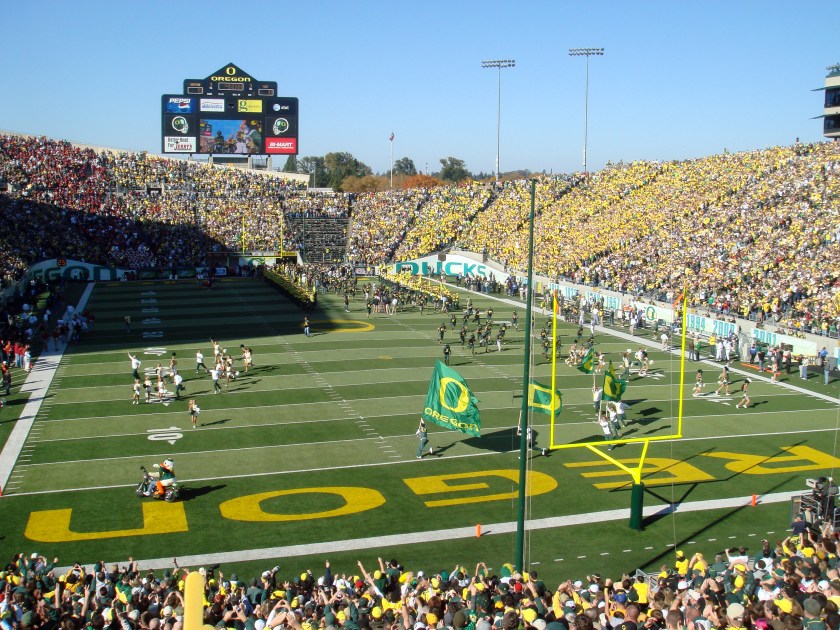
I will preface this by saying I cannot determine anything specific about the religion of Devon Allen, a remarkable college student-athlete at the University of Oregon. He is in the headlines now as a starting football player who qualified for the Olympics in track and field.  It was during his training and competition for the latter that he decided the time was right to be baptized. So he was, in the Willamette River in Eugene last Friday before the watchful gaze of family and teammates from his track and football teams. No less than ESPN reported on his religious quest alongside his impressive athletic achievements. The article ended with the proper sentiment, particularly if Allen was baptized in the right way for the right reason. It reads, “It was the right starting line for two different races” (Chantel Jennings, espn.com).

I am encouraged that Jennings found this newsworthy. I am encouraged that Allen thought baptism to be so important. I am encouraged that his friends and family showed up in impressive numbers to witness this act.

When even so many in Christendom go the extra mile in denying the importance and significance of baptism, Devon troubled himself to do it. We do not know, but he might have said what the Ethiopian said: “Look! Water! What prevents me from being baptized?” (Acts 8:36b). As he studied with Oregon football team chaplain, could he have been taught the New Testament truth that baptism is for the remission of sins (Acts 2:38), baptism washes away sins (Acts 22:16), baptism reenacts Christ’s death, burial, and resurrection (Romans 6:1-4), baptism puts one into Christ (Galatians 3:27), baptism buries one with Christ (Colossians 2:12), and baptism saves one (1 Peter 3:21)? If he was taught baptism from the New Testament, these are the kinds of things he would have heard.

Regardless of Allen’s understanding about baptism’s function in God’s plan to save us, one who is taught in accordance with the several passages above and who has a good and honest heart (cf. Luke 8:15) will want to be baptized without delay (cf. Acts 22:16). Like the jailor at Philippi, they will submit to baptism even if it is the middle of the night (Acts 16:33). Like the 3,000 on Pentecost, they will demonstrate gladly receiving the word by being baptized (Acts 2:41). Thus, they will be saved.

My prayer is that Devon Allen understand these Bible facts and responded the way he did because he humbly accepted their truth. More than that, my prayer is that those who need to make the decision to be baptized will not let anything hinder them from doing what Jesus died to make possible for us all. May we ignore all rationalization that leads us to resist the act which, from a believing, penitent heart, washes our sins away.

102707-oregon-autzen-uoentrance1

How Do You Spell “Cross”?

Neal Pollard

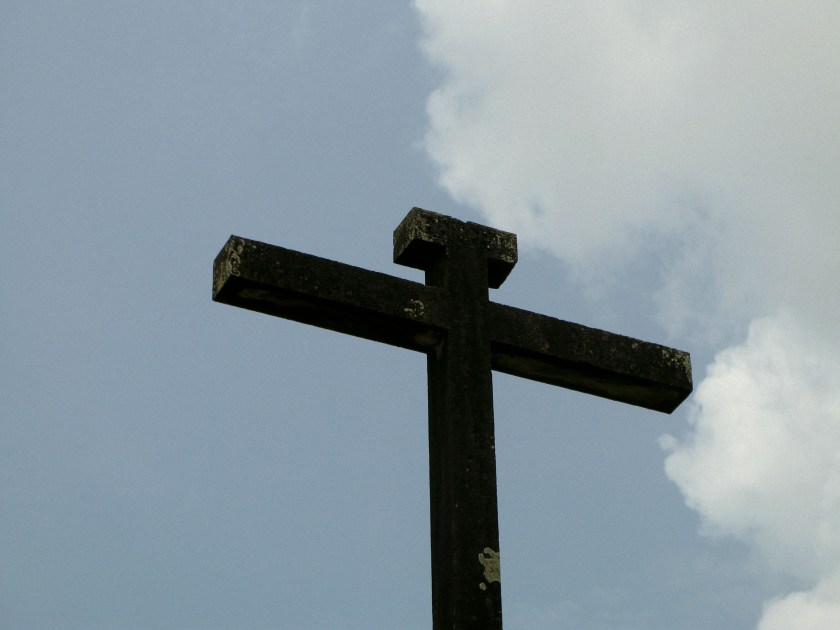
  1. “SEE”– Look at Calvary. Don’t turn away. I know it’s not easy. What is done to Him is shameful. I know. But, look closely! Past the spittle. Beyond the blood. There. In His eyes. Friend, that is love. It is love for you! See the nails in His hands and feet, fastening Him to a tree He created for man’s use. Look at the love He has for you!
  2. “ARE?”–Are you able to see that He bled and died for you? Are you willing to admit you’re lost without Him? Are you ready to submit to His will, to obey Him, and to live for Him? Are you prepared for eternity? Are you convinced?
  3. “OH”–Hear His cries of pain and agony. The death of a thousand deaths. Bitter moans of His disciples. The gasp of heaven’s angels. The sorrow of a Father for His only begotten Son! The gasps and exclamations of a hateful mob.
  4. “SS”–That’s the hiss of the beguiling serpent. The one who is bruising the heel of the perfect One, putting God the Son in the tomb. This is his moment of triumph. Though resurrection will soon spell victory for Christ and hope for man, at the cross the devil must be enjoying his front row seat at Calvary. Doesn’t he anger you? Disgust you? Motivate you? Live for Jesus, the Lion of Judah. Don’t live for the roaring, devouring lion.

Friends, the cross spells the difference between heaven and hell, hope and hopelessness, joy and sorrow, night and day!

4468491785_0c64a0f076_o_d

WHO KILLED CUSTER?

Neal Pollard

There’s quite the controversy over who killed General George Custer at the Battle of Little Big Horn in Montana on June 25, 1876. There is even a book by the title, “Who Killed Custer?,” authored by Bruce Brown. There are so many mysterious and hard-to-document events that made up this notorious battle that symbolizes the “Indian Wars” of the late 1800s.  Brown, analyzing eye witness accounts, gives an interesting top three suspect list:  (1) an Oglala Sioux warrior named White Cow bull, shooting him near the beginning of the battle, (2) Custer himself, committing suicide as he dashed away from the battlefield near the battle’s end on his horse Victory, and (3) Brave Bear, a Southern Cheyenne warrior, given the honorary title of “Custer’s Killer” at an Indian council in 1909 (www.astonisher.com/archives).  About ten years ago, the Helena Independent Record revealed the long-circulated, but secret oral history of the Northern Cheyenne Indian storytellers, crediting a woman, Buffalo Calf Trail Woman, for striking the fatal blow (helenair.com).

It is fitting that a man surrounded by so much controversy and whose reputation and achievements are incredibly enigmatic would have such a mysterious cloud hanging over his death. His killer is upheld by many as a tangible standard-bearer of justice and righteous revenge. For others, it is simply a matter of historical fascination.  There are even those who lamented his death, as the brash and rash Custer was widely viewed as a “war hero” by his U.S. contemporaries in the years immediately following his death. Yet, one thing we know for sure.  Custer was killed.  Two fatal bullet wounds loudly testify.

There is another mystery, one with far weightier and eternal implications.  Who killed Jesus?  He is the most enigmatic figure in human history.  He was viewed contemptuously as a blasphemer and traitor by the religious leaders of His day. He was viewed with depraved indifference by the masses who switched from adoration to execration in a matter of days.  He is viewed even more diversely today, 2000 years after He died on the cross.  The power and proof of the resurrection is a matter to write about another day (see, for example, https://www.christiancourier.com/articles/644-resurrection-literal-or-merely-symbolic).

But, there is another vital question surrounding the death of Jesus.  Who was really responsible?

  • Was it the devil? Yes!
  • Was it the Jewish leaders? Yes!
  • Was it the onlookers that day? Yes!
  • Was it Pilate? Yes!
  • Was it the Roman soldiers? Yes!
  • Was it God? Yes!
  • Was it you and me? Yes!

How could all of these be mutually responsible for the death of Christ? There is no controversy.  The devil desired Jesus’ death, through which he longed to defeat the Lord’s purpose (cf. Gen. 3:15; Rev. 12:4ff). In this, he failed (Heb. 2:14). The people that day were instruments in the hands of God, who accomplished His eternal plan of salvation through Christ’s death, burial, and resurrection (Acts 2:23; 3:18; etc.). We are responsible because we sin (Rom. 4:25) and He had to be made sin for us (2 Co. 5:21). The good news is that the death of Jesus was not the defeat of God’s plan. It accomplished the plan.  However, for the plan to be effective, we must properly respond to it.  The fact of His death does nothing for us, if we do not respond to it the way Scripture tells us to.  Thus, there is a much more important question than, “Who killed Jesus?” It is, “Who will follow Jesus?”

“Is It Possible To Be Born With The Wrong Skin?”

Neal Pollard

Freedom of speech may be a constitutional right, but do you ever wish people did not feel so free to exercise that right?  It’s hard not to bemoan the cultural lunacy that appears to be another step down the slippery slope from rational to irrational thought.  Bruce Jenner claims to identify as a woman despite the biology of his birth.  Now, Rachel Dolezal, the president of the Spokane chapter of the NAACP who is born to two white parents, identifies herself as African-American.  Her story has ignited yet another “identity crisis” conversation, complete with its own Twitter Hashtag (#WrongSkin).  Some who have posted there are engaging in some intelligent tongue in cheek and sarcasm, but many more seem to be seriously conflicted about their racial identity.  Our ancestors would be in utter disbelief of the lack of critical thought they would hear in such discussions.

But let’s carry this line of “thought” further:

  • I was born to middle class parents, but I identify as the son and heir of Bill Gates.
  • I barely passed High School, but I identify as a Rhodes Scholar.
  • I am a lazy couch potato, but I identify as an elite triathlete.
  • I cannot carry a tune in a bucket, but I identity as a musical virtuoso.
  • I scorch water and ruin Ramen noodles, but I identify as a world-class chef.

You know, you can claim anything, but that does not make it so.  Sometimes, the best way to expose an absurdity is to escort them further down that slope.  Then, they can get a better look at themselves.

Claiming to be a woman when you are a man or to be one race when you are another is head-scratching, but did you know that there are people making a much more serious claim whose incorrect conclusion is infinitely more grave?  A great many people, asked if they are a Christian, say “yes.”  However, though they identify as a Christian, they have not followed the plan God put in place whereby one becomes a Christian.  Jesus says that claiming does not equate to being (cf. Mat. 7:21-23).  He also says there is but one way (John 14:6).  We can strongly identify ourselves as a Christian, but have we actually been “born of water and the Spirit” (John 3:5)? Jesus said, “He that believes and is baptized shall be saved…” (Mark 16:16).  Peter said, “Repent and each of you be baptized in the name of Jesus Christ for the forgiveness of your sins” (Acts 2:38).  Ananias said, “Get up and be baptized, and washing away your sins, calling on His name” (Acts 22:16). Paul wrote, “We have been buried with Him through baptism into death, so that as Christ was raised from the dead through the glory of the Father, so we too might walk in newness of life” (Rom. 6:4). He also said, “All of you who were baptized into Christ have clothed yourselves with Christ” (Gal. 3:27). Peter wrote, “Baptism now saves you” (1 Pet. 3:21).  Now, Scripture sets other conditions in place one must meet in order to receive God’s grace and salvation, but the overwhelming majority do not reject faith and repentance.  They do, however, dismiss the role of baptism as a divine condition for salvation. In light of the above Scriptures (and there are others, too), how can one refuse to obey this and yet still claim to belong to Christ (cf. Luke 6:46)?

“Redemption Is Tailor-Made For The Wretched”

Neal Pollard

If you did not know the source of this quote already, you might be hard-pressed to guess it.  This was said by Stanley “Tookie” Williams, two weeks before he was executed in California in 2005 for four 1979 murders he committed while the apparent leader of The Crips gang in Los Angeles.  Though he vehemently proclaimed his innocence in these deaths to the very end, he freely admitted that drugs, robbery, gang- violence and other crimes were very much a part of his life before prison.  Redemption, as he understood it, “is not predicated on color or race or social stratum or one’s religious background.  It’s accessible for everybody. That’s the beauty about it” (interview with Amy Goodman, WBAI). Williams, who became a prolific author of anti-gang books while on death row, has left behind enough writing to indicate he did not have a biblical understanding of redemption, which is truly tragic because the ideas quoted are certainly biblical.

The word “wretched” is used “of a person in a very unhappy or unfortunate state” (New Oxford American Dictionary, online).  The New Testament uses the word twice.  Interestingly, the first time it is used by one who was all-too-aware of his wretchedness, but who rejoiced at the possibility of redemption (Rom. 7:24-25).  The second time it is used by a church, Laodicea, who didn’t know they were wretched but were told by Christ they were (Rev. 3:17). A form of the word is also used in another place, where Christians struggling with worldliness are told to be wretched over their sinful lifestyle (Jas. 4:9, see ESV).  The common thread between these verses is that wretchedness is related to redemption.  One must recognize their unfortunate state if they hope to be redeemed.

One of the great ironies of life is that so many are racked with guilt but are also skilled in justifying and defending the very behavior that produces it.  Many others rest in their confident belief that they are, overall, good and moral people who don’t really need redemption.  To deny or rationalize the sin in our life will cause our most imposing problem to remain unresolved.  To humble ourselves and admit our wretchedness apart from Christ can lead us to redemption. It doesn’t matter your race, color, income level, or background.  Redemption is tailor-made for the wretched!

Bieber’s Baptism

Neal Pollard

It was reported on the news and all I heard was that the pop star turned bad boy, Justin Bieber, was baptized this weekend in the bathroom of a megachurch’s building in New York City.  As has often been the case, this event was surrounded by a sea of controversy involving the 20-year-old singer.  The “pastor” who baptized him said that the act was preceded by a month of intense Bible study.  Bieber sought baptism for cleansing of sin following the release of a racist-filled 5-year-old video featuring the young man. I am not contending in the least that Bieber’s baptism fulfilled the biblical requirements or that he is now, in the New Testament sense, “born again.”

However, it provides a great opportunity to ask what elements must be present in a baptism that does meet New Testament requirements.  First, it must be predicated upon knowledge.  One must understand the significance of the one baptism (cf. Eph. 4:4). Practically speaking, one must either do the personal study or have someone teach what the Bible says about the place of baptism in God’s plan.

Second, baptism must be preceded by sorrow for sin and a desire to have sins washed away.  Sorrow for sin is a part of repentance, which is a change of the mind that results in a change of action (Acts 2:38; 3:19; 2 Co. 7:10).  Repentance is more than sorrow for sin, but it includes such.

Third, baptism must be by immersion to follow the teaching and examples of the New Testament.  We read of baptism as a burial in water (Rom. 6:1-6; Col. 2:12).  We see the Ethiopian go down into the water and come up out of it (Acts 8:38).  In the New Testament, baptism took place where there was “much water” (John 3:23).

Though lacking complete knowledge of Lentz’s Hillsong Church, where Bieber was baptized, there is enough on their website to identify them as thoroughly erroneous in their teaching regarding salvation, worship, and various doctrinal matters (women’s role, instrumental music, tongue speaking, omission of baptism as part of what must be done to have forgiveness).  However, it is possible that Bieber and anyone else we would deem spiritual wrecks—which we all are to some degree and in various ways—can be taught as they were in the first century and become what they then became. May we be searching for those who desire to follow Jesus, making disciples of, baptizing, and teaching them (cf. Mat. 28:19-20).

What The Blood Of Christ Meant

Neal Pollard

  • To Christ, an expression of love (John 15:13)
  • To God, an appeasement of His wrath (Rom. 5:9).
  • To the Devil, the scribes, and Pharisees, a sign of their supposed victory (Heb. 2:14; John 19:6ff).
  • To the mob, apparent weakness (Mat. 27:42).
  • To the disciples, seeming defeat (John 21:3).
  • To those who lived rebelliously, nothing (1 Cor. 1:17).
  • To those who died in disobedience, an essential but missing element (cf. John 6:53).
  • To those who lived obediently, atonement (Eph. 1:7).
  • To those who died having walked in the light, everything (1 Jn. 1:7).

Untold millions are unaware of the value of the blood of Jesus. You and I must decide what the blood of Jesus means to us. Interestingly, in four different ways, the Bible tells us that what the blood does for us we obtain the benefit of through baptism.
—The blood of Christ sanctifies (Heb. 13:12). We are sanctified by baptism (Eph. 5:25-27).
—The blood of Christ washes away sins (Rev. 1:5-6). Sins are washed away at baptism (Acts 22:16).
—The blood of Christ remits sins (Mat. 26:28). Sins are remitted through baptism (Acts 2:38).
—Jesus shed His blood in His death (John 19:34). We contact the dead of Jesus at baptism (Romans 6:3-4).
The Bible makes clear not just what the blood of Christ means to our souls, but also how we get the benefit of that blood. May we do what God says do to receive the benefits of Jesus’ blood and continue to walk in the light of Christ in order to have that blood continually cleanse us from all unrighteousness (1 Jn. 1:7).

The Blood of Christ

Neal Pollard

The topic above should cause one’s mind to focus on some precise areas. Naturally, the blood of Christ implies thoughts of the “incarnation” of Christ (that Christ took on the form of man, while all God, and thus had blood coursing through His veins; Philippians 2:8). The blood of Christ further induces from one’s thoughts the atonement Christ made for all mankind through the shedding of His blood on the cross (cf. Hebrews 9:12-14). The blood of Christ also elicits reflection upon the suffering and death of the sinless man from Nazareth (1 Peter 2:24). And on one might reflect.

The phrase, the blood of Christ, appears verbatim in the New Testament in four verses. With each reference one finds important lessons about the function and significance of His blood. Christ’s blood is central in the Father’s plan of salvation and life within His favor. What does the blood of Christ bring to needy man?

The Blood of Christ Brings Redemption (1 Peter 1:19)
In 1 Peter 1, one sees the inspired apostle speaking to persecuted (1), predestined (2), purified (2), and pliant (2) people of God. What would cause a Christian to suffer wrong for doing right? What would cause a Christian to search out from the Scriptures the term of election, accept the terms of pardon, and follow the terms of Christian living? Simply, an understanding of redemption.

Perhaps the verse most loved and quoted is John 3:16. Yet, so be known and familiar, this verse is sorely misunderstood and under applied. Jesus, the speaker of the words recorded in this verse, foretells the act of redemption. With His divine foreknowledge, Christ understood that the gift of the Father’s only begotten Son (Himself) meant the shedding of His blood at Calvary. The purpose of that shed blood, He knew, was to redeem the lost race of man from the power and hopelessness of sin. Paul says, “But when the fullness of the time was come, God sent forth His Son, made of a woman, made under the law, to redeem them that were under the law, that we might receive the adoption of sons” (Galatians 4:4,5). By inspiration, Paul reinforces this with Titus (Titus 2:14).

The Blood of Christ Brings Removal (Hebrews 9:14)

The King James Version uses, in this verse, the word “purge” in translating the effect of the blood of Christ upon the conscience of one to whom that blood is applied. Purge means “to purify, especially of sin, guilt, or defilement” (The American Heritage Concise Dictionary, 1994). Thayer shows the original word translated “purge” in this verse means “free from the guilt of sin” (The New Thayer’s Greek-English Lexicon, 312). Clearly, the Spirit-guided writer of Hebrews speaks of the effect of the applied blood of the Savior. The audience of Hebrews, of which modern man is a part, needs some agent to remove the guilt of sin (dead works) from their lives. The blood of Christ is that agent. For the agent to be effective (to do the job as it was intended to do), one must come in contact with it. Where does one come in contact with the blood?

Jesus shed His blood when He died (John 19:34). Paul writes “that so many of us as were baptized into Jesus Christ were baptized into his death” (Romans 6:3). One cannot literally go over to Jerusalem to a hill called Mt. Calvary and find the man Jesus bleeding to death on a cross. Furthermore, because one cannot do this, one cannot in some literal way reach up to Him and take some of His shed blood and apply it to himself. Thus, there is no literal, physical way for today’s man or woman to contact the actual, shed blood of our Lord.

Yet, Revelation 1:5 reveals that Christ, on His cross, washed us from our sins in His shed blood. God would not allow His Son to shed His life-blood and then provide no means for mankind to contact that blood in some way. And, there is a way and only one way. In identifi[cal] terminology, Acts 22:16 says that baptism washes away sins. In summation, Christ shed His blood in His death. We are buried with Christ in baptism. Christ washed our sins with His blood. We wash away our sins in the act of baptism. The blood of Christ and baptism, inseparably joined, remove the sins of those who recognize and submit to the authority of Christ in being baptized for the remission of sins (Acts 2:38; 1 Peter 3:21).

The Blood of Christ Brings Return (Ephesians 2:13)
At the creation of man, there was no need for means whereby man could return to a right relationship with Jehovah. The idea in Ephesians 2 that, specifically here, the Gentiles were “far off” implies the need to return. How could they come back to God? Paul stresses the fact that Christ’s blood was the only means whereby reconciliation could be made. Thus, Paul penned the glorious fact that Christ “made peace through the blood of his cross, by him to reconcile all things unto himself” (Colossians 1:20). As if an inseparable gulf was crossed by Adam and Even through their sinning at Eden, that gap of sin separated man from God (cf. Isaiah 59:1, 2; Note: This is not to suggest that all inherit Adam’s sin – the false idea of Hereditary Depravity – but rather that through Adam sin entered the world, Romans 5:17; and, consequently, all have sinned, Romans 3:23). Not with acts of goodness or meritorious works could man ever earn his salvation (Titus 3:5). Yet, there are conditions that God expects man to meet in order to have past sins forgiven and the restoration of a right relationship with the Father (Titus 2:12; Hebrews 5:9; Ephesians 2:8). By shedding His blood, Christ paved a road of return (i.e., the “narrow road” of Matthew 7:13, 13) to take us back to God. There was no access before and without Him and after sin was in the world (cf. 1 Timothy 2:5; John 14:6). How did Christ affect this return with His blood?

He took the first, old covenant God made with Moses and Israel out of the way by dying on the cross (Ephesians 2:12, 14-15). He placed all believers in the faith into one body [the church] (Ephesians 2:14, 15, 16; 4:4). He provided the message of reconciliation in commissioning the preached word to all men (Ephesians 2:17; Acts 1:8). He opened the avenue of prayer by His death on the cross, encouraging petitioning the Father to enhance our relationship with Him (Ephesians 2:18). He sets aside a place in the Kingdom [the church] for all the faithful obedient into which all spiritual blessings flow (Ephesians 2:19-22; 1:3; Matthew 16:18-19). To all who obey the commandments of God relative to entrance into His church, reconciliation and return to God are provided.

The Blood of Christ Brings Remembrance (1 Corinthians 10:16)

As Eden shows the importance God stressed in mankind before the cross to anticipate that great event, this verse shows the importance God stresses in mankind after the cross remembering it. Those washed in the blood of Christ, contacted in baptism, are added to the church (Acts 2:41-47). Therein, those added (Christians) are governed by the Word of God in worship and conduct. A vital part of New Testament worship is the weekly participation in the Lord’s Supper (Acts 20:7). Why has God authorized that Christians do so, and with such frequency?

The answer is “communion.” In connection with the Lord’s Supper, this word is translated “communion” only once in the New Testament. Yet, the original word from which it is translated is koinonia, among the most recognized of all Greek words even among those who have little knowledge of that language. Most often, koinonia is translated as “fellowship.” “Fellowship” is also employed by the inspired New Testament writers to make reference to the “Memorial Feast.” The apostles and early Christians continued steadfastly in the fellowship of the Lord’s Supper (Acts 2:42). The fellowship of the Lord’s Supper was not to be defiled by the presence of idolatry at Corinth (1 Corinthians 10:20), but rather the communion was to be exclusively with the Lord.

In 1 Corinthians 10:16, Paul stresses that there is communion. That fellowship is with the blood of Christ, which suggests a multitude of things. First, the blood of Christ places one into the one body (the church – Colossians 1:18; Acts 20:28). Therefore, the fellowship of the Lord’s Supper involves corporate (collective) activity. Together, children of God are drawn closer to one another remembering the Savior whose blood purchased them from sin. This communion, then, is a means of expressing encouragement and thanksgiving together as the redeemed. The Lord’s Supper cannot, then, have significance to those not members of the body as there is no celebration and fellowship with Christians. Also, the Lord’s Supper provides a communion between the individual Christian and his Lord. Thus, Paul instructs each to “examine himself” (1 Corinthians 11:28). None other can obey the command of self-examination and remembrance for another in the Lord’s Supper or in any spiritual matter. Yet, the Lord’s Supper is special because of both the sharing with others and the individual responsibility. As an institution, the Lord’s Supper is, in both regards, a crucial means whereby Christians remember the sacrifice, suffering, and death of Christ in shedding His blood on the tree.

The blood of Christ purchased man’s pardon (1 Peter 1:19). The blood of Christ purges man’s conscience (Hebrews 9:14). The blood of Christ propels man closer to God (Ephesians 2:13). The blood of Christ provides recollection of atonement (1 Corinthians 10:16). His blood was important in prophesy (Isaiah 53:3-5). His blood was important [physically] (John 19:34). His blood is important in perusal (Matthew 26:28; 1 Corinthians 11:28).

Innocent Blood And Bloodguiltiness

Neal Pollard

This week marked the the anniversary of one of America’s darkest days when abortion became legal in our nation.  Since pro-abortion websites tend not to deal in reporting specific numbers and pro-life websites certainly do, it is from the National Right to Life website we discover that over 56 million babies have been aborted since January 21, 1973.  That works out to an average of 3,000 every day in the past 41 years.  As one protestor’s sign read, “The abortion doctor has killed more Americans than all our wars combined.”  Yet, those 56 million people were naked and completely defenseless.  They were totally innocent.

The Psalmist decries the apostasy of the chosen people of old, saying, “But they mingled with the nations And learned their practices, and served their idols, which became a snare to them. They even sacrificed their sons and their daughters to the demons, and shed innocent blood, The blood of their sons and their daughters, whom they sacrificed to the idols of Canaan; And the land was polluted with the blood” (Psa. 106:35-38).  Proverbs 6:17 declares “shedding innocent blood” as something God hates, while Isaiah reveals that those separated from God include those who “hasten to shed innocent blood” (59:7).  In discussing one who was murdered without cause, Moses warned that those who shed innocent blood face bloodguiltiness (Deu. 19:10).

The last passage indicates a responsibility carried by the one who shed innocent blood, whether an adult having done nothing worthy of death—per that context—or anyone else who has done nothing worthy of having his or her life ended. Consistently, the Old Testament shows God’s attitude toward taking innocent lives.  As God certainly sees the unborn as living human beings (Jer. 1:5; Psa. 139:15-16; Luke 1:15; etc.), He sees the taking of those lives as the shedding of innocent blood!  The consequence of that is bloodguiltiness.

Whatever consequence our nation faces for this multi-generational practice, we need to reach out to our friends, neighbors, and co-workers.  With such a high number of abortions, many of them know, firsthand and in another sense, the bloodguiltiness.  Perhaps there are those who callously look back at the act, but most undoubtedly wrestle with guilt, regret, and loss.  What an opportunity to minister to so many who understand the weight and burden of sin!  May we share the good news of the innocent Man whose blood was shed to provide them the realistic expectation of forgiveness.