Vision: The ability to think about or plan for the future with imagination and wisdom.
In the book of Revelation we read of seven churches that needed to develop different areas of weakness in order to be the church Christ needed them to be.
The Old Testament is also filled with valuable information and strategies to help congregations develop and execute their visions. Each church family will differ and since that’s the case, each congregation needs custom vision.
Here are two Old Testament passages that give us some insight into the mind of God on the subject of vision planning.
A Good Vision Is Visible
Habakkuk 2:2-3
Though Habakkuk’s message was concerning the the conquest of Babylon, this text is invaluable for us today.
Here we read God’s strategy for successful/effective planning.
“Write down the revelation
It should be tangible “and make it plain on tablets”
It should be precise “so that a herald may run with it.”
It should be effective. A vision without legs won’t go far.
“For the revelation awaits an appointed time; it speaks of the end and will not prove false. Though it linger, wait for it; it will certainly come and will not delay.”
A vision should be lasting. When God spoke to the prophets they would often record things that would happen years in the future. With these future events written down, the following generations could plan accordingly. God is coming back and eternity is coming, we must create a plan so that we and those after us can continue to prepare.
If It’s Not His, It’s Hopeless
Jeremiah 23.16
“This is what the Lord Almighty says:
God must have a voice
“Do not listen to what the prophets are prophesying to you;
The ungodly shouldn’thave a voice when it comes to planning a vision for God’s people they fill you with false hopes. They speak visions from their own minds, not from the mouth of the Lord.”
God must have a voicebecause the vision shouldn’t be born from the mind of man!
It has been a good year for tomatoes in our garden. We’ve eaten them, given them away, and preserved a lot of them. In addition to canning them, Kathy decided to use our dehydrator to save time and space in preserving them. A few days ago, she filled the machine with several rows of sliced tomatoes. She would set the temperature and time, then come back when it was done. The fruit would still be wet and tacky. After this happened a few times, she was concerned that our appliance was malfunctioning. It was then that she noticed she had not pressed the tiny start button on the far right side. She pushed it, and after eight hours she came back to perfectly dehydrated tomatoes. All the prep and planning were futile without the power.
How often do we conduct our lives that way? We meticulously make plans and we do our part to try to make them happen, but we neglect to access the power that makes it all work? Do we ever forget what Paul reminded Philippi, that “it is God who is at work in you, both to will and to work for His good pleasure” (2:13)? Paul also said that while we may have a variety of gifts, ministries, and effects, it is “the same God who works all things in all persons” (1 Cor. 12:4-6). We’re told that it is God who will “equip you in every good thing to do His will, working in us that which is pleasing in His sight…” (Heb. 13:21).
How do we hope to do God’s work without God’s help? We need His guidance, His wisdom and instruction, and His help. That necessitates skillfully laboring in His Word (2 Tim. 2:15), leaning on Him in fervent, faithful prayer (Phil. 4:6; 1 Th. 5:17), and relying on His providence in setting our direction (Rom. 8:28). It makes all the difference when we tap into God’s power. Let’s not overlook the one thing that is always essential in everything we undertake!
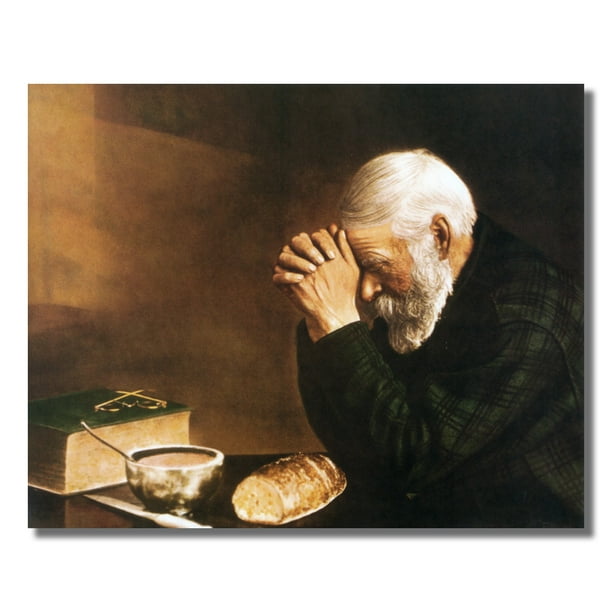
The power button is just to the right of the frame of this picture.
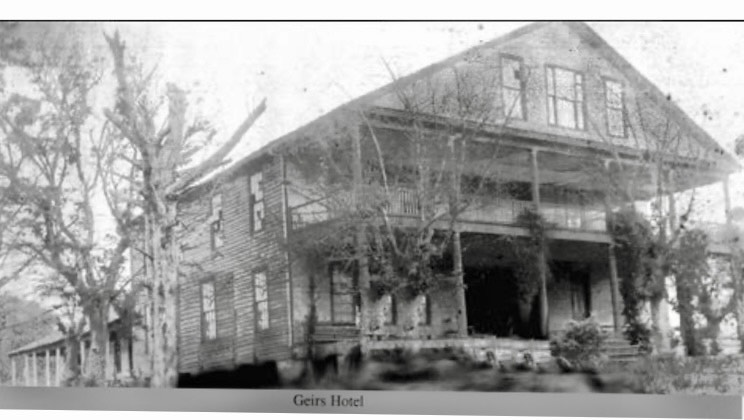
The Valhermoso Springs Resort was a gathering place for those seeking treatment from the famous Sulphur and mineral springs. The three springs were even used by the Indians for the same reason— adding yet another vale of mystery to the area. Despite being a place that attracted visitors from all around the world, including European and French royalty, there are only three low quality images of the place. Walking through the dense brush and stepping over toppled stones can give one the impression that this spot is determined to keep its secrets.
In the upper room there was a dancing hall with slat boards covered in tile. During the civil war, confederate soldiers were hidden by Mrs. Geirs who was a hot-blooded rebel sympathizer.
One of many legends surrounding this resort is that of the visit of famous outlaw Jesse James. It’s rumored that a man matching the description of Jesse rode in one night from Huntsville after robbing a bank. He wore two leather bags slung over his shoulder as he dismounted his horse. At some point, it’s unclear how he was discovered, but the law came knocking on the resort’s front door. Jesse’s stealth and cunning kept him alive during the bloody guerrilla skirmishes of the civil war, and they would help him escape the clutches of justice time and again. Legend says he left the hotel in a hurry— without his two leather bags. Did Jesse James stash his stolen goods in a cave or bury it? There’s not even hard evidence that the outlaw made a stop at the tavern, or even robbed a bank in Huntsville.
In Numbers 13 there are twelve spies who go into the land of Canaan for forty days. Their goal was to make observations that would help them conquer it as well as bring back reports about the kind of land it was. Upon their return only Joshua and Caleb are willing to take on the giant challenges that they’ll need to overcome in order to claim Canaan. Sadly, the message that the people chose to believe was that the giants were even bigger than God. What evidence did they have? Not a shred. God had proven His might and power throughout their time in the wilderness. He’s the one who directed the children toward Canaan in the first place! The fear in the crowd and the report of ten cowardly spies was contagious.
If we’re not careful, we might end up believing what’s not based in fact, too. We might be tempted to believe that Christians are a weak minority who can’t do a thing to change the culture. We might be tempted to believe that nobody is interested in spiritual things anymore. We might begin to believe that the world is bigger and stronger than the God who spoke the world into existence. Of course, this is simply not true.
Relics found by Dale and Carl on the site of Valhermoso Springs Resort
Our younger and non-U.S. readers may not be able to relate to the economic news that the U.S. economy is experiencing inflation, unlike anything we’ve seen in 40 years. Indeed, this period of “stagflation” (i.e., stagnant economy plus inflation) began even before my birth, noticeably during the Administration inherited by Gerald Ford after Richard Nixon’s resignation.
The genesis for this economic downturn started with the decision of President Nixon to take the United States off the gold standard in 1971. It was necessary to prevent the country from defaulting on its debts but was only a short-term solution. Had government become fiscally responsible, they could have gotten the nation out of debt and reinstituted the gold standard. But, rather than curb spending, the government began spending more since they could print more bills. And Ford was honest to a fault, from a political perspective, since he admitted the poor state of the Union in his address in 1975.
“I must say to you that the state of the Union is not good: Millions of Americans are out of work. Recession and inflation are eroding the money of millions more. Prices are too high, and sales are too slow. This year’s Federal deficit will be about $30 billion; next year’s probably $45 billion. The national debt will rise to over $500 billion. Our plant capacity and productivity are not increasing fast enough. We depend on others for essential energy. Some people question their Government’s ability to make hard decisions and stick with them; they expect Washington politics as usual.”1
Looking to make a change, Americans voted for the Democrat candidate running against Ford in 1976. Supreme Court Justice Warren Burger swore in President Jimmy Carter on January 20, 1977. However, instead of bringing positive changes to the economy, things grew worse under President Carter. Ironically, candidate Carter had successfully used Arthur Okun’s “Misery Index” in his campaign to highlight the miserable performance of Ford’s economy.2 Yet, it would not be long until the “Misery Index” became an albatross around Carter’s neck. Carter’s opponent in the 1980 presidential race, Ronald Reagan, even made a point to note that Carter was mum about the “Misery Index” of his tenure.3 I dare say that most laymen still associate the “Misery Index” with Jimmy Carter, not Gerald Ford.
The CPI (consumer price index) is used to gauge inflation. Unfortunately, it has risen to 8.5%.4 To curb inflation, the Federal Reserve Bank will inevitably raise interest rates. The simple explanation for this is that the Federal Reserve Bank wants to discourage you from spending money. So, with rising interest rates, that new automobile or house will cost even more, and you will decide to make do with what you have. As a result, demand will decrease and theoretically lower inflation. The only positive thing resulting from such an economy is that your savings account will finally accrue more interest. The bad news is that the money you earn will not have the same buying power if inflation is high.
I was but a child, but I recall the stagflation of the Carter Administration. My father preached for a domestic mission church in west Georgia. He received financial support from a congregation in Tennessee but still had to find other employment periodically to provide for his family. Briefly, my mother even tried to get a job as a seamstress at a Hanes factory outside of LaGrange, Georgia. We lived austerely and had more than one of Dolly Parton’s “Hard Candy Christmas.” However, my father could parlay those savings into later real estate purchases when the economy improved. The point is that even Christians experience lean times, but they don’t last forever.
Would you believe that this is what Paul talked about with his financial supporters in Philippi? He told them he had learned to get along with much or little (Philippians 4.11-12). Paul said that even meant having to go hungry at times. Yet, he could do it because Christ gave him strength (Philippians 4.13). So, yes, that oft-quoted verse is about money. Though it is nice to think we can tap into our Lord’s power to accomplish difficult tasks, like quitting a bad habit, we should not lose sight of the context, especially in a terrible economy.
David said long ago that he had never seen the righteous forsaken or his seed begging for bread (Psalm 37.25). Indeed, Jesus reminds us that God will supply the needs of those seeking Him and His Kingdom first (Matthew 6.33). But our necessities are just that, necessary. Beans and cornbread can sate hunger as effectively as filet mignon and mushroom Bordelaise. So, God is not promising you the “king’s dainties” (cf. Daniel 1.8 ASV). But you will receive enough sustenance to maintain life.
Moreover, as a Christian, you have the added blessing of your church family. The first Christians saw after one another’s needs, even selling their property to help support their brethren (cf. Acts 4.32-35). I am not suggesting that things will become bad enough today to necessitate such drastic measures, but it is still encouraging to know that we have others watching our backs. Indeed, they will help us with our burdens as we help carry theirs (Galatians 6.2,10).
Yes, things may get worse before getting better. The younger generations may not know what to make of these things. And we might see people sinning as the post-exilic Jews who robbed God by withholding their tithes to Him (Malachi 3.8-12). In these times, God encourages more generosity, not stinginess. As He told the Jews of old, He is more than capable of opening the portals of heaven to shower us with blessings. Do not lose that faith and trust that as we learn to do without, we might also learn how to properly conduct ourselves when we abound in this world’s goods.
Sources Cited
1 Ford, Gerald. “President Gerald R. Ford’s Address before a Joint Session of the Congress Reporting on the State of the Union.” Gerald Ford’s 1975 State of the Union Address, Gerald R. Ford Presidential Library and Museum, www.fordlibrarymuseum.gov/library/speeches/750028.htm.
There is nothing like the satisfaction of completing a task that was especially hard-fought and challenging. But, there was Judah in Ezra’s day in Ezra six after Haggai and Zechariah’s message propels them to the finish line concerning the temple (14). After earlier opposition from their neighbors, Judah is assisted by the most powerful nation on earth “with all diligence” (13). It was not nearly as glorious as the original temple (3:12; Hag. 2:3), but it was rebuilt and available for Judah to use to worship God as before the captivity.
Consider some of the fruits of their obedient, faithful efforts from Ezra 6:13-22. These are the some of the fruits of restoration.
Joy (16,22).
In a world where everybody just wants to be happy, few know genuine joy. The happiness for the people here is so intense and deep-seated because God is the source and reason for it. They celebrated the dedication (16) and Ezra says “the Lord had caused them to rejoice” (22). There is a unique, genuine joy available to those who are seeking to build their lives and religion according to the Lord’s pattern (Rom. 15:13).
Faithful Worship (17-20).
Following the revealed instructions from God through His leaders, the people were now enabled to dedicate the temple (17), appoint the priests (18), and observe the Passover (19-20). They have returned to the proper place, people, and practice of worship. That is the epitome of restoration. When we submit to the instructions of the New Testament regarding who leads (1 Tim. 2:8,11-12), where we participate (Heb. 10:24-25), and how we worship (cf. Col. 3:16-17), faithful worship, when done in proper spirit, follows (John 4:24).
Purity (20-21).
The ones who could participate in the Passover were those who had purified themselves. That started with the leadership (19) and extended to the rest of the participants (19-20). It mandated separating from “the impurity of the nations of the land” (20). They could come before God with pure and holy hands (cf. 1 Tim. 2:8). Think about what Peter tells believers: “Since you have in obedience to the truth purified your souls for a sincere love of the brethren, fervently love one another from the heart, for you have been born again not of seed which is perishable but imperishable, that is, through the living and enduring word of God” (1 Pet. 1:22-23).
Divine Aid (22).
Do your best and try your hardest, but you will fall terribly short without this factor. God’s providence paved the road and opened the door to restoration. The Lord “…had turned the heart of the king of Assyria toward them to encourage them in the work of the house of God.” “The Lord had caused them to rejoice.” One of the fruits of seeking to restore God’s will and ways in our public and private lives today is this assurance. Jesus promises, “I am with you always” (Mat. 28:20). “I will never desert you, nor will I ever forsake you so that we can confidently say, The Lord is my helper…” (Heb. 13:5-6).
Be body builders, building the Lord’s church the Lord’s way. Let’s go all the way back to the Bible. The end result is a multitude of blessings (Eph. 1:3) like those mentioned in Ezra 6:13-22.
In Genesis 22, we have the story of Abraham where God instructs him to offer Isaac as a sacrifice. We know from the text that God was testing Abraham and we know that God stopped him and then provided a ram to sacrifice instead. Because of God’s provision Abraham named that place THE LORD WILL PROVIDE! Three months ago, a tornado devastated many parts of Bowling Green affecting some of our own members, as well as many others in the community.
We have witnessed the outpouring of help and concern by the aid and donations made over 100 congregations and individuals – giving their money and their time to help those who have lost their homes and possessions. God has used us as the facilitators of this aid and used it as an opportunity to show His love and tell people about Him. We can honestly say THE LORD WILL PROVIDE.
I want to keep with the theme of God’s provisions but change the verb tense to THE LORD HAS PROVIDED!
THE LORD HAS PROVIDED us with a magnificent world to live in. In Genesis 1 we read that everything he made was good and He has provided everything we need to enjoy a fulfilling life. As Spring approaches (my favorite time of the year) we will see God’s handiwork as the trees begin to bud and flowers bloom and He created it all for us.
David wrote in Psalms 8 : “when I consider your heavens the work of your fingers, the moon, the stars you have set in place What is man that You are mindful of him.” He loves us and has made this world for us to enjoy.
THE LORD HAS PROVIDED each of us with talents, abilities, and opportunities to serve….and He expects us to use them to serve Him, as well as our fellow man. The Bible instructs us to use our talents and gifts to the best of our abilities as pointed out in Matt 25 in the parable of the talents and again In Romans 12: 6-8, Paul says, “Since we have gifts that differ according to the grace given to us, each of us is to exercise them accordingly: if prophecy according to the proportion of his faith; if service, in his serving; or he who teaches, in his teaching; or he who exhorts, in his exhortation; he who gives, with liberality; he who leads, with diligence; he who shows mercy with cheerfulness.”
THE LORD HAS PROVIDED us with a peace in times of trouble. Those who do not know Him can’t really understand. With Covid and all the political turmoil in our country and the war in Ukraine we can still have the assurance of God’s love and understand HE is in control.
We read in Philippians 4:6-7 to be anxious for nothing, but in everything by prayer and supplication with thanksgiving let your request be made known. And the peace of God, which surpasses all comprehension, will guard your hearts and minds in Christ Jesus. His assurances are also given to us in Romans 8. Verse 31 says, “If God is for who can be against us. In verse 38 and 39 Paul encourages us with these words “For I am convinced that neither death, nor life nor angels, nor principalities, nor powers, nor height, nor depth, nor any other created thing will be able to separate us from the love of God, which is in Christ Jesus our Lord.”
THE LORD HAS PROVIDED us with a way to live with Him for eternity through Jesus. “For God so loved the world that He gave His only begotten son that whoever believes in Him shall not perish but have eternal life” (John 3:16).
He has provided reconciliation through Jesus – He has now reconciled you in His fleshly body through death, in order to present you before Him holy and blameless and beyond reproach (Col. 1:22).
He has provided redemption through Jesus – In Him we have redemption through His blood, the forgiveness of our trespasses, according to the riches of His grace (Eph. 1:7).
God has provided many things for us, but most of all is the way to live with Him forever. Jesus said in John 14:6, “I am the way, the truth, and the life; no one comes to the Father but through Me.”
If you are searching for peace and a way to be with God for eternity, He has provided a way.
The fear I’m talking about is not the kind that tells us be cautious or keeps us from harm, it’s the kind that fills our hearts and minds with doubt, apprehension, and anxiety. When this fear keeps us from doing things that please God, things that he expects from us and commands of us, it is a big deal.
When preparing for this I was given the advice that we should speak about things we are familiar with. I say that because fear has kept me for a long time avoiding opportunities such as this. I have never given a devotional before tonight. It is because of that Fear I mentioned. This type of fear convinces us of things that aren’t true. It convinces you that you’re not good enough to get up here and speak. You are not qualified or educated enough to speak to a group of people; you care too much about what people think of you and the things you say. It convinces you that you are terrible at public speaking, you won’t speak well, or say the right things. This is my personal fear, but all of us here tonight deal with fears that keep us from doing what God wants us to do and what pleases him.
A great biblical example of this is:
Moses, in Exodus 3: 8-10 when God called him to go lead Israel out of Egypt and speak to pharaoh.
In vs 11 you can tell he is afraid because he says, “who am I that I should go to pharaoh and that I should bring the children of Israel out of Egypt?” God is quick to reassure Moses “I will certainly be with you.”
He continues in chapter 4:1 to make excuses to God “what if they will not believe me or listen to my voice” So, God sent miraculous signs to help convince the people.
In 4:10 he basically said I can’t speak “I’m not eloquent, I’m slow of speech and slow of tongue.” So, God reminded him who made man’s tongue, have not I?! He then said He would be his mouth and teach him what to say.
And finally in vs 13 he even asked the Lord to send someone else. We should never get to this point.
We should always look to God, put our faith and trust in the Lord, because fear is not from God. He is a God of love and fear does not have to consume us.
We should always trust in God when we are afraid. If we draw near to God, he will cast out that fear. In Isaiah 41:10, God reassured Israel – “Fear not, for I am with you; Be not dismayed, for I am your God. I will strengthen you, Yes, I will help you, I will uphold you with My righteous right hand”
II Timothy 1:7 reminds us that “God gave us a spirit NOT OF FEAR, but of power and love and self-control”.
“I will never leave you nor forsake you. So, we may boldly say: ‘The Lord is my helper; I will not fear. What can man do to me?’” in Hebrews 13: 5-6
Ultimately, we can’t let fear keep us from doing what God has commanded of us – we are to go into all the world to spread the gospel with everyone. How can we do that if we carry around the burden of Fear.
In closing tonight, I want to ask each of us to think about what gets us out of our comfort zone when it comes to doing the will of God? Is it speaking to someone about Christ? Is it inviting our friends or co workers to come to worship service with us? Maybe having a Bible study with a complete stranger? Perhaps leading a devotional for the first time, or maybe leading singing.
Whatever those things are, we should set aside our fears, put our trust in God, let our hearts be full of Love, not Fear. We should be on fire for God as Jeremy said last week. We as Christians are capable of much more than we realize but how will we ever know those capabilities if we are too afraid to try.
Philippians 4:13 doesn’t say I can do some things….it says I can do ALL things through Christ who strengthens me.
How amazing is it that we serve a God that loves us so much, and says he will always be with us, that he will never leave our side. He tells us time and time again we have no reason to be afraid.
(From Travis’ first-ever devotional delivered at Lehman on Wednesday night, 2/16/22)
It’s been said that the there are more stars in the known universe than all of the sand on earth combined. That being said, in just one grain of sand there are more atoms than all of the stars. That’s pretty amazing. Our planet is but a speck in the grandeur of space. Countless stars, planets, galaxies, lightyears and somehow God is well aware of the happenings of people. Have you stood on the mountain tops? Have you observed the power of the oceans as the waves crash on the shore? Has your heart almost stopped after the vibrating sensation of a thunder clap resonates in your chest? The might of the Creator is everywhere in the world around us and at times it just demands to be noticed. A section of scripture that is mysterious and fascinating is found in 1 Kings 19:11-13. The Lord of hosts is about to show Himself to a depressed and exhausted Elijah, but in a way that he would never forget. “The Lord said, ‘go out on the mountain in the presence of the Lord, for the Lord is about to pass by.’ Then a great and powerful wind tore the mountains apart and shattered the rocks before the Lord, but the Lord was not in the wind. After the wind there was an earthquake, but the Lord was not in the earthquake. After the earthquake came a fire, but the Lord was not in the fire. And after the fire came a gentle whisper. When Elijah heard it, he pulled his cloak over his face and went out to stand at the mouth of the cave. Then the voice said, ‘what are you doing here Elijah?’” In the solitude of Horeb, Elijah seeks to avoid the troubles of his world. The acoustics of the mountainous area along with the time spent in silence must have made the shattering rocks, raging fire, splitting hills, and rumbling earth all but deafening and definitely a terrifying display of divine power. Then in sharp contrast, a still whisper comes. This gentleness, no doubt, is the reason Elijah decides to cautiously emerge from his hiding place. God is teaching His worn-out servant a lesson that holds true for us today. The fact is, there is no more God, His wisdom, power, and presence in an earthquake than there is in the sweet breath of a blooming flower. The quiet ticking of a wrist watch reveals just as much intelligence and purpose as does the striking of a clock tower’s bell. One may walk out into an open field at night and stare up into the vast sky, lit up with numerous twinkling stars and declare, “I’ve found God!” But God is no more in the sky than He is in the blades of grass flattened beneath your feet. The question came to Elijah from that still voice, “What are you doing here?” To the prophet, his problems were too great and too large and his solution was to run and hide. God, in a magnificent way, is trying to remind Elijah of his place. Our place in life is not to take matters into our own hands or solve life’s many difficulties on our own. The answer is not to run away, but to walk humbly with our awesome God. He is strong enough to lift our burdens, wise enough to counsel us, patient enough to allow us to learn, and loving enough to constantly forgive.
It’s physically impossible for us to know everything about God. Our minds wouldn’t be able to comprehend Who He Is, but this doesn’t give us an excuse to not try and know more about the Creator. When I was younger, I believed in God. I knew He existed, but I failed to grasp some very important things about God. For example, how much He cares for us. Matthew 10:31-32 says, “But the very hairs of your head are all numbered. So do not fear; you are more valuable than many sparrows.” Have you ever stopped to think about the fact that God cares for you personally? When we pray to Him, He takes the time to listen to our problems. People pay thousands of dollars for someone to listen to them. This care that God has for us is greater than anything on earth. With this in mind, we need to spend more time trying to grow our relationship with Him. John 3:16 shows just how badly God desires to call us His own. God loved the world. He cares for us and wants us. Knowing how much He cares for us, let’s use this to work harder in our relationship with God. Earthly relationships take work. If we love someone it takes effort to have a healthy relationship. It takes time, commitment, sacrifice, and communication. It’s the same in our relationship with God. My parents used to say, “Remember who you are and Whose you are.” If we would understand more about God, the fact that He is our Father and that He is the source of Love, we can live right for Him. Knowing these things about the Father brings understanding. We now understand that,
I’ve heard some say of a house left standing after a tornado or hurricane that God must have spared the structure’s owner from material loss because of their righteousness. But, unfortunately, such statements imply that the neighboring destroyed property belonged to the unrighteous. Yet Jesus said, “for He (God) causes His sun to rise on the evil and the good, and sends rain on the righteous and the unrighteous” (Matthew 5.45, all ref. NASB1995 unless otherwise indicated).
Even amongst the destruction, though, if someone is observant enough, he sees what he chooses to call miraculous. However, since a miracle is the suspension of God’s natural laws, we understand that the word “miracle” oft becomes an adjective to describe what defies human comprehension. In reality, laws of nature explain the “skipped” houses or why a decorated Christmas tree can remain amidst a room, missing its walls and a part of its ceiling.
For example, there can be what scientists call “suction vortices” within tornadoes. Within a more significant tornado, these many vortices move in a looping, cycloid pattern that will hit some things while completely missing others.1 In other words, the hand of God was in the creation of the natural laws resulting in the occasional formation of tornadoes, with their suction vortices, as opposed to directing storms into particular locations.
But did God originally intend for His natural laws to include such destructive phenomena? Think back to the world God initially created. God called it “very good” (Genesis 1.31). What changed? Humanity used its free moral agency to sin, bringing change to the world. In fact, things got so bad that God destroyed the original world. Peter says, “…by the word of God the heavens existed long ago and the earth was formed out of water and by water, through which the world at that time was destroyed, being flooded with water” (2 Peter 3.5-6).
Among those mechanisms that God put into place in the world emerging from the flood are the weather patterns that spawn tornadoes and hurricanes. The patient patriarch, Job, observed the following regarding the wisdom known to God: “…He imparted weight to the wind and meted out the waters by measure…He set a limit for the rain and a course for the thunderbolt…He saw it and declared it; He established it and also searched it out” (Job 28.25-27).
Now, the point of our devotional today is not to increase the misery of those having suffered loss during what insurance companies euphemistically call “acts of God.” Yes, things like tornadoes and hurricanes do arise because of sin. However, it is not a part of the chastisement God sends upon us (cf. Hebrews 12.4ff). So, if you want to see God after a tornado, do not see it in a church building with no roof, but with all its hymnals and pew Bibles still safely secured in the pew racks. That is likely but a side effect of natural law.
No, look for God in His grace. As Fred Rogers often said, “When I was a boy, and I would see scary things in the news, my mother would say to me, ‘Look for the helpers. You will always find people who are helping.’”2 Might I suggest that it is in the helpers that we see the actual hand of God? His Providence works through the people clearing debris, handing out food, and providing shelter to those who have lost everything. These fulfill the law of Christ (Galatians 6.2). Thus, God does not only shelter some in a storm. He provides for all of the weary through the agency of those whom He made in His image (Genesis 1.26-27).
Sources Consulted and Cited
1 Seman, Steven, et al. “Tornado Damage, Safety, and Myths.” Tornado Damage, Safety, and Myths | METEO 3: Introductory Meteorology, The Pennsylvania State University, www.e-education.psu.edu/meteo3/l9_p8.html.
I wonder if Kathy felt like she was living with Briscoe Darling and the boys (imagine them if they were talkative) through the years they were growing up. She is refined and genteel, words that are not usually connected to our three sons and me. One thing she impressed upon us was the importance of timely, thoughtful thank you notes. Gratitude, though it can be expressed with very little time and expense, is telling. It acknowledges the kindness and generosity of the giver.
One of the elements of worship, generally, and prayer, specifically, is thanksgiving. Our songs call for it: “Give Thanks With A Grateful Heart,” they express it: “Thank You, Lord,” “For All That You’ve Done,” “How Great Thou Art,” “10,000 Reasons,” and “He Has Made Me Glad.” Though that songwriter, Leona Von Brethorst, apparently wrote the song from Psalm 100, she includes a line from Psalm 118:24: “This is the day that the Lord has made.”
Five times in Psalm 118, the psalmist says “give thanks” (1,19,21,28,29). He urges others to do so, but also expresses his resolve to do the same. Why?
GIVE THANKS FOR HIS GOODNESS (1-4)
“Good” is a general word that takes in pleasantness, desirability, and beauty. The good quality specified here is His everlasting mercy (lovingkindness). The writer moves from the broad to the specific–Israel, house of Aaron, those who fear the Lord. Everyone is the object of God’s lovingkindness. The righteous freely express their thanks for it.
GIVE THANKS FOR HIS DELIVERANCE (5-13)
There is a sudden, dramatic shift in tone in verse five. From an upbeat, positive tone, he turns to thoughts of trouble and difficulty. Distress, hatred, being surrounded, and violence threatened him, but God was there for him as protection and help. This kept him from fearfulness. It gave him refuge.
It is an amazing thing to think of all the ways and times God has been with me, but those are just the instances I’m aware of. How many trials has God spared me from, disasters has He caused me to avoid, and troubles has He averted for me that I won’t know about on this earth? Just what I do know humbles me, and it should fill my heart with gratitude.
GIVE THANKS FOR HIS GREATNESS (14-17)
The writer turns to the Giver. He is strong, a Savior, valiant, and exalted. Summarizing God’s qualities, the writer says, “I will not die, but live, And tell of the works of the Lord” (17). Awareness of who God is for me, physically, materially, and spiritually, will drive me to grateful thanks.
GIVE THANKS FOR HIS DISCIPLINE (18)
Though it is almost a parenthetical phrase in the middle of this song of thanksgiving, it is important and an additional reason for gratitude. He writes, “The Lord has disciplined me severely, But He has not given me over to death.” Who is brave enough to say that with the psalmist? He implies gratitude for God’s severe discipline. Hebrews 12:7-10 tells us that God disciplines those He loves and calls His children. It is for our good and allows us to share His holiness. Can I thank Him for the trials and challenges that refine me and grow my dependence on Him? Or do I just plaintively ask, “Why?”
GIVE THANKS FOR HIS PROVISION (19-29)
He uses the imagery of a city here–gates, stones, and chief corner stone. Then, he ends with a temple analogy, with the house of the Lord, festival sacrifice, and the horns of the altar. Saved inside God’s walls of protection, we are free to offer worship which He accepts. We marvel, we rejoice, we are glad, we prosper, and we extol. He has given us light. The primary thrust is not material, but spiritual. However prosperous or impoverished you are, financially, however strong or weak you are, emotionally, we have the greatest provision of all in Christ. Eternal salvation, the hope of heaven, fellowship with God and the saved, the church, strength to endure, the list is endless.
Today, as you go through the day, why not stop and spend time in prayer to God thanking Him categorically: physical blessings, relationship blessings, emotional blessings, national blessings, and spiritual blessings. No doubt, there are things in your life right now that are dissatisfying and disappointing. You may be struggling mightily. Perhaps those are ways God is disciplining you in His love. Whatever is happening in your life, choose to give thanks and know God is trustworthy! It’s more than polite. It’s righteous!
Fifteen consecutive psalms (120-134) are so-called “Psalms of Ascent.” They were given this name because they were songs designated for the Israelites to sing on their way to worship in Jerusalem. Moses had instructed them at the giving of the Old Law, “For I will drive out nations before you and enlarge your borders, and no man shall covet your land when you go up three times a year to appear before the Lord your God” (Ex. 34:34). You can imagine how especially those who came a long distance to Jerusalem (it’s over 100 miles from Mt. Hermon and Beersheba, for example) might benefit from a reminder of why they were making this lengthy journey. As most would walk, this would help pass the time while preparing their minds. This is not a bad idea for us even on a 10 or 20 minute drive to the church building on Sunday morning.
There is quite a bit of uneven terrain, mountains and valleys, in the area around Jerusalem, and the temple required a steep climb as there were three valleys surrounding Mount Zion and the temple complex. So, people coming from every direction would have to “go up to Jerusalem” (Zech. 14:17; John 2:13; 5:1). But, it was more than a physical ascent, this trip to the temple. It was more significantly a spiritual ascent, an effort to get closer to God. While we can and should draw near to God daily in our personal devotion, there is still great significance and benefit when we join each other in the presence of God to worship Him and fellowship with Him and each other (Heb. 10:24-25). Each time, this should be an ascent for us!
Notice the repetitive use of “will” in Psalm 121. The word is used eight times in these eight verses. The word points to the future and indicates either anticipation or trust. The writer is confident, especially of what he expects God will do. Such assurance had to take his heart higher!
I WILL LIFT UP MY EYES TO HIM (1)
He starts with what he will do. The writer will look up to God, seeking help and strength. A heart ready to worship is one who sees things as they really are. I am spiritually destitute and needy, and I depend on God for everything. When that is my mindset, I am prepared to praise, thank, and petition Him!
GOD WILL HELP ME (1-2)
Whatever problems, distractions, struggles, and temptations are weighing me down and wearing me down, God will help me! His power is proven. Just look at the creation (2). He has not lost an ounce of strength from that moment to now.
GOD WILL NOT LET ME FALL (3)
The terrain around Jerusalem is often rocky and uneven. I suppose it is easy for anyone’s foot to slip on those roads up to the holy city. But, spiritually, it is a different matter. If I fall, it will not be God’s fault (John 10:27-29). If I hold to God’s unchanging hand, I will successfully complete my journey.
GOD WILL NOT FALL ASLEEP ON THE JOB (3-4)
Night and day, moment by moment, God is alert. He sees everything I do and everything that is done to me. How comforting to know that the All-seeing eye never droops or closes. He does not nod off, even for a moment.
GOD WILL GUARD AND PROTECT ME (5-8)
Half of this psalm is devoted to this idea. God is not just passively involved, watching me. He is actively involved, keeping me (5,7), providing me shade (5-6), protecting me (7), and guarding me (8). Our God is not inanimate! He is involved! It is why we pray. It is why we trust in His providence. It is why we serve and obey Him. As we love to sing, “There is a God! He is alive. In Him we live and we survive.” The writer of Hebrews quotes three Old Testament passages (Deut. 31:6; Josh. 1:5; Psa. 118:6) to convey two promises: “Let your conduct be without covetousness; be content with such things as you have. For He Himself has said, “I will never leave you nor forsake you.” So we may boldly say: “The Lord is my helper; I will not fear. What can man do to me?” (13:5-6).
When you enter to worship, enter with the heart and faith of the righteous pilgrims on their way to the temple for one of the annual festivals. Come with your heart ready, and come with a heart full of faith and trust in the object of your worship. You will leave rejuvenated and resolved.
Are there songs that really pump you up in your faith? While there are several that strike that chord in me, none do that more than the song, “Our God is an awesome God.” I know the melody helps, but just that short, sweet, and profound reminder puts wind in my spiritual sails. It reminds me that I can overcome because of who He is.
Psalm 104 is a much more detailed, exhaustive song that lays out how “very great” our God is. It is exciting to think about who we are serving, and sobering to think of the cost of rejecting Him. Look at the awesomeness of God.
LOOK UP (1-4)
My boys call me “sky guy.” I am known to take some pictures of sunrises, sunsets, and skies in general. I remember a night at the Ngorogoro Crater with our oldest son, Gary, when the sky looked, as the late Andrew Connelly once described it, like diamonds laying on black velvet. I remember looking over the Caribbean Sea with Kathy in Cozumel, Mexico, with the moon above us and reflected in the water as yellow as gold. But, I get the same sense on many nights when I cut off the porch light and walk out my front door. God did that!
God’s garments are splendor, majesty, and light (1-2). He stretches out heaven like a curtain, rides the clouds, and walks on the wings of the wind (2-4). How can anyone look up and fail to see God?
LOOK AROUND (5-23)
Where is the most beautiful place on earth? Often, we could say it is wherever we are at the moment. Creation’s beauty is so diverse and its complexity is so incredible. Look at its order and durability (5). Think back to how He changed it all through the flood, using water to raise up mountains, form valleys, and then prevent it from ever happening like that again (6-9; Gen. 9:11). Look at how he sustains us and all creation with water (10-11,16), food (13-15), habitat (12,17-18), seasons (19), and daylight and darkness (19-23). The earth is full of His possessions (24), the sea (25), animals (25), the sea and its wonders (26). He sustains and provides and He shows His power (27-30). On the first hike my family ever took as residents of Colorado, in Rocky Mountain National Park, we met a young woman on a trail. We had in common the fact that we had all just moved there from out of state. We told her why we had moved, to work with the church in Denver. She, though very polite, said that she moved out there to get away from God. We were all standing, facing such incredible grandeur, and I thought, “Good luck with that!” Where do you go to get away from God when His fingerprints are everywhere?
LOOK BEYOND (31-32)
As the psalmist begins to wrap up this tribute to God’s awesomeness, he speaks of God’s unlimited power. He makes earth tremble and mountains smoke (32). It gives Him glory and gladness (31). Really, this point is made throughout the entire psalm. Everything we see is a reflection of the One who is above all, through all, and in all (Eph. 4:6).
LOOK WITHIN (33-35)
In a psalm paying tribute to creation, what should be my response? How should it change and shape me? I will sing to Him as long as I am (33). I will meditate about Him (34). I will be glad in Him (34). I will follow Him, knowing what awaits the sinner and the wicked (35). Listen to the psalmist’s summary: “Bless the Lord, O my soul. Praise the Lord!” What I see above, around, and within me should melt my heart in praise. It should leave me singing every day, “Our God is an awesome God!”
[Note: With Carl getting married tomorrow, we are pinch-hitting for him this week.]
Dave Steeves
Choices. We all make them, some good, some bad, and if you’re anything like me, it seems sometimes we make more bad than good.
In the book of Judges, we see some of the choices Samson made. It is clearly understood that Samson was set-apart by God before he was even conceived. You see, God had plans for Sampson. He was to be a Nazirite, meaning he would not drink wine or any other fermented drink. He could not make himself ceremonially unclean by coming in contact with a dead body. His head was also not to be touched by a razor.
Not only did Samson touch a dead animal but he ate honey from the lion’s carcass. Not long after that he threw a feast in a vineyard of all places. And to top it all off, he tells his wife the secret to his great strength is in his hair so she has his head shaved, breaking yet another Nazarite Vow.
Clearly, these are all bad choices that should’ve been evident to him. But, even though Sampson had broken these vows and would end up in chains because of them, God was able to use him. Samson delivered a mighty blow when he brought down the temple killing the Philistine rulers and himself.
You see, Samson was set aside by God but was still just a sinful human, not perfect by anyone’s standards. We too are sinful and set aside by God for a purpose. That purpose is to “go into all the world and preach the gospel to all creation” (Mark 16:15). Matthew 28:19 tells us, “Therefore, go and make disciples of all nations, baptizing them in the name of the father and of the son and of the Holy Spirit.” This instruction is given to all believers. If you are a Christian, this responsibility is yours, yesterday, today, and tomorrow. Our responsibility as Christians never stops. As long as we have breath in us we are to spread the good news. I am sure that some will say that God cannot use them, that they consider ourselves unworthy or unqualified. Well guess what? God can and will use us in ways we can’t imagine. God will use each and everyone of us to further his kingdom if we just allow his will to be done in our lives. If we rely on our own strength we will fail, but if we trust in God and his strength we can’t fail. His promises are steadfast and never ceasing. All we have to do is trust in him and we can all do great things.
We read in Isaiah 41:10: “So do not fear, for I am with you: do not be dismayed, for I am your God. I will strengthen you and help you: I will uphold you with my righteous right hand.” God‘s strength is available to all of us right now. I urge all of us to take a look inside ourselves. Are we committed to the work of being a Christian? And if we aren’t, why not? God is with us, ready and willing. Won’t you let your loving father use you today? Allow Him to work through you to complete His good work. I can think of any no greater honor than to have God‘s will done in my life. Let’s make the choice!
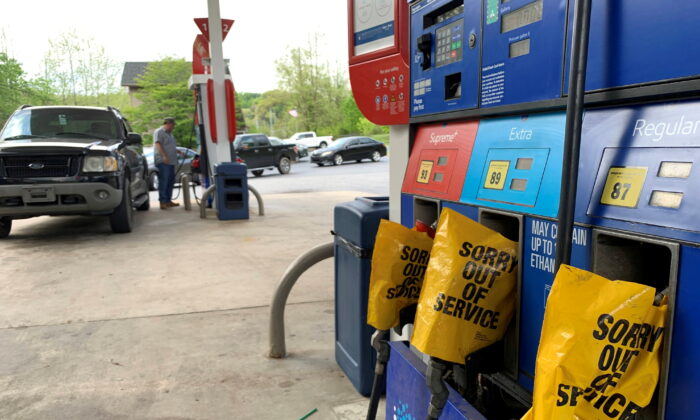
Panic buying was in the news again following the Colonial Pipeline hack. People fearing a gasoline supply interruption bought up all the gasoline in many stations throughout the southeast and mid-Atlantic. You might also recall the panic buying of 2020 when the coronavirus pandemic inexplicably caused people to panic-buy toilet paper and paper towels. Why do people engage in this type of behavior? In a word, it is anxiety. Dr. Shahram Heshmat provides seven reasons people choose panic buying as the balm for uncertainty. I would like for us to consider those reasons in addition to the proper, Biblical response.
Emotions trump logic. People know they don’t need 100 rolls of toilet paper, but driven by fears of a possible shortage, their emotions convince them they would be “safer” buying enough to fill a shopping cart while it is available. Though we equate sobriety with abstention from intoxicants, it also highlights a watchful frame of mind. Paul counseled the brethren of Thessalonica to avoid spiritual stupor by remaining vigilant and sober (1 Thessalonians 5.6). Even if I know that there might be an upcoming shortage, my trust in God should prompt me to act rationally regarding the needs of others who likewise need to secure provisions for their own. Hence, all of us can get by with our typical toilet paper purchases.
Fearful expectation. I anticipate the worst and become fearful before having a cause. Could it be that there will be a shortage of goods? Perhaps. If my compatriots and I hastily grab all of the items from a store’s shelf, then it becomes a self-fulfilling prophecy. Jesus told us to pray for our daily bread. Then, after reminding us of Providence, Jesus concluded this section of the Sermon on the Mount by saying: “So do not worry about tomorrow; for tomorrow will care for itself. Each day has enough trouble of its own” (Matthew 6.34 NASB1995). In other words, Jesus says to take things a day at a time. Tomorrow has its own set of concerns, and we can only deal with what is in front of us.
& 4. The contagion of fear and herd mentality. Dr. Heshmat lists these as two of his seven reasons. The entwining of these ideas is such I will consider them together. Fear spreads like a virus. People sense fear in a group, believe there is justification for it, and follow the cues of others. God knew this about us when giving Moses instruction: “You shall not follow the masses in doing evil, nor shall you testify in a dispute so as to turn aside after a multitude in order to pervert justice” (Exodus 23.2 NASB1995). It doesn’t matter if “everyone is doing it” because we will give an accounting of ourselves before God (Romans 14.12). The incident of the Golden Calf illustrates how easy it is for us to get caught up in groupthink (cf. Exodus 32.1ff).
& 6. Inability to deal with uncertainty and the desire to be in control. Once again, Dr. Heshmat deals with these separately, but I think they are related. Some people find it harder to deal with the unknown. Do you know someone who keeps watching the news or checking social media about a current event? Does it not seem to fuel their anxiety? Such a person likely keeps an eye open for which gas station has fuel or store has toilet paper. He convinces himself he is on top of things by swiftly grabbing up supply as it becomes available. But man is not in control due to the uncertainty of life (cf. James 4.13-15). There are things that we cannot know (Deuteronomy 29.29). We do best to trust the One Who will supply all our needs (Philippians 4.19).
Misinformation. Dr. Heshmat explained how social media spread the misinformation about the toilet paper shortage. People in Japan thought there would be a toilet paper shortage because of what they had seen on social media. Given that we had a mad dash to buy toilet paper in the United States, it is apparent that the online rumors crossed the Pacific. The spread of false information is undoubtedly a hazard to having an interconnected world. It is interesting to note how Paul connects gossip (or being a busybody) to idleness. Paul tells Timothy that the church should not financially support young widows since their inactivity might encourage gossip (1 Timothy 5.11-15). Paul said that their undisciplined life led some in Thessalonica to act as busybodies (2 Thessalonians 3.11). In regards to such Thessalonians, Paul famously reminded that those unwilling to work should not eat (2 Thessalonians 3.10). Hence, if we enough time on our hands to entertain rumors, we may well be neglecting our Christian duty elsewhere.
Panic buying is a peculiar problem of modern man. However, it ultimately stems from anxiety, a commodity of which Christians are to be in short supply. Not only did Jesus tell us not to worry (Matthew 6.25ff), but Paul reminds us that prayer brings incomprehensible peace (Philippians 4.6-7). Let us avail ourselves of the precious promises of our Lord and cast our anxiety upon Him (1 Peter 5.7).
It was a gorgeous sunny day without a cloud in the sky. I shot Dale a text and told him to meet up with me at a mom and pop gas station outside of Huntsville for a BLT.
I grabbed my motorcycle keys, helmet, and leather vest. On the way out the door I decided to throw on my jean jacket underneath my vest. I don’t know why I did this because the temperature was close to 80 degrees. I hopped on my bike, turned on some Hank Williams Jr., and headed towards Huntsville.
2:37 PM
I was biking on the road that led to those amazing gas station BLT’s. I had been on this road hundreds of times, but today’s trip ended a little differently than normal. I noticed a truck slowly pulling out of the driveway of the local shooting range. He crept forward and then stopped. I figured he was stopping because he saw me coming. I get about 100 feet away from the truck, and he pulls out. He turned left blocking both lanes of traffic and I knew what was about to happen. I pulled the clutch and grabbed a fist full of brakes, but it was too late.
2:38 PM
It’s amazing how many thoughts you can have in such a short time. Everything slowed down and as the truck got closer I thought about Emily, my family, my spiritual state, and BLT’s. The initial impact was to my left leg, then my head hit the front body panel of the truck. The last thing I remember is a sharp pain in my head and a blinding flash of white.
2:43 PM
I woke up in a ditch and the first thing I saw was my motorcycle upside down next to me and somehow “Feelin’ Better” by Hank was still playing from the speakers on my bike. Incredibly, I didn’t break a single bone or have any major head injuries. Needless to say, I never got that BLT.
May 12th 1:21 PM
I’m at the church building with my brother writing an article for tomorrow morning. I can’t stop thinking about everything that happened. I can’t help but feel like God’s providence was written all over that day.
The jean jacket I grabbed at the last minute saved my arms from getting road rash, the crash bars I installed literally the night before absorbed the initial impact. Those bars were an inch and a half solid steel pipe and they folded like a quesadilla. That would’ve been my leg if it weren’t for the time I spent installing them the night before.
I realized several important facts that day:
Only God knows what tomorrow holds (Prov. 27:1).
Death is certain, but when we die is uncertain. Because of sin we are destined to die. I could’ve died on a motorcycle, or from a heart attack from too much bacon. Bottom line, we must be spiritually prepared to leave this earth at any moment (Heb. 9:27; Matt. 24:42-44).
Some things are more important than a motorcycle. Like my parents’ mental health and blood pressure. Emily’s well-being and peace of mind is far more important than a bike. It’s a matter of looking at things from the other person’s point of view. Practicing the golden rule (Matt. 7:12). I would be a wreck if either of my parents bought a motorcycle (pun intended).
So here’s my two cents for those reading this:
It’s beneficial to take a step back and look at our priorities. If we value anything on earth more than God, we will leave this earth unprepared.
If there’s sin in our lives, procrastination is the absolute worst thing we could do. Tomorrow is never promised.
Be mindful of what our actions do to others. It may not even be sinful, but it’s all about showing a love that values others’ peace of mind and well-being above yourself.
P.S. Watch out for black Dodge trucks; they don’t stop.
No pandemic or problem can suppress or destroy the church’s opportunities. If it could withstand the withering attacks of persecution in its first few centuries, the body of our Lord can come through this current storm stronger than it was before. The church’s opportunities are limitless because…
The gospel is still powerful (Rom. 1:16).
Christ is still the Savior of the world (1 John 4:14).
The church is still the manifold wisdom of God (Eph. 3:9-11).
The mission is still in force (Mat. 28:19).
We still have the only answer to the world’s biggest problem (Rom. 5:6-10).
We can demonstrate the most powerful attraction of discipleship (John 13:34).
His kingdom will never be utterly shaken or destroyed (Dan. 2:44; Heb. 12:28).
The recent crisis has awakened a sense of purpose in so many Christians.
Heaven is as desirable as ever and hell as unwelcome (cf. Mat. 25:31-46).
We know we are bigger than pettiness, division, and senseless strife (1 Cor. 1:10-13).
Man still senses that life is bigger than a few years on this earth (Ecc. 12:13-14).
Hope still serves as an anchor for the soul (Heb. 6:19).
The world has no viable competition to what only Jesus can give (1 John 4:4; 5:4).
We are not ignorant of the devil’s devices (2 Cor. 2:11).
There is no substitute for fellowship, the assembly, and corporate worship and study (Heb. 10:24).
We may appreciate the importance of relationships like never before (Rom. 12:3-21).
Truly, this list is much longer, but suffice it to serve as a reminder that these need not be “the worst of times.” God can make them the best of times as we move forward, eyes fixed on eternity and the wonderful work between here and there. Let’s seize those opportunities (Gal. 6:10)!
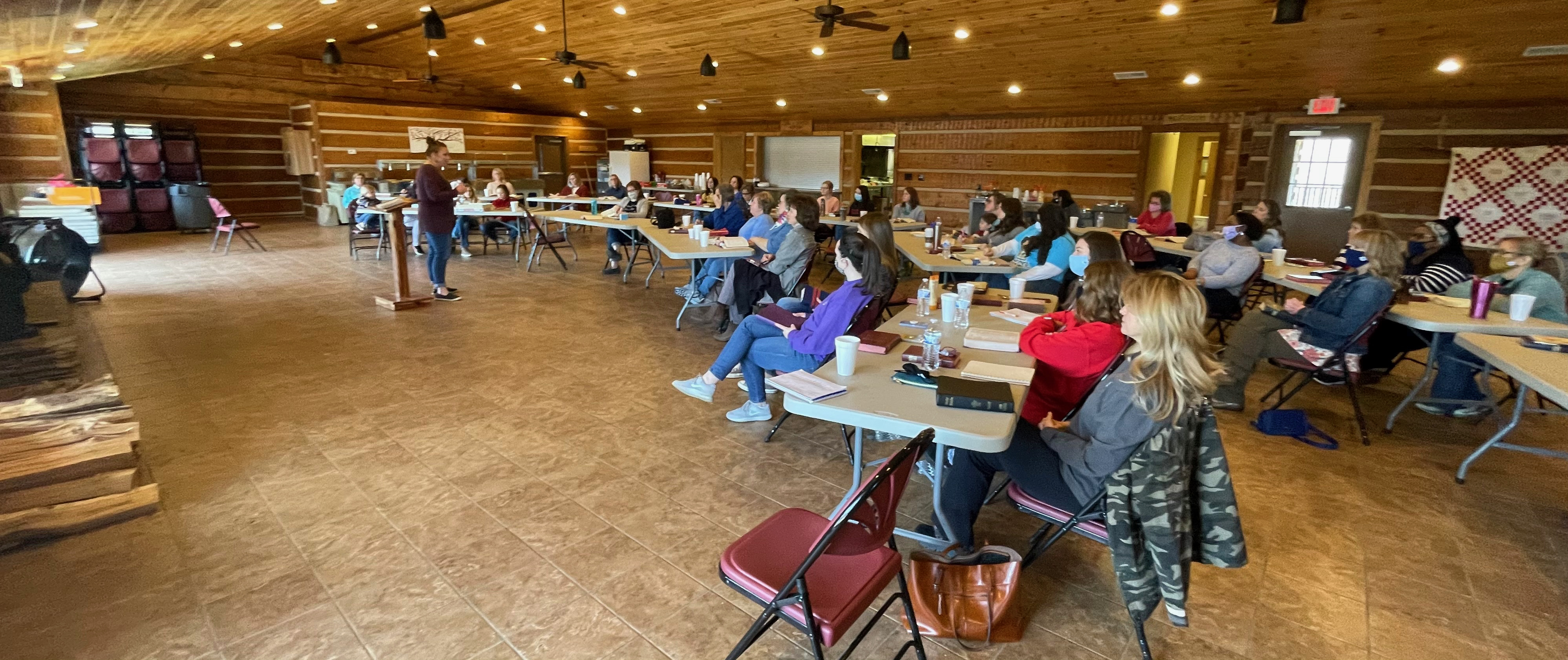
Saturday morning’s Ladies Retreat with guest speaker, Whitney Watson, of Corsicana, TX. Over 60 were in attendance Friday and Saturday.
He wore a name we know well but accomplished the will of a Name we know better. Samson the judge was the man who dropped a thousand Philistines with a jawbone while dropping the jaws of those who would read these accounts years later. In Judges 13 through 16 we find the awesome, yet tragic life of the strongest man who ever walked the earth. From the moment of his miraculous conception to those dramatic moments between the pillars, he captivates our imagination. Some tend to idolize his prowess as a warrior and rebel, but the real lessons we can learn from Samson can be appreciated by everyone. What if a mortal human could act in place of God? While impossible, let’s just humor this thought. In a way we get a glimpse of how miserable life would be if we didn’t serve a righteous Lord. When Samson lost his temper, became annoyed, bored, or defiant he would always choose to act in his own self interest. He was empowered by a God he didn’t serve and that is seen time and again in these three chapters. His final act of killing over three thousand Philistines who mocked him in their pagan temple were slain out of revenge (Judges 16:28) and hatred. His eyes had been gauged out and he is led by a servant through a crowd of people who were not even supposed to be living in the same land as the Israelites (Numbers 31:17). In other words, the Philistines were a hole dug by God’s children in the first place. Samson was a tool in God’s hand to relieve His people from the oppression of these ruthless “fish people.”
I’m sure you know many of the accounts from the life of Samson so here are a few things that God intended for us to learn from him.
1. God is infinitely more powerful than His creation (including Samson) and is infinitely more loving and patient than His creation. If Samson had the power of God, his own humanity would provoke him to destroy anyone who irritated or upset him. How many times has God forgiven us and then placed those sins out of His sight? Too many times to count, I’d imagine. 2. God can use the self-seeking people in the world to accomplish His own will. He never lost control of Samson and God hasn’t lost control in the world today. 3. Nothing could make us serve God, even if He paid us a supernatural visit (see Jesus). Samson’s abilities were given to him by the Lord, and yet that wasn’t enough to convince him to dedicate his life to Him. Consider Solomon that was given wisdom in a miraculous way— yet still fell. In the end it comes down to the individual heart, the desire, and the determination to commit ourselves to His service. 4. God’s desire to protect His people is great and His methods are creative. The Israelites could have never dreamed that their savior would be a man like Samson. They were plagued by a race of wicked warriors, but God used one man to turn the tables. When we look at our country today we may think there’s no way that things could be different but let’s not forget how powerful and how creative God is. It doesn’t matter whether or not WE can see a path forward when God has proven that He is more than capable and willing to see us through.
You could ponder over the life of Samson and come up with more great lessons to build your faith. Why not read through Judges 13-16 to remind yourself of God’s control in this world? As a bonus, you’d be treating yourself to one of the most fascinating sections in the Old Testament.
I wrote those words in the back of my Bible. It has helped me on several occasions to gather my wits and remember Who I serve.
In America one of the most common fears is the fear of death. I’m sure it must be true all over the world. Some are afraid of the unknown as humans don’t fully comprehend everything about the physical process of death.
While Solomon reminds us at the end of Ecclesiastes that we are to fear God, It never ceases to amaze me how an understanding of God eliminates so many of our earthly fears.
It seems that fear is really an infant quality of the new Christian. It should be. We fear God’s wrath, power, and potential punishment, but with spiritual growth comes the absence of fear.
While uncertainty shrouds the details of our future day by day, the Christian can take comfort in knowing our eternal home with God can be certain.
Timothy needed the reminder that the Lord has the ability to empower us when fear begins to creep in. Paul tells him, “For God has not given us a spirit of timidity, but one of power and love and a sound mind” 2 Timothy 1:7.
I know that Timothy wasn’t the only one that needed to hear that. So many of us today, especially in these times, need to here those precious words of comfort. Whatever fears may be weighing you down today, may God’s Word give you the power, love, and sound mind that you need to face the day before you.
Gloria Gaynor rose to fame in the late 1970s with her B-side recording of “I Will Survive.” Yes, that is correct. Gaynor secured her musical legacy with a song added as filler. The A-side recording was a cover of the Righteous Brothers’ song, “Substitute.” Yet, who other than an ardent fan even recalls Gaynor’s cover? Rolling Stone magazine included “I Will Survive” in their “500 Greatest Songs of All Time” in 2004. In 2016, the Library of Congress added the song to its National Recording Registry to ensure its preservation. I do not mean to diminish the rest of Gaynor’s career, but it is doubtful that her name would be long remembered without her disco anthem.
The Apostle Paul says something like “I will survive” in Philippians 4.13. “I can do all things through Him who strengthens me.” (NASB) I realize that this is an oft-abused Scripture. For example, athletes cite it after achieving a difficult win. We likewise note aspiring Don Quixotes quoting it to rationalize their efforts to obtain their impossible dream. As with many Scriptures, however, the context clues us in on the meaning. The Apostle Paul wasn’t supplying us with a handy aphorism to pull out when needing to boost troop morale. He was letting us know how to survive any and everything. Note the preceding verses where Paul tells the Macedonians that he has learned how to get by with surplus or shortage. In the proceeding verses, Paul tells the Philippians that were a part of God’s Providence that enabled him to do “all things” since they provided financial support.
So, is God promising us in Philippians 4.13 that we can do whatever it is that we have set our hearts to do? Of course not. But God is letting us know that He has our back. We can count on Him and His Providence. We might wear thrift store clothing and supplement our groceries with Dollar Tree items, but God will provide our needs in keeping with His promise (cf. Matthew 6.33). Hence, we can move forward with boldness as we do the Father’s Will. We can survive, whether that be with little or much. That is a beautiful message to lean on as we face the uncertainty of this world.
As I travel US 129 in White and Hall Counties, I note handmade signs that have popped up along the shoulders of the road, presumably in the wake of COVID-19. The placards state, “We will be OK.” I appreciate those signs. They speak to us truthfully whether we are talking about pandemics or uncertain election results. Because of God, we will survive. We might even say that we will do more than survive. We will thrive!






























 The Preacher Pollard Blog