When God Says “Not Yet”: Peter’s Journey from Boldness to Readiness

Brent Pollard

Understanding Divine Timing in Your Spiritual Growth

When Jesus spoke of His approaching departure, Peter responded confidently: “Lord, why can I not follow You now? I will lay down my life for Your sake” (John 13.37). His words carried genuine sincerity. Peter meant every syllable.

Yet Jesus answered with a truth that would echo through Peter’s life and ours: “Where I go, you cannot follow Me now; but you shall follow Me afterward” (John 13.36, NKJV).

Two words changed everything: “Not now.” Peter did not lack courage—he had that. His devotion was not questionable—his heart burned with love for Christ. The issue was readiness, not willingness.

Why Spiritual Maturity Cannot Be Rushed

Peter’s bold words revealed an incomplete understanding of himself and the cross he claimed to embrace. We often think we are further along in grace than we are. Peter experienced this revelation in that moment.

He was willing to die, but he was not ready. The difference between these two states is the crucible of Christian formation.

Christ saw what Peter could not. The work in him, through him, and for him remained. Before Peter could follow Jesus into death, he needed lessons only time could teach and experiences only grace could redeem.

Growing in Knowledge: When Understanding Deepens Through Experience

Peter’s knowledge of Christ needed to grow beyond intellectual assent. It had to become a lived reality. He had already confessed, “You are the Christ, the Son of the living God”(Matthew 16.16)—words given him by divine revelation. Yet even this truth needed real experience to become a formed conviction.

Peter still did not grasp the necessity of Christ’s death (Mark 8.31-33), the power of His resurrection (Luke 24.11-12), the glory of His ascension (Acts 1.9-11), or the fire of Pentecost (Acts 2.1-4). These were not optional lessons. They were essential to apostolic preparation. The Spirit would lead him “into all truth” (John 16.13), but the journey could not be rushed.

We remain on earth because it is the only place with a curriculum of grace. While heaven offers eternal joys, earth allows us to trust God in darkness, choose obedience without sight, and love Christ though “having not seen Him” (1 Peter 1.8). These are the essential lessons of the school of faith that cannot be skipped: learning to trust, obey, and love Christ while on earth.

Character Formation: How God Refines Us Through Failure

Peter’s character needed refining in the furnace of weakness. He thought he was ready to die, but Jesus knew the denial to come: “Before the rooster crows, you will deny Me three times” (Matthew 26.34). That failure became the moment that changed Peter’s self-confidence into humble dependence.

The Lord can use our failures to cure us of self-sufficiency. Peter denied Christ three times and was restored three times (John 21.15-17). God was not just correcting Peter; He was rebuilding him. The man who claimed he was more loyal than all (Mark 14.29) wrote, “Humble yourselves under the mighty hand of God, that He may exalt you in due time” (1 Peter 5.6).

Actual readiness for service comes not from our strength but from knowing our weakness and discovering God’s sufficiency in it. Dependence on God, not self, forms the foundation of actual spiritual readiness.

God’s Preparation Has Purpose: Your Growth Blesses Others

God was still preparing Peter, and every lesson he learned later blessed the church. By the Holy Spirit, he wrote two epistles that strengthened millions. His sermon at Pentecost brought three thousand souls into the kingdom (Acts 2.41). His bold testimony before the Sanhedrin declared, “We ought to obey God rather than men” (Acts 5.29). Peter confessed the truth on which Christ would build His church (Matthew 16.16-18), but he needed time to mature.

What we learn while waiting becomes our wisdom for service. Each trial that teaches patience prepares us to help others in their own trials (2 Corinthians 1.3-4). Each refining fire that purifies us equips us to lead with integrity. Peter’s painful lessons benefited the church.

Our spiritual growth is never merely personal; it is preparation for service—both now and eternally. The character God forms in us determines the impact and reach of our service to others.

From Earth to Eternity: Faithfulness Now Prepares Us for Heaven

Heaven is not idleness but perfected service. Jesus said servants would be made “rulers over many things” (Matthew 25.21), suggesting that faithfulness now prepares us for future responsibilities. God seeks those through whom He can do the impossible, yet we are often distracted by tasks we feel compelled to complete ourselves. Earth is where we learn to partner with the impossible.

The parable of the talents (Matthew 25.14-30) teaches that being faithful in small tasks leads to larger responsibilities. Serving on earth is preparation for greater things ahead. What we develop here—trust in uncertainty, patience in waiting, and obedience in difficulty—equips us for our future roles. Our actions now are training for responsibilities we cannot yet see.

The Promise Fulfilled: Peter’s Courage Matured in God’s Time

After the resurrection, Jesus spoke to Peter with clear words: “When you were younger, you girded yourself and walked where you wished; but when you are old, you will stretch out your hands, and another will gird you and carry you where you do not wish” (John 21.18). Then Jesus gave the invitation: “Follow Me” (John 21.19).

The promise of John 13.36 was explained. Peter would follow Jesus into death. Church tradition says Peter, counting himself unworthy to die as his Lord, requested crucifixion upside down. The man who once denied Christ by a charcoal fire (John 18.18) was restored by a charcoal fire (John 21.9). He would glorify God by a martyr’s death (John 21.19).

Peter’s courage was once premature but matured in God’s time. The boldness always existed. What developed was the brokenness that made his courage usable. God does not waste our willingness—He seasons it until it becomes readiness.

Living in the “Not Yet”: What God’s Delay Teaches Us

God’s “not yet” is not a refusal. It is preparation. When He says “afterward,” He does not diminish our calling but deepens our capacity. There is work to be done—in us, through us, and for us. God may be doing thousands of things in your life, but you know only a few. Trust Him for what you do not see.

Peter’s story makes us face impatience with God’s wisdom. We want instant readiness, but God requires patient formation. We see our willingness. God sees what still needs to be developed. We measure courage by intentions. God measures it by how we endure when tested by fire.

Scripture affirms this pattern of preparation many times. Joseph spent years in slavery and prison before saving nations (Genesis 50.20). Moses spent forty years in the wilderness before leading the Exodus (Acts 7.30). Paul withdrew to Arabia after conversion before his ministry (Galatians 1.17). Even Jesus waited thirty years before public ministry (Luke 3.23).

Waiting is not wasted. Every delay serves a divine purpose. Each period of preparation is designed to teach specific lessons that equip us. Through these lessons, we are shaped into vessels capable of holding and sharing the glory God will reveal through us. Our waiting is purposeful, our learning is tailored, and both are essential for fulfilling what God intends to do through us.

Your “afterward” is coming. In God’s time, when your knowledge deepens, your character is refined, and your readiness matches your willingness, you will follow Him into your purpose. Until then, learn what this moment can teach you. Trust what these trials can develop. Receive what this season alone can give.

The same Jesus who said “not now” to Peter also said “but afterward.” Both words came from the same love, served the same purpose, and led to the same destination: a God-glorifying life and a faithful servant’s death.

When God says “not yet,” He is not closing a door. He is preparing you to walk through it with wisdom, strength, and readiness that He alone can give. The afterward is about more than dying well. It is about living fully in the power of a completed preparation and achieved readiness. When your afterward comes, you will know—as Peter knew—that every moment was worth it for the glory it brought.

Trust His timing. Embrace His preparation. Your afterward is coming, and it will be glorious. Persevere in trust and preparation—God’s timing always leads to fulfillment.

Are You Ready for the Devil’s Next Move?

Brent Pollard

Former President Donald Trump was the target of multiple assassination attempts in 2024. Politicians, pundits, and the public have discussed significant concerns about the Secret Service’s adherence to established protocols for protecting Trump after the incidents in July and September. In one case, the would-be assassin gained a tactical edge, and in another, a person armed with a rifle got dangerously close before being stopped. These apparent failures demonstrate that constant readiness and vigilance in risk mitigation are essential.

As concerning as these events may be, our spiritual environment is equally daunting. The Bible warns us about the ever-present spiritual dangers we face. Peter reminds us in 1 Peter 5:8, “Be of sober spirit, be on the alert. Your adversary, the devil, prowls around like a roaring lion, seeking someone to devour.” (NASB95) Just as the Secret Service must remain on constant alert to protect a leader’s life, Christians must also be spiritually vigilant, always prepared for the enemy’s attacks. The devil always seeks moments of weakness when we lower our guard. Ephesians 6.11 instructs us to “Put on the full armor of God, so that you will be able to stand firm against the schemes of the devil.” (NASB95)

This call to vigilance extends to how we live each day. The devil does not announce his attacks; instead, he works subtly, sowing seeds of doubt, fear, and temptation. Jesus emphasized the importance of staying spiritually awake in Matthew 26.41, “Keep watching and praying that you may not enter into temptation; the spirit is willing, but the flesh is weak.” (NASB95) We must be as meticulous in our spiritual preparedness as the Secret Service is in its protocol for protecting leaders, ensuring that we are consistently grounded in prayer, Scripture, and fellowship.

Failure to remain vigilant in our spiritual lives can allow these subtle attacks to go unnoticed, much like a lapse in physical security could lead to danger. The Apostle Paul warned in 2 Corinthians 2.11 that we must be aware of the devil’s schemes to prevent him from gaining an advantage. Paul’s reminder here underscores the critical nature of spiritual readiness, not only for our own sake but also for the sake of those we love. It is essential to be prepared in both personal faith and guarding the souls of those around us.

Proverbs 4.23 reminds us to “Watch over your heart with all diligence, For from it flow the springs of life” (NASB95). This vigilance applies to our actions and the thoughts and emotions we allow to take root. Like the Secret Service constantly monitors potential threats, we must deliberately guard our hearts, understanding that neglecting our spiritual defenses can lead to trouble.

In essence, physical or spiritual vigilance demands discipline and awareness. Just as the Secret Service protects leaders, we guard our hearts, remain alert, and be ready for daily spiritual challenges.

Being Prepared

Robert Warren

Let’s travel back in time to 1981, my freshman year in marching band at
Goodpasture Christian School in Nashville, Tennessee. We won the single A state
championship that year. Actually Goodpasture’s band won the state championship
in ’79, ’80, ’81, ’83 and several more consecutive times after I graduated in 1985.
Needless to say we took it very seriously. Friday night football game halftime
performances were seen as practices for band competitions the next day. We
marched during class time during the school period and from 3:15 until around 6:00
after school, except on Wednesdays when we let out a little early to make sure we
could get to church meeting on time.

We also had band inspections before our performances, including football
games, that were very similar to the military in style. We stood at attention while
our section leaders inspected our uniforms, our instruments, and our focus. Our
instruments had to pass the white glove test for cleanliness. We could be given
demerits for failing inspections, which would affect our grades given on report cards.
We were expected to be prepared.

One of the first contests we went to my freshman year was the MTSBOA
invitational. We were not placed in a first, second or third order, but instead we
received scores of our performance. It was a good way to prepare for future
competitions. Of course everyone wanted to be given the highest score possible.

The first part of this contest took place inside at a designated time. It was essentially
an inspection from a judge of the entire band at one time. The upperclassmen had
been preparing us freshman on every aspect of this inspection, as it could affect the
whole band’s overall score if we messed it up. We were not only to stand at attention
and not move, but if a judge stopped directly in front of you, you were to present
your instrument to him in a precise manner. If they asked you any questions you
could only answer them with the serial number found on your instrument you were
supposed to have memorized. They usually only stopped in front of 2, or 3 people
out of the entire band, so we were told to be prepared, but not to worry about it
because they probably won’t stop in front of you. You guessed it, they stopped in
front of me. I’m sure the rest of my line was holding their breath like I was. But I
was ready. I performed the way I had prepared. The band got their high score and I
didn’t mess it up for everybody.

When I took tests in school, if I had studied and prepared myself, I was usually
not nervous. But if I was not prepared, I was a wreck. Even now the more I prepare
before I speak in front of people, or teach a class the less nervous I am. There is a
direct connection with being ready and prepared and an inner peace.
Matthew 25:1-13 is a story Jesus tells about 10 virgins, 5 who are prepared
and 5 who are not. These virgins may have been more like how we would think of
bridesmaids. Weddings were held more towards evening and the lamps were
probably like torches wrapped in oil soaked rags.
Nelson’s New Illustrated Bible Dictionary describes weddings like this:
the bridegroom was accompanied by his friends, by musicians and
singers and by persons bearing torches. The groom received his bride
from her parents, then he conducted the whole party back to his own
house, or his father’s house with song, music and dancing. On the way
back they were joined by additional friends of the bride and groom. A
feast was served and celebrated with great joy.

The virgins, or bridesmaids were waiting for the bridegroom. Apparently
bridegrooms were often late and their comings were repeatedly announced until they
arrived. It would have not been uncommon to need extra oil. Five were prepared.
Five were not prepared and missed the procession back to the groom’s house along with
the singing and dancing and were shut out of the feast and celebration (Matthew 25:1-13).

We do not know when Jesus is coming to claim His bride. We have to always be
prepared and ready. As the five foolish, or unprepared virgins discovered, you
cannot expect others to be prepared for you. It is an individual decision to be ready.
If you have not put on Christ in baptism, why wait? If you are already a Christian,
but need to make your relationship with God right, don’t wait.

“Prepare for the Unexpected”

Brent Pollard

As I prepared for an appointment, the television commercial advised me to take advantage of their services so that I could “expect the unexpected.” I’m not too fond of that phrase. It could be considered a pet peeve. The statement’s paradoxical nature irritates me. It is impossible to anticipate something that is, by definition, unexpected or unforeseen. So, why do we keep using this illogical expression? 

Since I grasp this idiom’s meaning, I recommend replacing it with “prepare for the unexpected.” The second option is feasible for us. Since we anticipate the possibility of unexpected events, we can plan accordingly to deal with or adapt to them. It’s like preparing for an accident by stocking your first aid kit with bandages for occasions when you get a cut or scrape. You didn’t know you would get that cut, but you had a dressing ready just in case.

Spiritually, Jesus tells us to prepare for the unexpected. Contextually, the unexpected is His Second Coming. To teach us this lesson, Jesus told the Parable of the Ten Virgins (see Matthew 25.1–13). The titular maidens are members of the bridal party. Unbeknownst to most contemporary readers, weddings in the first century were a different type of affair. 

The bridegroom’s arrival was cause for both celebration and anticipation in first-century Jewish wedding customs. After the engagement, the bride would wait at her father’s home for her future husband to come and take her away. The groom had complete control over when this occurred. 

The groom frequently transformed the process into a joyful game or challenge in which he attempted to surprise the bride and her attendants. This element of surprise heightened everyone’s excitement and enthusiasm for the party. Shouts announced the bridegroom’s arrival, so the wedding party members had to prepare to join the procession anytime, even after dark.

The five prudent virgins were ready for whatever might happen. They had brought extra oil because of the potential for the groom to be late. Those considered foolish should have considered the possibility of the bridegroom arriving late at night. According to the parable, the shout announcing the bridegroom’s arrival woke them up. 

The foolish virgins woke without oil for their lamps and asked the wise ones to borrow some. The wise virgins said they didn’t have enough oil to spare for the foolish virgins’ lamps. The bridegroom led the wise virgins to the wedding feast while the foolish virgins went to get more oil. By the time the foolish came, it was too late; the groom shut the doors. 

Jesus ends the parable by telling us to be alert since we do not know the day or the hour of His return. Hence, you and I must prepare for the unexpected (i.e., the Second Advent).

We need general preparedness. The most crucial general preparation is to obey the Gospel. For those who felt the weight of their sins on the Day of Pentecost, Peter preached repentance and baptism (Acts 2.38). Individuals submitting to baptism resulted in church growth. The Bible says that the Lord kept adding to that number those He saved (Acts 2.47). Once one is a part of the Body, he must make other general spiritual preparations such as prayer, good deeds, and maintaining a solid relationship with God (see 1 John 1.7).

We need mental preparedness. Christians should have a strong faith and accept that God’s timing may not coincide with their own. Like the bridegroom in the parable, we cannot know when Jesus will appear “with a shout, with the voice of the archangel and with the trumpet of God” (see 1 Thessalonians 4.16 NASB). Predicting when our Lord will return is fruitless, but people have been trying for years. Jesus declares that not even He knows when that day will be, only His Father (Matthew 24.36). Thus, we don’t know the exact date, but we know that God has chosen it (Acts 17.31). 

We need to practice risk management. Believers waiting for Christ’s return should take precautions against the spiritual “risks” or pitfalls that could undermine their faith or readiness. Do you remember what Jesus taught in the Sermon on the Mount? If your right eye and right hand are the source of your sin, Jesus says it is better to have them amputated than go to hell as a fully functional human (Matthew 5.29-30). Jesus isn’t suggesting we physically cut out our eyes, but instead that we turn away from the things that trigger our lust. Jesus isn’t telling us to cut off our hands, but rather that we turn away from the things that trigger our greed. The gates of hell are not a place where Christians play chicken. Instead, we manage risks. 

In conclusion, even though paradoxical sayings like “expect the unexpected” can be annoying, “preparing for the unexpected” is a powerful reminder of the deeper truths embedded in our spiritual journeys. Like the prudent virgins in Jesus’ parable, we must be ready for anything, including the unanticipated events of everyday life and, most importantly, the return of Christ. There are many facets to this kind of readiness, including general and mental preparedness, recognizing our human limitations when it comes to divine timing, and taking proactive measures to protect our faith from harm. 

Let us go beyond waiting for the Lord’s return and establish ourselves in purpose, deed, and unwavering faith. By getting our heads and hearts in the right place, we anticipate His return and make strides toward spending eternity with Him.

Seeing The Future With Our Family

Carl (and Rich) Pollard

 On February 3, 2018, Robert Meilhammer, 51, of Crapo, Maryland, was struck in the head by a dead Canada goose. The bird that hit him was 14 pounds and had a nearly 6 foot wingspan. It plunged from the sky after a fellow waterfowl hunter fired a blind shot on a flock overhead. Meilhammer was in the midst of a hunting party with three friends in Easton, Maryland. The goose fell about 90 feet, knocking the hunter out instantly and causing head and facial injuries. If you could see what was coming you would prepare. Odds are, if Robert Meilhammer would’ve known about the goose coming he could’ve taken a step forward to keep from getting knocked out. 

If we knew what was coming, we would prepare. Thankfully, we know! God in His love and grace has revealed what is coming and what needs to be done in order to prepare. 

That’s why as a church we come together to remind each other of the day that is coming in the future. We come together to encourage our church family to fight the good fight, keep the faith, and to stay the course. 

Mark 16:16, “Whoever believes and is baptized will be saved, but whoever does not believe will be condemned. The judgement day is coming and God is clear on what we should be doing. Get prepared and stay prepared through constant fellowship with likeminded brothers and sisters. 

2 Peter 2:9, “then the Lord knows how to rescue the godly from trials, and to keep the unrighteous under punishment until the day of judgment.” Does going to church make us more godly or unrighteous? Which one do we want to be on that day of judgment? 

In 2 Timothy 4:7-8 Paul says, “I have fought the good fight, I have finished the race, I have kept the faith. Henceforth there is laid up for me the crown of righteousness, which the Lord, the righteous judge, will award to me on that day, and not only to me but also to all who have loved his appearing.”

We go to church so we can say what Paul once said. God has revealed to us the future event that is going to take place. Have we fought the good fight? Have we kept the faith? Fighting and faith are strengthened with our church family. 

Comfortable Being Uncomfortable

Steve Candela

As many of you know I have a way of relating my lesson around the fire service and I’m going to do that again here tonight. But some of you may not understand the similarities the fire service has to the Church. Let me give you short list of comparisons. It is a brotherhood. We are a family. We watch out for each other. Call each other out when we stumble. Get each other back on the right path when we go astray. We push each other. And like every one of you, we support each other. We lift each other up when we’re struggling. And we always seek to find the best in one another.

At the firehouse we’ve adopted a saying from the US Navy seals that says “Get Comfortable Being Uncomfortable”. If you can be comfortable being uncomfortable, you’ll be prepared to handle whatever situation comes along in your own life. “For we know that the Law is spiritual, but I am of flesh, sold into bondage to sin. For what I am doing, I do not understand; for I am not practicing what I would like to do, but I am doing the very thing I hate. But if I do the very thing I do not want to do, I agree with the Law, confessing that the Law is good. So now, no longer am I the one doing it, but sin which dwells in me. For I know that nothing good dwells in me, that is, in my flesh; for the willing is present in me, but the doing of the good is not” (Rom. 7:14-18).

Who gets uncomfortable just reading that? Paul is talking about the flesh, his sinful nature, not his new nature in Christ. All the good in Paul’s life comes from Christ living in him, rather than originating in Paul. While the inability to do what is righteous and holy highlights humanity’s sinful nature, it also demonstrates the goodness of the law, in contrast to the power of sin. As we are in pursuit of Jesus, we are dumbfounded by our ability to do something, well, ignorant. At times we might ask ourselves, why did I do that? That’s not going to get me any closer to Christ. The struggle is real. But Paul also points out the Grace of God is sufficient in our failings and our weaknesses. See at the firehouse for me, we are placed in uncomfortable situations almost every day. It could be out on an accident scene where no one has any regard for a big red truck with lights on in the road. Could be in a fire trying to put it out or search for victims. Or it might just be at the station behind closed doors having those difficult discussions with the ones we work with and care about. However getting comfortable with being uncomfortable does not mean to be complacent or use our flesh as a reason to sin. It means we need to stay vigilant and prepared. We need to understand that when we fall short of the goal, or we just miss the mark all together, the grace from God is there to lift us back up.

I have one other saying I’d like to share from our firehouse with you that hits home every time I say it. “Would you want you rescuing you?” We have one of the most physically demanding jobs in the world. The decisions we make and the actions we take have very real consequences. On each and every call we are working to increase the chance of survival for our fellow man. This mission is driven by perfected skills and physical preparation. It is our responsibility to show up physically prepared and hold ourselves accountable to the oath we swore (Eph. 6:10-17).

As Christians the decisions we make and the actions we take have very real consequences. Are we working each and every day to save our soul? Our mission is clear. The word of God provides us everything we need to extinguish evil. It is our individual responsibility to remain prepared and hold ourselves accountable to the oath we swore.

“Do Over”

Saturday’s Column: Learning From Lehman

I like to ask questions; these are rhetorical. Have you ever lost something and been frustrated or sad that it’s no longer here? What about someone ? I know I have. I think we can all relate. 

And what about this. Have you ever given away something, whether a donation or to a friend, and regretted it because you needed it later? 

These people and or things that came to your mind, would you like to have them back? Some may be less important than others, but regardless the point remains. 

I can’t tell you how often I’ve thought about something or someone I’d like to have back. 

Beyond people and things, what about time? I’m sure a decent portion of us are happy with where our life is now, I know I am blessed beyond measure. 

This doesn’t mean there aren’t certain events or decisions we wouldn’t mind to have a do over on. I mean, after all, hindsight is 20/20, right? 

If hindsight is 20/20, What about foresight? Think about this, it’s impossible to change your past. You can try all you want. You can’t do it. But you can change your future. 

You can make a decision here and now that you’re going to stop, start, or continue down any number of paths. So, which path are you going to take?

To help reflect on this, let’s take a look at a passage from 1st John 1 – Verses 6 and 7: If we say that we have fellowship with Him and yet walk in the darkness, we lie and do not practice the truth; 7 but if we walk in the Light as He Himself is in the Light, we have fellowship with one another, and the blood of Jesus His Son cleanses us from all sin. 

With this in mind, I want us to fast forward from the here and now. We are going all the way to judgment day. We are standing there awaiting our final judgment. Suddenly, you find yourself amongst those doomed souls that are told to depart. It’s no small matter, being eternally separated from God and his grace. 

Now, what would you do if you were given a second chance? You’re told, you can have that “do over”. All you have to do is follow the plan laid out in the Bible and you’ll be given that opportunity to go back with that ever elusive do over. Scripture like John 14 – Verse 15 tells us.  “If you love Me, you will keep My commandments. 

I don’t know about you, but when I explore this idea, I’d like to imagine that I would move mountains with this second chance. So what stops me from having this level of commitment now? 

Why do so many of us squander the first chance, knowing we can’t have a second when this life ends. It sounds trivial to compare this to anything earthly, and in a way it is, but the idea that we would attempt to prepare for anything of an earthly matter, but not expend a tremendous amount of our time and energy on spiritual preparation is really something to reflect on. 

I think it’s amazing we have the gift of free will, but it’s important we understand there is an enormous responsibility that comes with that free will.

Our Lord has given us the roadmap. We must follow it. We said earlier hindsight is 20/20. But foresight….. is 66 books long. We just have to pick up the good book and apply it to our lives. We won’t be perfect. We just need to aim our feet and hearts down the road laid out before us. 

Landon Bryant

Galatians

Wednesday’s Column: Third’s Words

Gary Pollard

Galatians is written to a group of non-Jewish Christians. Paul converted them with a simple message: Jesus came to earth to give us grace and immortality. We get that by believing what we’ve heard about him coming back to life and by being baptized into his grace. At some point, Jewish converts infiltrated their church and started aggressively promoting Jewish traditions. They told the Galatian Christians that if they really wanted to be saved, they needed to follow certain Jewish customs. The entire book is both a refutation of that teaching and a dire warning to any Christian who tries to add to God’s requirements. 

Jesus’s sacrifice was to free us from this evil world we live in. Romans 8.22-25 says, “We know that everything God made has been waiting until now in pain like a woman ready to give birth to a child. Not only the Earth, but we also have been waiting with pain inside us. We have God’s Spirit as the first part of his promise. So we are waiting for God to finish making us his own children. I mean we are waiting for our bodies to be made free. We were saved to have this hope. If we can see what we are waiting for, that is not really hope. People don’t hope for something they already have. But we are hoping for something we don’t have yet, and we are waiting for it patiently.”

The whole purpose of Christianity is to anticipate Jesus’s return, and help the rest of the world face that day prepared. Paul reminded the Galatians that they weren’t saved by any old human way. The only legitimate source of truth and hope is God. 

Raise ‘Em Right

Tuesday’s Column: Dale Mail

Dale Pollard

There are plenty of great examples of godly parenting in the Bible, but there are just as many (if not more) examples of poor parenting. Tompkinsville, where I preach, is blessed to have several parents who are taking Proverbs 22.6 seriously and that’s something we shouldn’t take for granted. Perhaps no other Christian responsibility has the potential to build His kingdom and make the kind of impact like our responsibility to train and teach the next generation to love Jesus. 

“How can a young person stay on the path of purity? By living according to your word.” 

Psalm 119.9

There’s an unlimited amount of opinions and advice out there on the subject of parenting, but there’s something more meaningful about receiving it from faithful parents who have been successful. 

Here Are 3 Pieces of Advice From Godly Parents 

1. Children Need To Know That Marriage Isn’t Your Number One Goal In Life 

“Our goal in life is to praise the God of glory. Too many young people become so enamored with the thought of getting married that they neglect to devote themselves to the service of God. They miss out on the joys of mission work and service because they are too concerned with finding their next date. Focus on God and (to utilize Jesus’ words) “all these things will be added to you,” because you will be surrounded by the kind of people who are worth marrying.” 

2. Our Commitment To Christ Isn’t A Part Time Job

“An excuse is a skin of a reason stuffed with a lie. While under the Old Law Moses allowed a year off from marriage (Deut. 24.5) Jesus made it clear that all Christian parents can’t make Him their part time Lord (Lk. 9.57-62). Replace any excuse with an exertion of effort to glorify God, because excuses ring hollow in the ears of the divine.” 

3. Model The Kind Of Person You Want Your Children To Be

“Being a parent should make you think about your every move. Your immature inclinations should take a backseat when the what you model before your children can have eternal ramifications. Just be godly. 

Stand up for God. 

Talk about God. 

Have the courage you’d like your children to have. 

Show them how it’s done.”

A sincere thanks to, 

– Brett Petrillo 
– Hiram Kemp &
– Ben Shafer 

For their continual example of faithfulness, work in His kingdom, and their helpful insights on godly parenting. 

Time Flies, But We Navigate

Monday’s Column: Neal At The Cross

Neal Pollard

Ann Turner Cook passed away at her St. Petersburg, Florida, home on Friday, June 3, 2022. She was 95 years old, was an educator, a novelist, a wife, and a mother. Her father was a well-known cartoonist. But you almost certainly know her for a charcoal drawing that was made of her by an artist neighbor, Dorothy Hope Smith. It was submitted for the label of a baby food company and chosen in 1928, then trademarked in 1931. Ann was the original Gerber baby (news report here)! You’ve seen that iconic picture. If you realized she was a real person, you never thought about the fact that this baby grew up and eventually grew old. Or that she would now be dead.

I know nothing about Mrs. Cook’s religious life or spiritual preparation. But I do know that she is part of a universal truth concerning life, and that is that death comes relatively soon for us all. How soon? 

  • Like water spilled on the ground (2 Sam. 14:14). 
  • Like a weaver’s shuttle (Job 7:6; Isa. 38:12). 
  • Like a breath (Job 7:7).
  • Like a shadow (Job 8:9; 1 Chr. 29:15; Ec. 6:12). 
  • Like a flower (Job 14:2).
  • Swift as a runner (Job 9:25).
  • Like a handbreadths (Ps. 39:5).
  • Like a wind that passes (Ps. 78:39). 
  • Like a sigh (Ps. 90:9). 
  • Like smoke (Ps. 102:3).
  • Like a lengthened shadow  and grass (Ps. 102:11; 109:23). 
  • Like a passing shadow (Ps. 144:4). 
  • Like a fading flower or withering grass (Isa. 40:7-8; Js. 1:10; 1 Pet. 1:23-25). 
  • Like a vapor (Js. 4:14). 

With that in mind, shouldn’t we pray with David, “LORD, make me to know my end and what is the extent of my days; Let me know how transient I am” (Ps. 39:4).

Yes, we can look at the Gerber Baby and see that. Or we can look through our own family albums. The baby, childhood, and young adult photos of our grandparents, parents, or ourselves. The weathering winds of time do sure and quick work, reminding us of the many ways the Bible depicts it for us. Time is short and it passes quickly.

Rather than a depressing inevitability, this should be a respected teacher. We should pray with Moses, “So teach us to number our days, that we may present to You a heart of wisdom” (Ps. 90:9). We should take Paul’s inspired advice and “be careful how you walk, not as unwise men but as wise, making the most of your time, because the days are evil” (Eph. 5:15-16). Don’t leave undone what needs to be done. Don’t put off what must be done before this life is over. It will be over before you know it. As the writer of Hebrews tells us, “It is appointed for men to die once and after this comes judgment” (9:27). 

Focusing In Worship

Thursday’s Column: Captain’s Blog

Carl Pollard

As humans we have a hard time when it comes to focusing. Attention spans seem to be getting shorter and shorter. Goldfish have an attention span of about 5 seconds. I’m convinced that mankind will one day be on the same level if nothing changes. 

While focus in our everyday lives can be a struggle, what about in worship? How can we improve our focus when we come together each week? Before we even assemble, we should be preparing to focus on worship. 

Isaiah 29:13 says, “…Because this people draw near with their words, And honor Me with their lip service, But they remove their hearts far from Me, And their reverence for Me consists of tradition learned by rote.”

They drew near to God with words, just like we do in singing songs each Sunday. 

They honored God with their lips, much like we do in our prayers each week. What they were saying sounded good! But, if our hearts are not in worship, we have failed God. 

Isaiah writing on God’s behalf says that their “reverence consisted of tradition learned by rote.” This word reverence is the the Hebrew word for “fear.” You may have heard that every time you read the word “fear” in the Bible to replace it with the word “respect” or “reverence.” This couldn’t be further from the truth. Hebrew language has a word for respect, and this isn’t it. It means literal fear. 

In fact, the Greek equivalent of this word is Phobos, which is where we get our English word phobia. For example, if you have arachnophobia you have a fear of spiders. If you saw a spider crawling on your leg, and you are afraid of spiders, you’re not going to look at it and go, “I respect you.” That’s not how fear works; you’re going to use any means necessary to dispatch the threat. 

So we are supposed to worship in fear? YES. 

Focus out of fear and awe of WHO we are worshipping. We are singing to the creator. 

We are praying to the God who parted seas, spoke the world into existence, and guided the Israelites with a pillar of fire. We are worshipping the King of Kings, the Great I AM, the Alpha and Omega, the One with no beginning or end, we are bowing down before the Most Holy God of the Universe. 

If we realize what we are doing in worship, we can’t help but feel a little fear. Isaiah says, their worship was done through traditions learned “by rote.” This literally means, “Mechanical or habitual repetition.” We may be physically singing and look like we are worshipping God, but only the individual and God above know what is going on in the heart. 

Isa. 12:5 “sing to the Lord.” This requires FOCUS, not mindlessly singing songs. 

There are songs for each other, and songs directed toward God. “I want to be a worker for the Lord” …do we mean it? We can’t sing “Stand up, stand up for Jesus” on Sunday when all throughout the week all we’ve done is sit down. Focus on the words. 

God would rather hear a tone deaf person who sings with their heart and mind, then a classically trained singer who only focuses on what it sounds like to them. Sunday morning worship comes once a week; it can be easy to let it turn into a mindless habit. Train your mind to focus on every act of worship. Don’t let worship become something we do out of tradition or habit. Focus on WHO we have come together to worship. 

Are You “Prepping”?

Monday’s Column: Neal At The Cross

Neal Pollard

Some have called it the “doom boom.” Before Covid, Digital Media Solutions estimated that there were some 3.7 million Americans who classified themselves as “survivalists” (source). From food to water, from clothing to shelter, a growing number of people are stockpiling, hoarding, or whatever term is most relevant to their situation. Actions range from accumulating ammunition, gasoline, and can goods to building high-end luxury apocalypse shelters. Whoever the perceived enemy is, shadow governments, foreign nations, social revolutionaries, or some combination thereof, people want to be ready!  It helps them feel calm even as they have friends, neighbors, and family who seem to be doing nothing to prepare for such increasingly plausible scenarios.

Scripture does talk about the importance of preparation. True, the Bible talks about how the ant “prepares her food in the summer and gathers her provision in the harvest” (Prov. 6:8). But even greater emphasis is put on a different kind of preparation. God directs us in this readiness. 

Are you prepping for every good work (2 Tim. 2:21)? Paul tells us how that’s done in context. We must “avoid worldly and empty chatter, for it will lead to further ungodliness” (16). Paul gives as an example of this people who upset the faith of others by saying the resurrection had past. He also says to “flee from youthful lusts and pursue righteousness, faith, love, and peace” and “a pure heart” (22). Then, “refuse foolish and ignorant speculations, knowing that they produce quarrels” (23; “split hairs,” 14). An untamed tongue (Js. 3:2ff), unholy craving (1 Cor. 10:6), and undisciplined mind (Prov. 4:23) can really keep us from being prepared to do the good works God designed us to walk in (cf. Eph. 2:10)? The aim, according to Paul, is to be a vessel for honor, sanctified, useful to the Master” (21). Is what we do each day prepping us for that?

Are you prepping your mind for action (1 Pet. 1:13)? Peter writes this to a people facing persecution and spiritual adversity (6). In the first of a series of imperatives, Peter tells them to “prepare your minds for action” (literally, “gird the loins of your mind”). The word is only found in this verse, but “It is taken from the custom of the eastern nations who, when they had occasion to exert themselves (as in journeying, running, etc.), used to bind up their long–flowing garments by a girdle or belt about their hips” (Zodhiates, The complete word study dictionary, np). So, the idea is cinching up what’s loose. Peter says you prepare your mind for action by keeping sober in spirit. I find it interesting how often sober-mindedness is connected to preparing for the judgment (1 Th. 5:6,8; 2 Tim. 4:5; 1 Pet. 4:7; 5:8). Even in this passage, Peter follows this command up with the command, “fix your hope completely on the grace to be brought to you at the revelation of Jesus Christ.” There’s the action now of living the faithful Christian life, even in the face of opposition. Then, there’s the action of fixing your hope on Christ’s coming. We prepare to live in the present while preparing for the end.

Are you prepping for the Lord (Lk. 1:17)? Luke tells us that John the Baptist was sent “to make ready a people prepared for the Lord.” We can read in the New Testament that he was success in helping some do that, while so many others thought he was crazy and still others so dangerous that they resisted him. Ultimately, a wicked man who already wanted to kill him but was afraid of the many who regarded John as a prophet, found occasion to take his life (Mat. 14:5ff). His mission ultimately succeeded (Luke 7:22-23). Of course, Jesus Himself is eventually killed, but that death was necessary to help prepare us for His second coming (Heb. 9:28). There is a song which admonishes us, “There’s a great day coming…when the saint and the sinner shall be parted right and left, are you ready for that day to come?” How tragic to be stockpiling for an armageddon but unprepared for the Judgment. 

These may seem like dire days full of foreboding. Whether economic collapse, social unrest, or political corruption, we may be concerned about civil or national trouble ahead. Yet, that is not what Scripture emphasizes. Scripture emphasizes how God wants His people preparing to do good, think right, and be ready for eternity. All our “stuff” will be burned up in the end (2 Pet. 3:10). Our souls never die, and we will be somewhere eternally (Mat. 25:46). Each day is about prepping for that! May we encourage each other to get ready and stay ready!

Deprivation In The Land Of Plenty

Friday’s Column: Supplemental Strength

brent-portrait

Brent Pollard

It is likely the most willfully ignorant who would deny that we are entering a period of inflation. Various issues are causing this, such as rising fuel costs and a growing sector of society preferring unemployment to gainful employment. To illustrate this, look no further than our ports. There are dozens of ships parked off our coasts with an insufficient workforce to unload the products at the docks. COVID-19 indeed gets its share of the blame for this but, despite the pundits, cannot account for it all. Thus, we are beginning to see shortages of certain products and empty shelves in stores. For example, we will be running out of certain products again while it sits on a ship just hundreds of feet from our shore. Thus, we may well experience deprivation in the shadow of plenty. 

This deprivation happens with greater frequency within our collective spiritual lives. For example, how many households own unread Bibles? I would venture to guess that there are many. So here we have people sitting in the presence of plenty but suffer for a “lack of knowledge” (cf. Isaiah 5.13; Hosea 4.6). The Israelites ended up in captivity because of a similar choice of ignoring God’s Word. We cannot suppose that a gracious-but-just God would allow those of us living under the New Testament to skate when committing the same offense. Jesus depicted a Judgment scene in His Sermon on the Mount. Do you recall what He said to those crying, “Lord, Lord?” God only allows heavenly entry to those doing the Father’s will (Matthew 7.21-23). And where do we learn of God’s Will? Peter says that God has given us all things about life and godliness (2 Peter 1.3ff). And Paul reminds us that the Scriptures are God-breathed [inspired] (2Timothy 3.16-17). Lastly, Jesus confirms this Word as truth (John 17.17). Indeed, God has left us with a book into which even the angels desire to look (1 Peter 1.12). 

So why do people suffer spiritual want? God’s Word sits like those cargo ships, within reach of those who would profit from it. The problem lies in the lack of readers on this side of eternity’s shore. Oh, there are excuses, to be sure. For example, “I’m too busy and cannot find time to read.” Or “I get enough instruction during church services.” But their stores are increasingly empty of what the spirit most needs. Unlike our current economic situation in the United States, where reliance on imports leaves us in a lurch, there is a different reality in the spiritual realm. Since we refuse to partake of the plenty God has supplied, the devil gladly steps in and stocks our shelves for us with the sensual. Since our focus is on the immediate, we don’t notice we’ve traded our soul for that which will destroy us (Matthew 6.19-21; Luke 9.25; Luke 12.16-33). 

Get to work (2 Timothy2.15)! Grab that Bible and unload its truth into your heart. Don’t suffer deprivation in the shadow of plenty.    

Roy Benavidez: Cheating Death For A While

Monday’s Column: Neal At The Cross

pollard

Neal Pollard

Thanks to MrBallen, popular millennial YouTuber, I reacquainted myself with the incredible story of Roy Benavidez through his video, “This man died 37 times.” His story, from childhood to death, is incredible. But it was his heroic acts on May 2, 1968, serving in Vietnam as an Army Special Forces Airborne team that he survived his most incredible, heroic feats. He was shot, hit with grenade shrapnel, bayoneted, and clubbed with numerous injuries so serious that at one point he was mistakenly put into a body bag, presumed dead. He charged with a helicopter rescue team so suddenly that he left his machine gun behind, armed with only a Bowie knife. He ran repeatedly into enemy fire at point blank range and continued bouncing back until he successfully rescued eight soldiers who undoubtedly would have been killed without him. When Ronald Reagan gave him the Medal of Honor 13 years later, he told White House Reporters, “You are going to hear something you will not believe if it were a script.” The Mexican-American orphan, raised in poverty and determined to serve his country, stared death in the face armed with little more than a devout faith and a devotion to his fellow soldiers. This after stepping on a land Mine in 1965 on his first tour of duty, after which doctors proclaimed he would never walk again. To the utter disbelief of medical personnel, he walked out of the hospital less than a year later and had qualified for special forces less than two years after that (additional information via psywarrior.com).

Schools, parks, and even a Navy ship have been named in his honor. He was often referred to as the man who could not be killed. He is a military legend. But, ultimately, in 1998, diabetes did what an array of enemy fighters trying their hardest could not do. It took his life. 

No one would want people to know this divine fact more than Mr. Benavidez would: “…it is appointed for men to die once…” (Heb. 9:27). Solomon adds, “For the living know they will die” (Ecc. 9:5). The sons of Korah echo, ” For he sees that even wise men die; The stupid and the senseless alike perish..” (Psa. 49:10a). The message is clear. One may evade death repeatedly, but not ultimately. Only the second coming of Christ will avert the unpreventable appointment with death (cf. Gen. 3:19). 

What can and must be prevented is what the book of Revelation four times refers to as “the second death” (2:11; 20:6,14; 21:8). It is powerful, painful, and punishing. But it’s avoidable. Christ died to defeat the power of physical death and the justice of spiritual death (Heb. 2:14-15). Jesus is the greatest hero of time and eternity, who faced death and overcame it to live forevermore and offer eternal life to those who follow Him (Mat. 16:24-27). He faced the worst that the most powerful enemy of all could throw against Him, and He utterly defeated him and  it. We needed rescue, and Jesus delivered us. Surely no one who understands that would choose to remain where he or she will eternally die. Physical death is sure. Spiritual death is not. God still pleads, “Choose life in order that you may live” (Deut. 30:19). 

MAKING PLANS FOR OUR OWN FUNERAL

Tuesday’s Column: Dale Mail

image

Dale Pollard

Recently I attended the funeral of a loving and godly mother. She was celebrated and greatly mourned over by her family and friends. As the funeral service went on there were memories that were brought up that made the audience laugh and cry, even those that didn’t know her all that well. How we are remembered in life is dictated not by a single day or moment, but how the life was spent overall. This concept should be one that we make a conscious effort to visit often. There’s a great question that every Christian should know the answer to. 

What does it mean to be a person after God’s own heart? 

According to Nathan the prophet, David was “the man”! Today we use that term when we are complementing one who has shown himself to be an overachiever or is excellent in some way. When Nathan said this to David, however, he was speaking on behalf of the king’s King. Nathan was accusing David of a great wickedness. 

That being said, David was remembered at the end of his life as someone who chased the heart of God. The Lord was his passion and his pursuit in life. He wanted to see through the eyes of God, follow in the steps of God, and mold himself into a tool that accomplished a will higher than his own. His life is summed up well in a single verse. 

“For David had done what was right in the eyes of the LORD and had not failed to keep any of the LORD’s commands all the days of his life–except in the case of Uriah the Hittite” ( 1 Kings 15:5). 

This verse does not indicate that David was only guilty of one sin while on this earth. It wasn’t that David stumbled and continued on the path of righteousness, but instead there was a season in his life where he completely abandoned God. He gave up the path of light for one of darkness. After Nathan boldly confronts him, he is reminded of his inward allegiance to his God and he changed his course of direction. David lost his son as a consequence. Another son rebels against him. His kingdom is no longer as peaceful as it once was and at the end of his life he sits on his throne as a weary and restless ruler. Even so, despite the darkness on all sides, he chose to stay in the light. 

In the end he wasn’t remembered as the “adulterous murderer.” He is praised for being Israel’s greatest king because he had a heart that mimicked the king of Kings. Let’s make our plans to be remembered as people who chased after the heart of God. 

We’ve Not Reached The Judgment Yet

Thursday’s Column: Carlnormous Comments

Neal Pollard (pinch-hitting for Carl today)

Solomon makes an interesting observation in the book about his grand experiment seeking the meaning of life. In Ecclesiastes 8, he is writing about the “evil man” who is basically living life as he pleases, doing what he wants with no regard for judgment. There seem to be multiple reasons for him to continue living this way:

  • He’s doing evil and is not suffering immediate consequences for it (11).
  • He’s repeatedly doing evil and is even living a long life (12; cf. 7:15).
  • He doesn’t seem to suffer a fate any worse than the righteous, and sometimes seems to do better than the righteous (14). 

Frankly, Solomon is making a timeless observation. Perhaps you have sung the song, “Tempted and tried, we’re off made to wonder why it should thus all the day long, while there are others living about us never molested though in the wrong.” Billionaires, movie stars, professional athletes, politicians, and the like provide public examples of this passage and that song. We can produce more local, if lesser known, examples of those who seem prosper, living so wicked year after year. 

Solomon does not have the understanding we have this side of Calvary, but he ultimately grasps the principle that should guide our lives today. At the very end of Ecclesiastes, he says, “The conclusion, when all has been heard, is: fear God and keep His commandments, because this applies to every person. For God will bring every act to judgment, everything which is hidden, whether it is good or evil” (12:13-14). This is a vital principle for me to internalize and live by.

When I am tempted to live like this world is my home and the pleasures of earth are what life is about, I need to understand that I may not be struck dead while pursuing life on those terms, not even if I persist in it over a long period of time. I may not die a horrible death as the result of pursuing what God calls “evil.” However, Ecclesiastes 8:11-14 does not describe the end. Ecclesiastes 12:13-14 does.

If I drift away from fellowship with God and His people, if I live like the world when I am out of sight of the church, if I put someone or something above my faithfulness to God, I probably won’t suffer immediate consequences. God loves me enough to let me know that. He will let me make whatever choices I want, but He wants me to know the results of my decisions. Solomon rightly says, “Still I know it will be well for those who fear God, who fear Him openly” (Ecc. 8:12; cf. 3:14; 5:7; 7:18; 12:13). There is an appointment for every one to “be recompensed for his deeds in the body, according to what he has done, whether good or bad” (2 Cor. 5:10). It is when we appear before the judgment seat of Christ, and Paul says we must all do so. Wisdom is living this life preparing for that moment, understanding that judgment is not now but then. Such knowledge should move us to “fear God and keep His commandments.”

THE BLINK

Tuesday’s Column: Dale Mail

Dale Pollard

God created the world in 6 days.

144 hours. 

8,640 minutes. 

518,400 seconds. 

That’s not a lengthy period of time to create the human experience but it’s all destined to end in an instant. Just like that, time is gone— 

everybody. Everywhere. Will be carried off into eternity. 

The blink of an eye happens in 0.3 of a second. 

God gave us that ability so that we might protect our delicate corneas and sclera from dust particles and other small debris which easily aggravate the eye. 

The reflex and speed of the human blink is testimony to our mighty Creator’s designing ability but in His divine wisdom, He knew the blink would also be an illustration for the way in which He will return on day. 

The average person will blink 15 to 20 times a minute.

900 to 1,200 times an hour.

14,400 to 19,200 times a day.

100,800 to 134,400 times a week.

That’s between 5.2 and 7.1 million times a year. 

In other words, it seems like God intended to remind us all millions of times a year that He is coming back.

The blink of an eye occurs in 0.3 a second. 

You can’t hear the gospel message in that time.

You can’t believe that Jesus is the son of God in that time.

You won’t be able to repent in that amount of time.

You couldn’t confess Jesus as your Lord and Savior in that time.

You certainly can’t be immersed in water for the forgiveness of sins in that time. 

“In a moment, in the twinkling of an eye, at the last trumpet. For the trumpet will sound, and the dead will be raised imperishable, and we shall be changed.” – I Cor. 15:52

Now is the time to prepare for that last and final blink.

The Asparamancer

Thursday’s Column: Captain’s Blog

IMG_0806

Carl Pollard

I came across an article with this title, “Fortune Teller uses asparagus to predict the future.” Of course, I clicked on it, and here’s what I learned:

Her name is Jemima Packington and she is known as the “Asparamancer.”
She throws asparagus in the air and then reads the patterns that have landed on the ground. So far she has correctly predicted Trump’s election, British soccer league losing the World Cup, and the spike in vegetable sales across the world.

But Jemima isn’t always correct. She once said about her wrong predictions, “I am usually about 70 percent accurate with my predictions. This is because not every asparagus is meant to be used for prophesying. I take what I do very seriously and this is especially important when it comes to picking the right asparagus” (ecr.co.za).

If only reading the future were as simple as throwing vegetables in the air, but unfortunately it’s not.

Matthew 24:36-39 says, “But of that day and hour no one knows, not even the angels of heaven, nor the Son, but the Father alone. For the coming of the Son of Man will be just like the days of Noah. For as in those days before the flood they were eating and drinking, marrying and giving in marriage, until the day that Noah entered the ark, and they did not understand until the flood came and took them all away; so will the coming of the Son of Man be.”
‭‭
As humans we cannot see the future, only God can. We won’t have a warning that will let us know when He is coming. So that begs the question, “How are you living?” It would be amazing to always have a clean house. if someone dropped by you can invite them in and know it looks fine. My mom hated inviting people over when our house was dirty. She’d clean for hours before even one of our friends would come over.

What kind of house do you have? When God comes back, will He find a dirty house? A life that was spent in vanity and on self-service? Or will He find a clean and orderly house, one that has been prepared and one that has lived a life of service to God? As we think about the future, may we never fail to ask ourselves, “How is my house?”

asparaguslady_trans_nvbqzqnjv4bqcca9bu0tuyhkzjzhtsjqzg57efzlvro-v_knyx87nok

All the Time in the World 

Friday’s Column: Supplemental Strength

81121814_2462862270639428_5746232403106463744_n

Brent Pollard

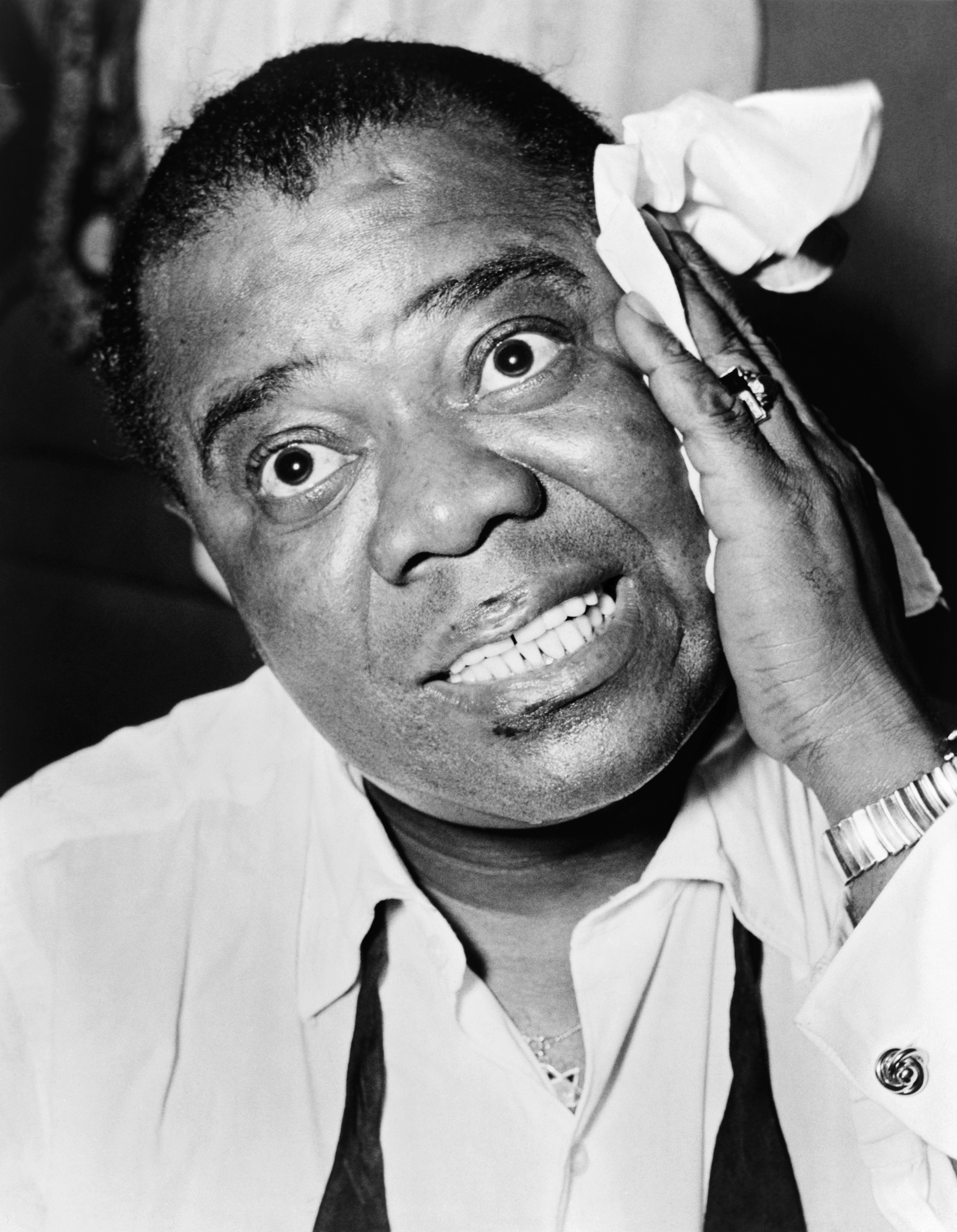
1969 was a landmark year in many respects. Most notably, the year saw a man walk on the moon. Of much lesser note, 1969 witnessed George Lazenby take on his sole (some say, forgettable) performance as the iconic spy, James Bond. I am not a Bond fan, seeing as nothing is entertaining about an unrepentant philanderer. Yet, I do enjoy music. Thus, I am familiar with this Bond movie because of its soundtrack, which featured a Moog synthesizer for the first time in its main theme. Louis Armstrong recorded the love theme for On Her Majesty’s Secret Service. The song was titled, “We Have All the Time in the World.” It was Armstrong’s last studio recording. 1Sadly, he was too weak to play the trumpet during the piece, performing only the vocal. 2

The love theme belies the movie’s sad ending well. Music composer, John Barry, chose Louis Armstrong to do the vocal for the love theme precisely because he felt that Armstrong could deliver the titular line with irony. 3 The song’s title is Bond’s last spoken dialogue in both the Ian Fleming book and the film of the same name. I doubt I am spoiling a movie that is 50 years old by revealing its ending but provide warning that there is spoilage ahead.

With the sixth Bond installment, Bond is finally allowed to fall in love and marry. In the closing moments of the story, however, the antagonist kills Bond’s wife as they are heading out on their honeymoon. The movie’s love theme, as an instrumental, Armstrong’s vocal performance, and several reprises play prominently throughout the film’s score. Hence, this pretty false promise crashes down under the weight of reality in the end. Not even spies saving the world have time promised to them.  The atypical Bond ending makes it more of a cult favorite among fans of the franchise. It didn’t do well at the box office. Of course, that may likewise be attributable to Sean Connery’s absence from the screen. Critically, the movie is well received, with at least one reviewer considering it the third best film of the franchise. 4

I think this subject strikes a chord with me more because of it being Armstrong’s last recorded song than for anything otherwise related to On Her Majesty’s Secret Service. Armstrong is a man of declining health singing about having all the time in the world. I wonder if Armstrong had a sense that he was nearing his departure. In the final years of his life, Armstrong battled poor health but went against the advice of physicians by continuing to tour and perform. 5 I suppose one may chalk that up to dying doing what one loves?

But what of us? Do we ignore the stark reality of James 4.14? We are like the morning fog burned away by the rising noontime sun. And sometimes our lives are such that even if lengthy we may sound as Jacob speaking to the pharaoh: “The years of my sojourning are one hundred and thirty; few and unpleasant have been the years of my life…” (Genesis 47.9 NASB). Even so, we act as if we have all the time in the world. Jesus reminds us that we have but a small window in which to do what we must (John 9.4). Yes, the night is coming. Perhaps, you have been putting off those things you know must be done to save your soul or improve your example as a Christian. Don’t listen to Satan’s sweet melody telling you about the time you do not have. Your only time is now.

“Behold, now is ‘the acceptable time,’ behold, now is ‘the day of salvation’” (2 Corinthians 6.2b NASB).


REFERENCES

1 “On Her Majesty’s Secret Service (Soundtrack).” Wikipedia, Wikimedia Foundation, 24 June 2020, en.wikipedia.org/wiki/On_Her_Majesty%27s_Secret_Service_(soundtrack).

2 “We Have All the Time in the World.” Wikipedia, Wikimedia Foundation, 14 July 2020, en.wikipedia.org/wiki/We_Have_All_the_Time_in_the_World.

3 ibid

4 Hausmannsgate. “All 25 Bond Films, from the Best to the Worst.” IMDb, IMDb.com, 21 Nov. 2015, www.imdb.com/list/ls055107293/.

5 “Louis Armstrong.” Wikipedia, Wikimedia Foundation, 2 Aug. 2020, en.wikipedia.org/wiki/Louis_Armstrong#Death.

louis_armstrong2

Mbah Gotho, Methusaleh, And Mortality

Screen Shot 2019-09-30 at 11.21.58 AM
Neal Pollard

Incredibly, his residency card and his nation’s official documents, state his birthday as December 31, 1870 (The Guardian). For clarification, that was almost three weeks before Germany became an official nation, only five years after the end of the Civil War (reconstruction was just underway and Ulysses Grant was president), 28 years before the Spanish-American war, 33 years before the airplane was invented, 44 years before the start of World War I, and America was less than 100 years old. Mbah Gotho died in 2017, making him 146 years old at the time. The only reason it is questioned is because his native Indonesia did not begin recording births until 1900. Officials stand firm that it is accurate. Can you imagine? What was it like to live almost a century and a half? To see almost all of 15 decades? 

To put it in perspective, the ancient Methuselah lived almost seven times longer than Mbah. He died at almost 1,000 years old.  Genesis 5:27 faithfully records, “So all the days of Methuselah were nine hundred and sixty-nine years, and he died.” Methuselah was contemporary with Adam and Shem, a gap of over 1,600 years. In a day of pristine gene pools and a water canopy-covered atmosphere, everyone and every thing lived much longer. But God determined a general rule of thumb to which humanity has almost universally submitted, saying, “Then the Lord said, “My Spirit shall not strive with man forever, because he also is flesh; nevertheless his days shall be one hundred and twenty years” (Gen. 6:3). Thus, an Mbah Gotho is an almost singular oddity. The official oldest age in modern times was reached by Jeanne Calment, who was 122 when she succumbed in 1997. 

Average life expectancy throughout much of recorded time falls more closely in line with what Moses states, in Psalm 90:10, somewhere between 70-80 years of age. War, disease, famine, poverty, and the like sometimes curtail those numbers, but what is true of those who die at birth or who make it 122, 146, or even 969 years is that they do die. Hebrews 9:27 affirms the inevitability of it barring only the second coming of Christ in one’s lifetime (1 Cor. 15:52).

Most people make decisions as though they will live forever. People who know better put off obedience to the gospel, put other things before Christ in their priorities, serve sin, and neglect their reason for existence. While too many do this in ignorance, how tragic for the untold number who know how they ought to spend their lives but either deny or delay doing it. The moment of surrender will come. The body and spirit separate (Jas. 2:26). The body returns to dust and the spirit returns to God (Ecc. 12:7). At death, one’s eternal existence begins (Mat. 25:46). God gives one only the moments between birth and death to prepare for that existence, but He does not tell any of us how long that is. He simply tells us to be ready (Mat. 24:42,44). May we all get ready and stay ready for that day!