The Fleeting Nature Of Legacy

Lessons From The Parable Of The Rich Fool

Brent Pollard

The breadth of human recollection is rather fleeting. In merely three generations, the essence of most lives—their trials, victories, and the simple moments of each day—slips quietly into the shadows of forgetfulness. Though history may enshrine its Shakespeares and Einsteins, the greater multitude of us shall fade into obscurity, our tales slipping quietly into the annals of time. This obliteration of individual narrative unfolds through various avenues. As time flows onward, the clarity of memory tends to wane, and the stories of those who came before us, beyond the realm of our grandparents, often fade into a misty obscurity. Families frequently choose to uphold only sure tales, usually centering on those kin who have forged remarkable legacies while permitting others to fade quietly into the obscurity of yesteryear. Those who depart this world without the blessing of children tread a more arduous road to remembrance since their narratives rest solely upon the commitment of distant kin to keep them alive in memory. In this age of mobility, it is all too common for families to drift apart, their bonds fraying and shared memories fading into the ether. The myriad forces at play—natural memory decay, the art of selective storytelling, the absence of children, and the scattering of families—combine harmoniously to guarantee that our recollection barely reaches a century for most of us.

The fleeting essence of human memory imparts a significant lesson regarding the quest for legacy through earthly riches, a truth vividly depicted in the Parable of the Rich Fool (Luke 12:13-21). In this narrative, a man of considerable means is convinced that his vast possessions will safeguard his future and ensure his legacy. Yet, in a twist of fate, death arrives to strip away the significance of his meticulously crafted designs. The inquiry posed by the parable—”Then who will receive what you have laid aside for yourself?”—gains a more profound significance when we reflect upon the fleeting nature of our very names within the tapestry of family remembrance. If destiny determines to erase our lives from memory within a few generations, the quest for wealth, as the means for leaving a legacy, reveals itself as a pursuit devoid of true purpose. Instead, this poignant truth beckons us to reflect upon what genuinely lasts: the far-reaching impacts of our connections, the principles we impart to those around us, and the uplifting transformations we foster within our communities. Though the allure of worldly achievements may offer fleeting solace, the unseen connections we forge—the impact we have on the lives of others, the insights we impart, the affection we extend—hold the promise of resonating far beyond our time on this earth. This viewpoint invites us to redirect our attention from the mere gathering of riches to the nurturing of a more profound spiritual and relational abundance, one that may surpass the limits of recollection, thus fostering a legacy that is both meaningful and lasting.

Rather than entangling us in a web of despair, the certainty of being forgotten liberates us to embrace life with greater authenticity and purpose. When we free ourselves from the weighty expectation of leaving a tangible legacy, we understand a profound reality: our authentic influence is not measured by what we bequeath but rather by how our deeds resonate through the ages, often beyond our sight. The folly of the Rich Fool lay not merely in his accumulation of riches but in his profound misunderstanding of the enduring legacy that binds one generation to another through unseen threads of influence. A gentle word uttered in the present may resonate within a family’s principles for generations; a selfless deed could ignite a legacy of generosity that endures beyond our remembrance; a fleeting insight imparted might influence choices long after its origin fades from memory. This insight reshapes our perspective on the fleeting moments life grants us. Rather than laboring to erect grand monuments in our honor, let us turn our efforts to sowing seeds of virtue that will blossom long after we have departed. We may find solace in the understanding that our impact can persist, even when our names have slipped into the shadows of time. This parable extends beyond its sacred beginnings to impart a wisdom that resonates universally: a profound legacy continues to yield fruit, even when circumstances cut it from its roots.


Being Prepared

Robert Warren

Let’s travel back in time to 1981, my freshman year in marching band at
Goodpasture Christian School in Nashville, Tennessee. We won the single A state
championship that year. Actually Goodpasture’s band won the state championship
in ’79, ’80, ’81, ’83 and several more consecutive times after I graduated in 1985.
Needless to say we took it very seriously. Friday night football game halftime
performances were seen as practices for band competitions the next day. We
marched during class time during the school period and from 3:15 until around 6:00
after school, except on Wednesdays when we let out a little early to make sure we
could get to church meeting on time.

We also had band inspections before our performances, including football
games, that were very similar to the military in style. We stood at attention while
our section leaders inspected our uniforms, our instruments, and our focus. Our
instruments had to pass the white glove test for cleanliness. We could be given
demerits for failing inspections, which would affect our grades given on report cards.
We were expected to be prepared.

One of the first contests we went to my freshman year was the MTSBOA
invitational. We were not placed in a first, second or third order, but instead we
received scores of our performance. It was a good way to prepare for future
competitions. Of course everyone wanted to be given the highest score possible.

The first part of this contest took place inside at a designated time. It was essentially
an inspection from a judge of the entire band at one time. The upperclassmen had
been preparing us freshman on every aspect of this inspection, as it could affect the
whole band’s overall score if we messed it up. We were not only to stand at attention
and not move, but if a judge stopped directly in front of you, you were to present
your instrument to him in a precise manner. If they asked you any questions you
could only answer them with the serial number found on your instrument you were
supposed to have memorized. They usually only stopped in front of 2, or 3 people
out of the entire band, so we were told to be prepared, but not to worry about it
because they probably won’t stop in front of you. You guessed it, they stopped in
front of me. I’m sure the rest of my line was holding their breath like I was. But I
was ready. I performed the way I had prepared. The band got their high score and I
didn’t mess it up for everybody.

When I took tests in school, if I had studied and prepared myself, I was usually
not nervous. But if I was not prepared, I was a wreck. Even now the more I prepare
before I speak in front of people, or teach a class the less nervous I am. There is a
direct connection with being ready and prepared and an inner peace.
Matthew 25:1-13 is a story Jesus tells about 10 virgins, 5 who are prepared
and 5 who are not. These virgins may have been more like how we would think of
bridesmaids. Weddings were held more towards evening and the lamps were
probably like torches wrapped in oil soaked rags.
Nelson’s New Illustrated Bible Dictionary describes weddings like this:
the bridegroom was accompanied by his friends, by musicians and
singers and by persons bearing torches. The groom received his bride
from her parents, then he conducted the whole party back to his own
house, or his father’s house with song, music and dancing. On the way
back they were joined by additional friends of the bride and groom. A
feast was served and celebrated with great joy.

The virgins, or bridesmaids were waiting for the bridegroom. Apparently
bridegrooms were often late and their comings were repeatedly announced until they
arrived. It would have not been uncommon to need extra oil. Five were prepared.
Five were not prepared and missed the procession back to the groom’s house along with
the singing and dancing and were shut out of the feast and celebration (Matthew 25:1-13).

We do not know when Jesus is coming to claim His bride. We have to always be
prepared and ready. As the five foolish, or unprepared virgins discovered, you
cannot expect others to be prepared for you. It is an individual decision to be ready.
If you have not put on Christ in baptism, why wait? If you are already a Christian,
but need to make your relationship with God right, don’t wait.

Firefighters And Word-Spreaders

Dave Steeves (photo credit: Holly Steeves)

Grant Wilson and I were in the Navy back in 1992, some 32 years ago. As Grant will tell you, it was a culture shock for both of us. A little more for Grant seeing as how it was his first time out of Smiths Grove. It would be an understatement to say we didn’t know what to expect when checking on board the ship; we were sure, however, that we would experience things that were new to us. I came on board the ship as an undesignated sailor, meaning that I didn’t have a particular job, I was just a member of the department that cared for the outside areas of the ship. The jobs were many but the most disliked was chipping paint, sanding, and painting. Standing the midnight watch in the pilothouse was a close second. It was also tasked to each sailor to be part of the ship’s firefighting team. This is a fact that I was aware of from the training we received in bootcamp, but didn’t fully understand what that would be like on board. You see, when we are out to sea there is no fire department to call, it’s just us in the middle of the ocean, often times hundreds of miles from shore or another ship for that matter. It’s up to us whether we sink or swim (quite literally).

  When we become Christians, we also have “jobs” that we may or may not like or be totally comfortable in doing. I for one, am uncomfortable getting up and speaking. But I know this helps me grow as a person and in my walk with Christ, I also am hopeful that it will be helpful for those that read this. We’ll never know the good we do until we get to the end of this life. But that doesn’t stop us from striving to have a closer walk with our Heavenly Father.

   In the parable of the sower we see that there are four different types of soil.

     Mark 4:3-9 it reads…….

”“Listen! Behold, a sower went out to sow. And as he sowed, some seed fell along the path, and the birds came and devoured it. Other seed fell on rocky ground, where it did not have much soil, and immediately it sprang up, since it had no depth of soil. And when the sun rose, it was scorched, and since it had no root, it withered away. Other seed fell among thorns, and the thorns grew up and choked it, and it yielded no grain. And other seeds fell into good soil and produced grain, growing up and increasing and yielding thirtyfold and sixtyfold and a hundredfold.” And he said, “He who has ears to hear, let him hear.”“

   We know that the different types of soil are indicators of the condition of the heart. It’s important to see here that the Bible is telling us that although we may not be aware of the condition of the hearers heart, we are still to share Gods word with those we come in contact with.

Mark 16:15 “Go into all the world and proclaim the gospel to the whole creation.“

  That verse does not tell us to be sure the people you’re speaking to are ready to hear the good news; it simply says to go and proclaim the word of God. The power of the good news does not lose its value or have its value diminished because the person listening isn’t ready to hear it. That is a very important lesson for us to learn in this passage. But that’s not all we can glean from this parable. The sower is mentioned in Mark 4:3, but is not mentioned again. You see the emphasis is on the condition of the soil/heart, NOT ON THE SOWER. This is a very important point that I think is missed far too often. You see those who have obeyed the gospel and have been added to the Lord’s family have an obligation. Much like on board the ship when I realized that I WOULD IN FACT BE A FIREFIGHTER. It was expected of me when I was sworn in .

I didn’t have a choice anymore. I didn’t sign up for part of the Navy. I signed up for all of it. I wrote a check to the United States Navy with no clear amount noted. Meaning, that I would give everything I had.

   If we are members of the Lords family, we ARE EXPECTED TO SPREAD HIS WORD. We can’t be half-in when it comes to God’s family. Those of us that have been baptized into God’s family are all the way in. We shouldn’t be fearful of that fact–that should give us comfort. Just like on board the ship, there is work to be done but we will never be doing that work alone. We have our Heavenly Father beside us. We have His word to guide us and we also have each of our brothers and sisters in Christ to support us.

   The sower was mentioned almost in passing. Let’s not lose that important point. You see the sower isn’t responsible for the increase. That is on God’s capable shoulders. That fact should free us to not worry as much about the response or lack thereof from those we study with because that’s not what we are called to do. We are called to spread the good news. It is GOD and GOD alone that gives the increase. Our job is to proclaim the word of God to all, not to shoulder guilt if the person we study with doesn’t obey the gospel. This should be a freeing realization to us all, allowing us to continue to spread the word and plant seeds in hopes that those seeds may grow and add another soul to the book of life.

Thoughts On Love (Part 2)

Gary Pollard

Love for other people means taking care of them, even if we don’t like them. We’re also expected to love God with all of our heart, soul, mind, and strength. How is it possible to show love to God the same way we show love to people? It isn’t possible, because God needs nothing. Everything we have comes from him, so we cannot give him anything he doesn’t already have. 

Jesus told a story about two sons. Their father asked them to work in the field — one of them said, “I will,” the other said, “I won’t.” The one who agreed to work never went to the fields, and the one who didn’t want to work eventually worked. Who actually did what their dad asked them to do? 

We show love for God by doing what he wants us to do, even if we don’t want to do it. It’s very difficult (often bordering impossible) to love our enemies. But if we love God, we’ll love our enemies. In our current political climate, it’s very tempting to violate the unconstitutional policies that have been shoved down our throats for decades. But if we love God, we’ll follow every law that doesn’t demand sin on our part. If we ever reach a point where our physical safety is threatened because of our faith, we will remain passive if we love God. 

Having love for God means doing what he wants us to do. John makes it very clear that we cannot love God and hate other humans at the same time. We cannot love God and neglect our Christian family. The point of love is to prove the goodness of God! If we love God with all of our heart, soul, mind, and strength, the natural expression of this is to take care of the people God created! Loving God means emulating his nature — God is love. He proved this by sacrificing his son while we were neck-deep in violating everything he holds sacred. We deserved nothing, and he gave us everything. If we love God, we try to emulate that level of sacrifice for other people. 

That Won’t Do It

Neal Pollard

The parable of the two brothers in Matthew 21 was an early favorite of mine in childhood, though it had nothing to do with the fact that I have a brother. Of course, the focus is on each of their relationships with the Father more than their relationship to each other. Jesus is illustrating, as He often does, the fact that the sinners would accept Him before the corrupt religious leaders would. Yet, the fundamental problem of the Pharisees, as Jesus points out in this parable, is their profession without proper performance.

By application, how tragic are intentions without attending actions. The second son who said he would not but did is commended for his change of heart. Do we ever see any who follow the example of that second son?

* “I will not do it.” Jesus’ point was not to refer to that large class of people who say they will not, then follow through. Obviously, though, an unwillingness to serve Christ and those He died to save is not commendable. Keeping our word not to be involved or committed just won’t do!

* “I ought to do it.” Here’s the remark of someone with enough conscience to know what is right, but not enough desire or discipline to make the “ought” the “is.” That just won’t do! 

* “I may do it.” This is the word of someone who has decided not to decide. Tomorrow is always their best work day. They are ever deciding, but never deciding. Of course, neither will this do!

God’s ideal servant is the one who says he will, then does it. As Jesus shows in this parable, He is even pleased with the stubborn whose heart is softened. Yet, the above groups’ attitudes just won’t do, literally and figuratively!

“Prepare for the Unexpected”

Brent Pollard

As I prepared for an appointment, the television commercial advised me to take advantage of their services so that I could “expect the unexpected.” I’m not too fond of that phrase. It could be considered a pet peeve. The statement’s paradoxical nature irritates me. It is impossible to anticipate something that is, by definition, unexpected or unforeseen. So, why do we keep using this illogical expression? 

Since I grasp this idiom’s meaning, I recommend replacing it with “prepare for the unexpected.” The second option is feasible for us. Since we anticipate the possibility of unexpected events, we can plan accordingly to deal with or adapt to them. It’s like preparing for an accident by stocking your first aid kit with bandages for occasions when you get a cut or scrape. You didn’t know you would get that cut, but you had a dressing ready just in case.

Spiritually, Jesus tells us to prepare for the unexpected. Contextually, the unexpected is His Second Coming. To teach us this lesson, Jesus told the Parable of the Ten Virgins (see Matthew 25.1–13). The titular maidens are members of the bridal party. Unbeknownst to most contemporary readers, weddings in the first century were a different type of affair. 

The bridegroom’s arrival was cause for both celebration and anticipation in first-century Jewish wedding customs. After the engagement, the bride would wait at her father’s home for her future husband to come and take her away. The groom had complete control over when this occurred. 

The groom frequently transformed the process into a joyful game or challenge in which he attempted to surprise the bride and her attendants. This element of surprise heightened everyone’s excitement and enthusiasm for the party. Shouts announced the bridegroom’s arrival, so the wedding party members had to prepare to join the procession anytime, even after dark.

The five prudent virgins were ready for whatever might happen. They had brought extra oil because of the potential for the groom to be late. Those considered foolish should have considered the possibility of the bridegroom arriving late at night. According to the parable, the shout announcing the bridegroom’s arrival woke them up. 

The foolish virgins woke without oil for their lamps and asked the wise ones to borrow some. The wise virgins said they didn’t have enough oil to spare for the foolish virgins’ lamps. The bridegroom led the wise virgins to the wedding feast while the foolish virgins went to get more oil. By the time the foolish came, it was too late; the groom shut the doors. 

Jesus ends the parable by telling us to be alert since we do not know the day or the hour of His return. Hence, you and I must prepare for the unexpected (i.e., the Second Advent).

We need general preparedness. The most crucial general preparation is to obey the Gospel. For those who felt the weight of their sins on the Day of Pentecost, Peter preached repentance and baptism (Acts 2.38). Individuals submitting to baptism resulted in church growth. The Bible says that the Lord kept adding to that number those He saved (Acts 2.47). Once one is a part of the Body, he must make other general spiritual preparations such as prayer, good deeds, and maintaining a solid relationship with God (see 1 John 1.7).

We need mental preparedness. Christians should have a strong faith and accept that God’s timing may not coincide with their own. Like the bridegroom in the parable, we cannot know when Jesus will appear “with a shout, with the voice of the archangel and with the trumpet of God” (see 1 Thessalonians 4.16 NASB). Predicting when our Lord will return is fruitless, but people have been trying for years. Jesus declares that not even He knows when that day will be, only His Father (Matthew 24.36). Thus, we don’t know the exact date, but we know that God has chosen it (Acts 17.31). 

We need to practice risk management. Believers waiting for Christ’s return should take precautions against the spiritual “risks” or pitfalls that could undermine their faith or readiness. Do you remember what Jesus taught in the Sermon on the Mount? If your right eye and right hand are the source of your sin, Jesus says it is better to have them amputated than go to hell as a fully functional human (Matthew 5.29-30). Jesus isn’t suggesting we physically cut out our eyes, but instead that we turn away from the things that trigger our lust. Jesus isn’t telling us to cut off our hands, but rather that we turn away from the things that trigger our greed. The gates of hell are not a place where Christians play chicken. Instead, we manage risks. 

In conclusion, even though paradoxical sayings like “expect the unexpected” can be annoying, “preparing for the unexpected” is a powerful reminder of the deeper truths embedded in our spiritual journeys. Like the prudent virgins in Jesus’ parable, we must be ready for anything, including the unanticipated events of everyday life and, most importantly, the return of Christ. There are many facets to this kind of readiness, including general and mental preparedness, recognizing our human limitations when it comes to divine timing, and taking proactive measures to protect our faith from harm. 

Let us go beyond waiting for the Lord’s return and establish ourselves in purpose, deed, and unwavering faith. By getting our heads and hearts in the right place, we anticipate His return and make strides toward spending eternity with Him.

The Soil Is Stressful

Dale Pollard

The farmer threw seed and some fell on the pathway and was eaten by birds. Some seeds fell on shallow soil, sprouted quickly, but were scorched by the sun. The sower continued to throw out the seed but it fell among thorns and the young plants were choked out before maturity. 

In Matthew, Mark, and Luke, each inspired author writes the same story. Their accounts provide additional insights and details but all of them provide the key to every parable Jesus told. Three of the four soils are deadly while only one is capable of producing healthy plants. 

The sower is the Savior, the seed is salvation, and the soil are the souls. This particular story is well known by most of the religious world but its implications can’t be overstated or overstudied. Throughout the gospels we read of the multitudes that followed Jesus everywhere He went and the crowd largely consisted of societal castaways. The demon possessed, the terminally ill, the crippled, and the spiritually challenged were more than just a handful.

Jesus Dealt With The Dirtiest Dirt 

They were dangerous. On occasion the crowds threatened the life of Jesus and His disciples (Mk. 3.7-10). 

The were demanding. Jesus would seek solitude after receiving news of John the Baptists’ death. When the needy crowd learned of His location they swarmed Him (Matt. 14.14). 

They were disloyal. In spite of the evidence they heard and saw, many disciples would walk away from the Savior (Jn. 6.59-71). 

The ministry of Jesus was a labor of love and it reminds us how undeserving we are to be the recipients of it. Let’s not forget that we’re soil surrounded by soil. People (souls) are not to be seen as an inconvenience, source of frustration, or the cause of our recoil. Let’s sow with our Savior and like our Savior because that’s part of what being good soil is all about. 

A Surprising Find

Thursday’s Column: Captain’s Blog

Carl Pollard

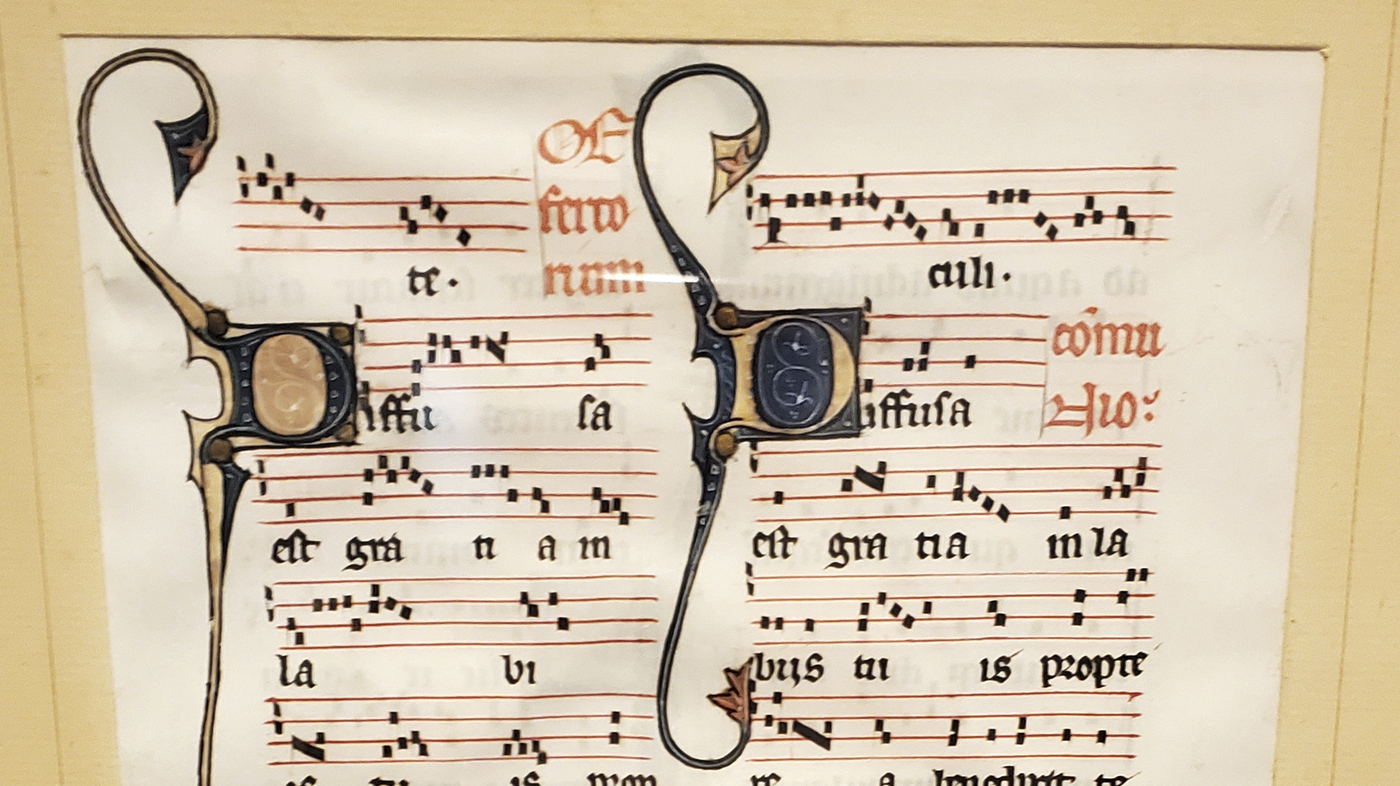
I recently read a news article about a bargain hunter that went to an estate sale in Portland, Maine, to find a KitchenAid mixer. Rather than finding his kitchen appliance, he ended up walking away with a 700 year old treasure. Will Sideri stumbled upon a framed document hanging on a wall that caught his eye. It had an elaborate script in Latin, along with musical notes and decorative gold edges. Based on what he’d seen in a manuscripts class at College, he figured that this document was from the medieval ages. And it was a bargain at $75. Academics confirmed the parchment was from The Beauvais Missal, used in the Beauvais Cathedral in France, and dated to the late 13th century. It was used about 700 years ago in Roman Catholic Church. An expert on manuscripts said the document, first reported by the Maine Monitor, could be worth as much as $10,000. Will Sideri walked away with a priceless treasure that cost him just 75 bucks.

This news story reminded me of a parable taught by Jesus in Matthew 13:44. It reads, “The kingdom of heaven is like treasure hidden in a field, which a man found and covered up. Then in his joy he goes and sells all that he has and buys that field.” In this short verse we read that: 

  • The treasure is hidden 
  • The treasure is valuable 
  • Sacrifice was needed to gain the treasure
  • The field was bought, but the treasure came free 

What did Jesus mean with this parable? You can’t find The kingdom without looking (the treasure was hidden). Seek and you will find (you’ll never find it if you aren’t looking). The kingdom of God is valuable, and sacrifice is required to obtain the kingdom. The man in this parable joyfully went and sold everything. The Kingdom is freely given. When we seek and sacrifice for Christ, he freely gives us grace, mercy, peace and salvation. 

Will we recognize the value that is found in the Kingdom of God?

Loving the Lost, Part Three: The Lost Coin

Thursday’s Column: Captain’s Blog

Carl Pollard

In Luke 15:18-10, Jesus says,

“Or what woman, if she has ten silver coins and loses one coin, does not light a lamp and sweep the house and search carefully until she finds it? When she has found it, she calls together her friends and neighbors, saying, ‘Rejoice with me, for I have found the coin which I had lost!’ In the same way, I tell you, there is joy in the presence of the angels of God over one sinner who repents.”

I don’t want to throw my brother, Dale, under the bus, but that dude loses everything. It’s almost a daily occurrence where he will ask me if I’ve seen his keys, or wallet, or shoes, or his car. There’s something about losing a valuable that unsettles us. We search and search and search for it. But when we finally find it, we’re thrilled. 

The coin this woman was looking for was worth about one day’s wage. In today’s standards that’s about $3.25. Time and time again Luke stresses the value of one. Forget about the nine other coins, the one missing is what has value. If only we had this mentality with the lost souls around us. Imagine the impact we could have if we put this kind of energy into saving someone who is lost. 

In Luke 15 Jesus tells us that you can be lost out of ignorance (the sheep), you can be lost out of carelessness (misplacing the coin), and finally you can be lost by choice (the prodigal son). Just because one was out of ignorance and one was out of carelessness, does not negate the fact that they are lost. A found soul causes joy in heaven!

Loving the Lost (Part 2): “The Lost Sheep”

Thursday’s Column: Captain’s Blog 

Carl Pollard

Luke 15:1-7, 

“Now all the tax collectors and the sinners were coming near Him to listen to Him. Both the Pharisees and the scribes began to grumble, saying, “This man receives sinners and eats with them.(background of parables)” “So He told them this parable, saying,”What man among you, if he has a hundred sheep and has lost one of them, does not leave the ninety-nine in the open pasture and go after the one which is lost until he finds it? When he has found it, he lays it on his shoulders, rejoicing. And when he comes home, he calls together his friends and his neighbors, saying to them, ‘Rejoice with me, for I have found my sheep which was lost!’ I tell you that in the same way, there will be more joy in heaven over one sinner who repents than over ninety-nine righteous persons who need no repentance.”

Sheep aren’t the smartest of animals. They can be spooked easily and if their wool gets out of hand they can get stuck just by falling over. It’s very fitting that we are compared to sheep. We don’t always make the wisest decisions, but if we would just follow the shepherd we would never have a problem. 

There are numerous ways that we can become lost, but many times it is due to our own ignorance. Just like a sheep. We become a meal for the devil the second we leave the protection of the shepherd. God’s love for the lost is something that is truly inspiring. 

Animals tend to have a wandering nature about them. We are no different in that sense. We want to wander and explore. But it can be eternally damaging if we lose our soul in the process. So many different kinds of sins can peak our interest or get us curious. But Satan has been tempting Christians for 2000 years. He knows what works. He knows how to get a Christian to wander away from the shepherd. But it happens. People do fall away. 

Thankfully that isn’t the end of the story. The shepherd longs for his sheep to return. He goes out and finds it, and when he does he’s joyful! God rejoices over our returned souls! Do we understand the pain we cause God when we fall away? Each one of us has the personal choice to make, Will I please God? Or will I break His heart? Many people have chosen to desert God. We must imitate the Father in loving those who have gone astray. We must show the same concern that this shepherd had for his sheep.

Loving The Lost (Introduction) pt. 1

Thursday’s Column: Captain’s Blog

Carl Pollard

Over the next few blogs I want us to explore one of the Bible’s most powerful chapters, Luke 15. These parables spoken by Jesus transformed the lives of those who heard back then, and continue to do so today. 

I was six years old and had no idea where my parents were. Every time we went to Walmart, mom would tell us to stay by her side. But I saw the coolest toy dinosaur I had ever seen. So I went to go look at it, and got lost. I ran up and down aisles but I couldn’t find her. So I started crying and just stood there. Eventually mom found me, and apparently they had been announcing over the loud speaker that my mom was up at the front, but I never heard. 

It’s a terrible feeling to be lost. We’ve all experienced it before. There’s a very special chapter in the book of Luke. It’s called by many, “God’s Lost and Found Department.” Luke 15 contains three parables that convey God’s love for the lost. If we want to be a true child of God we must love what the Father loves. In this chapter we find three examples of the lost and God’s love for them. In this chapter, one of the things that stands out the most is God’s concern for sinners, but also His overflowing joy for their return. In this chapter we will understand better God’s love for mankind and the value of a soul. The true Christian will try to imitate this same love for the lost soul that is found here in this chapter. 

I encourage you to read Luke 15 with God’s powerful love in mind. See you next week.

The Parable Of The Lost…Hen?

Monday’s Column: Neal At The Cross

Neal Pollard

Five hens were safely back in the coop, but one would not go back inside. When the man and his wife tried to coax her back in, she began darting left and right and back and forth. The closer the couple came to her, the more frantic she grew. She darted away from her house toward the woods. When the man went after her, she flew over the fence and deeper into the neighbor’s woods. The man and his wife went inside their home and waited. Later, the hen was back outside the coop. Her sisters were pacing inside their run and she was trying to go head first through the small square of the welded wire to join them. The man and his wife herded her into the corner where the coop meets the run. The man caught the frantic hen as she tried to fly away. As he held her and tossed her inside the coop, she squawked and wailed the whole way. A few minutes later, she was mindlessly and meekly scratching and pacing with the rest of the girls. 

It was tempting to let her go, to conclude that she asked for that. But, we thought about the feed and care that has gone into her, the fact that she is just about ready to start laying eggs, but also the humane aspect. There are so many predators on or near our place–foxes, raccoons, snakes, hawks, coyotes, a bobcat, and even an occasional long-tailed weasel. We also have seen the carnage that befell a Green Egger in this current flock. So, we did not give up on Pearl. She’s safely home and doing the things hens do, scratching, pacing, eating, and so forth. 

I could not help but think how often I act like Pearl. My Father has given me so much. He supplies my every need (Phil. 4:19), and then some! He takes care of me (Mat. 6:25-32) and has my best interest at heart. He has invested more into me than I can possibly comprehend (John 3:16). Yet, so often I fail to trust Him and even run away from Him in favor of my own, misguided way (Prov. 3:5; 14:12). When I go astray and get into harmful predicaments, I reveal a rejection of His wisdom in favor of my own folly. I don’t have near the excuse of a chicken. Despite journal articles outlining the spatial capacities, very basic arithmetic capacities, complex communication system, and complex emotions of chickens, the most generous assessment is that they are, at best, of average intelligence in the animal world and not remotely comparable to humans. Of all God’s creation, only we are made in His image (Gen. 1:26-27). Only we were valuable enough to Him that He devised a plan to save us from our sins. 

Why would I run from Him? Why would I evade His care and His guidance? Why would I protest and fight His efforts to help me and bring out my best good? While the parable in Luke 15 and the 23rd Psalm are about sheep rather than poultry, the reminder is spot on: “He makes me lie down…He leads me…He restores my soul…He guides me in the paths of righteousness” (Psa. 23:2-3). He is with me, He comforts me, He generously provides for me, and He heals me (Psa. 23:4-5). The Bible helps me see the big picture, to see beyond the desires of the flesh and the perceived need of the moment. God wants me to trust Him and follow His way. May I be “smart” enough to know that and never run away! 

An update from this afternoon: Pearl is on the nest!

Jesus Has All Authority

Monday’s Column: Neal At The Cross

Neal Pollard

Jesus has come to Jerusalem and taken the gloves off. By His unparalleled authority, He is directly challenging the religious establishment whose shallow righteousness has been rejected by His Father. He has come to take the Old Law out of the way and establish His church. It’s teaching like this parable in Luke 20:9-18 that will provoke those leaders to the point that they will trump up charges and bribe false witnesses to arrest, try, and have Him crucified. This parable is stark and shocking, and the moral as heavy as an anvil. Notice.

THESE LEADERS WERE GUILTY OF IMPROPER STEWARDSHIP (9). The “man” in the parable represents God, the Father. He made Israel a nation and gave the Jews a Law to follow and keep. The Jews, particularly the religious leadership, were entrusted with faithfully carrying it out, but they did not. 

THEY WERE GUILTY OF TAKING WHAT DIDN’T BELONG TO THEM (10). In fact, these leaders–dubbed “the vine-growers” by Jesus in this parable–thought that they were in charge. They sought to make people subject to them, to follow their rules (cf. Rom. 10:3-4). The end result was vain religion (Mat. 15:8-9).

THEY WERE GUILTY OF ABUSING THOSE SENT TO THEM (11-15). The “slaves” sent to them were presumably prophets and teachers, no doubt inclusive of John the Baptist. These were the Father’s spokesmen, come to teach and correct them. Each one sent was treated the same, sad way: they “beat him and sent him away empty-handed.” Last of all, the son was sent (13-14). The “owner” (the Father) sent Him, saying, “I will send my beloved son; perhaps they will respect him” (13). Instead, seeing Him as the heir, they plotted to kill Him (14). Obviously, Jesus is referring to Himself and the very thoughts these religious leaders were thinking as He told the parable! 

THEY WERE GUILTY OF LOSING WHAT WAS ENTRUSTED TO THEM (16-18). Instead of being convicted by this parable, these religious leaders recoil at the moral of the parable: “What, then, will the owner of the vineyard do to them? He will come and destroy these vine-growers and will give the vineyard to others” (15-16). Their emotion boils over and they audibly reply to Jesus’ parable, “May it never be!” They missed the travesty of the behavior they and their forefathers had shown to God’s messengers and the sin they were about to perpetrate on His Son. They didn’t want to lose their grip on the power and influence they had taken. But Jesus doubles down, changing the imagery from a vineyard to building construction. They were going to reject Jesus, the stone, but He would be made the chief corner stone. He would judge and destroy them, if they did not abandon their rebellion.

Jesus is full of love, kindness, and peace. But, that’s an incomplete picture of Him. He came to establish His rule and reign. He must be King and Lord of our lives. We must submit to His way and truth to enjoy His life. 

Open Bible on a black table with book marker and pink highlighting
Jesus Has All Authority

Showing Up When It Counts

Friday’s Column: Brent’s Bent

brent-portrait

Brent Pollard

I recall watching the Atlanta Braves when they were the perennial cellar dwellers of the National League. The Braves’ games were broadcast on UHF station 17 out of Atlanta before the little independent television station went national via cable and satellite. In those days of the baby blue uniforms and small letter “a’s,” I watched stars like Dale Murphy, Rafael Ramirez, and Phil Niekro play the game of baseball on a TV with rabbit ears.  

Fast forward to 2021, and the Atlanta Braves have won the World Series. It is interesting to talk to younger fans who only know of above-average play in the last few decades. Such fans are blissfully ignorant of those days when you could count on the Braves to have more losses than wins. Yet, I noticed something about this championship year. If you look at the records of the LA Dodgers (106-56) and Houston Astros (95-67), both teams won more games during the season than the Atlanta Braves (88-73). This truth suggests that it is essential to prevail when it counts. In other words, the Braves showed up when they had to, which is why they are the national champions.  

There is something to be said of that in Christianity as well. Regarding this, Jesus gave a parable about two sons (Matthew 21.28-32). A father went and asked his first son to work in the vineyard. He refused. So, the father went to his second son. The second son said he would go and work but never showed up. In the interim, the first son regretted his answer and went to work in his father’s vineyard. Jesus ends the parable by asking who had been obedient. The crowd responded that the first son had obeyed. Jesus informed them that there would be sinners entering the kingdom of God in like manner before the religious elite.  

The religious leaders were like the second son. They gave lip service but never actually followed the Law of Moses, only their traditions. As a result, they did not show up when it counted. But the prostitutes and tax collectors, cognizant of their sins, showed up when Jesus extended His invitation (Matthew 11.28-30). So, while it is true that there is none righteous (Romans 3.10), we still note that there are people who we count on to show up despite their flaws. Ultimately, this is what matters.  

As the saying that we attribute to Benjamin Franklin goes: “Well done is better than well said.” But, of course, this idea was Biblical long before the famous Pennsylvanian put quill to paper. James reminds us to be doers of the Word, not just hearers (James 1.22). It is far too easy for us to blend in with other congregants. “Worship, Fellowship, Retreat, and Repeat.” Now, I will be the first to say that worship service attendance indicates spiritual health, but there is a vineyard out there in which we must labor. The Father asks us to go out and work in the vineyard. What is our response? We will have fulfilled our required tasks even if we have previously said no by our words or conduct but have shown up anyway. Better to be a latecomer than a no-show. Yes, we must show up when it counts. A gracious God will make up for a less-than-stellar record and proclaim us champions (cf. Matthew 25.24). 


Jeff Burroughs (1977) (via http://atlantabraves19701980.blogspot.com)

DAFFODILS THAT DON’T BLOOM

Friday’s Column: Supplemental Strength

brent 2020

Brent Pollard

Like the robin, daffodils are a harbinger of spring. They begin blooming in late winter and create anticipation for the pretty spring flowers following. We planted our place in Appalachia with daffodils nearly 30 years ago. Today, we get few flowers in places where we planted them. We do have healthy-looking, green blades but no blooms. By their nature, a single daffodil bulb becomes an entire colony of bulbs within a few years because it reproduces by dividing at the bulb. Once so many bulbs are packed into a small space, the plant cannot receive enough moisture or nutrients to produce the desired flower. So, on the one hand, it’s great because just a few daffodil bulbs can yield an entire daffodil garden in a few years. On the other hand, to keep daffodils flowering one must periodically dig up these new bulbs and space them out so conditions remain conducive to their overall health.

When we think about Jesus’ parable of the sower, we likely think of the various soils presented therein. We pray we find the good soil as we go to plant the seed but realize since few are finding the strait gate and narrow way (Matthew 7.13-14), most of our seed falls on the other three poor soils. Of those poor soils, Jesus highlighted a group in whom the seed never produces fruit since they become choked by thorns (Luke 8.14). These thorny-soiled hearts didn’t recognize how detrimental their thorns were since they took the form of the cares and riches of the world. In like manner, we don’t see the problems posed by a bunch of healthy-looking, green blades where our daffodils ought to be. We keep hoping they will put on blooms, bringing us the testimony of God’s wondrous creation. Yet, conditions underground won’t allow for that.

Might I suggest those possessing thorny-soiled hearts can have a similar problem as the daffodil? It may be they don’t just wither and die (i.e. fall away). It may be they are sitting on the pew, where we planted them, looking as if they hold promise, but never producing blooms. Why? It may be their fruit is being crowded out by conditions at their root. We see no prickly thorns gathered around them. Yet, there are cares and concerns on the inside choking out God’s Word all the same. It is confounding since they may even greet us with a smile on their faces while being inwardly consumed by such things as anxiety.  If we do nothing, though, the results will be the same as if it were thorns.

It may be we need to lift these unproductive Christians to help them settle in a better environment conducive to their growth. We need to help them remove all the things choking their heart. We need to nurture them. Though we’re more considerate of the newborn in Christ, the overcrowding of the heart is a challenge potentially taking place even in the one who obeyed the Gospel years ago. Be your brother and sister’s keeper (Galatians 6.1; James 5.19-20). If you see a pretty green blade that never flowers, dig a little deeper. If one’s heart is being crowded out, help him find the space to bloom (Hebrews 3.13).

5262209_c01205ab

THE BOY WHO STAYED HOME

Neal Pollard

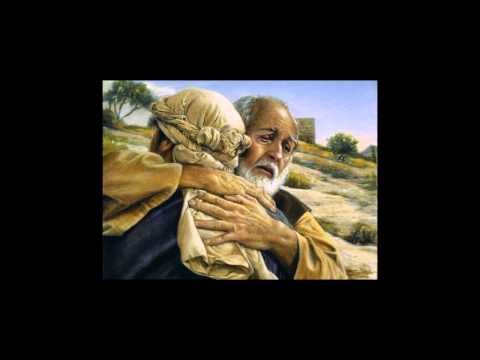
When we think of the parable in Luke 15, we inevitably think of the younger son who left home for the far country of sin. We appreciate God giving us the prodigal (reckless; wastefully extravagant) son in this parable to illustrate hope, love, and forgiveness, no matter what we may have done. Then we think of our favorite character in this story, the father. He represents God and reveals God’s eagerness to embrace and restore a sinner who repents. He gives the undeserved, unexpected, and unanticipated (cf. Eph. 2:4-8).

Then, there’s that other main character in the story. How does he strike you? After all, his brother has been reckless and irresponsible and his dad lets him off scot-free and even throws him a party. He robbed his father blind, and he isn’t even punished one bit. How do you see the brother who stayed home? Let at the text more closely and see how God sees him.

  • He was guilty of self-righteousness. He complains to the father about the reception his brother received (29). With self-righteousness, there’s an exaggerated view of our own goodness. There’s an exaggerated view of the other guy’s badness. There’s a comparison where we come out on top of the other guy. There are often judgmental assumptions made about the other guy. Let’s not forget that Jesus condemns self-righteousness (cf. Luke 18:10-14). If the Father walked up on some of our condescending conversations, He would spoil our fun since the spirit of self-righteousness is so far removed from the spirit of a loving Father who longs for His wayward children to come home.
  • He lacked self-control (28). He appears quick-tempered, not waiting for an explanation. We have the conversation between the younger son and the father, and the older son and the father. Where is the conversation between the two brothers. Didn’t he claim to be the good, righteous one? There was no self-control in the way he talked to his father or about his brother. “If anyone thinks himself to be religious, and yet does not bridle his tongue but deceives his own heart, this man’s religion is vain” (Js. 1:26).
  • He was selfish. Why did he wring his hands about the younger brother’s wasteful spending? The father, who knew this son, answered, “All that I have is yours.” There is no evidence that the older brother was concerned about his formerly depraved brother or his once-grieving father. He seems more interested in how these things impacted him. He appears faithful to his father, but for the wrong purpose. What difference would it have made if the older brother saw the prodigal as someone to serve rather than slam?
  • He had an unforgiving spirit. His brother has sinned against him, but he was unwilling to forgive him. One of the servants called him “your brother” (27), the father calls him “this brother of yours” (32), but the only time he directly refers to him he calls him “this son of yours” (30). Behind these parables, the Pharisees and scribes grumble at Jesus receiving sinners. In the first two parables, people sought the lost. In this last parable, the older brother made no effort to go after his brother. God implies as early as Cain and Abel that we are our brother’s keeper (cf. Gal. 6:2; Js. 5:19-20). Not only did he not search for his brother, but now he won’t forgive him.
  • He was jealous. He thought the father was better to his erring brother (29-30). You can almost hear him saying, “You love him more than you love me.” He couldn’t stand to see his brother honored. How contrary to the way God wants His children treating each other (Rom. 12:10; Eph. 4:31-32). The older brother was making accusations and he hadn’t even spoken to him. He thinks the worst of him and is utterly lacking in brotherly affection.
  • He was not humble, but rebellious against his father’s will.  He wanted to tell the father how to run his house. Do you notice the younger son respectfully addressing his father (21)? There’s little if any respect from the older son (29-30). The Bible condemns self-will. Peter condemned those despising authority and the self-willed (2 Pe. 2:10). Some people are loyal to the church as long as they can have their own way.

Some of us may find ourselves in the position of the prodigal. None of us will ever be in the position of the father. May we never find ourselves in the position of the boy who stayed home. If we do, we may lose our place in the father’s house!

hqdefault

Are You Willing To Be A Maintenance Worker?

Neal Pollard

Near the end of the epistle to Titus, Paul writes, “And let our people also learn to maintain good works, to meet urgent needs, that they may not be unfruitful” (3:14). This verse teaches that Christianity involves maintenance work. Everyone enjoys a finished product, few like putting it together, and fewer enjoy repairing or maintaining it. In the same way, “maintaining good works” in the local church can be tedious business. Everyone enjoys a comfortable building, but who will help work on it? Everyone is concerned about the sick and hospitalized, but who will take the time to call, write, and visit them? Everyone likes hospitality and good fellowship, but who is willing to provide it?  The church must be filled with maintenance workers.

On the personal level, it is sad but true that some individual Christians just “fall away.”  Jesus once taught, “They on the rock are they, which, when they hear, receive the word with joy; and these have no root, which for a while believe, and in time of temptation fall away” (Luke 8:13). In this verse, Jesus laments the failure of some believes to do that necessary, personal “maintenance work.” Preventatively, He teaches that we must maintain our joy of God’s Word. Nothing does this like reading and studying the Bible. Only those who are involved daily in this come to truly appreciate the precious value of its truth. Christ teaches that we must maintain our faith in God’s Word. It is hard to believe, but Jesus says that individuals can cease to believe in Him. This is dangerous, as Peter teaches one is better off knowing Christ than rejecting Him (2 Pet. 2:20-21). Christ also teaches that we must maintain our strength by God’s Word. Otherwise, temptation will pull us away from Him.

When Thomas O. Davis accepted the presidency of a civic club, he was not facetious when he prayed, “Now I get me up to work, I pray the Lord I may not shirk, and if I die before tonight, I pray my work will be all right.” An old proverb goes, “God gives every bird its food, but he does not throw it into the nest.” Too, God has given every man a Savior, but He will not just put salvation in our lap without our doing anything. In both the case of the bird and the man, there is work to be done to obtain and maintain what is needed. May all of use do good works eagerly (“be ready,” Titus 3:1), thoroughly (“to every good work,” Titus 3:1), blamelessly (“speak evil of no man,” Titus 3:2), and gently (Titus 3:2). That’s the way to excel in the maintenance business!

14833345841_cd20318b76_o