Joshua 23 marks the beginning of Joshua’s farewell address. He is “old, advanced in years” (1). He summons all Israel, their elders, heads, judges, and officers, to challenge and admonish them (2ff). He reviews all God had done to allow Israel to conquer Canaan (3-5). He wanted them to appreciate what God had given them. After reviewing their blessings, Joshua warns them to persevere going forward. There was another battle to fight, and that was a future apostasy. So, Joshua directs their attention to what they needed to do to fight that part of themselves that fall away from the Lord.
They would have to conquer complacency. He tells them to be firm (6), to keep and do all the Law (6), cling to the Lord (8), and take diligent heed (11). There could be no half-hearted following! They had to stay “all in.”
They would have to conquer compromise. They could not turn to the right or the left or associate with the nations surrounding them (6-7). They could not make these people’s gods their gods (7) or their women their spouses or friends (12). Failure to conquer compromise would carry grave consequences (16)!
They would have to conquer callousness. In the face of God’s promises and threats (14-15), they needed to keep their hearts soft to His Word. Instead, he wanted them to examine their hearts and souls and remain convicted (14)! Hardness of heart is spiritually fatal.
Perhaps the most formidable foe to my own faithfulness is me. Satan’s influence is certainly strong (1 John 5:19), but I must internalize James’ warning, too. ” Let no one say when he is tempted, “I am being tempted by God”; for God cannot be tempted by evil, and He Himself does not tempt anyone. But each one is tempted when he is carried away and enticed by his own lust. Then when lust has conceived, it gives birth to sin; and when sin is accomplished, it brings forth death” (Js. 1:13-15).
If I don’t conquer the desire for sin, I set in motion something ultimately lethal for myself. Tragically, Israel would not conquer themselves. They would become complacent, callous compromisers. And what God warned would happen did happen.
The comfort for us is that their outcome doesn’t have to be ours. We can look back on these events and learn from them. “Now these things happened to them as an example, and they were written for our instruction, upon whom the ends of the ages have come.Therefore let him who thinks he stands take heed that he does not fall. No temptation has overtaken you but such as is common to man; and God is faithful, who will not allow you to be tempted beyond what you are able, but with the temptation will provide the way of escape also, so that you will be able to endure it” (1 Cor. 10:11-13)!
The Ancient Greek word for “blessed” (makarious) means to be fortunate, happy, and well off. It occurs nearly fifty times in our New Testament and in a wide range of contexts. The most well known location is perhaps the many times it’s used in the Sermon on the Mount beginning in Matthew five. Here we find the poor in spirit who are blessed. The mourners, meek, righteous, merciful, pure in heart, peacemakers, persecuted, and several others that are all described as blessed. There’s another location where we find the word used and the implications of its textual application are exciting.
In Luke 11:28-29 a seemingly random woman shouts from the crowd, “Blessed is the mother who gave you birth and nursed you!” The timing of this statement might take the modern reader off guard. Jesus had been teaching on demonic possession. Was it the way He spoke of the spiritual realm? What made this woman make such a declaration at that moment? Perhaps it was a combination of what she had heard about Jesus, coupled with the authority He taught with. The Lord’s response is also interesting. He doesn’t disrespect His mother, but He redirects her praise upwards by saying, “Blessed rather are those who hear the word of God and obey it.”
There’s a progression in the maturity of the blessed Christian when it comes to God’s Word. It begins as a burden. God’s Word guides us to give up and reshape our lives in ways that can be painful. The blessed Christian who continues in the Word then feels a burden of responsibility. Notice, Jesus says that the happiness occurs once one hears and then acts in obedience. Hearing has never been enough, it’s always been the case that doing and living the Words has been the key. Those that hear and don’t act, aren’t happy. Those that act in robotic or ritualistic fashion, aren’t happy. Those that understand and live out what God has said find happiness. Happiness is in the light and the blessed are happy to be recipients of grace and salvation.
Most historians agree that Andrew the Apostle was born between 5 and 10 AD in Bethsaida, Galilee. If correct, he would have been about the same age as Jesus. Andrew is a Greek name that means “manly” or “brave.” Among Jews, it appears to have been a popular choice as early as the second or third century BC. Interestingly, there is no proof that Andrew had a Hebrew or Aramaic name like his more well-known sibling. So, Andrew’s name is the very first thing that stands out. His family was willing to accept Hellenism, which is clear from the fact that his name is not Hebrew, as you might expect, but Greek. Andrew was born and raised in Galilee, a region in the first century that was historically and culturally as much Greek as Jewish.
Both Andrew and Simon (Peter) made their living as fishermen. This occupational choice seems to be why Jesus called them “fishers of men” in the gospels of Matthew and Mark. According to these narratives, Jesus was walking along the Sea of Galilee shore when he saw Simon and Andrew fishing and asked them to become his disciples. Jesus even stayed with these brothers in Capernaum after beginning his public ministry (Mark 1.29). It’s interesting that Luke, the physician, and the meticulous gospel author, doesn’t immediately mention Andrew’s presence or that he and Simon are brothers. According to Luke, Jesus used Simon’s boat twice: once to preach to the crowds on the shore and again to pull in a massive fish catch on a previously fruitless night. Even though Luke doesn’t name Andrew, he says that Simon (Peter) had help while trawling the waters when he caught the big fish Jesus told him to. Simon (Peter) called for backup and assistance from his friends in another boat after the massive fish trawl so that they could help him haul the fish ashore. Luke reveals that Andrew is Simon’s brother in the subsequent chapter. So, it’s safe to assume that Andrew was out fishing with Simon (Peter) at the time of the incident, which Luke records accurately. Luke shows that Andrew is often given less attention in the Bible than his better-known brother Simon (Peter). This is an interesting fact.
John devotes the most attention to Andrew. The Gospel of John states that Andrew followed the teachings of John the Baptist. Having been moved by the words of John the Baptist, Andrew and another of John the Baptist’s disciples decided to follow Jesus. When Andrew saw Jesus, he knew he was the Messiah and told his brother. Thus, the Eastern Orthodox Church reveres him as Protokletos, meaning “the first called.” Andrew wasn’t one of Jesus’ inner circle of disciples and apostles (i.e., Peter, James, and John). Still, he probably had more access to Jesus than other disciples and apostles because Peter was his brother. Andrew was with the other disciples on the Mount of Olives when Jesus made one of his rare appearances with “the four.” Andrew asked Jesus to explain what he meant when he said the temple would be destroyed and the world would end.
Most people think that Andrew is the one who sets up meetings between other people and Jesus. For example, Andrew introduced Peter to Jesus (John 1.40–42). Andrew also brought the boy with the bread and fish to Jesus (John 6.8–9). Finally, when some Greeks wanted to see Jesus, they went to Philip, who went to Andrew, knowing that the latter could arrange their introduction (John 12.21–23). In Acts 1.13, Luke mentions that Andrew is in the upper room with the 120. Unfortunately, this verse is the last time we hear about him in the New Testament. As a result, tradition is our only source of information about Andrew’s evangelistic career.
Both Origen and Eusebius credit Andrew with preaching in Scythia. Nestor’s Chronicle says that he also went from the Black Sea to the Dnieper River and then to Kyiv to preach. Afterward, he went to Novgorod (Russia). Consequently, the countries of Russia, Romania, and Ukraine revere Andrew as a patron saint. According to Hippolytus of Rome, Andrew preached in Thrace. The apocryphal Acts of Andrew connect Andrew to Byzantium or Constantinople. Basil of Seleucia claims that Andrew traveled to Thrace, Scythia, and Achaea to spread the gospel. Tradition says that Andrew died a martyr’s death in Greece, in the city of Patras, in 60 AD.
Gregory of Tours, a theologian who lived in the sixth century, read old texts that said Andrew died on a Latin cross like the one used to kill Jesus. But later, it became a tradition that Andrew asked that he be crucified on an X-shaped cross, which is now called a “Saint Andrew’s Cross.” However, we cannot date this explanation for Andrew’s martyrdom before the late Middle Ages. Whether the X-shaped cross is correct, the symbol lives on in many flags worldwide. For example, Alabama and Florida use it in their standards in the United States. Also, The Disciples of Christ and the Episcopals, among other groups, use the St. Andrews Cross in their logos.
What do we have to gain from observing Andrew? First, Andrew emphasizes the significance of personal evangelism. We typically think of preachers, elders, and those who teach Bible classes as winning souls for Christ from the lectern or podium. However, people are often led to Jesus by people they already know, as we see with Andrew. Even better than a good sermon is bringing about change on the inside and strengthening relationships with others. And yet, that doesn’t mean preaching and sharing your faith in public aren’t necessary. They are. Andrew, on the other hand, is not shown in the Bible giving speeches to big crowds, writing letters, or doing anything else to draw attention to himself. That was irrelevant. Andrew was humble in his service to God’s kingdom. And it seems that Andrew had already figured this out before Jesus gave the Great Commission.
Similar to what we learned in the first lesson on evangelism, Andrews demonstrates that some things are too good to keep to yourself. As the first disciple to meet Jesus, Andrew couldn’t keep quiet about the Messiah’s arrival on Earth. Instead, he had to share the good news of Jesus with his family and friends, including his older brother. Andrew engaged in “word-of-mouth” advertising through his enthusiasm. As statistics show, word-of-mouth marketing is effective. The opinions of others who have made that purchase sway most consumers to buy something, not the commercial or sales pitch. According to Nielsen, word-of-mouth is more effective than advertising at getting people to try new products. It never ceases to amaze me that we can have a perfectly reasonable conversation about anything from pop culture to sports with a stranger, but we’ll never bring up the subject of Jesus Christ. Just think of everything we could achieve if we did! Like Andrew, we must conclude that the treasure we have found in Christ is too precious to squirrel away.
Finally, faithfulness is more valuable than fame. Put Andrew in context with the other two apostles, Peter and Paul. This second group would go on to have highly visible and influential ministries. They would address massive audiences, winning many souls for Christ. They encouraged Christians with their letters, which we still read and cherish today. Yet many more gospel ministers have done their work in relative obscurity and seen fruit for it. Andrew was a follower who participated in this latter group. His name may be less familiar to you. Not many people have heard of him. Still, Andrew showed humility, compassion, and faith in Christ that modern Christians would do well to imitate by serving without seeking praise, leading individuals (not crowds) to Christ, and letting God use his gifts as He saw fit. The Andrews of the world can save more lives than the Peters and Pauls.
It is commonly cited that human beings are only born with two fears–the fear of loud sounds and the fear of falling. These are called “innate fears” (Chaoran and Quin, nih.gov). An interesting word is found ten times in the New Testament. The word has a range of meanings, including to fall from some point to another, to be blown off course and run aground, to change from better to worse, or become inadequate for some function (BDAG, 308). The word is used three times in Acts 27 in the nautical sense, describing Paul’s ship running aground. It is used two other times in Acts to speak of something falling off, either Peter’s chains (12:7) or the ship’s ropes (27:32). Two times in the epistles, the word is used of flowers falling off (Jas. 1:11; 1 Pet. 1:24). Once, Paul says that God’s word has not, will not, and cannot become inadequate (Rom. 9:6).
The other two occurrences, Galatians 5:4 and 2 Peter 3:17, speak of a possibility of another type of falling and failing. Paul mentions “falling from grace” and Peter “falling from your own steadfastness.” This is a synonymous idea.
Paul tells the Galatians that they were free (Gal. 5:1). By faith, they had hope (Gal. 5:5) and they were running well (Gal. 5:7). But they were allowing themselves to be enslaved (Gal. 5:1), under obligation (Gal. 5:3), hindered (Gal. 5:7), and the like. In verse four, Paul says, “You have been severed from Christ, you who are seeking to be justified by law; you have fallen from grace.” In their case, the temptation was trying to be saved by something other than the sacrifice of Christ. Such an effort led them to fall from grace.
Peter tells his audience to live holy, godly lives (2 Pet. 3:11) anticipating Christ’s return (2 Pet. 3:12). Christ is coming again and this earth and universe will be burned up (2 Pet. 3:10). We look for new heavens and a new earth (2 Pet. 3:13), seeking to be found by Him in peace, spotless and blameless (2 Pet. 3:14) and growing in grace and knowledge (2 Pet. 3:18). However, if we are susceptible to those who distort the truth (2 Pet. 3:16), we could be carried away by unprincipled men and “fall from [our] own steadfastness” (2 Pet. 3:17).
In these two passages, these apostles are trying to instill a healthy fear of falling into these Christians. No, they did not want them cowering in fear and ever uncertain about their spiritual condition. They wanted them to reject false ideas and teachings that would lead them to fall from steadfastness and grace to instability and condemnation (cf. 1 Tim. 3:6). They did not want them blown off spiritual course and shipwreck their faith (cf. 1 Tim. 1:19). They did not want them to change from saved to lost (cf. 2 Pet. 2:20). They did not want them disqualified from their spiritual inheritance (cf. 1 Cor. 9:27).
The fear of falling that is so natural to a child should live inside of us to keep us from venturing beyond the bounds of spiritual safety. It should also drive us deeper into the loving arms of divine protection. Jesus makes a beautiful statement that eliminates fear of falling if it keeps us trusting in God’s guiding hand. Jesus wrote, “And I give eternal life to them, and they will never perish; and no one will snatch them out of My hand. My Father, who has given them to Me, is greater than all; and no one is able to snatch them out of the Father’s hand” (John 10:28-29). What safer place is there? Let’s stay in His hand and eliminate the fear of falling!
Salvation is by faith, but not by faith alone (James 2.14–24). Faith without obedience is not a saving faith. Every example of saving faith emphasizes obedience (see Hebrews 11). The demons are the only group identified as possessing a type of faith without works (James 2.19). But “saving faith” produces good works (Ephesians 2.8-10).
But what of other types of faith? Indeed, the New Testament discusses various types of faith, not just the saving kind.
According to Matthew 8.10, there is “great faith.” Jesus praised a centurion for believing that Jesus could heal his sick servant from afar. Jesus remarked that He had not encountered such faith in anyone in Israel.
Paul writes that Abraham had “strong faith” (Romans 4.20). Abraham, a devoted follower of God, trusted the Lord’s promise to bless him and make him the father of many nations. Paul says that Abraham believed God’s promise to him and acted accordingly; his faith never wavered, even after being asked to sacrifice the son for whom he had waited.
Peter serves as an example of “little faith” on one occasion. Jesus invited Peter to walk on water with him in Matthew 14. Before Peter took his focus off of Jesus and onto the raging sea, he was doing fine. However, after taking his gaze off Jesus, he found himself sinking. Peter begged Jesus to rescue him. Jesus did so but rebuked him for his lack of faith (Matthew 14.31).
Romans 14.1 informs us that there is “weak faith.” A weak faith belongs to a brother or sister who stumbles over his brethren’s scruples in judgment rather than doctrine. It’s worth noting that Paul says that the stronger brother should keep his or her freedom in check so that the weaker brother doesn’t stumble. Paul says they shouldn’t argue about it or condemn a weaker brother for having a different view. We can easily see the compassionate nature of Christianity in this, as one would typically expect the one with weak faith to capitulate to the one with stronger faith.
Lastly, there is a dead faith. James reminds us that faith without works is dead (James 2.17). We should have faith that manifests itself in our actions rather than just words, as this shows others that we are sincere in our beliefs. In 2.16, James says that seeing someone hungry but telling them to be filled rather than feeding them is an example of ineffective (i.e., dead) faith.
Though not called “living faith,” we realize that the New Testament also implies the existence of living faith. Fruit is proof that the plant producing it is alive. In Galatians 5.22-23, faithfulness is a part of the fruit of the Spirit. Those led by the Spirit will possess this living faith.
While thinkers like Martin Luther and John Calvin have indeed clouded the waters when defining faith, we must be careful not to underestimate its significance. Faith saves us. All we have to do is make sure we’re on the same page about faith and how to explain it to others.
Regarding the various faiths we’ve seen, a weak believer can strengthen his faith. One with little faith can embiggen it. A person with dead faith can resurrect it through repentance and obedience. But a demon cannot rehabilitate his faith. Demons are powerless to change their fate as a result of their punishment. So, let’s check our faith to ensure it’s still living and saving so that other people can see that we have a great and strong faith.
Jesus chose imperfect, flawed people like you and me to help Him spread the gospel. It is easy for us to think that only the super-spiritual, seemingly-perfect can be effective, but the opposite is true. None of us is too spiritual or perfect, though we should always be striving to be better and do more for the One who gave everything to save us.
Paul is continuing his discussion about the ministry he and his co-workers have when he pens 2 Corinthians 4. As he does, he speaks candidly about himself and them–the messengers. As Christians charged with carrying out the Great Commission, we should all put ourselves in his shoes and understand better who God uses in His service.
GOD USES PEOPLE OF INTEGRITY (1-4)
Character does not demand perfection, but it does require a conscience shaped by Scripture and a heart softened by it. This leads one to stay encouraged no matter what is encountered (1). It also leads to honesty and trustworthiness (2). We will conduct our lives righteously, and we will handle God’s Word faithfully. People can trust who we are and, thus, what we say. We may be rejected by the spiritually blind, but we won’t be a roadblock to their faith.
GOD USES PEOPLE OF HUMILITY (5-7)
Paul gives a helpful reminder. It’s not about us, it’s about Christ. He’s the source of light, glory, and power. We’re the plain, fragile pottery God uses to demonstrate His surpassing greatness.
GOD USES PEOPLE OF DURABILITY (8-12)
To be His servants, we have to weather storms. Those storms may be those we would avoid if we didn’t serve Him, but we understand the importance of our mission. We won’t let affliction, perplexities, persecution, and threats keep us from doing His work! God does not need spiritual sissies in His service. We draw our courage and strength from Him, and it causes Him to shine out through us!
GOD USES PEOPLE OF STABILITY (13-15)
What causes us to be stable? Faith! Because we are truly convicted of the truth, we cannot help but speak. We have faith in the reality of the resurrection, so we teach and share the message that brings grace to more and more people. This leads more people to give thanks to God and causes God to be glorified.
If I want to be a faithful servant of Jesus, I need to watch my personal conduct, lower myself, endure, and be trustworthy. That does not require perfection, but it does require dedication! But God depends on imperfect people like you and me! We cannot let Him down.
In Matthew 15:14, Jesus said, “If the blind lead the blind both will end up falling in a pit.” Moses taught Joshua and Joshua knew what to do, but now Joshua would have to go without Moses. Joshua could still be a successful leader without Moses being with him, as long as he followed the way Moses set for him. I have three points to share with you today.
The first one is that God was with him. In Joshua 1, towards the end of verse 5, God said as he was with Moses he will always be with Joshua. Let’s say you just started a new job and have no idea what you’re doing. Your boss is never there and your coworkers don’t know what to do either. The job wouldn’t be a good job and you would be very unsuccessful. Joshua had to remember that God was with him because he had seen all the things that Moses had done when God was with Moses. Just as Moses had done, Joshua could do the same things with God by his side. In Matthew 28:20, just like with Joshua, God promises to be with us.
The second point is that Joshua had to be strong and courageous. According to Webster’s dictionary, courage means the quality of mind that enables a person to face difficulty, danger, pain, etc., with firmness and without fear. On your job during the week you go through pain but you know what’s coming at the end of it so you go through anything to get that paycheck. Going back to the first point, God was with Joshua. Joshua should have had no fear because God was with him. Joshua 1:6-7 says “Be strong and courageous, for you shall cause these people to inherit the land that I swore to their fathers to give them. Only be strong and very courageous, being careful to do according to all the law that Moses my servant commanded you. Do not turn from it to the right hand or to the left, that you may have good success wherever you go.” What we need to do is be like Joshua and learn from our parents or even other people in the congregation so that we can not only learn to do what is commanded but what we need to teach others. Joshua was not the only one who needed to be strong and courageous, we all do. Tom staltman is the world’s strongest man. He’s pretty strong but no one can match the strength of Christian’s if we follow God’s word.
The last point is that Joshua had to read the word of God regularly and stick with it. The reason he had to read and memorize the word was so that he could faithfully lead God’s people in the right direction. Joshua 1:7-8 says, “Only be strong and very courageous, being careful to do according to all the law that Moses my servant commanded you. Do not turn from it to the right hand or to the left, that you may have good success wherever you go. This Book of the Law shall not depart from your mouth, but you shall meditate on it day and night, so that you may be careful to do according to all that is written in it. For then you will make your way prosperous, and then you will have good success.”
If we read the word of God and meditate on it and remember it, we will be very successful in all that we do. I would like to end this point by reading a couple of passages. Psalm 1:1-2 tells us, “Blessed is the man who walks not in the counsel of the wicked, nor stands in the way of sinners, nor sits in the seat of scoffers;but his delight is in the law of the Lord, and on his law he meditates day and night.“ And the other passage is Matthew 4:4, where Jesus answered, ‘Man shall not live by bread alone but by every word that comes from the mouth of God.”
In Joshua 1, I would say the theme is obedience to God and his law. It is mentioned in verse 8 of the chapter that if we make our way prosperous we will be successful in all that we do.
“But be sure to fear the Lord and serve him faithfully with all your heart; consider what great things he has done for you.”
1 Samuel 12.24
When this passage is taken out of the events unfolding in this chapter, it seems like a great verse to remind us to be grateful for God’s blessings. While that application could certainly be made, here’s the context.
God’s desire for His people is rejected. Unlike the surrounding ancient cultures and nations, Israel had no king. Instead, they were to have men chosen by God to serve as their judge. The temptation to establish an earthly king became so great among the Israelites that they gave in and decided to oppose the Lord’s leadership strategy.
Samuel is in the final stretch of his life and guided by God’s direction, he allows the people to have what they wanted— but not what they needed.
Samuel replies to the people’s cry for a king and here’s our verse in context.
“You have done all this evil; yet do not turn away from the Lord, but serve the Lord with all your heart. Do not turn away after useless idols. They can do you no good, nor can they rescue you, because they are useless.For the sake of his great name the Lord will not reject his people, because the Lord was pleased to make you his own.As for me, far be it from me that I should sin against the Lord by failing to pray for you. And I will teach you the way that is good and right.But be sure to fear the Lord and serve him faithfully with all your heart; consider what great things he has done for you.Yet if you persist in doing evil, both you and your king will perish.”
Samuel wasn’t merely encouraging the people to be grateful for what they have as it might seem on the surface. He was reminding them to not reject the King of Kings after their earthly king fails them. When we make poor decisions and are forced to pay the consequences, the worst possible move would be a move away from God. Taking ownership of the trouble we bring into our lives is vital to future faithfulness. Difficult lessons are, by definition, not a joyful experience. Things could always be worse, but things could always be better. At the end of the day it comes down to which king we decide to serve.
“My son, do not despise the LORD’s discipline, and do not resent his rebuke…”
His name is Luke Aikins, and he is known as the first man to ever jump out of a plane at 25,000 feet with no parachute and walk away without a scratch. Luke trained for two years in order to pull the stunt off without dying. To pull this off, he would be jumping with nothing more than a helmet, an oxygen tank, and a GPS to help guide him into a net.
This net was over 1000 feet wide and 1000 feet long. It was stretched between 4 cranes and looked no bigger than a dime from 25k feet. And so, after years of training and planning, he successfully pulled off the highest jump from a plane with no parachute, and survived.
He told reporters that the only reason he did it was because he felt qualified to perform it. Since the age of 16 he has jumped out of a plane over 18 thousand times. In the past he was a safety instructor and felt like he was worthy to attempt such a daring jump.
Jesus tells us that if we want to be worthy, there are some actions that we must perform. Matthew 10:37-38 says, “Whoever loves father or mother more than me is not worthy of me, and whoever loves son or daughter more than me is not worthy of me. And whoever does not take his cross and follow me is not worthy of me.”
If we want to be considered worthy by Christ he tells us that we must:
Love Him over anything else
Take up our cross (sacrifice self)
Follow Him.
If we do these things we will be WORTHY. This word is ”hagios,” and it is the same word used by Paul to the church at Thessalonica (1 Th. 2:12; 2 Th. 1:5,11). When we look at what Paul tells this church we notice that the Thessalonians were more than willing to take up their cross, and sacrifice everything for Christ. This is why they were called worthy.
As Christians, we should want nothing more than for God to see us as worthy. If God sees us as having worth, then He calls us into His own kingdom and glory.
To be called worthy by God should be the goal of each and every one of us. So the question we must ask ourselves, are we willing to do what it takes to be called worthy?
Romans 12:1-2, “I appeal to you therefore, brothers, by the mercies of God, to present your bodies as a living sacrifice, holy and acceptable to God, which is your spiritual worship. Do not be conformed to this world, but be transformed by the renewal of your mind, that by testing you may discern what is the will of God, what is good and acceptable and perfect.”
As we enter chapter 12 the point is, “what are the practical implications of 1-11?” It is the start of a five chapter section on how we can put what Paul has said into action. In the first section of the book we learn that we all have sinned, but through faith we have received justification. This gift of justification should motivate us to faithful service.
Paul begins 12:1 by saying “I urge,” which is the powerful petition verb (parakaleo). It is always used by Paul to indicate a significant point.
Here it represents a transition from the doctrinal discussion to the practical. It also represents a key thought, that we must present ourselves to God as a “living sacrifice.” This is in contrast to the dead sacrifices of the Old Testament (slaying of innocent animals that wasn’t enough).
We must give to God while we are young, alive, and capable of service.
We must present ourselves to God as a living sacrifice that is Holy and acceptable. Holy means we are free from moral filth. Holy means that we are devoted to serving God. Holy means that we are an instrument of righteousness.
Then we come to verse 2 where Paul says, “Do not be conformed.” As Christians that are wanting to build our character we cannot let the world be our standard when it comes to:
Our morals (the way we act)
Philosophy (the way we think)
In context the way we dress and the way we worship.
Rather than being conformed to the world, we must “renew our minds.”
In intellect (change the way we reason, and think about things)
In emotion (Renew our state of mind, the way we respond to different circumstances)
In will power (have the strength to restrain our human impulses)
Have we found ourselves living without righteous thinking? We must renew our minds. When our gym membership runs out, we renew it. When our car insurance policy period is over, we renew it. When our thinking isn’t in line with God’s, we renew our minds.
Why do we sacrifice, and renew our minds? To prove/discern:
What the good will of God is
What the acceptable will of God is
What the perfect will of God is
And by discerning these things, we can be known as Christians who think righteously.
For the next several weeks, I’ll be repeating the book of I Peter in present-day terminology. It’s not a true translation of the book, as I am not qualified to do so. It will be based on an exegetical study of the book and will lean heavily on the SBL and UBS Greek New Testaments, as well as comparisons with other translations (ESV, NASB, NIV, ERV, NLT). My goal is to reflect the text accurately, and to highlight the intent of the author using concepts and vocabulary in common use today.
This is not an essentially literal translation, and should be read as something of a commentary.
I Peter – Part VI
We’re independent of any human government, but don’t use that as an excuse to disobey your governments. You have to see every person as valuable. You have to love each other. You have to obey your government. Employees must listen to their employers. Be respectful to them, even when they aren’t good to you. We don’t do this for them, we do it for God. He thinks very highly of us when – because we love him – we act like we should, even when we’re being mistreated. You don’t get credit for putting up with mistreatment if you bring it on yourself with bad behavior. If you’re mistreated because you’re trying to do the right thing, though, it makes God happy.
This is why God called us in the first place! Jesus suffered to benefit us. He intended for that to be the example we could follow. He never did anything wrong, he never said anything wrong, he didn’t fire back at people who said hurtful things. He never threatened anyone who put him through suffering. He constantly trusted God, knowing that God judges perfectly. He voluntarily took the punishment for our sin when he physically suffered on the cross. He did that to give us the chance to kill our old lifestyles and live morally pure lives. His injuries healed us. We had no direction, aimlessly wondering around like a sheep. Now we follow the one who leads us and protects us.
Have you seen the Progressive commercials with Dr. Rick? In these commercials, he tries to teach parents how to “un-become” their parents? For instance, he helps them say the right tech terms, like “hashtag,” or helps them to have airline tickets on their phone, and not paper tickets. They are really funny. Do your parents have certain sayings that they say all of the time to you? Like, “If I’ve told you once, I’ve told you a thousand times,” or how about “money doesn’t grow on trees?” Or even better, “don’t make me stop this car?” Our parents tell us things like this to help us. The truth is, we need to be like our Christian parents, not unlike them. They have been where we are or where we are heading. Their advice can prevent us from making serious mistakes.
According to many surveys, about 70% of Christian students leave the church during college. According to a recent study, the reasons are because they had no strong Biblical foundation, lack of social opportunities outside of worship service, the anti-Christian views present at universities, and the lack of other Christian friends on campus. Because of these potential problems, our parents play an important role in our Christian faith and our future walk with God.
How do You stay faithful to God and obey your parents through your teen years? According to Ephesians 6:1-3, honoring your father and mother is very important. These verses say, “Children obey your parents in the Lord for this is right. Honor your father and mother, which is the first commandment, that it may be well with you and you may live long on the Earth.” According to Exodus 20:12, it states, “Honor your father and your mother that your days may be long upon the land which the Lord your God is giving you.” Proverbs 22:6 also has some information about children obeying their parents. It says, “Train up a child in the way he should go and when he is old he will not depart from.” Proverbs 29:15 also says, “The rod and rebuke give wisdom, but a child left to himself brings shame to his mother.” This verse means that children and teens need guidance. If they don’t have guidance, they will turn away from Christ.
If we honor our father and mother and do all that we are told by them, we will live long on this Earth. We could be going through a stage where we are defiant and not wanting to do what our parents tell us. We’ve got to learn to listen to them even though we might not like what they decide all the time. We finally understand, maybe even in later years, that our parents have rules in place to protect us as well as help us. In order to follow God and live long on this Earth, we have to do all that is expected by them and do it as best as we can. We are never going to be perfect, but we have to give it our best. We know that our parents want what is best for us and they want us to go to Heaven. We need to do more than just obey our parents and honor them. We also have to continue trying to follow God’s Commandments, read the Bible, and tell others about Jesus.
I stood at the doorway of her humble apartment in a small Kentucky town. This Christian woman in her mid 80s, mother of three and newly-widowed, was adopted by the local church and seen after especially by a son who lived in the same town. I had received a sweet letter from her, expressing her appreciation for the great work being done by especially World Video Bible School. Her former preacher in the 1990s had introduced it to her, and she told me that she gave their DVDs away all the time.
Between the time I received her letter and dropped by her home, I talked to another lady in that same, small congregation. She praised the character and good works of the woman who wrote me the letter. I was told of the various hardships and challenges faced by my penpal. She was raised in religious error, but learned the truth from her husband’s family. The husband never obeyed the gospel and did not encourage her faith. Despite being subject to cruel treatment, she was not only a faithful, submissive wife, but she was full of righteous works. She became a walking Bible, the fruit of tenacious daily Bible study. She has written, supported, and encouraged missionaries all over the world for over 40 years. For decades, she has graded Bible Correspondence Courses.
The woman I met had the humility and sweet spirit of a child. She bore the marks of hardship, having undergone hip replacement and other maladies of aging and falls. But the thing that struck me was the twinkle in her eye and the genuine joy she has in being a Christian. As she talked about her life and as I had ultimately heard about her life from a few of her church family members, I could not help but think that this woman has suffered so much physically and emotionally. But you could not tell it from her attitude and disposition. The gentle enthusiasm I first read in her writing translated to a winsome smile and zeal face to face.
She had been weathered and battered by life, yet she had all the marks of a triumphant overcomer. Still faithful to meet with the saints every time the doors are opened, she lives Christ in her daily life. I could not help but think of the woman Mark tells us about in his gospel, the one who anointed Jesus’ head with “an alabaster vial of very costly perfume of pure nard” (14:3). In praising her “good deed” (14:6), Jesus summed it up by saying of her, “She has done what she could” (14:8). No one knows this dear sister across our brotherhood. She’s not an author, public speaker, gospel writer, or appointed church leader. But she epitomizes greatness as defined by Jesus.
I left my visit doing some serious self-examination. How’s my attitude? What am I doing with what God has given me? How am I blessing the lives of others? When others have been around me or speak about me, what characteristics come to mind? Every life is given a variable amount of resources and opportunities (Mat. 25:14-30). We will account for how we used them. Have we tried to tell others about Jesus? Have we reminded others of Jesus? Helen reminded me of my Savior! I left resolved to be more like her, trying to imitate her as she so clearly imitates Him (1 Cor. 11:1)!
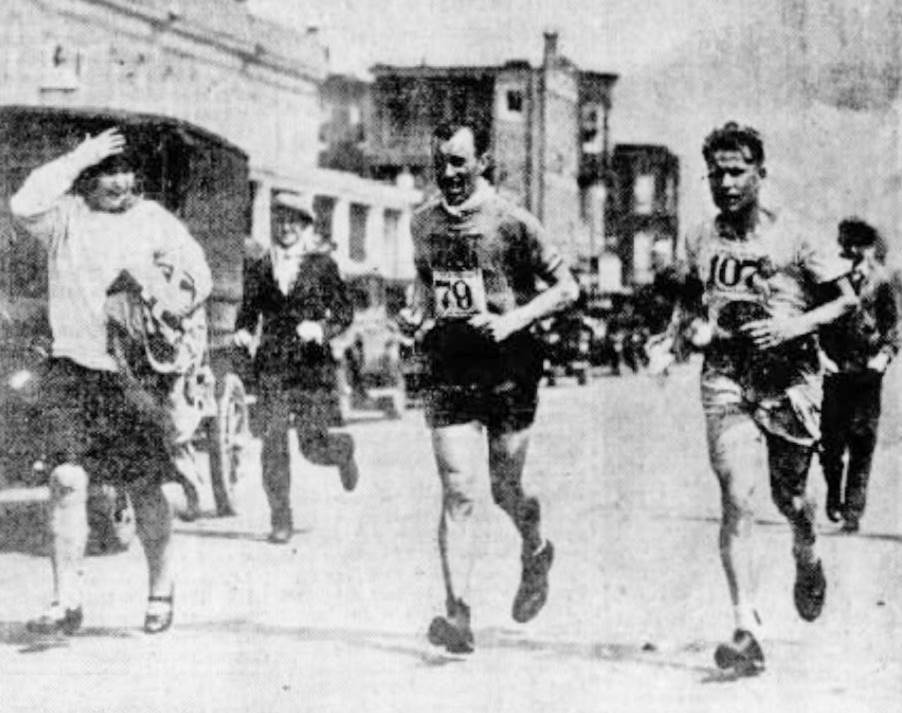
The farthest anybody has ever run on foot happened back in 1929. A trans-continental race was set from New York to California and it spanned 3,653 miles in total. It’s difficult to imagine that anybody would be willing to sign up for this race but there were. The winning place went to a man named Johnny Salo and he accomplished something spectacular and historic in just 79 days.
In 1 Peter 2.11-12 the Christian is compared to a “sojourner” and that paints a picture of someone temporarily staying, but always on the move. Many other passages, like James 1.12, 2 Timothy 4.7, Galatians 5, and 2 Corinthians 9, all reference the race of life.
It’s been noted that the race is one of endurance and not a sprint. While few people will ever cover the amount of physical ground that Johnny Salo did, there are many faithful Christians who have shown themselves to have incredible endurance of a different kind. Through trials, heartbreak, and severe loss there are Christians who hold fast to their faith and push on. They inspire us to keep going when the going gets tough, and we should encourage these spiritual athletes to look towards the finish line— it’s not too far away.
It is a well-known fact that apathy destroys whole countries. Wealth lulls people into a state of complacency that avoids conflict at all costs. Government seizes the opportunity to gain power. Oppression always follows. “Hard times create tough people. Tough people create good times. Good times create soft people. Soft people create hard times” (loosely paraphrased from Those Who Remain by Michael Hopf).
Faith is not immune. Hebrews 2.1-4 strongly warns us against apathetic faith. What happens when we lose interest in our awesome spiritual freedom? We put distance between ourselves and God. This isn’t without consequences.
“How will we escape if we disregard our salvation?” (2.3). We won’t! Apathy is scary because the consequences arrive in plain sight and at a slow pace. We can easily see them coming, but choose to ignore them for a few more moments of complacent bliss. Once consequences arrive, they’re miserable on multiple levels.
So, how do we get rid of apathy? Hebrews 2.5ff gives some hypes:
We’re in Charge of the World to Come (5)
God Is Invested in Us (6)
Jesus Is in Charge Now (7-8)
Jesus Rescued Us (8-10)
Jesus Sees Us As Family (11-16)
Jesus Goes to Bat for Us (17-18)
Finally: “How much more severely do you think someone deserves to be punished who has trampled the Son of God underfoot, who has treated as an unholy thing the blood of the covenant that sanctified them, and who has insulted the Spirit of grace?” (10.29).
Elijah is known as one of the greatest prophets. We’re introduced to him in 1 Kings 17 and God is preparing him to accomplish great things. As God leads him he begins to grow in faith while following His lead. Ahab wears the crown after his father Omri, but he is significantly more wicked. In fact, he’s more wicked than all before him. It’s fitting that during such a terrible time someone like Elijah makes his appearance.
There’s an interesting event that takes place while the prophet shelters by a brook that God had led him to. Ravens fly in with bread and meat to keep him sustained. The raven was an unclean animal, yet God is helping Elijah grow in several ways during this period. He’s leading, and Elijah follows in faith. He could not deny that God sent him the ravens, yet it went against his upbringing. Even so, he still ate.
One lesson we can pull from this account is that God can use the unclean for His purposes. God can use the evil people and nations to accomplish His will. An unfaithful Christian can share the gospel and a sinful man can make good and godly decisions, all the while remaining unclean. That’s a humbling lesson. We can act faithful, but we can remain filthy. We don’t want that! It’s my prayer that today we can make a fresh commitment to be faithful to God in all things. He can lead us through even the darkest times, if we have the faith to follow.
Judges 12 details a civil war between Ephraim and the Gileadites of Manasseh. God used Jephthah and the Gileadites to humble Ephraim. The haughty Ephraimites felt they could bully Jephthah and the Gileadites as they had previously bullied Gideon (Judges 8). Jephthah and his men ended up slaying 42,000 Ephraimites. One of the keys to the Gileadites’ lopsided victory was seizing the fords over the Jordan River. And when fleeing Ephraimites tried to cross, they were asked for a “password.” The password was “shibboleth.” Various commentators have offered different definitions for the word, but its meaning is not necessary to understand the text. Here is what we need to know: The Ephraimites could not pronounce the word “shibboleth,” as the Gileadites. Thus, they replied, “sibboleth.” Having been betrayed by their dialect, the Gileadites then slew the Ephraimites.
Wordsmiths know that, beyond its Biblical source, shibboleth has come to mean any word or practice separating one group from another. Christians should have shibboleths, correct? They are called upon to transform themselves from the world rather than conform to it (Romans 12.1-2). However, while perusing several online dictionaries, I noted that they also tended to look upon a shibboleth unfavorably, calling it an “old-fashioned” or “outdated” idea still clung to by some. In the example sentences provided by those aforementioned dictionaries, shibboleths seem connected with “conservative-thinking” people. So, evidently, “progressives” must not be hampered by them. Frankly, it is hard to keep up with the self-righteousness of progressives. Their mores change so swiftly that sometimes they snare even themselves when a past tweet or video surfaces. It reminds me of the foolish man building his house upon the sand (Matthew 7.26-27).
God is aware of the mindset that mocks established standards. Jeremiah records God’s words: “Stand by the ways and see and ask for the ancient paths, where the good way is, and walk in it; and you will find rest for your souls.” (6.16) Not unlike those living today, Jeremiah’s contemporaries replied, “We will not walk in it.” (ibid.) To borrow modern parlance, those in ancient Judah found the old paths “shibboleth.” But who gives such persons the right to esteem something as antiquated? Honestly, it seems like it is the “right” of the squeakiest wheel, those with the largest echo chamber. Those of us with our shibboleths abandoned the arena of popular culture, education, and media. Hence, we can only blame ourselves for allowing the castigation of truth as incompatible with temporary society.
But lest we forget, the victors from the source material had their shibboleth while the defeated had their sibboleth. As someone has said in summation of the book of Revelation, the message is that in the end, God wins. That is applicable here as well. God brings victory to those with the shibboleth, not sibboleth. No, it is not a superior concept because it is older. We can find new ways to do something that is “old.” (e.g., We may use new mediums to teach the “old Jerusalem Gospel.”) The shibboleth is what was given by God in His inspired word. Sibboleths reflect the precepts of men (cf. Matthew 15.8-9). We must not drop even one consonant sound (cf. Deuteronomy 4.2; 12.32; Proverbs 30.6; Revelation 22.18).
When I eventually cross the Jordan River ford, I want to find life, not death. Don’t you agree? To safely cross, an obedient life is our “password.”
Our family used to hike a lot when we lived in Colorado. There were many hikes that I went on that were straight up miserable. Ive always been the chunky kid, but the worst part about this was that Iwas surrounded by a healthy and very active family.. This meant that on every hike I was the one in the back feeling like I was about to pass away. Hiking was never really something I was the best at. There are several times I remember thinking, “I’m not going to make it.”
We used to hike a trail called “Moffit Tunnel” It was an 11 mile hike that ended with a summit path that gained 3000 feet of elevation in under half a mile. As you can imagine the path was practically vertical, and filled with rocks, mud, snow, and sadness.
When I think of “a hard path” this is what comes to my mind. In Matthew 7:13-14, Jesus describes the way to salvation as a path that isn’t for the faint hearted; it’s for the dedicated Christian that is determined to reach eternal life. There’s no denying that the Christian life can be tough. It is filled with persecution, especially for those who aren’t as fortunate to have the freedoms we enjoy in America. The Christian life is tough because we will face persecution, but we are more likely to face rejection in our society today for standing up for some very unpopular teachings. If we are devoted to teaching and standing with God’s Word this means we must defend God’s view on homosexuality, marriage, divorce, and remarriage, baptism, sin, hell, and many more divisive topics. If we are devoted to walking the difficult path we must remain faithful in the rejection, hatred and persecution we will face.
But the rejection and hate from the world isn’t the only thing hard about this path.
As Christians we are commanded to put ourselves to death. Matt. 10:37-39 say, “Whoever loves father or mother more than me is not worthy of me, and whoever loves son or daughter more than me is not worthy of me. And whoever does not take his cross and follow me is not worthy of me. Whoever finds his life will lose it, and whoever loses his life for my sake will find it.”
Walking the difficult path means we have put ourselves to death. In doing so we are saying we love Christ more than our parents, our children and ourselves. In order to walk the difficult path we must be willing to take up our cross and follow Jesus. The cross is an instrument of death. The cross we pick up is the instrument of death that we have used to crucify ourselves on. Once we have taken up our cross we have made the decision to love Christ over anyone and everyone. We no longer serve ourselves because we have died to Christ.
When we choose to walk the difficult path we are no longer living without purpose. We have a goal, a meaning for our lives. God uses us to spread His saving word to others. We have purpose in everything we do. We are here to encourage each other, to save souls, and to glorify God. One of humanity’s most asked question, “Why am I here?,”is answered by God. How we serve God will ultimately change someone else’s eternal destiny. We are given the true words of life that are able to save our most valuable possession, our souls. We also experience the blessing of having confidence in death. Death is scary. Why are so many scared of death? It’s the unknown, the end of our existence as we have known it. As Christians, when we choose to walk the difficult path, we are given the promise that when we face death we can be confident in knowing our soul is in the hands of almighty God. We know what is coming, and we can find hope in this.
On at least two different occasions, Jesus said, “Go and learn what this means: ‘I desire mercy and not sacrifice’” (Matthew 9.13; Matthew 12.7). It’s quoted from Hosea 6.6, but in multiple other passages God tells us that He prefers obedience over going through the motions of worship (Isaiah 1.11ff; Amos 5.21; Micah 6; Mark 7).
This is NOT saying that worship is less important than obedience, since obedience causes us to worship. It does show God’s attitude toward those who claim to follow Him, but whose actions say otherwise. Listen to the force behind His words in Amos 5.21, “I hate, I despise your feasts, and I take no delight in your solemn assemblies.” Israel had adopted some religious and social misconduct.
Do our actions cause God to wince at our worship? Israel was God’s chosen nation, but when they neglected to show mercy, justice, compassion, or faithfulness, God rejected their worship and sent them into captivity. So what kind of worship does God love? Obedience, mercy, pursuing good, showing compassion to those less powerful, integrity, justice, and being morally pure (Amos 5.11ff).
There is a rite of passage dreaded by aging music fans; It is the day that your favorite music, your youth’s music, becomes relegated to a niche station on platforms like satellite radio. Fortunately, music providers have found more creative ways of marketing such specialty stations than slapping the “classic” or “oldies” label upon it. Instead, you are now a member of an exclusive club of people with exquisite musical taste. Yes, I am such a club member, and I listened to “my station” while running errands. The unofficial theme of my present love life began playing on the radio: “Everything You Want.” As one who finds illustrations in practically everything, I started drawing religious parallels. However, before you can understand those parallels, I first need to fill you in about the song.
“Everything You Want” was released by the alternative rock band Vertical Horizon in 1999 and became a hit in July of 2000. It became Billboard’s Most Played Single of 2000. Matt Scannell, the songwriter, explained that an ex-girlfriend inspired the song. She looked for love and acceptance everywhere but the person who loved her the most. Obviously, as a listener unaware of the backstory, I interpreted the song differently. I thought of those times when a member of the fairer sex made an offhanded comment about wanting to meet someone “just like” me. (I seem to live in a place called “the friend zone.”) I wished to reply, “Why do you want ‘just like’ when the original is available?” Unrequited love can be frustrating, as it has been for me, or sad, as with the songwriter.
Would it surprise you to know God experienced unrequited love too? God compared Himself to the husband of two faithless women, Oholah and Oholibah (Ezekiel 23.1ff). Elsewhere, Solomon admitted his spiritual infidelity in the book of Ecclesiastes. Solomon looked for happiness and contentment in EVERYTHING but what ultimately mattered. After his vain pursuit of such things, Solomon says, “The conclusion, when all has been heard, is: fear God and keep His commandments, because this applies to every person.” (Ecclesiastes 12.13 NASB1995) The famous baseball player-turned-preacher, Billy Sunday, once summed up such people as Oholah, Oholibah, and Solomon. They have only enough religion to make them miserable. Sunday added, “If there is not joy in religion, you have got a leak in your religion.” Indeed. The problem lies not with the Bridegroom but the bride. Yes, if there is no love for Him, or our love has faded, the fault lies in us.
How do we show our love for the Bridegroom? He says we show our love by keeping His commandments (John 14.15). Is it that simple? Yes, obedience springs from the mindset of putting God and His kingdom first (Matthew 6.33). We stray when we look for fulfillment elsewhere. And for the one yet to put on Christ in baptism (Galatians 3.27), the preference is for another whom he or she believes can bring similar joy: “The love of God enamors me, but the world gives me pleasure without requiring ‘burdensome’ commandment-keeping.” Jesus assures us that His yoke is not a burden (Matthew 11.28-30). As Saul discovered on the road to Damascus, we only hurt ourselves when we fight against that yoke. Jesus told Saul that he was kicking against the sharpened sticks (i.e., goads) used to pen cattle (Acts 26.14). Thus, I urge you, whether you have left your first love like Ephesus (Revelation 2.4) or have not confessed your love for the Savior, that you don’t ignore the Greatest Love you have ever known or can ever know (John 3.16).
It may seem odd to close devotional thoughts out with secular lyrics, but I will do so anyway. I pray that you do not find a relevant metaphor for your relationship with Jesus Christ in these lyrics. He loves you. Don’t make His an unrequited love:
“He’s everything you want He’s everything you need He’s everything inside of you That you wish you could be He says all the right things At exactly the right time But he means nothing to you And you don’t know why.”

























 The Preacher Pollard Blog