I Thessalonians 5.12-13a — Church Leadership Helps Keep Us on Track
We have to recognize their value because elders are a critical part of setting the tone of a church family.
Because of their work, God expects us to consider them the MVPs of our congregations.
God will personally reward elders who do good work (I Pt 5.4; Hb 13.17; Acts 20.32).
God expects us to show elders the highest respect and love. We’re all human and we’re all going to mess up. Last anyone checked, elders are human too. God hands out grace generously, and demands we do the same for his elders.
5.13b-22 — God Expects Us to Do Some Things…
Live peacefully with each other.
Keep each other accountable.
Patiently work with weak Christians.
Stay on top of doing good things for people.
Stay happy.
Keep praying.
Be grateful.
Don’t put a wet blanket on God’s work.
Make sure everything we teach is legit.
Avoid evil proactively.
5.23-28 — If We Try Our Best, God Will Make Sure We’re Ready When Jesus Comes Back
We can trust him to make us ready when he comes back because his grace is extremely powerful. We know what we struggle with, but God is more powerful than our guilty hearts (I Jn 3.20). He’ll make sure we’re ready when he returns.
In the meantime, he expects us to stay on good terms with each other.
Summary:
Everything we do has the last day in mind. It’s why we don’t live the way we might want to.
It’s why we love people when they’re often not easy to love.
It’s why we go through pain with our heads held high.
We want to wake from death’s sleep to the incredible sight of Jesus’s angels bringing us to him (Mt 24.31; I Thess 4.17).
When taking a look at the book of Acts, many insights can be found about the church. From the Lord’s supper to the appointing of elders, there are many things that can be learned about the Lord’s Church and how it should act. Today there are far too many churches that have left and strayed away from the original design. Since we have one Bible, there should be one church. Out of the many things that can be learned from Acts, one of the most prominent aspects seen is the local preacher in a congregation and how he should behave.
Today when we look in the denominational world, we see the preachers as a sort of leader in the church. The names given to preachers can sometimes be misleading. But the preacher has a very significant job, and hopefully by the end of this article series we will see that the minister is not too different from the member of the body. He is one that proclaims the word. His main job is to be an example and one who can take the word of God and turn it into something that God’s people can learn, and then apply to their christian walks. By looking at the examples given in Acts about the local preacher, we are able to answer quite a few questions.
Probably the chapter that contains the majority of these insights is chapter 20, specifically verses 17 through 38. These articles will be an in depth study on this section of Acts, and how it applies to a preacher in a local congregation.
Acts 20:17, “Now from Miletus he sent to Ephesus and called the elders of the church to come to him.” Notice that Paul met with the Elders of the church at Ephesus. The word for elder here is the word presbuteros, and we know that this is in reference to those who held the office of elders, and were not just older men. We see this in 1 Timothy 3:1-7 and Titus 1:6ff.
To be a successful local preacher it is vital to talk to, and build a relationship with the elders of the congregation. Elders play an extremely vital role in churches, and to be an effective minister we must make sure that there is a healthy relationship between the elders and the preacher. Paul set the example, and now we follow what he has set. It makes sense. The elders are the leaders of the congregation and if the preacher is leading in a way other than what the elders have asked then how will the members react? The preacher must be one that uplifts and submits to the authority of the eldership. Paul was a great man. He had given up so much for the gospel yet even he submits himself under the elders. God knew what He was doing when He designed the church, so it is no wonder that many denominations fall away from the original design, and then run into many issues.
The local preacher is a member, therefore he must submit to the oversight and leadership of the elders.
A researcher at the Royal Society of Medicine in the UK published a paper called “The Spoilt Generation.” He ties the alarming rates of child depression, teenage pregnancy, obesity, violent crimes by adolescents, and more to a basic lack of respect for authority (Daily Mail). The Cato Institute published a study simply entitled, “Respect For Authority.” One of its most basic findings is that the public believes social instability follows disrespect for authority (Cato).
What do you think? Have you noticed a decline of respect in society for parents, teachers,the police, employers, and others in a position of authority? Most of us would agree it’s happening, and that it is not good. Peter warns about it in the most sobering of terms, speaking of the unrighteous who face eternal punishment as those who, in part, “despise authority (2 Pt 2:10). Jude offers a very similar warning, describing those who turn God’sgrace into permission to do whatever they please (4), and this includes their “rejecting authority” (8). So why do we often have a problem with authority?
We have a problem with rebelliousness. Saul, the earthly king, had a problem with rebellion (1 Sam. 15:23). Paul writes Timothy, discussing why the Law of Moses existed. It was for unrighteous people, and at the top of that list were the lawless and rebellious (1 Tim. 1:9). Rebellion is insubordination. It characterized the period of the Judges, when everyone did what they thought was right to them (17:6; 21:25). As we look at crime in our current society, we see the fruit of rebellion. CNN reports a 33% increase in homicides in major U.S. cities from 2019 to 2020, and now it is up another 24% since the beginning of 2021 (CNN). Yet, cities like Baltimore no longer prosecute drug possession, prostitution, and other low-level offenses. In California, shoplifting has in some places ceased to have any legal ramifications. How many looters in major U.S. cities have never served a day in jail or paid a penny in fines? Romans 13 clearly condemns this. Paul says “whoever resists authority has opposed the ordinance of God; and they who have opposed will receive condemnation upon themselves” (2). Most of us would condemn this nationally, but do we struggle with rebellion against authority closer to home? Do we struggle with it against employers, elders, and parents? Rebelliousness can be milder than murder and more limited than against government. Do we only submit if we accept what they lead us to do? Do we maintain meekness and gentleness only if we agree with them? Rebellion is not the mark of a disciple of Christ; such have a different master.
We have a problem with respect. Paul says, “We ask you, brothers, to respect those who labor among you and are over you in the Lord and admonish you,and to esteem them very highly in love because of their work. Be at peace among yourselves” (1 Th. 5:12-13). Esteem, as a verb, is found 28 times and means to think, consider, or regard. Paul is telling the church how to regard their leaders (“very highly in love”) and why (“because of their work”). Interestingly, the noun form of this verbs is often tied to various types of leadership–“Ruler” (Mt. 2:6), “leader” (Lk. 22:26), “governor” (Acts 7:10), “chief” (Acts 14:12) and “leading men” (Acts 15:22). But in 1 Thessalonians 5:13, it is a verb and means to engage in the intellectual process of thinking of them with the highest respect. The word “esteem” deals with our character generally and not just how we treat elders and any other leaders. Philippians 2:3 says, “With humility of mind regard one another as more important than yourselves.” But Peter speaks of some who “count it a pleasure to revel in doing wrong” (2 Pet. 2:13). Respect is a matter of how you set your mind. If we don’t have it in our hearts to respect those in authority, it can’t help but show in the way we speak to them or about them. Our children learn how to treat authority figures by watching and listening to us. What are we teaching them?
We have a problem with our religion. “Religion” is only found four times in the New Testament. It means appropriate beliefs and the devout practice of our obligations (Louw-Nida, 530). How do we properly express our religion? It is not just about worshipping the way God commands. That’s a vital part, but only one way. Paul tells us what his pre-Christian religion looked like (Acts 26:5). He tells us about the false religion of some, ruled by their fleshly minds (Col. 2:18). James uses the word “religion” twice, in James 1:26-27. He teaches that pure, untainted religion is proven or disproven by your thoughts, words, and deeds. When I show disdain toward those in authority in or out of the church context, I’m telling everyone who witnesses it about my religion. I am making an impression on them that will either lead them closer to God or farther away from Him. Whatever I tell them about the one(s) in authority, I am telling them far more about me. If they follow my lead, will they stumble (cf. Lk. 17:1-2)?
Our problem with authority is ultimately a problem with God. When Paul tells Rome that those who resist authority oppose God’s will, he was talking about a government ruled by wicked Caesars who murdered Christians. When I disapprove of or disagree with those in positions of authority, in the nation, church, workplace or home, I must respond how God says respond. I must leave the rest to Him.
Whenever we hear about the United States Secret Service, we generally picture an elite agent with dark sunglasses and an earpiece. They certainly are elite, with only 1% of 15,600 applicants being accepted as Special Agents in 2011. They have extremely important jobs, from protecting the president and his family to investigating financial crimes in order to protect our economy. Being a Special Agent or any of the other elite positions in this government branch is not easy to achieve. These government agents have a huge responsibility and the public often keeps a close eye on them.
It’s no wonder, then, that they would come under scrutiny when something goes wrong. In 2014, Omar Jose Gonzalez jumped the White House fence and ran across the North Lawn with a knife. He was able to make it through the front door and past a security guard, making it as far as the East Room before being tackled by another guard.
The church is made of imperfect humans. We are called to live to a higher standard and to hold one another to a higher standard. Whenever someone makes a mistake – especially someone in a position of leadership – it’s easy for us to gossip, condemn, talk about “what we would have done,” or offer insincere criticism. Worse yet, it’s easy to tarnish the name of the church just because of the mistakes of someone inside. Yes, sin must be dealt with in a godly way. But using the mistakes of others as an excuse to damage the bride of Christ is inexcusable. Let us always strive to not only hold ourselves to the highest possible standard, but to also keep the name of God’s people in high standing with the world and with each other.
In the opening verses of Exodus 17, the faith of the Israelites is being tested. They’re in the wilderness and their human limitations begin to lead them to say and do things that end up defining their character for all eternity. It’s chapters in the Old Testament like this that set the stage for God to teach difficult lessons for them— and us.
There’s no water for them to drink and the feeling of thirst ignites a wild-fire of complaints. The text reads, “‘Therefore the people quarreled with Moses and they said ‘give us water to drink!’ And Moses said ‘Why do you do you quarrel with me? Why do you test the Lord?’” From here, it only escalates. The children begin to accuse Moses of attempted genocide. They say, “Why did you bring us out here from Egypt? To die of thirst?” These people have seen the power of God, and they knew that the miracles which Moses performed were evidence of his Divine connection. The fact that they ask him for water when there is none proves that they knew Moses could do something about it.
It’s not only the Israelites that struggle with their rocky faith in God, however. Moses also pleads with the Lord. He prays, “What shall I do with these people? They’re almost ready to stone me!” God responds by saying in verse five, “…take in your hand the staff which you struck the Nile, and go.” The wording is deliberate here. God is reminding Moses and the children what He has already done with that simple wooden staff in their past. As Moses walked through that wilderness leading his people, he holds in his hand a constant reminder. In his hand is a stick— a stick that God used to provide for His people.
If God can use some wood as an instrument to satisfy thirst and protect a large crowd of complainers, why do some still question God’s ability to care for us today? The place where Moses struck the rock was named, “Massah and Maribah” which translates, “Is the Lord among us or not?” It’s both a name and a question His children still ask from time to time today.
In the last section of this chapter, we can observe an intentional layout of the text. The army of Amalek challenges the Israelites to battle. With his faith restored in God’s power, Moses says, “Tomorrow I will stand on top of the hill with the staff of God in my hand.” On the day of battle, Moses holds the staff above his head. Whenever it was held up, the Israelites prevailed. When the staff was lowered, Amalek’s army prevailed.
Verses twelve and thirteen carry much application for us today. They say, “But the hands of Moses grew weary, and they placed a stone under him and he sat on it, while Aaron and Hur held up his hands on either side. So His hands were steady until the going down of the son.” At least three major lessons can be derived from this section of scripture.
Lesson one, church leaders can’t lead us to our eternal victory alone. Moses did not win the battle that day. God did.
Lesson two, church leaders need help because even a stick can become heavy after a while. God never intended for one man to lead His people. There must be an eldership so that these men can help each other hold up the word of God. Their victory came when four more hands took on the burden and shared the weight.
Lesson three, there is no obstacle we will face that God’s faithful people can’t overcome. Even if all the armies in the world had decided to attack the Israelites that day, three men and God would have still brought them to victory. If God can accomplish so much with a piece of wood, who are we to limit His power today? There is nothing we can’t do under the leadership of, not mere men, but God. Moses knew God could accomplish anything through him and some wood— today we would do well to remember what God can do with us and our willingness to serve.
In Luke 14, Jesus gives a couple of short parables about counting the cost of discipleship. He prefaces them by saying, “If anyone comes to Me, and does not hate his own father and mother and wife and children and brothers and sisters, yes, and even his own life, he cannot be My disciple. Whoever does not carry his own cross and come after Me cannot be my disciple” (26-27). If we drink deeply of this statement, we see exactly how challenging it is. The choice is always between Jesus and everything and everyone else. How badly do we want what only Jesus can give? Think hard, then decide!
Then come the parables. The first is a construction parable, of one building a tower. He first sits down and calculates the cost in order to be able to finish and avoid ridicule (28-30). The second is a military parable, of a king going into battle. He first sits down and considers whether or not he can win (31-32). The common denominator in both parables is to first sit down and deliberate. Ultimately, there is action which follows, but the planning precedes it.
In how many congregations do elderships or men in the absence of elders never get proactive and formulate a plan for the immediate, intermediate, and far off future? Leadership must cast the vision and deliberate about where that congregation is going and how it will get there. What will be done to grow? How can we get more members active? How can we best utilize the collective resources of the congregation? The Bible reveals all the answers, but it is essential for the church’s leaders to gather around the drawing board.
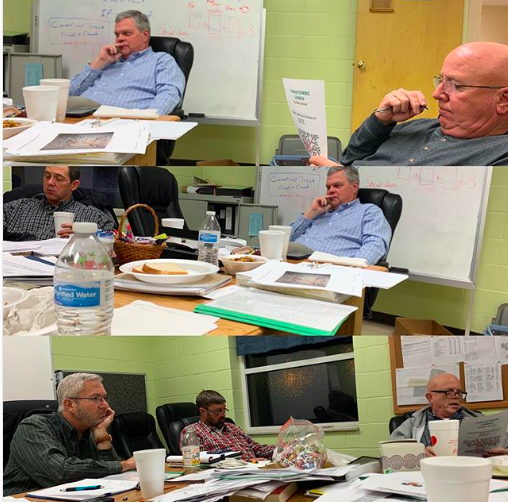
It was exciting to spend a few hours at the Lehman elders’ 2019 retreat to discuss the short-term plans of the congregation. These men are convicted about the stewardship of the work they eagerly consented to do as our shepherds. They want us to be more effective, but they are determined to set the tone and example for us. I’m amazed at how deeply they care about us and the growth they want us to collectively experience. Words like emphasis, accountability, and purpose continually came up. Building a biblical culture, which works against our contemporary culture of consumers rather than producers, is foremost in their minds. They desire for us to “grow together” as a church, drawing those outside of Christ to our spiritual family.
I cannot wait to see what God will do through such capable leaders in 2020 and beyond. We are blessed with such godly, conscientious elders. Please don’t miss a day praying for Russell, Riley, Kevin, John, Darrell, and Bobby and their families. Also, please never miss an opportunity to express your love, encouragement, and support of them as they strive to do their best to fulfill their God-given duty. Or, as Paul put it, “But we request of you, brethren, that you appreciate those who diligently labor among you, and have charge over you in the Lord and give you instruction, and that you esteem them very highly in love because of their work. Live in peace with one another” (1 Th. 5:11-12).
They are first sitting down this weekend, but then they will challenge us all to “rise up and build” (cf. Neh. 2:18).
I met him 20 years ago, the man with the twinkling eyes
He and his wife opened their home to me, and I could recognize
Their love for Christ and Christians, and how well they’d harmonize
Those loves in all their actions, it was there in those twinkling eyes
He shepherded me for several years, the man with twinkling eyes
He had a tenderness so deep, he’d often maximize,
His laugh infectious, his insight savvy, so tough to criticize,
He loved Bear Valley with all of himself, this man with twinkling eyes
I visited many members here with the man with twinkling eyes
Spent hours in meetings and planning, trying God’s will to realize
He was youthful and spry for his age, his resources he’d optimize
A steward of stewards in every way, the man with twinkling eyes
A servant’s heart with savvy hands, the man with the twinkling eyes
Involved and willing, helpful and hopeful, we couldn’t help but idolize
When hearing and memory faded, you still could characterize
This man of God, through ups and downs, by those twinkling eyes
I saw him last week, he greeted me with joyful, twinkling eyes
So hard to believe this morning he gained his heavenly prize
While his long life is fresh in my memory, I’ll try hard to memorize
As kind a face and heart as I’ve seen, the man with the twinkling eyes
He was appointed an elder during the Reagan administration. At the very time he was appointed, the congregation was reaching the climax of a very traumatic incident. A man who was a charter attender, but not a member, when Bear Valley began meeting, he has seen every great work this congregation has dared to do, walked through its every valley, and he has done so with as even-keeled and unflustered way as I have ever known. I have heard him preach both here and abroad, watched him do short-term missions, make difficult shepherd visits, hug and encourage more people than I can remember, and seen his kindness and humor generously displayed. He was not usually the first to speak when elders conversed, but his insights have always been profound. He always did what he did with class and compassion.
I was crestfallen when I recently heard Maynard Woolley tell the eldership that he was ready to step aside as an elder after nearly 30 years of service. Only Harry Denewiler served more years in that role for the Bear Valley church of Christ. He stayed on a couple of years after five great men were appointed to this work in 2016, helping them to acclimate, learn, and grow under his, Ernie Barrett’s, and Dave Chamberlin’s tutelage. A telling tribute to the breadth of his leadership was the collective, deeply respectful, regret that he was going to resign. Maynard is a man who one appreciates more and more the longer one works alongside him. His faithful wife, Donna, has both encouraged him and endured, as an elder’s wife for so long, what not many women living have.
Some men impress with refined oratory, outspoken and charismatic ways, and larger-than-life personalities. Others live more understated ives, but their value cannot be overstated. Maynard Woolley is such a man. We will miss his formal oversight, but we look forward to his continued faithful service and loving example. Thank you, Maynard, for what you’ve done and for who you are. Bear Valley bears the imprint of your bearing.
He shouts at his TV with a mouthful of Cheetos. “I can’t believe you! Four receivers downfield and you throw it behind the line of scrimmage to a man who’s double covered! You’re pathetic. Must be nice to get millions of dollars to make awful decisions. Where do I sign?” After several additional one-sided conversations with the TV, Mr. Potato (first name: “Couch,” aka “Armchair Arnie”) dusts crumbs off his potbelly with those trademark orange fingertips and limps into the kitchen, stiff from sitting three hours, to get another snack before the second half of the NFL doubleheader.
Water cooler wide receivers. La-Z boy linebackers. The game’s true experts do not prowl the sidelines with headsets, nor do they actually suit up, strap on, and sweat it out. The guys with all the answers are the ones who would crumble with fear if placed on the same field with the athletes they so roundly criticize for bungling with the ball.
I have observed that the same temptation can occasionally strike some with regard to elders. Whether it be their judgment or painstaking decisions, their handling of a member’s problems or needs, or their overall “job performance,” elders get taken to task more often than they realize by pew chair presbyters. They may criticize elders for what they did or for their failure to act, for being too strict or too lenient, for showing favoritism or trying to please everyone, for being too conservative or too liberal–all with the regard to a single action taken or decision made.
There is a striking similarity to the “armchair quarterbacking” done by unfit, unqualified spectators at sporting events. Those who can’t are apt to criticize those that can and do. It is far easier to question and condemn the actions taken by elders without the benefit (and angst) of wrangling with problems and decisions oneself. How we can eloquently outline the plan of action we would take absent the pressure and responsibility of being in the position.
Let’s pray more for our elders and pass judgment less! Let’s support them with might, not scrutinize them under a microscope. They need our cooperation and submission (Heb. 13:17). They could do with less backbiting and murmuring (cf. 1 Co. 10:10).
That’s not to say that elders are beyond reproach and rebuke (1 Tim. 5:20). Occasionally, an elder or eldership may be deserving of question–particularly in the area of doctrine or their personal qualification. As a longtime Falcons fan, I had to endure the likes of Scott Hunter, Pat Sullivan, and June Jones! They were terrible quarterbacks, though much better than I could ever have been. Elders will answer directly to Christ for their shepherding of the local flock. We, as embers, will also answer for how we cooperated with and supported them. Let’s all resolve to get out of the chair and join them on the field (cf. John 4:35)!
We are blessed with seven wonderful elders here! They span in age from 48 to 81, are of varying backgrounds, personalities, and skillsets, but collectively they reflect God’s wisdom for a plurality of godly men shepherding the flock. With the magnitude of the work and workload here, I cannot help but stand in awe of the great job they are doing. To watch men like these, I’m reminded of the powerful good done by apt, able elders. Far from an exhaustive list, they:
Show Hospitality—They open their homes freely and frequently, getting to know the sheep.
Keep Track—They make it their business to account for the sheep, knowing they will give an account for each of them ultimately.
Cast Vision—They do not lead from the rear; they thoughtfully, decisively get out front and show the way.
Greet Visitors—They care about our members, but they are constantly focused of who’s new around here.
Contemplate Problems—In the spirit of Solomon, they are presented with and must decide often complex, hairy matters…in real time.
Faithfully Pray—Listen to men pray and you get a pretty good idea how practiced they are. These men are devoted to it.
Show Heart—They aren’t afraid to demonstrate their care, concern, and love. We see it in their passion, their tears, and their involvement.
Manage People—Sheep are also of differing temperaments, needs, problems, and levels of maturity. They deal with “all kinds.”
Consult God—How exciting to see overseers humbly searching for and submitting to a “Thus saith the Lord.”
Balance Time—They do all of this while being competent employees, conscientious family men, and character-filled Christians.
Set Direction—They are tone setters in a basic way; What they emphasis, we will make important. We hear their voice, in the assemblies, meetings, and private conversations.
Make Mistakes—Despite sometimes unreasonable expectations from some, they are terminally human and inevitably subject to imperfection.
Follow Jesus—They are good shepherds walking behind the Good Shepherd. They want to serve, please, and imitate Him. Ours do a fantastic job of that.
Have you seen what a great job these men are doing? Have you taken the time to stop and let them know? Many churches veer from the straight and narrow path because of ungodly elderships. Thank God for the shepherds at Bear Valley!
At home, hosting a family or families and getting closer to the sheep
Hosting and attending church activities
In private meetings with hurting, needy members
In meetings together, praying over and discussing the needs of the sheep
Spending time with their wives and children, nurturing that needed part of their lives
On their knees and in their Bibles, strengthening their walk with the Good Shepherd
Teaching our Bible classes, leading our worship, and even preaching as needed
On the job, exemplifying Christ before the world in a superlative way
Weeping with the weepers at funerals
Found among our graduates, parents of newborns, celebrating newlyweds, and other happy moments experienced within the flock
In Bible studies with non-Christians or Christians wrestling with some Bible matter
Looking for visitors and new faces in our assemblies
Working, sleeves rolled up, on workdays and other occasions where they can serve
Enjoying fellowship, their very actions reminding us they’re normal and one of us
Watching and listening carefully, especially at the teaching and preaching that is done, ensuring the spiritual food their sheep ingest is healthy and nourishing
Holding up the hand of faithful gospel preaching, having their hands help up by their preachers
Touching base with the deacons, encouraging and aiding their success in ministry
Attentive to little children, the elderly, the alone, and others that many might unintentionally overlook
Ensuring the unity of the Spirit in the bond of peace, rooting out divisiveness
On the phone and in the homes with erring sheep, striving to retrieve them and, sadly, if necessary, leading the flock to withdraw fellowship from the irretrievable
Setting the spiritual tone, emphasis, and direction of the flock
Our elders, like faithful elders everywhere, do a lot that is unseen by the majority. It is hard to quantify the time and effort each of these godly men put into their work, but God sees it. What is more, God rewards it. My prayer is that righteous elders everywhere will take heart at what an inspired elder once wrote: “Therefore, I exhort the elders among you, as your fellow elder and witness of the sufferings of Christ, and a partaker also of the glory that is to be revealed, shepherd the flock of God among you, exercising oversight not under compulsion, but voluntarily, according to the will of God; and not for sordid gain, but with eagerness; nor yet as lording it over those allotted to your charge, but proving to be examples to the flock. And when the Chief Shepherd appears, you will receive the unfading crown of glory.”
Bear Valley elders among our 2016 High School graduates
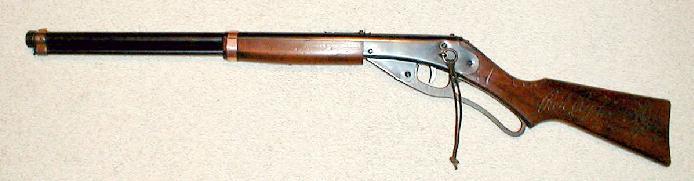
I want to preface this story by saying that, of all my siblings, I probably got away with more than the other two combined. However, on at least one occasion, I was punished for something I did not do. My brother was about four years old, and he, some neighborhood buddies, and I were playing war. Brent had a toy Kentucky rifle, while I was toting my new, unloaded Daisy B-B gun. Perhaps my parents had worried that at nine years old I was too young for such a potent weapon, but they allowed me to own it. In the heat of battle, Brent and I converged around the corners of our house. I aimed and fired. He fell down to play dead for the obligatory “five Mississippis,” but he fell on the sight of that Kentucky rifle. This led to perhaps the quickest peace treaty in the history of boys playing war. Brent had a nasty gash under his eye and very nearly did permanent damage to himself. When Dad and Mom asked what happened, he said, “Neal shot me!” You, Brent, and I know what he meant, but seeing things from their point of view they concluded I had fired a B-B that produced the gaping wound. These were the last moments between my Daisy and me. Soon it was a mangled heap of metal. Dad felt terrible when he understood what Brent meant.
Before you wag your head in disbelief at how this was handled, consider a few facts. The Sunday before, another buddy and I had been putting Easter eggs on the chain link fence at our property line for target practice. We did pretty well, though we were oblivious to the fact that we were putting small dings in my buddy’s stepfather’s new 1979 customized Chevy van. It was another thirty feet beyond the eggs. I escaped any punishment for that one. Dad had shown me how to safely use the gun, but I had my own ideas. The target practice example was my worst but not my only. I was destined for a date with a demolished Daisy. My track record caught up to me.
Paul deals with “track records” and character with his son in the faith. He had been teaching Timothy about how to deal with sin in the latter part of 1 Timothy five. Public sinners were to be rebuked publicly (20). Yet, dealing with others’ sins was to be done prudently to avoid sharing responsibility in their sins (22). The rebuking one was to keep himself free from sin (22b). Then, Paul ends by writing, “Some men’s sins are clearly evident, preceding them to judgment, but those of some men follow later. Likewise, the good works of some are clearly evident, and those that are otherwise cannot be hidden” (24-25, NKJ). In context, Paul is guiding Timothy in the investigating of those who would serve as elders. Prudence and deliberation, in looking into their character, was vital. Jumping to conclusions too quickly, whether too charitably or too severely, was unwise. To help Timothy, Paul emphasizes that character often becomes apparent after sufficient examination.
By way of broader application, isn’t the same true of all of us. As Jesus once put it, “Yet wisdom is vindicated by all her children” (Luke 7:35, NASU). John and Jesus had been wrongly rejected by the Jews, but time and fruit would eventually exonerate the character of each. That is, those converted through their work would prove the rightness of their teaching. This would require the test of time and sufficient proving grounds.
Is one preaching for fame, glory, wealth, or power? Look long and hard, with a good and discerning heart. You will often see. Is an elder serving through selfish ambition, to wield power, or out of materialistic greed? It often comes to the surface. Why are we Christians? Why do we serve God? It so often comes to light in this life. Yet, whether it does in this life or not, it will ultimately. Let us strive to keep watch over our hearts (cf. Mark 7:20-23). Let us constantly purify our motives (cf. Eph. 6:5-8). Remember that character will be tested. Strive to do what is right even when you are not seen by others, and character will usually be apparent.
Sermons preached on the qualifications of elders often, rightly, emphasize the importance of selecting men who qualify to serve. In the Lord’s church, covetous, inhospitable, intemperate, cold, imprudent, biblically ignorant, pugnacious, and newly-converted men (among others) have been appointed to that important work who should not have been. That hurts the local church! Many times it has been said that “bad elders” are worse than “no elders.”
Harboring unfair expectations of men who would serve as elders is another hurtful trend that occasionally surfaces. A hypercritical spirit is a quality of human nature, though a quality the spiritually-minded ought to fight to personally eliminate. Let us briefly consider what God does not expect of elders.
More Than The Qualifications Specify. Gut feelings, intuitions, and hunches might work well when hunting, fishing, or making March Madness picks, but there is no call for them in selecting men to serve as elders. God does not need our help, tacking on additional requirements for an elder than He felt the need to supply for us. Adding to the Word of God carries a stiff penalty (cf. Rev. 22:18); therefore, our scrutiny of a man’s fitness to serve needs to stop where the Bible’s does.
Sinless Perfection. He expects maturity (1 Tim. 3:6), ability (Ti. 1:9), and stability (1 Ti. 3:4-5), but not impeccability (the Latin origin of this word means “not to sin”)! If so, no man could ever conceivably qualify to serve. Gnat-straining can keep a qualified man from serving as surely as camel-swallowing can allow an unqualified man to sit as watchman. With a 1000-tooth-comb, some would inspect the minutia of his life and his family’s. Those searching for flaws, who look hard enough, will always find things. Yet, such findings do not necessarily prove anything except his humanity and fallibility (cf. Rom. 3:10,23).
To Neglect Their Own Families. It is unfair to expect a man, as elder, to always place the needs of the congregation over those of his own family. Too many wives and children have been deprived of husbands and fathers due to disproportionate expectations of time, resources, and attention placed upon elders by members. Elders need the full cooperation and understanding of their families, while elders are obligated by God to supply the needs of their families (cf. 1 Tim. 3:4-5,7). Elders (and their families) are entitled to vacations and nights at home together. Elders will answer for not only their service as elders (Heb. 13:17; 1 Pe. 5:4) but also their influence and leadership in the home (1 Tim. 3:4-5; 1 Co. 11:3; Eph. 6:1-4).
To Be The “Complaint-Receiving Committee.” It is impossible but that complaints will come, but woe unto him (or her) through whom they constantly come. Murmuring and complaining got Israel into trouble (cf. 1 Co. 10:10), and members who find it impossible to speak to elders without doing such may find themselves in the same predicament. How many times has an elder heard you say something positive about another member, a successful program, or their efforts on your behalf? How many of your complaints have they fielded? Elders will answer for our souls. Let us find ways and opportunities to encourage, praise, and support them. Complain whenever you must, but compliment whenever you can.
Did you realize members have qualifications to meet with regard to the elders?
Love and appreciate them (1 Th. 5:12-13)
Honor them (1 Ti. 5:17)
Do not recklessly accuse them (1 Ti. 5:19)
Obey and submit to them (He. 13:17)
As we examine who would serve as elders, let us not forget to examine ourselves (2 Co. 13:5). How spiritually fit are we? Jesus’ words about beams and specks apply to our relationship with elders, too (cf. Mt. 7:3-5). Let us have high expectations of elders, but let us have only those expectations God has!
“That grass is greener,” so he thought,
The sheep who wandered from the fold
Watching carefully the shepherd caught
The wanderer, so soon in the overseer’s hold.
The roaring waters so dangerously near
Forms a hazard for the trembling herd
But the herdsmen is wise, his vision is clear
With his guidance their safety is assured.
Surveying the cliffs or helping them rest
His vigilance is timely and needful,
For the sheep he labors to give them the best
For their well-being the shepherd is heedful.
The Lord chose imagery, graphic and vivid
To illustrate how His church should function
Lackadaisical leadership leaves Him livid
He urges them have compassionate compunction.
Watchful shepherds who tend with care
Are assets in the heavenly realm
Who carry, calm, who steer and spare
Who are willing to assume the helm
Stewards for the Great Shepherd of the soul,
They lead as they point out the way
And help us keep our sight on the heavenly goal
And prepare us for the Great Judgment Day!
Soon, we’ll have lived in our current home for two years. We are enjoying the house, the location, the neighborhood, and most of the neighbors. However, one that lives pretty nearby has proven less than pleasant. His wife is an officer in our neighborhood HOA, and each month’s newsletter is a new posting of the hierarchy’s “95 theses.” Hardly anyone can keep from committing at least one infraction—certainly not us. They’ve had very little communication with us except when the husband complained that our compost pile was too close to the fence (on the other side of which were his garbage cans). Recently, while seeking our permission to re-paint their house, he took the opportunity to inspect the state of cleanliness of our garage. I share his desire that we keep our homes and yards in good shape, as property values are riding on our collective interest in such. The problem for them is that they have spurned our efforts at a relationship and they have done nothing to create one themselves. Thus, we tolerate and peacefully co-exist. But, there is no relationship.
Have you thought about how vital relationships are to our lives? Think about how ineffective we are with people without them. At best, we are mere associates. At worst, we become antagonists. Think of how vital the entity of relationship is to:
Marriage (1 Pet. 3:7).
Parenting (Deu. 6:1ff).
A congregation (1 Th. 5:11).
Shepherding (John 10:4-5).
Church discipline (2 Cor. 2:6-8).
Restoring the erring (Gal. 6:1-2).
Preaching (2 Tim. 2:24-26; 4:2).
Church works (Eph. 4:16).
Deacons’ work (Acts 6:7).
Soul-winning (Col. 4:2-6).
Friendship (Prov. 18:24b).
Taking the time to build rapport may be mentally and emotionally exhausting at times. The best of relationships will have their downs as well as their ups. But God created us social beings not meant for isolation (Gen. 2:18). Joel O’Steen is shallow and superficial in his “preaching,” but tens of thousands of people are drawn to him because they find him relatable. His message is deadly, but his method is engaging. Some who consider themselves the staunchest “defenders of the faith” are virtual porcupines with their quills primed to stick those in their proximity. Surely those of us striving to follow New Testament Christianity can strive to build relationships while we steadfastly teach and follow the truth. How much more effective will we be as we conquer this principle every day?
When speaking of the work of elders, there are multiple aspects of his work and his life outlined in Scripture. He is an “elder” (“A person of responsibility and authority in socio-religious matters,” Louw-Nida, 53.77; “being relatively advanced in age, older, old,” BDAG). He is a “pastor” or “shepherd” (“To care for, provide,” WSNT, Zodhiates; “To care for the congregation…to seek the lost…and to combat heresy,” TDNT, Kittel, et al, eds.). He is an “overseer” (“one who serves as a leader in a church…caring for the needs of a congregation as well as directing the activities of the membership,” Louw-Nida, 53.71). His qualifications are seen in 1 Timothy 3 and Titus 1, his relationship to the membership seen in such passages as 1 Thessalonians 5:12-13 and Hebrews 13:7,17, and his authority in such passages as 1 Timothy 5:17, but among the three designations identifying him nothing may be more pressing and important than his leadership. Too often, preachers or other influential members fill the vacuum and void of leadership left by elders who fail to assume this role. When this happens, God’s pattern for church life is not followed.
Wendell Winkler once wrote, “Leaders cannot lead where they do not go anymore than they can come back from where they have not been. They influence some by what they say, more by what they do; but, most by what they are” (Leadership: The Crisis Of Our Times, 15). Citing the example of Isaiah, Franklin Camp wrote, “Isaiah’s response (to God’s question in Isa. 6:8, NP) was as though he were afraid that someone else might volunteer before he did. This attitude is that of which real leadership is made. When there is a challenge placed before the church, read leaders, like Isaiah, are ready to accept it” (Principles and Perils of Leadership, 50). Then, J.B. Myers adds this, that “a leader is one who guides others and directs a course of action. Fundamental to leadership is the willingness to take the initiative in behalf of a group, such as the church” (Elders and Deacons, 166). These and other men have written books or articles, preached sermons, and taught classes urging the church’s elders to be leaders. The need is as great today for this as ever!
How can elders effectively lead today?
Love. Be tender and compassionate, as a shepherd. Be gentle and wise, as an elder. Be faithful to God’s will, loving Him first, as a leader.
Exemplify.Study and follow the example of the Great Shepherd. Have a long track record of righteous living, as an elder. Show before you tell as a leader.
Admonish. Realize the care attached to warning, as a conscientious shepherd. Summon the benefit of experience, as an elder, to be reminded of the abject neglect attached to ignoring sin “in the camp.” Appreciate that sheep need a clarion, understandable voice from the leaders.
Decide.Know that confusion and scattering lies in the wake of an indecisive shepherd. Trust the accumulation of wisdom gained as one who has reached the age befitting an elder. Grasp the connection between decisiveness (even if unpopular) and leadership.
Bigger, stronger congregations hinge upon good, godly leaders. The faithfulness of Christians rests in the hands of capable leaders. Evangelism flags and fails minus the sure guidance and equipping of leaders. Pray for every elder everywhere to L.E.A.D.!
As we live in a culture of disrespect, Christians have an added responsibility to give thought to how we speak to one another. Civility, courtesy, and manners were once staple subjects taught in every home, but those days are increasingly relegated to the yearbooks of nostalgia. Yet, it shouldn’t be so with God’s people. Especially if we, as we claim in our songs, sermons, and speech, love one another, that will be reflected in speaking kind words even when we feel impatience, disagreement, or aggravation toward another. This is difficult, but it is a mark of our bearing the fruit of the Spirit.
In the last several chapters of Romans, Paul reinforces this idea of loving, kind treatment of one another. He urges the church to “be devoted to one another in brotherly love” (12:10), “give preference to one another” (12:10), “be of the same mind toward one another” (12:16), “love one another” (13:8), “let us not judge one another” (14:13), “build up one another” (14:19), “be of the same mind with one another” (15:5), “accept one another” (15:7), “able to admonish one another” (15:14, but notice that this comes from those who are “full of goodness”), and “greet one another with a holy kiss” (16:16).
So how do we lift that off the page and put it into practice? Think about any and every interaction we have with other members of the Lord’s body. Give forethought to how you answer them and speak to them. Apply this to our leaders, our peers, and those who are led by our example. Do your words and attitudes help create the kind of atmosphere Paul repeatedly calls for, or do they undermine it and make it difficult. It is so easy to allow pride, selfishness, lack of self-discernment, or the like to erode the kindness from our demeanor. But now more than ever, we need to bear this distinctive mark in a world who has seemingly lost sight of it. When we treat each other the way Paul encourages, we will not only build each other up but we will draw the world to the Lord. It is the mark of true discipleship (John 13:34-35). In our busy, hectic, stressful lives, may we redouble our efforts to be ever be edifiers and never be nullifiers!













 The Preacher Pollard Blog