The Church’s First Internal Problem

Monday’s Column: Neal At The Cross

Neal Pollard

We cannot call what happens in Acts five the church’s first problem. Having your members hauled before community leaders and threatened would be stressful and concerning. Having members in financial need would be considered a tough issue. But, neither of those things were “unforced errors.” In an organization filled with people, there will be internal problems because we have struggles and sins. What we do about them and after them spells the difference in ultimate success and failure. 

THE REBELLION (1-10). We are introduced to a couple named Ananias and Sapphira, members of the Jerusalem congregation. In the spirit of sacrificial generosity, Barnabas, who owned a tract of land, “sold it and brought the money and laid it at the apostles’ feet” (4:37). This couple also sold a piece of property, an admirable and generous thing to do to prevent needs among the Christians (4:34). But, what they did after the sell was anything but righteous. They kept back part of the proceeds from the sale. What was the sin in that? Apparent there was an intent to deceive, to suggest that they were giving all the money while keeping part of it for themselves. The word translated “keep back” is the word for pilfer or embezzle, suggesting they had pledged the full price of the sale but kept back some for their own security. This would also suggest covetousness or greed, hearts influenced by worldliness. It also certainly implies pride, wanting to be seen as generous as Barnabas while not suffering the full sacrifice of surrendering all the money for the needs of the saints. This husband and wife were united, but in the worst possible way. Do we struggle with materialism, pride, greed, dishonesty, and selfishness? It is good for us to appreciate how seriously God takes the willful sin in the lives of His children (Heb. 10:26ff). God preserved this in Scripture for us to contemplate how harmful “sin in the camp” is to the spiritual health and well-being of His sacred community (the church). 

THE RESPONSE (3-10). Peter calls out Ananias (3-4), then Sapphira (8-9) three hours later. He specifies what they had done and why it was so wrong. God’s response was to strike each of them dead! Looking back on this, especially if we struggle to see the “big deal” of their sin, we might think the reaction was overly harsh or unreasonable. No doubt this event gets our attention and sharpens our focus on how seriously God views premeditated sin and sin that threatens to harm the entire spiritual community. Conceiving transgression in the heart and attempting to lie to God is such a basic betrayal of our Lord. While we should be grateful that God does not choose to respond with such immediacy today, we should also reflect deeply upon how grave it is to engage in unrighteousness. It’s not “no big deal,” something to be rationalized away. Even if church leadership does not address it in this life does not mean God will not address it at the judgment. This text encourages us to keep our heart soft to His will and to the reality of our willfulness. 

THE RESULT (11-16). We might think that people would have left that church in droves! After all, if they had a marquee in front of their “building,” it might say, “Come inside and try us. The Holy Spirit strikes down our liars.” Yet, what happens next? As we might suspect, “great fear came upon them all” (11). But, the judgment on the couple did not drive people away or even send the cause in a backward direction. The apostles demonstrate God’s power (12), the church spent more time together (12), the broader community held them in high esteem (13) and benefited from their benevolence (15-16), and, maybe most startling, “all the more believers in the Lord, multitudes of men and women, were constantly added to their number” (14). How could this be the result of the ultimate example of “church discipline”? Simply, this is God’s wisdom. Paul will later say, “the foolishness of God is wiser than men, and the weakness of God is stronger than men” (1 Cor. 1:25). Just because we don’t understand God’s ways does not make them inappropriate and improper (Isa. 55:8-9). The Potter has a right over the clay (Rom. 9:20-21). We must resist the temptation to protest the teaching and conclusions God’s Word makes because we find it too hard and narrow. If we trust God’s wisdom and pattern, we’ll find it works in any culture, time, and place. 

Time Flies, But We Navigate

Monday’s Column: Neal At The Cross

Neal Pollard

Ann Turner Cook passed away at her St. Petersburg, Florida, home on Friday, June 3, 2022. She was 95 years old, was an educator, a novelist, a wife, and a mother. Her father was a well-known cartoonist. But you almost certainly know her for a charcoal drawing that was made of her by an artist neighbor, Dorothy Hope Smith. It was submitted for the label of a baby food company and chosen in 1928, then trademarked in 1931. Ann was the original Gerber baby (news report here)! You’ve seen that iconic picture. If you realized she was a real person, you never thought about the fact that this baby grew up and eventually grew old. Or that she would now be dead.

I know nothing about Mrs. Cook’s religious life or spiritual preparation. But I do know that she is part of a universal truth concerning life, and that is that death comes relatively soon for us all. How soon? 

  • Like water spilled on the ground (2 Sam. 14:14). 
  • Like a weaver’s shuttle (Job 7:6; Isa. 38:12). 
  • Like a breath (Job 7:7).
  • Like a shadow (Job 8:9; 1 Chr. 29:15; Ec. 6:12). 
  • Like a flower (Job 14:2).
  • Swift as a runner (Job 9:25).
  • Like a handbreadths (Ps. 39:5).
  • Like a wind that passes (Ps. 78:39). 
  • Like a sigh (Ps. 90:9). 
  • Like smoke (Ps. 102:3).
  • Like a lengthened shadow  and grass (Ps. 102:11; 109:23). 
  • Like a passing shadow (Ps. 144:4). 
  • Like a fading flower or withering grass (Isa. 40:7-8; Js. 1:10; 1 Pet. 1:23-25). 
  • Like a vapor (Js. 4:14). 

With that in mind, shouldn’t we pray with David, “LORD, make me to know my end and what is the extent of my days; Let me know how transient I am” (Ps. 39:4).

Yes, we can look at the Gerber Baby and see that. Or we can look through our own family albums. The baby, childhood, and young adult photos of our grandparents, parents, or ourselves. The weathering winds of time do sure and quick work, reminding us of the many ways the Bible depicts it for us. Time is short and it passes quickly.

Rather than a depressing inevitability, this should be a respected teacher. We should pray with Moses, “So teach us to number our days, that we may present to You a heart of wisdom” (Ps. 90:9). We should take Paul’s inspired advice and “be careful how you walk, not as unwise men but as wise, making the most of your time, because the days are evil” (Eph. 5:15-16). Don’t leave undone what needs to be done. Don’t put off what must be done before this life is over. It will be over before you know it. As the writer of Hebrews tells us, “It is appointed for men to die once and after this comes judgment” (9:27). 

Your Dash

Tuesday’s Column: Learning From Lehman

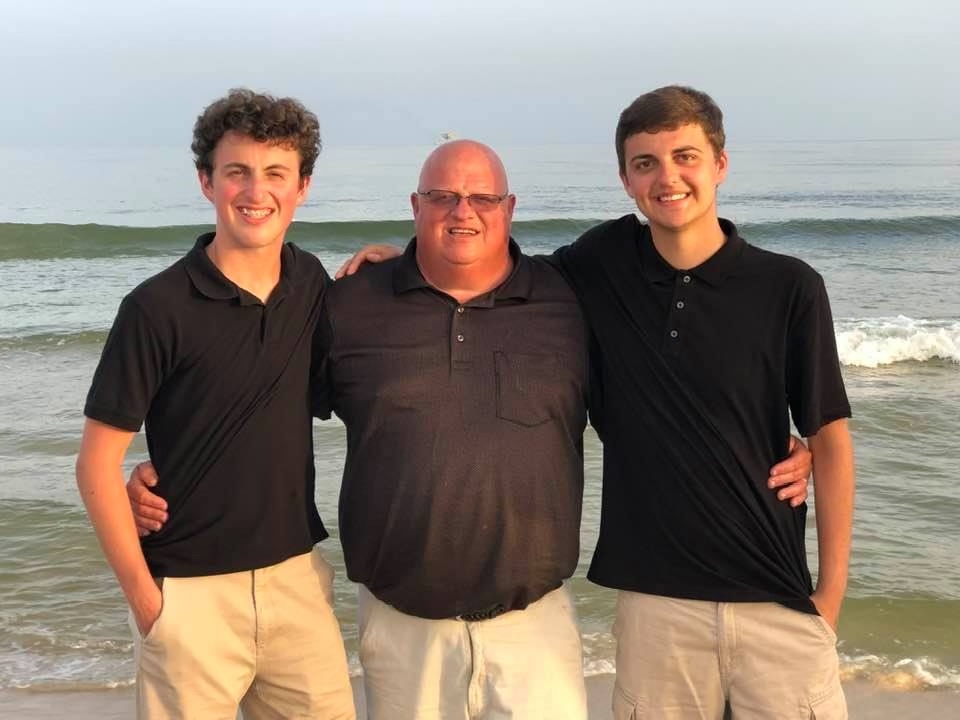
(pictured with his dad and brother to his right)

Caleb Fudge

About a month ago I was sitting at a funeral, my dad was doing the ceremony, and he said something that stuck with me. A guy named Ron Tranmer wrote a poem, and said to sum it up: “When we go to a gravestone we often look at the dates on the stone, but we should look at the dash. The dash serves as an emblem of our time here on earth, although it is small, the dash has touched so many on this earth between our years.” I had never heard this before my dad quoted it, and I think there is a bigger message in this poem.

I want you to take a moment to think about your dash….. Most likely you thought of a big moment in your life, or even a sad time or a time you wish you could redo. As I was thinking of my dash I got caught up thinking about all of my accomplishments and accolades that I forgot about how much I’ve affected others with my dash. I think about Jesus and how he affected and helped so many people. One of the moments that came to mind was when Jesus feeds the 5000 (Mat. 14:13-21). Jesus went out of his way to do something for others. 

One thing that comes to mind when reading this passage was the tornado. I can remember coming here to BG (Bowling Green) after the tornado hit. I had no idea the destruction that was done, because I was in my house when it hit. But when our group was driving around the community and giving some water, food, clothes, or anything to someone that needed it, they were so thankful and relieved that they were getting food. I imagine the 5000 people were grateful when Jesus brought them food.

Our dash also is going to have some times where we wish we can go back and redo a bad decision. Just recently I had a Blue Stars Camp for DCI in March, and one of the teachers said this statement that I will always remember. “Every single time you do a rep of something you make a green marble and a red marble from how that rep was. Whenever it comes to showtime and you are about to do a show, you have the bag of all of these marbles, and for that show your run will be based on either the green or red marble that you chose.”

If we think about our life and how many decisions we make daily, that would add up to be a lot of marbles. Other people are going to remember you from those decisions, green and red. When you pass away and someone looks at your gravestone and looks at your dash, what do you want them to remember? Is it going to be a green or red marble?

Calling On And Looking To Jesus

Friday’s Column: Brent’s Bent

Brent Pollard

For practitioners of Japan’s True Pure Land Buddhism, one desires to enter the pure land upon death. In so doing, he could bypass our corrupt world and enter the western paradise where he could quickly achieve nirvana. Conversely, True Pure Land Buddhism has a hellish alternative in which souls are tortured by oni (i.e., demons) until they are purged of their sins and can enter the Pure Land. No one desires torture. So, the Japanese would recite the nembutsu: “I call on the Amida Buddha.” In medieval Japan, practitioners of True Pure Land Buddhism would lay on their deathbeds holding on to a string as an added measure. That string led to a painting of Amida and his cohorts. As they looked longingly towards the picture, they hoped that their escaped soul would travel the line and enter the western paradise. 

It may be that upon reading the previous paragraph, you thought of the apostle Paul in ancient Athens. He told the men of Athens that he perceived them as superstitious, literally δεισιδαιμονεστέρους—“very fearful of gods” (Acts 17.22). As Japan is often called the home of eight million gods, with the Buddhas incorporated into the mix, it is easy to label the Japanese as superstitious. Yet, I note something different when I hear about this True Pure Land Buddhism. It would almost seem that True Pure Land Buddhism rubbed elbows with Christianity somewhere. It is conceivable since Pure Land Buddhism arose in India during the second century A.D. before making its way to east Asia. However, note two intriguing features of True Pure Land Buddhism reminding one of Christianity. 1) Calling on Amida’s name and 2) Looking to Amida for hope. 

Joel prophesied that those calling up the name of the Lord would be saved (Joel 2.32). Peter and Paul quote this verse from Joel’s prophecy regarding salvation within the New Covenant (Acts 2.21; Romans 10.13). So, there is most assuredly power in the name of Jesus Christ. Peter says there is “no other name under heaven that has been given among men by which we must be saved” (Acts 4.12, all ref. NASB1995 unless otherwise indicated). But calling on Jesus’ name is not like reciting a nembutsu. Paul shows us that we call upon the name of Jesus when our faith moves us to action. After seeing Jesus on the road to Damascus, Paul has been fasting and praying for several days. The prophet Ananias finds Paul in his misery and says, “ Now why do you delay? Get up and be baptized, and wash away your sins, calling on His name” (Acts 22.16 NASB1995). See then how Paul called on Jesus’ name. Paul submitted himself to baptism for the washing away of his sins. In so doing, Paul called on the name of Jesus. 

Do we not also look to Jesus to give hope? Well, we do not stare at an artist’s rendering of the Christ upon our deathbed. But we do look to Him in life as our hope. After citing many examples of those from whom we could find a worthy model of faithfulness, the Hebrews’ writer adds: “Fixing our eyes on Jesus, the author and perfecter of faith, who for the joy set before Him endured the cross, despising the shame, and has sat down at the right hand of the throne of God. For consider Him who has endured such hostility by sinners against Himself, so that you will not grow weary and lose heart” (Hebrews 12.2-3). The KJV says we look to Jesus. Either way, our eyes are drawn to and become fixated upon Him. This hope we have in Jesus is an anchor for the soul (Hebrews 6.19). 

It remains a challenge to preach the Gospel in those parts of the world where Buddhism has taken root. I’ve heard missionaries remark of the antagonism against Christianity within the Buddhist world. Yet, it seems strange that within at least one branch of Buddhism, there is a central figure who is something of a Messiah. Considering that so much of Buddhism asks you to find salvation from within yourself, there are at least some within that belief system who recognize the nature of the human condition is such that we must rely on the grace of someone greater. Therefore, even in hostile environments, may we endeavor to preach that the One willing and able to save is the Lord Jesus Christ. Let us tell the world to call upon and look to Jesus.

courtesy via Flickr


Ignorance And Inoculation

Neal Pollard

Stephen Coss, author of The Fever of 1721: The Epidemic That Revolutionized Medicine and American Politics, relates the fascinating story of the first widespread inoculation effort in the fight against the deadly plague of smallpox. At a time when medical practice was steeped in vast misunderstanding and wrongheaded medical treatments (more than half a century later, George Washington’s doctors would facilitate his death by treating his cold and fever through bloodletting!), two unlikely men were able to withstand the withering criticism of the local medical community and superstitious Boston residents who adamantly vilified them both. One was a physician, Zabdiel Boylston, ostracized, threatened, and condemned by his peers and the town’s council. The other was Cotton Mather, forever infamous for his superstitious influence in the Salem witch hunt and trials that led to the execution of over 20 innocent people a quarter-century earlier. Both believed that by infecting a person with a small amount of smallpox, they could prevent death and even a serious, scarring case of the frightening disease. No less than young Benjamin Franklin piled on with criticism and satire against the two men’s campaign, but both were ultimately vindicated as the inoculations proved far superior in saving lives in Boston’s deadliest smallpox outbreak. It took a lot of courage and conviction for these men to persist in the face of resistance from the highest places of their society.

What if there was a disease that threatened one hundred percent of the global population, one that proved one hundred percent fatal if untreated? What if there was a remedy available that was proven to save every patient from otherwise certain death? What if you knew it worked? Would you have the courage and conviction to offer it to the infected, even in the face of intimidation and threat?

Over 600 years before Christ, a prophet wrote, “Is there no balm in Gilead? Is there no physician there? Why then has the health of the daughter of my people not been restored?” (Jer. 8:22). The balm of Gilead, who was also the Great Physician, came to be the remedy and administer it to the willing (Mat. 9:12; Mk. 2:17; Lk. 4:23; 5:31). He left us in charge of offering this remedy and trying to prevent spiritual death (Jn. 8:21,24) in as many people as possible. Most will reject or at least ignore the offer, unaware of the gravity of their condition. That cannot deter us! Jesus is counting on us to apply His blood to rescue the perishing and care for the dying. A day is coming when there will be no more remedy (cf. 2 Chron. 36:16), but we must be out sharing it until that moment! There are people out there searching for a cure (Mat. 7:7-8). Whatever it costs us, let’s not stop until we’ve helped as many people as we can!

Painting of Zabdiel Boylston

Homesick For Heaven

Thursday’s Column: Captain’s Blog

IMG_0806
Carl Pollard
The definition of homesick is “experiencing a longing for one’s home during a period of absence from it.” It’s the feeling a college student experiences in their first few months away from home. It’s a desire to get back to the people you love and to be back in a familiar place. Whether it’s a business trip that takes you away for extended periods of time or even a vacation, that feeling of opening the door and being back home is amazing.
 
We sometimes sing a song in worship that speaks of this longing. “I’m kind of homesick for a country. To which I’ve never been before..” How can we long for a place we’ve never been? This is a homesickness like no other. It’s unique in that the desire to be there is based on the descriptions of heaven we read in scripture.
 
We are to long for heaven more than our earthly home. How can we do this? “No sad goodbyes, will there be spoken. For time won’t matter anymore.” Aren’t you homesick for a place without goodbyes? A time when we will never have to stand over the coffin of a loved one again. A place where cancer and sickness can’t take our loved ones away. Heaven is a home where we will never have to experience the pain and grief that comes from death.
 
Paul writes in 1 Corinthians‬ ‭15:53-55‬, “For this perishable body must put on the imperishable, and this mortal body must put on immortality. When the perishable puts on the imperishable, and the mortal puts on immortality, then shall come to pass the saying that is written: “Death is swallowed up in victory.” “O death, where is your victory? O death, where is your sting?”” For too long death has won. For too long people have felt the pain that death brings. But one day, death will be swallowed up. No longer will death be able to torment us. Our eternal home will be a place free of death. There won’t be any funeral homes, graveyards, or hospitals because heaven is a place where no one will ever die again. I’m homesick for a place I’ve never been because in that wonderful home we will never say goodbye.
 
I’m homesick for a place I’ve never been.
Are you?


A Message To Mankind

Thursday’s Column: Captain’s Blog

carl-pic

Carl Pollard

 
Someone once said, “There are two reasons I know the devil exists. Number one, the Bible tells me so. Number two, I’ve done business with him.” There is no denying that the world is filled with sin. Romans 3:23 tells us that “all have sinned and fall short of the glory of God.” The penalty for sin is condemnation. The wages of sin is death. Every time we sin, death is the payment.
 
Under the old law, people would watch as an innocent animal was slaughtered on their behalf. They would watch as these animals bled to death knowing that it was THEIR sin that caused it. In the New Testament we learn that our sins brought about the the death of Jesus. A pure and holy sacrifice, sent once and for all mankind (Romans 5:8).
 
But the death of God’s Son brings hope to mankind. This sacrifice means that our sins are not unforgivable. We can come before the throne of God and have them taken away. The Bible tells us of God’s love for us, and how badly He wants us to live with Him for all eternity. John 3:16 says, “for God so loved the world that He gave His only Son, that whoever believes in Him should not perish, but have eternal life.”
 
This message is a life-changer. But it will only change our life if we listen and obey it. Each and every person can be saved because God “shows no partiality…” (Acts 10:34). Salvation can be found, but only if we are willing to change and live according to God’s will.
 
“The times of ignorance God overlooked, but now he commands all people everywhere to repent…” (Acts‬ ‭17:30‬).

Roy Benavidez: Cheating Death For A While

Monday’s Column: Neal At The Cross

pollard

Neal Pollard

Thanks to MrBallen, popular millennial YouTuber, I reacquainted myself with the incredible story of Roy Benavidez through his video, “This man died 37 times.” His story, from childhood to death, is incredible. But it was his heroic acts on May 2, 1968, serving in Vietnam as an Army Special Forces Airborne team that he survived his most incredible, heroic feats. He was shot, hit with grenade shrapnel, bayoneted, and clubbed with numerous injuries so serious that at one point he was mistakenly put into a body bag, presumed dead. He charged with a helicopter rescue team so suddenly that he left his machine gun behind, armed with only a Bowie knife. He ran repeatedly into enemy fire at point blank range and continued bouncing back until he successfully rescued eight soldiers who undoubtedly would have been killed without him. When Ronald Reagan gave him the Medal of Honor 13 years later, he told White House Reporters, “You are going to hear something you will not believe if it were a script.” The Mexican-American orphan, raised in poverty and determined to serve his country, stared death in the face armed with little more than a devout faith and a devotion to his fellow soldiers. This after stepping on a land Mine in 1965 on his first tour of duty, after which doctors proclaimed he would never walk again. To the utter disbelief of medical personnel, he walked out of the hospital less than a year later and had qualified for special forces less than two years after that (additional information via psywarrior.com).

Schools, parks, and even a Navy ship have been named in his honor. He was often referred to as the man who could not be killed. He is a military legend. But, ultimately, in 1998, diabetes did what an array of enemy fighters trying their hardest could not do. It took his life. 

No one would want people to know this divine fact more than Mr. Benavidez would: “…it is appointed for men to die once…” (Heb. 9:27). Solomon adds, “For the living know they will die” (Ecc. 9:5). The sons of Korah echo, ” For he sees that even wise men die; The stupid and the senseless alike perish..” (Psa. 49:10a). The message is clear. One may evade death repeatedly, but not ultimately. Only the second coming of Christ will avert the unpreventable appointment with death (cf. Gen. 3:19). 

What can and must be prevented is what the book of Revelation four times refers to as “the second death” (2:11; 20:6,14; 21:8). It is powerful, painful, and punishing. But it’s avoidable. Christ died to defeat the power of physical death and the justice of spiritual death (Heb. 2:14-15). Jesus is the greatest hero of time and eternity, who faced death and overcame it to live forevermore and offer eternal life to those who follow Him (Mat. 16:24-27). He faced the worst that the most powerful enemy of all could throw against Him, and He utterly defeated him and  it. We needed rescue, and Jesus delivered us. Surely no one who understands that would choose to remain where he or she will eternally die. Physical death is sure. Spiritual death is not. God still pleads, “Choose life in order that you may live” (Deut. 30:19). 

Life Lessons Hit Hard

Thursday’s Column: Captain’s Blog

IMG_0806
Carl Pollard
 
April 30th 2:30 PM.
 
It was a gorgeous sunny day without a cloud in the sky. I shot Dale a text and told him to meet up with me at a mom and pop gas station outside of Huntsville for a BLT.
 
I grabbed my motorcycle keys, helmet, and leather vest. On the way out the door I decided to throw on my jean jacket underneath my vest. I don’t know why I did this because the temperature was close to 80 degrees. I hopped on my bike, turned on some Hank Williams Jr., and headed towards Huntsville.
 
2:37 PM
 
I was biking on the road that led to those amazing gas station BLT’s. I had been on this road hundreds of times, but today’s trip ended a little differently than normal. I noticed a truck slowly pulling out of the driveway of the local shooting range. He crept forward and then stopped. I figured he was stopping because he saw me coming. I get about 100 feet away from the truck, and he pulls out. He turned left blocking both lanes of traffic and I knew what was about to happen. I pulled the clutch and grabbed a fist full of brakes, but it was too late.
 
2:38 PM
 
It’s amazing how many thoughts you can have in such a short time. Everything slowed down and as the truck got closer I thought about Emily, my family, my spiritual state, and BLT’s. The initial impact was to my left leg, then my head hit the front body panel of the truck. The last thing I remember is a sharp pain in my head and a blinding flash of white.
 
2:43 PM
 
I woke up in a ditch and the first thing I saw was my motorcycle upside down next to me and somehow “Feelin’ Better” by Hank was still playing from the speakers on my bike. Incredibly, I didn’t break a single bone or have any major head injuries. Needless to say, I never got that BLT.
 
May 12th 1:21 PM
 
I’m at the church building with my brother writing an article for tomorrow morning. I can’t stop thinking about everything that happened. I can’t help but feel like God’s providence was written all over that day.
The jean jacket I grabbed at the last minute saved my arms from getting road rash, the crash bars I installed literally the night before absorbed the initial impact. Those bars were an inch and a half solid steel pipe and they folded like a quesadilla. That would’ve been my leg if it weren’t for the time I spent installing them the night before.
 
I realized several important facts that day:
 
  1. Only God knows what tomorrow holds (Prov. 27:1).
  2. Death is certain, but when we die is uncertain. Because of sin we are destined to die. I could’ve died on a motorcycle, or from a heart attack from too much bacon. Bottom line, we must be spiritually prepared to leave this earth at any moment (Heb. 9:27; Matt. 24:42-44).
  3. Some things are more important than a motorcycle. Like my parents’ mental health and blood pressure. Emily’s well-being and peace of mind is far more important than a bike. It’s a matter of looking at things from the other person’s point of view. Practicing the golden rule (Matt. 7:12). I would be a wreck if either of my parents bought a motorcycle (pun intended).
 
So here’s my two cents for those reading this:
 
It’s beneficial to take a step back and look at our priorities. If we value anything on earth more than God, we will leave this earth unprepared.
 
If there’s sin in our lives, procrastination is the absolute worst thing we could do. Tomorrow is never promised.
 
Be mindful of what our actions do to others. It may not even be sinful, but it’s all about showing a love that values others’ peace of mind and well-being above yourself.
 
P.S. Watch out for black Dodge trucks; they don’t stop.

MAKING PLANS FOR OUR OWN FUNERAL

Tuesday’s Column: Dale Mail

image

Dale Pollard

Recently I attended the funeral of a loving and godly mother. She was celebrated and greatly mourned over by her family and friends. As the funeral service went on there were memories that were brought up that made the audience laugh and cry, even those that didn’t know her all that well. How we are remembered in life is dictated not by a single day or moment, but how the life was spent overall. This concept should be one that we make a conscious effort to visit often. There’s a great question that every Christian should know the answer to. 

What does it mean to be a person after God’s own heart? 

According to Nathan the prophet, David was “the man”! Today we use that term when we are complementing one who has shown himself to be an overachiever or is excellent in some way. When Nathan said this to David, however, he was speaking on behalf of the king’s King. Nathan was accusing David of a great wickedness. 

That being said, David was remembered at the end of his life as someone who chased the heart of God. The Lord was his passion and his pursuit in life. He wanted to see through the eyes of God, follow in the steps of God, and mold himself into a tool that accomplished a will higher than his own. His life is summed up well in a single verse. 

“For David had done what was right in the eyes of the LORD and had not failed to keep any of the LORD’s commands all the days of his life–except in the case of Uriah the Hittite” ( 1 Kings 15:5). 

This verse does not indicate that David was only guilty of one sin while on this earth. It wasn’t that David stumbled and continued on the path of righteousness, but instead there was a season in his life where he completely abandoned God. He gave up the path of light for one of darkness. After Nathan boldly confronts him, he is reminded of his inward allegiance to his God and he changed his course of direction. David lost his son as a consequence. Another son rebels against him. His kingdom is no longer as peaceful as it once was and at the end of his life he sits on his throne as a weary and restless ruler. Even so, despite the darkness on all sides, he chose to stay in the light. 

In the end he wasn’t remembered as the “adulterous murderer.” He is praised for being Israel’s greatest king because he had a heart that mimicked the king of Kings. Let’s make our plans to be remembered as people who chased after the heart of God. 

Salvation

Wednesday’s Column: Third’s Words

gary and chelsea

Gary Pollard

We don’t typically associate salvation with death. Normally the opposite is true! In the New Testament salvation normally describes forgiveness of sins (Acts 4.12, for example). Escaping spiritual death is how the word is primarily used. The exception to this rule is fascinating and sobering. 

Human instinct compels us to avoid unpleasantness, suffering, and death. When faced with danger or difficulty, our default response is avoidance at all cost. This was a great temptation for many in the early church. 

Peter wrote to Christians who were about to face some awful hardships. He encouraged them by promising salvation, but it was a hard message to swallow. In the following examples, Peter used “salvation” to mean something different (it would have been understood to mean this because of context): 

  1. I Peter 1.5 – Death
  2. I Peter 1.8ff – Death
  3. I Peter 2.2ff – Death

How is death the same thing as salvation? For those who were suffering and stayed faithful, death was the ultimate salvation. For those whose lives were upended because of persecution, being with God forever was salvation. For those who lost their family members, salvation meant reunion. The ultimate result of faith is eternal life with God. 

How do we view difficulty? Do we compromise faith to avoid suffering? At worst, suffering leads to death. At best, suffering leads to death. Nothing can slow a faithful Christian down! We have salvation in this life (guilt does not weigh us down), and the end of this life is salvation. We have an awesome God. 

All the Time in the World 

Friday’s Column: Supplemental Strength

81121814_2462862270639428_5746232403106463744_n

Brent Pollard

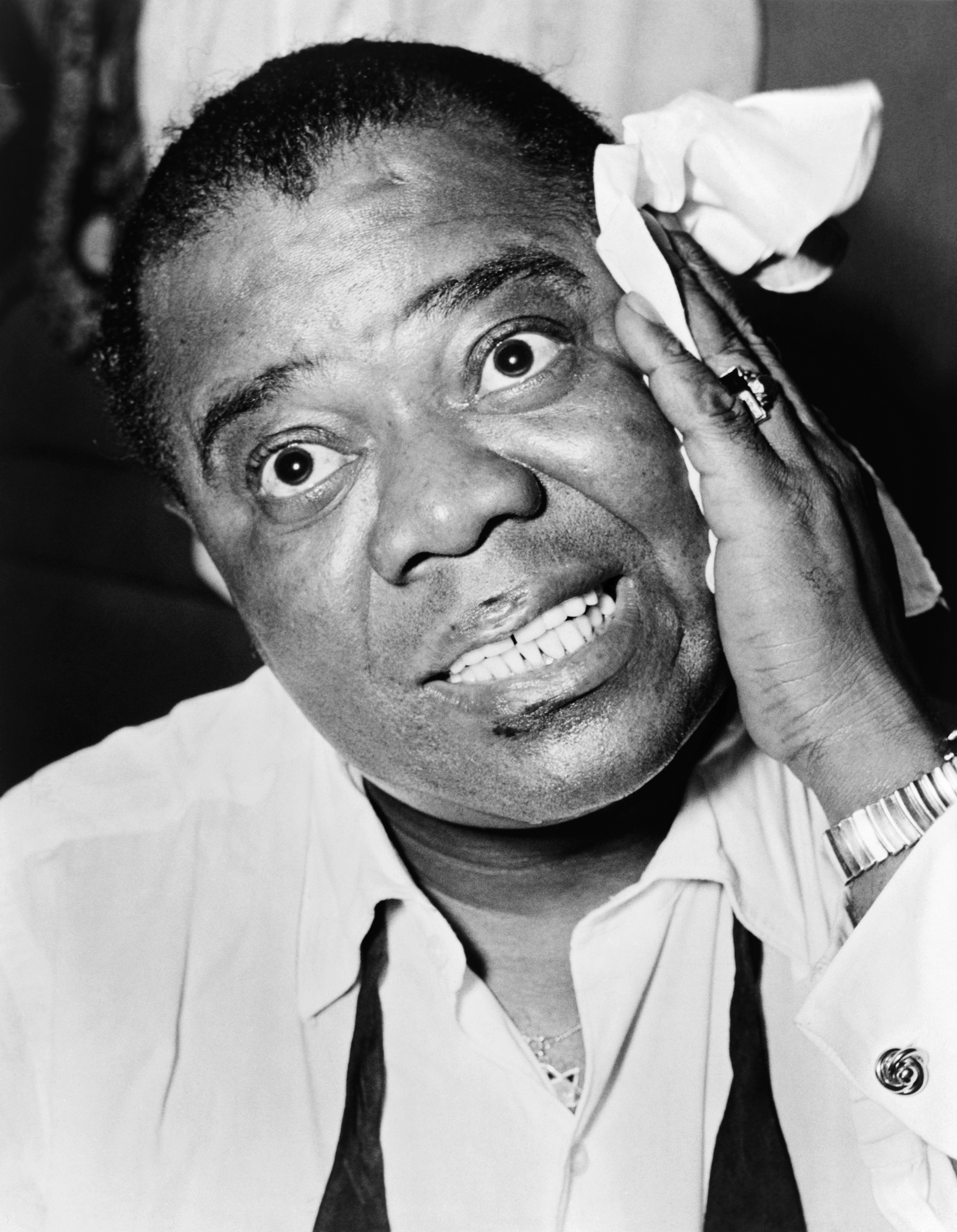
1969 was a landmark year in many respects. Most notably, the year saw a man walk on the moon. Of much lesser note, 1969 witnessed George Lazenby take on his sole (some say, forgettable) performance as the iconic spy, James Bond. I am not a Bond fan, seeing as nothing is entertaining about an unrepentant philanderer. Yet, I do enjoy music. Thus, I am familiar with this Bond movie because of its soundtrack, which featured a Moog synthesizer for the first time in its main theme. Louis Armstrong recorded the love theme for On Her Majesty’s Secret Service. The song was titled, “We Have All the Time in the World.” It was Armstrong’s last studio recording. 1Sadly, he was too weak to play the trumpet during the piece, performing only the vocal. 2

The love theme belies the movie’s sad ending well. Music composer, John Barry, chose Louis Armstrong to do the vocal for the love theme precisely because he felt that Armstrong could deliver the titular line with irony. 3 The song’s title is Bond’s last spoken dialogue in both the Ian Fleming book and the film of the same name. I doubt I am spoiling a movie that is 50 years old by revealing its ending but provide warning that there is spoilage ahead.

With the sixth Bond installment, Bond is finally allowed to fall in love and marry. In the closing moments of the story, however, the antagonist kills Bond’s wife as they are heading out on their honeymoon. The movie’s love theme, as an instrumental, Armstrong’s vocal performance, and several reprises play prominently throughout the film’s score. Hence, this pretty false promise crashes down under the weight of reality in the end. Not even spies saving the world have time promised to them.  The atypical Bond ending makes it more of a cult favorite among fans of the franchise. It didn’t do well at the box office. Of course, that may likewise be attributable to Sean Connery’s absence from the screen. Critically, the movie is well received, with at least one reviewer considering it the third best film of the franchise. 4

I think this subject strikes a chord with me more because of it being Armstrong’s last recorded song than for anything otherwise related to On Her Majesty’s Secret Service. Armstrong is a man of declining health singing about having all the time in the world. I wonder if Armstrong had a sense that he was nearing his departure. In the final years of his life, Armstrong battled poor health but went against the advice of physicians by continuing to tour and perform. 5 I suppose one may chalk that up to dying doing what one loves?

But what of us? Do we ignore the stark reality of James 4.14? We are like the morning fog burned away by the rising noontime sun. And sometimes our lives are such that even if lengthy we may sound as Jacob speaking to the pharaoh: “The years of my sojourning are one hundred and thirty; few and unpleasant have been the years of my life…” (Genesis 47.9 NASB). Even so, we act as if we have all the time in the world. Jesus reminds us that we have but a small window in which to do what we must (John 9.4). Yes, the night is coming. Perhaps, you have been putting off those things you know must be done to save your soul or improve your example as a Christian. Don’t listen to Satan’s sweet melody telling you about the time you do not have. Your only time is now.

“Behold, now is ‘the acceptable time,’ behold, now is ‘the day of salvation’” (2 Corinthians 6.2b NASB).


REFERENCES

1 “On Her Majesty’s Secret Service (Soundtrack).” Wikipedia, Wikimedia Foundation, 24 June 2020, en.wikipedia.org/wiki/On_Her_Majesty%27s_Secret_Service_(soundtrack).

2 “We Have All the Time in the World.” Wikipedia, Wikimedia Foundation, 14 July 2020, en.wikipedia.org/wiki/We_Have_All_the_Time_in_the_World.

3 ibid

4 Hausmannsgate. “All 25 Bond Films, from the Best to the Worst.” IMDb, IMDb.com, 21 Nov. 2015, www.imdb.com/list/ls055107293/.

5 “Louis Armstrong.” Wikipedia, Wikimedia Foundation, 2 Aug. 2020, en.wikipedia.org/wiki/Louis_Armstrong#Death.

louis_armstrong2

How Can I Go On?

Tuesday’s Column: Dale Mail

DaleandJanelledirectorypic

Dale Pollard

How can we handle the hurt of losing someone we love?

Many emotions run through our hearts when we’re faced with the loss of a loved one. These emotions can present themselves as questions:

  • Confusion. Why did this happen?
  • Sadness. How will I go on?
  • Anger. Who allowed this to happen?

Who can answer these questions?  Who can provide comfort?  Who can guide our hearts through the heartbreaking moments of life?

Is it not the Creator of life who can explain the end of life, even though “end” is a very human term?

100 years from now I’ll be alive and so will you. 150 and 200 years from now,  I’ll be alive and so will you.

In Genesis 1:26-28, God said,  “Let us create man in our own image.”

  1. When God breathed into you the breath of life He gave you a piece of Himself called the soul which will live on forever…somewhere.
  2. When God created you in a more intimate way unlike the beasts of the field and the birds of the air He gave you free choice.
  3. He gave you the ability to reason.
  4. He gave you the ability to contact Him and be contacted by him.

How sad and how tragic it would be to live your life with no hope! Today, I’m here to offer wonderful, comforting news, at a time where such news seems all but missing.

God loves you more than anyone else does.

Though many cry for and with you when you grieve the loss of a loved one, that love falls short of the one who expresses His love in a way that’s perfect and unfailing. You will experience feelings you may not be able to put into words, but God feels and understands them. God can walk you through them. Life doesn’t have to be impossibly tragic and void of purpose.

God created the heart, so He can heal yours. God created the mind, so He can sort yours out. God made the soul, so He can save yours. God created the body, so He can give you rest. God created the eyes, so He can wipe your tears away. God created the shoulder, but His are the only shoulders capable of bearing the weight of all those who lean on them.

“Therefore comfort one another with these words” (1 Thes. 4:18).

garan_sunrise


The Eternal Optimist

Friday’s Column: Supplemental Strength

81121814_2462862270639428_5746232403106463744_n

Brent Pollard

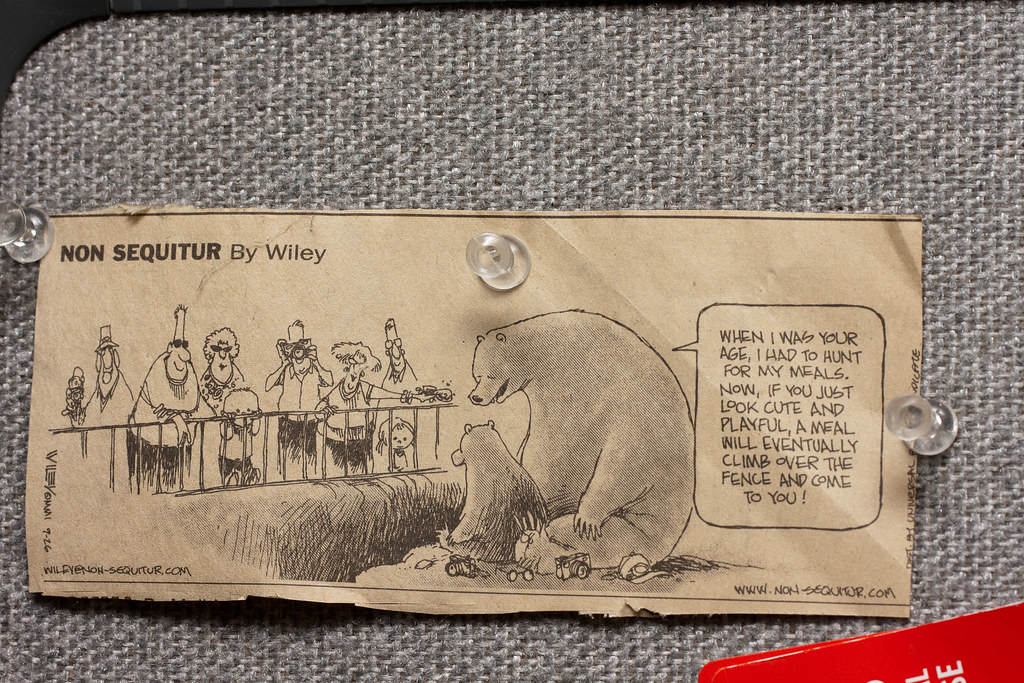
Wiley Miller is the creator of the comic strip, Non Sequitur. When apolitical, Miller’s strip can be enjoyable. I cut one of his strips from a daily edition of The Fayetteville Observer (Fayetteville, NC) back in the early aughts featuring “the eternal optimist.” In the one-panel comic, the grim reaper stands before a man in business attire. This eternal optimist calls to his wife in another room: “Well, honey, it doesn’t look like I have to worry about that long commute anymore.” I kept that strip until it yellowed with age and crumbled into oblivion. I did so for another reason than having a dark sense of humor. I hope I am an optimist on the order of the businessman finding something good to say even in the face of death.

Paul had such a character. He told the Philippians that he had everything to gain in death, as a Christian, and needed only remain for the sake of the brethren (Philippians 1.21-26). Nearing the end of his life, a confident Paul told Timothy, “I have fought the good fight, I have finished the course, I have kept the faith; in the future there is laid up for me the crown of righteousness, which the Lord, the righteous Judge, will award to me on that day; and not only to me, but also to all who have loved His appearing.” (2 Timothy 4.7-8 NASB). Why was Paul an eternal optimist? It was not because he was free of sin. Indeed, Paul considered himself the chief of sinners (1 Timothy 1.15). However, Paul was full of faith and understood God’s grace.

We cannot afford to live in fear, whether that fear is of death or whether we are “good enough.” We must do the will of God. John says, “But if we walk in the Light as He Himself is in the Light, we have fellowship with one another, and the blood of Jesus His Son cleanses us from all sin” (1 John 1.7 NASB). That faith may not always take us to places providing comfort. Shadrach, Meshach, and Abed-nego had their faith put to the test. Nebuchadnezzar had instructed everyone to bow to his golden image in worship. The young Hebrews refused because they remembered the Law of Moses and their covenant relationship with God. Nebuchadnezzar was angry with the young men and told them they would perish in a fiery furnace. They replied, “O Nebuchadnezzar, we do not need to give you an answer concerning this matter. If it be so, our God whom we serve is able to deliver us from the furnace of blazing fire; and He will deliver us out of your hand, O king. But even if He does not, let it be known to you, O king, that we are not going to serve your gods or worship the golden image that you have set up.” (Daniel 3.16b-18 NASB).

Did you notice why they did not fear? Can you see why they were optimistic? They understood their God was more powerful than a king and could deliver them. Yet, even if God did not deliver them, they still realized they had an obligation to serve Him regardless. These days the world seems scary. There is so much bad news on TV. But our God is more powerful. Thus, we can even say, “If I do catch COVID-19, God will deliver me. But even if He does not, I know Heaven will be my home.” Other scenarios would likewise suffice as an example. However, this is one of the things that seems to be on the minds of many today. Build your faith and become an eternal optimist as well. The world, in turn, will become a less daunting place.

6642913339_1ccb2896d6_b
A different Non Sequitur sampling

Sin Illustrated

Tuesday’s Column: Dale Mail

DaleandJanelledirectorypic

Dale Pollard

Who doesn’t love a good illustration? Over the next few weeks this column will have three of them— all geared around a singular topic. 

In the early days of flying men would attempt to soar into the skies like the birds by building wings made out feathers and jumping of towers, hills, and even cliffs. In 1507 John Damian strapped wings covered in chicken feathers to his back and leapt from the walls of Sterling Castle in Scotland. He ended up breaking his thigh and quickly blamed his failure on the fact that he used chicken feathers instead of eagle feathers (undiscoveredscotland.com). 

Many early attempts of flying ended in more serious injuries and even death. If they had a better understanding of the principles of flight they could have avoided their tragic endings. 

Millions of people today are plummeting to their spiritual deaths, and we have the knowledge they need. Nobody will achieve spiritual flight through the:

1. lust of the flesh
2. lust of the eyes
3. pride of life

If an apple has a hole in it, some would assume that a worm has eaten its way inside. But in reality there was a worm in the seed of the apple the whole time. And as the worm grew it ate its way out of the core. 

At first sin is easily hidden, but as it grows it shows itself through our actions. 

Julie Andrews in the Sound of Music would claim that one of her favorite things are snowflakes that stay on her nose and eyelashes. A small beautiful snowflake. Thousands of years ago a single snowflake fell from the skies. Then another, then another. Soon the snow turned to ice and the ice became so heavy that it broke off the glacier and fell into the sea. It began to float and drift until one night it struck a ship called the Titanic, killing 1500 people. 

When a sin problem begins to take hold, it may seem as harmless as single flake of snow. Overtime the sin proves to be more than some can handle, and they’re heading for disaster. 

“Sin will take you farther than you wanted to go, keep you longer than you intended to stay, and charge you more than you wanted to pay.” 

BLACK FRIDAY

Neal Pollard

It was September 24, 1869. The Civll War was barely an excruciating national memory and the nation was rebuilding. That specific day was a Friday, the day a cruel scheme by two Wall Street investors was discovered and led to an implosion of the Stock Market. It was referred to as “Black Friday.” The tie of this term to the Christmas shopping season is also surprising. In the 1950s, the Philadelphia police department used the phrase to describe the mayhem brought by the combination of suburban shoppers, tourists, attendees of the Army-Navy football game, and increased shoplifting in stores. They would have to work extra-long shifts this day after Thanksgiving. It was a derogatory term until relatively recently, when retailers in the late 1980s co-opted the expression to depict the day as the day retailers were trying to take their businesses from the “red” to the “black.” This meant bargains for shoppers, the best day to get out and shop and spend. While the advent of online shopping and retail promotions have created new and additional days of holiday shopping deals, “Black Friday” still symbolizes the happy time of “the most wonderful time of the year” (information from Sarah Pruitt, History Channel). 

For the Christian, black Friday was the day darkness fell over the whole land of Palestine around 30 A.D. (Mat. 27:45). It had to take place to save humanity who were sitting in the darkness of sin (Mat. 4:16) facing the grim prospect of eternal, outer darkness (Mat. 8:12; 22:13; 25:30). It was a horrible day. It was a day of seeming loss, with Jesus’ followers sensing total defeat. Jesus was undergoing six hours of horrific torture before succumbing to death. Satan seemed victorious. But God, according to His eternal, humbling, and essential plan, took that day of darkness and defeat and used it to bring the only profit that ultimately matters. It was actually a day of triumph (Col. 2:15). It became a day of victory for us (1 John 5:4). What turned that day from sorrow to joy was the Sunday that followed that Friday. That Friday death was God’s gift to the whole world, and it profits anyone who responds to it by obedient faith (Rom. 6). 

This Sunday (and every Sunday), we get to celebrate this gift and what it means to us when we take the Lord’s Supper. We think back on those dark events, thank God for what they mean to us now, and look ahead with hope and assurance to what it means for our eternal destiny. It was a day of defeat, but God transformed it into the day of victory! 

cozumel100

Mbah Gotho, Methusaleh, And Mortality

Screen Shot 2019-09-30 at 11.21.58 AM
Neal Pollard

Incredibly, his residency card and his nation’s official documents, state his birthday as December 31, 1870 (The Guardian). For clarification, that was almost three weeks before Germany became an official nation, only five years after the end of the Civil War (reconstruction was just underway and Ulysses Grant was president), 28 years before the Spanish-American war, 33 years before the airplane was invented, 44 years before the start of World War I, and America was less than 100 years old. Mbah Gotho died in 2017, making him 146 years old at the time. The only reason it is questioned is because his native Indonesia did not begin recording births until 1900. Officials stand firm that it is accurate. Can you imagine? What was it like to live almost a century and a half? To see almost all of 15 decades? 

To put it in perspective, the ancient Methuselah lived almost seven times longer than Mbah. He died at almost 1,000 years old.  Genesis 5:27 faithfully records, “So all the days of Methuselah were nine hundred and sixty-nine years, and he died.” Methuselah was contemporary with Adam and Shem, a gap of over 1,600 years. In a day of pristine gene pools and a water canopy-covered atmosphere, everyone and every thing lived much longer. But God determined a general rule of thumb to which humanity has almost universally submitted, saying, “Then the Lord said, “My Spirit shall not strive with man forever, because he also is flesh; nevertheless his days shall be one hundred and twenty years” (Gen. 6:3). Thus, an Mbah Gotho is an almost singular oddity. The official oldest age in modern times was reached by Jeanne Calment, who was 122 when she succumbed in 1997. 

Average life expectancy throughout much of recorded time falls more closely in line with what Moses states, in Psalm 90:10, somewhere between 70-80 years of age. War, disease, famine, poverty, and the like sometimes curtail those numbers, but what is true of those who die at birth or who make it 122, 146, or even 969 years is that they do die. Hebrews 9:27 affirms the inevitability of it barring only the second coming of Christ in one’s lifetime (1 Cor. 15:52).

Most people make decisions as though they will live forever. People who know better put off obedience to the gospel, put other things before Christ in their priorities, serve sin, and neglect their reason for existence. While too many do this in ignorance, how tragic for the untold number who know how they ought to spend their lives but either deny or delay doing it. The moment of surrender will come. The body and spirit separate (Jas. 2:26). The body returns to dust and the spirit returns to God (Ecc. 12:7). At death, one’s eternal existence begins (Mat. 25:46). God gives one only the moments between birth and death to prepare for that existence, but He does not tell any of us how long that is. He simply tells us to be ready (Mat. 24:42,44). May we all get ready and stay ready for that day!

“She Had Difficulty Accepting Death”

Neal Pollard

Each death marks a transition and passing of an era. The recent death of Doris Day certainly represents this well. The 97-year-old had a stipulation in her will that she not have a funeral, memorial service, or grave marker. She did not want a lot of time spent memorializing her death. She didn’t like death, and, as her manager and friend, Bob Bashara, told reporters, “She had difficulty accepting death” (Tyler McCarthy, FoxNews.com).

Most of us won’t refuse a burial plot and funeral service, but few of us enjoy imagining the process or moment of death in our lives. There is something sobering and precious to us about at least our own lives and mortality. We think it is unhealthy and unusual for someone to have little or no regard for their lives.

Sometimes, we struggle to accept the death of someone else. For how many years have people been in denial about Elvis Presley’s death, thinking him to be living in hiding somewhere. Though she would be dead of natural causes today, many, for years, chose to believe that Amelia Earhart did not die but rather landed on some deserted island or similar conspiracy. Don’t even get me started on Jimmy Hoffa. No compelling evidence was enough to convince ardent fans that these notorious people were actually dead.

Did you know that some people have tried to say that Jesus did not actually die, but only “swooned” on the cross? It’s even called the “Swoon Theory.” The Koran says that he feigned death (Surah IV: 157) and others say Jesus was drugged and only appeared dead (Geisler 347). But, as Geisler notes, there were experienced Roman soldiers there, there was significant blood loss from many wounds that bled for hours, there was an outpouring of blood and water when Jesus’ side was pierced, the governor, Pilate, inquired into the fact of His death before He turned over the body to Joseph of Arimathea, and much more sufficiently prove that Jesus actually died on the cross (ibid 347-348).

Each Sunday, we readily embrace the fact that Jesus died. In fact, we base our entire lives upon the truth of that death. We understand that it was necessary for Jesus to die, in our place and for our sins (Rom. 14:9; 2 Cor. 5:15; 1 Pet. 3:18). Though it breaks our heart that it was necessary for Jesus to die, we do not have difficulty accepting it. We’re counting on it! As you memorialize the Lord in the Supper today, be grateful for that substitutionary death. He was able to do for us what we could not do for ourselves (2 Cor. 5:21). Of course, what makes the difference in our eternity is that He did not stay dead. He arose (1 Cor. 15)! But, He wants us to embrace His death and let us change who we are and what we do.

doris-day-401256_960_720

Keeping Our Thoughts On The Lord During The Lord’s Supper

Neal Pollard

“Three babies are crying across the auditorium… Somebody dropped a songbook… Everybody has a cough today… Oh, good… brother So ‘N So sure prayers nice prayers… My big toe sure is bother me… I think I forgot to write out the check for the giving again… Better do… Wow! Are we done already?”

That scenario probably happens in many a mind more frequently than we care to admit. The greatest memorial of all time can also provide one of the greatest mountains to climb– concentration and distraction. The Lord’s Supper is a congregational activity, but it is participated in by individuals. What does it take to maintain concentration on the significance of this feast?

Examination. See 1 Corinthians 11:28. We should examine our state of mind, taking care to dwell on Christ’s suffering sacrifice, His triumphant resurrection, our debt to Him, the depth of heaven’s love shown in this sacrifice, and the joyful hope we have through His act. We should examine our lives and see where we can live better and eliminate sin–checking our motives, morals, and mindset. Self-examination should mark this time.

Forgetting. We should forget the daily, mundane affairs of life. We are focusing on something of much greater and eternal significance. Other things should be shut out of the mind. This is the Lord’s time.

Fellowship. We take the Supper with every other saint present. This is a special moment of fellowship (Acts 2:42). In a sense, we are also taking it with all our brothers and sisters throughout the world. The communion provides a bond of fellowship that has special meaning and ties together all baptized believers in fellowship with Christ.

One. We commemorate the Lord in the one body according to the instructions of the one Spirit with the one hope that Christ’s atonement saves us and gives us access to the Father. We honor that one Lord and follow the one faith in obedience to the will of the one God. the Supper unites us with God as well as each other (Eph. 4:4-6).

Remembrance. The Lord’s Supper is a time to reflect on the cross with its manifold significance. Until He comes again, the Lord’s Supper is an appointed, weekly, and mental trip back to His death (1 Cor. 11:26). One remembers, with the help of the gospel writers, the body wounded on the tree and the saving blood flowing from the body of God in the flesh.

Thanksgiving. The Lord’s Supper is a time for deep appreciation and gratitude. Because He suffered, we can have peace. Because He died, we can have eternal life. Because He arose, we can rise from sin to newness of life.

Paul had to remind Corinth that the Lord’s Supper was not just another meal (1 Cor. 11:20-34). Modern Christians, too, need always to keep that fact in mind when we lose focus and concentration or forget why we’re partaking. What we need, despite the distractions, is EFFORT! May the Lord’s Supper never grow old for any of us!

communion

If Today Was My Last Day On Earth (Poem)

Neal Pollard

[NEAL’S NOTE: This poem was from the conclusion to the sermon I preached on this subject from Psalm 90]

If today was my last day and tomorrow found me gone
How would life be different, if that unknown somehow was known

Would I be a better person, would I live a better life
How much would I feed resentment, envy, bitterness and strife?

How would I choose to live, and what would be my emphasis
Being a blessing or a burden, full of service or selfishness?

Where would God be in my life, what place would He occupy,
If today was my last day, and before tomorrow I would die.

If today was my last day, and second chances all were through
And I stood before my judge and my eternal fate I knew

I would mourn and fall before Him, if I had not done what’s right
If I had chosen self and sin, if I had chosen eternal night.

But there’s no reason for apprehension, I can die w/head held high
If I die to self & live to Him, it won’t matter when I die.