The first miracle of Jesus is found in John chapter two. While many won’t give much thought to the servants in this account, let’s place the focus on them here.
John 2.1-11
“On the third day there was a wedding at Cana in Galilee, and the mother of Jesus was there. Jesus also was invited to the wedding with his disciples. When the wine ran out, the mother of Jesus said to him, “They have no wine.” And Jesus said to her, “Woman, what does this have to do with me? My hour has not yet come. His mother said to the servants, “Do whatever he tells you.
When Jesus refers to His mother as “woman” He was using a term of respect in that day and age. John writes that the hour of His death had not come because that is an underlying narrative of his book.
Continuing on,
“Now there were six stone water jars there for the Jewish rites of purification, each holding twenty or thirty gallons. Jesus said to the servants, “Fill the jars with water.”
Now, notice the response of the servants.
“So they filled themup to the brim.”
They never questioned why they should fill these jars with water. This was no simple task and it was no doubt a time consuming chore. The jars held anywhere from one hundred and twenty to one hundred and eighty gallons of water. They likely drew the water out of a well— one bucket at time.
Jesus then tells the servants,
“Now draw some out and take it to the master of the feast.”
Once again, notice the response of the servants.
“So they took it.”
The servants didn’t ask why they should draw the water out or even why they should take it to the master of the feast. They don’t seem to hesitate even though it could have been a humiliating experience to serve water to the head of the wedding feast. They just took it! They simply listened to what Jesus told them to do.
The servants and their unquestioning obedience is praiseworthy. As servants of Christ, we should do whatever He tells us. We shouldn’t do the bare minimum but we should, in a spiritual sense, fill our jars to the brim. We should live our lives completely dedicated to fulfilling His commands, even if it’s difficult or when it doesn’t make much sense to us.
Up the road in Ohio County, Kentucky, Beaver Dam native Ray Chapman grew up to be a great baseball player. He was so good, in fact, that he was able to play nine seasons as the Cleveland Indians shortstop. He was renowned at the time for his defense, bunt singles, batting average, and stolen bases, but he is remembered as the only Major League baseball player to be killed on the field in a game. When he played, the baseball could be scuffed and sullied with everything from dirt to licorice to tobacco juice. This not only made it harder to see, but more erratic out of the pitcher’s hand. On August 16, 1920, near twilight at Yankee Stadium in New York City, Yankee pitcher Carl May hit Chapman in the side of the head with a fastball. The errant throw caused fatal brain damage, and Chapman died the next morning. It shook the baseball world.
This tragedy brought both immediate and eventual change to the game. It was because of this incident that umpires began a practice that continues over a century later of replacing a baseball when it becomes scuffed and dirty. The “spit ball” pitch was banned, for similar reasons. While it would take a few decades, the implementation of the baseball helmet is traced back to Chapman’s untimely death. While it would have been better for Chapman, a newly wed and newly expectant father, to have avoided this devastating end, it has likely saved several lives. It’s impossible to know how many might have been harmed by dirty baseballs through the years, but one can find sports articles detailing the likes of Kirby Puckett, Sammy Sosa, Chris Dickerson, and others who may have been spared a worse result by having on the protective helmet.
It is so easy to view tragic circumstances in isolation, especially those that happen to us personally. In light of the many tragedies that can happen in life, I say this with fear and trepidation. But, Scripture has already made that point. Out of various, fiery trials, these can “result in praise and honor and glory at the revelation of Jesus Christ” (1 Pet. 1:6-7). James said to consider your various trails as a cause for all joy, “knowing that the testing of your faith produces endurance” (Js. 1:2-3). James even says of the ultimate Old Testament sufferer, “We count those blessed who have endured. You have heard of the endurance of Job and have seen the outcome of the Lord’s dealings, that the Lord is full of compassion and is merciful” (5:11). To make such an application of a man who endured such tragedy is startling! Why does he mention Job? So that we can learn, adjust, and overcome!
Make no mistake about it, we all prefer to avoid heartache, sorrow, and loss. But, when those things come to us, Scripture urges us to adopt a heavenly mindset. See the produce in the pain, the hope on the other side of the hurt. Sometimes, it may be that others witness our faith in the midst of our trial and it may help them in their own walk of faith (Phil. 1:14). Whatever the case, even our own greatest adversity can result in someone else’s advantage. That’s an unintended benefit of suffering.
Last week we noted that one has two reliable sources of wisdom: God and one’s parents. However, we might alter this slightly to include the adjective “godly” to describe our parents. If one’s parents are not godly, then they cannot offer much in the way of wisdom. Everything else is a tertiary source of wisdom. This truth invites harmful consequences for the one listening to the wrong source of wisdom. Solomon warns that sinners seek to seduce you with their words (Proverbs 1.10-19).
But what do we mean by “sinner”? We have in mind those who habitually sin, not just those who have yet to enter a covenant relationship with God. In other words, these individuals make no pretense of doing good or being righteous. Solomon’s example seems extreme to us since we have a blood-thirsty gang willing to kill to plunder others’ property. How could anyone be seduced into committing an act God hates (Proverbs 6.16-19)? Unfortunately, it is not as difficult as you might think.
Adolph Hitler remains an easy illustrative target because he is so infamous. However, during an economic depression, Hitler rose to power, promising a return to prosperity. Hitler convinced the Germans that only the Jews stood between them and their restoration. Hitler was charismatic, and he had helpers like Joseph Goebbels, able to package his message for easy consumption. How many otherwise “good” Germans turned a blind eye to atrocities committed under the pretense of creating the thousand-year reign of the Third Reich?
When Patton discovered the atrocities committed at Buchenwald, he brought the locals into the concentration camp to see what had happened there. Some still feigned ignorance, but one eyewitness at the time declared that one could smell death in the air even outside the camp. “Death” has an unmistakable smell. Visitors to the concentration camps of Europe have told me that the scent lingers today. It is inconceivable that they didn’t know that something nefarious happened behind the locked gates of Buchenwald.
I’ve watched enough documentaries to note how many older Germans living during that time say that Hitler had them under a spell. And some of the Hitler youth have struggled to adjust to the post-war world. But today, it is common for Germans to refer to the events of the Second World War as the liberation of Germany by the Allied Forces. In other words, contemporary Germans see the period of Nazi rule as an occupation even though the citizenry widely supported Hitler at that time.
But what of a “softer” despotism? We have U.S. politicians parroting the Marxist ideology of redistribution. (“From each according to his ability, to each according to his needs.”) And younger generations are quick to point out the disparity between the salary of the CEO and the employee, even though the CEO may have blood and sweat equity invested in his business and that no job would exist for the employer without him. And there is this disconnect between those desiring that we plunder the “rich” and redistribute to the “poor” and the “foot soldiers” willing to “Occupy Wall Street.” The latter may be ready to commit violence to achieve revolutionary goals, but those sympathetic are likewise content to stay silent as the rabble fights. Lest we forget, the failed economic ideology of Karl Marx has never worked anywhere it has been tried. Furthermore, it has given us men like Josef Stalin and Mao Zedong, who have killed far more of their citizens than even Hitler did of the Jews.
It is much easier to follow a multitude to do evil than we care to admit. Thus, Moses warned against such (Exodus 23.2). It is a matter of companionship. As Paul warns, if we surround ourselves with evil people, it will corrupt our good morals (1 Corinthians 15.33). On the other hand, if we tolerate the presence of evil, we will discover its shared nature with yeast that permeates the dough into which one introduces it (1 Corinthians 5.6). This cascading effect is one of the reasons a church must practice discipline when needed (1 Corinthians 5.1ff).
Lady Wisdom’s call stands in stark contrast (Proverbs 1.20-33). But, like the effort required to enter the narrow way (Matthew 7.13-14), one must be determined to hear her voice over the noisy crowds (1.21). Lady Wisdom is especially desirous to grab the attention of three groups: simpletons, mockers, and fools. Simpleton sounds derogatory but means that one is gullible. Aren’t the gullible especially vulnerable to the misinformation supplied by the tertiary sources of earthly wisdom? Indeed. And it is not necessarily a matter of ignorance, but lack of experience making them simpletons.
Mockers, also called scoffers, are those flouting God’s authority. As with the simpleton, this does not mean one is stupid. Instead, a mocker chooses to be such by his disposition. Like the pharaoh to whom Moses spoke, mockers ask, “Who is God that I should hear His voice?” (Exodus 5.2) Finally, we have the fool. As we have said previously, “fool” has nothing to do with intellectual capacity. A biblical fool is a morally deficient person despising wisdom and discipline. Thus, the fool is “happier” living without the intrusive “advice” of a Creator God.
But as Lady Wisdom warns, her unheard pleas will become a calamity for those refusing her counsel. And on that day, not only will she not be an advocate at one’s side, but she will join the chorus of laughter at their downfall (1.26). Lady Wisdom sounds cruel, but truthfully, she is just a strict teacher. She knows that one eats the fruit of his own way (1.31, cf. Galatians 6.7-8). Thus, she leaves you to your own devices. And the isolation one feels when facing the consequences of his actions is not even abated by the knowledge that God’s grace is available to forgive. The fallen one wishes he could call on Lady Wisdom but realizes that all she can tell him now is, “I tried to tell you.”
David illustrates this feeling of loneliness in facing the consequences well in Psalm 51. Do you recall his misery? He could feel the separation between himself and God. He cried out to God to restore the joy of his salvation (Psalm 51.12). As recompense, David would then teach others (Psalm 51.13). We might add that bargaining is a noted process of grief. David was grieving. It mattered not that David knew God could forgive him because he still felt that loneliness that began when Nathan pointed the finger at him and said, “You are the man!” (2 Samuel 12.7). Lady Wisdom was absent from David. Even if present, all she could have done was remind him of what he had done wrong.
Today, Lady Wisdom still calls. Can you hear her? You may have to strain to listen to her over the world’s noise. But do not spurn her invitation lest you share the fate of the simpleton, mocker, and fool. Instead, hear her offer of security and peace of mind (1.33) and accept her counsel.
What is faith? According to the world, faith is seen as a blind trust. It is belief in something regardless of a lack of proof. Many believe that as Christians we are called to have a blind faith. But this is simply not the case.
The word for faith in scripture is “pistis” and it is defined as “that which evokes trust.” This is trust that is formed from an objective basis. It is a confidence in the proof that has been revealed in scripture. The biblical definition is far from this idea of a blind faith.
We know what faith is, but what does it look like practically? Faith is holding on to God through tragedy and loss. Faith is knowing that no matter what sickness or trial we go through, God is still in control. Faith is persevering through life with a confidence and hope in our eternal home.
Faith impacts every aspect of life and that’s why we should always strive to grow our faith.
There is a need for greater faith. We can grow our faith by looking to those who Jesus commended for their great faith.
Throughout Jesus’ ministry he encountered several people that showed great faith. There are only two occurrences in scripture where Jesus “marveled.” One is Mark 6:7, where Jesus marveled at their unbelief (lack of faith). The other is Luke 7:9, where Jesus marvels at the Centurion’s great faith. With our faith we have the ability to cause Jesus to Marvel. The question is, will Jesus marvel at our belief or our unbelief?
I’ll be repeating the book of II Peter in present-day terminology. It’s not a true translation of the book, as I am not qualified to do so. It will be based on an exegetical study of the book and will lean heavily on the SBL and UBS Greek New Testaments, as well as comparisons with other translations (ESV, NASB, NIV, ERV, NLT). My goal is to reflect the text accurately, and to highlight the intent of the author using concepts and vocabulary in common use today.
This is not an essentially literal translation, and should be read as something of a commentary.
Message is Credible
Family, you have to make sure you’re in a good place when it comes to your relationship with Jesus. If you’re practicing all those qualities we just talked about, you’ll be ok. You’ll make it to eternal life. You know this stuff already, but it’s always a good idea to remind you. You’re already in a good place, but as long as I’m alive, I’ll keep reminding you. I’m going to die soon. Jesus made that clear to me. Because of this, I want to make sure you’ll remember everything I taught you. What we taught you originally is still valid. Jesus is powerful and he’s coming back to us. We weren’t duped into believing an intricate lie. We were firsthand witnesses to his superior nature! One time, the ultimate power – God – validated this by saying, “This is my son. I love him and I think very highly of him.” He said that right in front of us while we were with Jesus on a mountain. His voice came from the sky. This made us confident that we have the right message. Since we’re confident in this message, you should be, too! Focus on what we’ve told you like you’d focus on a light source in a dark room. Hang onto this until the end, when everything will be light and darkness won’t exist. It’s very important that you understand something: we don’t get to decide what a prophecy means. No human has ever produced a legitimate prophecy. Those came from men who were influenced by God’s spirit.
The phrase “got up” is found 41 times in the Bible. It is used four times in Matthew 9, of four different people and situations. I want us to make some application of that.
A struggling man got up and went home. This is the man brought to Christ by his four friends. Jesus began the encounter, “Take courage, your sins are forgiven” (2). This upset the Pharisees and Jesus proved His power by healing the man of his paralysis. He sends him on his way, saying, “Get up, pick up your bed and go home” (6). That’s exactly what he did (7). This amazed everyone who saw it. But what about this man? He never says a word. All we know is he obeyed Jesus. He got up and went home. When we are healed by Jesus, part of our responsibility is to take that to our homes. That may not seem like much, but it’s a great opportunity. We should go home and show our family how much this week has positively effected you. Be a blessing to your home!
A sinful man got up and followed Jesus. This is the narrator of the gospel, Matthew. He was a tax collector and Jesus called him to follow. Tax collectors were lumped in with other sinners (10-11), but they receive dishonorable mention. Matthew 9:9 says, “And he got up and followed Him.” Following Jesus changed him pretty quickly. All of us when we come to Jesus come as sinners (Ecc. 7:20; Rom. 3:23; 1 Jn. 5:19). But following Jesus will bring change (Mat. 16:24). When our sins are washed away, we are committing to follow Him and spend our lives growing closer to Christ.
A spiritual man got up and served. The third person to “get up” in this chapter is Jesus. Jairus’ daughter has died and he tells Jesus he believes He can raise her from the dead. What great faith! What does Jesus do? “He got up and began to follow Him, and so did His disciples” (19). Two things are noteworthy. First, the Creator of the universe was humble. He simply gets up and goes to serve. For good measure, He heals a sick lady on the way. Jesus demonstrated greatness by serving (Mat. 20:25-28; John 13:12-17). Second, servants influence others. The disciples got up too. Godly service is contagious! Following Jesus will lead us to serve. We must “get up” and take that mindset with us every day (Phil. 2:5ff)!
A sleeping girl got up and lived. Jairus’ daughter had died, but Jesus tells the mourners and the crowd, “Leave, for the girl has not died, but is asleep” (24). They thought Jesus was joking, but He showed that He could raise the dead as though she was just sleeping. But the girl “got up” (25). And the news spread throughout the land (26). It is so easy to fall asleep spiritually. Our fire can go out and our passion for Christ can leave us. Sometimes, God tells us, “Awake, sleeper, and arise from the dead, and Christ will shine on you” (Eph. 5:14). We may need to wake up, get up and live the example of Christ like never before.
Maybe, we see ourselves in one or more of these individuals and their situations in Matthew nine. All of us must get up and go home, get up and follow Jesus, get up and serve, and get up and live. That is the essence of revival!
Last week, we looked at our syllabus for Wisdom 101. Professor Solomon has outlined the aims of our course. And now, Solomon will introduce us to the “texts” we will be studying. The primary “text” will come as no surprise to the believer. That source is God (Proverbs 1.7). But there is also a secondary “text’ that Solomon encourages us to study. We will examine this more in a moment.
Wisdom begins with the “fear of the Lord” (1.7). That fear is the primary text. But what do we have in mind when we say “fear?” It cannot mean that God causes an unpleasant emotion making us apprehensive to approach Him. If God were scary, how could we entice another to listen? In their commentary, Old Testament scholars Carl Friedrich Keil and Franz Delitzsch give a superb definition. Fear is a “reverential subordination” to God.1 In other words, when you recognize the superiority of God, you stand in awe of Him. Who better to learn wisdom from than the One you admire? You should desire to hang on His every word. God, for His part, is glad to impart His wisdom to us. As James reminds us, if we ask Him, He will generously give us wisdom (James 1.5).
Yet we know not everyone esteems God highly. Those disrespecting God are called “fools” (1.7). But by calling them fools, we are not suggesting that such people lack the intellectual capacity for growth. Rather “fool” demonstrates their disposition. In the original Hebrew, the word translated as “fool’ is “evil.” No, not our English word, evil, but a word transliterated as such from the Hebrew language. Hebrew scholars Francis Brown, S.R. Driver, and Charles A. Bridge observe that the word always denotes one is “morally bad.”2 Confirming this interpretation is the Septuagint version of the Scriptures. The 70 or so Jewish scholars translating the Hebrew Scriptures into Greek used the word “asebēs” for “fool.” That Greek word means “impious.”3 Thus, one who is impious (i.e., morally bad) despises wisdom and instruction. Such foolish persons might echo the pharaoh who asked, “Who is God that I should listen to Him?” (Exodus 5.2). So, if we were to cite a secular maxim to explain this part of our proverb, it might well be that “you can lead a horse to water but cannot make him drink.”
Yes, God can boost your wisdom, but you must desire to sit at His feet, develop a relationship with Him, and learn from Him those words leading to eternal life (John 6.68). But since I used the plural form of source in our title, you know there must be at least one other source. Indeed. You have probably heard of Wikipedia. Wikipedia is essentially an encyclopedia that anyone can edit. It is supposed to be an unbiased source of information, but a quick perusal of hot-button topics often reveals the bias of Wikipedia editors and publishers. At best, though, Wikipedia is a tertiary source of information. The word “tertiary” is from the Latin tertiariesmeaning “of or containing a third.”4 So tertiary is a fancy way to say that Wikipedia provides third-party information (i.e., information twice removed from its source). But what sources come before the tertiary one? The educational field gives us a clue by using the terms “primary” and “secondary” when describing its schooling. Primary is the category coming first and takes youth through to the age of 12, or 14, depending on the country. Following primary education, a child enters secondary education. Secondary schools will see the child through graduation from high school, the highest level of compulsory education. From there, a young person may elect to pay for “post-secondary” education in college or university.
So, for the believer, God is the primary source of wisdom. And though we can learn wisdom elsewhere, before listening to those tertiary sources of wisdom, Solomon reminds us of our secondary source of wisdom in Proverbs 1.8. “Hear, my son, your father’s instruction, and do not forsake your mother’s teaching.” Note that God makes parents the secondary source of wisdom. Hence, parents become the secondary “text” for Wisdom 101. Recall the first institution created by God in Genesis 2.18-24. That institution was the home, the family.
Despite causing great harm to the family by signing the so-called Great Society Legislation, Lyndon Baines Johnson nevertheless stated that “the family is the cornerstone of our society.”5 Indeed, Johnson’s “reforms” helped break the home. He bolstered single-parent households and turned birthing children out of wedlock into a cottage industry. The State stepped in to fill the vacancy left by the absent parent, and education became the responsibility of the public-school educator. This innovation was never the intention of God.
Solomon was aware of the Law given to Moses. Fathers were to instruct their children at every opportunity (Deuteronomy 6.1-8). What we observe today in our society is that which played out countless times in Old Testament history. First, you would have a faithful generation that failed to impart wisdom to the next generation. God’s people would then enter a decline, followed by apostasy. God would then punish them using the military might of their pagan neighbors until they repented and cried out for mercy. Finally, God would bring a deliverer who would lead the people into a new righteous era. This period would persist until a new untaught generation arose, and the cycle would begin again.
Though we are not a theocracy, righteousness still exalts a nation (Proverbs 14.34). And this democratic republic is buoyed by the faith of its citizenry. As a result, we have noted prosperity resulting from periods of “goodness” (e.g., the post-WWII boom). And times of difficulty that seem to result from times of “excess” (e.g., the “Roaring Twenties” and the Great Depression). One wonders where we are within our cycle of apostasy and renewal when he hears news stories of public-school teachers confusing children about being oppositely gendered or talking openly about their perverted lifestyles. There is a significant disconnect between what parents would teach their young and what some teachers teach in schools. That was, at least, one blessing from the COVID pandemic shutdown. Parents overheard what teachers were teaching their children and would have none of it.
So, what happens when you have children who do not have a trustworthy secondary source of wisdom (i.e., parents)? Tertiary sources step in and instill man’s wisdom, which arises from man’s dark heart (Romans 1.21ff). The children worship the creature rather than the Creator. And these progenies ignore all authority: God, parents, and even the civil government (Romans 13.1ff). There can be no substitute for the wisdom mom and dad are to instill. You cannot even delegate instruction over to the faithful brethren of the church. The Bible school teacher can be a trusted tertiary source, it is true, but he or she does not have the amount of time with the child given by God to parents. Christian parents must stop abdicating God’s role in their children’s lives.
And the result from having the proper primary and secondary source for wisdom? Wisdom becomes one’s attractive accessory, like a graceful wreath upon one’s head or a necklace around their neck (Proverbs 1.9). We observe this in Peter and John. We trust the secondary wisdom imparted to them by their parents was adequate but take note of the primary wisdom they received spending time with Jesus. As they stood before the Sanhedrin, the Jewish leaders noted the confidence with which they spoke. They concluded these men had been with Jesus (Acts 4.13).
So, what are the reliable sources you have that boost your wisdom? First and foremost, it is the fear of God. The second source is the godly instruction you receive from your parents. But wherever you are in your journey to find Lady Wisdom, whether one who is still learning from his parents or who may soon be the secondary source of wisdom for a child or grandchild, remember the words of our Lord to those feeling deficient. “Ask, and it will be given to you; seek, and you will find; knock, and it will be opened to you. For everyone who asks receives, and he who seeks finds, and to him who knocks it will be opened” (Matthew 7.7-8 NASB1995).
I’ll be repeating the book of II Peter in present-day terminology. It’s not a true translation of the book, as I am not qualified to do so. It will be based on an exegetical study of the book and will lean heavily on the SBL and UBS Greek New Testaments, as well as comparisons with other translations (ESV, NASB, NIV, ERV, NLT). My goal is to reflect the text accurately, and to highlight the intent of the author using concepts and vocabulary in common use today.
This is not an essentially literal translation, and should be read as something of a commentary.
Introduction
This is from Simon Peter. I’m a dedicated follower of Jesus Christ and one of his apostles. I’m writing to everyone who has a faith that’s just as valuable as ours. Your faith is just as valuable because it also came from the perfection of our God and rescuer Jesus Christ. My wish for you is that you enjoy grace and peace because you know God and Jesus, our master.
JesusHelpedYouEscape
We have everything we need to be alive and live a morally good life thanks to him. His power made that possible! We have everything we need because of our relationship with him. He called us to his family because he is amazing and perfect. He’s made some incredible promises to us. Those promises were designed to give us access to his nature. We have access because we’ve escaped a worldly lifestyle characterized by unhealthy desires. Since we’ve escaped, make sure you back your faith with moral goodness. Once you have moral goodness, expand your knowledge of God. That knowledge should lead to self-control. Self-control should lead to endurance. Endurance should lead to godliness. Godliness should lead to good relationships with each other, which should lead to love. If you are growing in these areas, you can’t be described as useless or unproductive in your relationship with our master, Jesus Christ. If you don’t have these qualities, you’re blind or shortsighted because you’ve forgotten that your record was cleared.
According to Jesus there’s an appropriate way to talk to our Father and by doing so, we are to believe that there’s a wrong way to address Him. In Matthew 6.9-13 Jesus will give what has become known as “the Lord’s prayer.” It’s a template, but not to be repeated word for word. Instead, it’s a recipe with the key ingredients we should include when we go before God.
When we pray we should…
Acknowledge
Our Father In Heaven
The use of “our” binds together a praying community. More specifically, a praying family. Jesus describes God as “Father” and in doing so we are affirming our humanity and acknowledging His divinity.
To pray properly is to recognize that God is different from us. God is “in heaven” above, whereas the praying person is on earth below.
When we pray we must…
Submit
Your kingdom come your will be done on earth as it is in heaven
To pray that God’s kingdom will come is to ask that God’s power to create will prevail over all earthly and spiritual forces that destroy. As long as sin and death are active, people are moved to pray that God’s life-giving purposes may be carried out on earth with the same authority that rules in heaven. Earth can only be more heaven-like if God’s work is being done. Of course, earth will never be heaven but meaningful change can only come through the One who changes us from the inside out.
When we pray we must…
Express Dependents
Give us this day our daily bread
We ask God to sustain “us” because we all need to eat. He is the provider. In the wilderness God provided the mana to teach the Israelites that they need Him. They could gather the mana, but the couldn’t summon the mana. We are living on His creation. Just like the spoils of Canaan, we are eating food grown on a planet we didn’t make. We drink the water which the Spirit hovered over before earth was formed.
When we pray we must…
Confess
Forgive our debts…
“As long as wrongs from our past define the present, the wrongs also close off the future.” — Unknown
The term “forgive” literally means “release.” To forgive is not to say that what has happened doesn’t matter. But, it is to say that the wrongs that have occurred no longer define the relationship. Forgiveness or “release” means that there can be a different future, which is not defined by the past. We are to see ourselves as recipients of release.
When we pray we must…
Look Ahead
Lead us not into temptation
We’re asking God to save us from the time of trial. It’s coming! James 1:13 indicates that temptation ascribed to Satan and internal battles. Our minds must constantly be on the alert because we’re vulnerable and inclined to stumble when our guard is down.
When we pray we must…
Believe
Deliver us from the evil one
The evil that’s in the world today is not all-powerful. When we don’t believe that God can help us to overcome this evil, we’ve primed our minds for failure. In other words, the Son of God says, “if you’d like to be victorious over evil, you’ll need to ask God for help.”
Putting It Into Practice
Acknowledging God’s holiness and our humanity might sound different when we personalize it and put it into our own words. Submission to His will and the way we express our dependence will vary. What we need to confess to God will change depending on our own personal sins against Him. The temptation of one may not phase another. Believing that God can overcome evil is just admitting to Him and to ourselves that we are grounded in reality.
Whether we believe He’ll overcome evil or not, that’s the reality. We need to activate that belief now. The future will be filled with lost people who find themselves believing in a God they don’t believe in today.
TODAY’S ARTICLE IS REPRODUCED FROM YESTERDAY’S LEHMAN LEARNER. I EMAIL AN EXPOSITORY STUDY OF A SECTION OF A BIBLE BOOK EACH MORNING. YOU CAN SUBSCRIBE AT “LEHMANOFFICECOC@GMAIL.COM.”
S.J. Friesen, in a book edited by Susan R. Holman entitled Wealth and Poverty in Early Church and Society. Holy Cross Studies in Patristic Theology and History (2008), reveals at least seven categories or classes in imperial Rome. This would have certainly applied to Jesus’ day. From top to bottom, they were:
Imperial elites (0.04% of society)
Regional or provincial elites (1%)
Municipal elites (1.76%)
Moderate surplus resources (7% estimated)
Stable near subsistence level with reasonable hope of remaining above the minimum level to sustain life (22% estimated)
At subsistence level and often below minimum level to sustain life (40%)
Below subsistence level (28%) (p. 19-20)
In that lowest category were included beggars, the disabled, unskilled day laborers, prisoners, and unattached widows.
So the woman we meet in Mark 12:41-44 was on the bottom rung of society. Typically, every day was a fight for survival and full of uncertainty about meeting the basic needs of life. She had no advocates, champions, and could have been the target of unscrupulous men if she had a house or anything her husband had left her. Just before Jesus calls attention to the widow in our text, He had condemned the scribes for at least five offenses. The fourth was that they “devour widows’ houses” (40), for which “they will receive the greater condemnation” (40). Was the widow in these verses one of their victims?
What we know is that she enters the alms area of the temple in the court of women carrying “two small copper coins, which make a penny” (42). He makes no judgment on the contributions made by the wealthy, but holds up the woman as a contrast to the scribes and any who practiced pretentious religion.
She gives unpretentiously. She does not draw attention to herself. She quietly slips in the two coins. It is because Jesus is omniscient and observant that He is aware of her gift. She did not make any announcements or ask for any prayer requests, that God help her since she was giving everything to God. It was an assuming moment in time that might have passed unnoticed but for Jesus.
She gives sacrificially. Many rich people put in large sums (41), yet Jesus says they contributed out of their abundance (44). However much they gave, they could continue their lifestyle at the same rate and pace as before their gift. But she “put in everything she had, all she had to live on” (44). The Macedonians were great givers, who “according to their ability, and beyond their ability gave of their own accord” (2 Cor. 8:3). As incredible as that is, this poor widow gave more. Only Jesus could exceed her gift (cf. 2 Cor. 8:9).
She gives abundantly. Jesus signifies this by saying she gave more than the rich that day (43). It was not a competition to her, a cause for swelling pride. We will suggest her motive in a moment, but the consequence of her gift was that it was unmatched generosity. Those whose giving cost them something know the fulness of heart and the favor of God this woman must have felt. What a challenge!
She gives trustingly. Mark does not tell us this. In fact, neither does Luke (21:1-4). But what other conclusion can we draw? She gave God all she had to live on. Do we suppose that she left the temple, curled up in a ball, and died of starvation and exposure? Is that how God has ever responded to those who give in faith? Has anyone ever out-given God? That does not mean that God moved her up a rung or two in society because of her gift. That is a very materialistic way to view this account. Instead, the way she gave was inseparably joined to the way she lived. She gave with reckless abandon, left only with a confidence that God would be her protector. Had she heard that day or at some point the words of the psalmist, “How blessed is he whose help is the God of Jacob, Whose hope is in the Lord his God, Who made heaven and earth, The sea and all that is in them; Who keeps faith forever; Who executes justice for the oppressed; Who gives food to the hungry. The Lord sets the prisoners free. The Lord opens the eyes of the blind; The Lord raises up those who are bowed down; The Lord loves the righteous; The Lord protects the strangers; He supports the fatherless and the widow, But He thwarts the way of the wicked” (146:5-9)? She seemed to know the source of her help and hope, her administrator of justice, provisions, and support. She gave accordingly.
Next Sunday, we will make an offering as part of our worship. Across 2,000 years, Jesus holds up this widow to challenge us. Will we give like her, unpretentiously, sacrificially, abundantly, and trustingly? If we do, will He cause us to suffer? That is the mental battleground upon which we all stand. May He help us successfully fight that battle.
I doubt I’ve ever fully appreciated the book of Proverbs more than now as I’ve undertaken the task of teaching it in a Bible class. The reason for this, I suppose, is that I always viewed Proverbs as a group of wise sayings that one could visit and choose from as you might items on a buffet. “Yes, I will take a side of the ‘virtuous woman’ with ‘train up the child,’ please.” But it is an anthology about wisdom whose contributors include Solomon, Agur (Proverbs 30.1), and King Lemuel (Proverbs 31.1). Moreover, we know scribes during the reign of King Hezekiah took proverbs attributed to Solomon and added them at that later date (Proverbs 25.1). So, the book of Proverbs came together over an extended period. Yet, we know that by the time scholars translated Proverbs into Greek for its inclusion within the Septuagint, it was in its present form.
Despite being an anthology, the compilers have done a marvelous job fleshing out two “characters.” One character, whom we must pursue, is “Lady Wisdom.” The other character we are to shun, “Lady Folly.” (Is she Lady Wisdom’s doppelgänger in the original sense of that word? An evil counterpart?) The ultimate form of “Lady Wisdom” is King Lemuel’s mother, the woman of virtue. However, there is a question about whether this woman is real, like Bathsheba, if Lemuel is a pseudonym for Solomon or a metaphor for the woman who embodies all Lady Wisdom’s traits. Solomon’s section treats his audience as a son, so we get the idea that Lady Wisdom is like that ideal woman for whom a young man should pine. How much more thrilling, then, when one catches a glimpse of the beautiful Lady Wisdom as she calls out in the streets or lifts her voice in the square (Proverbs 1.20). It is evident that the authors don’t anthropomorphize wisdom with every usage of that virtue, but enough to conceptualize wisdom as God’s companion, His daughter, perhaps, with whom we must also associate ourselves.
Given this elaborate backdrop, the first six verses of Proverbs 1 strike me like a collegiate syllabus. Professor Solomon enters the classroom and passes out his plan for the material he will cover during his course. Wisdom 101. It is a level one class since it is “To give prudence to the naive, To the youth knowledge and discretion” (1.4 NASB1995). So, there are no prerequisites for this “class.” Even so, enlightenment is granted even to the more learned by the assistance of the one giving them wise counsel (1.5). But the authors outline their intentions. Their “purpose is to teach people wisdom and discipline, help them understand the insights of the wise…teach people to live disciplined and successful lives, and to help them do what is right, just, and fair” (Proverbs 1.2-3 NLT). After one has learned the basics, he will “receive guidance by exploring the meaning in these proverbs and parables, the words of the wise and their riddles” (Proverbs 1.5-6 NLT).
I will be honest with you. I didn’t always pay attention to the syllabus when I was a student earning my degree. I’d hear my classmates talking about a due research paper. When I protested that the professor had said nothing in class about a term paper, my friends pointed me back to the syllabus, where the professor had given details of the assignment in black and white. My previous problem of not appreciating the book of Proverbs likewise extended from my failure to read Solomon’s syllabus in the first chapter. It is not just a collection of pithy sayings. God introduced me to the most remarkable woman whom I could ever hope to meet. And if I play my cards right, I will make her my companion also. Along the journey, I will become a better person and, subsequently, a better person to others. Eventually, I will even stand in a position to help guide others through life. Not bad for a book of poetry.
In 1999 John F. Kennedy Jr. flew his small airplane from New York City to his family home in Massachusetts for a wedding. On board were his wife Carolyn and her sister. Though Kennedy was a licensed pilot, he had not yet been approved for instrument flight (using only instruments to navigate). When their takeoff was delayed until after dark, Kennedy should have waited for daylight or sought a more experienced pilot to help. Yet, Kennedy took off into the darkness. The plane never reached its destination, and all three passengers were killed in the crash.
Investigators determined that the crash was likely caused by disorientation from flying over open water at night without any landmarks or visible horizon. Kennedy’s lack of experience may well have led him to trust what he thought he was seeing more than what his instrument panel was telling him.
As humans we tend to feel comfortable with what we can see with our own eyes. That’s why blind dates never seem to go well. We want to see who we are going out with before we get there. We read of a man in Scripture who trusted the Messiah more than his own eyes.
In Matthew chapter 8, starting in verse five, it says, “When he had entered Capernaum, a centurion came forward to him, appealing to him, ‘Lord, my servant is lying paralyzed at home, suffering terribly.’ And he said to him, ‘I will come and heal him.’ But the centurion replied, ‘Lord, I am not worthy to have you come under my roof, but only say the word, and my servant will be healed. For I too am a man under authority, with soldiers under me. And I say to one, “Go,” and he goes, and to another, “Come,” and he comes, and to my servant, “Do this,” and he does it.’ When Jesus heard this, he marveled and said to those who followed him, ‘Truly, I tell you, with no one in Israel have I found such faith.’”
This centurion comes to Jesus with a faith that caused Jesus to marvel. It’s rare to find someone with this kind of faith. Many today have a hard time trusting others, and for good reason since many have evil intentions. But we must be careful not to let this impact our faith in God. We can and should trust in the Lord. He cares for our well being and we can rely on Him. We can be wary of the world, but we should never believe God to be a liar.
The centurion came to Jesus with a great faith. But why was it great? Notice what he says to Jesus, “You don’t even have to come.” He believed that Jesus had the power to heal his servant without even being present. Most people in his position would have wanted to see Jesus heal in person. That way you could watch Jesus do it, and watch the sickness leave. But the centurion was so confident in Christ that he knew his servant would be healed, even though he was separated from him. He saw Jesus for who He was. A man/God with power and authority.
Verse 13 says, “And to the centurion Jesus said, ‘Go; let it be done for you as you have believed.’ And the servant was healed at that very moment.” The centurion’s faith was placed in the right thing. His faith paid off and his servant was healed “at that very moment.” He would go home to a perfectly healthy servant. And that is the result of a great faith in the Almighty God.
This is from Peter. I am one of the twelve apostles who followed Jesus Christ. I’m writing to all you Christians who were kicked out of your homes and are living in Pontus, Galatia, Cappadocia, Asia, and Bithynia. It was God’s plan, with special intent, for you to follow Jesus and enjoy grace because of his blood. I hope you enjoy a lot of grace and peace!
God, the father of our master Jesus Christ, is incredible! Because he wants what’s best for us, he gave us new life and the best kind of hope. This hope is alive because Jesus came back to life after he died. This new life is being guarded in heaven for all of us! It’s a new life that can’t run down, it’s brand new, and it’ll last forever.
We’re protected by God’s power. How? Our faith gives us protection, because we expect to be rescued at the end of our lives. This is exciting for us, even though we’re going through hard times right now. They’re hitting us from every side.
These hard times have a purpose: we can prove our faith. Our faith is more valuable than gold, which doesn’t last forever. Even gold has to be refined with fire, right? When Jesus comes back, our suffering will gain us praise, recognition, credit, and status! None of you have seen Jesus, but you love him anyway. None of you can seen him right now, but you believe in him anyway. Because you believe and love him, you’re excited beyond words! Your faith will lead to rescue when it’s all finished.
The prophets who told us about this rescue were very curious about it. They investigated and obsessed over the identity and timing of the rescuer Christ’s spirit was telling them about. He told the prophets that he would suffer at first, but would gain everything after. He told the prophets that their writings were for people in the future, not for them. You are those people in the future! Through God’s influence, people told you about our hope for rescue. By the way, even angels are deeply interested in the hope you have right now!
Since you have this hope for rescue, don’t ever let it go. Everything you do must be influenced by this hope. Make sure you’re mentally preparing yourself for spiritual combat. Make sure you have self-control going into this. We’ll be rescued when we see Jesus, so hang on tight to hope.
Don’t go back to your old lives. You had those old, unhealthy desires before you knew any better. Instead, you must live like God wants you to. Jesus did! God’s word said, “You have to be morally pure, just like I am.” You know that God will judge everyone without bias. Live like you know this, and let that give you a healthy dose of fear. He didn’t use an unstable asset like money to secure your rescue. He used the most valuable thing in existence: his own flawless blood.
Jesus’ plan was in motion before we were even created! He recently made his appearance just for us. Because of him, we believe in God, who brought Jesus back to life and gave him recognition and power. We believe in him. We have hope because of God.
Since we’ve decided to follow God, we have to love each other unconditionally. We have to love each other without ulterior motives. We do this because we’ve cleaned up our lives. We weren’t born into a new life through natural means (like babies). Jesus gave us new life, and he’s never going to die. You’ve read this before, “Everything alive is like grass. Its impressive qualities are like the flowers that show up in grass. Grass dies, along with its flowers, but God’s word will live forever.” This is what you were taught already.
Since you know we’re on borrowed time, sustain yourself with God’s words. Babies instinctively crave what they need to stay alive. We must do the same with God’s words. If we decide that God’s words are good for us, we’ll be rescued when we “grow up.” Before we get to this point, we have to get rid of bad qualities. There’s no room for hate, dishonesty, hypocrisy, jealousy, or attacking character.
We’ve been a nation-in-the-making for a while, a group of people who serve God the right way through Jesus. We’re only in a good place with God because of Jesus. He was the first brick in this house, but no one on earth wanted him. God saw him as the most valuable! Each of us are also bricks being built into a special house by God and for God. You’ve read, “Look, I’m building a perfect foundation with a special stone. If you believe him, you won’t ever be disappointed.” If you believe him, he’s the most valuable thing in the world. For everyone else, “He’s the stone none of the builders wanted to use, but he became the foundation of the house anyway. They tripped over him and couldn’t stand him.” They couldn’t stand him because they didn’t follow his words. They are destined to die.
That isn’t you, though. Y’all are a select group. You’re valuable servants. You’re a distinct nation. You’re destined to be God’s. We tell everyone about how perfect he is because he pulled us out of darkness. We exist in his awesome light now! We used to be nobodies, but now we’re his people. We used to be hopelessly lost, but he forgave everything.
I say this because I love you: stay far away from unhealthy desires. They’re the sworn enemies of your souls, and they attack without mercy. Remember, this isn’t your permanent home. You’re strangers and outsiders on this earth. Remember this when you’re around earthly people. Make sure you behave like you’re supposed to. They’ll treat you badly and say horrible things about you since you don’t act like everyone else. Maybe they’ll notice your awesome morality and follow God themselves!
Speaking of people on earth, God wants us to obey whoever’s in charge of us (as long as it isn’t sinful). If it’s your president, obey him. Anyone acting on the president’s behalf is just as in charge. God uses them to punish bad people and praise good people. By doing what they tell us, we’re doing what God wants. Maybe we’ll even shut down the ignorant things others say about us!
We’re independent of any human government, but don’t use that as an excuse to disobey your governments. You have to see every person as valuable. You have to love each other. You have to obey your government. Employees must listen to their employers. Be respectful to them, even when they aren’t good to you. We don’t do this for them, we do it for God. He thinks very highly of us when – because we love him – we act like we should, even when we’re being mistreated. You don’t get credit for putting up with mistreatment if you bring it on yourself with bad behavior. If you’re mistreated because you’re trying to do the right thing, though, it makes God happy.
This is why God called us in the first place! Jesus suffered to benefit us. He intended for that to be example we could follow. He never did anything wrong, he never said anything wrong, he didn’t fire back at people who said hurtful things. He never threatened anyone who put him through suffering. He constantly trusted God, knowing that God judges perfectly. He voluntarily took the punishment for our sin when he physically suffered on the cross. He did that to give us the chance to kill our old lifestyles and live morally pure lives. His injuries healed us. We had no direction, aimlessly wondering around like a sheep. Now we follow the one who leads us and protects us.
While we’re on this topic, wives must listen to their own husbands. If your husband doesn’t have faith, maybe you’ll win him just through your great example! You wouldn’t even have to say anything. Pure and respectful behavior speaks volumes. Don’t obsess over your physical appearance or fashion. Show off who you are inside! A gentle, easy-going demeanor is timeless; it’s also extremely valuable to God. Remember the women who lived a long time ago? They were considered special because God was their hope, just like he’s your hope. They also expressed their beauty by deferring to their husbands. Sarah did that for Abraham – she considered him to be her leader. You are just like her when you do the right thing without being afraid of anything.
Husbands, you’re not off the hook. You share a living space with your wife, so you have to be a student of her needs and wants. Don’t treat her like one of the guys. Remember the differences between men and women. Don’t be rough with her. Make sure you show her how valuable she is! She has just as much a claim to God’s promise as you do. If you aren’t good to her, God will block your prayers.
Finally, you all need to work together. Show sympathy to each other. Be kind to each other. Don’t think too highly of yourselves. Don’t insult people who insult you. Don’t get even with people who hurt you. Do something good for them instead! That’s actually why God called us, and he wants to do good for us, too. You’ve read, “Anyone who wants to live a good life should watch their mouth. They should avoid evil and do good things. They should look for peace and chase it. God watches out for good people and listens to their prayers, but he’s against people who practice evil.”
Who’s going to hurt you if you’re obsessed with being good to people? Even if someone hurts you because of your faith, you’re ok! Don’t be afraid of their threats, don’t let it shake you up. Put Jesus in the center of your heart at all times. Have a logical answer handy whenever you’re interrogated for your faith. Tell them about your hope, but make sure you’re gentle and respectful. Make sure your moral lives are good so they can’t legitimately attack your character. If you’re doing the right thing, they’ll answer for how they treat you. It’s better to be attacked for doing the right thing than for doing the wrong thing.
Our lifestyles were hostile to God, but he died for us anyway! Moral perfection died to save morally imperfect people. He wanted to bring us to God! He was killed physically, but his spirit was brought back to life. This is the form he had back in Noah’s day. Even then he wanted to save people who were about to face total destruction! God waited patiently for them to change, giving them chance after chance while Noah was building the ark. They died; in fact, only eight people survived that flood.
Water saved Noah and his family from those evil people, and water saves us from evil, too. We don’t bury ourselves in water to take a bath. We submerge ourselves in water to ask God for a clean slate. We can only do that because Jesus was brought back to life, sat next to God, and was given total control of every supernatural force.
Mentally prepare yourself to suffer. Jesus suffered while he was human! When we suffer physically, it’s because we stopped doing bad things. As long as we’re alive, we’re not chasing the unhealthy passions humans have. We do what God wants. You used to chase those unhealthy passions! You craved all things bad, got drunk, partied without restraint, and practiced horrible things while worshipping fake gods. Since you used to do this, your old friends are shocked that you don’t anymore. They hate you and mistreat you now, but they’ll have to answer to God. He’s going to judge everyone who’s ever lived. Remember, the hope for rescue that Jesus gave us was offered to people who aren’t alive anymore. Since everyone’s going to face God, everyone is given the chance to live like God wants.
Everything’s about to come to an end. You have to be reasonable and self-controlled for the sake of your prayers. Most importantly, don’t ever lose your love for each other. Love hides all kinds of mistakes. Take care of each other without complaining. Use your assets to help each other, since God helps us in so many ways. If your talent is speaking, speak as if you’re talking for God. If helping others is your talent, do it with limitless energy. This way every aspect of our lives gives credit to God by our dedication to Jesus. He gets all recognition and authority forever!
Family, don’t let these hard times shock you. Don’t feel like you’ve been targeted. You are suffering like Jesus did, so let that keep your spirits up! When he comes back, we’re going to be indescribably happy! If people insult you because you love Jesus, you’re lucky! The full weight of God’s spirit and power is with you. Just make sure none of you suffer because of something you’ve done wrong, like murder, stealing, practicing morally bad things, or sticking your nose where it doesn’t belong. If you suffer because of your faith, though, don’t feel bad! Instead, give all the credit to God.
We’re about to be judged by God. Since we’re going to be judged first, how do you think it’s going to be for people who rejected God? It’s hard enough for a morally good person to be saved, so what’s going to happen to morally bad people who don’t follow God? Since we’re about to suffer, we have to trust God with our lives. He’s going to take care of us if we’re doing the right thing!
Since we’re about to face difficulties, it’s very important that your elders lead you carefully. I’m an elder, too, and also look forward to sharing in the recognition we have coming to us. Elders, don’t lead people because you feel like you have to. Do it because it’s what God wants! Don’t lead because you want to get something financially out of it. Don’t abuse your power, but lead by example. When the ultimate leader shows up, your reward will be indestructible!
Younger people, listen to the leaders. Every one of you should think of each other as being more important than yourselves. God stands against prideful people, but he’s very patient with humble people. Stay humble under God’s power and he’ll lift you up when it’s time. He cares about you, so you should always let him handle your anxieties.
Exercise self-control, and make sure you’re watching carefully. Your enemy (the devil) is on a determined path – like a hungry lion – looking for someone to kill. Fight him with determined faith, he’s not targeting just you. Everyone in God’s family is experiencing the same kind of suffering all over the world. After you’ve suffered for a short period of time, the God who gives so much grace will personally make you strong, give you confidence, restore you, and give you security. He has eternal power.
I’m sending this short letter to you through Silvanus, my faithful brother. This is all true, and it’s extremely important for you to understand God’s timeless kindness and let it keep you strong. The woman at Babylon sends her greeting; she is chosen, just like you. Mark, my son, says hi. Make sure you greet and affirm each other. I hope all of you who follow Christ enjoy peace.
The Valhermoso Springs Resort was a gathering place for those seeking treatment from the famous Sulphur and mineral springs. The three springs were even used by the Indians for the same reason— adding yet another vale of mystery to the area. Despite being a place that attracted visitors from all around the world, including European and French royalty, there are only three low quality images of the place. Walking through the dense brush and stepping over toppled stones can give one the impression that this spot is determined to keep its secrets.
In the upper room there was a dancing hall with slat boards covered in tile. During the civil war, confederate soldiers were hidden by Mrs. Geirs who was a hot-blooded rebel sympathizer.
One of many legends surrounding this resort is that of the visit of famous outlaw Jesse James. It’s rumored that a man matching the description of Jesse rode in one night from Huntsville after robbing a bank. He wore two leather bags slung over his shoulder as he dismounted his horse. At some point, it’s unclear how he was discovered, but the law came knocking on the resort’s front door. Jesse’s stealth and cunning kept him alive during the bloody guerrilla skirmishes of the civil war, and they would help him escape the clutches of justice time and again. Legend says he left the hotel in a hurry— without his two leather bags. Did Jesse James stash his stolen goods in a cave or bury it? There’s not even hard evidence that the outlaw made a stop at the tavern, or even robbed a bank in Huntsville.
In Numbers 13 there are twelve spies who go into the land of Canaan for forty days. Their goal was to make observations that would help them conquer it as well as bring back reports about the kind of land it was. Upon their return only Joshua and Caleb are willing to take on the giant challenges that they’ll need to overcome in order to claim Canaan. Sadly, the message that the people chose to believe was that the giants were even bigger than God. What evidence did they have? Not a shred. God had proven His might and power throughout their time in the wilderness. He’s the one who directed the children toward Canaan in the first place! The fear in the crowd and the report of ten cowardly spies was contagious.
If we’re not careful, we might end up believing what’s not based in fact, too. We might be tempted to believe that Christians are a weak minority who can’t do a thing to change the culture. We might be tempted to believe that nobody is interested in spiritual things anymore. We might begin to believe that the world is bigger and stronger than the God who spoke the world into existence. Of course, this is simply not true.
Relics found by Dale and Carl on the site of Valhermoso Springs Resort
Ann Turner Cook passed away at her St. Petersburg, Florida, home on Friday, June 3, 2022. She was 95 years old, was an educator, a novelist, a wife, and a mother. Her father was a well-known cartoonist. But you almost certainly know her for a charcoal drawing that was made of her by an artist neighbor, Dorothy Hope Smith. It was submitted for the label of a baby food company and chosen in 1928, then trademarked in 1931. Ann was the original Gerber baby (news report here)! You’ve seen that iconic picture. If you realized she was a real person, you never thought about the fact that this baby grew up and eventually grew old. Or that she would now be dead.
I know nothing about Mrs. Cook’s religious life or spiritual preparation. But I do know that she is part of a universal truth concerning life, and that is that death comes relatively soon for us all. How soon?
Like water spilled on the ground (2 Sam. 14:14).
Like a weaver’s shuttle (Job 7:6; Isa. 38:12).
Like a breath (Job 7:7).
Like a shadow (Job 8:9; 1 Chr. 29:15; Ec. 6:12).
Like a flower (Job 14:2).
Swift as a runner (Job 9:25).
Like a handbreadths (Ps. 39:5).
Like a wind that passes (Ps. 78:39).
Like a sigh (Ps. 90:9).
Like smoke (Ps. 102:3).
Like a lengthened shadow and grass (Ps. 102:11; 109:23).
Like a passing shadow (Ps. 144:4).
Like a fading flower or withering grass (Isa. 40:7-8; Js. 1:10; 1 Pet. 1:23-25).
Like a vapor (Js. 4:14).
With that in mind, shouldn’t we pray with David, “LORD, make me to know my end and what is the extent of my days; Let me know how transient I am” (Ps. 39:4).
Yes, we can look at the Gerber Baby and see that. Or we can look through our own family albums. The baby, childhood, and young adult photos of our grandparents, parents, or ourselves. The weathering winds of time do sure and quick work, reminding us of the many ways the Bible depicts it for us. Time is short and it passes quickly.
Rather than a depressing inevitability, this should be a respected teacher. We should pray with Moses, “So teach us to number our days, that we may present to You a heart of wisdom” (Ps. 90:9). We should take Paul’s inspired advice and “be careful how you walk, not as unwise men but as wise, making the most of your time, because the days are evil” (Eph. 5:15-16). Don’t leave undone what needs to be done. Don’t put off what must be done before this life is over. It will be over before you know it. As the writer of Hebrews tells us, “It is appointed for men to die once and after this comes judgment” (9:27).
I was chit-chatting with a friend from college about his latest work assignment, which took him to the Mississippi delta. He mentioned he had been by the birthplace of Kermit the Frog in Leland, Mississippi. Of course, I know Leland well since my mother grew up there. But sadly, I’ve not had a reason to visit Leland since my maternal grandfather passed in 2004. And while Deer Creek, which flows through Leland, is picturesque, I would have never thought it to be the place Jim Henson would choose to serve as the place of Kermit’s nativity. Yet, Jim Henson had been born in nearby Greenville, Mississippi, and spent his early childhood in Leland due to his father’s career as an agronomist for the Department of Agriculture.1
Can you believe it has been about 32 years since Henson left this life? Do you realize that there are potentially two generations familiar with Henson’s creations but are unaware of their creator? It boggles the mind of this “middle-aged” man. The older I become, the more I appreciate the Latin inscription on some clocks: Tempus fugit (i.e., “time flies”). But as I ponder the legacy of Jim Henson, the more I am struck by its tragedy. There was no reason that Henson had to die. The illness that took him was easily treatable had it been caught in time. There are certain complicating factors, to be sure. Henson’s parents reared him in the Christian Science faith.2 If you were unaware, Christian Scientists believe they should treat illness with prayer before medicine. In all fairness to Henson, he had stopped being an active practitioner of Christian Science in the 1970s,3 but one wonders if certain aspects of that upbringing did not stick with him. His friends say that he likewise did not like to think he was bothering others. So, complaining about his health or going to the doctor were things away from which he shied.
By the time Henson went to the ER, he had already been coughing up blood and had difficulty breathing. His inability to breathe landed him in the ICU and on a ventilator. X-rays showed lung abscesses, and the doctors gave him multiple antibiotics. The antibiotics were working, but Henson was still going into shock, his organs shutting down. Within twenty-four hours of his admittance to the hospital, Henson died from streptococcal toxic shock syndrome caused by Streptococcus pyogenes. The doctor announcing Henson’s death suggested that the medicine would have saved Henson had he come in a few hours earlier.4 Nevertheless, it was a shocking reminder to Americans about the lethality of pneumonia.
It is easy to armchair quarterback Henson’s decision since we possess hindsight. But when would you have gone to see the doctor? Would you have gone the moment you felt something was “off?” Maybe you would go after having a sore throat for several days? Most people would not have waited until they were coughing up blood. Relatively speaking, disorders of the body are easier to spot. Spiritual sickness, not so much. The presence of such is not to suggest there are no symptoms. There is a lie told here or skipping an assembly of the church there. But things become cumulative and indicate spiritual sickness. Paul said of the Corinthians that their transgressions invalidated their observance of the Lord’s Supper and revealed them spiritually weak, sick, and even asleep (dead?—1 Corinthians 11.30). Elsewhere, the Hebrews writer had to caution Christians of the ease with which they can drift away (Hebrews 2.1). And the problem with spiritual sickness is that a calloused heart doesn’t realize it is imperiled (Hebrews 3.12-19).
Our time to seek the Lord is limited. Thus, God cautioned His covenant people of old to seek Him while He was available for them to find (Isaiah 55.6-7). And Jesus invites us to enter the New Covenant today (Matthew 11.28-30). We have no more time promised than did they. James reminds us that our physical life is like rapidly dispersed water vapor (James 4.14), and the Hebrews writer says judgment follows death (Hebrews 9.27). So, when should you go to the doctor? I’d suggest that time is the moment you realize you are sick. But when should you go to the Great Physician? “Behold, now is the acceptable time,’ behold, now is ‘the day of salvation ’” (2 Corinthians 6.2 NASB1995). Don’t lose your soul because of something you could have prevented!
The world’s most powerful engine is mind blowing. It stands 44 feet tall, is 90 feet long and weighs 2,300 tons. It’s capable of producing 109,000 horse power, and over 5,000,000 foot pounds of torque. To say this is a powerful engine is an understatement.
You can take the most powerful engine in the world and it pales in comparison to the power of God. This engine could never speak a world into existence, this engine could never raise someone from the dead, and this engine could never forgive sins and give us the hope of eternal life.
Paul would tell us in Ephesians 1:19-20, “…and what is the immeasurable greatness of his power toward us who believe, according to the working of his great might that he worked in Christ when he raised him from the dead and seated him at his right hand in the heavenly places.”
Notice Paul’s description of this power:
It is “exceedingly great”
It is shown toward those who believe
It is the same power that raised Jesus from the dead and seated Him at the right hand of God.
Paul shows us how this power is given to those who believe in chapter 2:1-6. This power made us alive when we were dead. Colossians 2:12-13 tells us that those who were spiritually dead are now spiritually alive because of God’s power.
As Christians we must understand the power and might of God.
Do we understand what God could do to the world? Do we understand that God’s power is the only reason we are here today? Paul prays that we might know the power of God, and that that knowledge should shape our every thought and action here on earth.
I’ll be repeating the book of I Peter in present-day terminology. It’s not a true translation of the book, as I am not qualified to do so. It will be based on an exegetical study of the book and will lean heavily on the SBL and UBS Greek New Testaments, as well as comparisons with other translations (ESV, NASB, NIV, ERV, NLT). My goal is to reflect the text accurately, and to highlight the intent of the author using concepts and vocabulary in common use today.
This is not an essentially literal translation, and should be read as something of a commentary.
I Peter – Part X
Younger people, listen to the leaders. Every one of you should think of the other as being more important than yourselves. God stands against prideful people, but he’s very patient with humble people. Stay humble under God’s power and he’ll lift you up when it’s time. He cares about you, so you should always let him handle your anxieties.
Exercise self-control, and make sure you’re watching carefully. Your enemy (the devil) is on a determined path – like a hungry lion – looking for someone to kill. Fight him with determined faith, he’s not targeting just you. Everyone in God’s family is experiencing the same kind of suffering all over the world. After you’ve suffered for a short period of time, the God who gives so much grace will personally make you strong, give you confidence, restore you, and give you security. He has eternal power.
I’m sending this short letter to you through Silvanus, my faithful brother. This is all true, and it’s extremely important for you to understand God’s timeless kindness and let it keep you strong. The woman at Babylon sends her greeting; she is chosen, just like you. Mark, my son, says hi. Make sure you greet and affirm each other. I hope all of you who follow Christ enjoy peace.
Did you see the candy bar commercial where the tattoo artist was so into her chocolate that she accidentally inked the words “no regerts” onto the arm of the tough, bald guy? When somebody eats something with high calories but that is tasty or stays up too late at our house doing something fun, they might borrow that phrase. There may be some cost involved, but the point is that it was worth it.
Yet, there is really only one area where there can truly be no regrets. There is a word in the New Testament that means “experiencing remorse” (TDNT 589). With this word, there is “the sense that one wishes it could be undone, be very sorry” (BDAG 639). It is found five times and translated “regret,” “feel remorse,” and “change his mind.”
In the parable of the two sons, one was asked by his father to work in his vineyard. He answers, “I will not,” then “afterward he regretted it and went” (Mat. 21:29). In explaining the parable, Jesus rebukes the chief priests and the elders because they did not feel remorse (regret) for not believing the message of John the Baptist (Mat. 21:32).
In Matthew 27:3, Judas felt remorse about betraying Jesus. While he returned the 30 pieces of silver to the chief priests and elders, he did not return to Jesus like Peter did. He took his own life.
Paul at first felt regret for causing the Corinthians sorrow, but ultimately he did not regret it. Why? Because he helped them achieve “a repentance without regret” (2 Cor. 7:8,10).
The writer of Hebrews quotes Moses and Samuel to remind us that God “will not change His mind” (7:21). He is perfect and, unlike man, makes no mistake or misstep that he should change it.
These passages give us some great insight about how we can conduct our lives without regret. First, we will not regret serving our Father, even if it goes against the grain of what we prefer or desire. What we will regret is knowing He wants us to work in His vineyard but letting something, anything, to keep us from it. Alexander Graham Bell is credited with saying, “When one door closes another door opens; but we so often look so long and so regretfully upon the closed door, that we do not see the ones which open for us.” True regret is not seeking the open door of service.
Second, we will not regret the effort and self-denial involved in repentance. It will hurt and cause us sorrow, but it will produce an end we truly want if we are thinking as we should be. That was Paul’s message to Corinth and to us. We cannot let our remorse be so strong that it keeps us, like it kept Judas, from overcoming the overwhelming tendency of guilt which Satan will use to defeat us.
I don’t suppose any of us make it through this life without thoughts, words, and actions we regret. But, there is a difference between momentary regret and a regret you cannot overcome. Thankfully, God gives us the needed insight and encouragement to break free from the prison of regret. He calls us to a life of no regret. Let us live it!
Gratefulness is defined as warm and deep appreciation for kindness received; gratitude or thankfulness. Something that my family has to work on continually is an attitude of gratefulness. In today’s world, teaching our children gratefulness can sometimes be challenging not only for them but also for us. Have you ever met individuals who constantly complain and seem ungrateful? More specifically, have you ever met Christians who constantly complain and seem ungrateful? I would dare to say most of us try to avoid certain people because you know they are probably going to be complaining about something. Regarding church, do you ever catch yourself complaining about elders’ decisions, something the preacher might have said, or the temperature in the church building? I know I do sometimes! So, what causes a spirit of complaining or ungratefulness? Could it be a lack of faith? Maybe selfishness? In my opinion, they both can cause ungratefulness. For example, we have several accounts in the Old Testament of the Israelites complaining! In Numbers 21:5 we read, “They spoke against God and against Moses, and said, “Why have you brought us up out of Egypt to die in the wilderness? There is no bread! There is no water! And we detest this miserable food!” God had just delivered them Egyptian bondage and they still showed a lack of faith and ungratefulness.
Sometimes our selfishness can create an attitude of ungratefulness. We sometimes just want our way or want more and more which can lead to a complaining or ungrateful attitude. There’s no doubt God has blessed our country economically but sometimes that may lead to contentment problems. We have to be careful not to fall in the trap of wanting more and more. Contentment can help produce gratefulness. Paul tells us in Philippians 4:11-12, “Not that I speak in regard to need, for I have learned in whatever state I am, to be content: I know how to be abased, and I know how to abound. Everywhere and in all things I have learned both to be full and to be hungry, both to abound and to suffer need.” We know that Paul was in prison when he wrote this. Can you imagine being in prison and speaking of contentment? Then what about us? Surely, we can learn to be content and grateful for the things that we have by Paul’s example.
On top of everything else God doesn’t seem to be a big fan of complaining nor did He take it lightly. In Numbers 11:1 we read, “And the people complained in the hearing of the LORD about their misfortunes, and when the LORD heard it, his anger was kindled, and the fire of the LORD burned among them and consumed some outlying parts of the camp.” Grumbling can be a problem. None of us are above the temptation to murmur or complain, but we need to learn from the book of Numbers that this is a serious issue with God. He sent fire to consume some, swallowed up others with the earth, and sent fiery serpents among the people, all because of complaining!
The Bible also has many verses that touch on the subject of gratitude.
1 Chronicles 16:8 says…..Oh give thanks to the Lord; call upon his name; make known his deeds among the peoples!
Psalm 7:17 says….. I will give thanks to the Lord because of his righteousness; I will sing the praises of the name of the Lord Most High.
1 Thessalonians 5:16-18 says….Rejoice always, pray continually, give thanks in all circumstances; for this is God’s will for you in Christ Jesus.
Colossians 3:15 says….Let the peace of Christ rule in your hearts, since as members of one body you were called to peace. And be thankful.
Those are just a few examples, but with having so many verses regarding gratitude there’s no doubt how God feels about it. If anybody in this world should be grateful it should be Christians! God has shown us so much love, grace, and has blessed us both materially and spiritually beyond measure and we should be expressing a spirit of gratitude living as a Christian! We as Christians should being showing gratitude throughout all aspects of our life and let our light shine! If we go around complaining or being ungrateful what kind of example are we setting and how can we expect to evangelize to the lost? They’re response might be, “I don’t want any part of that religion”!
Not only should we show gratitude toward God, we should show gratitude toward our fellow man. Some simple acts of gratitude could be just saying thank you, a thank you card, email, or text. Occasionally, I will receive a thank you note or message from a fellow church member for something that I didn’t think was a big deal but it still meant a lot to receive that.
I would challenge all of us to keep working hard towards a grateful attitude. If you have a moment where you lapse, there are many scriptures to study regarding this subject. Let’s concentrate on the things God has given us not the things we don’t have. Let’s stay focused on the big picture which is our Heavenly home. Having a grateful attitude pleases our Father and is contagious. After all, would you rather fellowship with grateful or ungrateful people? Be careful, as they say misery loves company!




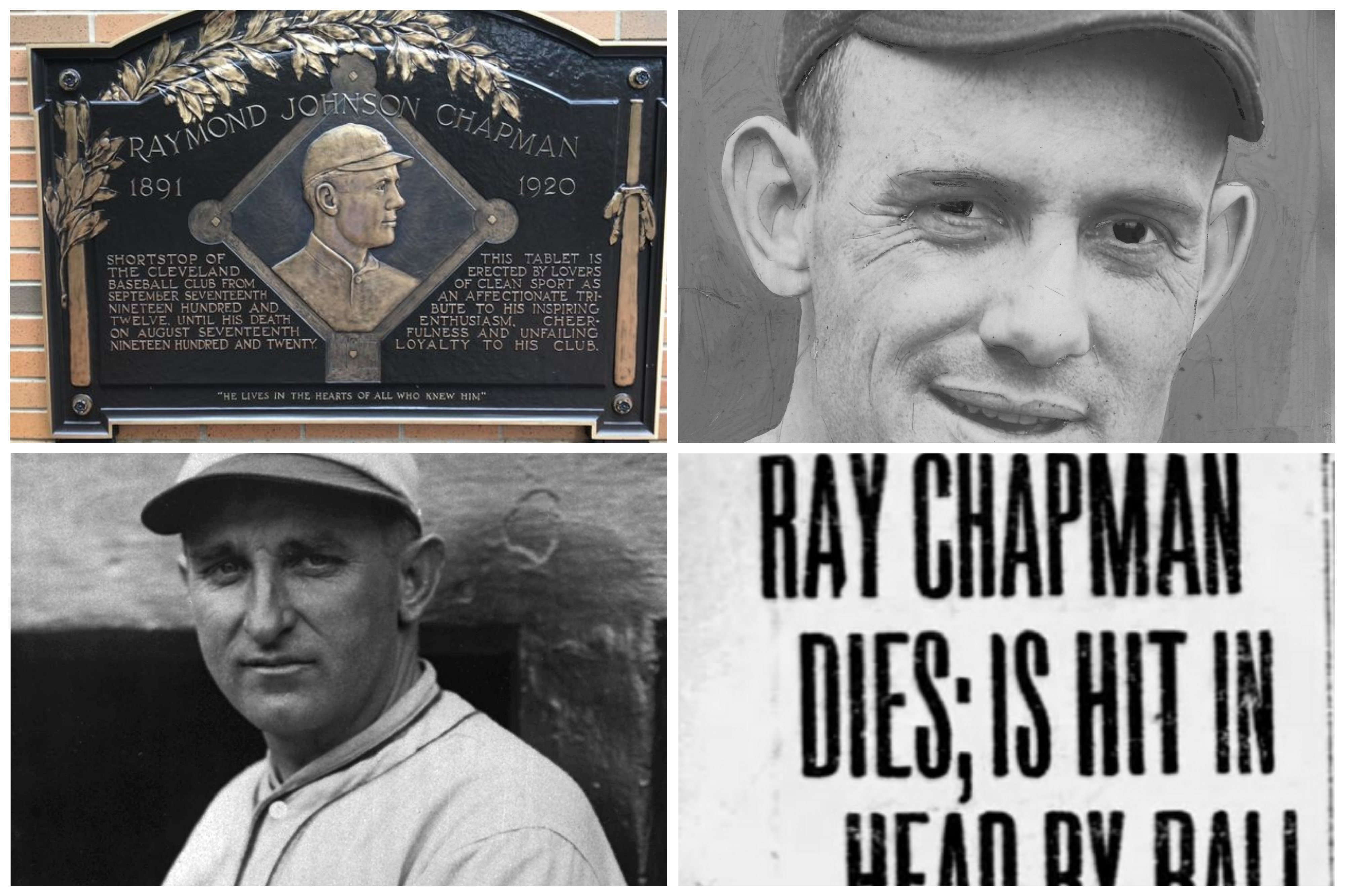


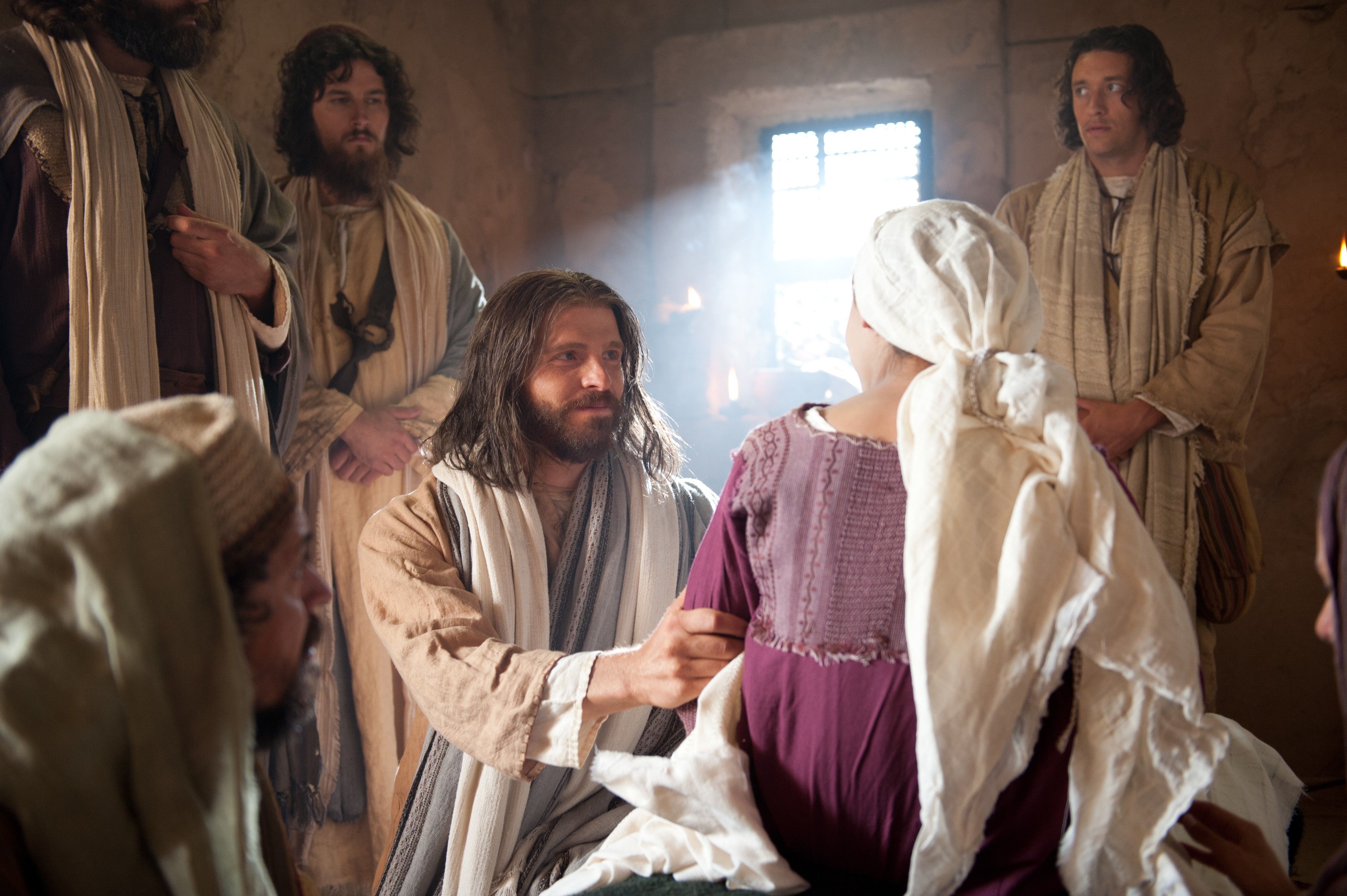



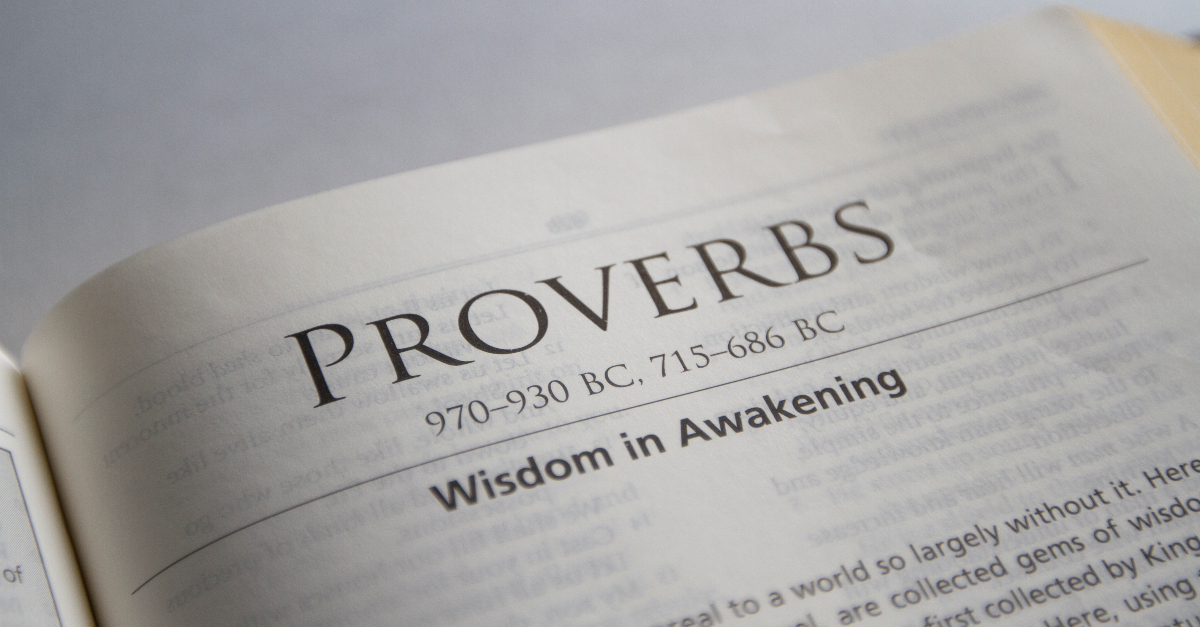
/Centurion-GettyImages-167132808-56cc6c345f9b5879cc58f8e7.jpg)










 The Preacher Pollard Blog