Yearning To Assemble

Monday’s Column: Neal At The Cross

98488549_10222272328935275_5801100640377634816_n

Neal Pollard

Yesterday was an emotional day. As expected, our attendance was a fraction of our normal size. The current threat is not yet over, but it was a stride toward what we pray is an imminent return of many more. Even from behind the masks and with the required social distancing, the joy and excitement was palpable. From preschool children to even a few octogenarians, our local brethren once again were able to do as God’s people have done for 2,000 years. We had others, mostly in higher risk categories or in daily contact with those who are high risk, who parked outside and tuned in via FM transmitter. They were in proximity with each other and able to fellowship with those around them and many on their way into and out of the building. A great many at home tuned in to the Live Stream and let us know of the hope and joy they feel that we’ve taken this step, several letting us know that as soon as is medically safe they will be there, too. 

Our godly, wonderful shepherds have agonized over how to “return to normal” legally, wisely and safely. At the heart of most of their discussions and “church business” is how this “layoff” or separation or disruption will effect the faith and dedication of us sheep. Their hope is that we will view this situation as one that, for a time, made us a church full of “shut ins” that we could accommodate through virtual services (and later drive-in services) to help keep us connected rather than seeing this as the permanent arrangement or to excuse choosing other activities over assembling when there is no such crisis in place. 

None of us knows the future, and it is hard to predict how every individual will respond post-pandemic. But, the heart of each of us will be at the heart of the matter as we prayerfully decide the timetable for our return. To shape and guide us on that spiritual journey, God has given us insight into the hearts of His saints through the centuries to influence our spiritual hunger. Here is but a sampling:

  • David: “I was glad when they said to me, ‘Let us go to the house of the Lord'” (Psa. 122:1; notice also Psa. 27:4).
  • Zechariah: “The inhabitants of one (city) will go to another, saying, ‘Let us go at once to entreat the favor of the Lord, and to seek the Lord of hosts; I will also go (some versions: “Let me go too!”)'” (8:21; the whole chapter is beautiful)
  • Luke: “They were continually devoting themselves to the apostles’ teaching and to fellowship, to the breaking of bread and to prayer” (Acts 2:42; context shows them together day by day publicly and privately)
  • Hebrews’ writer: “Let us consider how to stimulate one another to love and good deeds” (10:24, in the context of the assemblies).

But it’s the sons of Korah’s words in Psalm 84 that I want to close considering.

  • He saw assembling as “lovely” (1)–Appealing!
  • He saw assembling with “longing” (2)–Attractive!
  • He saw assembling as “logical” (3)–Appropriate!
  • He saw assembling as “lasting” (4,10)–Advantageous!
  • He saw assembling as “lavishing” (note “how blessed” throughout)–Abundance!

The separation and disruption was not of our choosing, but it might have and adverse effect upon us and cause us to forget the blessings of being together in praise and worship to our God. May the inspired words from saints like these help us fortify our souls as we anticipate the time when we are able once again meet each other in His presence for worship! 

99123277_10222831597767426_1476800341243592704_o
Enter a caption

Hebrews 10:25 And COVID-19

Wednesday’s Column: Third’s Words

Gary III

Gary Pollard

An alarming number of people today are obsessed with the COVID-19 outbreak. Nearly every post on social media is focused on it, stores are selling out of essentials, and it comes up in nearly every conversation. This article is not about Coronavirus-19. I’m tired of reading about it and I’m assuming you are, too.

Because the virus is particularly dangerous for older people or those with underlying conditions (a healthy demographic in the church), many congregations have cancelled or reduced services until something can be worked out. As a result, some have attempted to use scripture to claim that these measures are unscriptural.

Some have pointed to the early church: despite the threat of death from man, they continued worshipping. This is true, but that threat was persistent for years. Even then, many early churches met at extreme hours and in extreme secrecy during the worst of persecution. This is not the case today.

Some have pointed to Hebrews 10.25 to say that cancelling services is the same as “forsaking the assembly.” We will look at this passage closely, but we need to keep something very important in mind: most of writings set after the establishment of the church are focused on Christian living. Our standard of conduct, our speech, our attitude toward the world, our understanding of God, how to employ wisdom, etc. are the focus of the vast majority of the New Testament.

For perhaps more than a few, the sum total of their Christianity is the worship assembly on Sunday and Wednesday. Worship is extremely important to godly living and it would be egregiously false to state otherwise (as some state, “I am dedicated to God, not the church”). However, there is but one fragment of a sentence in all of scripture dedicated to the importance of consistent attendance. It is binding and important, but some place a disproportionate emphasis on this passage to the neglect of the rest of scripture. To use the words of Jesus, “They strain at a gnat and swallow a camel” (Matthew 23.23ff).

Hebrews 10.25 states, “not forsaking our own assembling together, as is the habit of some, but encouraging one another; and all the more as you see the day drawing near.” The next verse says, “For if we go on sinning willfully after receiving the knowledge of the truth, there no longer remains a sacrifice for sins…” Verse 29 makes it very clear that 10.25 is talking about “trampling under foot the son of God…”

It is important to note that “forsaking” in 10.25 is ἐγκαταλείποντες (eingkataleipontes), which means to leave, abandon, or desert. The word is also a present active participle in this text, which describes a continuous, willful abandonment of the worship assembly. The same word is to describe a man leaving his father and mother and clinging to his wife. It is a more or less permanent abandonment, not a temporary one.

What does this mean for Christians in 2020? It means that cancelling a few services to avoid spreading a very contagious virus is not a sin. This does not equal, “trampling the son of God under your foot.” It means that trying to bind Hebrews 10.25 in this case is worse than merely bad scholarship – it is binding where God has not bound. It means that, while worship is vital and important, we must focus just as much on godly living and the whole of scripture as we do this one verse.

Screen Shot 2020-03-18 at 6.49.56 AM

Don’t Miss The Privilege Of Worship

Neal Pollard

Yesterday, John and Carla Moore, Kathy, and I worshipped with the church of Christ in Nazareth. We have been there a few times, but there was something extremely special about yesterday. In attendance was Wissam Al-Aethawi, an Iraqi and Muslim-born brother in Christ whom I first met at Polishing the Pulpit. What was so special is that this man, who explained that he has been a believer for 20 years and a New Testament Christian for 10 years, was able to worship in his native Arabic tongue for the first time ever. Can you imagine being a child of God for a decade before you ever had the opportunity to sing, pray, or hear preaching in the language you were born and raised to know? 

Every Lord’s Day, most of us have the privilege to worship God in our native tongue. In fact, such is probably an afterthought if a thought at all. I got the sense that brother Al-Aethawi would relish the idea of being able to worship in Arabic each week, and there’s no doubt he would not take it for granted. But do I appreciate that privilege? Does worshipping God mean so much to me that I prioritize it over everything else? When I am in attendance, do I pour my heart and soul into it? Do I let the words of the songs touch me, the prayers reach me, and the sermon change me? As I am able to stimulate the others to love and good deeds with words that come naturally to me, do I appreciate the blessing of fellowship felt before, during, and after worship?

What a shame if I let the glory of praising God seem so ordinary that I fail to treasure each service! What if we approached each time as if it was the first time we were able to worship God with the people of God ? What a difference it would make to the energy and passion of worship, if each of us did that. 

66271316_10156439099590922_7012873238573219840_n
Wissam presiding over the Lord’s Supper. 

Reflections On Worship, From A-Z

Neal Pollard

How great to say with David, “I was glad when they said to me, “Let us go to the house of the Lord” (Psalm 122:1).  Another psalm also urges, “Come, let us worship and bow down, Let us kneel before the Lord our Maker” (95:6).  Both verses are the attitude of a redeemed, transformed heart.  Worship is not a substitute for daily living, and we may find ourselves primarily or solely focused on assembling to the neglect of Christian duty or evangelism. But, though those be true, we cannot lose sight of the importance of fulfilling God’s command for His people to faithfully worship Him (John 4:24; Heb. 10:24ff).  More than that, as recipients of His grace, we will want to come before Him with what He wants, giving Him our best from an enthusiastic heart. What can help us do that?

A–TTENDANCE (It puts us in the right position–for ourselves, each other, and God)
B–
RETHREN (There’s a community, communion, and camaraderie in worship)
C–
HILDREN (Is there anything sweeter than seeing and hearing them worship?)
D–
ELIVERANCE (Delivered for a few moments from the profane, delivered for a lifetime by the Prince of Peace)
E–
FFORT (Hardwork, dedication, and preparation truly pay off!)
F–
AITHFULNESS (Obedience, consistency, and holiness fuels acceptable worship)
G–
OSPEL (Bible-centered worship highlights the best news of all time)
H–
EAVEN (Worship better prepares us for it, reminds us of it, and gives us a foretaste of it)
I–
NTEREST (See “attendance” and “faithfulness”; At some level, you can’t fake this)
J–
ESUS (We lift Him up, obey Him, and center everything around Him in every service)
K–
NOWLEDGE (We seek to know God more and understand Him better, in part, by worship)
L–
ISTENING (To God, through His Word, and each other, through the various acts)
M–
EMORIES (Young or old, each occasion provides an opportunity to make more of them)
N–
OTHING (What’s more special, important, fulfilling, and encouraging)
O–
PPORTUNITY (Different places and times have been forbidden from what we get to do multiple times per week)
P–
ARTICIPATION (Not just in the door and in a seat, but actively taking part)
Q–
UALITY (Not measured by voice quality or dynamic speech, but the very best we can with what we bring)
R–
ESPONSE (Each time we assemble to worship, we are responding to God and His gospel)
S–
ACRIFICE (You cannot properly define worship without it; It may be a sacrifice to come, but it must be an offering when you do)
T–
OGETHERNESS (Worship means fellowship and building our common bond)
U–
RGENCY (Feeling a pressing need to be here, and then to act on what we hear)
V–
ISITORS (These take note of how much worship means to us; They can see and sense it)
W–
ONDERFUL (God knew we needed worship, and that can touch us deeply)
X–RAY (Worship should lay our hearts bare and show us ourselves)
Y–OU (The presence of everyone, including you, spells the difference!)
Z–EAL (Passion and enthusiasm is observable, by others and, most of all, by God!)

Maybe we cannot fully grasp all of why God wants us worshipping Him, but He, as our Creator, knew we would need it to draw us closer to Him and each other. Let’s never let anything occupy a higher place in our hearts!

537893_378947542128289_990183257_n


Singing With The Understanding–Miscellany* 

Neal Pollard

We are a diverse group who gather to sing for worship. We vary in age, education, religious background and literacy, race, and doubtless other factors. Some of us have been singing the same hymns for decades, while others may be seeing those hymns for the first time.  There is a mutual responsibility, one for the song leader and one for the participant. Yet, I would argue that the leader has the greater obligation to assist the participants in offering better worship. Mindless participation is the fault of the participant, but being led to speak and teach words they don’t understand is not.  What can the song leader do to increase the effectiveness of “singing with the understanding.”

Engage In Thoughtful Preparation. When picking out songs to lead, opt for simplicity. Archaic or technical words can hang up and distract the worshipper. It is fruitful to ask the question, “How will this be comprehended by the average participant?” Does the song read like we speak today? If we’re not careful, we can tend to speak through song in mystical terms that help disconnect the mind and the mouth. Do we know what it means to “vanquish all the hosts of night”? Do we know what “cassia-dipped” garments are? Do we know what’s referenced “where Eden’s bowers bloom”? How do I “launch my bark”? These are lyrics from songs that are sung every week in congregations across the land, but words I’d venture to say that many, if not most, do not comprehend. We must give thought in preparation.

Engage In Adequate Explanation. Something that can help in song leading is to point out words or expressions we’re about to sing, defining and explaining them. This does not necessitate a second sermon, but as part of preparation we should be ready to clarify obscure or difficult words. For example, from songs we often sing, we find:

  • “Repining”–To feel or express discontent; to fret
  • “Guerdon”–A reward
  • “Warble”–To sing (especially used of birds)
  • “Fain”–Gladly
  • “Trysting”–Meeting 
  • “Essay” (as used in I’ll Never Forsake My Lord)– To attempt
  • “Cloven”–Divided
  • “Garish”–Bright and gaudy
  • “Fen”–A swamp

While some songbooks, like Praise For The Lord, have footnoted some of these difficult words, many worshippers don’t pay attention to them. So many of us project our hymns in worship. The onus (i.e., duty) is on the leader to explain.

Engage In Balanced Variation. Everyone has their favorite type and genre of psalms, hymns, and spiritual songs. Song leaders are no different than worshippers. How important it is to balance out old and new hymns, considering the typical “audience” present to participate. 

Engage In Heavenly Petition. Anyone who leads in worship should season their preparation and participation with petition to God. Pray about doing what you’re tasked with doing as effectively as possible. 

What a blessing to have willing, talented worship leaders. We have a powerful opportunity to show God’s wisdom in singing according to the authority of the New Testament (cf. Col. 3:16; Eph. 5:19). Let’s capitalize on that by putting everyone in the optimal position to sing with proper spirit and understanding!

*–Miscellany–A group or collection of different items; a mixture

Screen Shot 2018-11-26 at 10.56.34 AM

The Tender Tears Of The Timeworn Travelers

Neal Pollard

I suppose I have met more than a few elderly people, including some professing to be Christians, who could be described as “crusty,” “crotchety,” “contrary,” and “curmudgeonly.” These no doubt spent decades developing such a winning personality. But one of the greatest blessings I have received as a member of the church and minister of the gospel is my association and friendship with “senior saints.” Through the years, I have discussed with them the subject of worship. The most frequent topic of that is how precious that public time of communing is to them.

A godly widow recently told me she has spent the last two years focusing more intently on concentrating more on the song service, reflecting on the words and their meaning. Songs she has sung for decades, through this exercise, have become almost like new songs to her. Another older woman, married to an elder, talked about how she finds herself much more apt to be tearful in worship these days. She’s almost embarrassed at how emotional the experience of worship is making her. An elderly man who was a longtime elder and recently passed on to paradise, struggled to pray, sing, or publicly speak in worship without being choked with emotion. I could fill pages of writing about other godly Golden Agers who treasure assembling to worship God. Their hearts are full and their emotions engaged. Their voices may be softened and broken by age, but their spirits are stronger than ever.

When I think of these faithful, aged Christians, I am reminded of Paul’s words: “Therefore we do not lose heart, but though our outer man is decaying, yet our inner man is being renewed day by day. For momentary, light affliction is producing for us an eternal weight of glory far beyond all comparison, while we look not at the things which are seen, but at the things which are not seen; for the things which are seen are temporal, but the things which are not seen are eternal” (2 Cor. 4:16-18).  Sometimes, the elderly are made scapegoats of alleged “lifeless” or habitual, but heartless worship. No doubt, there are likely Christians in that age range who struggle with and even fall prey to such (as there is in every other age category). But on the whole, these Christians have walked longer with God, know Him better, and value Him more than their younger counterparts. They are closer on the journey to the Father’s house and are anxious to see His face.

We are heirs of a heartfelt heritage handed to us by these holy hoary heads. To our seasoned brothers and sisters, we thank you for showing us how to walk with and love God as years turns into decades and the shadow of the grave looms larger. As we narrow the gap between our age and yours, we want worship and life in Christ to grow more precious to us, too. Thank you for your trembling lips, your tear-stained cheeks, and your tender hearts. They look great on you!

elderly-parent-e1448857831624

The Gift That Jesus Gave

Neal Pollard

Often, during this time of year, there is an emphasis placed upon the gifts brought by the magi to Jesus—“gifts of gold, frankincense, and myrrh” (Mat. 2:11).  They understood how Jesus was worthy of worship (2:2,11) and celebration (2:10).  Their giving flowed from that recognition.

The book of Hebrews turns the tables and reveals the Jesus who is the gift-giver. The same Greek word used to describe the wise men’s gifts to Jesus is used twice by the writer of the epistle to talk about Jesus’ gift. He does so in the context of Jesus’ work as a High Priest, as contrasted with the gifts offered by priests under the Law of Moses. In Hebrews 5:1, the writer talks about the qualifications necessary to serve in that role—taken from among men, working on behalf of men in order to offer both gifts and sacrifices for sin. Chapter five deals more with His qualification to serve and offer, but the writer does deal with the gift itself later on. Later on turns out to be chapter eight. The writer uses that same word for “gifts” in Hebrews 8:3-4 to talk about what Jesus offered. His gift is contrasted with those that cannot make the worshiper “perfect in conscience” (9:9). He gave His own blood (9:10) and with it obtained eternal redemption which will “cleanse your conscience from dead works to serve the living God” (9:14). The writer summarizes that gift, “the offering of the body of Jesus Christ once for all” (10:10), as the gift that sanctifies us to God.

But what do we give in return? We cannot repay His priceless gift. But God presupposes that we will be motivated to give. Jesus does, referring to worship in Matthew 5:23-24. He does again, referring to the monetary gifts of the wealthy and the sacrificial (Luke 21:1-4). The Hebrews writer will use Abel as an example of faith-fueled giving (11:4). But our most generous gifts to Christ, however moved by sincere love and unwavering commitment, is but a shadow and reflection of His gift. We give Him money, honor, time, energy, heart, and everything else we can, because He is the greatest giver of all. May we take the time, every day, to honor and give freely, to the Gift-Giver!

hqdefault

Audience Analysis

Neal Pollard

People, in talking about public speaking, will sometimes speak of “audience analysis.” What they mean is that you need to know your audience or you run the risk of being irrelevant, disconnected, and even possibly offensive. You may assume too much of them or sell them way short. Neither extreme is effective.

A wonderful sign for any congregation is the presence of especially non-Christian visitors, especially those from our community. Hopefully, we are doing something right when these visitors make repeat visits to our assemblies. However, too often, I fear that we have not done sufficient “worship neighbor analysis” or, equally, “Bible class neighbor” analysis. I recently was in a class when a teacher made a remark about how poorly a specific religious group scored on a Bible comprehension quiz. The remark itself was poignant and effective, but the cackling laughter from a few near the front of the class was easily heard throughout the classroom. I’m sure it was heard by two students sitting near them whose background is in that religious group. One is a brand new Christian and the other is a non-Christian visiting with him. Not only was the members’ reaction unnecessary, it displayed a lack of awareness of who else was present.

At times, we select songs from a century when “thees” and “thous” were commonplace and whose vocabulary was drastically different from how we speak today (“guerdon,” “cassia,” “pinion,” “dross,” and “hoary”). Even songs I have long been fond of read in ways that seem almost foreign to us today. Preparation for worship leadership should include a cognizance of how new Christians, young people, non-Christians, and the like will process or even if they can process such.

Specifically biblical or theological terms which we know people like our neighbors, coworkers, and classmates do not understand should not be uttered undefined. Making assumptions in an age marked by a growing lack of biblical literacy can undermine our effectiveness. It can make the most relevant message of all seem irrelevant and incomprehensible.

Of course, most fundamentally, one of the most unforgivable sins in the eyes of the typical visitor is to be ignored or made to feel invisible. We may hesitate to engage someone because we lack awareness of their “status” (visitor or member). Instead of risking embarrassment, scorn, or an expenditure of time, we walk past them or speak to someone we know we know. Perhaps, in believing that true seekers find, we let ourselves off the hook despite Jesus’ call for us to sympathetically consider others (Lk. 6:31; 1 Pet. 3:8).  Common sense should move us to see that we can attract or detract, depending on how we react.

Spiritual maturity will steer us to be mature, kind, patient, and self-aware. Basic thoughtfulness will help us prepare, speak, and act in ways that make us magnets for the Messiah rather than repellant from the Redeemer. The effort will be appreciated and, I truly believe, rewarded. If we need to, let’s break out of our bubbles of isolation and seek to see things through the eyes of others—especially “the little” (Mat. 10:42; 18:6-14) and “the least” (Mat. 25:40).

4aee607aa23e1943b2f475b58974c89f-bulletin-board-church

Do You Want A Better Life?

Neal Pollard

Who would answer “no” to that question? Who wants a worse life or a life that never gets better? But the better question is, “How do you get a better life?” Advertisers have so many answers to that, involving their currency or investment tool, their pill, diet, or workout routine, their travel agency or vacation destination, or product for your home, transportation, business, and the like. So many put so much into these promising plans, but still find their life wanting.

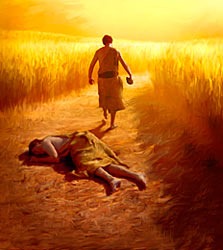
In religious matters, there is no room for subjective thought when it comes to what it takes to have a better life. We find ourselves often bobbing in a sea of religious confusion. Many groups claim to be the best religion and point to their ingredients as reasons for such claims. They point to their numeric size, number of programs they have, or how socially active they are. Our religious attitude ought to be one of humility, not boasting of our achievements or comparing ourselves with others (cf. 2 Cor. 10:12). Genesis 4:1-16 points us to the first recorded version where more than one kind of worship was offered to God and how God rated them. But this chapter also paints a picture of two ways of living life.

Cain is mentioned by three Bible writers after Moses writes about him in this chapter. The writer of Hebrews calls Abel’s offering more excellent than his (Heb. 11:4). John calls his works evil and his allegiance “of the wicked one” (1 John 3:12). Jude implies that the way of Cain is the wrong way to go (11). It seems that Genesis four shows us the better ingredients for a better way of living today.

  • Better living isn’t determined by age (1-2). Cain was the firstborn, a place of honor and privilege especially throughout the Old Testament.  But under the New Covenent, there is no spiritual advantage because of birth order. It is not a matter of firstborn, but a matter of being born again (John 3:1-7). Growing older should mean growing wiser, but reaching a milestone on a calendar does not equate to better living.
  • Better living isn’t determined by occupation (2).  Growing up, we might be tempted to see our occupation as the gateway to happiness and satisfaction, financial freedom and security, independence, and privilege.  When we look at Cain and Abel, what they did for a living wasn’t the determiner of the quality of their lives. Some occupations can stand in the way of better living, whether the nature of the job or the quality of the people one works with. Some can let their jobs stand between them and their relationship with God and His church. But, one can do right in unfavorable work circumstances, staying faithful to God.
  • Better living is determined by worship (3-4). That statement may be offensive to our multicultural world that says there are no absolute rights or wrongs. Contrast our culture’s thinking on this matter with what we read in Genesis four. Both Cain and Abel brought an offering to the Lord. God responded to both offerings, but He accepted one while rejecting the other. While many make worship nothing more than taste, preference, and personal, we learn here that not all worship is equal. God “had regard for” Abel’s, but not for Cain’s. It does not say if Cain was sincere. It doesn’t seem to matter. We learn here that the worshipper and the worship offered rise and fall together. God regarded Abel and his offering, but rejected Cain and his offering. Can one offer God vain worship, and have God reject it but accept him? Apparently not.
  • Better living is determined by attitude (5-7). Cain reacts to having himself and his worship rejected by God. He was very angry. His insides burned! His countenance fell. He took on an ugly look. We’re not told how old he was, but it almost sounds like a temper tantrum. Whether home training, lack of discipline, poor stress management, pride, jealousy, or anything else leads us to lose our tempers, all of them are matters only we can control. When we don’t control them, we’re responsible! Ill-tempered people are not living the better life! A positive life doesn’t require prospering, education, or earthly success. But you can’t have a positive attitude without mastering self.
  • Better living is determined by action (8-16). The word “sin” is first used in Genesis 4:7, but God was looking ahead with perfect foresight to what Cain was going to do to his brother (cf. 1 John 3:11-15). Bible writers speak of his deeds, offering, and way. These are all action words. After his sin, he is rebuked and punished by God and separated from God. Sin will not deliver what it promises. All actions have consequences (Gal. 6:7-9).

Someone said, “The line of Cain gives us murder, cities, polygamy, musicians, metal workers, and poetry, but not one who walked with God.  In fact, Cain’s legacy led to a repeat of his violent ways by a descendant (cf. 4:23). Abel leaves no physical lineage, but he leaves a great spiritual heritage (Heb. 11:4). We each get to choose what kind of life we’ll pursue. It matters which way we decide.

cain-and-abel

Desire That Bubbles From The Heart And Falls From The Lips

“To see the dull indifference, the negligent and thoughtless air that sits upon the faces of a whole assembly, while the psalm is upon their lips, might even tempt a charitable observer to suspect the fervency of their inward religion.” This quotation was from a man who observed lethargy and unenthusiastic engagement in congregational singing. He decried a lack of apparent passion and zeal for God and spiritual things in this act of worship that is meant to be profound and transforming. The observer, as far as is known, was not a New Testament Christian, but he was responsible for giving us “Joy to the World,” “When I Survey The Wondrous Cross,” and over 500 more hymns. He complained about the lifeless hymns being sung in his day, and his father, who would be jailed for dissenting from the Church of England, challenged him to come up with a solution. All those hymns, which he started writing in adolescence, was his answer. Isaac Watts can be considered an expert on religious hymns, and he revolutionized congregational singing for especially English speakers. The fact that we still sing some of his hymns demonstrates that.

But, his observation in later life about indifference, negligence, and thoughtlessness from  those presumably worshipping is a fair challenge to each of us. Especially when we are singing songs so familiar to us, which we know by heart, we must guard against lips that say one thing and hearts which do not necessarily reflect those words. Is it possible to sing about Jesus’ death on the cross or God’s great love or the amazing hope of heaven or an examination of my Christian life and commitment without reflecting and contemplating? Could I be thinking about something while singing something else? The gamut might run from empty religion to understandable distraction, but we must challenge ourselves to keep our hearts and minds on the words and meaning of those psalms, hymns, and spiritual songs (cf. Col. 3:16; Eph. 5:19).  Let us cultivate desire in the heart that bubbles from the lips as we praise God and encourage one another in our song service.

21034730_1137559296377060_1380004993605666831_n
Andy Baker leading a group in singing (photo credit: John Moore)

A Small Portion Does Not Mean Small Proportion

Neal Pollard

Those who address us prior to our giving often make a statement like this, that we are giving back but a small portion of what God has blessed us with. In other words, if you could owned and could contribute all the world’s wealth, week after week, how would that compare to the sacrificial gift of Christ (cf. Mat. 16:26)? In fact, how could it compare with the many additional blessings besides atonement—a body equipped with the ability to perform involuntary actions (breathing, blood flow, cell regeneration, etc.), an environment conducive to life (air to breathe, photosynthesis, etc.), a planet in harmony with sun and moon making life possible, and the list is endless. It is not only impossible to out-give God, it is impossible to come anywhere close.

The Bible does not dictate a percentage for the New Testament Christian giver. The inferior covenant (cf. Heb. 8:7-8) required a tenth of all (Heb. 7:5), a pretty good benchmark for those of us having access to the better covenant established upon better promises. It is impossible to know what anyone might be thinking who hears the well-intended, if well-worn, statement, “We have the opportunity to give back a small portion of the many blessings we have received…” It does not mean, “A small proportion.” Nowhere does the Bible sanction stingy, leftover-style giving. In fact, it condemns such (read Malachi). Instead, Paul writes, “Now this I say, he who sows sparingly will also reap sparingly, and he who sows bountifully will also reap bountifully. Each one must do just as he has purposed in his heart, not grudgingly or under compulsion, for God loves a cheerful giver” (2 Cor. 9:6-7).

Giving involves a monetary, financial exercise, but it is a distinctly spiritual activity. It is an act of trust, a faith that the God who has provided will continue to provide and bless the one who bountifully shares what he has been given. When we, like the Macedonians, give beyond what we believe is beyond our ability (2 Cor. 8:1-5), we open up an exciting door in our walk with Christ.

If you are one who gives a small proportion of your income, may I challenge you to increase it? See what happens in your life. You are not giving to manipulate or coerce God, but you will experience a growth not possible on the “small proportion” side of generous giving. Trust Him! He has never broken a promise yet (read Mal. 3:10 and Luke 6:38).

article-2189659-14951d3a000005dc-746_468x311

No Time For Worship!

Neal Pollard

According to Stephen Eckstein, Davy Crockett was among those who began a journey from north Alabama bound for the “promised land” of Texas in 1835. This group, who wanted to settle in that locale despite the drum beats of revolution and ongoing fighting with Mexico, was comprised mostly of members of the church of Christ. Crockett traveled with them as far as Memphis, Tennessee, but grew impatient of the delays. The group stopped to rest and worship each Sunday, and they became known as the “church on horseback and wheels.” So, on the other side of the Mississippi River, Crockett and 60 other volunteers rushed ahead of the group shouting “hurrah for Texas!” (History of the churches of Christ in Texas, 9). That group, sans Crockett and his cohorts, established the first Texas congregation of the Lord’s church on January, 17, 1836, at Ft. Clark, Texas, known today as Clarksville (ibid.).

48 days after the group’s arrival at Ft. Clark, Crockett was among 188 who died defending the Alamo in San Antonio, 412 miles south of Ft. Clark. While this is probably something lost to history, I wonder if Crockett’s personal history would have been different if he had stayed with the “church on horseback and wheels.” There is no indication that he was a part of the services or influenced by them or the members. Already a man of renown in politics and frontier settlement, he was also renowned for being full of himself. He and the rest of the Tennesseans who left the church members volunteered for six months of duty with the provisional government of Texas on January 14, 1836. He arrived at the Alamo on February 8th (Hardin, Stephen L., Texian Iliad, 117).

Crockett’s interests seemed mostly political and economic, which made him no different from most of his contemporaries. Yet, life might have been different for Crockett had he stayed with the group of Christians. He would not likely be the legend his death at the Alamo made him, but might His name have been in the Lamb’s book of life?

We find ourselves rushing headlong toward our life’s goals. In that rush, what time and place are we giving to our Lord and to His people? The world bestows no honor and glory on faithful service to Christ, but the Christ will bestow honor and glory beyond what the world can give or comprehend to all who take the time to honor Him. May our greatest desire be to win His recognition through lives of faithful obedience.

1916541_174815860921_4621141_n
Mansil Matthews, doctor, teacher and and preacher, who established the first church of Christ in Texas in 1836 at Ft. Clark, TX (with the group known as the “church on horseback and wheels.”

Meeting The Needs Of Newcomers

Neal Pollard

It has been said that visitors make up their mind about a church in the first ten minutes of their visit. Before they’ll even discern the doctrine we teach or form an impression about the distinctiveness of our worship, they’ve already decided. If you will walk through the first ten minutes of each time you come to services, you can discern the needs visitors have when they “enter” (cf. 1 Cor. 14:23-24) our midst. Consider these needs.

  • Where to park. Designating visitor parking and having members park as far from the main entrance is thoughtfulness. Having a greeter or greeters in the parking lot who can make contact quickly and facilitate with friendliness makes a positive impression.
  • Where the restrooms are. Good hospitality ought to drive us to be thoughtful and even proactive (i.e., when greeting, point out the nearest facilities). Along with this is showing them where the nursery is. If they have infants, toddlers, or small children, they are likely to have needs during their time in attendance.
  • Where to sit. An obvious practical help here is not to crowd the seats at the rear of the auditorium. It’s less awkward to be seated without parading past rows and rows of people. If there’s a full crowd, have designated personnel, pleasant, friendly, and considerate, to help them find a seat. Never, ever, never have a designated pew! “Pew-itis” is a disease that should be eradicated from every congregation.
  • What to expect. This is something worship leaders can do, explaining periodically why we do what we do in a “user-friendly” (as opposed to browbeating) way. Door greeters and those at a welcome center can help, as can visitor packets that cogently explain things. Such packets can include not just activities we do, but a map of where we do them.
  • How to find out more. Have a “new member orientation class” or a “Church 101” class available for those who are “seeking.” It can include an annual church calendar of events, ministries, church leadership (complete with pictures and bios), ways to be involved, and the like to orient newcomers.

At first, it may seem hard to identify book, chapter, and verse for the foregoing suggestions. But consider these principles. There’s the Golden Rule (Mat. 7:12; Luke 6:31). There’s the principle of the Law of Moses, which says, “The stranger who resides with you shall be to you as the native among you, and you shall love him as yourself, for you were aliens in the land of Egypt; I am the Lord your God” (Lev. 19:34). Colossians 4:5 urges wisdom with outsiders, making the most of the opportunity. Being Christians, we should be ever increasing in the mentality that puts others before self (Phil. 2:3-4). How do we best serve Jesus? By serving others, including our visitors and newcomers.

Singing Hymns in Church

NOT JUST A PROBLEM FOR THOSE WHO FAVOR INSTRUMENTAL MUSIC

Neal Pollard

People who have rejected the teaching that singing in worship must be without the addition of mechanical instrumental music have appealed to culture, to the permission of silence, to aesthetics, to emotion, to tradition, to preference, and the like. As we examine Colossians 3 and Ephesians 5, seeing the imperatives in each place (“let the word of Christ richly dwell within you”—Col. 3:16; “be filled with the Spirit”—Eph. 5:18) and the participles that reveal how to obey the imperatives (Eph.: “speaking…singing…making melody…giving thanks”; Col.: “teaching…admonishing…singing”), we rightly say that God specifies what He wants and through such excludes what does not fall within these categories. No one will successfully build a case for Divine authorization or approval, and church history will have turned centuries of pages before it is even found introduced in Christian worship.

Having said that, we have at times failed to step back and look at some of our own attitudes toward the music portion of our worship that may reveal some deficiency in our musical offering to God. As a musical instrument may drown out, overshadow, or become the central feature of worship music, so may our own minds and attitudes. How?

  • Being distracted by the age of the song (it’s too old or too new)
  • Being distracted by the pitch of the song (it’s too high or too low)
  • Being distracted by the pace of the song (it’s too fast or too slow)
  • Being distracted by the notes of the song (the song leader is leading it wrong)
  • Being distracted by who the song leader is or his appearance
  • Being distracted by how many verses are sung (too many or too few)
  • Being distracted by the aesthetics of the song (thinking about how it sounds more than what it says)
  • Being distracted by our own ability (proud of how good we sound or so embarrassed at how we think we sound that we keep quiet or fail to speak, teach, etc.)
  • Being distracted by the person/people next to us (concerned about what they think of us rather than what the message of the song is)
  • Being distracted by our familiarity with a song (frustrated that we don’t know it or knowing it so well that we sing from memory without engaging the heart)
  • Being distracted by matters outside the song (people-watching, thinking of other things, etc.)

Though I’ve never heard it said, have we constructed a theology that believes the only sin in our worship in song is adding an instrument to it? If we refuse to sing, sing with improper attitude, sing without heart and mind engaged, and the like, do we believe we are OK since we did not add to what God authorized.

In Matthew 15:9, Jesus condemned the Pharisees and scribes for worshipping God in vain due to their “teaching as doctrines the commandments of men.” Context reveals the specifics of their wrongdoing. But that word vain means “pertaining to being without any result; to no avail” (Louw-Nida; “to no end,” BDAG). Review the examples of distraction above. Can those render worship in song with no result, avail, or end? Absolutely! Perhaps we need to emphasize within our own assemblies how equally necessary it is to be worshipping God “in spirit” as it is “in truth” (cf. John 4:24). The bottom line of this whole matter of church music is striving to please God in our worship. That is not limited to a single issue or somebody else’s issue. It is as individual and personal as each of our own relationship with God.

762px-gerald_hughes_cleveland_school_teacher_leads_the_lee_heights_community_church_cleveland_ohio_congregation_in_song_1960_16458543170

Some Hurdles I Just Cannot Jump Regarding Instrumental Music In Worship

Neal Pollard

How often the matter gets discussed among preachers in churches of Christ, I cannot say. But, I know that it does. More members of the church than we might care to think do not have this matter settled in their minds, especially as it has to do with the state of those who have been immersed for the forgiveness of sins, submit to the authority of Christ in other areas of their lives, but who use the instrument in worship. Some have said they think its use is wrong and we have been right to argue against its use but do not think they can say it is a salvation or fellowship issue. It should be stated that many of these are sincere brethren who love the Lord and people nor are they change agents intent on trying to destroy the Lord’s body. Too often, we have lacked an environment where we could have healthy, constructive dialogue free of name-calling, suspicion, and visceral discussion. But failing to discuss and work through matters like these does not make them disappear.

Having said that, here are some hurdles I just cannot jump regarding this matter:

  • The presence of singing and absence of instruments in New Testament passages. The fact that every instance of singing in the context of the Christians’ activity together reveals singing (Greek is a precise language; ado means to utter words in a melodic pattern [Louw-Nida] and ). Psallo, according to Lexicographers, encompassed playing musical instruments at an earlier time in its linguistic history, but did not mean that in New Testament times (e.g., BDAG, 1094; TDNT, 8:494). Interestingly, the translators of English translations, beginning with the King James Version, were unanimously members of religious groups that used mechanical instruments in music. Despite their obvious bias in worship practice, they translate the Greek “singing and making melody in your hearts.”
  • The absence of instrumental music in worship in early church history. Though a member of the church of Christ, Everett Ferguson has the utmost respect from scholarship across the religious spectrum. In multiple volumes, Ferguson meticulously sets forth the case that instrumental music was absent in the church from its establishment until many centuries later. His studied conclusion is that this was neither incidental nor coincidental. He writes, “The historical argument is quite strong against early Christian use of instrumental music in church” (The Instrumental Music Issue, 98; the whole chapter is a worthwhile read). In another work, he states, “The testimony of early Christian literature is expressly to the absence of instruments from the church for approximately the first thousand years of Christian history” (The Church of Christ: A Biblical Ecclesiology for Today, 272). John L. Girardeau, a Presbyterian scholar, devotes an entire, well-documented chapter to the historical case of only vocal music in Christian worship for many centuries and upon doctrinal grounds (see Instrumental Music in the Public Worship of the Church, 86-100).
  • The examples of how God dealt with unauthorized worship throughout history. What do we make of what God does with Cain’s worship in Genesis 4, Nadab and Abihu’s worship in Leviticus 10, and Jeroboam’s worship in 1 Kings 12? Why would God care in the Patriarchal and Mosaic Dispensations that His commands for worship be followed per His instructions, but lose that desire under His Son’s covenant?
  • The fact that God draws definitive, doctrinal conclusions through the use of silence. The writer of Hebrews says, “For it is evident that our Lord was descended from Judah, a tribe with reference to which Moses spoke nothing concerning priests” (7:14). The argument shows that Jesus could become a High Priest after the order of Melchizedek, but not under the Old Testament rule and covenant. Why? God specified Levi as the tribe for the high priest under the old law. It did not explicitly say that a high priest could not come from any other tribe, but it did not have to. What it specified was sufficient, an argument made in the New Testament.
  • The fact that authority can and must be tangibly determined.  Why is it that we sing in worship at all? Is worship merely a matter of what we come up with and wish to offer? Few would argue such. The basis for worship arises from what the New Testament teaches. Nearly everyone, then, would say there are definitive, delineated boundaries. If there is and must be divine authority for worship, and thus “rules” that are objectively determined, there must be activity that falls out of those bounds. Where will we find the boundary markers if not in Scripture?

This list is not meant to be exhaustive and it cannot, in one brief article, be exhaustive. It is included here to show us the great pause that should exist in changing our minds or our teaching on a matter where God has been vocal and specific. The weight of that is not insignificant or inconsequential. May we lovingly and wisely approach this matter and take great care before we relegate a matter of divine importance to a mere matter of human preference.

music-musician-piano-player-audio

Better Living 

Neal Pollard

We find ourselves often bobbing in a sea of religious confusion. Many groups claim to be the best religion and point to their ingredients as reasons for such claims. Several years ago, our boys played basketball in a league hosted by a huge community church in the Denver area.  Their church’s campus includes a K-12 school, two restaurants, a gymnasium half the size of our church building, a coffee shop, and a hundred social program. Other groups would make their claim as “better” or “best” based on their numeric size, the number of programs they have, or how socially active they are.

Our religious attitude ought to be one of humility, which does not boast of our achievements or compare ourselves with others (cf. 2 Cor. 10:12).  Genesis 4 is not just about two kinds of worship, but also about two ways of living life. Cain is mentioned by three Bible writers after Moses introduces him in Genesis. The writer of Hebrews calls Abel’s offering more excellent than his (Heb. 11:4). John calls Cain’s works evil and his allegiance “of the wicked one” (1 Jo. 3:12). Jude implies that the way of Cain is the wrong way to go (11). Let’s make a few brief observations from Genesis four and see if we can find the elements which make for a better way of living today.

  • BETTER LIVING IS NOT DETERMINED BY AGE (1-2).  By birth order, Cain came first. He was the first person to be born in the natural order of childbirth. He was the very first newborn to be held in his mama’s arms. She didn’t realize that her cooing, sweet infant was a future murdering, and she was proud of him. She called him “a man child with the help of the Lord.” This depicts such a bright, optimistic future, and by contrast Scripture says, “Again, she gave birth to his brother, Abel” (2). Abel began in his brother’s shadow, first known to us as “his (Cain’s) brother.”
  • BETTER LIVING IS NOT DETERMINED BY OCCUPATION (2). When we look at these brothers, what they did for a living was not the determiner of the quality of their lives. While what they did had an indirect bearing on the events of this account, the fact of their occupation was spiritually neutral—Cain farmed and Abel tended sheep. One can reap blessings from tilling the ground (Heb. 6:7), but they may have to fight thorns, thistles, and weeds doing it (Gen. 3:18-19). Tending sheep may be done by slaves (Luke 17:17), kings (1 Sam. 17:34), or apostles (John 21:17). God’s pleasure or displeasure was not connected to either’s occupation.
  • BETTER LIVING IS DETERMINED BY WORSHIP (3-4). Moses says both brought an offering to the Lord. He also says God responded to bother offerings, accepting one and rejecting the other. That very notion is foreign to many people in our society today, even those in religion. Many make worship nothing more than taste, preference, and personal inclination. But, Moses shows us (1) Not all worship is equal: God had regard for Abel’s, but not Cain’s. The words “had respect to” signify in Hebrew to look at something with a very serious glance. God tells us how He wants worship done, in attitude and action; (2) The worshipper and the worship rise and fall together: God had regard for Abel AND his offering and did not for Cain AND his offering. That’s a sober reminder for me that my personal relationship with God is hindered or helped based on the way I worship God. Can I offer God vain and ignorant worship, and have God reject it but accept me? We are not earning God’s favor by getting worship right. At the same time, are we tempting God and hoping we stay in His favor while disobeying His commands for worship? People have tried to make this an “either-or” proposition, that Cain and Abel’s offering was either about getting the worship right or was about the nature of the person offering the worship. In other words, is it sincerity or obedience, our both sincerity and obedience? To thoughtfully ask the question is to answer it!
  • BETTER LIVING IS DETERMINED BY ATTITUDE (5-7). Cain reacts to having himself and his worship rejected by God by burning with anger and his face taking on an ugly look. He sounds like a small child in the throes of a tantrum or a teenager huffing and sulking in anger. God warns Cain of the recipe for disaster he was making through his attitude. He told Cain that his tempestuous attitude was an invitation for sin to pounce on him, but He told him he could master it! You can have a positive attitude without prosperity, education, or earthly success, but you cannot have a positive attitude without mastering self.
  • BETTER LIVING IS DETERMINED BY ACTION (8-16). Improper worship and attitude preceded and precipitated improper action. The first time “sin” is used (Gen. 4:7), God was looking ahead with perfect foresight to what Cain would do to his brother. He does the unthinkable, killing his own brother (cf. 1 Jo. 3:11-15). His deeds and ways were a recipe for disaster: He is rebuked by God, punished by God, and separated from God. Sin promises a good time and fulfillment, but it’s not true.

It’s been said that the lineage of Cain gave us murder, cities, polygamy, musicians, metal workers and poetry, but not one who walked with God! Thanks to his legacy, a descendant repeats his violent ways (Gen. 4:23). Abel seems to leave no physical lineage, but he still speaks after death. His was a life of faith, generosity, good works, righteousness, and obedience. We get to choose the kind of life we want to pursue. If we choose well, we will be satisfied, others will be blessed, and God will be pleased.

the_story_of_cain_and_abel_bible_card

Some Things I Love About Assembling On The Lord’s Day

Neal Pollard

  • Watching young parents gather their kids and lead them into the building
  • The happy, excited chatter of people who act like they’re attending their favorite reunion ever
  • The many brief, but meaningful, conversations
  • Seeing the new faces that are inevitably there and being thrilled at the prospect
  • Noticing members greeting and welcoming people who are visiting
  • Feeling the anticipation of class and worship
  • The steady faithfulness of widows and widowers who, despite the loss of their partner, are still in love with the Lord
  • New Christians leading and enthusiastically participating in the worship service
  • Witnessing worshippers who appear to be very engaged and enjoying themselves
  • The sound of Bible pages rustling (or being close enough to see mobile devices going to the Scriptures cited)
  • Elders making spiritual encouragement and admonition
  • Little boys picking up the attendance cards
  • Young parents persevering in training their learning lads and lasses (even when that means occasioning the “training room”)
  • Even the tone-deaf lifting up their voices to make a “joyful noise” to the Lord
  • Husbands and wives united in their desire to be present before the Great I Am (and appear to be enjoying doing so together)
  • The display of emotion and heartfelt engagement by those leading us in worship
  • The very elderly or infirm, sometimes on walkers or in wheelchairs, who with great effort make the appointment they disdain missing
  • The many ways being in Christ brings interesting combinations of people together (educated with uneducated, rich with poor, the very old with the very young, those of different races, etc.)
  • Hearing the Bible conversations that start and continue after “the last amen”
  • Watching Christians rally around and embrace those who respond to the invitation
  • Knowing Christ is present and participating in the assembly (Heb. 2:12)
  • The intimate connection with God that results from His pattern and design for worship, perhaps especially in the weekly observance of the Supper
  • The piercing conviction to live better and serve Him for actively that results from assembling
  • Realizing how many things that are to love about assembling on the Lord’s Day

What would you add?

200227925-001

Do We Need Permission?

Neal Pollard

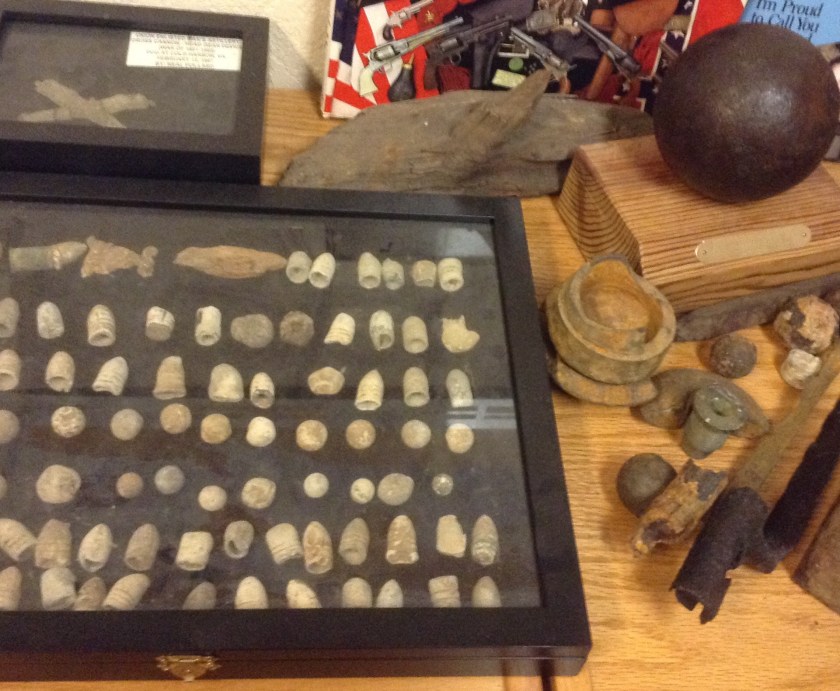
For several years while in Virginia, I enjoyed going out with a couple of dear Christian brothers to hunt for Civil War relics.  Of course, hunting on federal property was a serious crime and was unthinkable. However, so many of the personal properties owned by residents in the Richmond area were treasure troves of those artifacts. Their woods and fields held bullets, shells, buckles, buttons, and the like. Dave Young, Jr., always followed the same procedure before our hunts. He would go see the homeowners where we wanted to hunt, people he had known, built friendships and done business with for years. If we got their permission—sometimes the thoughtless or unethical practices of other hunters made them inclined to refuse us—then we would go on their property and hunt for relics. It was their land and their right to permit or deny. If we had ever chosen to hunt one of those places without permission and got caught, it would have been a silly argument to say, “They did not tell us we couldn’t hunt here.”

This example is crude and imperfect, but I think it illustrates a principle most can understand. It is not natural to construe someone’s silence as permission. Yet, when it comes to matters of faith and practice in religion, we attempt that very approach.

When it comes to how we live and serve in this life, we have to have God’s approval for whatever we do (Col. 3:17). When He tells us what His will is on any matter, our response to that should be thoughtful, careful, and submissive.  To be otherwise would be thoughtless, careless, and rebellious—with God’s stated desires.  To think that God would give us physical life, generous physical blessings, incredible spiritual blessings, spiritual life, and powerful promises on a continuous basis and we could ever be callous or cavalier about what He wants reveals an unfathomable audacity. Frank Chesser once depicted such an attitude this way, saying, “It has no respect for either the sound or the silence of God’s voice. It only does what the Bible says in a given area because it happens to agree with the Bible on that point. At the first sign of conflict, it will have its own way ever time” (The Spirit of Liberalism 18).

Church music in worship often gets isolated from the larger principle.  How we worship God in song, whether with or without mechanical instruments, is just one specific of a much broader principle. God has told us what He wants for church music (Eph. 5:19; Col. 3:16). Whatever we do must meet His expressed will. Projecting songs, using songbooks or shape notes, having a song leader, or singing in parts or four-part harmony still falls within the category of His command that we sing. But this same principle covers everything we do in worship as well as the specific commands He has for us regarding our work as a church, our response to His grace in order to have His salvation, and the like.

Our culture teaches us to ask, “Why can’t I?” It encourages us to say, “You didn’t say I couldn’t.” But, “the whole world lies in the power of the evil one” (1 John 5:19). The humble spirit of a grateful, grace-receiving child of God, when viewing the will of God, should always be, “Do I have permission for that?”  Such is neither cowering fear or abject slavery.  It is adoration and reverence for a Lord who gave everything that we “may know Him and the power of His resurrection and the fellowship of His sufferings, being conformed to His death” (Phil. 3:10).

FullSizeRender 2
Some of my relics from back in the day

What Does The “Sunday Morning Only” Christian Miss?


Neal Pollard

It is an eclectic club.  Some of its members have only ever come one service per week, whose perceivable spiritual progress has been hard to measure.  Others, perhaps more tragically, have waned from greater faithfulness in the past to the more tepid attitude toward the assemblies at which God is always present.  The Bible makes it clear that those who fail to put Christ first have put something in that place.  This is an unenviable position to be in.  Yet, these who neglect faithful attendance deprive themselves of so much.

  • They miss information.  Bible classes, sermons, table talks, and mid-week devotional talks all help increase our knowledge and strengthen our conviction in what we already know.  This information is like a flashlight for the journey in a dark, dark world (Ps. 119:105).  If we take heed to that word, we do well (2 Pet. 1:19).  To identify the enemy, you must know all about him.
  • They miss association.  The people dearest to God are there.  Christ, our Savior, friend, older brother, King, Shepherd, Door, and Mediator, is there.  The earliest Christians were stedfast in fellowship with each other, a fellowship contextually shown to be spiritual in nature (Acts 2:42).  Paul reminds us we should prefer one another, something we fail to show when we give preference to some other place and event (Rom. 12:10).
  • They miss inspiration.  We need our spirits lifted.  Others need us to lift their spirits, too (Heb. 10:24; cf. Phil. 2:3-4).  In worship we can get our spiritual batteries charged.  Coming together helps us each face the world.  We are to be renewed in the spirit of our minds (Eph. 4:23-24).  The assemblies aid us in this.
  • They miss provocation.  Often, we do things we know we should not do.  As such, we need to be provoked or stimulated to do what we already know is right (Heb. 10:24).  At the assemblies, we lift each other up and hold each other’s hands in our common life (cf. 1 Thess. 5:14).
  • They miss edification.  We have a responsibility to be here and build up other Christians.  Remember, love edifies (1 Cor. 8:1).  You cannot do that as well from a remote location.  We are to use our abilities to help perfect the saints, to work in ministry, and to build up the body of Christ (Eph. 4:12).  That’s a “done together” activity in which those withholding their presence cannot engage.
  • They miss immunization.  The world is infected with sin and it is often hard to live for Christ (cf. 1 John 5:19).  We can and do “inject” ourselves with strength at every service, an injection that will help us fight off the cancer of sin (cf. Jer. 7:18).  Attending all the services strengthens our spiritual health (Ps. 42:11).  Who thinks he or she is better equipped to fight alone than with the collective help of the church as well as the special strength available as by God’s design when we assemble together?
  • They miss jubilation.  There is nothing as seemingly miserable as the Christian who feels that it is his “duty” to come to the services (look at David–Ps. 122:1).  It is a shame that “S-M-O” Christians miss the excitement of baptisms and others who come forward for prayers, the encouragement of seeing new Christians participate in worship or young people demonstrating their faith, and the example of others whose words, actions, and attitudes make us glad we are Christians.  Few whose hearts and minds have been fully engaged in an assembly will walk away regretting it or being more depressed than when they arrived.
  • They miss obligation.  We are mutually accountable (Rom. 1:14; Heb. 3:13; Col. 3:13; etc.).  We are indebted to God (Rom. 8:12).  We are commanded by Him to come together (Heb. 10:25).  None of these obligations comes with an expiration date.  We consider those who shirk their obligations to be irresponsible.  What obligation outweighs the one laid upon us by the Lord?

The many, many principles of scripture lead to an unavoidable conclusion.  We should want to be together with Christ and His people at every opportunity.  If we do not want this enough to make it happen, maybe something is terribly wrong with our “affections” (cf. Col. 3:1-2).

00HomepageSlide2_0

Is It Scriptural To Use Alcoholic Wine In The Lord’s Supper?

Neal Pollard

This is a question that occasionally comes up and is an important matter to consider since for some this is a test of a teacher’s soundness and a matter of fellowship.  As the church is global in nature, it is a matter to consider beyond the borders of our nation.  Various biblical arguments are made to defend and condemn its usage.

No doubt, the practice of “social drinking”—which is a different discussion altogether—has created such sensitivity to this matter of what kind of fruit of the vine is permissible for communion.  Achieving a biblical answer is vital, though, especially if the matter is framed as something that might be “scriptural” or, by implication, “unscriptural.”  If Guy N. Woods is right on this very matter, “To urge the use of one, to the exclusion of the other, on alleged scriptural grounds, is to make a law where God made none. It is a grave sin so to do (1 Tim. 4:3)” (Questions And Answers: Open Forum, 1976, p. 361).  Were his statement to be found true, those who malign the character of those whose position differs from their own should refrain and retract.  This is not a matter of what is preferred or deemed most expedient, but is a matter of what Scripture permits.

Arguments Against Its Use:

  • The Passover Meal.  Jesus instituted the Lord’s Supper during the Passover before His death (Mat. 26:26-29).  Drawing from the idea that during the Passover no leaven was to be in one’s house for seven days (Exo. 12:19), it is assumed that wine would be prohibited.  Even if such were to be proven true (and it cannot be), we should remember that what proves too much proves nothing at all.  During the Passover, they also ate roasted meat (Exo. 12:8) and bitter herbs (Exo. 12:9).  In addition, the “leaven” forbidden in the Passover was dough used in baking bread (Koehler, et al; The Hebrew and Aramaic lexicon of the Old Testament, 1999, n.pag.) and the prohibition is specifically “eating” that which contained leaven (cf. Exo. 12:15; Deu. 16:4). Wayne Jackson shows that “wine was ordinarily used at the Passover and is called ‘fruit of the vine’ in Berakoth 6:1” (https://www.christiancourier.com/articles/224-was-the-fruit-of-the-vine-fermented, citing Jack Lewis and John Lightfoot).  The Passover Meal cannot be used as grounds for prohibiting the use of wine in the Lord’s Supper.
  • 1 Timothy 5:23.  It is argued that since Paul had to tell Timothy to drink wine for  medicinal purposes, Timothy could not have, as a Christian who faithfully worshipped, consumed fermented fruit of the vine in partaking of the Lord’s Supper.  This assumes what the text of Scripture nowhere supports.  That Paul is condoning the medicinal use of alcohol, given the medical conditions of the day, is clear.  But, this text is neither in the context of the Lord’s Supper nor a judgment in any way on what should be used in it.  One flirts dangerously close to “twisting” the Scriptures who applies this passage to the communion (cf. 2 Pet. 3:16).
  • Causing A Brother To Stumble.  This is a legitimate concern and should factor into our judgment regarding the Lord’s Supper.  The church has recovering alcoholics and others who struggle with a sin problem regarding alcohol.  A newer convert or one whose conscience is sensitive in this matter should be respected.  Romans 14 is devoted to discussing such a matter as this. However, having scruples about a matter does not give one the authority to make his or her scruples law.  Choosing to impose fermented wine just because one can, ignoring the impact this has on a brother’s conscience, falls into the category of causing a brother’s stumbling.  However, difficulty in obtaining grape juice in many parts of the world at times makes necessary using alcoholic fruit of the vine.  In this case, the Lord’s command takes precedence over a brother’s conscience.  The church is commanded to observe the Lord’s Supper (1 Cor. 11:23-29), with the approved example of Acts 20:7 teaching us that such is to be done every first day of the week.

This article is not intended as advocacy to implement the use of alcoholic fruit of the vine in our communion services here in the states or developed nations where there is ready access to non-alcoholic fruit of the vine.  The bigger question is permissibility in situations where such is unavoidable or even where the autonomous judgment of the local church allows its usage. By extension, is it right to label a congregation liberal or sinful who chooses to use it in the Lord’s Supper?  At its heart, this is not a matter of what we might think is wiser, more expedient, or more comfortable.  The question is whether a congregation has the biblical right to do so.  In many of the world’s more remote and rural areas, the ability to get non-alcoholic fruit of the vine is a real problem.  For them, this is a real, practical concern.  Short of compelling information which I have, as yet, not seen, it seems clear that it is scriptural to use alcoholic wine in the Lord’s Supper.