There are so many parallels between those in ancient Athens and our postmodern society. It seems like a common belief was that everybody’s right (Acts 17:16,21)! I mean who are we to say what’s right and what’s wrong?
Dale Pollard
There are so many parallels between those in ancient Athens and our postmodern society. It seems like a common belief was that everybody’s right (Acts 17:16,21)! I mean who are we to say what’s right and what’s wrong? It was partially with that mindset that the city was full of idols. Paul, moved in spirit, tells them that not everybody’s right.
The meat of his message is found in v. 22-31.
The heart of it is found in 27b:
“God is not far from each one of us.”
No matter how confused and lost a person might feel, no matter what kind of sinful past or present may be weighing on the mind of a person, and no matter how distant God may seem— He is never far from each one of us.
It’s because of the honest response of some of those willing to hear and believe (v.34) that we’re reminded to preach Jesus to everybody. Even if it might look like God is outnumbered, preach Jesus anyway.
Could it be that mankind is disturbed by the thought of accountability and submission? Would we rather have our fancy tickled by clairvoyance, black magic, and Martians than have it all explained by special revelation brought about by an Uncaused Cause who not only set things in motion but takes an active role and shows active concern in our individual lives even today?
Neal Pollard
“You don’t think the Bible is historically accurate, do you?” “Moses didn’t cross the Red Sea. It was the Reed Sea, only a couple of inches deep.” “Jesus was a good man, but the Son of God, born of a virgin, resurrected from the dead? Come on!” “I just can’t buy that Moses wrote the first five books of the Old Testament.” “Creation took place in six, literal, 24 hours day? Who believes that?!” These are some typical questions people ask, and increasingly they are being asked by professed Christians as well as agnostics and atheists. The concept of a truly limitless God doing the incredible in the unfolding of history and His plan of salvation troubles many.
But, there seems to be an inconsistency if not a contradiction with many of these doubters. They will claim that they, their family or their friends have had many encounters with the paranormal. They have seen ghosts or UFOs. They have “communicated” with “the dead” with Ouija boards or séances. They go to Palm Readers, read Tarot Cards and tea leaves, or religiously scour their horoscopes to get a bearing on how to plan their future. They put complete trust in psychics and spiritualism. They are willing to swallow every “fact” spouted by humanistic, evolutionary scientists. In fact, a good number of things are simply assumed to be true because of the sources themselves.
Why do these glaring inconsistencies exist? Because some of this deals with the heart and motives, one must be careful in assessing the “whys.” However, it is manifest that such a reality prevails. The Bible talks about the mindset that leads one to put faith in the fanciful all while rejecting the reasonable explanation of God and His ways found in scripture. Certainly, we can treat the claims of scripture as fairly as we can a crystal ball or a Himalayan guru.
The pagan mind of the average Roman citizen was susceptible to the mystical and the cultic. Paul writes, “For the wrath of God is revealed from heaven against all ungodliness and unrighteousness of men who suppress the truth in unrighteousness, because that which is known about God is evident within them; for God made it evident to them. For since the creation of the world His invisible attributes, His eternal power and divine nature, have been clearly seen, being understood through what has been made, so that they are without excuse. For even though they knew God, they did not honor Him as God or give thanks, but they became futile in their speculations, and their foolish heart was darkened. Professing to be wise, they became fools, and exchanged the glory of the incorruptible God for an image in the form of corruptible man and of birds and four-footed animals and crawling creatures” (Romans 1:18-23). Ironically, with that worldview as a foundation, immorality of the grossest varieties followed (Romans 1:24-28) as well as unrestrained, chaotic behavior that was violent and destructive (Romans 1:29-31). Tucked into the middle of this latter list was the fact that such were “haters of God” (30). Could this be a viable factor? People might not articulate their personal philosophy in such pungent terms, but what is the consequence of their belief system? They reject out of hand the idea of the incarnation (literally, “God in the flesh”), a vicarious death (an innocent one dying for the guilty), an objective, normative, and authoritative divine revelation (i.e., that the Bible came from God’s work in guiding men to write down His will to guide all people of all time), and such Bible themes as sin, repentance, redemption, a universal judgment, heaven, and hell.
Could it be that mankind is disturbed by the thought of accountability and submission? Would we rather have our fancy tickled by clairvoyance, black magic, and Martians than have it all explained by special revelation brought about by an Uncaused Cause who not only set things in motion but takes an active role and shows active concern in our individual lives even today? I cannot speak for what drives a person to choose the ethereal over the eternal, but I can counter the fanciful with some basic facts of faith. Our morality, our spirituality, our drive to have standards of right and wrong, and our yearning to adore and worship cannot be satisfactorily explained by evolution, synapses of the brain, or even inexplicable chance. In our desire to titillate ourselves with apparitions and interpreting space noise, we have aimed infinitely low. If we will look up and put our trust in the all-powerful, perfect God and live our lives from that perspective, we unlock for ourselves the portal to peace and the pathway to purpose. In our heart of hearts, we know that belief in God is the better explanation. To that end, may we follow our hearts!
We’re climbing a rope which hangs from heaven. Occasionally we feel a gentle tug reminding us that truth is tied to the end. For the time being, we’re left with a plethora of puzzles to ponder and countless mysteries to mull over. The Bible’s not boring. It’s mankind’s one and only peek behind the spiritual veil. Every once in a while we seem to be gifted with a discovery that further bolsters biblical claims.
In an article by Robotics and Automation News (2021) they cover an interesting astronomical discovery and it’s incredible. They write the following,
“Space agencies like the National Aeronautics and Space Agency (NASA) and Indian Space Research Organization (ISRO), among others, invest millions of dollars in searching for water on other planets. So, when water was found in a gaseous state near quasar (a massive black hole), it was indeed a big deal! Yes, scientists have discovered a huge cloud containing more water than what exists on Earth! In fact, it’s 140 trillion times more than the Earth! Two teams of astronomers from NASA discovered water in a reservoir in 2011. It is one of the largest and most distant water reservoirs detected in the universe.”
In the beginning there was water. The Bible opens with a depiction of what was before there was anything at all.
“Now the earth was formless and empty, darkness was over the surface of the deep, and the Spirit of God was hovering over the waters” (Gen.1.2).
Interestingly enough, there’s no mention of the Spirit of God creating the water itself. Now, this doesn’t mean that God didn’t create the water but it also leads the mind to connect God and water together. Water is a common thread that runs throughout scripture and we have examples of the Lord using this essential element to bring, sustain, and also take life. Science keeps running into God no matter how often it tries to run away from Him!
When I was younger I used to lay in bed at night and try to imagine what God looked like. I would try to put a face to Him, I’d wonder what He was doing, and I would ask myself if God knew that I was thinking about Him. I still ask those same questions to this day. It is likely that most, if not all of you, who are reading this article believe that there is a God and that He can see and hear all that we say. So the question I’d like us to ask ourselves in this article is this; since there is a God that has all power, why do we sometimes have difficulty following the commands that we find in the Bible?
Jeremiah 10:12 says, “It is He who made the earth by His power, who established the world by His wisdom; and by His understanding He has stretched out the heavens.”
God has ALL power. There isn’t an area that He is lacking power in. He controls the weather, He created us, and as Jeremiah said, “He made this earth” and we are inhabitants of His world. As humans, we sometimes forget just how powerful God truly is. Since God has all power, shouldn’t we be following what the Creator of everything has told us to do? In seven days He thought of everything we see around us.
Did you know that no one has ever had an original thought? For example, I could say that I’m the only person to have ever thought about a blue turtle. But before I thought of blue turtle, there was such thing as the color blue, and there were turtles before I thought of them. So what I’m actually doing is taking two things that God created and putting them together. We aren’t original; we just use what our Creator has already made. This God, the one who spoke everything into being, has given us specific commands to follow as Christians.
Since God has given us rules on how to live, we shouldn’t have a problem following them. They may be difficult, but God knows how to take care of His creation. The thought of the God of the universe watching out and guiding me through life is a great comfort! But on the flip side, what if we aren’t following what God has told us to do? There’s a saying, “Actions speak louder than words.” Our actions are a direct window into how we truly feel. If we don’t do what God has commanded, then that’s like us saying to God, “I don’t truly believe that there are consequences to my actions.” But that is a deadly place for us to be, because God IS real and there ARE consequences to our actions. God is real and the consequences of our actions are as well.
In the end it comes down to this: Not obeying what God has said is a reflection of how real we make God out to be. If we truly believe He is real, then we shouldn’t have a problem doing what He tells us to do. As Christians we serve the One true God, and He is ever present in the world. I pray that this fact will push us to do the commands He has given us because our God is alive and we all have an eternity with Him if we do what He tells us to do.
Looking back at when I was younger, I’ve realized that I asked the right question, but the most important part of those questions is how I answer them. Will I show through my actions that I truly believe He is alive? Or do I doubt the reality of God by not taking His commands seriously? Let’s try to always prove God is alive by following what He has told us to do!
“If you held a grain of sand on the tip of your finger at arm’s length, that is the part of the universe you are seeing — just one little speck of the universe…”
NASA AdministratorBill Nelson
Isaiah Chapter 40
“Surely you understand who made the earth. It is the Lord who sits above the circle of the earth.”
V.21b-22a
“He rolled open the skies like a piece of cloth…He stretched out the skies like a tent to sit under.”
V.22b
Lift up your eyes on high and see:
“who created these? Who created all those armies in the sky?
Correlation does not imply causation. I know this. Yet, I still cannot help noticing a concurrent rise of similar outcomes stemming from a conscious or subconscious choice: the decision to ignore God. And I am not the first to see this. One inspired by the Holy Spirit wrote about this phenomenon in the first century AD. Indeed, Paul informed the brethren at Rome that choosing to worship the creature rather than the Creator led to a laundry list of sins (Romans 1.18ff).
Paul described this descent of man as follows.
There is a failure to acknowledge and thank God, despite the evidence for God (1.21).
One turns inward to his thoughts to rationalize his existence (1.21).
One believes his reasoning is superior to revelation (1.22).
Man’s folly becomes complete; he worships the creature rather than Creator (1.23).
Man exchanges the natural for unnatural (1.26-27).
Unrestrained men plunge deep into their sins while aiding and abetting others in their corruption (1.28-32).
Current events prompt my reasons for contemplating this progression into darkness. Ours has become a culture of perversion and death. Perhaps, I am as guilty as those who have brought us here by insisting that we can understand the machinations of the fallen man; that there is a basis of rationale. Yet, I feel there is a rough outline paralleling the process described by Paul within the last three hundred years. Paul looked back into the centuries creating the world in which he found himself preaching the Gospel of Jesus Christ. Indeed, that world Paul witnessed had not quickly come into being either but had slowly descended into idolatry and sin. Humanity had begun as monotheistic and plunged into polytheism.
We likely need to go back to the Age of Enlightenment to explain our current situation. First, men began to become less likely to thank and acknowledge God. There was a Creator, but He had only wound up the clock of our universe and walked away. Some refer to this idea as deism. Thus, men like Thomas Paine said one needed to guide himself with a rational mind. Therefore, humanity began looking for alternative explanations for what he previously attributed to the purview of God. Though true that such pursuits brought helpful things like the scientific method, otherwise intelligent men like Thomas Jefferson concluded that the miracles of the Bible were not true and removed them from his Bible.
Of these new “enlightened” men, one suggested a revolutionary thought that humanity had arisen from natural rather than supernatural processes. Charles Darwin wrote his findings in The Origin of the Species. Darwin was not an atheist, per se. On the contrary, his pedigree included a belief in God. Moreover, Darwin’s grandfather had written poetry mocking the atheist. Yet, somehow Darwin thought God could coincide with the concept of humanity climbing out of the primordial ooze to become the ultimate primate, rather than being fashioned in God’s image (Genesis 1.26-27). And by 1871, in The Descent of Man, even Darwin began wondering aloud that since nature disposed of the unfit, was humanity harming itself by failing to do the same?
Those moved with interest by Darwin’s novel thoughts took his concept of “the survival of the fittest” and applied it to human reproduction. Whether it was Friedrich Nietzsche’s ubermensch (i.e., superman) or Margaret Sanger’s population control, it was a field of thought known first as Social Darwinism and later eugenics. We bristle at the latter as we think of Adolph Hitler and the murder of six million Jews during World War II. Yet, while we rightfully decry the ideology of the Third Reich, it’s an ugly truth that when Hitler wrote Mein Kampf, 30 U.S. states allowed forced sterilization of those deemed unfit to breed.
The consequences of the Second World War made eugenics less palatable to the American diet. But it did nothing to remove the ideology. Instead of going away, unpopular ideas like eugenics merely went underground into the ivy-covered walls of “higher learning” to find a simpatico relationship with other equally undesirable ideologies like communism. Here in the bosom of secular scholasticism, agents of societal change grasped the Confucian maxim that planning for a hundred years entails children’s education. And the one idea that provides the semblance of unity to these disparate ideologies is the need to remove the restraints of morality and religion. Nietzsche said God kept man from becoming the ubermensch, and Karl Marx declared faith as the opium of the masses.
Within the last fifty years, secular academia has taught youth that they are nothing but animals constrained by old standards. They have told young people to question the meaning of the written word and allow for its private interpretation. And if students can deconstruct poems to declare a preferred message, why not other documents like the Bible or U.S. Constitution? A watered-down Gospel allows for the practice of sinful behavior. Repetition normalizes it. Professors and teachers tell young people that the only thing preventing utopia are institutions like the home. Government can be the mother and father. These instructors have even told today’s youth they can deny their biology and create for themselves an identity forged by the fires of faddism.
I doubt anything I’ve written will convince those not already singing in the choir. As I stated at the outset, correlation does not imply causation. But, in truth, I never thought one article could be sufficient to discuss the ramifications of this observation regarding man’s precipitous fall within the last few centuries according to the paradigm Paul introduces in Romans one. And though we know Solomon stated long ago that there is no new thing under the sun (Ecclesiastes 1.9-10), we acknowledge that periodic times of awakening and revival have buoyed humanity and temporarily halted his self-destruction.
Suppose you realize that you are not alone in your conviction that God intended man to be something more significant. In that case, you can merge with that greater community of like-minded believers (cf. Ecclesiastes 4.9-12). God has given us the armor we need for this fight (Ephesians 6.10-17), but we still need our “Band of Brothers” to watch our backs in this war against sin (Galatians 6.1-2,6, 9-10). In the interim, we magnify the God Who grants us victory over this world through faith (1 John 5.4). And we await our Lord’s glorious return (Acts 1.11).
God speaks of Himself as simply “I Am.” This is one powerful statement depicts His infinite presence and His existence through every age. What does it mean to know Him? How do you know if you do? To know of Jesus is very different than knowing Him.
John is one of those books in the New Testament that will help us to become better aquainted with the Christ. John paints us a vivid picture of who He was and is on a deeper level than even the three previous books.
He’s the Bread of life, Light of the world, the Gate, Good Shepherd, Resurrection and Life, the Truth, and the Vine. All of these titles found within the book teach us a little more about the Savior of the world. There are seven “I Am” statements in John referring to Jesus and three hundred throughout the entire Bible. They begin in Genesis and end in Revelation, and in many books in-between. You just can’t read very far without discovering something very profound about it’s Writer.
He’s eternal. God’s desired response to this is simply for us to believe, respond, and live with our minds and hearts prepared to live with Him. When Jesus describes Himself as the “I Am” it makes the religious leaders want to kill Him in John 8. To know Jesus, to really know Him, is something that many people have not fully understood. Even as Jesus walked among us mortals and witnessed His miraculous power there were still several that didn’t realize what it meant to follow Him Luke 9:57-62.
While it’s true that everyone is made in the image of God, few reflect the Father’s image. Those that know Jesus introduce others to Him. With the knowledge that we are imperfect, let’s not forget that we also have the ability to have a relationship with Him. I am flawed and I am weak, but the Great I Am is interested in who I am.
By the grace of God, I am His child. He is the bread of life that sustains us, the light that guides us, the gate we’ll walk through, and the truth that will save us. It’s not how great I am, but how great the Great I Am is. Do you know Jesus?
A qualified fool is someone who lacks wisdom and also tends to have an embarrassing lack of common sense. In the ancient past, being called a fool held a lot of weight and it wasn’t something that was taken lightly. There’s a healthy emphasis placed on the fool throughout the Psalms and Proverbs, and his time in the spotlight is far from flattering. He’s often in sharp contrast to the wise and intelligent person. What may cause some of these passages to sting in a personal kind of way is when they reflect our own actions or inclinations.
Psalm 14 begins stating, “The fool has said in his heart ‘there is no God.’” Today the atheistic minds that fill the rolls of teachers, scientists, and authors are held in high regard. To some they are seen as the “brains of society” and the pioneers of the future. Evolutionary doctrine may dominate the classrooms and laboratories, but God calls them foolish. They are not “progressive” or “admirable” because they’ve missed or rejected something crucial. The one that denies the existence of a God that they are surrounded by, alive because of, and will be judged by— is the fool. David goes on to state in the same Psalm how God had looked down on the earth to see if anyone had been seeking after Him. When God looks down on our lives what does He see?
Maybe you would never audibly state, “I don’t believe in God!” But we can’t forget that our repetitive actions are those true statements that tell the world what we believe.
Are there songs that really pump you up in your faith? While there are several that strike that chord in me, none do that more than the song, “Our God is an awesome God.” I know the melody helps, but just that short, sweet, and profound reminder puts wind in my spiritual sails. It reminds me that I can overcome because of who He is.
Psalm 104 is a much more detailed, exhaustive song that lays out how “very great” our God is. It is exciting to think about who we are serving, and sobering to think of the cost of rejecting Him. Look at the awesomeness of God.
LOOK UP (1-4)
My boys call me “sky guy.” I am known to take some pictures of sunrises, sunsets, and skies in general. I remember a night at the Ngorogoro Crater with our oldest son, Gary, when the sky looked, as the late Andrew Connelly once described it, like diamonds laying on black velvet. I remember looking over the Caribbean Sea with Kathy in Cozumel, Mexico, with the moon above us and reflected in the water as yellow as gold. But, I get the same sense on many nights when I cut off the porch light and walk out my front door. God did that!
God’s garments are splendor, majesty, and light (1-2). He stretches out heaven like a curtain, rides the clouds, and walks on the wings of the wind (2-4). How can anyone look up and fail to see God?
LOOK AROUND (5-23)
Where is the most beautiful place on earth? Often, we could say it is wherever we are at the moment. Creation’s beauty is so diverse and its complexity is so incredible. Look at its order and durability (5). Think back to how He changed it all through the flood, using water to raise up mountains, form valleys, and then prevent it from ever happening like that again (6-9; Gen. 9:11). Look at how he sustains us and all creation with water (10-11,16), food (13-15), habitat (12,17-18), seasons (19), and daylight and darkness (19-23). The earth is full of His possessions (24), the sea (25), animals (25), the sea and its wonders (26). He sustains and provides and He shows His power (27-30). On the first hike my family ever took as residents of Colorado, in Rocky Mountain National Park, we met a young woman on a trail. We had in common the fact that we had all just moved there from out of state. We told her why we had moved, to work with the church in Denver. She, though very polite, said that she moved out there to get away from God. We were all standing, facing such incredible grandeur, and I thought, “Good luck with that!” Where do you go to get away from God when His fingerprints are everywhere?
LOOK BEYOND (31-32)
As the psalmist begins to wrap up this tribute to God’s awesomeness, he speaks of God’s unlimited power. He makes earth tremble and mountains smoke (32). It gives Him glory and gladness (31). Really, this point is made throughout the entire psalm. Everything we see is a reflection of the One who is above all, through all, and in all (Eph. 4:6).
LOOK WITHIN (33-35)
In a psalm paying tribute to creation, what should be my response? How should it change and shape me? I will sing to Him as long as I am (33). I will meditate about Him (34). I will be glad in Him (34). I will follow Him, knowing what awaits the sinner and the wicked (35). Listen to the psalmist’s summary: “Bless the Lord, O my soul. Praise the Lord!” What I see above, around, and within me should melt my heart in praise. It should leave me singing every day, “Our God is an awesome God!”
“The heavens are telling of the glory of God; And their expanse is declaring the work of His hands.” (Psalm 19.1 NASB1995)
A cold wind bit my exposed skin as I walked to the mailbox. Three cats wove between legs desiring a petting. I wanted to hurry back to the house but feared inadvertently kicking one of the lovable, purring furballs. I carefully made my way from the shadow into the direct sunlight. I felt the warming rays of the sun on that same exposed skin. I closed my eyes but could still sense the bright light of that gaseous ball some 92 million miles away. As I coaxed the cats back up to the house, I contemplated our life-sustaining star.
How is it that we happened to find ourselves in the “sweet spot” in our proximity from this sphere of hot plasma? Were we any closer, the conditions on earth might prove too hot to support life. Were we any further away, the conditions on earth might prove too cold to support life. If you do any searching into this happenstance, you will encounter the expression “Goldilocks zone.” You may recall Robert Southey’s story of the titular Goldilocks who decided to make herself at home in the house of three bears. She tried the food, chairs, and beds of the absented creatures, finding the baby bear’s things to be “just right.”
Somehow we found ourselves on a planet in that spot, which is just right. Atheists say that this is the result of chance. I was reading a site contributed to by those departing the Christian faith as they discussed this very topic. The original poster to the forum said that this habitable zone’s existence was a remaining hurdle for him in his desire to cast off the reality of God. Commentors threw out what I would consider a straw man argument, stating that life is possible elsewhere; it is just that evolution would produce a different result. Thus, some other lifeforms would be having this same discussion about how their planet was in the “right spot.”
Of course, that does nothing to explain how we found ourselves in just that right spot. It was an explosion from nothing (i.e., Big Bang) that scattered the known universe’s material. Gravity also resulted from this explosion somehow. This gravity enabled the cosmic debris to coalesce into the Earth, Sun, and all the tiny dots of sparkling light observable in the night sky. Yet, despite its chaotic beginning, the earth was situated at the proper distance from the sun to allow life to get sloshed together inside primordial oceans.
Those simple lifeforms, defying every observation today that things go from a state of order to disorder, managed to grow more complex over eons of time. Yes, there were untold dead ends in which mutation brought about disastrous results. But finally, homo sapiens (“wise man”) emerged at the animal kingdom’s apex, the hairless primate, to ponder his existence. With his technology, he created machines that enabled him to communicate over much distance instantly about how the Goldilocks zone is just the illusion of an Intelligent Creator.
Call me crazy, but I think it takes more faith to believe that pure chance put us into the sun’s sweet spot. It is much easier for me to accept an Omnipotent God created us and placed us inside the Goldilocks zone He made. Thus, the perfect proximity from our star declared God’s glory to me! As such, as I felt the sun’s warmth on a cold day, rather than think of it merely as a hot ball of gas heating me, I could imagine those sun’s rays were the arms of my Heavenly Father holding me in His loving care.
One of the most mind boggling topics we can study is the omnipresence of God. When one contemplates the power of God, it is easy to see why so many are intimidated by this subject. Most who believe in God believe in His ability to be in every location on earth at one time, and by recognizing God as the creator, we are automatically ascribing Him as the Author of time.
God is the creator of time, and as humans we are stuck in a timeline. We see everything through the eyes of time. The date we were born, the day we got married, and what time our doctors appointment is next week. God isn’t bound to time the way we are.
2 Peter 3:8 says, “But do not overlook this one fact, beloved, that with the Lord one day is as a thousand years, and a thousand years as one day.” God does not experience time the same way we do. What seems like forever to us is just a second to God, and what seems like a moment to us is forever to God. God has the power to move through His creation unrestricted. The laws of the universe do not apply to Him because He is not a part of the universe in the same sense that you and I are. God is spirit, not matter or physical substance to be measured and weighed. He is The Almighty God and is not bound to His creation of time.
Psalm 33:13-14 reads, “The Lord looks down from heaven; he sees all the children of man; from where he sits enthroned he looks out on all the inhabitants of the earth.” If God sees all the inhabitants of the earth, He is automatically breaking the laws of time and space. For example, I am writing this blog at 6:24 PM. At this very moment it is 2:24 AM in Dar es Salaam. It is 6:24 AM in Bangkok. It is 11:24 AM in New Zealand. God sees those who are awake on half the planet, and those who are asleep on the other half. God is naturally present in every aspect of the natural order of things, in every manner, time, and place.
God is omnipresent, and it is very important for us to understand this. A God with this much power and holiness, that is everywhere on earth at any given moment, takes the time to listen to us. A God who created everything with His Words, sees all the inhabitants of the earth, and has the power and might to be everywhere on this earth at one time is the God who looked at me and you and saw that we needed a Savior.
God created the animals on the sixth day (Gen. 1:24-25). From that time throughout the rest of the Bible, He mentions them for a variety of purposes. They feature prominently in various biblical accounts: the serpent in the garden (Gen. 3:1ff), the dove and the raven on the ark (Gen. 8:7-12), Israel’s quail (Ex. 16:13), Balaam’s donkey speaks (Num. 22:28), a great fish swallows Jonah (Jon. 1:17), the father’s fatted calf (Luke 15:23), Peter’s rooster (Mat. 26:75), and, of course, so many others. They are used in a figurative sense from cover to cover, too.
The devil is likened to a roaring lion (1 Pet. 5:8), a serpent and a dragon (Rev. 12:9).
The false teacher is likened to a wolf (John 10:12; Acts 20:29) and to dogs (Ph. 3:2; Rev. 22:15).
The apostate are likened to the leopard (Jer. 13:23) and the dog and sow (2 Pet. 2:20-22).
The wicked ruler (Herod) is likened to a fox (Luke 13:32).
Jesus is likened to both a lamb (1 Pet. 1:19; Rev. 5:12) and a lion (Rev. 5:5).
The saved are likened to sheep and the lost to goats (Mat. 25:31-34).
The patient, but weary, are likened to the eagle (Isa. 40:31).
The thirsty for God are likened to the deer (Psa. 42:1).
The divinely-provided for are likened to the birds of the air (Mat. 6:25; 10:29).
Whether for food (Gen. 9:3) or food for thought (Prov. 6:6), God provides the animal for us to consider. They depict the intimacy of marriage (Song 4:5; 7:3) and the ferocity of judgment (Hos. 13:7-9). They illustrate plenty (Ezek. 34:23) and desolation (Jer. 9:11). They picture joy (Isa. 35:6) and sorrow (Mic. 1:8).
There are great lessons to be learned upon the pages of inspiration (2 Tim. 3:16-17), messages that guide and influence our eternal destiny (John 12:48). There are facts to be instructed by, internalized, and interpreted. Yet, in addition, God has allowed the heavens to declare His handiwork (Psa. 19:1). Creation reveals a Creator who weaves lessons into the characteristics of His creatures. It is just one of the infinite marvels of our great God, endlessly complex and inexhaustibly incredible! How great is our creative God!
Photo from Safari to Tarangire National Park, Tanzania, 2012
My problems are so big, my worries so mighty, there’s nothing my anxieties can’t do. Wait, that’s not how that song goes. It’s been said that the there are more stars in the known universe than all of the sand on earth combined. That being said, in just one grain of sand there are more atoms than all of the stars. That’s pretty amazing. Our planet is but a speck in the grandeur of space. Countless stars, planets, galaxies, lightyears and somehow God is well aware of the happenings of people.
Have you stood on the mountain tops? Have you observed the power of the oceans as the waves crash on the shore? Has your heart almost stopped after the vibrating sensation of a thunder clap resinates in your chest? The might of the Creator is everywhere in the world around us and at times it just demands to be noticed.
1 Kings 19:11-13 is a section of scripture that is mysterious and fascinating. The Lord of hosts is about to show Himself to a depressed and exhausted Elijah, but in a way that he would never forget. “The Lord said, ‘go out on the mountain in the presence of the Lord, for the Lord is about to pass by.’ Then a great and powerful wind tore the mountains apart and shattered the rocks before the Lord, but the Lord was not in the wind. After the wind there was an earthquake, but the Lord was not in the earthquake. After the earthquake came a fire, but the Lord was not in the fire. And after the fire came a gentle whisper. When Elijah heard it, he pulled his cloak over his face and went out to stand at the mouth of the cave. Then the voice said, ‘what are you doing here Elijah?’” In the hush of Horeb, Elijah seeks to avoid the troubles of his world. The acoustics of the mountainous area along with the time spent in silence must have made the shattering rocks, raging fire, splitting hills, and rumbling earth all but deafening and definitely a terrifying display of divine power. Then in sharp contrast, a still whisper comes. This gentleness, no doubt, is the reason Elijah decides to cautiously emerge from his hiding place. God is teaching His worn-out servant a lesson that holds true for us today.
The fact is, there is no more God, His wisdom, power, and presence in an earthquake than there is in the sweet breath of a blooming flower. The quiet ticking of a wrist watch reveals just as much intelligence and purpose as does the striking of a clock tower’s bell. One may walk out into an open field at night and stare up into the vast sky, lit up with numerous twinkling stars and declare, “I’ve found God!” But God is no more in the sky than He is in the blades of grass flattened beneath your feet. The question came to Elijah from that still voice, “What are you doing here?” To the prophet, his problems were too great and too large and his solution was to run and hide. God, in a magnificent way, is trying to remind Elijah of his place. Our place in life is not to take matters into our own hands or solve life’s many difficulties on our own. The answer is not to run away, but to walk humbly with our awesome God. He is strong enough to lift our burdens, wise enough to counsel us, patient enough to allow us to learn, and loving enough to constantly forgive. My God is so big, so strong, and so mighty, there’s nothing my God cannot do— for you, too.
I know I’m not old enough to say this, but when I was younger I used to lay in bed at night and try to imagine what God looked like. I would try to put a face to Him, I’d wonder what He was doing, and I would ask myself if God knew that I was thinking about Him. I still ask those same questions to this day. I’m sure that most if not all of you who are reading this believe that there is a God, and that He does see and hear all that we say. So the question I’d like to ask is, “since there is a God that has all power, why do we sometimes have difficulty following the commands that we find in the Bible?” I’d like to look at a verse that may help us realize the importance of following what God has told us to do as Christians.
Jeremiah 10:12 says, “It is He who made the earth by His power, who established the world by His wisdom; and by His understanding He has stretched out the heavens.”
God has ALL power. There isn’t an area that He is lacking power in. He controls the weather, He created us, and, as Jeremiah 10:12 said, He made this earth that we live on. I believe that we sometimes forget just how powerful God truly is. Since God has all power, shouldn’t we be following what the Creator of everything has told us to do? In seven days He thought of everything we see around us. Think of it this way. We’ve never had an original thought. For example, I could say that I’m the only person to have ever thought about a pink Aardvark. But before I thought of pink Aardvarks, there was such thing as the color pink, and there were Aardvarks before I thought of them. So what I’m actually doing is taking two things that God created and putting them together. God has given us specific commands to do as Christians. Since God has given us rules on how to live, we shouldn’t have a problem following them. They may be difficult, but God knows how to take care of His creation. The thought of the God of the universe watching out and guiding me through life is a great comfort to me!
But what if we aren’t following what God has told us to do? There’s a saying that we all have heard that says, “Actions speak louder than words.” Our actions are a direct window to how we truly feel. If I don’t do what God has commanded, then that’s like us saying to God, “I don’t truly believe that there are consequences to my actions.” But that is a deadly place for us to be, because God IS real and there ARE consequences to our actions. God is real and the consequences of our actions are very real! In the end, it comes down to this: Not obeying what God has said is a reflection of how real we make God out to be. If we truly believe He is real, then we shouldn’t have a problem doing what He tells us to do. As Christians, we serve the one true God, and He is very real. I pray that this fact will push us to obey the commands He has given us because our God is alive and we all have an eternity with Him if we do what He tells us to do.
Looking back at when I was younger, I’ve realized that I asked the right question, but the most important part of those questions is how I answer them. Will I show through my actions that I truly believe He is alive? Or do I doubt the reality of God by not taking His commands seriously? Let’s try to always prove God is alive by following what He has told us to do!
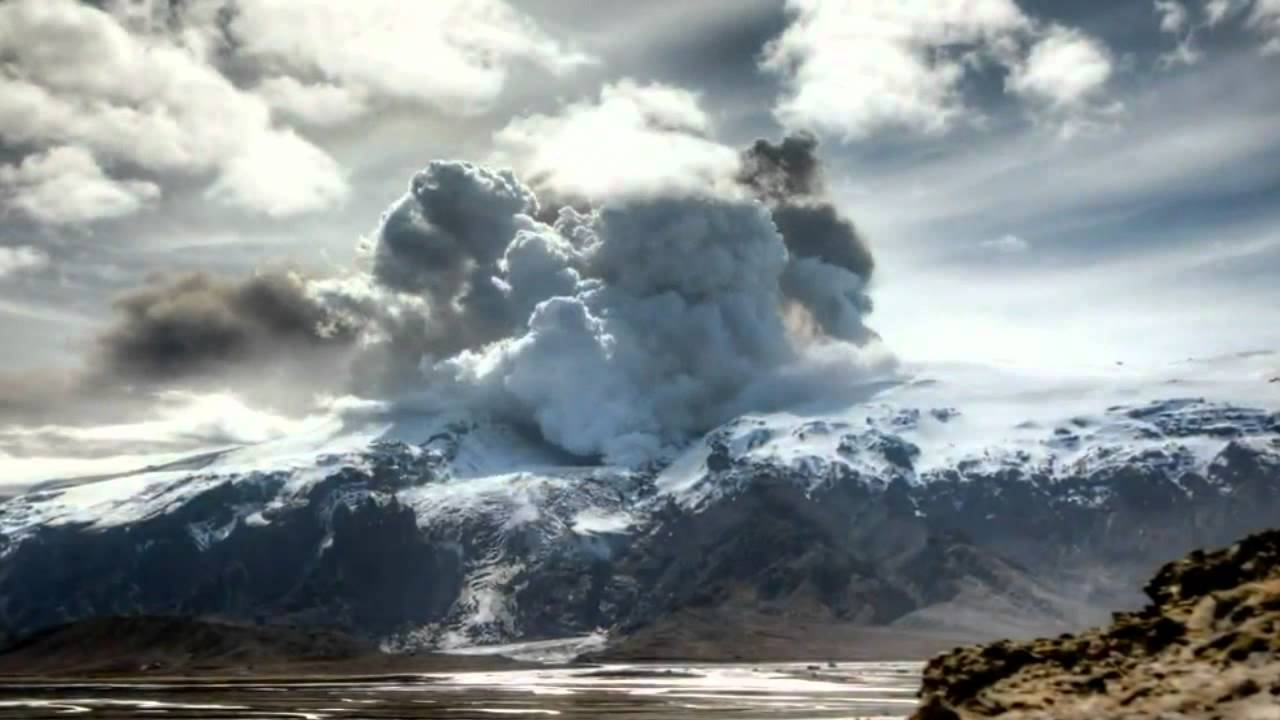
As we received word of the volcanic eruption near Guatemala City, Guatemala, yesterday, where Bear Valley Bible Institute has had an extension school for several years, we were reminded of the omnipotence of God. The power God displays through nature and His creation reveal how such a powerful effect reveals an even more powerful cause. Volcanic activity for which there is no recorded history, like at Yellowstone, Deccan Plateau, and Santorini, stand alongside several we do know about. Perhaps Pompeii or Mt. Saint Helens is most infamous, but the Mount Tambora volcano in Indonesia has been called the most explosive and deadly for which there is historical recounting. Mount Tambora’s eruption began on April 5, 1815, and the mountain blew apart on the evening of April 10th. “The blast, pyroclastic flows, and tsunamis that followed killed at least 10,000 islanders and destroyed the homes of 35,000 more” (britannica.com). It went from being a mountain 14,000 feet high to being a caldera (a crater) 3.7 miles across. Its effects were intense and global. It shot megatons of material into the atmosphere, preventing so much sunlight from reaching the earth’s surface that 80,000 more Indonesians died from famine and disease. The earth’s average temperature was reduced over five degrees. Western Europe and eastern North America experienced heavy snow and killing frost in June, July, and August, causing “crop failures and starvation in those regions, and the year 1816 was called the ‘year without a summer’” (ibid.).
Volcanos are so awesome and powerful that they evoke a strong response from us. They illustrate several things of a spiritual nature. As noted above, they are demonstrations of an all-powerful God. So often, they erupt without specific warning. There may have been tremors and signs for years, but nothing out of the ordinary. Then, too rapidly for many to escape, the cataclysmic occurs. It is a testimony of good that comes from tragedy, too. The Department of Geosciences at Oregon State University reminds us that volcanic soil is very rich and conducive to a dramatic agricultural comeback following these geological events (volcano.oregonstate,edu). These events should help remind us of a truth Bible writers like Peter teach us, that “…the day of the Lord will come like a thief, in which the heavens will pass away with a roar and the elements will be destroyed with intense heat, and the earth and its works will be burned up. Since all these things are to be destroyed in this way, what sort of people ought you to be in holy conduct and godliness, looking for and hastening the coming of the day of God, because of which the heavens will be destroyed by burning, and the elements will melt with intense heat!” (2 Pet. 3:10-12).
Please pray for our brethren in Guatemala and for the hearts of all men outside of Christ, that they might come to a saving knowledge of the truth before it is eternally too late. May the evidence gleaned from places like nature, including volcanic events, persuade mankind of the reality and power of God. So persuaded, perhaps their hearts will be open to learning more about Who this God is as we share the revelation of Him as found in His Word!
The mighty arm of creation, brooding or building
The hand that tipped the canopy, drowning sinners
The finger that stirred the languages, babblers yielding
The heart that made the heirs of Abram winners
The Majesty presented in a bush, resilient though burning
The Master who through plagues made Pharaoh submit
The Merciful One who longed for Israel’s returning
The Measuring Rod whose justice sin did not acquit.
The everlasting to everlasting, whose word’s a holy knife
Inhabitant of the heavens, swaddling Incarnate babe
Kindling Spirit, Father, Son, the way, truth and life
Perfect in character, with power the obedient to save.
Gatekeeper of heaven, consigner of the wicked to hell
Served by angels, ruler of the living and the dead
Spirit, love and light, divinest nature not one part frail
Eyes all-seeing, mind all-knowing, power unlimited.
Hope of the hopeless, joy for the tearful mourner
Source of strength for the heavy-laden soul
Lifter of the penitent fallen, all-glory adorner
Author of salvation who one day will call the judgment roll.
Since He is and is rewarder, let not one refuse His order!
If Satan’s power you’d have repealed, obey the God the word’s revealed!
Waters vast and oceans deep create a marvel and wonder
By its volume and power but also the creatures that you’ll find thereunder.
The stars and planets, galaxies, the universe, the vastness of outer space
The finest particles and smallest molecules, the most infinitesimal place.
The power of the greatest man who rules upon the land
The lowliest person who grovels around unseen and far from grand.
The outward beauty and loveliness of the Lord’s most fair person
The inward workings and intricate details of us all makes this so very certain.
To look upon the mountains high, whether green or rocky or tall
To investigate the tiniest plant and the creatures so delicate and small
Look afar or microscopically, dig and search, uncover
Test it, taste it, see it, smell it, here’s what you’ll discover
Locked within our DNA or viewed from light years away
You see the same truth, over and over, a fact that’s here to stay.
We are the evidence of a Being whose power and knowledge are unending
Who makes what is made extraordinary, through His infinite nature expending
But making what’s made and doing what’s done, His resources are not depleted
Because He is God, He’s never without. He never needs completed.
He’s worthy and mighty, He’s wonderful and true, the God we worship and serve
He’s faithful and ingenious, active and gracious, from perfection He cannot swerve
As you walk through the day and make observations, what you see or happens to you.
Whatever may change, crumble, fall, or fade away, God will still be faithful and true.
The Defense Advanced Research Projects Agency was formed in 1958 for technological advancements and has been responsible for so many of the gadgets and conveniences we enjoy today. They use a variety of means to “both advance knowledge through basic research and create innovative technologies that address current practical problems through applied research” (darpa.mil). SRI International, one of the agencies DARPA partners with, “has taken inspiration from the giant mound of insects, to create their own swarms of tiny worker robots that can put together mechanical assemblies and electronic circuits” (Michael Trei, dvice.com). The military has given thought to using these robots to rebuild and repair, even in the midst of battle. Who can foresee where this technology may show up in our daily lives?
People can be incredibly brilliant and innovative. There is no limit to our imagination and invention. Yet, this (and many other examples) points up to God in at least two ways. First, our intelligence points to an intelligent designer. Moses informs us that we are made in the very image of our Creator (Gen. 1:26-27). Second, our brightest developments and designs are drawn from what God’s created world. Solomon once admonished, “Go to the ant, O sluggard, Observe her ways and be wise, Which, having no chief, Officer or ruler, Prepares her food in the summer And gathers her provision in the harvest” (Prov. 6:6-8). They say imitation is the highest form of flattery. How ironic that in a world growing more unbelieving, mankind keeps paying tribute to the wisdom and power of the One who made it all.














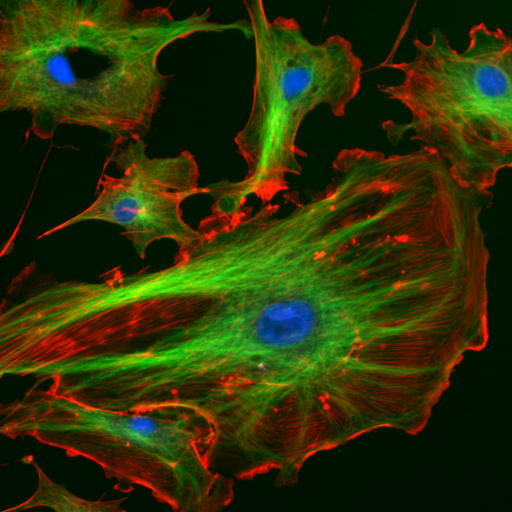 Endothelial cells viewed under a microscope
 The Preacher Pollard Blog