There’s a pretty well known quote that people often share on social media. It says, “Gratitude is the attitude that sets the altitude for living.” What is gratitude? Being grateful means recognizing our blessings. There are some people that I don’t mind being inconvenienced by. People that I’d happily help if they needed it, and that’s because these people are grateful. They appreciate and thank you for helping them…Then there are people that I don’t exactly enjoy helping. Why? Because they demand your help and almost seem like they feel entitled to your help. You help them and you don’t get a thank you and they aren’t grateful for your sacrifice. It’s interesting that these people never seem to be happy, and there’s a reason. They fail to be grateful for the blessings they receive.
When we take the time to be thankful for what we have, we don’t have as much time to think about what we don’t have. If we want to find true joy, focus on being grateful for what God has given us. For example, notice what many Christians have today:
We live in America
We worship in a building each Sunday
We don’t have to walk everywhere
We have a roof over our heads
We have a church family
We have food and clothes
The list goes on and on. We have plenty to be grateful for, yet sadly we focus on the few things we don’t have.
Being grateful leads to contentment. We won’t feel cheated in life. Being grateful keeps us from having self-pity because we won’t be stuck thinking about how much more we deserve. Being grateful keeps us from having feelings of jealousy and envy. We won’t be constantly comparing ourselves to others. Notice the gratitude of the psalmist in Psalm 118:1, “Oh give thanks to the Lord, for he is good; for his steadfast love endures forever!” Skipping down to Verse 29 he says, “Oh give thanks to the Lord, for he is good; for his steadfast love endures forever!” The psalmist begins and ends this chapter reminding us why we are to give thanks to the Lord. It is because His love for us never ceases. Again in Psalm 136 we read the words of a man dedicated to thanking God.
Notice the breakdown of this psalm:
“Give thanks to God” mentioned three times in three verses.
Why? Because He is good and His Love endures forever.
26 times the phrase “love endures forever.”
The psalmist repeats this phrase and then shows us how He loved us.
Defeated kings, gave us land, led his people in the wilderness, etc.
Why should we be grateful? Because God Loves us. And He shows us that He cares. Gratitude brings about happiness. Joy in recognizing how great God’s love is for us.
Gratitude is seeing all the many ways that God had blessed us.
For the next several weeks, I’ll be repeating the book of I Peter in present-day terminology. It’s not a true translation of the book, as I am not qualified to do so. It will be based on an exegetical study of the book and will lean heavily on the SBL and UBS Greek New Testaments, as well as comparisons with other translations (ESV, NASB, NIV, ERV, NLT). My goal is to reflect the text accurately, and to highlight the intent of the author using concepts and vocabulary in common use today.
This is not an essentially literal translation, and should be read as something of a commentary.
I Peter – Part VIII
Our lifestyles were hostile to God, but he died for us anyway! Moral perfection died to save morally imperfect people. He wanted to bring us to God! He was killed physically, but his spirit was brought back to life. This is the form he had back in Noah’s day. Even then he wanted to save people who were about to face total destruction! God waited patiently for them to change, giving them chance after chance while Noah was building the ark. They died; in fact, only eight people survived that flood.
Water saved Noah and his family from those evil people, and water saves us from evil, too. We don’t bury ourselves in water to take a bath. We bury ourselves in water to ask God for a clean slate. We can only do that because Jesus was brought back to life, sat next to God, and was given total control of every supernatural force.
Mentally prepare yourself to suffer. Jesus suffered while he was human! When we suffer physically, it’s because we stopped doing bad things. As long as we’re alive, we’re not chasing the unhealthy passions humans have. We do what God wants. You used to chase those unhealthy passions! You craved all things bad, got drunk, partied without restraint, and practiced horrible things while worshipping fake gods.
Since you used to do this, your old friends are shocked that you don’t anymore. They hate you and mistreat you now, but they’ll have to answer to God. He’s going to judge everyone who’s ever lived. Remember, the hope for rescue that Jesus gave us was offered to people who aren’t alive anymore. Since everyone’s going to face God, everyone is given the chance to live like God wants.
It was just about 2,400 years ago that a philosopher by the name of Plato would write about a place that has captured the imagination since. The legends of that fabled Atlantis have been the inspiration behind movies, TV shows, and countless documentaries.
Some believe that it was a place that held secrets and hidden knowledge of the universe. Some will even claim the inhabitants had access to advanced technology— surpassing even our own!
Disney’s movie, “Atlantis,” depicts hover crafts which are powered by crystals and robotic stone giants that guard the city.
There’s some credence to the idea that the mythology around the “City of the Sea” was a product of a pre-flood civilization. It’s not hard to see how an earth-altering event like the flood could inspire stories of a great city vanishing beneath the waves. There was a time when people’s hands grew idle after they were no longer focused on their own immediate survival. History paints a picture time and again of the spiritual and physical destruction that follows when we have time to sit and scheme. Nimrod was one of the first “mighty men” mentioned in the book of Genesis, as well as a visionary nation builder (Gen. 10.8). He broke away from the nomadic life that was modeled before him and he instead— decided to build. The end result would lead to a catastrophe that is symbolic of our own, were we to reject the invitation to board the ark (Gen. 6.5, Heb. 11.7ff).
In 1830 and almost every year since, there have been those who claim that the ancient city of Atlantis has finally been found. From Africa to Europe, archeologists and self-proclaimed experts have hotly contented the whereabouts of a place that likely doesn’t exist.
It’s undoubtedly fascinating to listen to the latest Atlantean news and it’s never in short supply but it’s a tragedy that so many people give their lives chasing a city they’ll never find.
There’s another group of people on a quest to find a city far more incredible and beautiful than Atlantis, though. Unlike Plato’s writings, the city of Heaven is based entirely on the writings of God Himself.
It’s a place made up of inhabitants spanning every generation on earth (Phil. 3.20).
A place so difficult to describe, even inspired writers struggle to find the words (2 Cor. 12.2).
It wasn’t built with advanced ancient technology, but by two hands bearing the marks of the ultimate sacrifice (2 Cor. 5.1). Oh, and it’s a place literally to die for (1 Thess. 4.16-17).
Why would anyone spend the time searching for a place the pales in comparison to the city of God? We’ve got the map and we’ve got the promise, let’s not settle for anything less than.
For we know that if the earthly tent we live in is destroyed, we have a building from God, an eternal house in heaven, not built by human hands. – 2 Corinthians 5.1
Set your mind on things above, not on earthly things. – Colossians 3.2
Before a track meet in Omaha, Nebraska, the first Saturday of this month, Terence “Bud” Crawford was most renowned for his perfect 38-0 record as a professional boxer. His unblemished record includes 29 knockouts, but he, then later millions more, saw his seven-year-old daughter deliver the most unlikely knockout blow many of us have seen. Little Talaya ran out of her shoe at the starting block, then fell behind the rest of the pack by 20 meters in this 200 meter race while she put it back on. Not only did she not give up, she stormed back and won the race with seconds to spare. She has aptly with words like grit, determination, and undaunted. Heroic and inspiring have also been bandied about. Perhaps her drive not to lose comes from her father, but she certainly reflected well on him (ESPN report here).
The Bible refers to life as running a race (Heb. 12:1). Paul urges us to run in order to win (1 Cor. 9:24). He was concerned about running in vain (Gal. 2:2). He was determined to finish the course (2 Tim. 4:7). While Paul and the writer of Hebrews describe a race that sounds more like a marathon than a couple hundred yards, it will require all the more grit and determination to successfully complete. There will be encumbrances and entanglements. Whether problems or pressures, things will happen that can bring us to a standstill. In those moments, we may be tempted to quit. Those are the times we can remember our Father and reflect His ways! In our case, He’s not just watching! He can help us win.
Are you discouraged? Do you feel defeated? Maybe it’s something someone has done to you. Maybe it’s something you have done. Whatever it is, perhaps you feel it’s useless to go on. By getting back on track, you may not only win the race yourself but inspire so many others through your successful finish! Don’t give up! The reward is worth the effort. “In the future there is laid up for me the crown of righteousness, which the Lord, the righteous Judge, will award to me on that day; and not only to me, but also to all who have loved His appearing” (2 Tim. 4:8).
“Ah! vous dirai-je, maman” is a French children’s song born from an anonymous pastoral tune in 1740. However, this melody is so well known to us that we use it to sing three English songs: 1) “Twinkle, Twinkle Little Star,” 2) “Baa Baa Black Sheep,” and 3) “The Alphabet Song.” From a musical perspective, one might think that being a “children’s song” would make the tune simple enough for a child to plunk out on the piano with a single finger. And, indeed, in the hands of a beginner, that is true. However, one might be surprised to hear what a few renowned composers did with “Ah! Vous dirai-je, maman.”
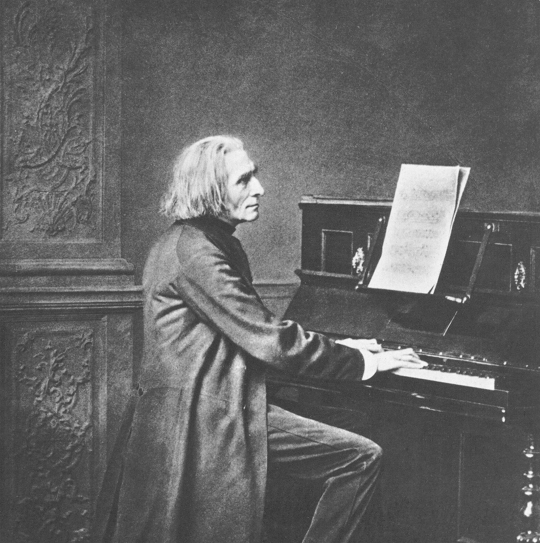
Wolfgang Amadeus Mozart wrote twelve variations on this piece. Mozart’s composition has Köchel listing number 265 and is called “Twelve Variations in C on ‘Ah! vous dirai-je Maman.’” The melody has a length of about fourteen minutes! And no one listening to it would consider it “child’s play.” Not to be outdone, harpsichordist and composer Johann Christoph Friedrich Bach created eighteen variations on the tune for the keyboard. It takes about ten minutes to play “Bückeburg Bach’s” piece, “Variations on “Ah! vous dirai-je maman” in G major.” Even romantic pianist Franz Liszt had a crack at “Ah! vous dirai-je, maman.” Liszt’s version was short and sweet, taking only twenty-two seconds to play. But Liszt still managed to embellish the song with his flourishment despite its brevity.
So, though it is the same song, its complexity and appeal derive from the musicians’ abilities. This truth reminds me of a parable of Jesus. A master departing for a journey entrusts his valuables to three of his servants (Matthew 25.14-30). One servant received five units of currency, another received two, while the last servant, later called “lazy” and “fearful,” was given but one. When the master returned, the servant given five talents gave to his master five more which he had earned. The two-talent servant likewise doubled his share. But that lazy and fearful servant hid the money given to him in the ground. This servant claimed fear of loss caused him to hoard what the master entrusted to him.
We cannot ignore the original context of this parable which is money. A talent began its life as a measurement of weight. By the New Testament, the talent equaled the buying power of that weight in gold or silver. Most scholars believe that the talent to which Jesus referred was equal to 6,000 denarii. If you recall, from Matthew 20.2, employers paid workers a denarius for a day’s wage. So, one talent equaled the salary earned from 6,000 days of work! Thus, the master entrusted the “one-talent servant” with about 16 years’ wages. So then, how much more impressive that the five-talent servant increased his master’s investment by an amount that would have required the ordinary worker roughly 82 years of labor? (If my math is correct, that is.)
Today, we tend to remove our Lord’s parable from its fiscal context to refer to our stewardship over the abilities and skills we can muster in God’s service. Or we might use talent to refer to all the resources at our disposal as we worship and serve. That it is about money is seen in the master’s scolding of the lazy servant that the least he could have done was put his talent in the bank to allow it to draw interest (Matthew 25.27). The master’s rebuke implies that the lazy and fearful servant could have still been productive despite his character flaws. All he had to do was make a safe investment of his master’s funds with the bank. See how Jesus knew about compounding interest! Compounding interest is so incredible that even Albert Einstein’s genius esteemed it as man’s greatest invention. (Granted, interest rates must be more than they are now to grow wealth. I know one fellow who only earns about fifteen cents a quarter with the current rate.)
Elsewhere, the apostle Paul reminds us that a bountiful return follows when we sow bountifully (2 Corinthians 9.6). This Scripture is also about money. So, wealth reflects what we do with what we have. Returning to Jesus’ parable, one notes that the Lord specifies that the master knew the abilities of his servants and used that knowledge to determine how much he would entrust to each man. For this reason, Jesus could also say that God expects more of the one to whom He has given more (Luke 12.48). Please understand I am not promoting the prosperity gospel of such charlatans who play preachers on the TeeVee. If you aren’t a wealthy person, it is unlikely that God will shower you with money from Heaven simply because you prayed the prayer of Jabez or sent in “seed money” to someone’s ministry.
No, the Lord has already given you something. Using what God gives you may be like the previously mentioned child striking single keys with his fingers. But that is okay since it is what you can do with the tune. However, your brother or sister may be capable of making twelve or eighteen variations on that tune, making your jaw drop. Worry not; their talents are not an indictment of your own. You are still capable of playing a lovely song. Therefore, it is a matter of ensuring you play it your best. Don’t do like the lazy and fearful servant and hoard your talent. Such people rob God (cf. Malachi 3.8). In these difficult economic times and times of future prosperity, God will judge us for what we do with those talents with which He has entrusted us.
There is a story about a father building his daughter a wheelchair from the ground up after she got paralyzed in a car crash. Her father was willing to do all the research and put all the time in to building a wheelchair for his daughter who he loved so much. I don’t think I would trust my dad to make me a wheelchair, but this father demonstrates the love he has for his daughter and the lengths he would go to to keep her safe. We are told in multiple different ways how deep the Father’s love is. As the song goes, “Why should I gain from His reward I cannot give an answer.” I want to share just three points with you tonight why we gained from his reward.
The first one is that His love is so deep that He created us. Genesis 1:27 says that God created man in His image. Since we are made in God’s image, we are His special creation. In return for Him to love us so much we need to love Him and obey Him.
Then when we messed up God loved us so much that He gave His only Son for our sins (John 3:16). He was willing to do anything for us as His children. I know this is a point that is used a lot. Would you give your son? Not just your son, but your only son. Now I don’t have children but I’m sure that if I did that I would not be willing to do that. If you go on to verse 17 it says that He did it so that we might be saved. If we do what is commanded here on earth we will have an eternal home.
The third point we gained from his reward was because he loved us so much that He wanted us to have an eternal home with Him. Go back to John 3:16. It says that whoever believes in Him shall not perish but have everlasting life. Now going back to the example I gave just a moment ago. I don’t think I will ever love anyone enough to give my son. Now let’s back up for a minute and ask ourselves why do we not love each other that much? We are all God’s creation so we should love others like God tells us.
Thinking back to my childhood when my dad would get mad at me I failed to realize that he loved me enough to help me do right. God loves me enough to give me the opportunity to stand up here and give this devo. And God loves everyone of us enough to give His only Son for our foolishness. And now our job is to love Him so much to obey his laws.
For the next several weeks, I’ll be repeating the book of I Peter in present-day terminology. It’s not a true translation of the book, as I am not qualified to do so. It will be based on an exegetical study of the book and will lean heavily on the SBL and UBS Greek New Testaments, as well as comparisons with other translations (ESV, NASB, NIV, ERV, NLT). My goal is to reflect the text accurately, and to highlight the intent of the author using concepts and vocabulary in common use today.
This is not an essentially literal translation, and should be read as something of a commentary.
I Peter – Part VII
While we’re on this topic, wives must listen to their own husbands. If your husband doesn’t believe, maybe you’ll win him over with just your good example! You wouldn’t even have to say anything. Pure and respectful behavior speaks volumes. Don’t obsess over your physical appearance or fashion. Show off who you are inside! A gentle, easy-going demeanor is timeless; it’s also extremely valuable to God. Remember the women lived a long time ago? They were considered special because God was their hope, just like he’s your hope. They also expressed their beauty by deferring to their husbands. Sarah did that for Abraham – she considered him to be her leader. You are just like her when you do the right thing without being afraid of anything.
Husbands, you’re not off the hook. You share a living space with your wife, so you have to be a student of her needs and wants. Don’t treat her like one of the guys. Remember the differences between men and women. Don’t be rough with her. Make sure you show her how valuable she is! She has just as much a claim to God’s promise as you do. If you aren’t good to her, God will block your prayers.
Finally, you all need to work together. Show sympathy to each other. Be kind to each other. Don’t think too highly of yourselves. Don’t insult people who insult you. Don’t get even with people who hurt you. Do something good for them instead! That’s actually why God called us, and he wants to do good for us, too. You’ve read, “Anyone who wants to live a good life should watch their mouth. They should avoid evil and do good things. They should look for peace and chase it. God watches out for good people and listens to their prayers, but he’s against people who practice evil.”
Who’s going to hurt you if you’re obsessed with being good to people? Even if someone hurts you because of your faith, you’re ok! Don’t be afraid of their threats, don’t let it shake you up. Put Jesus in the center of your heart at all times. Have a logical answer ready whenever you’re interrogated for your faith. Tell them about your hope, but make sure you’re gentle and respectful. Make sure your moral lives are good so they can’t legitimately attack your character. If you’re doing the right thing, they’ll answer for how they treat you. It’s better to be attacked for doing the right thing than for doing the wrong thing.
Tasmanian devils are named for their chilling shrieks that can be heard when the sun goes down on the island of Tasmania. The sound of the devils crying in the night reminded the early colonists of the mythical hellhounds. Despite their terrifying calls, these creatures aren’t as much of a danger to humans as they are to themselves. Not so long ago a vicious cancer began killing these animals and the cause of the disease was a mystery. As scientists began to study them, they discovered that the cancerous tumors were self-inflicted. It’s not uncommon for the Tasmanian devils to fight and bite one another over a carcass or the rights to a female. A devil’s ears will burn a bright red color when they become upset but by lashing out at one another they further their own extinction. The bites they inflict on one another are likely to develop into the mutating cancer that will grow until they succumb to the disease itself, or starvation. You won’t see the ugly side of these animals in Looney Tunes, but there are some valuable lessons to be learned from this. At times we can be guilty of destroying one another through gossip or complaining and, sadly, the church isn’t immune to this disease. It’s no wonder that God warns us about the dangers through His New Testament authors.
Consider the following verses:
“Do not complain, brethren, against one another, so that you yourselves may not be judged; behold, the Judge is standing right at the door.” James 5.9
“But if you bite and devour one another, take care that you are not consumed by one another.” Galatians 5.15
“We should not test Christ, as some of them did—and were killed by snakes. And do not grumble, as some of them did—and were killed by the destroying angel.”
I Corinthians 10.9-10
While there’s much to be said about the damage that the tongue can inflict, it’s more productive to discuss solutions to the problem. Ironically, it’s a lack of productivity that often spawns gossip and complaints. As the old adage goes,
“When there’s nothing to see and do, there’s much to hear and say.”
Sadly, the darker side of closeness, history, and intimacy can be the breeding ground of gossip. The wounds inflicted and the trust that’s broken can be difficult, if not impossible, to repair. A song we teach to small children should be modeled by adults.
O be careful little ears what you hear
O be careful little ears what you hear
For the Father up above
Is looking down in love
So, be careful little ears what you hear
O be careful little tongue what you say
O be careful little tongue what you say
For the Father up above
Is looking down in love
So, be careful little tongue what you say
Three Ways To Fight The Bite
Avoid being a spreader. It will build your integrity and trustworthiness.
Make it a point to speak highly of the person being slandered.
Offer biblical solutions instead of contributing to the gossip. This assumes the person spreading the gossip is genuinely concerned about the person(s) they’re talking about. Have they confronted the subject of their gossip (Matt. 18.15-20)? If they’re unwilling to act but willing to talk— avoid them.
On the last night of His life Jesus prayed the following,
“I pray also for those who will believe in me through their message,that all of them may be one, Father, just as you are in me and I am in you. May they also be in us so that the world may believe that you have sent me.” John 17.20-21
If unity was on the mind of the Savior even as He faced the cross, it must be important.
Unity: without it there’s pain but with it there’s unlimited power.
For the last few years, it has become vogue to refer to the current state of incivility as “the age of rage.” The British newspaper, The Guardian, featured an article in 2019 by Oliver Burkeman, entitled, “The age of rage: are we really living in angrier times?” Janie Watkins wrote the book, “The Age of Rage”: This is a mad, mad world, in 2005. While it’s written in the context of America, it points back to examples like Nebuchadnezzar, Ahab, and other Bible characters, alongside modern dictators and megalomaniacs. At least one source, Science Focus, wisely observes, “The Age Of Rage: Why Social Media Makes Us So Angry…And What You Can Do About It” (3/20). Writers in Australia, Ireland, and other countries are all observing the same disturbing trend of people who disagree being willing to amplify their indignation with intimidation and violence. Outrage has simply become rage.
Any number of current events in the last few years would serve to prove that we’ve gone that far in our society. Civilization depends on civility. More than that, Christianity, as Jesus and His disciples teach it in the New Testament, requires us to “be shrewd as serpents and innocent as doves” as He sends us out “as sheep in the midst of wolves” (Mat. 10:16). You see, it doesn’t matter how the world acts. God expects us to assuage the rage.
The Bible identifies what qualifies as rage. The main word translated “rage” in modern translations is thumos, and it is found eighteen times in the New Testament. The NASB renders it “rage” (Luke 4:28; Acts 19:28), “indignation” (Rom. 2:8), “angry tempers” (2 Cor. 12:20), “outbursts of anger” (Gal. 5:20), “wrath” (Eph. 4:31; Col. 3:8; Heb. 11:27; etc.), and “passion” (Rev. 14:8; 18:3). This word means the “intense expression of the inner self; a state of intense displeasure” (BDAG 461). Louw-Nida says, “an intense, passionate desire of an overwhelming and possibly destructive character” (290). Kittel explains that the verb from which this noun comes originally conveyed “violent movement” and “to boil up” and “smoke” and the noun came to mean what is moved–desire, impulse, disposition, thought, and anger (TDNTA 339). Picture a person’s temperament as a potentially seething volcano. Rather than controlling it, the person allows what’s inside to freely boil over. That is rage!
With intensifying rhetoric from those in the world who threaten harm in expressing their rage, what does God call you and me to do? First, at the basic level, we are not to sin in our anger (Eph. 4:26). Second, never take your own revenge (Rom. 12:19). Third, replace quarrelsomeness with kindness, patience (even when wronged), and gentleness (2 Tim. 2:24-25). Fourth, malign no one, but be peaceable, gentle, showing every consideration for all men (Titus 3:2).
Warning: This is not how the world thinks nor what the world will do, in many cases. But in the age of rage, we have a higher law. Simply put, it is, “Do not be overcome by evil, but overcome evil with good” (Rom. 12:21). It’s not a matter of what that may or may not do for our personal causes, but what will it do to advance the cause of Christ. It’s why He has us in this age, to help the world see His way. Those who follow it will experience eternal joy, the antithesis and antidote to this age of rage!
“O Lord of hosts, if You will indeed look on the affliction of Your maidservant and remember me, and not forget Your maidservant, but will give Your maidservant a son, then I will give him to the Lord all the days of his life, and a razor shall never come on his head.” (1 Samuel 1.11 NASB1995)
These are Hannah’s words uttered approximately 3,100 years ago. Barren, she cried to the Lord for a son. Hannah’s husband, Elkanah, loved her dearly. But Elkanah’s other wife, Peninnah, would oppress Hannah because she had born children for Elkanah while Hannah had not. Moreover, Peninnah was jealous of Hannah because she knew Elkanah loved Hannah more despite her barrenness.
The priest, Eli, mistook Hannah for a drunkard and rebuked her. Hannah assured Eli she was not drunk but earnest in her pleas to the Lord. She said she was pouring out her soul before the Lord. Eli told her to depart in peace, that the Lord would grant her petition. And Hannah went her way, no longer sorrowful but filled with faith.
In a short time, Hannah became pregnant and bore Samuel, so named because the boy resulted from the request she made of the Lord. True to her vow, Hannah took her son Samuel to the Tabernacle in Shiloh after weaning him. He would be given to Eli to live his life in service to God.
Fast forward now to the twenty-first century. A worldly woman stumbles upon an article written by Politico. She laments when she hears about a leak from the Supreme Court regarding a possible decision about Mississippi’s abortion law banning abortion after fifteen weeks. The leaked document suggests that the Supreme Court upholds the abortion restriction and overturns the precedents of both Roe and Casey.
“They are overturning Roe,” she screams. “How can they do that? Abortion is my right! Why do these politicians, these men, think they can tell me what I can do with my body? How can they intrude on my liberty?” The woman, whose name is unknown to us, calls her Representative and her Senator voicing her displeasure. “It is time to pack the Supreme Court! Limit the tenures of the Justices! The Supreme Court should not hold so much power.” She confers with her like-minded friends, some of whom are biological men who self-identify as women, and goes to the park to protest even though there has been no official pronouncement. Yet, the rumor of this decision has aroused her ire, and she will not rest until obtaining her justice.
I cannot help but think of all of the world’s Hannahs when I turn on the news and watch recent events. Though I wish that this was abortion’s end, I know not to get my hopes up. The second woman marching in the streets has nothing she must worry about. If the leak is accurate, the Supreme Court is only giving the power regarding abortion back to the States and the people. Nothing more. It seems evident that those States expanding abortion to the third trimester, like New York, will not be limiting the procedure. And I can foresee a booming “abortion tourism” conveying those poor, subjugated women in “backward States” to bastions of “progressiveness,” where doctors will kill the unborn infants even a day before they would otherwise be born.
Meanwhile, hundreds of Hannahs cry out to God for just one child. One child to love, nurture, and give back to God. There are hundreds of Hannahs filled with natural affection, but who will never have that opportunity to extend those deep-seated feelings because of disease or circumstance. I grieve because hundreds of Hannahs are barren, while the unnamed woman can slaughter a perfectly healthy child growing in her womb in the name of her so-called healthcare and feel no guilt.
This Sunday is Mother’s Day, not “womb-possessing person’s day.” It is a day to celebrate the women who stepped up and made a lasting difference. I am thankful to God for having my own Hannah. She reared my siblings and me to love the Lord and serve Him during all the days of our lives. Moreover, she is our embodiment of King Lemuel’s mother (cf. Proverbs 31). We call her blessed! It may be that you feel the same for your mother too. If so, rejoice and celebrate her godly influence.
According to UN statistics, we live in a world comprised of roughly 49.6 percent females. So, undoubtedly, you will encounter at least one woman today. I hope she is like Hannah and not the alternative. But even if she is not, love her with the kind of love modeled before you by your own Hannah. Pray that God will soften her heart and open her eyes so that she may see the truth about His wondrous creation, no matter how small (Psalm 139.13-16).
Romans 12:1-2, “I appeal to you therefore, brothers, by the mercies of God, to present your bodies as a living sacrifice, holy and acceptable to God, which is your spiritual worship. Do not be conformed to this world, but be transformed by the renewal of your mind, that by testing you may discern what is the will of God, what is good and acceptable and perfect.”
As we enter chapter 12 the point is, “what are the practical implications of 1-11?” It is the start of a five chapter section on how we can put what Paul has said into action. In the first section of the book we learn that we all have sinned, but through faith we have received justification. This gift of justification should motivate us to faithful service.
Paul begins 12:1 by saying “I urge,” which is the powerful petition verb (parakaleo). It is always used by Paul to indicate a significant point.
Here it represents a transition from the doctrinal discussion to the practical. It also represents a key thought, that we must present ourselves to God as a “living sacrifice.” This is in contrast to the dead sacrifices of the Old Testament (slaying of innocent animals that wasn’t enough).
We must give to God while we are young, alive, and capable of service.
We must present ourselves to God as a living sacrifice that is Holy and acceptable. Holy means we are free from moral filth. Holy means that we are devoted to serving God. Holy means that we are an instrument of righteousness.
Then we come to verse 2 where Paul says, “Do not be conformed.” As Christians that are wanting to build our character we cannot let the world be our standard when it comes to:
Our morals (the way we act)
Philosophy (the way we think)
In context the way we dress and the way we worship.
Rather than being conformed to the world, we must “renew our minds.”
In intellect (change the way we reason, and think about things)
In emotion (Renew our state of mind, the way we respond to different circumstances)
In will power (have the strength to restrain our human impulses)
Have we found ourselves living without righteous thinking? We must renew our minds. When our gym membership runs out, we renew it. When our car insurance policy period is over, we renew it. When our thinking isn’t in line with God’s, we renew our minds.
Why do we sacrifice, and renew our minds? To prove/discern:
What the good will of God is
What the acceptable will of God is
What the perfect will of God is
And by discerning these things, we can be known as Christians who think righteously.
For the next several weeks, I’ll be repeating the book of I Peter in present-day terminology. It’s not a true translation of the book, as I am not qualified to do so. It will be based on an exegetical study of the book and will lean heavily on the SBL and UBS Greek New Testaments, as well as comparisons with other translations (ESV, NASB, NIV, ERV, NLT). My goal is to reflect the text accurately, and to highlight the intent of the author using concepts and vocabulary in common use today.
This is not an essentially literal translation, and should be read as something of a commentary.
I Peter – Part VI
We’re independent of any human government, but don’t use that as an excuse to disobey your governments. You have to see every person as valuable. You have to love each other. You have to obey your government. Employees must listen to their employers. Be respectful to them, even when they aren’t good to you. We don’t do this for them, we do it for God. He thinks very highly of us when – because we love him – we act like we should, even when we’re being mistreated. You don’t get credit for putting up with mistreatment if you bring it on yourself with bad behavior. If you’re mistreated because you’re trying to do the right thing, though, it makes God happy.
This is why God called us in the first place! Jesus suffered to benefit us. He intended for that to be the example we could follow. He never did anything wrong, he never said anything wrong, he didn’t fire back at people who said hurtful things. He never threatened anyone who put him through suffering. He constantly trusted God, knowing that God judges perfectly. He voluntarily took the punishment for our sin when he physically suffered on the cross. He did that to give us the chance to kill our old lifestyles and live morally pure lives. His injuries healed us. We had no direction, aimlessly wondering around like a sheep. Now we follow the one who leads us and protects us.
This time of the year congregations are planning and preparing for another Vacation Bible School. When and why was this summer tradition started? It seems that even those who aren’t “church goers” still share childhood memories with those of us in the religious world. Across America kids will soon be drinking kool-aid and making Noah’s ark out of Popsicle sticks. They’ll also make memories that will stick with them for their whole lives.
The Hazy History
As much as this week means to many of us, one might assume the history to be well documented. However, who started the first VBS and when— is still debated. Some claim it all began in 1870, while others place the date closer to the 1920s. So the “when”’proves to be a little fuzzy, but the “why” seems constant. A thread that can be traced through many a VBS origin story is the reason it’s done. It was always designed with our children’s spiritual growth in mind. The goal was always to provide them wholesome entertainment while at the same time, introducing them to God and the Bible.
So with that in mind…
Here are 3 reasons why VBS is a worth the effort:
Youthful brains need this week. Studies done by Psych INFO, ERIC, MEDLINE, and Google Scholar as well as the University of Virginia library, all seem to agree that kids from 12-18 years old are the most impressionable. Meaning, the things they are taught and their experiences in these years will often impact their worldview for the rest of their lives. Any program within the church that’s geared towards teaching young people about Jesus can only have a positive influence on them. That window is relatively short so it’s crucial that parents do all they can to set them up for spiritual success.
Church families need this week. VBS takes a lot of work and it’s the kind of work that brings the church together. It’s mainly about the kids, but it’s not all about the kids. This is a time where members have an opportunity to bond and grow closer through the planning and preparation. Work days, crafts, skits, staff/teacher curriculum, decorating, T-shirt’s, and advertising all take teamwork. Team work is good work for good teams.
Adults need this week. The happiest among us are typically the children. With all of that work, the sweat, tears, and time that’s shoveled into this event— the payoff is the sound of an auditorium filled with energy and excitement. It’s good for adults to spend a week listening to the sound of voices singing loudly and unashamed. It’s good for the teachers and the chaperones to act and look a little ridiculous. There’s value in letting kids see us trade the khakis and neckties for face paint and costumes because it will send a message. To be a christian doesn’t mean to be serious, stoic, or stern— all the time. Those of us who have been members of the church for sometime know this to be true, but children who’s parents don’t think or speak highly of Christianity now have a chance to experience something to the contrary.
While there might be mixed feelings about VBS within the church, there’s no denying it’s potential to effectively introduce Jesus to the young and young at heart.
A picture of a Wyoming VBS from several decades ago.
About a month ago I was sitting at a funeral, my dad was doing the ceremony, and he said something that stuck with me. A guy named Ron Tranmer wrote a poem, and said to sum it up: “When we go to a gravestone we often look at the dates on the stone, but we should look at the dash. The dash serves as an emblem of our time here on earth, although it is small, the dash has touched so many on this earth between our years.” I had never heard this before my dad quoted it, and I think there is a bigger message in this poem.
I want you to take a moment to think about your dash….. Most likely you thought of a big moment in your life, or even a sad time or a time you wish you could redo. As I was thinking of my dash I got caught up thinking about all of my accomplishments and accolades that I forgot about how much I’ve affected others with my dash. I think about Jesus and how he affected and helped so many people. One of the moments that came to mind was when Jesus feeds the 5000 (Mat. 14:13-21). Jesus went out of his way to do something for others.
One thing that comes to mind when reading this passage was the tornado. I can remember coming here to BG (Bowling Green) after the tornado hit. I had no idea the destruction that was done, because I was in my house when it hit. But when our group was driving around the community and giving some water, food, clothes, or anything to someone that needed it, they were so thankful and relieved that they were getting food. I imagine the 5000 people were grateful when Jesus brought them food.
Our dash also is going to have some times where we wish we can go back and redo a bad decision. Just recently I had a Blue Stars Camp for DCI in March, and one of the teachers said this statement that I will always remember. “Every single time you do a rep of something you make a green marble and a red marble from how that rep was. Whenever it comes to showtime and you are about to do a show, you have the bag of all of these marbles, and for that show your run will be based on either the green or red marble that you chose.”
If we think about our life and how many decisions we make daily, that would add up to be a lot of marbles. Other people are going to remember you from those decisions, green and red. When you pass away and someone looks at your gravestone and looks at your dash, what do you want them to remember? Is it going to be a green or red marble?
One of the most chilling phrases to church leadership might be, “a complaint arose” (Acts 6:1). Unhappiness, dissatisfaction, or feelings of unfairness all threaten distraction and difficulty among the body of believers. We can quickly break down this problem this way:
The quibble. The Hellenistic Jews were being overlooked in the daily serving of food in the Jerusalem church (1).
The quandary. Who should take care of this problem? The apostles responded, “It is not desirable for us to neglect the word of God in order to serve tables” (2). The proposal ultimately allows them to do just that (4-7).
The qualifications. The apostles recommend finding seven men from among them, “men of good reputation, full of the Holy Spirit and wisdom…” (3). The people chose Stephen, a man full of faith and the Holy Spirit, Philip, Prochorus, Nicanor, Timon, Parmenas and Nicolas” (5).
The quelling. “The statement found approval with the whole congregation” (5). The people were able to get back to the business of spreading the word and increasing the number of disciples (7).
Every problem we face among us in congregations can be settled the same way today. Identify the problem, the biblical solution, and the right people to address it, then peace and success follow. Never again do we read about this problem arising within the Jerusalem church.
It is interesting to see that the men who were chosen to deal with a physical or material problem were spiritual men. Stephen, one of the “table waiters,” is described as “full of grace and power” (8), a man “with the wisdom and the Spirit” (10), even a man described as having a “face like the face of an angel” (15). These opponents of Christianity are trying to undermine and put down the growth of Christianity (7), and they are willing to go to any lengths to do so (11-14). Yet, Stephen, who has already proven his worth by his compassionate, efficient handling of the Jerusalem church’s internal issue, is able to go on the offensive in sharing the Word.
Acts six does not call these men who wait tables “deacons,” but there are some strong parallels. They are both servants (6:2; 1 Tim. 3:8). They both needed to meet spiritual qualifications (6:3; 1 Tim. 3:8-12). They both could “obtain for themselves a high standing and great confidence in the faith that is in Christ Jesus” by serving well (6:8ff; 1 Tim. 3:13).
Who does God want to utilize to solve the practical dilemmas that threaten the church’s unity? Spiritual men, servant-hearted men, and skillful men! Men like Stephen and Philip, who are multitalented–humble enough to get their hands dirty and holy enough to get the gospel out to those in need of it.
The stats are in, and depression and suicide rates are up. For example, 7.8% of all U.S. adults experienced one episode of major depression within the last year. Suicide rates nationally have been up by 30% since 2000, with the most significant surge coming over the last decade.1 Naturally, the pandemic gets its share of the blame for a part of these trends, but can it explain it all?
I humbly suggest it does not. These problems stem from more than being cooped up in houses and having routines upset. People are more dissatisfied. A poll conducted in 2020 found only 14% of the respondents were happy. 2020 was the first time the percentage dipped so low since the General Social Survey started tracking those numbers in 1972. 2
Let us consider all the changes ushered in since Y2K. First, social media was born and has brought considerable changes to the culture and how we disseminate information. Who had heard of Twitter in 2005? Trick question. Twitter wasn’t even a thing in 2005. Though there was a Facebook (2004), it still limited who could use its platform. I could not waste my time watching cute cat videos in 2004. YouTube did not roll out user-submitted video streaming until 2005.
And let us not forget the technological advancements this millennium has witnessed. For example, Steve Jobs’ iPhone gave us “an app for that” in 2007. In 2008, Google gave us the open-source Android OS for smartphones. What kind of internet speeds did you enjoy over a decade ago? AOL was still around in the early 2000s, having people call in over their telephone lines accessing blazing internet speeds allowed by their 56k modems. (Obvious sarcasm there.) It was only a minority that had access to broadband internet in 2005. And can you remember the early 2000s when you started hearing all those businesses you patronized talk about checking out their website?
How about the state of politics and civil discourse since 2000? “Not my President!” That slogan began in 2016 with protesting against the outcome of the election, isn’t that correct? But, no, people were saying that about President Bush, too, after the whole hanging-chads debacle in the 2000 election. And oh, what noise in the “streets!” Tea Party, Occupy Wall Street, Antifa, Black Lives Matter, MAGA, and Proud Boys. In some respects, we’ve regressed to the tumultuous Vietnam War era of the late 1960s and early 1970s.
Now, I am aware that correlation is not causation. However, I think that the one wishing to connect the dots can demonstrate how all these things we have mentioned have stoked the fires of depression and discontent. The fake perfection of social media makes people think they are unattractive and have unfulfilled lives. The disinformation and propaganda of the internet arouse our righteous ire against our enemies, foreign and predominantly domestic. And the technology puts all this information in our hands nigh instantaneously. Then, we can easily share our misery or righteous indignation with everyone around us.
The question is, how do you respond to all of this? I advise you not to react like a particular man from Turkey’s Mersin province when the contagion of Christianity began turning his world upside down. His zeal caused him to persecute the Christian sect. He was willing to dedicate his entire life to Christianity’s eradication, traveling even a great distance to ferret out its adherents living among the populace of a province that was not even his home. Finally, on that fateful road to Damascus, Jesus appeared to this man and made a profound statement. “It is hard for you to kick against the goads” (Acts 26.14 NASB1995).
What is a goad? There was a time when cattlemen moved their livestock by poking them with a sharpened stick. That sharpened stick was a goad. So, if our man from Turkey, Saul of Tarsus, was like one of God’s cattle on a thousand hills (cf. Psalm 50.10), he was stubborn. Rather than accept the direction of his master’s prodding, he pushed back against the sharpened stick, injuring himself. That is what self-righteousness does. A person can be a crusader for many things, some of which seem very important, but when he runs contrary to the will of God, he only causes self-harm.
Polls show that the United States has effectively “democratized” Christianity. In other words, nebulous “spirituality” is up while “organized religion” is down. People think they can “swipe right or left” as they do with a dating app when engaging with God. This mindset was becoming ensconced even before COVID-19. I would add that governmental regulation to close our assembly halls during the pandemic and our well-intentioned compliance with them enabled the creation of a “virtual faith” among some of our members. The result is that people have lost the sense of community and purpose that the church provides.3 Hence, people are depressed and dissatisfied.
Now that fear has subsided, and SARS-CoV-2 is not the killer it once was, thanks to treatment regimens borne amid fiery trials and this virus reaching an endemic state, things are opening back up to pre-pandemic conditions. And people are ecstatic to be returning to a semblance of normalcy. Yet, something is still inexplicably missing. Young people particularly notice it. There is an empty void even with involvement in social issues or opportunities to contribute to a good cause.
Whether one attributes Blaise Pascal or Augustine with the credit for first articulating the existence of a “God-shaped hole” within us, it indeed exists. Per Jesus’ statement about unclean spirits, we know evil fills an empty void (Matthew 12.43-45). If not “evil,” per se, definitely self (cf. Romans 1.25). If people continue in their self-righteousness and ignore the gentle prodding of the Savior through His Word, they will continue injuring themselves, feeling depressed and dissatisfied. Yes, they kick against the goads. It is time to stop kicking and move forward in the direction He intends.
In Romans 12:9-21, Paul reveals to us what a true Christian looks like. He gives a list of actions we should always strive to accomplish. This list is totally different from the message we hear from the world. The apostle tells us that as true Christians we:
Have genuine love
Hate evil
Hold on to what is good
Love one another
Outdo each other in showing honor
Have zeal
Have a Fervent spirit
Serve the Lord
Rejoice in hope
Are patient in tribulation
Pray constantly
Contribute to the Saints
Are hospitable
Bless our persecutors
Do not curse our enemies
Rejoice with those who rejoice
Weep with those who weep
Live in harmony
Aren’t haughty
Associate with the lowly
Don’t think too much of ourselves
Don’t repay evil with evil
Do what is honorable in the sight of everyone
Live peaceable
Don’t take revenge
Care for our enemies
Don’t let evil overcome us
Overcome evil with good
That’s a whole lot to remember. But if we love God, we will try our best to follow these commands. Christianity is practical because it gives us the best life on this earth and the one to come.
We know what’s truly important. We have a purpose and we know how we are to act, speak and think. We know why we’re here on earth and we know where we are going if we are faithful to God’s word. This list in Romans 12 gives us practical tips on how to handle the situations that come up in life. We have the key to a happy, meaningful, and fulfilling life. We follow the Bible because it is practical. It contains wisdom and knowledge that is found nowhere else on earth. It provides a map to salvation and it gives us the answers to life’s problems.
The story is told of an old man who was wandering in the desert looking for water. He approached an old shack and on the porch area he found a water pump.
Next to the water pump he saw a one gallon jug. A note on the jug said, “Use all the water to prime the pump.” The man’s instincts said to drink the water and not trust the pump. Nevertheless he poured the water into the pump and began pumping until an abundance of cool water came to the top. The Bible is like the note on that water jug. Sometimes the instructions contained in the Bible do not make sense to us, but it is always right. The commands given to us from God are practical. He knows what is best for His own creation. They help us in our decisions, and they teach us how to act and think. We can have confidence in knowing that our lives are based on the perfect commands of Scripture.
For the next several weeks, I’ll be repeating the book of I Peter in present-day terminology. It’s not a true translation of the book, as I am not qualified to do so. It will be based on an exegetical study of the book and will lean heavily on the SBL and UBS Greek New Testaments, as well as comparisons with other translations (ESV, NASB, NIV, ERV, NLT). My goal is to reflect the text accurately, and to highlight the intent of the author using concepts and vocabulary in common use today.
This is not an essentially literal translation, and should be read as something of a commentary.
I Peter – Pt V
I say this because I love you: stay far away from unhealthy desires. They’re the sworn enemies of your souls, and they attack without mercy. Remember, this isn’t your permanent home. You’re strangers and outsiders on this earth. Remember this when you’re around earthly people. Make sure you behave like you’re supposed to. They’ll treat you badly and say horrible things about you since you don’t act like everyone else. Maybe they’ll notice your awesome morality and follow God themselves!
Speaking of people on earth, God wants us to obey whoever’s in charge of us (as long as it isn’t sinful). If it’s your president, obey him. Anyone acting on the president’s behalf is just as in charge. God uses them to punish bad people and praise good people. By doing what they tell us, we’re doing what God wants. Maybe we’ll even shut down the ignorant things others say about us!
In every chapter of Ecclesiastes you can expect at least two kinds of verses. At least one verse will make you wonder what Solomon is talking about and one verse will hit you in a profound way. As it turns out, humans haven’t changed that much over the years and our current experience of life share many similarities. Here are twelve amazing truths found in this book.
1.4-8
Some things never change.
2.24-25
Pleasing God will bring you more joy than chasing the things that bring momentary pleasure.
3.9-11
God has given us a desire to know the future. Because of this, we understand that while we don’t know the future we’re better off serving a God who does.
4.9-12
It’s by design that we can accomplish more with help. God can do more with us when we are team players.
5.19-20
There’s joy to be found in hard work and that too is by design. Satisfaction is a natural feeling produced by the work of our hands.
6.6
If you don’t find joy in life then life will drag on and feel slower.
7.13-15
When life is good, enjoy it. When life is hard— remember that it’s like that for everybody. Ups and downs are part of living.
8.16-18
This world is not just but don’t let that fool you into thinking that God isn’t just. We can’t understand how God’s mind operates in every circumstance.
9.11-12
Not everything happens for a reason! God might have a hand in any event, Satan may have something to do with it— or maybe it’s all a coincidence.
10.8-15
Every job has it’s dangers but wisdom can make a job run smoother just as a sharp knife can make a task easier.
11.7-8
It’s good to be alive! It’s nice to see the light from the sun. You should enjoy the life you live with eternity on your mind.
12.11
You can put your trust in any wisdom and teaching that comes from God.
Each chapter of Ecclesiastes is filled with wisdom and life changing words. Our world needs to spend more time studying this inspired collection of truth.





















 The Preacher Pollard Blog