The Book That Was Lost In The House Of The Lord

Monday’s Column: Neal At The Cross

Neal Pollard

The last righteous king to ever sit on the throne of the southern kingdom was Josiah, often called the “boy king”–as he was only eight years old when he acceded to the throne. We have the general evaluation of his reign in 2 Kings 22:2 as one who “did right in the sight of the Lord and walked in all the way of his father David, nor did he turn aside to the right or to the left.” What a divine endorsement! The verses that follow show us a few reasons how he demonstrated that righteousness.

The first act of his office noteworthy enough to be preserved by inspiration was his commissioning of repairs on the temple. He sent Shaphan the scribe to Hilkiah the High Priest to pay carpenters, builders, and masons from the temple treasury to repair the temple (3-7). While Shaphan and Hilkiah finalized these plans, the High Priest makes a remarkable statement: “I have found the book of the law in the house of the Lord” (8). It is stated so matter-of-factly that we may lose the impact of this report. How could God’s Word be lost in God’s house? Was it not read in worship? Was it not consulted for direction? Was it not the heart and center of all that went on inside those walls? Incredibly, it had been buried, stored, or otherwise tucked away. Looking back to Manasseh and Amon’s reigns, they had had no need for the Book. They had abandoned God.

Shaphan takes the Book from Hilkiah, reads it, and then brings it to Josiah. He reads it to the king, who, when he hears “the words of the book of the law, he tore his clothes” (11). This godly king recognizes what a sin has been committed against God through this gross negligence! 

He sends a contingent to inquire of God about His written will, knowing God’s wrath was kindled against his people for not listening to and obeying the words of the book (13). The message they will hear from Huldah the prophetess is grim and hopeless, indicating that Judah would reap what they sowed (14-17). But, the punishment would not come in Josiah’s lifetime because of his tenderhearted, humble, penitent, and tearful response to the Word (18-20). His faith in God’s Word (and his obedient response to it that we read about in the next chapter) extended God’s grace and mercy to Josiah and the children of Judah. Sadly, the people did not share Josiah’s reverence for The Book (cf. Jer. 25:1ff). 

Surely, the Book could not get lost in the house of the Lord today! In how many sermons and Bible classes can God not “get a word in edgewise”? Human wisdom, insight, and guidance, without biblical support, is a quick way to “lose” God’s Word in His house. It also happens when church leaders do not constantly, habitually drive themselves to ask, in the face of decisions, “What does it say in the Book?” Homes where spouses and parents are not building on the bedrock foundation of the Book, but rather the sand of society, are unprepared for the storms of life (cf. Mat. 7:24-27). The constant plea of a faithful people is, “Is there a word from the LORD?” (Jer. 37:17).  There is an endless fountain of spiritual blessings held in reserve for the people who find and follow The Book! What a tragedy that it could ever get lost, especially in the house of the Lord! 

The Lord Will Provide

Saturday’s Column: Learning From Lehman

Harold Nicks

In Genesis 22, we have the story of Abraham where God instructs him to offer Isaac as a sacrifice. We know from the text that God was testing Abraham and we know that God stopped him and then provided a ram to sacrifice instead. Because of God’s provision Abraham named that place THE LORD WILL PROVIDE! Three months ago, a tornado devastated many parts of Bowling Green affecting some of our own members, as well as many others in the community.

We have witnessed the outpouring of help and concern by the aid and donations made over 100 congregations and individuals – giving their money and their time to help those who have lost their homes and possessions. God has used us as the facilitators of this aid and used it as an opportunity to show His love and tell people about Him. We can honestly say THE LORD WILL PROVIDE.

I want to keep with the theme of God’s provisions but change the verb tense to THE LORD HAS PROVIDED!

THE LORD HAS PROVIDED us with a magnificent world to live in. In Genesis 1 we read that everything he made was good and He has provided everything we need to enjoy a fulfilling life. As Spring approaches (my favorite time of the year) we will see God’s handiwork as the trees begin to bud and flowers bloom and He created it all for us.

David wrote in Psalms 8 : “when I consider your heavens the work of your fingers, the moon, the stars you have set in place What is man that You are mindful of him.” He loves us and has made this world for us to enjoy.

THE LORD HAS PROVIDED each of us with talents, abilities, and opportunities to serve….and He expects us to use them to serve Him, as well as our fellow man. The Bible instructs us to use our talents and gifts to the best of our abilities as pointed out in Matt 25 in the parable of the talents and again In Romans 12: 6-8, Paul says, “Since we have gifts that differ according to the grace given to us, each of us is to exercise them accordingly: if prophecy according to the proportion of his faith; if service, in his serving; or he who teaches, in his teaching; or he who exhorts, in his exhortation; he who gives, with liberality; he who leads, with diligence; he who shows mercy with cheerfulness.”

THE LORD HAS PROVIDED us with a peace in times of trouble. Those who do not know Him can’t really understand. With Covid and all the political turmoil in our country and the war in Ukraine we can still have the assurance of God’s love and understand HE is in control.

We read in Philippians 4:6-7 to be anxious for nothing, but in everything by prayer and supplication with thanksgiving let your request be made known. And the peace of God, which surpasses all comprehension, will guard your hearts and minds in Christ Jesus. His assurances are also given to us in Romans 8. Verse 31 says, “If God is for who can be against us. In verse 38 and 39 Paul encourages us with these words “For I am convinced that neither death, nor life nor angels, nor principalities, nor powers, nor height, nor depth, nor any other created thing will be able to separate us from the love of God, which is in Christ Jesus our Lord.”

THE LORD HAS PROVIDED us with a way to live with Him for eternity through Jesus. “For God so loved the world that He gave His only begotten son that whoever believes in Him shall not perish but have eternal life” (John 3:16).

He has provided reconciliation through Jesus – He has now reconciled you in His fleshly body through death, in order to present you before Him holy and blameless and beyond reproach (Col. 1:22).

He has provided redemption through Jesus – In Him we have redemption through His blood, the forgiveness of our trespasses, according to the riches of His grace (Eph. 1:7).

God has provided many things for us, but most of all is the way to live with Him forever. Jesus said in John 14:6, “I am the way, the truth, and the life; no one comes to the Father but through Me.”

If you are searching for peace and a way to be with God for eternity, He has provided a way.

A Poem For Mom On Her Birthday

Neal Pollard

My mom was born in the Delta of Mississippi on March 19, 1945, to H.E., Sr., and Isabelle Mitchell. She grew up working hard on the farm near Leland. Christ and the Bible were always at the center of the home, which she shared with two older brothers and two younger sisters. In 1962, she met my dad, a freshman Bible major from Freed-Hardeman College who came home with his buddy, her brother Larry, to Mississippi. Dad preached his second-ever sermon at Leland that Sunday, and dad and mom met. There was a spark between them strong enough that mom decided to attend FHC in 1963. They married in 1964, and mom has lived life as a preacher’s wife since then, setting up house in various places in Tennessee, Kentucky, Mississippi, West Virginia, North Carolina, but mostly Georgia. She raised three children to adulthood as well as caring for three foster-children. She’s the master of cooking and living frugally, but we never felt deprived. She has been a master with a sewing machine, making many articles of clothing for my older sister, younger brother, and me. Yet, above all, she put Christ in our hearts from an early age. Though dad is retired from full-time work a few years ago, the church and Christian service are still at the heart of who they are.

Below is a poem I wrote for her on Mother’s Day, 2014. It still seems appropriate today on her 77th birthday. I could not be more proud of my mom, usually quiet and in the background, but one of the biggest-hearted, servant-minded people you will ever know.

Not a day goes by but that I remember something you said
Or did or showed me. I often play it out in my head
From when you read story books or sang to me
Or made breakfast for supper or tended a scraped knee
Peanut butter and chocolate sandwiches made me smile
Or strolls in the woods, identifying trees or flowers by the mile
When you helped me plant potatoes and saw me throw the cat
Or told me riddles and old sayings, cut my hair while I squirmingly sat
You made much of little but it felt like we had an abundant plenty
And you knew how to treat me when I was five, twelve and twenty
Homemade clothes I was proud of, and your gentle kind way
Mom, you’ve blessed me and shaped me. God bless you this day! 

Twenty Seconds

Friday’s Column: Brent’s Bent

Brent Pollard

Twenty seconds seems like a short time, yet it is sufficient to kill viruses and microbes from your hands with thorough handwashing. Thus, when the SARS-CoV-2 pandemic began, we were inundated with public service announcements that asked us to wash our hands to stop the spread. Again, it seems like a small step to achieve a beneficial result, but it is effective. 

Twenty seconds is also the time required to receive health benefits from a hug. For example, a study conducted in 2003 found that twenty seconds spent in a warm embrace increased oxytocin levels and decreased cortisol levels. 1, 2 Oxytocin is also known as the “love drug,” “love hormone,” and “cuddle hormone.” 3 Believe it or not, the primary function of oxytocin is to facilitate childbirth by causing uterine contractions. However, within adults, especially for a couple, it increases feelings of attachment.  

As a cautionary note, we might cite this to instruct our youth to limit their physical contact with their dates before marriage since the creation of oxytocin can blur the lines between true, agape love and eros love. As oxytocin is considered a “feel-good hormone,” parents should guide their offspring to create it instead through singing with a group and exercise.Otherwise, like with any drug, one might seek it out just for the pleasant feelings it brings without considering the complications.  

But what of our spiritual lives? What can twenty seconds do to help that? I did an experiment using the Lord’s model prayer to find out. First, using the NaturalReader Dotcom website, I copied and pasted the text from Matthew 6.9-13 from different Bible translations. Next, I selected a variety of A.I. voices offered by the website, both American and British. Then, I used a stopwatch to see how long it took for the computer-generated voice to read the text. You might be surprised to learn that the model prayer only took 21 to 28 seconds to read. However, when I removed the final sentence that some academics say is missing from the various manuscripts consulted to create modern English translations, the reading time was between 18 and 20 seconds.  

Paul tells us that we are to “pray without ceasing” (1 Thessalonians 5.17). Unfortunately, our prayer lives may suffer because we think we must dedicate a lot of time to pray and thus cannot find time for it within our busy schedules. Yet Jesus shows us that we can say a prayer encompassing most of our needs with about twenty seconds! What often “pads out” our prayers are the needed expressions of thanksgiving and the petitions we lift on behalf of others. But when confronted by temptation or needing to check our temper, twenty seconds of prayer might make the crucial difference.  

Consider this a friendly public service announcement for Christians. It only takes twenty seconds to clean your heart and deepen your love for God.   

Sources Cited 

1  Alloway, Tracy. “What 20 Seconds of Hugging Can Do for You.” Psychology Today, Sussex Publishers, 19 Jan. 2022,www.psychologytoday.com/au/blog/keep-it-in-mind/202201/what-20-seconds-hugging-can-do-you.  

2   Grewen, Karen M, et al. “Warm partner contact is related to lower cardiovascular reactivity.” Behavioral medicine (Washington, D.C.) vol. 29,3 (2003): 123-30. doi:10.1080/08964280309596065 

3  Watson, Stephanie. “Oxytocin: The Love Hormone.” Harvard Health, The President and Fellows of Harvard College, 20 July 2021,www.health.harvard.edu/mind-and-mood/oxytocin-the-love-hormone

4  Ibid. 

Defining Submission

Thursday’s Column: Captain’s Blog

Carl Pollard

What is submission? There are many who hear this word and think of weakness. They believe that if you are submissive, you’re at the bottom of the food chain. Is this really the case? 

The Bible uses this word in several different passages, and we will take a look at these verses in depth and figure out the true definition of submission.  

The original word comes from the Greek, hypotasso, which can be used several different ways depending on the context in which it is used. The first definition is “to cause to be in a submissive relationship” and the second is “to become subject, subject oneself” (BDAG). With these definitions in mind, let’s notice how scripture uses this word. 

James 4:7: “Submit yourselves therefore to God. Resist the devil, and he will flee from you.” Who must submit? Everyone. Who are we submitting to? God. What is the outcome? The Devil will flee. In this text, submission is the act of putting God in charge of our lives. In doing so we no longer chase after sin and Satan will flee from us. 

Col. 3:18: “Wives, submit to your husbands, as is fitting in the Lord.” Who must submit? Wives. Who are they submitting to? The husband. For what reason? God has commanded. In this text, submission is what the wife must do in her marriage in order to be approved of God.  A submissive wife is fitting in the Lord. 

Eph. 5:21: “Submitting to one another out of reverence for Christ.” Who must submit? The Christian. Who are we submitting to? Other Christians. Why are we submitting? Out of reverence (deep respect and awe) for Christ. If we say that we revere Christ, we must submit to each other and place our brothers and sisters above self. 

Eph. 5:24: “Now as the church submits to Christ, so also wives should submit in everything to their husbands.” Who is submitting? The church, as well as the wives in the same way we (as a church body) submit to Christ. A submissive church looks to Christ for every spiritual decision. They do this because they are no longer in control. A wife submits to her husband by looking at the example of the church or “the bride of Christ.” 

Titus 2:5, 9; 3:1: “to be self-controlled, pure, working at home, kind, and submissive to their own husbands, that the word of God may not be reviled. Bondservants are to be submissive to their own masters in everything; they are to be well-pleasing, not argumentative. Remind them to be submissive to rulers and authorities, to be obedient, to be ready for every good work.” Who is submitting? Wives, bondservants, and those who have experienced Christ (2:14). Who are they submitting to? Husbands, masters, rulers and authorities. Why are they submitting? So the Word of God won’t be criticized or abused, so that in everything they may adorn the doctrine of God (10), and because we aren’t who we used to be (3). 

1 Peter 2:18; 3:22; 5:5: “Servants, be subject to your masters with all respect, not only to the good and gentle but also to the unjust.” Servants are called to submit to their masters. Why? “For this is a gracious thing, when, mindful of God, one endures sorrows while suffering unjustly” (19). In chapter 3:1, wives are to submit to their husbands so that they may win their husband by their actions. In 3:22 the angels, authorities, and powers have been placed under Christ. In 5:5, the young are to submit to the elders. 

Romans 13:1: “Let every person be subject to the governing authorities. For there is no authority except from God, and those that exist have been instituted by God.” Who is supposed to submit here? Every person. To whom? The governing authorities. Why? Only God can give authority, those that are in place have been instituted by God. If we refuse to submit (break their laws), “Therefore whoever resists the authorities resists what God has appointed, and those who resist will incur judgment.”

Submission is the action of accepting or yielding to a superior force or to the will or authority of another person. In scripture several groups are commanded to have this attitude:

  • Christians 
  • Wives
  • Servants 
  • Every person 

Submission is not weakness. It takes strength to make this choice. We aren’t forced into submission, but it is a choice each one of us must make. 

Have you made that choice? If you have, understand that there will be times where you fail. Thankfully God is willing to forgive those who have sinned. 

Submission means we give up what we want, and act the way God wants us to act. 

Weak Is Strong

Wednesday’s Column: Third’s Words

Gary Pollard

The United States of America has one of the most powerful militaries on earth. Its funding, equipment, and training are second to none. Most countries understand that head-on attacks against the US armed forces are impossible – even our greatest enemies have a healthy fear. That said, asymmetric warfare has thwarted even our great military. Hostile groups with long-obsolete, repurposed equipment have made decisive victory nearly impossible.

Their tactics often involve war crimes/crimes against humanity, so these groups serve as an illustration of a point and nothing more. They will answer to God for their crimes. The point is this: God often displays great power through insignificant, weak people.

God worked through Paul’s weakness to grow the church (II Cor 12.9).
God saved the world as an impoverished person (Matt 8.20).
God designated the poor to great faith and eternal life (Js 2.5).
God included uneducated, blue-collar men in his group of closest followers (Acts 4.13).
God considers service-oriented people to be the most important (Matt 20.26).
God used Job as an example of endurance, proving his power when Job was at his lowest (1.9, 22).

All of us will face issues that are way beyond our power to handle. In those moments, remember that God does incredible things through insignificant people.

Why Jesus Offended The Pharisees

Neal Pollard

Jesus wasn’t going around just trying to make enemies of anyone, but He was fearlessly living and telling the truth no matter the circumstances. What we read in Luke 11:37-54 is how the scribes, Pharisees, and experts on the Law were living by the gospel according to self. They looked really righteous and knowledgeable on the surface, but of course Jesus can see below the surface at what’s actually going on in the heart and mind. It seems that there are several reasons why Jesus offended these religious leaders on this occasion.

He Exposed “Surface Spirituality” (37-41). They were so obsessed with appearances, doing things to look good to others. Yet, Jesus said they were full of corruption and wickedness in their hearts. They knew how to look spiritual without being godly, a deadly condition! 

He Exposed “Majoring In The Minors” And “Minoring In The Majors” (42). He doesn’t rebuke the attention to details, but says they neglected what really mattered when making gestures that appeared to show how scrupulous and careful their religion was. True religion is supposed to stand on huge pillars like divine justice and love. Operate from those qualities and you are well on your way to true righteousness. 

He Exposed “Appearance-Driven Actions” (43-45). Jesus called them on their love of the chief seats and respectful greetings. Surely most people appreciate being appreciated, but such can never be what drives or motivates us to do praiseworthy things. 

He Exposed “Hypocritical Holiness” (46). They were good at making rules others needed to follow while not bothering to live by those same rules. Beware holding others to a standard you do not submit to yourself. Here, these appear to be their own convictions which they bind on others rather than God’s laws. 

He Exposed “Artificial Admiration” (47-51). They seemed to conclude that revering long-dead prophets was the spiritually acceptable thing to do, but they rejected and hated the greatest man in history–God in the flesh. While decorating the tombs of men their ancestors had slaughtered throughout the Old Testament, from Abel (Gen. 4) to Zechariah (2 Chron. 24:20-21)–like saying A to Z, they were actively fighting One even greater and ready to do the same to His disciples. 

He Exposed “Wicked Watchdogs” (52). Jesus’ last accusation is as piercing as they come. He says they took away the key to knowledge. They refused to enter the kingdom, but they actively hindered others who were trying to enter. They made themselves the gatekeepers to God, a presumptuous but also misguided effort. 

And did they humbly repent and change their ways when the Son of God called them out? No. Their pride overrode any other impulse, and they grew more hostile, plotting how they might trap Him in something He might say. They became more critical and vicious. They had hardened their hearts that much. The takeaway for me is abundantly clear. What do I do with Jesus’ will? Do I take to heart His admonitions and challenges, or do I allow sinful pride to eclipse my view of it? Do I dig my trenches deeper or do I allow His will to shape and influence me? I pray that I will choose the latter!

This week from “Life And Favor”

Rescuing Your Brother

Monday’s Column: Neal At The Cross

Neal Pollard

Friday night’s snow storm was almost blizzard-like, in manner if not in measure. With the winds, visibility was near zero. The drive from the church building to our house, all 8.8 miles of it, had to be negotiated at speeds of about 20 miles per hour at times. It was the first night of our gospel meeting with Melvin Otey, who did an excellent job! In attendance were all of our sons and their wives. I’m grateful that all three of our children learned to drive in Colorado and have a lot of experience handling snowy conditions. But, as a parent, you are never without concern. Thanks to Life360, I could watch their progress. And I did. I watched as one by one each made it to their homes. Only one of them did not. I saw that one of them was stuck at “0 MPH” kind of in the middle of nowhere. Thanks to cellphones, I could call him. Turns out that he had slidden off the road and was stuck. Another of our sons was not far away and he was able, with difficulty, to reach them and take them to his home. I watched every bit of it “unfold” on Life360. The saga ended with their safe arrival at 12:30 AM. They were able to pull out his truck without difficulty or damage. It turned out as well as it could.

This all made me think about what the heavenly perspective must be like. The Father does not rely on an App to see fuzzy details of His children’s situation. He sees with the perfect omniscience and is present with the perfect omnipresence of an Almighty God. While He has the power to do whatever He pleases, He has bound Himself to allow His children to exercise free will. When one of His children drifts into danger, He is dependent upon others of His children to rescue them. I am reminded of how anxiously He desires their safe return, how thankful He is when others of His children intervene, and how joyful He feels when He sees His children safe at home. Do you remember in the parable of the prodigal son? Luke 15:20-24 shows the joy and celebration of a father overjoyed that his son, astray in a sinful condition, had come back home. He could not contain his happiness. That story depicts God.

It also makes me appreciate Paul’s words in Galatians 6. “Brethren, even if anyone is caught in any trespass, you who are spiritual, restore such a one in a spirit of gentleness; each one looking to yourself, so that you too will not be tempted. Bear one another’s burdens, and thereby fulfill the law of Christ” (1-2). Or James’ closing admonition, that “if any among you strays from the truth and one turns him back, let him know that he who turns a sinner from the error of his way will save his soul from death and will cover a multitude of sins” (5:19-20). It should be the natural response of one brother who knows of another brother overtaken and astray to act, to “restore” and “turn him back.” The Father is happy when this happens! The stakes are infinitely higher than physical safety. Eternity is in the balance! Is there a brother or sister out there who needs you and me to rescue? If so, it is time for us to act! Consider the Father. Consider the brother. Let’s go get them back!

Friday night at Lehman

Why We Need To Listen To God

Saturday’s Column: Learning From Lehman

Kason Eubanks

Armando Alvarez was a former gang member that was giving an interview with Jesse Watters. They were talking about crime and what’s driving people to commit crime. Armando said that the biggest reason is they think they have to be better than everyone else. It is like a game in a way, he said.

The gang members think they will be happy with more and more things. They listen to what the world says will cause happiness. They compete with each other to see who can gain the most. They don’t know that there is an eternal place that you get to choose at the end of this life that will lead to eternal happiness. I would like to share just five scriptures about why we should not do our own thing but instead listen to God.

First, in Psalm 32:8 God is telling us that he will instruct us in the way we should go.

Then, Isaiah tells us in chapter 55 and verses 7-8 that our thoughts are not his thoughts and our words are not his words and our ways are not his ways. He is telling us that we need to follow God’s instruction because he knows what we don’t. He also sees all things that we cannot see.

Also in Jeremiah 17:7 we read that there are a lot more benefits of following God instead of leaning on our own understanding. There is a story about a kid in school that never hung up his jacket. The teacher warned him many times that if he left his jacket on the floor she would throw it away. The next time he left it on the floor she threw it away with intentions of getting the jacket out shortly after. That is until a kid got sick and threw up in the same trash can. The kid should have listened to the teacher. When we lean on our own understanding bad things can happen.

Then, Psalm 37:3-4 tells us that we should always have faith in him and all that he says to us.

Finally, Proverbs 3:5-6 ties back to Jeremiah about not leaning on our own understanding but trust in Him with all our heart, soul, and mind.

The question I want to ask you today is, “Do you listen to God’s instruction or do you do everything on your own?” I want to challenge us to go through the week and put God first however hard it may be to do it. We should let our light shine always for Christ and hopefully plant a seed in somebody’s life whether we know the person or not.

God’s instructions give us peace here on earth. We read in Romans that If God is for us, who can be against us. If you realize that you haven’t been following God’s instructions as you should and feel the need to make some changes in your life, know that God will always be with you.

(Armando Alvarez, gvwire)

Proclaiming the Lord’s Death Until He Comes

Friday’s Column: Brent’s Bent

Brent Pollard

Though worship consists of five elements that worshipers may or may not participate in during every assembly of the saints, the one aspect of worship receiving the most attention on Sunday, at least, is the Lord’s Supper (aka Communion or Eucharist). One might say this is because the observance of the Lord’s Supper is exclusive to Sunday, or should be. However, I think we forget that giving of our means was commanded on every Sunday as well (1 Corinthians 16.1-2). So, it is not the relative rarity of this action compared to singing, prayer, and Bible study, making it precious to us. Instead, it is the purpose and meaning of the Lord’s Supper. 

The Lord’s Supper is an item of worship that is horizontal and vertical in its scope; it is something done to demonstrate our relationship with God and our fellow Christian. Though not as often referenced concerning the Lord’s Supper as 1 Corinthians 11.23ff, Paul highlights the communal aspect of the Lord’s Supper in chapter 10. He states that we cannot partake of the elements of the Lord’s Supper with our Lord and likewise eat and drink at the table of “demons” (10.21).  

Contextually, Paul’s words refer to the issue of dining in a pagan venue, even while professing that pagan gods are not real. The Corinthian Christians could not engage in activity, implying they shared the same faith with pagans. Even if they knew that those gods were not real, they created misunderstanding among the pagans and other Christians. So, while we commemorate our Lord’s death, burial, and resurrection with the Lord’s Supper, we share in the same hope and devotion towards the same.  

Yet there is another characteristic of the Lord’s Supper, making it precious to us. The Lord’s Supper provides us with the opportunity to evangelize. Paul states that this memorial feast is one we will keep until our Lord returns (1 Corinthians 11.26). And the very fact that we engage ourselves in its observance proclaims “the Lord’s death.”  

I am mindful of the opportunity presented by the Passover to fathers in their children’s instruction (Exodus 12.24-27). When the children asked, “Why do we observe this rite?” the fathers could explain the Passover and God’s deliverance of the children of Israel. So likewise, the child or visitor may ask, “Why do you observe the Lord’s Supper?” Or “Why do you observe the Lord’s Supper weekly?” In response to these questions, we can proclaim the Gospel of Jesus Christ.  

Despite being viewed as the “centerpiece” of the Sunday assembly, it seems odd how swiftly some congregations seem to fly through their observance of the Lord’s Supper. As it is a door to evangelism, one would think we should linger longer therein. Not only would the time of special communion be extended, but it could serve to plant seeds in good soil, which, if watered by Bible study, will enable God to provide an increase.  

So, next Sunday, as we observe the Lord’s Supper, let us remember everything making it a memorable feast, including personal introspection (1 Corinthians 11.29-31). We will demonstrate our fellowship with our brethren and the Lord. And we can use the time evangelistically. Therefore, let us provide non-Christians an opportunity to learn about the Gospel as we partake of the bread and drink the cup.    

A Touching Savior

Thursday’s Column: Captain’s Blog

Carl Pollard

A person that feels loved through physical touch is looking for connection. 

They feel love when they are close to their spouse, and they experience love through the physical side of their relationship. 

While God doesn’t physically touch us today to show His love, He has done it in the past. 

Mark 1:40-42 says, “And a leper came to him, imploring him, and kneeling said to him, “If you will, you can make me clean.” Moved with pity, he stretched out his hand and touched him and said to him, “I will; be clean.” And immediately the leprosy left him, and he was made clean.” 

In the time of Christ, leprosy was a disease that immediately made you an outcast. If you had this disease you were considered unclean and you were forced to live in isolation from everyone else. Lev. 13:45-46 tells us, “The leprous person who has the disease shall wear torn clothes and let the hair of his head hang loose, and he shall cover his upper lip and cry out, ‘Unclean, unclean.’ He shall remain unclean as long as he has the disease. He is unclean. He shall live alone. His dwelling shall be outside the camp.” 

The leper was forced to live alone because this disease was spread through physical touch. 

This is what makes what Jesus did even more incredible. Jesus didn’t have to touch the leper, but He went above and beyond by physically touching him. 

It says, “Moved with pity, He stretched out His hand and touched him.” Through this we see the compassion of Christ. Mark through inspiration makes it a point to tell us that Jesus physically touched this leper. God expressed His love through the physical touch of a compassionate Savior. 

This same loving Savior is who we serve today. 

While He doesn’t personally touch us today, He has given us a family to physically care for us. God loved us so much that He made sure we would never be absent of physical comfort and encouragement. The church is a place where we can experience comfort and compassion from fellow-believers, a hug when we are struggling and a shoulder to cry on in times of grief. 

Contained within the pages of scripture we read of a truly touching Savior. So how will we respond to the love of God?

“Rumors Of War”

Wednesday’s Column: Third’s Words

Gary Pollard

The war in Ukraine is tragic, with loss of life in the several thousands already. Families have been displaced. Untrained civilians fiercely resist invasion. NATO can’t make up its mind, leveling sanctions as though at war, but not declaring war formally. This – among other factors – is escalating an already volatile situation. A great many feel as though we’re at the brink of WWIII. 

Maybe we are. Humans tend to show their very worst or their very best in times of crisis. When the pandemic started, millions forgot their humanity. Fights broke out in grocery stores, people forgot what patience, selflessness, and compassion were, and hoarding was the name of the game. Besides all that – as if we needed another polarizing issue – families, friends, and neighbors bitterly fought about masks and vaccines and social distancing. 

But for many (most?) other people, it brought out their best. People checked on each other regularly. Personal feelings were put aside to accommodate the apprehension some felt. Resilience and benevolence was/is strong. The church was heavily invested in each others’ lives. 

War is a tragic part of the human experience. Some may be fought for good reasons, but war itself is never good. We all hope the conflict in Europe will be resolved soon and with minimal loss of life. It might not, though. So what will we do? 

  • Train the Brain – Determine to respond with levelheadedness and compassion, period. If it comes to war, we won’t forget our humanity. We will look out for others and act rationally. Our conditioned response will be, “How can I help other people?” 
  • Be Like Jesus – He didn’t exploit weakness to gain an advantage. He didn’t stockpile supplies to the detriment of others. He wasn’t concerned about maintaining his standard of living. He fed people, healed people, gave them counseling, and gave them hope. That will be our response, whatever the future holds. 
  • Be Cool – We might get scared, but it’ll never override our desire to look out for each other. We’ll demonstrate genuine faith in the creator by not acting like people who are controlled by fear. 

Those are easier said than done. But we can do them, and I’m confident that we will. If the threat never exceeds high fuel prices or inflation, we’ll have made the best of a bad situation. If the threat becomes war, we’ll make the best of a bad situation. Dark days make it that much easier to shine God’s light. So that’s what we’ll do! 

Слава Україні!

Difficult People? 11 Practical Verses

Tuesday’s Column: Dale Mail

Dale Pollard

The Bible is filled with so many helpful verses on daily living. Many of us can find it difficult at times to work with people, especially if we’re having a stressful day. Here are eleven practical passages that will help us in our interactions with others this week. 

  1. A soft answer turns away wrath, but harsh words stir up anger 
    (Proverbs 15:1) 
  2. The wise of heart is called perceptive, and pleasant speech increases 
    persuasiveness (Proverbs 16:21) 
  3. Be gentle and show courtesy to all people (Titus 3:2) 
  4. Do good to everyone (Gal. 6:10) 
  5. Bear one another’s burdens (Gal. 6:2) 
  6. As you wish that others would do to you, do so to them (Luke 6:31) 
  7. Discern your own thoughts, identify your intentions (Heb. 4:12) 
  8. Treat others like you would treat Jesus. How would you interact with 
    Him? (Matthew 25:40) 
  9. Season your speech with grace. It’s the Savior’s All-Spice for every relationship-building goal (Col. 4:5-6)
  10. Praise God and be joyful, it attracts people (Psalm 100:1-5)
  11. Be ready for every good work, speak evil of no one, avoid quarreling, be gentle, show courtesy to all people (Titus 3:1-15) 

One thing you might notice about these scriptures is how many of them deal with our speech. According to the book of James, the tongue is incredibly difficult to tame. Reading these verses, it becomes clear that there are several advantages of placing the bridle over our lips. 

The Entertainer And The Executioner

Neal Pollard

They were born within four days of each other, both on the European continent. Both adored their mothers and resented their drunken fathers. Both grew up knowing real poverty. Both were incredibly intense and ambitious. Both were mesmerizing performers who commanded crowds. Both sported the same, strange mustache and bore a striking resemblance.

One became a comedian who made people laugh. The other became a dictator responsible for the death of millions. Neither were moral giants, but each used their influence for very different ends.

It doesn’t matter where or when one is born. To a certain degree, we do not have to be defined by the home we grew up in. Being poor is not an automatic determiner of either success or failure. Our looks are a neutral commodity. Our talents and opportunities are a blank canvas we choose to decorate as we please.

The parable of the talents in Matthew 25:14-30 is a Divine reminder that we all take what God gives us and decide what we will do with it. Nothing is foreordained or forced upon us. We determine, both by action and inaction, to be a servant or slothful. What we must be aiming for is much greater and higher than earthly ambition, whether to be loved or feared by the world. Our purpose must be to be “a vessel for honorable use, set apart as holy, useful to the master of the house, ready for every good work” (2 Tim. 2:21). The good news is that where, when, and how you were born is a fact, but it does not have to define you. If we empty ourselves of ourselves and let Him fill us, He will define us!

What It Takes To Follow Jesus

Monday’s Column: Neal At The Cross

Neal Pollard

Luke moves from a sample of Jesus’ teaching and work in the synagogues to His teaching and work among the common people in Luke 5:1-11. For the first time, in Luke five, we see individuals responding to His teaching by following Him. Though Luke only identifies one of the men at this point, the three other gospel writers mention that Simon Peter’s brother, Andrew, was also in that number. Matthew and Mark tell us that the men in the other boat were James and John. These four fishermen would soon “be catching men” (10). Luke seems to focus his attention on the reaction these men had to Jesus, His teaching, and the impact the miracle with the fish had on them. Their reaction to Jesus mirrors the reaction we need to have when called by His Word to follow Him.

DISCIPLESHIP REQUIRES EXPOSURE TO JESUS’ WORD (1-4).

Luke shows us Jesus teaching in close proximity to the fishermen, but gives no clear indication of how much or if they are listening to Him. He does show how compelling Jesus’ teaching is and how the people were listening (1). John tells us, though, that Andrew had already been listening to Jesus and was trying to persuade Simon to follow Him (1:40-42). Paul’s teaching that faith comes by hearing the word of Christ (Rom. 10:17) will be apparent in the lives of these followers, as Luke will demonstrate in this gospel and the book of Acts. We cannot follow one whose ideas, instruction, and incentives we do not know or believe. 

DISCIPLESHIP REQUIRES UNCONDITIONAL SUBMISSION (5-7).

This is not a one-time act. Submission is a process that must be practiced continually. But, no one can choose to follow who does not surrender his or her own will to Christ’s (cf. 9:23-26). Jesus, the carpenter, tells these fishermen how to fish. Despite their all-night total failure at their craft, they trust Jesus’ word. Simon says, “Master, we worked hard all night and caught nothing, but I will do as You say and let down the nets” (5). Success followed submission, something they would see in greater, more important ways as they continued to follow Him. Jesus asks us to do difficult and perplexing things. Our task is not to question, but simply to surrender. 

DISCIPLESHIP REQUIRES A HUMILITY TO SEE OUR SINFUL SELVES (8).

Simon will show traits which prove him to be a work in progress, from impetuousness to inconsistency. Yet, Jesus could see his heart and the inspired Luke sheds light on it, too. When Peter sees the power of His Lord, he says, “Go away from me Lord, for I am a sinful man!” (8). All of us will disappoint Jesus in our walk with Him, but He loves a heart that harbors no stubborn pride. This is the man Jesus will choose as a leader and spokesman, one who does not try to project perfection and superiority. So it is today (1 Pet. 5:5-6). 

DISCIPLESHIP REQUIRES PROPERLY CHANNELING EMOTION (9-10).

Exposure to Jesus left these fishermen “seized” (enclosed, completely taken hold of) with “amazement” (9). It made them “fear” (10). Others felt emotion like this who were exposed to Jesus’ power and preaching, and they audaciously reject Him (4:22-30; 8:26-39). These four men, amazed and afraid, will be prompted by this to make the life-changing (and life-giving) choice to follow Him. I have seen people in Bible studies and in their pew who realize the truth of the gospel, showing (and even telling of) remorse, dread, and anxiety over their lostness, but who just cannot make the decision to deny self and follow Jesus. I cannot think of a greater tragedy. In my own life, it is not simply enough to feel sorrow over my sin. I must allow this to move me to obedience (2 Cor. 7:9-11). 

DISCIPLESHIP REQUIRES RADICAL CHANGE (11).

Luke will record several positive examples of people whose encounter with Jesus is transformational! Think the sinful woman (7:36-50), the demoniac (8:26-39), the grateful leper (17:11-21), and Zaccheus (19:1-10). Some, though, were just not willing (18:18-27). Luke records multiple occasions where Jesus warns that discipleship requires radical change (cf. 9:57-62). Other writers will contrast it as putting off the old man and putting on the new man (Eph. 4:22-32; Col. 3:5-17; Heb. 12:1; 1 Pet. 2:1ff). Here, Luke simply relates how that they immediately left everything and followed Him. While that may not be a literal necessity today, we cannot hope to have eternal life while holding onto this life so much that we are not following His will. 

These men were about to see things they could not have imagined, experience highs and lows they did not know existed, and be given opportunities they could not have anticipated. It wasn’t going to be an easy life; in fact, it would demand everything they had. But it gave them something only Jesus could give them. This hasn’t changed. If we want what they received, we must do what they did! 

Will You Serve God For Nothing?

Saturday’s Column: Learning From Lehman

Dave Eubank

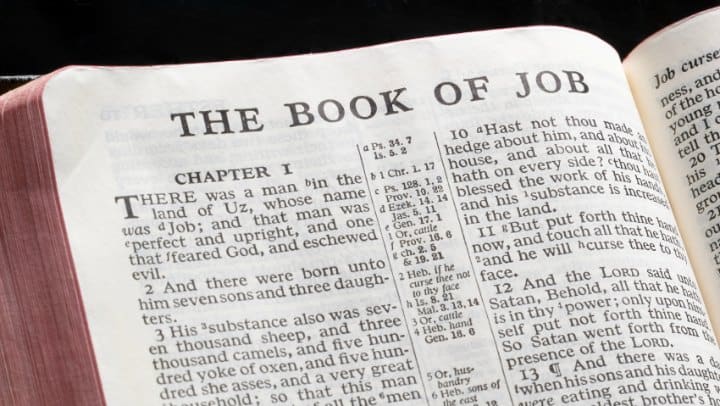
Recently at the suggestion of some teachers and podcasts I listen to, I took some time and in one setting read through whole books in the Bible. If you haven’t done this I would highly recommend it. Just read through the book not looking for anything or zeroing in on any specific point; just read through the book and let it teach you its main themes and allow it to speak for itself. One of the books I recently read through and want to briefly discuss is the book of JOB. We are very familiar with this book and story and can learn a lot of things from it including sufferings, patience, steadfastness, God’s perspectives, and others. However, I would like to share with you what really stood out and stayed with me as I read through the 42 chapters of this book. Job 1:8-9 says,

Then the Lord said to Satan “Have you considered My servant Job, that there is none like him on the earth, a blameless and upright man, one who fears God and shuns evil?” So, Satan answered the LORD and said, Does Job fear God for nothing?

Right there is the true question: “Will you fear and serve God for nothing.” It is not only a question that Satan asks the Lord referring to Job, but it is also for us today. Satan was assuming that Job would have a transactional relationship with God, that as long as he was doing what was righteous that Job would assume that he has earned his blessings or somehow God is obligated to bless him. Do we fall into this mindset that Satan is stating her is verse 9? Is it easy to fear and serve God while things are going good in our life or for fear of punishment? Do we have this transactional relationship that says I have done all these righteous X’s so I deserve these Y’s (blessings)? Would we serve God if everything (wealth, family, health) in an extremely short period of time was taken from us and we were in the situation Job found himself in? Satan is saying that taking comforts of this life away will push even the strongest to curse God to his face. Satan states this in Ch 1:11 and notice that as early as 2:9 Job’s wife actually uses the same language when she tells Job, “Do you still hold fast to your integrity? Curse God and die!”

Sometimes bad things happen because we make bad decisions and we must deal with those consequences. However, Job shows us that sometimes bad things happen outside of our decisions and we do not know all like our Creator GOD. God lays this out in his answer to Job out of the whirlwind in Chapters 38-42 basically stating that, “I created everything and have it all under My control, I AM GOD, even when you don’t realize it and so you must trust Me no matter what circumstances you find yourself in.” In chapter 42 we read exactly what Job did in response to God’s challenge to Job. Now as he repents and fears God he is in dust and ashes. This is the definition of serving God for nothing. Every worldly comfort had been taken from him and he had nothing, not even physical health, and nothing as of yet had been restored to him. But he through great tribulation feared God for nothing except he is God the creator and sustainer of everything.

We do need to serve God just because he is God and the creator of all things but the good news is we don’t serve him for nothing. Read Job 19:25: For I know that my Redeemer lives, and he shall stand at last on the earth; Just as we read Job and see his longing for a mediator between him and God, we now have that through Jesus. God gives us eternal life that can be found in Christ our mediator, not because we deserve it like a transactional agreement but because He is a benevolent, gracious and loving God.

The End-Times

Friday’s Column: Brent’s Bent

Brent Pollard

People all over the eschatological spectrum have been watching recent news events with bated breath. Putin’s invasion of Ukraine must be a sign of the “end-times.” To some, in the premillennial camp, Putin is an antichrist. Yes, he has military might and money. And he could undoubtedly become a global dictator ushering in “The Great Tribulation,” which those unlucky enough not to be raptured must endure before Christ sets up His earthly kingdom.  

But, to postmillennialist Pat Robertson, Putin fulfills Ezekiel’s prophecy showing that “God is getting ready to do something amazing…”1Postmillennialism is more optimistic than premillennialism with its doom and gloom of the worst trials and tribulations the world has ever seen. So, first, the world will come to Christ, more or less. (Though Robertson believes it will involve warfare.) Then Jesus will set up a kingdom on earth, and we will enjoy a golden age.  

There is a big problem with this thinking, though. We have been in the “end-times” since about the day of Pentecost A.D. 30 or 33. In Acts 2, Jesus fulfilled His promise to pour the Spirit upon the apostles (John 16.7; Acts 2.33). Thus filled with the Spirit, the apostles began speaking in tongues, languages they had never studied. We know they were languages rather than unintelligible gibberish because the people listening to them were from various places. The people wondered why they could hear these Galileans speak their native tongues. Peter told them that it was a result of the pouring out of the Spirit upon men, something the prophet Joel wrote would happen during the “last days” (Acts 2.16-21; Joel 2.28-32).   

Hence, it has been the “end-times” for about 2,000 years. And what of the kingdom? It might surprise some to hear me say that the kingdom is here. Now, I hear even someone who has only dabbled in theological studies respond, “That just makes you an amillennialist.” No, that is a misnomer. That term means “no millennium” since the prefix “a” negates the following word. It is not a denial of a period of the kingdom’s reign; instead, the Scriptures demonstrate that we are not waiting for the kingdom’s establishment. Jesus told His disciples in Mark 9.1 that there would be those listening to Him who would not die until they had seen the kingdom arrive with power. Therefore, unless there are 2,000-year-old disciples, the kingdom is with us now. 

And the kingdom’s present reality is what the Bible teaches. In Revelations, the beloved apostle John wrote that he was already in the kingdom (Revelation 1.9). Furthermore, Paul thanked God for rescuing us from the “domain of darkness” and transferring us to the “kingdom of His beloved Son.” (Colossians 1.13 NASB1995) And Jesus already sits upon His throne at the right hand of God. Note the penultimate verse of Mark’s Gospel: “So then, when the Lord Jesus had spoken to them, He was received up into heaven and sat down at the right hand of God.” (Mark16.19 NASB1995) Jesus will remain on His throne until His enemies are defeated, the last of whom is death (1 Corinthians 15.24-26). 

I have only touched the hem of the garment on this issue. There is much more to be said. However, to paraphrase Jude, I had intended to write a different article but thought I should write this one in response to all the “end-times” talk caused by Putin’s invasion of Ukraine. Rather than fear the unfolding of events, take comfort in knowing that you have the ear of a King. Yes, Jesus now reigns and makes intercession for us (Romans 8.34).   

Sources Cited 

1 Warren, Steve. “’God Is Getting Ready to Do Something Amazing’: CBN Founder Pat Robertson on Russia and Its Place in Prophecy.” CBN News, CBN News, 1 Mar. 2022, www1.cbn.com/cbnnews/2022/february/god-is-getting-ready-to-do-something-amazing-founder-pat-robertson-on-russia-and-its-place-in-prophecy

A Holy Sacrifice

Thursday’s Column: Captain’s Blog

Carl Pollard

Romans 12:1 says, I appeal to you therefore, brothers, by the mercies of God, to present your bodies as a living sacrifice, holy and acceptable to God, which is your spiritual worship.” What is a holy sacrifice? Holy means, “to be set apart.” It’s living free of moral filth and being devoted to God. A holy sacrifice is one who is devoted to the service of God. Matthew 6:33 says, “But seek first His kingdom and His righteousness, and all these things will be added to you.” 

God’s agenda comes first. We are now used as an instrument of righteousness. Romans 6:13 says, “and do not go on presenting the members of your body to sin as instruments of unrighteousness; but present yourselves to God as those alive from the dead, and your members as instruments of righteousness to God.” We should want to be useable in the hands of God! We should also look to accomplish that which is pleasing to God. 

Ephesians 5:6-10 says, “Let no one deceive you with empty words, for because of these things the wrath of God comes upon the sons of disobedience. Therefore do not be partakers with them; for you were formerly darkness, but now you are Light in the Lord; walk as children of Light (for the fruit of the Light consists in all goodness and righteousness and truth), trying to learn what is pleasing to the Lord.” Who are we trying to please? If we want to be a holy sacrifice we must be aiming to please God. 

People make sacrifices all the time, but think about something or someone you love. It’s easier to sacrifice for family. God is our family, so why do we not sacrifice for Him? If anyone is deserving of sacrifice, it’s God. I once had a pet squirrel when I was 11. My older brother Gary and I saved it from falling out of a tree. Every day I used an eye dropper to feed it milk and nurtured it into an adult. 

It would be with me during school, and at night I’d have to stay up super late feeding and caring for it. Stuart the squirrel was great, but to nurture him back to health and care for him took a lot of sacrifice on my part. But I was willing to do it. I loved that squirrel. 

Love makes sacrifice easier. How do you feel about living the Christian life? Do you feel like you are sacrificing other pleasures in order to live a life for God? How much does your sacrifice take from you? Be a holy sacrifice when others around you are unholy. Imitate Christ around your coworkers, your kids, your spouse, your friends. Be holy in your service to God and wholly sacrifice your life. 

Timeshares

Wednesday’s Column: Third’s Words

Gary Pollard

Not much is worse than investing time, emotion, and resources into something that doesn’t pay off. Like spending days working on an engine, only to have the transmission give out. Parents with small children are familiar with the frustration of cleaning their house, then having it trashed nanoseconds later. Or putting time, financial risk, and great sacrifice into starting a business, only to have a terrifically mismanaged pandemic destroy it. 

In each of these examples, a person’s reaction to negative outcomes is rarely positive. Having invested so much in something, we hope to have good outcome. 

Jesus invested heavily in Judas, only to be betrayed by him. He healed people, brought dead loved ones back, fed people, and gave them hope. He worked very closely with his apostles for  years, only to have them miss the point the entire time he was on earth (Acts 1.6; Mk 8.14-32). 

I am grateful that he isn’t like us. He doesn’t give up on us when we mess up (I Jn 1.9). He has immense patience with us (II Pt 3.9; I Tim 1.16). But it isn’t blind acceptance of dysfunction — God is patient with our flaws to give us a chance to change (Rom 2.4). God doesn’t make decisions the same way we do! 

From our perspective, humanity was a terrible investment. Jesus invested something we aren’t capable of investing, only to have most of humanity reject him. But he didn’t scrap the car, yell at the kids, or harbor resentment. He gives us his patience, his love, and time. It’s up to us to make the most of those things while we’re here!