Nineteen kings sat on the throne of the northern kingdom, from Jeroboam (931 B.C.) to Hoshea (722 B.C.), and Jehu was the closest any of them came to being righteous. His “righteousness” was the zealous way he fulfilled the mission God gave him in destroying the house of Ahab and the followers of Baal. In fact, the Lord speaks directly to him and says, “Because you have done well in executing what is right in My eyes, and have done to the house of Ahab according to all that was in My heart, your sons of the fourth generation shall sit on the throne of Israel” (2 Kings 10:30). God recognizes and rewards him for his commitment to His cause. He enjoys a 28-year reign, second only to his great-grandson Jeroboam II. He is remembered for his deeds and his might (34).
Yet, after the lengthy chronicling of Jehu’s extermination campaign, the Bible says little else good about the man. Here’s the summary in 2 Kings 10:
He did not depart from the sins of Jeroboam the son of Nebat, which he made Israel sin (29,31).
He kept the golden calves at Bethel and Dan (29).
He was not careful to walk in the law of the Lord with all his heart (31).
He suffered the loss of significant territory to the Arameans (32-33).
His excessive bloodshed would draw divine retribution (Hos. 1:4).
Essentially, he lacked the moral and spiritual resolve to effect religious restoration. He lacked the conviction necessary to be fully obedient to God. He did not purify his heart to align with the heart of God. He was reckless regarding God’s law.
For over 200 years, Jacob’s descendants in the northern kingdom were spiritually adrift. Their best chance to turn that around was after Jehu purged the capital city of Samaria of the temple of Baal, its priests, and its worshippers. A hopeful start was overcome by the general spiritual trajectory of an entire people who did not have God in their hearts.
My daily life is aimed in a general direction. It is important for me to do more than conform outwardly to some of what God’s Word commands. I need to begin in my heart and conscientiously strive to follow His will and demonstrate that in my outward dedication and my inward devotion to Him. I want it to be said of me that I did what was right in His sight (30) AND that I was careful to walk in the law of the Lord with all my heart (31)!
For the past four years I have been going though what I believe to be the toughest battle I have ever had to face in my life with our warrior princess Kiyomie’s medical condition. God blessed me with my greatest desire and greatest fear as a father; which was to have my daughter; and one of my babies getting sick and me not being able to do anything to make them better.
We decided that my wife would come to the United States in October of 2017 after our homeland was devastated by category five Hurricane Maria. It was a difficult but necessary decision because Kerssel was pregnant and the prenatal care she needed wasn’t available post-hurricane. I joined my wife in February of 2018 and we had flights booked to return home in April of 2018. Before traveling I had set up everything in Kiki’s nursery which was also my office where I did my studies; her crib was right next to my desk, I had so many plans for my baby girl and was ready to bring her home.
What we had no idea of is that we were heading right into another hurricane; one of a different nature. Kiki suffered severe brain injury during birth and this changed our entire life: we could not return home, we had to leave my six year old son Éjiké and our families behind in Dominica which ached our hearts daily. The life we knew was basically over. We had our family’s support but were here all alone, in a foreign land with no one close to come help during the toughest period of our life.
We both had to resign from our jobs. We were forced to sell everything we owned in order to survive here, we went from being one hundred percent independent to one hundred percent dependant on others, we had to seek assistance to pay our monthly bills and purchase the most basic of necessities for our children and ourselves– diapers, wipes, deodorant, toothpaste, bath soap and everything else. We were unable to care for ourselves the way we used to, unable to provide for our children, only going to the doctor or dentist if we were very ill, not purchasing new clothing or undergarments even though we desperately needed them.
Through so many sleepless nights, emergency room visits and hospital stays we managed to keep surviving, by the grace of God. It is hard and lonely but we have no choice other than continuing to be resilient and keep focused on Kiki getting better. (We’ve had so many nights that we got little to no sleep that right now we consider a night of 4 hours of sleep a good night rest)
We didn’t think that our life could have gotten any worse but then on August 10th 2020 we got the dreadful news that my wife’s mom had suddenly passed at only 56 years old. From that day our lives was under a dark cloud; well, that’s how it felt. Mom, as we all called her, was our main pillar of support; our greatest cheer leader and prayer warrior; she sent messages every single day to both Kerssel and I telling us how strong we are and great parents we are and that Kiki will be healed and to remain faithful. That day in August took so much away from us, after mom’s passing everyday just felt like we were going through motions, like robots, just floating around under that dark cloud.
Mrs. Dawn Pitcock had been working with Kiki since she was discharged from the NICU. She and her family became a friend and remained in close contact even after Kiki aged out of the First Steps program. She had mentioned her church and asked if we’d like to visit, but we never did then. We were still under this dark cloud. Sometime after mom’s passing Dawn asked whether we would mind if she and elders from her church come by to visit and pray with us.
Russell, Dana and Dawn came one Sunday after service, we conversed for a while, we prayed and we cried; that blessed Sunday afternoon is one I will never forget as it felt like that first ray of sunshine piercing through the dark clouds. We started studying and getting a better understanding of God’s word with the assistance of Russell, Neal and Greg. Our faith started to grow stronger and we began feeling better, our lives felt a little less cloudy day by day. We started attending Sunday service when we were
able to, Kiki’s condition determines whether we can but we kept studying via zoom.
We had discussed baptism a few times but I didn’t feel fully ready until April 6th, 2021, on that day, I called Neal and told him that we were ready. When we got to church building there were several other members of our Leman Avenue family there to support us. Kerssel and I were baptized on that day and man that felt good, it was a new life in every aspect.
Yes we are still going through tribulations. Kiki still has tons of medical complications and has a long way to go. Yes we still seek assistance to cover every single expense that we have. BUT, because our faith in God, and ourselves have grown, our bond with God is getting stronger and our understanding of God’s word and love for us and his purpose for allowing us to go through what we are going through; we are able to better appreciate our situation. God have been right there with us all along, he continues to supply our every need; he has, housed us, fed us, and clothed us physically and spiritually.
In our lives on a daily basis we encounter troubles, problems, adversity; no matter how small or complex they are, they always pose a challenge physically, emotionally, psychologically and spiritually.
In these moments we feel weak, we feel defeated and are forced to face problems to great for us to handle; so we turn our attention to God and begin questioning him, WHY? Why am I going through this? Why me? What Lord can I do to solve this problem? During these challenges we are unable to continue our tasks like normal; so we stop, evaluate our situation, ask God for wisdom, obey his word, have faith and trust him to bring the help that we need.
The apostle James had a response to adversity which has helped me through my own troubles.
James 1:2-6
Consider it pure joy, my brothers, when you are involved in various trials, because you know that the testing of your faith produces endurance. But you must let endurance have its full effect, so that you may be mature and complete, lacking nothing. Now if any of you lacks wisdom, he should ask God, who gives to everyone generously without a rebuke, and it will be given to him. But he must ask in faith, without any doubts, for the one who has doubts is like a wave of the sea that is driven and tossed by the wind.
When going through these challenging times in life the best resort is to turn to Jesus, I can guarantee without any doubt that no matter what the problem is, you will find guidance to a solution within the word of God. Apply the appropriate scripture, faith and the very best effort you can, to every adversity you face and you will be victorious.
In conclusion I say to you, through every adversity, trial and tribulation seek God for he is always waiting to guide us through our troubles and ultimately draw us closer to him.
Have faith no matter how small it is: Faith in God, faith in yourself, faith that God is greater than your problem, faith that God is helping you through the adversity, faith that you will overcome.
Nurture your faith and watch your faith grow. Mathew 17:20 tells us, “…Because of your lack of faith. I tell all of you with certainty, if you have faith like a grain of mustard seed, you can say to this mountain, ‘Move from here to there,’ and it will move, and nothing will be impossible for you.”
If you can move a mountain with faith the size of a mustard seed, can you imagine the magnitude of power you would possess with faith the size of a tennis ball or basketball or greater?
I’ll close with some words and verses I recite whenever I’m having a moment of weakness during a challenge and the effect that they have on me is miraculous, I recited them right before coming up here; they are:
I believe that God is with me. I believe that God is helping me. I believe that God is guiding me.
I can do all things through Christ who strengthens me (Philippians 4:13). What shall we then say to these things? If God be for us, who can be against us? (Romans 8:31)
Thank you for listening, thank you for being our family when we most needed one, thank you for the support given to my family in every single way.
The Bible contains numerous references to money, including earning and spending, saving and giving. The Book of Proverbs, in particular, deals with financial issues like wealth and poverty. And even though money can help, it can’t solve every problem. What you need is wisdom. So let’s begin our study by examining some of the benefits of wealth described by King Solomon.
I will begin with the one most attractive to all of us. Riches do provide one with a measure of security. Today, as inflation is so high, most of us have to do some real belt-tightening. But inflation doesn’t impact the rich nearly as much. Consider what Solomon says about the security provided by wealth: “The rich man’s wealth is his fortress, The ruin of the poor is their poverty.” (Proverbs 10.15 NASB1995).
Another advantage of wealth is that it is easy to make “friends.” Though it creates a situation in which the wealthy have a more difficult time determining who they can trust, they have no shortage of people eager to orbit their sphere of influence. Solomon says: “Many will seek the favor of a generous man, And every man is a friend to him who gives gifts. All the brothers of a poor man hate him; How much more do his friends abandon him! He pursues them with words, but they are gone.” (Proverbs 19.6-7 NASB).
We’ll note the last advantage of wealth is that the wealthy also wield power. “The rich rules over the poor, And the borrower becomes the lender’s slave.” (Proverbs 22.7 NASB1995)
But money isn’t everything. Money doesn’t spare one from death, the great equalizer of all. Aside from that, the stock market may crash, or a catastrophic event may deplete a bank account, and then what?
Wealth, as Paul clarifies in the New Testament, is not sinful. On the contrary, it is the love of money (1 Timothy 6.10). As a result, there is nothing wrong with attaining wealth. However, wisdom necessitates adherence to these guidelines:
One must earn wealth honestly through labor (Proverbs 13.11).
Avoid being a “trust-fund baby” [It didn’t help the Prodigal—Luke 15.11ff] (Proverbs 20.21).
One should acquire wealth gradually rather than quickly. [My apologies to the lucky lottery winners.] (Proverbs 28.20,22).
Do not amass wealth through deception or predatory lending (Proverbs 20.17; 21.5-6; 28.8).
Remember that wealth is a tool you use, not something using you (Proverbs 23.4-5).
On the flip side, Solomon offers advice on how to deal with financial hardship. Poverty isn’t always self-inflicted, but it can be! Self-inflicted poverty is something we should avoid at all costs. So, consider what lessons we can learn from Proverbs about spending our money.
Some are economically disadvantaged due to their sloth. We can deny it because it sounds mean, but that doesn’t change the fact that it’s true (Proverbs 20.30-34).
Men also waste money in the pursuit of pleasure (Proverbs 21.17). [This pursuit can include gluttony and drunkenness—Proverbs 23.21.]
One can waste resources on things of no value (Proverbs 12.11).
The Book of Proverbs contains valuable advice on managing money and avoiding financial struggles. May the Lord grant us the wisdom and grace to use our resources wisely.
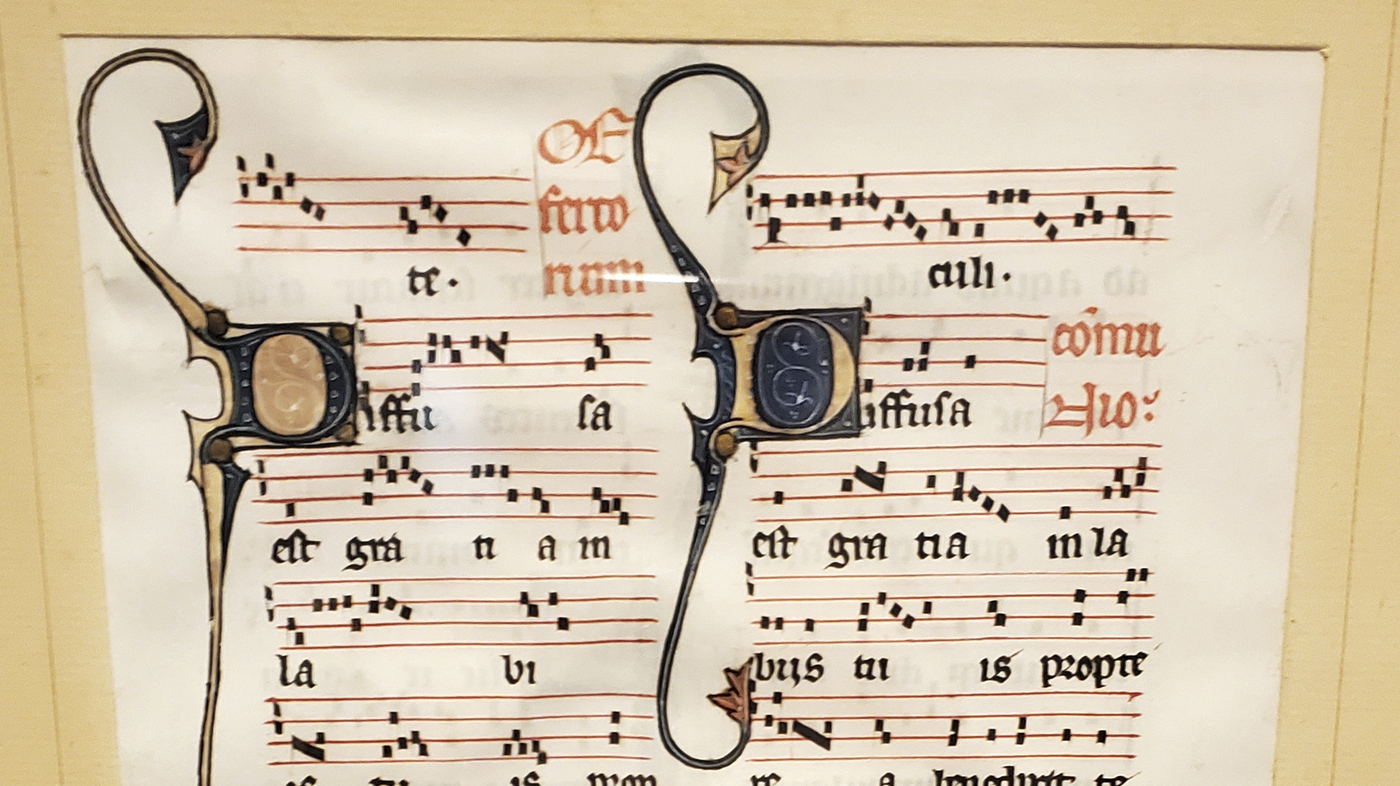
I recently read a news article about a bargain hunter that went to an estate sale in Portland, Maine, to find a KitchenAid mixer. Rather than finding his kitchen appliance, he ended up walking away with a 700 year old treasure. Will Sideri stumbled upon a framed document hanging on a wall that caught his eye. It had an elaborate script in Latin, along with musical notes and decorative gold edges. Based on what he’d seen in a manuscripts class at College, he figured that this document was from the medieval ages. And it was a bargain at $75. Academics confirmed the parchment was from The Beauvais Missal, used in the Beauvais Cathedral in France, and dated to the late 13th century. It was used about 700 years ago in Roman Catholic Church. An expert on manuscripts said the document, first reported by the Maine Monitor, could be worth as much as $10,000. Will Sideri walked away with a priceless treasure that cost him just 75 bucks.
This news story reminded me of a parable taught by Jesus in Matthew 13:44. It reads, “The kingdom of heaven is like treasure hidden in a field, which a man found and covered up. Then in his joy he goes and sells all that he has and buys that field.” In this short verse we read that:
The treasure is hidden
The treasure is valuable
Sacrifice was needed to gain the treasure
The field was bought, but the treasure came free
What did Jesus mean with this parable? You can’t find The kingdom without looking (the treasure was hidden). Seek and you will find (you’ll never find it if you aren’t looking). The kingdom of God is valuable, and sacrifice is required to obtain the kingdom. The man in this parable joyfully went and sold everything. The Kingdom is freely given. When we seek and sacrifice for Christ, he freely gives us grace, mercy, peace and salvation.
Will we recognize the value that is found in the Kingdom of God?
This is how we know that we’re with him and he’s with us: he gave us his spirit. We were there, we saw firsthand that the father sent his son on a mission to save the world. Whoever agrees that Jesus is actually God’s son is with God, and God is with them. Because we saw him, we came to believe and really understand the kind of selfless love that God has for us. God is love. The one who practices love is with God, and God is with them.
This love is being matured in us for reason: so we can be completely confident on the last day when everyone is judged. If we have selfless love, we’re considered to be as pure as Jesus was when he was on earth. Love leaves no room for being afraid. If we mature our love, that love keeps us from being afraid. If we live in fear of judgment day, it’s because we haven’t matured in our love.
We practice love because he loved us first. If someone says, “I love God,” but still hates their Christian family, they’re a liar. How’re you supposed to love a God you can’t see while failing to love a Christian family you can see? It’s not possible. Remember the commands he gave us: we have to love God and love our Christian family, too.
The 19th-century Russian actor, Konstantin Stanislavski, famously said, “There are no small roles, only small actors.” The point is that we should do our very best no matter what our role is. Especially is that true in serving God.
Who carried the lame man to the gate where he was healed by James and John (Acts 3:2)?
What were the names of the four men who brought the paralytic to Jesus (Mark 2:3)?
Are we told who the young men were who carried out Ananias and Sapphira (Acts 5:6,10)?
Do we know who brought Paul to Athens and followed his command for Silas and Timothy to come to him there (Acts 17:14-15)?
What were the names of those in the household of Stephanas who, like him, devoted themselves for ministry to the saints (1 Cor. 16:15)?
The New Testament is full of statements about individuals whose households were baptized along with them: Cornelius (Acts 11:14), Lydia (Acts 16:15), the Philippian jailor (Acts 16:33), Crispus (Acts 18:8), Aristobulus (Rom. 16:10), Narcissus (Rom. 16:11), and Onesiphorus (2 Tim. 4:19). What contributions did they make to the congregations where they were members? How many will be in heaven because of these unnamed saints?
We may wonder what great works we might do to carve a spiritual legacy, whether in the local church or even beyond. Perhaps we feel that we toil in anonymity, unappreciated or overlooked. How many acts of service, kindness, generosity, and sacrifice never make the church bulletin or announcements? Let us take great comfort in the knowledge that God knows. He’s even writing it down (Rev. 20:12,15). As the writer of Hebrews told some unnamed saints, “God is not unjust so as to forget your work and the love which you have shown toward His name, in having ministered and in still ministering to the saints” (Heb. 6:10).
Never forget the encouraging poem of William Dunkerley.
Is your place a small place? Tend it with care! He set you there.
Is your place a large place? Guard it with care! He set you there.
Whatever your place, it is Not yours alone, but His Who set you there.
You are touching lives who may not think to tell you that you are. Your influence and example may be the difference in someone overcoming who might have been overcome. Your simple word or deed of kindness may be the fuel for another’s faith. Paul’s encouragement is weighty, when he says, “Let us not lose heart in doing good, for in due time we will reap if we do not grow weary. So then, while we have opportunity, let us do good to all people, and especially to those who are of the household of the faith” (Gal. 6:9-10). How insignificant is the lowliest private in the Lord’s Army, adorning His armor (Eph. 6:11)? There are no small tasks in His kingdom! Let us be “always abounding in the work of the Lord, knowing that [our] toil is not in vain in the Lord” (1 Cor. 15:58)!
I want to discuss something I know all too well. Procrastination! Procrastination isn’t a good thing. It’s not something we should be really good at either. By definition it is “the act of delaying the doing of something that should be done.” There can be many attributes that lead us to procrastinate, none of which are good. Delaying things, putting things off happens in our everyday lives, but also in our spiritual lives.
When it comes to our spiritual lives, do we wait and put off doing things that our Father loves for us to do? Do we let it affect how and when we spread the gospel with others? Does it keep us from inviting people to church or talking to people about our faith? What about forgiving others that have hurt us? Holding onto that anger, letting go of that anger, or learning to love one another as God would have us to do? How about obeying the gospel? Do we wait and put these things off for another time? The answer is yes to all these things. It absolutely keeps us from doing things now! Procrastinating is essentially like saying “I don’t want to or have the desire to do these things right now”, but we should.
We should want to spread the gospel to every one. Mark 16:15 tells us “go unto all the world and proclaim the gospel to every creature.”
We should forgive others quickly, “Be kind to one another, tenderhearted, forgiving one another, as God in Christ forgave you” (Ephesians 4:32) and (Matthew 6:14) “For if you forgive others their trespasses, your heavenly Father will also forgive you” (Ephesians 4:26-27) “be angry and do not sin, do not let the sun go down on your anger, and give no opportunity to the devil.”
We are to love one another! “This is my commandment, that you love one another as I have loved you” (John 15:12) “Beloved, if God so loved us, we also ought to love one another.” (1 John 4:11)
We are to obey the gospel. If we have heard the gospel and know we have a spiritual need; to delay doing anything about it is dangerous. We don’t know what is going to happen tomorrow. (James 4:14) says, “Yet you do not know what tomorrow will bring. What is your life? For you are a mist that appears for a little time then vanishes.”
Several things cause us to procrastinate. Worry, stress, being anxious, sometimes even laziness. God has taught us not to worry or be anxious about anything (Philippians 4:6). The Bible says plenty about being lazy. (2 Thess 3:10), “If anyone is not willing to work, let him not eat.” (Proverbs 18:9) says “Whoever is lazy in his work is a brother to him who destroys.” (Colossians 3:23) says, “Whatever you do, work heartily, as for the Lord, not for men.” If the things we do in our lives, in our hearts, is for the Lord; we won’t wait, we won’t delay doing these things because we are motivated by the desire and focus to please our Lord, and to finish the task now, not later.
I understand that not all of us are procrastinators – and good for you! But since I am one, I say this with love and empathy for those that are. When we, and I mean myself, put off things that the Lord wants us to do, we might get the task done but I can’t say that we are giving Him our best. God deserves our best. Our Father loves us, he is our biggest fan and does not wish any of us to fail. He desires for us all to be with Him in Heaven one day. He blesses our lives daily and gives us these opportunities to do His will and share it with others so that they have a chance to be with Him also. And yet we wait, we put things off till tomorrow. We shouldn’t wait to spread the gospel with everyone, we shouldn’t wait to talk to people about Jesus and share with everyone the good news. Don’t wait to forgive others for wrongs they’ve done when our Father is willing to forgive us right now. Don’t wait to show love to everyone because our Father demonstrates his love for us daily. And by all means don’t wait to obey the gospel because none of us know what tomorrow will bring. That’s why it is important to do things now, not later.
We need to give God our best, whether it’s our daily lives or our spiritual lives. If you struggle with putting things off, waiting till tomorrow to make things right, don’t wait any longer.
Following the arc featuring the “story” of Lady Wisdom and Ms. Folly, we notice a stylistic change in the book of wisdom, ostensibly collected by King Solomon. Beginning in chapter ten, King Solomon wields a shotgun and pelts us with wisdom’s birdshot. Manufacturers make birdshot by packing numerous steel or tungsten balls into a cartridge. The steel balls scatter when fired. This design increases the likelihood of striking a flying bird and keeps game fowl from being completely obliterated by the shot.
So, beginning with Proverbs 10, the reader is confronted with numerous truths that do not form a cohesive narrative like Lady Wisdom and Miss Folly but are practical words of wisdom that enrich life. As a result, it is often best to approach the rest of Proverbs as a topical study. “The fear of the Lord” is an excellent place to start our topical overview of Proverbs. Solomon defined fear of the Lord as the beginning of knowledge and wisdom (Proverbs 1.7; 9.10).
As with the word “fool,” the Biblical definition of “fear” is not what one typically associates with the term. I oft tout Webster’s original 1828 dictionary since it often frames words within a Biblical context. Here is Webster’s subentry for the word “fear.”
“In scripture, fear is used to express a filial or a slavish passion. In good men, the fear of God is a holy awe or reverence of God and his laws, which springs from a just view and real love of the divine character, leading the subjects of it to hate and shun every thing that can offend such a holy being, and inclining them to aim at perfect obedience. This is filial fear
I will put my fear in their hearts. Jeremiah 32.39.
Slavish fear is the effect or consequence of guilt; it is the painful apprehension of merited punishment. Romans 8.15.
Regarding the beginning of knowledge and wisdom, we understand that this is because we respect and revere God. We acknowledge His authority and thus trust His knowledge and judgment. Beyond its role in enlightening us, the fear of the Lord will accomplish other positive things as well.
We will hate evil. (Proverbs 8.13).
One cannot truly despise evil without also cherishing good, and just as an aversion to wrongdoing motivates people to turn away from it, so does a desire to do what is right in God’s eyes. In this context, “fear of the Lord” refers to the essence of religious practice.
We will prolong life. (Proverbs 10.27)
Mature individuals can recall numerous cases of the wicked whose lives were cut short and ended due to their evil actions—fatalities caused by drunk drivers, robbers who police have shot, adulterers killed by cuckolded husbands, etc.
We have strong confidence and a fountain of life. (Proverbs 14.26-27)
The traps of death include not only the pitfalls and dangers of our current lives on Earth but also the unfathomable terrors of the “second death.” James Moffat translated the Scriptures in 1929 and rendered the passage: “Reverence for the Eternal is a fount of life; it shows how to avoid the nets of Death.” He capitalized the “d” in “death” to show that it was eternal condemnation.
The fear of the Lord will prompt us to depart from evil. (Proverbs 16.6)
No matter how well done, mercy and truth cannot save people from sin unless genuine repentance and a change of heart toward God’s will accompany them. People refrain from doing bad things because they are afraid of the Lord, and this fear affects them. Those with holy fear and reverence for God in their hearts will not sin against him.
We will have a satisfying life, spared from much evil. (Proverbs 19.23)
According to this verse, the only way to be “satisfied” is to fear and serve God. On the tomb of William Rockefeller in New York’s Tarrytown Cemetery, there is a quote from Augustine that reads, “Our souls, O God, were made for Thee, and never shall they rest until they rest in Thee.” Men will never find happiness elsewhere, no matter how hard they try. Only in Jesus Christ can we find the fullness of life that God provides.
We will enjoy riches, honor, and life! (Proverbs 22.4)
This verse, which discusses humility and reverence for God, sums up several of the principal lessons of Proverbs. In addition, it provides a concise overview of the fundamental requirements for human survival on this planet.
True religion, as demonstrated by “the fear of the Lord.” is synonymous with humility. The signs of humility are being dependent on God, having a low opinion of oneself, surrendering one’s will, and convincing ourselves of sin. They are all summed up in the phrase “the fear of God,” which is the source of all virtues and blessings: riches, honor, and life.
We deprive ourselves of God’s wisdom and knowledge treasures when we do not fear the Lord. We will tempt fate and let ourselves get corrupted by mingling with evil. Our refusal to listen to God’s word will likely shorten our lives (e.g., suffering sexually transmitted diseases if we do not heed His Word on sexual relationships). We will not come to know God’s love, which provides assurance and confidence in salvation. We are not motivated to repent or turn to God when we sin! We will not be inspired to “work out our salvation.” This outcome from lacking the fear of the Lord sounds dreadful.
To be truly wise, we must first learn to fear the Lord. Let us understand this fear, appreciate it, and incorporate it into our lives as God’s children!
In Luke 19 we are introduced to a man named Zacchaeus. He is described as “a chief tax collector and rich” in verse two. This man’s encounter with the Savior changed his life, and his example can change ours as well. Zacchaeus shows incredible determination to meet the Lord.
Luke 19:4 says, “So he ran on ahead and climbed up into a sycamore tree to see him, for he was about to pass that way.” Zacchaeus may have been a tax collector and a dishonest man, but there’s no denying that he had determination. He wanted to know who this Messiah was and he would stop at nothing to see him. He found a way to see above the crowd by climbing a tree. A grown man, a tax collector, climbed up a tree and didn’t even care about what others thought. He wanted to see the Savior so he found a way to do it.
What excuses do we use today? I would evangelize, but I’m not good with people.
I would say a prayer or lead a song, but I’m not good at it and there are other people that are better than me. I would read the Bible more, but I just don’t have the time in my busy schedule. We shouldn’t think like this. Instead we should be like Zacchaeus. Have the determination to find a solution. Not making excuses, but doing what needs to be done. Christians would be so strong if we had the determination of Zacchaeus.
Be determined. Determined to grow in wisdom and knowledge. Determined to bear the fruits of the Spirit. Be determined to spread the gospel with the ones we come in contact with.
Zacchaeus was vertically challenged, but he was determined to see Jesus and he did just that.
Sycamore tree entering Jericho (taken by Neal Pollard, 3/11/18)
I’ll be repeating the book of I John in present-day terminology. It’s not a true translation of the book, as I am not qualified to do so. It will be based on an exegetical study of the book and will lean heavily on the SBL and UBS Greek New Testaments, as well as comparisons with other translations (ESV, NASB, NIV, ERV, NLT). My goal is to reflect the text accurately, and to highlight the intent of the author using concepts and vocabulary in common use today.
This is not an “essentially literal” translation, and should be read as something of a commentary.
Love
Loved ones, we should make a habit of showing each other selfless love. This is because love comes from God. Everyone who makes a habit of showing love is part of God’s family. They show that they know God well, too. If someone fails to practice selfless love, they don’t know who God is. God is love.
This is how we know God loves us: he made it pretty clear when he sent his only son to earth to give us life forever. That was real love — not the same way we love God. No, God loved us so much that he sent his one son for the purpose of taking away all of our sins. Loved ones, since God showed us that kind of love, we owe each other love, too.
At no point has anyone ever taken a good look at God. But since we love each other, he’s with us. He continues to grow his love in us!
Vision: The ability to think about or plan for the future with imagination and wisdom.
In the book of Revelation we read of seven churches that needed to develop different areas of weakness in order to be the church Christ needed them to be.
The Old Testament is also filled with valuable information and strategies to help congregations develop and execute their visions. Each church family will differ and since that’s the case, each congregation needs custom vision.
Here are two Old Testament passages that give us some insight into the mind of God on the subject of vision planning.
A Good Vision Is Visible
Habakkuk 2:2-3
Though Habakkuk’s message was concerning the the conquest of Babylon, this text is invaluable for us today.
Here we read God’s strategy for successful/effective planning.
“Write down the revelation
It should be tangible “and make it plain on tablets”
It should be precise “so that a herald may run with it.”
It should be effective. A vision without legs won’t go far.
“For the revelation awaits an appointed time; it speaks of the end and will not prove false. Though it linger, wait for it; it will certainly come and will not delay.”
A vision should be lasting. When God spoke to the prophets they would often record things that would happen years in the future. With these future events written down, the following generations could plan accordingly. God is coming back and eternity is coming, we must create a plan so that we and those after us can continue to prepare.
If It’s Not His, It’s Hopeless
Jeremiah 23.16
“This is what the Lord Almighty says:
God must have a voice
“Do not listen to what the prophets are prophesying to you;
The ungodly shouldn’thave a voice when it comes to planning a vision for God’s people they fill you with false hopes. They speak visions from their own minds, not from the mouth of the Lord.”
God must have a voicebecause the vision shouldn’t be born from the mind of man!
Every Sunday (Acts 20:7), we take time during our worship to “observe the Lord’s Supper” (1 Cor. 11:23-29). What that looks like and what we do during this special time has changed over time and in different cultures. What appears to have been more interactive in the time of the early church is today more individual and introspective. Paul instructed churches like the one in Corinth to correct abuses (1 Cor. 11:17-22; 30-34). God seems concerned that we focus on His Son’s sacrifice for our sins. Examining self seems to indicate looking carefully into the heart (1 Cor. 11:28).
What we do and how we do it is very personal and subjective (Read More Here). Surely, our mind will turn in both morbid and merry directions during that time. Considering the cross, we will alternate between conviction and celebration. Years ago, Wendell Winkler suggested something practical that can help us keep focus on this “feast” as we worship. He suggested thinking through the alphabet, then gave us a few examples. Every Sunday for decades, I have been building those words in my mind. Each word carries with it related thoughts. They carry my mind back to that fateful day, make me think of my current way of life, and cause me to look ahead to the end.
Obviously, I do not get very far in my list. I do not always start with “A.” I vary my approach, but this has proven very helpful to my keeping my mind on the Lord during the Lord’s Supper. Those precious moments each week are not to be frivolously and mindlessly spent, but what you do is individual to yourself. But, perhaps this will prove helpful to you. Here is an incomplete list of words I think about during the Lord’s Supper:
Solomon takes two primary approaches in the first nine chapters of Proverbs to encourage us to become wiser. First, Solomon assumes the role of a father instructing his sons to heed his sage counsel (Proverbs 1.8; 4.1). Second, Solomon uses the personification of wisdom as a woman to provide his students with something tangible to follow (Proverbs 1.20; 8.1).
Regarding this latter approach, Solomon even provides a foil to Lady Wisdom in the personification of folly. So, those who want to become wise have someone to follow and avoid. We have seen Miss Folly wield her influence over men and women in chapters one through eight, nearly coming out of the shadows in the form of the adulteress in Proverbs 7. Yet, in Proverbs 9, Miss Folly comes out into the open to extend her competing invitation alongside Lady Wisdom’s offer.
Wisdom and Folly compete for the same audience. They both desire to receive the companionship of the naïve and those lacking understanding (9.4). There is no need to compel the righteous or wise as they will already want to be in the companionship of Wisdom (9.8-9). But Wisdom opens her house and has her servants invite people to her feast (9.1-6).
Wisdom is a gracious hostess. She has a great house with seven pillars. In terms of the identity of these pillars, is it a coincidence that our Lord’s half-brother uses seven adjectives to describe the wisdom from above in James 3.17? If not, the pillars of Wisdom’s house are purity, peace, obedience, industry, impartiality, and sincerity. Indeed, these qualities are not inconsistent with the wisdom Solomon encourages others to possess. And entry into Wisdom’s house multiplies one’s days and adds years to their life (9.11).
Wisdom does more than send out her servants to garner the most attendants. Instead, she calls out to the people from a high vantage point above the city. Lady Wisdom is proactive in her approach, demonstrating her genuine concern for people. But despite how admirable her actions are, one realizes that she must be passionate because her enemy can accomplish much more while doing less.
Miss Folly ensures others can see her (9.14), but she does even get up out of her seat. As I read about Miss Folly’s approach, I could not help but think of a prostitute’s solicitation. For example, if one visits Amsterdam’s red-light district, he sees sex workers standing in store-front windows as if on display in lingerie, smiling and flirting with the passersby. Yes, if someone walks through the red-light district, he knows what he wants. I believe Miss Folly likely realizes this as well.
One has to put forth no effort to remain naïve. The wisdom-averse can continue to scoff and act wickedly (9.7). However, this one believes Miss Folly when she says, “Stolen water is sweet; And bread eaten in secret is pleasant” (9.17 NASB1995). In other words, Miss Folly requires no discipline from her guests. They do not have to reform themselves or strive to do and be better.
Miss Folly would be nothing more than a nuisance if it weren’t for her boisterousness attracting the attention of even those attempting to keep their paths straight (9.13-15). But, as Christians know, the alternative to the “strait gate” and narrow way is that colloquial “highway to hell” (Matthew 7.13-14). Solomon warns us that Miss Folly’s houseguests end up in the depths of Sheol (9.18). That is reason enough to avoid Miss Folly and attend Lady Wisdom’s feast.
We must choose which invitation to accept. We will listen to Lady Wisdom, who has done a lot of planning and always keeps her promises. Or Lady Folly, who promises much but delivers nothing? The choice should be obvious.
Ephesians 3:20-21 says, “Now to him who is able to do immeasurably more than all we ask or imagine, according to his power that is at work within us, to him be glory in the church and in Christ Jesus throughout all generations, for ever and ever! Amen.”
In 1999, Australian Bill Morgan was a truck driver who got in a pretty bad accident that left him in coma. After 12 days and despite doctors giving him zero chance of surviving, he miraculously woke up and was, shockingly, completely fine! Feeling lucky for surviving, he went on and bought a scratch lottery ticket and won 18,000 dollars and a new car.
Normally winning a car wouldn’t have made it to the news but, because of Morgan’s accident story, Channel 9 decided to do a feature on the man who was “clinically dead and came back to win the lottery.” While filming, they asked him to buy a lottery ticket so they could re-enact the winning scratch. He happily obliged and started scratching the ticket on camera. But suddenly he stopped. He looked at the camera, and said “I just won $250,000.”
Bill is a man that we would say has some pretty good luck. He was supposed to be dead, but instead he woke up, won a car, and $250,000 dollars. There was a point in our lives where we were spiritually dead, and Christ brought us back to life. But Christ doesn’t stop there. He saves us and continues to bless the faithful. Each and every person that has come in contact with the blood of Christ is no longer dead, plus His blood continually cleanses us of sin if we walk in the light (1 John 1:9).
As lucky as Bill Morgan was, I’d like to suggest that those who are added to the body of Christ are blessed far beyond physical possessions. Our faith in Christ leads to eternal life!
I’ll be repeating the book of I John in present-day terminology. It’s not a true translation of the book, as I am not qualified to do so. It will be based on an exegetical study of the book and will lean heavily on the SBL and UBS Greek New Testaments, as well as comparisons with other translations (ESV, NASB, NIV, ERV, NLT). My goal is to reflect the text accurately, and to highlight the intent of the author using concepts and vocabulary in common use today.
This is not an “essentially literal” translation, and should be read as something of a commentary.
Friend or Foe
This is how you know you’re with him: he gave us his spirit.1 Loved ones, don’t believe every spirit, but really put them to the test to see if they came from God. You’ll need to test them because a whole lot of fake teachers were sent2 to the world.
This is how you know if a spirit came from God: every spirit that comes from God will acknowledge that Jesus was sent to earth as a human. If a spirit refuses to acknowledge this, it isn’t God’s. In fact, it’s the spirit of Jesus’s enemies. You heard that the spirit of Jesus’s enemy was coming — it’s here now.
Young ones, you are from God and have already beaten these spirits. How? Jesus is far more powerful than his enemies, and he’s with you. These enemies come from the world, so they talk like it — and the world listens to them. But we came from God. If you know God, you’ll listen to us. God’s enemies are the ones who don’t listen to us. This is how you can tell the difference between a legitimate spirit and a fake one.
1 In this context, πνευματος is used to mean something like “ethos” or “system of teaching”. God sent a legitimate belief system, then Satan counterattacked by sending a ton of illegitimate information to make truth more difficult to find.
2 This is further evidenced by εξεληλυθασιν in 4.1 and εληλυθοτα in 4.2. The former describes false teachers sent to earth. The latter describes the one true teacher sent to earth.
“My son, hear the instruction of your father, And do not forsake the law of your mother; For they will be a graceful ornament on your head, And chains about your neck.”
Hear: More than just the process of hearing words spoken. The idea is to do something with the valuable information given, i.e., follow it.
Instruction of your father: Just like ignoring proper building instructions/blueprints leads to an unstable house, ignoring wise instruction from the older and more experienced will lead to an unstable life.
And do not forsake the law of your mother: Solomon emphasizes the importance of God’s design for the family. It’s the duty of both father and mother to provide wisdom (James 3.17) in the form of instruction (Prov. 4.13, 8.33, 10.8, 10.17, 12.1, 19.20).
For they will be a graceful ornament on your head and chains about your neck: Training a child to fear the Lord begins with teaching children to have a proper fear (respect/reverence) of their parents and their seniors. For additional motivation, Solomon includes the maturing child’s reward. The ornaments and chains represent an upgrade in social status. As a general rule, godly teaching in the home, when combined with a willingness to hear— leads to financial and social success.
“Honor your father and your mother, that your days may be prolonged in the land which the LORD your God gives you.”
– Ex. 20:12
“Children, obey your parents in the Lord, for this is right. Honor your father and mother, that it may be well with you and you will live long on the earth.”
The second half of the Ephesian letter is addressed to showing how the redeemed walk in Christ. That cannot be divorced from the Christian’s function within the body of Christ, the church. It has often rightly been observed that Paul, in this epistle, is exalting the church of the Christ. It is valuable to God and to us because (1) It is the body of Christ, His Son (1:22-23; 4:4), (2) It is His means of reconciling all people together (2:16), (3) It makes us members of His household (2:19-22), (4) It is the means through which He shows His manifold wisdom and eternal purpose (3:9-11), (5) It is the means through which He receives glory (3:20-21), and (6) It is where and how God intends for us to use our talents and abilities to grow individually and collectively (4:11-16). Added to that list is what Paul says in what we call Ephesians 5:22-33. Paul makes it clear that the material he covers in this text illustrates a profound mystery; what he is saying “refers to Christ and the church” (32). Therefore, whatever else we take away from this text as inspired guidelines for marriage–which it is–we must understand that the church is the bride and Christ is the groom. When we see God’s binding legislation on the husband and wife in this text, we must remind ourselves that it illustrates the relationship between Christ and the church. Paul repeatedly gives this reminder (23, 25,27,29, 30,32). But, it’s not exclusively about that, as Paul concludes, “However, let each of you love his wife as himself, and let the wife see that she respects her husband” (33). In other words, Paul is saying, “Even though my underlying point is about Christ’s love for the church and the church’s need to submit to His authority, apply this to the marriage relationship!”
This illustration is about submission (22-24). The command here builds on the command previous to it, in Ephesians 5:21, that being filled with the Spirit is fulfilled by “submitting to one another out of reverence for Christ.” That is more generally about each member of the church. But, in a marriage between Christians, there would also be this mutual submission. Yet, in a specific way, God commands the wife to submit to the headship of her husband. Paul speaks “of submission involving recognition of an ordered structure… of the entity to whom/which appropriate respect is shown” (BDAG 1042). Louw and Nida add that it means “to bring something under the firm control of someone” (475). Kittel tells us that in the middle voice (i.e., the one commanded acting upon himself/herself) this is voluntary submission, but it is according to a divinely willed order (1159). The wife places herself under the leadership of her husband in a way that shows that she respect him (33). God commands this because, as previous commands in this letter, it does not come naturally or easily. It requires self-discipline and effort. The close the loop on the metaphor, Paul says, “Now as the church submits to Christ, so also wives should submit in everything to their husbands” (24). This is neither vague nor unclear, though it is difficult.
This illustration is about sacrificial love (25-30). The command here complements the one Paul gives to the wife. The husband is commanded to love his wife “as Christ loved the church and gave himself up for her” (25). The specific “love” mentioned here is not erotic, familial, or companionship centered. It is the highest form of love, “to have love for someone or something, based on sincere appreciation and high regard—‘to love, to regard with affection, loving concern, love” (Louw-Nida 292-293). This is the love used to describe why God gave His Son (John 3:16). Likewise, Paul here is saying that what husbands are called to show their wives is what prompted Jesus to lay down His life on the cross. Picture the intensity, the fierce devotion, the selfless care involved in that (as you read 5:26-27)! But that active interest also leads the husband, in love, to nourish and cherish her (29) as carefully as one acts to preserve self (28). Paul sharpens the focus of husbands on the sacrificial love Christ heaps on the church, and that is the bar God sets for the husband in the marriage. A husband is to be driven by concern, care, and genuine interest for the needs of his wife! Her greatest need is spiritual, so he will never abdicate the role of spiritual leadership. He will lovingly exercise it.
This illustration is about severing (31). When the old saying goes, “Marriage takes three,” it does not mean the husband, his wife, and a parent. In fact, a prerequisite of forming a marriage presupposes what Paul explicitly states here: “Therefore a man shall leave his father & mother & hold fast to his wife, & the two shall become one flesh” (31). Did you know that this is one of the first commands in the whole Bible? Paul quotes Genesis 2:24)? Jesus reiterates it in His teaching to restore marriage to its original state (Mat. 19:5; Mk. 10:7). Suffice it to say, this is a foundational principle. Just as God does not want any outside influences to interfere in the church’s relationship to Christ, He does not want any undue influences upon the marriage relationship. That includes the parents of the bride and/or groom! The legislation is spoken to the husband, but it is applicable to the wife. It is also a warning to the parents whose children leave their home and form their new home. While this does not mean total isolation and desertion of responsibilities to parents, whom we must always honor (6:3), it does mean that the relationship changes. The married couple are not under the rule of parents. They leave that relationship and form a new one, beautifully described as a “one flesh” relationship.
This metaphor is to help the church at Ephesus understand their relationship to Christ. But, let’s not miss the bottom line application, either. “This mystery is profound, and I am saying that it refers to Christ and the church. However, let each one of you love his wife as himself, and let the wife see that she respects her husband” (32-33).
A woman is again the embodiment of Wisdom in Proverbs 8. And we find language similar to what we saw earlier in Proverbs 1.20-23: Wisdom desires to be heard by men (8.3-4). Not unlike other women, Wisdom craves attention and acknowledgment. However, Wisdom isn’t shy about raising her voice to get people’s attention.
In contrast to the harlot in the previous chapter (Folly?), Wisdom does not play coy. Instead, she chooses to be in the spotlight. As a result, she is the center of attention. She perches herself on the rise overlooking the gateway to the city below (8.3). Wisdom does not want to be heard by a select few; she wants to be heard by everyone, whether the sons of men (8.4) or the fools (8.5). She hopes to impart wisdom to anyone open to hearing it.
Wisdom gives us praiseworthy and righteous counsel (8.6), words of truth and righteousness (8.7-8), and a straightforward and virtuous way of thinking (8.9). The benefits of wisdom are priceless, far exceeding the value of any material possession (8.10-11).
Thus, Wisdom implores everyone to listen so that she may impart her excellent knowledge. But even if that weren’t impressive enough, verse 12 shows that she is wise, knowledgeable, and has good judgment. Consequently, Wisdom hates conceit, lust, and evil because she respects God (8.13). That’s why she’s a reliable source of guidance, wisdom, and resolve (8.14).
Wisdom delights in providing these things to everyone, including those to whom God has given earthly authority. Wisdom will bestow riches, honor, righteousness, justice, and wealth on those who love her (8.15-16). She makes it possible for kings, princes, nobles, and judges to rule justly (8.17-21).
Wisdom testifies that she was God’s companion even before He made the world. Therefore, she existed before the cosmos (8.22). So, according to Solomon, Wisdom is eternal (8.23). Indeed, Wisdom is “older than dirt” (8.26), existing before the oceans, mountains, and hills (8.24). So, Wisdom was present to see the Lord at work, creating the universe. Wisdom saw God create the heavens and the world (27-29) and stood beside Him as a master craftsman, rejoicing in His creation (8.30-31).
Those who are open to Wisdom’s advice will prosper (8.32). Therefore, instead of disregarding her message, we should listen to her advice and act wisely (8.33). Those listening to her with care will be blessed (8.34a). They’ll sometimes have to wait for her (8.34b), but she’ll bring those who are patient new life and the Lord’s favor in return (8.35). However, those whose sins bring dishonor to her suffer spiritual damage (8.36a).
Those hating Wisdom demonstrate a desire to die (8.36b). This mindset means that people who like death will get what they want. Thus, wisdom implores us to listen to her so that she may impart wisdom, knowledge, truth, and righteousness; and endow our lives with wealth and glory, especially as the Lord bestows.
To quote Wisdom:
“Blessed is the man who listens to me, Watching daily at my gates, Waiting at my doorposts. For he who finds me finds life And obtains favor from the Lord.” (Proverbs 8.34-35 NASB1995)










 The Preacher Pollard Blog