Why Doesn’t God Just Kill the Devil?

Thursday’s Column: Captain’s Blog

carl pic

Carl Pollard

This is a question that has been asked for centuries. If God is all powerful, why doesn’t He just kill Satan? In order to adequately answer this question we will need to look at a few different aspects of the Devil himself, as well as the attributes of God.
It’s not hard to find evidence of a world filled with sin, and logically it would make sense for God to just destroy the source of the problem…or would it? Let’s notice a few things about Satan.
Where did he come from? In Genesis 1:31, God sees His creation and it says, “everything was very good.” All of God’s work was perfect. From this we can conclude that Satan started off as good and became evil. While Scripture doesn’t reveal his exact origin, it says enough for us to draw a logical conclusion. For example, 2 Peter 2:4, Matthew 12:24, and 25:41 point to Satan as the leader of a groups of angels that have abandoned heaven. So we have to ask, why was Satan cast out of Heaven?
Based on the previous verses and what we read in Jude 6, the angels were created with free choice. And Peter explains that the angels sinned (2 Peter 2:4). We read the phrase “The Devil and HIS angels” so Satan was most likely the leader and instigator of this rebellion in heaven. Satan tried to rebel against God and failed miserably and will face the consequences of his actions (Revelation 20:1-3). Since Satan cannot win against God, he now wants to get payback by taking his anger out on God’s creation.
So why doesn’t God destroy Satan? Aside from the fact that he’s an angel and killing him would be different from killing a human, we run into another issue.
Even if Satan were destroyed, man would still sin. James 1:14 tells us that as humans we are carried away by our OWN desires, and these desires lead to spiritual death. Satan doesn’t cause everyone to sin, at every location on earth, because he doesn’t have this kind of power. Even if God destroyed Satan, there would still be sin on earth.
There is one other aspect we must look at in order to answer this question; What is the definition of good? Without evil, how can good exist? If God is good, then evil must exist. Without darkness, how can we recognize light? There is balance and perfection in everything.
We are given free will, and if there were no other choice except faith in God, we would not have faith by choice. We would have faith by force. I think about when I was younger and got in a fight with my siblings. Mom would force us to hug each other. That hug was not done out of love, but by mom telling us to get it done. Do you prefer to be loved by choice or by force?
Satan will get what he deserves, but God is defined as a God of love. If God took away our free choice (either to serve Him or sin) then He would be a God of Force. God has the power to destroy Satan, but in doing so we would still be in a fallen world filled with sin. God loves us enough that He wants us to come to Him by choice. This is something each one of us should strive to do.

reptile-5043671_960_720

Fantastic Fact About Forgiveness

Wednesday’s Column: Third’s Words

Gary III

Gary Pollard

When we forgive someone we usually do not forget what we forgave. Unless there is an underlying condition, our minds do not automatically or immediately delete irrelevant information, like something we no longer hold against another person. Because of this, it can be hard to understand what God’s forgiveness means for the Christian. We’ll think, “I know He has forgiven me, but there’s no way He’s forgotten about it. Maybe it will ‘cloud’ His decision to forgive me next time I ask.” 

This is a very common mindset, and one that I struggle with daily. When we look at scripture, though, it paints a very different picture of what God’s forgiveness really does! 

Forgiveness is the word ἀφίημι (afiemi). It has several definitions, according to Bauer: 

1. To dismiss or release someone from a place or presence. 

2. To release from a moral obligation or consequence, to cancel, remit, or pardon. 

3. To move away with implication of causing a separation, to leave or depart from. 

(BDAG 155)

Knowing this, we should look at Hebrews 8.12, “For I will be merciful to their iniquities, and I will not remember their sins anymore.” We understand that context is geared toward contrasting the old and new covenant, but it at least gives us insight into the process behind forgiveness. 

When we get forgiveness from God, that sin is eradicated. It no longer exists, it will not affect our relationship with God anymore. “Remember” in Hebrews eight is, “To call information to memory.” It’s not only that God no longer holds a sin against us, it’s that it ceases to exist in His mind. How awesome is that? 

When we ask God for forgiveness, let’s approach His throne with humility, yes, but also with confidence that He has the power and desire to make that sin disappear from our account forever. 

67838971_10156520118915922_8108397968467427328_n

Walk With Me Through The Crowd

Monday’s Column: Neal At The Cross

pollard

Neal Pollard

Walk with me through the crowd. At times, it will be frightening, heartbreaking, disgusting, even angering. Some are in masks. Some aren’t. You see far-left and far-right extremists, assaulting each other and maybe threatening you. Past the rioters, the protesters, the grief-stricken. You even see political activists posing as Christians spewing divisive rhetoric around–acting and reacting. There are racists of every color. Politicians. The lukewarm and apathetic. Some are jobless. Some homeless. Some wealthy and well-to-do. Many enjoy a comfortable lifestyle. They are from literally every walk of life. In many ways, this crowd is full of folks who are nothing alike or have little in common with others in it. But, in the way that counts most, they are so much alike.

You try to push through the enormous crowd full of the listless, the rudderless, the hopeless, the lonely, and the misunderstood. As you get back behind them, there’s the devil and his angels pouring over their playbook. He is the ruler of this world (John 12:31), unleashing the spiritual forces of wickedness (Eph. 6:12). There is a connection between this “prince of the power of the air” and “the spirit that is now working in the sons of disobedience” (Eph. 2:2). He wants us all distracted from what he’s trying to hide behind him. He’s pushing the crowd further away from it. But look. You see bands of faithful, committed disciples at the foot of a rough hewn cross. You join them there and look up at your Savior. It was worth the effort to swim through the crowd and see through the devil at God’s answer. He is hanging there for that enormous crowd, to help them escape the clutches and curse of darkness.  He offers light, love, grace, goodness, hope, forgiveness, reconciliation, and life. Contrast this with the carnage you have just sifted through.

Now, go back through that crowd and find someone else who needs Him, someone who realizes that for all the sin, evil, suffering, and problems they will not find the answers in that crowd. They certainly will not find it in the one who’s behind that crowd, inciting and inflaming it. Get them through the crowd to the cross (Mat. 7:13-14). Each one liberated from the crowd will be eternally grateful!

150624-A-TR629-023

The Angels’ Struggle (And Ours)

Wednesday’s Column: Third’s Words

Gary III

Gary Pollard

We sometimes have a tendency to give up when we mess up spiritually. We’ll think, “Guess I blew it, there’s no point in trying now.” Guilt or frustration over the difficulty of living for God and falling short is a powerful Achilles Heel of ours. Paul describes our struggle with sin as combat with self (Romans 7). 

A Christian who is fighting to follow God is still going to sin at some point. We sometimes allow the loss of that battle to drag us into a pattern of sinning solely because we’ve become discouraged that we even allowed that sin to happen. 

I’d like to point out that we aren’t alone in that struggle. Consider Job 38.7: angels – who do not need faith because they live in the presence of God – were up close and personal to the creation of our incredible universe. They watched in awe as God fabricated the stars. They heard those stars sing, which means that they were amazed by the sheer power and majesty of what we can only hear as obscure signals. They were right there! 

Some of those same angels were caught up in sin (II Peter 2.4ff; Jude 6-9). Satan currently has followers who were at one time up close and personal to the Power behind our existence (Romans 12.7ff; Matthew 25:41). 

If an angel, a being who does not serve God based on a mere belief in His existence, but because they were originally created for the sole purpose of carrying out His will, and who are eyewitnesses to His existence and unlimited power, can be tempted to the extent that they are willing to abandon the presence of God and forfeit ever seeing His face again, who are we to think that our struggle is that defeating? 

God does not have a salvation plan for angelic beings (II Peter 2.4). When they breach their boundaries, that’s it. The moment they act outside of God’s will is the moment they forfeit the presence of God for eternity. 

We are lower than angels on the creation totem pole (Psalm 8.5), yet we have Jesus as a mediator defending us before God (I John 2.1) and constantly making us sinless in God’s eyes when we’re doing our best to live for Him (I John 1.7). We have a gift that angels do not enjoy: we get extra chances. As long as we are willing to wage war with our sinful desires, as long as we are striving to be like Him, and as long as we are trying to incorporate the word of God into our lives, we have grace. 

We’re stepping out of the concrete and into conjecture, but there is at least some evidence that lust (Genesis 6; II Peter 2; Jude 6-9) and perhaps tragedy (Matthew 18.10) are enough to make an angel forfeit their home. Again, this is pure conjecture but it has, at the very least, some scriptural evidence to suggest legitimacy. 

When we sin, we need to take a step back and get some perspective. We must not brush off sin as being inconsequential, but we also must avoid allowing a mistake to send us into a dysfunctional pattern just because we think, “I’ve blown it, there’s no point in trying now” or, “This struggle is too great for me.” If angels aren’t immune, why on earth would we think that we are supposed to be? 

The beauty of Christianity is found in God’s grace. It is understandable, seeing how some have abused the subject, to want to avoid the topic altogether. How many, though, have found themselves trapped in sin because they did not understand or believe in the power of God’s continual forgiveness?

Understanding what we have when we make a concerted effort to follow God is of the highest importance. We will sin. If we say that we have no sin, we are liar and there is no truth in us (I John 1.8). When we do sin, let’s remember that not only can we have forgiveness if we’re walking in light, we’re not especially awful just because we find ourselves falling short. If even God’s angels can be tempted to the point of leaving His presence forever, so can we who have not seen His face. And let that cause us to seek His face with even more enthusiasm than before! 

I Corinthians 10.13

II Peter 3.9

573a4f4881b5ac289f8fd610e9755dcb

Some Beautiful ‘Truths About Race

Monday’s Column: Neal at the Cross

65093899_10156405640240922_1795016641457684480_o

Neal Pollard

I wonder if we’ll ever live in a world free of racial turmoil, tragedy, inequity, and bigotry. Whenever we make assumptions, blanket statements (or beliefs), or judgments about people based on something so literally superficial as skin color, we miss the deeper possibilities–love, relationship, and unity, just to name a few. One thing we can never legitimately do, when seeking to prop up racial prejudice, is to lean on the Bible to do so.

Scripture highlights the racial tensions that existed on both sides of the Jewish-Gentile divide in both testaments. Yet, instead of endorsing it, the Bible–especially through Christ–seeks to transcend and destroy it. Consider some beautiful truths it teaches about race.

–“He made from one man (literally, “from one”; some versions say “one blood” and others “one ancestor”) every nation of mankind to live on all the face of the earth…” (Acts 17:26). As many have put it, “We’re all related through Adam.” Malachi rhetorically asks, “Do we not all have one father?” (2:10). There is biological unity among the races.

–“Let us make man in Our image, according to Our likeness…” (Gen. 1:26). The Godhead declares this at the creation, when making that first man. Every person of every race shares this marvelous, identifying trait. No human should suffer an identity crisis, in the ultimate sense. We’re made in the image of God! There is existential unity among the races.

–With no qualifier, Scripture says “it is appointed for men to die once and after this comes judgment” (Heb. 9:27). There may be different genetic predispositions or conditions that strike each of the races of humanity, but this inevitable ending awaits us all. There is corporeal or physical unity among the races. 

–Among so many passages that relates a similar principle, Solomon writes, “A joyful heart makes a cheerful face, But when the heart is sad, the spirit is broken” (Prov. 15:13). Each individual has a particular makeup, whether we speak of extroverts or introverts, moodiness or even-temperedness, expressiveness or reservation, or the like, but all of us have an emotional makeup. There is emotional unity among the races. 

–“For all have sinned and fall short of the glory of God” (Rom. 3:23). Each one of us has unique struggles, weaknesses, and temptations. Ultimately, none of us escapes this reality. There is spiritual unity among the races. This extends to the fact that One man died for all sinners (2 Cor. 5:20). Then, beautifully, because of this, He places every obedient believer in Christ in one body (Eph. 2:16). As Paul declares, “There is neither Jew nor Greek, there is neither slave nor free man, there is [a]neither male nor female; for you are all one in Christ Jesus” (Gal. 3:28).

Men will try to stoke and foment division. The carnal will embrace and inflame such baseness as racial prejudice, with its fear, assumption, and blind ignorance. But let all who do so step away from the Bible and away from the cleansing blood of the Savior. For neither cover such sin! Instead, let us answer the call of Scripture to strive toward unity in every area God sets forth. 

24174316_10155156548665922_2149664945060573230_n
Tyler King studying the Bible with a truth seeker. 

Evil Never Sleeps

Friday’s Column: Supplemental Strength

81121814_2462862270639428_5746232403106463744_n

Brent Pollard

Have you ever heard the expression, “Evil never sleeps?” I tried finding the origin of this expression with those tools available to me. From my limited search, I believe the expression likely originates from Proverbs 4.16.

“For they cannot sleep unless they do evil; And they are robbed of sleep unless they make someone stumble.” (NASB)

I have taken note of how this is true even during a pandemic.

The first thing striking me was my state still advertised its lottery. Are lottery tickets an essential item for which people should leave their house to buy?  I would think not. This soon became a moot point, though, since the state began advertising its existing lottery app one could use to buy lottery tickets online from the “safety” of their own home.  Evil never sleeps.

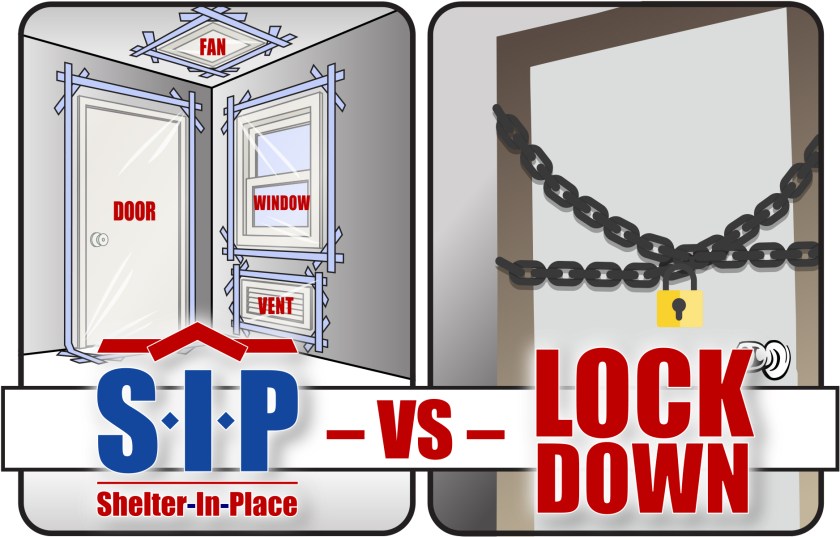
Second, I had seen the news reports of how pornography was profiting from the shutdown. As soon as people began sheltering in place, one purveyor of internet porn noted an immediate spike in visits to their site. India experienced a 95% rise in porn viewership. 1 Only South Korea, who did not shutdown as much of their country, did not see such a porn patronage spike. 2 When other businesses are shutdown, pornography has likewise become lucrative for women seeking employment during tough economic times. 3 Evil never sleeps.

Third, while being disappointed by the designation of religious assemblies as nonessential by government, I’ve noted that they have propped up vice as essential. For example, in Denver pot dispensaries and liquor stores were exempted from stay at home orders. 4 Meanwhile, churches have not been able to meet in their buildings, even with efforts to practice social distancing. On the weekend of April 12th, you may recall that Louisville, Kentucky, mayor, Greg Fischer, even criminalized “drive-in” church services. Fortunately, a judge overturned Fischer’s “edict.” 5 Evil never sleeps.

Fourth, the abortion industry remains alive and well during shutdown. While certain states successfully closed abortion clinics at the outset of the shutdown by stating such clinics offered only elective procedures, judges have overturned such decisions in favor of granting access to it. 6 So, we are currently living at a time when cancer screening is non-essential, but killing your unborn child is “necessary.” Yes, evil never sleeps.

Since evil never sleeps, what are we, as children of God, to do?

Be on guard (1 Peter 5.8). As we have shown, our enemy never sleeps. He is looking to devour us. Thus, we must keep up our alertness.

Redeem our time (Ephesians 5.16).  Given the uncertainty of our life, we must make the most of the opportunity God gives us to do His will. Even though COVID-19 is deadly, we note that the things taking a man’s life are far more numerous than viruses (cf. James 4.14).

Pray (1 Thessalonians 5.17). We must always maintain a prayerful heart. It is an avenue allowing us to “cast our cares” upon our Lord (1 Peter 5.7). It is likewise the only means whereby we can discover peace surpassing our ability to comprehend (Philippians 4.16-17).

Evil never sleeps, but we can avoid its darkness by remaining on the path shining as bright as day (Proverbs 4.14-15, 18), while devoting ourselves to doing our Lord’s will.

shelter in place

REFERENCES

1 Kannan, Saikiran. “Pornography Gets a Pandemic Boost, India Reports 95 per Cent Rise in Viewing.” India Today, Living Media India Limited, 11 Apr. 2020, www.indiatoday.in/news-analysis/story/pornography-gets-a-pandemic-boost-india-reports-95-per-cent-rise-in-viewing-1665940-2020-04-11.


2 Ibid.


3 Dorn, Sara. “Business Booming for Cam Girls amid Coronavirus Outbreak.” New York Post, NYP Holdings Inc., 16 Mar. 2020, nypost.com/2020/03/14/business-booming-for-cam-girls-amid-coronavirus-outbreak/.


4 Del Giudice, Vincent. “Denver Exempts Pot Shops, Liquor Stores from Stay-at-Home Order.” Bloomberg.com, Bloomberg L.P., 24 Mar. 2020, www.bloomberg.com/news/articles/2020-03-24/denver-exempts-pot-shops-liquor-stores-from-stay-at-home-order.


5 Lord, Shaquille. “District Judge Says City Can’t Stop Louisville Church from Holding Drive-in Easter Service.” WLKY, Hearst Television Inc., 12 Apr. 2020, www.wlky.com/article/district-judge-says-city-cant-stop-louisville-church-from-holding-drive-in-easter-service/32115835.


6 Tamburin, Adam. “Federal Court Tweaks Abortion Order, Still Allows Procedures during COVID-19 Pandemic.” The Tennessean, Tennessean.com, 27 Apr. 2020, www.tennessean.com/story/news/2020/04/27/court-tweaks-tennessee-abortion-order-procedures-still-allowed/3033007001/.

Sin Illustrated

Tuesday’s Column: Dale Mail

DaleandJanelledirectorypic

Dale Pollard

Who doesn’t love a good illustration? Over the next few weeks this column will have three of them— all geared around a singular topic. 

In the early days of flying men would attempt to soar into the skies like the birds by building wings made out feathers and jumping of towers, hills, and even cliffs. In 1507 John Damian strapped wings covered in chicken feathers to his back and leapt from the walls of Sterling Castle in Scotland. He ended up breaking his thigh and quickly blamed his failure on the fact that he used chicken feathers instead of eagle feathers (undiscoveredscotland.com). 

Many early attempts of flying ended in more serious injuries and even death. If they had a better understanding of the principles of flight they could have avoided their tragic endings. 

Millions of people today are plummeting to their spiritual deaths, and we have the knowledge they need. Nobody will achieve spiritual flight through the:

1. lust of the flesh
2. lust of the eyes
3. pride of life

If an apple has a hole in it, some would assume that a worm has eaten its way inside. But in reality there was a worm in the seed of the apple the whole time. And as the worm grew it ate its way out of the core. 

At first sin is easily hidden, but as it grows it shows itself through our actions. 

Julie Andrews in the Sound of Music would claim that one of her favorite things are snowflakes that stay on her nose and eyelashes. A small beautiful snowflake. Thousands of years ago a single snowflake fell from the skies. Then another, then another. Soon the snow turned to ice and the ice became so heavy that it broke off the glacier and fell into the sea. It began to float and drift until one night it struck a ship called the Titanic, killing 1500 people. 

When a sin problem begins to take hold, it may seem as harmless as single flake of snow. Overtime the sin proves to be more than some can handle, and they’re heading for disaster. 

“Sin will take you farther than you wanted to go, keep you longer than you intended to stay, and charge you more than you wanted to pay.” 

How To Slay A Dragon

Thursday’s Column: Captain’s Blog

IMG_0806

Carl Pollard

There’s a part in Sleeping Beauty where the Prince slays a fire breathing dragon with his sword. This is at the climax of the movie, so this entire time the story has been building up to this one, final moment. It’s pretty epic. In our lives, we have many “Fire Breathing Dragons.” At this moment I would like to talk about three of them and how to “kill” them.

First, notice with me the “dragon” of lying. If you look at Colossians 3:9, it says, “Don’t lie to each other, for you have stripped off your old evil nature and all it’s wicked deeds.”
Lying in Colossians is labeled under “evil nature.” If we have stripped our old ways, why do we continue to lie? Because much of the lying that we do is for personal gain. For example, someone could come up to me and ask, “How much can you bench?” and I might say “850 pounds.” That’s a classic example of lying for personal gain. From now on that person will believe that lie I told them and possibly tell others. We can slay this dragon by telling the truth. Challenge yourself to tell full truths, and not half-truths.

Second, there is the “dragon” of Hate. Luke 6:27 says, “But I say to you who hear, Love your enemies, do good to those who hate you.” The hardest part of this verse is the second half. Trying to love those who hate us is extremely difficult because in our minds they started it so we have the right to hate them back. If you look at Jesus, our example, He says to love those who hate us. How do we do this? It requires a change of vision. We should try to look at those who hate us as a lost soul that needs saving. Looking at them this way might help us to love them more.

Third, and finally, is the “dragon” of Gossip. This one can be very dangerous because it might tear apart a friendship, a person, and the church. If you look at Ephesians 4:29, It reads, “Let no corrupt communication proceed from your mouth, but that which is good to the use of edifying, that it may minister grace unto the hearers.” Instead of tearing down someone or spreading rumors, let’s try to build up one another! To keep from letting something slip about someone, let’s try to practice what our parents told us from day one: “Think about what we say before we say it.”

Now there is one more thing we can use to slay “dragons.” The ultimate Two-Edged Sword is for slaying any kind of “dragon.” This Two-Edged Sword, the Bible, can slay any dragon that Satan sends our way. Today we only looked at three of the dragons that Satan uses against us. There are many more, and we must study Scripture to see what they are, and how we can slay them.

73667.jpg.cf

A Bat’s Worst Nightmare

Thursday’s Column: Captain’s Blog

IMG_0806

Carl Pollard

I’m gonna be honest. I am not a fan of winter. It’s cold, snow is terrible, It’s freezing, and I hate snow. The worst thing about winter is that It gets dark at like 3 pm. In the summer you have these nice long, warm days but In the winter you got about 6 hours of daylight before it gets dark again.
Darkness is referred to quite a bit in scripture and many times it is used to describe sin. For example, “Walking in darkness” = walking in sin. “Living in darkness” = living in sin.
As Christians we are described as being taken out of darkness (sin) to walk in light (righteousness) (Ephesians 5).
But how did we get to this point? We read in John 8:12, “Again Jesus spoke to them, saying, “I am the light of the world. Whoever follows me will not walk in darkness, but will have the light of life.”
Because of Christ and His sacrifice and love for us we can now have the light of life. Without Christ we are forever in darkness, but with Christ he is our light that leads to salvation.
The choice to follow Christ means that our standard is The Light. Notice, He says, “will not walk in darkness…” This word is skotia which is described as, “the state of being devoid of light, darkness, gloom.” When we choose to live like the world, there is no light in us. When we remove Christ as our guide and live in sin, we are plunged into darkness.
But if He is our standard of living, in hard times we will have light, when we lose a loved one we will have light, and when we face difficult decisions we will have light.
The question we need to ask ourselves is this, “Do we prefer darkness over light? Do we prefer sin over righteousness?” The choice is ours, and each one of us makes this decision every day.
You may be asking what all of this has to do with the pandemic going on right now…well a bat started this whole thing, and bats live in caves, caves are dark and living in darkness is living in sin. Don’t be a bat.
maca-solitary-roosting-bat

The Guest 

Tuesday’s Column: Dale Mail

DaleandJanelledirectorypic

Dale Pollard

A knock came on my door one day, I opened and it was Sin
Before that moment we hadn’t met, but still I let him in
He made me laugh, and seemed alright
so I let him stay a night

As host, I tended his every need
though he was quite a mouth to feed
He was entertaining
so he kept remaining—
With me, another day

One evening he sat at my table and dined

but late that night he robbed me blind

In an empty house I sat alone
The tears welled up, I should have known

Sin ate his fill against my will,

and now I’m skin and bone

Then again I heard a knock on my door

Reluctant was I to rise from the floor
If a guest, they can’t stay here anymore

the previous left me dejected and poor

But again and again
came the knock on my door
So timidly I answered,

but only opened it so wide

and there stood Jesus waiting,

on the other side

I had nothing left to give Him, nothing left to eat—
Yet He came inside,then got down, and began to wash my feet
He told me I could live with Him, for He had many rooms
No pain was there at His house, and the flowers always bloom
Could this be true what I was hearing—
I longed for nothing more
Then Jesus smiled and gently said—
this offer is for you and all
who open up the door
doorknob-686491_960_720

When the Tempter Has You Out On A Limb

Friday’s Column: Supplemental Strength

brent 2020

Brent Pollard


You can learn much by observing nature. Not only can one know God by looking at nature (Romans 1.18-20), he can learn specific lessons on various topics by looking at specific aspects of God’s creation (e.g. ants teach industry, Proverbs 6.6-8). I was watching a humorous scene outside my office window recently and was reminded of this.

 Our household, despite being full of “dog-people,” has cats for “pets.” Let’s just say that we feed the cats and provide them outdoor shelter for keeping mice, moles, and snakes away from the house. In many respects, they’re feral but become domesticated long enough to eat the kibble we put out. And, if they feel like initiating it, contact resembling petting may occur. If there is one thing I don’t like about cats, though, it is their murderous nature. Even though well-fed, cats will kill for sport. 1

 This latter observation creates a conflict for someone who has always enjoyed feeding and watching birds as well. We had to give up putting out birdseed when the cats became a part of our household. At first, the birds avoided our house. Yet, kittens learn by watching adult cats. If adult cats don’t teach kittens how to hunt, they aren’t as successful at it. As the senior hunters have passed from disease and predation or gone fully feral, being chased off by other cats, the birds have begun coming back without our encouragement. Frankly, I think a few of those “birdbrains” must be rather smart.

 One such smarty was teasing one of our cats the other day. He or she served as a good example of the tempter. As Angelo, a cat with a pattern of “angel’s wings” on his back, was slowly climbing up a budding, dogwood tree, the bird did not fly away. Instead, the avian adversary just side-stepped further to the right out on to thinner branches. The higher Angelo climbed, the thinner the branch on which the bird rested became. It seemed as if the bird knew that if Angelo tried to pounce on him or her, he would go crashing to the ground while he or she would just fly away. Angelo really thought about his situation. It took him several minutes, but he finally understood that despite his prowess, continuing towards his coveted prize would lead to his harm. Thus, to his chagrin, he slowly made his way back down the tree to the safety of the ground below.

 Herein is the lesson from nature. The tempter will lure you out from “relative safety” in order to bring your desire close, only to ensure when you pounce on it, you will end up falling flat on your face (consider Romans 6.23). We must ensure we are aware of where we are (Hebrews 2.1-4). The branches upon which we make our way may grow thin quickly, depriving us of a solid foundation, and causing us to fall.

 Of a truth, no one ever sets out to fall, he just fails to appreciate the gravity of the situation. Keep your eyes on what lies beneath your feet (1 Corinthians 10.12).

cat-1647775_960_720


1 Traywick, Catherine. “Killer Kitties: Study Proves They’re Not as Innocent As They Look.” Time, Time, 9 Aug. 2012, newsfeed.time.com/2012/08/09/killer-kitties-study-proves-theyre-not-as-innocent-as-they-look/.

Making Sense Of Grace

Wednesday’s Column: “Third’s Words”

10423661_10207901451272315_9069631728203375436_n

Gary Pollard III

Grace is a touchy subject. As with many other words commonly used in religious circles, it has potential to be misused or misunderstood. My hope is that this brief study on grace will shed some light on a confusing subject.

First, grace is possible for all men to have (Titus 2.11). It has been clearly displayed and advertised to everyone. The word “appeared” in that passage is epiphane, which means “to make an appearance.” No one is exempt from grace if they follow the right steps to receive it!

Second, grace keeps us in good standing with God if we are walking in the light (I John 1.7,8). In Acts 2.47, chairo (pronounced ky-roe) is translated “favor.” In Luke 6.32-34 Jesus uses it in a very interesting way. He says, “If you only love those who love you back, what credit is that to you?” Credit is charis, the word for grace.

So what is grace? What does it mean to you and me? If we are walking in the Light – trying our very best to follow God’s commands and allowing our faith to be the driving force of our lives – God takes care of our sin problem. When we slip up and make a mistake, God removes it from our record. This does NOT mean that we can sin all we want and God will just overlook it (see Romans 6.1,2). It does, however, mean that God is not waiting to strike us out of the book of life the moment we make a mistake.

Grace is what happens when God wants to do good for mankind. Luke 6.35 says, “Love your enemies, and do good, loan to others without expecting anything back; and your reward will be great, and you will be sons of the Most High; for He Himself is kind to ungrateful and evil men.” The word kind in the bolded phrase is charis: grace. It does not mean the same thing for evil men that it does for the Christian, but it does help us to get a better sense of what this word means.

God is rooting for His children (Christians). He WANTS us to get through this life and die in Him (Psalm 116;15). He isn’t our accuser waiting for us to slip up so He can condemn us. He helps us along the way, He shows good will to us, and He gives us His grace so that we can spend an eternity with Him as long as we are walking in the Light.

God Will Bring Every Act To Judgment

Neal Pollard

72% of Americans, age 13-24, view pornography frequently (55% of men 25 and older). Those numbers only drop to 41% and 23% of those professing to be Christians (Barna, July-August 2015, Barna Study Here).  So, perhaps this was inevitable. A few years ago, potentially millions of people started receiving a disturbing email from an anonymous source claiming to have hacked into their email and installed malware to discover their pornographic consumption. Experts say these hackers have just enough facts and information to frighten many of the recipients. They attempt to blackmail the recipients, demanding hundreds or even thousands of dollars in bitcoin. Otherwise, they promise to email proof of their readers’ perverse, clandestine interests to everyone in their contact list.

These hackers are relying on people’s fear of being found out, thinking that if even a tiny percentage of fearful folks pay the ransom it will make their spam to millions pay off. This hoax has probably raised the heart rate of many who consume pornography but felt like they were getting away with it. But the FBI say it is just that–a hoax.

God created man with a built-in sensitivity to our accountability. Many have a “certain fearful looking for of judgment” (Heb. 10:27). Some day, the secrets of men will be judged by God through Christ (Rom. 2:16). Solomon said, “For God will bring every act to judgment, everything which is hidden, whether it is good or evil” (Ecc. 12:14). But, “We must all appear before the judgment seat of Christ, so that each may be recompensed for his deeds in the body, according to what he was done, whether good or bad” (2 Cor. 5:10).

The good news is that no one has to be afraid of the judgment or having everything which is hidden shared with the whole world. “God our Savior desires all men to be saved and to come to the knowledge of the truth” (1 Tim. 2:3-4). Peter adds, “The Lord is not slow about His promise, as some count slowness, but is patient toward you, not wishing for any to perish but for all to come to repentance” (2 Pet. 3:9).

God wants our sins to be covered by the blood of His Son. Not just “big sins” (as we distinguish them), but every sin, great and small, that we struggle with! How great to face the judgment with those sins hidden from His perfect view.

003_porn

INSTRUCTIONS FOR PRIVATE OFFENSES

Neal Pollard

The Son of God gives specific instructions for what to do when a spiritual family member sins. Jesus clearly says, “If your brother sins, go and show him his fault in private; if he listens to you, you have won your brother. But if he does not listen to you, take one or two more with you, so that by the mouth of two or three witnesses every fact may be confirmed. If he refuses to listen to them, tell it to the church; and if he refuses to listen even to the church, let him be to you as a Gentile and a tax collector.” Notice the Divine pattern. 

  • Perpetration (15a)–“If you brother sins.” This is what initiates the situation.
  • Presentation (15b)–“Go and show him his fault in private.” Paul would teach this later (Gal. 6:1). Notice that this is to be done privately.
  • Aspiration (15c)–“If he listens to you, you have won your brother.” Ideally, this is where the matter should end.
  • Escalation (16-17)–Jesus tells one what to do if a sinner refuses to listen. Start by taking one or two. If that does not work, then tell it to the church.
  • Repudiation (18)–If all three of these approaches fail to win the sinner, then you reject them.

Tragically, we very often disobey Jesus’ instructions about this and fail to understand that rebelling against His commandment then makes us a sinner, too.  How often does it happen that a person, rather than dealing directly with the sinning brother, tells someone else? Then, that someone tells another. Soon, a whole group or even the whole church knows about the sin. Often, something that was private and even between just two people is made public by gossipers who continue to spread the matter. In some cases, those who hear and spread the matter never even speak to the offender. This prevents the sinner from being aware of who knows about it or being able to reconcile. It can even be the case that the sinner has repented and handled the matter with the original offender, but now others are brought into the matter after the fact. Those who have come to hear about the situation treat the sinner “as a Gentile and a tax collector,” without ever once speaking to them about it. Rifts form and relationships are affected. 

When we fail to do things God’s way, we will make matters worse. May we consider passages like Mark 7:21-23, where Jesus places “big” sins like “fornications, thefts, murders, adulteries, deeds of coveting and wickedness” alongside “little” sins like “deceit, sensuality, envy, slander, pride, and foolishness.” Jesus’ analysis is that “all” these things are “evil” and “defile the man.”

gossip-532012_640

Satan’s Schemes

Neal Pollard

Paul makes an interesting statement while addressing the successful effort the Corinthian church made in disciplining an erring brother along with the successful outcome of his having repented. He urges them to show him love, comfort, and forgiveness. The bottom line Paul gives for the urgency of their obedience is “so that no advantage would be taken of us by Satan, for we are not ignorant of his schemes” (2 Cor. 2:11). Back in the first letter, the church’s attitude and actions regarding a brother needing discipline was horrible, and Paul commanded them to act (1 Cor. 5). Here, they have acted and their efforts worked. They were in a prime position to grow and thrive. Yet, Paul reminds them of Satan’s motivation (to take advantage of us) and means (his schemes). 

But, when does Satan like to try and employ his schemes and take advantage of us? When we aren’t being sober and vigilant (1 Pet. 5:8). When we aren’t focused on resisting him (Jas. 4:7). When we aren’t standing firm in the Lord or against his schemes (Eph. 6:10ff). When we aren’t exercising self-control (1 Cor. 7:5). If you study those contexts and others that mention Satan more closely, you will see that he would like to take advantage of us in good times and bad times. He may be at work through the willing choices, words, and actions of people who unwittingly aid his cause through their sins. 

When might he seek to employ his schemes?

  • When new elders are appointed
  • During building programs
  • As numbers swell through baptisms and families placing membership
  • When preachers come and go
  • In a flurry of exciting activities
  • In the heart of some church problem or struggle
  • At the center of some personality struggle or conflict within the congregation
  • Through some controversial doctrinal, moral, or even cultural issue
  • When brethren put politics, race, or another issue of lesser importance over Christ and His church

Obviously, there are many more examples. The point is that Satan would love to use the good times or bad times we experience as a church to undermine and harm the work of the Lord. That should not make us paranoid, so paralyzed by fear that we refuse to act, or petrified to make needed changes. It does mean that we must not be ignorant of the fact that he doesn’t want the church to grow or move forward, and he will do what he can to stop it. What is so exciting is that he stands no chance against God. James says, “Submit therefore to God. Resist the devil and he will flee from you” (4:7). Let us never be afraid to “dare and do” for God. We can do great things for Him and keep an eye out for the devil’s schemes.

25073405_10155181501925922_4154416753663879067_o
Picture from my last trip to Ngorogoro Crater, Tanzania, 12/17.

The Peril Of “Covering Up”

Neal Pollard

Misty Ann Weaver made a tragic decision.  The Houston-area licensed vocational nurse is charged in the burning death of three people after she started a fire in her six-story office building.  Why did she take such horrible measures that resulted in the unnecessary, tragic deaths of these victims?  She was  apparently behind on an audit for her plastic surgeon boss, and she feared being fired.  She just wanted to start a small fire, enough to cause a distraction and buy herself more time.  Obviously, she accomplished more than she intended.

Ms. Weaver is an extreme example of the tendency to try and avoid consequences by resorting to sin to “cover up” a shortcoming or failure.  While few of us will wind up facing three felony murder counts, we are all tempted to “cover up” in this way.  When we fail to study for a test, we may resort to cheating to “cover up” that fact.  When we have a low self-image, we may resort to gossip or backbiting to “cover up” perceived flaws about ourselves.  When we are afraid of negative consequences for not meeting some responsibility or expectation, we may turn to lying to “cover up” that inadequacy.   The irony is seen in that the “cover up” inevitably puts us in greater spiritual trouble than before we engaged in it.

We may “cover up” for fear of the disapproval of others, out of embarrassment or shame, or out of concern for certain repercussions.   Yet, to turn to sin to shield ourselves from the ramifications of our actions is to compound the problem.  Let us have the courage to face God and man, to provide things honest in the sight of all men (cf. Romans 12:17).  Israel was warned about the danger of adding sin to sin (Isaiah 30:1).  It is strength of character to do our best in our every endeavor, but it is also strength of character, when we have failed to so do, to courageously, honestly “face the music.”  However we rationalize, the fallout from this will be less severe than the “cover up” is!

1024x1024

The Greatest Longing Of The Soul

Neal Pollard

Quick. Name the top three accomplishments of Grover Cleveland’s presidency. I’ll wait. 

Nothing? Don’t feel dense or unpatriotic. He’s not in most historians’ top 10 (25?) of American presidents. But on yesterday’s date, 132 years ago, he was at the helm and dedicated the Statue of Liberty in New York Harbor.  This, if you don’t recall, was the proposed gift of French historian Edouard de Laboulaye in honor of America’s alliance with France during the Revolutionary War, sculpted by Frederic-Auguste Bartholdi, designed by Viollet-le-Duc and Alexandre-Gustave Eiffel (yes, that Eiffel), completed in France in 1884, and delivered to America the next year with the last rivet fitted on October 28, 1886 (via Instagram). The pedestal of the statue contains a sonnet by poet Emma Lazarus, well-known to most of us, that reads, 

“Give me your tired, your poor,
Your huddled masses yearning to breathe free,
The wretched refuse of your teeming shore.
Send these, the homeless, tempest-tost to me.
I lift my lamp beside the golden door” (ibid.).

With all the debate about immigration–a Reuters story revealed that immigration tops the economy and healthcare as the top issue for voters (Read here)–there is no denying why so many people around the world want to come to the United States. We have long been regarded as the haven for poor masses yearning to breathe free and wanting a home inside “the golden door.” Many have come and achieved incredible success in our country. Many more than that have come to find that immigrating here did not solve their problems or make their dreams come true.

There is a greater longing of the soul, a desire for something even more than prosperity.  Jesus teaches us that material things won’t last (Mat. 6:19-20). Peter tells us what comes of such ultimately (2 Pet. 3:10). 

There is a greater longing of the soul than even freedoms afforded by nations and governments. Many will abuse those freedoms through immoral choices.  Proverbs 14:34 strongly applies.

The most noble, highest longing of a soul is for the freedom only Christ can provide. To be free from the slavery of sin (John 8:31-36), from guilt of sin (Psa. 51:1-14), and from the power of sin (Heb. 2:14) is man’s wisest quest. A person with an abundance of money, liberty, and other earthly advantages may still be buried by the influence of sin. To know there’s a solution right now–who wouldn’t want that?

Don’t forget what Jesus tells people everywhere: “Come to Me, all who are weary and heavy-laden, and I will give you rest” (Mat. 11:28). 

23905208_10155150150870922_199173094846852320_n

When Will I Ever Be Free…

Neal Pollard

…Of concerns over the future–decisions to make, the specter of tomorrow, growing old, retirement?
…Of sin–fighting temptation and not always winning, beating one thing and then finding another cropping up in its place, and the guilt it brings?
…Of disappointment–both of what I inflict and what is inflicted upon me?
…Of fear–when it comes to my spouse, my children, my parents, my brethren, our nation?
…Of doubt–whether in the process of prayer, struggles with asking God “why?,” or especially doubting myself?
…Of neglect–leaving undone things central to my purpose as a Christian due to apathy, distraction, misplaced priorities, and the like?
...Of failure–trying and not succeeding, not trying hard enough, not knowing what or how to try, and of simply falling short?
…Of betrayal–whether through gossip, lying, broken promises, insincerity, or treachery?
…Of insecurity–that can result from any of these and other struggles?

We don’t always have days when we wonder these things, but they come around often enough that they can prey on our minds. Sometimes, we face these questions due to our shortcomings. Other times, it’s because of the failings of others. Both can lead to despair.

The wonderful news is that we can be free of them all. There is a day coming when none of these will weigh us down ever again. I love the encouragement of the Hebrews’ writer, who urges, “Therefore, since we are surrounded by so great a cloud of witnesses, let us also lay aside every weight, and sin which clings so closely, and let us run with endurance the race that is set before us, looking to Jesus, the founder and perfecter of our faith, who for the joy that was set before him endured the cross, despising the shame, and is seated at the right hand of the throne of God. Consider him who endured from sinners such hostility against himself, so that you may not grow weary or fainthearted” (12:1-3). 

Whether we are struggling due to our sinfulness or if it is any other weight, we’re encouraged to hang on and hang in there. When the struggle might be the greatest, that’s when we’ve got to turn and fix our focus on Jesus. Watch how He won! See what He did! Remember that He helps make it possible for us to fight and win.  

If you are in the valley of despair right now, for whatever reason, don’t give up! Look to Jesus. Hang on! The end is in sight. Through Him, we will overcome!

4345500222_b70e4f3204_b


“Good That Comes From Bad”

Neal Pollard

With a name like “Lamentations,” you know it isn’t a joke book. It’s not lighthearted or jovial. It’s the inspired record of Jeremiah’s tears and troubled spirit over the punishment of Judah for her idolatry and abandonment of God. It is graphic (see 2:20-21; 4:4-10; 5:11-14). Conditions became terrible for the nation (cf. 1:9-10). The book is filled with apocalyptic language and hyperbole (3:1-16).

In the middle of the prophesy, though, Jeremiah expresses the hopeful effect of all this calamity and reaping. The desired effect of captivity was three-fold, according to Lamentations 3:40. First, it was for self-examination–“Let us search out and examine our ways.” Second, it was for repentance–“and turn back to the Lord.” Finally, it was for spiritual development–“Let us lift our hearts and hands to God in heaven.”

When we sin or even are caught in some long-term transgression, there will very often be consequences. If we fail to overcome it, the consequences will be unending and most serious. Yet, if we “come to ourselves” (cf. Luke 15:17) and let go of what is keeping us from being right with God, it can have those same three positive impacts on us. It cause cause us to engage in proper self-examination. It will hopefully lead us to repent. Then, this paves the road for us to grow close to God through proper spiritual development.

The ideal is to avoid spiritually spiraling out of control or into some sin problem. Yet, if or when we do, let us remember Lamentations 3:40. Good can come from bad.

p19d8uriudal1tmv6ccoms1ace3

The Eye Of The Beholder

Neal Pollard

The theme of our recently completed lectureship was, “Every Man Did What Was Right In His Own Eyes.” This seems to be the summary statement of this entire period of Bible history. It is interesting that this idea shows up more than in just the two verses where the statement appears (Judges 17:6; 21:25). Samson wanted the woman of Timnah because “she looked good to” him (Judges 14:3,7; literally, “she was right in his eyes”). In reality, she was a loose, treacherous, and idolatrous woman, but she seemed right to him. In that dark story about the Levite man, the elderly Ephraimite man, the Levite’s concubine and the Ephraimite’s virgin daughter, the old man, seeking to placate the wicked Benjamites, offered the women to them “to do with them whatever” they wished (Judges 19:24; literally, “the good in your eyes”). Obviously, what was right in these men’s eyes was reprehensible and vile. It is one of the most extreme examples of wickedness recorded in the Bible.

Elsewhere, the Bible says, “The way of a fool is right in his own eyes” (Proverbs 12:15a), and “Every man’s way is right in his own eyes” (Proverbs 21:2a). We often think things seem right when they are far from it (Proverbs 14:12; 16:25; 18:17).  After talking about those who mix up right and wrong and good and evil, Isaiah tells us why they do this. He warns that they “are wise in their own eyes and clever in their own sight” (Isaiah 5:21).

In the world, the church, and our own lives, we are tempted to do what is right in our own eyes. We justify habits, relationships, desires, religious practices, lifestyles, and choices about which God warns in His Word by ignoring that and rationalizing, rewording, and reframing them. We use emotional arguments. We twist Scripture. In the end, when we do these things, we reject God’s authority and seek to become the standard ourselves. The book of Judges was written, in part, to show us what happens when we do it and how God feels when we do it.  The well-worn phrase goes, “Beauty is in the eye of the beholder.” That may be. But right and wrong is not such as is in the eye of the beholder. That is determined by the One who possesses “the all-seeing eye” (Proverbs 15:3).

eye-211610_640