When Jude Quoted Books God Didn’t Write

Twenty-five verses. That’s all Jude needed to expose false teachers, rally believers, and deliver one of Scripture’s mightiest doxologies. Yet within this compact letter lie two startling citations—neither from Moses, the prophets, nor the Psalms, but from Jewish apocryphal writings. Why would an inspired writer quote uninspired sources?

Brent Pollard

Twenty-five verses. That’s all Jude needed to expose false teachers, rally believers, and deliver one of Scripture’s mightiest doxologies. Yet within this compact letter lie two startling citations—neither from Moses, the prophets, nor the Psalms, but from Jewish apocryphal writings. Why would an inspired writer quote uninspired sources?

The Arrogance That Mocks What It Cannot See

Jude writes his general epistle with a sense of urgency. False teachers have misused grace to justify immoral behavior and show disrespect for authority. By verse 8, their pride has become demonic, and they “speak evil of dignitaries,” which most likely refers to angelic beings. Jude does not intend to promote the worship of angels; instead, he warns against hubris. These false teachers behaved as if they had authority over realms they did not have, and that is the pride Jude exposes. Therefore, these men slander realities beyond their understanding.

To expose such folly, Jude reaches for an unlikely illustration.

When Even Angels Know Their Limits

Jewish tradition, preserved in the Assumption of Moses, tells of Michael the archangel disputing with Satan over Moses’ body. The devil claimed ownership—perhaps because Moses had killed an Egyptian, perhaps because Satan styled himself lord of the earth.

Michael’s response? He refused to pronounce judgment on his own authority. Though heaven’s chief warrior, he simply said, “The Lord rebuke you.”

Here is Jude’s blade: If Michael—commander of celestial armies—dared not revile even Satan, what business have mortals mocking spiritual powers they neither respect nor understand?

True strength bows before God’s sovereignty. Pride pretends to authority it does not possess.

The Prophet Who Saw Judgment Coming

Jude then quotes 1 Enoch, a Jewish apocalyptic text known to his audience:

“Behold, the Lord comes with ten thousands of His holy ones, to execute judgment upon all, and to convict all who are ungodly of all their ungodly deeds.”

This inclusion is no blanket endorsement of Enoch’s book any more than Paul’s citations of pagan poets made them Scripture. Instead, the Spirit guided Jude to extract one true statement—a warning echoing throughout divine revelation—and press it into service for eternal purposes.

God can take a fragment of human tradition and forge it into revealed truth without sanctifying its source.

How Inspiration Actually Works

Jude’s method reveals three vital principles:

1. Authority lies in God’s selection, not the source’s pedigree.

The Spirit determines what enters Scripture. Truth remains truth wherever it appears, but only God’s breath makes it authoritative. Jude’s quotes became inspired not because of their origin, but because God chose them.

2. God meets people where they live.

Jude’s Jewish Christian readers knew these traditions. Using familiar examples, he illustrated the truth vividly. We do the same, quoting, say, Shakespeare or Einstein—not to canonize them, but to communicate clearly.

3. The message matters infinitely more than the medium.

Both stories serve one purpose: to contrast human arrogance with divine authority and to warn that God judges all rebellion.

Three Applications for Your Life Today

First, guard your tongue when speaking of spiritual realities.

If Michael, who stands before God’s throne, refused to speak presumptuously, how much more should we? Reverence isn’t weakness; it’s wisdom. Before you dismiss spiritual truths or mock what you don’t understand, remember who you’re dealing with.

Second, rest in the certainty of God’s judgment.

False teachers may flourish now. Arrogance may strut across platforms. But Enoch’s prophecy stands: God will judge every ungodly deed. Your job isn’t to play God. It’s to trust Him.

Third, quote wisely, but verify everything.

You’ll find truth scattered across literature, philosophy, and even secular observation. Quote it when it serves God’s truth. But never confuse a helpful quote with Scripture’s authority. Test everything against the Word (1 Thessalonians 5:21). All other lights are dim candles held up to Scripture’s blazing sun.

The Weight of a Short Letter

Don’t mistake brevity for shallowness. In twenty-five verses, Jude wields ancient tradition, angelic authority, and divine judgment to demolish pride and call the church back to truth.

Michael’s humility rebukes the arrogant. Enoch’s prophecy warns the rebellious. Together they sound Jude’s central note: “Contend earnestly for the faith which was once for all delivered to the saints.”

In a world drowning in opinions, that call has never been more urgent.

God has spoken. The question is whether we’ll listen with the humility of angels or the arrogance of fools.

The difference is eternal.

Even when he quotes from outside Scripture, Jude points us back to Scripture’s heart—the unchanging authority of God and the sure destiny of all who defy it.

SATAN ENTICED DAVID TO… COUNT?

The first time we read the name “Satan” in the Bible, it’s under very strange circumstances. Ready?

Here’s the passage: 

“Satan rose up against Israel and incited David to take a census of Israel.”

Dale Pollard

The first time we read the name “Satan” in the Bible, it’s under very strange circumstances. Ready?

Here’s the passage: 

“Satan rose up against Israel and incited David to take a census of Israel.” 

(I Chronicles 21:1, NIV)

Alright, so Satan decides to pick a fight with God’s man. So  how does he do it this time? Well, he incites (or entices) David to take a census of Israel— of course. You might be thoroughly confused at this point but just wait, you’ll want to throw something breakable in a second. 

So Satan takes his shot at David and apparently the most devious plan he could come up with was, “Operation Headcount.” There must be more to it than that. Surely. 

Make it Make Census

A census in the ancient world—especially in Israel—was not just a headcount. It carried spiritual, political, and economic weight. 

It typically involved counting all the men and for at least a few practical reasons. A ruler could use the census to determine the size of his army, or make sure proper tax revenue was collected, or get an idea of how capable his labor force was. Oh, and for Israel, it better be done right. 

Exodus 30:12 warns that a census must be accompanied by a ransom/offering, or else a plague would come upon the people:

“Then each one must give a ransom for his life to the LORD… so that no plague may come on them when you number them.”

So maybe now’s a good time to address an alleged contradiction. 

Our original passage in question (I Chron. 21:1) is already interpreted in a few ways, especially when compared to its parallel account in 2 Samuel 24:1, which says:

“Again the anger of the LORD burned against Israel, and he incited David against them, saying, ‘Go and take a census of Israel and Judah.’”

Did you catch that too? Seems like Samuel contradicts the Chronicler by saying that God was really the one who enticed David into counting folks, not Satan. So which is it— and did you throw something yet? 

It Was Satan….. Probably 

No matter how you slice it, Satan is the one doing the enticing and here’s how we can be sure. 

First, let’s start by contrasting the similarities between this case and Job’s situation. God allowed Satan to test Job— but He remained sovereign. God was clearly in control while Satan had to ask His permission before making Jobs life so miserable. God let the devil torment his most faithful servant, but with strict conditions (Job 1.8,12). 

Secondly, it’s possible that “Satan” in 1 Chronicles 21:1 should really be translated “adversary.” Now, this next part isn’t typed with any real certainty, it’s only a personal observation (by the author). 

Remember the account of Balaam and his donkey? It’s worth reading again, even if you’re familiar with it. Just before the conversation between a man and his animal takes place we read: 

“God’s anger was kindled because he [Balaam] went, and the angel of the LORD took his stand in the way as his adversary” (Numbers 22:22). 

The word adversary is the exact same word that’s translated as Satan in 1 Chronicles 21:1. However, it was the angel of the Lord that stood as an adversary. The language is strikingly similar in both passages. Take a peek, but this time side by side…by side: 

1 Chronicles 21:1 

“Then Satan stood against Israel and incited David to number Israel.” 

Numbers 22:22

“God’s anger was kindled because Balaam went, and the angel of the LORD took his stand in the way as his adversary”

2 Samuel 24:1

“…the anger of the LORD was kindled against Israel, and he incited David against them, saying, “Go, number Israel and Judah.”

How satisfying is that? Instead of a contradiction you see consistency; inspired perfection on full display. 

So What Happened To David? 

Well, he messed up. A lesser known misstep on David’s part, too. God sent a plague as a consequence—exactly as Exodus 30 had warned. As tragic as that was, again the consistency is amazing. There was a thousand years or so between Exodus and Chronicles but God still remembered exactly what He had told Moses.

After the census, David felt guilt immediately (2 Sam. 24:10) and repented. As anybody after God’s heart would do. 

Beyond The Fruit

Recognizing The “Big Three” Temptations In The Bible And Today

Brent Pollard

The number three is significant in many areas, reflecting its longstanding presence in human consciousness and the natural world. Often, it represents balance, harmony, and the union of opposites, making it a powerful symbol in spiritual practices. The “rule of threes” is a common phenomenon, likely due to confirmation bias, where people tend to notice and remember patterns more quickly, leading them to attribute significance to events that occur in threes.

The number three holds significant importance in religious contexts, especially in Christianity. In 1 John 2.16, John identifies three fundamental categories of temptation leading to sin: the lust of the flesh, the lust of the eyes, and the pride of life. These categories offer insight into the underlying causes of human moral struggles, with most sins attributable to one or a combination of these three factors.

This pattern of temptation is evident in several biblical narratives:

The Beguiling of Eve (Genesis 3.1–6):

  1. Lust of the flesh: The fruit was “good for food.”
  2. Lust of the eyes: It was “a delight to the eyes.”
  3. Pride of life: It was “desirable to make one wise.”

The Choice of Lot (Genesis 13.10–13)

  1. Lust of the flesh: Fertile plains to support abundant livestock.
  2. Lust of the eyes: The appealing appearance of the land.
  3. Pride of life: Desire for social and economic advancement near Sodom.

The Temptation of Jesus (Luke 4.1–13)

  1. Lust of the flesh: Satan tempted Jesus to turn stones into bread.
  2. Lust of the eyes: Satan offered Jesus all the kingdoms of the world.
  3. Pride of life: Satan challenged Jesus to prove His divinity by jumping from the temple.

These examples show how the “big three” temptations shaped human decision-making and moral choices throughout biblical history. Recognizing these patterns allows us to understand better temptation and how it affects human behavior.

In today’s world, Christians face similar temptations in various forms. The lust of the flesh manifests itself in overconsumption, addiction, and sexual immorality (Galatians 5.16–17). The lust of the eyes manifests itself in materialism, covetousness, and the constant pursuit of the next best thing (1 John 2.15–17). The relentless pursuit of status, power, and self-importance gives rise to life’s pride (James 4.6). However, just as Jesus resisted temptation by referring to Scripture (Luke 4.4, 8, 12), modern believers are encouraged to arm themselves with God’s Word (Ephesians 6.17). They are encouraged to “flee from youthful lusts and pursue righteousness, faith, love, and peace” (2 Timothy 2.22), remembering that God has provided a way out of every temptation (1 Corinthians 10.13). By recognizing these patterns of temptation and actively seeking God’s guidance, Christians can navigate the complexities of modern life while remaining spiritually intact.

Five Things Jesus Teaches Us About Temptation

Neal Pollard

Jesus knew temptation. The writer of Hebrews makes that point about Him in assuring us He, as our High Priest, knows just what we are going through in this life (2:18; 4:15). His suffering allows Him to sympathize. I am comforted to know that He understands, since He is like me (Heb. 2:17). Luke records this significant and pivotal moment in Jesus’ life before He begins His public ministry (Luke 4:1-13). It gives me necessary insight into who Jesus is, and it helps me fight the common battle against the enticements of my flesh, my eyes, and my pride.

TEMPTATION STRIKES THOSE IN A HEALTHY RELATIONSHIP WITH GOD. To be clear, temptation strikes “every man” (Heb. 4:15). But, sometimes we conclude that it’s not so bad or so frequent for the spiritually strong. Here is the perfect Son of God, described as full of the Holy Spirit and led by the Spirit (1), who encounters the tempter (2). Being spiritually strong can help make navigating temptation easier than it is for those who live according to the flesh (Rom. 8:5-14), but no one was closer to God and more spiritually healthy than Jesus as He walked the earth. How helpful to consider Paul’s warning here: “Therefore let him who thinks he stands take heed that he does not fall” (1 Cor. 10:12). 

TEMPTATION STRIKES IN PREDICTABLE AREAS. John classifies temptation into three major categories: “the lust of the flesh and the lust of the eyes and the boastful pride of life” (1 Jn.2:16). Methodical Luke lists Jesus’ temptation in that very order (cf. Mat. 4:1-11). The serpent, approaching Eve, must have appealed to these very areas at the beginning (Gen. 3:6). The devil does not have to get more complicated than that because these avenues are overwhelmingly effective for him. Though this and other passages reveals the evil one’s intentions and efforts, we are fully accountable for how we respond to temptation (Jas. 1:13-15). We must take responsibility for how we handle temptation. 

TEMPTATION STRIKES WHEN WE ARE VULNERABLE. Jesus has gone an unfathomable 40 days without food when He encounters the devil (2ff). The devil goes straight for this susceptible area. Think back to times when you haven’t gotten proper rest, you faced stress and pressure, you were sick or felt poorly, and other trying times. These can easily become doors we open to sin. All of us will experience physical and emotional weakness. We must be aware that these lead to spiritual exposure. 

TEMPTATION CAN MAKE US CALL WHAT WE KNOW INTO QUESTION. Twice, the devil uses conditional statements to try and create doubt. First, he says, “If You are the Son of God” (3). He called Jesus’ identity into question. Then, he says, “if You worship me” (7). He seeks to get Jesus to question His loyalty. It was not a matter of what Jesus intellectually knew, but Jesus dwelled in the flesh (John 1:14; Heb. 2:14). Be aware that temptation will cause us to question things we know, too. That includes our exalted identity and our true motivation.

TEMPTATION IS THWARTED BY AN OMNIPOTENT TOOL. Jesus wins His battles with the devil and temptation by leaning on truth. There are 86 quotations of Deuteronomy (the second giving of the Law of Moses) in the New Testament, and Jesus quotes this book in reference to each of the devil’s temptations (8:3; 6:13; 6:16). Proper knowledge and handling of Scripture helps even when enemies of truth, even the devil, try to misuse Scripture against us (as he does with Jesus, misapplying Psalm 91:11-12). Scripture is God’s own weapon, given to us not to cut and maim others but to fight off temptation and fend off the biggest threats to our faith and soul (Heb. 4:12; Eph. 6:17). 

It is wonderful to contemplate a day in which temptation will be permanently past-tense (cf. Rev. 21:1ff; 1 Cor. 15:55-58). Until then, we benefit so much from seeing how Jesus coped with the bane of temptation. It also helps us appreciate what He endured in order to give us salvation. 

From Disciple To Devil

Dale Pollard

Matthew, Mark, and Luke’s gospels all showcase for us the growth of Peter as a Christ-follower. In Matthew’s account Peter will be praised by Jesus— then rebuked by Him. The roller coaster ride Peter experienced is felt in the text but there’s more to this account than just an uncomfortable interaction. Peter declares the sonship of Christ through heavenly revelation, then Jesus refers to him as Satan just a few verses later. 

From that time on Jesus began to explain to his disciples that he must go to Jerusalem and suffer many things at the hands of the elders, the chief priests and the teachers of the law, and that he must be killed and on the third day be raised to life.

Peter took him aside and began to rebuke him. “Never, Lord!” he said. “This shall never happen to you!”

Jesus turned and said to Peter, “Get behind me, Satan! You are a stumbling block to me; you do not have in mind the concerns of God, but merely human.” – Matt. 16.21-23

When we step back and look at the chapter as a whole we can see Peter’s response to Jesus as he informs  them (the disciples) that He must die and be raised seems to be one motivated purely out of love. Peter doesn’t want his teacher, friend, and master to die. That’s understandable. He even takes the Lord aside so as to not rebuke Jesus in front of the other disciples. This wasn’t something done in Peter’s mind to thwart the plans of God, but the response to this is unexpected. Did Peter deserve to be called Satan

His rebuke was a stumbling block to Jesus. 

Jesus was on a mission but the Pharisees, Scribes, the Roman government, and plenty of others had made the ministry of Jesus difficult- still He was able to overcome. When challenged by them Jesus was able to masterfully handle their questions and accusations. Those were challenges He faced by the wicked and cunning crowds, but someone as close to Jesus as Peter would have presented a different temptation. It’s difficult for us to hear persuasive voices from those close to us like friends and family. They have the ability to talk you out of or into all manner of things and many times this is a great help. Their advice is often appreciated more than those of outsiders. However this can also be a challenge to us in negative ways if their counsel leads us further from God. Peter deserved such a swift and blunt response because it was a threat to the will of the Father, and this is a good principle for us to follow today. 

Apple-Cation Of Spiritual Leadership

Dale Pollard

The Adam’s Apple takes its name from a Jewish myth which states that God caused the forbidden apple to become lodged in Adam’s throat after swallowing. In reality, the Adam’s Apple is made up of the thyroid cartilage and is the same tissue that makes up your nose, ears, and windpipe (i.e., trachea). The voice box and windpipe have several kinds of cartilage, which work together to make sure your airways stay clear and that you’re able to speak.

Ironically enough, one of Adam’s biggest failures in the garden had to do with his speech— or lack of it. Adam should have spoken up when his wife first spoke with the serpent. He should have said something or perhaps even grabbed her hand and walked elsewhere as they headed towards the forbidden tree. He certainly should have spoken up when the serpent offered her the fruit. Genesis gives us a small detail that almost places the blame squarely on Adam. 

“She gave to her husband who was there with her…”  Genesis 3.6

Adam was there! So why didn’t he speak up? Today men can fall into this same sin of silence. Just because an argument could be made that Adam was setting the right example by not eating the fruit himself (at first), there’s more to spiritual leadership than simply not doing something wrong. Maybe Adam didn’t see any obligation to speak on behalf of Eve? Maybe he was convinced by the serpent himself. Either way the bottom line is this, a lack of spiritual leadership in our congregations and homes will lead to sin. If the serpent is allowed to speak to our families through music, media, or any other medium— the consequences are the same. There’s a fall. Spiritual leadership requires more from men than just avoiding sin ourselves, it must include actively guiding our families away from what’s forbidden. It demands our full time attention. 

Conquering Self

Neal Pollard

Joshua 23 marks the beginning of Joshua’s farewell address. He is “old, advanced in years” (1). He summons all Israel, their elders, heads, judges, and officers, to challenge and admonish them (2ff).  He reviews all God had done to allow Israel to conquer Canaan (3-5). He wanted them to appreciate what God had given them. After reviewing their blessings, Joshua warns them to persevere going forward. There was another battle to fight, and that was a future apostasy. So, Joshua directs their attention to what they needed to do to fight that part of themselves that fall away from the Lord. 

They would have to conquer complacency. He tells them to be firm (6), to keep and do all the Law (6), cling to the Lord (8), and take diligent heed (11). There could be no half-hearted following! They had to stay “all in.”

They would have to conquer compromise. They could not turn to the right or the left or associate with the nations surrounding them (6-7). They could not make these people’s gods their gods (7) or their women their spouses or friends (12). Failure to conquer compromise would carry grave consequences (16)! 

They would have to conquer callousness. In the face of God’s promises and threats (14-15), they needed to keep their hearts soft to His Word. Instead, he wanted them to examine their hearts and souls and remain convicted (14)! Hardness of heart is spiritually fatal.

Perhaps the most formidable foe to my own faithfulness is me. Satan’s influence is certainly strong (1 John 5:19), but I must internalize James’ warning, too. ” Let no one say when he is tempted, “I am being tempted by God”; for God cannot be tempted by evil, and He Himself does not tempt anyone. But each one is tempted when he is carried away and enticed by his own lust. Then when lust has conceived, it gives birth to sin; and when sin is accomplished, it brings forth death” (Js. 1:13-15).

If I don’t conquer the desire for sin, I set in motion something ultimately lethal for myself. Tragically, Israel would not conquer themselves. They would become complacent, callous compromisers. And what God warned would happen did happen.

The comfort for us is that their outcome doesn’t have to be ours. We can look back on these events and learn from them. “Now these things happened to them as an example, and they were written for our instruction, upon whom the ends of the ages have come.Therefore let him who thinks he stands take heed that he does not fall. No temptation has overtaken you but such as is common to man; and God is faithful, who will not allow you to be tempted beyond what you are able, but with the temptation will provide the way of escape also, so that you will be able to endure it” (1 Cor. 10:11-13)! 

Half Mast

Carl Pollard

We have an American flag in the front yard of our church building here at Scottsville. Sadly, I’ve noticed lately that is has been flying at half mast more often than not. It is a common practice to fly the flag at half mast after a tragedy occurs. Our world has always been filled with evil, but the method of acting on evil impulses has just changed over time. Why is the flag always at half mast? Because evil people continue to do what they have always done. Hurt others. 

Despite our political differences, we should all be able to agree on these facts: Shooting up a school is evil. Taking an innocent life is the epitome of wickedness. And yet we get distracted by the politics of the situation and fail to see who is truly responsible. Satan has a firm grip on our world, and if we don’t do something to bring people out of his hold, bad things will continue to happen to good people. 

We shouldn’t be surprised at the state of our country. We have removed God from every place, and a godless country will only ever be evil. If we truly want to fix the problems that are constantly happening, we need to start by bringing others to Christ. Parents need to raise their children in Christ and stop making excuses for bad behavior. Mankind is naturally inclined to wickedness. Genesis 6:5 says, “The Lord saw that the wickedness of man was great in the earth, and that every intention of the thoughts of his heart was only evil continually.” The further we move away from God, the closer we get to continual evil. 

Our flag has been at half mast far too often. I’m tired of hearing about all the innocent lives that are lost due to wicked people. Let’s put the politics aside and start focusing on the real issue. People are obsessed with following their own desires (James 1:15), and Satan loves to cheer us on. Only evil people would do what has been done lately, so let’s start teaching the love of Christ to a lost and dying world. There’s only One who can remove our wickedness, and now more than ever we need to proclaim Him! 

The Spirit Of Deception

Carl Pollard

In 1 John 4, we read from John some warnings concerning spirits. He says in 1 John 4:1, “Beloved, do not believe every spirit, but test the spirits to see whether they are from God, because many false prophets have gone out into the world.” John tells us that not every spirit is from God. He goes on to say in verse 6, “We are from God; he who knows God listens to us; he who is not from God does not listen to us. By this we know the spirit of truth and the spirit of error.” 

These verses clearly teach us that there is the Spirit from God, and then there are spirits in the form of false prophets. These false prophets are from the world. The teachings of the apostles were and continue to be the standard for the church. John 13:20 says, “‘Truly, truly, I say to you, he who receives whomever I send receives Me; and he who receives Me receives Him who sent Me.’ The one whom Jesus sends is His apostle. God sends Christ and Christ sends the apostles. Therefore, If you accept the apostles you accept Christ, and if you accept Christ then you accept God. We wouldn’t even know of Christ if it were not for the apostles. They were to distinguish these spirits by seeing if those speaking were speaking things that were of the apostles and God, or of the world (1 John 4:5). 1 John 2:25 says that these people were teaching things that were contrary to John’s teachings.

So what does all of this mean? Who is the Spirit of Deception? We can piece together through 1 John, that the Spirit of Deception is that which teaches against John. By doing so, the spirit of deception has gone against the Spirit of Truth. 

The Spirit of Deception can be described as someone/something that does not teach that which is in accordance to the apostles or God, it is that which does not obey the commands of Christ, and it is that which tries to mislead Christians. The Spirit of Truth is contradicted by the Spirit of Deception. We see in the early church that one of the gifts of the Spirit was discerning spirits (1 Corinthians 12:10). 

The Holy Spirit (Helper) was given to the apostles to help them remember what Jesus had taught them, to preach about Christ, to tell the world of its sin, to preach righteousness and judgment, and to bring glory to Christ (John 14:26; 15:26; 16:7- 8,13-14). Demonic spirits spoke through false prophets to confuse and convert God’s people (1 Timothy 4:1ff). This spirit of deception was the reason for John’s writing. He says he is wrote, “concerning those who are deceiving you,” (2:26). He also said, “Children, let no one deceive you,” (3:7). The Christians John wrote to needed to learn how to distinguish these Spirits.

Sadly, we are still in the same circumstances today. People are still advocates of the devil. We find false teaching everywhere and it is up to us to test and discern between  what is from God and what is from the world. May we always be vigilant and wary of the teachings that comes from the mouth of Satan! 

Persecuted, But Not Abandoned

Thursday’s Column: Captain’s Blog

“persecuted, but not forsaken; struck down, but not destroyed;” 2 Corinthians‬ ‭4‬:‭9‬ ‭

In a world that grows ever darker, there are moments where Christians can feel lonely. This isn’t a new phenomenon. Since the beginning of time, those who God chose to serve Him often felt rejected and alone. 

The apostles who followed Jesus felt persecution and rejection at almost every turn. Paul especially faced difficulties in his ministry. 

We sometimes fail to understand what Paul and the other Christians were being persecuted for. They were proclaiming the Word of God. Paul is trying and pressing on through this persecution, because of the message that he had to proclaim. But those who were lost by their actions were rejecting the very thing that could save them!

Paul realized the value of their souls and continued on through the persecution. Paul also realized that even though they were rejecting The Word and persecuting him, he knew he that he was never forsaken by God. Satan wants us to feel abandoned by our Father. Many struggling people have questioned where God was in their lives when they felt they needed Him most. I have. But realize this is Satan! We know for a fact that God hasn’t forsaken us. If being persecuted for God is all it takes to get to Heaven then that’s definitely a steal. 

Paul says in Philippians 1:21, “For to me, to live is Christ and to die is gain.” We have what can solve the world’s sin-problem, and we need to realize the importance of our commission. Jesus said in Matthew 16:26, “For what will it profit a man if he gains the whole world and forfeits his soul?” The earth has been estimated to be worth over 30 trillion dollars. To put this in perspective, the average 10 dollar bill is about 6 inches long. If we lined up 30 trillion dollars worth of ten dollar bills it would stretch over 3.4 billion miles. Our souls are more precious than this entire world. Why be afraid of persecution when we have the power to save something as valuable as a soul, even if it’s just one?

 We have been promised that we will face persecution for Christ, but we can have assurance in knowing that no matter what we go through God will never forsake us.

Carl Pollard

An Existential Crisis

Wednesday’s Column: Third’s Words

Christians are not immune to existential crisis. While this overwhelming feeling of meaninglessness is a trademark of younger people, older people often deal with it too. Young people may seek meaning, direction, and purpose for their lives as they look to the future. Older people might look to their past, wondering if their life’s work was a functional/worthy investment of their lifespan. We all have fundamental questions to work through. 

This series will explore some of those questions we have: 

Why was I created? What is my purpose? How can I be happy? What is true/real? Why does God allow evil to exist? What do we mean by “next life”? 

This week we’ll look at the first question. Not one person ever asked for consciousness or existence. Why were we brought into a dysfunctional world? Even though none of us requested existence, we exist — and we’re going somewhere after we die. None of us asked for that burden, either. 

Here are some of the commonly given answers: 

  1. We’re here for the glory of God. 
  2. God gave us the ability to choose our fate, whether to reject him or be obedient to his will. 

The problem with those statements is that they don’t actually answer the question, at least not adequately. The Bible answers those questions, and with a little effort we can find out why God created us. 

Why are we here? 

1. We’re here to interface with God’s reality. 

2. We exist, ultimately, to populate a perfect world. 

God created us in his image and likeness (Gen 1.26-27, 5.1-3, 9.6; Js 3.9; I Jn 3.1-3). This is emphatic in scripture — he made us in his image AND his likeness. Let’s put the Hebrew words sal-me and de-moot (image and likeness) in modern English. The one speaking in Genesis 1 is Logos, according to John 1. That’s Jesus. He made us to look just like him. He is the visible form of the invisible father, according to Colossians 1.15. 

Genesis 5.1 — When God created people, he made them look like himself. 

Genesis 5.3 — Adam had a son who looked just like himself, and he named him Seth. Same exact words used in 5.1. 

James 3.9 — Uses ομοιωσιν, which means in that context, “to look the same.” 

God made us self-aware, intelligent living entities to interface with the reality he created. This life is just a trial run. We exist, and that’s something we have to accept. We have a life, so what we do with it is up to us. 

That leads to the second reason we were created — to populate a perfect world. II Peter 3.13 says, “Based on what he promised us, we’re looking for a new sky and a new earth where only morally good people can live.” Because we messed up and introduced evil to this planet, it’s no longer a paradise (Rom 8.20-25). But that’s not natural. We weren’t originally created to coexist with dysfunction or entropy. 

We can thank Satan for most of the dysfunction we face today: 

  1. Ephesians 2.1-2 — Satan has control over natural functions of the planet. 
  2. I John 5.19 — Satan has control over political power on this planet. 
  3. Luke 4.6 — Satan has power over every population group on earth. 
  4. Ephesians 6.12 — Those dysfunctional powers aren’t based on earth.

The church is a combat unit. We aren’t fighting other people, we’re fighting an enemy that has far more power than we could ever dream of confronting. That’s what “spiritual warfare” means in Ephesians, for example. God is our ally, so we can never be destroyed for good. Satan may have control of the planet, but God has control over the universe. 

Our job is to make the best of our existence, ideally living by our Creator’s definition of functional. If we do, we get to live in a perfect world without any potential for dysfunction. In Matthew 19.28, Jesus describes it as a “return to the way things originally were” or “regeneration”. 

Why were we created? To interface with God’s reality in a limited capacity, and to populate a new earth after this earth’s time is up. 

Gary Pollard

Encouraging Each Other

Wednesday’s Column: Third’s Words

I Thessalonians 2.17-3.5 proves that Satan will always try to interfere with our work. He will do everything within his power to keep us from encouraging each other. It’s very interesting that of all the things to target, he’s identified our encouraging each other as most threatening to his goals.

He’ll also do everything in his power to destroy our confidence in God. For reasons I don’t fully understand, Satan has it out for the human race. This is pure conjecture, but perhaps jealousy has something to do with it. We know from scripture that angels really wanted to know what God was doing with his plan to save humanity (I Pt 1.12). Angels don’t get any kind of grace when they mess up (Jd 6; II Pt 2). Maybe Satan – as a bad-guy angel – doesn’t like that God gives preferential treatment to inferior living beings.

1 Thessalonians 3.6-13 contains a guide for avoiding burnout in our faith. If we start to run out of steam, we should remember how important our work is. It’s also encouraging to think about the lives we’ve impacted. This is grounding, and it’s a tangible reminder of how important our work is. We also learn that it’s important to focus exclusively on other people. This is even used in behavioral therapy to help manage depression and anxiety–doing things for others is very beneficial for our own mental health.

When we start to burn out, we can also pray constantly. Even though the conversation is one-sided (from our perspective at least), prayer is how we communicate with God. When we get burnt out. God will give us the oomph we need if we just ask for it. Our ultimate goal is to be morally pure when Jesus comes back, and the only way we’ll be able to make that happen is with his help.

Gary Pollard

If The Devil Had A Self-Help Book

Friday’s Column: Brent’s Bent

I recently preached a sermon based on an idea I took from Paul Harvey’s “If I Were the Devil.” My inspiration came from reading in John 15.18-25 about Jesus’ words to His disciples shortly before His betrayal about how the world would hate Christians as much as they hated Him. I immediately thought of Andrew Carnegie’s book, How to Win Friends and Influence People, for reasons I can only attribute to my ADHD. God created us to be social creatures. Remember, God said it was not good for man to be alone (Genesis 2.18). So I expected the devil to twist Jesus’ words to persuade potential converts that their desires should be more like Carnegie’s and less like Christ’s. In other words, he’d write a self-help book about how to make the rest of the world fall in love with you rather than hate you. 

So, if the devil had a self-help book, he’d write, “If you are of the world, the world loves its own.” (Compare John 15.19) Rather than risking the world’s wrath by becoming a disciple, make friends with it. Ignore James’ statement that being friendly with the world makes you an enemy of God (James 4.4). Instead, give in to your flesh’s desires, even if it means separating yourself from God (Romans 8.5-8). Yes, give in to the desires of your flesh, eyes, and pride, and forget that God will destroy this world and its lusts in the end (1 John 2.15-17). The pleasure of sin is yours for the taking if you’re willing to go to such lengths, unlike poor old Moses (Hebrews 11.25). The world will make it worthwhile until you pay for all the fun (Romans 6.23). 

The devil will try to convince readers that serving yourself is better than following another, especially if there are no tangible benefits from subservience, such as better treatment than your master. (Compare John 15.20). So it’s best to go your way, to be free to choose for yourself, without being yoked (Matthew 11.28-30). This restraint is especially true when one considers that Jesus steers him down a “constricted” path (Matthew 7.13-14 NASB). But there is an alternative highway that is easy. And the way must be correct if it seems fitting (Proverbs 14.12). Besides, who needs some dusty old road from a long time ago when men have built newer roads since then (Jeremiah 6.15-17)? So, be your own man or woman; aim to be autonomous. 

Finally, the devil would remind his readers that Jesus revealed that people treated Him cruelly “simply because they could.” (Compare John 15.25) What Jesus did, did not matter. There were just those who despised Him. So, what was Christ’s compensation for being loyal to His Father, healing the sick, and raising the dead? The people crucified Him. Why take the risk that someone will persecute or despise you even though you are doing good? It just seems like too much trouble. Avoid worrying about the welfare of others and focus on your interests instead (Philippians 2.4). It’s the proverbially “dog eat dog” world. The iron rule of “might makes right” is what people practice, not the golden rule (Matthew 7.12). 

Yes, the devil will try to convince you that he has your best interests at heart. The apparent problem with the devil’s self-help book is that it is full of lies and mistruths. Jesus reminds us that the devil is the father of lies (John 8.44). Thus, lies are all that the devil can authoritatively speak. Jesus was honest with us, not discouraging or scaring us away when He gave us His warning about how the world would receive us. And Paul told Timothy that “all who want to live in a godly way in Christ Jesus will be persecuted” (2 Timothy 3.12 NASB). If the world hates us, that is a good thing, as long as their reason for hating us is because we are one of God’s “peculiar people” (1 Peter 2.9 KJV).  

Death was not the end for Jesus, and He assures us that it will not be the end for us, either. The author of Hebrews reminds us that Jesus was able to endure the cross and disregard its shame because of the joy set before Him (i.e., His return to Heaven)—Hebrews 12.2. So likewise, there is no reason for us to sorrow regardless of what may occur. And those of us in the United States have yet to put our lives in danger as a result of practicing our faith (cf. Hebrews 12.4). At most, men may take our lives, but they cannot take our eternal reward (Matthew 10.28). And for those facing physical persecution as those of olden Christians, we take heart from Paul’s words to the Corinthians:  

“But we have this treasure in earthen vessels, so that the surpassing greatness of the power will be of God and not from ourselves; we are afflicted in every way, but not crushed; perplexed, but not despairing; persecuted, but not forsaken; struck down, but not destroyed; always carrying about in the body the dying of Jesus, so that the life of Jesus also may be manifested in our body. For we who live are constantly being delivered over to death for Jesus’ sake, so that the life of Jesus also may be manifested in our mortal flesh” (2 Corinthians 4.7-11 NASB95). 

If you want to make friends and influence people, stick with the Bible. It truly is the best book on the subject. And, wherein his principles find a Scriptural foundation, also consult Mr. Carnegie’s work for the business world. But avoid those books on the subject written by the adversary (1 Peter 5.8). Instead, he writes self-help books that are how-to guides for self-immolation (cf. Revelation 20.14-15). 

Brent Pollard

The Serpent

Tuesday’s Column: Dale Mail

Dale Pollard

Interesting conversations with godly people are some the best ways you can stir your desire to get into His word more. Studying the Bible will always bring to the surface questions we didn’t even know we had— along with the answers to the most important questions you could ask. 
Here’s an idea. Find somebody with a wealth of Biblical knowledge and create a shared note on your cell phone or computer. If there’s something on your mind or something you’d like to know more about, it helps to have another brain working to help you get to the bottom of it. 
It’s also a great way to keep you thinking about Biblical subjects! Below is a portion of a shared note that my brother and I have had for months now (Gary’s input is italicized and correspond with the numbers you see). 
Thoughts On The Serpent 

  • The serpent was crafty and could walk. Why this animal? Its craftiness seems to be linked with its intelligence (1). When the subject of possession is brought up, demons typically come to mind. The possessor of the serpent (2) seems to change form once again as Satan is described as “walking about on the earth” (Job 1) and traveling to the pinnacle of the temple (Matt. 4.5). Satan’s mobility had improved since the removal of his serpentine legs (3). Could it be that he was never a serpent from the beginning? What if he merely chose the animal for reasons unknown, and used his intelligence to utilize this particular creature’s capabilities. If the serpent changed his form to the Leviathan, then that would be a logical explanation for his mobility in Job (4). A mighty beast, with unnatural intelligence (5) that humans couldn’t tame. This would also explain how humans are able to dominate and tame all animals (Gen. 1.26-28) but weren’t able to tame the beasts in Job. 
  • (1) Rev 12.9; 20.2
  • (2) Satan is always portrayed as a serpent…except when he isn’t (i.e., cursed to crawl in Genesis, walking in Job 1 & 2, flying in synoptic gospels at temptation of Jesus, moving tactically in I Peter). I have to think that, like the angels, he had the ability to project his consciousness into non-sentient beings (i.e., no free-will override), or disguise himself as humanoid (II Cor 11.14; Gen 3.18; Heb 13.2). We know very little about who/what satan really is, but because he was a fixture in God’s entourage before banished to earth, I have to assume he was a watcher of some kind. 
  • (3) A curse that improves mobility is no longer, by definition, a curse. 
  • (4) God specifically names Leviathan as the pinnacle of his non-human creation. He would not have extolled leviathan if its characteristics were synonymous with the accuser in Job 1, 2. This would also imply a duality of personhood never attributed to satan (i.e., existing as two entities simultaneously). Since this predates Jesus’s arrival by probably 4500 years, satan is likely still in the accuser position in God’s entourage. This would make him a powerful cosmic being with the same abilities other watchers enjoyed. When he became the ruler of planet earth, his power was “chained” or throttled (II Cor 4.4; Eph 2.2; Lk 10.18; Rev 20.1-15). 
  • (5) I was unable to verify the leviathan’s unnatural intelligence, but Job does describe its unnatural strength. 

Happy studies! I hope this inspires you to begin your own interesting conversations. 

Loving the Lost (Part 2): “The Lost Sheep”

Thursday’s Column: Captain’s Blog 

Carl Pollard

Luke 15:1-7, 

“Now all the tax collectors and the sinners were coming near Him to listen to Him. Both the Pharisees and the scribes began to grumble, saying, “This man receives sinners and eats with them.(background of parables)” “So He told them this parable, saying,”What man among you, if he has a hundred sheep and has lost one of them, does not leave the ninety-nine in the open pasture and go after the one which is lost until he finds it? When he has found it, he lays it on his shoulders, rejoicing. And when he comes home, he calls together his friends and his neighbors, saying to them, ‘Rejoice with me, for I have found my sheep which was lost!’ I tell you that in the same way, there will be more joy in heaven over one sinner who repents than over ninety-nine righteous persons who need no repentance.”

Sheep aren’t the smartest of animals. They can be spooked easily and if their wool gets out of hand they can get stuck just by falling over. It’s very fitting that we are compared to sheep. We don’t always make the wisest decisions, but if we would just follow the shepherd we would never have a problem. 

There are numerous ways that we can become lost, but many times it is due to our own ignorance. Just like a sheep. We become a meal for the devil the second we leave the protection of the shepherd. God’s love for the lost is something that is truly inspiring. 

Animals tend to have a wandering nature about them. We are no different in that sense. We want to wander and explore. But it can be eternally damaging if we lose our soul in the process. So many different kinds of sins can peak our interest or get us curious. But Satan has been tempting Christians for 2000 years. He knows what works. He knows how to get a Christian to wander away from the shepherd. But it happens. People do fall away. 

Thankfully that isn’t the end of the story. The shepherd longs for his sheep to return. He goes out and finds it, and when he does he’s joyful! God rejoices over our returned souls! Do we understand the pain we cause God when we fall away? Each one of us has the personal choice to make, Will I please God? Or will I break His heart? Many people have chosen to desert God. We must imitate the Father in loving those who have gone astray. We must show the same concern that this shepherd had for his sheep.

The Old Paths

Wednesday’s Column: Third’s Words

Gary Pollard

In almost every major war preceding World War I, men met face-to-face on the battlefield. The weapons used by soldiers had not changed much in thousands of years, so engagement distances were limited to 100 or so meters at most. By World War I, the bolt-action rifle had been perfected, machine guns were everywhere, some artillery pieces had a range of 80 miles, people fought in the skies for the first time, and some soldiers even had portable machine guns.

Commanding officers didn’t care, though. Soldiers always charged into battle; that was a thing. This was how they had fought for thousands of years, so why change now? They threw soldiers’ lives away over and over again, each charge being erased by the enormous volume of bullets. Why hadn’t they changed tactics after the first couple of failed charges? 9.7 million soldiers died in World War I (https://www.census.gov/history/pdf/reperes112018.pdf). A hefty percentage of them would have survived if the commanding officers had just changed tactics.

Christianity is warfare (Eph 6.12; II Cor 10.3-6; II Tim 2.3ff). We fight our own nature, the influence of evil, and the involvement of the enemy (satan). Christianity is also a rescue operation – we’re trying to save people! Just as with any war, the enemy is always trying to stay one step ahead. Ours is the most advanced threat anyone could face! No stakes are higher, no enemy more powerful, and he’s primarily concerned with causing as much damage as possible. He knows he’s doomed (cf Matt 8.29), which makes him an enemy with nothing to lose. We KNOW he’s used evolving tactics over the millennia.

The message Jesus gave us is timeless and can never be changed. The way Jesus wants his church to operate is timeless. Doctrine cannot be changed. But this gospel is not confined by an era or aesthetic. The message is relevant across time, culture, and understanding. If we confine Christianity to a form that hasn’t been in common use for a long time, do we not demonstrate a lack of faith in his timeless message? Worse yet, it would mean our rescue operation is several steps behind the enemy’s offensive.

We have the most powerful entity as our ally, but this mission is ours. What God wants to accomplish will be accomplished. Since this mission is ours, we must execute it as effectively as possible! How? The message is timeless, so it works in any culture and time. Match it to our culture and time in every way that doesn’t compromise (I Cor 9.19-23), and let God’s power do the rest.

“Our fight is not against people on earth. We are fighting powers of darkness. We are fighting against the spiritual powers of evil in the heavenly places” (Eph 6.12).

via National WWI Museum and Memorial.

Know The Enemy And Know Yourself 

Friday’s Column: Brent’s Bent

Brent Pollard

For wisdom, one cannot beat God’s inspired Word. That Word, Jesus said, is truth (John 17.17). Even so, the secular works of man can be insightful. For example, soldiers and captains of industry alike still quote China’s Sun Tzu. From his work, The Art of War, we take our title. However, the full quotation is longer. Therefore, I will share it to provide context. 

“If you know the enemy and know yourself, you need not fear the result of a hundred battles. If you know yourself but not the enemy, for every victory gained you will also suffer a defeat. If you know neither the enemy nor yourself, you will succumb in every battle.” 1  

I realize some might say this is obvious enough to be a truism. Yet, for some, it is advice that seems so novel despite having parallels in Holy Writ. Doesn’t the Bible teach us to know our enemy as well as ourselves? Of course, it does.  

  • “Be of sober spirit, be on the alert. Your adversary, the devil, prowls around like a roaring lion, seeking someone to devour.” (1 Peter 5.8, all ref. NASB1995 unless otherwise indicated) We see our enemy is on the prowl. That noun denotes stealth. Yet, it likewise signifies he is continuously on the move, a restless foe. This restlessness seems evident in the introduction of Job when we find Satan flippantly admitting to God’s question of where he has been that he has been “roaming about on the earth and walking around on it” (Job 1.7). Hence, in knowing our enemy, we expect that he will attack us at any time from any location. Thus, we must maintain our sobriety (i.e., sensibility) and state of preparedness (i.e., alert). As we introspectively examine ourselves, do we note that state of readiness to combat a cunning enemy? Do we have the tools for offense and defense ready? 
  • Paul reminds us that our battle is against spiritual enemies (Ephesians 6.12). And those enemies have a leader that likes to use “schemes” (“wiles” KJV) (Ephesians 6.11). In other words, we do not expect our enemy to fight fairly. In pure militaristic terms, the devil is engaged in guerrilla warfare. He cannot win the war against a superior enemy (i.e., God), so he snipes those he can. Within the same context, though, we observe what we have at our disposal: the panoply of God. God’s armor consists of a loin covering (truth), breastplate (righteousness), shoes (readiness), shield (faith), sword (God’s Word), and helmet (salvation) (Ephesians 6.13-17). These items we must wield with prayer and alertness if we desire to win (Ephesians 6.18). Do we actively use God’s armor, or has our apathetic spirit cast it aside? 

In all fairness, Sun Tzu admits that knowledge alone cannot ensure every victory. And we acknowledge that, as Christians, there are times when we lose a battle against the enemy. Everyone sins (Romans 3.23). There are even occasions when the enemy is in more significant numbers. In such situations, Tzu says it is best to avoid the enemy. Of course, we cannot do that as Christians (John 17.14-16). But we can flee from sin (1 Corinthians 6.18; 10.14; 1 Timothy 6.10-12; 2 Timothy 2.22). And we must keep good company to ensure we are not corrupted (1 Corinthians 15.33). We must periodically check our footing (1 Corinthians 10.12). And when we are seeking to restore someone, we must look to ourselves so that we are not tempted (Galatians 6.1). In the end, though, Tzu’s truism serves us well. We must know our enemy and ourselves. In the interim, as we fight this good fight, we look forward to the day when God will destroy the enemy. Until then, we take comfort from these inspired words: 

“For whatever is born of God overcomes the world; and this is the victory that has overcome the world—our faith.” (1 John 5.4) 

Sources Cited 

1 Tzu, Sun. “A Quote from the Art of War.” Goodreads, Goodreads, https://www.goodreads.com/quotes/17976-if-you-know-the-enemy-and-know-yourself-you-need

Jesus Didn’t Retire

Wednesday’s Column: Third’s Words

garyandme521

Gary N. Pollard III

Satan tried to trip Jesus with a killer deal: “I’ll give you every nation in the world if you worship me” (Matt 4.8-10). This wouldn’t have been a temptation if he couldn’t deliver. What might Jesus have gained by having Satan give up control of every nation on earth? It would have made his job a lot easier! He wouldn’t have to fight with Pharisees or other hostiles. He wouldn’t have to disappear after teaching or healing. He could avoid the kind of rejection that broke his heart (Luke 19.41). 

Sometime after this encounter, Jesus started to recruit followers. He may have had Satan’s offer on his mind as he was calling Peter (Matt 4.18ff). He knew Peter would be so ashamed of him that he’d deny any connection to him (Matt 26.69-75). He knew that every one of his followers would abandon him when he most needed them (Matt 26.56). 

He still lived his life, he still taught, he still sacrificed himself for everyone. How many of us would still pursue something if we knew how painful or difficult the outcome would be? How many of us would continue to pursue something if we were given the option to take an easier path? 

Jesus didn’t even retire once his mission was accomplished! He faced homelessness, assault, rejection, betrayal, injustice, torture, and execution. I would have retired after that in a heartbeat, and I would feel that I had more than earned that retirement. 

After he went back to be with the father, he rolled up his sleeves and got to work. He’s a full-time mediator (I Jn 2.1-2). He’s making sure the natural universe operates as it should (Heb 1.3; Col 1.17). He’s keeping evil in check (Phil 3.21; I Cor 15.27). When the end comes, he’ll destroy the universe and judge every human who’s ever lived (Heb 9.27; II Pet 3.7-10; Rev 20.12, 21.1-2). 

Whew. He still loves us (Rom 8.35; II Cor 5.14; Gal 2.20; Rev 1.5)! He still gives grace with generosity (I Jn 1.7; Rom 5.15-21, 6.14). We serve a tireless God who invested everything in us and will do so until the end of time. Life gets us down and we ask, “Why?” Just remember who’s watching our backs and won’t ever let us down! 

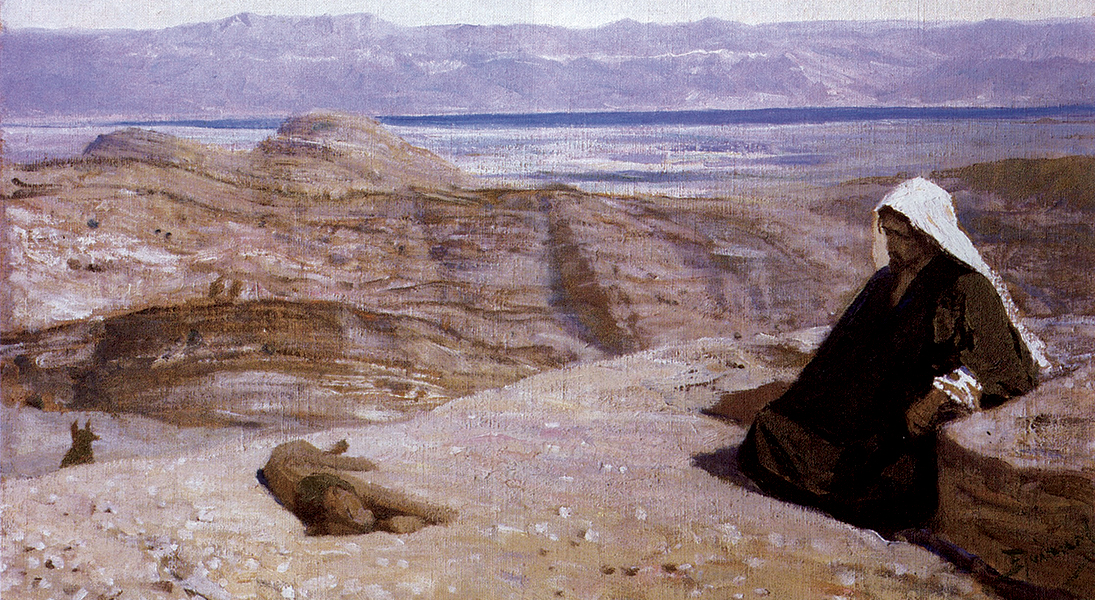
The wilderness of Judea

Lessons We Learn From Jesus’ Temptations

Monday’s Column: Neal At The Cross

img_5670

Neal Pollard

Jesus knew temptation. The writer of Hebrews makes that point about Him in assuring us He, as our High Priest, knows just what we are going through in this life (2:18; 4:15). His suffering allows Him to sympathize. I am comforted to know that He understands, since He is like me (Heb. 2:17). Luke (4:1-13) records this significant and pivotal moment in Jesus’ life before He begins His public ministry. It gives me necessary insight into who Jesus is, and it helps me fight the common battle against the enticements of my flesh, my eyes, and my pride.

TEMPTATION STRIKES THOSE IN A HEALTHY RELATIONSHIP WITH GOD. To be clear, temptation strikes “every man” (Heb. 4:15). But, sometimes we conclude that it’s not so bad or so frequent for the spiritually strong. Here is the perfect Son of God, described as full of the Holy Spirit and led by the Spirit (1), who encounters the tempter (2). Being spiritually strong can help make navigating temptation easier than it is for those who live according to the flesh (Rom. 8:5-14), but no one was closer to God and more spiritually healthy than Jesus as He walked the earth. How helpful to consider Paul’s warning here: “Therefore let him who thinks he stands take heed that he does not fall” (1 Cor. 10:12). 

TEMPTATION STRIKES IN PREDICTABLE AREAS. John classifies temptation into three major categories: “the lust of the flesh and the lust of the eyes and the boastful pride of life” (1 Jn.2:16). Methodical Luke lists Jesus’ temptation in that very order (cf. Mat. 4:1-11). The serpent, approaching Eve, must have appealed to these very areas at the beginning (Gen. 3:6). The devil does not have to get more complicated than that because these avenues are overwhelmingly effective for him. Though this and other passages reveal the Evil One’s intentions and efforts, we are fully accountable for how we respond to temptation (Jas. 1:13-15). We must take responsibility for how we handle temptation. 

TEMPTATION STRIKES WHEN WE ARE VULNERABLE. Jesus has gone an unfathomable 40 days without food when He encounters the devil (2ff). The devil goes straight for this susceptible area. Think back to times when you haven’t gotten proper rest, you faced stress and pressure, you were sick or felt poorly, and other trying times. These can easily become doors we open to sin. All of us will experience physical and emotional weakness. We must be aware that these lead to spiritual exposure. 

TEMPTATION CAN MAKE US CALL WHAT WE KNOW INTO QUESTION. Twice, the devil uses conditional statements to try and create doubt. First, he says, “If You are the Son of God” (3). He called Jesus’ identity into question. Then, he says, “if You worship me” (7). He seeks to get Jesus to question His loyalty. It was not a matter of what Jesus intellectually knew, but Jesus dwelled in the flesh (John 1:14; Heb. 2:14). Be aware that temptation will cause us to question things we know, too. That includes our exalted identity and our true motivation.

TEMPTATION IS THWARTED BY AN OMNIPOTENT TOOL. Jesus wins His battles with the devil and temptation by leaning on truth. There are 86 quotations of Deuteronomy (the second giving of the Law of Moses) in the New Testament, and Jesus quotes this book in reference to each of the devil’s temptations (8:3; 6:13; 6:16). Proper knowledge and handling of Scripture help even when enemies of truth, even the devil, try to misuse Scripture against us (as he does with Jesus, misapplying Psalm 91:11-12). Scripture is God’s own weapon, given to us not to cut and maim others but to fight off temptation and fend off the biggest threats to our faith and soul (Heb. 4:12; Eph. 6:17). 

It is wonderful to contemplate a day in which temptation will be permanently past-tense (cf. Rev. 21:1ff; 1 Cor. 15:55-58). Until then, we benefit so much from seeing how Jesus coped with the bane of temptation. It also helps us appreciate what He endured in order to give us salvation. 

Vasily Polenov (1909), “Christ In The Desert”

How Satan Tempts

Thursday Column: Captain’s Blog

carl-pic

Carl Pollard

 
Genesis 3 records for us the fall of man. This account reveals to us the methods Satan uses to tempt us, and the choice that changed the course of the world. We can learn a lot about the devil in his first interaction with God’s creation.
 
“Now the serpent was more crafty than any other beast of the field that the Lord God had made. He said to the woman, “Did God actually say, ‘You shall not eat of any tree in the garden’?” And the woman said to the serpent, “We may eat of the fruit of the trees in the garden, but God said, ‘You shall not eat of the fruit of the tree that is in the midst of the garden, neither shall you touch it, lest you die.'” But the serpent said to the woman, “You will not surely die. For God knows that when you eat of it your eyes will be opened, and you will be like God, knowing good and evil.””
 
We don’t know how long Adam and Eve were in the garden. There is no timeframe between chapter 2 and 3.
It could’ve been a month, a year, a century that has gone by. Whatever the time frame, Satan comes to Eve and places doubt in her mind. This is quite possibly the worst lie ever told. “Did God really say…?” While Satan doesn’t physically appear and speak to us today, he still uses this same tactic. He has destroyed many churches’ worship to God. “Did God really ask for music with no instruments?” “Did God really say for the women to be silent?” By casting doubt Satan has corrupted the worship and faith of millions.
 
After he casts doubt, he then blatantly contradicts God, “you will not surely die.” And once again he continues to blatantly contradict God’s word today. The message Satan tells the world is completely different from what God has given to us. Satan contradicts the Father. Rather than “love you neighbour as yourself” he says “love yourself above your neighbour.” Rather than “serve God and keep his commandments, he says “serve yourself and listen to no one.” Satan contradicted God in the past and continues to do so today.
 
After he casts doubt and blatantly contradicts God, he then offers power, “you shall be like God.” Obviously in their close relationship with God, they understood who created the world. The created wanted to be like the creator, but the devil offered a lie. Satan only has one thing to offer– sin. He oftentimes portrays this lifestyle of sin as a lie.
He offers happiness and joy, but at the end of the day all he has to offer is sin and regret.
 
Eve was tempted by Satan, and he used the same methods then as he does now. Eve experienced:
  • The lust of the flesh (she wanted to eat of the fruit)
  • The lust of the eyes (literally says “it was a delight to the eyes,” v.6)
  • Pride of life (she wanted to become wise and have power)
The devil always knows what to say in order to get us to stumble. We must be vigilant and ready to refuse the tempter when he appears.