Genesis: These Are The Generations (XV)

War And (The King Of) Peace (14:1-24)

Neal Pollard

Genesis 14 is more than a Sunday morning Scripture-reader’s nightmare (though the first ten verses would intimate the most golden-tongued!). We are introduced to an obscure, enigmatic character whom David and the writer of Hebrews will compare to Christ. However, what is the background of this King of Salem and his important encounter with Abram?

There is a local war around the Salt Sea, “four kings against five” (9). The cause of the conflict is the rebellion of the kings of the valley (Sodom, Gomorrah, Admah, Zeboiim, and Bela) against Chedorlaomer, who had conquered all the nations in the region–the Rephaim, the Zuzim, the Emim, the Horites, the Amalekites, and the Amorites (4-7). The confederation of the valley kings “arrayed for battle against” Chedorlaomer and his allies (1) “in the valley of Siddim” (8). The kings of Sodom and Gomorrah, Bera and Birsha, died in the tarpits of Siddim as they fled from the invaders’ army, and the rest of the army of the five kings fled to the hill country (10).

Chedorlaomer and his allies plunder all the goods of Sodom and Gomorrah and take Lot, the women, and the people of his house along with his possessions (11-12,16). An escapee tells Abram what happens, and the patriarch musters his allies and his own personal army to get his nephew and his house back safely (13-15). He has a battle plan, dividing his forces and attacking at night, and they defeat the invader in what is modern-day Syria (15-16). On multiple occasions, I have visited the ruins at Dan and have seen the so-called “Abraham Gate.” It dates back at least as far as Abraham’s day, almost 2000 years before Christ. 

(My photo of the “Abraham Gate,” March 2018)

After rescuing Lot and his house and goods, Abram is met by a priest named Melchizedek (18). The Holy Spirit, through the author of Hebrews, uses Genesis 14:17-20 and Psalm 119:4, and this one incident with Abraham to drive home an incredibly powerful point. Jesus is a High Priest, not like the Levites who descended from Aaron, but like this obscure figure, Melchizedek. 

The Bible uses a literary device called an antitype. “From the Greek antitupos, which occurs in Heb. 9:24 and 1 Pet. 3:21, where the AV translates it ‘figure.’ An antitype is the substance of which a type is the shadow, or the fulfilment of that which the type foreshadowed” (Cairns, Alan. Dictionary of Theological Terms 2002: 33). The antitype is always the greater; the type is always lesser and represents in some way the greater. So, Melchizedek is a type of Christ. He himself was greater than the Levitical priesthood in the ways we read in Hebrews 7, but the specific attributes we read about Melchizedek in this chapter are more fully and greatly found in Jesus.

What are the specific types? 

  • His position (18; Heb. 7:1). He is the king and priest of the Most High God. As king, he is king of righteousness and king of peace (2). 
  • His preeminence (20; Heb. 7:2,4-5). Abraham paid tithes to Melchizedek, signifying the greater prominence of the priest over the patriarch.
  • His perpetuity (Psa. 110:4; Heb. 7:3). “Without father, without mother, without genealogy, having neither beginning of days nor end of life, but made like the Son of God, he remains a priest perpetually.” None of Melchizedek’s ancestors or descendants filled this role, so in that way “he remains a priest perpetually.”
  • His purpose (19; Heb. 7:6-7). Melchizedek blessed the one who had the promises, an indication of his greater position and authority.
  • His precursory place (Heb. 7:8-11). Melchizedek lived many generations before Aaron, through whom the Levitical priesthood descended. Aaron was still in “Abraham’s loins,” meaning that Abraham did not have children yet. Much later, he would sire Isaac, who beget Jacob, etc., until finally Aaron was born through this genealogy.

In the way that Melchizedek served as greater than Levi, Jesus more fully and greatly serves as greater than Levi. If it were a math problem, we would say Levi < Melchizedek < Christ. Obviously, then, Levi < Christ. The writer of Hebrews, in chapter seven, draws some conclusions about this type of Christ. Because Christ is the antitype of Melchizedek,

  • It makes sense that perfection comes from His priesthood rather than the Levitical priesthood of Judaism (11).
  • There needed to be a change of laws (from Moses’ to Christ’s)(12).
  • It is right that this greater High Priest comes from a different tribe in which none had or could have served as priest (13-14).
  • Christ serves as priest “not on the basis of a law of physical requirement, but according to the power of an indestructible life” (15-17).
  • He sets aside the old law and brings in a better hope (18-19).
  • He was appointed High Priest by means of the oath of God (20-21).
  • He has become the guarantee of a better covenant (22). 
  • He does not die, but continues forever as High Priest (23-24).
  • He is able to save forever those who draw near to God through Him (25-28). 

It is this last truth, concerning His salvation, where the author draws out several incredible points for our consideration. It is the crescendo of his “Melchizedek argument.” His work is unparalleled–He always makes intercession for us (25). His character is unparalleled–He is holy, innocent, undefiled, separated from sinners and exalted above the heavens (26). His sacrifice and offering is perfect (27). His oath is unparalleled–He is a Son, made perfect forever (28).

Of all the ways the writer establishes the superiority of Christ over all rivals, this one is the most interesting to me. It shows the masterful way God weaves events and Scripture together. The writer of Hebrews is making the point that the Levitical priesthood has been replaced by something better. Why would you exchange the superior for the inferior? 

After this encounter, which seems relatively insignificant until David and the writer of Hebrews later expound upon it, Abram refuses to enrich himself by the unsavory people of Sodom. The new King of Sodom only wants the people, but offers Abram to keep all the returned spoils from Chadorlaomer. Abram will have no part in that, taking only provisions necessary for the completed battle. Abram will continue to rely on God’s promises to take care of his needs, and he parts company with the king of this wicked domain. 

(Picture taken on March 10, 2018, running at the Dead Sea with Keith Kasarjian)

Love Your Neighbor

Gary Pollard

Jesus told a story about a Jewish man who was attacked while traveling. He was seriously injured and left for dead by the side of the road. Two of his own countrymen — considered spiritual leaders by their people — completely ignored their unconscious brother and went about their day. A Samaritan man — considered inferior by the Jews at that time — helped him. He didn’t say, “I hope everything works out for you.” He rendered medical aid, took him to shelter, and made sure he had everything he needed to recover. 

The conclusion of this story was a question: “Which one of these three men do you think was really a neighbor to the man who was hurt by the robbers?” The answer was obvious. Loving your neighbor (i.e. other humans) necessarily means providing for their physical needs. How important is this? “Teacher, what do I have to do to get eternal life?” The Good Samaritan illustration was Jesus’s answer to that question. 

“When we have the opportunity to do good to anyone, we should do it. But we should give special attention to those who are in the family of believers” (Gal 6.10). 

“My brothers and sisters, if a person claims to have faith but does nothing, that faith is worth nothing. Faith like that cannot save anyone. Suppose a brother or sister in Christ comes to you in need of clothes or something to eat. You say to them, ‘Go peacefully, warm yourself and find some food,’ but you don’t give them the things they need. If you don’t help them, your words are worthless” (Js 3.14-16). 

“Suppose a believer who is rich enough to have all the necessities of life sees a fellow believer who is poor and does not have even basic needs. What if the rich believer does not help the poor one? Then it is clear that God’s love is not in that person’s heart. My children, our love should not be only words and talk. No, our love must be real. We must show our love by the things we do” (I Jn 3.17-18). 

“The Son of Man will come again with divine greatness, and all his angels will come with him. He will sit as king on his great and glorious throne. All the people of the world will be gathered before him. Then he will separate everyone into two groups. It will be like a shepherd separating his sheep from his goats. He will put the sheep on his right and the goats on his left.Then the king will say to the godly people on his right, ‘Come, my Father has great blessings for you. The kingdom he promised is now yours. It has been prepared for you since the world was made. It is yours because when I was hungry, you gave me food to eat. When I was thirsty, you gave me something to drink. When I had no place to stay, you welcomed me into your home. When I was without clothes, you gave me something to wear. When I was sick, you cared for me. When I was in prison, you came to visit me’” (Mt 25.31-36).

Zadok The Priest

Neal Pollard

Zadok the priest was neither an Anglican Church member or even British. Many associate his name with Handel’s 18th century coronation hymn, written first for King George II. But, he was a significant, if minor, Old Testament character. We learn at least four great lessons from his character, as revealed in Scripture.

  • He was a versatile servant of God. He is introduced as “a young man mighty of valor” (1 Chron. 12:28), but also as a priest of God (1 Chron. 15:11). Thus, he was handy in a fight while also helpful in reconciling men to God. What an example of a five or two talent man, able to serve God in more than one way. God has blessed most of us with the ability to do many things well. We should be motivated to use those skills for Him.
  • He was a respecter of God’s Word. His predecessor, Uzzah, disregarded God’s instructions for transporting the ark and paid for that with his life. Zadok was at the head of the list of priests tapped to do it the right way, according to God’s word (1 Chron. 15:11ff). Nothing we see after this does anything except strengthen the view that Zadok submitted to the divine will. What a legacy to leave, known as one who simply takes God at His word and strives to be obedient to it.
  • He was a loyal friend. When Absalom rebelled against King David, many in Israel aligned themselves with this usurping son. However, Zadok remained true to David (2 Sam. 15). David relied on him, with Abiathar, to keep tabs on the insurrection while ministering in Jerusalem. David knew he could count on Zadok. In the same way, Scripture praises such loyalty. David’s son penned that “A friend loves at all times, And a brother is born for adversity” (Prov. 17:17). We should be a friend others can count on at all times.
  • He was a good judge of character. Whether choosing to serve David over Absalom or Solomon over Adonijah, Zadok was an excellent discerner of the right choice. In both cases, these were the righteous and God-approved choices. Even Abiathar, who stood with David over Absalom, got it wrong when Adonijah tried to supplant God’s will concerning David’s rightful successor. For this reason, Zadok took his place alongside Samuel as the only priests to anoint a king during the United Kingdom period of Israel’s history (1 Kings 1:39). It was this event Handel coopted to write his coronation hymn. God had bright hopes for those who feared Him, that they would be able to “distinguish between the righteous and the wicked, between one who serves God and one who does not serve Him” (Mal. 3:18). That was Zadok, and it should be us–regarding preachers, elders, teachers, as well as every child of God we have dealings with. We must grow in our ability to be capable fruit inspectors (cf. Mat. 7:15-20; John 7:24).

Thank God for Bible characters who show us, with their lives, the way to please Him with ours. The times may, in some ways, be drastically different from when Zadok walked the earth. But, with the time God gives us, we would do well to imitate these traits of this priest of God remembering that God desires us to be faithful priests for Him today (cf. 1 Pet. 2:1-9).

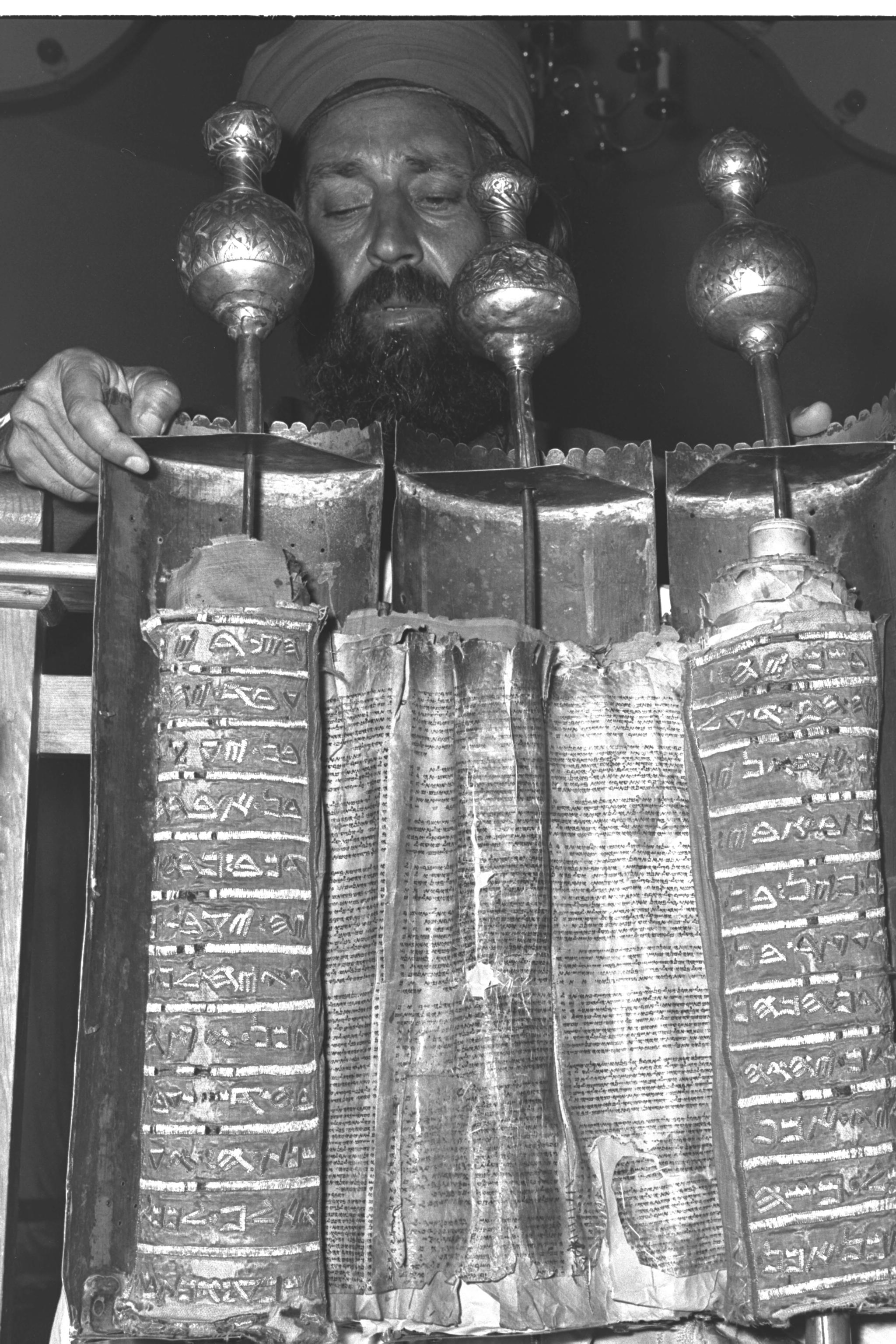
flickr_-_government_press_office_gpo_-_samaritan_priest_zadok_ben-avisha_hacohen

Studying The Sweet Samaritan

Neal Pollard

Jesus wants us concerned with people, especially those near us in some way.  It may be easier to care about someone who looks like us, who is decent or even attractive, or who is easier to help.  The unattractive, strange, dissimilar, or unpleasant may not be ones we are as easily drawn to assist.  That is why Jesus’ teaching on who our neighbor is ought to be convicting and persuasive.  Luke 10:30-37 records the infamous lesson of the good Samaritan.  Here is what the text reveals about this story.

The parable reveals a problem (30).  Someone is hurt and in need and can do nothing for himself.  It is an observable problem, as the text will reveal.

The parable reveals three pedestrians (31-33), a priest, a Levite, and the Samaritan.  The first two do nothing to help the hurting man, but the Samaritan is moved to provide assistance. The priest was passive, the Levite paused, but the Samaritan pitied.

The parable reveals a proper performance (34-35).  It is seen in what he felt—compassion. It is seen in what he did—came to him, bandaged him, soothed him, carried him, cared for him, and supported him.

The parable reveals a proof (36). Jesus asks, “Which of these three do you think proved to be a neighbor…?”  The answer did not depend on how long they were followers of God, how much they knew, or how much influence they had in the community.  The proof was in the performance, as revealed in the previous two verses.

The parable reveals the point (37).  The point of the parable is to prove to be a good neighbor by “going” and “doing.”  Learning this story or hearing its application does not make one a good Samaritan.  Feeling convicted does not, either.  Instead, the good neighbor is the one who puts the principles of this parable into practice.  Jesus would tell us all, “Go and do the same.”

My Study With Armando

Neal Pollard

This morning, I had the opportunity to have an impromptu Bible study with a man who introduced himself as Pastor Dr. Armando.  He wanted to find a congregation who would allow his ministry and followers a place to work and worship.  Prayerfully, I listened to him and looked for my opportunity to turn the conversation from his program to the Bible.  After hearing him out, he asked if we would be interested.  I told him that he saw some great needs and had some intriguing methods of providing benevolence to our community, but the problem would come regarding what they taught and how they worshipped.  As gently as I could, I tried to show him what Scripture said about both–since both were matters he brought up in our discussion.  Judging from his facial expressions, he had never heard of a preacher or church approaching the plan of salvation or how to worship or anything else using nothing but the Bible. I told him we had no creed, council, synod, or earthly head who governed or gave us religious traditions to follow.  While he seemed very interested in the concept, his “pragmatic” side did not allow him to see how that would work with the group with which he already worked.  There were nearly 100 people, black, Hispanic, and white, who he said worshipped with him.  They believed how or when one is baptized was not important, and they were very drawn to their drums, guitars, and other instruments in worship.  Yet, as strident as he was about their beliefs, this idea of non-denominational, simple New Testament Christianity intrigued him.  We ended our hour-long discussion by agreeing to meet to talk further about these things in a more systematic way.  I’m optimistic and hopeful!

Perhaps we have bought into the idea that the “restoration plea” has been tried and has failed to find a following.  If Dr. Rangel is in any way representative of the religious world, and I have reason to believe he is, there are a great many who are totally unaware of that plea.  Could there be a whole world of religious people out there, disenchanted with mainline evangelical denominationalism, who would be open to New Testament Christianity?  Let’s pray for opportunities to share it and see what happens!