One of the strangest moments in Roman history probably belongs to crazy Caligula. Why? Well, he’s the emperor who declared war on the sea.
This wasn’t a battle on the sea, this was a battle with the sea.
According to the Roman historian Suetonius in The Twelve Caesars, Caligula marched his legions to the coast of Gaul around A.D. 40 and he formed his soldiers in battle lines facing the water.
Then he gives a command— attack!
The troops were ordered to stab the waves and hurl javelins into the surf. Afterward, Caligula reportedly instructed them to gather seashells as “spoils of war”—from Neptune (Rome’s god of the sea).
Was the story exaggerated? It’s possible. Even if the only truth to the tale was that a man waged war against the ocean it still provides the perfect illustration for many things in life. The illusion of human power, being one of them. An emperor who ruled millions could command armies, raise your taxes, and build monuments — but he couldn’t slay the sea. The ocean didn’t retreat and the waves did not surrender.
The Bible tells us who has sovereignty over the waters:
“Who shut up the sea behind doors when it burst forth from the womb… when I said, ‘This far you may come and no farther; here is where your proud waves halt” (Job 38:8–11)?
God reminds humanity that only He sets boundaries for the ocean. Kings may flex, and armies might rage, but the tide answers to no one but Him.
Caligula’s strange spectacle at the beach becomes sort of a parable doesn’t it? When humans attempt to assert divine authority over creation, they expose their limits. A lesson nobody ever wants to learn is that power without humility turns into absurdity. Or, to put it another way; authority without submission is self-parody.
The sea still keeps its boundaries, not because an emperor commanded it— but because God did.
To say that crisis is welcomed is inaccurate, but strength in suffering is one of the most faith-building examples we can find in others. I invite you to read a brief glimpse of one such example.
Brent Pollard
My recent stay in a long-term acute medical facility resulted in my return home on a ventilator. I was unable to entirely wean off the ventilator, as I had done successfully in 2021. As a result, I find it necessary to connect myself to the ventilator every night as I prepare to sleep. The ventilator helps me expel excess CO₂ from my body, which my restrictive lung disease makes challenging to do. Since returning home, I’ve become more aware of how much trust I need to place in my ventilator to avoid panic. Suppose you have ever remained conscious while on a ventilator; you may understand what I am saying. The device helps you breathe, but you must fully surrender and refrain from interfering with the machine’s operation on your behalf. Using a ventilator presents a significant learning curve, contradicting our natural inclination.
As I reflect on my new reality, I can’t help but think of an expression you’ve probably heard before: “Let go and let God.” Organizations like Alcoholics Anonymous used that expression in the middle of the twentieth century, but its origin is unknown. Although it is not rooted in a specific scripture, several passages in the Bible convey a similar sentiment. Here are some such passages:
Proverbs 3.5-6: “Trust in the Lord with all your heart and do not lean on your own understanding. In all your ways acknowledge Him, and He will make your paths straight” (NASB95).
Psalm 46.10: “Cease striving and know that I am God; I will be exalted among the nations, I will be exalted in the earth” (NASB95).
1 Peter 5.7: “Casting all your anxiety on Him, because He cares for you” (NASB95).
Surrender is deeply complex. In the face of uncertainty about what lies ahead, the burden of expectation to solve every problem, and the unyielding grip of anxiety, we frequently overwork, cling more tightly, and eventually exhaust our resources. It is then we need to “let go and let God.” This expression does not advocate idleness or inaction; instead, it promotes a proactive faith. It takes faith to rely on the Divine’s strength, wisdom, and love to handle what is beyond our abilities. It represents a receptive and generous attitude, emphasizing openness over defensiveness.
By releasing, we make room for the divine to work. When we give up our efforts, we can begin to hear the Lord’s voice. As we release our burdens, we feel the comforting embrace surrounding us. Jesus invites us to experience this release.
“Come to Me, all who are weary and heavy-laden, and I will give you rest” (Matthew 11.28 NASB95).
Releasing is not the same as giving up—surrendering our control, not our hope. It represents giving up our fears, letting go of our timing, relinquishing our desired outcomes, and surrendering our sense of control. In this pursuit, we discover tranquility and divine peace that surpasses all understanding (Philippians 4.7).
Surrendering our burdens to God ultimately opens us to a peace beyond comprehension. Faith in His intentions for our lives brings a profound sense of peace and confidence. He comforts our weary souls and assures us that He will bear our burdens if we seek Him out.
What burden are you still trying to carry on your own that God is inviting you to release today? Let go and let God! Let us find comfort in releasing our grip and welcoming the peace only He can provide.
I’m trying to convince my wife (Janelle) that she needs to make a podcast/Youtube series that would provide a nurses perspective on the many kinds of medicines used in the Bible as well as the medical practices of ancient cultures mentioned in the Bible. Would their medical practices actually work or make things worse? If you think that would be interesting as well, please send her a message and let’s all annoy nurse Janelle until she makes it happen.
On a similar note, this article was written after researching a few of these bizarre medical practices.
DID YOU KNOW…
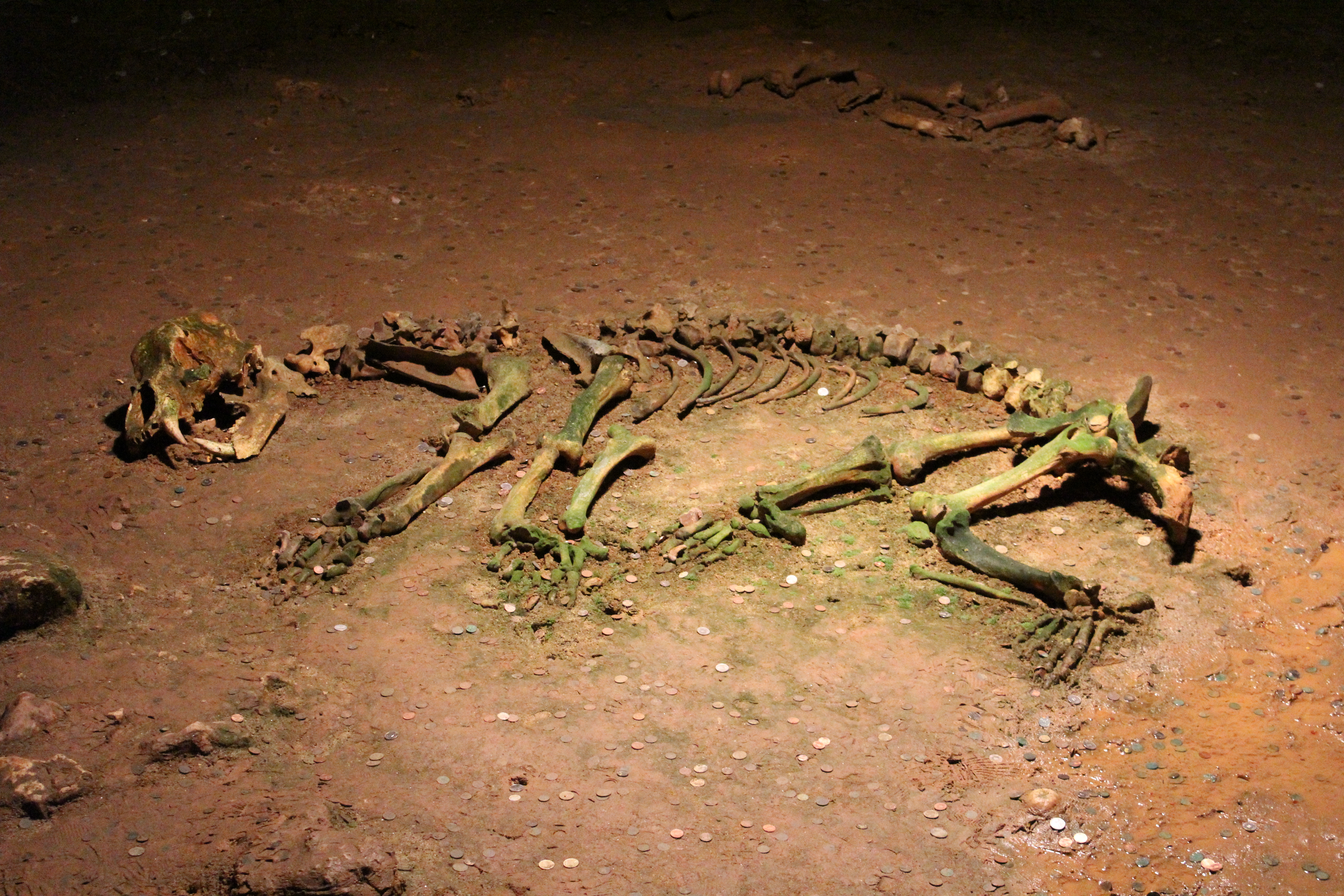
The use of dragon bones in medicine is a fascinating aspect of ancient beliefs, particularly if you view these “dragons” as possible examples of humans and dinosaurs co-existing. However, what’s really strange is the fact that various societies around the world all decided to use the bones in such a unique way— medicine.
For example, in medieval Europe, people sometimes discovered large bones and believed them to hold magical properties. Powders made from these bones were used as talismans or medicinal remedies.
During the Middle Ages, alchemists often incorporated “dragon” substances in their potions and elixirs. They believed that dragon bones could enhance the efficacy of their concoctions or serve as some sort of protective charm.
Some Mesoamerican civilizations had legends about dragon-like creatures, and they used the large fossilized bones in rituals and their medicinal practices because they believed the remains held mysterious power.
An article in the Associated Press in 2007 had this to say about the ancient Chinese:
“Villagers in central China spent decades digging up bones they believed belonged to flying dragons and using them in traditional medicines. Turns out the bones belonged to dinosaurs…
The calcium-rich bones were sometimes boiled with other ingredients and fed to children to treat dizziness and leg cramps.”
The Bible has an interesting account about “magic” bones in 2 Kings 13:20-21. This passage recounts the power of God working through the prophet Elijah— even after his death.
Here’s a brief summary for those who might be unfamiliar with this incredible account:
The prophet Elijah made a significant impact (perhaps the most significant) in Israel. Even after his death his prophetic legacy was admired by the people, but Elijah would perform one last miracle from beyond the grave. Some men were burying a man when they saw a raiding party coming. In haste, they threw the deceased man into the tomb where Elijah’s bones lay and when the dead man touched the bones of Elijah he came back to life and stood on his feet.
While there may or may not be anything to the medicinal benefits of dinosaur bones as claimed by ancient cultures, there’s no need to speculate where the power was coming from in our biblical account. It’s obvious that it was God’s hand at work and not the prophet’s bones. The same can be said of baptism or even our Bibles. The power isn’t in water found in a baptistery or words on a page because we know the source is actually our Savior. The cure to the world’s greatest disease isn’t some secret recipe that utilizes dragon bones. What we need is what we already have and it’s widely available.
“Be not wise in your own eyes; fear the LORD, and turn away from evil. It will be healing to your flesh and refreshment to your bones.”
In a remarkable display of divine providence, a changing storm pattern guided Helene far to the east, sparing my cherished home in the north Georgia mountains from its fury. Though this may bring scant solace to those affected by the storms in western North Carolina and eastern Tennessee, I reflect on the profound insights that the sorrowful occurrences of late September 2024 have unveiled. Sometimes, extreme weather events’ catastrophic character justifies using terms like “biblical.” Indeed, WUNC’s Due South featured an article on the aftermath of Hurricane Helene, capturing the devastation with the phrase “biblical destruction.”
Channel shifts: Rivers and streams changed course, forming new channels or eroding existing ones.
Sediment deposition: Floodwaters transported significant sediment downstream, affecting riverbeds and water quality.
Landslides: Heavy rainfall created instability, resulting in landslides that blocked waterways and altered water flow.
Erosion: Increased water flow has accelerated erosion, particularly in areas with vulnerable soils, altering the shape and depth of river valleys.
From September 25 to 27, Yancey County, North Carolina, got hit with a remarkable 31.3 inches of rain in just a few days. This recorded amount is the highest in the region, surpassing all others with noteworthy distinction. But what if you were to multiply that number by forty days? What wonders might forty days bring if three days can transform a place beyond recognition? Noah constructed the Ark as a refuge amidst the deluge that engulfed the earth, resulting from relentless forty-day rain and the shattering of the planet’s vast aquifers (Genesis 7.11–12).
Anyone who survived Hurricane Helene’s destructive energy will find it more difficult to dismiss the idea of an angry God using water to cleanse the world’s surface of a creation that had become too pesky with its sin. Indeed, it is not difficult to believe that God could use a flood to inundate the world, but that in so admits that there is One to whom we must all account (cf. Romans 14.12). This admission is what the skeptic and scoffer seek to avoid.
The profound effects of Hurricane Helene stand as a poignant reminder of nature’s untamed strength and our enduring fragility in the face of forces that lie beyond our grasp. Though our technological advancements allow us to monitor, assess, and occasionally foresee these devastating occurrences, nature’s power reminds us of her power to transform our world in just a matter of days. The changing landscape of western North Carolina resonates with timeless stories of divine influence woven through the fabric of nature, inviting both the faithful and the doubtful to ponder deeper truths about our connection to the world around us and, perhaps, to its Maker. As communities rise anew and adjust to their transformed landscapes, the teachings of Helene—echoing the timeless story of Noah’s flood—persist in their relevance, urging us to honor the power of nature and recognize our limitations as we journey through the challenges of our ever-changing world.
The God whose presence will bring us to our knees, is also the God who sets us on our feet.
That stormy wind, felt by the prophet on the banks of the Chebar river, carried with it sights, sounds, feelings, and tastes, allowing us to experience God in a profound way. The text demands our attention like the very voice of the Almighty (v.24), an appropriate name for God that’s found repeatedly in Ezekiel. From the first chapter it becomes clear that if the Spirit hadn’t breathed through the prophet and guided his pen, these preserved glimpses into the spiritual realm would not have been possible. The liberal use of words and phrases such as, appearance, then I saw, then I looked, it’s likeness, it was likened to, sounded like, then I heard, it felt as if, the taste was like— alltheseattempt to describe the indescribable so that the earthly reader may vaguely comprehend them.
God first appeared to Ezekiel as a rainbow in the midst of a great storm. The symbolism is one that reminds us that God’s promise will remain even in the midst of peril. At the sight of His glory the prophet would fall on his face. God’s response is a command, “son of man, stand on your feet” (1.28). That term “son of man” is a telling one. It highlights Ezekiel’s humanity and in the presence of the Almighty— the contrast is a sharp one. It’s obvious that he can’t stand on his own so the Spirit enters into him and sets him on his feet (2.2).
That act of raising up one who otherwise couldn’t is a thematic one; showing up again in the valley of the dry bones. This time, God doesn’t raise a single living man to his feet, He brings up the dead by the thousands. The Author writes, “…the breath came into them, and they lived and stood on their feet, an exceedingly great army.” God demonstrates that He can lift up one, and He can also lift up every one. How long a person has been spiritually dead or how decomposed sin has turned a Christ-less corpse— doesn’t matter. The God whose presence will bring us to our knees, is also the God who sets us on our feet.
The longest train ever recorded in history was the Australian BHP Iron Ore. The cars behind it stretched approximately 4.6 miles. To provide some mind-boggling perspective here's what one train-fanatic wrote,
“Driven by a single driver, the line’s 99,734-ton and 682-car train was able to carry 82,000 tons (181 million pounds) of iron ore. The Australian BHP Iron Ore can fit about 24 Eiffel Towers…The weight of this train being the same as about 402 Statues of Liberty.”
Trains are impressive heavy-haulers, but only under the right conditions. On the tracks they’ll whistle while they work but once they’re derailed— they only whistle. Trains don’t work without tracks.
Paul would make an interesting appeal to the saints who met at the infant church family in Thessalonica. He asks that they pray for the powerful gospel to have a straight path so it could move quickly. His exact words were,
“pray for us, that the word of the Lord may run swiftly and be glorified…”
2 Thess. 3.1b
In a simple yet inspired prayer request a practical and profound implication steps out of subtlety— Prayerlessness will hinder the furtherance of the gospel.
Based on this text, the content of congregational prayers may be in need of careful inspection. Reevaluating your evangelistic ministries, online presence, visibility in the community, advertising efforts, kingdom expenditures, and even the dynamics the worship service— all must fall below the prayer line on the priority list.
While Paul was writing to the Thessalonians, God was writing to the rest of us. He reminds us that this request should ring in the prayers of His congregations today. The written petition by itself informs the modern church that this is something that God is willing and able to do for us, He would just have us ask. The powerful gospel needs prayer— like a train needs tracks.
A 21st century church member may occasionally think
The gospel doesn’t seem to be as convicting in my community. It works just fine in other parts of the world, and it worked well in the past— but not so much here and now.
More Reasons Can Be Found
Here: James 4.2-3 Here: Matthew 21.22 And Here: Ephesians 6.19-20
We used to sing a song in church growing up called, “There’s An Eye Watching You.” The chorus goes like this, “watching you, watching you, every day mind the course you pursue; watching you, watching you, there’s an all-seeing eye watching you.” As a kid and even into adulthood, I would sing this song and envision a giant eyeball in the sky. While this isn’t case, maybe it would do us good to think of God’s eye watching us each day.
Psalm 33:13-14 says, “The Lord looks down from heaven; he sees all the children of man; from where he sits enthroned he looks out on all the inhabitants of the earth.”
If God sees “all the inhabitants of the earth,” He is automatically breaking the laws of time and space. Tanzania, Africa is 8 hours ahead of where I am in Kentucky. Cambodia is 12 hours ahead. Half the world is asleep because half the world is in darkness at any given point in time. God is naturally present in every aspect of the natural order of things, in every manner, time and place. He sees EVERYONE!
God saw Hagar when she was on the run from Sarah (Gen. 16), and Hagar gives God a new name…”the God who sees” because God saw she was in need and helped her.
God saw righteous Noah in a world of wickedness. God saw Cain when he slaughtered his brother. God saw Israel in Egyptian captivity. God saw Joseph thrown into a pit and sold off by his brothers. God saw David as he hid from Saul and his men while they were trying to kill him. God saw Abraham obey His words and try to sacrifice his son Isaac. God saw His own Son, abused, rejected, spit on, and killed. God saw the early church as they were persecuted for following Christ. God sees you as you’re reading this article right now. God sees every deed and it is written down for the judgement day.
God sees everyone. Proverbs 15:3, “the eyes of the Lord are in every place, watching the evil and the good.” We live in a physical world with its four known space-time dimensions of length, width, height (or depth) and time. However, God dwells in a different realm—the spirit realm—beyond the perception of our physical senses. It’s not that God isn’t real; it’s a matter of His not being limited by the physical laws and dimensions that govern our world.
“For thus says the One who is high and lifted up, who inhabits eternity, whose name is Holy: ‘I dwell in the high and holy place, and also with him who is of a contrite and lowly spirit, to revive the spirit of the lowly, and to revive the heart of the contrite’” (Isaiah 57:15, ESV). God is spirit in the realm of timelessness rather than flesh in the sphere of time.
As Christians, we have a deep sense of comfort knowing that God, though timeless and eternal, is in time with us right now; He is not unreachably transcendent, but right here in this moment with us. And because He’s in this moment, He can respond to our needs and prayers.
We serve an incredible God. There’s no denying His amazing power and holiness.
A God who created everything with His Words. A God who sees all the inhabitants of the earth. A God who has the power and might to be everywhere on this earth at one time. A God who looked at me, who looked at you, and saw that we needed a savior.
So why then do we understand God’s power and yet still neglect our prayer life to Him? Or forget to study His Holy word? He sees what we do with our time, so make the most of it!
True understanding of Who God is will always result in righteous living.
When I was younger I used to lay in bed at night and try to imagine what God looked like. I would try to put a face to Him, I’d wonder what He was doing, and I would ask myself if God knew that I was thinking about Him. I still ask those same questions to this day. It is likely that most, if not all of you, who are reading this article believe that there is a God and that He can see and hear all that we say. So the question I’d like us to ask ourselves in this article is this; since there is a God that has all power, why do we sometimes have difficulty following the commands that we find in the Bible?
Jeremiah 10:12 says, “It is He who made the earth by His power, who established the world by His wisdom; and by His understanding He has stretched out the heavens.”
God has ALL power. There isn’t an area that He is lacking power in. He controls the weather, He created us, and as Jeremiah said, “He made this earth” and we are inhabitants of His world. As humans, we sometimes forget just how powerful God truly is. Since God has all power, shouldn’t we be following what the Creator of everything has told us to do? In seven days He thought of everything we see around us.
Did you know that no one has ever had an original thought? For example, I could say that I’m the only person to have ever thought about a blue turtle. But before I thought of blue turtle, there was such thing as the color blue, and there were turtles before I thought of them. So what I’m actually doing is taking two things that God created and putting them together. We aren’t original; we just use what our Creator has already made. This God, the one who spoke everything into being, has given us specific commands to follow as Christians.
Since God has given us rules on how to live, we shouldn’t have a problem following them. They may be difficult, but God knows how to take care of His creation. The thought of the God of the universe watching out and guiding me through life is a great comfort! But on the flip side, what if we aren’t following what God has told us to do? There’s a saying, “Actions speak louder than words.” Our actions are a direct window into how we truly feel. If we don’t do what God has commanded, then that’s like us saying to God, “I don’t truly believe that there are consequences to my actions.” But that is a deadly place for us to be, because God IS real and there ARE consequences to our actions. God is real and the consequences of our actions are as well.
In the end it comes down to this: Not obeying what God has said is a reflection of how real we make God out to be. If we truly believe He is real, then we shouldn’t have a problem doing what He tells us to do. As Christians we serve the One true God, and He is ever present in the world. I pray that this fact will push us to do the commands He has given us because our God is alive and we all have an eternity with Him if we do what He tells us to do.
Looking back at when I was younger, I’ve realized that I asked the right question, but the most important part of those questions is how I answer them. Will I show through my actions that I truly believe He is alive? Or do I doubt the reality of God by not taking His commands seriously? Let’s try to always prove God is alive by following what He has told us to do!
For the past four years I have been going though what I believe to be the toughest battle I have ever had to face in my life with our warrior princess Kiyomie’s medical condition. God blessed me with my greatest desire and greatest fear as a father; which was to have my daughter; and one of my babies getting sick and me not being able to do anything to make them better.
We decided that my wife would come to the United States in October of 2017 after our homeland was devastated by category five Hurricane Maria. It was a difficult but necessary decision because Kerssel was pregnant and the prenatal care she needed wasn’t available post-hurricane. I joined my wife in February of 2018 and we had flights booked to return home in April of 2018. Before traveling I had set up everything in Kiki’s nursery which was also my office where I did my studies; her crib was right next to my desk, I had so many plans for my baby girl and was ready to bring her home.
What we had no idea of is that we were heading right into another hurricane; one of a different nature. Kiki suffered severe brain injury during birth and this changed our entire life: we could not return home, we had to leave my six year old son Éjiké and our families behind in Dominica which ached our hearts daily. The life we knew was basically over. We had our family’s support but were here all alone, in a foreign land with no one close to come help during the toughest period of our life.
We both had to resign from our jobs. We were forced to sell everything we owned in order to survive here, we went from being one hundred percent independent to one hundred percent dependant on others, we had to seek assistance to pay our monthly bills and purchase the most basic of necessities for our children and ourselves– diapers, wipes, deodorant, toothpaste, bath soap and everything else. We were unable to care for ourselves the way we used to, unable to provide for our children, only going to the doctor or dentist if we were very ill, not purchasing new clothing or undergarments even though we desperately needed them.
Through so many sleepless nights, emergency room visits and hospital stays we managed to keep surviving, by the grace of God. It is hard and lonely but we have no choice other than continuing to be resilient and keep focused on Kiki getting better. (We’ve had so many nights that we got little to no sleep that right now we consider a night of 4 hours of sleep a good night rest)
We didn’t think that our life could have gotten any worse but then on August 10th 2020 we got the dreadful news that my wife’s mom had suddenly passed at only 56 years old. From that day our lives was under a dark cloud; well, that’s how it felt. Mom, as we all called her, was our main pillar of support; our greatest cheer leader and prayer warrior; she sent messages every single day to both Kerssel and I telling us how strong we are and great parents we are and that Kiki will be healed and to remain faithful. That day in August took so much away from us, after mom’s passing everyday just felt like we were going through motions, like robots, just floating around under that dark cloud.
Mrs. Dawn Pitcock had been working with Kiki since she was discharged from the NICU. She and her family became a friend and remained in close contact even after Kiki aged out of the First Steps program. She had mentioned her church and asked if we’d like to visit, but we never did then. We were still under this dark cloud. Sometime after mom’s passing Dawn asked whether we would mind if she and elders from her church come by to visit and pray with us.
Russell, Dana and Dawn came one Sunday after service, we conversed for a while, we prayed and we cried; that blessed Sunday afternoon is one I will never forget as it felt like that first ray of sunshine piercing through the dark clouds. We started studying and getting a better understanding of God’s word with the assistance of Russell, Neal and Greg. Our faith started to grow stronger and we began feeling better, our lives felt a little less cloudy day by day. We started attending Sunday service when we were
able to, Kiki’s condition determines whether we can but we kept studying via zoom.
We had discussed baptism a few times but I didn’t feel fully ready until April 6th, 2021, on that day, I called Neal and told him that we were ready. When we got to church building there were several other members of our Leman Avenue family there to support us. Kerssel and I were baptized on that day and man that felt good, it was a new life in every aspect.
Yes we are still going through tribulations. Kiki still has tons of medical complications and has a long way to go. Yes we still seek assistance to cover every single expense that we have. BUT, because our faith in God, and ourselves have grown, our bond with God is getting stronger and our understanding of God’s word and love for us and his purpose for allowing us to go through what we are going through; we are able to better appreciate our situation. God have been right there with us all along, he continues to supply our every need; he has, housed us, fed us, and clothed us physically and spiritually.
In our lives on a daily basis we encounter troubles, problems, adversity; no matter how small or complex they are, they always pose a challenge physically, emotionally, psychologically and spiritually.
In these moments we feel weak, we feel defeated and are forced to face problems to great for us to handle; so we turn our attention to God and begin questioning him, WHY? Why am I going through this? Why me? What Lord can I do to solve this problem? During these challenges we are unable to continue our tasks like normal; so we stop, evaluate our situation, ask God for wisdom, obey his word, have faith and trust him to bring the help that we need.
The apostle James had a response to adversity which has helped me through my own troubles.
James 1:2-6
Consider it pure joy, my brothers, when you are involved in various trials, because you know that the testing of your faith produces endurance. But you must let endurance have its full effect, so that you may be mature and complete, lacking nothing. Now if any of you lacks wisdom, he should ask God, who gives to everyone generously without a rebuke, and it will be given to him. But he must ask in faith, without any doubts, for the one who has doubts is like a wave of the sea that is driven and tossed by the wind.
When going through these challenging times in life the best resort is to turn to Jesus, I can guarantee without any doubt that no matter what the problem is, you will find guidance to a solution within the word of God. Apply the appropriate scripture, faith and the very best effort you can, to every adversity you face and you will be victorious.
In conclusion I say to you, through every adversity, trial and tribulation seek God for he is always waiting to guide us through our troubles and ultimately draw us closer to him.
Have faith no matter how small it is: Faith in God, faith in yourself, faith that God is greater than your problem, faith that God is helping you through the adversity, faith that you will overcome.
Nurture your faith and watch your faith grow. Mathew 17:20 tells us, “…Because of your lack of faith. I tell all of you with certainty, if you have faith like a grain of mustard seed, you can say to this mountain, ‘Move from here to there,’ and it will move, and nothing will be impossible for you.”
If you can move a mountain with faith the size of a mustard seed, can you imagine the magnitude of power you would possess with faith the size of a tennis ball or basketball or greater?
I’ll close with some words and verses I recite whenever I’m having a moment of weakness during a challenge and the effect that they have on me is miraculous, I recited them right before coming up here; they are:
I believe that God is with me. I believe that God is helping me. I believe that God is guiding me.
I can do all things through Christ who strengthens me (Philippians 4:13). What shall we then say to these things? If God be for us, who can be against us? (Romans 8:31)
Thank you for listening, thank you for being our family when we most needed one, thank you for the support given to my family in every single way.
By the time we reach Revelation chapter five John is writing in greater detail all of the glory unfolding in the throne room of God. The door to heaven was opened and the revelator was called through it by the trumpeting voice of the Lord. The theories and wildly different views on the book and it’s meaning for the modern Christian seem to become more prominent in this chapter as well. Let’s briefly work our way through some of the challenging sections.
Seven Seals
First, in the opening lines we read of a scroll with writing on the front and back. This seems to indicate that there was much to be revealed as scrolls were typically written on one side only.
Some have taken the seven seals to mean seven different scrolls, but the text only indicates one scrolls with seven wax seals holding it together.
Over the years scholars have debated the contents of the scroll, but Jesus could break the seals (5.3-4). While there are several opinions about what was contained on the scroll, it’s best seen as the final will for the affairs of the universe. As vague and frustrating as that may sound, there’s simply no textual evidence to assume otherwise. In ancient Rome it was common to have government wills and classified documents protected by seven seals. To open such an important scroll required a high ranking individual.
A Mighty Angel
Calling out in a loud voice the angel asks, “who can open the scroll?” John begins to weep. If this mighty angel is searching for someone worthy, surely there’s not another who could possibly open it.
The Lamb With Seven Eyes & Seven Horns
The lamb which is representing Christ here is depicted as having features not normally seen on these animals. Seven eyes, which symbolize God’s all seeing eye. Then there are the seven horns, representing God’s ultimate power. The number seven was God’s number and it represents perfection and completion. The seven spirits, then, indicating the fullness and completeness of God.
Who can open the seals? Only Jesus with His perfect power and foresight is able to open this one. Revelation is the great revealing of Christ, and Christ is the only One able to reveal it’s secrets.
The book in it’s entirety has a message from God for us, but we must be sure to understand His revelation— not man’s.
I’ll be repeating the book of II Peter in present-day terminology. It’s not a true translation of the book, as I am not qualified to do so. It will be based on an exegetical study of the book and will lean heavily on the SBL and UBS Greek New Testaments, as well as comparisons with other translations (ESV, NASB, NIV, ERV, NLT). My goal is to reflect the text accurately, and to highlight the intent of the author using concepts and vocabulary in common use today.
This is not an essentially literal translation, and should be read as something of a commentary.
Message is Credible
Family, you have to make sure you’re in a good place when it comes to your relationship with Jesus. If you’re practicing all those qualities we just talked about, you’ll be ok. You’ll make it to eternal life. You know this stuff already, but it’s always a good idea to remind you. You’re already in a good place, but as long as I’m alive, I’ll keep reminding you. I’m going to die soon. Jesus made that clear to me. Because of this, I want to make sure you’ll remember everything I taught you. What we taught you originally is still valid. Jesus is powerful and he’s coming back to us. We weren’t duped into believing an intricate lie. We were firsthand witnesses to his superior nature! One time, the ultimate power – God – validated this by saying, “This is my son. I love him and I think very highly of him.” He said that right in front of us while we were with Jesus on a mountain. His voice came from the sky. This made us confident that we have the right message. Since we’re confident in this message, you should be, too! Focus on what we’ve told you like you’d focus on a light source in a dark room. Hang onto this until the end, when everything will be light and darkness won’t exist. It’s very important that you understand something: we don’t get to decide what a prophecy means. No human has ever produced a legitimate prophecy. Those came from men who were influenced by God’s spirit.
The Valhermoso Springs Resort was a gathering place for those seeking treatment from the famous Sulphur and mineral springs. The three springs were even used by the Indians for the same reason— adding yet another vale of mystery to the area. Despite being a place that attracted visitors from all around the world, including European and French royalty, there are only three low quality images of the place. Walking through the dense brush and stepping over toppled stones can give one the impression that this spot is determined to keep its secrets.
In the upper room there was a dancing hall with slat boards covered in tile. During the civil war, confederate soldiers were hidden by Mrs. Geirs who was a hot-blooded rebel sympathizer.
One of many legends surrounding this resort is that of the visit of famous outlaw Jesse James. It’s rumored that a man matching the description of Jesse rode in one night from Huntsville after robbing a bank. He wore two leather bags slung over his shoulder as he dismounted his horse. At some point, it’s unclear how he was discovered, but the law came knocking on the resort’s front door. Jesse’s stealth and cunning kept him alive during the bloody guerrilla skirmishes of the civil war, and they would help him escape the clutches of justice time and again. Legend says he left the hotel in a hurry— without his two leather bags. Did Jesse James stash his stolen goods in a cave or bury it? There’s not even hard evidence that the outlaw made a stop at the tavern, or even robbed a bank in Huntsville.
In Numbers 13 there are twelve spies who go into the land of Canaan for forty days. Their goal was to make observations that would help them conquer it as well as bring back reports about the kind of land it was. Upon their return only Joshua and Caleb are willing to take on the giant challenges that they’ll need to overcome in order to claim Canaan. Sadly, the message that the people chose to believe was that the giants were even bigger than God. What evidence did they have? Not a shred. God had proven His might and power throughout their time in the wilderness. He’s the one who directed the children toward Canaan in the first place! The fear in the crowd and the report of ten cowardly spies was contagious.
If we’re not careful, we might end up believing what’s not based in fact, too. We might be tempted to believe that Christians are a weak minority who can’t do a thing to change the culture. We might be tempted to believe that nobody is interested in spiritual things anymore. We might begin to believe that the world is bigger and stronger than the God who spoke the world into existence. Of course, this is simply not true.
Relics found by Dale and Carl on the site of Valhermoso Springs Resort
The United States of America has one of the most powerful militaries on earth. Its funding, equipment, and training are second to none. Most countries understand that head-on attacks against the US armed forces are impossible – even our greatest enemies have a healthy fear. That said, asymmetric warfare has thwarted even our great military. Hostile groups with long-obsolete, repurposed equipment have made decisive victory nearly impossible.
Their tactics often involve war crimes/crimes against humanity, so these groups serve as an illustration of a point and nothing more. They will answer to God for their crimes. The point is this: God often displays great power through insignificant, weak people.
God worked through Paul’s weakness to grow the church (II Cor 12.9). God saved the world as an impoverished person (Matt 8.20). God designated the poor to great faith and eternal life (Js 2.5). God included uneducated, blue-collar men in his group of closest followers (Acts 4.13). God considers service-oriented people to be the most important (Matt 20.26). God used Job as an example of endurance, proving his power when Job was at his lowest (1.9, 22).
All of us will face issues that are way beyond our power to handle. In those moments, remember that God does incredible things through insignificant people.
When it comes to storms, people either love them or hate them. Personally I find storms to be relaxing. I love hearing the lighting and thunder rumble and shake the house. Some people are deathly afraid of storms and for good reason. If a storm is violent enough, it can end up costing millions of dollars in damage. Storms are a majestic show of God’s power. Did you know that a single bolt of lighting contains up to one billion volts of electricity? That’s enough electricity to power 56 houses for 24 hours straight…from a single strike! It can generate temperatures six times hotter than the surface of the sun. Storms are majestic, but also can be terrifying. I want to take a brief look at a well-known account in scripture. Matthew 14 is the account of Jesus walking on the water. Verse 24 says, “But the boat was already a long distance from the land, battered by the waves; for the wind was contrary.” This storm is so great that even experienced fishermen couldn’t handle it. Peter, James and John were fishermen by trade. They knew how handle storms, but this one was so great they couldn’t control the boat. Matthew tells us it was during the fourth watch which would’ve been from 3-6 AM., a massive storm in the middle of the night. And it was at this moment Jesus comes to the apostles walking on the water. What is their reaction? They believe Jesus to be a ghost or “evil spirit.” And honestly if I was in their position I’d be afraid, too. Verse 27 gives us three significant reminders. “But immediately Jesus spoke to them, saying, ‘Take courage, it is I; do not be afraid.’” “Take Courage”
Jesus tells them to have courage in a scenario that many would be scared for their life in.
“It is I”
“ego emi.” This phrase reminds us of what God said to Moses: “I AM WHO I AM” (Ex. 3:14). Jesus says, “it is I”–the “I AM,” The all-powerful.
“Do not be afraid” He tells them not to fear. To suppress the natural reaction and to trust in the great I AM. The next time we encounter storms in our lives, take courage BECAUSE, The Great I AM, has got you in His hand. So don’t be afraid. Trust the Loving Savior to care for you.
It’s been said that the there are more stars in the known universe than all of the sand on earth combined. That being said, in just one grain of sand there are more atoms than all of the stars. That’s pretty amazing. Our planet is but a speck in the grandeur of space. Countless stars, planets, galaxies, lightyears and somehow God is well aware of the happenings of people. Have you stood on the mountain tops? Have you observed the power of the oceans as the waves crash on the shore? Has your heart almost stopped after the vibrating sensation of a thunder clap resonates in your chest? The might of the Creator is everywhere in the world around us and at times it just demands to be noticed. A section of scripture that is mysterious and fascinating is found in 1 Kings 19:11-13. The Lord of hosts is about to show Himself to a depressed and exhausted Elijah, but in a way that he would never forget. “The Lord said, ‘go out on the mountain in the presence of the Lord, for the Lord is about to pass by.’ Then a great and powerful wind tore the mountains apart and shattered the rocks before the Lord, but the Lord was not in the wind. After the wind there was an earthquake, but the Lord was not in the earthquake. After the earthquake came a fire, but the Lord was not in the fire. And after the fire came a gentle whisper. When Elijah heard it, he pulled his cloak over his face and went out to stand at the mouth of the cave. Then the voice said, ‘what are you doing here Elijah?’” In the solitude of Horeb, Elijah seeks to avoid the troubles of his world. The acoustics of the mountainous area along with the time spent in silence must have made the shattering rocks, raging fire, splitting hills, and rumbling earth all but deafening and definitely a terrifying display of divine power. Then in sharp contrast, a still whisper comes. This gentleness, no doubt, is the reason Elijah decides to cautiously emerge from his hiding place. God is teaching His worn-out servant a lesson that holds true for us today. The fact is, there is no more God, His wisdom, power, and presence in an earthquake than there is in the sweet breath of a blooming flower. The quiet ticking of a wrist watch reveals just as much intelligence and purpose as does the striking of a clock tower’s bell. One may walk out into an open field at night and stare up into the vast sky, lit up with numerous twinkling stars and declare, “I’ve found God!” But God is no more in the sky than He is in the blades of grass flattened beneath your feet. The question came to Elijah from that still voice, “What are you doing here?” To the prophet, his problems were too great and too large and his solution was to run and hide. God, in a magnificent way, is trying to remind Elijah of his place. Our place in life is not to take matters into our own hands or solve life’s many difficulties on our own. The answer is not to run away, but to walk humbly with our awesome God. He is strong enough to lift our burdens, wise enough to counsel us, patient enough to allow us to learn, and loving enough to constantly forgive.
Your version may use the word “hallelujah” to begin Psalm 135. Hallelujah means “praise the Lord.” While it is synonymous with giving thanks, it means to laud a superior quality or act, to acclaim and express joy in doing so. What is so noteworthy is that the psalmist does this in very specific ways, recounting times in history when God demonstrates His power and glory on behalf of His people. As we walk through the psalm, we see this. Why is He to be praised?
HIS CHOOSING OF HIS PEOPLE (4)
HIS NATURE (5)–Great, Above All
HIS WORK IN CREATION (6-7)–Heaven, Earth, Seas, All Deep, Vapors, Lightning, Wind, Rain
HIS DEFEATING OF THEIR ENEMIES (8-11)–Egypt, Amorites, Canaanites
HIS BLESSINGS (12)–Gave His People A Heritage (Possession)
HIS POWER (13)–His Name And Remembrance
HIS PROMISES (14)–Compassionate Judgment
HIS SUPERIORITY OVER HIS RIVALS (15-18)–Deaf, Dumb, And Blind Idols, Just Like Humans
The writer calls on God’s people to praise and worship Him in song, expressing their adoration (1-3). He ends with a threefold call to “bless the Lord” (19-21). May I suggest that you work through something both in your daily life and in your preparation before every time you assemble to worship? Call it setting the table for fellowship with the Divine. Either meditate on the specific works and ways of God that are worthy of admiration, praise and honor or pray to Him, expressing these matters in specific terms. Focus on how He’s demonstrated greatness in blessing your life and the lives of those around you. Perhaps it’s answered prayer, providence, deliverance, or relief. Focus on His power and might in the affairs of our nation, in the activities of our congregation, and the occurrences within your family and personal life. Let the worship flow as you look around at all you see in nature, from the universe to right out your window. Think about the gift of Jesus for your sins. All of this will surely cause you to echo the writer in Psalm 135 and call out to others, “Praise the Lord!”
Do you remember what any of your childhood fears were? Maybe you never really grew out of those fears. I can remember a number of phobias I had as a child but one of them was not arachnophobia. In fact, me and my younger brother would collect spiders from the backyard and put them all in a container in our bedroom. At night we would put a flashlight behind a clear cage and watch all the spiders make their webs— occasionally fight each other. I don’t believe mom ever discovered this little secret. For some reason as I grew older (more mature) I developed a fear of spiders, despite having played with them often as a young kid.
Fears can be funny like that. They can come from bad experiences or just somewhere in the back of our minds. There’s a lot of fear in the world today!
One of my favorite psalms in the Bible is Psalm 46. We read about what seems to be those worst case scenarios, but God still reigns over all. What if the earth gives way? What if the mountains are thrown into the sea? What if the wrong man becomes our new president? What if this virus never goes away? Even so, we have no reason to fear. God is bigger than our fears. We serve a Being with that much power and it should fill us with courage. What are you afraid of?
How much does your Bible mean to you? Each time we pick it up and read from its pages, we are reading the very words of God. God has revealed His Character, His will, and His love through inspired men. Each time we open our Bibles we are seeing the mind of God.
What an awe inspiring fact to think about.
We aren’t the first ones to feel this way.
In response to the perfect Law of God, David wrote Psalm 19. It is a tribute to the perfection of scripture. As we read through this chapter, David puts into words these feelings of awe and gratitude.
He begins by stating a fact that has always been true.
“The heavens declare the glory of God, and the sky above proclaims His handiwork.”
In a psalm dedicated to the perfect Law of the Lord, David starts by praising the Author. The God of creation, who can be seen in every aspect of our world, is the One responsible for writing such a perfect book. We can look around and the world declares the glory of God. The Author of life itself gave us a book that leads to eternal life.
In verse 7 David describes the Law of the Lord as being perfect. Notice what this perfect Law does for us: it “revives the soul.” The words of God are sure and steadfast. They are truly perfect and are ever relevant to us, His creation.
We continue reading and he goes on to say that God’s Word:
Gives us wisdom (wisdom we would otherwise never have)
Is always right (there is no doubting, thinking that they might be wrong)
His commandments are pure (no false motive)
His word enlightens our eyes (we can now see the truth)
His rules are true
His word is righteous
With such a perfect Law, it is only natural that we should desire it more than Gold. David says in verse 10 that the words we read in scripture are “sweeter than honey.” His response to God’s word should be every Christian’s response. We should value and cherish God’s perfect Law.
The Bible is a blessing like no other. In its pages we are warned about the things we should avoid. By keeping His commands we receive a great reward. Psalm 19 is a beautiful tribute to a beautiful book.
With these facts in mind, how much does God’s book mean to you?
1 Chronicles 5 devotes a relatively large amount of space to an incident that happened during King Saul’s reign. It involved the sons of Reuben, the Gadites, and the half-tribe of Manasseh waging war with a people identified as “the Hagrites, Jehur, Naphish, and Nodab” (18-19). The contested area of land was east of the Jordan River in the territory allotted to the Israelites mentioned in verse 18.At least some of the people they fought seem descended from Hagar and Ishmael. The focus was on the large land grab made by these Israelites in battle. They won this war in terms of spoil (21) and casualties (21-22).
Today, we wage war of a very different type. New Testament writers describe it. It is not according to the flesh, but is intense nonetheless (2 Cor. 10:3-5). It is a fight of faith (1 Tim. 1:18). It is against world and spiritual forces necessitating our adorning spiritual armor of God (Eph. 6:10ff). We can feel overmatched and overwhelmed by this enemy. What can help us stay in the fight? There are four statements back in 1 Chronicles 5:18-22 that we can legitimately apply to our spiritual warfare today. Will you remember these?
You Will Be Helped (20).
The chronicler says this of the Israelites. “They were helped against them,” and it is implied in this verse that their help came from above. There is no way we could overcome the world (1 John 4:4; 5:4) without Divine help. God gives His help generously, gently, and graciously (Jas. 1:5). He tells us that all we need to do is ask (cf. Mat. 7:7). God’s help is THE difference-maker!
Cry Out To God In The Battle (20).
If we are striving to be faithful, we will be in a battle. What can be done? These Israelites were helped because they cried out to God in the midst of the strife. I love how Paul says it to the Philippians: “Be anxious for nothing, but in everything by prayer and supplication with thanksgiving let your requests be made known to God. And the peace of God, which surpasses all comprehension, will guard your hearts and your minds in Christ Jesus” (4:6-7). Don’t neglect prayer in the thick of the fight. Paul follows up his description of our spiritual armor, urging “all prayer and petition…at all times” (Eph. 6:18).
God Answers Those Who Trust In Him (20).
To me, nothing is more beautiful to consider than an army bowed in prayer to God to help them. As a citizen of this nation, it is wonderful to consider our military filled with men and women doing that. But, the most beautiful picture of all has to be of God’s Holy Nation (1 Pet. 2:9) filled with spiritual warriors who so put their trust in God that they are constantly before His throne in prayerful petition. Revelation 8 describes in beautiful imagery how carefully and preciously He handles the prayers of the saints brought unto His throne. It is likened to sweet-smelling incense. God is a loving Father who is pleased when His children demonstrate trust in His leadership and guidance. The promise of Scripture is that those who trust in Him are delivered and are not disappointed (Ps. 22:4-5).
Understand The War Is Of God (22).
We often sing, “The battle belongs to the Lord.” This passage tells us why the enemy was slain. “The war was of God.” The result was that they settled in their place until the exile, which was over 300 years later.As great as that was, we stand to experience a far greater victory. God disapproves of unworthy battles–“foolish and ignorant speculations, knowing that they produce quarrels” (2 Tim. 2:23), “foolish controversies” that “are unprofitable and worthless” (Tit. 3:9), or quarrels and conflicts that are fueled by our giving into the sins of our flesh (Js. 4:1ff). Be careful not to be a foot soldier carrying out the agenda of the foe. But if we are on the Lord’s side, we can be assured that He will gain the victory and we’ll be fighting on the winning side.
Maybe we wonder why God recorded events like this in Scripture. It certainly shows His mind, nature, and power. But it also helps us understand His point of view and His desire in our lives today. The church has “Hagrites” to face. You and I have our own “Hagrites” to battle. How they won is how we’ll win. May the song on our hearts and lips ever be, “Faith is the victory that overcomes the world!”


















 The Preacher Pollard Blog