Dealing With Sin Aggressively

Sin won’t quit on its own. It has to be killed. The Bible doesn’t offer a gentle plan; it hands us a sword. Cut off the hand. Gouge out the eye. Put the old nature to death. This is love for the One who died so we could live free.

Carl Pollard

I was listening to a preacher on Facebook the other day and he said something that made me think. He said, “stop treating your sin like a pet, it’s time for us to deal aggressively with our sin!” I started looking for all the places in scripture that this concept is described. 

Jesus is clear: “If your right eye causes you to sin, tear it out and throw it away. For it is better that you lose one of your members than that your whole body be thrown into hell” (Matthew 5:29,). Sin isn’t a bad habit to manage, it’s a deadly growth that has to be cut out. The Bible never tells us to make peace with it. It tells us to kill it. That’s the normal Christian life.

Paul is clear: “So now it is no longer I who do it, but sin that dwells within me” (Romans 7:17). That word “dwells” means sin has set up camp inside us. It’s not a visitor; it’s a squatter that wrecks everything it touches. The only answer is eviction, forceful, immediate, and final. The Spirit is the one who hands us the tools.

Colossians 3:5 is clear: “Put to death therefore what is earthly in you: sexual immorality, impurity, passion, evil desire, and covetousness, which is idolatry.” “Put to death” is a command to act now, not later. It’s not about slow improvement; it’s execution. Lust doesn’t get a warning, it gets killed. Greed doesn’t get an excuse, it gets the cross. Every morning we take sin’s corpse out to the curb.

Jesus continues: “And if your right hand causes you to sin, cut it off and throw it away” (Matthew 5:30). He’s using strong language on purpose. If something in your life, your phone, your habits, your friendships, keeps tripping you up, get rid of it. No debate. The word “causes you to sin” is the same one used for setting a trap. Whatever sets the trap has to go.

Romans 8:13 shows how we win: “For if you live according to the flesh you will die, but if by the Spirit you put to death the deeds of the body, you will live.” Notice it’s “by the Spirit.” We don’t grit our teeth and try harder. We pray, read Scripture, fast, and stay accountable, then the Spirit does the heavy lifting. This is daily, ongoing war, not a one-time fix.

Sin won’t quit on its own. It has to be killed. The Bible doesn’t offer a gentle plan; it hands us a sword. Cut off the hand. Gouge out the eye. Put the old nature to death. This is love for the One who died so we could live free. Fighting sin hard is just what grace looks like in real life. Start today: name the sin, grab the weapon, trust the Spirit. Eternity is too close for anything less.

Two Goats, One Savior

Sometimes, we read in the Old Testament about events, people, and things, wondering its significance. But, if we keep reading, we will often see why they are there. Brent discusses one of those today.

Brent Pollard

An intriguing aspect of the Day of Atonement—frequently neglected—is the significance of the scapegoat. In Leviticus 16.10, the English Standard Version designates the scapegoat as Azazel. In contemporary discourse, scapegoat refers to an individual unjustly laden with blame during strife or turmoil. Remarkably, that concept traces back to the holy observance established by the Lord for the Day of Atonement.

We often focus on the goat whose blood the priest sprinkles on the mercy seat (Leviticus 16.15). And rightly so—this initial offering represented reconciliation, a blessing we yearn for profoundly. A definition of atonement is “making amends by offering something of equal value for a wrong done.” To put it succinctly, because the result of wrongdoing is death (Romans 6.23), the goat’s demise satisfied God’s just wrath.

However, the second goat—the one designated for removal—holds an equally important significance. Once offering the initial goat, the High Priest placed his hands upon the head of the scapegoat, proclaiming the people’s transgressions before releasing it into the wilderness (Leviticus 16.21–22). I have a deep appreciation for the way the NASB1995 translates verse 22:

“The goat shall bear on itself all their iniquities to a solitary land; and he shall release the goat in the wilderness.”

This vivid image reminds me of Psalm 103:12, “As far as the east is from the west, so far has He removed our transgressions from us.” While this imagery may not resonate with flat-earthers, round-earthers understand that traveling east or west never ends—you never “arrive.” Similarly, the scapegoat symbolically carried the people’s sins to a distant place where they could never return.

The significance for Christians is deeply impactful. The Lord Jesus, the Lamb of God, offered His blood, establishing a lasting atonement for our transgressions (1 John 2.2; see Hebrews 9.12; 10.10). Yet He also embodied the scapegoat—removing our sins (see 1 John 3.5). Both were essential for our purpose. For reconciliation, death was necessary; therefore, Jesus took on the role of our Paschal Lamb. However, reconciliation with the Divine necessitated the removal of sin—and it is in this context, the symbolism of the scapegoat fulfills its purpose.

Ultimately, the scapegoat is extremely important to believers. It reminds us that Jesus paid the price for our sins and took them away altogether. Jesus bridges the gap between us and God by dying and absolving our sins. He is both the slain Lamb and the scapegoat who carried our sins away. Through this dual work, we experience forgiveness, freedom, and reconciliation—a gift we should never take for granted.

When The Evidence Is Stacked Against You

Have you heard about Iwao Hakamada’s case? Maybe you have heard about someone innocent who was prosecuted for something they did not do. How is that not the spiritual situation for us? What does the Bible say about this?

Neal Pollard

Iwao Hakamada was a professional boxer convicted of murdering his employer and employer’s family in 1966. In 1968, he was sentenced to death by a Japanese court. The conviction was based on a confession Hakamada said was coaxed by threats, beatings, and twenty days of relentless police interrogation. 

He maintained his innocence from death row for almost 45 years, with 30 of those years in solitary confinement. But it was more than 600 pieces of evidence disclosed by a prosecutor that triggered a retrial. He was the world’s longest-serving death row prisoner. But on September 26, 2024, 88-year-old Hakamada was set free (much info gathered from amnesty.org). 

I don’t know about you, but finding out about this led me to multiple reactions–sadness, outrage, sympathy. An entire lifetime of freedom and experiencing what most take for granted was lost due to injustice. An innocent man was treated as guilty, and a sentence of death loomed over him every day. He knew he had not done what he was accused of, but those with the power in this situation concluded that he had. Or they tried to keep his innocence concealed. 

Have you considered our condition? Every accountable person in the world is on spiritual death row unless or until he or she is set free (2 Cor. 1:9). There is no evidence to overturn or bring acquittal (Rom. 5:16). We are guilty as charged (Rom. 3:23; 5:12). The offense will probably not be murder, but it is just as critical! 

What is incredible is that the One who will stand as our Judge in the last day (John 12:48) has done everything in His omnipotent power to set us free (Rom. 8:2; Gal. 5:1). Some run toward His rescue when they are young, then use that freedom to serve (Gal. 5:13). Some wait and others are not even aware freedom is possible until much later in life. All of this latter group would tell you they wish they had made the decision sooner! But no matter what the evidence is against you, you can be freed from the sentence (John 5:24; 1 John 4:17).  

Crucified With Christ

Carl Pollard

In Galatians 2:20, the Apostle Paul states, “I have been crucified with Christ; it is no longer I who live, but Christ who lives in me.” This concept speaks to the core of what it means to follow Jesus and to experience a true relationship with the Father.

Identity

To be “crucified with Christ” is identification with Jesus in His death on the cross. This concept is not merely theoretical; it speaks to the reality of what happens when we follow Christ. It involves a change where the old self—marked by sin and separation from God—is put to death. In this sense, it represents a fresh start, a new beginning in our life

Freedom

One of the most powerful implications of being crucified with Christ is the freedom it brings from the power of sin. As Christians, we believe that through Jesus’ sacrifice, we are no longer bound by our sinful nature. Instead, we are free to live in a way that reflects God’s love and righteousness. Romans 6:6 emphasizes this by stating, “We know that our old self was crucified with him so that the body ruled by sin might be done away with.” This freedom allows us to break free from guilt and shame, and serve God with everything in us! 

Change

Being crucified with Christ also speaks to the transformation that occurs in our lives. When we follow Christ, we are not only forgiven but also made new. This transformation is an ongoing process, allowing us to reflect Christ’s character in our lives. The Spirit works within us, producing the fruits of the Spirit—love, joy, peace, etc. Crucify yourself with Christ, and what used to define you will be no more. You are a totally new person in Christ! 

Perspective 

Living out the truth of being crucified with Christ requires daily surrender. It means recognizing that life is no longer about our own desires but about living in accordance with God’s will. This surrender can be challenging, but it is essential for spiritual growth. It forces us to let go of our worries and fears, trusting that God is in control.

Ultimately, being crucified with Christ calls for a life of faith. It means trusting in Jesus for every aspect of life, knowing that He is present and active. Living by faith helps us to navigate life’s uncertainties with hope and confidence, rooted in the promises of God.

“Son, Remember”

Neal Pollard

Communities began days of remembrance shortly after the Civil War to commemorate their fallen soldiers. Some of the first commemorations are said to have been held by former slaves in South Carolina. However, Waterloo, New York, was named the official birthplace of Memorial Day because it hosted an annual, community-wide event where businesses closed and the graves of the fallen were decorated with flowers and flags (more here). To me, it is one of the nobler holidays as it expresses appreciation for those who sacrificed so much for our freedom and continued existence in this nation. 

God knows humanity needs remembrance. The rainbow was His first memorial for man (Gen. 9:12-17). In Deuteronomy, Moses repeatedly exhorts Israel to remember the covenant and commands of the Law. Later generations were in trouble when they forgot and blessed when they remembered.

In the New Testament, there are a couple of words for “remember.” One, mnēmoneuō, “Denotes the action of keeping in mind or thinking of something or someone; it can also mean to mention something in the past or future” (Jones, Lexham Theological Wdbk, np).  The other, mimnēskomai, means to recall information from memory, think of and call attention to something, and give careful consideration to (BDAG, 652).

Walk through the New Testament and see all the circumstances where God wants us to remember. This is far from exhaustive, but God urges us to:

  • Remember an offended brother (Matt. 5:23)
  • Remember the words of Jesus (John 15:20; Acts 20:35)
  • Remember important spiritual influences in your life (Acts 20:31)
  • Remember Christ in the Supper (1 Cor. 11:24-25)
  • Remember the poor (Gal. 2:10)
  • Remember past spiritual defeats as motivation to serve (Eph. 2:11-12)
  • Remember the hurting (2 Tim. 1:4)
  • Remember past spiritual victories as motivation to keep serving (Heb. 10:32)
  • Remember the ill-treated for the cause of Christ (Heb. 13:3)
  • Remember the faith of your spiritual leaders (Heb. 13:7)
  • Remember the words of the prophets and apostles (2 Pet. 3:2; Jude 17)
  • Remember from where you are fallen (Rev. 2:5)

There are literally dozens of uses of these Greek words calling for us to remember. Age and disuse may rob us of remembering all the details of everything, but some things must be retained and reviewed for our own spiritual good. Abraham once told a rich, negligent man in torment, “Son, remember…” (Luke 16:25). For him it was too late, but for us it is not.

There are some things worth remembering. In fact, some things are essential. It is admirable and healthy to remember those who died fighting for our nation. What a price! In our daily, spiritual battle, memory is key to our ultimate survival! May God sharpen our minds to remember the things He values as most important to Him (and us)! 

A Place To Rest

Carl Pollard

David, the king of Israel, wrote more psalms than any other author in the book of Psalms. He is specifically mentioned as being the writer of 72 individual psalms. Out of all the ones he composed, Psalm 23 is probably the most well known. And for good reason! Today we still have songs in our song books that were inspired by Psalm 23. It is a psalm of comfort and often read at funerals and eulogies. Millions of people have been touched by these words. In darkest of times, many find joy in these words of David. 

We could study and analyze this psalm repeatedly, and still continue to find new truths and powerful reminders each time. Many of us have most, if not all, of this Psalm memorized. Which can be a good thing…and also not so good at the same time. Often times when we study a passage that we have heard our entire life, it can be easy to breeze past without truly diving in. 

In this article we are going to focus on The Lord, Our Shepherd. David tells us what The Shepherd has done for us. It is good for us all to look at what God HAS done and will continue to do for us in the future. David begins in v. 1 by saying, “the Lord is my shepherd, I shall not want.” This phrase is the building block, the foundation for the remaining 5 verses. Since the Lord is my shepherd I’m not lacking anything! David was content because the Lord was HIS shepherd. 

The story is told about a pilot who always looked down intently on a certain valley in the Appalachians when the plane passed overhead. One day his co-pilot asked, “What’s so interesting about that spot?” 

The pilot replied, “See that stream? Well, when I was a kid I used to sit down there on a log and fish. Every time an airplane flew over, I would look up and wish I were flying… Now I look down and wish I were fishing.”

It is always tempting to think that others have it better than we do, and that if we just had “a little more” everything would be fine. But contentment cannot be achieved by increasing possessions. Being truly content is only possible when the Lord is OUR shepherd. David explains why in this beautiful Psalm. 

David is content because…The Shepherd Gives Rest. Psalm 23:2 “He makes me lie down in green pastures; He leads me beside quiet waters.” If you remember, David was a shepherd before he became king of Israel.

So he is speaking from firsthand experience concerning what is necessary for sheep to live and necessary for a shepherd to provide. These images of shepherding are lost on many of us but we need to understand the shepherd/sheep relationship to make proper application of this psalm.

There’s a book called “A Shepherd Looks at Psalm 23.” The author was a shepherd himself for eight years and recalls his experiences while studying this psalm. The author says this about verse 2, “It is almost impossible for them (sheep) to be made to lie down unless four requirements are met. Due to their timidity they refuse to lie down unless they are free of all fear. Because of the social behavior within a flock sheep will not lie down unless they are free from friction with others of their kind. If tormented by flies or parasites, sheep will not lie down. Only when free of these pests can they relax. Lastly, sheep will not lie down as long as they feel in need of finding food. They must be free from hunger.”

This information deepens the meaning of “he makes me lie down.” This is exactly what David is describing concerning his relationship with the Lord. David is able to rest because all his provisions have been provided by the Lord. Verse 2 describes being in the green pastures where eating is plentiful. The sheep are beside the still waters where they can freely drink without fear. It is interesting that the psalm begins by describing the rest available in God. 

We are able to release our burdens and our cares upon the Lord. “Come to me, all of you who are weary and burdened, and I will give you rest” (Matthew 11:28). Rest and release is available because God has promised to carry our burdens. It’s heartbreaking when so many Christians do not let God carry their burdens. Instead, Christians remain burdened with worries, anxieties, care, struggles, guilt, and numerous other troubles that we fight daily. 

God is offering us rest but we have to hand Him the burdens. We must have the faith that knows God will take care of it. He is our Shepherd, in Him we find rest.

Is There Free Will?

Andy Wright

Free will has been in the news recently with a neuroscientist, Robert Sapolsky, having recently published a book arguing that there is no free will. Let me set aside the scientific question for a moment and turn first to the Bible because there is a religious argument about free will. I once had a Calvinist professor sum up the debate as follows: “People who believe in free will say the Calvinist god is a tyrant, and the Calvinists say the God of free will is impotent.” While I understand that Calvinists want to protect God’s sovereignty against the implications of human free will (i.e. we can do things God doesn’t want us to do), that summary is lacking. Let’s look at some verses in the Bible that don’t usually come up in the debate on free will, and see what bearing they have:

Commands. God gives many commands throughout the Old and New Testaments—far too many to list exhaustively—but what does a command imply? If I were to command a person to bench press 10,000 pounds, do I seem reasonable? So, the Calvinist god that commands a person not to murder, if that person has no option over whether or not they murder, would be just as unreasonable. The God of the Bible is not unreasonable: “Come now, and let us reason together,” (Isaiah 1:18).

Choose. Most of the time, when the Bible speaks of choices, it speaks of God’s choices. That makes sense because of God’s sovereignty—His choices are certainly stronger than any of ours. However, there are several places where people are called upon to choose one thing over another. In one such place (2 Samuel 24:12), in response to David’s sin regarding a census, God specifically gives David 3 options for punishment and tells him to choose one. If David truly has no free will, then he has no options and no choice, which would make the Calvinist god a liar for telling him he did.

Who did Christ die for? We’re told (Romans 6:10, Hebrews 7:27) that Christ died “once for all.” If there’s no free will, why would Christ have to die for all? Couldn’t He just die for the sins that were going to be forgiven? But that just brings up the closely related question: Who does God want to save? We’re told twice in the Bible (1 Timothy 2:3-4 and 2 Peter 3:9) that God wants everyone to be saved. But we also know that not everyone will be saved (Matthew 7:13-14). The God of free will did make a sacrifice potent enough to cleanse every person that ever was, is, or will be of every sin that they ever committed, but He leaves to us the option of accepting it or rejecting it. The Calvinist god is either a liar again, telling people he wants to save them when he doesn’t, or perhaps he’s just not powerful enough to save everyone, making him the impotent one.

The God of the Bible, who gives us free will, is far more powerful and far more loving. He will allow you to stand against Him, but He’s too strong to be thwarted by any number of us. And even though He allows you to stand against Him, He made the sacrifice to save you so that you can choose to stand with Him. If there’s anyone here who’s been exercising their free will to reject God, consider instead to use your free will in your own best interest and accept God.

Is Unconstitutional Unscriptural?

Gary Pollard

This is a tough one to read, and it was certainly a tough one to write. This is one of those texts where “quick to listen, slow to speak about it, and slow to become angry [at scripture]” (Js 1.19) certainly applies. Those who know me know where I stand on most political and social issues. As a Christian, though, some of those things occasionally have to take second place. This is extremely difficult (even painful), as some of these things completely fly in the face of our political convictions. We sometimes conflate our political and spiritual values. While our political values should absolutely be influenced by our spiritual ones, the two aren’t inseparable. Sometimes we have to go against our political convictions if pursuing them means violating a Christian principle. 

I Peter 2.13-25 is a difficult passage for many of us to swallow because it’s about giving up our own rights and freedoms for the sake of the message. God expects us to obey all government officials, even when their policies are unfair (or blatantly unconstitutional). Only when what they tell us to do violates God’s law are we permitted to disobey them. What does this mean practically? As a Christian, we have to comply with any policy upheld by a governing body who has authority over us (2.13-14, 16). This applies to any regulation that — even though unconstitutional — is upheld by government (cf. Rom 13). God expects us to comply because that falls in line with not causing trouble and living a quiet, peaceful life (I Tim 2). We often talk about how difficult the Christian life is, but these kinds of things make it real. My inalienable rights aren’t worth losing my eternal soul. 

In 2.16-17, Peter addresses a loophole we might be tempted to exploit. Yes, we’re God’s people first. Yes, we’re an independent nation as his church, and we’re subject to him first before government. But that doesn’t give us the right to disobey laws we don’t agree with. We’re told to “live as servants of God”, which in context means “complying with all government regulations that don’t violate God’s law.” That’s hard. Nothing about this is easy, especially for us Americans who enjoy life in a country whose founding documents recognize and legally restrain government from interfering with natural freedoms. But the reward for following God’s word on this issue is immortality on a perfect new earth where — among many other blessings — there are no three-letter agencies or any other corrupt human act of authoritarianism. 

Why Does God Allow Evil To Exist?

Wednesday’s Column: Third’s Words

The problem of evil is a very difficult issue for many Christians. Most people reading this article have seen someone lose their faith or justify atheism with this exact problem. Maybe some of you have struggled with it too — I did for a long time. 

Evil is dysfunction. What God made in the beginning was functional and good. At some point, forces outside of this earth rebelled against God. We don’t know when this happened, but it was before mankind sinned (Genesis 2.16-17, 3.4-5; Ezekiel 28), likely before humanity was even created. 

But evil exists on earth because we introduced it. We opened that pandora’s box because we were given the freedom to do so. God warned us not to, but we did it anyway. So why doesn’t he stop bad things from happening to good people? He often does. Hebrews 1.14 and Matthew 18.10 prove that he uses angels to help his family. Evil still exists because it allows us to choose our own destiny. 

We do have to remember, though, that satan runs the planet right now (II Corinthians 4.4). This is his time, before he’s tortured around the clock for eternity (Revelation 20.10). 

When we introduced dysfunction to earth, it had far-reaching consequences (Romans 8.15ff). Evil is short-lived and on borrowed time. Jesus defeated satan when he came back to life (Hebrews 2.14; Colossians 2.14-15). Evil affects us all, but it won’t last forever. Just because it still exists now does not mean that God doesn’t exist or doesn’t love us. His unlimited forgiveness should be enough to get us through this life so we can leave evil behind forever (II Corinthians 12.8-9). It’s hard to have that mindset, but it’s worth it. 

Gary Pollard

What’s On The Ballot?

Neal Pollard

For some, it’s their wallets. But, “beware, and be on your guard against every form of greed; for not even when one has an abundance does his life consist of his possessions” (Luke 12:15).

For some, it’s their walls. Whether the one at our national border or the ones around our home. National security is important. Law and order derives from God and Scripture (Rom. 13:1-7; 1 Pet. 2:13-14). But, remember, “Unless the LORD builds the house, they labor in vain who build it; Unless the LORD guards the city, the watchman keeps awake in vain” (Psa. 127:1). There should be higher motivation.

For some, it’s wokeness. Whether to protect hyper-racism or to combat cancel culture, some on either side will be driven by this issue. This certainly has been central to those whose vote is driven by education matters. Yet, it is so easy to let subjective ideas supplant God’s authoritative Word. We must be convicted by the truth of Jesus’ words in John 12:48: “He who rejects Me and does not receive My sayings, has one who judges him; the word I spoke is what will judge him at the last day.”

For some, it’s the womb. How sobering to vote in support of taking the life of the unborn or to be motivated by such. May we remember that one of the things God hates are “hands that shed innocent blood” (Prov. 6:16)!

For some, it’s worry. It may be general unease and anxiety about the “direction” of our country. There’s a fine line between civic duty and sinful worry. God is always on His throne. As ever, “…the Most High is ruler over the realm of mankind and bestows it on whomever He wishes” (Dan. 4:32).

For some, it’s the Word. The continued ability to teach the gospel to the lost, to worship together according to that Word, and to live according to God’s Word should underlie everything we do. That includes informing our votes in elections. But, may we keep in mind what the angel tells Zechariah to tell Zerubbabel: “‘Not by might nor by power, but by My Spirit,’ says the LORD of hosts” (Zech. 4:6). No election, however favorable to our convictions, is a substitute for making disciples (Mat. 28:18-20).

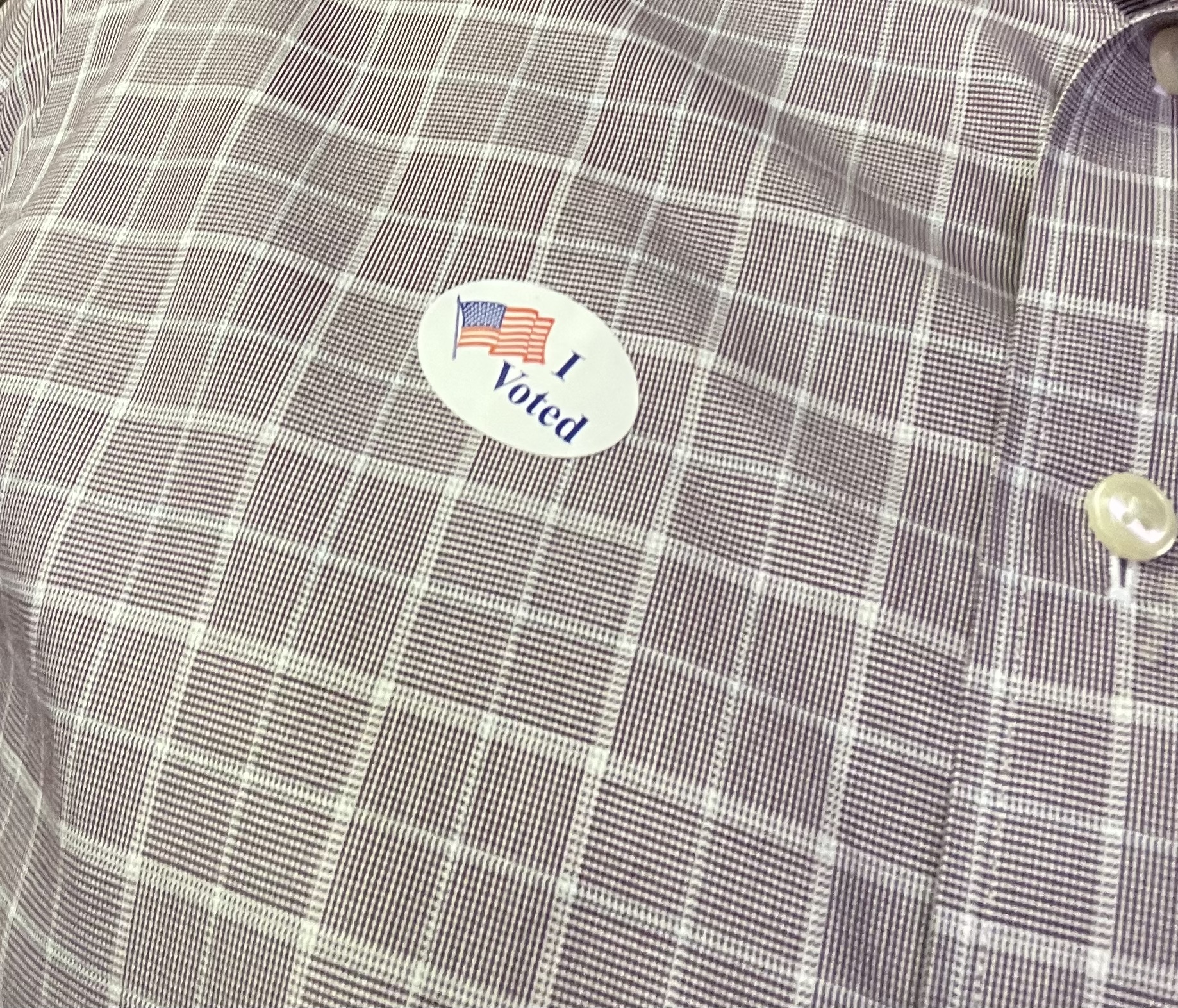
Many say “democracy is on the ballot,” though what that means depends on who says it. Hopefully, we all prayerfully deliberate and do our best to align everything we believe, endorse, and encourage with what the Word says! But when we leave the voting booth, we need to “go into all the world” and give them what they need more than anything–the hope of eternal life!

The Greatest Longing Of The Soul

Neal Pollard

Quick. Name the top three accomplishments of Grover Cleveland’s presidency. I’ll wait. 

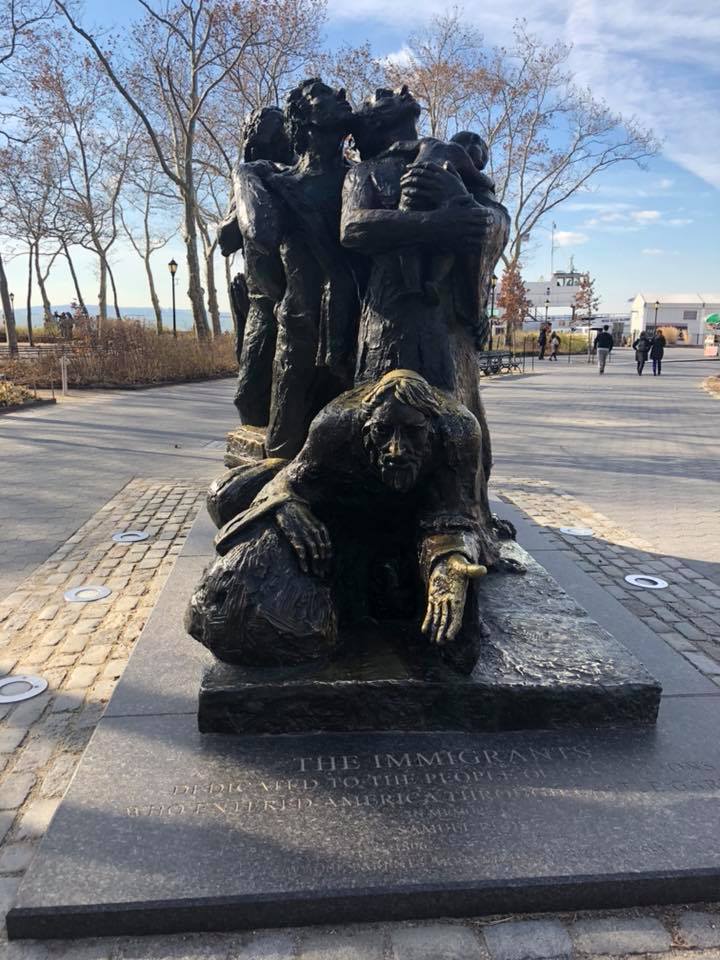
Nothing? Don’t feel dense or unpatriotic. He’s not in most historians’ top 10 (25?) of American presidents. But on yesterday’s date, 132 years ago, he was at the helm and dedicated the Statue of Liberty in New York Harbor.  This, if you don’t recall, was the proposed gift of French historian Edouard de Laboulaye in honor of America’s alliance with France during the Revolutionary War, sculpted by Frederic-Auguste Bartholdi, designed by Viollet-le-Duc and Alexandre-Gustave Eiffel (yes, that Eiffel), completed in France in 1884, and delivered to America the next year with the last rivet fitted on October 28, 1886 (via Instagram). The pedestal of the statue contains a sonnet by poet Emma Lazarus, well-known to most of us, that reads, 

“Give me your tired, your poor,
Your huddled masses yearning to breathe free,
The wretched refuse of your teeming shore.
Send these, the homeless, tempest-tost to me.
I lift my lamp beside the golden door” (ibid.).

With all the debate about immigration–a Reuters story revealed that immigration tops the economy and healthcare as the top issue for voters (Read here)–there is no denying why so many people around the world want to come to the United States. We have long been regarded as the haven for poor masses yearning to breathe free and wanting a home inside “the golden door.” Many have come and achieved incredible success in our country. Many more than that have come to find that immigrating here did not solve their problems or make their dreams come true.

There is a greater longing of the soul, a desire for something even more than prosperity.  Jesus teaches us that material things won’t last (Mat. 6:19-20). Peter tells us what comes of such ultimately (2 Pet. 3:10). 

There is a greater longing of the soul than even freedoms afforded by nations and governments. Many will abuse those freedoms through immoral choices.  Proverbs 14:34 strongly applies.

The most noble, highest longing of a soul is for the freedom only Christ can provide. To be free from the slavery of sin (John 8:31-36), from guilt of sin (Psa. 51:1-14), and from the power of sin (Heb. 2:14) is man’s wisest quest. A person with an abundance of money, liberty, and other earthly advantages may still be buried by the influence of sin. To know there’s a solution right now–who wouldn’t want that?

Don’t forget what Jesus tells people everywhere: “Come to Me, all who are weary and heavy-laden, and I will give you rest” (Mat. 11:28). 

23905208_10155150150870922_199173094846852320_n

The Religious Freedom Rally For Jack Phillips

Neal Pollard

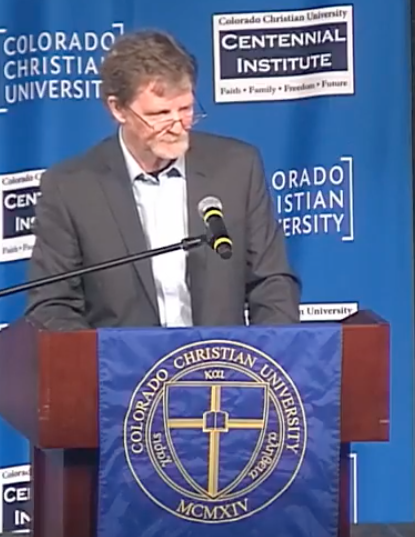
It was my privilege to be in attendance at the “Religious Freedom Rally for Jack Phillips,” held on the campus of Colorado Christian University in Lakewood, Colorado. If you do not know, Jack Phillips is the owner of Masterpiece Cake Shop, a business he opened and has operated since 1993. Because he refused to decorate a cake for a same sex couple, Phillips was sued. His case has gone through the various court systems and will be heard before the United States Supreme Court on December 5, 2017.

While the Event Center where it was held was not packed and overflowing, there were hundreds present. I met and walked in with a young man and woman from Sweden, who came to the United States primarily to cover this event for a Christian Magazine in their country. The rally’s speakers included the head of Catholic Charities, the managing director of Jewish values, a state senator, a congressman, part of Phillips’ legal team, university officials, Barronelle Stutzman (the owner of Arlene’s Flowers in Richland, Washington, who was sued by Robert Ingersoll because she refused, out of conscience, to make a floral arrangement for the same-sex wedding of Ingersoll and Curt Freed), and others.  There were many poignant moments and memorable quotes. A team member from the Alliance Defending Freedom, representing Phillips, said, “America did not give us freedom of religion. Freedom of religion gave us America.” Mrs. Stutzman still does not know if her case will be heard by the SCOTUS, and she stands to lose everything financially. Yet, she was gentle, meek, and soft-spoken, though obviously full of conviction. The tone was cordial and respectful, from every speaker to everyone in attendance. The rabbi, Yaakov Menken, said, after talking about ancient, longstanding forms of “political correctness,” that “what is new and profoundly disturbing is the use of civil rights to trample civil rights.” Last of all, Jack himself spoke. It was understated, almost matter-of-fact. He spoke eloquently and simply about the importance of our being able to act in accordance with consciences shaped by Scripture. Everyone spoke of the importance of believing and behaving in accordance with convictions that are dear because they are true.

Today was a stark reminder of the reality of forces who are actively assaulting faith in God and His Word. These are willing to do whatever they can to prevent us from doing what God has commanded us to do—share the pure, unaltered will of the One who gave us life and saved us from our sins. They are not bound by biblical ethics, so they will deceive, distort, manipulate, bully, attack, suppress, and fight divine truth. We are bound by a higher law, but truth, kindness, mercy, and love, as taught by God, will prevail. If not now, if not under our government and institutions, then undeniably at the very end of all things. Don’t lose heart. Whatever else you may lose at the hands of those described by Jesus in Matthew 5:44ff, some things cannot be taken away from us! Hold onto to those things.

Screen Shot 2017-11-08 at 1.37.31 PM

Religious Freedom Rally For Jack Phillips

Misguided Anarchists

Neal Pollard

In her excellent book about the many events leading up to World War I, Barbara Tuchman, in The Proud Tower, spends a chapter talking about the anarchist movements swirling particularly around Europe and the United States. It was the inspiration for several assassinations of important political figures, including one of our presidents—William McKinley. In the wake of the industrial revolution, many immigrant, uneducated, illiterate, and otherwise disadvantaged people, worked an incredibly high number of hours each week for less than living wages. They lived in deplorable conditions and had nearly no prospects of improving their plight or the plight of their children. A growing proposal around the industrialized world was to throw off all government and institute what amounted to a global commune with a total sharing of assets. It was not Communism because it did not want any organization or officials to rule and govern. Those who truly embraced the cause put total faith in man, in every case, to be noble and devoid of base motives like greed, power, and self-interest. It was anti-religious, anti-capitalist, anti-authority of any kind. Other than inspire attacks on famous people, the anarchists never came close to materializing their desired revolution. Rationale people knew there must be order and law.

Periodically, a similar movement rears its head even within the body of Christ. Christianity, in their view, is reduced to a single, undefined maxim: “Love Jesus.” While it can seem appealing, when it is viewed uncritically, it is unsustainable and self-defeating. When Jesus was asked the greatest commandment in the Law, He replied by saying it was a total love of God. He added that the second greatest command was loving others. Yet, throughout the gospels, Jesus expressed so many other specific commands for His followers that build upon that vital foundation. The men to whom He delegated authority to reveal His will and commands (John 14:26; 16:13) revealed His expectations of His followers. Pulpits and leaderships that deemphasize, avoid, or attempt to nullify these commands may be acting from high motives and noble desires, but they are more harmful than those anarchists of over 100 years ago. They encourage more than civil disobedience. They encourage disobeying the God who will one day judge mankind. Human governments may rule from corruption, self-service, and oppressive intentions, but God’s Word never does. What God commands for us is only for our good. How should we respond? We should humbly, reverently, lovingly, and totally submit to His reign and rule in our lives. May that be our highest aim!

london_0

“Freedom Is Not A Luxury. It Is A Necessity”

Neal Pollard

Earlier today, Ukrainian President Petro Poroshenko spoke to a joint-session of the United States Congress. It was an impassioned plea, from beginning to end, as he spoke in his broken English about the trials his people have endured for many months now.  He gave poignant examples of brave men who were killed for their courageous stand against ruthless enemies.  One of his imploring calls for help invoked our own past path as a nation and our pursuit of liberty.  It was about then that he exclaimed, “Freedom is not a luxury. It is a necessity!”

Poroshenko was speaking not of the Ukrainians but of the Russian people, who he believed had been fed the idea that freedom is a luxury that they should not necessarily expect to enjoy.  He rebutted such a view.  We have such a hard time in our nation comprehending life in a land where freedom is such an elusive commodity. But, for those people, it is a daily battle!

In the spiritual sense, this stated idea is most true and important. Sin is a horrible dictator and master, brutalizing and bringing death to those who are under its power. Eternity is in the balance for us.  Will we leave this life as free men and women or as slaves?  What makes this so much more paramount is that it is harder to discern spiritual bondage than physical bondage.  We may think ourselves perfectly free all while toiling in the chains of darkness!

Paul made his own impassioned plea to the saints at Galatia.  He wrote them, “Stand fast therefore in the liberty with which Christ has made us free, and do not be entangled again with a yoke of bondage” (5:1).  Can you imagine a nation or even an individual who had endured torture and seen loved ones murdered now enjoying the rights and privileges of freedom but volunteering to return to that former way of life?  It is unthinkable, unless we speak in the spiritual sense.  People continue to run toward and embrace the enslaver of souls.  To any one, we would implore, “Freedom is not a luxury. It is a necessity!”