For some, it’s their wallets. But, “beware, and be on your guard against every form of greed; for not even when one has an abundance does his life consist of his possessions” (Luke 12:15).
For some, it’s their walls.Whether the one at our national border or the ones around our home. National security is important. Law and order derives from God and Scripture (Rom. 13:1-7; 1 Pet. 2:13-14). But, remember, “Unless the LORD builds the house, they labor in vain who build it; Unless the LORD guards the city, the watchman keeps awake in vain” (Psa. 127:1). There should be higher motivation.
For some, it’s wokeness. Whether to protect hyper-racism or to combat cancel culture, some on either side will be driven by this issue. This certainly has been central to those whose vote is driven by education matters. Yet, it is so easy to let subjective ideas supplant God’s authoritative Word. We must be convicted by the truth of Jesus’ words in John 12:48: “He who rejects Me and does not receive My sayings, has one who judges him; the word I spoke is what will judge him at the last day.”
For some, it’s the womb. How sobering to vote in support of taking the life of the unborn or to be motivated by such. May we remember that one of the things God hates are “hands that shed innocent blood” (Prov. 6:16)!
For some, it’s worry. It may be general unease and anxiety about the “direction” of our country. There’s a fine line between civic duty and sinful worry. God is always on His throne. As ever, “…the Most High is ruler over the realm of mankind and bestows it on whomever He wishes” (Dan. 4:32).
For some, it’s the Word. The continued ability to teach the gospel to the lost, to worship together according to that Word, and to live according to God’s Word should underlie everything we do. That includes informing our votes in elections. But, may we keep in mind what the angel tells Zechariah to tell Zerubbabel: “‘Not by might nor by power, but by My Spirit,’ says the LORD of hosts” (Zech. 4:6). No election, however favorable to our convictions, is a substitute for making disciples (Mat. 28:18-20).
Many say “democracy is on the ballot,” though what that means depends on who says it. Hopefully, we all prayerfully deliberate and do our best to align everything we believe, endorse, and encourage with what the Word says! But when we leave the voting booth, we need to “go into all the world” and give them what they need more than anything–the hope of eternal life!
Do you have a “debt problem”? According to credit service, Experian, the average credit card debt per household is $5,315 (Wallethub puts it at $7,849). Renting money comes at a high cost with exorbitant interest. Perhaps you or a loved one have faced an enormous debt, medical costs, business or student loans, or a mortgage that made for uncomfortable living? Most of us know how that feels, to one degree or another. We don’t like the thought of owing someone. It gives them power and control over us (read Prov. 22:7). Perhaps you are one of those who can say that you don’t owe anyone–not the credit card companies, the mortgage company, the automobile dealers, etc. But you are still in debt! So am I.
Luke reveals a dinner party with a very diverse cast of characters (Luke 7:36-50). There’s Simon, a Pharisee, who plays host (36). There are several dinner guests (49), but sinless Jesus, God in the flesh, is the guest of honor (36). Then, there was a woman who crashed the party, whose name Luke doesn’t give us but who instead is identified by her lifestyle–“a woman in the city who was a sinner” (37). The Pharisees were the custodians of the Old Law (Mat. 23:2). Simon would be a man of great reputation, one who we’d think would not be the indebted type. This unnamed woman was the opposite.
Such is the setting that allows Jesus to drive home a powerful point about debt. The woman, with a visibly enormous, spiritual debt, spends money (Mark and John record a similar incident where the contents were worth as much as 300 denarii, or almost a year’s wages), sacrifices dignity, submits humble service, and shows significant emotion (37-38). Apparently, “who” she was was well-known and she had nothing to lose and everything to gain. She is the picture of transparency and need.
Apparently, Simon is at the other end of the spectrum, physically, socially, and, at least on the surface, spiritually. In fact, he sits in judgment of Jesus for allowing the woman to be so familiar with Him, thinking to himself, “If this man were a prophet He would know who & what sort of person this woman is who is touching Him, that she is a sinner” (39).
Jesus, able to read Simon’s thoughts, uses them as a launching point to teach that vital point about spiritual indebtedness. He shares the parable of two debtors. There was a disparity between the two debts, but neither could repay what they owed. The lender forgives both debts, no strings attached. Who would feel the greater depth of gratitude and affection? The answer is obvious, and Jesus makes application.
He points to how humbly and freely the woman expresses her love and appreciation to Jesus, while Simon is negligent in all the ways she was demonstrative. Jesus points out that this is about faith and forgiveness (47-50). The Lord doesn’t deny that the magnitude of the woman’s sinfulness is enormous (47), but He fully and freely forgives her. Simon’s disadvantage is not as apparent, but is definitely serious. Was he prideful? Self-righteous? Judgmental? There are definitely signs of such struggles in his life.
It is dangerous to live a life of sin and rebellion against God’s will. Too many never come to grips with their need for faith and forgiveness. But, it is at least as dangerous to be blind to our sin problem or to rationalize and minimize its effect upon our lives. This woman teaches us to be transparent with God and others, to acknowledge our debt, to ask the only one capable of forgiving it to do so, and then to live with humble gratitude and renewed resolve and purpose. Because, whether we admit it or not, we all have an insurmountable debt we cannot repay without His help.
When I was in high school, my main extracurricular activity was band—concert and marching. Concert band was a challenge from time to time, but it was marching band that really put everyone to the test. After all, there is a major physical aspect to the activity.
The summer between my sophomore and junior year was a particularly hot one in Oxford, MS. It was difficult. The hot sun was constantly beating down on us, and if the sun weren’t killing us the temperature was high enough to make our knees buckle. We were fatigued and mentally exhausted as the summer went on.
One of those days was very windy and there were patches of clouds—a very welcome change. We didn’t think anything of it. Some of us didn’t even put on sunscreen that day because the sun wasn’t just constantly beating down on us. But on that day it wasn’t the sun nor the temperature that got us. It was something that we didn’t even think twice about. In fact, we thought it was a good thing. On that particular day many of the band got windburns after being outside for more than 6 hours.
It shocked me just how quickly something that we thought was harmless or even helpful could be so damaging. Those strong and gusty wind that helped cool us off initially, when we were exposed to it for hours, turned out to be an even bigger problem than the sun itself.
——————
Whether it be 1 Peter 5:8, 1 Thessalonians 5:6-8, or the pastoral epistles, the New Testament is ripe with the idea of staying sober and vigilant. But why? Why is it so necessary for us to stay awake and be aware? Most of us are spiritually upright and good people, in the sense that we have good moral compasses and have a relatively heightened conscience. We do not go out and actively commit crimes, hurt others, or drown ourselves with vices.
But what does still plague all of us, no matter where we are in life, are the seemingly small and insignificant things we ignore. Things that we may not even bat an eye when we do and behaviors that we may even think is helpful—it’s those “little” sins that gnaw away at the connective parts that keep our armor of faith together.
As a termite eats away at a house hundreds of thousands of times its mass causing permanent and significant damages, there are these little things that go under our radar that—give it enough time—can completely break down what we have built in terms of our faith.
To those of us who are not Christians yet, it may be that thing that you keep doing in your life that you know deep inside that causes dysfunction and problems but you write off because it’s not as “big” as some of the other bad stuff that people do.
To those of us who are Christians it may be something a bit more secretive, those hidden sins that we do not address—letting it fester and rot from the inside.
You see, the things that get most of us aren’t the outright terrible and unforgivable crimes. It’s the small lies that we tell. The little things we try to keep from God. The secret sin that eat away at our relationships and our integrity.
What are those things to you? What red flags are you ignoring in your life? What are you justifying? What are you constantly engaging in that you think is helping but instead is killing you? Give it enough time, and even a tiny trickle of water can split rocks. Even a small breeze can burn your skin with enough exposure.
The reality of sin is all the same. It is something we must all be vigilant and aware to actively prevent and avoid.
Since next Tuesday is Election Day, it seems appropriate to reflect on the Proverbs’ teachings on leadership. Of course, those in positions of authority would do well to consider all the wisdom in the book of Proverbs. But there are eight passages they would do well to contemplate that speak specifically to those exercising secular authority. Here they are in the order of their appearance.
If you don’t help the people you lead, you won’t be in charge for long.
“In a multitude of people is a king’s glory, But in the scarcity of people is a prince’s ruin” (Proverbs 14.28 NASB). This verse tells us two things: 1) You cannot be a leader if no one is willing to follow, and 2) Deprivation will make your constituency turn on you.
What you say will get greater attention, so carefully choose your words.
“A divine verdict is on the lips of the king; His mouth should not err in judgment” (Proverbs 16.10 NASB). This verse does not mean that leaders are infallible, as some interpreted in the past, but rather that people put more weight on a leader’s words.
You cannot turn a blind eye to evil.
“A king who sits on the throne of justice disperses all evil with his eyes. A wise king scatters the wicked, And drives a threshing wheel over them.”(Proverbs 20.8,26 NASB).
One of the reasons God gives men authority is to wield the sword against the evildoer (Romans 13.4). As a result, being lenient toward lawbreakers harms the dominion over which you exercise control.
Taxation should not be excessive.
“The king gives stability to the land by justice, But a person who takes bribes ruins it” (Proverbs 29.4 NASB).
Commentators agree that this speaks of excessive taxation. I doubt any of us would view paying taxes as equal to a bribe, but it speaks to the ruler’s greed. Do you recall what happened when Rehoboam took the wrong advice and increased the already excessive tax burden on the people? The ten northern tribes of Israel broke away and formed a new kingdom under King Jeroboam (1 Kings 12.6ff).
Avoid surrounding yourself with “yes-men.”
“If a ruler pays attention to falsehood, All his ministers become wicked” (Proverbs 29.12 NASB).
People in power often attract sycophants who may speak lies that the ruler finds favorable. If he is the type who delights in those stroking his ego, he might discover himself surrounded by those seeking to use him to accomplish their means.
Don’t forget that your constituency includes people who can’t help you.
“If a king judges the poor with truth, His throne will be established forever” (Proverbs 29.14 NASB).
A popular leader fights for fair treatment for all citizens, especially the poor unable to lobby their cause. If you’ll also note that type of character wins one re-election.
If you want to further your political career, stay away from scandal.
“Do not give your strength to women, Or your ways to that which destroys kings. It is not for kings, Lemuel, It is not for kings to drink wine, Or for rulers to desire intoxicating drink” (Proverbs 31.3-4 NASB).
Those in positions of authority are surrounded by more than just sycophants. Additionally, they have domestic and foreign foes. One strategy used by these foes involves the fairer sex. A honey trap is a name for this kind of strategy. Honey trapping entails luring a target into a romantic or sexual relationship to gain access to sensitive information. Recent history in the U.S. Congress reveals at least one Representative who fell victim to such a trap, having a relationship with an agent of communist China.
Persons in authoritative roles should never partake in excessive drinking. You may say or do something you will regret in a drunken state. People suspect one now-deceased politician murdered a political operative with whom he may have been having an affair while driving drunk in his car. His stature, however, protected him from even being arrested. While it did not end his political career, it derailed his chances of ever becoming President of the United States.
This list is not exhaustive. Further, Solomon discusses the proper way to interact with those in authority. However, the points I’ve made here appear particularly relevant during this election season.
Romans 8:26 says, “Likewise the Spirit helps us in our weakness. For we do not know what to pray for as we ought, but the Spirit himself intercedes for us with groanings too deep for words.”
We don’t like to be weak. Admitting weakness means admitting we are powerless. It means that we have to accept that we can’t fix our problems on our own. As humans we sometimes don’t like to admit that we need help. It’s in our nature to try and take care of our own problems.
The problem is that if we want to have a relationship with God, we have to admit that we are weak. We must come to terms with the fact that we are helpless without God. Sin has separated us from God. We are weak, but the Spirit helps us with this weakness. Paul uses the word astheneai, meaning a “lack of confidence or feeling of inadequacy.” The Spirit restores our confidence through prayer. The Spirit takes the inadequate, and makes it adequate.
Our weakness is taken away by the Spirit, and the only hurdle left is our own humanity. We need to understand that we can have confidence in prayer. We should also accept the fact that we need God’s help. How wonderful that our God can hear us even with our weakness!
In Matthew 27 we find the start of what appears to be a mixture of supernatural and natural phenomena.
Clearly, Matthew, Mark, and Luke (the inspired authors of the synoptic gospels) make an airtight case for the diety of Jesus. Additionally, three extra biblical historians validate their accounts as well: Thallus, Africanus (the name of Janelle’s and my future first born— I hope), and Phlegon.
The Darkness
“From noon until three in the afternoon darkness came over the land.” Matt. 27.45
Phlegon records in the 2nd Century AD,
“…in the time of Tiberius Caesar, at full moon, there was a full eclipse of the sun from the sixth hour to the ninth—manifestly that one of which we speak. But what has an eclipse in common with an earthquake, the rending of rocks, and the resurrection of the dead, and so great a perturbation throughout the universe? Surely no such event as this is recorded for a long period. But it was a darkness induced by God, because the Lord happened then to suffer.”
Not that we need Phlegon to confirm what God told us three times, but it’s interesting!
The Earthquake That Freed The Dead
Beginning in v.51ff, an earthquake splits the veil in the temple. The veil wasn’t a thin piece of fabric either— it’s thickness was equivalent to a man’s hand.
Next, the earthquake (used directly or providentially by God) cracks the circular stones open and the dead walk the earth. There’s some discussion over the identity of these “Saints” or “Holy ones” but it’s likely that they are followers of God who died in the past. Whether they were faithful servants that we read about in the Old Testament or followers of Jesus who were killed for their loyalty isn’t made clear in the text. My personal opinion on the matter is that they are Old Testament followers of God as this would indicate to “many” that a new Covenant or Testament is being fulfilled. These risen ancient followers would effectively convince those following the Jewish religion that Jesus is now who they should look to, and not Moses or Elijah (see the Transfiguration, Matt.17).
The Timeline Of Events
View One Of Chronology:
“The dead rise with Christ.”
Matthew captures the magnitude of Jesus’ death on the cross by describing the abnormal events surrounding his death in chapter 27. It’s important that the reader keep in mind the goal of the letter, and that’s Jesus. The tombs splitting open, then, likely occurred during the death of Jesus. After three days, the dead would then emerge along with Jesus and appear to many.
Matthew records what literally takes place, then, as well as alludes to the Day of His return. On that Day, all of the dead in Christ will rise.
View Two Of Chronology:
“The dead rose first before Jesus.”
The Bible is saturated in types and apocalyptic language. The New Testament brings a new light and depth to the things of the past. For instance, the flood account directs our minds to the second destruction of earth. The crossing of the Red Sea alludes to baptism. The blueprint of the tabernacle is symbolic of church and the entrance to her.
With that in mind, 1 Thessalonians 4.16 says,
“For the Lord Himself will descend from heaven with a cry of command, with the voice of an Archangel, and with the sound of the trumpet of God. And the dead in Christ will rise first.”
This seems to indicate an order of resurrection. Those who followed God in life— rise first. This would fit beautifully with Matthew’s record of events in Matthew 27.
View Three of Chronology:
“The dead rise at the death of Christ, but enter Jerusalem three days later with Jesus.”
The NIV suggests that the dead were resurrected when Jesus died and then went into Jerusalem after Jesus’ resurrection. A number of theologians and Christians agree with this view.
Many others say that since Christ is the firstfruits of the dead (1 Cor. 15.22), then the resurrection did not occur until He was raised. This view takes the phrase “after Jesus’ resurrection” and then fits them with “…were raised to life and came out of the tombs.” This is possible in the Greek and is also hinted at in the KJV and the NASB. The tombs broke open at Christ’s death due to the earthquake, but the bodies were not raised till Christ was raised— which is the view I currently hold.
A special thanks to Brittany Dyer for posing some interesting questions. She’s a committed student of the Bible and an excellent example to the Tompkinsville church of Christ family.
If we are honest, some days it is easier to worship with focus and enthusiasm than others. We’re human and we struggle. With mental preparation and prayer, we can minimize the frequency of such times, but they happen to the best of us.
Have you ever thought about God getting tired of the worship brought by His people? I don’t mean worship done incorrectly and according to the will of men which violates what He commands. Apparently, He rejects such worship (Mat. 15:9). I don’t mean the idea that He gets bored and had rather skip a Sunday here and there. No such picture is ever painted of God.
But through the prophets, He repeatedly talks about being weary of the worship brought by His people.
“I have had enough…I take no pleasure in…your worthless offerings…an abomination to me…I cannot endure…They have become a burden to Me; I am weary of bearing them” (Isaiah 1:11-14).
“I hate, I reject your festivals, nor do I delight in your solemn assemblies…Take away from Me the noise of your songs; I will not even listen to the sound of your harps” (Amos 5:21,23).
“Oh that there were one among you who would shut the gates, that you might not uselessly kindle fire on my altar! I am not pleased with you,” says the Lord of hosts, “nor will I accept an offering from you” (Malachi 1:10).
Each prophet is dealing with specific circumstances prompting such a response from God, but it should cause us to take notice that just coming into the “meeting house” and going through the motions does not equal acceptable worship. Neither does simply following the New Testament pattern for the acts of worship. You will find in each of the passages above that the people were at the right place offering the right sacrifices on the right day led by the right people. The problem was either one of attitude, hypocrisy, or outright worldly living. Jeremiah documents how the people lived just like the world for the rest of the week, then filed into the temple to sing, “Redeemed, how I love to proclaim it!” (7:4-10).
Worship is a special privilege, to come into the presence of our Maker and Savior. At our best, we worship Him with sin and weakness in our lives. He knows that and the cross proves that He knows it. He is not expected sinless perfection, but He is looking for characteristics in our worship just beyond doctrinal accuracy. He wants:
Feeling (Psalm 95:6; John 4:24).
Engagement (Matthew 15:8).
Effort (Hebrews 13:15).
Gratitude (Ephesians 5:20; Colossians 3:16-17).
Thoughtfulness and Intentionality (Ephesians 5:19; Colossians 3:16).
Devotion (Acts 2:42).
Consideration of one another (Hebrews 10:24).
It is such a blessing that God communicates with us not only about the “what,” “when,” and “who” of worship, but also the “how” and “why” of it. When we are assembled for worship, He tells us what worship should look like. Between the assemblies, He tells us what a life looks like that partners with that worship.
God speaks of the various sacrifices of His children being a “fragrant aroma” to Him (Philippians 4:20; ). He likens the prayers of His faithful people to incense (Revelation 5:8; 8:1ff). Jesus assures us that true worshippers offering true worship are highly sought after by God (John 4:23). That’s the aim, isn’t it? The idea of presenting God with both a worshipper and worship which enthuses Him is the pinnacle of excitement!
Next Sunday, before we come together in worship, we can read Psalm 95, Psalm 96, Isaiah 6, or a similar chapter which reminds us of Who we get to worship. Today and every day, let us strive to build on the most recent worship we have offered by a life of faithful service and sincere devotion. That will set the table for worship God can’t wait to receive!
Having a friend that we can confide in and rely on for sound advice is invaluable, but we should be picky about who we choose as friends. Solomon says, “The righteous person is a guide to his neighbor, But the way of the wicked leads them astray.” (Proverbs 12.26 NASB).
Thus, we will begin with those negative characteristics Solomon says one should avoid when befriending people. Do not befriend:
A gossip (Proverbs 20.19).
The short-tempered (Proverbs 22.24-25).
Drunks and gluttons (Proverbs 23.20-21).
The “unsteady” (Proverbs 24.21-22). [To fully understand this, you may need to check the Hebrew. For example, in one translation, a person “given to change” may join “rebellious officials” in another. This difference is because the Hebrew “shanah” implies repetition (“to repeat, do again”). So, Solomon speaks of those not willing to grow from their mistakes or have fickle loyalties. Hence, such people are unstable in their ways.]
Liars (Proverbs 25.18).
The untrustworthy (Proverbs 25.19).
The inconsiderate (Proverbs 25.20).
The violent (Proverbs 1.10-19).
Those whom Solomon says to befriend comprise a shorter list. Befriend those:
Who display wisdom (Proverbs 13.20).
Who will point you in the right direction (Proverbs 13.14).
In addition to telling us who to befriend and who to shun, Solomon gives us wisdom about how we can be better friends with others. This wisdom begins with telling us to avoid certain disruptive practices.
Don’t repeat everything you hear (Proverbs 17.9).
Avoid senseless arguments (Proverbs 14.14).
Don’t overstay your welcome (Proverbs 25.17).
Don’t intrude on others’ arguments (Proverbs 26.17). [Solomon likens this to yanking a dog’s ears.]
Don’t call mistakes and misdeeds a failed attempt at humor (Proverbs 26.18-19). [“I was joking!”]
Don’t gossip (Proverbs 26.20). [Look up Socrates’ three filters: Is it true? Is it good? Is it useful?.]
Don’t be cranky (Proverbs 26.21).
Don’t be inconsiderate (Proverbs 27.14).
According to Solomon, then, these are the causes of discord among friends. It may be difficult to recover a friend’s trust if they have lost faith in us. Solomon warns, “An offended friend is harder to win back than a fortified city. Arguments separate friends like a gate locked with bars” (Proverbs 18.19 NLT). Solomon, though, advises those of us who have harmed our relationships. If we need to repair a friendship, we must:
Get our relationship right with God, and then others will change their perspective of us (Proverbs 16.7).
Be slow to anger (Proverbs 15.18, cf. James 1.19).
Not speculate (Proverbs 18.13).
Not quarrel (Proverbs 20.3).
Speak gently (Proverbs 15.1).
Speak less (Proverbs 10.19).
Be loving (Proverbs 10.12).
Offer honest criticism instead of flattery (Proverbs 28.23).
Yes, correctly applying God’s wisdom can ensure that we enjoy the blessings of good friends in this life. And there is a blessing in a friendship that Solomon reminds us of in Ecclesiastes 4.9-12:
“Two are better than one because they have a good return for their labor. For if either of them falls, the one will lift up his companion. But woe to the one who falls when there is not another to lift him up. Furthermore, if two lie down together they keep warm, but how can one be warm alone? And if one can overpower him who is alone, two can resist him. A cord of three strands is not quickly torn apart.” (Ecclesiastes 4.9-12 NASB1995)
I’ll be repeating the book of I John in present-day terminology. It’s not a true translation of the book, as I am not qualified to do so. It will be based on an exegetical study of the book and will lean heavily on the SBL and UBS Greek New Testaments, as well as comparisons with other translations (ESV, NASB, NIV, ERV, NLT). My goal is to reflect the text accurately, and to highlight the intent of the author using concepts and vocabulary in common use today.
This is not an “essentially literal” translation, and should be read as something of a commentary.
Love, Pt. 2
Everyone who believes that Jesus is the king who came from God should also love everyone who belongs to God. When we love God and practice what he commanded, that’s how we know we love his family, too. We prove that we love God when we do what he’s commanded, and those commands aren’t difficult to live out.
If you’re a part of God’s family, you’ve already beaten the world. Our faith is how we’ve won — if you believe that Jesus is God’s son, you’ve won in our spiritual battle against the world!
The ark of the covenant is a well-known object even among the non-religious, thanks to Hollywood. The depiction on the big screen has been exaggerated and romanticized for entertainment purposes, and that’s a shame. The ark of God is interesting enough without the unnecessary special effects. While many in the church are familiar with Uzzah’s fatal and infamous mistake (2 Samuel 6.7), there are several other accounts involving the ark that aren’t as commonly reviewed.
The Ark Is Stolen
It all began when the Philistines had taken the ark after the Israelites go into battle without consulting the Lord. These are the humbling events that showcase God’s power and holiness following the theft of the ark.
God strikes the citizens of Ashdod with tumors (1 Sam. 5.6)
God strikes the citizens of Gath with tumors (1 Sam. 5.8)
Destruction and death fall on the city of Ekron as the ark passed through (1 Sam. 5.11-12)
After the ark reaches Beth Shemesh the men of the town take a peak inside the ark and *50,070 (see explanation at end of this article) are struck dead (1 Sam. 6.19)
All of the death and disease show us the seriousness and obedience required of God’s people. It’s not just about a mysterious wooden box covered in gold— it was an object meant to train the Israelites to think properly about their Lord. Many applications can be made for us today as well.
The Hebrews writer explains that things are different now (Heb. 4.14-16). God’s response to all those who are disobedient to Him aren’t always immediately avenged but we shouldn’t assume that God feels differently— vengeance still belongs to Him (Heb. 10.30).
God also tells us that He is unchanging in His nature (Heb. 13.8).
It’s thanks to Jesus that we are able to approach God with confidence. It’s Jesus we ought to thank for the grace and forgiveness we receive because of His sacrifice (Heb. 4.16).
————————————————————-
Note: *50,070
“and he struck some of the men of Beth-shemesh, because they looked upon the ark of the LORD. He struck seventy men of them, and the people mourned because the LORD had struck the people with a great blow” (1 Sam. 6.19).
The ESV as well as several other translations use the number “seventy” rather than “fifty thousand and seventy.” While there are a few explanations for this, here are the abbreviated leading takes.
Some believe the scribes were unsure of the number and so copied the text with slight variation.
Similarly, some believe that “three score and ten” or “fifty thousand and seventy” was originally found in the margins of the scrolls by early scribes. Later, scribes placed the commentary into the text.
Some believe the number should be translated “seventy” because Josephus seemed to hold this view (Antiquities of the Jews, Book VI).
“…although it cannot be proven beyond all reasonable doubt that the 50,070 figure is erroneous, there is the very real possibility that either (1) the Hebrew has been misunderstood, or (2) a copyist made an error in the transmission process.”
– Eric Lyons, M. Min
“Nowhere else is a figure like 50,070 written in this fashion according to the grammar of biblical Hebrew. Normally the wording would have been either…“seventy man and fifty thousand man” or else in the descending order—which was far more usual…“fifty thousand man and seventy man” (Archer, 1982, p. 169, Apologetics Press, Art. ‘Death at Beth Shemesh).
While this may seem trivial to some and worrisome to others, one can take comfort knowing that we have everything we need for life and godliness (1 Pt. 1.3). That’s the view held by the other authors on this blog as well as each member of the Lord’s church sited/quoted here.
Nineteen kings sat on the throne of the northern kingdom, from Jeroboam (931 B.C.) to Hoshea (722 B.C.), and Jehu was the closest any of them came to being righteous. His “righteousness” was the zealous way he fulfilled the mission God gave him in destroying the house of Ahab and the followers of Baal. In fact, the Lord speaks directly to him and says, “Because you have done well in executing what is right in My eyes, and have done to the house of Ahab according to all that was in My heart, your sons of the fourth generation shall sit on the throne of Israel” (2 Kings 10:30). God recognizes and rewards him for his commitment to His cause. He enjoys a 28-year reign, second only to his great-grandson Jeroboam II. He is remembered for his deeds and his might (34).
Yet, after the lengthy chronicling of Jehu’s extermination campaign, the Bible says little else good about the man. Here’s the summary in 2 Kings 10:
He did not depart from the sins of Jeroboam the son of Nebat, which he made Israel sin (29,31).
He kept the golden calves at Bethel and Dan (29).
He was not careful to walk in the law of the Lord with all his heart (31).
He suffered the loss of significant territory to the Arameans (32-33).
His excessive bloodshed would draw divine retribution (Hos. 1:4).
Essentially, he lacked the moral and spiritual resolve to effect religious restoration. He lacked the conviction necessary to be fully obedient to God. He did not purify his heart to align with the heart of God. He was reckless regarding God’s law.
For over 200 years, Jacob’s descendants in the northern kingdom were spiritually adrift. Their best chance to turn that around was after Jehu purged the capital city of Samaria of the temple of Baal, its priests, and its worshippers. A hopeful start was overcome by the general spiritual trajectory of an entire people who did not have God in their hearts.
My daily life is aimed in a general direction. It is important for me to do more than conform outwardly to some of what God’s Word commands. I need to begin in my heart and conscientiously strive to follow His will and demonstrate that in my outward dedication and my inward devotion to Him. I want it to be said of me that I did what was right in His sight (30) AND that I was careful to walk in the law of the Lord with all my heart (31)!
For the past four years I have been going though what I believe to be the toughest battle I have ever had to face in my life with our warrior princess Kiyomie’s medical condition. God blessed me with my greatest desire and greatest fear as a father; which was to have my daughter; and one of my babies getting sick and me not being able to do anything to make them better.
We decided that my wife would come to the United States in October of 2017 after our homeland was devastated by category five Hurricane Maria. It was a difficult but necessary decision because Kerssel was pregnant and the prenatal care she needed wasn’t available post-hurricane. I joined my wife in February of 2018 and we had flights booked to return home in April of 2018. Before traveling I had set up everything in Kiki’s nursery which was also my office where I did my studies; her crib was right next to my desk, I had so many plans for my baby girl and was ready to bring her home.
What we had no idea of is that we were heading right into another hurricane; one of a different nature. Kiki suffered severe brain injury during birth and this changed our entire life: we could not return home, we had to leave my six year old son Éjiké and our families behind in Dominica which ached our hearts daily. The life we knew was basically over. We had our family’s support but were here all alone, in a foreign land with no one close to come help during the toughest period of our life.
We both had to resign from our jobs. We were forced to sell everything we owned in order to survive here, we went from being one hundred percent independent to one hundred percent dependant on others, we had to seek assistance to pay our monthly bills and purchase the most basic of necessities for our children and ourselves– diapers, wipes, deodorant, toothpaste, bath soap and everything else. We were unable to care for ourselves the way we used to, unable to provide for our children, only going to the doctor or dentist if we were very ill, not purchasing new clothing or undergarments even though we desperately needed them.
Through so many sleepless nights, emergency room visits and hospital stays we managed to keep surviving, by the grace of God. It is hard and lonely but we have no choice other than continuing to be resilient and keep focused on Kiki getting better. (We’ve had so many nights that we got little to no sleep that right now we consider a night of 4 hours of sleep a good night rest)
We didn’t think that our life could have gotten any worse but then on August 10th 2020 we got the dreadful news that my wife’s mom had suddenly passed at only 56 years old. From that day our lives was under a dark cloud; well, that’s how it felt. Mom, as we all called her, was our main pillar of support; our greatest cheer leader and prayer warrior; she sent messages every single day to both Kerssel and I telling us how strong we are and great parents we are and that Kiki will be healed and to remain faithful. That day in August took so much away from us, after mom’s passing everyday just felt like we were going through motions, like robots, just floating around under that dark cloud.
Mrs. Dawn Pitcock had been working with Kiki since she was discharged from the NICU. She and her family became a friend and remained in close contact even after Kiki aged out of the First Steps program. She had mentioned her church and asked if we’d like to visit, but we never did then. We were still under this dark cloud. Sometime after mom’s passing Dawn asked whether we would mind if she and elders from her church come by to visit and pray with us.
Russell, Dana and Dawn came one Sunday after service, we conversed for a while, we prayed and we cried; that blessed Sunday afternoon is one I will never forget as it felt like that first ray of sunshine piercing through the dark clouds. We started studying and getting a better understanding of God’s word with the assistance of Russell, Neal and Greg. Our faith started to grow stronger and we began feeling better, our lives felt a little less cloudy day by day. We started attending Sunday service when we were
able to, Kiki’s condition determines whether we can but we kept studying via zoom.
We had discussed baptism a few times but I didn’t feel fully ready until April 6th, 2021, on that day, I called Neal and told him that we were ready. When we got to church building there were several other members of our Leman Avenue family there to support us. Kerssel and I were baptized on that day and man that felt good, it was a new life in every aspect.
Yes we are still going through tribulations. Kiki still has tons of medical complications and has a long way to go. Yes we still seek assistance to cover every single expense that we have. BUT, because our faith in God, and ourselves have grown, our bond with God is getting stronger and our understanding of God’s word and love for us and his purpose for allowing us to go through what we are going through; we are able to better appreciate our situation. God have been right there with us all along, he continues to supply our every need; he has, housed us, fed us, and clothed us physically and spiritually.
In our lives on a daily basis we encounter troubles, problems, adversity; no matter how small or complex they are, they always pose a challenge physically, emotionally, psychologically and spiritually.
In these moments we feel weak, we feel defeated and are forced to face problems to great for us to handle; so we turn our attention to God and begin questioning him, WHY? Why am I going through this? Why me? What Lord can I do to solve this problem? During these challenges we are unable to continue our tasks like normal; so we stop, evaluate our situation, ask God for wisdom, obey his word, have faith and trust him to bring the help that we need.
The apostle James had a response to adversity which has helped me through my own troubles.
James 1:2-6
Consider it pure joy, my brothers, when you are involved in various trials, because you know that the testing of your faith produces endurance. But you must let endurance have its full effect, so that you may be mature and complete, lacking nothing. Now if any of you lacks wisdom, he should ask God, who gives to everyone generously without a rebuke, and it will be given to him. But he must ask in faith, without any doubts, for the one who has doubts is like a wave of the sea that is driven and tossed by the wind.
When going through these challenging times in life the best resort is to turn to Jesus, I can guarantee without any doubt that no matter what the problem is, you will find guidance to a solution within the word of God. Apply the appropriate scripture, faith and the very best effort you can, to every adversity you face and you will be victorious.
In conclusion I say to you, through every adversity, trial and tribulation seek God for he is always waiting to guide us through our troubles and ultimately draw us closer to him.
Have faith no matter how small it is: Faith in God, faith in yourself, faith that God is greater than your problem, faith that God is helping you through the adversity, faith that you will overcome.
Nurture your faith and watch your faith grow. Mathew 17:20 tells us, “…Because of your lack of faith. I tell all of you with certainty, if you have faith like a grain of mustard seed, you can say to this mountain, ‘Move from here to there,’ and it will move, and nothing will be impossible for you.”
If you can move a mountain with faith the size of a mustard seed, can you imagine the magnitude of power you would possess with faith the size of a tennis ball or basketball or greater?
I’ll close with some words and verses I recite whenever I’m having a moment of weakness during a challenge and the effect that they have on me is miraculous, I recited them right before coming up here; they are:
I believe that God is with me. I believe that God is helping me. I believe that God is guiding me.
I can do all things through Christ who strengthens me (Philippians 4:13). What shall we then say to these things? If God be for us, who can be against us? (Romans 8:31)
Thank you for listening, thank you for being our family when we most needed one, thank you for the support given to my family in every single way.
The Bible contains numerous references to money, including earning and spending, saving and giving. The Book of Proverbs, in particular, deals with financial issues like wealth and poverty. And even though money can help, it can’t solve every problem. What you need is wisdom. So let’s begin our study by examining some of the benefits of wealth described by King Solomon.
I will begin with the one most attractive to all of us. Riches do provide one with a measure of security. Today, as inflation is so high, most of us have to do some real belt-tightening. But inflation doesn’t impact the rich nearly as much. Consider what Solomon says about the security provided by wealth: “The rich man’s wealth is his fortress, The ruin of the poor is their poverty.” (Proverbs 10.15 NASB1995).
Another advantage of wealth is that it is easy to make “friends.” Though it creates a situation in which the wealthy have a more difficult time determining who they can trust, they have no shortage of people eager to orbit their sphere of influence. Solomon says: “Many will seek the favor of a generous man, And every man is a friend to him who gives gifts. All the brothers of a poor man hate him; How much more do his friends abandon him! He pursues them with words, but they are gone.” (Proverbs 19.6-7 NASB).
We’ll note the last advantage of wealth is that the wealthy also wield power. “The rich rules over the poor, And the borrower becomes the lender’s slave.” (Proverbs 22.7 NASB1995)
But money isn’t everything. Money doesn’t spare one from death, the great equalizer of all. Aside from that, the stock market may crash, or a catastrophic event may deplete a bank account, and then what?
Wealth, as Paul clarifies in the New Testament, is not sinful. On the contrary, it is the love of money (1 Timothy 6.10). As a result, there is nothing wrong with attaining wealth. However, wisdom necessitates adherence to these guidelines:
One must earn wealth honestly through labor (Proverbs 13.11).
Avoid being a “trust-fund baby” [It didn’t help the Prodigal—Luke 15.11ff] (Proverbs 20.21).
One should acquire wealth gradually rather than quickly. [My apologies to the lucky lottery winners.] (Proverbs 28.20,22).
Do not amass wealth through deception or predatory lending (Proverbs 20.17; 21.5-6; 28.8).
Remember that wealth is a tool you use, not something using you (Proverbs 23.4-5).
On the flip side, Solomon offers advice on how to deal with financial hardship. Poverty isn’t always self-inflicted, but it can be! Self-inflicted poverty is something we should avoid at all costs. So, consider what lessons we can learn from Proverbs about spending our money.
Some are economically disadvantaged due to their sloth. We can deny it because it sounds mean, but that doesn’t change the fact that it’s true (Proverbs 20.30-34).
Men also waste money in the pursuit of pleasure (Proverbs 21.17). [This pursuit can include gluttony and drunkenness—Proverbs 23.21.]
One can waste resources on things of no value (Proverbs 12.11).
The Book of Proverbs contains valuable advice on managing money and avoiding financial struggles. May the Lord grant us the wisdom and grace to use our resources wisely.
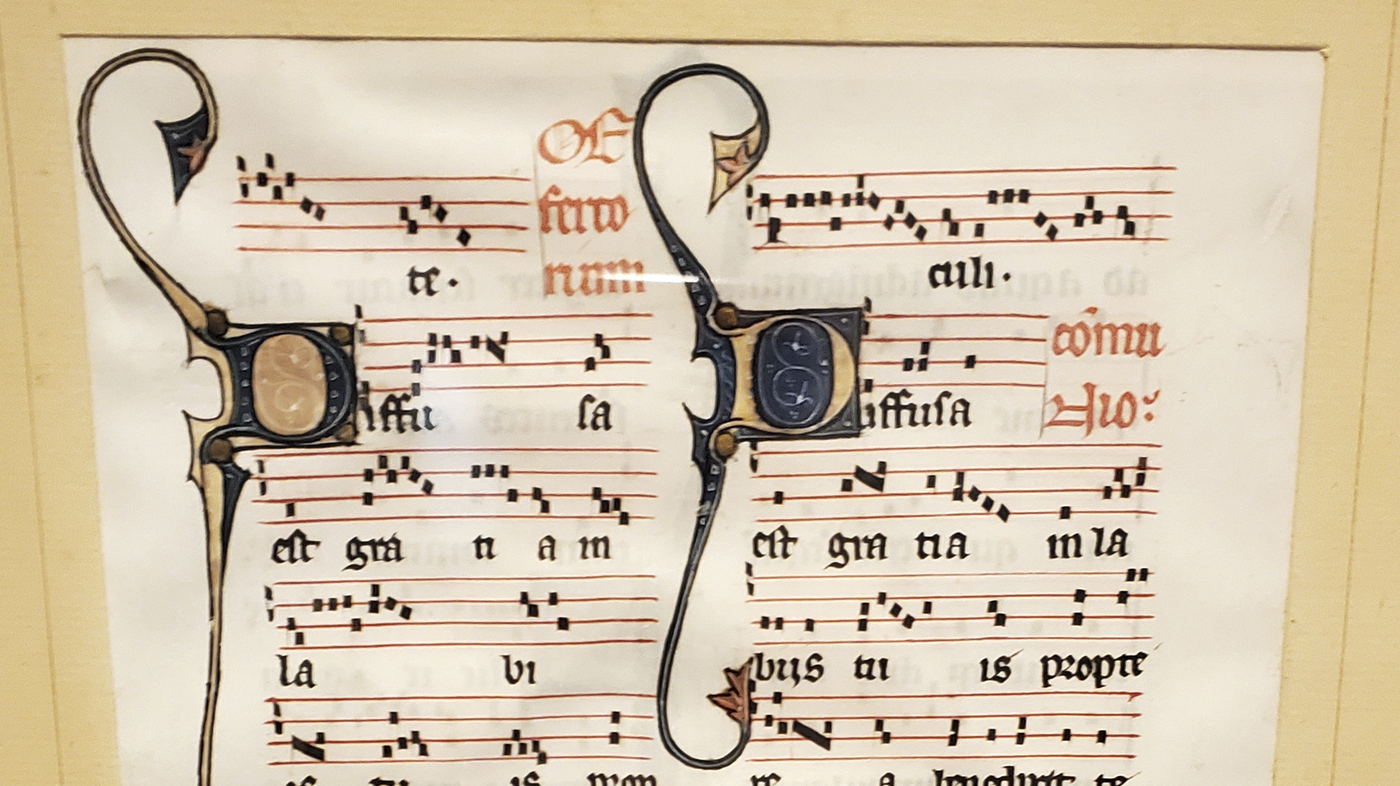
I recently read a news article about a bargain hunter that went to an estate sale in Portland, Maine, to find a KitchenAid mixer. Rather than finding his kitchen appliance, he ended up walking away with a 700 year old treasure. Will Sideri stumbled upon a framed document hanging on a wall that caught his eye. It had an elaborate script in Latin, along with musical notes and decorative gold edges. Based on what he’d seen in a manuscripts class at College, he figured that this document was from the medieval ages. And it was a bargain at $75. Academics confirmed the parchment was from The Beauvais Missal, used in the Beauvais Cathedral in France, and dated to the late 13th century. It was used about 700 years ago in Roman Catholic Church. An expert on manuscripts said the document, first reported by the Maine Monitor, could be worth as much as $10,000. Will Sideri walked away with a priceless treasure that cost him just 75 bucks.
This news story reminded me of a parable taught by Jesus in Matthew 13:44. It reads, “The kingdom of heaven is like treasure hidden in a field, which a man found and covered up. Then in his joy he goes and sells all that he has and buys that field.” In this short verse we read that:
The treasure is hidden
The treasure is valuable
Sacrifice was needed to gain the treasure
The field was bought, but the treasure came free
What did Jesus mean with this parable? You can’t find The kingdom without looking (the treasure was hidden). Seek and you will find (you’ll never find it if you aren’t looking). The kingdom of God is valuable, and sacrifice is required to obtain the kingdom. The man in this parable joyfully went and sold everything. The Kingdom is freely given. When we seek and sacrifice for Christ, he freely gives us grace, mercy, peace and salvation.
Will we recognize the value that is found in the Kingdom of God?
This is how we know that we’re with him and he’s with us: he gave us his spirit. We were there, we saw firsthand that the father sent his son on a mission to save the world. Whoever agrees that Jesus is actually God’s son is with God, and God is with them. Because we saw him, we came to believe and really understand the kind of selfless love that God has for us. God is love. The one who practices love is with God, and God is with them.
This love is being matured in us for reason: so we can be completely confident on the last day when everyone is judged. If we have selfless love, we’re considered to be as pure as Jesus was when he was on earth. Love leaves no room for being afraid. If we mature our love, that love keeps us from being afraid. If we live in fear of judgment day, it’s because we haven’t matured in our love.
We practice love because he loved us first. If someone says, “I love God,” but still hates their Christian family, they’re a liar. How’re you supposed to love a God you can’t see while failing to love a Christian family you can see? It’s not possible. Remember the commands he gave us: we have to love God and love our Christian family, too.
The 19th-century Russian actor, Konstantin Stanislavski, famously said, “There are no small roles, only small actors.” The point is that we should do our very best no matter what our role is. Especially is that true in serving God.
Who carried the lame man to the gate where he was healed by James and John (Acts 3:2)?
What were the names of the four men who brought the paralytic to Jesus (Mark 2:3)?
Are we told who the young men were who carried out Ananias and Sapphira (Acts 5:6,10)?
Do we know who brought Paul to Athens and followed his command for Silas and Timothy to come to him there (Acts 17:14-15)?
What were the names of those in the household of Stephanas who, like him, devoted themselves for ministry to the saints (1 Cor. 16:15)?
The New Testament is full of statements about individuals whose households were baptized along with them: Cornelius (Acts 11:14), Lydia (Acts 16:15), the Philippian jailor (Acts 16:33), Crispus (Acts 18:8), Aristobulus (Rom. 16:10), Narcissus (Rom. 16:11), and Onesiphorus (2 Tim. 4:19). What contributions did they make to the congregations where they were members? How many will be in heaven because of these unnamed saints?
We may wonder what great works we might do to carve a spiritual legacy, whether in the local church or even beyond. Perhaps we feel that we toil in anonymity, unappreciated or overlooked. How many acts of service, kindness, generosity, and sacrifice never make the church bulletin or announcements? Let us take great comfort in the knowledge that God knows. He’s even writing it down (Rev. 20:12,15). As the writer of Hebrews told some unnamed saints, “God is not unjust so as to forget your work and the love which you have shown toward His name, in having ministered and in still ministering to the saints” (Heb. 6:10).
Never forget the encouraging poem of William Dunkerley.
Is your place a small place? Tend it with care! He set you there.
Is your place a large place? Guard it with care! He set you there.
Whatever your place, it is Not yours alone, but His Who set you there.
You are touching lives who may not think to tell you that you are. Your influence and example may be the difference in someone overcoming who might have been overcome. Your simple word or deed of kindness may be the fuel for another’s faith. Paul’s encouragement is weighty, when he says, “Let us not lose heart in doing good, for in due time we will reap if we do not grow weary. So then, while we have opportunity, let us do good to all people, and especially to those who are of the household of the faith” (Gal. 6:9-10). How insignificant is the lowliest private in the Lord’s Army, adorning His armor (Eph. 6:11)? There are no small tasks in His kingdom! Let us be “always abounding in the work of the Lord, knowing that [our] toil is not in vain in the Lord” (1 Cor. 15:58)!
I want to discuss something I know all too well. Procrastination! Procrastination isn’t a good thing. It’s not something we should be really good at either. By definition it is “the act of delaying the doing of something that should be done.” There can be many attributes that lead us to procrastinate, none of which are good. Delaying things, putting things off happens in our everyday lives, but also in our spiritual lives.
When it comes to our spiritual lives, do we wait and put off doing things that our Father loves for us to do? Do we let it affect how and when we spread the gospel with others? Does it keep us from inviting people to church or talking to people about our faith? What about forgiving others that have hurt us? Holding onto that anger, letting go of that anger, or learning to love one another as God would have us to do? How about obeying the gospel? Do we wait and put these things off for another time? The answer is yes to all these things. It absolutely keeps us from doing things now! Procrastinating is essentially like saying “I don’t want to or have the desire to do these things right now”, but we should.
We should want to spread the gospel to every one. Mark 16:15 tells us “go unto all the world and proclaim the gospel to every creature.”
We should forgive others quickly, “Be kind to one another, tenderhearted, forgiving one another, as God in Christ forgave you” (Ephesians 4:32) and (Matthew 6:14) “For if you forgive others their trespasses, your heavenly Father will also forgive you” (Ephesians 4:26-27) “be angry and do not sin, do not let the sun go down on your anger, and give no opportunity to the devil.”
We are to love one another! “This is my commandment, that you love one another as I have loved you” (John 15:12) “Beloved, if God so loved us, we also ought to love one another.” (1 John 4:11)
We are to obey the gospel. If we have heard the gospel and know we have a spiritual need; to delay doing anything about it is dangerous. We don’t know what is going to happen tomorrow. (James 4:14) says, “Yet you do not know what tomorrow will bring. What is your life? For you are a mist that appears for a little time then vanishes.”
Several things cause us to procrastinate. Worry, stress, being anxious, sometimes even laziness. God has taught us not to worry or be anxious about anything (Philippians 4:6). The Bible says plenty about being lazy. (2 Thess 3:10), “If anyone is not willing to work, let him not eat.” (Proverbs 18:9) says “Whoever is lazy in his work is a brother to him who destroys.” (Colossians 3:23) says, “Whatever you do, work heartily, as for the Lord, not for men.” If the things we do in our lives, in our hearts, is for the Lord; we won’t wait, we won’t delay doing these things because we are motivated by the desire and focus to please our Lord, and to finish the task now, not later.
I understand that not all of us are procrastinators – and good for you! But since I am one, I say this with love and empathy for those that are. When we, and I mean myself, put off things that the Lord wants us to do, we might get the task done but I can’t say that we are giving Him our best. God deserves our best. Our Father loves us, he is our biggest fan and does not wish any of us to fail. He desires for us all to be with Him in Heaven one day. He blesses our lives daily and gives us these opportunities to do His will and share it with others so that they have a chance to be with Him also. And yet we wait, we put things off till tomorrow. We shouldn’t wait to spread the gospel with everyone, we shouldn’t wait to talk to people about Jesus and share with everyone the good news. Don’t wait to forgive others for wrongs they’ve done when our Father is willing to forgive us right now. Don’t wait to show love to everyone because our Father demonstrates his love for us daily. And by all means don’t wait to obey the gospel because none of us know what tomorrow will bring. That’s why it is important to do things now, not later.
We need to give God our best, whether it’s our daily lives or our spiritual lives. If you struggle with putting things off, waiting till tomorrow to make things right, don’t wait any longer.









 The Preacher Pollard Blog