Joshua The Conqueror

The writer of Hebrews compares our desire to have eternal life to the work of Joshua in leading Israel into Canaan (Heb. 4:8). For those who lead the church in the various ways, parents in Christian homes, elders, deacons, preachers, and teachers, mature Christians, etc., the same factors are at play in our mission to conquer for Christ.

Neal Pollard

The book of Joshua begins with an understated transitional statement, one that signaled perhaps one of the most pivotal events in Israelite history. “Now it came about after the death of Moses the servant of the Lord…” The Lord now looks to Joshua, Moses’ servant, to accomplish the task first given to Moses, to lead the nation into the land promised to Abraham centuries before (Gen. 15:18). Can you imagine being in Joshua’s sandals, trying to follow only the greatest leader the people have ever had? And even he wasn’t able to get the people into the Promised Land before his death. 

It is not surprising, then, that having so great a task and following so great a leader Joshua needs encouragement for this work. Notice how the sixth book of the Bible opens, addressed to the man saddled with the responsibility of getting the people of God across the finish line of their purpose. There are at least five truths Joshua needed to keep in mind.

  • He should remember how he would be victorious (2-3). God emphasizes that He is giving the land to Israel. Israel is going to have to obey and work according to God’s commands, but the victories would come through and because of Him. 
  • He must understand the scope of his mission (4). God lays out specifically the mission, stating in broad terms to boundaries of the territory. The mission would not be a success until all of it had been taken.
  • He could have blessed assurance of God’s help (5). God fortifies Joshua with promises like, “I will be with you” (5), “I will not fail you or forsake you” (5). He reminds Joshua that He was with Moses, and He offered Joshua the same help. 
  • He would have to be a man of strong character (6-7). God calls Joshua to be strong, courageous, unafraid, and obedient. With such a lofty objective, God needed and expected leadership that was trustworthy and reliable. 
  • He had to rely on the Word of God (8-9). Not surprisingly, after a generation was denied the promise land through unbelief and disobedience, this would be critical! God says, “This book of the law shall not depart from your mouth, but you shall meditate on it day and night, so that you may be careful to do according to all that is written in it; for then you will make your way prosperous, and then you will have success” (8). God promises to be with him if he would follow Him! 

The writer of Hebrews compares our desire to have eternal life to the work of Joshua in leading Israel into Canaan (Heb. 4:8). For those who lead the church in the various ways, parents in Christian homes, elders, deacons, preachers, and teachers, mature Christians, etc., the same factors are at play in our mission to conquer for Christ. God gives the victory, the mission, the promises, the word, and the guidelines for our daily living. He is counting on us to partner with Him to gain the victory! 

A Spiritual Dwarf

A cautionary tale. A how-not-to. There are multiple ways to say it, but some of the best lessons we learn are from a bad example. Dale explores one from the Old Testament today…

Dale Pollard

Saul had a bright future that by all accounts was full of opportunity. When we first read of him he’s portrayed as a likable underdog who doesn’t seem to see  his own potential, proven in his own words (1 Sam. 9.17-21). He was a nobody from a small tribe, but tall and kingly in appearance and his success would depend on who he listened to— not unlike us today. 

God anoints him as king and like every anointed king that we read of in the Old Testament, he influenced the nation’s relationship with God. In hindsight, we’re able to see God’s wisdom. God wanted judges. A judge spoke on behalf of God while carrying out His will for a time and then left. A king would always be more susceptible to various forms of corruption that come with the vast amount of power given to him. No matter how the rulers would live their lives, good or bad, we can learn much.

 Sadly, Saul is one of those kings who taught us how not to live. Here’s a list of the many spiritual dangers we should avoid— brought to you by Saul. 

Saul’s Seven Deadly Sins 

I SAMUEL 

  1. The sin of lacking patience – 13.8
  2. The sin of excuse-making – 13.11, 12; 15:15, 20, 24 
  3. The sin of half-hearted service – 15.1-26 
  4. The sin of glorifying self – 15.12
  5. The sin of fearing men rather than God – 15.15, 24 
  6. The sin of desiring forgiveness from man rather than God – 15.25
  7. The sin of jealousy – 18.6-9 

There are many other mistakes and shortcomings that accumulated in Saul’s physical and spiritual demise, but we can be strengthened by them (Rom. 15.4).

Jacob Loved Rachel

Dale Pollard

JACOB LOVED RACHEL 

Genesis 29:18

“Jacob loved Rachel. And he said, ‘I will serve you for seven years for your younger daughter Rachel.” 

Genesis 29:20

“So Jacob served seven years for Rachel, and they seemed to him but a few days because of the love he had for her.” 

BUT RACHEL WASN’T PERFECT 

“When Rachel saw that she bore Jacob no children, she envied her sister and said to Jacob, ‘give me children, or I shall die!’” 

Genesis 30:1

GOD TRIED TO WORK WITH RACHEL

Genesis 30:6

“Then Rachel said, “God has judged me and has also heard my voice and given me a son” therefore I will call him Dan.” 

What Rachel Knew:

  1. That God Judged Her Heart 
  2. That God Answered Her Prayer 

BUT…

Did she change? 

Did she grow in faith? 

Did she learn her lesson? 

IT DOESN’T SEEM SO 

“Rachel said, “with mighty wrestling I have prevailed against my sister!” And she called her next son Naphtali.”

Genesis 30:8 

“While Laban had gone to shear his sheep, Rachel stole her father’s household gods.” 

Genesis 31:19 

It seems that Jacob chose Rachel for her looks alone and while Laban fooled him into marrying Leah, she would end up being easier to live with!

Encouragement From Eutychus

Dale Pollard

Here’s a quick recap of the bizarre events that unfold in Acts 20.

  • Paul preaches past midnight. 
  • A young man named Eutychus falls asleep.
  • As a result he plummets to his death. 
  • He is then miraculously brought back to life.

So what?

Each word that was written in scripture was penned under God’s guidance— for our guidance. This means that even those accounts that might initially strike us as pointless are, in truth, spiritually pointed. 

With this is in mind, Let’s briefly examine three life lessons from Eutychus that deliver relevant reminders for the 21st century Christian. 

  1. A lesson on Common sense: God is with His people, God protects His people, but we still read of a young man who sits where he shouldn’t have. As a result, he tumbles to his death. Unfortunate things can happen to godly people, especially in the absence of common sense. 
  2. A Lesson On Commitment: This account is not a call for preachers to shorten their sermons, or even a warning for members who might be tempted to take a nap in worship. While Eutychus may not be the first guy that comes to mind when we think of a Bible character who demonstrated commitment— he still made it a priority to be with his Christian family. He held on, even though it was clearly past his bedtime. How many of us have forsaken the assembly simply because we don’t feel like it? How many Christians find themselves struggling to remain focused in a one hour period of worship? There is something to be said for this man’s commitment to Christ— even as the hours ticked by and exhaustion began to take its toll on him. 
  3. A Lesson On Correction: Though I would not want to be immortalized in history as the guy who fell out of a window in church, this potential tragedy became a powerful testimony of God’s grace. God does not expect total perfection, rather our constant correction. When we take a tumble spiritually, what corrections can we implement to avoid the same  mistake in the future? 

Three Men Named Ananias

Monday’s Column: Neal At The Cross

Neal Pollard

Recently, I heard Dr. Ted Burleson point out that the book of Acts reveals three men named Ananias. The first one is in Acts five, the second one is in Acts nine, and the last one is in Acts 23. Those three men are very much unalike from one another in some basic, important ways.

The Ananias in Acts 5 was a Christian known for lying to Peter and to God about his offering. On the heels of Barnabas’ publicized and praised generosity, this man conspired with his wife to deceive the church about how much they were giving. While we do not read his words or even read that he spoke, it is implied that he did talk this over with Sapphira. His entire legacy is of a liar! Isn’t it tragic that the rest of his life, including his conversion, are completely omitted. This is all we know about him. What a sobering object lesson that I can undo a great deal of other good in my life if I let sin reign in my heart!

The Ananias in Acts 23 was the Jewish High Priest Paul stood before after he was arrested in Jerusalem. “Ananias was High Priest from A.D. 47 to 66, when he was assassinated by the Jews because of his support of the Romans during the Jewish uprising” (Newman and Nida, 432). We also learn that he was “famous for bribery and plunder of temple offerings” (Gangal, 386). Then we see, “His action (having Paul struck on the mouth, NP) was completely in character. Josephus depicted him as one of the very worst of the high priests, known for his pro-Roman sentiments, his extreme cruelty, and his greed” (Polhill, 468). He is known both in Scripture and out of Scripture for being unscrupulous. He will lead the attack against Paul before Felix (Acts 24:1-9). Not only does he refuse to accept Christ, he persecutes and attacks Christ’s messengers. He went out into eternity a sworn enemy of Jesus. At the Judgment, he will stand before Him! He reminds me that life is about preparing for eternity, and it is tragic to live for self in this life and reject the One who died for me.

The Ananias in the middle, in Acts 9, is completely unlike the other two who shared his name. He is introduced to us as a “disciple” (10). The Lord chose him for a choice mission, to go preach to Saul of Tarsus (10). As fearful as that task understandably was, he obeyed the Lord and went (11-17). Acts 22 adds that he was devout (God-fearing)(12), well-spoken of by other Jews in Damascus (12), and a faithful preacher (14) who was bold in message (16). Jesus did not convert Saul on the road; He chose a human messenger on earth to preach to him. Of all the disciples he could have chosen, this Ananias was given the opportunity. This man seized the opportunity and helped give the world the greatest preacher, save Jesus, the world has ever known! Nothing is said about this man after he preached to Saul. Whatever else happened in his life, Ananias is praised for his courage and faithfulness. He is forever linked to this eventual apostle, the man who baptized the ultimate world evangelist whose name we all know 2,000 years later. 

There are other “Neals” in the world today. None of us have our names in the Bible, but which of us will have our names in the “book of life” (Phil. 4:3; Rev. 3:5)? Of course, the same is true of you whatever your name is. How we respond to the Lord’s grace as well as His will matters. Ask Sapphira’s husband. Ask Paul’s antagonizer. Ask Paul’s preacher. We have one life to prepare for the next life. May we so live that our name will be associated with the Name above all names (Phil. 2:9-10)!  

Zadok The Priest

Neal Pollard

Zadok the priest was neither an Anglican Church member or even British. Many associate his name with Handel’s 18th century coronation hymn, written first for King George II. But, he was a significant, if minor, Old Testament character. We learn at least four great lessons from his character, as revealed in Scripture.

  • He was a versatile servant of God. He is introduced as “a young man mighty of valor” (1 Chron. 12:28), but also as a priest of God (1 Chron. 15:11). Thus, he was handy in a fight while also helpful in reconciling men to God. What an example of a five or two talent man, able to serve God in more than one way. God has blessed most of us with the ability to do many things well. We should be motivated to use those skills for Him.
  • He was a respecter of God’s Word. His predecessor, Uzzah, disregarded God’s instructions for transporting the ark and paid for that with his life. Zadok was at the head of the list of priests tapped to do it the right way, according to God’s word (1 Chron. 15:11ff). Nothing we see after this does anything except strengthen the view that Zadok submitted to the divine will. What a legacy to leave, known as one who simply takes God at His word and strives to be obedient to it.
  • He was a loyal friend. When Absalom rebelled against King David, many in Israel aligned themselves with this usurping son. However, Zadok remained true to David (2 Sam. 15). David relied on him, with Abiathar, to keep tabs on the insurrection while ministering in Jerusalem. David knew he could count on Zadok. In the same way, Scripture praises such loyalty. David’s son penned that “A friend loves at all times, And a brother is born for adversity” (Prov. 17:17). We should be a friend others can count on at all times.
  • He was a good judge of character. Whether choosing to serve David over Absalom or Solomon over Adonijah, Zadok was an excellent discerner of the right choice. In both cases, these were the righteous and God-approved choices. Even Abiathar, who stood with David over Absalom, got it wrong when Adonijah tried to supplant God’s will concerning David’s rightful successor. For this reason, Zadok took his place alongside Samuel as the only priests to anoint a king during the United Kingdom period of Israel’s history (1 Kings 1:39). It was this event Handel coopted to write his coronation hymn. God had bright hopes for those who feared Him, that they would be able to “distinguish between the righteous and the wicked, between one who serves God and one who does not serve Him” (Mal. 3:18). That was Zadok, and it should be us–regarding preachers, elders, teachers, as well as every child of God we have dealings with. We must grow in our ability to be capable fruit inspectors (cf. Mat. 7:15-20; John 7:24).

Thank God for Bible characters who show us, with their lives, the way to please Him with ours. The times may, in some ways, be drastically different from when Zadok walked the earth. But, with the time God gives us, we would do well to imitate these traits of this priest of God remembering that God desires us to be faithful priests for Him today (cf. 1 Pet. 2:1-9).

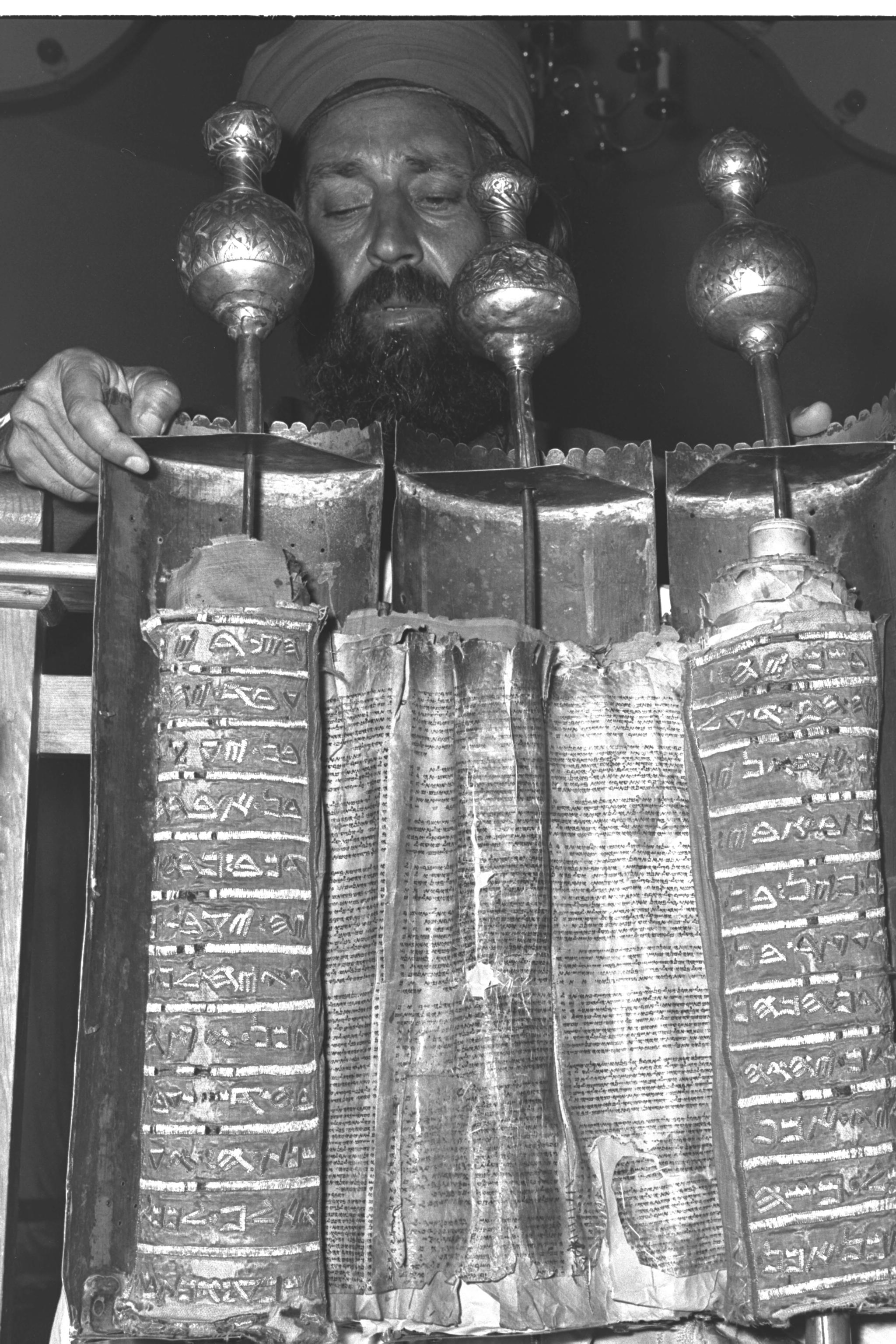
flickr_-_government_press_office_gpo_-_samaritan_priest_zadok_ben-avisha_hacohen

Hymenaeus Was A Low Man

Neal Pollard

Only two verses call his name, but he is as infamous a Bible character as you will fin. A school teacher once told us, “If you can’t say something good about someone, don’t say anything at all!” The Spirit led Paul to no such congenial approach to Hymanaeus. The figurative cup on the man’s life was so filled with wickedness that it toppled over and spilled its insidiousness all over Ephesus. He apparently was viewed by God as a godless sinner. Why would God choose to include so stained a soul, if not to teach us key lessons about forsaking Him and the price of ungodliness?

This was a man who ran with wicked companions. He was a co-worker with Alexander (2 Tim. 4:14), with whom he blasphemed god (1 Tim. 1:20). He left the faith with his cohort, Philetus (2 Tim. 2:17-18). Maybe the downfall of Hymenaeus began with his poor choice of associates. Undoubtedly, these choices impact our own morals (1 Cor. 15:33).

This was a man who had a blatant disregard for the name of God. The Bible treats this offense most seriously (2 Tim. 3:2; Mk. 3:28-29). How spiritually degenerate must one be to ridicule and slander the name for God? Paul says that this man should be handled in the same way as the infamous Corinthian Christian who had his father’s wife (cf. 1 Cor. 5:5). What would have happened to the Ephesus church if a couple of men were allowed to spread disrespect for God and falsehood without rebuke and discipline? The same devastation happens in any church that allows the rebellious to operate unchecked.

This was a man whose teaching was compared to gangrene. Consider the graphic imagery Paul uses in 2 Timothy 2:16-18. The word of Hymenaeus and Philetus, with others like them, would “spread like gangrene.” A gangrenous infection makes amputation, in the threat of death to the entire body, a necessity. Likewise, the poisonous teaching of Hymenaeus and his partner would cause great harm to the body of Christ. Their false teaching was that the resurrection had already occurred (18). The result of their doctrine was that it threatened to upset the faith of some!

In context, the only way to guard against false teaching like Hymenaeus was doing is by diligent study of the Scriptures (2 Tim. 2:15). Like Hymenaeus, many have and will both personally err from the truth and overthrow the faith of others. Our task is to fight, like Paul did, the cancerous spread of “profane and worthless talk” (16). The result of disrespect for Bible truth is increasing ungodliness (16). How tragic! We must oppose the Hymenaeus’ of our day.

Hymenaeuses live and die, and they drag others down with them. Their influence wanes, but the damage they do has an eternal impact on those duped by their doctrines. As we keep our focus on the cross and our zeal to convert the lost, may we keep up our fight against the cankered! Let us pray that modern Hymenaeuses will turn from error and come back home to a God who waits with His mighty arms outstretched!

gallant_lady_shipwreck

Facts Deduced About Baptism From The Eunuch

Neal Pollard

The book of Acts is wonderful for teaching the history of the church as well as providing examples of how people became Christians. From the first gospel sermon (Acts 2), baptism is central and essential to God’s plan of salvation. The emphasis is even found through facts implied from these statements and examples. Consider some facts deduced about baptism from the conversion of the Ethiopian eunuch.

  • First, baptism is part of preaching Jesus. In Acts 8:35, Philip began with the eunuch from the passage the eunuch had been reading (Isaiah 53), and “he preached Jesus to him.” Consequently, the eunuch, when they came past a body of water, said, “Look! Water! What prevents me from being baptized?” Why would this man ask such a question unless preaching Jesus included preaching the necessity of baptism?
  • Second, baptism is part of believing (Acts 8:37). Philip ties his request for baptism to the essentiality of faith preceding baptism. The eunuch confesses belief “that Jesus Christ is the Son of God.” Jesus had sent His disciples with this understanding, that “he who has believed and is baptized shall be saved” (Mark 16:16a).
  • Third, baptism involves urgency (Acts 8:38). The eunuch ordered the chariot to stop. Why? Why not wait until he was back in Africa? Why not wait until Philip collected several others and then have a baptismal service for them all at once? When the Eunuch saw water, for some reason he wanted to submit to baptism right then and there.
  • Fourth, baptism involves immersion (Acts 8:39). We primarily know this because the word “baptism” means “strictly dip, immerse in water (Friberg & Miller, 87). However, the fact that Philip and the eunuch both went down into the water indicates that baptism must involve more than sprinkling or even pouring. This man  (and Philip) went to the trouble of getting wet by going down into the water.
  • Fifth, baptism produces rejoicing (Acts 8:39). The first evidence of joy comes after the eunuch comes up out of the water, not when Philip preached Jesus or when the eunuch confessed belief in Jesus. There was something important and necessary about the act of baptism.

Despite a religious world filled with groups who resist, argue against, and deny the importance of baptism, that one example (and there are several others–Acts 2:36-47; 8:12-13; 9:18+22:16; 16:15; 16:30-33; etc.) leaves no doubt about the indispensable part baptism plays in God’s plan to redeem humanity. Thank God for this conversion example in Acts 8. May our hearts be open to accept what the Word says to us (Luke 8:15).

13055587_1079852015371168_1598737744818493967_n
Megan Meeks was baptized this past Thursday, 4/21/16, in Denver, CO. The plan has not changed since Acts 8.

Jahaziel’s Comforting Message

Neal Pollard

Jahaziel would have been a man of interesting and diverse talents. As a Levite, he would have served with the priests in the temple. As one of the sons of Asaph, he would have either been a literal descendant “or more probably [one of] a class of poets and singers who recognized him as [his] master” (Easton, M. G. Easton’s Bible dictionary 1893 : n. pag. Print.). But on the occasion recorded in 2 Chronicles 20, Jahaziel would have been a “seer” or prophet. The Spirit of the Lord comes upon him during the reign of Jehoshaphat, a righteous king of Judah (2 Chron. 20:14). Judah has been invaded by the Moabites and the Ammonites (20:1). Jehoshaphat’s response is righteous, seeking the Lord, proclaiming a fast, and leading a prayer service (20:3-13). Entire families, men, infants, women, and children were all assembled, “standing before the Lord” (13). Then, it happens. Jahaziel is the man God chooses and uses to respond to the touching prayer of the king.  What can we learn from Jahaziel’s message?

  • It was predicated upon the Lord’s power to deliver (15). He says, “The battle is not yours but God’s.” They were helpless alone and the message was that God was able to deliver them. The power belongs to the Lord. How we need that reminder today! In our personal battles with sin and trials, we so often are guilty of going it alone. Isn’t it thrilling to know that we have help in our fiercest battles (cf. 1 Cor. 10:13)?
  • It was precise in its instructions (16). Jahazael told them a specific time (“tomorrow”), a specific action (“go down against them”) and a specific place (“at the end of the valley in front of the wilderness of Jeruel”).  God wanted His people to know exactly what to expect and exactly what He expected them to do.  What comfort it is to know that God has laid out His instructions precisely and plainly. He’s not trying to trick us. He has told us what we need to do and what is ultimately coming when all is said and done (cf. Heb. 9:27).
  • It pointed to the salvation of the Lord (17).  The height of comfort might be this phrase: “station yourselves, stand and see the salvation of the LORD on your behalf.”  From the proper position, we can see the salvation of the Lord on our behalf. The hard-hearted, indifferent, bitter, and negative person is spiritually blind to it, but we should see it! When I am stationed at the pinnacle of prayer, the citadel of Scripture, the lookout of the Lord’s Supper, the gate of gratitude, or the fortress of forgiveness, I see the salvation of the Lord. Like gazing intently at a masterpiece, the longer I look the greater the nuances, details, and expertise emerge from the canvas of His work in my life. We can turn nowhere besides Calvary to see the clearest demonstration of the Lord’s salvation on our behalf!
  • It promised divine assistance (17). Jahaziel’s conclusion is profound. He ends, “the LORD is with you.” Sure enough, “The Lord set ambushes” (22), “the Lord had made them rejoice over their enemies” (27), and “the Lord had fought against the enemies of Israel” (29). The result was peace and rest (30). Are you confident of that? Whatever you are going through now and whatever lies ahead, do you believe that He is with you (cf. Mat. 28:20; Heb. 13:5-6)? He has never failed and by His perfect character He never will!
  • It provoked praise and thanksgiving (18-19). From the top down, reverent worship and loud praise followed the mighty message of Jahaziel. This was faith in action! They believed the Word and proceeded as if it had already happened. Shouldn’t we be so confident in God’s promises that we respond in the same way? What struggle will you face that’s bigger than the promise of God?

Just like that, Jahaziel fades back into the woodwork of obscurity! His minute of sacred fame came and went, but how masterfully the Master used Him. However anonymous or average you may believe yourself to be, God has a greater message for you to share than He did for Jahaziel! As you faithfully share it, you can help produce an even greater outcome in the life of somebody you know. Perhaps He will use you to save someone from spiritual rather than physical death!  Be on the lookout for that opportunity today and share God’s comforting message.

beracah-valley_fjenkins_05192010_037sm
The wilderness of Jeruel

Even When You’re Alone, You’re Not

Neal Pollard

If I have a favorite chapter of the Bible, it would have to be 2 Timothy 4.  Yes, I love the first eight verses, but that alone is not what cinches this chapter as dearest to me.  It’s Paul’s personal remarks starting in verse nine.  There’s his longing to see his spiritual son, Timothy.  Twice he implores Timothy to come see him (9, 21).  He’s in prison, persecuted for preaching the Prince of Peace. He longs for Christian companionship.  Then, he shares his dejection over the abandonment of certain fellow-workers (10). He wants to see cohorts with whom he has done spiritual battle (11). He has personal needs and wants (13). He warns Timothy of a spiritual troublemaker (14-15).  Then, he shares personal feelings of isolation and loneliness, a time when he needed a Christian brother by his side but had none (16).  Bold, risk-taking Paul, who would stand up to any opposition, the epitome of true manliness, was now in undoubtedly dire, dank conditions, the smell of squalor in the air.  Whatever he saw, heard, and felt as he wrote, Paul scratched out these words: “At my first defense no one supported me, but all deserted me; may it not be counted against them.  But the Lord stood with me and strengthened me, so that through me the proclamation might be fully accomplished, and that all the Gentiles might hear; and I was rescued out of the lion’s mouth. The Lord will rescue me from every evil deed, and will bring me safely to His heavenly kingdom; to Him be the glory forever and ever. Amen” (16-18).  These words aren’t the end of the letter, but they are the end of the matter!

This faithful Christian was deserted by men, but he felt God’s presence and power:

  • The Lord stood with him.
  • The Lord strengthened him.
  • The Lord spoke through him.
  • The Lord saved him.
  • The Lord was steering him.

You and I cannot fathom the price Paul paid for proclaiming Jesus. But even if we were ever to face privation, punishment and pain for our faith, what was true for this apostle will be true of us.  He promised to be with us always (Mat. 28:20) and never forsake us (Heb. 13:5). Even if you ever feel physically alone, you will have the spiritual assistance Paul speaks of in 2 Timothy 4.  Through it all, you can say with Paul, “To Him be the glory forever and ever. Amen!”

paulmosiac

Barsabas Was a Great Man, Too

Neal Pollard

Having fallen from grace, Judas soon thereafter fell headlong a corpse and a reminder of the depths to which sin will take an individual (Acts 1:17-20). Though he had a part in the ministry of God the Son, he chose a commission as henchman in the army of perdition.

His death, as an apostle, left a void in the ranks of the handpicked, special followers of Jesus (Acts 1:20). By divine guidance (Acts 1:24, 26), the apostles chose a man among men to pick up the armor vacated by the deserter. The man chosen, Matthias, was a great man. This is obvious, for his appointment was based on his spiritual character (Acts 1:21). However, what of the man Barsabas, about whom very little is spoken? Was he not also a great man?

He was faithful to Christ (Acts 1:22). Swete explains faithfulness to Christ (as in Revelation 2:10) as proving “…thyself loyal and true, to the extent of being ready to die [for Christ’s sake”] (The Apocalypse of St. John). Faithful suggests reliability and trustworthiness, as well as submissiveness. All of this describes Barsabas. From the ministry of the Baptizer to the ascension of the Savior, Barsabas was numbered among the disciples. Apparently, he withstood even the difficult teachings of Christ (see John 6:66-69). He did not turn away, even after the seeming defeat of Calvary (Acts 1:22). Faithfulness is, in God’s eyes, a sign of greatness.

He was recognized as a spiritual leader (Acts 1:23). This is very subjective. The author sees the appointment of Barsabas as the result of his spiritual excellence among the “company.” Assuming that, Barsabas would appear to have been perceived as a leader. Truly, fervent humble and obedient discipleship sets one apart (1 Peter 2:5, 9) as salt (Matthew 5:13) and light (Matthew 5:14) in this world.

He was willing (cf. Acts 1:22-23). Apparently, from the text, Barsabas did not shirk the call to duty. No excuses could have been uttered, for the apostles were left to “give forth their lots” (see McGarvey’s commentary on Acts, p. 22) to pick Judas’ successor. How seemingly rare to find men both qualified and eager to serve, men of Isaiah’s stripe who cry, “Here am I, send me” (Isaiah 6:8). Willingness precedes work, and Barsabas appeared ready to “take part in his ministry and apostleship” (Acts 1:25a).

Faith, works and attitude all add up to greatness in God’s eyes, even if not in men’s blinded vision. Though not God’s choice to fill the shoes of an apostle, Barsabas was distinguished as his servant. How wonderful one day it will be to walk with Barsabas on the street of gold and thank him for his example of greatness in service to Jesus.