HE QUALIFIED US

Neal Pollard

When I was a student at Faulkner University, Schick Corporation sponsored a three-on-three intramural basketball competition known as Super Hoops. The school’s student activity director organized the tournament, and the winning team won a paid trip to the national tournament to compete for the national title. My senior year, four of us decided to form a team and compete for this coveted prize. We had a guy, Patrick Hunter, who was a slick ball handler and had been a point guard in High School. We had another guy, Bart Carter, who had actually played baseball at Mississippi State before transferring to Faulkner to become a Bible Major. There was me, more of an outside shooting threat if anything. But it was our fourth man, Mike Whisenant, who truly tipped the scales in our favor. He was a High School basketball star and was our big man. He also had a great shot, but we could depend on him to score inside consistently. Every team could have four players and you could rotate in and out to keep players fresh. But the guy who had to stay in, our workhorse, was Mike. It was certainly a team effort, but it was Mike who carried us to victory at Faulkner and punched our ticket to Atlanta. We got to stay at a very nice Hyatt hotel for free. We got meal vouchers, cool T-shirts, and I didn’t buy a razor for a couple of years. Although our glory was short-lived on the “national stage,” getting beat by Morehouse and then Valdosta State in a double-elimination format, we got to compete—thanks mostly to Mike’s skillset and abilities.

Perhaps that’s a crude way to illustrate a term used by Paul in Colossians 1:12, but follow me for a moment. Paul is in the middle of his prayer for the Colossians, telling them he wanted them (and by extension he wants us) to please God in all respects. The four ways to do that follow that imperative: bearing fruit, increasing in knowledge, being strengthened, and giving thanks. Paul says to give thanks to the Father, “who has qualified us to share in the inheritance of the saints in Light.” The word translated “qualified” here is only found one other time, in 2 Corinthians 3:6, where Paul says “our adequacy is from God, who also made us adequate as servants of a new covenant.” The same idea is conveyed in both passages.

Though I could not find the Greeks using this verb in an athletic sense, it literally means “to cause someone or something to be adequate for something” (Louw-Nida 678). The adverb form of the word appears many times in the New Testament, and means “sufficient in degree, sufficient, adequate, large enough” (Arndt, Danker, et al 472). Our word means to “render competent or worthy” (Zodhiates np). God is the cause of adequacy, the One who makes us competent and worthy to receive the inheritance. We have a part to play. We must be obedient, fruitful, knowledgeable, strong, and thankful. Without this proper response to God’s grace, we do not qualify for the prize. But, who is most responsible? Who do we most depend upon? It’s not us. It’s Him!

My illustration is feeble, but it helps give me a faint glimpse of what Paul is talking about. In an infinitely greater way, I owe my eventual, eternal prize to God’s ability and identity. But, because I want to please Him in all respects, I am going to work hard and with gratitude for the One who makes it all possible.

Screen Shot 2018-01-17 at 6.36.27 AM

FEAR!

Gary Pollard III

Have you ever been terrified? I have: I’ve been hit head-on at highway speed, been attacked by feral dogs on the Navajo reservations, and once had to eat kale.

Fear is a normal part of our life, and is sometimes an annoying reminder that we are vulnerable. Fear can save your life, or cause you to push yourself to overcome. Fear can also help you get to heaven.

The Bible talks about the fear of the Lord all throughout. The concept of fearing God is mentioned over 578 times in scripture! How do we fear the Lord? A very long time ago, a man named Jonathan Edwards preached a sermon called “Sinners in the Hands of an Angry God.” The premise of his sermon is that we are all walking a frayed tightrope over the fires of Hell with God just waiting for us to trip up and be eternally lost. His sermon is extremely well-known (even today), but is not an accurate portrayal of God’s disposition toward us (I John 1.7). Our fear of God – literal fear – comes from knowing that He is our judge and creator. It stems from a sense of awe at who He is and what He can do.

We’re all told to fear the Lord, but how do we do that in 2017? When you’re about to do something that the back of your mind tells you is probably not a good idea, think about the power of God. Think about standing in judgment before Him and how He would view your decisions. Think about the fact that your very existence is due to Him – do you think He’s not aware?

God is love by nature (I John 4.7, 8), but God is also our righteous Judge (Romans 2.2). Let’s keep that in mind this week while we’re making our decisions.

fear460

“I Don’t Feel Good Enough”

Neal Pollard

How many times have you said that? You may project an air of confidence that would make it hard for anyone to think you felt that way or you may wear it on your sleeves. But, if honesty prevails, we’d all confess to wrestling with that thought. Daily! With Paul, facing the scope of our challenge, we exclaim, “And who is adequate for these things?” (2 Cor. 2:16). BDAG informs us that “adequate” means “sufficient in degree…large enough; pertaining to meeting a standard, fit…competent, qualified, able” (472). As Paul’s words are in the context of ministry, conscientious preachers who read that statement really get it. We’re fragile pottery entrusted with a perfect, eternal, and divine message (2 Cor. 4:7).  Oh, how we feel our own humanity as we preach the mind of God to others struggling with their humanity. We know our every weakness better than anyone else does.

Yet, the struggle I mention is not just the preacher’s burden. The best Christians I know live each day fully aware of their inadequacies and insecurities. No matter how many good works they do, how faithful in attendance and duty they are, or how actively they seek opportunities to serve God, they struggle at times. May I suggest that this is one of the biggest blessings of living the Christian life. No, we don’t want to live in a shroud of guilt. Not at all! But, consider what happens when we acknowledge our glaring insufficiencies.  We can see our utter dependency on God that much better.

Could Moses have really led the Israelites for 40 years on his own ingenuity and oratory? Could Jeremiah have really faced his audience on his own temerity? Could a renewed Peter have really preached that Pentecost sermon to Jesus’ killers on the merits of his own homiletic greatness? Could Paul have really transformed the first-century world on the foundation of his cosmopolitan experience and top-notch education from Gamaliel University?

Repeatedly, throughout His ministry, Jesus decries the Pharisaical tendency of trusting in self (Luke 16:5; 18:9). Ultimately, it’s a farce anyway. I may struggle with different weaknesses than you, but I still struggle. While that is never an excuse to give up and indulge in sin (cf. Rom. 6:1-2), it is a great, daily starting place to appreciate our need of God’s favor and friendship. We are not going to make it through this world on our own merits. As the beautiful old song suggests, “I need Thee, oh, I need Thee, every hour I need Thee….”

Here’s the beautiful thing that happens when we recognize our shortcomings and inabilities. We become an empty vessel that God can fill to accomplish His work. God will open doors of opportunity for us to do, by His might, what we could never have hoped to do without Him. Whether doors of service (teacher, elder, preacher, deacon, etc.), lives of holiness, or works of obedience, we will live in amazement of His power. Or, as Paul put it, “Now to Him who is able to do far more abundantly beyond all that we ask or think, according to the power that works within us, to Him be the glory in the church and in Christ Jesus to all generations forever and ever” (Eph. 3:20-21). Take heart, Christian! You’re not doing this alone. You can’t! But, what can God not do? That thought is exciting and thrilling. With that in mind, no mountain is too formidable. He’s got this!

pexels-photo-208151

WHY TODAY IS AN EXCITING DAY (poem)


Neal Pollard

From sea to sea, He is the same
No man can change His essence
From year to year, His eternal flame
Show His power and effervescence.

Whoever sits upon a throne
Or reigns a group or nation
We must that One make fully known
Through tireless proclamation

For all mankind must know that One
Who is changeless and transcendent
They must to Him yield before life’s done
And acknowledge on Him they’re dependent

Fickle, transient trends and times
Can’t blind us on this matter
The church’s mission in fair or foul climes
Is to take the Kingdom seed and it scatter.

And, so, we shall live and by such find peace
No matter the climate of our homeland
Leaning on God, who doesn’t change or cease
The trustworthy Rock upon which we stand!

Sunrise, Kauai

Identifying The Source Of Trouble In The Congregation

Neal Pollard

One of my dad’s most memorable sermons, which he preached in more than one location, was actually a two-parter.  The first part was preached Sunday morning. Dad warned that he was going to identify the source of the problems in the congregation. He used a wipe board or chalkboard, and only put the first initial of each one up there as he preached. He said that everyone should come back that night and he would disclose the full names that went with the initials.  At one congregation, after the morning sermon, a large number of people came forward in response to the invitation.  Sure enough, that evening dad put the full names next to the initials:

  • Accuser of the brethren (Rev. 12:10)
  • Adversary (1 Pet. 5:8)
  • Beelzebub (Mat. 12:24)
  • Belial (2 Cor. 6:15)
  • Devil (Heb. 2:14)
  • Enemy (Mat. 13:39)
  • Father of lies (John 8:44)
  • God of this world (2 Cor. 4:4)
  • Prince… (Eph. 2:2; John 12:31)
  • Roaring Lion (1 Pet. 5:8)
  • Satan (Mat. 4:10)
  • Spirit that works in the sons of disobedience (Eph. 2:2)
  • Tempter (Mat. 4:3)

Now, in no way am I discounting the free will choices people make. James 1:13-15 very clearly places the blame of sin on the individuals choosing to act on their lusts and desires. One is not possessed or overtaken by the devil to do his will any more than a person is overtaken by God and made to do what’s right. But Jesus calls the devil the “father” of sinful behavior (John 8:44). John tells us that the one who practices sin is “of the devil” (1 Jn. 3:8). Those who sin are doing his will (2 Tim. 2:26).

Satan is at the heart of national, congregation, familial, and individual sin.  We’re told to resist him (Jas. 4:7; 1 Pet. 5:9). The hopeful fact is that, with God’s help, we can always successfully do so.  Let’s be aware that the devil does not want God’s children or His work to succeed. If he can thwart our efforts as a church to be united, faithful to God’s Word, evangelistic, and productive, he will do so. Knowing this, we should be more determined not to let him win!

lion-692219_960_720

God Revealed (poem)

Neal Pollard

The mighty arm of creation, brooding or building
The hand that tipped the canopy, drowning sinners
The finger that stirred the languages, babblers yielding
The heart that made the heirs of Abram winners

The Majesty presented in a bush, resilient though burning
The Master who through plagues made Pharaoh submit
The Merciful One who longed for Israel’s returning
The Measuring Rod whose justice sin did not acquit.

The everlasting to everlasting, whose word’s a holy knife
Inhabitant of the heavens, swaddling Incarnate babe
Kindling Spirit, Father, Son, the way, truth and life
Perfect in character, with power the obedient to save.

Gatekeeper of heaven, consigner of the wicked to hell
Served by angels, ruler of the living and the dead
Spirit, love and light, divinest nature not one part frail
Eyes all-seeing, mind all-knowing, power unlimited.

Hope of the hopeless, joy for the tearful mourner
Source of strength for the heavy-laden soul
Lifter of the penitent fallen, all-glory adorner
Author of salvation who one day will call the judgment roll.

Since He is and is rewarder, let not one refuse His order!
If Satan’s power you’d have repealed, obey the God the word’s revealed!

IMG_1199

“I Know Who You Are!”

Neal Pollard

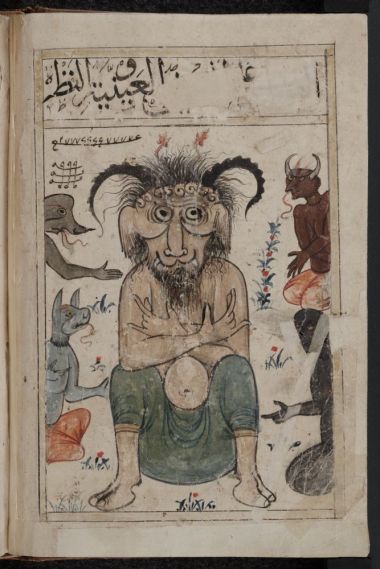
A rich detail in the study of the gospel of Mark is the testimony of the unclean spirits about Jesus. 

  • Mark 1:24—A man in the synagogue with an unclean spirit said, “What business do we have with each other, Jesus of Nazareth? Have you come to destroy us? I know who You are—the Holy One of God!”
  • Mark 3:11—“Whenever the unclean spirits saw Him, they would fall down before Him and shout, ‘You are the Son of God!’”
  • Mark 5:7—The man with the unclean spirit named Legion said, “What business do we have with each other, Jesus, Son of the Most High God? I implore You by God, do not torment me!”

In addition to these encounters, the gospel repeatedly shows Jesus’ power over the unclean spirits—He gave authority to the apostles over the unclean spirits (Mark 6:7), He healed the little girl with the unclean spirit (Mark 7:25), and He cast out the unclean “deaf and mute” spirit from the man’s son (Mark 9:25). Reading just those few accounts of Jesus’ power over them, no wonder they testified about Him! Who knows what they had seen of Him in the spirit realm that people on earth had not seen?  

Consider a few observations about these believing, confessing evil spirits we read about in the gospel record. 

Their faith exceeded the faith of the apostles, disciples, and religious leaders.  Jesus rebukes the absence and littleness of faith in the people who encounter Him, even those who were His closest followers. In Mark 8:28, so many were wrong about who He was. The disciples showed fear instead of faith or they missed the point on occasions where faith would have made things clear. How humbling for them that unclean spirits were crystal clear in their knowledge about Jesus. 

Their faith did not benefit them.  James’ epistle drives this point home. He writes, “You believe that God is one. You do well; the demons also believe, and shudder” (2:19). These unclean spirits were working against Christ. Just knowing who Jesus was did not save them nor did it make them submissive to Him.

Their faith is presented as a prominent proof of Jesus’ identity.  The miracles, wonders, and signs performed by Jesus help the apostles and disciples ultimately figure out who Jesus is. Peter would preach this (Acts 2:22ff). John would write this (John 20:30-31). Reading about this in the Bible, countless men and women through the centuries have believed based on the record about Jesus that includes His power over the spirit world. Mark presents these encounters to establish the fact confessed by Peter: “You are the Christ” (8:29).

How does this apply to us today?  First, let’s not let the world live with greater faith and understanding than we do. Second, let’s understand that merely understanding and believing the identity of Jesus will not save us. Faith must be accompanied by works. Third, may we allow the various proofs about Jesus to build and grow our faith and trust in Him, and by this yield a foundation which stands up to the fiercest storms (cf. Matt. 7:24-25). Let’s not merely say to Jesus, “I know who You are!” Let’s show Him!

kitab_al-bulhan_-_devil

How To See The Good In Others

Neal Pollard

Some just can’t! They assume bad motives, intentions, and behaviors in others. They like to predict failure and disaster. Some take that attitude toward people, including Christians. “They won’t last!” “They can’t cut it as a deacon/elder.” “He won’t ever be a good preacher!” “They just want the praise of men.” Think about all the people you know and interact with. Some are exceptionally talented and pleasant and some are pretty worthless and repulsive, but most are in-between the two extremes. But, what if I told you that you could influence what others become?  Barnabas did (Acts 4:36).  He was so good at encouraging people, “encouragement” wasn’t his middle name but his first name. Who was the first one to see good in Saul of Tarsus (Acts 9:27)? Who saw great potential in Antioch (Acts 11:23-26)? Who still believed in John Mark (Acts 15:37), who Paul would later think valuable once more (2 Tim. 4:11)? Barnabas was a great leader because of what he could see in others. We can make an eternal difference in people by seeing the good in them.

First, take them where they are. Jesus did.  Do you remember when Jesus met Peter (Luke 5:1-11)? Peter calls himself sinful.  We know he was impetuous (John 18:10) and could use unsavory words (Mat. 26:74). Peter’s business partners, the Sons of Thunder (Mark 3:17) seemed to have some anger management issues. In fact, Jesus made it an emphasis to take sinful people and work with them wherever they were (the woman at the well, the sinful woman caught in adultery, Bacchus, publicans, sinners, etc.). We will never help people get to heaven if we can’t take them where they are.

Then, see them for what they could be. Whether it’s a non-Christian or Christian, they need us to be able to see their potential and think the best of them. I don’t mean gullibility or compromise, but optimism! Why did Christ put such effort into Peter? He was a sinful man when He met him, made many mistakes while he was with Him, and denied Him in His greatest moment of need (Luke 22:60-62). He saw what Peter could be (John 21:15-17). Look past people’s quirks and flaws; imagine the possibilities.  There’s got to be a soul-winner in every Christian, since Christ commands it of us all (Mark 16:15-16). Every one of us can be faithful, dedicated, and fruitful Christians. Every lost person could have their hearts softened by the gospel–at the least the gospel has the power (Heb. 4:12; Rom. 1:16). Remember, love “hopes all things” (1 Cor. 13:7).

Finally, help them be what they can be. It’s far easier to be the critic and tell people what they’re doing wrong. But remember, “To belittle is to be little.” Criticism alone is useless.  It’s a lot tougher to help people improve and to go about helping with patience. Jesus didn’t end His work by telling people what sinners or failures they were. He guided them to the better way (Mat. 7:13). He told the adulteress to stop sinning (John 8:11). He told Peter to go feed His sheep (John 21). When He was through with Zaccheus, he went from thief to philanthropist. Jesus’ whole purpose was to take people afflicted with sin and transform them. It is rewarding work to invest in people and to help them grow. The Bible tells us to help people do better and be better (Gal. 6:1). To see the best in others, be willing to help and lead them (Luke 6:39-40).

If we are negative and pessimistic, that really is just a commentary on us. Look for good in others. Accept, anticipate, and assist!

A TRUTH IN THE MIDST OF TRANSIENCE (poem)

Neal Pollard

Waters vast and oceans deep create a marvel and wonder
By its volume and power but also the creatures that you’ll find thereunder.
The stars and planets, galaxies, the universe, the vastness of outer space
The finest particles and smallest molecules, the most infinitesimal place.
The power of the greatest man who rules upon the land
The lowliest person who grovels around unseen and far from grand.
The outward beauty and loveliness of the Lord’s most fair person
The inward workings and intricate details of us all makes this so very certain.
To look upon the mountains high, whether green or rocky or tall
To investigate the tiniest plant and the creatures so delicate and small
Look afar or microscopically, dig and search, uncover
Test it, taste it, see it, smell it, here’s what you’ll discover
Locked within our DNA or viewed from light years away
You see the same truth, over and over, a fact that’s here to stay.
We are the evidence of a Being whose power and knowledge are unending
Who makes what is made extraordinary, through His infinite nature expending
But making what’s made and doing what’s done, His resources are not depleted
Because He is God, He’s never without. He never needs completed.
He’s worthy and mighty, He’s wonderful and true, the God we worship and serve
He’s faithful and ingenious, active and gracious, from perfection He cannot swerve
As you walk through the day and make observations, what you see or happens to you.
Whatever may change, crumble, fall, or fade away, God will still be faithful and true.

                             Endothelial cells viewed under a microscope