Whether He is responding to the faith of a devout Roman or responding to the grief of an indigent widow, He knew He could help and He was willing. He knew He had something to offer they could not find anywhere else.
Neal Pollard
Luke shows us two demonstrations of Jesus’ power as He traverses the roads and villages of the northern half of Palestine during the early part of His public ministry (Luke 7:1-17). These show the diversity of Jesus’ work, even what He did simultaneously. This ultimate example of “multi-tasking” was performed for two situations that were about as opposite of each other as could be. Notice some of these contrasts:
The Centurion’s Servant
The Widow’s Son
The Centurion reaches out to Jesus (3)
Jesus reaches out to the widow (12-13)
The Centurion was already convinced of His power
The widow was seemingly oblivious to His power
The Centurion was rich and powerful (2,5,8)
A widow with no children had no prospects (12)
The servant is about to die (2)
The son is dead already (12)
Jesus marveled at the man’s faith (9)
Jesus felt compassion for the grieving mother (13)
The Centurion was a Gentile
Nain, a Galilean city, would be Jewish (12)
Jesus healed the servant from afar (6-10)
Jesus touched the coffin and raised the son (14)
Nothing is said of the people’s reaction (10)
The crowd fears and glorifies God (16-17)
Yet, Jesus is the thread that holds them both together. Whether He is responding to the faith of a devout Roman or responding to the grief of an indigent widow, He knew He could help and He was willing. He knew He had something to offer they could not find anywhere else. He is willing and able to transform sorrow into celebration. These events serve to spread good news about Him all around Him (17). People may not yet understand who He is, but these actions let them know He was no ordinary man or rabbi. Those in the funeral procession say, “A great prophet has arisen among us!” And, “God has visited His people!” (16). As glowing a tribute as this was, they didn’t yet grasp the full picture of Jesus. But, they knew He was special.
I think about the diverse people we see and know every day. They are black and white, young and old, male and female, rich and poor, educated and uneducated, natives and transplants. Perhaps you can take two people in your circle of influence and make up a column of contrasts like the one above. Despite their differences, they will be united by one significant thing. They need what only Jesus can give, and He can certainly give it to them. Whether they are actively seeking Him or unaware of their need of Him, you and I can forever change their life and circumstance when we introduce them to Jesus. May God help us to do that for someone today!
I’m trying to convince my wife (Janelle) that she needs to make a podcast/Youtube series that would provide a nurses perspective on the many kinds of medicines used in the Bible as well as the medical practices of ancient cultures mentioned in the Bible. Would their medical practices actually work or make things worse? If you think that would be interesting as well, please send her a message and let’s all annoy nurse Janelle until she makes it happen.
On a similar note, this article was written after researching a few of these bizarre medical practices.
DID YOU KNOW…
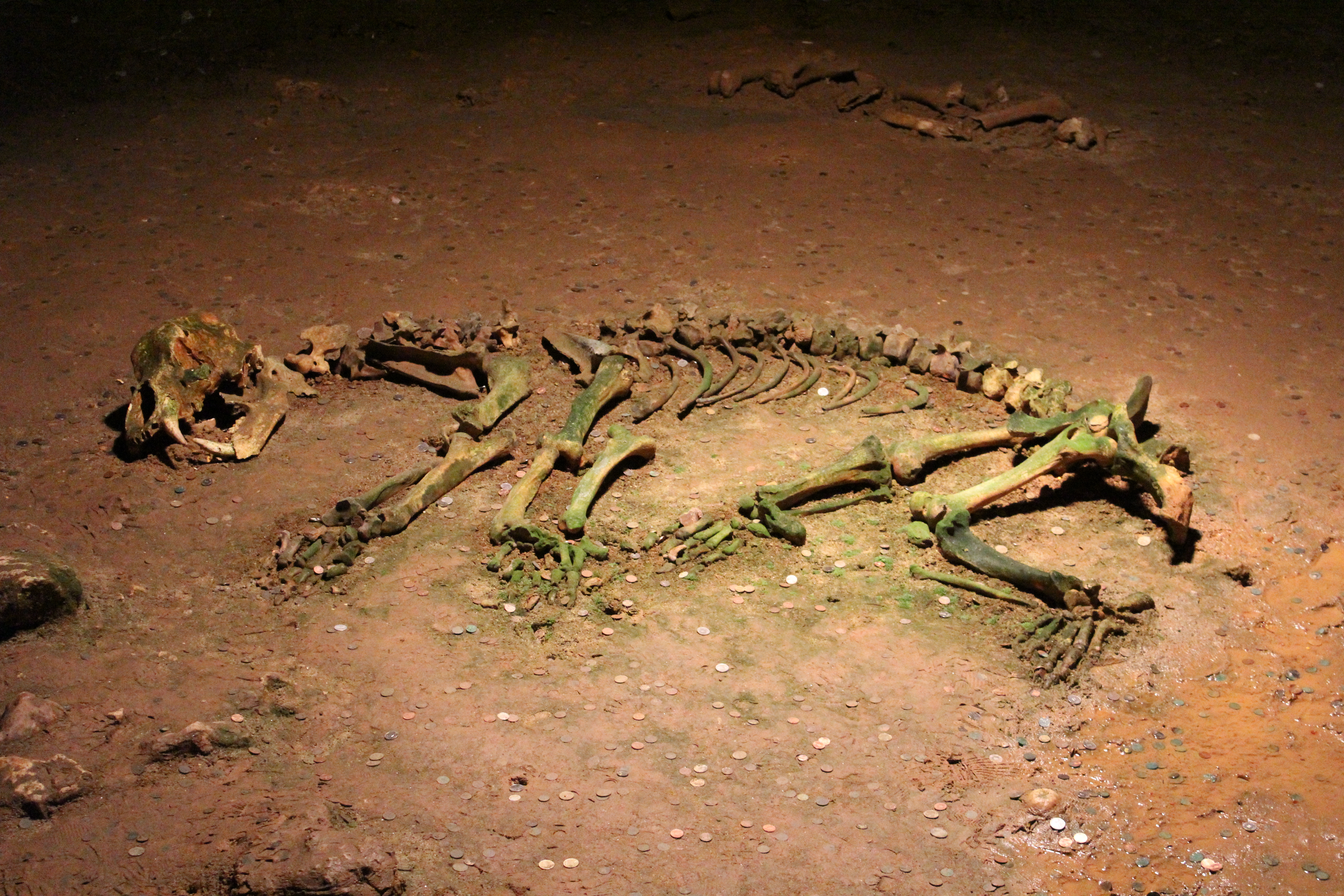
The use of dragon bones in medicine is a fascinating aspect of ancient beliefs, particularly if you view these “dragons” as possible examples of humans and dinosaurs co-existing. However, what’s really strange is the fact that various societies around the world all decided to use the bones in such a unique way— medicine.
For example, in medieval Europe, people sometimes discovered large bones and believed them to hold magical properties. Powders made from these bones were used as talismans or medicinal remedies.
During the Middle Ages, alchemists often incorporated “dragon” substances in their potions and elixirs. They believed that dragon bones could enhance the efficacy of their concoctions or serve as some sort of protective charm.
Some Mesoamerican civilizations had legends about dragon-like creatures, and they used the large fossilized bones in rituals and their medicinal practices because they believed the remains held mysterious power.
An article in the Associated Press in 2007 had this to say about the ancient Chinese:
“Villagers in central China spent decades digging up bones they believed belonged to flying dragons and using them in traditional medicines. Turns out the bones belonged to dinosaurs…
The calcium-rich bones were sometimes boiled with other ingredients and fed to children to treat dizziness and leg cramps.”
The Bible has an interesting account about “magic” bones in 2 Kings 13:20-21. This passage recounts the power of God working through the prophet Elijah— even after his death.
Here’s a brief summary for those who might be unfamiliar with this incredible account:
The prophet Elijah made a significant impact (perhaps the most significant) in Israel. Even after his death his prophetic legacy was admired by the people, but Elijah would perform one last miracle from beyond the grave. Some men were burying a man when they saw a raiding party coming. In haste, they threw the deceased man into the tomb where Elijah’s bones lay and when the dead man touched the bones of Elijah he came back to life and stood on his feet.
While there may or may not be anything to the medicinal benefits of dinosaur bones as claimed by ancient cultures, there’s no need to speculate where the power was coming from in our biblical account. It’s obvious that it was God’s hand at work and not the prophet’s bones. The same can be said of baptism or even our Bibles. The power isn’t in water found in a baptistery or words on a page because we know the source is actually our Savior. The cure to the world’s greatest disease isn’t some secret recipe that utilizes dragon bones. What we need is what we already have and it’s widely available.
“Be not wise in your own eyes; fear the LORD, and turn away from evil. It will be healing to your flesh and refreshment to your bones.”
I don’t usually give I Corinthians 13 much time, but that’s not intentional. It’s one of those passages normally seen in brightly-colored, gaudy cursive within a stressed wooden frame, or in the same font on a t-shirt. Or a blanket. It’s become almost cliche, and I’m ashamed to admit that it’s not been a regular part of my studies. I pass one of those Hobby Lobby-style frames with some regularity, and it struck me (finally, after more than a year) that there’s a lot about this chapter I don’t understand! So the next few articles will focus on I Corinthians 13.
It’s often used to argue that God doesn’t work through his people the same way he did in the first century. This isn’t convincing — a completed canon is not remotely in Paul’s mind as he writes this section, and context offers very little to suggest otherwise. His discussion of love is there to posit its transcendence! If I Corinthians 12 is any indication, some Christians were unhappy with their “superpower” because the gift of service was not as cool as the ability to speak other languages, for example. Paul says, “Love is better than any of these because it’s the only eternal quality.” Besides that, prophecy was the best gift (cf. 14.1ff). This discussion continues through chapter fifteen, where the “perfect” is our final victory over sin/death when Jesus returns.
This isn’t necessarily to say that miraculous gifts are still a thing — a more convincing argument against the continuation of miraculous gifts comes from Acts. It seems only the Apostles gave out these gifts. After their deaths, it would seem that no more gifts were handed out. There is evidence in the early church fathers that some people still had these gifts into at least the second century, but it wasn’t as common. However, God did directly give these gifts to Cornelius and his family without Apostolic intervention (Acts 10.44-46, 11.17). That was an era-changing, very special occasion to convince the Jewish people that they were no longer the only chosen ones (10.34).
Since the first part of chapter thirteen talks about these special gifts, I wanted to get this discussion out of the way. In the articles that follow (Lord willing), I want to look more closely at what love is, isn’t, does, and will do. Whether God has completely stopped intervening in some peoples’ lives the way he did before or not, the point of this chapter remains: we could be Titans in every spiritual gift, but it’s meaningless without love (1-3). Since we can’t live forever without having been fully matured in love (I Jn 4.7, 12, 16-18, 20-21), I Cor 13 is a very practical look into what a matured love is.
During that time many believers will lose their faith. They will turn against each other and hate each other. Many false prophets will come and cause many people to believe things that are wrong. There will be so much evil in the world that the love of most believers will grow cold. But the one who remains faithful to the end will be saved. The good news I have shared about God’s kingdom will be told throughout the world. It will spread to every nation. Then the end will come (Mt 24.10-14).
There is no question that the Holy Spirit, as an everlasting personality of God, is unlimited in power. He can do whatever it is possible for God to do, for He is God. It is interesting to read or hear religious people, from preachers to other members, claiming or asserting things the Holy Spirit is doing in churches and lives today. In fact, several of these claims demand an answer, principles from scripture that must be considered before such claims are believed and embraced. What are some things the Holy Spirit will never do?
The Holy Spirit will never override our free will. John Calvin, a 16th century protestant reformer, went to an extreme that placed salvation solely in God’s hands. He contended that man did not have a part in it at all. From this premise came five broad religious ideas that eventually became identified as Calvinism. One of these tenets is called “irresistible grace,” the idea that those God chooses for salvation are led to faith by the work of the Holy Spirit upon the human heart. Tragically, this false idea is supported by many in religion today. Yet, Scripture makes it clear that even in the first century, when the Holy Spirit operated miraculously in confirming the spoken message of Christ, His apostles, and other early Christians, He never directly operated upon the human heart in a way that overtook or overwhelmed the free will of the individual. Cornelius received the Holy Spirit (Acts 10:48-49), but how was he saved? Acts 11:14-15 indicates that it was words told to him whereby he and his house were to be saved. 1 Corinthians 1:18 tells us that God chose to save souls through the message preached. One can look in the Bible from cover to cover and never find a statement or implication that God acts directly upon the human heart in a way that overtakes our will and leads us to belief and salvation. Scripture repeatedly urges man to choose for himself, if he wills (Rev. 22:17; Matt. 11:28-30; etc.). The Holy Spirit works powerfully upon the human heart to persuade man to obey God, but He does so through the powerful word (Heb. 4:12; Rom. 1:16). This message is so compelling and convicting, but God has left it to our free will to decide whether to accept or reject this message.
The Holy Spirit will never contradict revealed truth. Increasing claims are made in churches today about what the Spirit is working in churches to accomplish. Often, the Spirit has been given credit for a church’s change of policy in women’s role, how or on what to spend money (such as for a grandiose campus), or even a strange, new doctrine. Such assertions, however, ring hollow. If these contentions were true, such would reflect most negatively on the character and nature of God. The result of God revealing one thing in scripture, then revealing something else directly, is contradiction and confusion (cf. 1 Cor. 14:40). God claimed that He was giving us His will for all people of all time (John 14:26; 16:13; Jude 3, 2 Tim. 3:16-17; 2 Pet. 1:3). If He is still revealing new truth through the Spirit, was He right in those passages? If He is still revealing new truth through the Spirit, how does this not reflect on His honesty? God cannot lie (cf. Ti. 1:2), but those who claim Holy Spirit guidance in revealing new truth today, if they are correct, make Him such.
The Holy Spirit will never assert what cannot be confirmed. Considering the work of Moses, then the later prophets, Jesus, His apostles, and others who asserted that their message was directly from God, one finds miracles being performed which confirmed without doubt the source of the message. Without such tangible confirmation, how does the one who receives the claim know that claim to be true? Anyone can claim that the Spirit revealed something to them or told them to do something, but how can anyone know they are right without clear confirmation? That is what Aaron’s rod was for. Isaiah (7:14), Jeremiah (44:29), Zechariah (3:8), and others all pointed to a sign that would confirm the veracity of their message. History bears witness to the truthfulness of their claims (cf. Deut. 18:22). After the church was established, Paul was already teaching in the first century that the miraculous gifts would not be needed once the written word was completed (1 Cor. 13:8-12). God has never left Himself unsubstantiated. How do we confirm doctrine? We go to the Word God breathed. It reveals His thoughts and His will. He will not sanction men’s unconfirmed claims, and we are wise not to rest our hopes on such. It is a dangerous and unfounded precedent to simply claim divine guidance without proof. With such an approach, every person can claim a certain revelation, guidance, and heavenly message. Without confirmation, no one’s claims can be tested!
The Holy Spirit is Divine, living, and powerful. As God, He is at work in lives today. He indwells the Christian (Rom. 8:11; 1 Cor. 3:16; 2 Tim. 1:14; etc.). He strengthens the inner man (Eph. 3:16). However, may we never fall prey to the false ideas that man creates and that cannot be verified by scripture (cf. 1 John 4:1). The Bible exists for the reason of testing such ideas as these. It must be the standard that proves and disproves men’s claims today. Know for certain that the Holy Spirit does not today, nor has He ever, overtaken man’s free will. He will never lead one to a conclusion or teaching that contradicts the Word He inspired holy men of God to pen. If one claims a Holy Spirit-given message that is more, less, or different from scripture, it must be rejected! If the alleged Holy Spirit-given message is the same as scripture, then why would God have given us scripture in the first place if He was going to directly dispense the same message apart from the Word? Finally, He will never allow men to pass off as truth that which they cannot confirm in some way that proves, beyond a shadow of a doubt, that the message is divinely given. Let God’s people be diligent students of the Bible and as such able to discern right and wrong in such matters as these!
Mark 8:27ff is the pivotal moment of Mark’s gospel. Before the conversation in this section of Scripture, Mark records 20 miracles performed by Jesus. There are only six miracles recorded in the last half of Mark, which follows this conversation. People have been marveling at Jesus and people have been trying to determine who He is. So Jesus’ question here, “Who do people say that I am?,” is not just important for the disciples walking with Jesus in Mark 8, but for those of us who read the book today. Notice a few answers we glean from Mark 8:27-9:1.
He is “Jesus” (27). The name means “Savior,” and is, in fact, the Greek form of the Hebrew name “Joshua” (“Jehovah saves”). Matthew connects the name and the person of this Jesus with the salvation He came to bring. An angel of the Lord explains to Joseph, “Do not be afraid to take Mary as your wife; for the Child who has been conceived in her is of the Holy Spirit. She will bear a Son; and you shall call His name Jesus, for He will save His people from their sins” (1:20-21). “Jesus” also expresses His humanity, as it is the name He goes by and even used with His hometown when He is called “Jesus of Nazareth” (1:24; 10:47). The fact that my Savior shares my humanity encourages me. I know He can empathize with me (Heb. 2:14; 4:15; 5:7).
He is “Christ” (29). While this designation of Jesus is found seven times in the gospel, He does not use it of Himself until after Peter confesses Him to be the Christ (9:41; 12:35; 13:21). It is this claim that enrages the High Priest (14:61) and draws the mockery of the crowd at His crucifixion (15:32). “Christ” means “anointed one” or “Messiah.” In the Old Testament, the anticipated deliverer is called “Anointed” (Ps. 2:2) and “Messiah” (Dan. 9:25-26). Kings (1 Sam. 24:7), priests (Lev. 4:3), and the patriarchs (Ps. 105:15) are said to be anointed. All of these have connection to Jesus. He came to become “King of kings” (1 Tim. 6:15; Rev. 17:14; 19:16). He is our great High Priest (Heb. 4:14). Those patriarchs are part of the Messianic lineage. No wonder Jesus (John 14:6) and His disciples (Acts 4:12) communicate that salvation from sin can only come through Him. Peter correctly discerned that Jesus is no mere prophet or harbinger. He is the expected deliverer. I must come to, live with, and share with others this conviction! That fact is the central difference in how I live my daily life!
He is “Son of Man” (31,38). Jesus connects this designation with more than one thing. First, He connects it to His upcoming suffering, death, and resurrection (31). Then, He connects it to His Lordship (8:34-9:1). Properly understood, “Son of Man” will “convey if possible a (messianic) sense of dignity, authority, and responsibility. Strictly to be avoided is any translation which would equate the title merely with ‘man,’ ‘a human being” (Bratcher-Nida, Handbook on Mark, 81). It is Mark’s most common designation for Jesus, found thirteen times in this book (2:10,28; 8:31,38; 9:9,12,31; 10:33,45; 13:26; 14:21,41,62). But by using this designation, which Jews would equate with authority and majesty (Dan. 7:13-14), Jesus is connecting dots in revealing the great mystery of God’s eternal plan. The majestic Messiah was about to suffer. It’s this aspect that Paul shares with us in the necessary development of our mindset, illustrated by God emptying Himself and lowering Himself for the purpose of sacrificing His life for us (Phil. 2:5-8). When I consider this designation for my Savior, I am reminded of the greatness of service and His worthiness to be completely followed and obeyed. But, His suffering does not indicate weakness, but rather power (9:1). The Lamb will one day be the Judge.
In his book The Essence Of Life: The Book Of Answers, Ralph B. Smith noted that children ask 125 questions per day (many parents can attest to this being a reasonable estimation). Adults ask only six questions per day, on average. Yet, there is one question we all must ask and properly answer. Who do we say that He is (29)? Is He my Savior? Is He my King and High Priest? Is He my Deliverer? Is He my Lord and Master? Is He my Authority? He must be my everything and my all! If not, I have missed who He is but I will also miss all He came to offer. I cannot do that!
Studying a map, Peter travels the road from Jerusalem northwest through Emmaus until he reaches the village of Lydda. This is the Lod of the Old Testament, part of the southern kingdom mentioned in 1 Chronicles 8:12, Ezra 2:33, and a few times in Nehemiah. The only time it occurs in the New Testament is in this paragraph. We can assume that the church was established by those present to hear Peter and the apostles preach on Pentecost. Or, perhaps, it was the efforts of those who were scattered from Jerusalem who went everywhere preaching the word (8:4). The route Peter takes to Joppa crisscrosses the road Philip took from Gaza to Caesarea Maritime (Azotus is a couple of towns south of Lydda). Whichever the case, there were already saints when Peter reaches Lydda. This includes a paralytic man named Aeneas, who Peter heals. This causes all who lived at Lydda and Sharon (Song of Sol. 2:1) to turn to the Lord (35). Faith is flourishing and the church is growing.
Peter continues his travels northwest until he reaches the seacoast city of Joppa (today, it is one of the most important cities in Israel, known today as Haifa). When Peter arrives, he’s also there to visit the church (36ff). About the time of his visit, one of the Christian women “fell sick and died” (37). We learn several things about her:
She was a disciple (36). This means she is a learner associated with Jesus’ views (BDAG 609).
She “was abounding with deeds of kindness and charity which she continually did” (36). This should not surprise us, as it seems to further define and defend the fact that she is a disciple. Jesus went “about doing good and healing all who were oppressed by the devil” (10:38). She was simply doing as He had done.
She was loved and missed by the local church (38-39). Her death was an urgent matter. They plead with Peter to come quickly. When he arrives at the upper room where she’s laid, the Christian widows are “weeping and showing all the tunics and garments that Dorcas used to make while she was with them” (39).
She was raised (40-42). Peter brings her back and presents her alive to the church. We can only imagine what joy this brought the church, but we know that this act caused many to believe in the Lord (42).
The miracles and signs performed in the early church all served the same purpose. They were to create faith in Jesus, the Man, His message, and His mission. Peter remains in Joppa many days, staying with a tanner named Simon (43). It is here that he will be a part of a dramatic turn of events that takes him north along the seacoast (Acts 10).
When Peter was invited to follow Jesus, he was told, “…I will make you fishers of men” (Mat. 4:19). Did he take any opportunities to go down to the seacoast and fish the Mediterranean while at Simon’s house? I don’t know. I do know that his primary focus now was on fishing for men. God used him mightily in that effort, both to encourage the saints and reach the lost. Likewise, whatever we were and whatever we did before becoming a disciple of Jesus, He can use us in those ways (as He did Dorcas) and leverage our experience to bring about great results to His glory!
I’ve heard some say of a house left standing after a tornado or hurricane that God must have spared the structure’s owner from material loss because of their righteousness. But, unfortunately, such statements imply that the neighboring destroyed property belonged to the unrighteous. Yet Jesus said, “for He (God) causes His sun to rise on the evil and the good, and sends rain on the righteous and the unrighteous” (Matthew 5.45, all ref. NASB1995 unless otherwise indicated).
Even amongst the destruction, though, if someone is observant enough, he sees what he chooses to call miraculous. However, since a miracle is the suspension of God’s natural laws, we understand that the word “miracle” oft becomes an adjective to describe what defies human comprehension. In reality, laws of nature explain the “skipped” houses or why a decorated Christmas tree can remain amidst a room, missing its walls and a part of its ceiling.
For example, there can be what scientists call “suction vortices” within tornadoes. Within a more significant tornado, these many vortices move in a looping, cycloid pattern that will hit some things while completely missing others.1 In other words, the hand of God was in the creation of the natural laws resulting in the occasional formation of tornadoes, with their suction vortices, as opposed to directing storms into particular locations.
But did God originally intend for His natural laws to include such destructive phenomena? Think back to the world God initially created. God called it “very good” (Genesis 1.31). What changed? Humanity used its free moral agency to sin, bringing change to the world. In fact, things got so bad that God destroyed the original world. Peter says, “…by the word of God the heavens existed long ago and the earth was formed out of water and by water, through which the world at that time was destroyed, being flooded with water” (2 Peter 3.5-6).
Among those mechanisms that God put into place in the world emerging from the flood are the weather patterns that spawn tornadoes and hurricanes. The patient patriarch, Job, observed the following regarding the wisdom known to God: “…He imparted weight to the wind and meted out the waters by measure…He set a limit for the rain and a course for the thunderbolt…He saw it and declared it; He established it and also searched it out” (Job 28.25-27).
Now, the point of our devotional today is not to increase the misery of those having suffered loss during what insurance companies euphemistically call “acts of God.” Yes, things like tornadoes and hurricanes do arise because of sin. However, it is not a part of the chastisement God sends upon us (cf. Hebrews 12.4ff). So, if you want to see God after a tornado, do not see it in a church building with no roof, but with all its hymnals and pew Bibles still safely secured in the pew racks. That is likely but a side effect of natural law.
No, look for God in His grace. As Fred Rogers often said, “When I was a boy, and I would see scary things in the news, my mother would say to me, ‘Look for the helpers. You will always find people who are helping.’”2 Might I suggest that it is in the helpers that we see the actual hand of God? His Providence works through the people clearing debris, handing out food, and providing shelter to those who have lost everything. These fulfill the law of Christ (Galatians 6.2). Thus, God does not only shelter some in a storm. He provides for all of the weary through the agency of those whom He made in His image (Genesis 1.26-27).
Sources Consulted and Cited
1 Seman, Steven, et al. “Tornado Damage, Safety, and Myths.” Tornado Damage, Safety, and Myths | METEO 3: Introductory Meteorology, The Pennsylvania State University, www.e-education.psu.edu/meteo3/l9_p8.html.
It is tempting to believe that an incredible recovery, acquisition of a needed job or asset, or escape from a major life issue is an example of the miraculous. In the religious world, a miracle is something a few believe can be invoked with prayer, a special religious service, or even a social media post (“pray that ______ will be healed by a miracle from God”).
Despite living in an age where notions of the supernatural are considered unscientific or are chalked up to circumstances we simply don’t understand yet, there is still much confusion surrounding the miraculous.
Miracles served a specific purpose both in the Old and New Testaments: they were designed to glorify God. Parting the Red Sea, striking a rock to get water, a talking donkey, an endless supply of oil and flour, the sun standing still, and all of the other miracles were – by design – impossible to perform without divine help. The Hebrew word for miracle meant “a sign or wonder” (Hebrew & Aramaic Lexicon of the Old Testament). Its purpose was to prove to the recipient that God was in control, was all powerful, was perfect, righteous, to be feared, and to be obeyed. Miracles were also used to prove that someone’s message was actually from God or that God was with them.
In the New Testament, miracles served to prove that Jesus was the Son of God and that the Apostles’ message was certainly from God. Water was turned into wine, the dead were raised, sicknesses were healed, people who were uneducated could suddenly speak multiple languages, predict the future, read someone’s mind, etc. The Greek word for miracle meant “a deed that exhibits the ability to function powerfully” (BDAG 263). These deeds were impossible to perform without God’s help, and they served a specific purpose: to prove that a message came from God, or to prove that a purpose originated with God.
While it certainly is a nice sentiment that an otherwise unlikely recovery or escape is an example of the miraculous, it’s important to remember that miracles served a specific purpose no longer relevant to our time. We no longer need miracles to prove our message comes from God because we have His complete and perfect word in scripture (I Corinthians 13).
Not having miracles in our world may be a downer to some, but we have this to look forward to: a place without sin for those who die faithful (II Peter 3.13). A place without death for those who die in Christ (Revelation 20.14). A place without sorrow for those who sleep in God after a lifelong battle in this sinful world (Revelation 21.4).
Miracles existed because this world is fallen (Romans 8). Their purpose was to demonstrate God’s power over Satan and sin in a world characterized by all that cannot coexist with goodness. Those who are living life in view of the next find hope and comfort in the miracle of Scripture, the miracle that will bring us home if we follow it.
A view of the Valley of Aijalon, where God caused the sun to stand still.
We find God not in an anxious mind, but a still heart. God exhorts us in Psalm 46.10a, “Be still, and know that I am God” (KJV). Contextually, this statement occurs amid the possibility of much turmoil. We admit sometimes we must move forward to receive God’s deliverance, as the Israelites did when pressed by pharaoh’s army at the Red Sea (Exodus 14.13-16). Yet, there are also times when we can do nothing. For those times, we’re to be still.
What do we mean by “still?” Without trying to sound like a Hebrew scholar which I’m not, allow me to suggest by using this word God is saying, “Drop your arms!” In other words, quit fighting or putting up a resistance. The New American Standard states in Psalm 46.10a we are to “cease striving.” Each of us reach a point in our life when the time for our struggle ends and we must enter the vestibule of God’s Providence.
What do we do, for example, when the doctor says we have cancer? The Kubler-Ross model of grief puts anger as third on its list of seven stages. We all experience grief differently, so anger may come either sooner or later for you than at stage three. However, I can tell you from experience, anger is something you feel dealing with cancer. “Why me? Why not this sinner over here? I never smoked. I never drank. I’ve been chaste.” Yet, God says, “Be still, and know that I am God.” He has shown us through His Word, His grace is enough (2 Corinthians 12.8-10). And for any lingering anxiety, there’s prayer. What does prayer do? It grants peace we cannot even comprehend (Philippians 4.6-7).
Though an entire lesson can be given about Providence, let me briefly suggest why it’s more awesome than the miracles for which people beg when they hear “cancer.” For a miracle, God instantaneously suspends natural law, and directly intervenes. It’s amazing, I admit. It shows His power in a way one cannot ignore (e.g. parting the Red Sea). Yet, it’s also not the thing to which He must resort to heal one’s body of a disease like cancer. His Providence is there to use the immune system which He placed within us. Providence is quiet. It requires that we be still to observe it. When we do, we see God in a thousand different things. Like a domino stacking champion, God aligns the bits and pieces that, when struck, fall into place revealing the beautiful mosaic He planned for us all along.
The more still you make yourself throughout life, the more you see His Providence. Through prayer comes peace, yes, but so, too, the wisdom to know when to move and when to be still (James 1.4-6). So, let go and let God. Live faithfully and trust Him do the rest.
The astute reader of the book of Mark finds the word 40 times in 39 verses (the Greek word most often translated “immediately” in Mark is actually found 44 times). It is a key word found consistently throughout the gospel but especially in the first six chapters. Usually, the word is used to quantify the time between Jesus performing a miracle and it taking effect. The point seems to be to show the power and Divine nature of Jesus. It is also a thread that runs throughout the book to highlight key thoughts and main ideas in this second book of the New Testament. The word is used to highlight the Father’s affirmation of Christ following His baptism (1:10), Jesus’ journey into the wilderness to triumph over the Devil’s temptations (1:12), the disciples’ decision to leave their occupation to follow Jesus (1:18,20), Jesus’ entering the synagogue to show unparalleled authority and power (1:21), the news and fame that followed Christ’s teaching and healing (1:28), and the immediate response of the one healed by Jesus–the first of many uses of the word “immediately” to highlight such (1:29-30). The proof for Jesus’ identity was immediate. The effect of Jesus’ miracles was immediate. The impact of Jesus’ miracles and teachings on friend and foe was immediate. Mark’s use of this word seems to indicate how overwhelming and unmistakable the proof of Jesus was.
This is not to say that one should rashly decide about the Lord. The book of Mark is part of God’s way to convince man about who Jesus is. Take the time to read it and learn of Him. Like the other three gospels, Mark contains the miracles, teaching, claims, and events in Christ’s life at the end of which one must ultimately make a decision concerning who He is. Remember, though, “He who believes and is baptized will be saved; but he who does not believe will be condemned” (Mark 16:16). Weigh the evidence, and then decide. Follow the example of so many in the book of Mark and let the power and person of Jesus have an immediate impact on your life and your soul.
I read about the discovery of World War I shells found in the Sea of Galilee, likely dumped by fleeing Turkish ships lightening their load to escape the pursuit of the British. There is a bigger story, though, than a 100-year-old wartime artifact being found in an unlikely place. The shell was uncovered through an unprecedented drought that has left exposed an island in the middle of that sea. Some religious Jews think it presages their long-awaited Messiah, their conviction based on their view of Psalm 66:6, Zechariah 14:8, and Isaiah 15:9. Adam Eliyahu Berkowitz, a veteran of the Israel Defense Forces and freelance writer, cites various rabbis who say that the present weather anomaly and its consequences are prophesied signs. Yosef Berger, the rabbi of David’s tomb in Jerusalem, says, “Just like in prayer, which is a dialogue with God, our thoughts are taken into account in Heaven, and can bring the desired prophecy into existence… By people believing that the Galilee drying up is part of the prophecy, it will help the Messiah come” (Breaking Israel News).
I appreciate any people who believe in the truth of the Messiah, and I see any such looking and longing of a transparent sincerity. However, these well-meaning Jews are 2000 years too late. The kind of Messiah they seek is not clearly stated, but their forefathers rejected the kind of Messiah Jesus Christ was and is. The Old Testament prophesies of His birth, ancestry, forerunner, earthly ministry, opposition, crucifixion, resurrection, and church were fulfilled in the time of Jesus. The New Testament often looks back at prophesies and show how Jesus fulfilled them.
The Jews of Jesus day stopped their ears and shut their eyes to the signs and miracles He did, repeatedly proving to the open-minded observer that what such revered men as Moses, David, Isaiah, Micah, Zechariah, Malachi, and others wrote concerning the Messiah was fulfilled by the nature, birth, life, death, burial, and resurrection of Jesus of Nazareth (cf. Luke 24:44-47; John 20:30-31). Their lack of faith cost them at Jerusalem in A.D. 70. It will cost them eternally, if they do not believe in the Christ who has already come.
The drought-stricken waters of Galilee are a sign of a lack of sufficient rain, but nothing more. Those still awaiting the One who already came should instead learn of Him and follow Him. Because His second coming will be without signs (cf. Mat. 24:36ff). May we all be ready for that day!
A rich detail in the study of the gospel of Mark is the testimony of the unclean spirits about Jesus.
Mark 1:24—A man in the synagogue with an unclean spirit said, “What business do we have with each other, Jesus of Nazareth? Have you come to destroy us? I know who You are—the Holy One of God!”
Mark 3:11—“Whenever the unclean spirits saw Him, they would fall down before Him and shout, ‘You are the Son of God!’”
Mark 5:7—The man with the unclean spirit named Legion said, “What business do we have with each other, Jesus, Son of the Most High God? I implore You by God, do not torment me!”
In addition to these encounters, the gospel repeatedly shows Jesus’ power over the unclean spirits—He gave authority to the apostles over the unclean spirits (Mark 6:7), He healed the little girl with the unclean spirit (Mark 7:25), and He cast out the unclean “deaf and mute” spirit from the man’s son (Mark 9:25). Reading just those few accounts of Jesus’ power over them, no wonder they testified about Him! Who knows what they had seen of Him in the spirit realm that people on earth had not seen?
Consider a few observations about these believing, confessing evil spirits we read about in the gospel record.
—Their faith exceeded the faith of the apostles, disciples, and religious leaders. Jesus rebukes the absence and littleness of faith in the people who encounter Him, even those who were His closest followers. In Mark 8:28, so many were wrong about who He was. The disciples showed fear instead of faith or they missed the point on occasions where faith would have made things clear. How humbling for them that unclean spirits were crystal clear in their knowledge about Jesus.
—Their faith did not benefit them. James’ epistle drives this point home. He writes, “You believe that God is one. You do well; the demons also believe, and shudder” (2:19). These unclean spirits were working against Christ. Just knowing who Jesus was did not save them nor did it make them submissive to Him.
—Their faith is presented as a prominent proof of Jesus’ identity. The miracles, wonders, and signs performed by Jesus help the apostles and disciples ultimately figure out who Jesus is. Peter would preach this (Acts 2:22ff). John would write this (John 20:30-31). Reading about this in the Bible, countless men and women through the centuries have believed based on the record about Jesus that includes His power over the spirit world. Mark presents these encounters to establish the fact confessed by Peter: “You are the Christ” (8:29).
How does this apply to us today? First, let’s not let the world live with greater faith and understanding than we do. Second, let’s understand that merely understanding and believing the identity of Jesus will not save us. Faith must be accompanied by works. Third, may we allow the various proofs about Jesus to build and grow our faith and trust in Him, and by this yield a foundation which stands up to the fiercest storms (cf. Matt. 7:24-25). Let’s not merely say to Jesus, “I know who You are!” Let’s show Him!
















 The Preacher Pollard Blog