
The Debt Of Love

The hymn “Alas and Did My Savior Bleed” captures the heart of the Christian response to Jesus’ sacrifice: “But drops of grief can ne’er repay the debt of love I owe; Here, Lord, I give myself away, ’tis all that I can do.” This “debt of love” isn’t like the $18 trillion in financial debt Americans carry…

Carl Pollard

The hymn “Alas and Did My Savior Bleed” captures the heart of the Christian response to Jesus’ sacrifice: “But drops of grief can ne’er repay the debt of love I owe; Here, Lord, I give myself away, ’tis all that I can do.” This “debt of love” isn’t like the $18 trillion in financial debt Americans carry, like mortgages, credit cards, or student loans. Unlike monetary debt, the debt of love is a lifelong obligation, as Paul writes in Romans 13:8, “Owe no one anything, except to love one another.” 

In Luke 7:36-50, we see this debt of love unfold in an account of grace and judgment, humility and pride. Jesus dines at the home of Simon, a Pharisee who prides himself on strict adherence to the law. In first-century Jewish culture, dining was an honor, yet Simon’s hospitality is cold. He offers Jesus no water for His feet, no kiss of greeting, no oil for His head. These were customary acts of respect (vv. 44-46). His indifference reveals a heart of pride.

Then enters an uninvited woman, a “sinner” (hamartōlos in Greek), likely notorious in her community, possibly a prostitute. Her presence in a Pharisee’s home is unheard of, yet she brings an alabaster jar of perfume, worth a year’s wages, and pours out her worship. Weeping loudly, she wets Jesus’ feet with her tears, wipes them with her hair, kisses them, and anoints them with perfume (v. 38). While Simon is judging silently the whole time! He questions Jesus’ discernment: “If this man were a prophet, he would know who is touching him” (v. 39). Simon’s pride blinds him, while the woman’s humility drives her to worship.

Jesus responds with a parable: two debtors owe a moneylender, one 500 denarii (two years’ wages), the other 50 (two months’ income). Neither can pay, but both are forgiven. “Which will love him more?” Jesus asks (vv. 41-42). Simon answers, “The one who had the bigger debt forgiven” (v. 43). The woman, aware of her great debt, offers extravagant love; Simon, assuming his debt is small, offers none.

Jesus contrasts their actions: “You gave me no water… but she wet my feet with her tears… You gave me no kiss, but she has not stopped kissing my feet” (vv. 44-45). He says, “Her many sins have been forgiven—as her great love has shown” (v. 47). Her love doesn’t earn forgiveness; it’s evidence of grace received through faith (v. 50). Simon, believing he needs little forgiveness, loves little.

So where do we stand? Like Simon, do we judge others while ignoring our own sin? Romans 3:23 reminds us, “All have sinned and fall short of the glory of God.” Colossians 2:14 declares Jesus “canceled the record of debt… nailing it to the cross.” If our love for Him has grown cold, perhaps we’ve forgotten the weight of that debt.

Picture this woman, broken at Jesus’ feet, offering her tears and treasure. Now picture yourself. Are you offering pride or worship? Let’s remember the cross, where Jesus paid our unpayable debt. We would do well to pour out our lives like her perfume, through worship, obedience, and love for others.

More Spiritual Christians?

Wednesday’s Column: Third’s Words

Gary Pollard

Galatians 1.6-9 is the key passage of the book. God chose them through grace, but they were abandoning grace for Jewish customs. Paul wrote one of the strongest warnings in all of scripture here — “anyone who modifies Jesus’s teaching will be cursed.” It’s hard for us to let our own baggage go (our worldviews, preferences, past beliefs, or traditions), but God’s feelings about adding to or taking away from his requirements are crystal clear. 

This isn’t the only letter where Paul warns about putting too much stock in traditions. Colossians also addresses this issue pretty clearly, as do sections in I Corinthians and Romans. And it doesn’t matter who’s doing the teaching — even if an angel tries to teach something that modifies God’s plan, they will be cursed. If we view this section rationally, it makes perfect sense. The one who created this plan is the same one who has unlimited power, ability, and intelligence, and who created our planet in a vast universe. Who are we to take issue with anything in God’s word? 

Interestingly, Paul also addressed an issue that has existed since the church was established: Christians comparing themselves to others, or judging another’s level of spirituality. A more spiritual Christian would also observe traditions. The specific application throughout the book (2.3-5, 11-17; 3.11-13; 5.1-6) is that adopting Jewish traditions is required to be right with God. A more modern understanding is that we shouldn’t look down on Christians who don’t follow all of the customs we’ve observed for the last couple of centuries. We must be very careful about making judgments of other Christians based on whether or not they observe our traditions in addition to God’s. Galatians refutes the idea that someone who observes more than what God requires is intrinsically more spiritual. 

“Don’t compare yourself with others. Just look at your own work and see if you’ve done anything to be proud of” (6.4). 

“It doesn’t matter if anyone is circumcised or not. The only thing that matters is this new life we have from God” (6.15).  

What You See Depends On How You Look

Neal Pollard

You get to choose, just like Jesus did (Mark 2:14) and the Good Samaritan did (Luke 10:33). When you look, who or what do you see? May I encourage us all to…

  • See people, not pigment.
  • See souls, not status.
  • See minds, not money.
  • See Christ, not color.
  • See relationship, not race.
  • See opportunity, not obstacle.
  • See hope, not hopelessness. 
  • See by faith, not by features.
  • See spiritually, not stereotypically. 
  • See empathetically, not exclusively.
  • See persons, not politics.
  • See biblically, not bigotedly.
  • See impartially, not impassively.
  • See lovingly, not loathingly.
  • See compassionately, not condescendingly.
  • See eternally, not externally.
  • See responsibility, not reactions.
  • See bridges, not bunkers.

The world tells us to see the things or in the ways represented on the right hand side of the comma. But the Word urges us to focus on the left hand side of it. Don’t let the world be your guide.

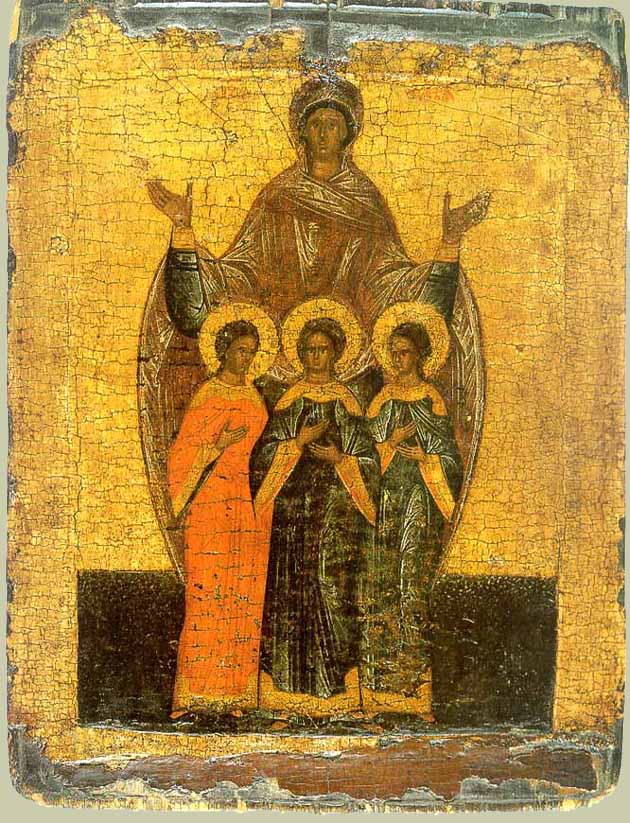
Wisdom Is Vindicated By All Her Children

Neal Pollard

Jesus said, “wisdom is vindicated by all her children” (Luke 7:35). He said this in response to the hypercriticism and unrighteous judgment of those who condemned both John the Baptist and Him. They said John was too conservative and Jesus was too liberal. They hacked at the methods and message of both, without justification or legitimacy. They were libelous name-callers, but Jesus simply responded with a proverb. What a good one! It’s a needed one today, especially in the face of those who sit and snipe at the works of others. For those who get gun shy at the prospect of such snipers, please remember Jesus’ words and Jesus’ reward for those who keep at the good work.  This principle applies to:

  • Elders and preachers
  • Missionaries
  • Worship leaders
  • Young parents
  • Bible teachers
  • Deacons and ministry leaders
  • Christian Colleges and schools of preaching
  • Soul winners
  • Youth ministers
  • Lectureship and workshop directors
  • Church program organizers
  • Christians in the workplace
  • Teenagers
  • Students in their various schools
  • Camp directors
  • Writers and authors
  • Publishers

There are undoubtedly other categories of people who fall under the purview of Jesus’ saying, but they share the burden of having their works criticized by naysayers, ne’er-do-wells, nitpickers, and needlers. In Luke 7, Jesus took the magnifying glass and turned it on the critics. We can take heart this idea: “If you address as Father the One who impartially judges according to each one’s work, conduct yourselves in fear during the time of your stay on earth” (1 Pet. 1:17). We have a responsibility to conduct ourselves righteously, but we can rest in the confidence that we will be judged impartially by the perfect, righteous Judge. Let us commend our efforts to His eyes. He will get it perfectly right!

sophia2band2bher2bchildren2b-2brussian2bstate2bmuseum

A VISIT TO A TEEN’S RELIGIOUS WORLD

Neal Pollard

I love the World War II generation and the enormous impact they have had on our nation!  Perhaps no generation has had a greater challenge since them than the one presently coming to maturity.  Last night, at Teens In The Word, we asked the teens to describe the religious philosophy of their peers as they interact with them at school, their jobs, and their extracurricular activities.  It was heartening to see and hear our teens’ conviction, knowledge, and heart, but disheartening to discuss the fruit of a couple of generations of our culture’s social experiment to reprogram the thinking of people, especially this burgeoning generation.

Our teens attend schools in Douglas, Jefferson, and Denver Counties, go to large High Schools, charter schools, private schools, and homeschools. Despite these diversities, what they encounter is remarkably similar.  It might surprise you that many of their peers believe in a Higher Power and would consider themselves spiritual. More than anywhere else, these peers attend community churches.  Whatever the church growth gurus and experts claim, the teens that go to these churches tell our teens something very different.  Their religious experience is heavily dependent upon entertainment, doing fun things with a party atmosphere, not motivated or influenced by much biblical teaching, segregated from adults, hard-rocking music, dancing, and overall a very tactile experience.  What impact does it have on “faith”?  If speaking in terms of growing closer to God and learning more about Him, not that much. The prevailing worldview of many of our teens’ friends is “what’s right for me may not be right for you,” that God and the devil, heaven and hell are mindsets more than realities (really just your conscience inside of you), and that essentially the only or worst sins, the “objective wrongs,” are offending others and judging others.  When our teens seek to assert objective truth from scripture, they sometimes encounter scorn or rejection. While our teens know a varying degree of peers whose faith and beliefs are more concrete and committed, perhaps the most frequently observed comment last night was that many of their peers “believe in God but not the Bible or Christ.”  They see the Bible as a book of myths or fairytales and not the revealer of truth or a standard of authority.

As we closed our class last night, I was left awestruck.  Our teens are among my most cherished heroes.  They are on the frontline of faith, battling in a world more opposed to truth than that of any generation now living which preceded them.  We were struck with more than admiration, though.  We felt determination, the need to redouble our efforts to establish and defend the trustworthiness and integrity of the Bible, the existence of God, and from that the authoritative nature of Scripture.  Not only will this bolster the faith of our teens, but it will help them in dialoging with those among their peers possessing good and honest hearts (cf. Lk. 8:15).

Here are four things you can do right now for our teens.  (1) Pray for them. (2) Live Christ without hypocrisy before them. (3) Actively encourage them. (4) Help equip them.  Look for heroes where you will.  I have found mine!

Our teens recently feeding the homeless (photo credit: Lexi Hoagland)