Overcoming Evil With Good

On Wednesday, an assassin shocked the world by killing Charlie Kirk, a man known for his traditional viewpoints. Although he faced accusations of holding objectionable views, his actual offense was his effectiveness in conveying conservative and Bible-based concepts. Unable to defeat him in debates, his opponents resorted to silencing him with a bullet.

Brent Pollard

On Wednesday, an assassin shocked the world by killing Charlie Kirk, a man known for his traditional viewpoints. Although he faced accusations of holding objectionable views, his actual offense was his effectiveness in conveying conservative and Bible-based concepts. Unable to defeat him in debates, his opponents resorted to silencing him with a bullet.

Thursday commemorated 24 years since the 9/11 attacks that profoundly impacted our nation and altered countless lives indefinitely. For those of us who can recall, those feelings remain vivid. The haunting images of the smoldering World Trade Center towers, the Pentagon, and that desolate Pennsylvania field remain etched in our memories. Unease lingers in the pit of our stomachs when we hear the audio from that day: the radio chatter of first responders and the frantic calls to loved ones from the cellphones of those trapped on doomed planes or in the World Trade Center towers from which there was no escape.

Occurrences such as these deeply affect us and lead us toward hopelessness. If we are not cautious, they may also lead us to feelings of anger, a desire for retaliation, or a sense of hopeless withdrawal.

In moments like this, the words of the apostle Paul resonate: “Do not be overcome by evil, but overcome evil with good” (Romans 12.21). These words serve as a vital reminder, encouraging us to go beyond mere resistance to evil and to face it with the goodness of Christ actively.

Evil’s Real Power—and Its Limit

Evil exists, and the Bible presents it plainly. Paul had witnessed persecution, political corruption, and violence up close. Nevertheless, he refuses to let evil prevail in the end. Why?

Because Christ has already achieved victory through the cross and resurrection, the most formidable weapon of Satan—death—has been rendered ineffective. Evil may inflict pain, but it cannot prevail against the people of God.

Responding to hate with hate allows darkness to take root in our hearts. Responding with retaliation might seem instinctive, yet it merely compounds the damage. As Martin Luther King Jr. once stated, drawing inspiration from the words of John 1:5, “Darkness cannot drive out darkness; only light can do that.” Paul articulates the same concept in a compelling, Spirit-inspired statement: “overcome evil with good.”

Goodness as an Active Weapon

This call does not constitute passive avoidance. Paul’s instruction serves to motivate. In the lines of the surrounding context of Romans 12.21, he clearly articulates it:

• “Bless those who persecute you…” (v. 14).

• “Repay no one evil for evil…” (v. 17).

• “…if your enemy is hungry, feed him…” (v. 20).

Kindness transcends mere courteous expressions. This love, filled with the Spirit, nourishes, forgives, and serves, even when faced with mistreatment. This type of goodness illuminates a realm that transcends our earthly existence. According to the latter part of verse 20, such actions can “heap burning coals” upon the heads of those who wrong us. While vengeance ultimately belongs to God (Romans 12.19), we can find solace in the understanding that our goodness serves as a formidable weapon against evil.

Three Gospel Tasks Reframed

Considering Romans 12.21, the church’s mission takes on renewed urgency:

Evangelism: Proclaiming the ultimate good.

The goodness we provide transcends mere humanitarian efforts; it embodies the message of Jesus Christ, who was crucified and has risen from the dead. As the world grows weary of violence and retribution, individuals seek hope that evil cannot extinguish. Our testimony of forgiveness and reconciliation through Christ serves as a powerful act of overcoming evil.

Edification: Strengthening the saints.

It is not uncommon for believers to feel disheartened or frustrated as troubling news continues to accumulate. Romans 12 encourages us to uplift one another in maintaining a gentle spirit. By engaging in worship, study, and fellowship, we nurture goodness and stand against cynicism.

Benevolence: Doing tangible good.

Addressing needs—nourishing the hungry, providing solace to the grieving, assisting neighbors in distress—is not a secondary endeavor. We are fighting a battle of the spirit. Each act of compassion proclaims that darkness does not hold the ultimate authority.

Living the Verse Today

How can we apply Romans 12.21 today?

• Pray for enemies and victims alike. Name them before God.

• Guard your words. Refuse to spread hatred online or in conversation.

• Share Christ. Offer the gospel as the deepest good, the cure for sin’s root cause.

These actions may seem insignificant in the face of widespread evil, yet they hold great power because God amplifies them. The kingdom flourishes through small, Spirit-inspired acts of kindness.

Hope That Overcomes

When Jesus confronted the greatest evil—an unjust cross—He triumphed not by summoning legions of angels but by surrendering His life and rising again. His resurrection demonstrates that goodness is not a sign of weakness, but rather the unstoppable power of God.

The anniversary of 9/11 and Charlie Kirk’s tragic assassination serve as poignant reminders of the urgent need for strength in our world. Let us stand firm against the shadows of this time. With our hearts anchored in Christ, let us overcome evil with good—making the most of our time through evangelism, edification, and benevolence until His return.

“Do not be overcome by evil, but overcome evil with good” (Romans 12.21).

All Scripture quotations are from The Holy Bible, English Standard Version (ESV), © 2001 Crossway, a publishing ministry of Good News Publishers. Used by permission. All rights reserved.


The Gospel In My Hands

Thursday’s Column: Captain’s Blog

Names are hard. You can forget names, mix up names, and mispronounce names. 

But there’s a subject in scripture that is described many different ways, and it is given multiple names. The word “gospel” appears 101 times in the Bible. Some have described this word as meaning, “a reward for good tidings.” The basic meaning of the word “gospel” is “good news.” 

It is the good news about the benefits we receive from the death, burial, and resurrection of Jesus Christ. The fundamental facts of the gospel are the death, burial, and resurrection of Jesus Christ. These facts are found in 1 Corinthians 15:1-4. Notice what else we learn about the gospel from this passage, 

“Now I make known to you, brethren, the gospel which I preached to you, which also you received, in which also you stand, by which also you are saved, if you hold fast the word which I preached to you, unless you believed in vain. For I delivered to you as of first importance what I also received, that Christ died for our sins according to the Scriptures, and that He was buried, and that He was raised on the third day according to the Scriptures.” 

In this text we see what the gospel can do in the hands of a faithful Christian:

  • First, Paul preached this gospel. 
  • Second, they received that message. 
  • Third, they were standing in that message. That is, they were following the gospel. 
  • Fourth, they were saved by that message. 
  • Fifth, they would continue to be saved as long as they held fast to that message. 
  • Sixth, these facts were true if they truly believed those facts. 
  • Seventh, he delivered what he had received. He didn’t make-up this message. In Galatians 1:12 he explained, “For I neither received it from man, nor was I taught it, but I received it through a revelation of Jesus Christ.” 
  • Eighth, what he delivered was of most importance which was that Christ died for our sins according to the Scriptures (according to what had been foretold in the Old Testament). 
  • Ninth, Christ was buried. 
  • Tenth, Christ was raised from the dead according to the Scriptures – according to the Old Testament prophecies.

That is the gospel. That is what we are commanded to proclaim. So let’s share the good news with our lost and dying world.

Carl Pollard

We Are Not Doing Right” (2 Kings 7)

Monday Column: Neal At The Cross

pollard

Neal Pollard 

There was a famine in Samaria and everyone was desperate. The need for food was more pressing than the danger they faced in looking for it. Elisha predicted the end of the famine but Jehoram’s right hand man refused to believe it could happen so quickly. The prophet tells him he’d see it happen but that he would not eat of it (2).

Four lepers decided to throw themselves on the mercy of the Arameans, but God caused the besieging army to hear the sound of enemy armies. They imagine the worst and leave their camp in pursuit. So, when the lepers arrived at the camp, it was abandoned. They found food and riches beyond their wildest imagination. They start to hoard and gorge themselves, then had second thoughts. They say to each other, “We are not doing right. This day is a day of good news, but we are keeping silent; if we wait until morning light, punishment will overtake us. Now therefore come, let us go and tell the king’s household” (9). Several things stand out here.

THESE MEN HAD GOOD NEWS.

IT WAS WRONG FOR THEM TO KEEP SILENT ABOUT IT.

THEY EXPECTED PUNISHMENT IF THEY DIDN’T URGENTLY SHARE IT.

THEY ADMONISHED EACH OTHER TO TELL IT.

They did and they helped save the nation. God caused it to happen but He worked through these four lepers. The famine ended (and the royal officer was trampled at the gate—he saw the famine end but died before it could benefit him).

I am reminded of my task as a Christian, one spiritually sick with sin but in a similar situation. I have found good news. It is wrong for me to keep silent. I must not just share it but do so urgently! I also need to admonish you to realize you are in the same predicament as me. You cannot afford to keep silent! A feast awaits! 

The Darkside Hackers

Tuesday’s Column: Dale Mail

image

Dale Pollard

Beware the DarkSide. No, that’s not a Star Wars reference. Just a few short weeks ago a cyber-gang who call themselves the “DarkSide” hacked the Colonial Pipeline and sparked a string of panic buyers to funnel jugs and containers full of gasoline. On May 7th the hacked pipeline authorized the ransom sum of $4.4 million to be transferred to the gang to try and settle this concerning situation. An odd spree of events and details shroud this whole thing and for those of us not familiar with the technological aspects, it seems even more unsettling. As Christians it’s okay to keep an eye on the latest events and protect yourself and family, but our watchful eyes would be far better put to use when it comes to our homes, personal faith, and church families. Take a look at what Jesus said in Matthew 7:15. 

“Watch out for false prophets. They come to you in sheep’s clothing, but inwardly they are ferocious wolves.” 

There are false prophets and messages everywhere in our world. They’re doing their best to hack into our spiritual lives and they’ve been successful at doing so. When our guards are down they blend in with the flock and disguise themselves with a counterfeit truth. Thankfully our Savior gives us the solution to uncovering their scheme before they get the chance. He says, “By their fruit you will recognize them…” We have an assurance given to us in Matthew 7:16 which guarantees we will not become a victim of these spiritual hackers. The wolves seek to drag us to the dark side, but with a watchful eye and the protection of the Father they can’t succeed. You won’t see any of this covered in the News but the good news is we have the Good News. It’s powerful and it’s always accurate. Be on the alert and stay watchful for the things that deserve the energy and our attention.

Facts About Jesus From John One That Many Deny

Monday’s Column: Neal At The Cross

preachingatPBL

Neal Pollard

Perhaps it is inevitable that someone as well-known as Jesus Christ would be subject to so much misinformation. Think about how things are said about Jesus that are not true. John’s gospel begins in a different way. His audience was wider than just Jews, just Romans, or just Greeks. His was truly a universal gospel, so he was writing to the whole world. In just the first several verses of his gospel, he affirms several things people subsequently denied about Him.

  • He is eternal (1-2)–“In the beginning was the Word” (see also 1:15,30).
  • He is deity (1)–“The Word was God” 
  • He created everything (3,10)
  • He became flesh (14)
  • He came to show us God, the Father (18)
  • His coming was to take away the sins of the world (29)
  • He is the Son of God (34)

There are those even in religion that say Jesus was a created being rather than being co-eternal as God. There are those who would reject the idea of the worship of Jesus being acceptable, though He is expressly called God. There are those who say that everything came into being by the process of evolution rather than Moses’ record (Gen. 1-2) being carried out by the Word (Col. 1:16-17). There are those who say God could not become flesh, since flesh is evil. There are those who deny the inspiration of Scripture, and thus would deny the New Testament actually records Jesus showing us the Father or otherwise communicating His will. 

It is incorrect to say that we can accept the biblical record of Jesus without faith. He existed eternally before becoming flesh. He was born of a virgin. He lived a totally sinless life. He died a death that satisfied God’s justice as a substitute for our sins. He was buried in a tomb, but was raised from the dead to live forevermore. He appeared to many of His disciples over forty days before ascending to heaven from which He will some day come again to judge the entire world. How can we say it takes no faith to follow Jesus? Instead, we should say that it takes more faith to embrace any competing explanation. The leading candidate to rival the biblical account is godless evolution. Try examining that with any level of care without discovering the infinitely greater amount of faith to explain how random chance and mindless, amoral matter produces the meticulously orderly, complex universe filled with intelligent life. 

Sometimes we are benefited by going back to basics. John one is written so simply and straightforwardly, yet it contains some of the biggest, broadest truths which so many reject. May we reflect carefully on the power of those truths so that it causes us to live better and differently! 

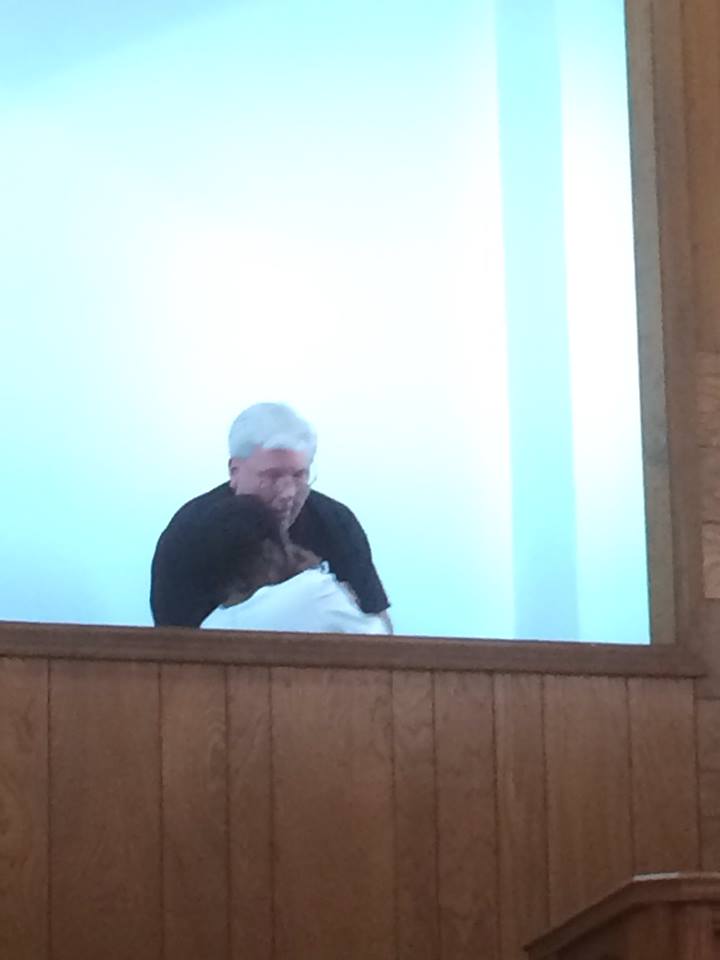
We Sure Love Baptisms!

Neal Pollard

There are some things about social media that are extremely irritating—click baiting, pot-stirring, fight-picking, self-pitying, and the like. But there are a great many positives in that medium, too. Of all of them, I believe that posts of baptisms have to be my favorite. I do not appear to be alone in that estimation.  Judging from post reactions and comments, a great many others do as well. We love it when there are pictures. We love the “back story.” We love knowing that our friends, neighbors, co-workers, and family members have good, honest hearts softened by the power of Divine Revelation. We love knowing they have a clean slate and a fresh start, and are poised to begin their walk on Narrow Road.

All of this leads me to several random observations:

  • True good news needs no hype, trumping, manufacturing, or baiting.
  • It is New Testament thinking to rejoice at such good news (Acts 8:39; 15:3).
  • What a confirmation the obedience of others to the gospel is to our own decision to do so.
  • It restores our faith in the potential of humanity and the power of the gospel (Rom. 1:16; Heb. 4:12).
  • It builds our confidence in the Bible to see people imitate the examples of the New Testament, doing what they did the way they did it (Mark 16:16; Acts 2:38; 8:13, 38; 9:18; 10:48; 16:14-15; 31-33; 22:16; Rom. 6:3-4; Gal. 3:26-27; Eph. 5:26; Col. 2:12; Titus 3:5; 1 Pet. 3:18-21).
  • The average Christian wants what is best for others, which is just one reason Christians are the best people on earth.
  • We want good news to travel fast, far and wide.
  • We know it pleases the Lord when a person comes to Him in obedient faith (see Luke 15).

There are doubtless many more observations we could make, but these are enough for me to thank God for His people and those who daily make the decision to become His people. It builds my faith and hope in my fellow human beings and my trust in heaven’s plan of salvation.  Thank you for finding joy in the right and best things! And let’s keep striving to perpetuate that joy through leading souls to the Savior.

12924440_10207948347340678_5218772026345282016_n
“Debbie” being baptized into Christ during a gospel meeting with Keith Mosher in Sylvester, GA, this week (photo credit: Jason Willis)