ONE GOSPEL, MANY RESPONSES

Neal Pollard

The killing of Stephen was the grim harbinger of a new era for the early church, spawned by the actions of the young man introduced to us in Act 7:58. Saul inadvertently helped the church to further its move to do as Jesus foretold, going from Jerusalem to Judea and Samaria (Acts 1:8). Ironically, it would be this man Saul who would help Christianity and the Lord’s church go to “the remotest part of the earth” (Acts 1:8; 13:1ff; Rom. 10:18; Col. 1:23). For now, Saul stands opposed to Christ and His people.

Acts 8 gives us the specifics. He “was in hearty agreement with putting [Stephen] to death” (1). That very day a “great persecution began against the church in Jerusalem” (1), scattering it. While they took time to bury Stephen, Saul “began ravaging the church” (3). This was invasive, violent, and life-altering for Christians, but they responded by “preaching the word” (4).

One of the seven men selected to help the church feed the Grecian widows in Acts 6, Philip, “went down to the city of Samaria and began proclaiming Christ to them” (5). They paid attention to what he said as they saw the signs he performed (6). His deeds were so remarkable that it brought great joy to the city (8), even a renowned magician, Simon, was among the many believers who believed Philip’s preaching and submitted to baptism (9-13). With so many new disciples in the city, word reached the apostles who sent Peter and John to Samaria to lay hands on them so that they would receive the Holy Spirit (14-17). This caught Simon’s eye, as one widely proclaimed in the city as “the Great Power of God” (10), and he sought to buy this gift (18-19). Peter rebukes Simon, urging him to repent of such wickedness so that he might be forgiven (22). Simon was poisoned and enslaved by his unrighteous desire to have the gift possessed by the apostles to cause faith in the gospel (23-24). 

There is only one message being shared by Philip and the other Christians. It is called “the word” (4), “proclaiming Christ” (5), and “preaching the good news about the kingdom of God and the name of Jesus Christ” (12). Yet, there are three distinct responses to that singular gospel. Saul represents one response–hatred, opposition, and violence. Simon represents another–an opportunity to enrich and exalt self. The Samaritans represent yet another–faith, obedience, and rejoicing. It is incredible that this one message could elicit such diverse reactions from different people, but it still happens that way today.

Some are totally turned off by the message, others want to use it for personal means, and still others are deeply convicted by its truth and desire to follow it. Our job is not to judge who is or isn’t worthy recipients; instead, as they did in Acts 8, we are to spread it. It is still God’s power to save believers (Rom. 1:16). We leave that part to Him. Our part is to preach and proclaim it. 

Meat

Gary Pollard

The apostle John was a genius and a philosopher. He wrote in simple, easy-to-understand language, which is a mark of intelligence. Einstein is (erroneously) credited with saying something like, “You don’t understand a subject until you can explain it to a child.” 

John liked to write about irreducible principles. They are deceptively simple, and we might be tempted to look at his writings and think, “There’s not really a whole lot to say about this, these principles speak for themselves.” At some level, this is true! The Bible was written — according to those (like Origen in Against Celsus) whose native language and culture these letters were addressed to — in a “dualistic” way: on one side, it’s very easy to understand its most important principles. We could think of these as the “milk” of the word. This would be teachings about what Jesus did, how we become his children, and the most important things he wants us to do. 

But on the other side — which is perhaps most evident in John and Paul and Peter’s writings — there is nearly unlimited, profoundly deep material in their sometimes deceptively simple wording. This is the “meat” of the word, something Paul expected the Corinthians to be able to understand after just a couple years of being Christians (I Cor 3.2ff). This would be things like teachings about the gray areas in Christian doctrine, the nature of God, the destination of a Christian, and the nature of the new creation promised by Jesus (identified in I Peter 1 as the object of our hope, and its hope in Romans 8 as the reason we were saved). Paul explicitly said, just five years or so after these people converted from paganism to Christianity, “You should be able to understand the deep principles of Christianity well enough to be teachers by now.” 

We do our spiritual health a disservice to get bogged down in the familiar stories of the Old Testament, in the plan of salvation, and in the thou-shalt-nots of scripture. This is milk. I Timothy 1.9 makes it clear that most of those things are already self-evident to most Christians! After conversion, God expects us to dive as deep into the word as each person’s intellect allows. Of course, Ephesians 4 does suggest that God doesn’t expect every Christian to be an expert in textual analysis, biblical languages, or philosophical exposition. However, each of us has a responsibility to be as familiar with the meat as we are able to be.

Christianity Should Change You

Neal Pollard

Reading Luke’s account of things, Saul may have been the chief threat to the Christians at the time recorded in Acts 8-9. He was “ravaging the church” (8:3), “breathing threats and murder against the disciples of the Lord” (9:1). He was doing “much harm” to the saints (9:13). He would look back on this part of his life, calling himself a harmful persecutor and killer of Christians (22:3ff; 26:9ff; 1 Cor. 15:9; 1 Tim. 1:13). The last thing we would expect, reading about his violent exploits against followers of Christ, would be a complete turnaround. But that’s what happens in Acts 9. 

SAUL’S PLANS ARE CHANGED (1-3). He had letters from the High Priest to authorize his imprisoning of Christians. His zeal and passion to stop Christianity is as strong as could be, but Christ has a message for him. It literally stops him in his tracks. The Christian life can be a sudden, abrupt change even today. When one comes face to face with who Jesus is, it will cause unforeseen, dramatic changes in one’s life!

SAUL’S MIND IS CHANGED (4-7). His entire worldview about who Jesus is changes in what happens on this road to Damascus. He sees a light and hears a voice asking, “Saul, Saul, why are you persecuting Me?” (4). He’s not sure who he’s speaking to, but he knows it’s no mere man. Jesus tells Saul who He is, then tells Saul what to do next. He’s not saved on the road, but told to go to Damascus to await news of what he should do (6). The greatest question of life just may be, “Who is Jesus?” Saul thought he knew, but is finding out that everything he thought he knew was wrong. 

SAUL’S PERSPECTIVE IS CHANGED (8-18). Saul is blinded on the road. He doesn’t eat, drink, or see for three days. Meanwhile, the Lord commissions a man named Ananias to go preach to Saul. Jesus could have easily laid it out there for Saul, but He chose the “foolishness of preaching” to save this persecutor (cf. 1 Cor. 1:21). Naturally, Ananias was apprehensive about his mission, knowing full well all that Saul had done to the saints (13-15). The Lord reassures the preacher that Saul has changed his mind and is ready to hear what he must do, so Ananias obediently goes to Damascus and preaches to him (17). The hardships and realities of life can totally change our perspective, leaving us receptive to the will of Christ. We might not have been seeking before suffering. 

SAUL’S CONDITION IS CHANGED (18). In this moment, he could see–physically and spiritually. With spiritual sight restored, he “got up and was baptized.” Saul would later look back on this and tell us more of what Ananias preached to him. “The God of our fathers has appointed you to know His will and to see the Righteous One and to hear an utterance from His mouth. ‘For you will be a witness for Him to all men of what you have seen and heard. ‘Now why do you delay? Get up and be baptized, and wash away your sins, calling on His name'” (22:14-16). Baptism changed his spiritual condition before God. It washed away his sins. It brought about the change of condition, opening door to a change of mission. Baptism is but part of God’s saving plan, but it is the point at which sins are forgiven for a penitent believer. 

SAUL’S FELLOWSHIP IS CHANGED (19ff). His environment is no longer Christian-haters. It’s the hated Christians. He spends several days with them. He would prove to be such an asset to the saints at Damascus, and he is ultimately, readily accepted as one of them. He fought against the very ones he fought for before becoming a Christian (22), until his former allies plot to kill him (23-24). His new spiritual family helps him steal away (25). He seeks to fellowship with the disciples in Jerusalem, but in an age long before instant communication and technology the word had not reached these saints. They fear he’s an infiltrator, coming among them to do them harm. Can you imagine sitting down for a fellowship meal with the man that imprisoned or killed a friend or loved one? That’s possibly the situation for Saul and these saints. Barnabas, the generous encourager we met in Acts 4, paves the way for Saul’s acceptance. He is ultimately welcomed into the fellowship. Sometimes, our comfort zone is challenged with the addition of new Christians into our fellowship. It could be their worldly background, their income bracket, their skin color, or some similar difference that requires our adjustment. God expects that we’ll overcome any such superficial barriers and see what ties us together–our faith in and following of Jesus.  

SAUL’S MESSAGE IS CHANGED (20-31). He proclaimed that Jesus is the Son of God (20). He proved to opposing Jews that Jesus is the Christ (22). He spoke boldly in the name of Jesus (27). He spoke boldly in the name of the Lord, talking and arguing with the Hellenistic Jews (28-29). As hard as he had been fighting against Jesus, he was now fighting that hard for Him. 

No wonder the most operative word is “change.” A change of life changes our mind and outlook, setting up a change of our spiritual state (if we respond properly to teaching) that reflects itself in a change of our spiritual environment and a change of our purpose and mission. No, it won’t happen with the flair and drama that Saul experienced, but the gospel is as powerful today as it was then (cf. Rom. 1:16). If being a disciple of Jesus hasn’t dramatically changed who we are and what we do, it may help us to look at Saul’s life and then our own. He can be an encouraging example that prompts us to go deeper and further in our faith. Conversion involves real change. Jesus says conversion is essential to entering the kingdom of heaven (Mat. 18:3), spiritual healing (John 12:40), and for sins to be wiped away (3:19). May people be able to see the change Jesus has made and is making in us!

Fearless

Dale Pollard

It began with just a few men. They didn’t know exactly what kind of damage they were about to inflict on their own reputation— for all eternity. There’s an intense account found in Acts 15 where we’re introduced to  “some men” and they’re on their way from Judea. They begin to teach,

 “Unless you are circumcised according to the custom of Moses, you cannot be saved.”

 Paul and Barnabas rise to the challenge and they debate them fearlessly, but the damage had already been done. The argument had  not only confused them but it stirred up the entire group to the point that it was decided to take matters to the very top. Off they went to the apostles and elders in Jerusalem. 

HERE’S WHAT WENT DOWN

Paul and Barnabas hadn’t lost faith and in fact, they proclaimed what God had done for the Gentiles to all who would listen on their trip. The news of God’s grace to all races and nations brought them great joy. In Jerusalem the apostles and elders had gathered to deal with the conflict. It didn’t take long for the group to separate into two teams with two different beliefs about God’s will for us all. It was at this moment where Peter stands up and begins to speak. He explains that God knows the heart of all of us. He’s always known this! 

HERE’S HOW IT HAPPENED 

The Spirit had descended on the apostles to prove that there is no discrimination between Jews and Gentiles. The demand for proof is always in our hearts, and so the Spirit demonstrated miraculous powers to give credence. Peter would explain that under the Jewish law, even Moses and the greats couldn’t bear the load. It wasn’t sustainable, and it wasn’t meant to last. 

It’s verse twelve that gives one some additional insight. It says,

 “And all the assembly fell silent, and they listened to Barnabas and Paul as they related what signs and wonders God had done though them among the Gentiles.” 

HERE’S THE POINT

How do we solve our conflicting views that spring up in our midst? There’s only one effective way to do so and that’s to take our matters of division to the top. Not preachers, teachers, deacons, or elders, but to the very top. But if God is going to speak, we’ve got to be quiet. The assembly went silent. Everyone there, no matter what their belief decided to listen. Speaking over each other never solved a problem and this is true on a congregational level, and a personal one.

HERE’S A QUESTION 

 How many times do we fall victim to the bias assembly of thoughts in our own minds when reading God’s word? It can be difficult to hush those voices, but it’s when we do that real, positive change finally has a chance to take root. 

We Need The Righteousness Of God

Friday’s Column: Brent’s Bent

The concept of righteousness is quite similar to holiness; both terms refer to a state of being morally upright and emotionally attuned to God’s will. It comprises all that we term justice, honesty, morality, and affections of the heart; in a nutshell, it is true religion. And while there is this type of righteousness to emulate, there are other types of righteousness to avoid. 

The first type of righteousness we need to avoid is that which originates in a person’s mind, which is distinct from the righteousness that originates in God. We identify this type of righteousness as “self-righteousness.” Self-righteousness, often born out of pride, is when a person relies on his or her sense of morality to judge right and wrong. 

Another example of false righteousness is John Calvin’s teaching on imputed righteousness. By imputed, Calvin meant that God credited the elect sinner with Christ’s righteousness. As a result, God shifted His attention away from the sinner and toward Jesus, whom He acknowledges to be sinless. Consequently, Calvin believed that a person God has chosen for salvation does not need to worry about living a good life. When God looks at him, he can only see Christ. (As a side note, it is expected that the one chosen by God will seek a life of righteousness. But the truth is that according to the doctrine, it’s possible to be a willful sinner and still have the righteousness of Christ imputed to them.) 

There are seven occurrences of the word “impute” in the KJV. None of these verses suggests that a person can appropriate Christ’s righteousness as their own. The atoning sacrifice of Jesus Christ allows for the transformation of sinners into saints through forgiveness. Entrance to the heavenly kingdom is granted only to those who do God’s will (Matthew 7.21–23). Thus, while imputation suggests that God finds one without guilt and blame, it does not mean that a person can take on the righteousness of Jesus Christ and expect to gain entrance into heaven. 

A sinful man becomes righteous through faith in God, not through any meritorious works he can perform. But faith does not exclude human participation. Man must do something. James 2 and Hebrews 11 remind us that faith works the works of God (Ephesians 2.10). A sinner becomes righteous, sanctified, and justified by God’s grace. God gave him his righteousness, and God counts it as his righteousness, not on account of the goodness of Christ or anyone else, living or dead. 

Abraham is a great role model for how to achieve righteousness. First, Paul says that Abraham believed in God, which God credited him as righteousness (Romans 4.3–9, 17–22). Second, it is also important to note that Abraham’s righteous status was independent of his being circumcised (Romans 4.10–12). Third, Abraham’s faith was active, working by grace (Galatians 3.6–9; James 2.21–23). 

So, it was Abraham’s faith in God rather than Jesus’ own sinless life and obedience that God credited as righteousness. Even though Abraham’s efforts would have been futile without Jesus’ perfect life and obedience, he could not leave everything to be accomplished by God. This truth meant that God gave Abraham the tools he needed, but Abraham was the one who had to use them.  

We must do as Abraham did. And just as God will not credit us with Christ’s righteousness, neither will He credit us with the righteousness of anyone else (e.g., a parent or spouse). Our evaluation before God is personal (2 Corinthians 5.10). We must avoid doing as Paul did before his conversion, seeking righteousness contingent on anything other than Christ (Philippians 3.9). 

Brent Pollard

The 11th-Hour Man

Monday’s Column: Neal At The Cross

Neal Pollard

70 or 80 years we live,

That rule for many holds true

But a guarantee that nobody can give

Is when Christ comes or living is through.

But I saw a man near the end of that span

Heart softened by the truth

Fully obey the gospel plan

Though gone were the days of his youth.

He’d heard God’s Word preached repeatedly

From many able men

Discussed his need, heard many a plea

To arise and wash away his sin.

Loved ones, family and friends

Prayed often for his decision

Wanting his soul purified and cleansed

To see life with heavenly vision.

The persistent concern of a godly man

Who revisited his soul’s condition

Watered much sowing over that man’s lifespan 

Resulting in godly contrition

I heard him confess his faith in Christ

And watched him go under the water

His heart surrendered, his will sacrificed

Christ’s blood was his soul’s sin blotter.

I tell you his story to move your heart

To the power of sharing with persistence

It’s never too late to do your part

To overcome a delayer’s resistance.

Jesus taught a moral tale

Of a landowner seeking for workers

Who paid a fair wage for a job done well

To the finishers, no pay for the shirkers

The householder sought workers all day

Found some morning and noon, yet some late

Despite different hours, they all got the same pay

Which made the more seasoned workers irate

But the master was generous, it was his call to make

The offer was freely taken by all,

The moral is simple, there’s an offer to take

There’s an answer to make to God’s call.

Some respond in the sunrise of living

Others come in the heat of the day

But however late one’s commitment is given

To those faithful at death He gives eternal pay.

This isn’t to encourage delaying

Tomorrow is not guaranteed

But in Scripture it goes without saying

No one’s too old for God’s grace to intercede! 

Facts Deduced About Baptism From The Eunuch

Neal Pollard

The book of Acts is wonderful for teaching the history of the church as well as providing examples of how people became Christians. From the first gospel sermon (Acts 2), baptism is central and essential to God’s plan of salvation. The emphasis is even found through facts implied from these statements and examples. Consider some facts deduced about baptism from the conversion of the Ethiopian eunuch.

  • First, baptism is part of preaching Jesus. In Acts 8:35, Philip began with the eunuch from the passage the eunuch had been reading (Isaiah 53), and “he preached Jesus to him.” Consequently, the eunuch, when they came past a body of water, said, “Look! Water! What prevents me from being baptized?” Why would this man ask such a question unless preaching Jesus included preaching the necessity of baptism?
  • Second, baptism is part of believing (Acts 8:37). Philip ties his request for baptism to the essentiality of faith preceding baptism. The eunuch confesses belief “that Jesus Christ is the Son of God.” Jesus had sent His disciples with this understanding, that “he who has believed and is baptized shall be saved” (Mark 16:16a).
  • Third, baptism involves urgency (Acts 8:38). The eunuch ordered the chariot to stop. Why? Why not wait until he was back in Africa? Why not wait until Philip collected several others and then have a baptismal service for them all at once? When the Eunuch saw water, for some reason he wanted to submit to baptism right then and there.
  • Fourth, baptism involves immersion (Acts 8:39). We primarily know this because the word “baptism” means “strictly dip, immerse in water (Friberg & Miller, 87). However, the fact that Philip and the eunuch both went down into the water indicates that baptism must involve more than sprinkling or even pouring. This man  (and Philip) went to the trouble of getting wet by going down into the water.
  • Fifth, baptism produces rejoicing (Acts 8:39). The first evidence of joy comes after the eunuch comes up out of the water, not when Philip preached Jesus or when the eunuch confessed belief in Jesus. There was something important and necessary about the act of baptism.

Despite a religious world filled with groups who resist, argue against, and deny the importance of baptism, that one example (and there are several others–Acts 2:36-47; 8:12-13; 9:18+22:16; 16:15; 16:30-33; etc.) leaves no doubt about the indispensable part baptism plays in God’s plan to redeem humanity. Thank God for this conversion example in Acts 8. May our hearts be open to accept what the Word says to us (Luke 8:15).

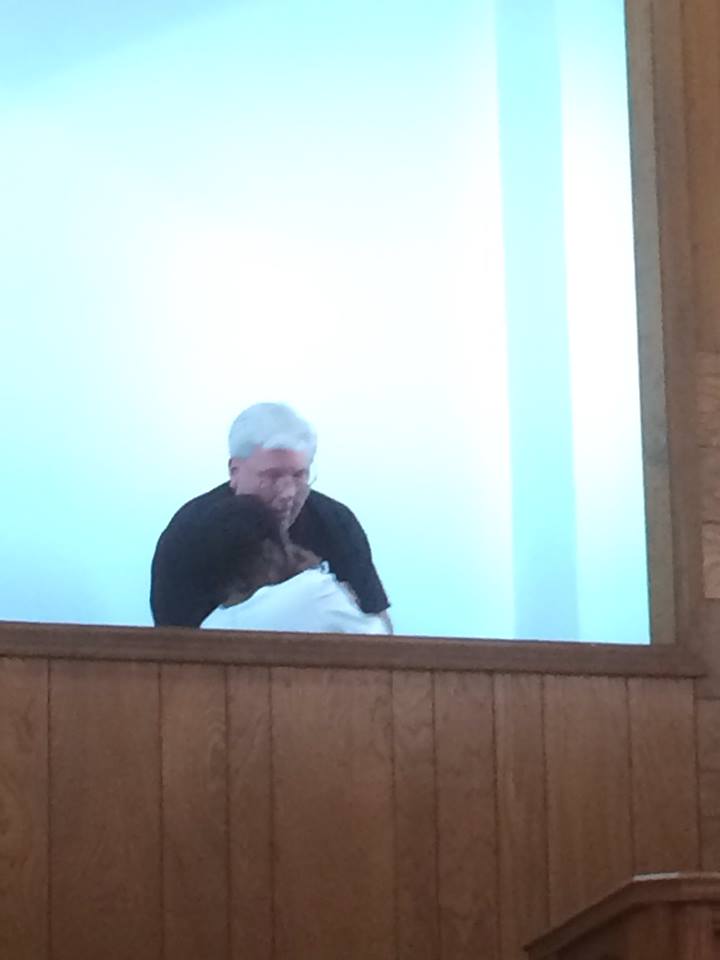
13055587_1079852015371168_1598737744818493967_n
Megan Meeks was baptized this past Thursday, 4/21/16, in Denver, CO. The plan has not changed since Acts 8.

We Sure Love Baptisms!

Neal Pollard

There are some things about social media that are extremely irritating—click baiting, pot-stirring, fight-picking, self-pitying, and the like. But there are a great many positives in that medium, too. Of all of them, I believe that posts of baptisms have to be my favorite. I do not appear to be alone in that estimation.  Judging from post reactions and comments, a great many others do as well. We love it when there are pictures. We love the “back story.” We love knowing that our friends, neighbors, co-workers, and family members have good, honest hearts softened by the power of Divine Revelation. We love knowing they have a clean slate and a fresh start, and are poised to begin their walk on Narrow Road.

All of this leads me to several random observations:

  • True good news needs no hype, trumping, manufacturing, or baiting.
  • It is New Testament thinking to rejoice at such good news (Acts 8:39; 15:3).
  • What a confirmation the obedience of others to the gospel is to our own decision to do so.
  • It restores our faith in the potential of humanity and the power of the gospel (Rom. 1:16; Heb. 4:12).
  • It builds our confidence in the Bible to see people imitate the examples of the New Testament, doing what they did the way they did it (Mark 16:16; Acts 2:38; 8:13, 38; 9:18; 10:48; 16:14-15; 31-33; 22:16; Rom. 6:3-4; Gal. 3:26-27; Eph. 5:26; Col. 2:12; Titus 3:5; 1 Pet. 3:18-21).
  • The average Christian wants what is best for others, which is just one reason Christians are the best people on earth.
  • We want good news to travel fast, far and wide.
  • We know it pleases the Lord when a person comes to Him in obedient faith (see Luke 15).

There are doubtless many more observations we could make, but these are enough for me to thank God for His people and those who daily make the decision to become His people. It builds my faith and hope in my fellow human beings and my trust in heaven’s plan of salvation.  Thank you for finding joy in the right and best things! And let’s keep striving to perpetuate that joy through leading souls to the Savior.

12924440_10207948347340678_5218772026345282016_n
“Debbie” being baptized into Christ during a gospel meeting with Keith Mosher in Sylvester, GA, this week (photo credit: Jason Willis)

CHANGING YOUR ORBIT

Neal Pollard

On September 16, 1991, the space shuttle Discovery dodged a chunk of a Soviet Cosmos rocket.  It came within 10 miles of the van-sized debris.  If Discovery had not changed its orbit, it would have been so close a call that it would have been yet another tragedy for our then active space program.  Mission commander John Creighton said it was “very simple” to maneuver, but absolutely vital to ensure the crew’s survival.

When I mention “conversion” in a spiritual context, what do you think about? Following his mention of Elijah’s exemplary prayer life, James ends with a big dose of encouragement.  James uses the word translated “convert” or “bring back.” It is an active word, meaning we cause one to change his or her belief or course of conduct, with a focus on that one then turning in the right direction.  The end result, conversion, is the state of their having done that.

To me, it is a blessing to see somebody back in attendance and being involved after they have been away from the Lord and His church.  It would be better for a brother or sister to never fall away, but it is definitely a joy to see one have the determination and courage to come back home.

Doesn’t heaven view it the same way? Jesus says in one of the “lost parables,” “I tell you that in the same way there will be more rejoicing in heaven over one sinner who repents than over 99 righteous persons who do not need to repent” (Luke 15:7).  In conversion, one is changing what their life is orbiting.  It is no longer sin and self, but God.  What a blessing to see someone go from a path of destruction to the way of life! May this perspective drive our actions in reaching out to our “erring brethren.”

“Redemption Is Tailor-Made For The Wretched”

Neal Pollard

If you did not know the source of this quote already, you might be hard-pressed to guess it.  This was said by Stanley “Tookie” Williams, two weeks before he was executed in California in 2005 for four 1979 murders he committed while the apparent leader of The Crips gang in Los Angeles.  Though he vehemently proclaimed his innocence in these deaths to the very end, he freely admitted that drugs, robbery, gang- violence and other crimes were very much a part of his life before prison.  Redemption, as he understood it, “is not predicated on color or race or social stratum or one’s religious background.  It’s accessible for everybody. That’s the beauty about it” (interview with Amy Goodman, WBAI). Williams, who became a prolific author of anti-gang books while on death row, has left behind enough writing to indicate he did not have a biblical understanding of redemption, which is truly tragic because the ideas quoted are certainly biblical.

The word “wretched” is used “of a person in a very unhappy or unfortunate state” (New Oxford American Dictionary, online).  The New Testament uses the word twice.  Interestingly, the first time it is used by one who was all-too-aware of his wretchedness, but who rejoiced at the possibility of redemption (Rom. 7:24-25).  The second time it is used by a church, Laodicea, who didn’t know they were wretched but were told by Christ they were (Rev. 3:17). A form of the word is also used in another place, where Christians struggling with worldliness are told to be wretched over their sinful lifestyle (Jas. 4:9, see ESV).  The common thread between these verses is that wretchedness is related to redemption.  One must recognize their unfortunate state if they hope to be redeemed.

One of the great ironies of life is that so many are racked with guilt but are also skilled in justifying and defending the very behavior that produces it.  Many others rest in their confident belief that they are, overall, good and moral people who don’t really need redemption.  To deny or rationalize the sin in our life will cause our most imposing problem to remain unresolved.  To humble ourselves and admit our wretchedness apart from Christ can lead us to redemption. It doesn’t matter your race, color, income level, or background.  Redemption is tailor-made for the wretched!

“He Has Put A New Song In My Mouth”

Neal Pollard

Pollards love singing and music. A few (and they usually are those who marry into the family) actually know a few things about either or both. We are thankful that “joyful noise” does not mean “pleasant melody.”

David was probably quite the songster. The “sweet psalmist” wrote the Jewish hymn book, songs used by God’s people over the course of two covenants and hundreds and hundreds of years. We still sing songs inspired by his inspired psalms, and some songs are derived, verbatim, from the sacred text. In Psalm 40:3, David declares, “He has put a new song in my mouth.”

Isn’t that true? Maybe, you used to sing “Nobody Knows The Trouble I’ve Seen” or “Am I Blue?” Now, we sing, “I’m Happy Today” and “I’m Redeemed.” Our favorite song might have been “Let’s Talk About Me.” Now, our anthem is, “Make Me A Servant” and “In The Service Of My King.” It used to be that our theme song was “We Are Living In A Material World” but now it’s “This World Is Not My Home.” Maybe, we used to sing “I’m So Lonesome I Could Cry” but now we can sing “God’s Family.”

The difference Jesus makes to us hits every facet of our lives. It impacts the very songs in our hearts. Not only will we sing the new song in heaven some day, we have a new song now.

THRILLED? OR CHILLED?


Neal Pollard

It is said that when Dorothy opened the door to Oz and the movie’s colors went from sepia to Technicolor the audience gasped and that many stood up and applauded.  Moviegoers had never seen a movie in color before.  We take color movies for granted, but 75 years ago it was new.

Can you remember how excited you were to be able to surf the internet in the early 1990s.  A page would load in mere minutes.  Dial-up was such an innovation.  Smartphone, tablet, and laptop users scoff, nay cringe, at the thought of such primitivity today.  We are creatures cultivated by conditioning.  What was once fresh and new can all too quickly become stale and old.

Did you grow up in the church or did you come to Christ through your own investigation or someone’s love and concern?  Perhaps you can boast of being a third, fourth, fifth, or more generation Christian.  You were raised knowing God’s plan of salvation, will for worship, and pattern for daily living.  Perhaps it can at times seem like “old hat” and cause us to take the great blessing of salvation for granted.

One who came to Christ as a teenager or an adult may often have a special, intense appreciation for their “new” discovery.  Over the course of time (and even generations), we may have to fight apathy and complacency. We can forget the joy and excitement of forgiveness or the feelings of peace and hope.  If we “inherited” our faith, we may have to work harder at understanding just what a blessing we had handed to us by our parents and strive to appreciate what we may be taking for granted.

Understand that the blessing of salvation is more wonderful than anything we can imagine.  Nothing new or better can follow that.  The challenge is always for us to maintain appropriate appreciation for such atonement!  Is it still new or do you maybe need to renew?