Abel

Neal Pollard

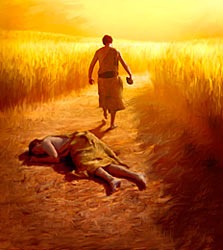
Abel is the first true victim in the Bible, if not the first hero. In fact, he is the first character about whom there is only good spoken of in the Genesis record. Abel comes onto the scene offering God acceptable worship and he leaves a martyr for righteous conduct. But, writers as late as John and the Hebrews’ author look back on his life near the beginning of time and make distinct, New Testament points. He is a vital biblical character we can learn at least three important things from.

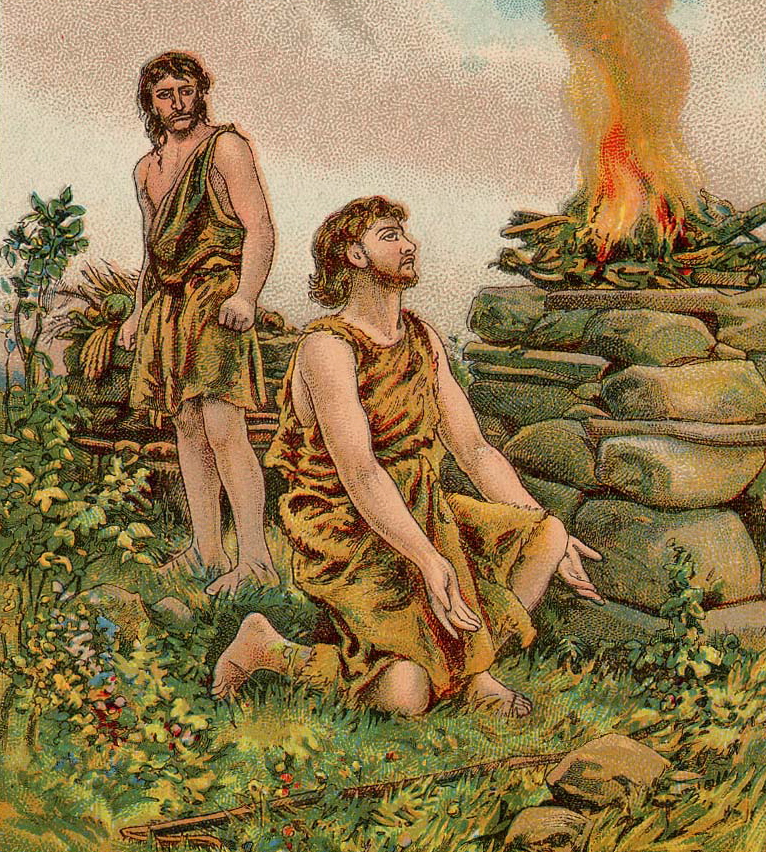
We see the importance of Abel’s offering (Gen. 4:4). It was his “firstlings.” The Lord had respect for His offering. John would write, “This is the message you have heard from the beginning: We should love one another. We must not be like Cain, who belonged to the evil one and killed his brother. And why did he kill him? Because Cain had been doing what was evil, and his brother had been doing what was righteous” (1 Jn. 3:11-12). Abel worshipped God the way God wanted to be worshipped, and how does He want to be worshipped? Jesus plainly answers that. “God is spirit, and they that worship Him must worship Him in spirit and in truth” (John 4:24).

We see the importance of Abel’s blood (Heb. 12:24). Blood sacrifice has been a vital part of man’s spiritual relationship with God since the dawn of time. Blood is vital to life. Giving of blood is the greatest expression of sacrifice. Abel died as the result of innocence and righteousness. That blood even “cried out to God” after Abel’s murder (Gen. 4:10-11). Yet, Abel, as righteous as he was, was a sinner. Add to that, his blood saves no one from sin. As important as his shedding of blood is to the unfolding of history, Jesus’ blood is superior (Heb. 12:24). He was perfectly innocent, and His death was an offering of the just for the unjust (1 Pet. 3:18). His sacrifice is also the way man is saved from his sins (Eph. 1:7).

We see the importance of Abel’s faith (Heb. 11:4). Among the mighty in faith throughout the ages, Abel’s name is prominently etched. Of him we read, “It was by faith that Abel brought a more acceptable offering to God than Cain did. Abel’s offering gave evidence that he was a righteous man, and God showed his approval of his gifts. Although Abel is long dead, he still speaks to us by his example of faith.” Here, we see what Abel’s faith was: (1) active, (2) saving, (3) notable, and (4) influential. First, his faith acted. He offered a sacrifice. Next, his faith was productive. God counted him righteous as the result of his faith. He didn’t earn that recognition, but God granted it as the result of his faith. Then, his faith is noteworthy. It was such faith that God testified of Abel’s sacrifice, the product of his faith. Finally, his faith is influential, as it is still upheld, now nearly 6,000 years later, as an example for us to follow. Though he is dead, his faith is still living and leading people today. Today, we can learn from and imitate the type faith Abel had.

What a hero for the ages! Such adjectives as faithful righteous, innocent, and better describe him and what he did. Let us learn from and imitate this patriarchal giant, that we can continue to shine as a beacon of faith, sacrifice, and obedience even after we depart this life!

“Love One Another”

Neal Pollard

One of my favorite songs, “The Greatest Commands,” starts with this imperative. As that song urges us, “Love is of God” (1 John 3:10). Having a divine source and being a command, it ought to really grab our attention. John explains by reinforcing why we should love one another.

IT IS AS OLD AS TIME (1 John 3:11-13). When a Bible writer leaves his own culture and goes back to the beginning, you know the subject is important. Jesus does this with marriage (Mat. 19:3-9). Paul does this with women’s role (1 Tim. 2:8-15). John does this with love. He takes us back to the edge of Eden, using Cain and Abel as examples. He implies that Cain killed Abel because he did not love his brother (12). He also is teaching that love is a work, not simply a feeling (12). He then shows us that Cain’s way is the world’s way (13). John will stress that following the Lord’s way is how we overcome the world (4:4; 5:4), and the Lord’s way is to love one another. 

IT IS A MATTER OF LIFE AND DEATH (1 John 3:14-16). It is a characteristic of the spiritually resurrected; it is how “we know that we have passed out of death into life” (14). We persist in a dead state if we do not love our brother (14). Hatred is the spiritual equivalent of murder (15; Mat. 5:21-26). At the other end of the spectrum, we know love by imitating Jesus and being willing to lay down our lives for the brothers (16). Building that kind of spiritual bond within the body of Christ matters so much to God! He wants us eliminating negative feelings, dissension, grudge-bearing, and animosity. He wants us building a spiritual bond that looks like the heart of Jesus, a heart that caused Him to go to the cross! What a challenge!

IT IS THE DIFFERENCE BETWEEN FAKE AND GENUINE (1 John 3:17-18). Saying “I love you” is incredibly easy. It is three one-syllable words. But our actions so often betray our claim. Do we literally put our money where our mouth is (17)? If we see our brother in need, whether financially, emotionally, socially, or spiritually, but show callous indifference, we need to go back to verse 10 and start reading again! The simple, powerful admonition is, “Little children, let us not love in word or talk but in deed and in truth” (18). In the context of works, James says, “If a brother or sister is poorly clothed and lacking in daily food, and one of you says to them, ‘Go in peace, be warmed and filled,’ without giving them the things needed for the body, what good is that? So also faith by itself, if it does not have works, is dead” (Jas. 2:14-16). Just like faith without works, words without loving action are dead and useless! It makes our “I love you’s” false and dishonest.

IT IS KEY TO OUR CONFIDENCE (1 John 3:19-24). John says, “By this…” (19). By what? By loving in deed and in truth. By loving in deed and in truth, “we shall know that we are of the truth and reassure our heart before him” (19). Look at all the conditional language in these verses. We should have confidence of our salvation if we love in deed and truth (19-21). We should have confidence that He will bless us and be with us if we keep this commandment to love one another (22-23). We should have confidence that we abide in God and He abides in us, if we keep His commandments (which includes, “love one another”)(24). John is not talking about cockiness or arrogance, but a blessed assurance that comes when we are striving to walk in the light (1:7). But, do not miss this point. Walking in the light necessitates brotherly love. You can’t have one without the other.

How should this change us? Won’t it kill grudges, feuds, avoidance, gossip, resentment, hostility, division, rivalry, suspicion, and the like? It will revolutionize the atmosphere of an entire congregation and the relationship between individual Christians in the congregation. It will draw us closer, into one another’s lives. Most of all, it causes us to imitate, please, and obey the God whose Son showed the greatest love of all (John 15:13)! 

Genesis: These Are The Generations (V)

The First Children (4:1-24)

Neal Pollard

The sobering truth about sin is that we cannot anticipate its consequences. Scripture credits sin as entering the world through Adam, not Eve (Rom. 5:12). Despite her role for which she received her own consequences (1 Tim. 2:8-15), God places the responsibility ultimately upon her husband. It is still the same today (Eph. 5:23). The Bible does not tell us how the events regarding his sons, Cain and Abel, emotionally impacted him. If you are a parent, you can well imagine.

Moses is not concerned with giving us a strict chronology in chapter four. This will help when reading through the narrative where certain details are omitted. They are not deemed as important to the story, though they might drive our imaginations wild. Like what, specifically? How many siblings (male and female) were born after them before the egregious actions of Cain in verse eight? Apparently, a great many–though Moses does not record it. Where did Cain get his wife (see 3:20)? Was incest permitted? Obviously, in accord with the mandate of Genesis 1:28, it had to be. In fact, it is not “outlawed” until the Law of Moses (Lev. 18:6). How much time occurs between verse one and verse fourteen, when Cain is worried about people finding him and killing him? Antediluvian (pre-flood) lifespans reached in excess of 900 years old, which we will see in the next chapter. 

The focus of the chapter appears to be the divergent mindsets of obedience and disobedience in the world after the fall. The chapter begins by chronicling the births of the first two known children of Adam and Eve. Cain is firstborn, followed by Abel (1-2). Cain was a tiller of the ground while Abel was a keeper of flocks (2). 

Why did God accept Abel’s offering, but reject Cain’s (3-5)? Genesis four does not spell this out. John tells us Cain’s “deeds” were evil, and Abel’s deeds were righteous (1 John 3:12). More clearly, the writer of Hebrews says, “By faith Abel offered to God a better sacrifice than Cain, through which he obtained the testimony that he was righteous, God testifying about his gifts, and through faith, though he is dead, he still speaks” (Heb. 11:4). On the other hand, rebellion and apostasy are implied in Cain’s actions (Jude 11). Abel complied with what God wanted, but Cain did not. It was an error of worship. Cain offered what he wanted rather than what God wanted. 

Cain compounded the problem by his intemperate response (5-7). God warns him of the price for sinful anger, but the older brother loses all self-control and murders Abel (8). Once again, we find the offended God seeking out the offender. Such long-suffering love! God pursues Cain, exposing his sin (9-10) then revealing the consequences of that sin (11-12). He is divinely prevented from being a vegetable farmer, settled in one place. Instead, he is consigned to being a wandering vagrant (12-13).

Cain is concerned that he will be a hunted fugitive (14). In His mercy, God protects Cain (15). Cain has a wife (did she marry him before the murder of Abel?), and they begin to have children. Much of the rest of the chapter involves revealing the line of Cain. As the late Wendell Winkler once showed us in class, “The line of Cain gave us nomads, farmers, musicians, smiths, polygamists, and murderers, but not one who ‘called upon the name of the Lord’ (24).” Verses 17-24 reveal the infamous legacy of the line of Cain as well as a reflection on the consequences of his father’s sinful choice. 

Yet, a glimmer of the divine plan of redemption shines through in how Moses ends the first “toledoth.” He returns to the first parents and reveals the birth of another son, Seth, in whom Adam and Eve placed their hopes of a better legacy. We will see more about Seth’s lineage in the next chapter and its significance to the ultimate birth of the Messiah and fulfillment of Genesis 3:15. But out of the shattered pain of sin and disappointment there came home. “…Men began to call upon the name of the Lord” (24). 

Talking Truth About The Ticker

Dale Pollard

Your heart is only a little bigger than your fist and it weighs a mere 7-15 ounces. Despite its small size on the outside, on the inside, in that figurative heart, you’ll find a massive stadium. There are battles that take place in this stadium on a daily basis. In the movies the good guy will always win, but in this arena? It depends on who is stronger. The Bible gives us several vivid descriptions of what goes on inside the heart, so let’s explore that. 

Dead Giveaways 

A cheerful disposition can be the sign of a healthy heart according to Proverbs 15:13. This tells us that our outward appearance can give away our interior. 

Check out this section of scripture to see that in action. 

Crazy Train Cain 

“On Abel God looked with favor, but on Cain and his offering He did not look with favor. God said to Cain why are you angry why has your countenance fallen? If you do right will you not be accepted? But if you do that which is not right, sin is crouching at the door” 

Gen. 4.5-6

God already knew what was in Cain’s heart but notice how He explains to Cain that his body language had given away his inward struggles. 

Cain is livid and his countenance has fallen. In the following verses Cain ends up killing his own brother because that darkness had taken over. 

While we can assume what somebody might be dealing with by observing their countenance, we can’t be absolutely sure. Some people are great at masking their inward selves but God isn’t fooled by our camouflage. 

Remember Ol’ Jeroboam? 

In 1 Kings 12, Jeroboam takes the throne and is now leader over the Northern nation of Israel. In the Southern kingdom, they had the capital of Jerusalem where all the Israelites in that region would gather to sacrifice to the Lord. 

The Bible indicates to us the very plans that Jeroboam said in the “privacy” of his heart. He built his own place of worship and foolishly placed those golden calves up for his new kingdom to worship.

In Luke 16.15, Jesus will prove once again that He’s the son of God by listening in on the secret conversations that take place inside the heart. 

May we never forget that we serve a God who has a perfect and intimate knowledge of us. There might be things hidden within us that nobody on earth knows about, but it’s not hidden in heaven. To deny the fact that God can’t see through you is to deny the fact that we are all humans created in His image. Who is the champion of your heart today? 

Don’t Hate (1 John: Part 8)

Wednesday’s Column: Third’s Words

Gary Pollard

I’ll be repeating the book of I John in present-day terminology. It’s not a true translation of the book, as I am not qualified to do so. It will be based on an exegetical study of the book and will lean heavily on the SBL and UBS Greek New Testaments, as well as comparisons with other translations (ESV, NASB, NIV, ERV, NLT). My goal is to reflect the text accurately, and to highlight the intent of the author using concepts and vocabulary in common use today. 

This is not an “essentially literal” translation, and should be read as something of a commentary. 

Don’t Hate

This is what you’ve heard from the beginning: you should love each other. Don’t be like Cain, he was evil. He slaughtered his own brother. Why would he do that? Because he did evil things, and his brother was morally pure. 

Don’t be surprised, family, if the world hates you. You know you’ve transferred from death to life when you love your Christian family. Those who don’t love their Christian family are still dead. 

Anyone who hates their Christian family is a murderer — and you know that no murderer lives forever. 

Anger Danger

Thursday’s Column: Captain’s Blog

Carl Pollard

When it comes to that angry friend, it doesn’t take 1,000 of them to affect you. It only takes one. 

That one friend that has those anger issues can rub off on you. Their mindset, their reactions, and their sin will all rub off on you and you will learn their ways. The word “learn” is the idea of teach. This friend will teach you his ways and you will become his student. There was a study done on the influence of domestic violence and what it can do to not just the spouse, but to the children. 

The study went on to reveal that almost 70 percent of kids that grew up watching their father beat their mother ended up being abusive to their spouse later on in life. 

We don’t always realize that we are being taught. We don’t recognize that we are a student to something that we never wanted to claim as our teacher. We must be careful of our friendship with this dangerous man, or this concern will become a reality, and we will imitate his actions and ways. 

Proverbs 22:25 says, “…Or you will learn his ways And find a snare for yourself.” If you reject the command and ignore the concern mentioned in the previous verses, you will have to face the consequence. You will find yourself ensnared in anger. Genesis four shows us the consequence of anger. In verses 1-8, we are introduced to Cain and Abel. In this account we read that the anger of Cain caused his face to literally distort. This anger drove Cain to murder his brother. Now there have been times in the past that I’ve been mad at my brothers, but never angry enough to kill them. Cain’s anger had driven him to the point of murder.  As a result, verses 10-14 show us that Cain’s life would never be the same again. Unchecked anger will ruin our lives, but more than that unchecked anger will ruin our soul. 

The Better Health Channel did a study on the physical effects of uncontrolled anger which include: 

  • Increased Anxiety 
  • High blood pressure 
  • Headache
  • Digestion problems, such as abdominal pain
  • Insomnia
  • Depression
  • Skin problems, such as eczema
  • Heart attack
  • Stroke

The Bible has done a study on the spiritual effect of anger, and side effects include

  • Murder
  • Eternal Punishment
  • And the loss of your Soul

The underground trains at airports and subways will run over and over all day. When many of them reach the end of the line you hear a voice that tells you it’s the last stop. Then the train starts all the way back over and does it again. With anger there is no starting over. The things you say and the things you do cannot be erased. Proverbs 28:13 tells us that the fool lets loose his anger causing irrepairable issues. Benjamin Franklin once said, “Whatever is begun in anger ends in shame.” Eskimo wolf hunters use a special technique to kill wolves. First, they coat a knife blade with animal blood and allow it to freeze. Then they stick the knife in the ground with the blade facing up. When a wolf smells the blood it comes over and begins to lick the blade with the frozen blood. The wolf continues to feverishly lick the blade faster and faster until just the bare blade of the knife is showing. The craving for blood is so strong that the wolf doesn’t even realize that his desire is being quenched by its own warm blood. The wolf is found in the morning next to the knife having killed himself because of his lack of self control. If we aren’t careful, the anger of our friend will become our own, and in the end it will cause the loss of our salvation. 

Anger can affect so many areas of our lives. We can be angry at ourselves, we can be angry at others, we can even be angry at God.  And this holds us back from our salvation.

If we are angry at ourselves for a past sin, the circumstances we were raised in, or the quality of our lives because of our own past decisions – this can hold us back from salvation. 

If we are angry at others, a brother or sister at church, our parents or our friends – this can also hold us back from salvation. 

If you’re angry at God, realize that He is the only One that can give you peace and cure you of that spiritual disease.

Don’t focus on the anger in your life, but on the love in Christ. The Love shown as men spit in His face. The Love shown as he was mocked. The Love as He was tied to a post, as He was scourged, as He carried His cross through the street. The Love shown as men drove nails through His hands. As they shoved the crown of thorns on His head…all of this and still He could look up at the Father and say, “Forgive them, they know not what they do.” If anyone had the right to feel anger – it was Him. The Son of God did not go through all of that so anger could eat us up. 

Don’t let anger keep you from the peace and love that Christ has to offer. And don’t let anger strip you of experiencing eternal life with Him. 

What Does Our Face Say About Us?

Tuesday’s Column: Dale Mail

blond man with goatee smiling at camera with blazer on
Dale Pollard

Your heart is only a little bigger than your fist and it weighs a mere 7-15 ounces. Despite it’s small size, on the inside you’ll find a massive stadium. There are battles that take place in this stadium on a daily basis. In the movies the good guy will always win, but in this arena? It will depend on who or what is the strongest. 

The Bible gives us several vivid descriptions of what goes on inside the heart, so let’s explore that. 

How can we know what’s going inside your heart today? 

A cheerful disposition can be the sign of a healthy heart according to Proverbs 15:13. This tells us that our outward appearance can give away our interior. 

Check out this section of scripture to see that in action. 

“On Abel God looked with favor, but on Cain and his offering He did not look with favor. God said to Cain why are you angry why has your countenance fallen? If you do right will you not be accepted? But if you do that which is not right, sin is crouching at the door” 

Gen. 4.5-6

God already knew what was in Cain’s heart but notice how He explains to Cain that his body language had given away his inward struggles. 

Cain is livid and his countenance had fallen. In the following verses Cain ends up killing his own brother because that darkness had taken over. 

While we can assume what somebody might be dealing with by observing their countenance, we can’t be absolutely sure. Some people are great at masking their inward selves but God isn’t fooled by our camouflage. 

Here are two prime examples of that truth. 

In 1 Kings 12, Jeroboam takes the throne and is now leader over the Northern tribes of Israel. In the Southern kingdom, they had the capital of Jerusalem where all the Israelites in that region would gather to sacrifice to the Lord. 

The Bible indicates to us the very plans that Jeroboam said in the “privacy” of his heart. He built his own place of worship and foolishly placed those golden calves up for his new kingdom to worship.

In Luke 16.15, Jesus will prove once again that He’s the son of God by listening in on the secret conversations of that take place in the heart. 

May we never forget that we serve a God who has a perfect and intimate knowledge of us. There might be things hidden within us that nobody on earth knows about, but it’s not hidden in heaven. To deny the fact that God can see through you is to deny the fact that we are all humans created in His image. Who is the champion of your heart today? 

Heart Attacks

Tuesday’s Column: Dale Mail

dale and janelle

Dale Pollard

In many cases the battles that wage inside of us are never seen by others. The Bible, however, gives us a few clues as to what might be going on inside our hearts. 

A cheerful disposition can be the sign of a healthy heart according to Proverbs 15:13. Sometimes our appearance can show the darkness that has crept in. 

Consider the following verses, 

“And the LORD had regard for Abel and his offering,  but for Cain and his offering he had no regard. So Cain was very angry, and his face fell.  The LORD said to Cain, “Why are you angry, and why has your face fallen?” (Gen. 4.5-6). 

God already knew what was in Cain’s heart, but notice how He tells Cain the outward signs of his inward struggles. 

He’s angry and his countenance had fallen. In the following verses Cain ends up killing his own brother because that darkness had taken over. 

God knows the heart. He knows every aspect of the heart. 

In 1 Kings 12, Jeroboam has just become king over the Northern tribe of Israel. In the Southern kingdom they had the capital of Jerusalem where all the Israelites in that region would gather to sacrifice to the Lord. The Bible indicates to us the very plans that Jeroboam said in the “privacy” of his heart. He built his own place of worship and foolishly stood those golden calves up for his new kingdom to worship.

Jesus proves once again that He’s the son of God by reading the hearts of many individuals in the New Testament (Luke 16:15). 

May we never forget that we serve a God who can read our hearts. There are things we can hide from every human on earth, but certainly not God. Let’s also never forget that we don’t have the ability to read hearts and attempting to do so is to pretend to be something other than human. 

Do You Want A Better Life?

Neal Pollard

Who would answer “no” to that question? Who wants a worse life or a life that never gets better? But the better question is, “How do you get a better life?” Advertisers have so many answers to that, involving their currency or investment tool, their pill, diet, or workout routine, their travel agency or vacation destination, or product for your home, transportation, business, and the like. So many put so much into these promising plans, but still find their life wanting.

In religious matters, there is no room for subjective thought when it comes to what it takes to have a better life. We find ourselves often bobbing in a sea of religious confusion. Many groups claim to be the best religion and point to their ingredients as reasons for such claims. They point to their numeric size, number of programs they have, or how socially active they are. Our religious attitude ought to be one of humility, not boasting of our achievements or comparing ourselves with others (cf. 2 Cor. 10:12). Genesis 4:1-16 points us to the first recorded version where more than one kind of worship was offered to God and how God rated them. But this chapter also paints a picture of two ways of living life.

Cain is mentioned by three Bible writers after Moses writes about him in this chapter. The writer of Hebrews calls Abel’s offering more excellent than his (Heb. 11:4). John calls his works evil and his allegiance “of the wicked one” (1 John 3:12). Jude implies that the way of Cain is the wrong way to go (11). It seems that Genesis four shows us the better ingredients for a better way of living today.

  • Better living isn’t determined by age (1-2). Cain was the firstborn, a place of honor and privilege especially throughout the Old Testament.  But under the New Covenent, there is no spiritual advantage because of birth order. It is not a matter of firstborn, but a matter of being born again (John 3:1-7). Growing older should mean growing wiser, but reaching a milestone on a calendar does not equate to better living.
  • Better living isn’t determined by occupation (2).  Growing up, we might be tempted to see our occupation as the gateway to happiness and satisfaction, financial freedom and security, independence, and privilege.  When we look at Cain and Abel, what they did for a living wasn’t the determiner of the quality of their lives. Some occupations can stand in the way of better living, whether the nature of the job or the quality of the people one works with. Some can let their jobs stand between them and their relationship with God and His church. But, one can do right in unfavorable work circumstances, staying faithful to God.
  • Better living is determined by worship (3-4). That statement may be offensive to our multicultural world that says there are no absolute rights or wrongs. Contrast our culture’s thinking on this matter with what we read in Genesis four. Both Cain and Abel brought an offering to the Lord. God responded to both offerings, but He accepted one while rejecting the other. While many make worship nothing more than taste, preference, and personal, we learn here that not all worship is equal. God “had regard for” Abel’s, but not for Cain’s. It does not say if Cain was sincere. It doesn’t seem to matter. We learn here that the worshipper and the worship offered rise and fall together. God regarded Abel and his offering, but rejected Cain and his offering. Can one offer God vain worship, and have God reject it but accept him? Apparently not.
  • Better living is determined by attitude (5-7). Cain reacts to having himself and his worship rejected by God. He was very angry. His insides burned! His countenance fell. He took on an ugly look. We’re not told how old he was, but it almost sounds like a temper tantrum. Whether home training, lack of discipline, poor stress management, pride, jealousy, or anything else leads us to lose our tempers, all of them are matters only we can control. When we don’t control them, we’re responsible! Ill-tempered people are not living the better life! A positive life doesn’t require prospering, education, or earthly success. But you can’t have a positive attitude without mastering self.
  • Better living is determined by action (8-16). The word “sin” is first used in Genesis 4:7, but God was looking ahead with perfect foresight to what Cain was going to do to his brother (cf. 1 John 3:11-15). Bible writers speak of his deeds, offering, and way. These are all action words. After his sin, he is rebuked and punished by God and separated from God. Sin will not deliver what it promises. All actions have consequences (Gal. 6:7-9).

Someone said, “The line of Cain gives us murder, cities, polygamy, musicians, metal workers, and poetry, but not one who walked with God.  In fact, Cain’s legacy led to a repeat of his violent ways by a descendant (cf. 4:23). Abel leaves no physical lineage, but he leaves a great spiritual heritage (Heb. 11:4). We each get to choose what kind of life we’ll pursue. It matters which way we decide.

cain-and-abel

Some Hurdles I Just Cannot Jump Regarding Instrumental Music In Worship

Neal Pollard

How often the matter gets discussed among preachers in churches of Christ, I cannot say. But, I know that it does. More members of the church than we might care to think do not have this matter settled in their minds, especially as it has to do with the state of those who have been immersed for the forgiveness of sins, submit to the authority of Christ in other areas of their lives, but who use the instrument in worship. Some have said they think its use is wrong and we have been right to argue against its use but do not think they can say it is a salvation or fellowship issue. It should be stated that many of these are sincere brethren who love the Lord and people nor are they change agents intent on trying to destroy the Lord’s body. Too often, we have lacked an environment where we could have healthy, constructive dialogue free of name-calling, suspicion, and visceral discussion. But failing to discuss and work through matters like these does not make them disappear.

Having said that, here are some hurdles I just cannot jump regarding this matter:

  • The presence of singing and absence of instruments in New Testament passages. The fact that every instance of singing in the context of the Christians’ activity together reveals singing (Greek is a precise language; ado means to utter words in a melodic pattern [Louw-Nida] and ). Psallo, according to Lexicographers, encompassed playing musical instruments at an earlier time in its linguistic history, but did not mean that in New Testament times (e.g., BDAG, 1094; TDNT, 8:494). Interestingly, the translators of English translations, beginning with the King James Version, were unanimously members of religious groups that used mechanical instruments in music. Despite their obvious bias in worship practice, they translate the Greek “singing and making melody in your hearts.”
  • The absence of instrumental music in worship in early church history. Though a member of the church of Christ, Everett Ferguson has the utmost respect from scholarship across the religious spectrum. In multiple volumes, Ferguson meticulously sets forth the case that instrumental music was absent in the church from its establishment until many centuries later. His studied conclusion is that this was neither incidental nor coincidental. He writes, “The historical argument is quite strong against early Christian use of instrumental music in church” (The Instrumental Music Issue, 98; the whole chapter is a worthwhile read). In another work, he states, “The testimony of early Christian literature is expressly to the absence of instruments from the church for approximately the first thousand years of Christian history” (The Church of Christ: A Biblical Ecclesiology for Today, 272). John L. Girardeau, a Presbyterian scholar, devotes an entire, well-documented chapter to the historical case of only vocal music in Christian worship for many centuries and upon doctrinal grounds (see Instrumental Music in the Public Worship of the Church, 86-100).
  • The examples of how God dealt with unauthorized worship throughout history. What do we make of what God does with Cain’s worship in Genesis 4, Nadab and Abihu’s worship in Leviticus 10, and Jeroboam’s worship in 1 Kings 12? Why would God care in the Patriarchal and Mosaic Dispensations that His commands for worship be followed per His instructions, but lose that desire under His Son’s covenant?
  • The fact that God draws definitive, doctrinal conclusions through the use of silence. The writer of Hebrews says, “For it is evident that our Lord was descended from Judah, a tribe with reference to which Moses spoke nothing concerning priests” (7:14). The argument shows that Jesus could become a High Priest after the order of Melchizedek, but not under the Old Testament rule and covenant. Why? God specified Levi as the tribe for the high priest under the old law. It did not explicitly say that a high priest could not come from any other tribe, but it did not have to. What it specified was sufficient, an argument made in the New Testament.
  • The fact that authority can and must be tangibly determined.  Why is it that we sing in worship at all? Is worship merely a matter of what we come up with and wish to offer? Few would argue such. The basis for worship arises from what the New Testament teaches. Nearly everyone, then, would say there are definitive, delineated boundaries. If there is and must be divine authority for worship, and thus “rules” that are objectively determined, there must be activity that falls out of those bounds. Where will we find the boundary markers if not in Scripture?

This list is not meant to be exhaustive and it cannot, in one brief article, be exhaustive. It is included here to show us the great pause that should exist in changing our minds or our teaching on a matter where God has been vocal and specific. The weight of that is not insignificant or inconsequential. May we lovingly and wisely approach this matter and take great care before we relegate a matter of divine importance to a mere matter of human preference.

music-musician-piano-player-audio

Better Living 

Neal Pollard

We find ourselves often bobbing in a sea of religious confusion. Many groups claim to be the best religion and point to their ingredients as reasons for such claims. Several years ago, our boys played basketball in a league hosted by a huge community church in the Denver area.  Their church’s campus includes a K-12 school, two restaurants, a gymnasium half the size of our church building, a coffee shop, and a hundred social program. Other groups would make their claim as “better” or “best” based on their numeric size, the number of programs they have, or how socially active they are.

Our religious attitude ought to be one of humility, which does not boast of our achievements or compare ourselves with others (cf. 2 Cor. 10:12).  Genesis 4 is not just about two kinds of worship, but also about two ways of living life. Cain is mentioned by three Bible writers after Moses introduces him in Genesis. The writer of Hebrews calls Abel’s offering more excellent than his (Heb. 11:4). John calls Cain’s works evil and his allegiance “of the wicked one” (1 Jo. 3:12). Jude implies that the way of Cain is the wrong way to go (11). Let’s make a few brief observations from Genesis four and see if we can find the elements which make for a better way of living today.

  • BETTER LIVING IS NOT DETERMINED BY AGE (1-2).  By birth order, Cain came first. He was the first person to be born in the natural order of childbirth. He was the very first newborn to be held in his mama’s arms. She didn’t realize that her cooing, sweet infant was a future murdering, and she was proud of him. She called him “a man child with the help of the Lord.” This depicts such a bright, optimistic future, and by contrast Scripture says, “Again, she gave birth to his brother, Abel” (2). Abel began in his brother’s shadow, first known to us as “his (Cain’s) brother.”
  • BETTER LIVING IS NOT DETERMINED BY OCCUPATION (2). When we look at these brothers, what they did for a living was not the determiner of the quality of their lives. While what they did had an indirect bearing on the events of this account, the fact of their occupation was spiritually neutral—Cain farmed and Abel tended sheep. One can reap blessings from tilling the ground (Heb. 6:7), but they may have to fight thorns, thistles, and weeds doing it (Gen. 3:18-19). Tending sheep may be done by slaves (Luke 17:17), kings (1 Sam. 17:34), or apostles (John 21:17). God’s pleasure or displeasure was not connected to either’s occupation.
  • BETTER LIVING IS DETERMINED BY WORSHIP (3-4). Moses says both brought an offering to the Lord. He also says God responded to bother offerings, accepting one and rejecting the other. That very notion is foreign to many people in our society today, even those in religion. Many make worship nothing more than taste, preference, and personal inclination. But, Moses shows us (1) Not all worship is equal: God had regard for Abel’s, but not Cain’s. The words “had respect to” signify in Hebrew to look at something with a very serious glance. God tells us how He wants worship done, in attitude and action; (2) The worshipper and the worship rise and fall together: God had regard for Abel AND his offering and did not for Cain AND his offering. That’s a sober reminder for me that my personal relationship with God is hindered or helped based on the way I worship God. Can I offer God vain and ignorant worship, and have God reject it but accept me? We are not earning God’s favor by getting worship right. At the same time, are we tempting God and hoping we stay in His favor while disobeying His commands for worship? People have tried to make this an “either-or” proposition, that Cain and Abel’s offering was either about getting the worship right or was about the nature of the person offering the worship. In other words, is it sincerity or obedience, our both sincerity and obedience? To thoughtfully ask the question is to answer it!
  • BETTER LIVING IS DETERMINED BY ATTITUDE (5-7). Cain reacts to having himself and his worship rejected by God by burning with anger and his face taking on an ugly look. He sounds like a small child in the throes of a tantrum or a teenager huffing and sulking in anger. God warns Cain of the recipe for disaster he was making through his attitude. He told Cain that his tempestuous attitude was an invitation for sin to pounce on him, but He told him he could master it! You can have a positive attitude without prosperity, education, or earthly success, but you cannot have a positive attitude without mastering self.
  • BETTER LIVING IS DETERMINED BY ACTION (8-16). Improper worship and attitude preceded and precipitated improper action. The first time “sin” is used (Gen. 4:7), God was looking ahead with perfect foresight to what Cain would do to his brother. He does the unthinkable, killing his own brother (cf. 1 Jo. 3:11-15). His deeds and ways were a recipe for disaster: He is rebuked by God, punished by God, and separated from God. Sin promises a good time and fulfillment, but it’s not true.

It’s been said that the lineage of Cain gave us murder, cities, polygamy, musicians, metal workers and poetry, but not one who walked with God! Thanks to his legacy, a descendant repeats his violent ways (Gen. 4:23). Abel seems to leave no physical lineage, but he still speaks after death. His was a life of faith, generosity, good works, righteousness, and obedience. We get to choose the kind of life we want to pursue. If we choose well, we will be satisfied, others will be blessed, and God will be pleased.

the_story_of_cain_and_abel_bible_card