The Season of Impermanence:

What does an ancient oriental custom have to do with time management and the appreciation of the preciousness of time? No one can make the connection like Brent. Read more and be challenged by his unique perspective.

Reflections Beneath the Cherry Blossoms on Time, Purpose, and Eternity

Brent Pollard

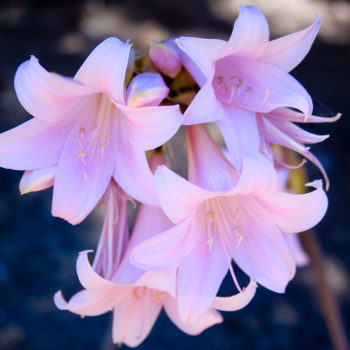
In a poem, a twelfth-century Buddhist monk named Hoshi Saigyo stated that the cherry tree, or Sakura, only had one problem: it caused people to gather. Saigyo was undoubtedly referring to the ancient practice of hanami, which translates as “flower viewing.”

Indeed, people have gathered to view the lovely sakura blooms since at least the Heian period (794–1185 AD). Regarding motivation, the Japanese value the ephemeral quality of all flowers, especially cherry blossoms.

Each year, the Japanese Meteorological Corporation releases a calendar that estimates the bloom dates for sakura, reflecting Japan’s cultural reverence for impermanence. While the residents of Japan’s northernmost climes, such as Hokkaido, usually have to wait until the end of April or the first of May to see sakura flowers, people in Okinawa come together as early as mid-January to view the hikanzakura—also known as the Taiwan cherry—blossoms. Outside of the cherry trees gifted from Japan within the Tidal Basin of Washington, D.C., or the same variety of cherries planted in sufficient numbers for Macon, Georgia, to host the International Cherry Blossom Festival, one wishing to emulate the practice of hanami might well substitute another flowering tree, such as the plum or dogwood.

Some Japanese are so committed to hanami that they will travel throughout Japan’s 47 prefectures to catch the various cherry blossom spots. As for what hanami entails beyond the camera, one brings all the accouterments of a ground picnic: blankets and bentos (lunch boxes). Should you wish to participate in the celebrations, please be advised that some locations are so popular that people camp out early to secure a prime viewing spot. The most beloved of these blossoms is the Somei Yoshino, or Yoshino cherry—a variety whose pale petals are as fleeting as they are breathtaking.

In Japanese culture, the cherry blossom season marks the beginning of numerous significant life transitions. Since the academic and fiscal years begin in the spring, sakura is often associated with new responsibilities, personal growth, and the transition into adulthood—a theme not unlike the “season for everything” described in Ecclesiastes 3. It is common in Japanese films or anime to show two characters—possibly destined lovers—meeting beneath the cherry trees, their encounter tinged with beauty and impermanence as delicate pink petals fall around them. Such moments may seem mystical, but they reflect a more profound truth: Life moves quickly, bringing opportunities we must seize or let slip away. For Christians, this symbolism echoes the call to live purposefully and steward each season well—particularly those that signal the beginning of new responsibilities or callings.

The well-known Latin phrase carpe diem, meaning “seize the day,” may serve as a fitting analogy for the Japanese passion for flower viewing. Those of us in Christendom can better understand this concept through the eyes of the wise King Solomon. In Ecclesiastes 9.10, Solomon says, “Whatever your hand finds to do, do it with all your might; for there is no activity or planning or knowledge or wisdom in Sheol where you are going” (NASB95).

In other words, as the beauty of the sakura flower is fleeting, so too are our lives (see James 4.14). Though perhaps unspoken, the practice of hanami reminds participants of the impermanence of life, teaching us to hold what we have with reverence. In this way, hanami reflects a deeply rooted Zen sensibility that embraces transience not as a cause for sorrow but as an invitation to be fully present. For those of us shaped by Christian thought, this quiet awareness harmonizes with the wisdom of Ecclesiastes: that life, though brief, is to be lived with purpose, gratitude, and wholehearted devotion (see Ecclesiastes 12.13-14).

Given this potentially upsetting truth for some, it is clear how important it is to manage our time effectively. In the context of Ephesians 5.15-17, the Apostle Paul suggests that we make the most of our time by walking—or acting—wisely. Moses tells us in Psalm 90 that we are likely to live 70 years, but if we are strong, we may live to 80 (Psalm 90.10). Even so, there is no guarantee. Each of us has a set appointment with death (Hebrews 9.27) unless God’s will allows the second coming of Christ to occur first.

Thus, would you hoard the Gospel’s sacred treasure? How quickly could you overcome procrastination if you knew tomorrow would never come? How soon would you mend your broken relationships? Would you remain silent in the face of the wicked’s schemes? The questions linger—sobering, urgent, and real.

Indeed, the words of Laura E. Newell from the hymn “As the Life of a Flower” ring true: “As the life of a flower, as a breath or a sigh, so the years that we live as a dream hasten by; true, today we are here, but tomorrow may see just a grave in the vale, and a memory of me.”

Serving God In Different Seasons

Neal Pollard

Solomon observed that there are different seasons of life and different seasons in life (Ecc. 3:1-8). Some can be construed as pleasant and happy, while others are less so. In our congregation right now, we have some people in seasons of sadness and grief, fear and uncertainty, while others are in a season of joy and success. Babies are being born, couples are getting married, and people are experiencing the joy of salvation while spouses and parents are being lost and loved ones are falling away.

There are also life’s seasons, as some are stepping into bigger roles while others are slowing down. Some are stretching while others are reluctantly having to step away. If I were writing this at any other time in any year, the names would change but the story would be strikingly similar. This rhythm of life is ongoing.

The one thing that must remain consistent through the mountain tops and deep valleys is what Solomon says at the end of his sermon. “The end of the matter; all has been heard. Fear God and keep his commandments, for this is the whole duty of man. For God will bring every deed into judgment, with every secret thing, whether good or evil” (Ecc. 12:13-14, ESV). It may be harder to praise when in pain and it may be easier to neglect serving when succeeding, but it is vital we do so!

It requires different disciplines when serving God in different seasons. It requires gratitude when life is going our way. It takes perseverance when life is decidedly difficult. In the places in between triumph and tragedy, it takes commitment to the pledge we made at our baptism to deny self and follow Him (Luke 9:23).

In the awkward growing pains of youth through the aches and pains of old age, we must honor our pledge of faithfulness. There is what God has done for us, from Calvary to the blessings of yesterday. There’s what He is doing to sustain and uphold us today (1 Cor. 1:8). Then, there are the promises built of the integrity of His perfect character concerning what He will do in all our tomorrows.

Wherever you are on the calendar of life, serve God! You will never regret “fearing God and keeping His commandments” in every season of life! “He has made everything beautiful in its time” (Ecc. 3:11).

Time

Maddox Wilson

As we end one year and begin another we tend to think about how we have spent our time. My time management is questionable at times. I do a lot of things last minute, especially school work–mainly geometry. It is a reminder that we must use the time we have been given. It is more valuable than money. Money can be made again but time once lost, is gone forever. We must be intentional with how we spend our limited time. James 4:14 says “Why, you do not even know what will happen tomorrow. What is your life? Even a vapor that appears for a little time and then vanishes away.”

Time is a gift. We make time for school, work, sports, video games, friends, and family. Are we making time for the most important things in life? How many minutes a day do we spend studying God’s word? For me, I could be doing better. It’s easy to let minutes wasted on my computer turn into hours.

How do we get a better understanding of how to best use our time? Matthew 22:37 says, “Love the Lord your God with all your heart, and with all your soul, and with all your mind.” To do that we must

  1. Put God first in our life. Romans 6:13 says, “Give yourselves to God, surrender your whole being to him to be used for righteous purposes.” So, keep our priorities straight. Matthew 6:33 tells us, “Seek first the kingdom of God and his righteousness, and all these things will be given unto you.” Seek him above all other things in our daily life.
  2. If the axe is dull and its edge unsharpened, more strength is needed but wisdom brings success” (Ecclesiastes 10:10). We must use our time to strengthen our knowledge of God’s word. We need to work smarter in managing our time and completing tasks. Add our Bible study to our TO DO list. Put it at the top until it becomes a habit.
  3. Make time spent on important things into a goal. Proverbs 16:9 says, “A man’s heart plans his way, but the Lord establishes his steps.” At school they tell us to make SMART goals. We can use this in our Bible study life too. Specific goal, Measurable goal (how many minutes to read) , Action oriented- what am I doing to meet this time goal, Realistic- remember my actual attention span, and Timely- actually make progress. Share your goal with a friend and help each other.
  4. Finally understand the limit of the time we are given. We are certainly not promised tomorrow (even if a teenager). Ephesians 5:15-17 tells us, “Look carefully then how you walk, not as unwise but as wise making the best use of the time, because the days are evil. Therefore do not be foolish, but understand what the will of the Lord is.” Are my time choices bringing me closer to the relationship?

I need to have with God. James 4:14 asks, “Why you do not even know what will happen tomorrow. What is your life? You are a mist that appears for a little while and then vanishes.”

The way you spend your time has eternal consequences. Maybe you have not made the best choices on how you spend your time. Maybe you need to make the most important decision of your time here on earth. If you haven’t made the decision to be baptized now is the perfect time. Or if you have any other need there is no better time than the present.

Maddox Wilson is one of two young men speaking on the Equipped Workshop, April 18-21, 2024, at the Lehman Avenue church of Christ.

Time Flies, But We Navigate

Monday’s Column: Neal At The Cross

Neal Pollard

Ann Turner Cook passed away at her St. Petersburg, Florida, home on Friday, June 3, 2022. She was 95 years old, was an educator, a novelist, a wife, and a mother. Her father was a well-known cartoonist. But you almost certainly know her for a charcoal drawing that was made of her by an artist neighbor, Dorothy Hope Smith. It was submitted for the label of a baby food company and chosen in 1928, then trademarked in 1931. Ann was the original Gerber baby (news report here)! You’ve seen that iconic picture. If you realized she was a real person, you never thought about the fact that this baby grew up and eventually grew old. Or that she would now be dead.

I know nothing about Mrs. Cook’s religious life or spiritual preparation. But I do know that she is part of a universal truth concerning life, and that is that death comes relatively soon for us all. How soon? 

  • Like water spilled on the ground (2 Sam. 14:14). 
  • Like a weaver’s shuttle (Job 7:6; Isa. 38:12). 
  • Like a breath (Job 7:7).
  • Like a shadow (Job 8:9; 1 Chr. 29:15; Ec. 6:12). 
  • Like a flower (Job 14:2).
  • Swift as a runner (Job 9:25).
  • Like a handbreadths (Ps. 39:5).
  • Like a wind that passes (Ps. 78:39). 
  • Like a sigh (Ps. 90:9). 
  • Like smoke (Ps. 102:3).
  • Like a lengthened shadow  and grass (Ps. 102:11; 109:23). 
  • Like a passing shadow (Ps. 144:4). 
  • Like a fading flower or withering grass (Isa. 40:7-8; Js. 1:10; 1 Pet. 1:23-25). 
  • Like a vapor (Js. 4:14). 

With that in mind, shouldn’t we pray with David, “LORD, make me to know my end and what is the extent of my days; Let me know how transient I am” (Ps. 39:4).

Yes, we can look at the Gerber Baby and see that. Or we can look through our own family albums. The baby, childhood, and young adult photos of our grandparents, parents, or ourselves. The weathering winds of time do sure and quick work, reminding us of the many ways the Bible depicts it for us. Time is short and it passes quickly.

Rather than a depressing inevitability, this should be a respected teacher. We should pray with Moses, “So teach us to number our days, that we may present to You a heart of wisdom” (Ps. 90:9). We should take Paul’s inspired advice and “be careful how you walk, not as unwise men but as wise, making the most of your time, because the days are evil” (Eph. 5:15-16). Don’t leave undone what needs to be done. Don’t put off what must be done before this life is over. It will be over before you know it. As the writer of Hebrews tells us, “It is appointed for men to die once and after this comes judgment” (9:27). 

How Many Blades Of Grass Are There?

Tuesday’s Column: Dale Mail

image-e1601983688162

Dale Pollard

How many blades of grass are there?
According to one study, there are approximately 418,000,000 blades of grass for every person on the planet.

How many fish are in the sea?
Scientist admit that it’s nearly impossible to know the answer to this question but that hasn’t stopped several educated guesses. One study estimated around 3,500,000,000,000 as their total.

How many cars are there in the world?
There are around 1.446 billion cars total. America has approximately 350 million vehicles and Antarctica has about 50.

Psalm 90.12 states, “So teach us to number our days so that we might apply our hearts to wisdom.”

This verse has nothing to do with the actual length of our individual lives but it does deal with the human perspective of time. Nobody can accurately determine how many days or years they’ll be around for. That’s not for us to know and something we don’t have to concern ourselves with. This Psalm seems to point us all in a different direction. Instead of trying to count how many days we have left, we should view each day as our last. Here we see the connection between time management and our spiritual lives. Since we can’t know the exact day of our death, our time is best spent chasing His wisdom and the application of it. We’re essentially asking God to teach us to view our mortal lives the way He does and that only happens when we dedicate our ways to His words.

TIME

Tuesday’s Column: Dale Mail

image

Dale Pollard

Our lives are based on time. Everything we do is on a schedule. We all have limited time, we waist time, we spend time, we invest time, we make time, the world is on a clock. 

God has the title of the Creator. 

He created 

  • You
  • me
  • the world 
  • Galaxy 
  • Universe 

He was and is and ever will be, the Alpha Omega beginning and end. 

He is the God of history, of Abraham, Isaac and Jacob.

He is God of the present, and God of the future. 

God is the originator of time; He invented it, it’s His. 

Here are three quick thoughts to consider about this precious commodity.

  1. Money and time share similarities. Don’t waste it. Spend it wisely. Invest it in the future. 
  2. All good things come to an end but thank God that the best thing, heaven, will never end.
  3. With the proper perspective we can clearly see that we’re all on God’s time. 

What will we do with the time God gave us today?

But do not overlook this one fact, beloved, that with the Lord one day is as a thousand years, and a thousand years as one day. – 2 Peter 3:8 

Narcissus and Echo 

Friday’s Column: Supplemental Strength

81121814_2462862270639428_5746232403106463744_n

Brent Pollard

Greek mythology is fascinating. So much so, in fact, that the Romans co-opted it as their own. As such, the Roman poet, Ovid, tells us the story of Narcissus and Echo within Metamorphoses. You likely recognize Narcissus’ name because of the mental disorder named for him. Narcissism. You may not have known that the phenomenon called an “echo” also derives its name from a mythic figure. Echo was a beautiful, but talkative, forest nymph. She cut off the goddess Juno so much during conversations that the peeved goddess cursed her with the capacity only to repeat the last words spoken by others. 

Without delving too deeply into the mythology, suffice it to say Echo fell in love with the picky Narcissus, whose standard for a consort was so high that none could meet his expectations, including poor Echo. Already cursed, Echo was not able to convey her feelings to Narcissus. On one fateful day, however, Narcissus had sensed Echo’s presence and called out, “Is anyone there?” After she replied in the same, he said, “Come here!” Echo ran to Narcissus as she repeated his command. Echo’s actions repulsed Narcissus. He told her he would sooner die than allow her to enjoy his company. Echo was humiliated and ran away. Yet, she continued to love Narcissus. The vengeful goddess, Nemesis, saw Narcissus’ actions. She cursed him by making him fall deeply in love with his reflection. 

There was no redemption for Narcissus and Echo. Narcissus lingered by the pool of water, looking longingly at his reflection. Echo persisted in her love for Narcissus. As the years passed, Echo’s beauty faded, and her body wasted away, leaving only her voice. Narcissus committed suicide, realizing his impossible love would remain unrequited. A flower bloomed where he killed himself. Yes, the narcissus.  

It is easy to use Narcissus as an object lesson for us, spiritually.  Both James and Peter quote Proverbs 3.34 from the Septuagint to remind us that God resists the proud (James 4.6; 1 Peter 5.5). A haughty look is something we know God hates (Proverbs 6.17). Our Lord went about doing good (Acts 10.38). Since He is our example (1 Peter 2.21), Paul tells us: “do not merely look out for your own personal interests, but also for the interests of others.” (Philippians 2.4 NASB) 

But what lessons do we derive from Echo? Her tongue is what initially got her into trouble. Just because the tongue is an unruly member, per James 3, doesn’t mean that we should not seek to control it. There is the talk we must avoid (Ephesians 4.29; 5.4; Philippians 2.14). Besides this prohibited speech, there remains gossip and lying, which both Testaments condemn (Exodus 20.16; Psalm 15.1-3; Proverbs 6.19; 2 Corinthians 12.20; 1 Timothy 5.11-13; Titus 2.3). 

Echo also squandered a precious commodity in her quixotic pursuit of Narcissus, time. We are supposed to take advantage of the time given to us (Ephesians 5.15-17). There comes the point where even preaching the Gospel to the hard-hearted equivalent of a brick wall is like casting “what is holy to dogs” and throwing “pearls before swine” (Matthew 7.6). 

Lastly, Echo loved someone incapable of justifying the precious investment of her heart. The world is like Narcissus in that regard. John reminds us that the world with its lusts will one day pass away (1 John 2.15-17). Even so, how many have laid up treasure on the earth? (Matthew 6.19-21; Luke 12.33-34). We cannot pursue both God and mammon (“wealth” NASB— Matthew 6.24).  

May it be that as you search your heart that you find no kindred spirit with Narcissus and Echo. Focus outwardly upon others’ needs, be mindful of the precious commodity of time, and give your heart—and tongue—to the One Who will best use and appreciate it (cf. Matthew 22.36-38). 


All the Time in the World 

Friday’s Column: Supplemental Strength

81121814_2462862270639428_5746232403106463744_n

Brent Pollard

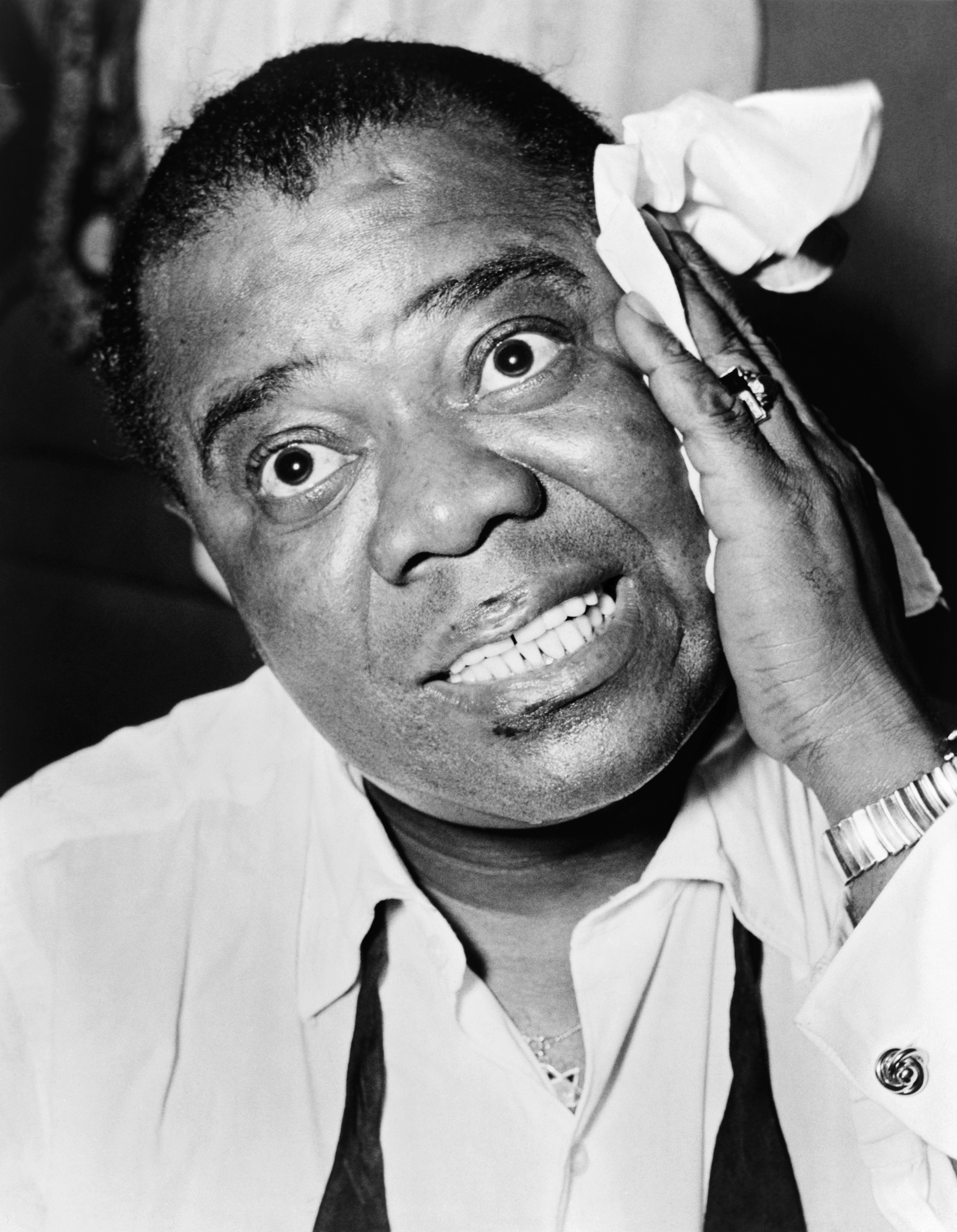
1969 was a landmark year in many respects. Most notably, the year saw a man walk on the moon. Of much lesser note, 1969 witnessed George Lazenby take on his sole (some say, forgettable) performance as the iconic spy, James Bond. I am not a Bond fan, seeing as nothing is entertaining about an unrepentant philanderer. Yet, I do enjoy music. Thus, I am familiar with this Bond movie because of its soundtrack, which featured a Moog synthesizer for the first time in its main theme. Louis Armstrong recorded the love theme for On Her Majesty’s Secret Service. The song was titled, “We Have All the Time in the World.” It was Armstrong’s last studio recording. 1Sadly, he was too weak to play the trumpet during the piece, performing only the vocal. 2

The love theme belies the movie’s sad ending well. Music composer, John Barry, chose Louis Armstrong to do the vocal for the love theme precisely because he felt that Armstrong could deliver the titular line with irony. 3 The song’s title is Bond’s last spoken dialogue in both the Ian Fleming book and the film of the same name. I doubt I am spoiling a movie that is 50 years old by revealing its ending but provide warning that there is spoilage ahead.

With the sixth Bond installment, Bond is finally allowed to fall in love and marry. In the closing moments of the story, however, the antagonist kills Bond’s wife as they are heading out on their honeymoon. The movie’s love theme, as an instrumental, Armstrong’s vocal performance, and several reprises play prominently throughout the film’s score. Hence, this pretty false promise crashes down under the weight of reality in the end. Not even spies saving the world have time promised to them.  The atypical Bond ending makes it more of a cult favorite among fans of the franchise. It didn’t do well at the box office. Of course, that may likewise be attributable to Sean Connery’s absence from the screen. Critically, the movie is well received, with at least one reviewer considering it the third best film of the franchise. 4

I think this subject strikes a chord with me more because of it being Armstrong’s last recorded song than for anything otherwise related to On Her Majesty’s Secret Service. Armstrong is a man of declining health singing about having all the time in the world. I wonder if Armstrong had a sense that he was nearing his departure. In the final years of his life, Armstrong battled poor health but went against the advice of physicians by continuing to tour and perform. 5 I suppose one may chalk that up to dying doing what one loves?

But what of us? Do we ignore the stark reality of James 4.14? We are like the morning fog burned away by the rising noontime sun. And sometimes our lives are such that even if lengthy we may sound as Jacob speaking to the pharaoh: “The years of my sojourning are one hundred and thirty; few and unpleasant have been the years of my life…” (Genesis 47.9 NASB). Even so, we act as if we have all the time in the world. Jesus reminds us that we have but a small window in which to do what we must (John 9.4). Yes, the night is coming. Perhaps, you have been putting off those things you know must be done to save your soul or improve your example as a Christian. Don’t listen to Satan’s sweet melody telling you about the time you do not have. Your only time is now.

“Behold, now is ‘the acceptable time,’ behold, now is ‘the day of salvation’” (2 Corinthians 6.2b NASB).


REFERENCES

1 “On Her Majesty’s Secret Service (Soundtrack).” Wikipedia, Wikimedia Foundation, 24 June 2020, en.wikipedia.org/wiki/On_Her_Majesty%27s_Secret_Service_(soundtrack).

2 “We Have All the Time in the World.” Wikipedia, Wikimedia Foundation, 14 July 2020, en.wikipedia.org/wiki/We_Have_All_the_Time_in_the_World.

3 ibid

4 Hausmannsgate. “All 25 Bond Films, from the Best to the Worst.” IMDb, IMDb.com, 21 Nov. 2015, www.imdb.com/list/ls055107293/.

5 “Louis Armstrong.” Wikipedia, Wikimedia Foundation, 2 Aug. 2020, en.wikipedia.org/wiki/Louis_Armstrong#Death.

louis_armstrong2

Outside Time 

Friday’s Column: Supplemental Strength

81121814_2462862270639428_5746232403106463744_n

Brent Pollard

Our Creator is eternal. Hence, he has and will always exist. Having no beginning, He will never have an end. It hurts our feeble brains to try and comprehend this truth, but we accept it, seeing it with an “eye of faith.” Time is a concept held only by the mortal construct of an immortal God. Time means nothing to Him. Since that is the case, a couple of truth becomes evident.

Since God is outside time, He can work out what is best in our life.  From our perspective, life is a complex picture puzzle with pieces collected over some 70 or 80 years (cf. Psalm 90.10). Since Adam opened “Pandora’s Box” of sin, those pieces of the puzzle handed to us do not always make sense. Sin may cause a single bit even to hurt us. Yet, God’s Providence ensures it works out in accordance to His Divine Will (Romans 8.28). God knows how the completed puzzle picture looks. No piece escapes His observation. So, even if a part was not what He had hoped because sin marred the edges, He still ensures that those pieces fall into the right place. When we leave this world, perhaps, we will see the completed picture too. Like the apostle Paul, we might gain clarity before our departure. Paul had a good grasp of his life as he summed it up for Timothy (2 Timothy 4.6-8). Hopefully, we will speak as confidently as Paul concerning our future when granted the clarity of life’s impending end.

Since God is outside time, He is longsuffering. I do not seek to diminish God’s love in making this case. I merely emphasize what Peter wrote in 2 Peter 3.8-9:

But do not let this one fact escape your notice, beloved, that with the Lord one day is like a thousand years, and a thousand years like one day. The Lord is not slow about His promise, as some count slowness, but is patient toward you, not wishing for any to perish but for all to come to repentance. (NASB)

Contextually, the two ideas are related. God’s lack of concept of time equals longsuffering. Can you see how that makes sense? Would it not be easier to be patient with someone if you had no idea of time? We lose patience with others since we feel we can quantify progress with a predetermined amount of time: “I asked you to do this a week ago, and you still have not completed it?” (Can you not hear the frustration in that question? Maybe you even read it in your mind with a voice of exasperation.) Yet, time does not constrain God. He sees the beginning and end of our life simultaneously. Thus, that one becoming a worker at the eleventh hour is paid the same wage as those laborers working all day (cf. Matthew 20.1-15).

We could give other examples to illustrate the benefits of God’s existence outside time, such as how that quality of God enabled prophets to write with 100% about events that would occur hundreds of years after the seer’s lifetime. Hopefully, though, we have considered enough to enrich our faith. Yes, God’s existence outside time enables His Providence to work flawlessly and suffer each of us long. We serve an amazing God!

1320377

When Adversity Makes You Feel Unproductive

Friday’s Column: Supplemental Strength

brent 2020

Brent Pollard

If there’s one thing disappointing me most, it’s the lack of productivity I often feel. There are many things I want to do. I don’t think I get even a quarter done. For many facing a similar predicament, it’s a matter of poor time management. Time is precious. We’re told to make the most of it since the days are evil (Ephesians 5.16). Contextually, this pertains to the efforts made by first-century Christians in their daily walk. Persecution was coming. Indeed, for some, their lives would soon be at an end. Did they want to depart for eternity’s shore feeling as if more could have done but had not been? That message remains prescient today. We enjoy civil liberties now including religious freedom. However, a tempest has been growing for half a century which seeks to strip away the vestiges of religion and morality from the body politic. In but a short time we may face the same uncertain prospects as they. Hence, our struggle to be productive is as important as ever.

This exhortation may be limited in scope, but I wish to address those who might have certain mitigating factors making Paul’s inspired admonition more difficult to keep. It’s one thing to be a timewaster when one is able-bodied. It’s another matter entirely when you’re limited from accomplishing as much by the limitations of the flesh. There are those accustomed to doing much. One day they young, full of vigor. In the blinking of an eye, though, they no longer recognize the person staring back at them in the mirror. The snow of many winters covers what hair is left on their heads. For such, it hurts getting out of bed. Something as simple as buttons on garments becomes a time-consuming challenge. They may be asking, “Why can’t I get as much done as I used to?” This can be especially vexing, spiritually.

Perhaps, you have an illness of the body or mind. Maybe you don’t have old age to blame for your aches and pains but an autoimmune disease that others dismiss because, from appearances, you look fine. Not only are you in pain but you feel alone because some have unfairly surmised you’re just lazy. It could be that you’ve had chemotherapy and experience what has been termed “chemo brain.” You find yourself struggling to remember simple details. If you don’t write something down, you’ll forget about it. Truly, I could share a plethora of other scenarios in which some malady besets the body or mind and causes one to feel unproductive or a timewaster. These should suffice.

Fortunately, we serve a gracious God. Not only is His grace sufficient for coping with our lot in life (2 Corinthians 12.9), but it takes into consideration our current estate. One can debate whether there are degrees of punishment from Luke 12.48. That’s not my purpose. A principle is established here, however, stating that we’re held accountable according to the responsibility entrusted to us. Why would God hold the enfeebled or impaired to the same standard as the able-bodied? This must be true of redeeming one’s time as well. Note, one cannot forsake his or her Christian duty. Yet, rather than beat up on yourself because of what you left unaccomplished, trust that God knows your situation intimately. The main thing is to show up and do the work of which you are capable (Matthew 20.1-16; 21.28-32). This is how you remain productive even while facing adversity in these evil days.

20190621_113147


Reflections At Middle Age

Neal Pollard

The first few decades we rush ahead
Wanting time to fly, but it creeps instead
Impatient to be older, sure that it’s our way
To freedom and happiness, where we’ll leisurely play.
Sure enough time goes rapidly by
Flashing so speedily, we watch it fly
Moments of grandeur, days that are grueling
Ordinary stretches our quick lives fueling
Soon the road in our rearview stretches much longer
Our foot on the brakes, though the pace is much stronger
The road out before us is sloped and quick,
We savor the present, future curves might make us sick.
But we know that this journey, so speedily taken
Will reach its destination, there’s no mistaking.
There’s still plenty of grand views on the side of this road
But we encounter new impediments and a heavier load
How could we go faster, as there are higher hills to climb?
Yet this road is so short and is hemmed in by time.
I praise God this journey is not a dead end,
I’m traveling to see my dear Savior and friend,
Who’s waiting my coming, however many more miles,
Where days are not counted, and tears become smiles.
That’s free of all calendars and increases in age,
And length of existence stretches one eternal page.
The law of averages says I’m about halfway through,
Or perhaps a bit farther, so here’s what I’ll do,
Make the most of each moment, helping others prepare
For a happy destination, showing how to get there.

180778_494356300921_2048026_n
Me on the right with my sister, Mendy, and friend, Zack Carter. About 1973.