As a Christian, the list is endless. But here’s a few:
God is eternally good and His steadfast love never ends (Psalm 136:1)
He chose you before the foundation of the world (Eph. 1:3–4)
You are forgiven and your sins are removed as far as the east is from the west (Psa 103:12)
Christ redeemed you with His own blood while you were still His enemy (Rom. 5:8)
You have been adopted as a beloved child of God (1 John 3:1)
The Spirit lives inside you as a guarantee of your inheritance (Eph. 1:13–14)
Every spiritual blessing in the heavenly places already belongs to you in Christ (Eph. 1:3)
Nothing can separate you from the love of God in Christ Jesus (Rom. 8:38–39)
Your name is written in the Lamb’s Book of Life (Phil. 4:3)
Jesus is praying for you right now (Heb. 7:25)
Death has been swallowed up in victory (1 Cor. 15:54, 57)
One day you will see Him face to face and be made like Him (1 John 3:2)
He will wipe away every tear and make all things new (Rev. 21:4–5)
His mercies are new every single morning (Lam.3:22–23)
He cares for YOU (1 Pt. 5:7)
As a Christian, you aren’t just tolerated, you are infinitely loved, irrevocably chosen, completely forgiven, eternally kept, and destined for glory. That is why, in everything and always, we give thanks.
“This is the will of God in Christ Jesus for you: give thanks in all circumstances.” 1 Thes. 5:18
In A.D. 165, during the reign of Marcus Aurelius, Roman authorities dragged a Christian woman named Felicitas into a stone prison beneath the streets of Rome. The cell was so dark that the prisoners kept there couldn’t see their own hands. Food was scarce, disease wasn’t, and dampness never dried. Yet accounts record something strange— Felicitas spent her final days singing songs of thanksgiving. The guards outside stood there surprised as they listened through the iron bars. Thankfulness—in a place built to erase hope. That kind of gratitude seems nearly impossible today, but it sounds a lot like a verse from the Psalms that rarely makes its way to the microphone.
“I will offer to thee the sacrifice of thanksgiving, and will call upon the name of the LORD.” — Psalm 116:17
Most might breeze past the line, but the phrase “sacrifice of thanksgiving” reveals something profound. The psalmist isn’t talking about gratitude when life is full, comfortable, and convenient. He’s talking about gratitude that costs something—gratitude that must be fought for. It’s the kind Felicitas offered in that Roman cell.
A “sacrifice of thanksgiving” is what happens when gratitude is chosen, not felt. It can be seen in something small like that “thank you” we give Him without seeing the outcome. When we praise God before we understand the plan. When we hold onto God not because everything is good, but because everything is hard.
In a sentence, it’s the kind of thankfulness that’s forged— not found.
Are you happy? On a daily basis, how do you usually feel? Anxious, tired, drained, sad, joyful? I was reading a report done on overall happiness and joy here in the US. The past four years it hit an all time low. Do you know what year Americans were happiest? Studies have shown that in 1957, people were by and large much happier than today and really at any point in US history. Why 1957? That year the average house at the time was a third of the size we live in today. The average salary was less than 4,000 a year. Life expectancy was 69 years. So why is it that even though homes were smaller, salaries were so modest, and life expectancy was 10 years shorter than today, people by and large much happier than today?
Maybe it’s because joy has never and will never be attached to physical possessions. We are losing our joy at an astounding rate. Even in the church, where we claim to have access to the peace of God and eternal life, joy can be far too elusive.
In Nehemiah 8:10, Nehemiah the Governor of Judah has just finished leading the Israelites in building the new wall around Jerusalem. They have returned from captivity and have what seems like a fresh start. One of the ways they show their gratitude was by gathering together to have Ezra read the books of Moses to them.
Nehemiah is doing some of the greatest work he could possibly choose to do. He used to be a cupbearer, but now he is leading the Israelites back to a relationship with God. After the reading of Scripture, notice what Nehemiah says, “Then he said to them, “Go your way. Eat the fat and drink sweet wine and send portions to anyone who has nothing ready, for this day is holy to our Lord. And do not be grieved, for the joy of the Lord is your strength.”
Why this reminder to the people? Because God’s people NEED joy! One of Satan’s first lines of attack to weaken our efforts in serving God is to take our joy. Psalm 16:11 reminds us where joy is found: “you will show me the path of life: in your presence is fulness of joy; at your right hand there are pleasures for evermore.”
I agree with the psalmist and I can confidently say joy is found in the presence of God! He has used His word, and time spent in prayer to give me encouragement and strength.
With Thanksgiving today, be especially thankful for the joy that comes from being a child of God!
David penned roughly half of the psalms. His name appears above 73 of the psalms and the New Testament attributes him as the author of two more (Psalm 2 and 95). He may also have been the author of several more of the 50 anonymous or unattributed psalms. But we also find poetic work from David outside the psalms. There is 1 Chronicles 16:8-36, given by David to the sons of Asaph as a song of thanksgiving and worship (some of which appears also in Psalm 105:1-15). Then, there is 2 Samuel 22:1-51, which reflects much of the content of Psalm 18:2-50.
The occasion of this psalm is explicitly stated. It is a song to the Lord, acknowledging His delivering David from Saul and his other enemies. David was a man of war, and he was challenged and disrespected by so many over time during his 40 year reign. We might call him embattled, continually weighed down by difficulties with others. While he had some extreme spiritual low points and multiple lapses in judgment, his overall character was of a man who trusted in God to deliver him and who tried to faithfully follow Him.
In 2 Samuel 22, David centers his thoughts on who God is. Notice what about God he focuses on.
GOD IS OUR RESCUER (1-20,44-49).
GOD IS OUR REWARDER (21-22,24-27).
GOD IS OUR RULER (23).
GOD IS OUR REDEEMER (28).
GOD IS OUR ROCK (32,47).
GOD IS OUR REFUGE (29-31,33-34).
GOD IS OUR REINFORCER (35-43).
GOD IS OUR REASON (50-51).
Read through this beautiful psalm and see the gratitude and praise David pours out toward God. He had been in many valleys and through some uncertain and frightening times, but he refused to blame God and was unwilling to believe he had been abandoned by God. Perhaps we have no better example of how to respond to personal adversity and unfair treatment than David. Instead of turning bitter and losing faith, David doubled down on what he knew about God! He put his trust in Him and counted on Him to carry him through. He was confident in God’s ability to prove Himself the victor against any and every foe. Whatever you are going through right now, please focus on who God is–your rescuer (2 Tim. 4:18), your rewarder (Heb. 11:6), your ruler (Rev. 1:5), your redeemer (Ti. 2:14), your rock (1 Cor. 10:4), your refuge (Heb. 6:18), your reinforcer (Eph. 6:10), and your reason (John 20:30-31)!
Thanksgiving is just around the corner, and I can’t help but wonder how many people in the United States will take a moment to thank God. While some reject the day due to its association with Plymouth and the “original Thanksgiving” celebration, the fact remains that all of our presidents have thanked God in their Thanksgiving proclamations. Therefore, I am okay with doing away with the pilgrims as long as we can maintain the day’s significance set forth by historical figures such as Abraham Lincoln. On Thanksgiving Day, we reflect on our blessings, express our gratitude to God, and ask for His continued beneficent providence in our national life. Thus, unlike Easter and Christmas, which carry pagan baggage from the standpoint of their traditions, Thanksgiving is the most Christian of all federal holidays.
Luke records an instance during Christ’s ministry in which He encountered ingratitude on a par with modern America. Only one of the ten lepers He healed returned to thank Christ for what He had done (Luke 17.11–19). Jesus even asked, “Were there not ten cleansed?” (NASB Luke 17.17) People do their best to spin the nine’s actions in a positive light. Emotion overcame the nine, and they longed to return to their previous lives. Besides, they followed Christ’s command to go and show themselves to the priests. And what if the Samaritan only returned because he lacked a priest to whom he could present himself as a foreigner? In any case, Jesus told the Samaritan that his actions had made him “well” (Luke 17.19).
What prevents us from showing gratitude like the Samaritan? Here are seven possible reasons:
We are too busy and distracted. Modern life can be busy and distracting, making it difficult to appreciate the present moment and count blessings.
We can be too materialistic. It can be challenging to be grateful for what one has in consumerist societies because materialism has overtaken the value placed on intangibles like relationships and experiences.
We compare ourselves to others. Due to constant comparison with others and the influence of social media, one may experience feelings of inadequacy or jealousy, which can prevent one from feeling grateful for their life and circumstances.
We may have a negativity bias. People naturally tend to dwell on negative rather than positive things. Instead of focusing on what we have, we will concentrate on what we don’t. That inclination is a negativity bias.
We are on a hedonic treadmill. This phenomenon of becoming accustomed to pleasure is known as hedonic adaptation. In simpler terms, we get used to things emotionally. For example, when I acquire a new and shiny object, it brings me happiness. However, this happiness is short-lived, as I soon become accustomed to it.
Similarly, when something terrible happens, I feel sad but adapt to the change over time, and my happiness levels return to normal. As a side note, we note that God offers us joy, not happiness. Joy is renewed from within, avoiding the hedonic treadmill. Hence, it can even be an implied imperative (see Philippians 4.4).
We forget to be still. This results from failing to heed Psalm 46.10, which says, “Be still, and know that I am God” (KJV). A similar root cause is that people are too preoccupied with their lives to stop and offer thanks. Luke 11.24–26 shows that refraining from one bad behavior is not enough to prevent the substitution of another bad behavior. We need to fill the void by starting something useful. New Agers and Buddhists would call this “practicing mindfulness.”
But Christians do engage in their form of mindfulness as well. A Christian sets aside specific times for quiet reflection, away from the distractions of daily life, rather than sitting in the lotus position and breathing deeply. Christian mindfulness is about creating a space to focus inwardly and become more aware of God’s presence. Praying and reading the Bible are two of the best ways to accomplish this. Those who commit to being still and knowing God will be grateful.
We feel entitled. Individuals may feel entitled in societies where success and happiness are highly valued. This thinking can dull people’s gratitude and lead them to take their blessings for granted. Gifts become their norm rather than providential occurrences (see James 1.17).
As Thanksgiving draws near, we must truly understand what this holiday is all about. It’s not only a time for food and family gatherings but also genuine gratitude. In our busy lives, full of distractions and the pursuit of material comforts, we often forget to give thanks for the simple things. However, this day allows us to break free from these tendencies. It encourages us to step off the hedonic treadmill, put aside our negativity bias and the sense of entitlement that clouds our perception, and instead embrace a spirit of thankfulness. By being still, as suggested in Psalm 46:10, we can truly appreciate the blessings bestowed upon us, recognizing them as gifts from God rather than mere entitlements or passing pleasures. Thanksgiving, at its core, is a day to emulate the gratitude of the Samaritan leper, acknowledging our blessings and expressing our heartfelt thanks to the Divine. In doing so, we honor the tradition set forth by figures like Abraham Lincoln and cultivate a more profound sense of joy and contentment in our lives. So, let this Thanksgiving remind us to pause, reflect, and give thanks with a full heart.
I wonder if Kathy felt like she was living with Briscoe Darling and the boys (imagine them if they were talkative) through the years they were growing up. She is refined and genteel, words that are not usually connected to our three sons and me. One thing she impressed upon us was the importance of timely, thoughtful thank you notes. Gratitude, though it can be expressed with very little time and expense, is telling. It acknowledges the kindness and generosity of the giver.
One of the elements of worship, generally, and prayer, specifically, is thanksgiving. Our songs call for it: “Give Thanks With A Grateful Heart,” they express it: “Thank You, Lord,” “For All That You’ve Done,” “How Great Thou Art,” “10,000 Reasons,” and “He Has Made Me Glad.” Though that songwriter, Leona Von Brethorst, apparently wrote the song from Psalm 100, she includes a line from Psalm 118:24: “This is the day that the Lord has made.”
Five times in Psalm 118, the psalmist says “give thanks” (1,19,21,28,29). He urges others to do so, but also expresses his resolve to do the same. Why?
GIVE THANKS FOR HIS GOODNESS (1-4)
“Good” is a general word that takes in pleasantness, desirability, and beauty. The good quality specified here is His everlasting mercy (lovingkindness). The writer moves from the broad to the specific–Israel, house of Aaron, those who fear the Lord. Everyone is the object of God’s lovingkindness. The righteous freely express their thanks for it.
GIVE THANKS FOR HIS DELIVERANCE (5-13)
There is a sudden, dramatic shift in tone in verse five. From an upbeat, positive tone, he turns to thoughts of trouble and difficulty. Distress, hatred, being surrounded, and violence threatened him, but God was there for him as protection and help. This kept him from fearfulness. It gave him refuge.
It is an amazing thing to think of all the ways and times God has been with me, but those are just the instances I’m aware of. How many trials has God spared me from, disasters has He caused me to avoid, and troubles has He averted for me that I won’t know about on this earth? Just what I do know humbles me, and it should fill my heart with gratitude.
GIVE THANKS FOR HIS GREATNESS (14-17)
The writer turns to the Giver. He is strong, a Savior, valiant, and exalted. Summarizing God’s qualities, the writer says, “I will not die, but live, And tell of the works of the Lord” (17). Awareness of who God is for me, physically, materially, and spiritually, will drive me to grateful thanks.
GIVE THANKS FOR HIS DISCIPLINE (18)
Though it is almost a parenthetical phrase in the middle of this song of thanksgiving, it is important and an additional reason for gratitude. He writes, “The Lord has disciplined me severely, But He has not given me over to death.” Who is brave enough to say that with the psalmist? He implies gratitude for God’s severe discipline. Hebrews 12:7-10 tells us that God disciplines those He loves and calls His children. It is for our good and allows us to share His holiness. Can I thank Him for the trials and challenges that refine me and grow my dependence on Him? Or do I just plaintively ask, “Why?”
GIVE THANKS FOR HIS PROVISION (19-29)
He uses the imagery of a city here–gates, stones, and chief corner stone. Then, he ends with a temple analogy, with the house of the Lord, festival sacrifice, and the horns of the altar. Saved inside God’s walls of protection, we are free to offer worship which He accepts. We marvel, we rejoice, we are glad, we prosper, and we extol. He has given us light. The primary thrust is not material, but spiritual. However prosperous or impoverished you are, financially, however strong or weak you are, emotionally, we have the greatest provision of all in Christ. Eternal salvation, the hope of heaven, fellowship with God and the saved, the church, strength to endure, the list is endless.
Today, as you go through the day, why not stop and spend time in prayer to God thanking Him categorically: physical blessings, relationship blessings, emotional blessings, national blessings, and spiritual blessings. No doubt, there are things in your life right now that are dissatisfying and disappointing. You may be struggling mightily. Perhaps those are ways God is disciplining you in His love. Whatever is happening in your life, choose to give thanks and know God is trustworthy! It’s more than polite. It’s righteous!
Hopefully, those within the United States enjoyed a safe and joyous Thanksgiving holiday yesterday. Thanksgiving is one of those holidays that has come under attack by secular humanist forces in recent years. Worse than merely shifting the focus to turkey and American football, some people are trying to attack the holiday based on injustices perpetrated against the American Indian population over a century ago. While true that the “Thanksgiving feast” in seventeenth-century Plymouth serves as a romantic backdrop to our current holiday, we should not forget that days of giving thanks is not limited to one group or one time.
Many countries observe some Thanksgiving holiday today. These observances are typically about the giving of thanks for the bounty of the harvest. They may reflect a pagan rather than Christian influence. However, to single out the United States’ practice as a matter of perpetuating injustice is a move by those seeking to erase American history with its Judeo-Christian values. The removal of said Judeo-Christian values are necessary to create the secular humanistic state esteemed by the disciples of Karl Marx. It is not an exaggeration to say we are in the midst of a great cultural war here within the United States. The winner of this cultural war will determine whether the United States continues to be free or becomes despotic. I realize that may sound like hyperbole on my part. Still, the Founding Fathers were clear in emphasizing that only religious people could maintain the liberties enshrined within the Constitution.
Thus, we find the American Thanksgiving holiday’s actual genesis in 1789, the year of the United States Constitution’s ratification. President George Washington wrote that Congress had tasked him to declare a day of Thanksgiving. The purpose of this day was to thank God for blessing the newly-formed United States with peace and prosperity. A cursory examination of all of the Presidential Thanksgiving Proclamations demonstrates the common theme of acknowledging and thanking Providence. Many Presidents likewise include an exhortation to remember the less fortunate and spend the day in service to others. President John Adams approached it differently. He asked people to fast on Thanksgiving and include with their prayers those of penitence, acknowledging national sins. How novel!
Thomas Jefferson balked at the idea of making Thanksgiving Proclamations. He thought it smacked too much of enjoining the populace to some State religion. I believe Jefferson was mistaken, but it should help you understand that this holiday has been one long conceived as religious in tone. After Jefferson’s successor, Madison, the practice of the President giving a Thanksgiving Proclamation fell by the wayside until the Civil War. At the behest of Secretary Seward and a private citizen, Sara Josepha Hale, Lincoln reinstated the practice of issuing Thanksgiving Proclamations. Essentially, Lincoln helped make Thanksgiving an annual observance. It would not be until 1941, though, that the federal government made Thanksgiving an official holiday. Except for President Garfield, who died from an assassin’s bullet, every President since Lincoln has issued a Thanksgiving Proclamation, regardless of party affiliation.
The beloved Norman Rockwell contributed to the iconic depiction of Thanksgiving with his painting “The Freedom from Want” in 1943. (It was a part of Rockwell’s “Four Freedoms” series.) A patriarch and matriarch stand at the head of the table around which the family has gathered. The matriarch has prepared a sumptuous turkey feast. Delight fills the faces of all assembled. For me, however, the best Rockwell depiction of Thanksgiving was the last Thanksgiving cover he would paint for The Saturday Evening Post in 1951. He entitled that painting “Saying Grace.” A “grandmother” and a little boy sits in a restaurant. Their heads are bowed in prayer as others look on. The looks given by their tablemates seem to show amusement or curiosity. (Frankly, they seem to be reacting as if it were the first time they have seen this behavior.) Within those brush strokes, Rockwell has, to me, captured the true meaning of Thanksgiving. Amid the rush of a secular world, we pause, giving our thanks to God for even the simple meal. It matters not if others are willing likewise to thank God.
I fully expect that should God allow time to continue that we will see an assault on the Thanksgiving holiday of 2021 since that would mark 400 years after Plymouth. Again, secular humanists want to take God from the picture. They wish to define the holiday as an observance in which we celebrate the rape and plunder of indigenous peoples by calling their seized property our possession. Yet, such critics demonstrate ignorance also of that original Plymouth feast. Thanksgiving is not about what we have. Thanksgiving is about acknowledging our Benefactor. It is a day for our nation to pause and admit that we would not be here without the Providence of God. And, as we count our blessings, we are motivated to show mercy to our neighbor as God has shown mercy to us.
“‘Freedom from Want,” 1943 – Norman Rockwell Museum – The Home for American Illustration.” Norman Rockwell Museum, Norman Rockwell Museum., 1 Mar. 2017, www.nrm.org/2016/11/freedom-want-1943/.
Jesus asked a lone, appreciative soul, “Were there not ten cleansed? But the nine–where are they? Was no one found who turned back to give glory to God, except this foreigner?” (Luke 17:17-18). They were terrified (13), terminal (12), transformed (14), but they were not thankful. They were saved, but to what end? They were selfish and not spiritual. God made them whole, and what did they do? They blended into the world when they should have blessed The Word.
Ingratitude increasingly characterizes man’s interaction with man–the etiquette of thank you cards is rarer, the feelings of loyalty and appreciation for the American military and first responders is waning, and many have forgiven themselves of the debt owed to generations past whose sacrifice has led us to national plenty. This is not all-inclusive and at times there are spikes of improvement and pleasant, positive change toward greater thankfulness.
Yet, since the time when Christ’s sandals kicked up dust in Palestine, people have failed to show gratitude to Him. that the ingratitude comes from those whom He saved from the devil’s disease and death is remarkable! Yet, we all struggle with that sin.
New Testament writers point out how grave an error ingratitude is. Paul warned about the “ungrateful” (2 Tim. 3:2) who would ultimately make no spiritual progress. God rejects as foolish and futile those who “glorified Him not as God, neither were thankful” (Rom. 1:21). Someone may ask, “Why make such a big deal about something so seemingly minor?”
Is it minor? If we’re not thankful to God, one or more things have occurred. (1) We are convinced there is no eternity and it’s all about here and now. (2) We have forgotten how it felt to be forgiven. (3) We believe that everything is about us and nothing is about anyone else, let alone God. (4) We have come to believe that sin is just no big deal. (5) We think we owe everything we have and are to no one but ourselves. No doubt, more answers could be postulated, but here is the bottom line. A failure to thank God for His abundant blessings makes one in more dire condition than any leper ever was. We may not be losing our extremities, our hair may not be turning bleach white, we may not have painful sores, and we may not be social outcasts. But, here is what has happened. Our heart is cold, our soul is endangered, we’re in denial, and we’re blinded to the realest of realities.
Won’t you say with David, “Enter His gates with thanksgiving And His courts with praise. Give thanks to Him, bless His name.For the Lord is good; His lovingkindness is everlasting and His faithfulness to all generations” (Ps. 100:4-5)? Stop and think how much you owe to God. Translate that gratitude into godly servitude. Give Him your best. Give Him yourself. Give Him your thanks.
Running water. Electricity. A stove. A microwave. Family. Sanity. Health. Domestic tranquility. Health care. Dexterity. Opposable thumbs. Involuntary muscle movement. Singing. Friends. Children. Parents. Nature. Mountains. Breezes. Fireplaces. Automobiles. Law enforcement. Aspirin. Hot water. Showers. Eyesight. Clotting. Emotions. Dogs. Sunsets. Siblings. The ocean. Companionship. Passion. Nerve endings. Shelter. Rocking chairs. Reading. Running. Refrigerators. Board games. Evangelism. The church. Firefighters. Pockets. Paved highways. Ozone. Cotton. Kindness. Shoes. Trees. Songbirds. Smiles. Waves. Shoes. The wisdom of the aged. Elders. Dentists. Coffee. Babies. Modesty. Make up. Music. Lights. Stars. Comfortable chairs. Eyeglasses. Leftovers. Devotionals. Airplanes. Sunrise. FedEx. Interstates. Telephones. Fresh, hot, and homemade bread. GPS. Front porch swings. Memories. Fertile fields. Prayer. Reading comprehension. Hearing. Smelling. Touching. Tasting. Harmony. Trust. Forgiveness. Wedding cake. Teachers. A spirit of cooperation. Sunglasses. Charity. Soap. Good neighbors. Fresh fruit. Beds. Fireflies. Encouragement. Imagination. The Lord’s church. Coffee. Thread. Belts. Livestock. Peace and quiet. Laughter. Pain. Flowers. Hikes. Language. Swallowing. Breathing. Teeth. The Bible. Maps. Love. Blankets. Wildlife. Humor. Curtains. Bedspreads. Snow. Sunshine. Rain. Clouds. Hope. Canned goods. Grandparents. Fellowship. Heaven. Providence. The cross.
“Every good thing given and every perfect gift is from above, coming down from the Father of lights, with whom there is no variation or shifting shadow” (James 1:17)
Upon The Hearth In My Parents’ House
Sat A White Haired Grandmother Figurine
Her Bespectacled Face, Her Checkered Blouse
Accented The Festive Holiday Scene
Nearby In The Kitchen, The Women And Girls
Worked With Busy Hands And Easy Chatter
By Their Handiwork, An Incredible Aroma Swirls
As They Finished Each Dish And Platter
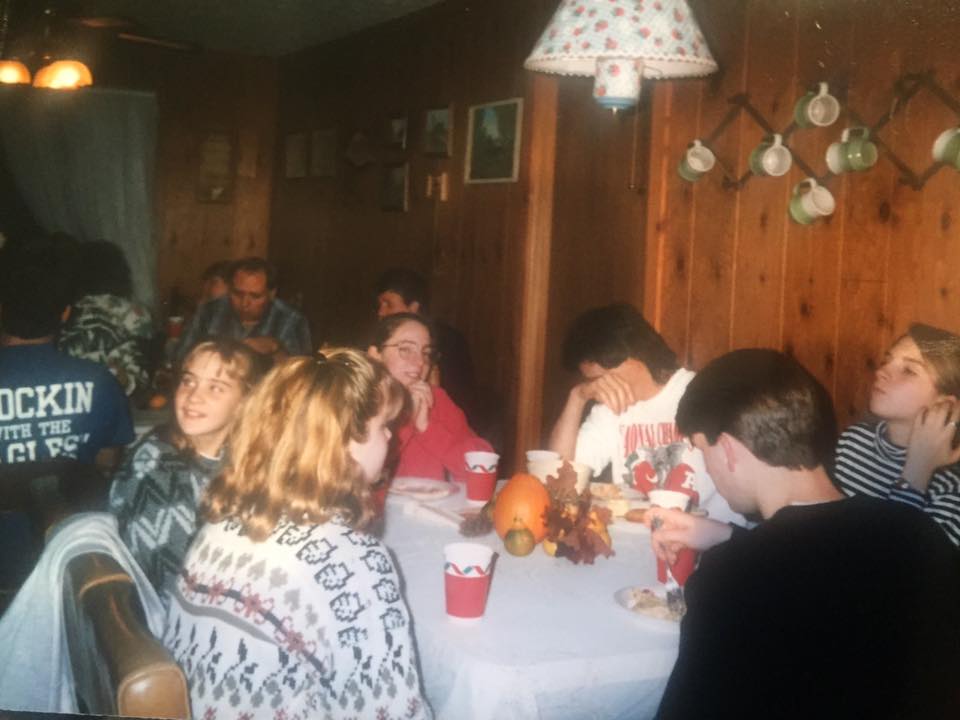
At Various Tables You’d See Young And Old
Thankful To Be There And Ready To Eat
Then Every Eye Would Close, Our Hands Would Fold
As Dad Prayed For The Occupant Of Each Seat.
Stories Would Be Told, Much Laughter And Talking
And We Lingered Long After The Meal
When Dishes Were Cleaned, You’d Find Us All Walking
While Some Of The Party A Short Nap Would Steal
Yes, There Was Football, On TV And In The Yard
Or We’d Tramp In The Woods Or Go Hiking
Board Games Were Played, Competitors Sparred
And The Laughter And Loud Talking To Our Liking
But The Evening Was Reserved For The Highlight
Looking Back, The Most Meaningful Hours
Songbooks In Hand, Our Voices Filled The Night
With Robust Singing, Happy Faces Were Ours
Interspersed With Great Stories Or Ancient Recollections
We Sang Until Our Voices Were Hoarse
Then One Of The Men, A Heart Full Of Reflections
Would Lead Us In Prayer In Due Course
I Think Back To Those Decades Behind Me
Astonished At How Many Have Made The Transition
Yet Let Those Fond Years Remind Me
Of My Rich Heritage And Favored Position
Today As You Gather With Loved Ones And Friends
And Work, Play And Eat With Each Other
Savor Each Person, Each Moment Until The Day Ends
Store Up Memories As You Cherish One Another
Her name was Mrs. Broadhead. She was a resident in a west Alabama nursing home. She was known for saying one thing with great frequency: “We have a lot to be thankful for, don’t we?” Emaciated, confined to a wheel chair, with a speech impediment due to a stroke, and filled with aches and pains, that phrase was still her life’s motto.
Wedding and baby showers, small gifts or tokens of appreciation, compliments, words of encouragement, acknowledgements, visits, deeds of kindness, and the like are golden opportunities to express it. yet, far too many have failed to learn the beautiful grace of gratitude. It is wondered if Jesus used the parable of ten lepers to illustrate not just the importance of thankfulness but to give an approximate percentage of those who fail to show it. Remember that when the lone man returned to give thanks to Jesus, He obersved, “Were there not ten cleansed? But where are the nine?” (Luke 17:17).
While showing gratitude to God and to fellow men is growing more rare, it is certainly a Christian characteristic! Paul says, “Be thankful” (Col. 3:15). In prior generations, great emphasis was placed on instilling manners and courtesy within our children. One show of etiquette was to never let a gift or kindness go without a card, call, or word of thanks. It is extreme self-absorption to fail to acknowledge the sentiment of others! Failing to show gratitude is like telling others we’re spoiled or feel entitled.
Christians, above all others, have so much to be thankful for. The remarkable command from Paul is “in everything give thanks” (1 Th. 5:18). Thankfulness for toothaches, flat tires, bills, taxes, and death? Perhaps Pollyanna was a good teacher. She played “the glad game.” Whenever she had to endure bad, she chose to find something to be glad about. Can’t we do that? Christians are to be found “overflowing with gratitude” (Col. 2:7).
God rejects those who aren’t thankful (Rom. 1:21). It is an ugly trait to be ungrateful. It’s synonymous with inconsideration. Paul says esteem others better than self (Phil. 2:4). Never fail to return a favor, gift, or thoughtful act with a simple “Thank you.” It is your obligation. It will become your joy!
Life, love, happiness, and health,
Water, worth, worship and wealth
Food, faith, dogs and dreams
Smiles, sunshine, singing and streams
Marriage, mothers, prayer and play
Friendship, flowers, tomorrow, today
Calvary, Christ, heaven and hope
Rain, resurrection, snow and soap
Family, frost, babies and birth
Books, baking, monkeys and mirth Mountains, moonbeams, coffee and cake Jokes, justification, serenades and steak Aromas, affirmation, the dawn and the deep Holidays, hiking, snuggling and sleep Forgiveness, freedom, umbrellas and unity Sports, service, internet and immunity Jesus, joy, earth and eternity Scripture, speech, fishing and fraternity Prayer, pillows, picnics and Pickups, Memory, mornings, happiness and hiccups Whether obvious or subtle, earthly or spiritual Why not create this euphoric, emphatic ritual Count blessings and name them, you’ll never run out In the process you’ll challenge your most serious doubt God doesn’t have to, but He gives a continuous lift When did you last thank Him for His every good gift? The more that you dwell on them, the longer the list, Engage in this enjoyable exercise and you’ll insist, There’s no God like Jehovah, never was, never will be, Add up your assets and this you’ll undoubtedly see.









 The Preacher Pollard Blog