Make God A Priority

Friday’s Column: Captain’s Blog

pollards10

Carl Pollard

There’s a story told of four men that went into the woods on a deer hunt one morning. The men split into groups of two and set out for the day. When evening rolled around, 2 of the 4 hunters had already returned and set up camp and were waiting on the other 2 men to return. Hours passed by when finally one of the hunters staggered into camp carrying a massive 8 point buck. The hunters asked where the other guy was, and the man answered and said, “He had a stroke earlier and is a couple miles up the trail.” The men are shocked and they say, “Why did you cary the deer back and leave your friend?” The hunter paused for a moment and said, “Well…I didn’t want my deer to get stolen.” 

Sometimes in life our priorities can get a little mixed up. Maybe not to the point where we would choose a deer over a person, but nevertheless, each one of use is prone to lose focus. The definition of priority is “something that is regarded as more important than another.” For example, when you choose “priority shipping,” it is regarded as more important by the postal service and reaches its destination quicker. The things that we prioritize are the things that take up the majority of our time, money, and effort. A student trying to get a good grade will make studying their top priority. A football player that is trying to be the best will make training, exercise, and memorizing the team plays a top priority. And so it is with any aspect and profession. 

There is revealed to us a top priority for us as christians in God’s Word. In Matthew six Jesus is just about halfway through His sermon on the mount when He turns His focus onto the subject of worry in verse 25. He says multiple times “do not be anxious.” And He goes on to give us a reason why. Jesus explains that God’s care for us is our reason for not worrying. We are more valuable than grass and birds. Therefore do not be anxious. God values us infinitely more than birds and flowers. It is at the end of this section that we find our priority. Verse 33 says, “But seek first the kingdom of God and his righteousness, and all these things will be added to you.” 

According to this verse, what is it that we should make a priority? What should we be putting our energy and focus into? The kingdom of God. “Seek first” literally means to “chase after.” Jesus tells us that we are to be in constant pursuit of the Kingdom. This means we are actively chasing and longing for it. Not just the kingdom of God, but also HIS righteousness. Not our own, but God’s. This is accomplished through constant prayer and daily scripture reading, continuous reflection and growth, caring for those around us and copying the mindset of Christ in everything. 

Make God a priority, and the worries of this world will be taken care of. Chase after God and He has promised to take care of us. 

kisspng-royalty-free-corporation-clip-art-light-priority-5add0df1b76503.0275899515244364657512


WHAT WOULD I GRAB?

Monday’s Column: Neal At The Cross

pollard

Neal Pollard

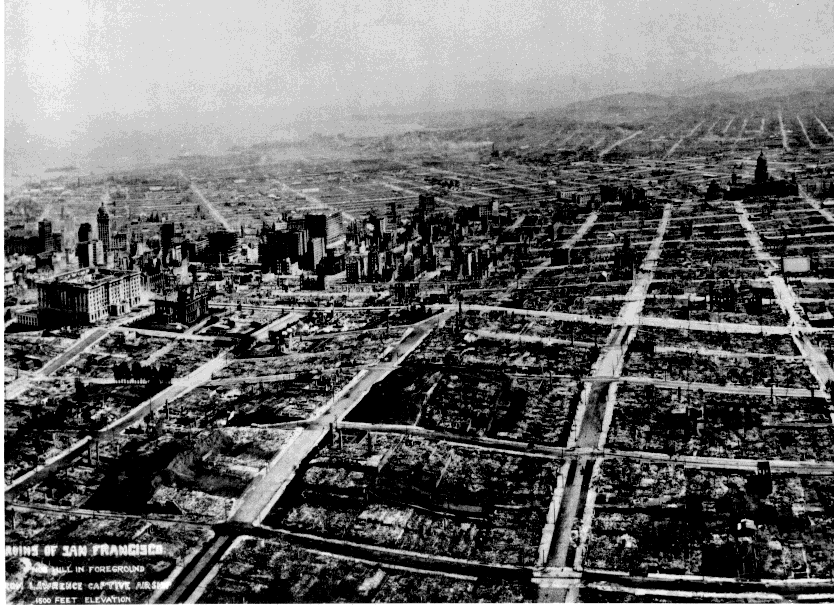
John Castillo Kennedy writes a riveting account of the fire that swept through San Francisco in the wake of the catastrophic earthquake that struck on April 18, 1906. The earthquake and resulting fires, which killed 3000 people, destroyed 80% of the city. Among the dead was the city fire chief. Firefighters, unaccustomed to using dynamite to create firebreaks, caused several of the fires. 

At one point early in the fires, according to Castillo, the spread of the flames surprised people living along Pine, Bush, and Sutter Streets, forcing them to flee immediately. They had been confident that the flames would not reach them there. The author says,

“Quickly filled trunks grated up the hills. Wagons, mostly pulled by men, rattled over the rough cobblestones. Baby carriages and toy express wagons rolled along packed full with the ‘things’ people had snatched up in the flight. Pianos were bumped along the sidewalks–some went to pieces in the process. Sewing machines slipped along on their rollers with stacks of bedding and the like lashed to them. Women had their valuables on their person, or carried trinkets Gypsywise in handkerchiefs. Men wore columns of hats five-high. Some carried only a book. Parrots jabbered and scolded from many cages. Some people had blankets. Girls usually had bandboxes. Boys stretched poles between them and carried, suspended there, bundles of clothing and provisions. Once it was only a ham” (83). 

These panic-stricken people, with no time to prepare, reached for the thing that had the most practical or sentimental value to them. Something made people faced with total loss and threat of life to lug heavy items or pets or food. Many of the choices seem irrational. Perhaps they were in shock or acting in impulse. In essays and contests asking people what they would grab if their house was on fire and they could only grab one thing, they have cited passports, wills, legal documents, insurance policies, personal papers, portable hard drives, phones, etc.

I’m trying to put myself in their shoes. If I was in one of the many neighborhoods forced to flee my home with no time to spare, what would I have been sure to grab? How long would it take my mind to settle on sentimental family items like old photos, my wedding video, or the boys’ baby books? Would I be relieved if I could make it out with my Bible, though I saved nothing else?

I do not judge those folks with their bizarre, split-second decisions. For some reason, it just made me do some introspection. What does my priority list look like? What do I value most in my life and in my home? What would I try to be sure to preserve?

Perhaps the answers to those questions is best provided by my choices in ordinary, every-day actions. I want my wife, children, fellow-Christians, and, most of all, my God to see from my life that they come before the things of this world. The things will all ultimately burn (2 Pet. 3:10). It is the relationships that will outlast the final, global conflagration. I pray that my influence and example will save them from the fire (Jude 23).  

Reference: Kennedy, John Castillo. The Great Earthquake And Fire: San Francisco, 1906 (New York: William Morrow and Co., 1963). 


“Nomophobia” 

Monday’s Column: Neal at the Cross

pollard

Neal Pollard

That’s not a typo for another popularly-used term.  It’s actually a “thing,” at least according to a 2010 study by the UK Post Office.  It is short for “no-mobile-phone phobia” (Tim Elmore, psychologytoday.com). There’s even a website called nomophobia.com, and they identify “the four fears of Nomophobia”—broken, lost, stolen, or useless smartphones. While that site operates “tongue in cheek,” there are a bevy of experts more than ready to talk about how this is an epidemic impacting especially youth in our culture.  University of Connecticut School of Medicine’s Dr. David Greenfield has done much work in this study. He points to the problem of a dysregulation of dopamine, “meaning that it motivates people to do things they think will be rewarded for doing” (clever, cutting, or flamboyant Tweets, posts, pics, etc.) and that it can foster people’s addiction to the internet and technology (Madeline Stone, businessinsider.com). Greenfield adds, “That feeling you’re going to miss something if you’re not constantly checking is an illusion — most parts of our lives are not relevant to our smartphones. What happens on our devices is not reflective of what happens in real life” (ibid.).  There are even digital detox programs, in the United States as well as other countries around the world.  Psychiatrist Dale Archer gives this advice, “Stop texting while you’re driving. Don’t take it into the bathroom with you. Have a rule not to use your phone when you’re with your friends. If you’re on a date, make a rule that you’ll both check your phone for a maximum of 5 minutes every 90 minutes. It’s all about setting simple rules that you can follow” (ibid.).

Amateur psychiatrists and specialists everywhere can quickly diagnose this condition in their spouses and significant others, their children, and their friends, but they may be myopic to their own inordinate practice (see every airport, doctor’s office, restaurant, etc.).  Addiction to, or at least habitual abuse of, smartphones and similar technology is simply the latest and a more obvious example of a long-standing human tendency.  Paul told Corinth, “All things are lawful for me, but not all things are profitable. All things are lawful for me, but I will not be mastered by anything” (1 Cor. 6:12). In context, Paul is beginning a discussion of the sin of fornication after having talked about Corinth’s generally sinful past from which they had been forgiven.  Paul’s desire was not to be “mastered” (ruled, reigned over, Louw 37.48) by anything.  He later writes about the self-mastery and discipline necessary to live the Christian life (1 Cor. 9:24-27).

Cell phones are just one possible impediment to this.  There are so many other possibilities we must keep aware of, things which can derail us from our purpose and focus in this life.  So many of them are fine in balance and moderation, but we can allow them to consume and even overtake us.  A fear of being without those things is only one of the attending problems.  Being ruled by anything or anyone other than Christ is the overriding concern.  We are all served well by looking carefully at the things in our lives and make sure we have no master other than Christ.

Knowing What D.C. Stands For

Neal Pollard

Inasmuch as we don’t want laws or policies enacted that violate God’s Word and we want precious freedoms, especially religious ones, preserved and protected, we can really get into what is going on in Washington, from Capitol Hill to Pennsylvania Avenue. Many know that “D.C.” is an abbreviation for “District of Columbia,” an area of land created at about the time of our nation’s founding under the direct jurisdiction of the U.S. Congress that is not a state.

However, as politics has vied for sports and entertainment as an idol in our culture, it has become the source of unnecessary and even immoral strife between Christians. Blind support and allegiance for one major political party or the other can do more than make us inconsistent. It can make us a stumbling block. It seems to me that D.C. can stand for some dangerously different things.

Distracted Christians. Search high and low in your New Testaments, written during the time of the wicked, often unfair-to-Christians, Roman Empire.  The disciples were about the business of evangelism (Acts 8:4) and growing the church (Acts 6:7). Can the rumblings and drama from the nation’s capitol get us so transfixed that we cannot see past it or through it to our individual and collective mission as God’s people? He has us here to get people into the Kingdom of His dear Son (Col. 1:13). Everything else is secondary. 

Divided Churches. For as long as I’ve been preaching, I’ve seen politics come between brethren in the local church. Thankfully, it does not usually become significant enough to trouble the entire congregation but I have seen it do so. What’s more, I’ve seen brothers and sisters become so confrontational and flagrant about politics–especially through the relatively recent medium of social media–that it has been a stumbling block to new and weak Christians. Perhaps the political world in our country has never been so intensely divisive as it currently is, and what typically troubles the world troubles the church. But, when souls are negatively impacted, God will hold the offenders accountable. 

Devil’s Cauldron. Please don’t misunderstand. Politics, like money, is a neutral matter. But, like money, it can become the root of all sorts of evil (cf. 1 Tim. 6:10)–enmities, strife, outbursts of anger, disputes, dissensions, and factions (Gal. 5:20). Just prior to this list of activities that are the carrying out of the desires of the flesh (Gal. 5:16), Paul warns, “For the whole Law is fulfilled in one word, in the statement, ‘You shall love your neighbor as yourself.’ But if you bite and devour one another, take care that you are not consumed by one another” (Gal. 5:14-15). Who benefits when things like politics distract and divide Christians? It is not the lost, the church, or the Lord!

I can think of a least three godly, wonderful Christians who are public servants in political office and making a profound impact for good–Bill Reiboldt, Sheila Butt, and John DeBerry. They demonstrate that God’s people can devote themselves to politics without sacrificing their faith and example. For those of us “on the outside looking in,” in our love of country and freedom, may we never allow our attitude, words, or actions to betray our highest calling. The more effectively we reach lost souls, reflect the mind of Christ, and reveal the hope of the gospel, the better our nation (and world) will become. What will that make us? Disciples of Christ!

11168488_10153052239815922_846243704468580330_n
From my last trip to Washington, a few summers ago. 

My Daily “To-Do” List

Neal Pollard

  1. Be Productive With Your Time (Eph. 5:16).
  2. Be Pure In Your Heart (Mat. 5:8).
  3. Be Proactive In Your Relationships (Eph. 5:21-6:4).
  4. Be Peaceable With Your Provokers (Rom. 12:17-21).
  5. Be Purposeful With Your Life (Rom. 8:28).
  6. Be Praiseful With Your God (Psa. 150).
  7. Be Pleasant In Your Demeanor (Prov. 16:24).
  8. Be Prayerful In Your Decisions (Phil. 4:6).
  9. Be Patient In Your Challenges (1 Th. 5:14; Psa. 37:7).
  10. Be Positive About Your Future (Phil. 1:20-21; 4:13).
  11. Be Persistent In Your Evangelistic Pursuit (1 Cor. 9:19-22; Mat. 28:19).
  12. Be Pitying Of The Downtrodden (Prov. 19:17).
  13. Be Picky About Your Associates (1 Cor. 15:33).
  14. Be Passionate About Your Spirituality (Rom. 12:11).
  15. Be Perseverant In Your Trials (2 Th. 1:4).
  16. Be Prospective In Your Opportunities (Gal. 6:10).
  17. Be Petrified Of Falling Away From God (Heb. 6:1-6; 10:26-31).
  18. Be Powerful In Your Faith (Luke 7:9; 2 Th. 1:3).
  19. Be Persistent In Your Study (2 Tim. 2:15).
  20. Be Penitent In Your Sins And Failures (2 Cor. 7:10; Acts 3:19).
  21. Be Plentiful In Your Gratitude (1 Th. 5:18).
  22. Be Permeating In Your Influence (Mat. 13:33-34).
  23. Be Profuse In Your Generosity (3 John 5; Prov. 11:25).
  24. Be Prolific In Humility (Mat. 23:12; 1 Pet. 5:5).
  25. Be Pining For Heaven (Heb. 11:16; Phil. 1:23).

to-do-list-tools

What We Know About Recently Uncovered Ancient Viking Treasure

Neal Pollard

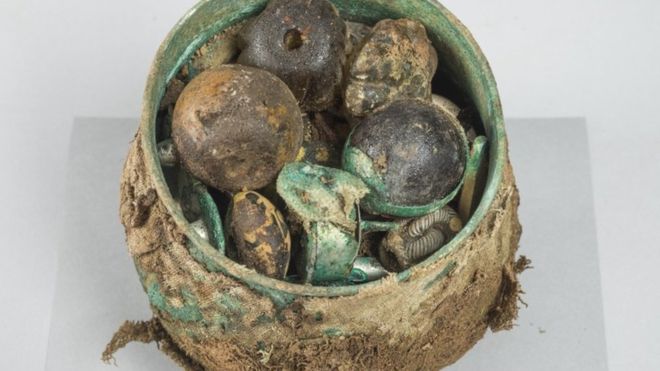
BBC reports that Historic Environment Scotland, Treasure Trove Unit, and the Queen’s and Lord Treasurer’s Remembrance’s conservation team have discovered an ancient Viking pot full of treasure, including six silver Anglo-Saxon disc brooches, a silver brooch from Ireland, Byzantine silk, a gold ingot, and gold and crystal objects wrapped in cloth bundles (read article here). The objects date from the 8th or 9th Century. The article goes on to tell us what the discover cannot tell us, at least without years of further research and theorizing. Stuart Campbell of the Treasure Trove Unit says, “”The complexity of the material in the hoard raises more questions than it answers, and like all the best archaeology, this find doesn’t give any easy answers. Questions about the motivations and cultural identity of the individuals who buried it will occupy scholars and researchers for years to come” (ibid.).

While we do not know whether the owner of this pot was a Christian or was more interested in laying up treasure in heaven, we do know that he (or she) was laying up treasure on this earth. We also know that this treasure did not continue to benefit the owner following his or her demise. The photographs released with the find also show that the objects have been worn and decayed with time.  It seems like a fitting illustration of what Jesus taught.

In the Sermon on the Mount, he wrote, “Do not store up for yourselves treasures on earth, where moth and rust destroy, and where thieves break in and steal. But store up for yourselves treasures in heaven, where neither moth nor rust destroys, and where thieves do not break in or steal; for where your treasure is, there your heart will be also” (Mat. 6:19-21).  He doesn’t condemn saving or even making money. He does continue to warn that one inevitably chooses God or money as master (Mat. 6:24). This find in Dumfries and Galloway, Scotland, reminds us of the ultimate futility in laying up treasures on the earth.  What’s held and hoarded isn’t stored in heaven, but it does reflect what’s in the heart. Later, Paul urges Timothy to teach the need to fix the hope on God rather than riches (1 Tim. 6:17).

It would be great to find out that this was the church treasury of a congregation of God’s people being taken and used to help the poor or preach the gospel or the personal portfolio of a person who put his riches to good use in the kingdom. It’s not statistically probable, but it’s possible. What I do know is that there is a Perfect, Heavenly Accountant who knows what we treasure most. May our legacy be that we “seek first the kingdom of God and His righteousness” (Mat. 6:33).

88913064_vesselwithlidremoved

THE MASTER’S MATERIAL

Neal Pollard

A while back it was popular in the religious world to talk about Jesus’ encounter with two disciples on the road to Emmaus. The emphasis has often been on the disciples’ experience. I believe the biblical emphasis is on the character of Jesus. The disciples are contemplating Him even as they encounter Him. They describe Jesus as “a man who was a prophet mighty in deed and word before God and all the people” (Luke 24:19). Notice three reasons why He was so mighty in word before all the people.

JESUS KNEW HIS MATERIAL. Luke 24:27 says, “And beginning with Moses and all the Prophets, He interpreted to them in all the Scriptures the things concerning Himself.” Truly His knowledge is perfect and ours is not, but there is no excuse for failing to study–both on our own and for a class we are teaching or sermon we are preaching.

JESUS KNEW HOW TO RELATE ITS MEANING EFFECTIVELY. The men journeying to Emma’s, after walking with Jesus, said, “Did not our hearts burn within us while He talked to us on the road, while He opened to us the Scriptures?” (Luke 24:32). The dismal method of too many Bible classes is to essentially read and paraphrase in verse by verse fashion. Preaching can too often be disorganized in delivery or vague in message. Paul told Timothy, “Do your best to present yourself to God as one approved, a worker who has no need to be ashamed, rightly handling the word of truth” (2 Tim. 2:15, NIV).  Robertson says of “rightly handling” that it means “cutting straight…Since Paul was a tent-maker and knew how to cut straight the rough camel-hair cloth, why not let that be the metaphor?” (Vol. 4, 619). As presenters of truth, tell what it meant then and in context, and then apply it!

JESUS KNEW HOW TO MAKE THE MATERIAL LIVE IN HIS STUDENTS. Luke 24:45 says, “He opened their minds to understand the Scriptures.” That is just what we are after as teachers, preachers, and proclaimers of the Word. We are not just fact-reporting. We are trying to get into the heart. Remember that Jesus sought to change lives with His teaching.

Only Jesus was the perfect teacher. But we can always be better and great. Let us mimic the Master’s approach to His material!