Seven Ways To Pursue Joy

Dale Pollard

We’ll keep this really simple. Let’s start with a few facts about joy and then dive into seven ways to find joy when we lack it. 

1. Joy is not a feeling, it’s a godly perspective

2. A Christian’s hardships aren’t pointless, they’re productive

Consider it pure joy, my brothers and sisters, whenever you face trials of many kinds, because you know that the testing of your faith produces perseverance.

 – James 1.2-3 

“Be joyful in hope, patient in affliction, faithful in prayer.”

 —Romans 12:12

Seven Ways To Pursue Joy 

  1. God’s direction brings joy (Ps. 94.19)
  1. The Resurrection brings joy (Matt. 28.8)
  1. Unity of mind and sharing the same love brings joy (Phil. 2.2)
  1. Loving the Lord’s people brings joy (Phil. 1.7)
  1. A mature faith brings joy (I Pt. 1.8)
  1. Fellowship brings joy (2 John 1.12
  1. God’s presence brings joy (Jude 24)

The Joy Of A Christian

Thursday’s Column: Captain’s Blog

Carl Pollard

Joy is a decision based on knowledge. It is a choice we can make. 

You can have joy in every moment of life if you choose to do so. We won’t always feel happy, but joy is a trait that goes deeper than emotions. It is a feeling of hope because of salvation. As a saved child of God, you can have joy in the knowledge of Christ, the church, and an eternity with God. 

We all know people that are joyful 24/7. No matter what happens they seem to always look on the bright side. On the other hand, I’m sure you can think of someone that’s always down. They can always find something to complain about. They could have a perfect life and still be looking for something negative to dwell on. Two people can go through the same situation and have two completely different reactions. 

As Christians we should be people of joy. Why? Because we have every reason to be joyful! But what about having joy in tribulation? How can we be joyful when our world comes crashing down around us? We need to remember that joy isn’t the same as happiness. Joy comes from an understanding of the bigger picture. Happiness is short term and based on current events. 

The faithful Christian can go through heartache and feel sadness, but still have joy in the bigger picture. We can face trials, no matter what they are, and still have joy because we know this world is not our home. James 1:2 says “count it all joy when you encounter various trials, knowing that the testing of your faith produces endurance.”

We can have joy in knowing that if we face trials with endurance, we will ultimately receive the greatest reward we could ever get. This kind of joy isn’t something that comes naturally. It takes time to develop, and trials to perfect it. 

Not every day will be a happy day, but in Christ every day can be joyful. 

Peace On Earth?

Tuesday’s Column: Dale Mail

image

Dale Pollard

Peace on earth? Is that even possible? I mean boy look at this place. 

Could it be that peace and joy mean something else entirely? 

It’s true that for the faithful Christian peace and joy await us, but there are some who believe we can only experience these blessings in heaven. 

  1. We may feel that we are allowed only moments of Joy. 
  2. History shows us only times of peace, but never peace everywhere.

Can we have peace and joy for our life here on earth? 

Let’s look at how this is most definitely possible. Perhaps it’ll make the holiday season that much more enjoyable and hopefully every day after. 

 Real PEACE 

  1. Peace is not the lack of war— we know we’re in a spiritual battle (2 Cor. 10:3-5)
  2. We can have peace knowing that Jesus already won the ultimate war of death and gave us the victory.
  3. Peace comes from confidence in your salvation (Romans 8:31-38) 
  4. God is on our side. He’s bigger than any problem we will ever face— peace comes from knowing what many assume to be the unknown.

Real JOY 

What is joy? 

  1. It’s not happiness 
  2. Like peace, it relies on an understanding of faith and and the appreciation of victory. 
  3. It’s also a conscious awareness that God is active in our lives. James 1:2 says, “Count it all joy!” That doesn’t mean when trials tumble in you embrace them with a smile, but it’s an awareness that God is working in the world and that He has everything under control.

What’s there to be joyous about?

  1. If you’re a faithful Child of God— there’s everything to be joyous about. Your life is one of abundant joy, but you may just need to choose it.
  2. Decide how you will view future trials ahead of time. Now is a great time at the beginning of a new year. 

These are God’s gifts to you that keep on giving— all year long. 

Peace to you and may this new year be the one we all decide to be joyful about the certainty we share in a world full of uncertainty. 

God + Understanding = Joy

 Tuesday’s Column: Dale Mail

image

Dale Pollard

I wrote those words in the back of my Bible. It has helped me on several occasions to gather my wits and remember Who I serve. 

In America one of the most common fears is the fear of death. I’m sure it must be true all over the world. Some are afraid of the unknown as humans don’t fully comprehend everything about the physical process of death. 

While Solomon reminds us at the end of Ecclesiastes that we are to fear God, It never ceases to amaze me how an understanding of God eliminates so many of our earthly fears. 

It seems that fear is really an infant quality of the new Christian. It should be. We fear God’s wrath, power, and potential punishment, but with spiritual  growth comes the absence of fear.

 While uncertainty shrouds the details of our future day by day, the Christian can take comfort in knowing our eternal home with God can be certain. 

Timothy needed the reminder that the Lord has the ability to empower us when fear begins to creep in. Paul tells him, “For God has not given us a spirit of timidity, but one of power and love and a sound mind” 2 Timothy 1:7. 

I know that Timothy wasn’t the only one that needed to hear that. So many of us today, especially in these times, need to here those precious words of comfort. Whatever fears may be weighing you down today, may God’s Word give you the power, love, and sound mind that you need to face the day before you. 

Four Ways to Cope With a Day Gone Awry 

Friday’s Column: Brent’s Biblical Bytes

81121814_2462862270639428_5746232403106463744_n

Brent Pollard

Thursday, October 29, 2020, proved to be a day gone awry for me. I was supposed to have a follow-up appointment with one of the many specialists my health problems require. The day started with a bang. That banging was the screen door repeatedly smashing the side of the house, driven by the wind in Tropical Storm Zeta. The power was out, but our backup generator was on, providing electricity. No problem, correct? No, our community well does not have a backup generator.  So, though I had electricity, I had no water. What was going to make me presentable to the public? Baby wipes to the rescue.  

The thought had occurred to me that if I were having a hard time because of the weather that the doctor’s office might as well. I called. No answer. Perhaps, I should stay at home? No. One incurs a fee for missing an appointment without prior 24-hour notification of a missed visit. So, there was no turning back from this point. I checked Georgia 511 to ensure the roads I was traveling was clear. My route checked out. There were reports of debris on secondary roadways in the areas I would travel, but none affected my trip. Everything looked great. 

In Union County, the highway was passable. The Notley River overflowed its banks, flooding the surrounding lowlands, but the road was in no danger because it is above the water-engorged river. In Lumpkin County, just beyond the Appalachian Trail crossing at Neel Gap, I noticed that the leaf and pine needle debris increased. The winds must have been worse further south.  I began seeing evidence of trees that had been cleared from the roadway in the hours before I arrived. In White County, the power was out, rendering stoplights inoperable. I discovered that most of the drivers I encountered did not know that you treat a useless traffic light as a 4-way stop. In Hall County, I drove over two or three dead, downed powerlines. A flagman stopped me briefly before directing me around a large tree, still covering half of Clarks Bridge Road.  

But I arrived at the doctor’s office safely. I was even early for my appointment. I couldn’t help but notice the parking lot was empty when I arrived, however. Yes. The office was closed because of the power outage. Had anyone thought to contact those having to drive “over the mountain” from over 50 miles away? Of course, they had not. I heard a sigh slip out.  


There is a large Dollar Tree in Cleveland, Georgia. So, I called my parents to let them know I arrived safely but would be returning home sooner than they expected. The Dollar Tree excursion went well. I returned to Walmart in Blairsville, Georgia, since dad had some medicine I needed to pick up. Before doing so, I stopped to take a picture of the raging Trahlyta waterfall at Vogel State Park 11 miles outside of Blairsville. It was beautiful, even if it looked like the observation deck might be washed away. Once at Walmart, I found the pharmacy was closed. The “system” had “gone down.” Despite saying they hoped they would have it back up in thirty minutes, they did not. I went home, minus dad’s medicine.  I fixed a cup of coffee and sat down to write my article. I spilled some of it on my desk. Fortunately, I did not get the keyboard wet. However, my workspace now smells like coffee. (But that is a good thing.)  

Do you want to know something interesting? I wanted to throw my hands up in exasperation at several points during the day but refused to do so. I pulled out four tricks to help me cope with a day gone awry. And here they are. 

  1. RELAX. As Cain discovered, when we become agitated, sin crouches at the door desiring mastery over us (Genesis 4.7). I could be upset that my doctor’s office was discourteous to me, but that was no excuse for sinning (Ephesians 4.26). Hence, I needed to “be still” so I could acknowledge God (Psalm 46.10).


  1. REJOICE. That day was a day made by my Lord. So, I needed to rejoice and be glad in it (Psalm 118.24). I had a say over how I would feel about things. It was a beautiful day, despite its raucous start. I was happy to be alive. Despite sounding trite, I knew others that day faced actual challenges, potentially imperiling their life. The pointless trip only inconvenienced me.  

     
  2. REFOCUS. After telling us how to find indescribable peace through prayer, Paul tells us to meditate (think) about “whatever is true, whatever is honorable, whatever is right, whatever is pure, whatever is lovely, whatever is commendable,” and anything excellent or worthy of praise (Philippians 4.8). Now that I calmed down, I needed to think about what I would do to salvage the rest of the day, filling it with superlatives!

     
  3. REPURPOSE. So, I was not seeing the doctor. Even so, I needed to find something productive to ensure that I could make the most of my time (Ephesians 5.16). I immediately scrapped my previous idea for my Biblical Byte to a lesson on coping with days gone awry. I meditated upon it during my trip and read through the Scriptures after returning home. And this is the result.

It may be that one needs to throw in a fifth “R” also. Repent. If you allow a bad day to make profanities escape your lips or harbor hatred in your heart, you need to make that right with God and any other parties that may be present pronto. In that way, you can turn the day around and make it something good. I trust, though, that with practice, you can better deal with your days gone awry too. Let us strive to do all to God’s glory (1 Corinthians 10.31).    


Spirituality Needs to Find Its Expression

Friday’s Column: Supplemental Strength

81121814_2462862270639428_5746232403106463744_n

Brent Pollard 

In the waning days of the last millennium, I happened to catch a program on public television about a dance competition held by Native Americans in rural Connecticut. If you are wondering why I still remember that show some 20 years later, it was because of the responses given by some of those interviewed. The dancers participating expressed the idea that their dance was an outward expression of their inward spirituality. The master of ceremonies echoed their sentiments as he explained spirituality needs to find expression. Ponder that last part with me for a moment; spirituality needs to find expression. Indeed.

I’m not suggesting that we incorporate carnal expressions of our spirituality in our worship of God, like dancing to a beating drum. Yet, if we are spiritual, shouldn’t there be an outward expression of it? Christians have a magnificent treasure stored within themselves (cf. 2 Corinthians 4.7). Sometimes, though, observation of Christians suggests otherwise. We who are blessed still covet for more. We who are given joy from within have sour attitudes. We allow ourselves to become filled with anxiety. Our brethren anger us, rather than receiving our love. Those without the church may think we are sad rather than happy. We who serve the One owning all withhold the bounty of that Providence and Wisdom of His Revelation from those needing it. We fail to be lights shining in a dark world as we are commanded (Matthew 5.14-16).

Yes, spirituality needs to find its expression. Can you recall the depth of emotion you felt when you first realized you were in love? You wanted to proclaim your love in loud tones to any who would listen. Do you remember the joy and zeal that was yours when you put on Christ in baptism? You wanted to proclaim the praises of Him Who had brought change to your life. Why don’t we allow our faith to find its expression today through the sharing of the Gospel? Why not do good to all, especially to those of the household of faith, as we have the opportunity? (Galatians 6.10) Lastly, let us worship God in spirit and truth without being begged to do so by elders, preachers, and Bible class teachers. If we do these things, no one will doubt the spirituality we claim to possess.

20121205-tribal-nations-audience

The Quality That Makes Us Excited For Hard Times

Wednesday’s Column: Third’s Words

Gary III

Gary Pollard

Joy is something we’re supposed to have when we go through trials (Jas. 1.3). It’s χαρά, which means, “to experience gladness.” It describes a forward-thinking mentality that says, “Right now isn’t great, but I can learn from this and grow.” Our joy comes from anticipating the ultimate growth we experience from conquering trials! And if those trials take my life, that joy is in anticipation of heaven. 

Joy is something experienced in heaven and in the presence of angels when someone repents (Luke 15.7, 10). It is compared to the excitement one feels when regaining something valuable that had been lost. Joy is more than just contentment;  it contains also an element of excitement. 

Joy is a fruit of the Spirit (Galatians 5.22). It is contrasted with outbursts of anger, disputes, dissensions, factions, etc. A part of living the Christian life, denying our primal desires, and not being boastful is having joy. Sometimes we find ourselves focusing on what we give up to live faithful lives, but we forget that Christianity provides for, encourages, and promotes excitement and joy! 

So what are we supposed to be excited for? Paul even had joy in the face of suffering (Phil. 2.17). Joy and happiness are not necessarily the same thing. We can have joy or gladness or excitement concerning the life that waits for a Christian while living in the sometimes harsh realities of a fallen world. 

In this life, Christians can have joy because of a profound sense of purpose, having meaning in a confusing world, healing after tragedy, and something to always look forward to. 

It may not be our first response to be excited about hard times, but if we develop a mindset that looks to the rewards and positives of difficulty (growth, endurance, empathy, perspective, heaven), we will have joy and excitement. 

Carl and Chip

Happiness Guaranteed!

Neal Pollard

Who wouldn’t find that appealing? Many years ago, Hugo McCord wrote a book entitled, “Happiness Guaranteed.” In it, he wrote, “Is happiness difficult? Yes, to those on the wrong road. Is it elusive? Yes, to those who want it without a price. But to the simple, plain folk of the earth, willing to walk God’s road, willing to pay God’s price, happiness is, like God, not far from every one of us.”  Many spend a lifetime in a desperate, elusive attempt to be happy. What if there was a formula for true happiness? I believe we find it in Psalm 37:23-26. This text tells us what we need to be happy.

We need a direction mapped by God (23). If we make life a self-guided tour, we can guarantee ourselves a life of misery. Even a Christian’s heartaches often stem from our trying to “go it alone” without His guidance. He guides us through the Word (Psa. 119:105,133). He knows everything at the deepest level of comprehension. He understands what kind of life will make us happy and miserable. David says life without God’s guidance is chaotic and disorderly. I read about an optometrist who examined an elderly patient and asked, “Can you read the fifth line of the chart?” “No.” “How about the fourth line?” “No.” “Hmm. Try the second line.” “No.” “Surely you can read the first line.” The old man said, “Truth is I’ve never learned to read.” Have we learned to read? Have we gotten into the regular habit of consulting God’s divine roadmap?

We need a delight in His way (23). In a matter of minutes, you can find out what a person enjoys in life. It could be sports, politics, travel, shopping, mechanic-ing, nature, reading, fishing, horseback riding, or stamp-collecting. Kept in proper place and priority, these can be good, healthy, and legitimate. But way too many people get their thrills in illegitimate ways. They enjoy the unwholesome, filthy, perverted and vulgar. To many, “The word of the Lord is unto them a reproach; they have no delight in it” (Jer. 6:10). Solomon adds, “A fool does not delight in understanding…” (Prov. 18:2a). God’s outline for living, when followed, leads to delight. Other ways are paved with the heartache of others who foolishly paved those same paths previously.

We need a dependence on God’s providential care (24-25). Seven times in the Psalms, the writer tells God, “The righteous trust in You” (5:11; 9:10; 17:7; 25:22; 31:19; 55:23; 56:3). Your faith can be built if you trust that God, even when things seem doubtful, will provide what is needed and what is best. Not just materially, but in times when spiritual decisions must be made (cf. Gen. 22:8; Rom. 4:18-21). When we place our future, fears and fortunes in God’s almighty hands, we find true happiness (1 Pet. 5:7). David challenges us to find a case of a true follower forsaken by God. Satan wants us to think God doesn’t care about us. That’s what he wanted Job’s problems to do to Job—make him turn against God. If you are suffering right now, be assured that God hasn’t left you.

We need a duty to others (26). Norman Vincent Peale said, “The way to happiness: Keep your heart free from hate, your mind from worry. Live simply, expect little, give much. Scatter sunshine, forget self, think of others. Try this for a week and you will be surprised” (The Power of Positive Thinking, 54). Psalm 37:26 mentions two responsibilities we, being richly blessed by God, have to others. The  first, mercy, should express itself through acts of kindness. The second, lending, shows generosity. God ties generosity to true conversion. We give our money, our time, our talents, our heart, and ourselves. Listen to the joyful words from those spend themselves serving others. They say, “We are unworthy slaves; we have done only that which we ought to have done” (Lk. 17:10).

We overcomplicate life with needless worry, harmful actions, and heavy burdens. So many people, from a financial, social, and physical perspective, have every reason to be happy but are miserable! The opposite of that is true, too. One may be drained of every resource but faith, but no one can rob them of their joy (Ps. 128:2; Pr. 3:18; 14:21; 29:18)!


91yglo5s5dl

NO SMILE RULE!


Neal Pollard

“Stop smiling!”  DMV photographers in Virginia, Arkansas, Nevada, and Indiana are among the states requiring grin-free pictures on residents’ drivers licenses.  Apparently, face-recognition software is thrown off by curled up kissers.  The objective is to curtail fraudulent drivers licenses.  So, by rule, there will be no smiling when the photographer says “cheese.”

Like you, I know a great many people who need no such rule–whether at a DMV or any one of a million other locations.  They are perpetually miserable, and their faces show it.  Incredibly, too many of those I know like this claim to be Christians.  They sport their sour dispositions and spread thunder clouds and downpours wherever they go.  To borrow Paul’s words on more than one occasion, “My brethren, these things ought not so to be.”

“Happiness” is synonymous with “Christianity.”  The Christian’s life is far from  problem-, stress-, or trouble-free, but the greatest problem (sin) is solved, the greatest stress (earthly concerns) is benign, and the greatest trouble (death) is surmountable.  People hurt us, betray us, offend us, and undermine us, but we are heaven bound!    We can be happy because “if God is for us, who can be against us?” (Rom. 8:31).  Isn’t it hard to obey commands like “be thankful” (Col. 3:15), “rejoice in the Lord always” (Phil. 4:4), “rejoice and be exceedingly glad” (Matt. 5:12; Luke’s account says, “Rejoice in that day and leap for joy”–6:23), or similar injunctions with a sour face and a permanent frown?

Matthew Hite was eight years old when he took his first missionary trip to Tanzania.  While there, he made up a little game he called “Sweet And Sour.”  He would smile at all the pedestrians walking down the road.  If they smiled, he counted it as a “sweet.”  If they scowled or simply failed to smile, he counted it as a “sour.”  Almost everyone of the impoverished people of that nation were “sweets.”  Are you a “sweet” or a “sour”?  If you are a Christian, remember that God has not imposed a “no smile rule” on you.  If anything, He’s done the opposite!

4605621230_89213e53b8_z

We Sure Love Baptisms!

Neal Pollard

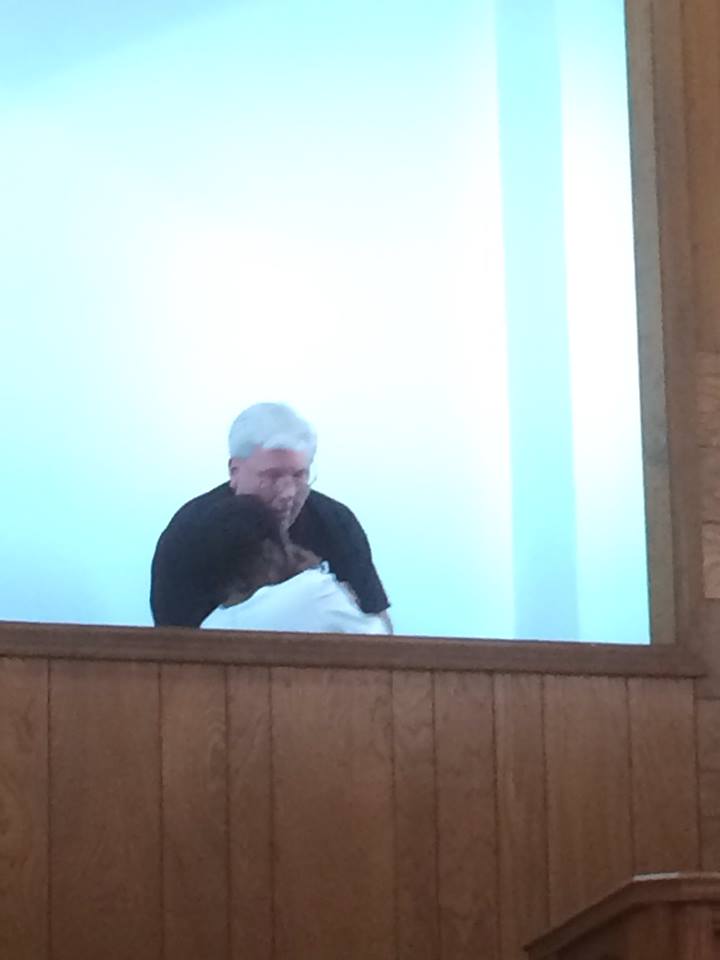
There are some things about social media that are extremely irritating—click baiting, pot-stirring, fight-picking, self-pitying, and the like. But there are a great many positives in that medium, too. Of all of them, I believe that posts of baptisms have to be my favorite. I do not appear to be alone in that estimation.  Judging from post reactions and comments, a great many others do as well. We love it when there are pictures. We love the “back story.” We love knowing that our friends, neighbors, co-workers, and family members have good, honest hearts softened by the power of Divine Revelation. We love knowing they have a clean slate and a fresh start, and are poised to begin their walk on Narrow Road.

All of this leads me to several random observations:

  • True good news needs no hype, trumping, manufacturing, or baiting.
  • It is New Testament thinking to rejoice at such good news (Acts 8:39; 15:3).
  • What a confirmation the obedience of others to the gospel is to our own decision to do so.
  • It restores our faith in the potential of humanity and the power of the gospel (Rom. 1:16; Heb. 4:12).
  • It builds our confidence in the Bible to see people imitate the examples of the New Testament, doing what they did the way they did it (Mark 16:16; Acts 2:38; 8:13, 38; 9:18; 10:48; 16:14-15; 31-33; 22:16; Rom. 6:3-4; Gal. 3:26-27; Eph. 5:26; Col. 2:12; Titus 3:5; 1 Pet. 3:18-21).
  • The average Christian wants what is best for others, which is just one reason Christians are the best people on earth.
  • We want good news to travel fast, far and wide.
  • We know it pleases the Lord when a person comes to Him in obedient faith (see Luke 15).

There are doubtless many more observations we could make, but these are enough for me to thank God for His people and those who daily make the decision to become His people. It builds my faith and hope in my fellow human beings and my trust in heaven’s plan of salvation.  Thank you for finding joy in the right and best things! And let’s keep striving to perpetuate that joy through leading souls to the Savior.

12924440_10207948347340678_5218772026345282016_n
“Debbie” being baptized into Christ during a gospel meeting with Keith Mosher in Sylvester, GA, this week (photo credit: Jason Willis)

Enemies Of Contentment

Neal Pollard

Contentment is a learned trait (Ph. 4:11). It is a disciplined trait (1 Ti. 6:8). It is a commanded trait (He. 13:5).  Yet, it is such a rare trait! Some, like Dr. Rick Hanson, have written elaborate explanations for how contentment is a science, a matter of utilizing the neural capacity of the brain to hardwire positive experience into “contentment, calm, and confidence” (Hardwiring Happiness, New York: Harmony, 2013).  What he relegates to science, which we would attribute Christ as the creator of (Col. 1:16-17), is something even more and higher. It is something we learn from living life as His disciple. It is a spiritual discipline, gained from imitating Christ and His blueprint for living in this world. That said, we must watch out for the landmines to living the happy, satisfied, and fulfilled life God intended for us whatever circumstances we face in life (cf. 2 Co. 12:10).

  • Envy. Envy is “a state of ill will toward someone because of some real or presumed advantage experienced by such a person” (Louw-Nida, Greek-English Lexicon of the N.T., 1996, p. 759). It is hard to be content with my circumstances when I am focused on how much better I think someone else has it. In fact, I will be full of resentment rather than contentment. Ironically, feeding this mindset makes joy and satisfaction impossible!
  • Ungratefulness. Paul marked being ungrateful as a sign of “difficult times” (2 Tim. 3:1,3). Have you noticed how some people, however hard life beats them up, remain upbeat? Maybe you conclude that they are just naturally inclined to be positive. But what about people who seem miserable and dissatisfied despite countless advantages and blessings? Gratitude, like contentment, is a learned discipline. When we don’t learn it, we darken our hearts with the evil of ungratefulness. Not being thankful is a link on a deadly chain that leads one to a lost state. Paul said some knew God, but “they did not honor Him as God or give thanks, but they became futile in their speculations, and their foolish heart was darkened” (Rom. 1:21).
  • Greed. You will notice that some of heaven’s harshest words are reserved for the greedy (Lk. 12:15; Rom. 1:29; Ep. 5:3; Co. 3:5; 1 Th. 2:5; 2 Pt. 2:3,14). It is lumped in with the most despicable of behaviors. What is it?  It is a desire to want more than others whether we need it or not. We think in terms of material possessions, and while that is a significant aspect of greed it can extend to the relationships, perceived happiness or popularity we witness others having. Our society tells us to pursue “top dog” position, letting no one have more or be more than you. That mentality kills contentment.

Whatever science is involved in contentment, there certainly is also an art. Better said, it is a spiritual discipline. You incorporate it only through diligence and persistence. Be aware of the enemies of contentment and root them out! You will be the beneficiary, and so will everyone who knows you.

A SWEET OLD PERSON

Neal Pollard

Today, I talked with some godly, sweet, and loving elderly people.  They are people I respect and admire.  They are full of rich memories, have vast experience, and profound wisdom.  You are drawn to them.  The people I’m referring to are neither superhuman nor necessarily those whose lives have been easier. Their sweetness is a product of their good attitudes.  Not every elderly person I talk to are those I’d consider godly, sweet, or loving.  They are bitter, rude, mean-spirited, selfish, and even, at times, belligerent. While dementia might transform the occasional person’s personality, there is a simpler explanation for how some old people get to be unpleasant. They were that way when they were younger.

Life is about the sum total of the choices we make, the way we bend our will, and our reaction to the adversities of our lives.  We are building character, one day at a time, one reaction at a time.  As I think about it, I know some godly, sweet, and loving children, teens, young adults, and middle-agers. I also know too many who are none of these things. If they live long enough, they’ll grow into more hardened, exaggerated forms of themselves.  Gossips can become worse gossips in the golden years because they may have more time and have had more practice. Grouches seem to grow worse with time and opportunity.  The impure of heart, after years of harboring filth, allow it to spill over far more often in words and deeds (how many of us have encountered a “dirty old man”—a more elderly form of the “dirty young man”).  Worriers in youth make fretful worriers in the twilight time of life. So many traits of character and attitude in the old have been in the making in the young.

In Psalm 119:9, David asks, “How can a young man keep his way pure? By keeping it according to Your word.” Solomon saw among the youths a young man lacking sense (Prov. 7:7). He also counseled one to remember his creator in days of youth (Ecc. 12:1). God can be our confidence from our youth (Psa. 71:5). These and so many other admonitions aimed at those in days of youth will also protect and preserve those who reach old age.  What can I do to make sure I am a sweet old person?

  • Be intentional.  Take steps to be sweet.  It’s not many people’s natural mode of operational.  Spending much time with God and learning to imitate Him helps with this.
  • Be introspective. Take time and effort to examine yourself. Are you ill-tempered, impatient, easily irritated, easily put out, and the like?  Warning!  You’re well on your way to being a crotchety curmudgeonly coot!
  • Be interested. Selfishness is behind those traits that lead one to be unpleasant in the winter of life. Be genuinely, actively interested in the welfare, needs, and interests of others.  Taking the focus off self will aim you toward sweetness.

We could probably think of more suggestions, but here’s a good start.  Surely, we’d all like to be sweet old people when the day comes.  But, don’t wait! Start now!

IF YOU’RE HAPPY AND YOU KNOW IT, YOUR FACE WILL SURELY SHOW IT!

Neal Pollard

Oh the stories that song leaders and preachers could tell!  Often, when we sing such standbys as “I Love To Tell The Story,” “Rejoice In The Lord,” or “When We All Get To Heaven,” we do so with little visible enthusiasm or apparent joy.  If we sing devotional songs like “Thank You, Lord,” “Shout To The Lord,” or “I’m Happy Today,” are we conveying what we are saying?  Occasionally, in our humanity, we come into the assemblies burdened down with cares and problems.  There may be a powerful distraction nearby that makes concentrating on what we’re doing in worship more difficult.  No one knows more than me how misleading facial expressions can be as a reflection of what is in the heart.  Yet, I’ve seen some serial sourpusses and perpetual pouters who claim to be Christians.  As James was known to say, “My brethren, these things ought not to be so.”

It’s certainly not confined to when we’re engaged in worshipping in song or listening to the sermon.  It’s discovered in conversation.  Too many times, I’ve encountered Christians who are always disclosing the latest downer in their lives, the problems that pervade them, and the sadness surely saturates them!

Some of the most joyous Christians I’ve known have been more besieged by difficulties than anyone else.  They are even graceful enough to be able to talk about them—and, thus, not concealing their troubles—but with a perspective and positivity that reflects their abiding trust in the Great I Am.  Three times, Peter speaks to Christians who are distressed by various trials, enduring by faith, and sharing the sufferings of Christ and remarks on their remarkable rejoicing (1 Pet. 1:6,8; 4:13). Perhaps it was their “living hope” (1 Pet. 1:3).

Maybe our long faces are not due to any particular problems, and of all people on earth we, especially in America, are spared many of the trials and difficulties of those in poorer countries. It could be that we have disconnected ourselves from the source of joy.  Or, it could be that we have forgotten to practice gratitude and count our blessings.  Perhaps, we’ve gotten spoiled or concluded that being happy is the goal of life, and when this occurs we live with an expectation that others and circumstances should be oriented to make us feel good, content, or satisfied.

Let’s challenge each other to wear a smile, to work more at expressing our joy, and to win the battles in the heart that keep us from being characterized by winsomeness and positivity.  By this, we’ll be a billboard for Christ and a blessing to everyone else.

unhappy

What’s My Excuse?

Neal Pollard

Mark Speckman is an interesting story. He was a High School star linebacker, played Junior College then at a four-year NAIA college at the same position, and then coached college football for 20 years (he followed Dan Hawkins at Willamette in 1998).  He can write, type, use a cell phone, drive, play racquetball, and play trombone (USA Today, 10/4/05).  What’s so unusual about that?  Speckman was born without hands!  He has never let that stand in his way, but has used the handicap to inspire and motivate others.

Each of us will enjoy advantages and suffer some disadvantages throughout life, regardless of our age, income, citizenship, looks, and background.  While some seem to have greater challenges than others, the greatest determining factor seems to be attitude, focus, and determination.  Do I use my “handicaps” as an excuse? Am I full of self-pity? Do my problems cause me to give up and check out?

We will not know on this side of time what Paul’s “thorn in the flesh” was, but we know it tormented him (2 Cor. 12:7), drove him to his knees three times in prayer about it (12:8), and was a weakness for him (12:10).  He writes this after detailing the many trials he faced for doing what was right, preaching the gospel (2 Cor. 11:23-33).  Yet, he never fell back on any of this as an excuse for failing to reach, teach, serve, and help others.  Apparently, as he hurt within and worked through his own limitations, he kept his focus on doing the Lord’s work through his Christian service.

The question is not whether you suffer and struggle or even if you have a thorn to contend with.  In your own way, you probably will and on an ongoing basis.  Will it be a crutch or a catapult?  Will it hold you down or launch you higher?  That depends on you.  What will you do about it?

GOOD NEWS FOR YOUR BLUES (poem)

Neal Pollard

If your life is feeling fallow, your ambition sadly shallow,
Turn your eyes upon another, help a sister or a brother,
To their feet.
It doesn’t need to be dramatic, full of noise and other static,
Just a word or even smile, can lift their day a little while,
And make it sweet.
When your gaze is outward trained, that’s when blessings’ surely gained,
Your cup is fuller when you share, take the time to prove you care,
You will receive.
God has made life just that way, you gain so much when you give away,
Your treasure, toil, and precious time, service makes life so sublime,
This you’ll believe.
Before you know it you’ll have found, your trouble has turned all around,
Joy will be where there was hurt, fulfillment will spring, love will spurt,
From your glad heart.
Start today and try this out, learn what contentment’s all about,
Find someone to serve and serve them, life will be less drab and dim,
Just make a start.

blues