The Meat

Gary Pollard

There were some members of the early church who had difficulty accepting some of the basic teachings of Christianity. The Hebrews writer told them, “We have many things to tell you about this. But it’s hard to explain because you’ve stopped trying to understand. You’ve had enough time by now that you should be teachers. But you need someone to teach you again the first lessons of God’s teaching. You still need the teaching that is like milk. … Anyone who lives on this is still a baby and not able to understand much about living right. But solid food is for people who have grown up. From their experience they’ve learned to see the difference between good and evil” (Hb 5.11-14). 

What’s the basic stuff that prevents us from being mature? 

6.2 — Baptisms. This is probably Jewish washings and other irrelevant customs from the old system. They should’ve been past this by now. 

6.2 — This one doesn’t really apply to us today, but “laying hands on people”, usually to give them God’s blessing or supernatural power. 

6.2 — The resurrection of the dead and final judgment. 

These basics should be a given for every Christian. The Hebrews writer’s audience had “had enough time by now to become teachers” only a couple decades after Jesus’s work. It’s been about 2,000 years for us. We have no excuse to be stuck in the basics! 

So what should we be doing? 

Hebrews 7-10 — Understand that Jesus is far superior to any other system of belief, he’s in the highest position of power in the universe, he lives to serve as our perfect high priest, the old system (Old Law) is irrelevant now (8.13), that Jesus’s sacrifice cleared humanity of how the Old Law convicted us of sin (9.15), understand that his return means rescue for those of us who are waiting for him (9.28), to think about and encourage each other to show love and do good things for other people (10.24-39), and to never lose our confidence in the power of our king (10-11). 

This is a very simplified list for the sake of brevity, but a mature Christian tries hard to be like Jesus in how they live. They don’t give in when pressured by circumstance to deny Jesus through bad behavior. They accept suffering with grace and patience. Their confidence in who Jesus is and what he will do for us is never severely shaken. Their love for Christian family compels them to do good for them, and to encourage them by living like Jesus. 

Jesus Is Better (II)

Gary Pollard

Humans have a tendency to project their own weaknesses onto others. We are all guilty of this. Sometimes that carries over to our prayers — can Jesus forgive me, even with how I’ve failed him over and over? Sometimes we find it hard to forgive others, so we may assume Jesus feels the same when we beg his forgiveness. We’re only forgiven to the extent that we forgive others, but it seems we (that includes me) project our human weakness onto Jesus. 

Jesus is still human, but perfect. He’s human, but at God’s right hand. He’s human, so he understands and feels for our weakness. “We have a better high priest, one who understands our weakness, even though he never sinned.” Jesus gets it! It must’ve been a miserable few decades in a constant war with himself. He was tempted every single way that we are, but never made a mistake. 

How many people do you know who are tempted by everything? Most of us have a few weaknesses, and those are hard enough to manage. But imagine being tempted by every single thing that had ever or would ever tempt a human! Jesus understands, even though he never sinned. That’s our perfect high priest! He can say to the father, “I understand how difficult [your temptation here] is to face.” 

Jesus is better because he knows what we go through, he’s experienced it all, and he never once made a mistake. He didn’t do that to make us feel inadequate — though we are all inadequate by ourselves — but to help us when we fall. Jesus is better because he’s a high priest who can empathize with every human on the planet, and he lives to do just that for us! 

From Shadow to Reality:

Embracing the New Covenant in Hebrews

Brent Pollard

The Book of Hebrews is a crucial piece of writing that serves as a bridge between the Old and New Testaments. It demonstrates how the arrival of Jesus Christ fulfilled old promises. The narrative in the text shows how the old covenant, which relied on law and sacrifice, transformed into the new covenant, which operates through grace and redemption. This transformation is evident in chapters 8-10. Though God made the old covenant, it was only a temporary solution until the perfect one arrived – Christ’s selfless love. The text explains how something was amiss with the old covenant, but Christ’s sacrifice provided the ultimate solution to this problem.

Even though people performed the holy rituals and sacrifices of the old covenant with devotion, those actions were only a representation of what Christ could accomplish. In Hebrews 10.1, the author states that Jesus fulfilled what was happening in heaven, and the Tabernacle and its sacrifices only served as mere shadows. As our everlasting High Priest, Christ’s work goes beyond the earthly Tabernacle. He entered the heavenly sanctuary to offer His blood instead of animal blood, which secured our eternal salvation (Hebrews 9.11–12).

Jesus brings a better covenant based on better promises as we move from darkness to light (Hebrews 8.6). His sacrifice was a one-time offering that cleanses our consciences and allows us to have a relationship with God without hindrance (Hebrews 9.14). The key to this new covenant is Jesus’ sacrifice. Unlike the old covenant written in stone, God writes the new covenant in people’s hearts. It transforms people from within and empowers them to serve God with faithfulness (Hebrews 8.10).

The transition from the Old Covenant to the New Covenant brought a significant change not only in the way people worshipped God but also in how God related to them. With Jesus’ death, a new way opened up for us to confidently enter the Most Holy Place (Hebrews 10.19–20). Jesus acted as the mediator and witness of this new covenant. Under the old covenant, people observed the Day of Atonement once a year, which reminded them of their sins. However, Christ’s sacrifice is complete, sufficient, and everlasting (Hebrews 10.12–14).

The teaching in Hebrews serves as an encouragement for Jewish Christians to keep their faith strong by choosing the fullness of Christ’s sacrifice over the old covenant’s useless rules. This message is just as relevant today for all believers. We should celebrate the new covenant that Christ’s death made possible, which is not just a covenant of temporary rituals but an everlasting inheritance. The New Testament calls us to lead a holy life, have faith that we will be saved, and develop a personal and life-changing relationship with God. In short, the new covenant is superior in every sense as it completes God’s story of redemption and sets us on a path of eternal fellowship with Him.

Understanding the difference between the old and new covenants is as important today as in the early church. It not only helps us to understand the history of the Bible, but it also shapes how we practice our faith, dropping old rituals in favor of worship and service per a new, living faith. This change requires reassessing traditional practices. One such practice needing reevaluation by many professing the name of Christ in light of the new covenant is using mechanical instruments in worship. This topic is debated among believers, as some argue it aligns with the spirit of worship under the new covenant. However, it reflects an attachment to old practices that the new covenant has rendered obsolete since those like David, the writer of songs accompanied by musical instruments, lived under the old covenant.

The Hebrews writer states that, in contrast, we under the new covenant offer up the fruit of our lips (Hebrews 13.15). It’s the Spirit’s guidance that leads us to worship in truth and spirit (see John 4.23-24), pointing to a faith that is vibrant and active, rooted in the internal transformation Christ’s sacrifice brings. To fully realize the benefits of the new covenant, embracing this spirit-led rule of faith—secured by Jesus’ blood—is essential. Our worship and devotion to God should thus reflect the inner change wrought by Christ instead of a reliance on outdated rituals. As we navigate these changes, it is the heart transformed by Jesus that directs our service, a theme as central to the message of Hebrews as it is to our contemporary journey of faith.

Much More Better

Wednesday’s Column: Third’s Words

IMG_3575

Gary Pollard

Jesus wants us to have a perfect eternity with him because he sees us as family (Heb. 2.11-14). He took drastic measures to make sure anyone who wants to could easily get a passport to heaven. 

  • He took a 33 year demotion to save us (Heb. 2.9). The engineer and fabricator of reality stepped down to an entry-level position so His own creation could abuse and kill him. 
  • An immortal being allowed Himself to die. He did this to experience what all of us have to experience (2.9). 
  • The best pulmonologists have a respiratory disorder (or a family member with one). They empathize and know from personal experience what works. Jesus was the perfect person to give out freedom because He personally experienced what we go through. If someone’s going to be in charge of handing out grace, who better than someone who can empathize with our struggles (2.10; 17,18)? 
  • He makes us perfect in God’s eyes (2.11). 
  • He brags on His family to the father and to the faithful dead who are hanging out with Him until judgment (2.11-13; 12.21-23). 
  • Death is scary and uncertain, but not for Christians. Satan used our fear of death against us (2.14; cf Rom. 8.15), but Jesus confiscated Satan’s power.  
  • He made God very accessible, which makes it easy to stay faithful (4.16). 
  • He’s better than ancient human priests – and even they were gentle/patient with ignorant and weak believers (5.1,2). If they were patient with ignorant, weak believers, He’s even more patient (5.5-10). 
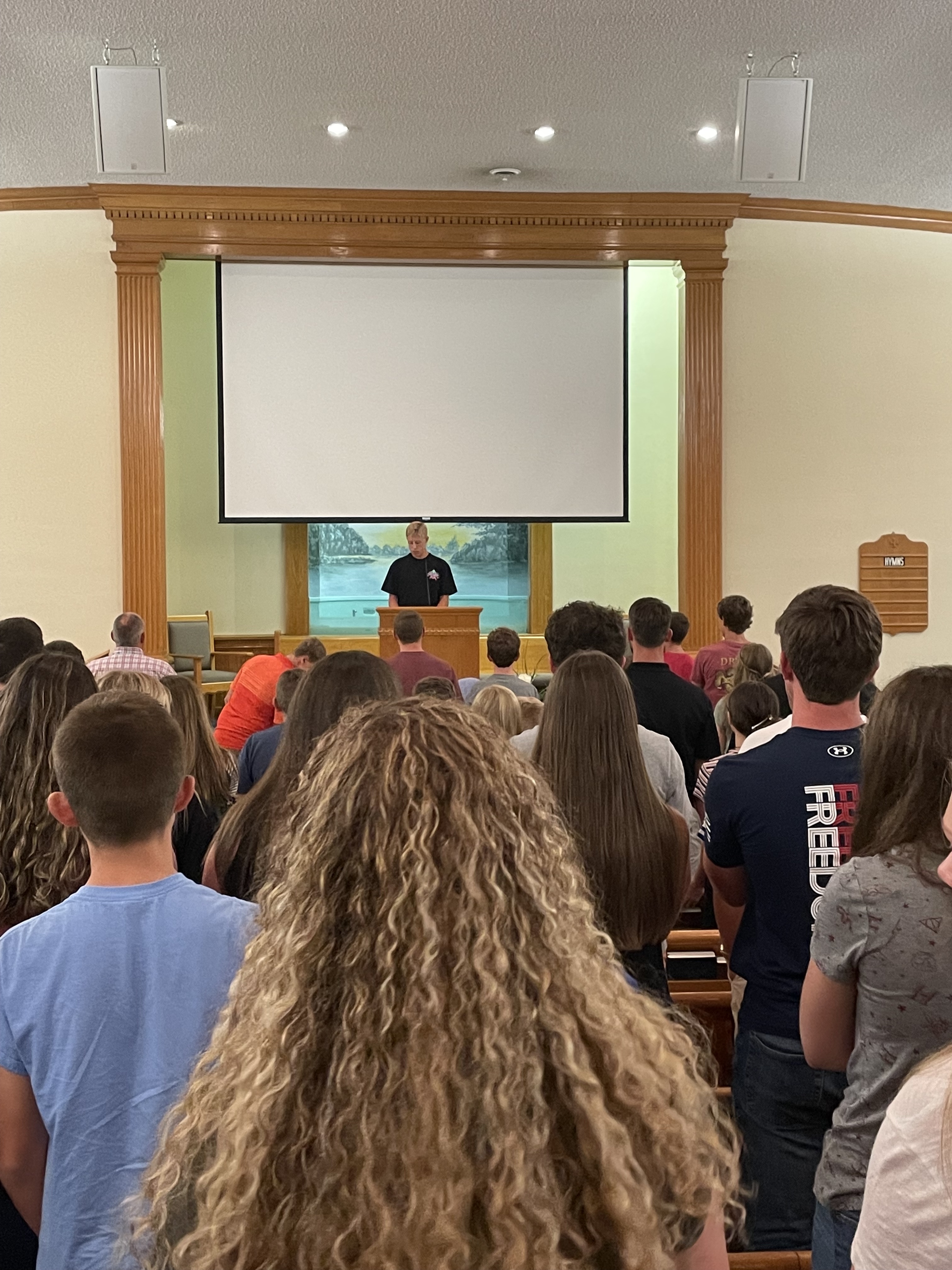
Teens stand for Scripture reading at recent Summer Youth Series (Chase Johnson reading)

Mt. Zion Is Better Than Mt. Sinai

Friday’s Column: Guest Writer

kason

Kason Eubanks

In 1986, Roy Whetstine was in Arizona at a mineral show. He was digging through a plastic bowl of rocks. He saw a large stone the size of a potato that looked interesting. He bought the stone for $10. Later, Whetstine would learn that his rock was actually the world’s largest sapphire, worth $2.28 million. The man who sold Whetstine the stone was willing to give up something of great value because he did not know what he had. 

The Jews in Hebrews had a hard time giving up “Mt. Sinai” for “Mt. Zion” because they did not know that Mt. Zion was far better. Hebrews 12:18-24, ‘For you have not come to the mountain that may be touched and that burned with fire, and to blackness and darkness and tempest, and the sound of a trumpet and the voice of words, so that those who heard it begged that the word should not be spoken to them anymore (For they could not endure what was commanded: ‘And if so much as a beast touches the mountain, it shall be stoned or shot with an arrow.’ And so terrifying was the sight that Moses said, ‘I am exceedingly afraid and trembling.’) But you have come to Mount Zion and to the city of the living God, the heavenly Jerusalem, to an innumerable company of angels, to the general assembly and church of the firstborn who are registered in heaven, to God the Judge of all, to the spirits of just men made perfect, to Jesus the Mediator of the new covenant, and to the blood of sprinkling that speaks better things than that of Abel.” There are a lot of things that are better in the new law, but we are just going to look at three of them. 

In Hebrews, there are just a few of the many blessings in the New Testament. In our passage, the writer compares Mt. Sinai to Mt. Zion. Starting in verse 18, he describes Mt. Sinai It sounds awful because if you touched it you would be burned with fire or shot with an arrow. God has the power to do all these things. The writer is referring to when Moses went to get the ten commandments. God wants the people of Israel to understand and not forget them. He wanted them to obey Him so they could be His special treasure (Exod. 19:5) 

Starting in verse 32, he describes Mt. Zion. It’s better because it has better blessings than Mt. Sinai. Let’s look at three  contrasts in our passage. 

INSTEAD OF TERROR, WE CAN BE HAPPY (22)

How can we be happy with Jesus? Moses tells the people what kind of God we serve. In Deuteronomy 33:29, he says,  “Happy are you, O Israel! Who is like you, a people saved by the Lord, The shield of your help And the sword of your majesty! Your enemies shall submit to you, And you shall tread down their high places.” Jesus gives us a rich and satisfying life.” In John 10:10, He says, “The thief does not come except to steal, and to kill, and to destroy. I have come that they may have life, and that they may have it more abundantly.” So you can be HAPPY by doing good deeds for others that may need it, and by knowing He is there.

INSTEAD OF KEEPING OUR DISTANCE, WE CAN BE CLOSE (23)

Instead of keeping our distance from Mount Sinai and we don’t have to be scared to get shot if we touch the mountain. How is Jesus close to us? In Proverbs 18:24, it states, “A man who has friends must himself be friendly, But there is a friend who sticks closer than a brother.” This shows how Jesus stays close to us.

INSTEAD OF BEING PUNISHED, WE CAN BE REWARDED (24)

Instead of being punished we can be rewarded with heaven. In John 3:16, it states, ”For God so loved the world that He gave His only begotten Son, that whoever believes in Him should not perish but have everlasting life.” What does Jesus want us to do to be saved? We are hearing the word. In Romans 10:16, Paul writes, “So then faith comes by hearing, and hearing by the word of God.” So we can hear his word. Why do we believe in God’s word? In John 8:24 it states, ”unless you believe that I am who I claim to be, you will die in your sins.” This is why you believe in God’s word. Why do we need to repent of our sins? In Mark 1:15 it states, “Repent, and believe in the gospel.” Why do we need to confess that Jesus is the son of God? In Matthew 26:63, it states “I say to you, hereafter you will see the Son of Man sitting at the right hand of the Power, and coming on the clouds of heaven.” Why do we need to be baptized? In Acts 2:38, it states, “Then Peter said to them, ‘Repent, and let every one of you be baptized in the name of Jesus Christ for the remission of sins; and you shall receive the gift of the Holy Spirit.’”

All in all we don’t need to keep our distance from God. Instead of keeping God out of our lives, He needs to be in our lives because through Him we make it to heaven.

eubanks

Kason with his family the night of his baptism (May 22, 2021)

Hebrews 10:25 And COVID-19

Wednesday’s Column: Third’s Words

Gary III

Gary Pollard

An alarming number of people today are obsessed with the COVID-19 outbreak. Nearly every post on social media is focused on it, stores are selling out of essentials, and it comes up in nearly every conversation. This article is not about Coronavirus-19. I’m tired of reading about it and I’m assuming you are, too.

Because the virus is particularly dangerous for older people or those with underlying conditions (a healthy demographic in the church), many congregations have cancelled or reduced services until something can be worked out. As a result, some have attempted to use scripture to claim that these measures are unscriptural.

Some have pointed to the early church: despite the threat of death from man, they continued worshipping. This is true, but that threat was persistent for years. Even then, many early churches met at extreme hours and in extreme secrecy during the worst of persecution. This is not the case today.

Some have pointed to Hebrews 10.25 to say that cancelling services is the same as “forsaking the assembly.” We will look at this passage closely, but we need to keep something very important in mind: most of writings set after the establishment of the church are focused on Christian living. Our standard of conduct, our speech, our attitude toward the world, our understanding of God, how to employ wisdom, etc. are the focus of the vast majority of the New Testament.

For perhaps more than a few, the sum total of their Christianity is the worship assembly on Sunday and Wednesday. Worship is extremely important to godly living and it would be egregiously false to state otherwise (as some state, “I am dedicated to God, not the church”). However, there is but one fragment of a sentence in all of scripture dedicated to the importance of consistent attendance. It is binding and important, but some place a disproportionate emphasis on this passage to the neglect of the rest of scripture. To use the words of Jesus, “They strain at a gnat and swallow a camel” (Matthew 23.23ff).

Hebrews 10.25 states, “not forsaking our own assembling together, as is the habit of some, but encouraging one another; and all the more as you see the day drawing near.” The next verse says, “For if we go on sinning willfully after receiving the knowledge of the truth, there no longer remains a sacrifice for sins…” Verse 29 makes it very clear that 10.25 is talking about “trampling under foot the son of God…”

It is important to note that “forsaking” in 10.25 is ἐγκαταλείποντες (eingkataleipontes), which means to leave, abandon, or desert. The word is also a present active participle in this text, which describes a continuous, willful abandonment of the worship assembly. The same word is to describe a man leaving his father and mother and clinging to his wife. It is a more or less permanent abandonment, not a temporary one.

What does this mean for Christians in 2020? It means that cancelling a few services to avoid spreading a very contagious virus is not a sin. This does not equal, “trampling the son of God under your foot.” It means that trying to bind Hebrews 10.25 in this case is worse than merely bad scholarship – it is binding where God has not bound. It means that, while worship is vital and important, we must focus just as much on godly living and the whole of scripture as we do this one verse.

Screen Shot 2020-03-18 at 6.49.56 AM

Characteristics of Hope

Neal Pollard

An epistle centering around the superiority of Christi as our all-sufficient One would certainly be expected to contain a message of hope. While some had apparently given up Jesus as their hope (6:4-6), the writer of Hebrews had a higher estimation of those to whom he writes. for one thing, they had a legacy of good works and brotherly love and benevolence (6:10). His desire was that they would continue to stay strong. In expressing this, the writer suggests hope as an integral tool to keep them hanging onto their faith in Christ. In these final ten verses of Hebrews six, he mentions three qualities of hope that would help them–and will help us–hang onto our hope in Christ no matter what.

This hope is durable (11). Look at the language he uses. This hope was tied to an assurance that would endure “until the end.” It was a hope that would lead them to “inherit the promises” (12), just as Abraham’s hope in God led him to his inheritance (13-17). God desires to show us, as heirs of the promise through Christ, His unchanging purpose (17), so He guarantees that promise through an oath build upon the foundation of Himself. Hope which is guaranteed by the very nature and character of God is hope that will outlast anything! Nations rise and fall. Presidents serve only one or two terms. Supreme court justices, at most, can serve only a lifetime. Our hope transcends time.

This hope is tangible (18). These Christians needed to count on a refuge in difficult times (see 12:4), and we desire the same thing in our lives! Knowing that God is so trustworthy, we are encouraged to “take hold of hope” that is found only in Christ. To say that we can take hold of hope and that it is set before us means that it has substance. In a world where nothing seems certain, evidence from scripture, nature, order and design of the universe, and so much more allows us, by faith, to grab this hope. He had already told them to hold onto that hope in Christ earlier in the letter (3:6) and to encourage this response he points them to scripture (cf. 3:7-11; Psa. 95:7-11). Scripture helps us see the solid hope we have in Jesus.

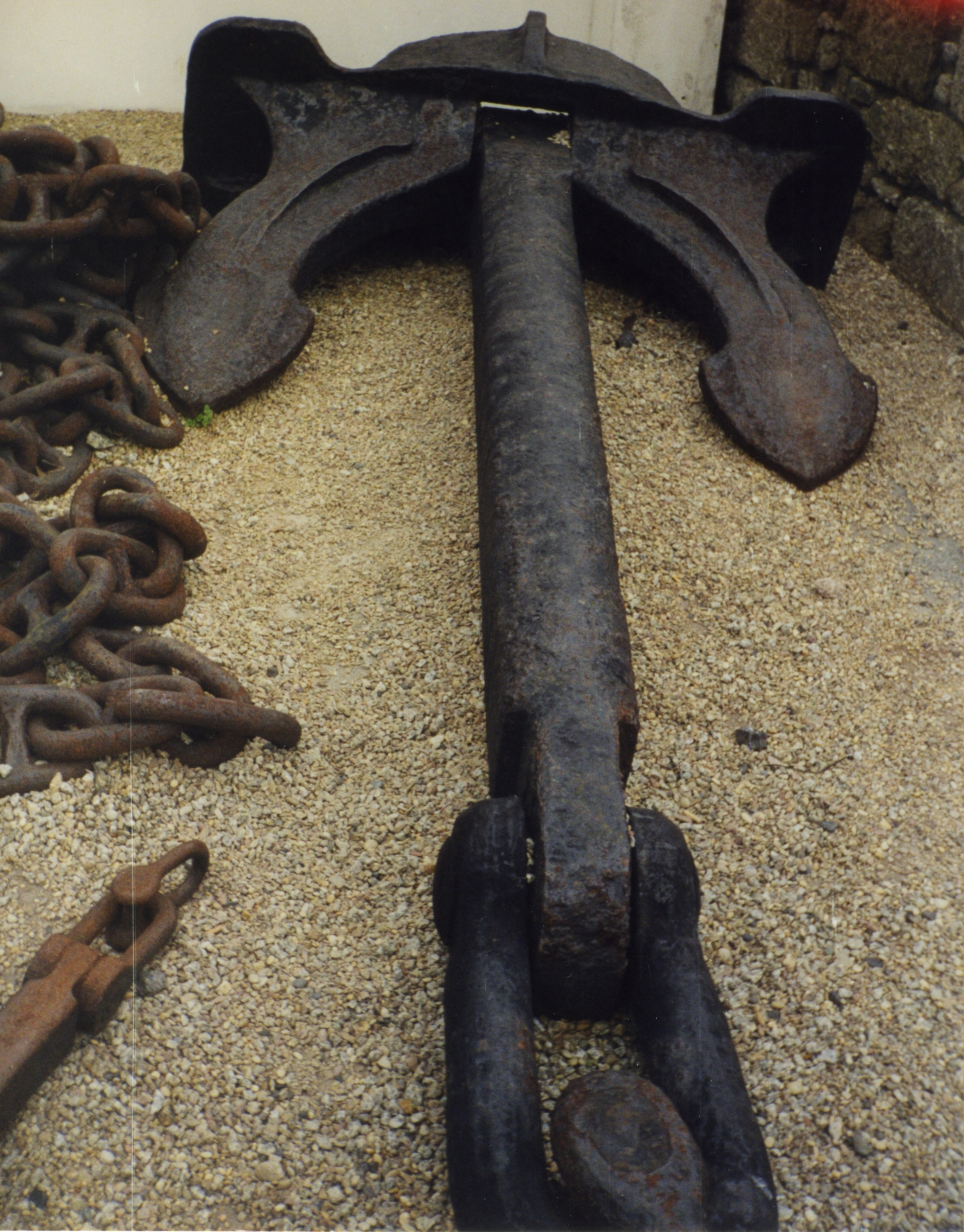
This hope is stable (19). It is an anchor. Anchors keep a vessel from drifting, an appropriate illustration since the Christians were tempted to drift from Christ (2:1). By maintaining their hope, they could anticipate three blessings: (1) sureness, (2) steadfastness, and (3) the service of the sacrificial Savior (19-20). All three of these descriptions of this Almighty anchor underline the security found in keeping ourselves anchored in Christ. Those who keep Jesus as their hope are able to weather the most horrific storms of life!

As Christians, we may find ourselves ready to abandon Jesus as our hope. So many things attempt to pull us from Him. Let us draw encouragement from this inspired writer, as surely these first Christians did, and rejoice in these changeless characteristics of hope!

anchor_england_-_scan01

Why Christ Became Flesh

Neal Pollard

The writer of Hebrews exhorts that Christ should be faithfully served, not abandoned, because He is a superior messenger to all other heavenly messengers (chapter one). Then, he gives another reason for holding fast to Him in chapter two. His readers were apparently struggling in their faith and gradually slipping back into the religion they had left. They lacked incentive, but the epistle gives reason after reason for why it should be restored.

In chapter two, he refers to Jesus’ humanity. Through it, He perfectly fills the role of High Priest in a way no Levitical priest could do under the old law. He enumerates the reasons why Jesus became flesh, and each reason was for each of us as individuals.

  • He became flesh to taste death for every man (9). He exercised God’s grace on our behalf. He was willing to make God’s understanding of our frailties empirical (experienced by human senses) by tasting death in a human body.
  • He became flesh to render the devil powerless (14). Before the cross, where Jesus gave up His physical body in death, the devil had the power over man. All mankind sinned and there were various sin offerings provided by God in the different ages. Yet, they could not “take away” sin (10:4,11). But, when Jesus died and was raised from the dead, He rendered the devil powerless over those who faithfully obey Christ and remain faithful unto death.
  • He became flesh to deliver the enslaved (15). Knowing no hope of deliverance from the horrible state of sinfulness makes for a miserable experience (Rom. 7:25). Christ came to deliver us from the awful slave master of sin (John 8:34).
  • He became flesh to become a merciful and faithful High Priest (17).  12 times in Hebrews, Jesus is called the Christian’s High Priest–the High Priest of our confession (3:1), in Heaven (4:14), sympathetic and sinless (4:15), appointed by the Father (5:5), without predecessor or successor (5:10), who went before us (6:20), holy, innocent, undefiled, separated from sinners, and exalted above the heavens (7:26), seated at the Father’s right hand (8:1), an offering priest (8:3), and offering His own blood (9:11). His service in administering His blood on our behalf is merciful (kind, forgiving, protecting) and faithful (trustworthy and sure).
  • He became flesh to come to the aid of the tempted (18). He well remembers what it is like to suffer in a human body. Not just that greatest moment of suffering, up on the tree, but the daily discomforts (Mat. 8:20), abandonment (John 6:66), and betrayal (John 18:27; Mark 14:45). Therefore, He can help me right now with my problem. Nothing is too big, too mysterious, or too difficult for Him.

Five reasons from Hebrews two are given for why Jesus became flesh, but all of them are for me (and for you)! What a thrilling though. Let’s serve this wonderful Savior!

Laying Aside “Every Weight”

Neal Pollard

I try to write very seldom about my favorite hobby, running, which I picked up when our baby, who Pooh Duke has dubbed “Carlnormous,” was still in the womb (This is Carlnormous).  Running produces so many wonderful benefits, physically, psychologically, and mentally.  Yet, as I have heard said, exercise is only about 20% of weight management.  Therefore, until I have recently begun beefing up my “push back” exercises from the dinner table, I have been running at over 200 pounds for much of those 17 years.  I am 15 pounds lighter than I was this time last month, and Strava does not lie.  Today, I logged a 10K at a pace of 8:19/mile (Strava is cool), while listening to a mellow “Fleet Foxes And More” playlist from Amazon Music (Will Fleet Foxes reunite?)—not exactly heart-pumping exercise music.  This time last month, I was about a full minute slower per mile.  Since today I’m inevitably older than I’ve ever been, the difference has to be the fewer pounds I’m dragging around.  Hopefully, I’ll drop more weight, and if I do I anticipate that my pace may quicken and I’ll feel even better doing it.

New Testament writers use the running analogy on several occasions, but consider what the writer of Hebrews says:  “Therefore, since we have so great a cloud of witnesses surrounding us, let us also lay aside every encumbrance and the sin which so easily entangles us, and let us run with endurance the race that is set before us, fixing our eyes on Jesus, the author and perfecter of faith, who for the joy set before Him endured the cross, despising the shame, and has sat down at the right hand of the throne of God. For consider Him who has endured such hostility by sinners against Himself, so that you will not grow weary and lose heart” (12:1-3). The NASB says “encumbrance” (NKJV, “weight”), and the word means “that which serves to hinder or prevent someone from doing something—‘hindrance, impediment’ (Louw-Nida, 13.149). While the implication is “of an athlete stripping himself of clothing which would impede his performance” (Ellingworth, NIGTC, np), how much more does something like 15 pounds “impede”?

This passage encourages endurance with at least three ideas.

Laying Aside The Weight Is Meaningful. It helps one with endurance as it helps eliminate obstacles to a successful run.  It shows up in a better quality of life. It impacts more than just the run you are on that day.  The effects are enduring and they impact such vital areas as blood pressure, cholesterol, blood sugar, etc.  So it is spiritually.  This is about defeating sin, staying faithful, endurance, and overcoming.  In line with the thrust of the whole letter of Hebrews, it is about not falling away and leaving Christ!  We do not want to hang on to anything that interferes with that eternal prospect.

Laying Aside The Weight Is Measurable. I can tell the difference in myself when I have or have not lost that extra weight.  Certainly, the same is true spiritually.  When something is weighing me down, distracting, depressing, deceiving, or drawing me away, I can tell.  I can see it in my devotional life, it shows up in my speech, my attitude, my ethics, and countless similar ways. Other people can see it, too.  I know that God sees every bit of it!

Laying Aside The Weight Is Motivational.  By laying aside the encumbrances and entanglements, I feel better and improve my physical quality of life. The Hebrews’ writer tells us about a transcendent motivation which follows lightening our spiritual loads of sin problems.  Removing the impediments, I am better able to fix my eyes on Jesus and His example while not growing weary or losing heart.

Past experience tells me that weight can be picked up even easier than it can be laid aside.  This is an ongoing discipline.  But it is so worthwhile!  Oh, that I can remember that as I run the course of earth toward eternity.

Mission Accomplished

Neal Pollard

Reader’s Digest tells the story of Walter Wyatt, Jr., an amateur pilot whose plane goes down in the Atlantic between the Bahamas and Miami, Florida.  He’s in the deep all night, fighting off bull sharks and feeling he will not survive.  He does live and a ship, the Cape York, rescues him after sunrise the next day.  He wearily climbs on board and kisses the deck.  He is saved, but he needed outside help to save him from the depths and from certain death.

So it was with us.  As the song suggests, we were sinking deep in sin and far from the peaceful shore.  Jesus lifted us, and He did so through Calvary.  Yet, He saved us from a fate infinitely worse than death by a physical predator.  Each Lord’s Day, we have the opportunity to remember this as well as He who rescued us.  As Paul once said, “Indeed, in our hearts we felt the sentence of death” (2 Corinthians 1:9).  In Hebrews two, we consider three important truths about the Man who saved us from death.

First, He is over us (Hebrews 2:1-10).  He is our Lord and Master.  He is over us by right of accountability (1-3).  In other words, we are reminded that each of us are accountable to Him.  We cannot escape if we neglect so great a salvation!  He is also over us by right of approval (4), namely God’s approval (cf. Matthew 17:5).  During His ministry, Jesus demonstrated His power to prove His identity (cf. Acts 2:22-24).  Further, He is over us by right of authority (5-8).  We read, “For in subjecting all things to him, He left nothing that is not subject to him.”  Then, He is over us by right of arrangement (10).  He is our Creator.  He made us.  He knows us.  Finally, He is over us by right of affliction.  By virtue of His passion, Christ has compassion.  For all these reasons, we see Jesus as One who is on a par with none.  Before He was in a manger or up on a cross, He was in the beginning with God and as God (cf. John 1:2).

Second, He is like us (Hebrews 2:11-14).   No matter how much we like or dislike a king or president, we may feel like he or she is unreal or unlike us.  We cannot relate to their lives, and we are certain they can relate to ours.  Yet, Jesus, though King of kings, is a Savior who is like us.  We are of the same family, the human family (11).  He associates Himself with us (11-12).  Then, He shared in our humanity to the fullest, to the point of experiencing death for us (14).  Nobody can rightfully say to God, “You don’t know what it is like!  You don’t understand!”  He is fully divine and became fully human, making Him uniquely able to relate to both the Father and humanity.

Finally, He is for us (Hebrews 2:15-18).  The last few verses serve as final pieces of evidence proving how Jesus is on our side.  He has done His part to take the fear out of death (15; cf. 1 Corinthians 15:19-20).  Of all created beings, He gives His aid to us (16).  He longs to be our High Priest (17).  He wants to help us when we are tempted (18).  Of all the Great Cloud of witnesses (Hebrews 12:1), who do you think is leading the cheers for those of us trying to make our way through this world and up to heaven?

A decade ago, I said a sentimental goodbye to the “Black Bullet,” my 1985 Chevy Custom Deluxe pickup which I traded in on a “new” 1992 Dodge Dakota.  I had to go to the DMV and transfer my tag and title.  They did not charge much for vanity plates, so I chose “PRCHNG1.”  This seemed clear enough to me.  As I picked up a number at the front counter,  I had my tags in hand and the receptionist saw them.  She said, “Oh, I’ve always wanted to try that. I bet that’s so fun. Is it scary?” I was confused. She said, “Your tags. How long have you been parachuting?” PRCHNG1 stands for “Preaching One.” I thought it was clear, but apparently my fellow motorists had been concluding that I was in some airborne division or maybe purchased hand guns. This dear lady misunderstood me, my work, and my interests.

Let us not make that mistake with the Savior we pause to commemorate each Sunday.  He is over us—He’s our King!  He is like us—He’s our brother!  He is for us—He’s our friend!