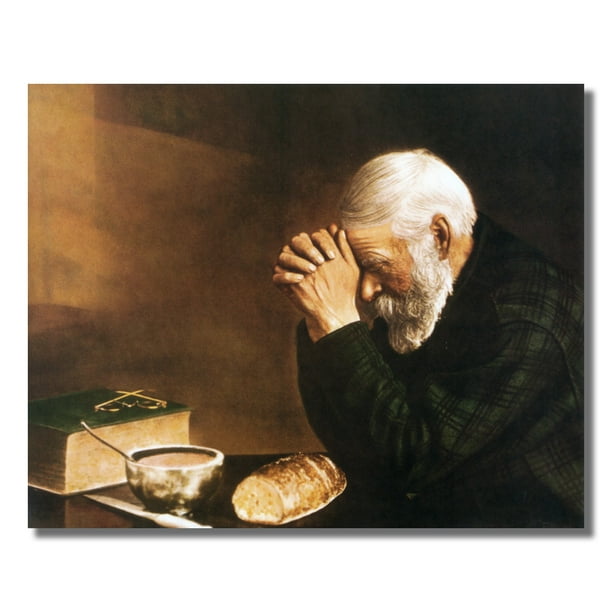
Count Your Blessings: A New Perspective On Gratitude

Charles Plemons

“Count your blessings.” It’s a phrase we’ve all heard and probably even tried to practice in various ways. It’s a simple yet profound reminder to recognize the goodness in our lives and acknowledge what God has done for us. But what if we approached it from a completely different perspective—one that might just transform the way we see our daily blessings?

Several years ago, I had an idea that has stuck with me ever since. In fact, I find myself thinking about it nearly every day. Today, I want to share this concept with you in the hope that it will help you become more aware of the countless blessings surrounding you.

What If Everything Unthanked Disappeared?

Imagine waking up tomorrow morning to a shocking realization: everything you haven’t specifically thanked God for is gone.

I’m talking about physical things, relationships, and even aspects of society that we take for granted. Spiritually speaking, we would probably be okay—most of us have thanked God for Jesus, salvation, His Word, the church, and the hope of heaven. We’ve likely expressed gratitude for our immediate family, our career, and our home.

But have we thanked God for the smaller things—the specifics that shape our daily lives?

The Details We Often Overlook

If you woke up tomorrow and found that everything you hadn’t thanked God for had vanished, how much would be left?

  • Did you thank Him for running water, indoor plumbing, toothpaste, or a toothbrush?
  • What about a hairdryer or hairbrush (maybe more important to some than others!)?
  • As you leave your home, did you thank Him for the transportation that gets you to school or work?
    • The roads, street signs, and traffic signals that guide your way?
    • The weather, whether sunny or rainy?
    • The laws and law enforcement that keep traffic safe?
    • The camaraderie of friends or coworkers when you arrive?
  • Consider the building you enter. Have you thanked God for:
    • The architects who designed it?
    • The physics that allow such structures to stand?
    • The tools, bricks, concrete, and glass that make up the place you work or learn?
    • The doorknobs you turn without a second thought?

Once you start considering these things, and realizing they could be gone tomorrow, you might feel compelled to pray and thank God. And in just one day, you could list hundreds—maybe thousands—of blessings. Yet, that list would barely scratch the surface.

Recognizing God’s Hand in Everything

Think about birthday parties, family vacations, movie theater popcorn, or a warm jacket on a cold day. You could spend all day thanking God, and tomorrow, most of what you experience would still disappear because His blessings are everywhere.

God has given us intelligence and compassion to build a society where we interact, create, and innovate. He has blessed us with knowledge, learning, and science to design and construct an astonishing number of things using the resources He provides. The truth is, God has blessed you—and me—beyond what we can fully comprehend.

The Gift of Another Day

Now, imagine waking up tomorrow and realizing everything (and everyone) is still here. Maybe you just had the date wrong. But how much more can you thank God for with another day? And another?

Every day, I find myself uttering short prayers of gratitude for a whole new list of things—situations, people, aspects of society, and physical items I hadn’t considered before. This practice has gone on for years, and I have yet to run out of new blessings to acknowledge.  I suspect I could thank God for something different every day and run out of days before running out of blessings.  

A Challenge for You

I hope you take a moment to think about this concept. Try it for yourself. See if it helps you better appreciate the rich blessings our Father in heaven has given us.

And now, consider this: nothing we’ve listed—or could ever list—compares to the blessings of heaven.

God has already been abundantly generous to us in this life, but when you read about heaven, you realize that it is better than what we have now in every possible way. And therein lies the real lesson: when you better appreciate what God has already done for us, you can better yearn for and be motivated to seek what He will do when He returns.

A Call to Action

I want everyone to experience those blessings.

More importantly, God wants everyone to experience those blessings. If you have never been baptized into Christ for the forgiveness of sins, what is the delay? Life, opportunity, and even the blessings we take for granted can disappear tomorrow.

Let’s not wait to recognize the incredible gifts He has given us. Let’s start counting our blessings today.


Be Grateful 

Carl Pollard

If you lack gratitude, you will never be satisfied, and you will always blame others for your misfortune. You’ll end up only seeing the negative in everything. A pessimist can hardly wait for the future so he can look back with regret. Did you know that cats can’t taste the flavor of sweetness? It’s like their tongues are color blind to sugar. No wonder cats are so grumpy all the time! They can taste sour, bitter, and saltiness, but not sweetness.

Truth is, we are a lot like cats in our own lives. Blessings come but we don’t see the sweet; all we can taste is the bitter salty things that happen to us. We need to open our eyes to the truth that gratitude isn’t merely a polite response to God’s blessings; it’s a catalyst that transforms our very existence. In a world often filled with grumbling and dissatisfaction, we are called to embrace gratitude as a way to point people to Christ.

Here three important reasons to show gratitude in all things. 

Gratitude Replaces Grumbling

In Philippians 2:14-15, we are reminded, “Do everything without grumbling or arguing, so that you may become blameless and pure, children of God without fault.” Grumbling is a thief that robs us of joy and peace, turning our hearts bitter. But gratitude, is the antidote. When we consciously choose to focus on our blessings, we begin to see God’s hand at work in our lives. Think about the Israelites in the wilderness. Despite the miracles they witnessed, they often grumbled against God. Yet, when they showed gratitude, they remembered His faithfulness, and it changed their perspective. As children of God, we need to make gratitude a part of who we are. At our very core we are saved by the blood of Christ, given access to grace and peace, and have an eternity in our future. What’s not to be grateful for? The more you show gratitude, the less bitter you will be. 

Gratitude Restores Gladness 

Psalm 100:4 tells us to “Enter his gates with thanksgiving and his courts with praise; give thanks to him and praise his name.” 

There is a divine connection between gratitude and gladness. When we express our thankfulness, we open the door to joy. 

Gratitude shifts our focus from our problems to the blessings surrounding us, renewing our strength. When we cultivate a heart of gratitude, we invite joy into our lives, transforming our burdens into blessings.

Turning our trials into wisdom. Our sorrow to gladness. With the story of the ten lepers, Luke emphasizes the rarity of a thankful spirit. Notice Jesus’ final words In Luke 17:15: “One of them, when he saw that he was healed, came back, praising God in a loud voice. And Jesus asked, ‘Were not all ten cleansed? Where are the other nine? Was no one found to return and give God praise?'” Only one had taken the time to thank the person who had made his recovery possible. Don’t be stingy in your gratitude. Not only does God expect it from the ones He has saved, it’s good for us mentally and physically. 

Gratitude Renews Growth

A ship was wrecked, and the only survivor washed up on a small, uninhabited island. 

He was exhausted. He cried out to God to save him. Every day he scanned the horizon, searching for help. Finally, he managed to build a rough hut and put his few possessions in that hut. One day, coming home from hunting for food, he was stung with grief to see his little hut in flames and a cloud of smoke. The worst had happened. But early the next day, a ship drew in and rescued him. He asked the crew, “How did you know I was here?” They replied, “We saw your smoke signal.” Be grateful because maybe the difficulty you are experiencing now is a smoke signal that will lead to a greater blessing. James tells us to count it all joy when we encounter trials. 

Gratitude renews growth. We become stagnate and discouraged never grateful for the blessings we already have. Colossians 3:15 encourages us to “Let the peace of Christ rule in your hearts, since as members of one body you were called to peace. And be thankful.” Gratitude isn’t just a feeling; it is an action that propels us forward in our spiritual lives. When we acknowledge and thank God for His provisions, we position ourselves for growth. Gratitude opens our eyes to new opportunities, strengthens our faith, and deepens our relationship with our Creator. 

Just as the seeds in a garden grow when nourished, our spiritual health grows in an atmosphere of thankfulness. Be diligent in gratitude so that your faith can grow. 

Pause And Be Grateful

Neal Pollard

When do we normally appreciate good health? Often, it is when we are aching and running a fever (or worse). When do we most keenly contemplate financial security? For many, it is in a time of financial crisis. take away food and water, and you see how vital and blessed it is to have such provisions. When things are going wrong, we wistfully long for and desire that feeling and state when things are all right.

When was the last time we thanked God for these things when they were not a pressing need or something elusive to our grasp? It is harder to remember these things when all is well. Yet, don’t you think God is pleased and impressed with a heart that knows how to be grateful at times when those things are abundantly present in that life? How must He appreciate the person who wakes up or pauses through the day, assesses life, and from the overflow of thanksgiving tells God in heartfelt sincerity how much he or she appreciates the cornucopia of blessings.

It takes so little effort, but it shows such spiritual maturity and goodness. Remember that God is pleased with such sacrifices as doing good (Heb. 13:16), which showing gratitude certainly is (Psa. 92:1). Won’t you say with David, “I will give thanks to the Lord with all my heart…” (Psa. 9:1a). He is imminently worthy and we are infinitely indebted!

The Dangers Of Forgetting God In Prosperity (Deuteronomy 8:7-20)

Brent Pollard

“But that is the time to be careful! Beware that in your plenty you do not forget the Lord your God and disobey his commands, regulations, and decrees that I am giving you today” (Deuteronomy 8.11 NLT).

In today’s world, self-sufficiency and autonomy are highly valued. But Deuteronomy 8.7-20 reminds us of our reliance on a higher power. Moses used this passage to warn the Israelites before they entered Canaan, and it teaches a valuable lesson for individuals and nations: the dangers of forgetting God in times of prosperity.

Humans often overlook and take the natural world’s consistent and predictable patterns for granted. When we receive everything we require from the natural order, we may mistakenly believe our success and sustenance are solely due to our efforts or luck. We fail to recognize the divine orchestration underlying the natural order. This passage encourages us to look beyond the natural laws that govern our daily lives and recognize the divine hand that propels these laws forward.

Moving from direct divine provision in the wilderness to self-sustained agriculture in Canaan represents a spiritual journey. It depicts a shift from visible reliance on God toward a faith-based partnership. As we live, success may tempt us to forget that our progress results from working with divine will and instead take sole credit for our efforts. This forgetfulness can cause alienation from our spiritual source, arrogance, and a false sense of self-reliance.

Many civilizations rose to great heights throughout history but eventually collapsed when they abandoned divine principles. The text warns us that ignoring God’s role in our success leads to spiritual decay, which frequently precedes physical and societal decline. The Canaanites and Israelites serve as stark reminders of what awaits those who choose to live without acknowledging God’s authority.

In an increasingly atheistic society, where people prioritize “science” over spiritual beliefs, it is critical to acknowledge God’s presence in all aspects of our lives. Our achievements and the beauty and order we see in nature are not solely the result of human effort or natural laws but rather evidence of God’s grace.

As we navigate the complexities of modern life, Deuteronomy 8.7–20 reminds us of God’s omnipresence and benevolence. Remembering God during times of prosperity promotes humility, gratitude, and a sense of purpose. Let us strive to keep God at the forefront of our minds and recognize that every blessing, no matter how small or insignificant it appears, is a testament to God’s unfailing love and provision.

What’s the call to action? How can we apply the lessons from Deuteronomy 8.7–20? Take a moment to reflect on your own life. Are there any areas in which you may have overlooked God’s role? Try something as simple as keeping a gratitude journal to record God’s providence. Also, consider ways to work with God to bring about good in the world. Instead of waiting for adversity to remind you of your need for the divine, strive to live each day with a conscious recognition of God, who is the source of all your blessings (see James 1.17).

The principles outlined in Deuteronomy 8:7-20 hold significance for individuals and our communities, cities, and nations. In this secular and complex world, it is crucial to have a place where people can gather and celebrate their shared values, including faith. Coming together can cultivate wisdom, kindness, and cooperation in these spaces. Let us consider this timeless advice as a guide that reminds us that we cannot achieve true prosperity unless we are at peace with God, ourselves, and each other, not just in material terms.

The One Who Came Back

Carl Pollard

Luke 17:11-19, ”On the way to Jerusalem he was passing along between Samaria and Galilee. And as he entered a village, he was met by ten lepers, who stood at a distance and lifted up their voices, saying, “Jesus, Master, have mercy on us.” When he saw them he said to them, “Go and show yourselves to the priests.” And as they went they were cleansed. Then one of them, when he saw that he was healed, turned back, praising God with a loud voice; and he fell on his face at Jesus’ feet, giving him thanks. Now he was a Samaritan. Then Jesus answered, “Were not ten cleansed? Where are the nine? Was no one found to return and give praise to God except this foreigner?” And he said to him, “Rise and go your way; your faith has made you well.”

Two friends met each other on the street one day. One looked upset, almost on the verge of tears. His friend asked, “What’s wrong?” The other answered and said, “well, three weeks ago, my uncle died and left me forty thousand dollars.” The friend responded and said, “That’s a lot of money.” 

“But you see, two weeks ago, a cousin I never even knew died, and he left me eighty-five thousand dollars.” The guy answered back, “Sounds to me that you’ve been very blessed.” “You don’t understand!” he interrupted. “Last week my great-aunt passed away. I inherited almost a quarter of a million from her.” Now the man’s friend was really confused. “Then, why are you so upset!?” “Because…this week I got nothing!”

We can often come to the point where we expect to get certain blessings that God never promised us, and when they do not come, it is easy to get bitter. As Christians, our lives should be filled with gratitude. There’s so much that God has already done for us! But there are times where we expect God to do things, or give us something that isn’t promised to us. When the moment comes and we don’t get it, what is our response? If God’s answer is yes, be grateful. If God’s answer is no, be grateful. 

Gratitude is a forgotten and dying attitude. Which sadly, has long been difficult for mankind to express. A well known example of this is found in Luke 17. This account is unique to the gospel of Luke. Up to this point Jesus has been giving parable after parable, but what happens in 11-19 takes place on their journey to Jerusalem? 

A real life example that we should take to heart. Gratitude is a lost art. 

But we can learn what God expects of us from these few verses: 

  1. Gratitude Is Not Conditional (11-14) 
  2. Gratitude Must Lead To Action (15-16) 
  3. Gratitude Is Uncommon (17-18) 
  4. Gratitude Is Life Changing (19)

Ten were healed, but only one came back. And he came back because he realized that he had something to do. Jesus changed his life, and he couldn’t just leave and not show his appreciation. He HAD to turn back, because Jesus was his salvation!

I’d like to suggest that as Christian’s we ALL have a reason to turn back. 

Eph. 2:4, “But God, being rich in mercy, because of the great love with which he loved us, even when we were dead in our trespasses, made us alive together with Christ—by grace you have been saved.“

God has shown His love, so let’s show our gratitude. You can do that by praising Him each day, because every day He is with us and is forgiving of our faults. Show God that you are grateful for what He has done by giving your life to Him. There’s no greater joy than trying to give back to a God that has given so much to us.

An Attitude Of Gratitude

Saturday’s Column: Learning From Lehman

Justin Lohden

Gratefulness is defined as warm and deep appreciation for kindness received; gratitude or thankfulness. Something that my family has to work on continually is an attitude of gratefulness. In today’s world, teaching our children gratefulness can sometimes be challenging not only for them but also for us. Have you ever met individuals who constantly complain and seem ungrateful? More specifically, have you ever met Christians who constantly complain and seem ungrateful? I would dare to say most of us try to avoid certain people because you know they are probably going to be complaining about something. Regarding church, do you ever catch yourself complaining about elders’ decisions, something the preacher might have said, or the temperature in the church building? I know I do sometimes! So, what causes a spirit of complaining or ungratefulness? Could it be a lack of faith? Maybe selfishness? In my opinion, they both can cause ungratefulness. For example, we have several accounts in the Old Testament of the Israelites complaining! In Numbers 21:5 we read, They spoke against God and against Moses, and said, “Why have you brought us up out of Egypt to die in the wilderness? There is no bread! There is no water! And we detest this miserable food!” God had just delivered them Egyptian bondage and they still showed a lack of faith and ungratefulness.

Sometimes our selfishness can create an attitude of ungratefulness. We sometimes just want our way or want more and more which can lead to a complaining or ungrateful attitude. There’s no doubt God has blessed our country economically but sometimes that may lead to contentment problems. We have to be careful not to fall in the trap of wanting more and more. Contentment can help produce gratefulness. Paul tells us in Philippians 4:11-12, “Not that I speak in regard to need, for I have learned in whatever state I am, to be content:  I know how to be abased, and I know how to abound. Everywhere and in all things I have learned both to be full and to be hungry, both to abound and to suffer need.” We know that Paul was in prison when he wrote this. Can you imagine being in prison and speaking of contentment? Then what about us? Surely, we can learn to be content and grateful for the things that we have by Paul’s example.

On top of everything else God doesn’t seem to be a big fan of complaining nor did He take it lightly. In Numbers 11:1 we read, “And the people complained in the hearing of the LORD about their misfortunes, and when the LORD heard it, his anger was kindled, and the fire of the LORD burned among them and consumed some outlying parts of the camp.” Grumbling can be a problem. None of us are above the temptation to murmur or complain, but we need to learn from the book of Numbers that this is a serious issue with God. He sent fire to consume some, swallowed up others with the earth, and sent fiery serpents among the people, all because of complaining!

The Bible also has many verses that touch on the subject of gratitude.

  • 1 Chronicles 16:8 says…..Oh give thanks to the Lord; call upon his name; make known his deeds among the peoples!
  • Psalm 7:17 says….. I will give thanks to the Lord because of his righteousness; I will sing the praises of the name of the Lord Most High.
  • 1 Thessalonians 5:16-18 says….Rejoice always, pray continually, give thanks in all circumstances; for this is God’s will for you in Christ Jesus.
  • Colossians 3:15 says….Let the peace of Christ rule in your hearts, since as members of one body you were called to peace. And be thankful.

Those are just a few examples, but with having so many verses regarding gratitude there’s no doubt how God feels about it. If anybody in this world should be grateful it should be Christians! God has shown us so much love, grace, and has blessed us both materially and spiritually beyond measure and we should be expressing a spirit of gratitude living as a Christian! We as Christians should being showing gratitude throughout all aspects of our life and let our light shine! If we go around complaining or being ungrateful what kind of example are we setting and how can we expect to evangelize to the lost? They’re response might be, “I don’t want any part of that religion”!

Not only should we show gratitude toward God, we should show gratitude toward our fellow man. Some simple acts of gratitude could be just saying thank you, a thank you card, email, or text. Occasionally, I will receive a thank you note or message from a fellow church member for something that I didn’t think was a big deal but it still meant a lot to receive that.

I would challenge all of us to keep working hard towards a grateful attitude. If you have a moment where you lapse, there are many scriptures to study regarding this subject. Let’s concentrate on the things God has given us not the things we don’t have. Let’s stay focused on the big picture which is our Heavenly home. Having a grateful attitude pleases our Father and is contagious. After all, would you rather fellowship with grateful or ungrateful people? Be careful, as they say misery loves company!

Grateful Living

Thursday’s Column: Captain’s Blog

Carl Pollard

There’s a pretty well known quote that people often share on social media. It says, “Gratitude is the attitude that sets the altitude for living.” What is gratitude? Being grateful means recognizing our blessings. There are some people that I don’t mind being inconvenienced by. People that I’d happily help if they needed it, and that’s because these people are grateful. They appreciate and thank you for helping them…Then there are people that I don’t exactly enjoy helping. Why? Because they demand your help and almost seem like they feel entitled to your help. You help them and you don’t get a thank you and they aren’t grateful for your sacrifice. It’s interesting that these people never seem to be happy, and there’s a reason. They fail to be grateful for the blessings they receive. 

When we take the time to be thankful for what we have, we don’t have as much time to think about what we don’t have. If we want to find true joy, focus on being grateful for what God has given us. For example, notice what many Christians have today: 

  • We live in America 
  • We worship in a building each Sunday 
  • We don’t have to walk everywhere 
  • We have a roof over our heads 
  • We have a church family 
  • We have food and clothes 

The list goes on and on. We have plenty to be grateful for, yet sadly we focus on the few things we don’t have. 

Being grateful leads to contentment. We won’t feel cheated in life. Being grateful keeps us from having self-pity because we won’t be stuck thinking about how much more we deserve. Being grateful keeps us from having feelings of jealousy and envy. We won’t be constantly comparing ourselves to others. Notice the gratitude of the psalmist in Psalm 118:1, “Oh give thanks to the Lord, for he is good; for his steadfast love endures forever!” Skipping down to Verse 29 he says, “Oh give thanks to the Lord, for he is good; for his steadfast love endures forever!” The psalmist begins and ends this chapter reminding us why we are to give thanks to the Lord. It is because His love for us never ceases. Again in Psalm 136 we read the words of a man dedicated to thanking God. 

Notice the breakdown of this psalm: 

  • “Give thanks to God” mentioned three times in three verses. 
    • Why? Because He is good and His Love endures forever. 
  • 26 times the phrase “love endures forever.” 
    • The psalmist repeats this phrase and then shows us how He loved us. 
    • Defeated kings, gave us land, led his people in the wilderness, etc.

Why should we be grateful? Because God Loves us. And He shows us that He cares. Gratitude brings about happiness. Joy in recognizing how great God’s love is for us. 

Gratitude is seeing all the many ways that God had blessed us.

“Give Thanks To The Lord”

Thursday’s Column

Smiling middle-aged man with purple shirt and tie on with evergreens as a backdrop
Neal Pollard

I wonder if Kathy felt like she was living with Briscoe Darling and the boys (imagine them if they were talkative) through the years they were growing up. She is refined and genteel, words that are not usually connected to our three sons and me. One thing she impressed upon us was the importance of timely, thoughtful thank you notes. Gratitude, though it can be expressed with very little time and expense, is telling. It acknowledges the kindness and generosity of the giver. 

One of the elements of worship, generally, and prayer, specifically, is thanksgiving. Our songs call for it: “Give Thanks With A Grateful Heart,” they express it: “Thank You, Lord,” “For All That You’ve Done,” “How Great Thou Art,” “10,000 Reasons,” and “He Has Made Me Glad.” Though that songwriter, Leona Von Brethorst, apparently wrote the song from Psalm 100, she includes a line from Psalm 118:24: “This is the day that the Lord has made.” 

Five times in Psalm 118, the psalmist says “give thanks” (1,19,21,28,29). He urges others to do so, but also expresses his resolve to do the same. Why?

GIVE THANKS FOR HIS GOODNESS (1-4)

“Good” is a general word that takes in pleasantness, desirability, and beauty. The good quality specified here is His everlasting mercy (lovingkindness). The writer moves from the broad to the specific–Israel, house of Aaron, those who fear the Lord. Everyone is the object of God’s lovingkindness. The righteous freely express their thanks for it.

GIVE THANKS FOR HIS DELIVERANCE (5-13)

There is a sudden, dramatic shift in tone in verse five. From an upbeat, positive tone, he turns to thoughts of trouble and difficulty. Distress, hatred, being surrounded, and violence threatened him, but God was there for him as protection and help. This kept him from fearfulness. It gave him refuge. 

It is an amazing thing to think of all the ways and times God has been with me, but those are just the instances I’m aware of. How many trials has God spared me from, disasters has He caused me to avoid, and troubles has He averted for me that I won’t know about on this earth? Just what I do know humbles me, and it should fill my heart with gratitude. 

GIVE THANKS FOR HIS GREATNESS (14-17)

The writer turns to the Giver. He is strong, a Savior, valiant, and exalted. Summarizing God’s qualities, the writer says, “I will not die, but live, And tell of the works of the Lord” (17). Awareness of who God is for me, physically, materially, and spiritually, will drive me to grateful thanks.

GIVE THANKS FOR HIS DISCIPLINE (18)

Though it is almost a parenthetical phrase in the middle of this song of thanksgiving, it is important and an additional reason for gratitude. He writes, “The Lord has disciplined me severely, But He has not given me over to death.” Who is brave enough to say that with the psalmist? He implies gratitude for God’s severe discipline. Hebrews 12:7-10 tells us that God disciplines those He loves and calls His children. It is for our good and allows us to share His holiness. Can I thank Him for the trials and challenges that refine me and grow my dependence on Him? Or do I just plaintively ask, “Why?”

GIVE THANKS FOR HIS PROVISION (19-29)

He uses the imagery of a city here–gates, stones, and chief corner stone. Then, he ends with a temple analogy, with the house of the Lord, festival sacrifice, and the horns of the altar. Saved inside God’s walls of protection, we are free to offer worship which He accepts. We marvel, we rejoice, we are glad, we prosper, and we extol. He has given us light. The primary thrust is not material, but spiritual. However prosperous or impoverished you are, financially, however strong or weak you are, emotionally, we have the greatest provision of all in Christ. Eternal salvation, the hope of heaven, fellowship with God and the saved, the church, strength to endure, the list is endless. 

Today, as you go through the day, why not stop and spend time in prayer to God thanking Him categorically: physical blessings, relationship blessings, emotional blessings, national blessings, and spiritual blessings. No doubt, there are things in your life right now that are dissatisfying and disappointing. You may be struggling mightily. Perhaps those are ways God is disciplining you in His love. Whatever is happening in your life, choose to give thanks and know God is trustworthy! It’s more than polite. It’s righteous!

Tap Root

Thursday’s Column: Captain’s Blog

IMG_0806
Carl Pollard
There’s a tree in the Sonoran Desert called the Mesquite. This is a very hardy, drought-tolerant tree. It survives the harsh climate by drawing water up from the water table through its taproot. This root has been measured to reach upwards of 190 feet long.
 
How does a desert tree with a tap root apply to us? In Colossians 2:6, 7 there is a command to walk in Christ. How do we walk in Christ? Paul through inspiration explains that the one who walks in Christ is:
 
  • Firmly rooted
  • Built up in Him
  • Established in faith
  • Overflowing with gratitude, and
  • Rejects False Doctrine
Being firmly rooted (I’m talking a super-long taproot) in what you believe is an important part of how to walk in Christ. How would we know how to walk in Christ if we didn’t believe in what we…believe?
 
Being built up in Christ, is like finishing a building that already has a foundation. If we are firmly rooted, then we must continue to build. It’s like buying a night at a hotel, and trying to stay a week. You can’t do that. We either keep paying the fee, or we’re kicked out. Or, applying it to Colossians two, keep studying and growing closer to Christ.
 
Being established in faith, we have the faith that the sacrifice of Jesus will keep us holy and blameless before God.
 
Overflowing with gratitude is a very important part of this. There is a saying that goes, “Some Christians don’t want to pray in the cafe. Dogs wag their tails when they get food, and pigs grunt. But what does man do?” Are we showing gratitude for what God has done for us? Can people see it in us?
 
Making sure no one takes you captive with false doctrine can be very hard. 2 Peter 3:17 warns, “You therefore, beloved, knowing this beforehand, be on your guard so that you are not carried away by the error of unprincipled men and fall from your own steadfastness.” False doctrines can be tempting because they appeal to what we want, and not what God wants. Rejecting these teachings takes a knowledge of the word, and a desire to do what God wills.
 
Today and every day, let’s practice walking in Christ using these principles from God’s inspired word.

“Schrodinger’s Spring”​

Friday’s Column: Supplemental Strength

90357007_2526509177608070_2207438835946618880_n

Brent Pollard

This has been a beautiful spring. I cannot recall a time in recent memory when I’ve noted so many dogwood flowers in the trees. Our daffodils have been more prolific as well. There is phlox and violets blooming throughout the yard. Since I know that it is through nature that God first reveals Himself to us (cf. Romans 1.20), I could not help if wonder if what I have been seeing is providential. Think about it. We are in the midst of a pandemic and have been asked to shelter in place. What if God providentially boosted the fertility of the spring to grab the attention of all of the people stuck at home? It is a nice thought, isn’t it? Certainly, those who’ve inherited the earth (Matthew 5L5) would take notice of that.

Yet, the truth is, I cannot say this with any degree of certainty. My statement about this spring’s beauty is contingent on the amount of attention I have paid to it this year as well as the joy I’ve experienced having more time to spend outdoors since “normal” life has been shut down. The thought has occurred to me that maybe every spring is as beautiful, I’ve just been too busy or distracted to notice. Perhaps, there were plenty of equally beautiful things that had existed but went unobserved.

Maybe you’ve heard of “Schrodinger’s cat.” This is a thought experiment proposed by physicist Erwin Schrodinger, based on idea he had gotten from Albert Einstein. I won’t bore you with the details. Suffice it to say, a poor kitty is imperiled by two deadly things inside a closed box. After an hour, you check to see if the cat has died. As crazy as it sounds, quantum mechanics allows for the cat to be both alive and dead until such time as one makes an observation; that is, until he or she opens the box. It is at the point of observation that the fate of the cat goes from superposition to a single state. If you find the thought experiment flawed, you’re not alone. Other physicists thought that it was ridiculous that a cat’s fate was contingent on whether or not we observed it. The radiation or the poisoned air would have killed the cat long before we opened the box. Another camp gave it a many-worlds interpretation. In other words, they say that upon opening the box, you as the observer become entangled with the cat on a quantum level and you both continue on in a reality in which the cat is either alive or dead. Since there are two possibilities, two worlds result in which the cat is alive and the cat is dead.

I apologize if I thoroughly confused you. Fortunately, it is not the wisdom of man that saves, but the wisdom of God (1 Corinthians 1.19-21). However, I referenced the thought experiment in order to frame my concept of a “Schrodinger’s spring.” God’s natural laws lead to a rebirth every year that He gives as we go from winter’s death to spring’s life. Because Christ sustains this creation (Colossians 1.15-17), we know that the promise God made with Noah will be kept (cf. Genesis 8.22). Hence, there will be “seedtime and harvest.” Yet, as I admitted about myself, there have likely been many years when I have failed to observe this unfolding process. There is a sense in which I allowed myself to be taken into a different world, one devoid of the joy God’s creation brings. We can do this when it comes to many different things besides nature, can’t we?

When I fail to note God’s providence and majesty, I create a world for myself that lacks contentment and joy. I don’t look to become satisfied with the state in which I am (cf. Philippians 4.11-13), but waste my life yearning for something else. We see the difference taking a moment to express gratitude made in the life of one former, Samaritan leper. Jesus had already cleansed his flesh, but extended forgiveness to him in response to the gratitude he had shown (Luke 17.18). A thankful heart is more predisposed to recognize the blessings of God, including the provisions made for our salvation. This is why, as with the cleansed Samaritan, it prompts worship. In what other way can we respond but with that desire to prostrate ourselves at His feet?

The next time you see the smiling face of the a child or a colorful sunset, remember “Schrodinger’s spring.” God has certainly surrounded you with blessings. It may be that in the hustle and bustle of life you simply haven’t had the time to notice. Make observations and change your reality as well.

spring-bird-2295436_960_720

Are You Grateful?

Neal Pollard

Jesus asked a lone, appreciative soul, “Were there not ten cleansed? But the nine–where are they? Was no one found who turned back to give glory to God, except this foreigner?” (Luke 17:17-18). They were terrified (13), terminal (12), transformed (14), but they were not thankful. They were saved, but to what end? They were selfish and not spiritual. God made them whole, and what did they do? They blended into the world when they should have blessed The Word.

Ingratitude increasingly characterizes man’s interaction with man–the etiquette of thank you cards is rarer, the feelings of loyalty and appreciation for the American military and first responders is waning, and many have forgiven themselves of the debt owed to generations past whose sacrifice has led us to national plenty. This is not all-inclusive and at times there are spikes of improvement and pleasant, positive change toward greater thankfulness.

Yet, since the time when Christ’s sandals kicked up dust in Palestine, people have failed to show gratitude to Him. that the ingratitude comes from those whom He saved from the devil’s disease and death is remarkable! Yet, we all struggle with that sin.

New Testament writers point out how grave an error ingratitude is. Paul warned about the “ungrateful” (2 Tim. 3:2) who would ultimately make no spiritual progress. God rejects as foolish and futile those who “glorified Him not as God, neither were thankful” (Rom. 1:21). Someone may ask, “Why make such a big deal about something so seemingly minor?”

Is it minor? If we’re not thankful to God, one or more things have occurred. (1) We are convinced there is no eternity and it’s all about here and now. (2) We have forgotten how it felt to be forgiven. (3) We believe that everything is about us and nothing is about anyone else, let alone God. (4) We have come to believe that sin is just no big deal. (5) We think we owe everything we have and are to no one but ourselves. No doubt, more answers could be postulated, but here is the bottom line. A failure to thank God for His abundant blessings makes one in more dire condition than any leper ever was. We may not be losing our extremities, our hair may not be turning bleach white, we may not have painful sores, and we may not be social outcasts. But, here is what has happened. Our heart is cold, our soul is endangered, we’re in denial, and we’re blinded to the realest of realities.

Won’t you say with David, “Enter His gates with thanksgiving And His courts with praise. Give thanks to Him, bless His name.For the Lord is good; His lovingkindness is everlasting and His faithfulness to all generations” (Ps. 100:4-5)? Stop and think how much you owe to God. Translate that gratitude into godly servitude. Give Him your best. Give Him yourself. Give Him your thanks. 

800px-gebhard_fugel_christus_und_die_aussc3a4tzigen_c1920


Assorted Blessings

Neal Pollard

Running water. Electricity. A stove. A microwave. Family. Sanity. Health. Domestic tranquility. Health care. Dexterity. Opposable thumbs. Involuntary muscle movement. Singing. Friends. Children. Parents. Nature. Mountains. Breezes. Fireplaces. Automobiles. Law enforcement. Aspirin. Hot water. Showers. Eyesight. Clotting. Emotions. Dogs. Sunsets. Siblings. The ocean. Companionship. Passion. Nerve endings. Shelter. Rocking chairs. Reading. Running. Refrigerators. Board games. Evangelism. The church. Firefighters. Pockets. Paved highways. Ozone. Cotton. Kindness. Shoes. Trees. Songbirds. Smiles. Waves. Shoes. The wisdom of the aged. Elders. Dentists. Coffee. Babies. Modesty. Make up. Music. Lights. Stars. Comfortable chairs. Eyeglasses. Leftovers. Devotionals. Airplanes. Sunrise. FedEx. Interstates. Telephones. Fresh, hot, and homemade bread. GPS. Front porch swings. Memories. Fertile fields. Prayer. Reading comprehension. Hearing. Smelling. Touching. Tasting. Harmony. Trust. Forgiveness. Wedding cake. Teachers. A spirit of cooperation. Sunglasses. Charity. Soap. Good neighbors. Fresh fruit. Beds. Fireflies. Encouragement. Imagination. The Lord’s church. Coffee. Thread. Belts. Livestock. Peace and quiet. Laughter. Pain. Flowers. Hikes. Language. Swallowing. Breathing. Teeth. The Bible. Maps. Love. Blankets. Wildlife. Humor. Curtains. Bedspreads. Snow. Sunshine. Rain. Clouds. Hope. Canned goods. Grandparents. Fellowship. Heaven. Providence. The cross.

“Every good thing given and every perfect gift is from above, coming down from the Father of lights, with whom there is no variation or shifting shadow” (James 1:17)

sun-flowers

IF YOU’RE HAPPY AND YOU KNOW IT, YOUR FACE WILL SURELY SHOW IT!

Neal Pollard

Oh the stories that song leaders and preachers could tell!  Often, when we sing such standbys as “I Love To Tell The Story,” “Rejoice In The Lord,” or “When We All Get To Heaven,” we do so with little visible enthusiasm or apparent joy.  If we sing devotional songs like “Thank You, Lord,” “Shout To The Lord,” or “I’m Happy Today,” are we conveying what we are saying?  Occasionally, in our humanity, we come into the assemblies burdened down with cares and problems.  There may be a powerful distraction nearby that makes concentrating on what we’re doing in worship more difficult.  No one knows more than me how misleading facial expressions can be as a reflection of what is in the heart.  Yet, I’ve seen some serial sourpusses and perpetual pouters who claim to be Christians.  As James was known to say, “My brethren, these things ought not to be so.”

It’s certainly not confined to when we’re engaged in worshipping in song or listening to the sermon.  It’s discovered in conversation.  Too many times, I’ve encountered Christians who are always disclosing the latest downer in their lives, the problems that pervade them, and the sadness surely saturates them!

Some of the most joyous Christians I’ve known have been more besieged by difficulties than anyone else.  They are even graceful enough to be able to talk about them—and, thus, not concealing their troubles—but with a perspective and positivity that reflects their abiding trust in the Great I Am.  Three times, Peter speaks to Christians who are distressed by various trials, enduring by faith, and sharing the sufferings of Christ and remarks on their remarkable rejoicing (1 Pet. 1:6,8; 4:13). Perhaps it was their “living hope” (1 Pet. 1:3).

Maybe our long faces are not due to any particular problems, and of all people on earth we, especially in America, are spared many of the trials and difficulties of those in poorer countries. It could be that we have disconnected ourselves from the source of joy.  Or, it could be that we have forgotten to practice gratitude and count our blessings.  Perhaps, we’ve gotten spoiled or concluded that being happy is the goal of life, and when this occurs we live with an expectation that others and circumstances should be oriented to make us feel good, content, or satisfied.

Let’s challenge each other to wear a smile, to work more at expressing our joy, and to win the battles in the heart that keep us from being characterized by winsomeness and positivity.  By this, we’ll be a billboard for Christ and a blessing to everyone else.

unhappy

JAMES 1:17

Neal Pollard

Life, love, happiness, and health,
Water, worth, worship and wealth
Food, faith, dogs and dreams
Smiles, sunshine, singing and streams
Marriage, mothers, prayer and play
Friendship, flowers, tomorrow, today
Calvary, Christ, heaven and hope
Rain, resurrection, snow and soap
Family, frost, babies and birth
Books, baking, monkeys and mirth
Mountains, moonbeams, coffee and cake
Jokes, justification, serenades and steak
Aromas, affirmation, the dawn and the deep
Holidays, hiking, snuggling and sleep
Forgiveness, freedom, umbrellas and unity
Sports, service, internet and immunity
Jesus, joy, earth and eternity
Scripture, speech, fishing and fraternity
Prayer, pillows, picnics and Pickups,
Memory, mornings, happiness and hiccups
Whether obvious or subtle, earthly or spiritual
Why not create this euphoric, emphatic ritual
Count blessings and name them, you’ll never run out
In the process you’ll challenge your most serious doubt
God doesn’t have to, but He gives a continuous lift
When did you last thank Him for His every good gift?
The more that you dwell on them, the longer the list,
Engage in this enjoyable exercise and you’ll insist,
There’s no God like Jehovah, never was, never will be,
Add up your assets and this you’ll undoubtedly see.