Angels In The Old And New Testaments

Angels are so often misrepresented and misunderstood. A lot of our “theology” about them come from religious error and even Hollywood (wings? women? children?). What does the Bible teach us about them?

Dale Pollard

Old Testament Role

In the Old Testament, angels serve, for the most part, as divine messengers and “secret agents” of God’s will. They appear in human-like or supernatural forms to deliver God’s messages, guide, protect, or even execute His judgment.

Here are some examples: 

1. Messengers: Angels communicate God’s instructions, such as the announcement to Abraham and Sarah of Isaac’s birth (Genesis 18:1-15) or God’s commands to Moses (Exodus 3).

2. Protectors & Guides: Angels protect individuals or Israel, like the angel guiding the Israelites during the Exodus (Exodus 14:19) or protecting Daniel in the lions’ den (Daniel 6:22).

3. Agents of Judgment: Angels carry out divine punishment, such as destroying Sodom and Gomorrah (Genesis 19) or striking down the Assyrian army (2 Kings 19:35).

4. Worship & Service: Angels are depicted as part of God’s heavenly court, praising Him (Isaiah 6:2-3) and serving His purposes (Psalm 103:20-21).

The various types of angels include cherubim (guardians, Genesis 3:24) and seraphim (worshippers, Isaiah 6). Angels are subordinate to God, and their appearances are often horrifying as those they visit are often terrified (Judges 13:21). 

New Testament Role

We find that angels continue as God’s messengers and servants but are now closely tied to the life of Jesus and His church. Here are some examples of their role in the New Testament: 

1. Announcers of Christ: Angels herald Jesus’ birth (Luke 1:26-38, Gabriel to Mary; Luke 2:8-14, to shepherds) and resurrection (Matthew 28:2-7).

2. Ministers to Jesus: Angels support Jesus, such as after His temptation (Matthew 4:11) or in Gethsemane (Luke 22:43).

3. Guides & Protectors: Angels assist believers, like freeing Peter from prison (Acts 12:7-11) or guiding Cornelius to Peter (Acts 10:3-7).

4. Angels of Judgment: Angels are prominent in Revelation, executing God’s judgments (Revelation 8-9), gathering the elect (Matthew 24:31), and fighting demonic forces (Revelation 12:7-9).

5. Worshippers: Angels praise God and Christ (Revelation 5:11-12) and are part of the heavenly host.

Angels are clearly seen as subordinate to Christ (Hebrews 1:4-14). They inspire awe but— not to be worshipped (Colossians 2:18).

The Qualifications Of Elders

Gary Pollard

I Timothy three deals with the qualifications of Christian men who want to be elders. 

1 — Wanting to be an elder is a good thing. 

2 — An elder must have a squeaky clean reputation, both inside and out of the church. He also has to be faithful to his wife. A man who isn’t faithful to his wife certainly can’t be faithful to the bride of Christ. 

3 — An elder can’t be alcoholic or violent; he should be known for being gentle and peaceful. He also can’t be materialistic. Since elders who preach, teach, and work hard deserve to be paid (5.17-18), this shouldn’t be a weakness for them. 

4-5 — Are repeats of verse 2, but expands this to an elder’s family. If he neglects his family’s spiritual health, he’ll neglect the church’s spiritual health. 

6 — An elder can’t be a new Christian. 

7 — An elder has to have the respect of people who aren’t in the church. 

Verses 8-13 are the qualifications for deacons. They’re nearly identical to elders, and the faithful-to-their-wives issue is repeated here. This section has been a source of controversy for years, but it’s explained very clearly in 3.11-12: they must be faithful to their wives, and their wives must also have the respect of other people. It also applies to widows in 5.9 — they have to have been faithful to their husbands (and meet some other qualifications) to be financially supported by their church family. 

The Local Preacher (Part 5)

Thursday’s Column: Captain’s Blog

Acts 20:25, “And now, behold, I know that none of you among whom I have gone about proclaiming the kingdom will see my face again.” 

Local preachers must know their congregations. A relationship is key to having a successful ministry. A man by the name of T.D. Jakes speaks of the relationship between a man and a woman, and he relates this to the preacher and the congregation. He once said, “The art of relationships requires that a man who is very different from his woman finds common ground with her and vice versa. We are meant to balance each other by attracting people whose strengths may be our weaknesses.” The preacher has the congregation, and the congregation has the preacher. With this kind of relationship, the consequences of ruining it would be catastrophic. 

Acts 20:27, “For I did not shrink from declaring to you the whole counsel of God.” Paul taught the whole Truth of God, A local preacher should never shrink away from teaching the entirety of God’s Word! Paul taught the whole truth no matter the consequences of his actions. We have the whole Truth, which is able to save the souls of the lost. If we leave out any part of the Truth, then we are trading our comfort for the souls of the lost. We must realize the magnitude of not proclaiming the whole Truth.

Acts 20:28, “Pay careful attention to yourselves and to all the flock, in which the Holy Spirit has made you overseers, to care for the church of God, which he obtained with his own blood.” 

This section centers on the work of elders. Paul gives two imperatives (commands) to them. First, we notice that he says to be on guard. This word (prosecho) means “to be in a state of alert, be concerned about, care for, take care.” Their “state of alert” needed to be twofold: firstly, for themselves (elders). Elders need to take care not to forget their own spiritual lives. This would logically be the first place that Satan would start. Then those under the care of the elders would scatter. When the shepherd disappears, the sheep scatter and become easy prey. If the elders are to guard the flock then it is partly their job to make sure the preacher is preaching what the scriptures teach. They can’t guard the flock if they’re feeding them poison. 

A bad preacher is like a wolf. This term describes a person who deals in a pitiless manner with the congregation. Instead of building the flock up he is slowly eating away at their spiritual lives. The preacher is not completely different than the average member but they are in charge of delivering the “food,” if you will. As ministers we should make sure that we are feeding the flock only the finest foods.

Carl Pollard

Sheep, Love The Shepherds

Tuesday’s Column: Dale Mail

blond man with goatee smiling at camera with blazer on
Dale Pollard

Though scripture doesn’t say, you can be sure David’s sheep had no idea how lucky they were to have a shepherd like him. They were just sheep after all. How could they fully appreciate the extent that David went to in order to keep them safe? Before this begins to sound ridiculous, let’s remember that at least two of David’s sheep were carried off in the jaws of a lion and a bear. When the terrified bleating of an unfortunate sheep is heard by the shepherd, he sprints after the wild animal knowing all the while— it’s just a sheep. It’s just one sheep! Nevertheless, David strikes the predator and saves the sheep (1 Sam. 17.34-35).  

What made David a good shepherd? It certainly wasn’t his stature. The average male of his day stood around five feet tall. He was also the youngest of his family and often unappreciated (1 Sam. 16.11,17.29,33). It was David’s heart and not his height that made him exceptional. He was a natural shepherd of sheep, and of people. 

David is sent by his father, Jesse, to deliver bread for his brothers who are among Saul’s army. When he arrives on scene everyone, including the king, is afraid and unwilling to take a stand against the arrogant Goliath. But before the giant warrior from Gath meets the shepherd boy from Bethlehem, a few more giants will be faced. 

The first giant was the giant of degradation. 

David’s own brother, Eliab, would greet him with two belittling questions that would make a lesser man feel sheepish, but not this shepherd. Eliab asks, “why have you come down here? And who is watching the few sheep?” David’s brother doesn’t think he belongs among warriors and that he is only capable of handling a small number of dumb animals. 

The second giant was that of accusation.

In the same breath Eliab would accuse and insult David three different times. He claims, “I know how conceited you are and how wicked your heart is. You’ve only come to watch the battle.” How wrong he was and how dare he insult such a godly man! It’s interesting to note that David had an answer to each of these questions and accusations, but never attempts to defend himself. His father sent him, that’s why he was there. He was there to deliver nourishment for this dear brother who had, no doubt, worked up an appetite doing absolutely nothing. No retaliation or snarky remark would escape from the shepherd’s mouth because nothing like that was in his heart (Matt. 12.34).

The third giant David would conquer would be the towering giant of indignity.

He didn’t shame his brother and he didn’t let his brothers shaming keep him from shining. 

Shepherds put up with a lot, don’t they? Good shepherds really put up with a lot. Faithful god-fearing elders within the Lord’s church all over the world are faced with giants more often than they should. Sometimes the giants they face are their own sheep. How easy it is to make confident accusations against them, to question their intentions, hearts, and capabilities. That unpaid servant of God is more often than not the first one to come running when the bleating of a wayward member is heard. When we find ourselves in the clutches of our various trials, they attempt to pry us out. At times they earnestly pray over and take on burdens that aren’t theirs to carry. Faithful elders will find themselves in a position where they could make the sheep feel shame, but choose to save the feelings of others because that’s what a good shepherd does. It’s not their height, it’s their heart. The sheep need to love their shepherds, because the shepherds love their sheep!

Armchair Elders

Neal Pollard

He shouts at his TV with a mouthful of Cheetos. “I can’t believe you! Four receivers downfield and you throw it behind the line of scrimmage to a man who’s double covered! You’re pathetic. Must be nice to get millions of dollars to make awful decisions. Where do I sign?” After several additional one-sided conversations with the TV, Mr. Potato (first name: “Couch,” aka “Armchair Arnie”) dusts crumbs off his potbelly with those trademark orange fingertips and limps into the kitchen, stiff from sitting three hours, to get another snack before the second half of the NFL doubleheader.

Water cooler wide receivers. La-Z boy linebackers. The game’s true experts do not prowl the sidelines with headsets, nor do they actually suit up, strap on, and sweat it out. The guys with all the answers are the ones who would crumble with fear if placed on the same field with the athletes they so roundly criticize for bungling with the ball.

I have observed that the same temptation can occasionally strike some with regard to elders. Whether it be their judgment or painstaking decisions, their handling of a member’s problems or needs, or their overall “job performance,” elders get taken to task more often than they realize by pew chair presbyters. They may criticize elders for what they did or for their failure to act, for being too strict or too lenient, for showing favoritism or trying to please everyone, for being too conservative or too liberal–all with the regard to a single action taken or decision made.

There is a striking similarity to the “armchair quarterbacking” done by unfit, unqualified spectators at sporting events. Those who can’t are apt to criticize those that can and do. It is far easier to question and condemn the actions taken by elders without the benefit (and angst) of wrangling with problems and decisions oneself. How we can eloquently outline the plan of action we would take absent the pressure and responsibility of being in the position.

Let’s pray more for our elders and pass judgment less! Let’s support them with might, not scrutinize them under a microscope. They need our cooperation and submission (Heb. 13:17). They could do with less backbiting and murmuring (cf. 1 Co. 10:10).

That’s not to say that elders are beyond reproach and rebuke (1 Tim. 5:20). Occasionally, an elder or eldership may be deserving of question–particularly in the area of doctrine or their personal qualification. As a longtime Falcons fan, I had to endure the likes of Scott Hunter, Pat Sullivan, and June Jones! They were terrible quarterbacks, though much better than I could ever have been. Elders will answer directly to Christ for their shepherding of the local flock. We, as embers, will also answer for how we cooperated with and supported them. Let’s all resolve to get out of the chair and join them on the field (cf. John 4:35)!

sedentary

Watching Godly Elders

Neal Pollard

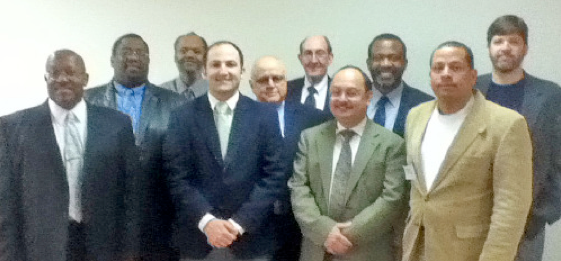
We are blessed with seven wonderful elders here! They span in age from 48 to 81, are of varying backgrounds, personalities, and skillsets, but collectively they reflect God’s wisdom for a plurality of godly men shepherding the flock. With the magnitude of the work and workload here, I cannot help but stand in awe of the great job they are doing. To watch men like these, I’m reminded of the powerful good done by apt, able elders. Far from an exhaustive list, they:

  • Show Hospitality—They open their homes freely and frequently, getting to know the sheep.
  • Keep Track—They make it their business to account for the sheep, knowing they will give an account for each of them ultimately.
  • Cast Vision—They do not lead from the rear; they thoughtfully, decisively get out front and show the way.
  • Greet Visitors—They care about our members, but they are constantly focused of who’s new around here.
  • Contemplate Problems—In the spirit of Solomon, they are presented with and must decide often complex, hairy matters…in real time.
  • Faithfully Pray—Listen to men pray and you get a pretty good idea how practiced they are. These men are devoted to it.
  • Show Heart—They aren’t afraid to demonstrate their care, concern, and love. We see it in their passion, their tears, and their involvement.
  • Manage People—Sheep are also of differing temperaments, needs, problems, and levels of maturity. They deal with “all kinds.”
  • Consult God—How exciting to see overseers humbly searching for and submitting to a “Thus saith the Lord.”
  • Balance Time—They do all of this while being competent employees, conscientious family men, and character-filled Christians.
  • Set Direction—They are tone setters in a basic way; What they emphasis, we will make important. We hear their voice, in the assemblies, meetings, and private conversations.
  • Make Mistakes—Despite sometimes unreasonable expectations from some, they are terminally human and inevitably subject to imperfection.
  • Follow Jesus—They are good shepherds walking behind the Good Shepherd. They want to serve, please, and imitate Him. Ours do a fantastic job of that.

Have you seen what a great job these men are doing? Have you taken the time to stop and let them know? Many churches veer from the straight and narrow path because of ungodly elderships. Thank God for the shepherds at Bear Valley!

13239021_10153682591930922_3851531815462243933_n

What God Does Not Expect Of Elders

Neal Pollard

Sermons preached on the qualifications of elders often, rightly, emphasize the importance of selecting men who qualify to serve. In the Lord’s church,  covetous, inhospitable, intemperate, cold, imprudent, biblically ignorant, pugnacious, and newly-converted men (among others) have been appointed to that important work who should not have been. That hurts the local church! Many times it has been said that “bad elders” are worse than “no elders.”

Harboring unfair expectations of men who would serve as elders is another hurtful trend that occasionally surfaces. A hypercritical spirit is a quality of human nature, though a quality the spiritually-minded ought to fight to personally eliminate. Let us briefly consider what God does not expect of elders.

  • More Than The Qualifications Specify. Gut feelings, intuitions, and hunches might work well when hunting, fishing, or making March Madness picks, but there is no call for them in selecting men to serve as elders. God does not need our help, tacking on additional requirements for an elder than He felt the need to supply for us. Adding to the Word of God carries a stiff penalty (cf. Rev. 22:18); therefore, our scrutiny of a man’s fitness to serve needs to stop where the Bible’s does.
  • Sinless Perfection. He expects maturity (1 Tim. 3:6), ability (Ti. 1:9), and stability (1 Ti. 3:4-5), but not impeccability (the Latin origin of this word means “not to sin”)! If so, no man could ever conceivably qualify to serve. Gnat-straining can keep a qualified man from serving as surely as camel-swallowing can allow an unqualified man to sit as watchman. With a 1000-tooth-comb, some would inspect the minutia of his life and his family’s. Those searching for flaws, who look hard enough, will always find things. Yet, such findings do not necessarily prove anything except his humanity and fallibility (cf. Rom. 3:10,23).
  • To Neglect Their Own Families. It is unfair to expect a man, as elder, to always place the needs of the congregation over those of his own family. Too many wives and children have been deprived of husbands and fathers due to disproportionate expectations of time, resources, and attention placed upon elders by members. Elders need the full cooperation and understanding of their families, while elders are obligated by God to supply the needs of their families (cf. 1 Tim. 3:4-5,7). Elders (and their families) are entitled to vacations and nights at home together. Elders will answer for not only their service as elders (Heb. 13:17; 1 Pe. 5:4) but also their influence and leadership in the home (1 Tim. 3:4-5; 1 Co. 11:3; Eph. 6:1-4).
  • To Be The “Complaint-Receiving Committee.” It is impossible but that complaints will come, but woe unto him (or her) through whom they constantly come. Murmuring and complaining got Israel into trouble (cf. 1 Co. 10:10), and members who find it impossible to speak to elders without doing such may find themselves in the same predicament. How many times has an elder heard you say something positive about another member, a successful program, or their efforts on your behalf? How many of your complaints have they fielded? Elders will answer for our souls. Let us find ways and opportunities to encourage, praise, and support them. Complain whenever you must, but compliment whenever you can.

Did you realize members have qualifications to meet with regard to the elders?

  • Love and appreciate them (1 Th. 5:12-13)
  • Honor them (1 Ti. 5:17)
  • Do not recklessly accuse them (1 Ti. 5:19)
  • Obey and submit to them (He. 13:17)

As we examine who would serve as elders, let us not forget to examine ourselves (2 Co. 13:5). How spiritually fit are we? Jesus’ words about beams and specks apply to our relationship with elders, too (cf. Mt. 7:3-5). Let us have high expectations of elders, but let us have only those expectations God has!

screen-shot-2013-03-14-at-1-01-53-pm

Submitting To Elders

Neal Pollard

Elders are not infallible, and most of the men I’ve known who serve as elders do not think they are.  On the whole, the rank and file of elders I have known are humble, selfless, sacrificial, magnanimous, and spiritual men who embrace the often difficult work of herding and leading that often strong-willed species of us known in biblical terms as “sheep.”  They are so often second-guessed and may be the most commonly backbitten group of people among God’s people.  I have found that there are a few—sadly too often a “vocal minority”—who, in practice, are hesitant to submit to eldership’s decisions.  In my experience, here are some of the reasons why:

  • They do not agree with the judgment call(s) made by the eldership
  • They do not understand why the elders have decided as they have
  • They feel they would or could handle a situation better than the elders did
  • They feel that they would be immune from perceived pressures or weaknesses
  • They see some deficiency in them

Such attitudes are very frustrating to encounter.  I would go so far as say that these are bad attitudes.  They reflect more on the sheep than the shepherds. Here is what they often fail to understand:

  • The elders probably have privy to more information than they do
  • They are likely privy to sensitive information they cannot share
  • They are almost always involved in more than anyone else
  • Since they will give an account to God for their work, they face the reality of making choices for which they have to answer
  • They submitted to a congregational process and found qualified to lead
  • We are commanded to submit to them, and that necessarily implies in matters of judgment even when we do not agree with their judgment

The vast majority of elders are sensitive to the concerns and objections they hear from the sheep.  Should we not exercise an equal measure of humility, selflessness, sacrifice, magnanimity and spirituality in our words and attitudes regarding our shepherds?  Remember, “Obey those who rule over you, and be submissive, for they watch out for your souls, as those who must give account. Let them do so with joy and not with grief, for that would be unprofitable for you” (Heb. 13:17).