Show Your Trust

Carl Pollard

In 1799, Conrad Reed discovered a seventeen-pound rock while fishing in Little Meadow Creek. Not knowing what it was made of, his family used it as a doorstop for three years. In 1802, his father, John Reed, took it to a jeweler who identified it as a lump of gold worth about $89,000. That lump of gold, which was used as a doorstop for three years in North Carolina, is one of the biggest gold nuggets ever found east of the Rockies. Until its composition was determined, its value was unknown. 

Until the composition of our faith is determined, its strength is unknown. God will give you the opportunity to prove your faith. What kind of faith will we have? James 2:20-26, “Do you want to be shown, you foolish person, that faith apart from works is useless? Was not Abraham our father justified by works when he offered up his son Isaac on the altar?  You see that faith was active along with his works, and faith was completed by his works; and the Scripture was fulfilled that says, “Abraham believed God, and it was counted to him as righteousness”—and he was called a friend of God. You see that a person is justified by works and not by faith alone. And in the same way was not also Rahab the prostitute justified by works when she received the messengers and sent them out by another way? For as the body apart from the spirit is dead, so also faith apart from works is dead.” 

These two examples could not be any different to the Jewish mind. Abraham, the father of faith, and Rahab, a Gentile prostitute. Abraham was justified by works. 

When was he justified? When he physically took his son to a physical mountain, and placed his physical son on a physical altar. HIS FAITH LED HIM TO DO SOMETHING IN THE WORLD AROUND HIM. What is your faith causing you to do? At some point your faith needs to move from your mind to the world around you. Rahab was justified through the “working of her faith.” Faith demands action. 

It requires Intellect, Emotion, and ACTION. 

Noah had a devoted faith so he believed and obeyed. God told him what was going to happen, and how to avoid the destruction of the world. And Noah believed and obeyed. God has warned us what is going to happen, and how to avoid the destruction of the world. Do you believe that? Then have a devoted faith. A belief that will lead you to devote your life to God. A faith that acts on the word of God. What is the designed end of faith? Why are we to have faith? Because true faith leads to justification (salvation) 

Just like Noah obeyed, and Abraham and Rahab obeyed. 

If Abraham didn’t offer Isaac, what kind of faith is that? If Noah didn’t build an ark, what kind of faith is that? God expects us to have a work of trust. Abraham didn’t know what would happen to Isaac, but he knew God made a promise to Him. Noah spent 100 years building a boat on dry land, but he knew that rain was coming. What will we do with our faith? 

God has warned us of the destruction of our world with fire one day; are you gonna build a boat? He has told us how to be saved–through His son. Many will struggle with dead faith. All talk, no action. Many struggle with demonic faith, God has their intellect and emotion, but He doesn’t have their life. Some have a devoted faith. A trust that is seen through the life they live. What kind of faith do I have? If I don’t have works, if God doesn’t own my life, my faith is no good. 

My belief in God is useless. The only thing that comes from that is regret, because one day we will know exactly why we aren’t in paradise with God. 

We failed to act on our belief.
Devoted Faith

Carl Pollard

In 1799, Conrad Reed discovered a seventeen-pound rock while fishing in Little Meadow Creek. Not knowing what it was made of, his family used it as a doorstop for three years. In 1802, his father, John Reed, took it to jeweller who identified it as a lump of gold worth about $89,000. That lump of gold, which was used as a doorstop for three years in North Carolina, is one of the biggest gold nuggets ever found east of the Rockies. Until its composition was determined, its value was unknown.

Until the composition of our faith is determined, its strength is unknown. God will give you the opportunity to prove your faith. What kind of faith will we have? James wraps up a section in chapter 2 on faith and works with two examples. 

Verses 20-26 say, “Do you want to be shown, you foolish person, that faith apart from works is useless? Was not Abraham our father justified by works when he offered up his son Isaac on the altar?  You see that faith was active along with his works, and faith was completed by his works;  and the Scripture was fulfilled that says, “Abraham believed God, and it was counted to him as righteousness”—and he was called a friend of God. You see that a person is justified by works and not by faith alone.  And in the same way was not also Rahab the prostitute justified by works when she received the messengers and sent them out by another way?  For as the body apart from the spirit is dead, so also faith apart from works is dead.” 

These two examples could not be any different from each other to the Jewish mind. Abraham, the father of faith, and Rahab a gentile prostitute. Abraham was justified by works. When was he justified? When he physically took his son to a physical mountain, and placed his physical son on a physical altar. 

HIS FAITH LED HIM TO DO SOMETHING IN THE WORLD AROUND HIM. 

What is your faith causing you to do? At some point your faith needs to move from your mind to the world around you. Rahab was justified through the WORKING OF HER FAITH. Faith demands action. It requires Intellect, Emotion, and ACTION. Noah had a devoted faith so he believed AND obeyed. God told him what was going to happen, and how to avoid the destruction of the world. 

God has warned us what is going to happen, and how to avoid the destruction of the world. Do you believe that? Then have a devoted faith. A belief that will lead you to devote your life to God. A faith that ACTS on the word of God. What is the designed end of faith? Why are we to have faith? Because true faith leads to Justification (Salvation). Just like Abraham and Rahab obeyed. 

If Abraham didn’t offer Isaac, what kind of faith is that? God expects us to have a work of trust. Abraham didn’t know what would happen to Isaac, but he knew God made a promise to Him. Noah spent 100 years building a boat on dry land, but he knew that rain was coming. 

What will we do with our faith? God has warned us of the destruction of our world with fire one day, are you gonna build a boat? He has told us how to be saved, through His son. Many will struggle with dead faith. All talk, no action. Many struggle with demonic faith, God has their intellect and emotion, but He doesn’t have their life. Some have a devoted faith, a trust that is seen through the life they live. 

What kind of faith do I have? If I don’t have works, if God doesn’t own my life, my faith is no good. My belief in God is useless without works. The only thing that comes from that is regret, because one day we will know exactly why we aren’t paradise with God–if we failed to act on our belief.

Second Chances

Travis Harrison

It’s a new year. For many it’s an opportunity at a new beginning – a fresh start, a second chance. I want to begin tonight with a lighthearted story about how a couple of second chances helped me.

When I was about 5 or 6 my older brother unintentionally tried to kill me, at least twice. The first time, we were outside playing, and we found these large bushes, pokeweed. These plants and the berries are poisonous, but we didn’t know that. I read that if you cook the leaves and berries properly, you can eat them. However, what you shouldn’t do, especially as a small child, is convince your younger brother to eat a handful of these berries. I googled for curiosity’s sake how many berries were dangerous, and it said that as few as 10 would make the average adult sick with all kinds of symptoms or some reports even said death. We went to the house and my mother knew exactly what I had done, the evidence was smeared all over my hands and my face. She called poison control, and they told her to give me this syrup that would make me sick to my stomach and I’d throw up the berries. Sure enough about 45 mins later – no more berries.

The second time was a little more serious. We had this storage building out back, it had a small lean-to shed on the back side. One of the sides was perfect for climbing on. Since we were expert climbers my brother had the idea – let’s get up on that roof so we can see everything better. We shimmied our way up the side and made it up onto the roof. If that had been the end of the story that would’ve been great…but wait, there’s more. My brother noticed something coming from the side of the building. He was referring to the electrical service, and the power lines that were coming off the pole and into the side of the storage building. “I wonder what happens if you touch those?” Listen guys I’m smart it just hadn’t kicked in yet. So yeah, I walked over and grabbed them and believe me when I say they grabbed me right back. I’ve told this story 100 times and everyone seems shocked and surprised, but I can assure you, not nearly as much I was!!

Second chances are given to us all the time and come in a variety of ways. They happen in our everyday lives, our careers, our marriages, relationships with our families our friends, and our relationship with God. God gives us second chances because he loves us, and he knows us and knows we need them.

God is a God of second chances. Throughout the Bible we study about people who have sinned or made mistakes, altered their courses in life but are still given a second chance by God.

1.     For example, Jonah had fled from what God had commanded him to do yet was given a second opportunity to go to Nineveh and spread His word to the people. (Jonah 3:1-10).

2.     David was a man after God’s own heart, yet he turned away from Him when he committed adultery with Bathsheba, had Uriah killed, then his son died because of the evil he had done (II Samuel 11 and 12) but still God loved him, and he was a great king. 

3.     Rahab was a prostitute. She didn’t live a wholesome life, but she changed the course of her life when she did something for good. She hid the spies in Jericho. When the city was destroyed, she was rewarded. Only she and her family were saved. (Joshua 6:22-23)

4.     Paul once was a persecutor of Christians (Acts 8:1-3). He was converted into a Christian and baptized (Acts 9:18). He became one of the most influential missionaries, authors, and apostles of the first century. 

5.     Onesimus was once deemed useless. After being given a second chance Paul describes him as beloved servant, and brother to him. He was willing to do anything for him, even pay his debts. (Philemon 11-17)

The list could go on and on. The point is that God’s love, his mercy, and by His grace through faith, we can all be saved (Eph. 2: 4-8). God forgives our sins and gives us a fresh start. “If we confess our sins, he is faithful and just to forgive us and cleanse us from all unrighteousness.” (I John 1:9) Every day we wake up is another chance to make changes. God’s steadfast love never ceases, his mercies never come to end, they are new every morning. (Lamentations 3:22-23)  

As important as it is that we don’t forget about God giving us second chances, Let’s not forget we are to extend second chances to others. We all have family, friends, coworkers, even sometimes church family that we don’t always see eye to eye with. We don’t need to settle for division, we need to strive for unity. (1 Peter 3:8) As Jesus taught, we are to forgive others as we have been forgiven (Matthew 6:14-15). We are also encouraged to show kindness, love, and grace to others – just as God has shown us (Ephesians 4:32).

God’s second chances are such a blessing to us. We need them, he knows that we do. He’s not a mean God, “He doesn’t treat us as our sins deserve, or repay us according to our iniquities” (Psalms 103:10). He doesn’t want us to fail, but second chances aren’t meant to be free passes for us to keep returning to sin. (Romans 6:23) “ For the wages of sin is death, but the gift of God is eternal life in Christ Jesus our Lord.”  He sent his son to die for us so that we could have as many chances as we need to make things right and grow closer to him before its too late.    

Each new morning the sun rises, God is giving us a second chance. A chance to improve our lives, mend broken relationships, work on those New Year’s resolutions – that I hope we haven’t already broken. This year let’s not squander our second chances, but instead savor them. Let’s make the most of those opportunities to do good, to do things that glorify God, and that will help us walk closer to him.  If 2023 just wasn’t the year for whatever reasons, then begin this year on the right foot. Let 2024 be your second chance. 

The Location Of Salvation

Thursday’s Column: Captain’s Blog

Carl Pollard

Most people can think of a specific location that brings them joy. It could be a vacation destination, a certain getaway spot, or a favorite city or park. It’s a location that is filled with memories and good times. We find ourselves dreaming about those places when we are loaded down with life. What we wouldn’t give to be relaxing on that beach, away from all the work and responsibilities. What is it about these places that causes us to long to be there? It’s the thought of being somewhere that’s free of care and worry. 
In scripture, salvation is often described as being found in a very specific location. The Bible records numerous examples of when God saved His people in a specific location. The Passover in Exodus 12 is an example of this. If the people wanted to keep their firstborn children, they were to spread blood on the doorposts of their homes. By doing this, the death angel would pass over the houses with blood on them. There are several other examples of salvation being in a specific location such as Noah’s ark in Genesis 6-9 and Rahab’s home in Joshua 2.
If salvation was found on the ark and in Rahab’s home, where is it now? Scripture teaches us that the church Christ died to establish is the place of safety today. 

The plan: a new covenant (Mark 14:24)
–The purpose: save the souls that are added to the body (Rom. 8:1-3) 
–The promise: eternal life (1 Jn. 5:11) 

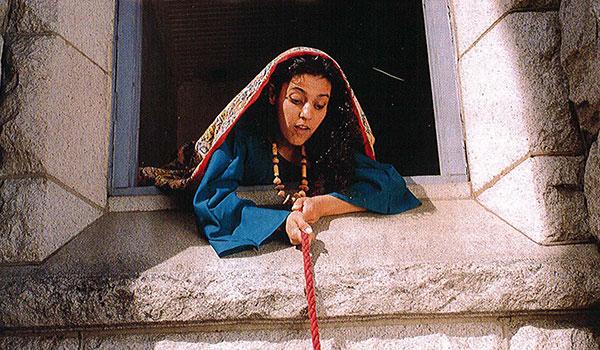
The Old Testament examples mentioned all contained specific instructions: Build the ark out of gopher wood, pick a certain amount of animals, and tie a scarlet rope to the window. These specific locations brought salvation but only through obedience to God and His plan. 
What specific instructions do we have today? The contents of the New Testament explain in perfect detail how we can be added to God’s location of salvation. The ark saved Noah and His family from destruction, the scarlet rope tied to the window of Rahab’s home saved her and her family, and baptism (Acts 2:38; 1 Pt. 3:21) will save anyone and everyone that wishes to be added to the church. 

WHEN GOD CONQUERS A HEART

Monday’s Column: Neal At The Cross

img_5670

Neal Pollard

The story of Rahab the harlot is one of the better-known stories of the entire Conquest Period. Perhaps it is because it occurs before but is connected with the most famous (and first) place to be conquered, Jericho, but it is also because of who the heroine of the story is. Three New Testament writers mention her, Matthew for her place in the Messianic genealogies (Mat. 1:5), the writer of Hebrews for her faith (Heb. 11:31), and James for her works (Jas. 2:25). But, there is no escaping who she was or how she made her living when Israelite spies paid her a visit. The Hebrew word, ZANA, means “to commit fornication, be a harlot, play the harlot, illicit heterosexual intercourse,” TWOT). They say, “Such persons received hire (Deut 23:19), had identifying marks (Gen 38:15; Prov 7:10; Jer 3:3), had their own houses (Jer 5:7), and were to be shunned (Prov 23:27)” (ibid.). She is not only a Canaanite, but she operated a sordid business.

But from the moment we hear from her in Scripture, we can see that there is much more to her than the aforementioned description. Despite the fact that she needed to do more growing (don’t we all?), she shows the difference God can make in even the most unlikely places. What do we find in Joshua two?

When God conquers a heart, one will be ruled by His authority (2-5). The Bible doesn’t sanction Rahab’s lie, but consider for a moment that she was ordered by the King of Jericho to surrender the two spies from Israel. She feels no allegiance to the earthly ruler, and she will explain that it is because of her faith in Jehovah (9). If God has conquered our hearts, won’t we say with Peter and John, “We must obey God rather than men” (Acts 5:29)?

When God conquers a heart, one will help His people (6-7,14-21). She saved the spies’ lives. She hid them and helped them escape. She recognized these men as God’s servants doing God’s business. She wanted to serve and protect them. Ultimately, she lets them down through her window and enables their escape (15, 20). Those whose hearts God possess are allies of the righteous (Mal. 3:18). 

When God conquers a heart, one has faith in God’s provision (8-13). Nothing in the text tells us that the spies preached to her, yet somehow she had arrived at the conviction that she could have hope of salvation. She says she knew God had given Israel the land (9), something these spies’ fathers most likely did not believe (cf. Num. 13-14). She saw how afraid her fellow-citizens were of God’s wrath and power, working through His people (9). She had faith based on the signs and works God had performed from the Red Sea to the Amorites (10). It led her to acknowledge God as “God in heaven above and on earth beneath” (11). Therefore, she asked, in exchange for protecting the spies, for the deliverance of her family and herself (12-13). She hadn’t seen the battle yet, but she believed that it belonged to the Lord. It takes genuine faith to draw a conclusion like that. We’ve not experienced death, the resurrection, the judgment, and an eternal destiny, but do we have faith that God will provide for us through them (cf. 1 Pet. 1:3-9)? If God possesses our hearts, we do!

When God conquers a heart, one will meet the conditions of salvation (14-21). The spies made the salvation of Rahab and her family conditioned upon three things: tie a scarlet thread in her window (18), gather all she wanted to be saved into her house (18), and not tell anyone these spies’ business (20). There was no picking and choosing what she preferred to follow. Obedience meant the difference in life and death (5:25). So today, a heart which God owns will not shun to do anything His Word commands. There’s no arguing, bargaining, debating, or rationalizing, but instead a faith that does what God wills. 

The spies’ mission was a great success and Joshua was encouraged (22-24). They were ready to do battle, ready to conquer. Back in Jericho, there was a woman born into a life of godlessness who had lived a life of worldliness who now faced the hope of happiness and righteousness. Great things follow when we allow God to conquer our hearts! 

Neal’s Note: I send out an email most mornings that I call “The Lehman Learner.” I walk through books of the Bible (in the past I’ve done the Psalms, Luke, 1-2 Corinthians, 1-2 Kings, etc.). This article is from last week. If you would like to receive The Lehman Learner, write to this email and request it. You will be added to the mailing list.)

KNOCKING DOWN THE WALLS OF JERICHO

Monday’s Column: Neal At The Cross

pollard

Neal Pollard

God had promised the land of Canaan as early as Abraham (Gen. 15:18ff). The first city of Israel’s conquest was Jericho (Josh. 6:1). The word about and reputation of God’s people preceded them, so Jericho “was tightly shut because of” them. Despite this, the LORD told Joshua that “the wall of the city will fall down flat” (Josh. 6:5). Israel followed God’s unorthodox battle plan and “the wall fell down flat” and “they took the city” (6:20). Though they’d suffer a setback because of one man’s disobedience, this was the dramatic start of what would be the accomplishment of the land promise made to Israel.

God also promised Abraham that in his seed all the nations of the earth would be blessed (Gen. 22:18). This was fulfilled through Christ (Gal. 3:28). One of the ways Jesus proved that He was the Christ was “with miracles and wonders and signs which God performed through Him” in their midst (Acts 2:22). He started His ministry in Galilee (Mat. 4:17) and ended it in Jerusalem (Mat. 16:21), but near the end He had His own Jericho triumphs. He had not one, but two that are recorded by the gospel writers. One involved Him performing one of His many miracles, gaining a victory over sickness, but the other was a triumph of a different kind gaining a victory over Satan. 

Luke indicates Jesus was approaching Jericho when He encounters a blind beggar (Luke 18:35). Matthew and Mark also seem to record the same miracle, identifying this man as Bartimaeus, and showing perhaps “that the Saviour went in and out at the same gate of the city, and that the miracle falls into two parts” (Lange 282). But Jesus’ knocks down the wall between the haves and have nots, the socially acceptable and the socially unacceptable, when He has mercy on him and gives him his sight (Luke 18:37-43). Immediately after Bartimaeus, Jesus enters Jericho and passes through (19:1). Now, he knocks down the wall between the righteous and the sinner (19:7). He went to be a guest in the house of Zaccheus, who wanted to see Jesus so badly that he climbed a tree. The end result of this encounter is “salvation” (19:9). 

Isn’t it interesting that the Hebrew name for Jesus is “Joshua”? Isn’t it also interesting that Jesus performs these miracles in proximity to the walls of Jericho? The walls that Jesus knocks down are important to us today. They tell us that the gospel is for the poor, the hurting, the needy, the seedy, the rejects, and the sinner. Wasn’t God preparing us for this when Joshua spares a harlot and her family in the destruction of Jericho (Josh. 6:22-23)? 

Jesus was certainly about knocking down the walls we can be quick to build. Who does Jesus want us to be taking the gospel to today? Certainly, He’s not against those who are financially blessed (Zaccheus was). He’s not against those who are socially well-connected (many Christian converts in Acts and the epistles were). But, here is where Jesus is revolutionary. As Paul puts it, “God has chosen the foolish things of the world to shame the wise, and God has chosen the weak things of the world to shame the things which are strong, and the base things of the world and the despised God has chosen, the things that are not” (1 Cor. 1:27-28). He chose “the poor of this world to be rich in faith and heirs of the kingdom” (Jas. 2:5). 

What should His church look like today? The gospel transforms lives and lifts people morally and spiritually higher. But, He’s interested in the Rahabs, Bartimaeuses, and Zeccheuses of our day! Jesus wants to break down barrier walls (Eph. 2:14). He wants you and me using the gospel to do the job for Him today! 

Kathy in Jericho, March, 2018

So You Have A Sinful Past? (POEM)


Neal Pollard

Moses was a murderer, Rahab was a liar,
David was an adulterer and to murder he did conspire,
Gideon and Timothy were timid, Peter a confirmed denier,
Paul wrecked havoc on the church, so full of hate and ire.

God, from time immemorial, has used the earthen vessel,
Sons of thunder or deceivers– like Jacob, who an angel did wrestle.
Just like Abraham and Isaac, very human if chosen and special
Barak, Samson, Jephthah, who with flaws their faith did nestle

From cover to cover, Scripture shows that God works through sinners
Preachers, prophets, kings and elders, saints and great soul-winners
It helps us who would serve today, to be better enders than beginners
To not let sin defeat us, to go from offenders to God defenders

Perhaps you have a sinful past or there’s guilt here in your today
A habit, sin, or weakness, crimes of deeds, thoughts, or what you say
Look back to men and women of old, they willed for they knew The Way
Conquer through Christ your old man, get busy, trust in God and obey!

Peter denying Jesus
Peter denying Christ