Judah And Boaz

Neal Pollard

There is a very interesting blessing directed to Boaz in Ruth 4:11-12. “Then all the people who were at the gate and the elders said, ‘We are witnesses. May the Lord make the woman, who is coming into your house, like Rachel and Leah, who together built up the house of Israel. May you act worthily in Ephrathah and be renowned in Bethlehem, and may your house be like the house of Perez, whom Tamar bore to Judah, because of the offspring that the Lord will give you by this young woman.’” There are three parts to this blessing and all are framed as comparisons between events in Genesis in the Patriarchal Age and the events of this book.

  1. How Rachel and Leah came into Jacob’s family and how Ruth came into Boaz’s.
  2. How this built up the nation and how they pray for this marriage to continue the same.
  3. How one widow was blessed through deception and sin and how they wanted honorable Boaz and Ruth to be blessed in this admirable arrangement.

The whole, three-part blessing, seems to be a contrast between the lesser (Genesis characters) and the greater (Boaz and Ruth). God had done incredible things through the faulty characters of the former. Leah was at times jealous and bitter. Rachel was conniving and petulant. Jacob was a deceiver. Judah reneged giving his third son to Tamar, who disguises herself as a prostitute to raise up seed to give her a name and place among them. Judah’s character problems in that situation are many and apparent.

The beautiful story of Ruth shows a woman who willingly returns, a widow, with her mother-in-law to be among her people and serve her God. An abiding trust in God’s providence brings about this relationship between Ruth and the highly-honorable Boaz. Unlike Judah’s sons, Boaz accepts his role in this levirate marriage and takes the near kinsman role. This blesses not only Ruth and Boaz, but the once forlorn mother-in-law, Naomi.

God had tremendously blessed the descendants of Jacob, Rachel, Leah, Judah and Tamar, despite their moral failings. In the same lineage, what would He do for Boaz and Ruth? It seems the people are calling on the God who had blessed their weaker ancestors to amplify His goodness and gifts on those who so faithfully acted through this union. What a thoughtful and powerful blessing!

Even when we are faithless, God is faithful, “for He cannot deny Himself” (2 Tim. 2:13). God was fulfilling His promises to Abraham (Gen. 12:2-3). At times, this was accomplished despite the contrary and sinful actions of people. At other times, this was accomplished through the godly, selfless deeds of good people. Knowing that God is always at work (Rom. 8:28), would you like your part to be remembered like Judah or Boaz? Like Rachel and Leah or Ruth?


Part 1: Moral Clarity in an Age of Antiheroes

To accurately understand Isaiah 5.20 against the backdrop of modern moral ambiguity, it is crucial to comprehend its original historical and literary context…

Brent Pollard

Text: “Woe to those who call evil good, and good evil; Who substitute darkness for light and light for darkness; Who substitute bitter for sweet and sweet for bitter!” — Isaiah 5.20

Expository Background: The Context of Isaiah 5.20

To accurately understand Isaiah 5.20 against the backdrop of modern moral ambiguity, it is crucial to comprehend its original historical and literary context. The prophet Isaiah shared his prophecies during the reigns of Uzziah, Jotham, Ahaz, and Hezekiah, a timeframe of around 740–686 BC. Concurrently, the kingdom of Judah experienced both material prosperity and a concerning spiritual decline.

The Literary Structure of Isaiah 5

Isaiah 5 opens with the famous “Song of the Vineyard” (vv. 1–7), in which God compares Israel to a carefully tended vineyard that produced sour grapes instead of the anticipated good fruit. The vineyard represents the chosen community, whereas the wild grapes symbolize their moral decline, despite being bestowed with plentiful spiritual blessings.

Following this parable, Isaiah announces six “woes” (vv. 8–23) that clearly illustrate how Israel has produced these “wild grapes.” Each lament tackles a particular transgression that had become prevalent in Judean society:

  1. An insatiable craving for acquiring land and possessions (vv. 8–10)
  2. A state of intoxication coupled with a lack of spiritual enthusiasm (vv. 11–17)
  3. Intentional misconduct and ridicule of the sacred (vv. 18–19)
  4. Labeling what is evil as good and vice versa (v. 20)
  5. Excessive pride and unwarranted confidence (v. 21)
  6. Corrupt authority and injustice (vv. 22–23)

The Specific Context of Verse 20

The fourth woe (verse 20) is essential in this list, underscoring its significance. The Hebrew phrasing employs four parallel clauses that form a chiastic, or mirrored, structure:

  • A: “those who call evil good”
  • B: “and good evil”
  • B’: “who substitute darkness for light”
  • A’: “and light for darkness”

This literary device underscores the significant shift in moral standards that occurred in Judean society. The messenger does not reflect accidental ethical ambiguity but rather an intentional and systematic inversion of the divine order established by the Creator.

Historical Circumstances

Archaeological evidence and scriptural records suggest that the land of Judah faced significant social unrest in the eighth century. While wealth increased and an elite class emerged, many people suffered from poverty and oppression. The political alliances of that era required concessions to the customs and beliefs of non-believing nations.

Crucially, in Judea, society developed complex justifications for actions that clearly violated divine laws. The wealthy justified their mistreatment of the poor as vital for economic growth. Religious leaders conformed to local customs to maintain political ties. Social elites altered moral standards to fit their personal goals.

Isaiah 5:20 specifically highlights the changing perspectives on morality within both intellectual and cultural contexts. The Hebrew verb amar, meaning “call,” suggests more than just a personal viewpoint; it denotes an authoritative pronouncement—key individuals were reshaping society’s moral discourse.

Theological Principles for Application

Several hermeneutical principles enable the legitimate application of Isaiah 5:20 to modern contexts:

  1. Divine moral standards are universal: The distinctions upheld by Isaiah testify to God’s immutable nature. What God deems wicked in one age remains wicked throughout all ages.
  2. Patterns of Betrayal in the Covenant: Though we do not belong to ethnic Israel, the New Testament recognizes the church as Israel’s spiritual counterpart (Galatians 6:16; 1 Peter 2:9).
  3. The Influence of Culture on Moral Understanding: Isaiah’s message targets the broader evolution of societal ethical standards, making his warnings perpetually relevant.
  4. The Weight of Leadership Endures: Isaiah’s woes address influential figures who shaped public values. Today, spiritual leaders bear a similar responsibility.

Zephaniah: The Coming Day Of The Lord (II)

“There’s a great day coming.” Zephaniah did not know this song, yet he sung it anyway. Why? Let’s notice the first chapter of his short prophecy.

Judgement (1:1-18)

Neal Pollard

Zephaniah’s prophesy begins immediately with the future pronouncements of judgment. He begins with a judgment on the world (2-3), then narrows down to Judah. An overview of his message is that judgment is coming and it will be severe for the unprepared (1-6). No one will be exempt from this judgment (7-13). There will be no bargaining or escaping our sentence (14-18). 

How do we know that Zephaniah’s first audience is the whole world? Notice how he starts from the broadest category–“all things”–and works to the more specific. It is almost like the reverse of creation, suggesting that God will undo everything He did at creation. The idea is of total judgment on all. God had done this before, during Noah’s life. Judah would also have remembrance of this, and these warnings should make them know that they are not exempt from His judgment. 

God would bring judgment on Judah and Jerusalem, too. The judgment language is clearly evident. Notice the phrases “stretch out My hand against” (4), “cut off” (4), and “the day of the Lord.” The day of the Lord as a day of judgment is mentioned 15 times from Zephaniah 1:7-2:3. The day is described as a day of the Lord’s wrath (15,18) and later as the day of His anger (2:2-3). Why had Judah drawn such a response from God? The sins include idolatry (5), hypocrisy (5), apostasy (8), compromise (8), superstition (9), indifference (12), and greed (13). To make things worse, they felt no shame over such things (2:1). 

Zephaniah pleads with any who had goodness within them to seek God and be humble, obedient, and righteous (2:3). Judgment could not be avoided, but maybe “you will be hidden in the day of the Lord’s anger” (2:3). By the way, that is the meaning of Zephaniah’s name (whom God hides). 

Who would experience this judgment? “All” (4), “the men” (12), and, later, the leadership (3:1-4). The guests he has set apart and consecrated for His sacrifice (7-8) are not set apart for service but for punishment. They include the princes, the king’s sons (9), people in all parts of Jerusalem (10), and “the men who are stagnant in spirit” (12). 

This would be a day of distress (17) and devouring (18). God wants Judah to appreciate that His wrath is justified, the result of man’s sinfulness. Josiah had tried to make some reforms, but he did so following decades and decades of wickedness growing more and more depraved. Revisit Manasseh’s reign (2 Chron. 33:1-9). It has been said that they worked overtime to do sin and now were going to be paid with divine punishment. Zephaniah doesn’t tell us who God will use to punish them. That job would go to prophets like Jeremiah and Habakkuk. Zephaniah’s task is to let them know that their sin had resulted in God’s justified wrath. God would not let their willful, impenitent sin go unaddressed. 

As always, we should not think that God had a short fuse and a quick trigger. He had been forbearing and patient with His people. Generation after generation, they had forgotten Him, replaced Him, and rebelled against His will. They wanted the blessings of God, but they could not be burdened with His rules. God sent prophets to warn them and try to correct their path. He had given them the law and priests to remind them of God’s revealed will. But even many of those tasked with prophetic and priestly duties forsook them and merely told the people what they wanted to hear. God’s long-suffering kindness had reached its limit. Their heritage and claim as His children would not, by itself, save them from judgment. Of all people, they knew better. But they did not do better. God would settle the matter with judgment. 

Habakkuk: Living By Faith (III)

Do you have a “no matter what” faith? How does one develop such a faith, one that grows and develops even when life is hard? Habakkuk knows.

FAITH TRIUMPHANT (3:1-19)

Neal Pollard

Nothing has changed in the circumstances Habakkuk is wrestling with. Babylon is still coming to execute God’s wrath for Judah’s sin. Babylon is still more wicked than Judah, the catalog of sins just reviewed in the previous chapter. But we notice the change in tone in the last verse of Habakkuk 2. The prophet has gladly resigned himself to the fact that God is on the throne, still in charge and perfectly knowing what He is doing.

This transformation leads directly to the prayer with which he ends this short book. The odd notation, “according to Shigionoth,” identifies it as a highly emotional poem. BDB Lexicon speaks of it as a “wild, passionate song, with rapid changes of rhythm” (993). So dramatic was this form of poetry that it “would be a song which provoked great excitement by its performance” (Koehler, HALOT, 1414). Habakkuk has come through the thick and dangerous fog of the trial of his faith, and he emerges into the clear blue sky of confidence in God’s character and work. What does his triumphant faith look like?

Appeal (2). He petitions God out of a deep fear and reverence that is apparent throughout this prayer. Yet, he is bold enough to ask God to revive His work and make it known. He asks for mercy amid His just wrath. It’s the only two things he asks for in the whole prayer. Habakkuk will describe the wrath in the latter part of the chapter (8,12). He wants God to swiftly answer (“in the midst of the years”). 

Admiration (3-4). As he copes with God’s pending judgment, Habakkuk still has a heart to praise. He writes of God’s splendor, radiance, and unmistakable power. He is pictured as a king coming in procession, only His harbingers are the radiance and rays of His glory. 

Awe (5-12). Habakkuk’s response to the greatness of God’s power is to describe His coming in judgment. He envisions the carnage in the aftermath of God’s wrath on the disobedient. He comes with pestilence and plague (5), standing, surveying, then shattering (6), rage, anger, and wrath (8), chastisement (9), and indignation and anger (12). All creation trembled at His coming (10-11). This God with whom Habakkuk had debated is transcendent, doing what is right in the proper measure at the proper time. Habakkuk can only watch in jaw-dropping wonder. 

Acknowledgement (13-16). Habakkuk proclaims the acts of God with four “you” statements–You went forth, You struck, You pierced, and You trampled. He acted in salvation for His people and in retribution against the wicked. Habakkuk’s acknowledgement of such perfect justice is telling: “I heard and my inward parts trembled, At the sound my lips quivered. Decay enters my bones, And in my place I tremble. Because I must wait quietly for the day of distress, For the people to arise who will invade us.” Not only does he acknowledge the greatness of God, but the justice of His decision to bring about the Babylonian Captivity against his sinful brethren. 

Acceptance (17-18). Out of this comes the resignation of trusting faith. It’s a “no matter what” faith on Habakkuk’s part. These verses have become some of the best known and most quoted of the entire book (along with 1:13, 2:4, and 2:20). How can we illustrate triumphant faith? How about these words? “Though the fig tree should not blossom And there be no fruit on the vines, Though the yield of the olive should fail And the fields produce no food, Though the flock should be cut off from the fold And there be no cattle in the stalls, Yet I will exult in the Lord, I will rejoice in the God of my salvation.” If every earthly blessing is withheld from me, I know that God is worthy of my trust and deserving of my worship and praise. This is the faith that will cause us to live (2:4)!

Acclamation (19). Habakkuk’s final declaration is of his strength through the Lord (cf. Phil. 4:13). Though the Chaldeans are knocking on the door, ready to break it in and take them away, the prophet pictures himself (and the faithful) as those who are still standing through God’s help. Like Job, praising God despite his pain (Job 42:2), Habakkuk rises from the ashes of his perplexity and the trial of his faith. He stands on the rock solid foundation of God’s trustworthiness. After the trial, with God’s help and by God’s mercy, he will stand. 

Where am I in my faith? Is it being tested? Am I listening to God’s truth as He teaches it? If so, then, no matter what, I will triumph through Him! 

What Are You Showing?

Brent Pollard

The geopolitical landscape under Hezekiah, King of Judah, saw an increase in the threat from Babylon while Assyria’s influence declined. Hezekiah’s political interests and personal ambitions were intertwined to solidify his kingdom amidst evolving circumstances. When he recovered from a severe illness, envoys from Babylon, a rising power seeking to weaken Assyria, visited him. Overwhelmed with relief and eager to impress his potential new allies, Hezekiah made a critical error.

The scripture recounts in 2 Kings 20.13, “Hezekiah listened to them, and showed them all his treasure house, the silver and the gold and the spices and the precious oil and the house of his armor and all that was found in his treasuries. There was nothing in his house nor in all his dominion that Hezekiah did not show them.” (NASB95) This act of pride had serious future consequences, as the prophet Isaiah sharply points out in Isaiah 39.4 by questioning Hezekiah, resulting in a prophecy of doom for his lineage and nation.

This passage emphasizes the importance of being careful with what we disclose. It encourages us to consider the consequences of our actions, which can affect not only our own but also the fate of the community.

The Dangers of Pride and Showing Off

Hezekiah intended to gain political favor by displaying his kingdom’s wealth, but he also revealed a more profound spiritual issue that the Scriptures emphasize: the danger of pride. The Parable of the Rich Fool in Luke 12.16–21, in which a man obsessed with wealth plans to build larger barns to store his crops only to die the same night, reinforces this New Testament message. Like the rich fool, Hezekiah’s pride in his treasures arose from prioritizing material security over spiritual faithfulness.

When displaying our possessions, achievements, or abilities, we must consider whether they serve a greater purpose or feed our ego. Self-reflection is critical to avoiding arrogance and conceit.

Wisdom in Confidentiality

Hezekiah’s strategic error stemmed not only from his pride but also from his failure to anticipate the consequences of his disclosures. Jesus advised such individuals not to “give what is holy to dogs, and do not throw your pearls before swine, or they will trample them under their feet, and turn and tear you to pieces.” (Matthew 7.6 NASB95) Protecting valuable things, whether spiritual beliefs or important assets, is essential.

The principle of caution prompts us to be careful when sharing information. Sometimes, it is preferable to keep things private to protect ourselves and our communities from potential harm. This wisdom, rooted in scripture, encourages us to consider the possible impact on the larger community before sharing information.

Consequences Extend Beyond the Individual

Isaiah’s prophecy reveals a fundamental biblical truth: our actions have a long-term impact on our descendants and community. The exile of Judah’s elite to Babylon, which Isaiah predicted, exemplifies how Hezekiah’s decisions had severe and long-term consequences. This interconnectedness of fate resonates with Paul’s assertion in 1 Corinthians 12.26, “And if one member suffers, all the members suffer with it; if one member is honored, all the members rejoice with it.” (NASB95)

Acting community-mindedly requires us to consider how our decisions affect others.

Hezekiah’s encounter with the Babylonian envoys underscores the significance of humility, discretion, and foresight in our social dealings. As we navigate life’s complexities, it is critical that we embody these virtues and only show others what honors God and promotes communal well-being. It is imperative to heed Hezekiah’s missteps and aim to make choices that glorify God and enrich future generations. Integrating foresight and wisdom into our daily choices empowers us to enhance our lives and contribute to a brighter world.

King Jotham

A Model of Principled Leadership and Spiritual Integrity

Brent Pollard

King Jotham of Judah, who reigned in the 8th century BC, is often overlooked in the historical pantheon of biblical kings. However, he was known for his prudent leadership and unwavering moral integrity. After succeeding his father, Uzziah, Jotham distinguished himself by actively studying his father’s reign and taking measures to avoid repeating his mistakes. He focused on enhancing his kingdom’s defenses and infrastructure. Additionally, he dedicated himself to religious duties, ensuring he stayed within his limits. The astute blend of political acumen and spiritual dedication ensured stability and prosperity in Judah under his rule and set a benchmark for effective leadership, highlighting the importance of balancing authority with piety. Contrasting Jotham’s decision to prioritize constructive projects with Uzziah’s focus on personal glorification highlights vital leadership lessons that can shape individual and communal growth.

Jotham’s Wisdom and Prudence (2 Chronicles 27.1-2):

Jotham was determined to learn from his father Uzziah’s errors, which defined his otherwise successful reign. He wisely avoided overstepping his boundaries by considering his experiences, family history, and lessons from observing others. Unlike his father, Jotham remained humble and discerning and never trespassed into sacred spaces. His prudence, demonstrating his dedication to being a proper leader, underscored his effectiveness in guiding his kingdom.

Jotham’s Constructive Endeavors (2 Chronicles 27.3-5):

While his father concentrated on building structures for war and glorification, Jotham prioritized constructive projects that would benefit his people. This included fortifying Judah and rebuilding the Temple’s Upper Gate to improve the community’s security and welfare. His dedication to public service and the welfare of his people exemplified his altruistic leadership style and priorities.

Jotham’s Spiritual Integrity (2 Chronicles 27.6–9):

Jotham had a solid and unwavering bond with God, showcasing the depth of his spiritual devotion. He prepared to walk before the Lord his God, demonstrating his intentional alignment with God’s will. Jotham shared King Jehoshaphat’s deep commitment to seeking God. This underscores the importance of spiritual integrity as a cornerstone for effective leadership.

The Challenge of Righteous Leadership:

Despite Jotham’s exceptional leadership, his people did not emulate his virtuous example and continued practicing idolatry, revealing the complexities of leadership and followership dynamics. This highlights a crucial lesson: being a good leader does not necessarily ensure followership. Leaders ought to maintain their integrity regardless of whether or not they have public approval or support.

King Jotham’s life inspires us to uphold righteousness and integrity despite external pressures or historical influences. His story encourages us to steer clear of societal corruption and familial mistakes, guiding us toward a path that aligns with the divine expectations of justice, compassion, and righteousness. Jotham’s example encourages us to dedicate our time and talents to higher principles, instilling a vigilant and cautious approach to personal and communal responsibilities. Following King Jotham’s example can assist in constructing a society where integrity, fairness, and ethical behavior are prioritized, fostering a community built on trust and righteousness. It may not always be the easiest or most popular choice, but maintaining our integrity is crucial for earning the trust and respect of others. Amid life’s challenges, King Jotham is a resilient role model, showcasing the strength of staying committed to one’s values and beliefs in the most adverse circumstances. Ultimately, his legacy serves as a reminder that character strength and an unwavering commitment to doing what is right are the actual indicators of success. 

Deuteronomy: The Second Giving Of The Law (XXXIV)

Moses Blesses The Tribes (33:1-29)

Neal Pollard

The very last words of Moses recorded in the Bible are his reassurance to Israel that God will take care of them. Smith puts it, “In Deuteronomy 31 Moses was the statesman, and in chapter 32 the singer; now in chapter 33 he is the seer” (Pentateuch, 531). The preamble to this prophetic projection concerning each tribe consists of his declaration of God’s power and love (1-3a). The people respond with an acknowledgement of God and pledge of submission to His revealed will through Moses (3b-5). The next 20 verses are devoted to blessings upon the individual tribes.

  • Reuben (6): A prayer that they continue to exist but be few in number (cf. Gen. 49:3-4).
  • Judah (7): A prayer that the tribe which was first to fight (Num. 10:14) and renowned for its military might would be successful in battle through God’s hand. He records the fuller blessing through the voice of Jacob (Gen. 49:8-12). 
  • Levi (8-11): First, note the absence of Simeon. He and Levi are the second and third sons of Leah. Where is Simeon? Eugene Merrill suggests, “Simeon had already become involved in idolatry at Baal Peor (cf. Num 25:6–15), a sin that brought such devastating population loss that the whole tribe eventually became assimilated into Judah (cf. Josh 19:1–9)” (NAC, 438). Levi is reminded of their forefather’s transgression, depriving them of a territorial allotment (8-9). Yet, Moses cries out for a blessing and protection on them as they discharge their God-given duties in leading worship (10-11). 
  • Benjamin (12): A simple prayer that God will protect and preserve them.
  • Joseph (Ephraim and Manasseh)(13-17): A prayer for their prosperity and productivity of the land in mountains, hills, bushes, and pastures, and well as the multiplication of these tribes. 
  • Zebulun and Issachar (18-19): A prophesy that they will worship correctly and prosper generously from the mountains to the seas.
  • Gad (20-21): A call to this tribe to praise God for expanding their territory and rewarding them for their conquest.
  • Dan (22): Interestingly, this is an echo of the animal metaphors used by Jacob (Gen. 49:16-17). In both analogies, he springs on adversaries–here as a lion cub, in Genesis as a serpent. 
  • Naphtali (23): This tribe is affirmed and encouraged, as one satisfied with favor and full of blessing as they possess their territory. 
  • Asher (24-25): A foreseeing of prosperity, blessings, and peace for time to come. 

After the blessings upon the individual tribes, Moses sums up with an overarching blessing for the whole nation. What comes next for Israel will be wonderful. Why? They have a matchless, majestic God who helps with everlasting arms and impenetrable refuge (26-27). They will enjoy security and prosperity (28). They are chosen and saved by God, who will guard and protect them before their cowering enemies (29). The parting encouragement of Moses is that the future could not look brighter, but they must keep looking to the God who makes these conditional pledges to them.

Israel has nothing on the church. What lies ahead for us eclipses what they were told. Our task is to embrace God’s conditional promises in Christ, realizing we are a chosen people most blessed (1 Pet. 2:9-10). May we never reject our inheritance. 

Genesis: These Are The Generations (XLVI)

Passing The Test (44:1-34)

Neal Pollard

Is Joseph simply a bitter, power-hungry, and vengeful man, sadistically piling cruelty upon cruelty in payback for his brother’s wickedness so many years before? Even some commentators think so.  However, let us thoughtfully reflect on what has unfolded. 

Subjected to the unrelenting favoritism of their father, Jacob, for Joseph, coupled with the knowledge of his dreams, they treacherously sell him into slavery and deceive their father. Years later, through the famine, he is able to see them all once again (reminding ourselves the brothers do not recognize Joseph). They have changed. The test in chapter 44 proves they are not the same men who sold him into slavery.

Joseph sets and springs the trap (1-13). Not only does he put their money in the sack with their grain, but he puts his silver cup in the mouth of his youngest. After they leave, he pursues them with his house steward and his men. The steward is told to accuse the men of treachery, and the brothers are confident in their innocence. They even pledge death to the guilty, further pledging to be slaves if the cup is found among them. Yet, when the cup in found in Benjamin’s sack, they tear their clothes and return to the city with the Egyptians.

Joseph reprimands them (14-15). First, they bow before him again (14). Joseph asks them what they have done, adding, “Do you not know that such a man as I can indeed practice divination?” How will they respond?

Judah confesses their sin, then presents an eloquent case (16-34). At the outset, Judah sees this turn of events as divine punishment (16). They are ready to be as they made Joseph to be–slaves (16)! Joseph gives them the opportunity to abandon Benjamin. They could do so with full justification, since the cup was found in his sack. But, they will not. Why? Their father. Judah mentions him 15 times in giving their defense. They know he will be devastated. In addition, their youngest brother. Judah begs to take his place (33). They are no longer the brothers who wantonly sold their brother. Even given a legitimate opportunity, they will not leave Benjamin defenseless. 

This is all Joseph needed to know, as we will see when we keep reading into chapter 45. But, let us make some closing observations. First, it is wonderful that people can and do change. These men had some sinful baggage in their background. Yet, in the crucible of trials, they had been refined. They demonstrated their change with godly sorrow (13; 2 Cor. 7:10), confession (16), and an attempt to demonstrate fruits of repentance (16ff). Furthermore, we appreciate the preciousness of brotherly love. In this account, we appreciate it in its absence, but we also do when it is once again shown. The Hebrews writer urges it, saying, “let [it] continue…” (13:1). The Psalmist praises it (133:1). The church is strengthened by its presence and decimated in its absence. 

The Book That Was Lost In The House Of The Lord

Monday’s Column: Neal At The Cross

Neal Pollard

The last righteous king to ever sit on the throne of the southern kingdom was Josiah, often called the “boy king”–as he was only eight years old when he acceded to the throne. We have the general evaluation of his reign in 2 Kings 22:2 as one who “did right in the sight of the Lord and walked in all the way of his father David, nor did he turn aside to the right or to the left.” What a divine endorsement! The verses that follow show us a few reasons how he demonstrated that righteousness.

The first act of his office noteworthy enough to be preserved by inspiration was his commissioning of repairs on the temple. He sent Shaphan the scribe to Hilkiah the High Priest to pay carpenters, builders, and masons from the temple treasury to repair the temple (3-7). While Shaphan and Hilkiah finalized these plans, the High Priest makes a remarkable statement: “I have found the book of the law in the house of the Lord” (8). It is stated so matter-of-factly that we may lose the impact of this report. How could God’s Word be lost in God’s house? Was it not read in worship? Was it not consulted for direction? Was it not the heart and center of all that went on inside those walls? Incredibly, it had been buried, stored, or otherwise tucked away. Looking back to Manasseh and Amon’s reigns, they had had no need for the Book. They had abandoned God.

Shaphan takes the Book from Hilkiah, reads it, and then brings it to Josiah. He reads it to the king, who, when he hears “the words of the book of the law, he tore his clothes” (11). This godly king recognizes what a sin has been committed against God through this gross negligence! 

He sends a contingent to inquire of God about His written will, knowing God’s wrath was kindled against his people for not listening to and obeying the words of the book (13). The message they will hear from Huldah the prophetess is grim and hopeless, indicating that Judah would reap what they sowed (14-17). But, the punishment would not come in Josiah’s lifetime because of his tenderhearted, humble, penitent, and tearful response to the Word (18-20). His faith in God’s Word (and his obedient response to it that we read about in the next chapter) extended God’s grace and mercy to Josiah and the children of Judah. Sadly, the people did not share Josiah’s reverence for The Book (cf. Jer. 25:1ff). 

Surely, the Book could not get lost in the house of the Lord today! In how many sermons and Bible classes can God not “get a word in edgewise”? Human wisdom, insight, and guidance, without biblical support, is a quick way to “lose” God’s Word in His house. It also happens when church leaders do not constantly, habitually drive themselves to ask, in the face of decisions, “What does it say in the Book?” Homes where spouses and parents are not building on the bedrock foundation of the Book, but rather the sand of society, are unprepared for the storms of life (cf. Mat. 7:24-27). The constant plea of a faithful people is, “Is there a word from the LORD?” (Jer. 37:17).  There is an endless fountain of spiritual blessings held in reserve for the people who find and follow The Book! What a tragedy that it could ever get lost, especially in the house of the Lord! 

Can These Dry Bones Live Again?

Tuesday’s Column: Dale Mail 

blond man with goatee smiling at camera with blazer on
Dale Pollard

Six hundred years before Christ would make His providential appearance, a righteous man finds himself in captivity. While exiled, Ezekiel was able to witness the spirit of God in a very intimate way (Ezekiel 1). Even so, he was still living under the thumb of the Babylonians like every other Israelite with him. While under these unideal circumstances though, he is privileged to see awe inspiring visions from God. Have you ever paid attention to the eerie sensations described throughout this book? In Ezekiel 1:4, the prophet feels a great and stormy wind on the bank of the river Chebar. The wind brings with it a massive cloud with fire flashing around it and a substance like glowing metal in the center of it. The wings of the creatures he saw (verse 24) made sounds like that of roaring waters. The voice of the Almighty was like the sound of a great army camp. What sights he was able to see! This great connection to God didn’t take away his pain or sorrow, though.

Chapter 19 is one long lament as Ezekiel cries over his hard-hearted Israelite brothers. Why won’t they listen to him? Even after Ezekiel performs some radical visual illustrations like eating his bread over dung and laying on his side for an entire year, they won’t respond to the “invitation.” How frustrating is that, preachers? God never abandons His faithful servant but His confused prophet is still left to wonder what God is going to do about the mess which makes up his reality. A familiar feeling for many faithful Christians today.  

Never underestimate the hand of the Almighty. This truthful statement can be pulled from Ezekiel 37, when the prophet is taken up and then placed in the middle of a dark valley. Ezekiel is surrounded on all sides by heaps of dry human bones and he’s probably wondering why in the world God has taken him to such a place. The text answers the question by asking a question. God speaks to Ezekiel and says, “Can these dry bones live again?” What an odd thing to ask. However, Ezekiel responds, “Only you know, oh Lord.”

It’s always when we’re deep in the valleys of life that we’re forced to answer the difficult questions about God’s abilities. When we’re surrounded by darkness, the question we have to ask is, “Does God have the power to see me through this?” If you remember, Ezekiel has become frustrated with the fact that Israel just won’t listen to him or Him. He’s lost hope in their ability to change— they’re just too far gone. However, God demonstrates to His prophet in a dramatic way that NOTHING is impossible for Him. 

He doesn’t bring the bones to life in the blink of an eye, but we know He could have. Instead, He allows Ezekiel to hear those bones rattle and to hear the sounds of fibers and flesh sticking together. He wanted to leave an impression on Ezekiel to demonstrate the might of the Almighty. Ezekiel had no idea how those bones came to life, but he knew one thing for certain. God did it. You may not understand why God has allowed you to enter your valley, but you can be certain that He has the power to see you through. You are standing on your two feet because God has given you the strength to do so. God has promised His faithful servants a heavenly light at the end of our tunnels and whatever God says— He will always accomplish (Ezekiel 37:14). 

Jahaziel’s Comforting Message

Neal Pollard

Jahaziel would have been a man of interesting and diverse talents. As a Levite, he would have served with the priests in the temple. As one of the sons of Asaph, he would have either been a literal descendant “or more probably [one of] a class of poets and singers who recognized him as [his] master” (Easton, M. G. Easton’s Bible dictionary 1893 : n. pag. Print.). But on the occasion recorded in 2 Chronicles 20, Jahaziel would have been a “seer” or prophet. The Spirit of the Lord comes upon him during the reign of Jehoshaphat, a righteous king of Judah (2 Chron. 20:14). Judah has been invaded by the Moabites and the Ammonites (20:1). Jehoshaphat’s response is righteous, seeking the Lord, proclaiming a fast, and leading a prayer service (20:3-13). Entire families, men, infants, women, and children were all assembled, “standing before the Lord” (13). Then, it happens. Jahaziel is the man God chooses and uses to respond to the touching prayer of the king.  What can we learn from Jahaziel’s message?

  • It was predicated upon the Lord’s power to deliver (15). He says, “The battle is not yours but God’s.” They were helpless alone and the message was that God was able to deliver them. The power belongs to the Lord. How we need that reminder today! In our personal battles with sin and trials, we so often are guilty of going it alone. Isn’t it thrilling to know that we have help in our fiercest battles (cf. 1 Cor. 10:13)?
  • It was precise in its instructions (16). Jahazael told them a specific time (“tomorrow”), a specific action (“go down against them”) and a specific place (“at the end of the valley in front of the wilderness of Jeruel”).  God wanted His people to know exactly what to expect and exactly what He expected them to do.  What comfort it is to know that God has laid out His instructions precisely and plainly. He’s not trying to trick us. He has told us what we need to do and what is ultimately coming when all is said and done (cf. Heb. 9:27).
  • It pointed to the salvation of the Lord (17).  The height of comfort might be this phrase: “station yourselves, stand and see the salvation of the LORD on your behalf.”  From the proper position, we can see the salvation of the Lord on our behalf. The hard-hearted, indifferent, bitter, and negative person is spiritually blind to it, but we should see it! When I am stationed at the pinnacle of prayer, the citadel of Scripture, the lookout of the Lord’s Supper, the gate of gratitude, or the fortress of forgiveness, I see the salvation of the Lord. Like gazing intently at a masterpiece, the longer I look the greater the nuances, details, and expertise emerge from the canvas of His work in my life. We can turn nowhere besides Calvary to see the clearest demonstration of the Lord’s salvation on our behalf!
  • It promised divine assistance (17). Jahaziel’s conclusion is profound. He ends, “the LORD is with you.” Sure enough, “The Lord set ambushes” (22), “the Lord had made them rejoice over their enemies” (27), and “the Lord had fought against the enemies of Israel” (29). The result was peace and rest (30). Are you confident of that? Whatever you are going through now and whatever lies ahead, do you believe that He is with you (cf. Mat. 28:20; Heb. 13:5-6)? He has never failed and by His perfect character He never will!
  • It provoked praise and thanksgiving (18-19). From the top down, reverent worship and loud praise followed the mighty message of Jahaziel. This was faith in action! They believed the Word and proceeded as if it had already happened. Shouldn’t we be so confident in God’s promises that we respond in the same way? What struggle will you face that’s bigger than the promise of God?

Just like that, Jahaziel fades back into the woodwork of obscurity! His minute of sacred fame came and went, but how masterfully the Master used Him. However anonymous or average you may believe yourself to be, God has a greater message for you to share than He did for Jahaziel! As you faithfully share it, you can help produce an even greater outcome in the life of somebody you know. Perhaps He will use you to save someone from spiritual rather than physical death!  Be on the lookout for that opportunity today and share God’s comforting message.

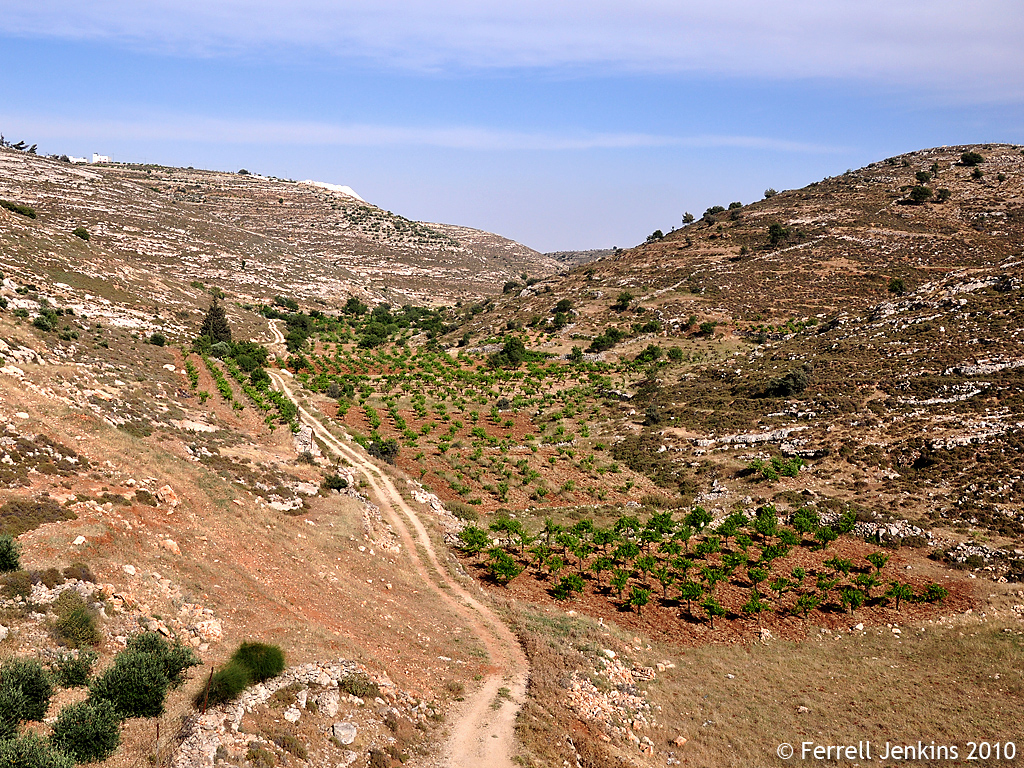
beracah-valley_fjenkins_05192010_037sm
The wilderness of Jeruel

An Oasis In The Desert

Neal Pollard

I’ve been to Palm Springs, west Texas and east Africa, and these places are the closest I’ve been to the desert (though I have looked out from an airplane over the Sahara Desert and seen the endless miles of brown sand). These provide me with the best visual picture of the desolation and cruelty one would have to endure in its midst.

Psalm 63 is a psalm of David, and the uninspired inscription over it indicates he wrote it while in “the wilderness of Judah.” David ran there more than once, pursued by Saul. Near the time of Christ, the Essenes and revolters against Rome hid there, and after the corruption of the New Testament church monasteries were established there (Negev 206). Negev describes, from archaeological discovery, this wilderness.  “The eastern slopes of the Judean Hills, which fall steeply toward the Dead Sea, are almost devoid of vegetation. The meager rainfall and porous rock of which the hills are composed produce a rugged landscape, and the descent of some 3000 feet over a distance of less than 15 miles form deep gorges with precipitous waterfalls, dry for all but a few days in the year. The steep banks of the gorges contain numerous caves that are difficult to reach and therefore ideal hiding places. Springs are few and small and the only oasis in the whole region is at En-Gedi, where a copious spring fosters lush vegetation” (ibid.).

With that setting in your mind, imagine David, moved by the Holy Spirit, writing the 63rd Psalm. The odds were against his writing on a rainy day, though we do not know. In the dry and thirsty land of persecution, opposition, fear and doubt, David had God. Because he did, David’s love and gratitude overflowed in a fountain of praise and worship to his God.

  • He expresses relationship–“You are my God” (1)
  • He expects relief–“My soul thirsts for You; My flesh longs for You…My soul shall be satisfied” (1,5)
  • He experiences refreshment–“Your lovingkindness is better than life” (3)
  • He excitedly rejoices–“My mouth shall praise you with joyful lips…I will rejoice” (5,7).
  • He exerts responsively–“I will bless You, lift up my hands, praise You, remember You, meditate on You, My soul follows close behind you” (3-8).

God was David’s ever-present oasis, no matter how dreary the setting of life around him was (9-10). He was confident in God’s love and care and strengthened by that to fight life’s battles.

God’s oasis is still flowing in our dry and thirsty land. His power and glory continue the same today. Look for Him where He is found, among God’s people as well as in the Book that bears His authorship and the sanctuary of prayer where He always awaits you. He is more than able to quench your spiritual thirst and shelter you in His care.

libya_oasis_in_the_desert