

Angels In The Old And New Testaments

Angels are so often misrepresented and misunderstood. A lot of our “theology” about them come from religious error and even Hollywood (wings? women? children?). What does the Bible teach us about them?

Dale Pollard

Old Testament Role

In the Old Testament, angels serve, for the most part, as divine messengers and “secret agents” of God’s will. They appear in human-like or supernatural forms to deliver God’s messages, guide, protect, or even execute His judgment.

Here are some examples: 

1. Messengers: Angels communicate God’s instructions, such as the announcement to Abraham and Sarah of Isaac’s birth (Genesis 18:1-15) or God’s commands to Moses (Exodus 3).

2. Protectors & Guides: Angels protect individuals or Israel, like the angel guiding the Israelites during the Exodus (Exodus 14:19) or protecting Daniel in the lions’ den (Daniel 6:22).

3. Agents of Judgment: Angels carry out divine punishment, such as destroying Sodom and Gomorrah (Genesis 19) or striking down the Assyrian army (2 Kings 19:35).

4. Worship & Service: Angels are depicted as part of God’s heavenly court, praising Him (Isaiah 6:2-3) and serving His purposes (Psalm 103:20-21).

The various types of angels include cherubim (guardians, Genesis 3:24) and seraphim (worshippers, Isaiah 6). Angels are subordinate to God, and their appearances are often horrifying as those they visit are often terrified (Judges 13:21). 

New Testament Role

We find that angels continue as God’s messengers and servants but are now closely tied to the life of Jesus and His church. Here are some examples of their role in the New Testament: 

1. Announcers of Christ: Angels herald Jesus’ birth (Luke 1:26-38, Gabriel to Mary; Luke 2:8-14, to shepherds) and resurrection (Matthew 28:2-7).

2. Ministers to Jesus: Angels support Jesus, such as after His temptation (Matthew 4:11) or in Gethsemane (Luke 22:43).

3. Guides & Protectors: Angels assist believers, like freeing Peter from prison (Acts 12:7-11) or guiding Cornelius to Peter (Acts 10:3-7).

4. Angels of Judgment: Angels are prominent in Revelation, executing God’s judgments (Revelation 8-9), gathering the elect (Matthew 24:31), and fighting demonic forces (Revelation 12:7-9).

5. Worshippers: Angels praise God and Christ (Revelation 5:11-12) and are part of the heavenly host.

Angels are clearly seen as subordinate to Christ (Hebrews 1:4-14). They inspire awe but— not to be worshipped (Colossians 2:18).
A New Testament Leadership Style

Neal Pollard

USA Today ran a story about New York Knicks’ owner James Dolan. He’s depicted as a heavy-handed micromanager who feels more allegiance to his shareholders than the fans of the iconic professional basketball team. He’s contrasted with successful franchises, which the Knicks certainly are not at present, whose leadership sees themselves as stewards of a public trust and who casts a vision of a team which belongs to the people more than it does to those writing the paychecks and making the profits (Zillgitt, Jeff. USA Today, 3/15/19, 6C). 

While the article is prone to the subjective and fallible viewpoint of the author and his ability to properly research the subject, there’s a valid point to be made and applied much more broadly than just the world of sports.  Leadership approach is pivotal to the way and degree to which “followship” responds and participates in the vision and direction provided. Leaders who micromanage, arbitrarily dictate, fail to facilitate opportunity to be involved, and lead from fear stifle and prevent those in their stewardship from investing and contributing to the overall success of the organization.

Think about how this applies in the context of church leadership. When the Bible describes an elder’s role, one of the terms it uses for him is an “overseer” (Acts 20:28). This word means “one who has the responsibility of safeguarding or seeing to it that something is done in the correct way” (Arndt, Gk.-Eng. Lex. Of the NT, Et al,  2000: 379).  Neither the definition nor New Testament passages outlines, specifically, how that is to be done by means of method and judgment. It has to get done and it must be done correctly. Sometimes, elders hang on to “deacon duties” because it’s easier to do something than seeing to it that others do it correctly. Sometimes, it can be easier just to say “no” to some program idea or ministry than to endure the headaches of the trial and error in getting it off the ground.

Yet, there is wisdom in shepherding as stewards who help members invest and share in the success of fulfilling the purpose of the church as laid out in the New Testament. Such leadership encourages members to find ways to serve, to propose new ideas and methods to fulfill the New Testament mandates to evangelize, edify, and be benevolent. It facilitates their success–it announces, promotes, and advocates. It provides a watchful oversight that puts biblical rails around whatever the specific work is. Paul’s counsel helps elders know how to oversee: be on guard and shepherd. That means pay attention and take care rather than be aloof and detached. It also means to watch out for people and provide for and help them what it takes for them to spiritually survive. 

This leadership style is what makes such works as Bible camps, Lads to Leaders, Monday Night for the Master, lectureships, Bible classes, in-home Bible studies, fellowship groups, workshops, and the like thrive and grow. The more of us that feel invested in the work and success of the church, the more effort will be put toward growing and improving how it all gets done. Let’s show our appreciation (1 Th. 5:12), loving esteem (1 Th. 5:13), and cooperative submission (Heb. 13:17) to our overseers as they continue to try and lead us in this way. 

bvelders2
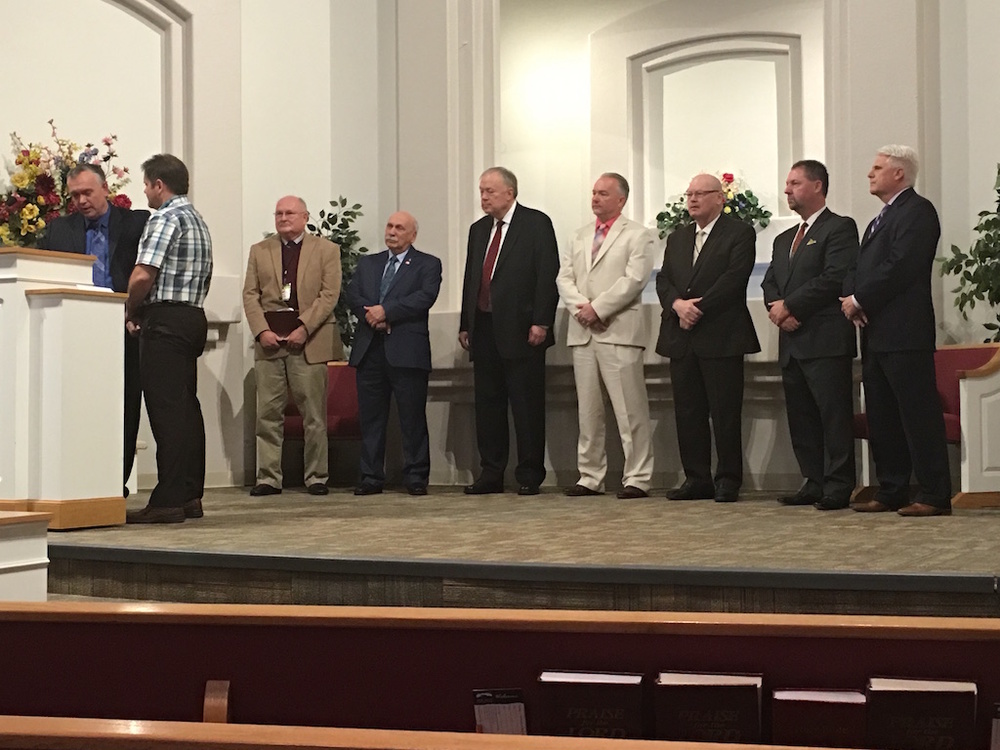
So thankful for the great, godly elders. of the Bear Valley church of Christ